
Crypto World
Kalshi ruling puts CFTC prediction rules at risk



A federal appeals court ruled on Aug. 28 that Kalshi had not shown Nevada’s regulation of its sports-event contracts was likely preempted by federal commodities law.
Summary
- Ninth Circuit judges held Kalshi unlikely to block Nevada regulation of sports-event contracts through preemption.
- The ruling did not invalidate CFTC rulemaking or resolve any future Administrative Procedure Act challenge.
- A conflicting Third Circuit decision increases the possibility that the Supreme Court reviews Kalshi’s cases.
- Nevada’s election-contract challenge returns to district court while sports-contract enforcement may continue during litigation proceedings.
- The CFTC proposed ninety-day reviews for certain event contracts, including products involving gaming activities nationwide.
The unanimous decision allows Nevada gaming authorities to enforce state requirements while litigation continues.
The Ninth Circuit opinion also raised concerns under the major-questions doctrine. However, it did not invalidate the Commodity Futures Trading Commission’s proposed event-contract rules or decide whether a future final rule would survive an Administrative Procedure Act lawsuit.
Kalshi ruling preserves Nevada’s sports-betting authority
Kalshi argued that its sports-event contracts qualified as swaps under the Commodity Exchange Act. Because Kalshi operates a CFTC-regulated designated contract market, it said federal jurisdiction displaced Nevada’s gaming laws.
The Ninth Circuit rejected that argument at the preliminary-injunction stage. It found that the contracts likely fell outside the applicable meaning of “swap” because they functioned as sports bets. The panel consequently rejected Kalshi’s express, conflict and field-preemption arguments.
Circuit Judge Ryan Nelson wrote that “the CFTC is not a national gambling regulator.” The court said Kalshi’s broader interpretation lacked a limiting principle and did not fit the surrounding statutory framework.
As crypto.news reported, the 3-0 ruling affirmed the dissolution of an earlier injunction protecting Kalshi from Nevada enforcement. The panel returned Nevada’s separate election-contract claims to the district court for further review.
Major-questions language does not end CFTC rulemaking
Gaming attorney Daniel Wallach argued that the CFTC’s rulemaking was “DOA” because of the court’s major-questions analysis. In an Aug. 29 post, he predicted APA litigation in a California federal court.
That prediction extends beyond the court’s direct holding. The opinion said Kalshi’s broad interpretation of “swap” “would raise concerns under the major-questions doctrine.” It did not hold that the doctrine categorically prevents the CFTC from regulating prediction markets.
Ripple CTO emeritus David Schwartz disputed Wallach’s reading. “This seems to be incorrect to me,” Schwartz wrote. He argued that Congress could create a federal framework for exchange-traded contracts without displacing conventional state-regulated sportsbooks.
Schwartz’s comments represented his interpretation, not a Ripple corporate position or judicial finding. The ruling addressed whether Kalshi had demonstrated a likelihood of success on its preemption claim.
CFTC proposal remains pending but faces new risks
The CFTC’s June proposal would amend Rule 40.11, which governs event contracts involving gaming, terrorism, assassination, war and activities unlawful under federal or state law.
The proposal would establish a 90-day review process and define how the agency interprets “gaming” and when a contract “involves” an enumerated activity. The CFTC would evaluate covered contracts individually using specified public-interest factors.
The Federal Register notice closed for public comments on July 27. The agency can revise, finalize or withdraw the proposal after reviewing those submissions.
A final rule could face an APA challenge over statutory authority, procedure or agency reasoning. Wallach predicted such a lawsuit, but no matching complaint had been verified when the debate emerged.
Circuit split raises Supreme Court stakes
The Ninth Circuit’s decision conflicts with a Third Circuit ruling favoring Kalshi in its dispute with New Jersey. That disagreement makes Supreme Court review more plausible, although review is not guaranteed.
New Jersey faced a Sept. 3 deadline to seek further review of the Third Circuit decision, according to Reuters. Kalshi could also seek Ninth Circuit rehearing or petition the Supreme Court, but neither action was immediately confirmed.
The jurisdictional dispute extends beyond Nevada. As previously reported in crypto.news coverage of the prediction-market conflict, several states classify sports contracts as gambling products requiring local licenses. Kalshi maintains that federal derivatives regulation preempts those requirements.
For now, Nevada can enforce its gaming laws against Kalshi’s sports contracts. The CFTC proposal remains alive, but the Ninth Circuit opinion provides prospective challengers with another argument against any final rule claiming broad authority over sports-event markets.

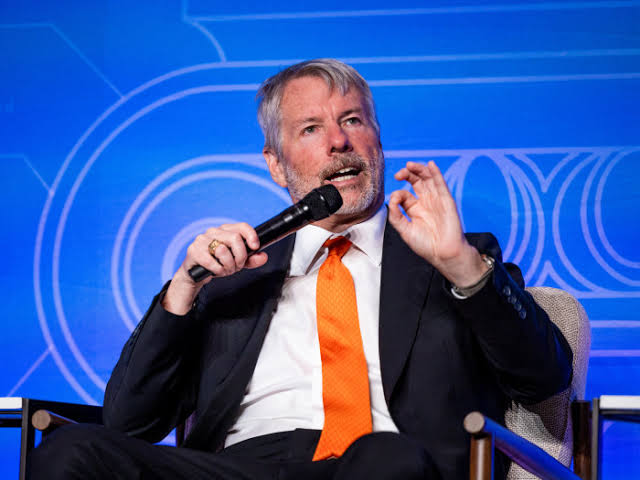
Strategy’s co-founder and former CEO, Michael Saylor, took it to X earlier today to post another cryptic comment, which the community is trying to decipher.
Alongside a chart showing that the company’s over 110 BTC purchases made in the past six years, Saylor said, “We’re ₿ack.” Naturally, most comments below the post speculated that the firm has resumed its bitcoin accumulation spree after a two-month pause.
We’re ₿ack. pic.twitter.com/ciqOaCa908
— Michael Saylor (@saylor) August 30, 2026
Recall that Strategy’s latest announced bitcoin purchase came on June 22, as it was completed in the week between June 15 and 21. It paused its BTC accumulation strategy for the following two months and even announced a couple of sales.
It focused primarily on rebuilding its USD reserve, which climbed above $6.5 billion last week after the latest initiatives. The second came in the form of establishing a new program, called USD Cash, which now consists of $1.59 billion, alongside its regular greenback reserve of $5.1 billion.
In addition, Strategy continued repurchasing its STRC shares. The high-yield variable-rate preferred stock slumped far away from its par price of $100 to $75 a few months ago, but it recovered significantly to over $97 last week.
While some users anticipate a new purchase to be announced on Monday, others warned that Saylor’s latest message refers to something else: his company’s position turning green.
Bitcoin’s price recovered significantly in the past week and a half, surging from under $65,000 to over $78,500 as of press time. Given Strategy’s average accumulation cost of $75,653 per BTC, this means that the firm is now in profit for the first time since May. Its position was deep in the red (on paper) of over $10 billion until several weeks ago.
On the topic of when Strategy will start buying bitcoin again, the current CEO, Phong Le, recently shed some light, indicating that this could occur by the end of the year, without providing more details.
The post ‘We’re Back,’ Says Saylor: Is Strategy About to Buy Bitcoin Again? appeared first on CryptoPotato.

Bitcoin’s major rally from under $65,000 to over $81,000 within a week or so changed the broader market sentiment from fear to greed, with analysts initially rushing to call the end of the bear phase.
However, its inability to push through the $81,000 resistance and the two rejections, alongside the Fed’s hawkish stance on Friday, added further doubt, both from a technical and a macro perspective. The good news is that whales have returned in full force.
$3B in BTC
Citing data from Santiment Intelligence, popular analyst Ali Martinez noted that these large market participants have accumulated roughly $3 billion worth of bitcoin in the past week alone. Adding more than 39,150 BTC in just seven days signals that this crucial cohort of investors continues to show interest in the primary cryptocurrency, alongside ETF buyers, who poured over $920 million into the funds in the past week.
In a separate post, Martinez doubled down on the whales’ growing activity, arguing that the recent rally was driven primarily by them. In contrast, retail investors have remained mostly on the sidelines or in the opposite corner, as further on-chain data suggests they have actually been selling.
$3 BILLION IN BITCOIN BOUGHT BY WHALES
Whales accumulated more than 39,154 bitcoin:native over the past week, signaling continued interest by large investors. https://t.co/JbIrOvfw8F pic.twitter.com/vEPbSJiv73
— Ali Charts (@alicharts) August 30, 2026
But More Pain Ahead?
Following the Friday Jackson Hole speech by new Fed Chair Kevin Warsh, in which he displayed a more hawkish stance, analysts are not so adamant that the bear market is completely over.
Rekt Capital warned earlier that BTC’s real test begins after the strong weekly close. He argued that if the latest surge is ultimately a bear-market relief rally, the cryptocurrency could pull back in the following few weeks. It now stands to demonstrate sustained strength at these elevated levels rather than immediately giving back the breakout.
Crypto Haris presented a considerably more bearish scenario, describing the move from $65,000 to $80,000 in days as a potential bull trap. Moreover, the analyst expects BTC to decline to $74,000 at first, before another leg down takes it back to the $67,000 region.
In general, Haris believes the cryptocurrency will first fall back to $62,000 before it eventually pumps to $90,000.
The post Bitcoin Whales Just Bought $3B in BTC: Why Analysts Still Warn of More Pain Ahead? appeared first on CryptoPotato.
Delaware Life Insurance Company relabeled $16.4 billion of its investments this year. The money sits in private loans tied to companies it is connected to. Federal prosecutors and securities regulators are now investigating.
That money came from annuities and life policies sold to ordinary savers. Few of them know what backs the promise.
Prosecutors are Already Asking
The company’s second-quarter filing reveals grand jury subpoenas served in February. Clear Spring Life and Annuity Company also received them.
They came from the US Attorney’s Office in Manhattan. The Securities and Exchange Commission (SEC) opened a parallel investigation.
Both are examining one question. Should loans introduced by an affiliate have been flagged as related-party deals? Nobody has been charged.
Credit raters have already moved, with A.M. Best, Standard & Poor’s and Fitch each grading Delaware Life A-minus. All three attach a negative outlook or watch.
Private Credit Now Backs Retirement Promises
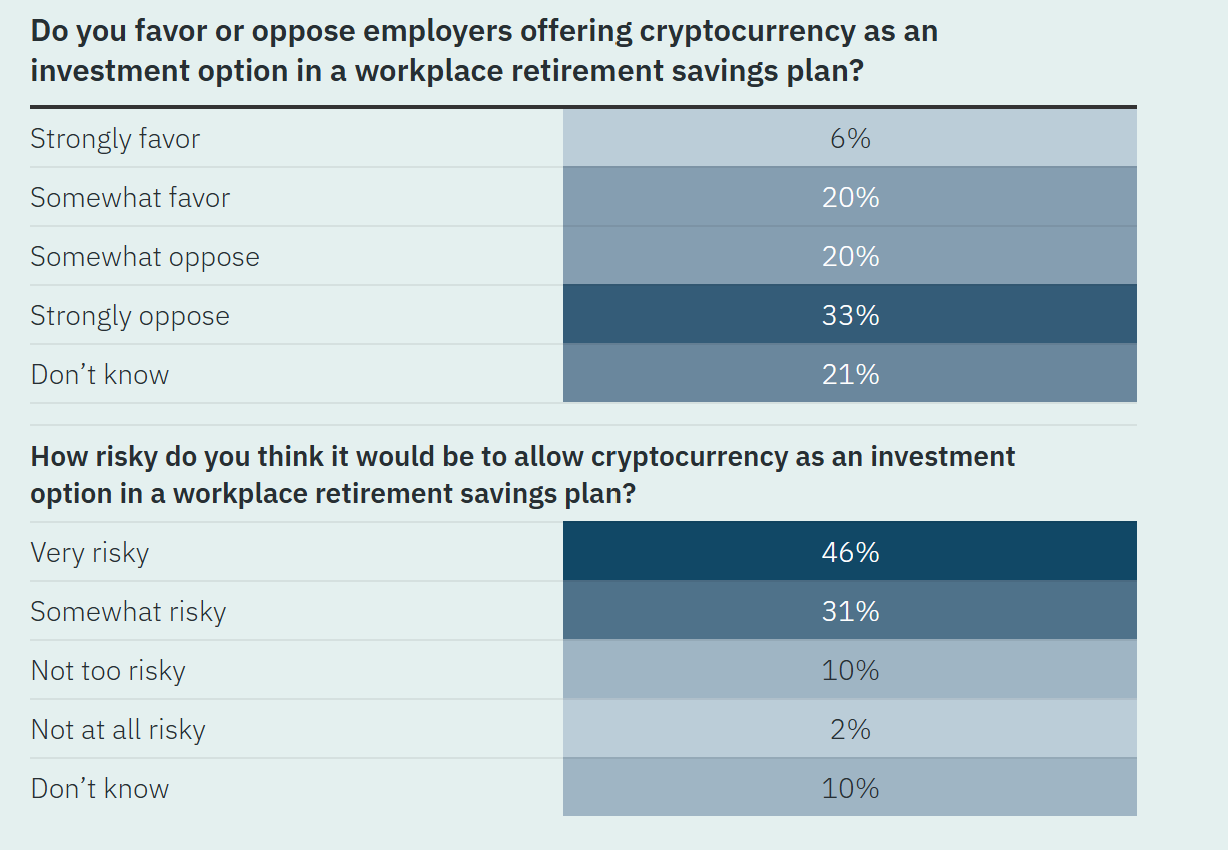
A survey published August 26 found something striking. It said 77% of US adults call crypto risky inside workplace retirement plans. Nearly half called it very risky.

“Americans are telling us that retirement security is becoming harder to achieve as they struggle with the affordability of everyday life. Housing, healthcare, debt and other expenses are competing with the need to save for retirement,” Dan Doonan, NIRS executive director, said in the report.
Their insurance money was already funding loans that have no public market prices. That gap says a lot about how savers judge risk.
Private equity firms drove the shift. The National Association of Insurance Commissioners (NAIC) counted 137 insurers under their ownership at the end of 2024. The count was 90 in 2018. Together, those firms held $704.3 billion.
Italy Already Ran This Experiment
Illiquidity only matters if people ask for their money. They can.
Cashing out an annuity early usually costs about 10%, according to the Bank for International Settlements (BIS). That fee falls each year.
Roughly half of global surrender values can be withdrawn within a week. The loans behind them take months to sell.
Eurovita showed what happened next after the Italian life insurer watched its solvency ratio slide from 230% to nearly 130% during 2022.
Rates rose, bond values fell, and customers cashed out.
Its private equity owner, Cinven, offered 100 million euros. The regulator wanted 400 million.
Italy froze withdrawals in February 2023, and the freeze held until October. Five rival insurers absorbed the policies, and savers lost nothing.
Private credit is not crypto. It has a regulator, an investment-grade label, and decades of actuarial math behind it.
Still, private credit stress signals have reached levels last seen in 2017. The difference is that savers knowingly chose one of these risks.
The post American Insurers Secretly Put $16 Billion of Retirement Money Into Private Loans appeared first on BeInCrypto.
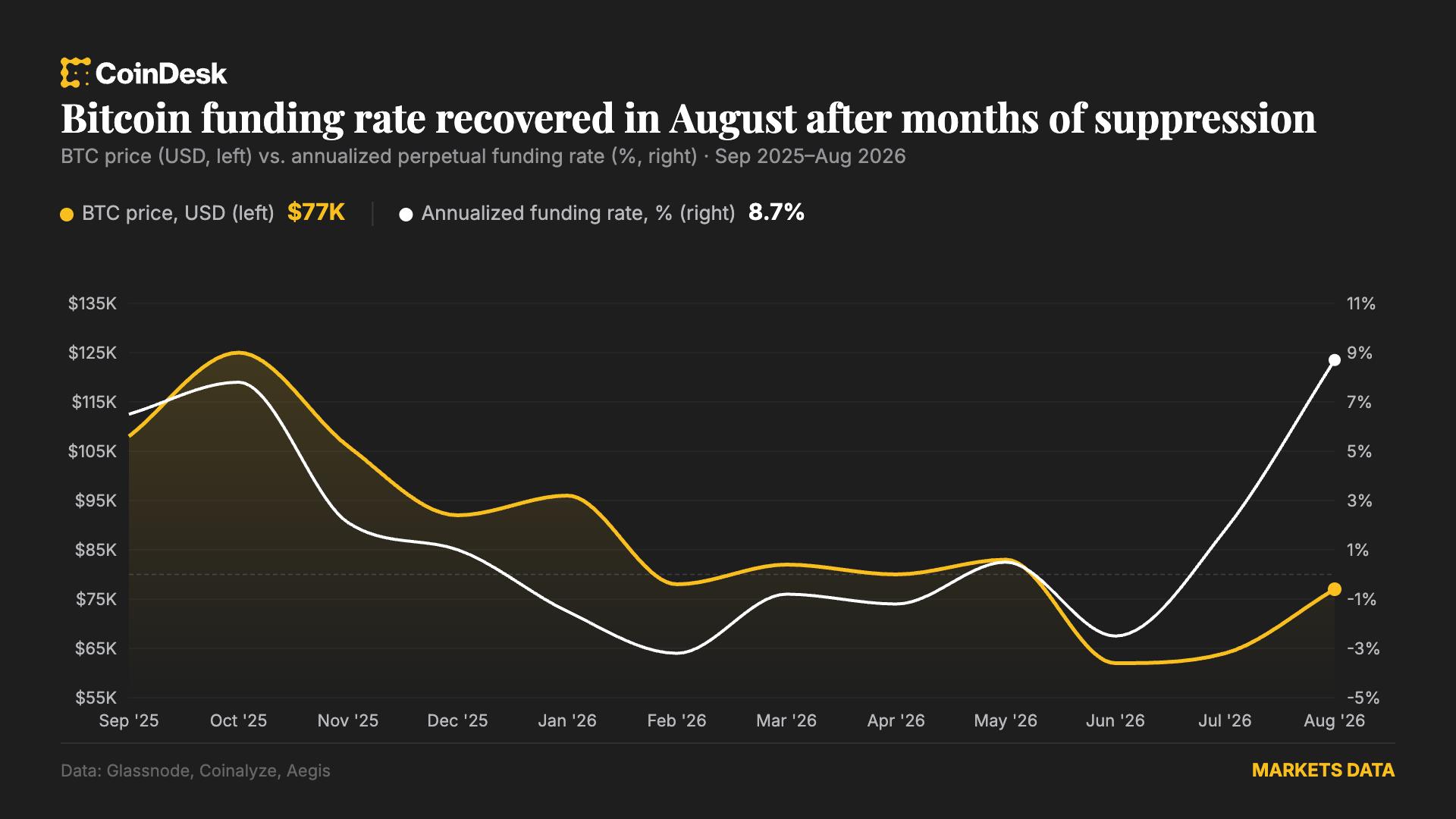
As bitcoin surges back above $80,000, sophisticated trading firms are quietly collecting yield rather than making directional bet.


Cumulative stablecoin card spending has surpassed $10.9 billion, according to Paymentscan data cited by payment provider RedotPay on Aug. 25.
Summary
- Paymentscan data cited by RedotPay placed cumulative stablecoin card spending above $10.9 billion worldwide overall.
- July 2026 produced a record month, with card spending exceeding $1 billion for first time.
- RedotPay predicts annualized spending will reach $50 billion by 2028, but independent confirmation remains unavailable.
- RedotPay reported more than eight million users and over $14 billion in annualized payment volume.
- Visa has expanded stablecoin-linked card access through its network spanning more than 175 million location.
Paymentscan recorded more than $1 billion in card spending during July 2026, making it the largest month in its tracked dataset. Three years earlier, the industry processed approximately $60,000 per month, according to RedotPay.
Stablecoin card spending passed $1B in July
Stablecoin cards allow customers to fund a payment credential using assets such as USDC or USDT. The provider converts the stablecoin into the merchant’s local currency, allowing the transaction to use existing Visa or Mastercard infrastructure.according to an a16z crypto analysis.
Merchants therefore receive a conventional card payment rather than handling cryptocurrency directly. Customers can use stablecoin balances at stores and online services that do not otherwise accept digital assets.
Paymentscan’s overview recorded approximately $1.04 billion in July spending, compared with $339.4 million one year earlier. The monthly figure more than tripled during that period.
However, Paymentscan’s totals vary according to the selected dataset. An onchain-focused breakdown cited by a16z placed July volume near $759 million and recorded almost nine million purchases. Paymentscan’s broader overview includes additional offchain feeds from card providers.
The difference does not necessarily make either figure incorrect. It means readers should identify whether a total includes provider-supplied offchain data or only transactions visible through supported blockchain networks.
Dollar stablecoins dominate card transactions
USDC accounted for approximately 58% of the onchain card spending tracked by a16z in July, while USDT represented roughly 26%. Euro-backed stablecoins had previously held a larger share but declined to about 2%, according to the published dataset
The average transaction in the onchain dataset was approximately $86. This supports RedotPay’s argument that stablecoin cards are increasingly being used for ordinary purchases, including subscriptions, groceries and travel.
Stablecoin card payments remain small compared with conventional card networks. More than $20 trillion is expected to be spent using traditional cards during 2026, according to data cited by RedotPay.
Still, payment networks have expanded the infrastructure supporting these products. Visa says stablecoin-linked cards can reach more than 175 million merchant locations without requiring merchants to accept stablecoins directly.
Visa and Bridge announced plans in March to expand stablecoin-linked cards into more than 100 countries. Mastercard has also added stablecoin settlement options and partnerships serving Africa, the Middle East and other emerging markets.
RedotPay forecasts $50B in annual spending
RedotPay predicts the industry will process its next $10 billion in eight months, compared with approximately three years for the first $10 billion.
It also expects stablecoin cards to reach $50 billion in annualized spending by 2028. That figure is a company forecast, not a confirmed projection from Paymentscan, Visa or Mastercard.
RedotPay co-founder Jonathan Chan said Latin America currently has the highest adoption and growth potential, followed by Africa. He attributed growth to payment needs, stablecoin availability, stronger fiat conversion infrastructure and clearer regulations.
The Hong Kong-based company reported more than eight million users. It also said its annualized payment volume exceeds $14 billion, although that number includes account top-ups alongside completed card purchases.
RedotPay did not provide audited financial documentation supporting the user and annualized-volume figures. They should therefore be treated as company-reported metrics.
Better access is pushing stablecoins into retail payments
Stablecoin card adoption has benefited from easier deposits, improved fiat conversion and integrations with mobile wallets. RedotPay advertises support for everyday purchases and stablecoin transfers through its payment platform.
These features allow consumers to use stablecoins without requiring merchants to process blockchain transactions. The card provider and its partners manage conversion, authorization and settlement behind the payment.
The products may be useful in markets where access to dollar accounts, international cards or cross-border payments remains limited. Dollar-backed tokens provide digital dollar exposure, while card networks supply the connection to conventional points of sale.
Related crypto.news analysis found that stablecoins increasingly power crypto cards by reducing the payment volatility associated with assets such as Bitcoin or Ether.
Stablecoins still carry issuer, custody, compliance and blockchain-network risks. Cards can also introduce conversion charges, transaction fees and geographic restrictions that vary among providers.
The next evidence point will be whether monthly spending remains above $1 billion after July. Sustained increases across transaction counts, active users and several independent card programs would provide stronger support for RedotPay’s 2028 forecast.
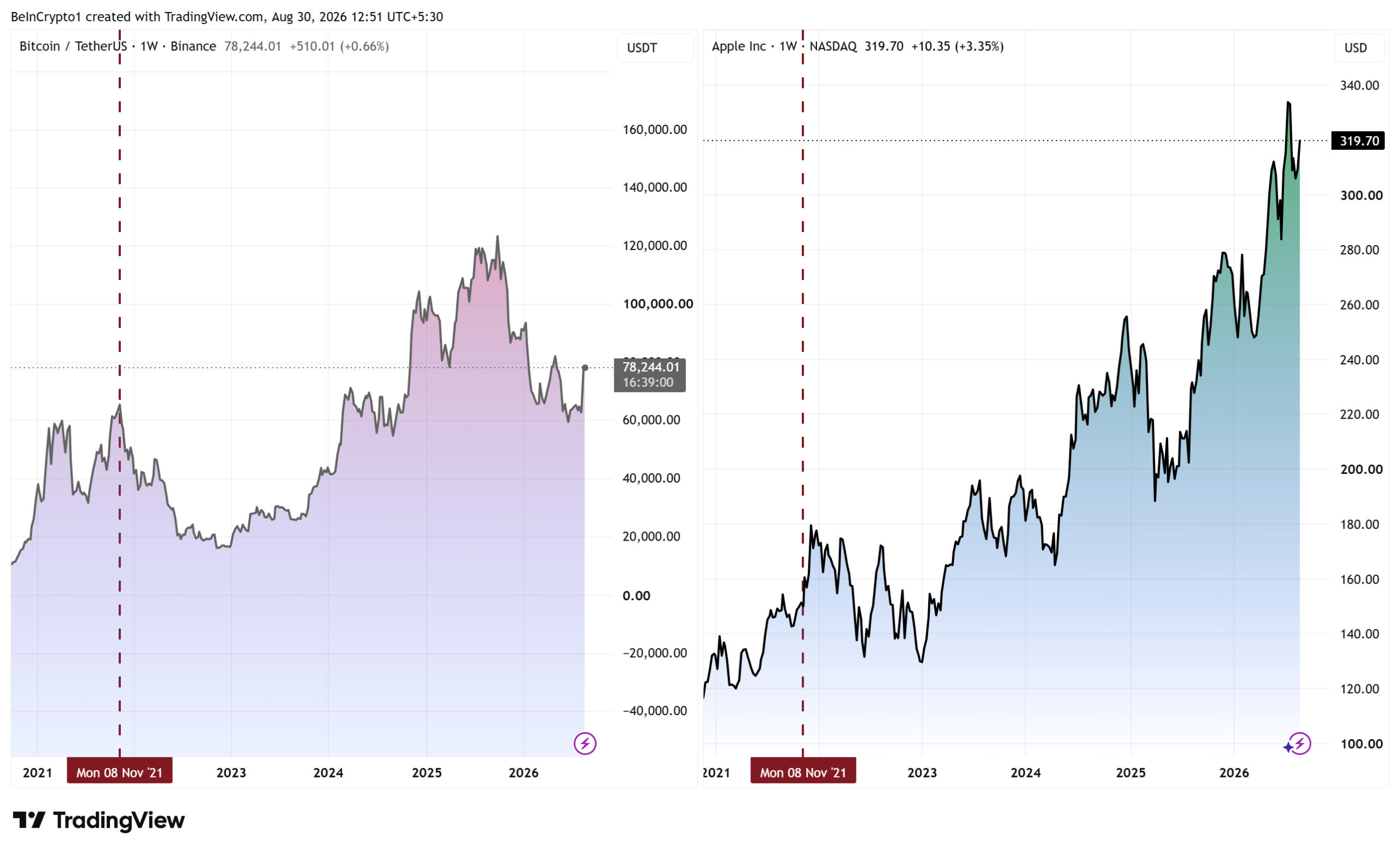
Tim Cook leaves the Apple chief executive job on Tuesday, September 1. He never put a single Bitcoin on the company’s balance sheet. John Ternus takes over and has never said in public whether he agrees.
Cook answered the Bitcoin question once, in 2021, and never moved off it. Five years later, the numbers suggest he was not wrong to say no.
What Tim Cook Actually Said About Bitcoin
Apple sat on $146.5 billion in cash and marketable securities as of June 27, its own filing shows. A pile that size keeps the question alive.
Cook was asked about it at a New York Times DealBook event in November 2021. He said he owned crypto himself. Then he shut the door on Apple doing the same.
“I wouldn’t go invest in crypto, not because I wouldn’t invest my own money, but because I don’t think people buy Apple stock to get exposure to crypto,” he explained.
He never said how much he holds, and did not reveal the assets either, declining to give details.
The scoreboard since then favors him, as Bitcoin set a record near $68,991 the next day. The pioneer crypto traded near $77,244 on Sunday, about 12% higher. Apple shares closed 2021 at $175.35 and ended Friday at $319.70, roughly 82% higher.

Why Stablecoins Matter More Than a Treasury Bet
Ternus is a hardware engineer. Apple’s incoming chief executive spent 25 years on devices, not finance. Cook stays on as executive chairman with a policy brief.
So the live decision sits in payments, not treasury. Services brought Apple $30.7 billion last quarter. Apple Pay moves card transactions, not tokens.
Reports in 2025 tied Apple to early talks about using stablecoins to cut settlement costs. Nothing shipped, and Apple has never confirmed it.
That would be plumbing, not a keynote. It would still reach further than any treasury buy, because Apple already gates crypto apps through App Store rules.
Cook answered the question early and stuck to it. Ternus has not been asked yet.
The post Tim Cook Owns Crypto But Apple Never Bought Bitcoin: Will This Change? appeared first on BeInCrypto.


Ripple pledged $300,000 on Aug. 29 to support emergency relief following catastrophic floods across Nepal and China’s Tibet region.
Summary
- Ripple pledged $300,000 to World Central Kitchen and Mercy Corps for Nepal-Tibet flood relief operations.
- World Central Kitchen’s local restaurant partners are distributing meals across Nepal’s Rasuwa and Nuwakot districts.
- Mercy Corps is coordinating emergency water and sanitation support after operating in Nepal since 2005.
- Authorities reported 750 deaths and over 3,000 missing across Nepal and Tibet by Sunday morning.
- The glacier collapse damaged roads, bridges and hydropower facilities while isolating communities from emergency assistance.
The San Francisco-based blockchain company will divide its support between World Central Kitchen and Mercy Corps. The organizations are providing meals, clean water and sanitation support to affected communities.
Ripple donation supports two established aid partners
Ripple said World Central Kitchen is distributing meals in the hardest-hit areas. Mercy Corps is coordinating water, sanitation and other humanitarian work with local authorities and partner organizations.
Both organizations had worked with Ripple before the disaster. Ripple has supported World Central Kitchen since 2020 and has partnered with Mercy Corps on projects using blockchain technology for humanitarian finance.
World Central Kitchen said its local restaurant partners were already serving meals in Nepal’s Rasuwa and Nuwakot districts. Members of its relief team were also traveling to the area to expand the response.
Mercy Corps has operated in Nepal since 2005. Its previous work has included earthquake, flood and landslide responses alongside disaster-preparedness and early-warning programs.
Nepal and Tibet face rising casualties
Authorities reported that the death toll had reached 750 by Sunday morning, while more than 3,000 people remained missing across Nepal and Tibet, according to a Reuters update.
Nepal recorded 734 deaths and 2,498 missing people. Officials in Tibet’s Gyirong County reported 16 deaths and 546 missing. Those figures may change as rescue workers reach isolated locations.
The Red Cross estimated that more than 90,000 people were affected. Roads, bridges, power infrastructure and entire settlements were damaged or destroyed, restricting access to food, water and emergency services.
Hundreds of workers were also believed to be trapped inside damaged hydropower tunnels. Nepal requested international assistance for tunnel rescues, forensic identification, DNA testing and storage of recovered bodies.
A glacier collapse triggered the flooding
Scientists linked the disaster to a glacier collapse that released ice, rock, mud and debris into the mountain river system on Aug. 26. The resulting torrent moved through communities on both sides of the Nepal-China border.
World Central Kitchen said an ice-rock avalanche temporarily blocked the Lhende Khola River before releasing a sudden surge downstream. The flood destroyed villages and infrastructure along the Bhotekoshi and Trishuli river corridors.
Rescue operations have faced repeated interruptions because of rain, rising water and lakes formed behind landslide debris. Drones later identified another natural dam and a new pool of water downstream from the original lake.
Chinese state media attributed the collapse to glacier instability linked to long-term warming. Scientists continue to study the event, and the exact contribution of climate change requires further assessment.
Ripple has used aid partnerships beyond donations
Ripple previously provided cash and XRP to World Central Kitchen for responses to hurricanes and other disasters. The company reported more than $200 million in charitable donations between 2018 and the end of 2024.
Its Mercy Corps partnership has also tested blockchain-based aid distribution. As Ripple used RLUSD for drought-relief payments in Kenya, smart contracts were designed to release assistance when satellite data detected defined drought conditions.
Ripple did not say that XRP, RLUSD or another cryptocurrency would be used for the Nepal and Tibet donation. Its announcement described a $300,000 contribution without identifying the payment method.
World Central Kitchen and Mercy Corps continue to accept public contributions through their official websites. Neither organization has announced when its emergency response will end.
A free coding trophy just turned into roughly $20,000 after a US high school student sold his Telegram Gift NFT for 15,000 Grams. Pavel Durov held the sale up as startup money.
The price cleared about 40 times what Telegram guaranteed the average prize was worth. Durov posted the result on his channel and urged other winners to go build something.
How a Free Prize Became $20,000
Jonathan He won gold at the 2026 International Olympiad in Informatics (IOI). Durov ranked him seventh in the world.
Instead of the usual medal or cheque, the prize was an Algorithm Cup, a digital collectible that lives on TON, the blockchain behind Gram. Winners can sell theirs to anyone.
Jonathan He competes for Team USA and interns as an engineer at trading firm Liquid. He sat fifth after Day 1 on 246 points out of 300, co-founder Franklyn Wang said.
Telegram promised the 235 medalists a combined $117,000 in Algorithm Cups. That averages close to $500 a cup. One of them sold for 40 times that.
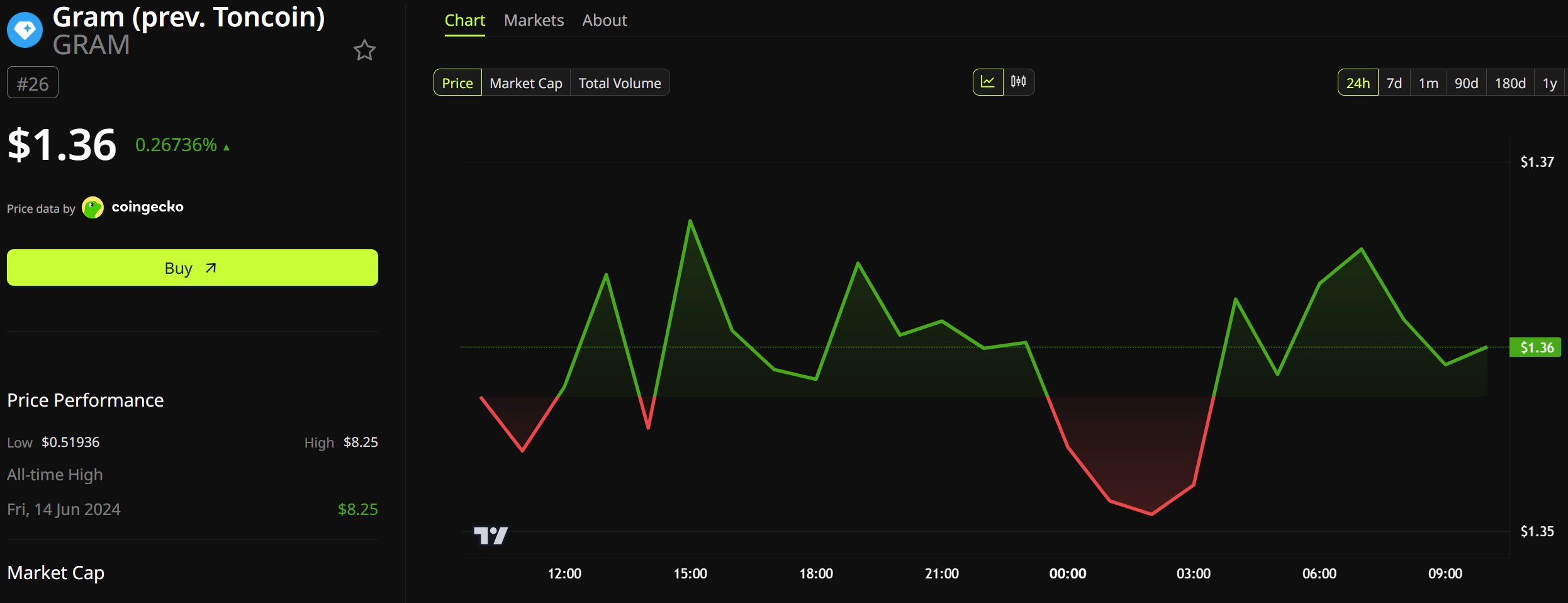
Gram (GRAM), the token rebranded from Toncoin in June, traded near $1.36 on Sunday. That puts 15,000 Grams at about $20,400.

Durov Calls It Seed Money
Pavel Durov highlighted the sale in a Sunday post on Telegram, calling on other winners to put their Grams to similar use.
“…20 years ago, $20K was enough for me to launch my first company. Within months, it had reached 1M users and raised $12M at a $60M valuation,” he wrote.
That company was VKontakte. Durov left the Russian social network in 2014, then built Telegram, the company that handed out this year’s cups.
He now buys these collectibles himself. In June, he paid 7,500 Grams for a Plush Pepe NFT, his third such purchase since December 2025. The teenager’s cup fetched twice as many Grams.
Gram has lost 56% of its value over the past year. A Telegram collectible still cleared $20,000. The buyer and the marketplace remain undisclosed.
The post Telegram Gift NFT Sells for $20,000 as Pavel Durov Backs Young Coders appeared first on BeInCrypto.
The spot Bitcoin exchange-traded funds recorded another highly impressive week, attracting over $900 million, but Friday changed the landscape after Kevin Warsh’s hawkish speech at Jackson Hole.
Meanwhile, the funds tracking the largest altcoin continue to see only green, and their actual inflows are quite close to those of their BTC counterparts.
BTC ETFs Gain Over $900M Weekly
CryptoPotato reported the significant change in investor behavior when it comes to the spot Bitcoin ETFs as they poured in nearly $2 billion, the highest since the October 2025 crash. This came after the US Treasury Department’s pivot in its monetary policy, which resulted in a substantial uptick in the entire crypto market.
The trend extended during the new business week as BTC’s price challenged the $80,000 resistance on a couple of occasions. Investors inserted $337.56 million on Monday, another $314.37 million on Tuesday, $232.12 million on Wednesday, and $242.24 million on Thursday. Thus, the BTC ETFs saw nine consecutive days of net inflows only.
However, the streak was snapped on Friday, perhaps due to the hawkish stance taken by the new Federal Reserve Chairman, Kevin Warsh. Net outflows dominated, with $201.81 million leaving the funds.
Nevertheless, the week still ended well in the green, with $924.48 million in net inflows. The funds have attracted almost $3 billion in the past two weeks alone. The cumulative total net inflows have risen from under $52.8 billion on August 14 to $54.63 billion on August 28.

ETH ETFs Keep Seeing Green
Unlike the spot Bitcoin ETFs, which ended Friday in the red, the Ethereum counterparts attracted just over $102 million on that day, which extended their impressive streak. The funds have not seen a single red day since August 11. Overall, the week ended with more than $824 million in net inflows.
Thursday was the most notable day, with $234.51 million entering the ETFs. Another $192.35 million went in on Wednesday, $179.80 million on Thursday, and $115.57 million on Friday. The cumulative total net inflows are up from $11.44 billion on August 11 to nearly $13 billion on August 28.
The underlying asset’s price rocketed from $1,900 to over $2,500 within the same timeframe, where it was ultimately stopped and now sits inches below it.

The post Over $900M Pours Into Bitcoin ETFs While Ethereum Funds Extend Impressive Streak appeared first on CryptoPotato.


Ripple has hired London Metal Exchange treasury executive Joseph Thompson for its trading and markets team, according to an Aug. 28 report.
Summary
- Ripple appointed Joseph Thompson to the trading and markets team, focusing on tokenization strategy and delivery.
- Thompson leaves LME on August 31 after nearly ten years working at the metals exchange.
- He previously held liquidity, funding and risk positions at Deutsche Bank, ICAP and LCH respectively.
- Ripple recently launched Delta One swaps covering U.S. equities, indices and digital assets for institutions.
- The appointment itself does not confirm any new commodity tokenization product or XRP-related market launch.
Thompson will leave the LME on Aug. 31 after nearly a decade at the exchange. His work at Ripple will focus on tokenization strategy and delivery. Ripple has not disclosed his exact title, starting date or reporting structure.
Ripple gains experience from a major commodities exchange
Thompson currently serves as senior vice president and head of treasury at the LME. His professional profile lists experience managing treasury operations at the exchange, which provides futures and options markets for industrial metals.
Earlier LME documents identified Thompson as head of investment and liquidity and collateral risk management. Those responsibilities included areas relevant to clearing operations, such as liquidity, eligible collateral and financial risk.
Before joining the LME, Thompson held liquidity management and funding responsibilities within Deutsche Bank’s group treasury division. He also worked in liquidity risk at ICAP and in collateral and liquidity management risk at London Clearing House.
Moreover, Thompson has more than 15 years of financial-services experience and holds certification from the Association of Corporate Treasurers. His background gives Ripple experience spanning exchanges, clearing, collateral and institutional liquidity.
Ripple is building its tokenization infrastructure
Ripple has expanded beyond cross-border payments into custody, stablecoins, treasury technology, tokenized assets and institutional trading. Its tokenization business supports the issuance and management of funds, bonds, securities and other real-world assets.
The company recently invested in ZILO and Licuido. As the two investments added token issuance and collateral tools, Ripple said it was building regulated transfer agency, trading and collateral mobility into its capital-markets infrastructure.
Thompson’s experience at a commodities exchange may assist that strategy. However, Ripple has not announced a commodity tokenization product connected to the appointment. It has also not said that Thompson will develop products tied directly to metals traded on the LME.
The hire therefore confirms a personnel addition to Ripple’s tokenization operations, not an agreement between Ripple and the LME. It also does not establish that any future tokenized asset will use XRP.
Ripple Prime expands into traditional markets
The appointment follows Ripple Prime’s launch of a Delta One business for institutional investors. The service allows clients to execute total return swaps linked to U.S.-listed equities, equity indices and digital assets.
Ripple says the offering provides hedge funds and asset managers with access through a single counterparty. Clients can also cross-margin exposure across foreign exchange, derivatives, fixed income, equities and digital assets.
Ripple Prime came from the company’s $1.25 billion acquisition of Hidden Road, which closed in October 2025. The brokerage now clears more than $3 trillion in annual trades for over 300 institutional clients, according to Ripple.
As Ripple Prime expanded its institutional clearing connections, the business also joined a DTCC working group focused on tokenized securities. Its participation does not place XRP inside the DTCC’s clearing system.
What happens after Thompson leaves the LME
Thompson is expected to leave the LME on Aug. 31 before beginning his work at Ripple. Neither company has announced who will replace him as the exchange’s head of treasury.
Ripple has not published a timetable for projects involving Thompson. Further disclosures will be needed to establish which tokenization products, markets or institutional clients fall under his responsibilities.
The appointment comes as Ripple connects tokenized-asset infrastructure with trading, financing, clearing and collateral services. Thompson’s experience fits that direction, but the commercial outcome remains uncertain until Ripple identifies specific products.

IKEA to permanently slash prices on hundreds of products
Google Maps will show ’Lake America’ in US, not ’Lake Ontario’

India vs Thailand LIVE Score, Women's Asia Cup 2026: Harmanpreet Kaur-Led India Invited To Bat By Thailand





-

 Crypto World5 days ago
SpaceX stock could rise 75% to $240, JPMorgan says
-

 Fashion2 days ago
Weekend Open Thread: Maeve – Corporette.com
-

 Crypto World3 days ago
Bitcoin’s 22% rally now needs real demand to outlast Treasury liquidity boost
-

 Crypto World4 days ago
Warsh Jackson Hole keynote puts financial innovation first
-

 Crypto World6 days ago
A $30 Billion AI Fund Implodes, Now the SEC Is Investigating Wall Street’s Role
-

 Business3 days ago
Salesforce Stock Soars 19% as Blowout Earnings and Agentforce AI Growth Silence Software Skeptics
-

 Crypto World4 days ago
Did Trump Just Move SpaceX Stock With One Truth Social Post?
-

 Business4 days ago
Walmart takes aim at younger shoppers with new fashion brand
-

 Crypto World4 days ago
Elon Musk Grok Bot Promise: We Will Make You Whole if AI Loses Your Money
-
 NewsBeat4 days ago
Lindsay Clancy jury braces for closing arguments as judge tells court: ‘You’ve heard all the evidence’ – Live updates
-

 Crypto World2 days ago
Bitcoin price tests $82K resistance as Brandt stays long
-

 Crypto World3 days ago
NVIDIA revenue hits $96.2B as AI demand doubles
-

 Business3 days ago
Apple Confirms September 9 Keynote and Reveals Its Full Pre-Order Schedule
-

 Business6 days ago
Moderna CEO warns China is pouring state money into mRNA technology
-

 Business5 days ago
Thailand’s Eastern Economic Corridor Capital City (EECiti): Key Developments and Investment Opportunities
-

 Business2 days ago
iPhone 18 Pro Pre-Orders Could Shift to Saturday as Apple Reportedly Avoids September 11 Anniversary
-

 Business6 days ago
NVIDIA Stock Drops Nearly 2 Percent to $210 on Seventh Losing Day Ahead of Critical AI Earnings
-
 Crypto World6 days ago
$92 Billion Nvidia Earnings Could Make or Break the AI Trade
-

 NewsBeat5 days ago
Trump’s trade truce with China faces test with Iran effort
-

 Crypto World4 days ago
Nvidia Q2 Earnings Reveal $96.2 Billion Beat, So Why Is NVDA Falling?
You must be logged in to post a comment Login