
Tech
Focal, Naim and Barco Bring 171-Inch LED Wall and 7.0.4 Home Theater to CEDIA Expo 2026

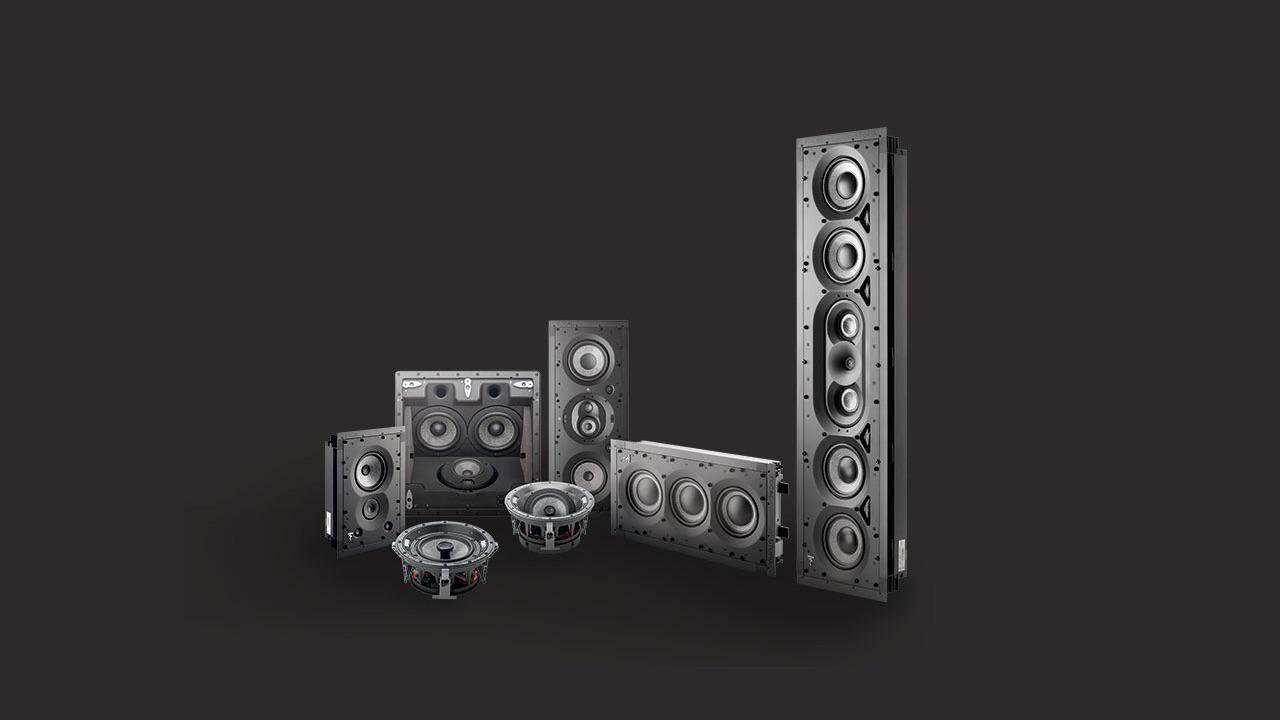
Following Barco’s acquisition of VerVent Audio Holding, parent company of Focal and Naim, the three brands are bringing their combined expertise to CEDIA Expo 2026 in Denver with a high-end home theater demonstration built around premium projection, loudspeakers, electronics, and custom integration.
The showcase provides an early look at what Barco had in mind when it acquired VerVent: combining its expertise in premium visualization with Focal’s loudspeaker engineering and Naim’s high-end electronics to create a more complete luxury home entertainment platform.
Barco, Focal, and Naim will participate together in one demonstration, while Focal will take the spotlight in a separate second demo. The two systems offer integrators and home theater enthusiasts different examples of how the newly combined companies intend to compete at the upper end of the residential AV market.
A 7.0.4 System With Subwoofers? Yes, There Is an Explanation
The first demonstration brings Barco, Focal, and Naim together in a 7.0.4-channel home theater system built around the Barco Runar LED Wall, Focal Astral 16 AV processor and amplifier, Focal 1000 Series integrated loudspeakers, and Naim CI Series amplification and source components. The Astral 16 supports 16 channels, including 12 amplified channels and four balanced preamp outputs, making it particularly well suited to ambitious custom home theater installations.
At first glance, the 7.0.4 designation suggests that no subwoofers are being used. That is not actually the case, and Focal provided some useful clarification about how the system is configured.
The seven bed-layer channels are reproduced by eight loudspeakers: one left front, two center speakers reproducing the center channel, one right front, one left surround, one right surround, one left rear, and one right rear.
The reason the system is listed as 7.0.4 rather than 7.1.4 is that the passive subwoofers are integrated with the main speaker channels rather than assigned to a dedicated LFE channel. In other words, the system delivers seven full-range channels with low-frequency reinforcement built into the speaker configuration instead of routing bass to a conventional “.1” subwoofer channel.
Four in-ceiling loudspeakers complete the system, providing the overhead channels required for the Dolby Atmos portion of the 7.0.4 configuration.
Focal 1000 Series Goes Inside the Walls

The loudspeakers used throughout the home theater demonstration come from Focal’s 1000 Series, the French manufacturer’s high-end custom-installation lineup. Designed to disappear into walls and ceilings, the 1000 Series provides an alternative to conventional freestanding loudspeakers without abandoning the performance expectations of a serious music or home theater system.
And Focal is not exactly being shy with the speaker count.
- 8 x Focal 1000 IWLCR Utopia ($8,499 each) — Three-way in-wall loudspeaker
- 10 x Focal 1000 IWSUB Utopia ($3,299 each) — Passive sealed in-wall subwoofer
- 4 x Focal 1000 ICLCR5 ($2,699 each) — Two-way in-ceiling loudspeaker
The 1000 IWLCR Utopia is the flagship in-wall model in the series and incorporates seven drivers, including four woofers, two midrange drivers, and a Beryllium tweeter. It can be installed vertically or horizontally and used for left, center, or right-channel duties.
The 1000 IWSUB Utopia uses three 6.5-inch W-cone woofers in a passive sealed enclosure. Multiple units can be combined with the 1000 IWLCR Utopia, which explains how this particular CEDIA system can employ 10 subwoofers without using a dedicated LFE channel.
Four 1000 ICLCR5 in-ceiling loudspeakers handle the overhead channels. Their adjustable design allows the drivers to be aimed toward the listening position, making them particularly suitable for Dolby Atmos installations.
Barco Runar Brings 171 Inches of MicroLED to the Party
For the visual half of this home theater demonstration, Barco is bringing out the Runar LED Wall, a 171-inch direct-view display designed specifically for luxury residential cinema installations.
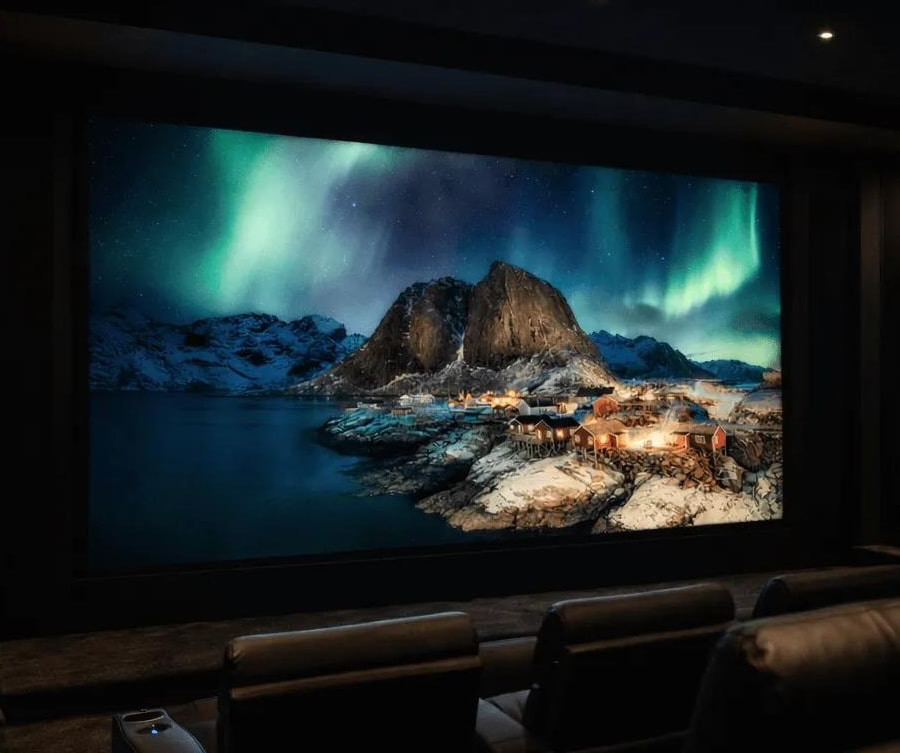
Runar uses Micro LED in Package (MIP) technology with a 0.9 mm pixel pitch and offers a native DCI 4K resolution of 4,096 x 2,160 pixels across a 3.84-meter-wide image. Unlike a conventional projection system, there is no projector, screen, or light path involved; the enormous LED wall is the display.
Barco claims a contrast ratio of up to 200,000:1, an ultra-low black level of 0.005 cd/m², and full DCI-P3 color gamut coverage. The Runar is also engineered to handle both cinema and consumer HDR formats, with DCI-grade HDR at 300 nits and consumer HDR content at up to 1,000 nits.
That combination is especially interesting in a dedicated home theater because it attempts to deliver some of the attributes associated with professional cinema presentation while also producing the considerably higher brightness expected from premium consumer HDR displays. Barco also offers a larger 205-inch Cinemascope version with 5,120 x 2,160 resolution for those who find a 171-inch screen somehow insufficient.
And the price?
Barco does not publish one. The Runar is sold through authorized dealers and custom installers on a quotation basis. If you have to ask, you probably can’t afford it. And if your installer casually suggests the 205-inch version instead, you might want to check whether the kids still need that college fund. Or if your attorney handles divorce cases.
Barco Runar LED Wall Specifications:
| Barco Model | Runar |
| Product Type | LED Wall |
| Price | Consult Dealer/Installer |
| Resolution | Native DCI 4K (4,096 x 2,160 pixels) |
| Pixel Pitch | 0.9 mm |
| Screen Size | 171” diagonal (3.84 m wide) |
| Display Technology | Micro LED in Package (MIP) |
| HDR Support | DCI-grade HDR at 300 nits, consumer-grade HDR at 1,000 nits |
| Black Level | 0.005 cd/m² |
| DCI-P3 Coverage | Full |
| Inputs | HDMI 2.1 (up to 4K 120p 444 10bit) – 2D up to 4K 120fps (DCI SDR/HDR) – 3D up to 4K 24/48/60fps per eye – (DCI SDR/HDR) Bitrate 1,250 Mbps |
| Dimensions (WHD) | 3840 x 2025 x 75.5 mm 12.6’ x 6.6’ x 0.25’ |
| Weight | 235 kg / 518 lbs |
For complete specifications and additional technical information, refer to the official Barco Runar product page.
Focal Astral 16 Takes Control of the Home Theater
Focal Astral 16 ($23,999) is a high-end 16-channel AV processor and amplifier designed for custom home theater and multi-room installations. Developed in partnership with StormAudio (Immersive Audio Technologies), the Astral 16 combines Focal branding and system integration with StormAudio’s multichannel processing platform.
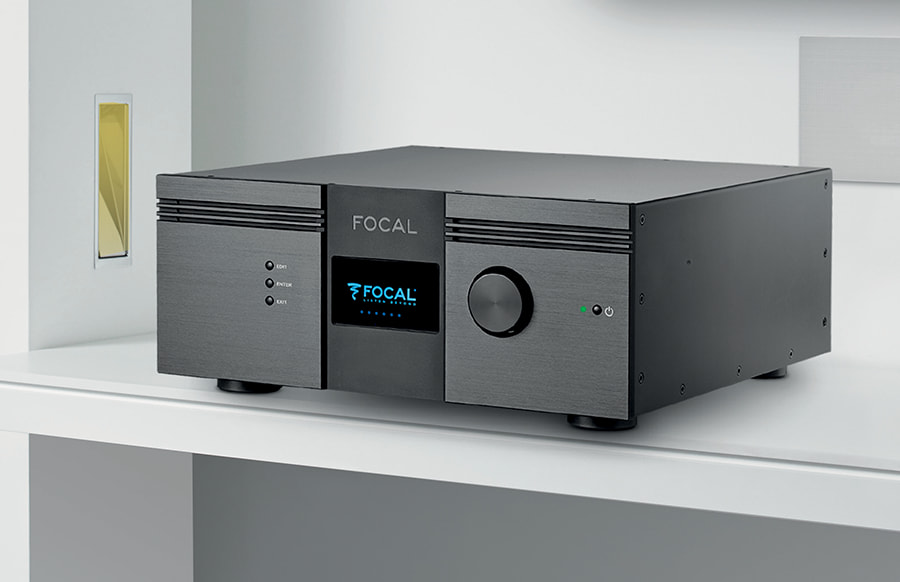
The Astral 16 incorporates Pascal Audio Class D amplification and supports 16 audio channels. Twelve channels are internally amplified, while four additional channels are provided through balanced XLR preamp outputs for connection to external amplification.
It also supports Dolby Atmos, DTS, and Auro-3D, along with filtering, equalization, and bass-management tools for configuring more complex theater systems. Dirac Live room calibration is included to help compensate for speaker placement and room acoustics, while compatibility with Control4, Crestron, ELAN, Savant, and RTI makes the Astral 16 particularly well suited to professionally installed systems.
Astral Specifications
| Focal Model | Astral 16 |
| Product Type | 16-Channel AV Processor/Amplifier |
| Price | $23,999 |
| Number of Amplified Channels | 12 |
| Power Output (for each of 12 channels) | 200W (8ohms) / 300W (4ohms) |
| Number of Unamplified Channels | 4 (XLR outputs for external amps) |
| Number of Decoded/Processed Channels | 16 |
| Surround Sound Format Support | Dolby Atmos / DTS:X / Auro-3D |
| Room Calibration | Dirac Live – (mic and tripod included) – also includes license |
| HDMI Inputs (ver 2.0) | 7 |
| HDMI Ouputs | 3 (one with HDMI-eARC) |
| HDR Support | HDR10, HLG |
| Setup Management | Configurable multi-theater management Configurable audio zones management Unlimited Theater and audio zones listening presets Backup and restore of setup Firmware update via USB/network |
| Custom Control Options | Crestron, Control4, Savant, RTI home automation |
| Front Panel Display | TFT LCD 4.3″ |
| Dimensions with stands (hwd)) | 19.10 x 47.90 x 49 cm 7.52 x 18.86 x 19.29 Inches |
| Net weight – with stands (kg/lbs) | 20.0 / 44.1 |
Naim CI Series Adds Power and Streaming
Providing additional amplification and streaming support, Naim is contributing two products from its CI Series to the CEDIA demonstration.

The Naim CI Series was developed specifically for the custom installation market and to complement Focal’s integrated loudspeakers. The range combines compact rack-friendly designs with high-output amplification, system configuration tools, and integration with professionally installed audio systems.
4 x Naim CI-NAP 101 ($1,999 each) — The CI-NAP 101 is a rack-mountable mono power amplifier capable of operating with conventional low-impedance loudspeakers or 70V/100V distributed audio systems. It delivers up to 500 watts into 8 ohms and 800 watts into 4 ohms, with outputs of 150 watts on a 70V line and 240 watts on a 100V line.
That flexibility is particularly relevant to this installation. Naim specifically identifies the CI-NAP 101 as suitable for driving Focal’s 1000 IWLCR Utopia together with two 1000 IWSUB Utopia passive subwoofers, which closely mirrors the configuration being demonstrated at CEDIA.
The CI-Uniti 102, discussed below, can work alongside the CI-NAP 101 as a streaming source, amplifier, and system-control component, but it does not provide 70V/100V amplification itself.
1 x Naim CI-Uniti 102 ($1,499) — The CI-Uniti 102 is a compact streaming amplifier designed for custom installations, delivering 150 watts into 8 ohms while adding network streaming, DSP, HDMI, Dante, and flexible system control.
As we found in our recent Naim CI-Uniti 102 review, its strengths are speed, clarity, system integration, and the ability to drive a wide range of loudspeakers without taking up much rack space. In this CEDIA system, it provides streaming access and works alongside the CI-NAP 101 amplifiers to support the larger Focal installation.
Additional Components Used in the Home Theater Demo
Kaleidescape Movie Player (model not specified) — Provides downloaded 4K HDR movies at very high bitrates, with picture and sound quality that can rival or, depending on the title, exceed Ultra HD Blu-ray.
Apple TV 4K — Provides access to additional video and music streaming services, giving the system a more conventional streaming source alongside Kaleidescape.
Focal Diva Alta Utopia Brings Four-Way Active Wireless Audio to CEDIA 2026

Focal will also showcase $210,000 Diva Alta Utopia, the company’s flagship active wireless speakers, which combine Utopia-derived acoustic engineering with integrated Naim streaming, amplification, DAC, and DSP technology.
This is not simply a larger and more expensive version of the Diva Utopia formula. The Diva Alta Utopia pushes Focal and Naim’s active wireless concept into true ultra-high-end territory with a four-way architecture, new PRISM tweeter, M-profile “W” midrange driver, Ultra Wideband inter-speaker connectivity, extensive streaming support, and 600 watts of Naim-developed Class A/B amplification inside each loudspeaker.
And then there is the $210,000-per-pair price, which makes the word “wireless” feel rather less casual than usual.
The Bottom Line
The real significance of this CEDIA 2026 showcase is not the individual hardware, but the fact that Barco now owns Focal and Naim and can present video, loudspeakers, amplification, streaming, and custom integration as one luxury AV ecosystem.
The first demo shows that strategy at full scale with a 171-inch Runar LED Wall, Focal 1000 Series architectural speakers and subwoofers, and Naim CI electronics. The second takes the same Focal and Naim partnership in a different direction with the $210,000 Diva Alta Utopia active wireless system.
For luxury integrators and clients who want high performance with minimal visible hardware, that combination is the real differentiator. The products are expensive, but the larger story is how much of the system can now come from three brands under the same corporate umbrella.
Price & Availability
All products available through Authorized Barco, Focal, or Naim Dealers:
- Barco Runar LED Wall – Consult with Dealer/Installer
- Focal 1000 IWLCR Utopia – $8,499
- Focal 1000 IWSUB Utopia – $3,299
- Focal 1000 ICLCR5 – $2,699
- Focal Astral 16 – $23,999
- Naim CI NAP-101 – $1,999
- Naim CI Uniti-102 – $1,499
- Diva Alta Utopia (2 speaker set) – $210,000
The Barco. Focal, Naim demos will be in Booth 3123 in the Colorado Convention Center, Denver, Colorado from Sept 2-4, 2026.
Related Reading


Whoop has made screen-free wearables since its first proper release in 2015, but the shift in what Whoop considers itself to be about mirrors the change we see in the wider market. Today a Whoop band is made for just about anyone with the spare cash to pay for its $199 annual subscription. It’s a system to “help you improve how you sleep, train, and feel—starting day one,” to use Whoop’s own words. This couldn’t be further removed from the self-serious way Whoop described itself in 2015, as a “performance optimization system exclusively designed for elite athletes and teams.” What a change a decade makes.
Even if Whoop has always been grounded in the now-common concept of “training readiness,” things have altered drastically. So while it’s tempting to say Google’s Fitbit and company are playing catch-up with Whoop, that’s not quite it. It has homed in on the “low-distraction” lifestyle selling point just as the other bigger tech companies have.
On at least three fronts this can be attributed—or blamed—on AI, to some extent.
AI as the Good and Bad Guy
AI is a way for these wearable companies to upsell and make money, and on the other side, a major contributor to why a lot of us feel like we need low-distraction tech these days in the first place. While virtually every Whoop rival says it can be used without a subscription, some of these companies lean heavily on AI as an upsell.
Take Google and the Fitbit Air. Without a subscription, the app looks cute enough but is fairly spare. You get stats and charts, but if you want chatty explainers of what any of it means, you need Google Health Premium at $10 a month. Numbers and graph lines become paragraphs that reference specific quirks or events of the day because, to steal a line from humorist and podcaster John Hodgman, specificity is the soul of narrative.
And this is just the beginning. “The use of AI in monitoring and guiding health and wellness is still at the early stage of development but will likely become significantly more advanced as AI matures,” says Peter Richardson, vice president and cofounder of Counterpoint Research.
I find Google Fitbit’s chatbot ramblings quite annoying, with not-that-rare dips into the condescending, and I may even prefer the subscription-free experience. But my job has pushed me through the unenviable task of learning what VO2 Max actually means, what heart-rate variability trends indicate, and so on: not the norm.
AI could solve that long-standing issue with wearables—people glazing over data as soon as they see anything more than their daily step count. This AI use will be better represented on the phone than the watch screen, too, making the lack of screen a strength. It lets the AI shine.
Technostress
The most important influence of AI here is on the other side of the equation, though, as just the latest stage in the tech-ification of our daily lives. I’ve heard from multiple friends about how their recent work appraisals focused on higher-ups demanding greater AI use within their “personal workflow.” Perhaps you’ve had a similar experience.
Elizabeth Marsh, a doctoral researcher at the University of Nottingham who studies the dark side of the digital workplace, finds that digital tools consistently trigger a familiar cluster of harms: technostress, information overload, constant interruption, and blurred work–home boundaries.
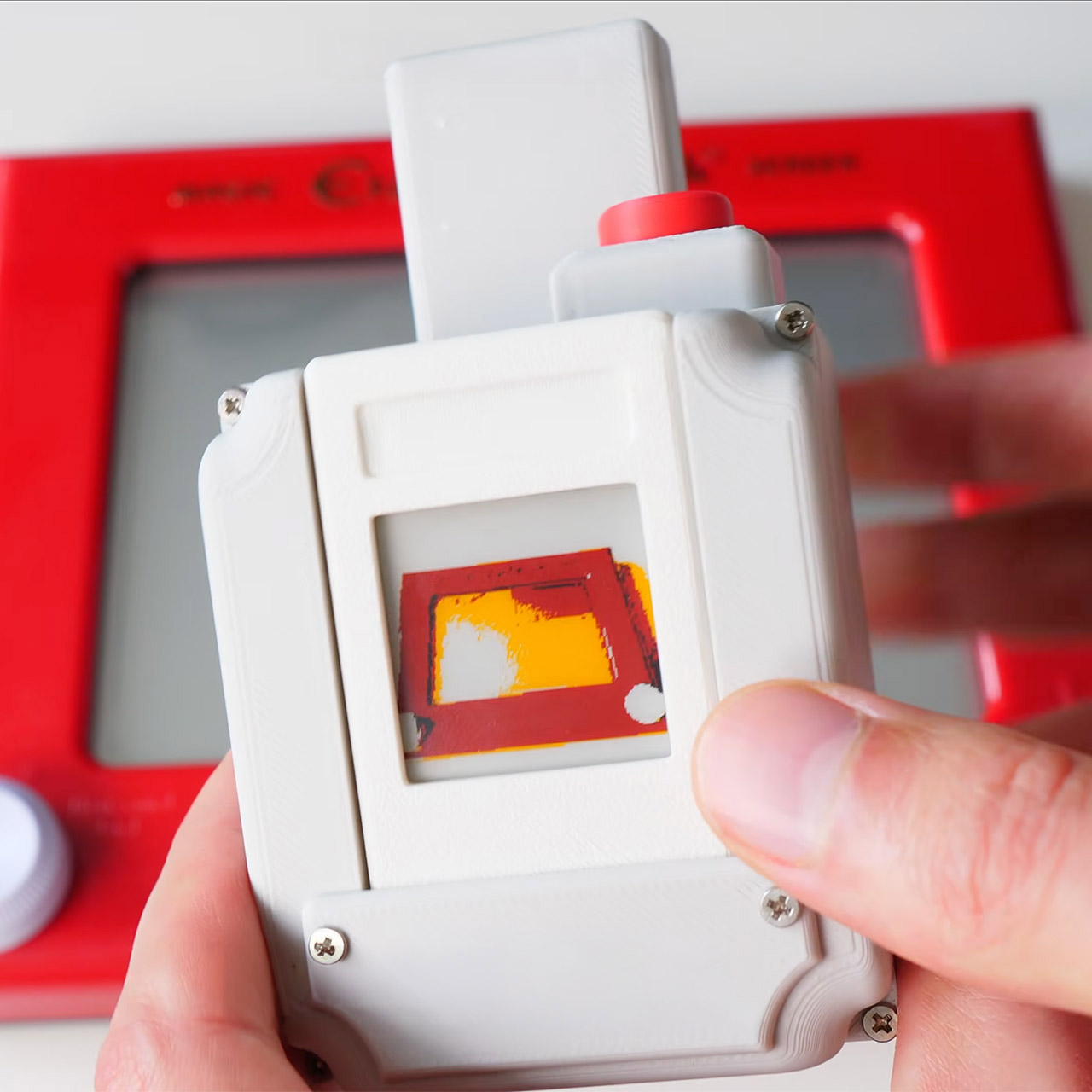
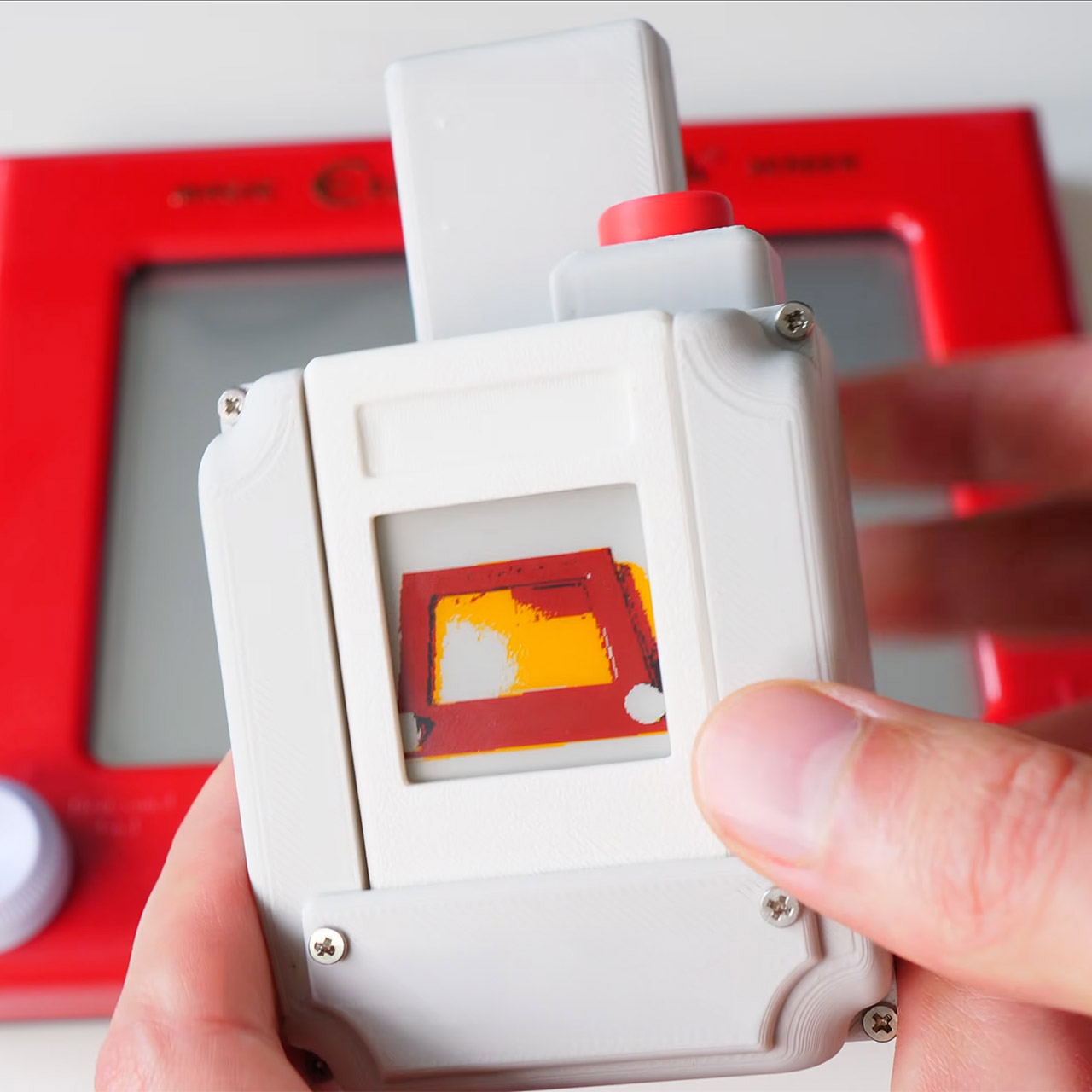
Digital photos usually vanish into a folder the second you press the shutter. Maker Strange Inventions wanted a shot you could pull out of the camera, stand on a desk, and still overwrite later, so he built an instant camera whose film is a stack of tiny four-color e-paper cartridges.
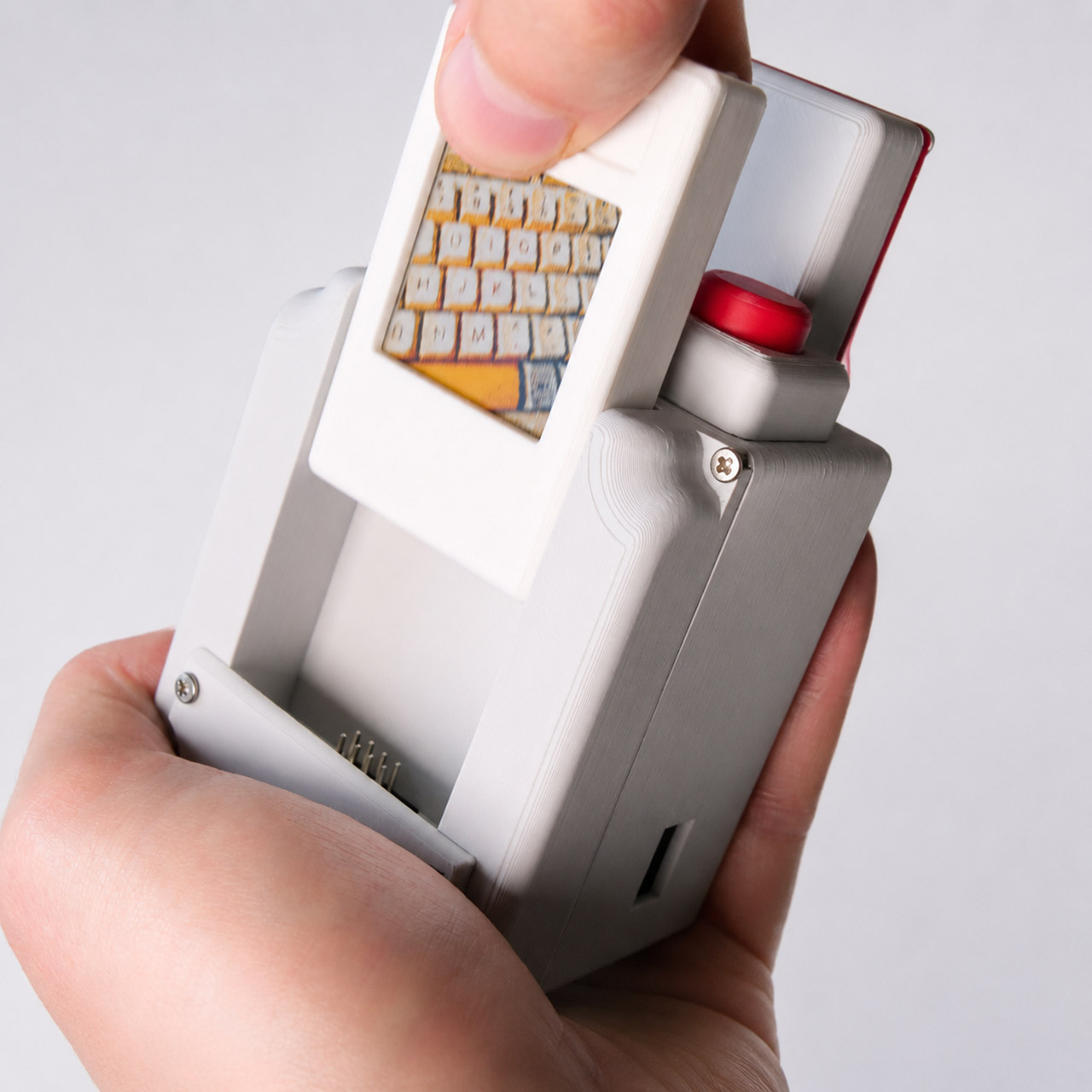
You insert one of those small 3D-printed cartridges into the top of the compact body, press the red shutter button, and, assuming you’re within range, the Raspberry Pi 3 model A+ and the 5 megapixel camera module work their magic, reducing the scene to black, white, red, and yellow as the screen flickers to life before finally settling. Pinch the Game Boy-style release tab, slide out the cartridge, then insert a new one. E-paper has a nice side effect here in that it holds the image even when the battery is not in place, so each ‘film cartridge’ becomes a one-time, tangible photo that you may display or replace as needed.
Sale

Bambu Lab A1 mini 3D Printer + LED Lamp Kit, Ready-to-Use for Beginners
- A1 mini + LED Lamp Kit for Creative Light Projects: Bring your ideas to life with the included LED Lamp Kit. Simply print compatible lamp models and…
- The Perfect 3D Printer for Beginners: A1 mini 3D Printer is designed to make 3D printing easy from day one with automatic calibration, simple setup…
- Experience the Bambu Lab Ecosystem: Access MakerWorld’s huge library of ready-to-print models, manage prints through the Bambu Handy app, and enjoy…
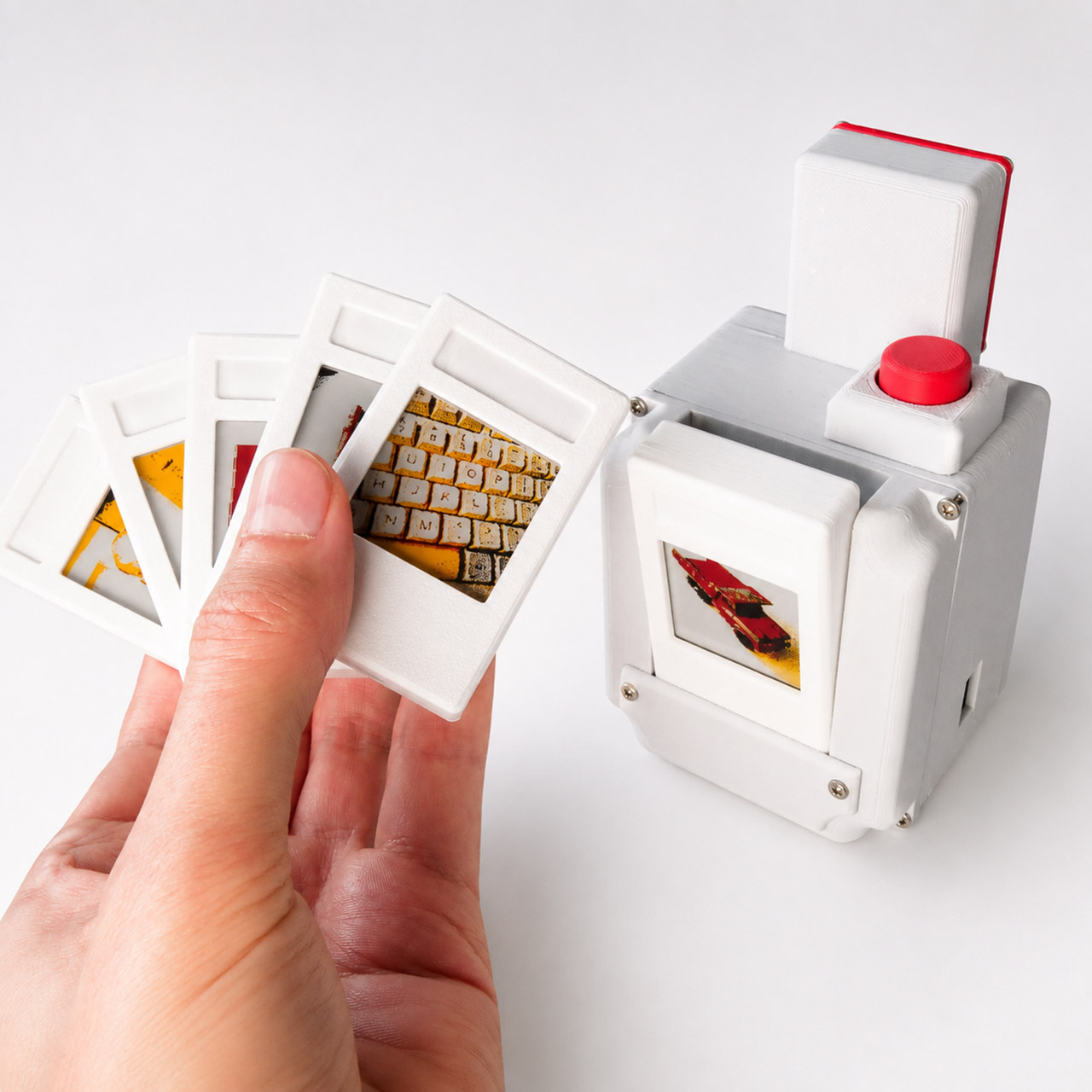
All of the hardware is squeezed into a small 3D-printed enclosure, which includes a Raspberry Pi 3 A+, a Raspberry Pi Camera Module 3 Wide, the quirky 1.54-inch 200×200, four-color e-paper display, and a battery pack to make the whole thing portable. In the early attempts, a frail ribbon held the display in place, but he soon replaced it with pin headers, which serve the same purpose while also keeping the cartridge firmly locked in. Headers are low-cost and effective. He did have some difficulty finding something springy to do the same job at first, but the idea of employing pogo springs was too expensive…in the end. Headers are excellent value and also serve to keep the cartridge in place, which is exactly the effect they were hoping for if ‘film’ was to feel like film. The entire contraption comes together without the need for screws, however he later added a little grab tab to make pulling the old cartridge out less like wrestling a ‘Game Pak’.
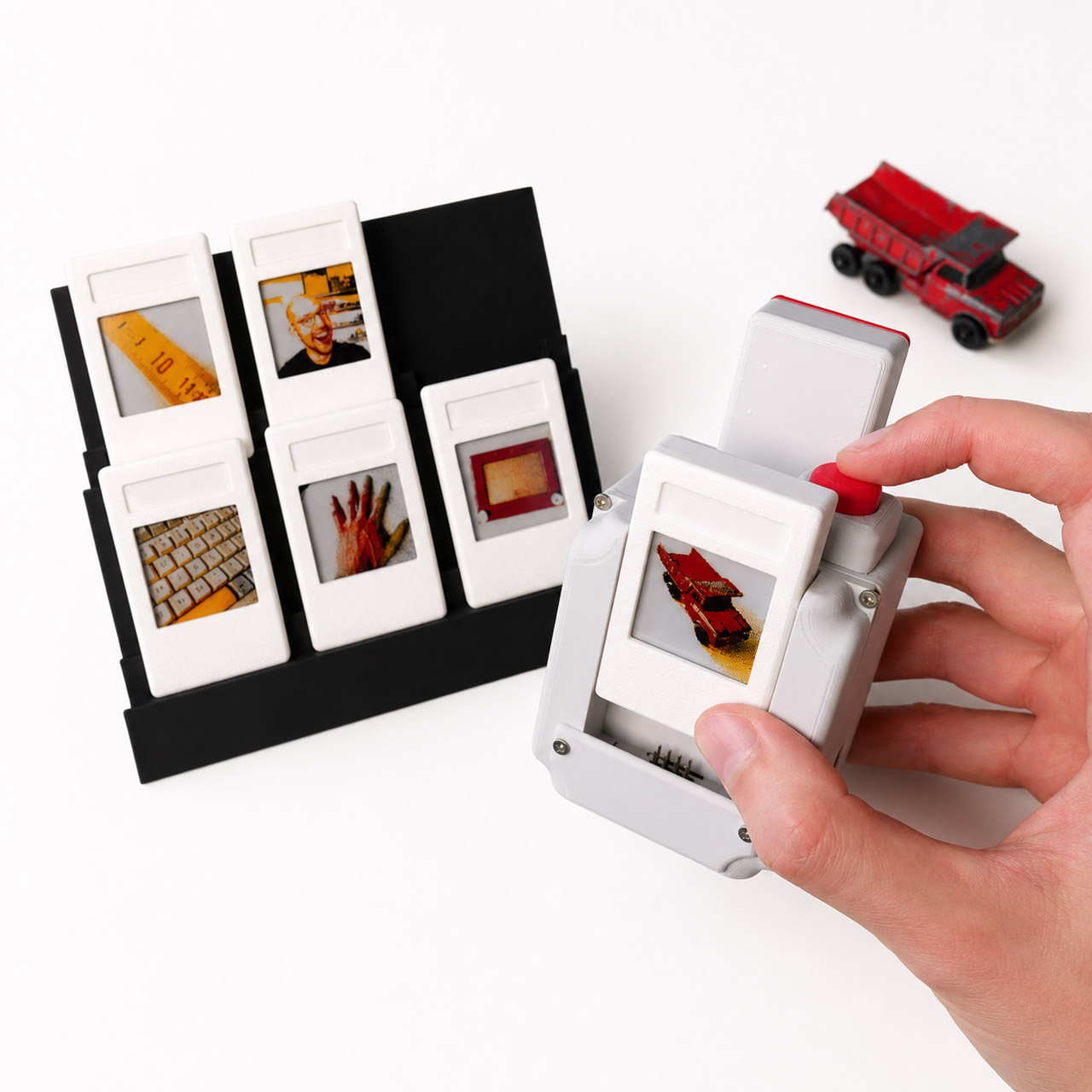
When you press the shutter, you get to choose from only four colors, which is a good for the Python script that reduces the raw captures and dollops to just those four colors, then lets you play with contrast, brightness, saturation, sharpness, and dithering until the image looks like it was meant to be that way on that small screen. Holding down the shutter button allows you to switch between a dithered and flat look. The poor old plants ripped apart at the seams since there was no green on the panel, but the maker’s hand, a toy car, a tape measure, a keyboard, and a spool of printer filament fared much better. Some subjects require additional resolution; for example, a window view was murky at 200 pixels.
In the end, he kept shifting through the six cartridges until he found a set that he was satisfied with enough to write on the screen. For the time being, he is letting them alone, and they appear like miniature works of art on their exhibition stand. The Strange Inventions Lab shop sells project files for €24, which contain the FreeCAD source file, STL files, electrical wiring diagram, complete parts list, Raspberry Pi software, modified e-paper driver, an image-processing test suite, as well as a shopping list and some basic build notes to get you started. The tough part is that you still have to source the Raspberry Pi, camera module, and all of the other components yourself. He used largely off-the-shelf boards for this prototype, but if you really want it to be as compact as possible, he’s recommended a custom PCB as the next step. Six images now sit on his display stand, waiting to be dusted off and replaced another day…

Two sources also describe the inventory bot as too slow. One says Meta previously explored using drones as a faster alternative, but ultimately didn’t pursue the idea.
Inside the Testbed
The Altoona data center campus is often where Meta prototypes new technologies. “What they do here in Altoona, they take to their other sites and put that in place there,” says O’Connor.
Since last June, Meta has been trying out a pair of dual-armed Watney robots for some cabling work at one of its Altoona buildings, according to one of the people familiar with the company’s efforts. The robots are supervised by humans and can’t work as fast as people yet, but they show promise.
After Watney launched in 2023, it put out a demo of a laundry-folding robot that it claimed could also handle janitorial work inside businesses. The San Francisco startup quietly pivoted to data center robots early last year, according to archived copies of its website.
Meta is testing additional robots in New Albany, Ohio, at the company’s newest data center campus known as Prometheus. Four-wheel robots “with a scissor-lift-style riser and a six-axis arm on top” made by the automation giant ABB are being used there to reseat parts and, eventually, they may take on other tasks with diminishing human oversight, a person familiar with the product says.
But the idea that robots will prevail over humans isn’t guaranteed. “There’s been a lot of pilots and demos, but no provable working solution,” says Helen Oleynikova, CEO of Exclaim Robotics, which is developing prototypes to replace broken parts and reset cables in data centers.
At Meta’s data centers, some workers have complained about the amount of downtime the robots need to recharge their batteries, according to the people familiar with the matter. Meta has also acknowledged internally that robots aren’t equipped for certain tasks, such as the intense cabling work required to run an Nvidia GB300 supercomputer. “Things have been designed for human hands forever to make everything a five-minute repair,” says one former Meta employee. “Redesigning everything will take time.” But the robots are getting prepared.
This story originally appeared at wired.com.
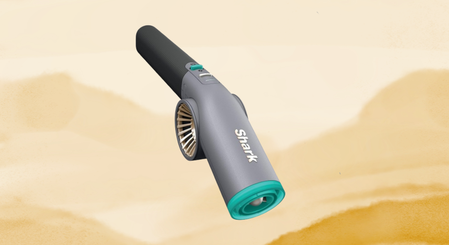
A vacuum cleaner can’t get behind a radiator or blast cobwebs off a kitchen skylight, but Shark’s BlastBoss can, and it’s currently going for £89.10.
That £89.10 price tag marks a steep drop from the usual £129.99, a 31% discount worth £40.89 on this four-star cordless air blaster built to handle exactly the kind of mess a vacuum cleaner can’t manage alone.
Shark BlastBoss hits its lowest price with 31% off
Priced at £89.10 instead of its usual £129.99, the Shark BlastBoss earns its place as a genuinely useful addition to any cleaning routine.
That saving looks even better set against the wider picture: over the past four months, the BlastBoss has mostly held steady around £129.99, dipping briefly to £100 in early summer before climbing back up, which makes today’s £89.10 the lowest it has been recorded at.
That kind of price drop is exactly when it’s worth asking whether the BlastBoss holds up in practice, and our tech expert David Ludlow spent several weeks testing it around his own home, rating it four stars and calling it a highly versatile tool that clears dust from tricky spots a vacuum simply can’t reach.
Flipping the switch between indoor and outdoor mode adjusts the maximum airflow on the fly, while the variable-speed trigger lets you dial in anything from a gentle puff for crumbs on a counter to a full blast for packed-in dust.
Switch to Boost and the BlastBoss claims up to 190mph of airflow, more than enough to shift stubborn dust from behind old radiators. Ludlow found exactly that in testing, using the precision nozzle to clear dust and cobwebs a normal vacuum could never reach.

That power draws down a battery good for around 21 minutes on the standard setting, dropping to under 10 minutes on Boost, though a full recharge from the included adaptor takes roughly three hours from empty.
Outdoors, the bundled broom attachment pairs sweeping with airflow to speed through jobs like clearing grass cuttings off decking or blasting cat hair and leaves from garden furniture, all from a tool that weighs just 660g.
Available in five colours and priced at £89.10 instead of its usual £129.99, the Shark BlastBoss earns its place as a genuinely useful addition to any cleaning routine, tackling jobs indoors and out that a standard vacuum cleaner simply cannot handle.
SQUIRREL_PLAYLIST_10148964


Photo credit: inb4ohnoes
Sophia Tung spent a year turning Nintendo’s orange boombox-on-wheels into a street-legal machine she could actually ride. The YouTuber and engineer, already known for deep dives into robotaxis and emerging tech, became so hooked on Mario Kart World that she decided the Tune Thumper had to exist in real life at full size. Everything on it works: speakers play music, buttons click and pause tracks, headlights and taillights fire up, the antenna stands tall, and a Nintendo Switch 2 dock sits inside the cassette-door section so you can play the game on the very bike it came from.
Game screenshots and photogrammetry provided her with a starting point for creating a 3D reference, but when she attempted to scale the in-game model 1:1, it proved to be far too long and high for someone to sit comfortably and ride securely.Instead, she installed the body on an old FTO frame, which proved to be an excellent choice, and flipped the front fork to reduce the wheelbase from 84 cm to 77 cm, making it more manageable.

Nintendo Switch 2 System
- The next evolution of Nintendo Switch
- One system, three play modes: TV, Tabletop, and Handheld
- Larger, vivid, 7.9” LCD touch screen with support for HDR and up to 120 fps
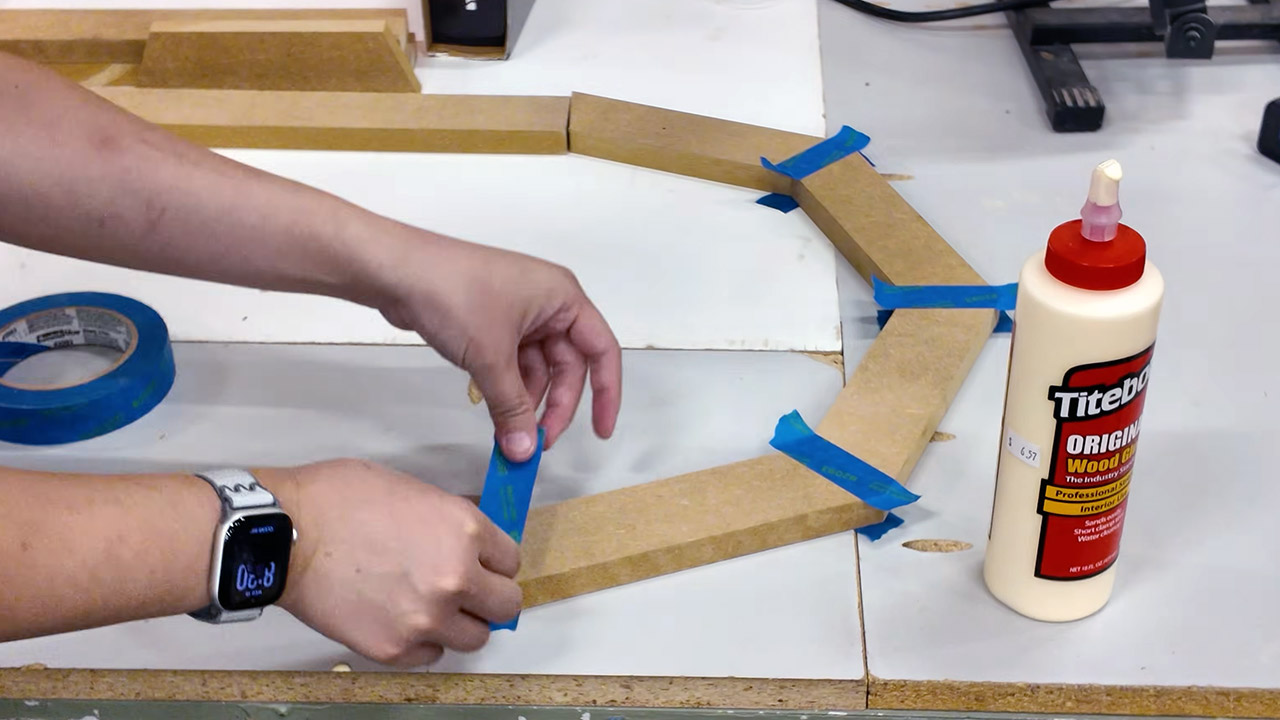
That way, she could preserve the cartoon-like proportions while also making it safe for people to sit and steer. A friend suggested going with wood after they received a price for a $10,000 3D print, which is a lot of money for a print that takes ages to complete. So cabinet builder Joe DiMaio spent weeks working with her to build the speaker shell out of MDF sheets, stacking and cutting them into the curved shape before hand-applying all the features such as the black grilles, colored buttons, volume knob, and cassette embellishments. She had her partner handle the most of the late nites and frustrations that followed.
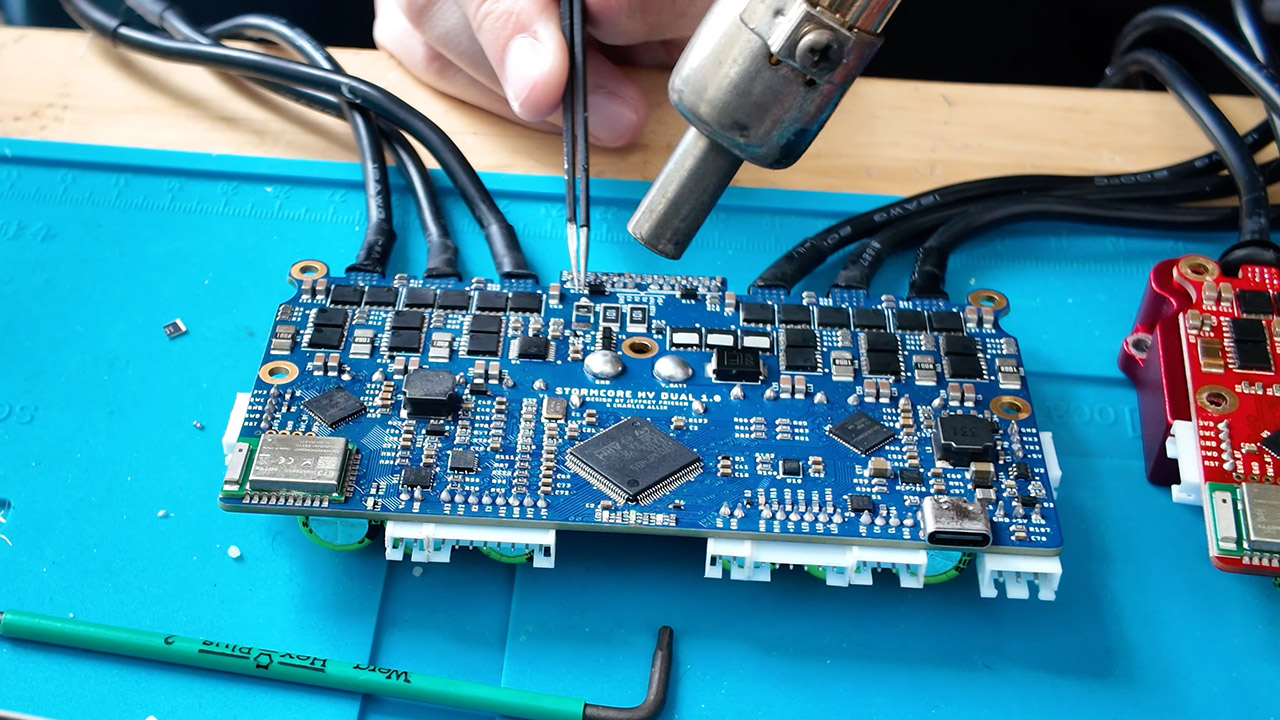
An 84-volt battery pack provides power to the motors via a unique speed controller, with a top speed of approximately 65 mph on 13-inch wheels. A MOSFET switch and DC converters handle the illumination, so the head and tail lights appear to belong on a real vehicle, which they now do. The speakers are positioned where the game’s black speaker cones would be, and they are actually playing audio, which is a really great touch. And you can see the cassette door, which hides the Switch 2 dock internals as well as some extra ports, not to mention Apple CarPlay. The whole weight came to roughly 70 pounds.

Halloween night proved to be the first real-world test, and let me tell you… the dashboard reset on every bump, a printed tail piece flew off, and one of the tires ran flat, but folks on the street just stopped and stared when they saw it, which provided plenty of Instagram worthy moments. After that ride, she was able to replace a shorted controller by hand, secure the electronics against vibration, and eventually resolve the dock integration issue.

Later, she took the bike to a Nintendo store and demonstrated that the buttons functioned, the music played, and the dock could power up a screen. The entire endeavor took her a year of evenings, splinters, and 4 a.m. sessions, but the end product is a wooden radio bike that appears to have stepped straight out of the game and onto the pavement.


As we slowly drop our reliance on fossil fuels, there is still discussion about how to plug the gaps in our energy needs. Of course, renewable sources like wind power are helping take the strain, and modern turbines are far more capable than early designs were. However, renewable schemes like this are not yet ready to take up all of the energy shortfall, especially in places where the wind doesn’t blow consistently or where large-scale installations simply aren’t practical.
This is why nuclear power is still regularly touted as the energy source the planet needs to help make the transition away from fossil fuels. While there is always controversy and debate surrounding nuclear power, it does pack a “power punch.” It would take around 800 wind turbines to replace a typical nuclear reactor. All these turbines would have a footprint of about 1,000 times that of a nuclear reactor — it just isn’t a practical option. However, there is a comparison where the playing field might be slightly fairer: nuclear microreactors.
Microreactors, as the name suggests, are small reactors useful for supplying power to isolated communities, military installations, research stations, and anywhere else where there is limited or no grid access. In many of these situations, and assuming the right conditions, wind turbines can also be used as a power source.
However, to really understand how wind turbines stack up against microreactors, we first need to understand a few things.
What are microreactors?
There is nothing new about the relationship between nuclear power and portability. U.S. Navy submarines, for instance, have used portable nuclear reactors since the USS Nautilus was commissioned as the first nuclear-powered submarine in 1954. The latest generation of naval reactors powers ships like the USS Gerald R. Ford, one of the largest aircraft carriers in the world.
However, regardless of size, all nuclear reactors unlock the energy contained within matter by splitting uranium or plutonium atoms and use the heat energy released to power turbines that generate electricity. The vast majority of nuclear reactors are a type known as pressurized water reactors (PWRs), and a typical commercial one produces around 1 gigawatt of power.
When it comes to nuclear microreactors, the underlying physics are identical, but there are some fundamental differences. These include how the reactors are cooled, with various reactor types under development. However, for the purposes of this article, the most obvious difference is size. While there is no clear definition that classifies microreactors, the U.S. Energy Information Administration (EIA) classifies microreactors as producing between 1 and 20 megawatts of power. While there are arguments stating that 50-megawatt reactors also fall into this category, let’s give the wind turbines a fair crack at the whip and base our comparison figure on the EIA definition. To be completely fair, we’ll set the bar about midway and run our comparison against a 10-megawatt microreactor.
Wind turbines vs. nuclear microreactors

Now that we’ve set the baseline for a microreactor, we need to do the same for a wind turbine. However, this is where we also need to look at one of the biggest drawbacks of wind turbines — they need wind to work, and the weather doesn’t always play ball. The measured output of a wind turbine is its maximum possible output in ideal situations. Our comparison will need to account for this. So, let’s split the difference again and assume that the wind turbines are situated somewhere there is enough wind that they consistently hit half their maximum output.
Which leads us to the next point. Just how much power can a wind turbine generate? Size matters here too — the larger the turbine, the more power it produces. To give wind turbines the best chance, let’s assume that we’re going big with this. A large onshore wind turbine can have a rotor diameter of about 438 feet and can produce up to 3.5 megawatts of power, optimally. Or, about 1.75 megawatts for our wind-adjusted comparison. In this scenario, and when compared to a 10-megawatt microreactor, we’d need about six wind turbines to replace it.
On the face of it, this seems like a realistic option. Certainly when compared to replacing a commercial reactor with wind turbines, the numbers are certainly kinder. However, we need to temper this slightly — a microreactor will provide consistent power regardless of weather conditions and can do so for years at a time without refueling.

OFFBEAT
At last, somewhere comfy to sit while your PlayStation 5 game loads
Microsoft’s latest Xbox merchandising deal means at least you can sit on an IKEA cushion while you wait for your PlayStation 5 to boot.
IKEA has announced YXSTABY, a nine-piece collection of items aimed at the XBOX completist who has to have every possible piece of merchandise associated with their beloved game console. Need a stool? How about one modeled on a controller’s thumbstick? A cushion? There’s a D-pad to throw on the sofa.
And a tariff refund for Xbox customers? Ah, well, the IKEA deal only goes so far…
IKEA has long had a reputation for being that place where relationships go to die, thanks in part to the occasionally labyrinthine layout of its store. Xbox has, under the leadership of Asha Sharma, acquired a similar rep as far as staffers and game studios are concerned. Thousands of workers were laid off in recent months as Sharma “reset the business” to improve the platform’s standing in a market dominated by rivals.
In the UK, IKEA charges £12 for a cushion or platter, and up to £115 for a side table on wheels. The Reg suspects Xbox branded stuff will be a little pricier but considerably less than an Xbox itself.
Microsoft Store shows the comparatively weedy Xbox Series S retailing for £429.99, while the beefier Series X goes for £669.99. When launched in 2020, the Series S cost £249. “Unfortunately,” wrote Microsoft, “console storage and memory prices have increased by more than 2.5x and we expect another doubling by the fall of 2027.”
It is far from alone. Price rises have become a way of life in the tech industry in recent months as demand for memory outstripped supply.

This is not the first gaming-related wares that IKEA has sold. The BRÄNNBOLL collection predates the Xbox collaboration and features “everything to improve your gaming adventures, from a rug that helps you hit the enemies, not the table, to gaming bolsters that boost your comfort and play.”
The YXSTABY range was unveiled at Gamescom this month, but eager buyers have a little longer to wait for that Xbox-inspired stool. The range will be in stores and available online from October 1. ®
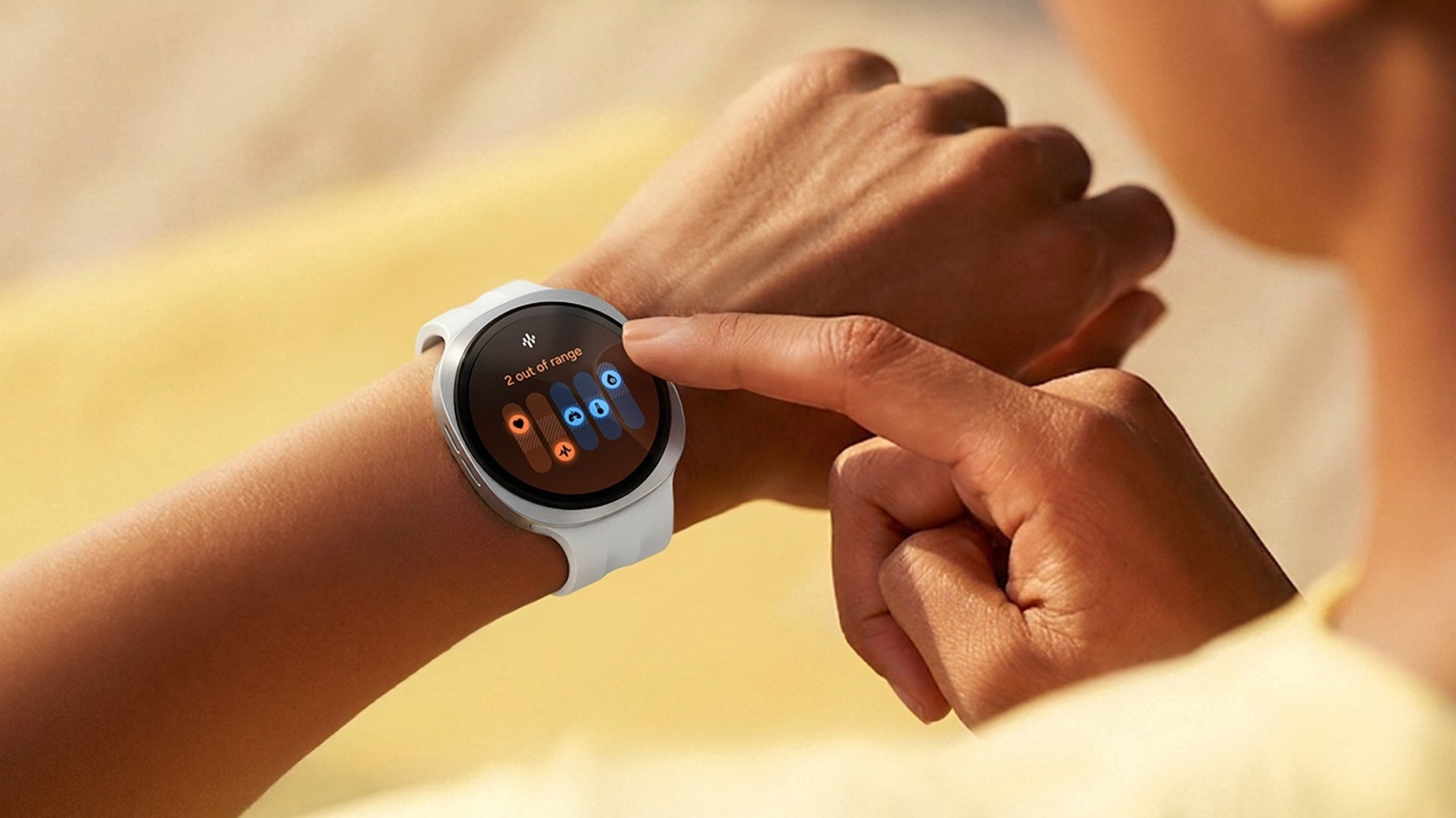
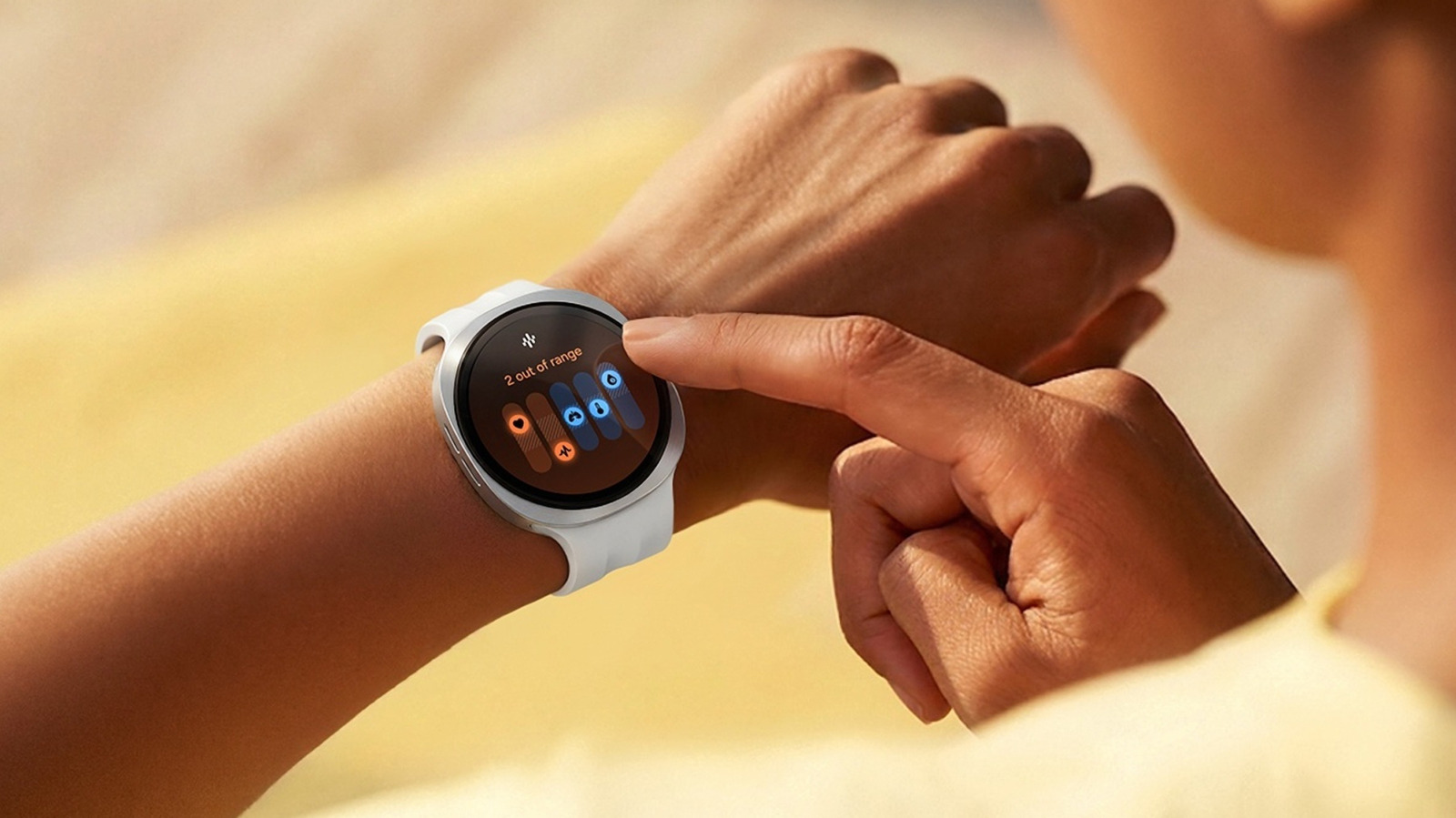
Anyone weighing up Samsung’s 2026 smartwatch options — Galaxy Watch Ultra 2 and Galaxy Watch 9 — would have to pick one over the other mostly based on price, since the former costs nearly twice as much as the latter. But if money’s not a problem, then the question shifts to whether the Ultra 2 is worth the extra cash. While there are some key differences, both share more or less the same foundation, like being powered by Qualcomm’s Snapdragon Wear Elite processor. They also use the same BioActive sensor package, allowing health tracking to work identically on either watch.
As for differences, the first thing you’d notice is also what would make or break your decision. The Galaxy Watch Ultra 2 — the predecessor to the Galaxy Watch Ultra — comes in just one size, 47mm, landing on your wrist at 61.5 grams. Meanwhile, the 40mm Galaxy Watch 9 weighs roughly half of that, coming in at 31.5 grams. Even the larger 44mm version tips the scales at just 34 grams. You’d certainly feel the difference on your wrist, and even more so if it’s skinny. This can be a real drawback considering wearing something around the clock is exactly how these watches collect health data.
However, with that additional weight, you get fancier materials. While both watches have the same sapphire crystal over the screen, the Ultra 2 uses a grade 4 titanium frame and a ceramic-and-sapphire back. The Watch 9 sticks with aluminum and some plastic. Water resistance on a Galaxy Watch gets measured in atmospheres, and Samsung rates the Watch 9 at 5ATM, while the Ultra 2 doubles that to 10ATM.
Beyond the immediate differences
Additionally, the Ultra 2 has a third button that the Watch 9 lacks. It’s this orange Quick Button you can map to whatever you want. Holding it down for five seconds triggers a safety feature, too – an 86-decibel siren, which Samsung says carries up to 180 meters.
However, perhaps the biggest selling point of the Ultra 2 is the battery. The company quotes up to 60 hours with the always-on display running. That said, one of the tips to maximize battery life on a Galaxy Watch is to switch off the AOD. GSMArena and Wareable did that and were able to push the battery to over four days. Strangely, however, the reviews found the Galaxy Watch 9 delivering less than promised. Samsung claims up to 30 hours with AOD on, but several outlets, including GSMArena and PCMag, achieved far less than that, sometimes not even getting a full day out of it.
The other differentiating factor is display brightness. The Ultra 2 supposedly peaks at 5,000 nits against 3,000 for the Watch 9. That said, Samsung, in a footnote, quietly explains that’s for a localized peak under bright light. The Ultra 2 also doubles storage to 64GB against the Watch 9’s 32GB.
Other useful features present on the Ultra 2 but not on the Watch 9 include Trail Run, which reads live elevation, how deep into a climb you are, and your total ascent. That 10ATM rating also comes in handy underwater, since the Ultra 2 is likewise capable of logging depth and water temperature.
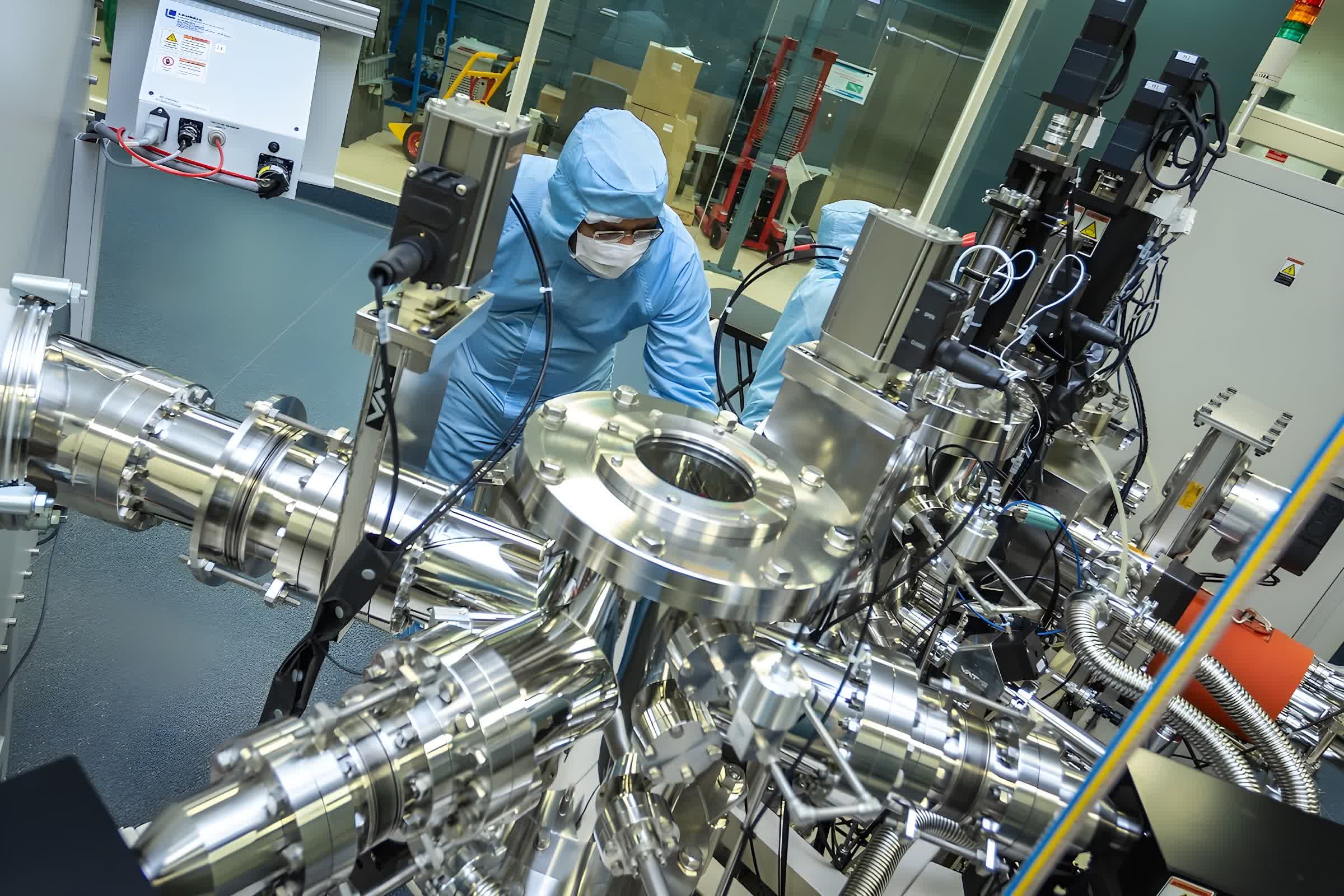
TL;DR: Scientists have built a quantum battery prototype that can produce an electrical current after charging in femtoseconds, marking a step forward for a technology that has largely remained theoretical and limited to small-scale lab experiments. The prototype is far from replacing conventional batteries, but it provides evidence that quantum effects could eventually enable faster energy transfer in quantum hardware and other specialized systems.
The device, developed by a team led by CSIRO quantum science researcher James Quach, is designed to take advantage of a quantum effect called superabsorption. In simple terms, the more molecules involved, the faster the system can absorb energy.
That is the opposite of what happens with conventional batteries, which generally take longer to charge as they get larger. The work does not mean quantum batteries are ready to replace those used in phones, laptops, or electric vehicles. The prototype stores only a small amount of energy and holds it for nanoseconds. Still, researchers say the experiment demonstrates that energy can be rapidly absorbed and extracted from a quantum battery.
The prototype uses an optical microcavity made of two mirrors separated by about 100 nanometers. The space between the mirrors is filled with organic dye molecules. A laser shines into the cavity, causing the light and molecules to interact strongly.
That interaction creates hybrid light-matter states. The molecules do not absorb energy independently, as they would in a classical system. Instead, they respond collectively.
The battery charges in femtoseconds, or quadrillionths of a second. It can retain energy for nanoseconds, about six orders of magnitude longer than the charging period.
Quach’s team first demonstrated superabsorption in 2022. The newer experiment added the ability to extract an electrical current. The current remains small, but demonstrating it is an important step toward making a quantum battery useful beyond a physics experiment.
Quantum batteries are not expected to compete with conventional batteries simply by storing more energy. Their main attraction is the possibility of very fast charging and precise energy delivery.

Dario Ferraro, an associate professor of physics at the University of Genova, told the BBC that quantum batteries are intended to improve the speed and control of energy delivery rather than significantly increase the amount of energy a battery can store.
For now, the gap between the prototype and a useful power source remains wide. The device can hold only a few billion electron volts of energy and retains it for a very short time. A real-world system would need far greater capacity and much longer storage times.
Quach said his group has built a hybrid design intended to address those limitations. It combines quantum components for rapid charging with classical layers that can store energy for longer. He said the team is preparing a paper on the work.
The researchers also plan to link multiple microscopic batteries together. “If we do those two things, then we’re on our way to being able to power a conventional device,” Quach said.
The optical microcavity system has one practical advantage: It operates at room temperature. Other quantum-battery designs use superconducting materials, which are already important in quantum computing but require extremely cold operating conditions.
Superconducting systems can operate at temperatures below -150°C. “This is fine for quantum computers, but not so useful to power your mobile phone,” Quach said.

Mauro Paternostro, a quantum physicist at Queen’s University Belfast, said the optical approach is a strong way to demonstrate that quantum charging can work. However, he added that it may be difficult to draw energy from such a system in a controlled and useful way. “A microcavity gives you a beautiful ensemble demonstration, but poor control over getting the energy back out in a useful, directed form,” he said.
The first practical use of quantum batteries, if they reach that point, may be in quantum hardware rather than consumer electronics. Quantum computers already rely on specialized equipment, and some use superconducting systems that operate at cryogenic temperatures.
Quach said a quantum battery could eventually help reduce energy use in quantum devices and support faster, more reliable operation. However, those benefits have not yet been demonstrated.
Ferraro said quantum effects are fragile and can break down when the system interacts with its environment. He expects quantum batteries to remain most useful in quantum-scale applications. “In my view… quantum batteries are unlikely to replace conventional batteries in everyday applications such as mobile phones or electric vehicles,” Ferraro said. “Their natural domain is the quantum scale.”
The latest prototype does not settle that debate. It does show that researchers can use quantum effects to charge a system quickly and extract an electrical current. The next challenge is building a device that can store more energy, hold it longer, and release it where it is needed.


VodafoneThree’s networks director says UK mobile quality is not ready for AI traffic and that planning rules, not money, are the obstacle, with more than half of its upgrades to existing masts requiring permission. The EU’s Gigabit Infrastructure Act has since November given authorities four months to decide a permit, after which it is deemed granted.
The UK’s largest mobile operator says its own network is not good enough. “I am embarrassed today at the level of quality of our network,” Andrea Donà of VodafoneThree told the Guardian.
He was describing what happens when AI traffic arrives. His comparison was the signal loss people get at a stadium, made permanent.
The starting position is poor. UK mobile coverage is worse than every EU member state and every other G7 country, on Opensignal data compiled for Which?. The same analysis puts it 57th globally for network performance.
Money is not the obstacle. VodafoneThree has committed £11B to upgrading masts, and it is cutting its mast count by 30%.
Almost none of the work needs a new site. About 96% of the upgrades are on existing structures, and more than half of those still require planning permission.
Donà’s ask is procedural rather than financial. “Planning reform is the lowest possible cost growth policy, it doesn’t require any government money,” he said.
The European Union legislated exactly that in 2024. The remedy he is describing is already on the statute book across the Channel.
Under the Gigabit Infrastructure Act, national authorities have four months to decide a permit application for a very high capacity network, and the permit is deemed granted if they miss the deadline.
It has applied since November last year. Member states may opt out of the automatic approval, but they have to offer compensation or a right to sue instead.
Brussels is going further. The Digital Networks Act proposes indefinite spectrum licences, use it or share it rules, and simpler deployment in exchange for tougher coverage duties.
The UK is bound by none of it. Its operators also point out that mobile networks are critical national infrastructure without the reliefs data centres receive on business rates and energy.
Elsewhere the gap is being attacked from a different direction. A Spanish startup raised €150M to beam 5G to ordinary phones from orbit, which needs no local consent at all.
Which is the shape of the problem. Britain protects the building where the model runs and not the network that has to reach it.
Google Maps will show ’Lake America’ in US, not ’Lake Ontario’

India vs Thailand LIVE Score, Women's Asia Cup 2026: Harmanpreet Kaur-Led India Invited To Bat By Thailand

Why the Hottest New Wearables Want to Be Ignored





-

 Crypto World5 days ago
SpaceX stock could rise 75% to $240, JPMorgan says
-

 Fashion2 days ago
Weekend Open Thread: Maeve – Corporette.com
-

 Crypto World3 days ago
Bitcoin’s 22% rally now needs real demand to outlast Treasury liquidity boost
-

 Crypto World4 days ago
Warsh Jackson Hole keynote puts financial innovation first
-

 Crypto World6 days ago
A $30 Billion AI Fund Implodes, Now the SEC Is Investigating Wall Street’s Role
-

 Business3 days ago
Salesforce Stock Soars 19% as Blowout Earnings and Agentforce AI Growth Silence Software Skeptics
-

 Crypto World4 days ago
Did Trump Just Move SpaceX Stock With One Truth Social Post?
-

 Business4 days ago
Walmart takes aim at younger shoppers with new fashion brand
-

 Crypto World4 days ago
Elon Musk Grok Bot Promise: We Will Make You Whole if AI Loses Your Money
-
 NewsBeat4 days ago
Lindsay Clancy jury braces for closing arguments as judge tells court: ‘You’ve heard all the evidence’ – Live updates
-

 Crypto World2 days ago
Bitcoin price tests $82K resistance as Brandt stays long
-

 Crypto World3 days ago
NVIDIA revenue hits $96.2B as AI demand doubles
-

 Business3 days ago
Apple Confirms September 9 Keynote and Reveals Its Full Pre-Order Schedule
-

 Business6 days ago
Moderna CEO warns China is pouring state money into mRNA technology
-

 Business5 days ago
Thailand’s Eastern Economic Corridor Capital City (EECiti): Key Developments and Investment Opportunities
-

 Business2 days ago
iPhone 18 Pro Pre-Orders Could Shift to Saturday as Apple Reportedly Avoids September 11 Anniversary
-

 Business6 days ago
NVIDIA Stock Drops Nearly 2 Percent to $210 on Seventh Losing Day Ahead of Critical AI Earnings
-
 Crypto World6 days ago
$92 Billion Nvidia Earnings Could Make or Break the AI Trade
-

 NewsBeat5 days ago
Trump’s trade truce with China faces test with Iran effort
-

 Crypto World4 days ago
Nvidia Q2 Earnings Reveal $96.2 Billion Beat, So Why Is NVDA Falling?
You must be logged in to post a comment Login