
Business
Manhattan rental market is booming, with $100,000-a-month apartments


A luxury home in Tribeca that is being offered privately for rent at $175,000 a month.
Credit: Laura Klein, Bespoke Real Estate
A version of this article first appeared in CNBC’s Inside Wealth newsletter with Robert Frank, a weekly guide to the high-net-worth investor and consumer. Sign up to receive future editions, straight to your inbox.
A surge in wealthy renters is driving Manhattan rents to new records, according to brokers.
Median rents in Manhattan reached an all-time high of $5,000 a month in July, according to the Real Deal Report, authored by Jonathan Miller, director of markets for Street Matrix. The average rent jumped 15% compared with a year ago, to $6,306.
Wealthy renters are driving most of the growth. The average price for luxury rentals — the top 10% of the market — jumped 35% over the past year, to $17,464 a month, according to the Real Deal Report. Luxury rentals are now fetching an average of $121 per square foot.
Typically, renters are those who can’t yet afford to buy. In today’s market, ultra-wealthy New Yorkers who have plenty of cash to buy are choosing to rent. A record low supply of high-end properties for sale has led many to wait in a rental until they find their dream home. Others are spooked by falling or flat prices for Manhattan resales, which make apartments less attractive as investments.
“These are people who can easily afford $20 million, $50 million trophy homes,” said Laura Klein of Bespoke Real Estate, who recently brokered a rental for a penthouse in Chelsea for $177,000 a month. “There is so little inventory. And they don’t want to compromise.”
A luxury home in Tribeca that is being offered privately for rent at $175,000 a month.
Credit: Laura Klein, Bespoke Real Estate
Other brokers said New York’s new pied-a-terre tax on high-value second homes has caused many wealthy would-be buyers to rent instead.
“The sharp increase in rentals following the pied-a-terre tax announcement suggests that some prospective purchasers may already be choosing flexibility over ownership,” said Pam Liebman, president and CEO of The Corcoran Group.
The rush of wealthy New Yorkers into the rental market has created a new market for mega-rentals. The number of apartments renting for more than $50,000 a month so far this year has more than doubled compared with 2025, while the number renting for more than $100,000 a month is up sevenfold, according to The Real Deal.
Klein said none of the ultra-high-end rentals are publicly listed and are instead offered quietly to wealthy clients through a small network of high-end brokers. She currently has a rental for $175,000 a month in Tribeca, as well as one for $95,000 a month on the Upper East Side.
“The $100,000-a-month number is almost normal now,” Klein said. “These are renters who want turnkey, unique, trophy properties.”
She said owners of the luxury rentals don’t need the income but are opportunistic given demand.
“They say to me, ‘If the number is right, I’ll rent.’ These are properties that if they were on the market would be listed for tens of millions” of dollars, she said.

Michael Finnegan-led Macmahon Holdings will play a key role in progressing the Central Tanami gold project towards a potential development decision next year.

Business advocacy head sets out his vision for the state’s economic backbone.

The SRC said the policy also risked forcing small shops which are not covered by the proposed legislation to be uncompetitive.
“Scottish consumers benefit from the most affordable food prices in western Europe,” MacDonald-Russell added.
“We know food price inflation is a problem, but the best model to deal with it is the one we have right now and price caps are going to make that worse.
“It is giving a false promise that it is going to be able to help with something.
“In reality, there is as good a chance it is going to make the overall cost of a shopping basket higher, because the cost of the scheme as well as the cap have to be absorbed by businesses.”
It is thought the proposals would require changes to the UK Internal Markets Act of 2020, which was brought in after Brexit to prevent trade barriers and regulatory divergence between England, Scotland, Wales, and Northern Ireland as powers returned from the EU.
The Scottish Government said helping people with the cost of living was a “top priority”.
A spokesperson added: “Ministers have welcomed engagement with stakeholders, including retailers, food producers and farmers on proposals for food price controls.
“A consultation will launch shortly for further views.”

Key Points
Thailand’s bid to join the OECD by 2028 highlights a structural problem: wealth concentration driven by weak competition enforcement rather than taxation gaps. Major conglomerates dominate telecommunications, energy, retail and other sectors, converting market dominance into personal fortune, as illustrated by the 2023 True-DTAC merger that avoided regulatory scrutiny through legal classification.
The same conglomerate names recur across emerging sectors like virtual banking and data centers, reflecting what some scholars describe as hierarchical capitalism unlike the conditional state support seen in South Korea or Taiwan. The OECD’s 2025 review identified regulatory ambiguities enabling this pattern. Genuine reform requires clarifying the Trade Competition Commission’s jurisdiction rather than focusing solely on redistribution policies.
Thailand’s journey to join the OECD by 2028 involves rethinking its approach to inequality. Policymakers must broaden their perspective beyond taxation and welfare. They need to integrate competition policy as a core strategy to tackle inequality effectively. This shift requires fostering a fairer market environment where small and medium-sized enterprises can thrive, ensuring that economic growth benefits all segments of society.
These are not the same problem, and the failure to distinguish between them is a large part of why so little has changed.
The uncomfortable reality is this: Thailand’s wealthiest households are not simply outearning everyone else. In many cases, they are the same conglomerates that dominate the industries they operate in, from telecommunications and energy to beverages, retail and airport concessions, with too little regulatory friction to prevent market dominance from converting directly into personal fortune.
In markets with few genuine competitors, the winners do not just accumulate wealth. They tend to keep it, almost regardless of how well they actually perform.
Telecom offers the clearest illustration.
In 2023, True Corporation and DTAC, then Thailand’s second and third largest mobile operators, completed a merger that reduced the number of major carriers from three to two. That alone warranted serious scrutiny. Instead, the deal fell into a regulatory gap.
The Trade Competition Commission does not oversee telecom mergers, and the sector’s dedicated regulator, the National Broadcasting and Telecommunications Commission, determined that the transaction did not technically qualify as an “acquisition.”
The two companies had described it as an “amalgamation,” a legal distinction that placed the deal outside the commission’s approval authority. Rather than being approved or rejected, the merger was simply acknowledged, with conditions attached. No regulator with clear authority ever rendered a formal judgment on it.
The consequences followed a predictable pattern. True Corporation’s average revenue per user has risen since the merger, while cheaper mobile plans have become harder to find. That outcome is not incidental. It is what tends to happen when competitive pressure is removed and no regulatory body is positioned to notice or respond.
This is a pattern, not an isolated case.
True Corporation is partly owned by Charoen Pokphand Group, Thailand’s largest conglomerate, with interests spanning agriculture, food, retail, automobiles and telecommunications. Its leaders, the Chearavanont brothers, rank near the top of the country’s rich list. Close behind is Sarath Ratanavadi of Gulf Development, which is also the principal shareholder behind AIS, the country’s other major mobile carrier. Add Charoen Sirivadhanabhakdi’s beverage business and the Srivaddhanaprabha family’s airport duty-free operations, and a small number of firms account for a striking share of the country’s concentrated wealth.
This is not merely a matter of historical accumulation. It is recurring in the industries that will shape Thailand’s coming decade. When virtual banking licenses were approved in mid-2025, the successful applicants included CP Group, two of the country’s established banks and PTT, the state oil company. When the Board of Investment approved data center projects in early 2026, five of the seven were linked to True Corporation, Gulf Development or AIS. The names change little, even as the frontier does.
Why this matters more than the inequality figures alone
The figures themselves are stark. Thailand’s wealthiest one percent hold roughly a third of national wealth, and the next nine percent hold close to another third, leaving the bottom half of the population with approximately 3.5 percent.
But figures of this kind tend to invite responses centered on taxation or redistribution. That response misses the underlying mechanism. If weak competition enforcement is the root cause, redistributing income after the fact addresses a symptom while leaving the structure that produces the imbalance largely untouched.
Some scholars trace this dynamic to the Prayuth Chan-o-cha era, arguing that Thailand has drifted toward a form of hierarchical capitalism in which a small circle of conglomerates now effectively shapes national economic direction.
The comparison with South Korea and Taiwan is instructive. Large firms in those economies also received substantial state support, but that support came with defined expectations: industrial upgrading, export performance, alignment with long-term national strategy. Thai conglomerates have often gained comparable scale and protection without equivalent obligations attached.
What genuine reform would require
The OECD’s 2025 review identified concrete, addressable weaknesses: opaque procedures for selecting Trade Competition Commission board members, unclear investigative rules and, most consequentially, ambiguous jurisdiction between regulators.
That last weakness is precisely what allowed the True-DTAC merger to escape meaningful review. When a transaction can avoid scrutiny simply by being classified under the right legal term, the underlying law is not functioning as intended.
Thailand does not need a campaign against large enterprise. It needs a Trade Competition Commission with clear, enforceable jurisdiction over sectors, such as telecommunications, that currently fall outside its reach through regulatory ambiguity. It needs transparent oversight of who gains control of emerging markets, including virtual banking and data infrastructure, before those markets settle around the same handful of family-controlled firms. And it needs to stop treating OECD accession as a matter of technical compliance, when the more difficult obstacle is a political economy that has, for years, quietly determined who is permitted to compete and who is simply positioned to collect the returns.
Address the competition problem, and the wealth problem begins to correct itself. Leave it unaddressed, and Thailand may join every international body it seeks membership in without the underlying concentration shifting at all.
Business
William and Kate Head Back to Windsor as Prince George Readies for His First Term at Eton College
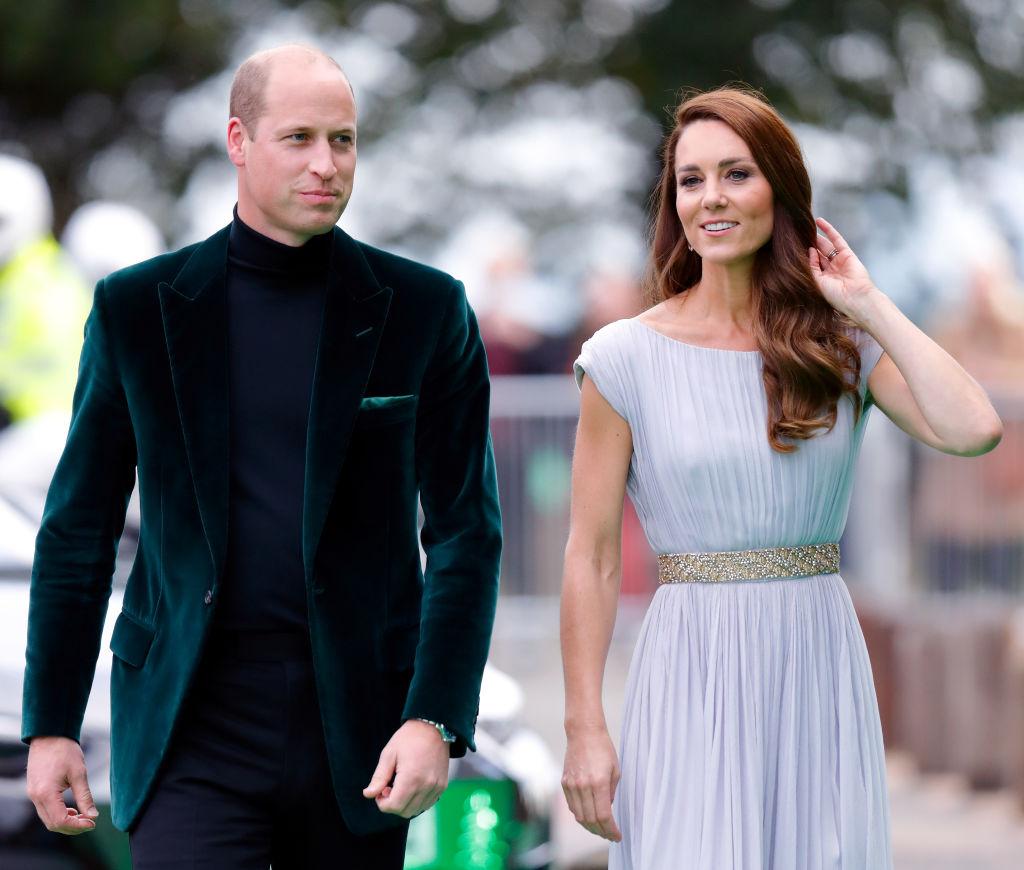
WINDSOR, England — The Prince and Princess of Wales have returned to Windsor after wrapping up their traditional late-summer holiday in Scotland, marking the end of the family’s break and the start of preparations for Prince George’s first term at Eton College.
William and Catherine spent the past several weeks at Balmoral Castle in the Scottish Highlands alongside King Charles III and Queen Camilla, a tradition dating back to the reign of Queen Victoria and one that became particularly associated with the late Queen Elizabeth II. The couple has now headed south to their primary residence at Forest Lodge in Windsor Great Park with their three children, Prince George, 13, Princess Charlotte, 11, and Prince Louis, 8, as the family prepares for the start of the new school year in September.
The most significant change facing the household is George’s transition into secondary education. After spending recent years at Lambrook School in Berkshire alongside his younger siblings, George is set to begin his first term at Eton College, following the same educational path taken by both his father and his uncle, Prince Harry. Kensington Palace confirmed the decision earlier this year, stating simply, “Kensington Palace can confirm that Prince George will attend Eton College from this September.”
The choice ends years of speculation over whether George would attend Eton, William’s alma mater, or Marlborough College, the school Catherine attended alongside her siblings Pippa and James Middleton. According to royal commentator Charlotte Griffiths, William was reportedly pushing hard for Eton throughout the decision-making process, telling reporters, “I think that on this one, William was pushing hard for Eton, and they did flip-flop over the issue of where to send George.” Some reporting has suggested Catherine initially had reservations about the boarding school route, with one source indicating she would have preferred a day school for her eldest son, though she is now said to be fully supportive of the decision.
Eton, an all-boys boarding school educating students ages 13 to 18, charges annual tuition of roughly 63,298 pounds, or about 84,000 dollars. Founded centuries ago, the institution has educated 20 British prime ministers, including David Cameron and Boris Johnson, along with William, who attended from 1995 to 2000 and became the first senior member of the royal family to attend the school. William earned 12 GCSEs and three A-levels during his time there, including an A in Geography, a B in History of Art and a C in Biology.
George’s new school carries a practical advantage tied directly to the family’s living situation. Eton sits just across the River Thames from Windsor Castle, roughly a 15-minute drive from Forest Lodge, the eight-bedroom Georgian mansion the family moved into in October 2025 after relocating from the smaller, four-bedroom Adelaide Cottage. The proximity means George will be able to return home relatively easily on weekends, including for family dinners or Sunday lunch following sports fixtures, according to royal commentary reported by Hello! magazine.
Meanwhile, Princess Charlotte and Prince Louis will continue their education at Lambrook School, a co-educational day and boarding school spanning 52 acres near Ascot, Berkshire, that has become known for accommodating high-profile students with discreet security arrangements.
The family’s return to Windsor comes just days after Prince Harry and Meghan Markle arrived back in the United Kingdom with their own children, Prince Archie, 7, and Princess Lilibet, 5, following more than six years based primarily in California. William and Catherine have made no public comment regarding Harry and Meghan’s return, maintaining the same silence that has generally characterized the relationship between the two households in recent years. Harry and Meghan have reportedly settled on the Cotswolds region as their new UK base, with their children also set to begin school there this September.
It remains unclear how long the Sussex family intends to remain in Britain. Reports have pointed to several possible factors behind their return, including concerns over King Charles’ ongoing cancer treatment, Harry’s stated desire to repair his relationship with his family, and a series of public engagements Harry is expected to attend in the coming months, including the WellChild Awards in London on Sept. 5 and events leading up to the 2027 Invictus Games in Birmingham.
For now, both branches of the royal family are entering a season defined by significant transition, with William and Catherine’s household adjusting to George’s new chapter at Eton even as questions continue to swirl around the broader implications of Harry and Meghan’s return to British soil after years away.

Apple raised the price of its Apple TV streaming service Friday to 14.99 dollars per month, up from 12.99 dollars, marking the fourth increase to the service’s subscription price in four years and pushing the monthly cost to roughly three times what Apple charged when the platform launched in 2019.
The new pricing took effect Aug. 28 for new subscribers, while existing customers will be notified approximately one month before the higher rate applies to their accounts, according to Apple. The annual subscription price also rose, climbing to 119 dollars from 99 dollars. Apple One, the bundle that packages Apple TV together with iCloud storage, Apple Music, Apple Arcade, Apple News+ and Apple Fitness+, saw its individual-tier monthly price increase to 21.95 dollars from 19.95 dollars.
Apple has not publicly attributed the increase to any single factor, but coverage of the price hike from outlets including TechCrunch, Variety and AppleMagazine points to several converging reasons behind the decision.
The most immediate driver is Apple’s rapidly expanding sports programming, which has meaningfully changed the cost structure behind the service. According to AppleMagazine, Apple ended its separate MLS Season Pass model this year and folded every Major League Soccer match directly into the standard Apple TV subscription at no additional charge. Apple TV also became the exclusive U.S. streaming home for the 2026 Formula 1 season, covering every Grand Prix weekend along with practice, qualifying and sprint sessions, while continuing to carry Friday Night Baseball. Unlike scripted television, which can remain in a catalog for years after a single production cost, live sports require ongoing rights agreements and recurring seasonal investment, a distinction industry analysts have pointed to as a key factor behind rising streaming costs generally.
A second factor is the broader trend of price increases across the streaming industry. TechCrunch noted that Netflix raised its prices in March, and rival service Peacock announced its own price increase earlier this month, a move that made Peacock’s ad-supported tier the most expensive of its kind among major U.S. streaming platforms, according to TVLine. Apple’s increase brings its pricing closer in line with competitors that have similarly moved to raise rates in 2026.
A third contributing factor involves broader cost pressures across Apple’s hardware and technology businesses. TechCrunch noted that ongoing shortages of RAM and other components, driven in part by surging demand for hardware used to build artificial intelligence data centers, have pushed up costs across the tech industry more broadly, a dynamic that has coincided with Apple’s decision to raise prices on multiple products and services this year.
A fourth reason relates to Apple’s continued investment in original programming and its expanding content library. Apple TV has added titles including “F1,” the racing drama tied to its motorsports coverage, and a new fourth season of “Ted Lasso,” the company said. The service has also continued to build a reputation for prestige programming, earning multiple nominations at the 2026 Emmy Awards for shows including “Severance” and “The Morning Show.” Apple has framed its growing catalog as justification for the platform’s rising price, even though the service continues to lack the lower-cost, ad-supported tier that most major competitors now offer.
A fifth factor is timing tied to Apple’s broader corporate calendar. The price increase arrives just ahead of the company’s Sept. 9 product event in Cupertino, California, where Apple is expected to unveil new iPhones, updated Apple Watches and, according to widespread industry speculation, its first foldable phone. The event will also mark the first major product launch overseen by incoming chief executive John Ternus, who formally takes over from Tim Cook on Sept. 1, with Cook transitioning to the role of executive chairman. Apple’s announcement of that leadership change earlier this year specifically noted that its services division, which includes Apple TV, has represented a “major focus area” throughout Cook’s tenure, underscoring the growing financial importance of subscription revenue to the company’s overall business.
Apple TV first launched in November 2019 at 4.99 dollars per month, a price the company held for nearly three years while working to build out its subscriber base and content library. Since then, the price has climbed steadily: to 6.99 dollars in 2022, to 9.99 dollars in 2023, to 12.99 dollars in 2025, and now to 14.99 dollars this year. For subscribers looking to soften the impact of the latest increase, the annual plan remains the more cost-effective option, working out to just under 10 dollars per month at 119 dollars for the year, compared with nearly 180 dollars over 12 months under the new month-to-month rate.
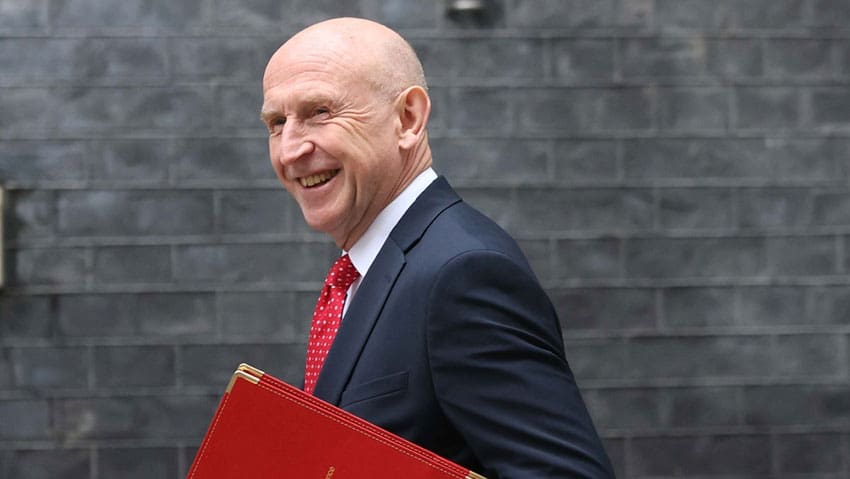
The government is paying more to borrow through newly issued debt than at almost any point in the past three decades, a reminder of the tough fiscal backdrop against which prime minister Andy Burnham and chancellor John Healey are drawing up their first budget, now less than two months away.
The average yield on UK government bonds, or gilts, sold to investors so far this year is 3.8 per cent, according to analysis of figures published by the Debt Management Office, the body responsible for selling the government’s debt. That is not far short of levels last seen in 1998, when the average yield on newly issued debt exceeded 4 per cent.
Yields have held close to that near three-decade high for the past two years, the product of stubborn inflation, investor unease about persistently high public borrowing across the rich world, and hundreds of billions of pounds worth of gilt sales by the Bank of England as it unwinds the bond holdings built up under quantitative easing.
The rising cost of compensating the investors who buy that debt has heaped fresh pressure on the public finances. The Office for Budget Responsibility forecasts that debt interest spending will exceed £100 billion a year, the equivalent of the defence and Home Office budgets combined, until at least the 2030s.
Public borrowing has already overshot official forecasts this financial year, and economists have warned the pair that the headroom against the government’s main fiscal rule, which requires day-to-day spending to be funded by tax revenues, may have more than halved from £23.7 billion because of rising gilt yields and the higher energy prices that have followed the outbreak of war in the Middle East six months ago.
That likely erosion has fuelled speculation about tax rises or spending cuts at the budget on 28 October. Burnham said last week that he would not be “unrealistic” about the “challenging” state of the public finances, and refused to rule out tax increases.
Oil, inflation and the Bank
Britain has lived with persistently high inflation since Russia’s invasion of Ukraine in 2022, which forced the Bank of England to lift interest rates to a peak of 5.25 per cent. Bank Rate has since fallen to 3.75 per cent.
Markets began the year expecting several rate cuts in 2026. That calculation changed in February, when the US and Israel launched strikes against Iran. The conflict has left the Strait of Hormuz effectively closed for more than six months, sending oil and gas prices spiralling and keeping central banks cautious, and investors now think one or two rate rises could come before the end of the year.
James Smith, developed markets economist at ING, said: “This year it’s been all about oil. For all the talk about Burnham and what he means for the bond market, government borrowing costs have been driven almost singularly by energy prices and their perceived impact on the Bank of England.”
Tomasz Wieladek, chief European macro strategist at T Rowe Price, said: “The UK’s fiscal fundamentals aren’t bad relative to other countries. But the big difference is poor inflation performance. That is the true reason why gilt yields are higher than in other countries, as investors now require inflation compensation.”
Longer-dated debt has borne the brunt of investor nerves about the appetite of governments in rich economies to rein in borrowing, with 30-year bond yields touching multi-decade highs in August. Britain, however, remains on course to bring down its deficit at the fastest pace in the G7 in the coming years under plans set out by Healey’s predecessor, Rachel Reeves, and some analysts expect gilt yields to fall back before the budget.
The Treasury said: “The OBR will publish its updated forecast alongside the budget in October and we will not comment on rumour, speculation or proposals about its contents ahead of then.”

Amy Ingham
Amy Ingham is a reporter at Business Matters, covering UK business news with a focus on breaking news, business policy, late payments and insolvency. She joined the magazine in 2026 after completing the NCTJ Diploma in Journalism at Harlow College’s journalism school. Her recent reporting includes British Steel’s nationalisation and its impact on SME suppliers, the decline in late payments by large firms, and Insolvency Service director disqualifications. Reach her at aingham@cbmeg.co.uk.


Dear Reader,I am a Senior Derivatives Expert with over 10 years of experience in the field of Asset Management, specializing in equity analysis and research, macroeconomics, and risk-managed portfolio construction. My professional background covers both institutional and private client asset management, where I have advised on and implemented multi-asset strategies, but highly focusing on equities and derivatives.As you might be as well, I am a stock market enthusiast. My core passion lies in understanding how macro trends influence both asset prices and investor behavior. I closely follow EU and US central bank policies, sector rotation, and sentiment dynamics, and construct actionable investment strategies.BA in Financial Economics, MA in Financial Markets. In the past decade, I have navigated through various market conditions, and this was my PhD.One of the essential goals of writing on Seeking Alpha is to share insights with colleagues, fellow investors, exchange ideas, and become slightly better than yesterday. I contribute to the idea that investing should be accessible, inspiring, and empowering. It might sound like a cliche, I know, but in the end it’s highly valuable – so let’s help each other build confidence in long-term investing. The analysis and opinions shared in my articles and comments are for informational purposes only and should not be considered financial advice. Please do your own research before making any investment decisions.Thank you and have a lovely day!Best regards
Analyst’s Disclosure: I/we have a beneficial long position in the shares of MARA either through stock ownership, options, or other derivatives. I wrote this article myself, and it expresses my own opinions. I am not receiving compensation for it (other than from Seeking Alpha). I have no business relationship with any company whose stock is mentioned in this article.
Seeking Alpha’s Disclosure: Past performance is no guarantee of future results. No recommendation or advice is being given as to whether any investment is suitable for a particular investor. Any views or opinions expressed above may not reflect those of Seeking Alpha as a whole. Seeking Alpha is not a licensed securities dealer, broker or US investment adviser or investment bank. Our analysts are third party authors that include both professional investors and individual investors who may not be licensed or certified by any institute or regulatory body.
Sam Jones and Gary Adshead discuss the task ahead for Small Business Development Corporation commissioner Saj Abdoolakhan.
Plus: Hancock hub to take Strike’s gas; Bruce Rock to expand factory; and Ex-Eagle denies duty in liquidated company.
Business
HDFC Bank shares after Jagdishan: What lies ahead for the country’s largest private lender?

With Jagdishan set to retire at the end of October, the focus now shifts to his successor, the bank’s growth trajectory and the factors that could influence the stock going forward.
The key questions for investors include the pace at which HDFC Bank can improve its deposit mobilisation, restore margins and manage the balance sheet following the HDFC Ltd merger, alongside its ability to deliver stronger growth.
Anand Dama, Anant Dumbhare, Yuval Aiya and Manav Mehta, analysts at Nuvama Institutional Equities, believe Jagdishan’s resignation could be a cleaner outcome for the bank, as securing a further term from the RBI may have been difficult amid the recent operational and governance lapses.
The development also gives the board more time to identify a successor, according to Nuvama. The brokerage said Mr Bharucha, the bank’s deputy managing director (DMD), could emerge as a pragmatic short-term transition candidate for around two years, given the RBI’s 15-year cap on board tenure, while an internal or external successor is groomed.

Alternatively, HDFC Bank could appoint a credible external candidate as MD & CEO for a full three-year term. However, Nuvama said such a process could take five to six months and prolong the uncertainty around the leadership transition.
Nuvama expects near-term weakness in the stock until greater clarity emerges on succession. The brokerage has retained its ‘BUY’ rating on HDFC Bank but cut its target price to ₹875 from ₹1,025, citing the stock’s steady de-rating over the past year.The revised target price is based on 1.6 times estimated September 2028 standalone bank adjusted book value (ABV), along with subsidiary valuation of ₹127. Nuvama noted that the stock was trading at around 1.3 times September 2028E ABV, which it considers inexpensive for a franchise of HDFC Bank’s strength.
“The stock has seen steady de-rating for a year and could remain weak until the board provides clarity on a credible successor,” the Nuvama analysts said.
However, they do not view the CEO’s exit as a fundamental impairment to HDFC Bank’s otherwise strong franchise and recovery story following the difficult merger with HDFC Ltd.
A credible internal transition led by Mr Bharucha could accelerate business normalisation, Nuvama said, while a strong external appointment could take longer but potentially provide a broader governance reset and scope for a longer-term re-rating, similar to the experience of IndusInd Bank.
Ishank Gupta, analyst, Banking and Financial Services, Choice Institutional Equities, said the leadership transition comes after an unsettled period for the lender, with the CEO’s decision not to seek a third term adding another layer of uncertainty for investors.
“It has been an unsettled twelve months at India’s largest private sector lender, and Saturday’s announcement that CEO Sashidhar Jagdishan will not seek a third term closes it on an uncomfortable note,” Gupta said.
The governance shocks
The year turned in March, when part-time chairman Atanu Chakraborty resigned with immediate effect, stating that certain practices at the bank were not in congruence with his personal values and ethics. The stock shed close to seven billion dollars in market value, and the Reserve Bank of India publicly affirmed the bank as well governed.
Two days later, three senior executives were dismissed after an internal probe into the alleged mis-selling of Credit Suisse Additional Tier-1 bonds to non-resident clients through the Dubai and Bahrain operations. The Dubai Financial Services Authority had already barred the DIFC branch from onboarding new clients.
A separate vigilance review examined an alleged ₹0.5 crore payment to MSRDC linked to a government deposit. Both matters have since been closed, and two external law firms found no evidence to substantiate the chairman’s concerns.
A clean sweep of the top three seats
Rajiv Kumar, former finance secretary and chief election commissioner, was named part-time chairman in June. Puneet Sharma, who spent more than six years as CFO of Axis Bank, joins as CFO-designate on September 1 and takes charge on December 1, succeeding the retiring Srinivasan Vaidyanathan.
The chief executive’s chair is now the third to change hands inside a single year, and the only one without a named successor.
Why the CEO exit matters most
CEO Jagdishan had said in March that he had never contemplated stepping away, and the board has confirmed he declined despite its efforts to persuade him.
That reversal matters more than the exit itself. The board must now put names before the RBI and secure approval within eight weeks, against a norm of six months.
Leadership uncertainty of this nature has historically attracted a valuation discount at Indian banks until a successor is confirmed, and the counterparty on the other side of that adjustment is usually the incumbent shareholder.
Big shoes to fill
The incoming management must complete the post-merger transition, restore the growth trajectory the bank has deferred while repairing its credit-deposit ratio, and above all return a settled sense of stability to a franchise that has traded on precisely that quality for three decades.
The succession process will therefore be critical not only for determining who leads HDFC Bank, but also for shaping how investors assess the bank’s valuation and recovery prospects.
(Disclaimer: Recommendations, suggestions, views and opinions given by the experts are their own. These do not represent the views of Economic Times)

Man City transfer news LIVE Cody Gakpo latest plus Enzo Fernandez updates and deal done

Does Turning Off Bluetooth Actually Make Wi-Fi Better?

JMP CRYPTOCURRENCY # #crypto # #investing #cryptocurrency #jmp





-

 Crypto World6 days ago
SpaceX stock could rise 75% to $240, JPMorgan says
-

 Fashion3 days ago
Weekend Open Thread: Maeve – Corporette.com
-

 Crypto World4 days ago
Bitcoin’s 22% rally now needs real demand to outlast Treasury liquidity boost
-

 Crypto World5 days ago
Warsh Jackson Hole keynote puts financial innovation first
-

 Crypto World7 days ago
A $30 Billion AI Fund Implodes, Now the SEC Is Investigating Wall Street’s Role
-

 Business3 days ago
Salesforce Stock Soars 19% as Blowout Earnings and Agentforce AI Growth Silence Software Skeptics
-

 Crypto World5 days ago
Did Trump Just Move SpaceX Stock With One Truth Social Post?
-

 Crypto World5 days ago
Elon Musk Grok Bot Promise: We Will Make You Whole if AI Loses Your Money
-

 Business4 days ago
Apple Confirms September 9 Keynote and Reveals Its Full Pre-Order Schedule
-

 Business5 days ago
Walmart takes aim at younger shoppers with new fashion brand
-
 NewsBeat5 days ago
Lindsay Clancy jury braces for closing arguments as judge tells court: ‘You’ve heard all the evidence’ – Live updates
-

 Business2 days ago
Onto Innovation Stock: AI’s Next Bottleneck Is Yield (NYSE:ONTO)
-

 Crypto World2 days ago
Bitcoin price tests $82K resistance as Brandt stays long
-

 Business6 days ago
Thailand’s Eastern Economic Corridor Capital City (EECiti): Key Developments and Investment Opportunities
-

 Crypto World4 days ago
NVIDIA revenue hits $96.2B as AI demand doubles
-

 Business7 days ago
Moderna CEO warns China is pouring state money into mRNA technology
-

 Business7 days ago
NVIDIA Stock Drops Nearly 2 Percent to $210 on Seventh Losing Day Ahead of Critical AI Earnings
-

 Business3 days ago
iPhone 18 Pro Pre-Orders Could Shift to Saturday as Apple Reportedly Avoids September 11 Anniversary
-

 NewsBeat6 days ago
Trump’s trade truce with China faces test with Iran effort
-

 Crypto World5 days ago
Nvidia Q2 Earnings Reveal $96.2 Billion Beat, So Why Is NVDA Falling?
You must be logged in to post a comment Login