

Connect with us

Crypto World

Why an Early Bitcoin Holder Burned $1M: Mystery Explained

Published

on

Crypto Breaking News

In March, an almost-dead Bitcoin wallet suddenly resurfaced and moved about $1 million worth of BTC through a large centralized custodian—only for nearly the same amount to be sent back three weeks later. Less than two months after that brief “round trip,” the same stash was intentionally destroyed by sending it to an unspendable address.

The episode sits within a broader puzzle highlighted by blockchain researchers: multiple BTC-burning transactions in May, totaling 107 BTC (worth roughly $8.5 million at the time). New wallet-cluster analysis suggests the burn-related addresses were likely controlled by the same individual, raising the question of why someone would deliberately destroy coins that represent long-held value.

Key takeaways

  • One dormant wallet moved 20.00010537 BTC through an unidentified major custodian and then received 20.00006037 BTC back about three weeks later—an outcome difficult to square with typical trading.
  • Five separate wallets later burned their BTC, and Chainalysis reported “strong indicators of common ownership” linking them.
  • Most of the funds behind the burn can be traced back to Mt. Gox-era origins, suggesting an early adopter connection.
  • Researchers cannot confirm why the coins were destroyed; even CoinShares-class level of onchain forensics can’t determine intent from transaction history alone.
  • A possible clue emerges from repeated transfers clustered around similar dollar values (about $10,400), hinting at a planned approach—but not fully explaining the March round trip.

A dormant wallet returns—and immediately interacts with a custodian

Blockchain educator Bennet described a wallet that lay dormant for nearly 12 years before suddenly moving 20.00010537 BTC to “a custodian of some kind,” according to his analysis. Three weeks later, almost the entire balance returned, minus only a very small difference (about $3). Bennet characterized the pattern this way: the full balance went out to what appeared to be an exchange hot wallet and nearly the same amount came back three weeks later; then, seven weeks after the return, the funds were burned.

What makes the sequence notable is its symmetry. Burning is irreversible on-chain, but the “round trip” suggests the private keys behind the dormant wallet were actively used—not merely to let funds sit, but to interact with custodial infrastructure, retrieve the coins, and then choose a terminal outcome.

Bennet’s observation aligns with a timing link to a wider narrative of BTC destruction. Earlier coverage connected the broader mystery to 107 BTC burned in May, described as worth approximately $8.5 million at the time. The March event may be part of the same story, even though the chain of custody is obscured once the coins enter custodian systems.

Advertisement

Chainalysis: the burn wallets point to one controller

Chainalysis analysis, as summarized by Bennet and repeated in the coverage, indicates that five wallets ultimately responsible for destroying BTC show “strong indicators of common ownership.” In other words, the on-chain behavior suggests the same party controlled these addresses at some point.

The wallets were reportedly funded on the same day in April 2014. From there, each address sent BTC to the same deposit address at a large centralized exchange. Researchers also noted a rotational pattern: one address would transmit BTC to the exchange until its activity paused, then another would take over with transactions of similar cadence and dollar-equivalent value.

Chainalysis further reported that most of the funds could be traced back to Mt. Gox, implying an early Bitcoin holder background. While the connection suggests origin, it does not prove the coins were withdrawn directly from Mt. Gox at the time it ceased trading in February 2014—because the five wallets were funded in April. Bennet argued it’s plausible the owner was among those who managed to get their coins out before the collapse.

Equally important: the custodian remains unidentified. Chainalysis confirmed it is a large centralized exchange, but it does not publicly disclose the names of the services it identifies. Bennet’s interpretation is that the deposit address behaves like a static customer address within a custodian—one that doesn’t maintain a meaningful balance itself because deposits are swept and consolidated internally using an omnibus wallet approach. That design makes the coins’ subsequent fate hard to follow on the public blockchain.

Advertisement

The “$10,400” pattern—and why it may still be incomplete

One of the wallets involved in the burn later sent 19.6 BTC in 60 separate transactions to the same custodian between 2022 and 2024, according to the mempool-linked reference in the reporting. The BTC amounts varied widely—from roughly 0.15 BTC to 0.62 BTC—but when translated into dollars at the time of each transfer, the transactions were strikingly consistent.

Specifically, 58 of the 60 transfers were within 10% of approximately $10,400 per transaction. That implies the controller cared more about dollar totals than fixed BTC amounts. Bennet suggested the behavior could reflect a planned liquidation strategy.

However, the pattern has limits. The blockchain cannot prove whether those dollars were realized through a sale, held, or moved onward, because once funds hit a custodian they are mixed with many other inputs and consolidated internally. Researchers also noted that while the payment size was broadly constant, transaction frequency was not; transfers arrived in clusters rather than a perfectly regular automation schedule. Bennet viewed that as more consistent with sending a fixed-dollar amount when conditions required it, rather than a purely automated periodic process.

Still, even if the “$10,400” behavior hints at strategy, it doesn’t close the gap around the March event—particularly the fact that the wallet sent almost exactly the same amount out and got almost the same amount back shortly afterward.

Advertisement

The $1 million “round trip” doesn’t fit a simple trading explanation

After remaining untouched for roughly 12 years, the dormant wallet moved its entire balance of 20.00010537 BTC and received 20.00006037 BTC back—leaving a tiny difference of about 4,500 satoshis (around $3). The returned Bitcoin was split into three transactions of 7 BTC, 7 BTC, and 6.00006037 BTC, sent over three consecutive days.

Bennet argued that the use of round numbers may align with custodial withdrawal limits. More importantly, the coins did not just reappear somewhere else—they returned to the same address that had sent them to the custodian.

The transaction history also suggests the same private key holder controlled the wallet before and after the round trip. Bennet noted that using the BTC in March would have required the private key to authorize the custodian movement, and burning it in May required the key again. That shared key linkage makes the sequence particularly difficult to interpret as a straightforward exchange workflow where funds simply change hands.

The central tension is clear: if the activity were primarily about trading or liquidation, the near-identical “go out, come back” outcome appears unusually tight, especially given the custodial mixing that otherwise obscures on-chain details.

Advertisement

So what was the point of a deliberate burn?

Multiple explanations have been floated, but the available evidence doesn’t neatly select one. The liquidation theory helps rationalize earlier patterns—especially the “$10,400” clustering and the apparent rotational funding to the same custodian—but it does not readily explain why the controller would send roughly $1 million through the same infrastructure in March and then retrieve virtually all of it.

One alternative possibility is that the controller was testing an old custody setup or wallet—verifying that after a long dormancy, coins could still be moved through a major custodian and returned successfully. Yet that still leaves the subsequent decision to destroy the BTC.

Tax or compliance narratives could also be imaginable: someone might reorganize assets through recognized custody channels for record-keeping. But the reporting notes there is no evidence tying these actions to any specific regulatory or tax event.

Privacy is another candidate. Sending BTC through a custodian that sweeps deposits into an omnibus wallet can make on-chain tracing more difficult after the point of deposit. Still, privacy alone doesn’t clarify why the coins later ended up burned rather than merely secured.

Advertisement

Bennet also suggested a more personal motive: someone without heirs might have chosen to permanently reduce Bitcoin’s circulating supply by burning rather than destroying private keys. He also emphasized that this hypothesis is not provable purely via blockchain analysis.

Chainalysis, as cited in the coverage, effectively summed up the current limitation: it does not have a clear explanation for why the owner would move a long-dormant stash through a custodian, retrieve roughly the same amount, and then burn it deliberately.

In other words, the blockchain records the “what” with unusual clarity, but not the “why.”

The next thing to watch is whether more tracing work identifies the custodian involved in the March round trip and in the May burn-linked transfers, or whether additional wallet-cluster research finds consistent behavioral links across other dormant-to-active Bitcoin movements. Without that, the most important unknown remains intent—and intent is the one variable onchain forensics can’t conclusively measure.

Advertisement

Risk & affiliate notice: Crypto assets are volatile and capital is at risk. This article may contain affiliate links. Read full disclosure

Source link

Continue Reading
Click to comment

You must be logged in to post a comment Login

Leave a Reply

Crypto World

How to Reduce Food Waste in Your Kid’s School Lunch

Published

on

How to Reduce Food Waste in Your Kid’s School Lunch

Collect everything the average American kid throws away in the school cafeteria over a single year, pile it on a scale, and you’d be looking at roughly 39 lbs of food. That’s about what a typical 4-year-old weighs.

Multiply that across the country, and school food waste adds up to an estimated 530,000 tons every year—an alarming amount of uneaten sandwiches, rejected fruit, and unopened snacks. 

That makes food waste difficult to dismiss as somebody else’s problem. “If you eat food, you’re part of this whether you like it or not,” says Lauren Click, founder of the nonprofit Let’s Go Compost, which runs food-waste programming in more than 600 schools, libraries, and community centers. The flip side is that you’re also in a position to waste less—starting with a packed lunch, one of the few pieces of the food system a family fully controls. 

Here’s how experts recommend packing a school lunch that produces less trash—and stands a better chance of getting eaten.

Advertisement

See what comes home

Before you overhaul your lunch-packing routine, spend a couple weeks paying attention to what returns at the end of the day. Which foods are untouched? Is the bologna sandwich always missing exactly one bite? What never even made it out of the wrapper?

After a few days, you’ll probably start to notice a pattern. “If you pack based on what actually comes home, not what seems balanced on paper, you can track it each week and adjust over time,” says Lizzie Horvitz, founder and CEO of Finch, a platform that evaluates products for sustainability.

You don’t have to keep tabs on the lunchbox all year. August and September are when parents are still figuring out what—and how much—their kids will eat. “If you’re really paying attention to ‘what’s my kid eating?’ and ‘what’s my kid consistently bringing home?’” Horvitz says, “there really shouldn’t be any waste after a couple of weeks.”

Advertisement

Ask your kid what happened

Seeing what comes home is only half the job. You also need to find out why—and good luck guessing correctly.

Click has heard every version of this story: A kid suddenly stops eating apples, and their parent assumes they don’t like the fruit. The real problem? A classmate declared apples uncool. “You can’t make assumptions, because you’ll never guess what’s going on in the mind of a 5-year-old,” she says.

Keep the conversation curious, not accusatory. Ask your kid who they sit with, how much time they have to eat, and what their friends bring. Maybe the orange takes too long to peel, or they can’t open one of the containers without help. Maybe their friend brings two sandwiches and shares one every day—in which case, congratulations, you can stop making a sandwich.

Advertisement

Save new foods for dinner

The school cafeteria isn’t exactly an ideal tasting room. Lunch periods are short, cafeterias can be loud and chaotic, and no one is sitting nearby encouraging your kid to give that unfamiliar vegetable one more chance. (Rutabaga, anyone?)

“Maybe this isn’t the time to have a really balanced, try-new-things meal,” Horvitz says. “Let’s save that for meals at home.” That’s not an argument for packing nothing but cookies. It means lunch should mostly consist of foods you already know your child will eat; save the experiments for dinner, when you’re there to encourage them.

Choose the food before the lunchbox

Advertisement

Compartmentalized bento boxes are adorable. They’re also built for a very specific amount (and shape) of food, which may not match what—or how much—your kid eats.

Lindsey Schoenfeld, a registered dietitian nutritionist, chef, and co-author of To Your Taste: How to Eat Well and Feel Better for Your Whole Life, suggests starting with the food instead. Ask your kid what they ate all summer and which lunches they loved last year. Then choose containers that fit those foods. The folded half-sandwich that nestled perfectly into one tiny compartment in second grade might not cut it for a middle-schooler.

Before splurging on new gear, check your cabinets. “There’s so many containers that we have around the house,” Schoenfeld says. “Maybe they don’t have a lid right now. Maybe we need to dig through a few shelves.” You might need a new lunchbox, but you probably don’t need every container inside it to be new too.

Reusable containers only reduce waste if you use them over and over, so make cleanup as painless as possible. Many silicone bags and food containers can go straight into the dishwasher—check the manufacturer’s instructions—and you don’t need to scrub them spotless first. “The dishwasher’s job is to make them completely spotless,” Horvitz says.

Advertisement

Pack the amount your child actually eats

An oversized container practically begs to be filled, Schoenfeld says—and parents often respond by packing more than their kid will eat.

As a rough starting point, she suggests about half a cup of fruit, or one small piece of whole fruit, for younger elementary-school kids, in addition to a quarter- to half-cup of vegetables and one serving of grains, such as a slice of bread or a 6-inch tortilla. Middle-schoolers might need the higher end of those ranges, while high-schoolers may eat a full cup of produce and two servings of grains.

But kids aren’t measuring cups. “They grow at different times, and their activity is very different,” Schoenfeld says. One child might spend all day running around on the playground or practicing with the marching band, while another might take medication that suppresses their appetite at lunchtime. If the same amount keeps returning, try sending less before deciding your child has rejected the food altogether.

Advertisement

Find out what time lunch starts

Plenty of parents don’t know what time their kid eats lunch. It’s worth checking: Because schools stagger lunch by grade, some are sitting down with their sandwiches at 10:30 a.m.

That can explain a lot. A child who ate breakfast at 7 might not be hungry three and a half hours later, even though they’re ravenous when they get home. Pack a little less for an early lunch, Schoenfeld suggests, and have a substantial snack ready after school. She likes options that include a real food group, such as cheese and whole-grain crackers, fruit, or carrot sticks.

“It’s good to capture these kids when they’re hungry and you have something good ready,” she says.

Advertisement

Send last night’s dinner

One of the easiest ways to waste less is to pack food you already made—and already know your child likes.

Jessica Randhawa, the chef and recipe developer behind The Forked Spoon, has used vacuum-insulated stainless-steel containers for her son’s lunch since preschool. In the morning, she reheats leftovers—vegetables, meat, whatever is in the fridge—and transfers them to the insulated container. In winter, she sends leftover chicken soup, one of his favorites, in a larger container with a handle. A reusable metal spork goes in with it.

Her larger point: The container matters far less than whether the food gets eaten. “The best low-waste lunch system is one that the child actually eats,” Randhawa says. “Reusable containers aren’t helpful if the food inside is repeatedly wasted.”

Advertisement

Open the lunchbox before the pantry

When a hungry kid walks through the door, take a look inside their lunchbox before handing over a new snack. Schoenfeld does this automatically. “I’m known for saying, ‘Oh, you’re hungry?’” Schoenfeld says. “I just open the lunchbox back up. ‘Look, it’s perfect. It’s ready to go.’”

Of course, food safety gets the final say. Shelf-stable foods—crackers, a sealed pouch, an unopened bag of chips—can go back into the pantry or be eaten later. Perishable food is a different story: If it didn’t stay cold during the school day, toss it.

Don’t automatically rule out single-serve packages

Advertisement

An individually packaged snack isn’t always an environmental villain. If your kid brings home an unopened package of crackers, it can go straight back into the pantry. “It’s like it never came to school,” Horvitz says.

Loose crackers can be saved too, of course, but people are often more willing to toss food that’s already been opened and portioned out. Buying in bulk and using reusable containers still produces the least packaging—but a single-serve snack that gets eaten another day can be better than food that lands in the trash.

“If we’re assuming a kid is eating everything in their lunchbox, we of course want to stray from individually packaged food,” Horvitz says. But if your child is unpredictable about what they’ll eat, a sealed package that comes home isn’t necessarily a failure. The best option is to buy in bulk and portion food into reusable containers; after that, a packaged snack that gets eaten another day can be better than loose food that lands in the trash.

The same general rule applies to drinks: A reusable bottle is best, and pouring juice from a large jug creates less packaging than sending an individual box. If you do pack a can, don’t crush it afterward; Horvitz notes that intact cans are easier for recycling facilities to sort.

Advertisement

Consider a secondhand lunchbox

There’s no rule that says a lunchbox has to be new. Click suggests checking Facebook Marketplace, Poshmark, and eBay, where last year’s enthusiasm for a particular cartoon character is now available at a discount. “They have every character you can think of,” she says.

Just don’t try to replace every disposable item in one frantic back-to-school shopping trip. Pick one change, get used to it, and then consider another. “Don’t try to go zero-waste in one day, because you’re gonna get frustrated,” Click says. “It’s like saying you’re gonna lose 50 lbs in one month.”

Be skeptical of “compostable” packaging

Advertisement

“Compostable” packaging usually needs more than a trash can—or even a backyard compost pile. Many products break down only in commercial composting facilities. Yet a 2025 national analysis found that just 18.1% of the sampled U.S. population had access to a curbside or drop-off program that accepted food scraps and at least some forms of compostable packaging. If your local program doesn’t accept these products, they’ll probably end up in a landfill.

“The word compostable doesn’t mean it will compost,” Click says. She recommends choosing reusable items first. If you do buy compostable products, make sure you have a realistic way to compost them—either at home, if they’re certified for home composting, or through a local service that accepts and processes them.

Show kids where the trash goes

The most effective tool for cutting lunch waste isn’t a product. It might be a field trip.

Advertisement

Click takes children to landfills, where the hard hats, safety vests, and enormous trucks are a hit. But the adults tend to leave with the bigger revelation. “You start to see the birds there eating trash,” she says. “You’re really faced with this reality of, like, you contribute to this.”

Many recycling facilities offer free tours, and county extension offices around the country run gardening and composting programs for kids. The point isn’t to make children feel guilty about every granola-bar wrapper. It’s to help them see where their trash ends up—and why small changes matter.

“There’s not a magical product that you can order online and have it shipped with two-day shipping that will solve this,” Click says. “It really comes down to healthy daily habits that you build over time.”

Source link

Advertisement
Continue Reading

Crypto World

Bitmine Gains 53,500 ETH, Lifts Stake to 4.9% of Ethereum Supply

Published

on

Crypto Breaking News

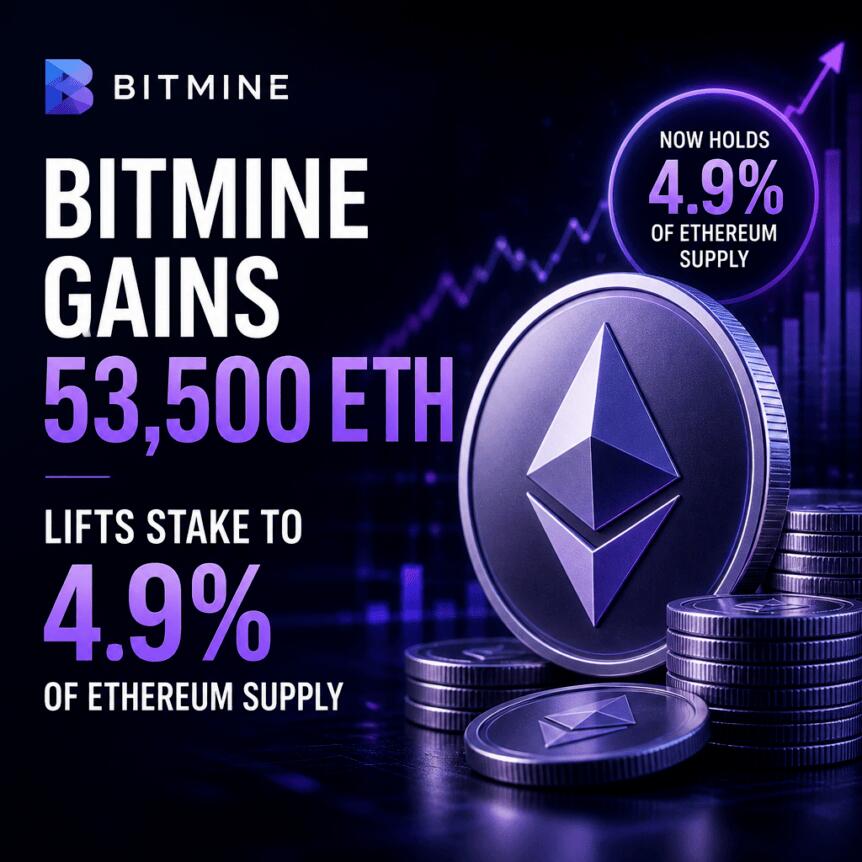
Bitmine Immersion Technologies has kept adding to its Ether stash, extending a buying streak that now stretches 65 consecutive weeks. The company purchased an additional 53,501 ETH last week, a move that arrives as a broader market rebound has supported the value of its digital-asset portfolio even as earlier-cycle drawdowns continue to weigh on reported results.

According to the latest figures cited in DropsTab data, Bitmine’s holdings now total more than 5.9 million ETH. Based on an Ether reference price of $2,511 as of Sunday, the stake is valued at roughly $14.8 billion—placing the company at about 4.9% of Ethereum’s 120.7 million circulating supply and keeping it close to its publicly stated goal of reaching a 5% ownership level.

Key takeaways

  • Bitmine added 53,501 ETH last week, maintaining a 65-week consecutive Ether accumulation streak.
  • The company’s ETH holdings are now above 5.9 million ETH, roughly $14.8 billion at a $2,511 reference price.
  • Bitmine controls about 4.9% of Ethereum’s circulating supply, narrowly below its goal of 5%.
  • DropsTab estimates Bitmine is still down about $5.1 billion in unrealized losses on its Ether position.
  • Chairman Tom Lee highlighted ETH’s strong relative performance versus major crypto assets since June 30.

Buying streak continues as Ether’s price recovery lifts portfolio marks

Bitmine’s latest acquisition brings a steady cadence of purchases through a period that has been challenging for the asset. The company’s accumulation began during a downturn that started in the fourth quarter of last year, when Ether and the wider crypto market moved sharply lower.

While the new purchases increase the number of ETH held, the impact on investor perception depends on what happens next to Ethereum’s price. The portfolio’s marked value has benefited from the recovery referenced in the report, but the balance sheet still reflects substantial drawdown from earlier purchases.

Using DropsTab’s estimates, Bitmine is currently sitting on approximately $5.1 billion in unrealized losses tied to its Ether holdings. Those paper losses underscore a key dynamic for long-term accumulation strategies: even if weekly buying continues unabated, improvements in market prices may take time to erase declines from the earlier portion of the cycle.

Advertisement

How close Bitmine is to a 5% ownership target

With more than 5.9 million ETH in its treasury, Bitmine is nearing a milestone that it has framed as a strategic objective. The report says the company owns around 4.9% of Ethereum’s 120.7 million circulating supply. That implies only incremental future purchases may be needed to cross its 5% target, assuming circulating supply estimates remain comparable.

For investors, this matters because large, persistent holders can influence how the market interprets supply distribution—especially in a network where the narrative often centers on scarcity and long-term demand. Although Bitmine’s purchases are not described as an attempt to influence short-term price, approaching a specific ownership threshold can become a reference point for sentiment as more institutions evaluate exposure to Ethereum.

Even so, the degree of closeness to the goal should be watched alongside two moving pieces: Ethereum’s circulating supply figures and the pace of Bitmine’s continuing weekly buying. Any changes in either could shift how quickly a 5% stake is reached.

Tom Lee points to relative strength since late June

Bitmine’s chairman, Tom Lee, linked the company’s accumulation narrative to performance across major cryptocurrencies. He said Ether, Bitcoin (BTC), and Solana (SOL) have been the three best-performing major assets since June 30, with ETH leading the gains.

Advertisement

In remarks included in the report, Lee argued that this relative outperformance could encourage institutions to add crypto exposure, especially after the broader market demonstrated strength versus other macro assets during the third quarter.

That framing is relevant for readers because it ties Bitmine’s continued strategy to a macro-to-crypto rotation thesis: if crypto outperforms “other macro assets,” institutions that had been cautious may find it easier to justify increasing allocations. Still, the longer Bitmine sustains its weekly purchases through volatile price periods, the more it may reinforce a perception of conviction—whether or not market observers agree with the timing.

Shares move, but unrealized losses remain a central marker

Following the latest Ether purchase, Bitmine’s NYSE-traded shares (BMNR) were reported up about 1.3% on Monday morning, trading at $24.09, according to Yahoo Finance data. The same source was cited as suggesting the stock is positioned for an almost-40% increase by month-end.

Even with that near-term stock momentum, the report’s emphasis on unrealized losses provides a reminder that equity performance does not directly translate to the economics of the underlying crypto position. A share price can move on expectations about future valuation, while the treasury’s reported gains or losses depend on Ether’s price relative to historical acquisition costs.

Advertisement

That gap between market expectations and treasury accounting is often where volatility can show up for investors in crypto-linked public companies. If Ether continues its rebound, the scale of unrealized losses could narrow; if it falters, the losses could widen again—even as the weekly buying streak continues.

Earlier coverage from Cointelegraph highlighted Bitmine’s push toward the 5% ownership concept and referenced Ether breaking above key levels in the context of the company’s extended purchasing pace. The current update continues that same storyline, but with more concrete progress on total ETH held and the latest week’s accumulation.

As Bitmine remains in the market every week, the next things investors should watch are whether Ether’s price holds above the recent recovery range and how quickly Bitmine closes the remaining distance from 4.9% to its 5% target—alongside any changes in the size of its unrealized loss estimate from week to week.

Risk & affiliate notice: Crypto assets are volatile and capital is at risk. This article may contain affiliate links. Read full disclosure

Advertisement

Source link

Continue Reading

Crypto World

Russian Crypto Trading to Bring $46B to Regulated Exchanges After Legalization

Published

on

Russian Crypto Trading to Bring $46B to Regulated Exchanges After Legalization

Cointelegraph is committed to providing independent, high-quality journalism across the crypto, blockchain, AI, and fintech industries.

All news, reviews, and analyses are produced with full journalistic independence and integrity. For more details on our standards and processes, please read our Editorial Policy.

Source link

Advertisement
Continue Reading

Crypto World

Strive Acquires 1,800 Bitcoin for $143M, Ranks No. 5 Among Firms

Published

on

Crypto Breaking News

Strive, a publicly traded asset manager and Bitcoin treasury company, has accelerated its Bitcoin accumulation by adding 1,800 BTC to its balance sheet over the week of Aug. 24–Aug. 28. The purchases, totaling about $143 million including fees and expenses, pushed the company deeper into the ranks of the largest publicly traded corporate Bitcoin holders.

CEO Matt Cole confirmed the acquisition on Monday, describing the buys as part of an ongoing strategy. According to the company’s reported figures, Strive paid an average of $79,431 per Bitcoin for the latest tranche.

Key takeaways

  • Strive bought 1,800 BTC for roughly $143 million between Aug. 24 and Aug. 28, including fees and expenses.
  • Holdings rose to 23,156 BTC, up from 21,356 BTC a week earlier.
  • The latest week’s accumulation accelerated gains: an adviser to Saturn Credit said the increase represented about 8.4% in five business days.
  • Strive moved up the corporate holder rankings, overtaking Bullish to become the fifth-largest publicly traded corporate Bitcoin holder, based on industry tracking.
  • Broader buying aligns with market rebound after a US Treasury policy update supported risk assets and helped Bitcoin recover.

Strive’s rapid accumulation lifts corporate ranking

The most recent week’s purchases raised Strive’s total Bitcoin holdings to 23,156 BTC, compared with 21,356 BTC just a week earlier. This continues a pattern of quicker ramp-ups rather than steady, slower additions.

Earlier coverage from Cointelegraph noted that Strive had already bought 1,110 BTC the previous week for roughly $81.5 million, at an average price of $73,409 per coin. Taken together, the two consecutive weeks show the company increasing its weekly pace while Bitcoin’s price moved higher.

Industry adviser Adam Livingston, an adviser to Saturn Credit, said the latest acquisition lifted Strive’s Bitcoin holdings by approximately 8.4% within five business days. That rate matters because it indicates Strive is not only adding to its treasury, but doing so at a speed that changes its relative position among other public corporate buyers.

Advertisement

Strive’s latest tranche also appears to have improved its standing in the corporate Bitcoin ecosystem. According to bitcointreasuries.net, the purchase helped Strive move ahead of Bullish, placing it among the world’s five largest publicly traded corporate Bitcoin holders.

What the timing suggests: policy-driven rebound and risk appetite

Strive’s buying comes during a period when Bitcoin and broader digital asset markets have been rebounding. Cointelegraph reported that the market recovery accelerated after the US Treasury Department announced plans to double the size of certain long-term bond buybacks on Aug. 19. That development helped push Treasury yields lower and supported risk assets.

In that context, Bitcoin rallied more than 23%, reaching a recent high above $81,000, as cited by Cointelegraph’s market coverage. For corporate buyers, such macro shifts can influence both funding conditions and the perceived opportunity cost of waiting for a better entry point.

Strive’s latest purchases—executed across Aug. 24–Aug. 28—therefore landed while the market was already regaining momentum rather than during a deep drawdown. However, the company still averaged $79,431 per BTC for the week, which reflects the ability of treasury-focused firms to deploy capital amid volatility and changing sentiment.

Advertisement

Strive isn’t the only corporate buyer: Strategy resumes after a pause

Strive’s acceleration is part of a wider wave of corporate Bitcoin activity. Cointelegraph noted that Michael Saylor’s Strategy, the largest publicly traded corporate Bitcoin holder, announced Monday that it resumed buying BTC for the first time since June.

Strategy said it purchased 4,603 Bitcoin at an average price of $80,318. The acquisition reportedly lifted its holdings back above 845,000 BTC following four Bitcoin sales since May.

For investors watching corporate treasuries, this is an important contrast: some companies reduce exposure through sales to fund operations or manage balance-sheet priorities, while others treat market dips and rebounds as opportunities to rebuild or expand reserves. Strategy’s decision to restart buying after a sales period aligns with the broader market recovery narrative, while Strive’s continued buildup suggests it is prioritizing steady expansion of its treasury.

Why the corporate race matters for the market

The competitive dynamics among publicly traded Bitcoin holders are more than a ranking exercise. When large buyers increase their reserves, it can reinforce confidence in Bitcoin as a reserve asset and add an additional layer of demand that is not directly tied to short-term retail sentiment.

Advertisement

At the same time, the data shows how quickly positions can change. Livingston’s estimate that Strive’s Bitcoin holdings rose by about 8.4% in five business days illustrates how capital deployment pace can quickly alter relative standings. Strive went from holding 21,356 BTC to 23,156 BTC in roughly a week, a magnitude that’s large enough to shift it up the corporate leaderboard.

Still, readers should note that these developments don’t necessarily reveal Strive’s longer-term target or whether the firm plans to keep increasing its pace. The filings and purchase windows in the reporting provide a snapshot of current behavior, but the sustainability of the acceleration depends on future balance-sheet capacity, financing decisions, and how management responds as market conditions evolve.

With Bitcoin back above key levels cited in recent reporting, and corporate buyers reactivating or accelerating purchases, the next thing to watch is whether Strive maintains this speed of accumulation in the weeks ahead—and whether other major publicly traded treasuries follow Strategy’s lead in restarting or extending buy programs.

Risk & affiliate notice: Crypto assets are volatile and capital is at risk. This article may contain affiliate links. Read full disclosure

Advertisement

Source link

Continue Reading

Crypto World

US Gov Lost $4.7 Billion By Selling FTX’s Anthropic Shares Early

Published

on

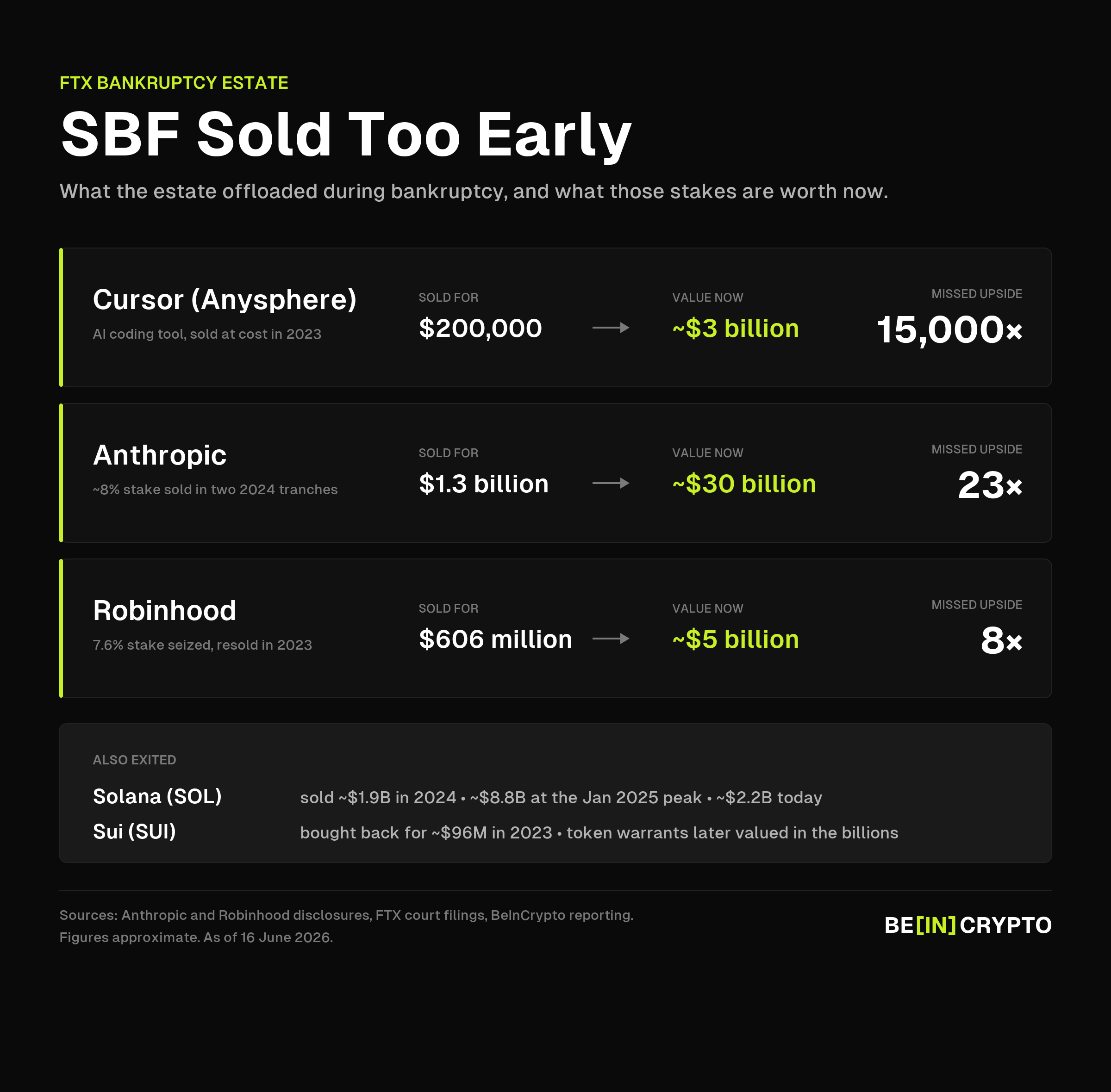
SBF Sold Too Early: These Exited Bets Later Turned Into Multi-Billion Winners

The US Marshals Service sold Anthropic shares seized from two FTX executives during 2025. Anthropic tripled in value that same year.

Caroline Ellison and Nishad Singh invested $50 million in the company in 2022. Both of them directly helped FTX funnel customer funds through a backdoor and into private investments. A judge stripped them of the stake after they pleaded guilty.

The Year Anthropic Tripled

Ellison paid $10 million while Singh paid $40 million, and both ended up holding Series B preferred stock. A federal judge signed Ellison’s final forfeiture order on February 18, 2025, court records show.

Singh’s followed in April, and the Marshals then sold both blocks to investors already on Anthropic’s cap table.

Advertisement

Timing mattered enormously, because Anthropic closed a round at a $61.5 billion valuation on March 3, 2025. Six months later, it closed another round at $183 billion.

Nobody outside government knows which side of that jump the sale landed on. The price, the buyers, and the date all remain secret.

The US government’s move to sell Anthropic shares saw them miss out on significant gains, much like what SBF did with several shares of multiple companies, including Anthropic itself.

Advertisement
SBF Sold Too Early: These Exited Bets Later Turned Into Multi-Billion Winners

“Sam Bankman-Fried is the greatest investor of all time…That means if he weren’t in jail today and still owned all this equity, he’d be worth ~$100 billion… He’d be top 20 richest people in the world,” stated Alex Finn, Founder/CEO of Henry Intelligent Machines PBC.

What FTX Victims Know and What They Do Not

Anthropic raised again in May 2026 at a $965 billion valuation. Four days later, it confidentially submitted a draft IPO registration to the SEC. Analysts at PitchBook and UCLA now value the forfeited stake between $2.6 billion and $5 billion.

The FTX estate made a comparable exit first. Its lawyers sold two-thirds of the company’s Anthropic position in March 2024. The price was $884 million, one of several bets they exited early.

That deal was public, with a court filing naming every buyer, from Jane Street to an Abu Dhabi sovereign wealth unit. No such list exists for the Marshals sale.

“It’s a very opaque process… It’s completely at the discretion, by law, of the attorney general of the United States,” Duncan Levin, a white-collar defense attorney who teaches forfeiture at Harvard Law School, reportedly told Business Insider.

Nevertheless, seized money can still be recovered, as seen when Robinhood bought Sam Bankman-Fried’s confiscated shares from the government for $605.7 million in 2023.

Advertisement

The estate has since kept paying creditors down. No Anthropic entry had surfaced by the end of June 2026.

The Justice Department calls victim compensation a priority and the sale details confidential. For now, only the buyers know what they got.

The post US Gov Lost $4.7 Billion By Selling FTX’s Anthropic Shares Early appeared first on BeInCrypto.

Advertisement

Source link

Continue Reading

Crypto World

Bitmine Extends Ether Buying Streak to 65 Weeks

Published

on

Bitmine Extends Ether Buying Streak to 65 Weeks

Bitmine Immersion Technologies extended its Ether buying streak to 65 consecutive weeks, adding 53,501 ETH last week as a broader crypto market recovery lifted the value of its burgeoning digital asset portfolio despite sizable unrealized losses.

The latest purchase brought Bitmine’s holdings to more than 5.9 million ETH, valued at roughly $14.8 billion based on an Ether price of $2,511 as of Sunday. The company now owns 4.9% of Ethereum’s 120.7 million circulating supply, putting it within striking distance of its stated goal of owning 5%.

Bitmine’s chairman, Tom Lee, said Ether, Bitcoin (BTC) and Solana (SOL) have been the three best-performing major assets since June 30, with ETH leading the gains.

“We believe this sets the stage for institutions to add to their crypto holdings given the substantial outperformance of crypto versus other macro assets in 3Q so far,” Lee said.

Advertisement

Following the latest purchase, Bitmine is sitting on roughly $5.1 billion in unrealized losses on its Ether holdings, according to DropsTab data. The paper losses reflect sustained accumulation through the downturn, which began in the fourth quarter of last year and sent Ether and the broader crypto market sharply lower.

The company’s NYSE-traded BMNR shares were up 1.3% on Monday morning, at $24.09 apiece, poised to end the month with an almost-40% increase, according to Yahoo Finance data.

Related: Bitmine extends 14-month ETH buying pace as Ether breaks above $2.5K

Cointelegraph is committed to independent, transparent journalism. This news article is produced in accordance with Cointelegraph’s Editorial Policy and aims to provide accurate and timely information. Readers are encouraged to verify information independently.

Source link

Advertisement
Continue Reading

Crypto World

Coinbase expands Webull crypto partnership to Canada

Published

on

Coinbase opens Luxembourg MiCA hub as EU deadline nears

Coinbase has expanded its Webull infrastructure partnership into Canada, adding a fourth market to an agreement that already supports crypto services in the United States, Brazil and Australia.

Summary

  • Webull Canada will use Coinbase for crypto trading, liquidity, and institutional custody.
  • 25% of Canadians own crypto assets or crypto funds, according to an OSC survey.
  • Webull Canada Crypto Limited operates as a CIRO-regulated investment dealer.
  • Crypto assets held through Webull Canada will not receive CIPF protection.

Coinbase will supply Webull Canada’s crypto infrastructure

Coinbase said in an announcement that Webull Canada will use its Crypto-as-a-Service platform to support digital asset trading and custody. The arrangement gives Webull access to Coinbase’s liquidity and infrastructure while allowing customers to trade without leaving the Webull platform.

Rather than building its own trading and custody system, Webull will connect its Canadian service to technology already used in three other countries. Coinbase will handle the infrastructure behind the offering, while Webull will control the customer-facing investment experience.

Advertisement

Michael Constantino, CEO of Webull Canada, said Canadian clients are seeking access to more asset classes, including digital assets. In his view, Coinbase can provide the capacity and reliability needed to support the service.

“Canadian investors expect access to a growing range of asset classes, and crypto has become an increasingly important part of that mix,” Constantino said. “Our partnership with Coinbase provides the infrastructure needed to deliver this offering with the scale and reliability our clients expect.”

Webull Canada had already announced plans to introduce crypto trading after receiving regulatory approval. In a June statement, the company said the service would support 24-hour trading in assets including Bitcoin, Ethereum, Solana, XRP, Cardano, and Litecoin.

Advertisement

Beta access was expected to begin with selected clients before reaching more users, according to the June announcement. Webull said customers would be able to fund accounts, monitor portfolios, access reports, and trade digital assets within its existing platform.

Canadian crypto ownership has reached 25%

Demand data cited by Coinbase came from the Ontario Securities Commission’s 2025 crypto asset survey, which found that one in four Canadians owned crypto assets or crypto funds. The 25% national ownership rate was up from 10% in 2023.

Among respondents identified as investors, the ownership rate reached 39%, according to the OSC. About 30% of Canadians had owned crypto at some point, while 74% of current owners held cryptocurrencies directly through an exchange or another platform.

The findings provide the demand backdrop for Webull’s Canadian rollout, although the regulator also identified gaps in investor knowledge. The OSC reported that many owners continued to misunderstand the protections attached to crypto accounts and the risks associated with digital assets.

Advertisement

Webull Canada Crypto Limited is regulated by the Canadian Investment Regulatory Organization as an investment dealer. The company offers order-execution-only services, meaning customers make their own investment decisions without receiving portfolio recommendations from the platform.

While Webull Securities (Canada) Limited belongs to the Canadian Investor Protection Fund, Webull’s disclosures state that crypto assets do not qualify for CIPF coverage. Eligible cash held in a crypto trading account may receive protection within applicable limits and under the fund’s coverage policy, but the protection does not extend to cryptocurrencies themselves.

The distinction matters because CIPF generally covers missing property when a member investment dealer becomes insolvent. It does not insure investors against falling crypto prices, trading losses, or the failure of an asset.

Webull extends a partnership already active in the US

Before entering Canada, Coinbase’s infrastructure supported Webull crypto products in the United States, Brazil and Australia. Webull selected the company based on its available assets, liquidity, pricing, custody services, and ability to operate across several markets, according to Coinbase.

Advertisement

The U.S. part of the partnership gives the Canadian expansion a direct connection to American investors. Webull Corporation trades on Nasdaq under the ticker BULL and operates licensed brokerage businesses across 16 markets, according to the company’s June release.

Webull said it serves more than 27 million registered users globally. Its Canadian brokerage already offers Canadian and U.S.-listed shares, exchange-traded funds and options, along with cash, margin, tax-free savings and retirement accounts.

For Coinbase, the agreement supplies infrastructure to another financial platform without requiring Webull clients to trade directly through the Coinbase application. Crypto-as-a-Service products generally allow brokerages and financial technology companies to add digital asset functions while an external provider handles parts of trading, liquidity, and custody.

The Canadian rollout also builds on Webull’s existing local presence. The company entered Canada in January 2024 after obtaining regulatory authorization in November 2023, initially offering access to Canadian and U.S. equities.

Advertisement

Coinbase adds stocks, tokenized assets and EU services

Outside its work with Webull, Coinbase has continued adding products that combine crypto infrastructure with conventional financial markets. Earlier in August, crypto.news reported on its launch of nearly 4,000 U.S. stocks for eligible customers in the United Kingdom.

The UK service allows trading for 24 hours a day on five weekdays, with purchases funded through pounds or USDC. Coinbase also offers fractional shares starting from £1 and zero-commission trades, although its disclosures warn that currency movements can affect purchases made with pounds and that out-of-hours trading carries added risks.

Orders are routed through Coinbase Capital Markets Corporation and executed by Apex, while Apex Clearing holds the U.S. shares, according to the August report. Fractional shares remain unavailable outside regular U.S. trading hours even though supported whole-share orders can be placed during extended sessions.

Coinbase has also moved into stock-linked derivatives through Deribit. The derivatives exchange plans to offer perpetual contracts tied to companies such as Strategy and Robinhood, placing equity-linked products alongside its existing crypto derivatives business.

Advertisement

Onchain equities form another part of the company’s product expansion. On Aug. 24, Coinbase launched four stock tokens on Base, providing eligible non-U.S. users with exposure to Nvidia, Meta, Apple and Alphabet shares.

Each product initially represents a beneficial interest in one underlying share held through a segregated custody account. Coinbase Onchain SPV Ltd., an Abu Dhabi Global Market company, issues the securities, while U.S.-registered Alpaca Securities acts as the broker and custodian.

Chainlink later added Data Feeds for NVDAc, METAc, AAPLc and GOOGLc, allowing supported Base applications to calculate collateral values and monitor liquidations. Each lending protocol remains responsible for setting its borrowing limits and risk controls.

Coinbase has limited the Base stock tokens to eligible non-U.S. investors under Regulation S. The securities have not been registered under the U.S. Securities Act and are unavailable to U.S. persons, despite representing economic interests in shares of companies listed in the United States.

Advertisement

In Europe, Coinbase opened its Luxembourg hub under the Markets in Crypto-Assets framework in June. Its authorization from Luxembourg’s Commission de Surveillance du Secteur Financier permits the company to provide regulated crypto services across all 27 European Union member states through MiCA passporting rules.

Source link

Advertisement
Continue Reading

Crypto World

Strive buys $143M in Bitcoin, becomes fifth-largest holder

Published

on

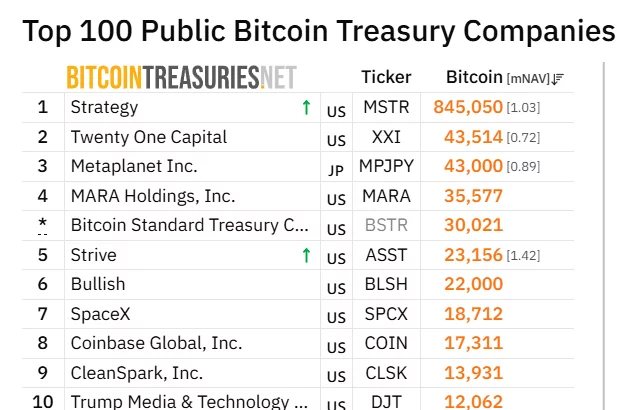
BitcoinTreasuries.net ranking shows Strive as the fifth-largest public Bitcoin treasury company with 23,156 BTC, ahead of Bullish and SpaceX.

Strive has purchased 1,800 Bitcoin for about $143 million, raising its treasury to 23,156 BTC and moving past Bullish into fifth place among public corporate holders.

Summary

  • Strive paid an average of $79,431 per Bitcoin between Aug. 24 and Aug. 28.
  • The company’s Bitcoin treasury increased from 21,356 BTC to 23,156 BTC.
  • ASST and SATA issuance continued as Strive financed purchases through its at-the-market programs.
  • ASST gained more than 5% on Monday after nearly doubling during August.

Strive Bitcoin holdings reach 23,156 BTC

The U.S. Securities and Exchange Commission Form 8-K filing, submitted on Aug. 31, showed that Strive acquired 1,800 BTC between Aug. 24 and Aug. 28 at an average price of $79,431 per coin, including fees and expenses.

At the reported average price, the transaction cost approximately $143 million. Strive ended the period with 23,156 BTC, up from 21,356 BTC one week earlier.

Advertisement

BitcoinTreasuries.net data placed the Dallas-based company ahead of crypto exchange Bullish, which holds 22,000 BTC. The new balance made Strive the fifth-largest publicly traded corporate Bitcoin holder, behind Strategy, Twenty One Capital, Metaplanet, and MARA Holdings.

BitcoinTreasuries.net ranking shows Strive as the fifth-largest public Bitcoin treasury company with 23,156 BTC, ahead of Bullish and SpaceX.
Source: BitcoinTreasuries.net

At a Bitcoin price of roughly $76,400, Strive’s holdings were worth about $1.77 billion. Market values can change with the price of BTC, while the filing did not disclose the company’s combined acquisition cost for its full treasury.

Chief executive Matt Cole confirmed the purchase in an Aug. 31 post on X.

“Strive acquired an additional 1800 BTC for $143M at an average cost of $79431 per bitcoin, bringing total holdings to ₿23156,” Cole wrote.

The acquisition followed another filing one week earlier in which Strive disclosed a purchase of 1,110 BTC for $81.5 million. As previously reported by crypto.news, the company paid an average of $73,409 per coin between Aug. 17 and Aug. 21, lifting its balance from 20,246 BTC to 21,356 BTC.

Advertisement

Across the two reporting periods, Strive acquired 2,910 BTC for approximately $224.5 million. Its average purchase price rose during the second week as Bitcoin moved through the upper-$70,000 range.

Share sales financed the Bitcoin purchase

Strive has used two Nasdaq-listed securities to raise money for its Bitcoin strategy: ASST common stock and SATA preferred stock. Both operate through at-the-market programs, which allow appointed sales agents to issue shares gradually instead of completing one large underwritten offering.

The latest filing showed that Strive’s outstanding Class A common shares increased by 3.58 million during the week, rising from 79.89 million to 83.47 million. Its Class B share count remained unchanged at 9.79 million.

Effective common shares outstanding consequently reached 93.26 million, while the assumed fully diluted count increased by 3.57 million to 96.52 million. The latter figure includes options and unvested employee awards but excludes 26.6 million shares tied to traditional warrants.

Advertisement

SATA issuance also continued, with the number of preferred shares climbing by 803,099 to 9.07 million. The security carries a $100 liquidation preference, placing its implied aggregate liquidation value at about $907.4 million.

Although Strive did not divide the purchase funding between the ASST and SATA programs, the simultaneous increase in both share counts showed that the company continued using common and preferred equity to support its treasury activity. Its filing also identified dilution from new ASST and SATA issuance as a risk for investors.

In June, Strive disclosed plans to add $2.1 billion of capacity to each program, creating up to $4.2 billion in possible new fundraising. The fundraising expansion gave the company more room to issue securities when market demand and pricing allowed.

For U.S. investors, ASST and SATA offer different exposure to Strive’s Bitcoin balance sheet. Common shareholders own the remaining equity after senior claims and can experience dilution as Strive sells more shares, while SATA holders have priority for declared dividends but do not own a direct claim on a fixed amount of Bitcoin.

Advertisement

SATA is a perpetual preferred security without a scheduled maturity date. Strive has maintained a 13% annualized dividend rate and began paying declared cash dividends every business day in June.

Strive’s cash position rises despite $143M purchase

Alongside its Bitcoin acquisition, Strive increased cash and cash equivalents by $11.6 million, from $171.9 million on Aug. 21 to $183.5 million on Aug. 28.

The company also continued holding 505,000 shares of Strategy’s STRC preferred stock. Although the number of shares did not change during the week, their reported fair value rose by $581,000 to $49.15 million.

Cash and STRC together had a reported value of approximately $232.65 million at the end of the period. Strive has used both assets as part of the reserves supporting its preferred-stock obligations.

Advertisement

Earlier in August, the company reported that it had retired all outstanding short- and long-term debt. Its second-quarter results showed a GAAP net loss of $257.6 million, including $234 million linked to declines in the fair value of Bitcoin and STRC during the quarter.

Preferred dividends also affect the amount available to common shareholders. Strive recorded $26.2 million in SATA dividends within its adjusted second-quarter loss attributable to common stockholders.

The company reported 6,236 BTC of purchases during the second quarter and 12,237 BTC during the first six months of 2026. An additional 303 BTC acquired through Aug. 7 brought the treasury to 20,167 BTC before several purchases later in the month.

Strive then bought 79 BTC for about $5 million between Aug. 10 and Aug. 14, followed by 1,110 BTC the next week and 1,800 BTC during the latest reporting period. The three transactions added 2,989 BTC in 15 days.

Advertisement

Back in May, a 1,109 BTC purchase had raised Strive’s holdings to 16,500 BTC and pushed the company ahead of Coinbase and Riot Platforms in the public-company ranking at the time.

ASST stock extends its August rally

ASST shares rose more than 5% during Monday trading after closing at $21.74 on Aug. 28. Market data showed the stock opened at $22.54 and traded between $21.95 and $23.46 during the session.

At approximately $23.16, ASST was up 6.5% on the day and had gained about 95% during August. Trading volume exceeded 5.2 million shares during the session, compared with an average near 5.18 million.

The stock’s rise followed a sharp increase in Strive’s Bitcoin balance and continued issuance under its common-stock program. ASST shareholders, however, remained exposed to Bitcoin price changes, preferred dividend costs, and further share issuance listed in the company’s SEC disclosures.

Advertisement

SATA traded near its $100 liquidation preference after falling below par the previous week. The preferred stock’s price matters to Strive because issuing shares well below $100 requires more units to raise the same capital, which adds to the company’s continuing dividend obligation.

Bitcoin traded near $78,000 during the same period after moving between approximately $77,161 and $79,346 over 24 hours. The cryptocurrency remained below Strive’s latest average purchase price of $79,431 but above the $73,409 average paid for the company’s preceding 1,110-BTC acquisition.

Source link

Advertisement
Continue Reading

Crypto World

Kalshi lays down first lifetime ban for ex-member of Congress George Santos

Published

on

Kalshi lays down first lifetime ban for ex-member of Congress George Santos


The prediction market platform banned Santos for manipulation as part of the industry’s ongoing efforts to show it’s dealing with bad behavior.

Source link

Continue Reading

Crypto World

Ethereum News: Hayes Backs ETH as It Strengthens Against Bitcoin

Published

on

eth logo

Ethereum is flatlining, but the number doesn’t really matter now, as the ETH/BTC ratio and Arthur Hayes’ news have given us a reason to watch it closely. The BitMEX co-founder called Ethereum his “number one pick” in an interview this weekend, arguing the asset could run 3 to 5x “pretty quickly” and calling it “one of the most unloved large-cap assets in crypto.”

The comments land as Ethereum’s RSI sits at 76.3, which is technically overbought, while grinding against resistance at $2,500. Hayes, however, hasn’t abandoned Bitcoin; he still projects BTC toward roughly $1 million within four years on the back of potential mass money printing.

According to Hayes, his near-term rotation call is what’s moving sentiment, and it raises the obvious question: Does relative strength against Bitcoin actually translate into fresh capital inflows, or is this just narrative noise before a pullback?

Discover: The Best Crypto to Diversify Your Portfolio

Advertisement

Can Ethereum Hit $2,750 on Hayes’ News?

ETH is holding in the mid-$2,400s after slipping from Sunday’s high near $2,500. Spot inflow data remains thin despite the bullish framing, which is the gap between Hayes’ narrative and what’s actually showing up on-chain.

As of now, the $2,500 level remains the line in the sand; clear it with volume and a push to $2,580, then $2,750, looks achievable given the bullish MACD and price holding above medium- and long-term moving averages.

Ethereum (ETH)
24h7d30d1yAll time

Failure to consolidate above $2,500 flips the setup. A rejection sends ETH toward $2,380, with a deeper retrace to $2,300 and, if the 200-day moving average support at $2,245 breaks, a retest of $2,030 becomes the bear case.

Advertisement

Bitcoin, meanwhile, is at $78,500, down a modest 0.20% and still commanding 59.79% dominance in a level that keeps the “rotation” thesis more theoretical than proven. Traders watching this pair should track both levels before taking a position.

Agree with Hayes’ take? Trade ETH on Bybit and Get a Chance to Win Our $1,000 USDT Airdrop

Bitcoin Hyper Targets Early Mover Upside as Ethereum Tests Key Levels

Hayes’ endorsement validates the ETH bull case at the macro level, but a 3-5x on a $2,450 asset with a market cap in the hundreds of billions requires enormous capital rotation to materialize quickly. That’s the ceiling problem with large-cap plays, the upside is real but slow.

Advertisement

Smaller-cap infrastructure bets tied to Bitcoin’s own scaling story offer a different risk profile entirely, and that’s where Bitcoin Hyper ($HYPER) enters the conversation.

Bitcoin Hyper is building the first Bitcoin Layer 2 with native SVM integration, aiming for execution speeds that beat Solana while settling back to Bitcoin’s base layer. The presale has raised $33 million so far, with tokens priced at $0.0136855 and staking rewards currently live at a high 35% APY.

Its Decentralized Canonical Bridge targets the exact problem Bitcoin has never solved, like slow transactions, high fees, and zero programmability, without giving up BTC’s security model.

Research Bitcoin Hyper before committing capital.

Advertisement

Discover: The Best Token Presales

The post Ethereum News: Hayes Backs ETH as It Strengthens Against Bitcoin appeared first on Cryptonews.

Source link

Advertisement
Continue Reading

Trending

Copyright © 2025