
Business
Microsoft Store Down? Outage Reports Surge, Marking a Third Microsoft Service Disruption This Monday Alone


Users of the Microsoft Store began reporting access problems starting at approximately 12:17 p.m. Eastern time Monday, according to outage-tracking service Downdetector, marking the third Microsoft service to draw user complaints within roughly 90 minutes on the same day.
Downdetector, an Ookla-owned platform that monitors more than 12,000 online services worldwide, posted on X shortly after the reports began surfacing. “User reports indicate problems with Microsoft Store since 12:17 PM EDT,” the account wrote, encouraging affected users to share how the disruption was impacting them under the hashtag #MicrosoftStoreDown. Separate outage-tracking service Entireweb similarly logged elevated activity for the Microsoft Store, recording 56 user reports over the preceding 24-hour period as of Monday, with six of those reports arriving within the final hour before its status check.
Monday’s Microsoft Store reports followed closely on the heels of two earlier disruptions affecting other Microsoft products the same day. Users had reported problems with Microsoft Outlook beginning around 11:53 a.m. Eastern time, and separate reports tracked by the online forum DesignTAXI Community indicated that broader Microsoft 365 services, including Outlook specifically, began showing elevated outage report volumes as early as 11:33 a.m. Eastern time Monday. The clustering of complaints across multiple Microsoft products within a relatively narrow window raised questions among affected users about whether the issues stemmed from a shared underlying cause, though Microsoft had not issued a public statement definitively linking the incidents as of Monday afternoon.
Microsoft’s broader cloud infrastructure, built primarily on its Azure platform, underpins a wide range of the company’s consumer and enterprise products, meaning that problems originating in shared backend systems can sometimes manifest as simultaneous disruptions across seemingly unrelated services. That dynamic played out dramatically during a major Microsoft outage in 2021, when a Domain Name System, or DNS, networking issue took down Microsoft’s homepage, Xbox and Office services, login pages, and even the company’s own status pages simultaneously, according to a contemporaneous report from TechCrunch. In that incident, Microsoft’s cloud service Azure also went offline, causing cascading outages across other websites and services that depend on Azure’s infrastructure, before the company confirmed the issue had been mitigated roughly seven hours after it began.
As of Monday afternoon, StatusGator’s monitoring of the broader Microsoft 365 apps category showed the service listed as operational, with only four user-submitted reports logged over the preceding 24-hour period as of a status check conducted shortly after 12:30 p.m. Eastern time, a discrepancy that illustrates how quickly outage-reporting metrics can shift and how different monitoring services can produce varying pictures of the same underlying situation depending on their data sources and update frequency.
Downdetector’s outage-tracking methodology relies on a combination of user-submitted complaints and automated web traffic monitoring rather than direct access to a company’s internal systems, meaning reported spikes in activity do not always indicate a complete platform-wide failure. Disruptions can instead reflect issues affecting a specific region, a particular version of an app or service, or a coincidental cluster of unrelated individual account problems. Even so, the near-simultaneous emergence of complaints across three separate Microsoft products in a single morning represents an unusual pattern that has drawn attention from users monitoring the company’s service status throughout the day.
Microsoft’s official Azure status page and its dedicated Microsoft 365 service health dashboard remain the most authoritative sources for confirming whether the company has formally acknowledged any of Monday’s reported issues. As of this report, Microsoft had not issued a public statement addressing the Microsoft Store outage reports specifically, and the company did not immediately respond to requests for comment regarding whether Monday’s disruptions across Outlook, Microsoft Store and broader Microsoft 365 services were connected to a common underlying cause.


Amazon sued by FTC, 22 US states over advertising practices


Naples Investor is a middle-market private company business executive with over 35 years experience in finance and accounting with almost 20 years in the top finance or accounting role. I have an MBA in Finance from one of the top 5 Finance programs in the USA as well as a CMA (inactive). Currently, I am consulting, mostly in sell-side due diligence in private equity.My investment style is long-term oriented with an eclectic mix between growth stocks and conservative dividend-paying equities. I’ve been fortunate to have been featured in two Wall Street Journal articles in the past four years.
Analyst’s Disclosure: I/we have no stock, option or similar derivative position in any of the companies mentioned, and no plans to initiate any such positions within the next 72 hours. I wrote this article myself, and it expresses my own opinions. I am not receiving compensation for it (other than from Seeking Alpha). I have no business relationship with any company whose stock is mentioned in this article.
Seeking Alpha’s Disclosure: Past performance is no guarantee of future results. No recommendation or advice is being given as to whether any investment is suitable for a particular investor. Any views or opinions expressed above may not reflect those of Seeking Alpha as a whole. Seeking Alpha is not a licensed securities dealer, broker or US investment adviser or investment bank. Our analysts are third party authors that include both professional investors and individual investors who may not be licensed or certified by any institute or regulatory body.


JR Research is an opportunistic investor. I was recognized by TipRanks as a Top Analyst, and also by Seeking Alpha as a “Top Analyst To Follow” for Technology, Software, and Internet, as well as for Growth and GARP. I identify attractive risk/reward opportunities supported by robust price action to potentially generate alpha well above the S&P 500. My picks have consistently demonstrated market outperformance over time. My approach combines timely and sharp price action analysis with fundamentals as my foundation. I also tend to avoid overhyped and overvalued stocks while capitalizing on battered stocks with significant upside recovery possibilities. I run the investing group Ultimate Growth Investing which specializes in identifying high-potential opportunities across various sectors. My main ideas revolve around stocks with strong growth potential, and also well-beaten contrarian plays. I designed the group for investors seeking to capitalize on growth stocks with solid fundamentals, robust buying momentum, and appealing turnaround plays to generate alpha consistently. Learn more
Analyst’s Disclosure: I/we have a beneficial long position in the shares of AVGO, GOOGL, AMZN either through stock ownership, options, or other derivatives. I wrote this article myself, and it expresses my own opinions. I am not receiving compensation for it (other than from Seeking Alpha). I have no business relationship with any company whose stock is mentioned in this article.
Seeking Alpha’s Disclosure: Past performance is no guarantee of future results. No recommendation or advice is being given as to whether any investment is suitable for a particular investor. Any views or opinions expressed above may not reflect those of Seeking Alpha as a whole. Seeking Alpha is not a licensed securities dealer, broker or US investment adviser or investment bank. Our analysts are third party authors that include both professional investors and individual investors who may not be licensed or certified by any institute or regulatory body.
Business
(VIDEO) Apple Watch Series 12 and Ultra 4 to Get Only Minor Upgrades, Report Says Ahead of Sept Launch
KEY POINTS
Excellent, comprehensive corroboration. Writing the article now.104 characters — good fit. Now writing the full article.## Apple Watch Series 12 and Ultra 4 to Get Only Minor Upgrades This Year, Report Says Ahead of Sept Launch
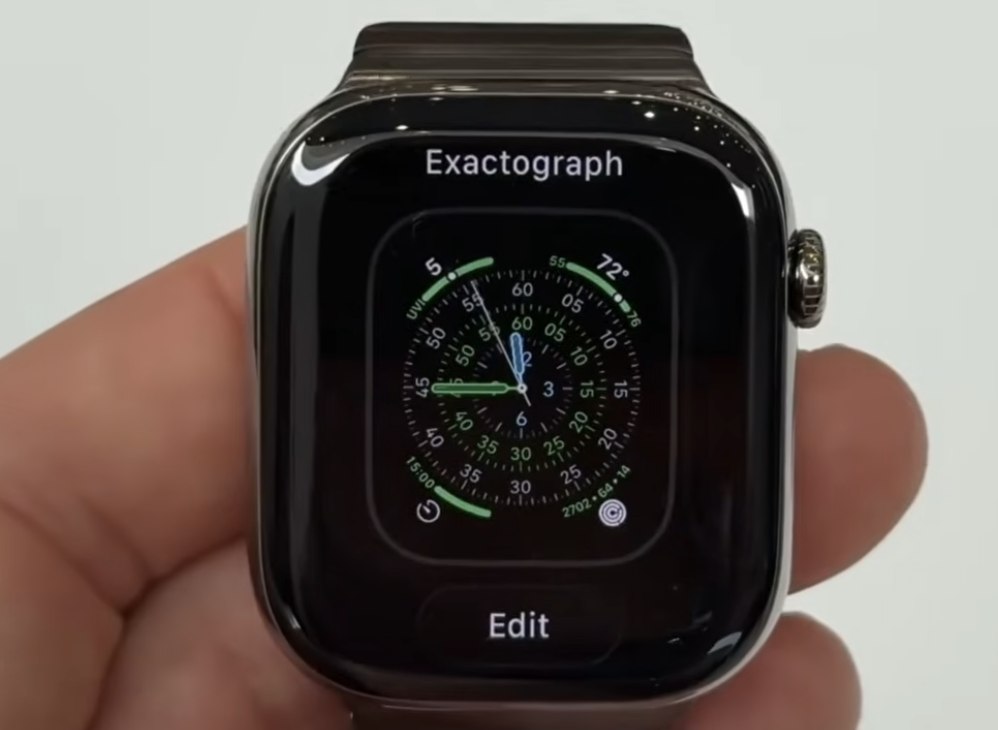
Apple’s next generation of smartwatches will bring only modest, incremental upgrades this year, with the most noticeable change likely to be the return of a ceramic case option rather than any significant redesign, according to a new report from Bloomberg’s Mark Gurman published Sunday.
Gurman, who has closely tracked Apple’s product plans for years, reiterated in his report that the upcoming Apple Watch Series 12 and Apple Watch Ultra 4 will receive what he described as “fairly minor upgrades,” a characterization he had previously offered earlier this month. The devices are expected to be unveiled alongside the iPhone 18 Pro, iPhone 18 Pro Max and Apple’s first foldable iPhone at the company’s Sept. 9 event.
According to Gurman, Apple has been testing both white and dark gray ceramic case configurations for the Apple Watch Series 12, a material last offered on the high-end Apple Watch Series 3 back in 2017. Ceramic has a longer history in Apple’s smartwatch lineup dating back even further, with the company first introducing a ceramic Apple Watch Edition alongside the Series 2 in September 2016. That original ceramic model, made from a compressed zirconia and alumina powder polished with a diamond slurry and marketed as being four times as hard as stainless steel, replaced Apple’s original gold Edition watch and brought the line’s price down from several thousand dollars to a comparatively modest 1,249 dollars. Apple brought the white ceramic finish back again for the Series 5 in 2019, alongside a newly introduced titanium option, before discontinuing the ceramic material entirely when the Series 6 launched in 2020. It has remained absent from Apple’s lineup for six years since, becoming a sought-after finish among collectors on the resale market in the meantime.
Beyond the ceramic option, Gurman reported that Apple plans to launch numerous new band colors and configurations alongside this year’s watches. He also described a new feature Apple is reportedly testing that would have the Watch’s heart-rate sensor continuously collect data, rather than measuring at random intervals or only during exercise, alongside potential updates to Apple’s fitness and health software aimed at surfacing additional wellness-related metrics.
On the performance side, multiple outlets covering Gurman’s reporting, including MacRumors and MacObserver, said this year’s watches are expected to finally move beyond the S10 chip found in the current Apple Watch Series 11 and Ultra 3, which itself was effectively unchanged from the S9 chip Apple introduced back in 2023. A new chip, widely expected to be called the S11, would mark the first meaningful performance improvement for Apple’s smartwatch lineup in several years, according to MacRumors’ analysis of the report.
Gurman also addressed rumors that had circulated earlier this year suggesting the Apple Watch Series 12 might introduce Touch ID or a redesigned band featuring an embedded health sensor. He said he does not expect either feature to materialize this year, telling readers he anticipates no major design changes compared with the current Series 11 and Ultra 3 models. That assessment effectively rules out one of the more ambitious rumors that had generated attention earlier in the year, given that a fingerprint-based unlocking system would likely require more significant internal hardware changes than Apple appears to be planning for this generation.
According to Gurman’s earlier reporting in his “Power On” newsletter, cited by MacRumors, a more substantial redesign of the Apple Watch and Apple Watch Ultra lines remains in development, with the ceramic case’s return positioned as either this year’s headline change or one that could instead be held back until 2027, alongside that broader redesign effort.
The timing of this week’s report, arriving just over a week before Apple’s official Sept. 9 unveiling, effectively closes the window for any last-minute surprises regarding this year’s Apple Watch lineup. As Mashable’s Stan Schroeder noted in his coverage of the report, surprises are unlikely this late in Apple’s product development cycle, meaning consumers should expect the Apple Watch Series 12 and Ultra 4 to closely resemble their immediate predecessors in overall appearance when they are formally introduced alongside the rest of Apple’s fall lineup next month.
Apple’s next generation of smartwatches will bring only modest, incremental upgrades this year, with the most noticeable change likely to be the return of a ceramic case option rather than any significant redesign, according to a new report from Bloomberg’s Mark Gurman published Sunday.
Gurman, who has closely tracked Apple’s product plans for years, reiterated in his report that the upcoming Apple Watch Series 12 and Apple Watch Ultra 4 will receive what he described as “fairly minor upgrades,” a characterization he had previously offered earlier this month. The devices are expected to be unveiled alongside the iPhone 18 Pro, iPhone 18 Pro Max and Apple’s first foldable iPhone at the company’s Sept. 9 event.
According to Gurman, Apple has been testing both white and dark gray ceramic case configurations for the Apple Watch Series 12, a material last offered on the high-end Apple Watch Series 3 back in 2017. Ceramic has a longer history in Apple’s smartwatch lineup dating back even further, with the company first introducing a ceramic Apple Watch Edition alongside the Series 2 in September 2016. That original ceramic model, made from a compressed zirconia and alumina powder polished with a diamond slurry and marketed as being four times as hard as stainless steel, replaced Apple’s original gold Edition watch and brought the line’s price down from several thousand dollars to a comparatively modest 1,249 dollars. Apple brought the white ceramic finish back again for the Series 5 in 2019, alongside a newly introduced titanium option, before discontinuing the ceramic material entirely when the Series 6 launched in 2020. It has remained absent from Apple’s lineup for six years since, becoming a sought-after finish among collectors on the resale market in the meantime.
Beyond the ceramic option, Gurman reported that Apple plans to launch numerous new band colors and configurations alongside this year’s watches. He also described a new feature Apple is reportedly testing that would have the Watch’s heart-rate sensor continuously collect data, rather than measuring at random intervals or only during exercise, alongside potential updates to Apple’s fitness and health software aimed at surfacing additional wellness-related metrics.
On the performance side, multiple outlets covering Gurman’s reporting, including MacRumors and MacObserver, said this year’s watches are expected to finally move beyond the S10 chip found in the current Apple Watch Series 11 and Ultra 3, which itself was effectively unchanged from the S9 chip Apple introduced back in 2023. A new chip, widely expected to be called the S11, would mark the first meaningful performance improvement for Apple’s smartwatch lineup in several years, according to MacRumors’ analysis of the report.
Gurman also addressed rumors that had circulated earlier this year suggesting the Apple Watch Series 12 might introduce Touch ID or a redesigned band featuring an embedded health sensor. He said he does not expect either feature to materialize this year, telling readers he anticipates no major design changes compared with the current Series 11 and Ultra 3 models. That assessment effectively rules out one of the more ambitious rumors that had generated attention earlier in the year, given that a fingerprint-based unlocking system would likely require more significant internal hardware changes than Apple appears to be planning for this generation.
According to Gurman’s earlier reporting in his “Power On” newsletter, cited by MacRumors, a more substantial redesign of the Apple Watch and Apple Watch Ultra lines remains in development, with the ceramic case’s return positioned as either this year’s headline change or one that could instead be held back until 2027, alongside that broader redesign effort.
The timing of this week’s report, arriving just over a week before Apple’s official Sept. 9 unveiling, effectively closes the window for any last-minute surprises regarding this year’s Apple Watch lineup. As Mashable’s Stan Schroeder noted in his coverage of the report, surprises are unlikely this late in Apple’s product development cycle, meaning consumers should expect the Apple Watch Series 12 and Ultra 4 to closely resemble their immediate predecessors in overall appearance when they are formally introduced alongside the rest of Apple’s fall lineup next month.


A jump in oil prices after renewed hostilities in the Iran war is pushing bond yields higher, and mortgage rates are following suit.
The average rate on the 30-year fixed loan jumped 6 basis points on Monday to 6.87%, according to Mortgage News Daily. That is the highest level since June 2025. It’s now up 12 basis points since Thursday and has risen more than 30 basis points in the last two months.
“While rates are technically at their highest level in more than a year, they haven’t exactly exploded with surprising, new momentum,” said Matthew Graham, chief operating officer at Mortgage News Daily. “Instead, it’s been more of a slow grind fueled by the usual suspects: inflation expectations, elevated bond issuance, and economic resilience. All three of those factors are subject to at least some variability in the future.”
The expectation had been for falling rates this year, but the war with Iran and its resulting rise in oil prices upended that. The day before the war started, at the end of February, the rate on the 30-year fixed was 5.99%.
To put that into perspective, for someone buying a $450,000 home, which is right around the national median, putting 20% down on a 30-year fixed mortgage, the monthly principal and interest payment today would be $2,363. That is $207 a month more than it would have been back at the end of February.
And that’s just the payment. When rates go up, fewer borrowers can qualify for a mortgage, as it shifts the debt-to-income ratios that lenders rely on for safe lending.
This comes on top of higher home prices, which seem to now be accelerating again in some parts of the country, due to lean supply.
Nationally, prices in June were up 1.5% year over year, up from the 1.2% rise in May, according to the latest S&P Cotality Case-Shiller home price index.
“As financing costs are kept high for prospective buyers, current homeowners remain reluctant to give up the low mortgage rates secured in prior years,” said Rebecca Kaufman, associate director of commodities at S&P Dow Jones Indices, in a news release.
The selloff spread across the Treasury curve. Five-year yields reached their highest level since early 2025, while 30-year yields moved above last week’s highs. Oil prices gained more than 2% after hitting session highs during US trading hours, following President Donald Trump’s threat of additional attacks on Iran.
The latest moves extend a Treasury selloff that has intensified in recent sessions as investors weigh concerns about rising government debt and assess how aggressively the Fed may need to tighten monetary policy.
Short-term Treasury yields surged on Friday after Fed Chairman Kevin Warsh, speaking at the central bank’s Jackson Hole symposium, signaled a greater possibility of interest-rate increases to contain inflation.
“The Fed is ready to act when needed,” said Sean Simko, head of fixed-income investment management at SEI Investments Corp, according to Bloomberg. He said the August employment report due Friday and consumer-price data scheduled for Sept. 11 will be key ahead of the Fed’s Sept. 16 policy decision. If employment remains stable while inflation stays elevated, the central bank could be inclined to raise rates, he added.

The 30-year Treasury yield rose about five basis points to nearly 5.26% on Monday, although it remained below the multiyear highs reached in mid-August. Longer-term yields had eased after the Treasury Department announced earlier this month that it would increase debt buybacks to support market liquidity and value.
“If Federal Reserve Chairman Kevin Warsh wanted markets to do more signaling, the message from bonds is that rates will keep powering higher this week, thanks to rising oil prices, supply and economic data,” said Alyce Andres, Bloomberg’s macro strategist.Long-dated Treasuries could receive some support from month-end bond-index rebalancing, scheduled for 4 p.m. New York time. An unusually large amount of 10- to 30-year debt issued during August is expected to be added to major benchmarks.
Still, options traders are positioning for further losses in longer-maturity Treasuries. One notable trade involved the purchase of roughly $6.5 million worth of December put options on US Treasury bond futures, with a strike level implying 30-year yields could climb to around 5.7%, compared with roughly 5.25% currently. The options expire Nov. 20.
Longer-term yields are also being pressured by expectations of heavy upcoming supply, particularly in the corporate bond market, where September is historically one of the busiest issuance months and is expected to surpass previous September totals.

Ratana21/iStock via Getty Images
Credit markets rallied in the quarter, rebounding from broad weakness in the previous quarter. A blended leveraged loan/high-yield index returned 2.2% for the quarter and 1.6% year-to-date, while lower-rated credits, software, and building products remained weak. Our portfolio again generated a positive return

Torsten Asmus/iStock via Getty Images

On Friday, the S&P 500’s percentage of stocks above their 50-DMA fell to 53.7%, the lowest reading for the index since 6/17.
Five sectors (Consumer Discretionary, Industrials, Real Estate, Technology, and Utilities) now have fewer than half their members above
The sharp movement in these stocks came on a day when changes in constituents for the MSCI Global Standard Indexes took place as of the close of August 31, 2026.
Four companies — Adani Energy Solutions, Billionbrains Garage Ventures, Laurus Labs and Lenskart Solutions — were added to the MSCI India Index, according to an index review by MSCI.
Shares of Adani Enterprises tumbled 7.74 per cent, Adani Energy Solutions tanked 7.41 per cent, Adani Green Energy declined 6.93 per cent, Adani Power slumped 6.52 per cent, Adani Ports lost 4.11 per cent, Adani Total Gas dropped 2.56 per cent, Ambuja Cements edged lower by 2.51 per cent, NDTV dipped 2.21 per cent, and ACC was down 2.21 per cent on the BSE.
The 30-share BSE Sensex declined 307.24 points, or 0.40 per cent, to settle at 76,957.27. The 50-share NSE Nifty dropped 95.25 points, or 0.39 per cent, to end at 24,080.40.
Today’s session carries an unusual market dynamic, as the MSCI August rebalancing takes effect at the close. The quarterly reshuffle is expected to trigger sizeable passive fund flows, concentrated in the final minutes of trading, Hariselvan Radhakrishnan, Founder & CEO of HST Wealth, a Research Analyst firm, said.
“MSCI index rejig-related fund adjustments added to market volatility,” Ajit Mishra — SVP, Research, Religare Broking Ltd, said.
Uzbekistan’s Competition Development and Consumer Protection Committee has granted preliminary approval for Tapuz Limited to acquire a 100% stake in OLX Classifieds LLC, the operator of one of the country’s most widely used online marketplace platforms. The approval is subject to a set of regulatory conditions designed to preserve market competition across Uzbekistan’s rapidly expanding digital economy.
Tapuz Limited is principally owned by TBC Bank Group PLC, the London-listed financial group that also indirectly controls TBC Bank Uzbekistan and Payme two of the most prominent digital financial platforms operating in the country. The OLX acquisition, once fully completed, would bring together a dominant classifieds platform with an established digital banking and payments ecosystem under a single corporate structure.
Regulatory Approval and Its Conditions
The Competition Committee’s approval is not unconditional. The regulator has imposed a series of requirements on Tapuz Limited that are designed to prevent the combined entity from using its market position to restrict competition or disadvantage users. Both Payme and OLX are listed on Uzbekistan’s national register of companies holding dominant positions in the digital platforms market a designation that brings specific obligations under competition law.
Among the conditions imposed, the buyer is prohibited from leveraging other digital services to improperly influence the terms under which OLX operates. It is also restricted from using OLX user data to benefit TBC Bank Uzbekistan or Payme in ways that would limit competition. The regulator has explicitly stated that OLX users cannot be required to use only Payme or TBC Bank services when making payments on the platform a condition that ensures the marketplace remains open to competing payment providers.
The requirements also address the handling of commercial information. Tapuz Limited is prohibited from disclosing personal or commercial data about the customers of competing businesses a provision that reflects the regulator’s focus on preventing the kind of data asymmetry that can entrench market dominance in digital platform economies. Compliance with national competition legislation is specified as an ongoing obligation throughout the transaction.
What the Acquisition Means for Uzbekistan’s Digital Market
The strategic logic behind the OLX acquisition is straightforward. OLX Uzbekistan is one of the country’s most visited online platforms, used by millions of consumers and small businesses for buying, selling, and trading goods and services. Integrating this marketplace reach with TBC Bank Group’s financial services infrastructure creates a platform with compelling potential for embedded financial services credit at the point of sale, payment processing for marketplace transactions, and financial products tailored to the needs of small merchants operating through classifieds.
The combination also reflects a broader trend in emerging market fintech, where the most successful platforms are those that embed financial services within the contexts where consumers and businesses already spend their time. Marketplaces are particularly valuable in this regard because they generate high-frequency, high-intent interactions precisely the kind of engagement that financial services providers seek when developing embedded product strategies.
For TBC Bank Uzbekistan, which already serves over 6 million monthly active users and holds a leading position in consumer credit and payments, the OLX acquisition represents an extension of its ecosystem rather than a departure from its core strategy. The company has consistently expanded its product range to cover a wider share of the financial and commercial activity of its users from daily banking and lending to insurance, travel, and subscription services.
Savings, Deposits, and the Maturing of Uzbekistan’s Financial Market
The regulatory approval of this acquisition takes place within a financial market that is maturing rapidly on multiple dimensions simultaneously. Consumer awareness of financial products savings instruments, investment options, and structured deposit offerings has grown considerably as digital banking platforms have made these products more visible and accessible. The growing interest in terms such as “депозиты в узбекистане” and “omonat turlari” reflects a population that is moving beyond basic transactional banking toward a more considered engagement with savings and wealth preservation. This shift is significant for the long-term development of Uzbekistan’s financial sector.
As consumer confidence in digital financial platforms increases, and as the range of products available through those platforms expands, the conditions for deeper financial inclusion become more favourable. The combination of accessible savings products, embedded lending at points of commerce, and reliable payment infrastructure creates a financial ecosystem that can serve users across a much broader range of their economic needs than was possible through traditional banking channels alone.
Competition, Compliance, and the Road Ahead
The conditions attached to the OLX acquisition approval reflect a regulatory approach that is increasingly common in markets where digital platform concentration is emerging as a structural concern. By imposing specific restrictions on data use, payment exclusivity, and competitive conduct at the outset of the transaction, the Competition Committee is attempting to shape the market structure proactively rather than responding to abuses after the fact.
For TBC Bank Group, navigating these conditions will be an important operational priority as the acquisition moves toward completion. The restrictions are not unusual in the context of platform acquisitions in competitive markets, and the group’s compliance track record across its operations in Georgia and Uzbekistan suggests it is well positioned to meet the requirements. The key challenge will be realising the commercial potential of the combined entity while maintaining the open, competitive environment that the regulator has mandated.
Uzbekistan’s digital economy has expanded at a pace that has regularly surprised outside observers, and the OLX acquisition is one of the more visible markers of how seriously international and domestic players now view the market’s long-term potential. TBC Bank Group’s willingness to pursue a transaction of this scale — subject to regulatory scrutiny and conditional approval reflects a confidence in the trajectory of Uzbekistan’s digital economy that is grounded in the operational results the group has already achieved.

Young and Restless 2-Week Spoilers Aug 31-Sept 11: Victoria Recoils as Phyllis Slips Into the Shadows

Yorkshire Water begins repair work on Fishergate in York
Amazon sued by FTC, 22 US states over advertising practices





-

 Crypto World6 days ago
SpaceX stock could rise 75% to $240, JPMorgan says
-

 Fashion3 days ago
Weekend Open Thread: Maeve – Corporette.com
-

 Crypto World4 days ago
Bitcoin’s 22% rally now needs real demand to outlast Treasury liquidity boost
-

 Crypto World5 days ago
Warsh Jackson Hole keynote puts financial innovation first
-

 Crypto World7 days ago
A $30 Billion AI Fund Implodes, Now the SEC Is Investigating Wall Street’s Role
-

 Business4 days ago
Salesforce Stock Soars 19% as Blowout Earnings and Agentforce AI Growth Silence Software Skeptics
-

 Crypto World6 days ago
Did Trump Just Move SpaceX Stock With One Truth Social Post?
-

 Crypto World5 days ago
Elon Musk Grok Bot Promise: We Will Make You Whole if AI Loses Your Money
-

 Business3 days ago
Onto Innovation Stock: AI’s Next Bottleneck Is Yield (NYSE:ONTO)
-

 Business4 days ago
Apple Confirms September 9 Keynote and Reveals Its Full Pre-Order Schedule
-
 NewsBeat5 days ago
Lindsay Clancy jury braces for closing arguments as judge tells court: ‘You’ve heard all the evidence’ – Live updates
-

 Business5 days ago
Walmart takes aim at younger shoppers with new fashion brand
-

 Crypto World3 days ago
Bitcoin price tests $82K resistance as Brandt stays long
-

 Business6 days ago
Thailand’s Eastern Economic Corridor Capital City (EECiti): Key Developments and Investment Opportunities
-

 Crypto World5 days ago
NVIDIA revenue hits $96.2B as AI demand doubles
-

 Business3 days ago
iPhone 18 Pro Pre-Orders Could Shift to Saturday as Apple Reportedly Avoids September 11 Anniversary
-

 Business7 days ago
NVIDIA Stock Drops Nearly 2 Percent to $210 on Seventh Losing Day Ahead of Critical AI Earnings
-

 NewsBeat6 days ago
Trump’s trade truce with China faces test with Iran effort
-

 Crypto World5 days ago
Nvidia Q2 Earnings Reveal $96.2 Billion Beat, So Why Is NVDA Falling?
-
 Tech5 days ago
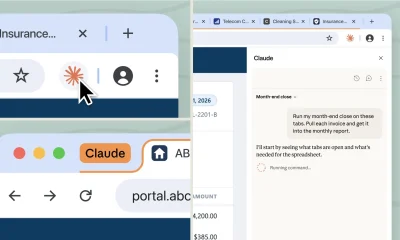
Claude Cowork gets its own browser that doesn’t touch your tabs, bookmarks, or saved passwords
You must be logged in to post a comment Login