
Business
Don’t Double Down On VICI Properties: The Dealer Has Blackjack (NYSE:VICI)


Naples Investor is a middle-market private company business executive with over 35 years experience in finance and accounting with almost 20 years in the top finance or accounting role. I have an MBA in Finance from one of the top 5 Finance programs in the USA as well as a CMA (inactive). Currently, I am consulting, mostly in sell-side due diligence in private equity.My investment style is long-term oriented with an eclectic mix between growth stocks and conservative dividend-paying equities. I’ve been fortunate to have been featured in two Wall Street Journal articles in the past four years.
Analyst’s Disclosure: I/we have no stock, option or similar derivative position in any of the companies mentioned, and no plans to initiate any such positions within the next 72 hours. I wrote this article myself, and it expresses my own opinions. I am not receiving compensation for it (other than from Seeking Alpha). I have no business relationship with any company whose stock is mentioned in this article.
Seeking Alpha’s Disclosure: Past performance is no guarantee of future results. No recommendation or advice is being given as to whether any investment is suitable for a particular investor. Any views or opinions expressed above may not reflect those of Seeking Alpha as a whole. Seeking Alpha is not a licensed securities dealer, broker or US investment adviser or investment bank. Our analysts are third party authors that include both professional investors and individual investors who may not be licensed or certified by any institute or regulatory body.

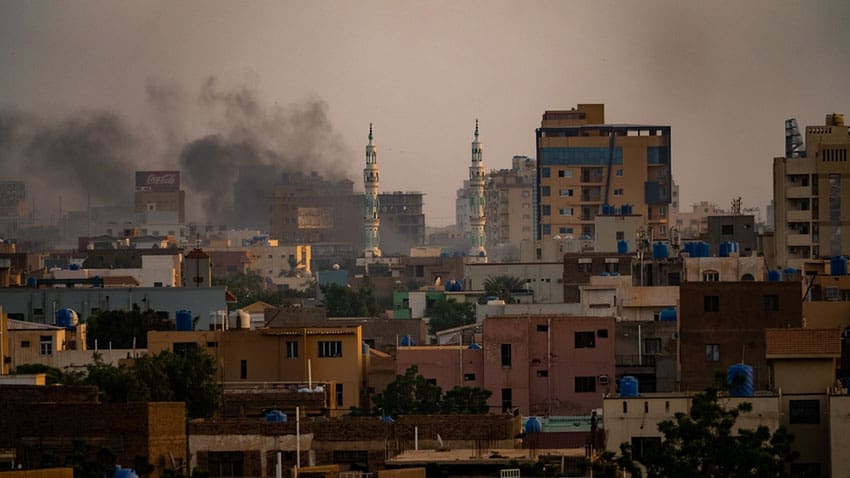
Sudan’s war is increasingly revealing the practical consequences of a new security relationship between Saudi Arabia, Turkey and Pakistan.
The partnership was formalised this month through the Mecca Joint Defense Agreement, but the military and financial links associated with Sudan appear to have been developing well before the document was signed.
The agreement, signed on 7 August 2026, commits the three countries to treat an armed attack on one as an attack on all. It also sets out a wider programme of cooperation spanning defence industries, training and strategic coordination. Its signatories describe it as defensive rather than directed at a particular country. Even so, Sudan is fast becoming the first conflict in which observers can assess how those connections may work in practice.
Reporting by Le Monde says the Sudanese theatre has brought together Saudi financing with Turkish drones and Pakistani weapons in support of the Sudanese Armed Forces (SAF). The newspaper reported that Riyadh has helped finance procurement and that a Pakistani contract valued at about $1.5 billion includes fighter aircraft, armoured vehicles and drones.
The reported arrangement matters because Sudan’s civil war is no longer only a contest between the SAF and the Rapid Support Forces (RSF). Each new source of equipment, technical assistance or funding can alter the balance on the ground and extend the conflict’s reach beyond the country’s borders.
That risk came into focus after Chad said its territory had been struck by aircraft and drones believed to be linked to the SAF or allied forces. The Chadian military said the attacks of 20 and 21 August targeted a convoy of roughly 200 vehicles in eastern Ennedi, more than 100 kilometres from the Sudanese border. Sudan’s army said the convoy was carrying reinforcements for the RSF.
The alleged strikes added to concern that the conflict could place neighbouring states under more direct pressure. Chad has carried much of the humanitarian burden from the war and its long eastern border remains vulnerable to wider spillover.
The United States has condemned the reported operation inside Chad and has argued for stronger action to limit the flow of weapons into Sudan. At the UN Security Council, Washington has pressed for the arms embargo that has covered Darfur since 2005 to be expanded nationwide, including to drones. US officials say external money and military supplies are deepening the war and raising the prospect of further regional escalation.
Drones and expertise reshape the battlefield
Turkey’s place in this picture has attracted particular attention. Turkish-made Bayraktar TB2 and Akinci drones have reportedly entered the SAF’s inventory. A Washington Post investigation published in March 2025 described Baykar contracts and support arrangements with the Sudanese side worth at least $120 million, including drones, equipment and technical assistance.
Le Monde has portrayed Turkey as the SAF’s most important military partner since the war began, reporting that Turkish trainers have worked alongside Sudanese forces. Ankara’s relationship with SAF leader Abdel Fattah al-Burhan also has a longer strategic context: Turkey sees future opportunities in areas such as infrastructure, mining and wider commercial development if Sudan eventually moves beyond the war.
Pakistani equipment is also reported to be appearing on the ground. The newspaper said armoured vehicles from Pakistan had been seen around Khartoum, an indication that the reported deal may be moving from planning into use.
The importance of this emerging network should not be overstated. The Mecca agreement was not written specifically for Sudan, and all three signatories say it is not directed against another state. It sits within a broader reshaping of regional security calculations involving Iran, Israel and evolving alliances across the Middle East.
Sudan now offers an immediate measure of what closer cooperation can mean when finance, defence production and political ties intersect during an active war. It may become a proving ground for how the partnership projects influence beyond its members’ borders.

KOH SAMUI, Thailand, Aug. 29, 2026 /PRNewswire/ — A groundbreaking ceremony for the new Club Med Koh Samui resort was held on Tuesday, 25 August 2026, marking a significant milestone for both Club Med and Central Capital Group, one of Thailand’s leading business conglomerates.
(Left to Right) Jason Dunn, Managing Director CIO, Central Capital Group; Andrew Xu, Deputy CEO & Chief Growth Officer, Club Med; Phoom Chirathivat, Managing Partner, Co-founder Central Capital Group; Rachael Harding, CEO, Southeast Asia and Pacific, Club Med; Charles Rubin, Managing Director IR, GC and Risk, Central Capital Group.
#ClubMed #ClubMedKohSamui #ClubMedExclusiveCollection
Download high-resolution images:https://bit.ly/4r0xL5D
The event included a traditional ceremony as well as a symbolic planting of native Samui coconut seedlings, signifying a tribute to the locale as well as a brand new beginning and a vision of future success. This closely follows the signing of the Hotel Management Agreement (HMA) just earlier this year.

Representatives from Central Capital Group and Club Med at a traditional ceremony as part of the Groundbreaking of Club Med Koh Samui

The highly anticipated Club Med Koh Samui resort will be a Club Med Exclusive Collection Resort, the third in this product range in the East and South Asia, and Pacific (ESAP) region. Club Med Exclusive Collection Koh Samui will mark the brand’s first Exclusive Collection Resort in Thailand and second in the country, following Club Med Phuket which opened its doors 40 years back in 1985.
This expansion of Club Med and the Exclusive Collection product range continues the upscale trajectory of Club Med’s global upgrade which was completed in 2024. Since then, the group has been focused on accelerating the development of new resorts around the globe, including both Premium All-Inclusive as well as Exclusive Collection resorts.
With the ambition to double the number of resorts globally by 2030, Club Med’s development expansion roadmap is well-paced to deliver outstanding new resorts such as Club Med South Africa (newly opened in July 2026) and a brand new beach resort Club Med Borneo in Kota Kinabalu, Malaysia (end of 2026).
Other upcoming projects by Club Med include opening of resorts in Canada, Italy, Oman and Indonesia in the next few years.
About Club Med
Club Med, founded in 1950 by Gérard Blitz, invented the all-inclusive holiday club concept, adding in activities especially for children with the creation of the Mini Club in 1967. Led by its pioneering spirit, Club Med seeks out exceptional destinations and sites. Today, Club Med is the world’s leading provider of upscale, all-inclusive holiday packages with a French touch for families, active couples and individuals. Present in 40 countries around the world, and with over 60 Premium and Exclusive Collection Resorts, Club Med offers a vacation to experience free spirit in exceptional destinations and sites. Club Med employs nearly 28,000 Gentle Organisers (G.Os) and Gentle Employees (G.Es), representing 110 nationalities.
Source : Club Med Breaks Ground on Koh Samui: First Exclusive Collection Resort in Thailand
The information provided in this article was created by Cision PR Newswire, our news partner. The author's opinions and the content shared on this page are their own and may not necessarily represent the perspectives of Thailand Business News.
According to preliminary data, the S&P 500 lost 27.39 points, or 0.36%, to end at 7,684.37 points, while the Nasdaq Composite lost 41.51 points, or 0.16%, to 26,360.91. The Dow Jones Industrial Average fell 380.22 points, or 0.71%, to 53,179.77.
Spiking oil prices dampened investor risk appetite and sent benchmark U.S. Treasury yields higher, as investors processed U.S. Federal Reserve Chair Kevin Warsh’s hawkish tone on Friday in his speech at the Jackson Hole Symposium.
While a broad sell-off sent all three major U.S. stock indexes lower, they all posted monthly gains. The Nasdaq showed the largest percentage growth for August as the AI trade remained alive, despite recent weakness. The blue-chip Dow nabbed its fifth consecutive monthly advance.
“We heard from Warsh last week, and the odds now favor a rate hike in September,” said Peter Tuz, president of Chase Investment Counsel in Charlottesville, Virginia. “Throw that into the mix of continued hostilities in the Middle East.

“And the week before Labor Day, there’s not a lot of people who are out of the office, so weird things can happen,” Tuz added. “There was no reason to come into work today thinking it’s a great day to buy stocks.”
Iran’s President Masoud Pezeshkian said Tehran is still seeking a negotiated solution to the war, after days of renewed airstrike exchanges and mounting hostilities following U.S. President Donald Trump’s implementation of costly economic sanctions.The protracted impasse and the related closure of the Strait of Hormuz is fueling fears that upward pressure on energy prices could metastasize into broader, systemic inflation that could force the Fed to hike interest rates as soon as next month.
Financial markets are currently pricing in more than a 65% likelihood of the central bank implementing a 25-basis-point rate hike at the conclusion of September’s monetary policy meeting, according to CME’s FedWatch tool.
“Investors are revisiting some of the comments that Warsh made at Jackson Hole as well and what that may mean for interest rates, what that may mean for inflation,” said Paul Nolte, senior wealth advisor & market strategist at Murphy & Sylvest in Elmhurst, Illinois. “If they do not hike rates in September, I think you will see a dramatic reaction in the markets because it’s been prepped now for quite some time that they’re going to raise rates.”
Among the 11 major sectors in the S&P 500, energy shares showed solid gains, with a boost from surging crude prices . Utilities lagged on the heels of an amendment to a bill in the California senate, which did little to solve grid operators’ exposure to wildfire liabilities.
Within the energy space, Halliburton and Valero Energy advanced. In utilities, California’s PG&E suffered its largest percentage loss in over six years.
In other movers, GameStop’s shares rose after the company said it would pay about 27% of a previously announced $1.4 billion debt exchange through cash on hand instead of issuing new stock, preventing further share dilution.
Business
(VIDEO) Lionel Messi Retires From Argentina National Team, Ending His 21 Year International Career This Monday
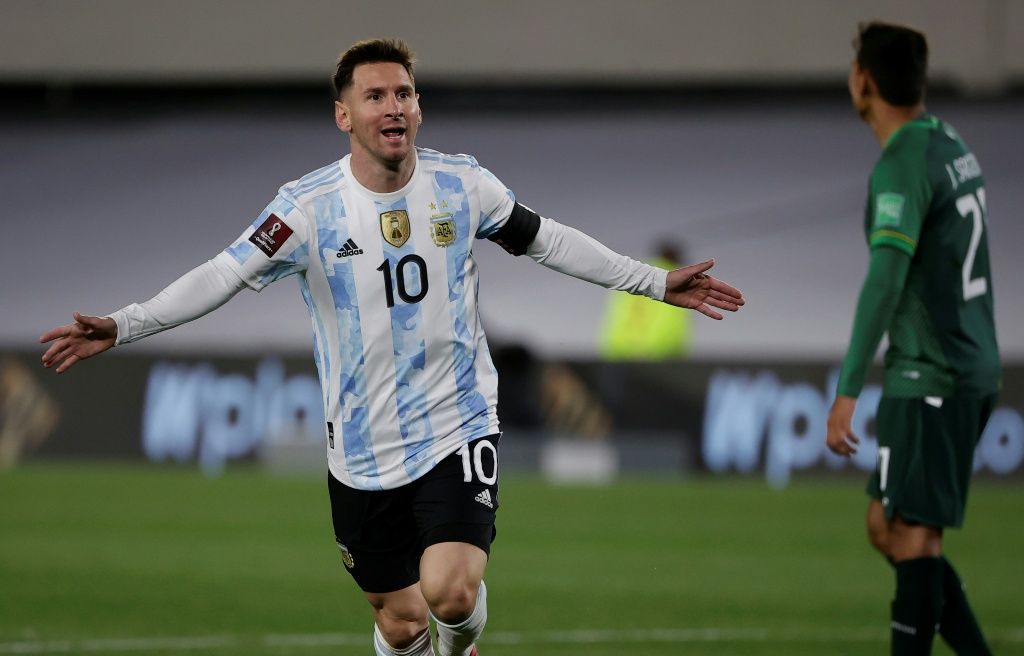
BUENOS AIRES — Lionel Messi announced his retirement from the Argentina national team Monday, ending a 21-year international career that included a long-awaited World Cup title, in an emotional Instagram post that came weeks after his father’s death and Argentina’s runner-up finish at this summer’s World Cup.
Messi, 39, shared the news in a lengthy statement posted to his social media accounts, accompanied by an image of a handwritten notebook entry. “After all this time since the final, and after thinking about it a lot, I want to tell everyone that I’m retiring from the national team,” Messi wrote. “It was a decision that hurt and still hurts deep inside, but I understand that this is the right moment. I swear I always gave everything, not only in these last few years when we won everything, but before that too. I always fought and gave everything for this shirt, to bring you happiness and make you feel proud to be Argentine through football.”
Messi added a footnote explaining the statement had actually been written weeks earlier, shortly after Argentina’s World Cup final defeat. “I wrote these words on July 21st, two days after the final,” he wrote. “Today, after what happened with my dad, I am even more convinced than before.” Messi’s father and longtime agent, Jorge Messi, died Aug. 8 at a hospital in Rosario, Argentina, at age 68.
The announcement caps one of the most decorated international careers in the history of the sport. Messi finishes as Argentina’s all-time leading goalscorer and most capped player, having scored 124 goals in 203 appearances for the national team, making him the highest-scoring men’s player in South American football history. He led Argentina to victory at the 2022 World Cup in Qatar, ending the country’s 36-year wait for the tournament and delivering its third World Cup title overall. That triumph followed Messi’s central role in ending an earlier 28-year trophy drought for Argentina, when he helped the team win the 2021 Copa America and then successfully defended that continental title in 2024.
Messi’s final chapter with the national team came at this summer’s World Cup, hosted jointly across the United States, Mexico and Canada, where the 39-year-old again played a leading role in guiding Argentina back to the final. Argentina ultimately fell 1-0 in extra time to Spain in that match, played July 19 in East Rutherford, New Jersey, a defeat that left Messi visibly emotional on the field afterward.
In his retirement statement, Messi reflected on the totality of his international career rather than dwelling solely on the recent loss. “There is not much time left and chapters are coming to an end, and this is one that hurts me deeply,” he wrote, according to a translation carried by Yahoo Sports. “I leave with the peace of mind and pride of having given you, together with my teammates, moments we dreamed of. It was crazy to have lived it with you. I love you!”
Monday’s announcement marks the second time Messi has stepped away from Argentina’s national team, having previously announced his international retirement in 2016 after Argentina lost the Copa America final to Chile, extending what was then a run of three consecutive final defeats without a major title. Messi reversed that decision within weeks, returning to the squad in time for World Cup qualifying matches later that year, a reversal that ultimately set the stage for the trophies that followed over the subsequent decade.
This time, reports out of Argentina in the weeks following the World Cup final had suggested Messi and national team officials were planning a more gradual farewell, potentially including a specially organized send-off match in Argentina to allow fans to properly honor his career before his final appearance. As of Monday’s announcement, no such farewell match had been publicly scheduled, and it remained unclear whether Messi’s retirement would include any additional ceremonial appearances for the national team or take effect immediately.
Argentina head coach Lionel Scaloni, who guided the team throughout Messi’s most successful stretch with the national side, has not yet issued a public statement responding to Monday’s announcement. Messi is expected to continue his club career, which currently continues with Major League Soccer’s Inter Miami, even as his departure from international football closes out a chapter widely regarded as one of the most accomplished in the sport’s history.
Business
Microsoft Outlook Down? Outage Reports Surge as Users Nationwide Report Widespread Access Problems This Monday
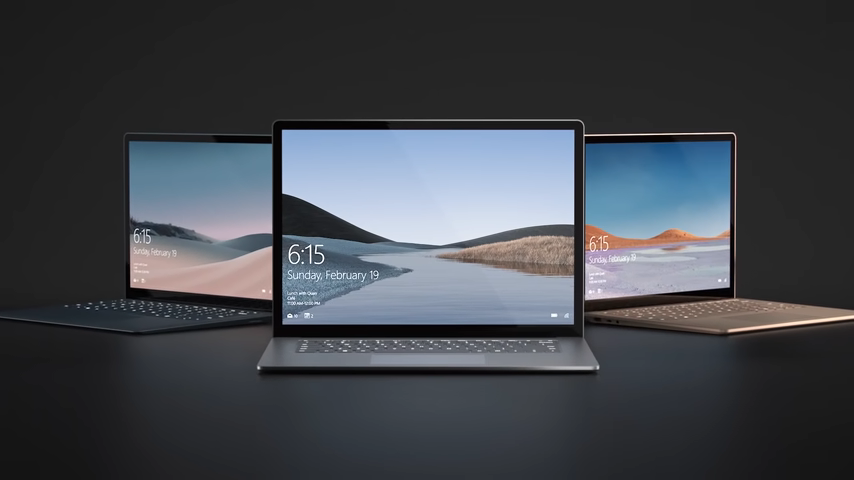
Downdetector, an Ookla-owned platform that monitors more than 12,000 online services using a combination of user-submitted reports and automated web traffic signals, posted on X shortly after the reports began surfacing. “User reports indicate problems with Microsoft Outlook since 11:53 AM EDT,” the account wrote, asking users to describe how the disruption was affecting them. As of Monday afternoon, Microsoft had not issued a public statement specifically addressing the reported outage, though the broader Microsoft 365 suite status page showed the service as operational, with only limited user-submitted reports logged in the prior 24-hour window, according to monitoring service StatusGator.
Because Downdetector’s system relies primarily on crowdsourced complaints rather than direct access to Microsoft’s internal infrastructure, reported spikes in outage activity do not always correspond to a complete, company-wide service failure. Disruptions can instead reflect issues affecting a specific region, a particular Outlook client, such as the desktop application, web version or mobile app, or individual account-level problems that coincidentally cluster around the same time. Even so, a rapid increase in user reports combined with visible social media complaints has historically served as an early indicator of genuine service disruptions at Microsoft and other major technology providers.
Outlook has experienced several notable outages over the past few years, underscoring how frequently the widely used email and calendar platform has faced disruptions despite its position as one of the world’s most heavily relied-upon business communication tools. According to Windows Forum, a global Outlook sign-in outage in July 2025 affected large numbers of users before Microsoft confirmed the issue had been resolved. Separately, a Windows security update distributed in January 2026, identified as KB5074109, caused the classic desktop version of Outlook to crash or freeze for some users, particularly those using POP email accounts or local PST data files, according to reports logged on Microsoft’s own Q&A support forum. In that instance, Microsoft directed affected users toward the web-based version of Outlook as a temporary workaround while a permanent fix was developed.
A broader and more severe disruption struck Microsoft’s cloud infrastructure earlier this year. According to an analysis published on the technical platform Medium, several of Microsoft’s most critical shared cloud services failed simultaneously on Jan. 22 and 23, 2026, triggering an outage lasting between eight and nine hours across multiple Microsoft products, including services that depend on the company’s Azure cloud platform. That incident was notable in part because Microsoft’s own internal monitoring and alerting systems, which are built on top of the same Azure and Microsoft 365 infrastructure they are designed to monitor, were themselves affected by the outage, complicating the company’s ability to detect and respond to the failure in its earliest stages.
Outlook’s history of periodic outages extends back well beyond the past year. The platform experienced a major outage in June 2023 that left customers across North America unable to sign in for more than seven hours, affecting millions of users at the time. A separate outage in July 2023 disrupted Outlook.com specifically, an incident Microsoft later attributed to a code deployment error introduced during a routine backend infrastructure update, which triggered a cascading failure across multiple company data centers.
For businesses and individual users who rely on Outlook as a primary communication and scheduling tool, even short disruptions can create meaningful downstream effects, delaying time-sensitive emails, calendar invitations and cross-team coordination that many organizations have come to depend on the platform to manage smoothly. That reliance has made outage reports for Outlook, along with competing platforms such as Gmail and Slack, a recurring source of visible public frustration whenever access issues arise, regardless of how quickly the underlying problem is ultimately resolved.
As of this report, the scope, cause and expected resolution timeline for Monday’s reported issues remained unclear. Affected users have been encouraged to monitor Microsoft’s official service health dashboard directly for the most accurate and up-to-date information regarding Outlook’s operational status. Microsoft did not immediately respond to requests for comment regarding the reported disruption.

Amazon sued by FTC, 22 US states over advertising practices

JR Research is an opportunistic investor. I was recognized by TipRanks as a Top Analyst, and also by Seeking Alpha as a “Top Analyst To Follow” for Technology, Software, and Internet, as well as for Growth and GARP. I identify attractive risk/reward opportunities supported by robust price action to potentially generate alpha well above the S&P 500. My picks have consistently demonstrated market outperformance over time. My approach combines timely and sharp price action analysis with fundamentals as my foundation. I also tend to avoid overhyped and overvalued stocks while capitalizing on battered stocks with significant upside recovery possibilities. I run the investing group Ultimate Growth Investing which specializes in identifying high-potential opportunities across various sectors. My main ideas revolve around stocks with strong growth potential, and also well-beaten contrarian plays. I designed the group for investors seeking to capitalize on growth stocks with solid fundamentals, robust buying momentum, and appealing turnaround plays to generate alpha consistently. Learn more
Analyst’s Disclosure: I/we have a beneficial long position in the shares of AVGO, GOOGL, AMZN either through stock ownership, options, or other derivatives. I wrote this article myself, and it expresses my own opinions. I am not receiving compensation for it (other than from Seeking Alpha). I have no business relationship with any company whose stock is mentioned in this article.
Seeking Alpha’s Disclosure: Past performance is no guarantee of future results. No recommendation or advice is being given as to whether any investment is suitable for a particular investor. Any views or opinions expressed above may not reflect those of Seeking Alpha as a whole. Seeking Alpha is not a licensed securities dealer, broker or US investment adviser or investment bank. Our analysts are third party authors that include both professional investors and individual investors who may not be licensed or certified by any institute or regulatory body.
Business
(VIDEO) Apple Watch Series 12 and Ultra 4 to Get Only Minor Upgrades, Report Says Ahead of Sept Launch
KEY POINTS
Excellent, comprehensive corroboration. Writing the article now.104 characters — good fit. Now writing the full article.## Apple Watch Series 12 and Ultra 4 to Get Only Minor Upgrades This Year, Report Says Ahead of Sept Launch
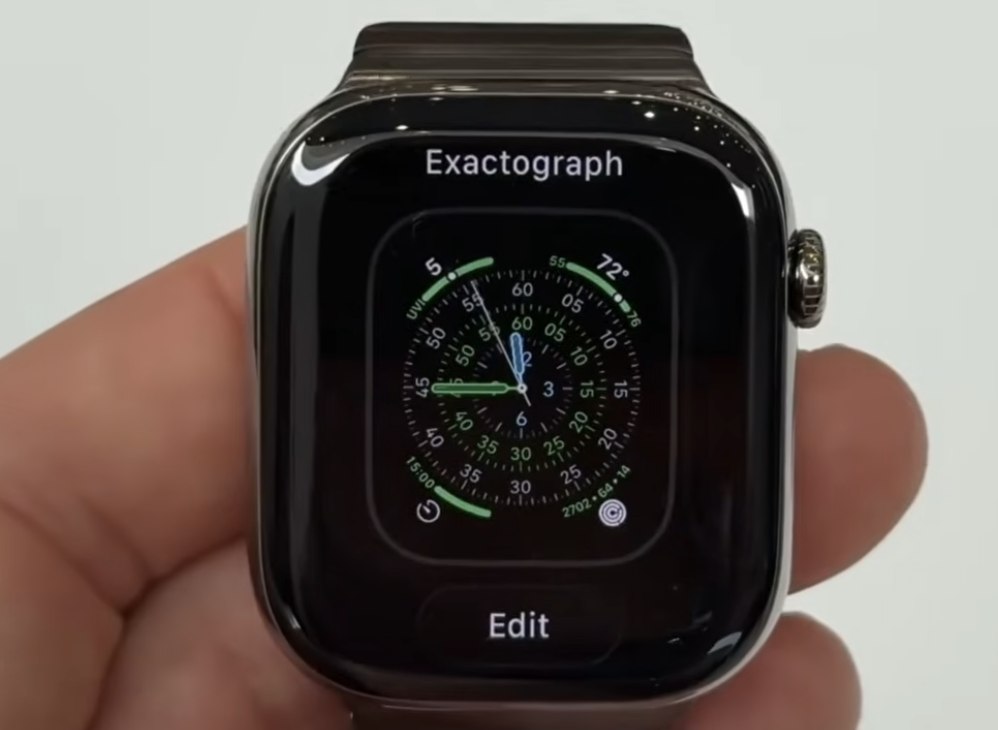
Apple’s next generation of smartwatches will bring only modest, incremental upgrades this year, with the most noticeable change likely to be the return of a ceramic case option rather than any significant redesign, according to a new report from Bloomberg’s Mark Gurman published Sunday.
Gurman, who has closely tracked Apple’s product plans for years, reiterated in his report that the upcoming Apple Watch Series 12 and Apple Watch Ultra 4 will receive what he described as “fairly minor upgrades,” a characterization he had previously offered earlier this month. The devices are expected to be unveiled alongside the iPhone 18 Pro, iPhone 18 Pro Max and Apple’s first foldable iPhone at the company’s Sept. 9 event.
According to Gurman, Apple has been testing both white and dark gray ceramic case configurations for the Apple Watch Series 12, a material last offered on the high-end Apple Watch Series 3 back in 2017. Ceramic has a longer history in Apple’s smartwatch lineup dating back even further, with the company first introducing a ceramic Apple Watch Edition alongside the Series 2 in September 2016. That original ceramic model, made from a compressed zirconia and alumina powder polished with a diamond slurry and marketed as being four times as hard as stainless steel, replaced Apple’s original gold Edition watch and brought the line’s price down from several thousand dollars to a comparatively modest 1,249 dollars. Apple brought the white ceramic finish back again for the Series 5 in 2019, alongside a newly introduced titanium option, before discontinuing the ceramic material entirely when the Series 6 launched in 2020. It has remained absent from Apple’s lineup for six years since, becoming a sought-after finish among collectors on the resale market in the meantime.
Beyond the ceramic option, Gurman reported that Apple plans to launch numerous new band colors and configurations alongside this year’s watches. He also described a new feature Apple is reportedly testing that would have the Watch’s heart-rate sensor continuously collect data, rather than measuring at random intervals or only during exercise, alongside potential updates to Apple’s fitness and health software aimed at surfacing additional wellness-related metrics.
On the performance side, multiple outlets covering Gurman’s reporting, including MacRumors and MacObserver, said this year’s watches are expected to finally move beyond the S10 chip found in the current Apple Watch Series 11 and Ultra 3, which itself was effectively unchanged from the S9 chip Apple introduced back in 2023. A new chip, widely expected to be called the S11, would mark the first meaningful performance improvement for Apple’s smartwatch lineup in several years, according to MacRumors’ analysis of the report.
Gurman also addressed rumors that had circulated earlier this year suggesting the Apple Watch Series 12 might introduce Touch ID or a redesigned band featuring an embedded health sensor. He said he does not expect either feature to materialize this year, telling readers he anticipates no major design changes compared with the current Series 11 and Ultra 3 models. That assessment effectively rules out one of the more ambitious rumors that had generated attention earlier in the year, given that a fingerprint-based unlocking system would likely require more significant internal hardware changes than Apple appears to be planning for this generation.
According to Gurman’s earlier reporting in his “Power On” newsletter, cited by MacRumors, a more substantial redesign of the Apple Watch and Apple Watch Ultra lines remains in development, with the ceramic case’s return positioned as either this year’s headline change or one that could instead be held back until 2027, alongside that broader redesign effort.
The timing of this week’s report, arriving just over a week before Apple’s official Sept. 9 unveiling, effectively closes the window for any last-minute surprises regarding this year’s Apple Watch lineup. As Mashable’s Stan Schroeder noted in his coverage of the report, surprises are unlikely this late in Apple’s product development cycle, meaning consumers should expect the Apple Watch Series 12 and Ultra 4 to closely resemble their immediate predecessors in overall appearance when they are formally introduced alongside the rest of Apple’s fall lineup next month.
Apple’s next generation of smartwatches will bring only modest, incremental upgrades this year, with the most noticeable change likely to be the return of a ceramic case option rather than any significant redesign, according to a new report from Bloomberg’s Mark Gurman published Sunday.
Gurman, who has closely tracked Apple’s product plans for years, reiterated in his report that the upcoming Apple Watch Series 12 and Apple Watch Ultra 4 will receive what he described as “fairly minor upgrades,” a characterization he had previously offered earlier this month. The devices are expected to be unveiled alongside the iPhone 18 Pro, iPhone 18 Pro Max and Apple’s first foldable iPhone at the company’s Sept. 9 event.
According to Gurman, Apple has been testing both white and dark gray ceramic case configurations for the Apple Watch Series 12, a material last offered on the high-end Apple Watch Series 3 back in 2017. Ceramic has a longer history in Apple’s smartwatch lineup dating back even further, with the company first introducing a ceramic Apple Watch Edition alongside the Series 2 in September 2016. That original ceramic model, made from a compressed zirconia and alumina powder polished with a diamond slurry and marketed as being four times as hard as stainless steel, replaced Apple’s original gold Edition watch and brought the line’s price down from several thousand dollars to a comparatively modest 1,249 dollars. Apple brought the white ceramic finish back again for the Series 5 in 2019, alongside a newly introduced titanium option, before discontinuing the ceramic material entirely when the Series 6 launched in 2020. It has remained absent from Apple’s lineup for six years since, becoming a sought-after finish among collectors on the resale market in the meantime.
Beyond the ceramic option, Gurman reported that Apple plans to launch numerous new band colors and configurations alongside this year’s watches. He also described a new feature Apple is reportedly testing that would have the Watch’s heart-rate sensor continuously collect data, rather than measuring at random intervals or only during exercise, alongside potential updates to Apple’s fitness and health software aimed at surfacing additional wellness-related metrics.
On the performance side, multiple outlets covering Gurman’s reporting, including MacRumors and MacObserver, said this year’s watches are expected to finally move beyond the S10 chip found in the current Apple Watch Series 11 and Ultra 3, which itself was effectively unchanged from the S9 chip Apple introduced back in 2023. A new chip, widely expected to be called the S11, would mark the first meaningful performance improvement for Apple’s smartwatch lineup in several years, according to MacRumors’ analysis of the report.
Gurman also addressed rumors that had circulated earlier this year suggesting the Apple Watch Series 12 might introduce Touch ID or a redesigned band featuring an embedded health sensor. He said he does not expect either feature to materialize this year, telling readers he anticipates no major design changes compared with the current Series 11 and Ultra 3 models. That assessment effectively rules out one of the more ambitious rumors that had generated attention earlier in the year, given that a fingerprint-based unlocking system would likely require more significant internal hardware changes than Apple appears to be planning for this generation.
According to Gurman’s earlier reporting in his “Power On” newsletter, cited by MacRumors, a more substantial redesign of the Apple Watch and Apple Watch Ultra lines remains in development, with the ceramic case’s return positioned as either this year’s headline change or one that could instead be held back until 2027, alongside that broader redesign effort.
The timing of this week’s report, arriving just over a week before Apple’s official Sept. 9 unveiling, effectively closes the window for any last-minute surprises regarding this year’s Apple Watch lineup. As Mashable’s Stan Schroeder noted in his coverage of the report, surprises are unlikely this late in Apple’s product development cycle, meaning consumers should expect the Apple Watch Series 12 and Ultra 4 to closely resemble their immediate predecessors in overall appearance when they are formally introduced alongside the rest of Apple’s fall lineup next month.
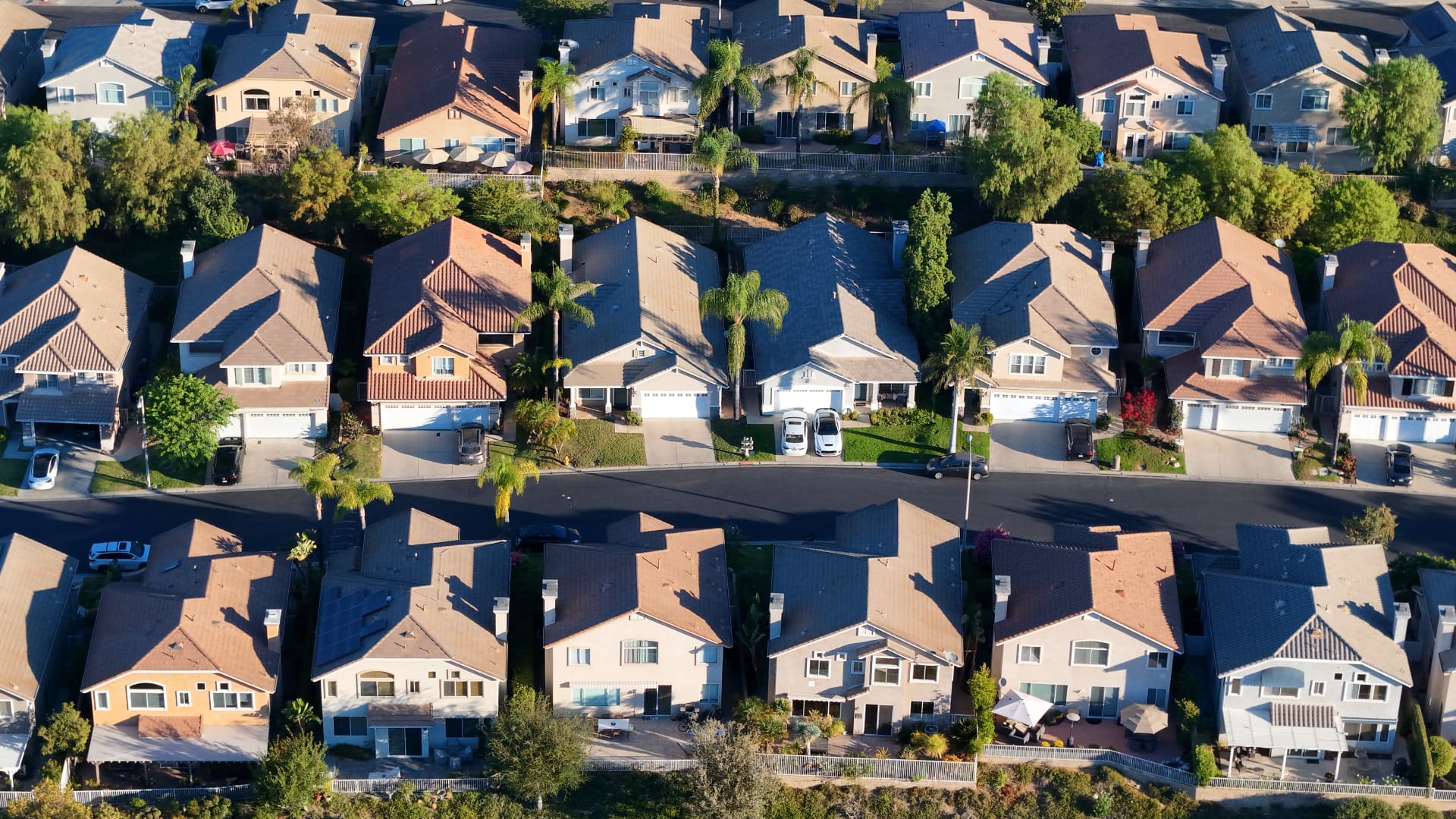

A jump in oil prices after renewed hostilities in the Iran war is pushing bond yields higher, and mortgage rates are following suit.
The average rate on the 30-year fixed loan jumped 6 basis points on Monday to 6.87%, according to Mortgage News Daily. That is the highest level since June 2025. It’s now up 12 basis points since Thursday and has risen more than 30 basis points in the last two months.
“While rates are technically at their highest level in more than a year, they haven’t exactly exploded with surprising, new momentum,” said Matthew Graham, chief operating officer at Mortgage News Daily. “Instead, it’s been more of a slow grind fueled by the usual suspects: inflation expectations, elevated bond issuance, and economic resilience. All three of those factors are subject to at least some variability in the future.”
The expectation had been for falling rates this year, but the war with Iran and its resulting rise in oil prices upended that. The day before the war started, at the end of February, the rate on the 30-year fixed was 5.99%.
To put that into perspective, for someone buying a $450,000 home, which is right around the national median, putting 20% down on a 30-year fixed mortgage, the monthly principal and interest payment today would be $2,363. That is $207 a month more than it would have been back at the end of February.
And that’s just the payment. When rates go up, fewer borrowers can qualify for a mortgage, as it shifts the debt-to-income ratios that lenders rely on for safe lending.
This comes on top of higher home prices, which seem to now be accelerating again in some parts of the country, due to lean supply.
Nationally, prices in June were up 1.5% year over year, up from the 1.2% rise in May, according to the latest S&P Cotality Case-Shiller home price index.
“As financing costs are kept high for prospective buyers, current homeowners remain reluctant to give up the low mortgage rates secured in prior years,” said Rebecca Kaufman, associate director of commodities at S&P Dow Jones Indices, in a news release.
The selloff spread across the Treasury curve. Five-year yields reached their highest level since early 2025, while 30-year yields moved above last week’s highs. Oil prices gained more than 2% after hitting session highs during US trading hours, following President Donald Trump’s threat of additional attacks on Iran.
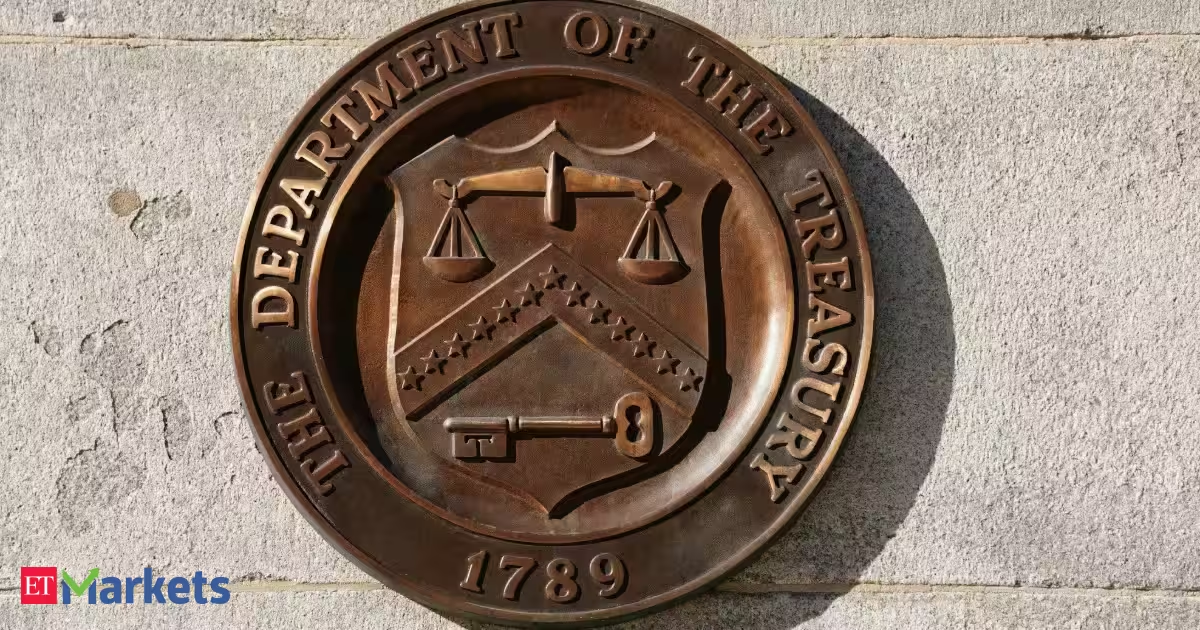
The latest moves extend a Treasury selloff that has intensified in recent sessions as investors weigh concerns about rising government debt and assess how aggressively the Fed may need to tighten monetary policy.
Short-term Treasury yields surged on Friday after Fed Chairman Kevin Warsh, speaking at the central bank’s Jackson Hole symposium, signaled a greater possibility of interest-rate increases to contain inflation.
“The Fed is ready to act when needed,” said Sean Simko, head of fixed-income investment management at SEI Investments Corp, according to Bloomberg. He said the August employment report due Friday and consumer-price data scheduled for Sept. 11 will be key ahead of the Fed’s Sept. 16 policy decision. If employment remains stable while inflation stays elevated, the central bank could be inclined to raise rates, he added.
The 30-year Treasury yield rose about five basis points to nearly 5.26% on Monday, although it remained below the multiyear highs reached in mid-August. Longer-term yields had eased after the Treasury Department announced earlier this month that it would increase debt buybacks to support market liquidity and value.
“If Federal Reserve Chairman Kevin Warsh wanted markets to do more signaling, the message from bonds is that rates will keep powering higher this week, thanks to rising oil prices, supply and economic data,” said Alyce Andres, Bloomberg’s macro strategist.Long-dated Treasuries could receive some support from month-end bond-index rebalancing, scheduled for 4 p.m. New York time. An unusually large amount of 10- to 30-year debt issued during August is expected to be added to major benchmarks.
Still, options traders are positioning for further losses in longer-maturity Treasuries. One notable trade involved the purchase of roughly $6.5 million worth of December put options on US Treasury bond futures, with a strike level implying 30-year yields could climb to around 5.7%, compared with roughly 5.25% currently. The options expire Nov. 20.
Longer-term yields are also being pressured by expectations of heavy upcoming supply, particularly in the corporate bond market, where September is historically one of the busiest issuance months and is expected to surpass previous September totals.

Sudan Becomes an Early Test of Saudi, Turkish and Pakistani Defence Cooperation

The Ali G haters are the dumbest people alive

5 winners (besides Scottie Scheffler) from PGA Tour’s playoffs





-

 Crypto World6 days ago
SpaceX stock could rise 75% to $240, JPMorgan says
-

 Fashion3 days ago
Weekend Open Thread: Maeve – Corporette.com
-

 Crypto World4 days ago
Bitcoin’s 22% rally now needs real demand to outlast Treasury liquidity boost
-

 Crypto World5 days ago
Warsh Jackson Hole keynote puts financial innovation first
-

 Crypto World7 days ago
A $30 Billion AI Fund Implodes, Now the SEC Is Investigating Wall Street’s Role
-

 Business4 days ago
Salesforce Stock Soars 19% as Blowout Earnings and Agentforce AI Growth Silence Software Skeptics
-

 Crypto World6 days ago
Did Trump Just Move SpaceX Stock With One Truth Social Post?
-

 Crypto World5 days ago
Elon Musk Grok Bot Promise: We Will Make You Whole if AI Loses Your Money
-

 Business3 days ago
Onto Innovation Stock: AI’s Next Bottleneck Is Yield (NYSE:ONTO)
-

 Business4 days ago
Apple Confirms September 9 Keynote and Reveals Its Full Pre-Order Schedule
-
 NewsBeat5 days ago
Lindsay Clancy jury braces for closing arguments as judge tells court: ‘You’ve heard all the evidence’ – Live updates
-

 Business5 days ago
Walmart takes aim at younger shoppers with new fashion brand
-

 Crypto World3 days ago
Bitcoin price tests $82K resistance as Brandt stays long
-

 Business6 days ago
Thailand’s Eastern Economic Corridor Capital City (EECiti): Key Developments and Investment Opportunities
-

 Crypto World5 days ago
NVIDIA revenue hits $96.2B as AI demand doubles
-

 Business3 days ago
iPhone 18 Pro Pre-Orders Could Shift to Saturday as Apple Reportedly Avoids September 11 Anniversary
-

 Business7 days ago
NVIDIA Stock Drops Nearly 2 Percent to $210 on Seventh Losing Day Ahead of Critical AI Earnings
-
 NewsBeat6 days ago
Trump’s trade truce with China faces test with Iran effort
-
 Crypto World5 days ago
Nvidia Q2 Earnings Reveal $96.2 Billion Beat, So Why Is NVDA Falling?
-
 Tech5 days ago
Claude Cowork gets its own browser that doesn’t touch your tabs, bookmarks, or saved passwords
You must be logged in to post a comment Login