
Business
Tim Cook steps down as Apple CEO after 15 years, names a successor


A Mornings with Maria panel discusses Fed policy ahead of Chair Kevin Warshs Jackson Hole speech and the anticipated Nvidia earnings.
Apple CEO Tim Cook is stepping down from his role at the helm of one of the world’s largest tech companies after a 15-year tenure that saw Apple become the first publicly traded U.S. company with a $1 trillion market cap and other notable milestones.
He announced in April that he would step down as Apple CEO at the end of August, and while he is leaving that role, he will remain with the company as the executive chairman. John Ternus, who most recently served as Apple’s senior vice president of hardware engineering, will be Cook’s successor.
Cook became CEO in August 2011 when Apple co-founder Steve Jobs resigned six weeks before his death. Jobs first met Cook in 1998 and convinced him to join Apple that year, starting his career at the tech giant as a senior vice president for worldwide operations.
“As you know, I am not leaving Apple. But I am stepping away from a role that I have loved deeply,” Cook said in a memo emailed to all employees on his final day. “I will miss this work in ways I can only begin to imagine, even as I remain completely at peace with my decision.”
APPLE POSTS RECORD JUNE QUARTER AS IPHONE SALES SURGE; COOK WEIGHS IN ON AI, CHINA
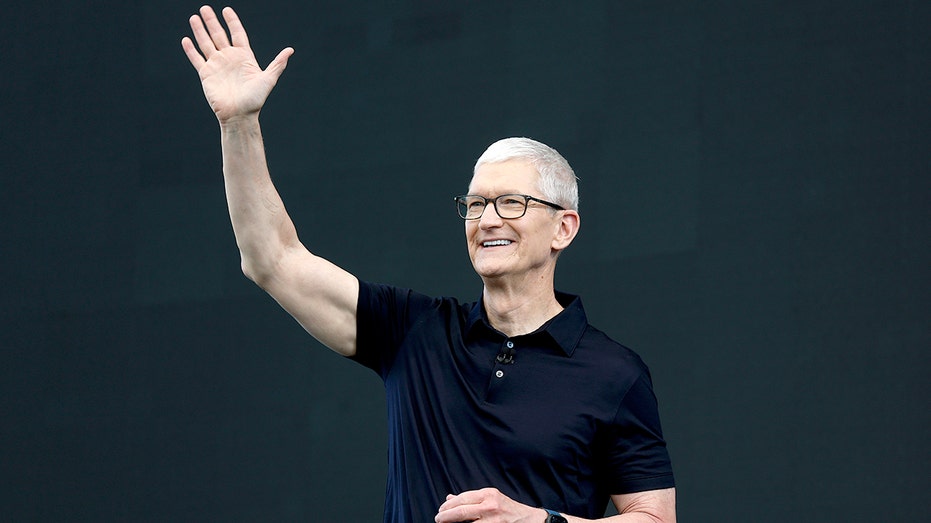
Apple CEO Tim Cook is stepping down from the role on Monday, Aug. 31, after leading the company to historic milestones during his tenure at the helm. (Justin Sullivan/Getty Images)
“Together, we have created something far greater than any one of us could have imagined or accomplished alone. And that’s the secret to our success. We bring out the best in each other. We lift each other up,” Cook said.
“We have made it possible to leave our ‘dent in the universe,’ as Steve once described it, because of who we are and what we believe, because of what we value and how we see the world,” he added.
Cook’s tenure at Apple saw the tech giant move to compete in new product and service categories, building a broader consumer tech ecosystem off of the MacBook, iPhone and iPad.
APPLE CEO TIM COOK TO STEP DOWN IN MAJOR LEADERSHIP SHAKEUP, SUCCESSOR NAMED
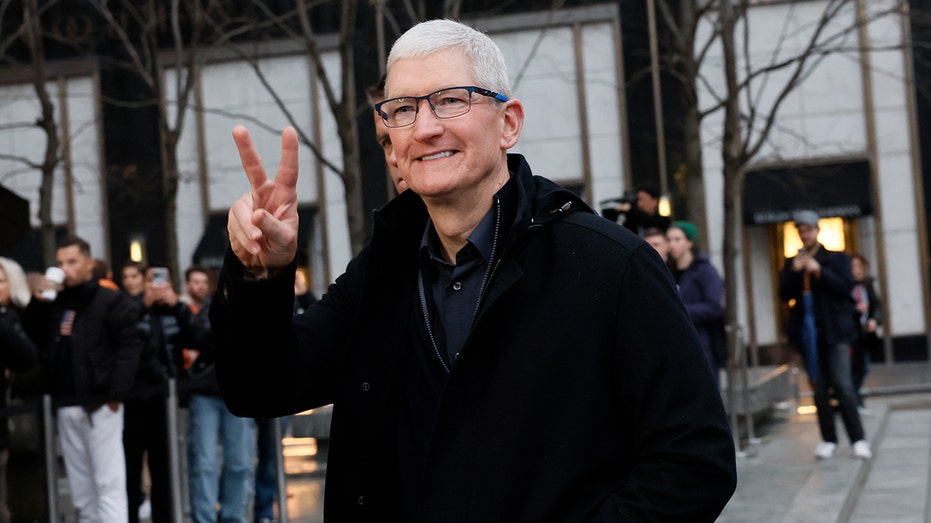
Tim Cook served 15 years as Apple CEO and will remain as the company’s executive chairman. (Michael M. Santiago/Getty Images)
In 2014, Cook and the company announced the Apple Watch as the company entered the wearable health tech market, while it also launched Apply Pay that year to build on its base of consumer device users to compete in mobile payments.
The next year, Apple Music marked the company’s pivot from iTunes to a subscription-based model for consumers who stream their music, while 2016 saw the debut of Apple’s AirPods which supercharged the growth of the company’s wearables division. The company also launched Apple TV+ and Apple Card in 2019 as it continued to broaden its service offerings.
Apple also hit a number of major corporate milestones under Cook’s leadership. It became the first U.S.-based publicly traded company to reach $1 trillion in market capitalization in 2018.
Apple later reached the $2 trillion milestone in 2020, surpassed the $3 trillion market for the first time in 2022 during intraday trading, then crossed $4 trillion in October 2025. It briefly overtook Nvidia for largest market cap in July 2026.
WHO IS JOHN TERNUS, SET TO SUCCEED TIM COOK AS APPLE’S CEO?
| Ticker | Security | Last | Change | Change % |
|---|---|---|---|---|
| AAPL | APPLE INC. | 316.85 | -2.85 | -0.89% |
Over the years, Apple has vied with ExxonMobil, Nvidia and Microsoft for the title of most valuable publicly traded U.S. company, with the top spot regularly changing hands among those companies. Within that period, Apple ranked first for much of the 2013 to 2018 period.
Apple currently has a market cap of roughly $4.6 trillion, ranking second behind Nvidia’s $5.25 trillion market cap while leading Microsoft’s $3.79 trillion valuation.
APPLE RAISES PRICES ON SOME STREAMING SERVICES AS LICENSING COSTS CLIMB
Leander Kahney, the editor and publisher of Cult of Mac who has authored six books on Apple, told FOX Business that Cook “had huge shoes to fill, but he’s done so admirably,” adding that he helped the company grow into one of the world’s most valuable companies “while maintaining Apple’s values.”
“He’s presided over a great run of products, with only a couple of missteps. Apple Watch, AirPods, Apple Silicon – these are up there with the best stuff Apple has ever done,” Kahney said. “Even the Mac, Steve Jobs’ baby, has been boosted to new heights and is more popular than ever – look at the AI buying boom that the Mac is leading.”
“Cook is leaving Apple in great shape for his successor, and I’m really interested to see what he gets up to next,” Kahney added.
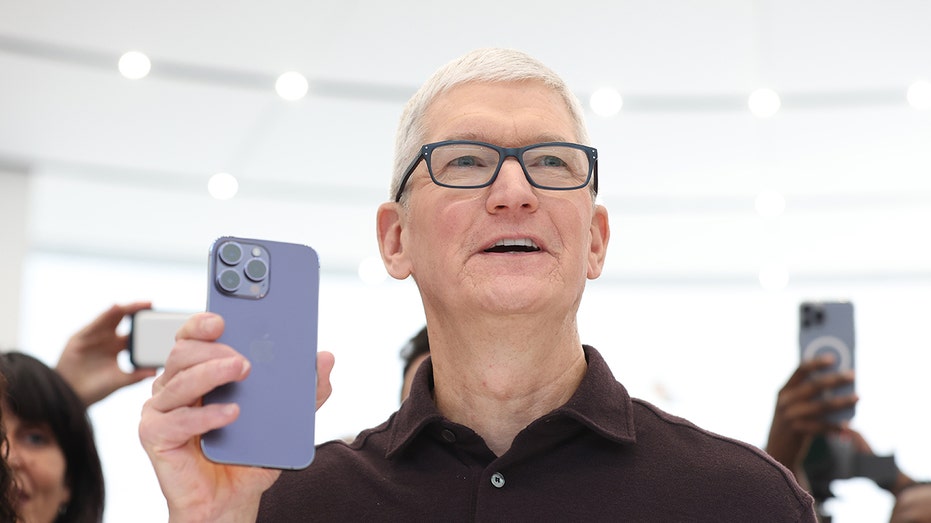
Apple CEO Tim Cook oversaw the launch of several new products and services that helped bolster the company’s leadership in consumer tech. (Justin Sullivan/Getty Images)
Apple is planning to hold the first major event under new CEO John Ternus next week on Sept. 9, when it will unveil its newest iPhone and could potentially reveal the long-awaited foldable iPhone.
Cook said in his letter that he takes “enormous comfort in handing the helm to someone as brilliant and wonderful and capable as John,” adding that few people “understand what it takes to build products that change the world the way John does and I could not be more excited for his leadership.”
GET FOX BUSINESS ON THE GO BY CLICKING HERE
A report by Reuters noted that analysts expect Apple to launch a foldable iPhone, entering a new segment of the smartphone market to compete with Samsung in the growing device segment.

Business
Dow Falls as Renewed US Strikes on Iran Near the Strait of Hormuz Rattle Wall Street to Close August

The Dow Jones Industrial Average fell Monday, dragging major U.S. stock indexes lower to close out August, after the United States and Iran exchanged fire for the first time in roughly a month, reviving concerns about rising oil prices and their potential impact on inflation.
The Dow traded at 53,181.62 as of 10:37 a.m. Eastern time, down 378.37 points, or 0.71%. The S&P 500 and Nasdaq Composite also opened lower, tracking similar declines earlier in the session, according to CNBC. The pullback came even as all three major indexes remained on pace to finish August with monthly gains, with the S&P 500 up roughly 2.5%, the Nasdaq 100 up about 3.8%, and the Dow ahead approximately 1.4% for the month heading into Monday’s session, according to Trading Economics.
The renewed selling followed confirmation from U.S. Central Command that American forces struck two Iranian rocket launchers on Iran’s Larak Island on Sunday, an operation officials said was aimed at rocket launchers preparing to deploy mines into the Strait of Hormuz. The strike marked the first publicly acknowledged U.S. military action against Iran in roughly a month, following a stretch of relative calm in the broader conflict between the two countries. Global benchmark crude prices rose about 2% at Monday’s market open in response, according to Bloomberg, as traders weighed the potential for renewed disruption to oil shipments through the strait, a waterway that has carried a significantly reduced share of global energy trade since fighting between the U.S., Israel and Iran began in late February.
Monday’s market reaction also built on hawkish signals from the Federal Reserve delivered at the end of last week. New Fed Chair Kevin Warsh struck a more hawkish tone than some investors had anticipated during his remarks at the central bank’s Jackson Hole symposium Friday, according to Yahoo Finance, contributing to a 0.3% decline in the S&P 500 that day even before Monday’s renewed Iran-related selling began. TheStreet Pro contributor James “Rev Shark” DePorre summed up the shifting mood among traders in a research note Monday. “The seasonal pattern is unfavorable, the Fed just leaned hawkish, and the momentum trade that carried this market has stopped working,” DePorre wrote, though he added that a more clearly bearish stance remained premature given the broader earnings picture and the calendar heading into the fourth quarter. “What keeps me from being outright bearish is the earnings picture and the calendar beyond September,” DePorre wrote, noting that October has historically served as what he called “the bear killer” given its tendency to mark seasonal market lows.
Weak domestic economic data added to Monday’s downbeat tone. The Chicago Purchasing Managers’ Index for the manufacturing sector came in at 47.1 for August, sharply below the Zacks Consensus Estimate of 58 and down from a reading of 57.6 in July, signaling a notable contraction in regional manufacturing activity. A reading below 50 generally indicates contracting activity in the sector.
Investors are now looking ahead to two closely watched pieces of economic data over the next two weeks that could further shape expectations for the Fed’s policy path: the monthly U.S. jobs report due Friday and consumer price index inflation figures scheduled for release next week. Those reports arrive at a moment when market volatility has begun ticking up from unusually low levels; the CBOE Volatility Index, known as the VIX, closed at 14.13 Friday, its lowest reading of 2026, according to Yahoo Finance’s analysis of AlphaSpace data, though the index has historically tended to climb through September and into October as markets move further from the summer’s typically quieter trading conditions.
Individual stock moves also factored into Monday’s broader market action. PayPal Holdings shares tumbled sharply after Bloomberg News reported that a consortium involving buyout firm Advent and payment processor Stripe had decided against pursuing an acquisition of the fintech company, according to Zacks Investment Research. Elsewhere, shares of India’s Adani Group dropped significantly amid a routine MSCI index rebalancing combined with volatility tied to a new trading mechanism introduced on Indian exchanges, according to Bloomberg, though that development had limited direct impact on U.S. markets.
Monday’s session marks the final trading day of August, and while the pullback tied to renewed Middle East tensions has weighed on sentiment to close out the month, all three major U.S. indexes remained positioned to post gains for August overall as of Monday morning, extending a broader upward trend that has persisted through much of the summer despite periodic bouts of volatility tied to geopolitical developments and shifting Federal Reserve policy expectations.

Shares of Amazon.com Inc. fell more than 2% Monday, tracking a broader decline across major U.S. stock indexes after American forces struck Iranian rocket launchers near the Strait of Hormuz over the weekend, reigniting fears of renewed conflict in a region critical to global energy supplies.
Amazon stock traded at 260.05 dollars, down 6.38 dollars, or 2.39%, as of 10:51 a.m. Eastern time on the Nasdaq. The decline came as part of a broader market pullback Monday, with the Dow Jones Industrial Average, S&P 500 and Nasdaq Composite all trading lower to close out the final session of August.
The renewed selling followed confirmation from U.S. Central Command that American forces struck Iranian rocket launchers on Iran’s Larak Island on Sunday, the first publicly acknowledged U.S. military action in the region in roughly a month. U.S. Central Command spokesperson Capt. Tim Hawkins said Islamic Revolutionary Guard Corps forces had been preparing to launch rockets and deploy sea mines into the Strait of Hormuz before the strike. “US forces are monitoring the area closely and remain prepared to protect the free flow of commerce through this essential waterway,” Hawkins said, according to TheStreet. Iran’s Revolutionary Guards Corps said Sunday that it had targeted U.S. military bases in Jordan and the United Arab Emirates in retaliation for the American strikes, further escalating the exchange between the two countries.
Oil prices surged in response to the renewed hostilities, with global benchmark crude gaining roughly 2% at Monday’s market open, according to Bloomberg. Higher energy costs have weighed on Amazon’s stock at multiple points throughout the broader six-month conflict between the United States, Israel and Iran, given the company’s heavy reliance on fuel-intensive logistics and delivery operations. Amazon previously implemented a 3.5% fuel and logistics surcharge on third-party sellers using its fulfillment network in April, citing rising energy costs tied directly to the ongoing war.
Monday’s decline adds to a difficult stretch for Amazon shares that has unfolded over recent months even amid otherwise solid underlying business performance. The stock has fallen roughly 16% from its 52-week high of 278.56 dollars, reached in early May, according to analysis from Investing.com, with the pullback driven by a combination of factors extending well beyond Monday’s geopolitical developments. Investors have expressed ongoing concern over Amazon’s aggressive capital spending plans tied to artificial intelligence infrastructure, with the company forecasting roughly 200 billion dollars in capital expenditures for 2026, a figure that significantly exceeds its trailing 12-month operating cash flow. Amazon Chief Executive Officer Andy Jassy has defended the spending as necessary to capture surging demand for the company’s AI offerings, saying he expects Amazon to generate “strong long-term returns on invested capital” as a result.
Despite the recent share price weakness, Wall Street’s broader outlook on Amazon has remained largely positive. Jefferies analyst Brent Thill has maintained a buy rating on the stock with a 300 dollar price target, arguing that the market has been pricing Amazon more like a mature retailer than a company with substantial upside tied to its cloud computing and AI businesses. The overall Wall Street consensus rating on Amazon currently sits at Strong Buy, with an average price target of 284.30 dollars across 44 analysts, according to data compiled by financial news outlet MEXC, implying meaningful upside from current trading levels even after accounting for Monday’s decline.
Amazon has also drawn recent attention on other fronts. The company disclosed last month that its livestreaming platform, Twitch, had enabled a data-sharing option by default across creator accounts, allowing livestream video and chat material to be used in developing Amazon’s artificial intelligence systems, a move that drew scrutiny from some content creators over privacy concerns. Separately, evercore analyst Mark Mahaney raised his price target on Amazon to 355 dollars last week, citing strong retail signals and survey data showing early evidence that the company’s investment in AI-powered shopping tools is beginning to translate into incremental sales.
As markets closed out August, investors remained focused on how the renewed U.S.-Iran conflict might further affect oil prices and broader consumer spending patterns in the weeks ahead, with Amazon’s stock performance likely to remain closely tied to both the geopolitical situation and the company’s own substantial AI-related capital investments heading into the fall.

In aregulatory notice dated Friday, the SEC said it would consider changes to the rule known as 14a-8. It establishes requirements for shareholder proposals in public companies’ annual proxy statements including minimum ownership.
Via e-mail, a spokesman for SEC Chairman Paul Atkins said he has “highlighted concerns that the SEC’s Rule 14a-8 on shareholder proposals exceeds the Commission’s authority and infringes upon state laws. To that end, the Commission is expected to consider a proposal to rescind the rule and return the role of regulating shareholder proposals to the states.”
Investor resolutions focused on topics like carbon emissions and executive roles have been the focal point of many corporate annual meetings, though support for them has fallen in recent years.
Tim Smith, senior policy adviser at the Interfaith Center on Corporate Responsibility, whose members often file shareholder resolutions, said the move would create confusion because regulations are not uniform among states, such as how many shares are needed to bring a matter to a vote.

Under a new law in Republican-controlled Texas, for instance investors could need as much as $1 million worth of shares to file a resolution, compared with just $2,000 under a current SEC requirement.
“Across the investor community there will be a response to the questionable legal arguments he (Atkins) is making about the authority of the SEC,” Smith said.Cooley law firm strategist Broc Romanek said the change could lead to more votes against corporate board members as shareholders’ options for expressing disapproval narrow.
“Votes against directors will be used more and more as other avenues are shut down,” Romanek said in a telephone interview.
In a separate regulatory notice, the SEC said it would “modernize” the proxy solicitation process, which governs shareholder communications. The agency spokesman said it aims “to reflect advancement in technology and current realities of shareholder communications.”
Activists say such changes could unfairly restrict speech by small investors.
South32 has embarked on a round of white-collar redundancies at its corporate offices, following its recent deal to sell its alumina business to Alcoa.
Business
Asana Down? Outage Reports Surge as Users Nationwide Report Widespread Access Problems This Monday Morning
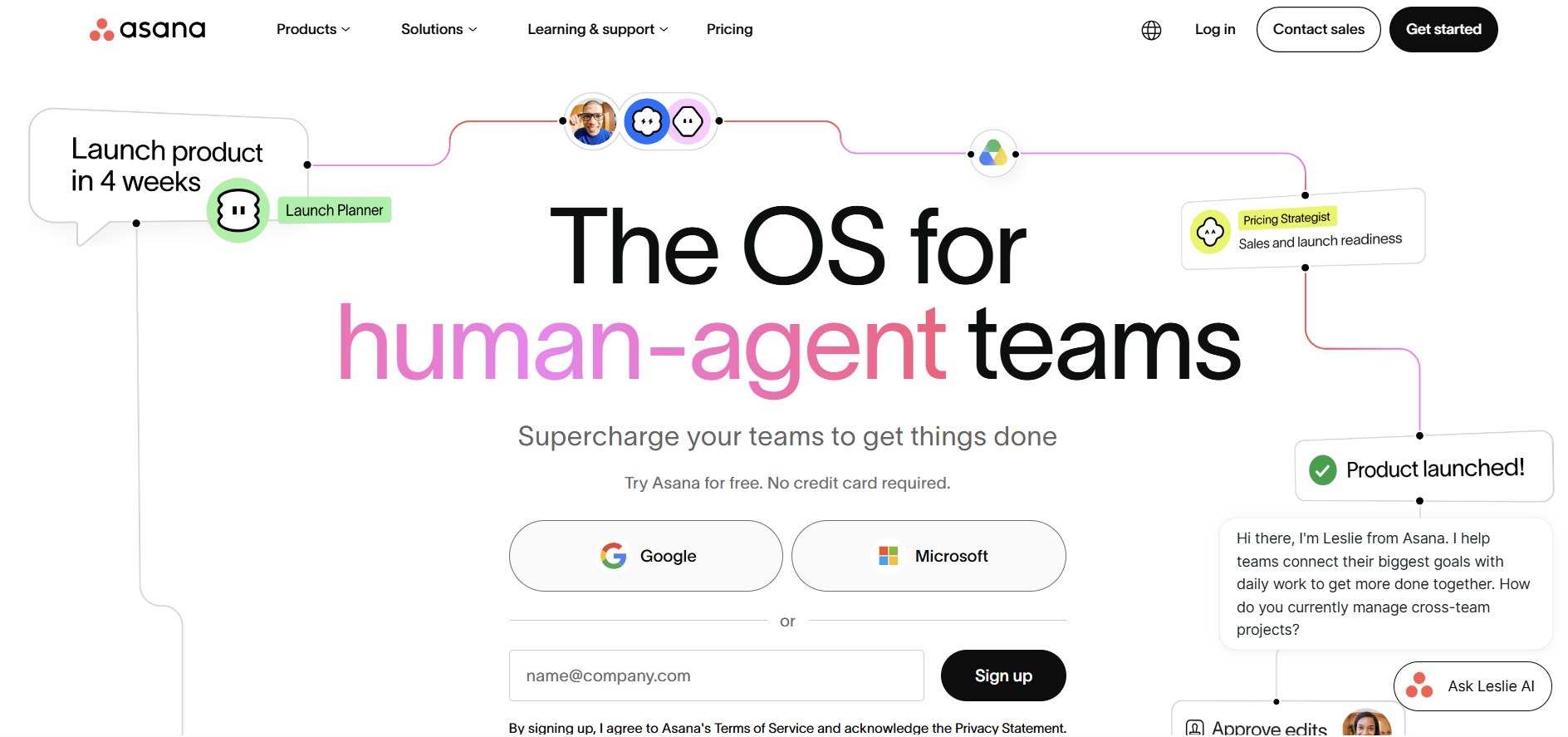
Users of the workplace project management platform Asana began reporting widespread access problems starting at approximately 10:40 a.m. Eastern time Monday, according to outage-tracking service Downdetector, sparking a wave of complaints on social media under the hashtag #AsanaDown.
Downdetector, an Ookla-owned platform that aggregates user-submitted outage reports across more than 12,000 online services, posted on X shortly after the reports began surfacing. “User reports indicate problems with Asana since 10:40 AM EDT,” the account wrote, asking users to share how the disruption was affecting them. As of Monday morning, Asana had not issued a public statement acknowledging the reported outage, and the company’s official status page had not reflected any confirmed service disruption at the time reports began circulating.
Downdetector’s reporting model relies on a combination of user-submitted complaints and automated web traffic signals to gauge the health of online services in near real time, rather than direct access to a company’s internal infrastructure. That means reported spikes in outage activity can sometimes reflect issues affecting a smaller subset of users, specific geographic regions, or particular product features rather than a complete platform-wide failure, though widespread social media complaints often accompany more serious disruptions.
Asana, founded in 2008 by Facebook co-founder Dustin Moskovitz and former Google and Facebook engineer Justin Rosenstein, has grown into one of the most widely used work-management platforms globally, used by teams to organize projects, assign tasks and track progress across organizations of varying sizes. The company, which trades publicly on the New York Stock Exchange under the ticker ASAN, reported revenue of 724 million dollars for its 2025 fiscal year, according to public filings, and counts more than 1,800 employees, with Moskovitz continuing to serve as chairman and Dan Rogers currently serving as chief executive officer.
Monday’s reported disruption is not the first time Asana has experienced service issues this year. According to outage-tracking site StatusGator, the platform’s last officially acknowledged outage prior to Monday occurred on Aug. 5, and separate monitoring from the service Statusfield recorded eight total incidents affecting Asana during the month of July alone, though the company maintained roughly 97.4% availability over that same period. Some previously reported issues have involved intermittent link loading problems and account access difficulties on desktop, according to user complaints logged by StatusGator, rather than complete platform-wide outages.
For organizations that rely on Asana as a central hub for coordinating team workflows, even brief disruptions can create ripple effects across daily operations, delaying task assignments, project updates and cross-team communication that many businesses have come to depend on the platform to manage. That dependency has made outage reports for widely used workplace software tools, including Asana as well as competitors such as Monday.com, Smartsheet and Jira, a recurring source of frustration on social media whenever service interruptions occur, regardless of how long the disruption ultimately lasts.
Asana’s official status page, hosted at status.asana.com, tracks the health of several distinct service components across multiple global regions, including separate monitoring for the platform’s core application, application programming interface, mobile apps, notifications, and automation and background action systems across the United States, European Union, Japan, Australia and the Middle East. The company has not historically provided detailed public post-incident reports for every outage, though more significant disruptions have in the past been acknowledged through updates posted directly to that status page.
As of this report, the scope, cause and expected resolution timeline for Monday’s reported issues remained unclear, with affected users encouraged to monitor Asana’s official status page directly for the most accurate and up-to-date information regarding the platform’s operational status. Asana did not immediately respond to requests for comment regarding the reported outage.

Colombia stocks lower at close of trade; COLCAP down 1.34%

General Dynamics IT wins $43.9M Navy contract modification

JPMorgan taps Deutsche Bank’s Jones for mid-cap basic materials role, memo says
Business
Tesla Stock Rises Nearly 5 Percent as Optimus Robot Enters Production at Fremont Factory This Week Today

Shares of Tesla Inc. climbed nearly 5% Monday, notably outperforming a broader market decline, after the company confirmed that its Optimus humanoid robot has officially entered production at its Fremont, California, factory, reinforcing the robotics narrative that has driven much of the stock’s recent recovery.
Tesla stock traded at 365.02 dollars, up 16.27 dollars, or 4.67%, as of 11:43 a.m. Eastern time on the Nasdaq. The gains stood out sharply against the backdrop of a struggling broader market, with both the S&P 500 and Nasdaq Composite trading in negative territory Monday amid renewed U.S.-Iran tensions in the Strait of Hormuz. Key electric vehicle peers Rivian and Lucid Group were also trading lower Monday, according to Investing.com, underscoring that Tesla’s advance was driven by company-specific developments rather than a broader sector rally.
Investing.com editor Louis Juricic reported that Tesla shares climbed as much as 3.2% in earlier morning trading, reaching 359.85 dollars, before extending gains further as the session progressed. The rally builds on the stock’s recovery from its 52-week low of 297.38 dollars, a level Tesla touched in late July before beginning a steady climb back toward its current trading range.
Monday’s gains follow a string of Tesla developments in recent weeks that analysts have credited with lifting investor sentiment. The company’s 2026 capital budget has grown to roughly 25 billion dollars, with a significant portion of that spending directed toward scaling up Optimus production, according to reporting from the Motley Fool. Tesla also received approval last month to expand its robotaxi operations, with Clark County, Nevada, clearing the company on Aug. 20 to run driverless robotaxis in Las Vegas alongside Alphabet’s Waymo and Uber. Tesla secured the largest allocation among the three companies, with approval covering up to 5,000 vehicles out of a combined 8,000 robotaxis the county authorized across all operators over the next year.
The company has also continued building momentum around its electric semi truck business. Tesla is preparing to showcase its all-electric semi at an international transportation expo in Germany as it works toward launching the vehicle in the European market, a development that had already contributed to a 5.1% single-day gain in Tesla shares earlier this month, according to the Motley Fool’s coverage of the stock’s performance on Aug. 21.
Despite the recent enthusiasm, some market observers have cautioned that both the robotaxi and Optimus businesses remain in relatively early stages, far from full commercial deployment at scale. Analysts covering Investing.com noted Monday that the macro backdrop for Tesla remains mixed, with investors continuing to monitor trade policy developments and lingering concerns over the company’s operating margin, which compressed sharply in its most recent quarterly results. Even so, Investing.com’s coverage described Monday’s combination of the Optimus production milestone, the upcoming Semi showcase and Tesla’s international pricing initiatives as giving the stock a clear outperformance edge relative to the rest of the market.
Tesla’s current market capitalization stands at roughly 1.4 trillion dollars, according to data compiled by the Motley Fool, with the stock carrying a price-to-earnings ratio above 300, a valuation level that some analysts have argued reflects investor expectations for future growth in robotics and autonomy rather than the company’s current core automotive earnings. Tesla shares have ranged between 297.38 dollars and 498.83 dollars over the past 52 weeks, according to data from Robinhood, reflecting substantial volatility in the stock over the past year as investors have weighed the company’s traditional vehicle business against its ambitions in humanoid robotics and autonomous driving.
Tesla has not provided a detailed public timeline for scaling Optimus production beyond its initial entry into manufacturing at the Fremont facility, and the company did not immediately respond to requests for additional comment on Monday’s stock movement.

Venezuela Will Refill America's Oil Reserves

Kylian Mbappé Scores Hat-Trick For Real Madrid In 2nd Match Of LaLiga Season

How to watch Love Island USA S8 reunion online from anywhere

$40 Trillion in Debt and Financial Repression Is the Only Exit | David Morgan





-

 Crypto World6 days ago
SpaceX stock could rise 75% to $240, JPMorgan says
-

 Fashion3 days ago
Weekend Open Thread: Maeve – Corporette.com
-

 Crypto World4 days ago
Bitcoin’s 22% rally now needs real demand to outlast Treasury liquidity boost
-

 Crypto World5 days ago
Warsh Jackson Hole keynote puts financial innovation first
-

 Crypto World7 days ago
A $30 Billion AI Fund Implodes, Now the SEC Is Investigating Wall Street’s Role
-
 Business4 days ago
Salesforce Stock Soars 19% as Blowout Earnings and Agentforce AI Growth Silence Software Skeptics
-

 Crypto World6 days ago
Did Trump Just Move SpaceX Stock With One Truth Social Post?
-

 Crypto World5 days ago
Elon Musk Grok Bot Promise: We Will Make You Whole if AI Loses Your Money
-

 Business3 days ago
Onto Innovation Stock: AI’s Next Bottleneck Is Yield (NYSE:ONTO)
-
 Business4 days ago
Apple Confirms September 9 Keynote and Reveals Its Full Pre-Order Schedule
-
 NewsBeat5 days ago
Lindsay Clancy jury braces for closing arguments as judge tells court: ‘You’ve heard all the evidence’ – Live updates
-

 Business5 days ago
Walmart takes aim at younger shoppers with new fashion brand
-

 Crypto World3 days ago
Bitcoin price tests $82K resistance as Brandt stays long
-

 Business6 days ago
Thailand’s Eastern Economic Corridor Capital City (EECiti): Key Developments and Investment Opportunities
-

 Crypto World5 days ago
NVIDIA revenue hits $96.2B as AI demand doubles
-

 Business3 days ago
iPhone 18 Pro Pre-Orders Could Shift to Saturday as Apple Reportedly Avoids September 11 Anniversary
-

 Business7 days ago
NVIDIA Stock Drops Nearly 2 Percent to $210 on Seventh Losing Day Ahead of Critical AI Earnings
-

 NewsBeat6 days ago
Trump’s trade truce with China faces test with Iran effort
-
 Crypto World5 days ago
Nvidia Q2 Earnings Reveal $96.2 Billion Beat, So Why Is NVDA Falling?
-

 Tech5 days ago
Claude Cowork gets its own browser that doesn’t touch your tabs, bookmarks, or saved passwords
You must be logged in to post a comment Login