
Crypto World
Strategy Buys $370M Bitcoin in First Corporate Acquisition Since June



Michael Saylor’s Strategy acquired 4,603 Bitcoin for $370 million, marking the first acquisition from the largest corporate Bitcoin holder in two months.
Strategy acquired 4,603 Bitcoin (BTC) at an average purchase price of $80,318, pushing its holdings to 845,050 BTC, acquired for a total of $63.3 billion at an average price of $75,413, according to a Monday 8-k filing with the Securities and Exchange Commission.
The Bitcoin purchase was funded by the net proceeds of a 602 million MSTR common stock sale. The company used $30 million of the net proceeds to increase its USD Cash reserve and $151.8 million to repurchase its preferred STRC stock.
Nasdaq-traded MSTR was up less than 1% in Monday’s pre-market activity, after dropping more than 7% on Friday.
The move marks Strategy’s first corporate Bitcoin acquisition since mid-June, when the company last acquired 1,587 BTC for roughly $100 million.
On Sunday, Strategy’s co-founder and executive chairman, Michael Saylor, signaled that the company will resume accumulating Bitcoin, tweeting “We’re Back” in a widely viewed X post. Saylor has been known for posting cryptic weekend teasers before official announcements of the company’s larger treasury moves.
Strategy’s perpetual preferred stock, STRC, gained 0.44% in pre-market activity on Monday, to change hands at $97.33, or a 2.67% discount to its intended $100 par value, Yahoo Finance data shows.
STRC is one of Strategy’s main mechanisms to fund its Bitcoin accumulation. Trading below par limits Strategy’s ability to raise funds through STRC sales. It may also force the company to further increase its nominal dividend rate to attract buyers and protect STRC’s price.
In its June 29 8-K filing, Strategy unveiled a capital framework allowing Bitcoin sales to fund dividends and increased the annual dividend rate on its STRC preferred stock to 12%. Strategy disclosed the sale of 32 Bitcoin in early June, as its first reported Bitcoin sale since the 2022 tax-loss transaction.
Related: Standard Chartered wavers on $100K Bitcoin year-end call, says it may be ‘too low’



Vienna, Austria — August 31, 2026 — Bybit EU, headquartered in Vienna and operating under a MiCAR license granted by Austria’s Financial Market Authority (FMA), has been selected as a recommended alternative for MEXC users based in the Netherlands. This shift follows MEXC’s cessation of operations in the Netherlands in compliance with European regulatory requirements.
“We’re pleased to welcome Dutch users who are looking for a regulated, compliant platform to continue their crypto journey,” said Nazar Tymoshchuk, Regional Country Manager at Bybit. “The MiCAR framework exists to protect European users, and we’re committed to providing a secure, seamless experience for everyone transitioning to Bybit EU.”
MEXC has announced it will no longer serve users in the Netherlands due to the implementation of the Markets in Crypto-Assets Regulation (MiCAR), which requires all crypto-asset service providers operating in the EU to hold appropriate authorization.
“Partnering with Bybit represents an important step in ensuring a secure, compliant, and seamless transition for our users. said Robert MacDonald, Chief Compliance Officer at MEXC. “Bybit’s strong regulatory framework and commitment to user protection give us confidence that our users will continue to receive reliable services and a high standard of care throughout the transition.”
What This Means for Dutch Users
MEXC users in the Netherlands will receive direct communication from MEXC with guidance on next steps and timelines. Those who choose to move to Bybit EU will need to create and verify a new account independently – no accounts or assets will be automatically migrated.
Users are encouraged to complete their transition by October 31, 2026, with final offboarding from MEXC set for November 16, 2026.
About Bybit EU
Bybit EU operates under a MiCAR authorization granted by the Austrian Financial Market Authority (FMA) since May 2025. The platform segregates user funds from company assets as required by regulation, supports EUR top-ups and withdrawals via SEPA and iDEAL, and offers 115+ tokens across 135 trading pairs in both USDC and EUR. The platform is available in Dutch.
Supporting the Transition
To support users through the transition, Bybit EU is offering a welcome package for eligible new registrants, including bonus rewards, preferential trading fees, and cashback on the Bybit Card. Full details and terms will be available on the dedicated landing page.
A dedicated landing page is available for Dutch users with step-by-step guidance, FAQs, and links to customer support.
Users can also join the Dutch-language Bybit community for transfer support:
- Telegram: https://t.me/Bybit_NL
- X (Twitter): https://x.com/BybitNL
Bybit EU
Bybit EU GmbH is an Austrian Crypto-Asset Service Provider (CASP) authorized under the Markets in Crypto-Assets Regulation (MiCAR) in Austria. Bybit EU serves customers across the entire European Economic Area (EEA), with the exception of Malta, via bybit.eu platform.
Bybit EU GmbH is authorized to offer the following services:
– custody and administration of crypto-assets on behalf of clients;
– exchange of crypto-assets for funds
– exchange of crypto-assets for other crypto-assets
– placing of crypto-assets; and
– transfer services for crypto-assets on behalf of clients.
Bybit EU GmbH is neither the operator of a trading platform for crypto-assets nor provides investment advice.
Media Contact: press@bybit.eu
Disclaimer: This press release is provided for informational purposes only and does not constitute investment advice or an offer to buy or sell digital assets. Investing in crypto-assets is associated with risks, including high volatility and the potential loss of capital. Inform yourself thoroughly about the risks before making an investment decision. The products and services mentioned herein are subject to applicable laws and regulations in the relevant jurisdictions and may not be available in certain regions.
The post Bybit EU Partners with MEXC to Support a Seamless User Transition in the Dutch Market appeared first on BeInCrypto.
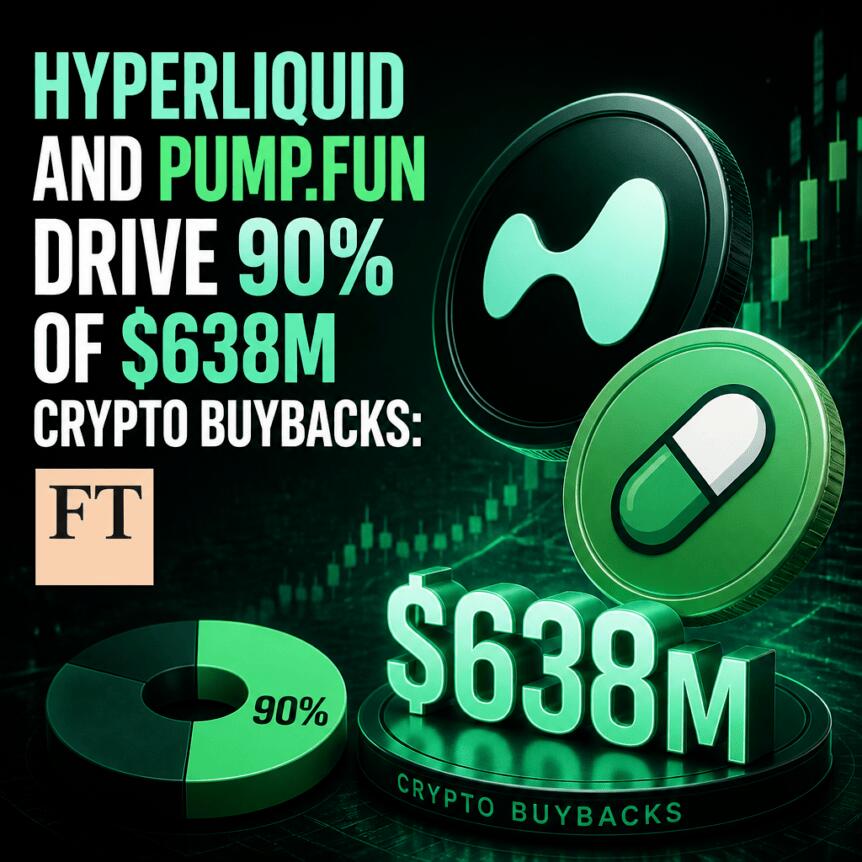
Token buybacks are becoming a defining strategy for a small but influential slice of the crypto sector. According to data compiled by Allium Labs and cited by the Financial Times, cryptocurrency projects spent a record $638 million on repurchasing their own tokens so far in 2026—nearly 90% of that total concentrated in two platforms: Hyperliquid and Pump.fun.
In the year-to-date tally, Hyperliquid accounted for roughly $370 million and Pump.fun for nearly $200 million. The Financial Times report notes that this level of buyback activity is still rare across the wider industry, but the numbers suggest it is moving from novelty toward a measurable category of capital deployment.
Key takeaways
- $638 million in token buybacks has been recorded in 2026 year-to-date, per Allium Labs data cited by the Financial Times.
- Hyperliquid (~$370M) and Pump.fun (~$200M) dominate the total, together accounting for nearly 90% of spending.
- Buybacks remain uncommon in crypto overall, but more projects are experimenting with revenue-to-repurchase mechanisms.
- Crypto token buyback activity is increasingly being framed as a tool to support token value—analogous to share repurchases in traditional markets.
- Recent governance action at Ethena Foundation highlights how fee-switch models can formalize buyback plans.
Why token buybacks are drawing attention again
Token buybacks follow a logic that resembles share buybacks by public companies: projects use capital to repurchase their own assets, which can reduce circulating supply and, in some cases, send a signal about long-term value. While the analogy is straightforward, the crypto execution varies widely—often depending on how a protocol’s revenue is routed and whether repurchases are automatic or subject to governance.
What stands out in 2026 is the scale relative to earlier periods. The same Allium Labs figures cited by the Financial Times show $638 million spent year-to-date in 2026 compared with $545 million during the same period in 2025. The report also contrasts the current pace with prior years, noting $366,000 in 2024 for the corresponding timeframe.
Hyperliquid and Pump.fun lead the buyback spend
Hyperliquid and Pump.fun are not just participating in token repurchases—they are effectively running buybacks as a core allocation strategy.
For Hyperliquid, the structure is especially concentrated: the project reportedly directs about 99% of its revenue toward token buybacks. Cointelegraph previously reported that Hyperliquid generated $169 million in second-quarter revenue on Aug. 6, with $141 million allocated to HYPE buybacks. The implication for investors is straightforward: buybacks are not episodic, but tied tightly to protocol earnings.
Pump.fun, a memecoin launchpad, follows a different but still aggressive approach. The project reportedly allocates around 50% of its net protocol revenue to token repurchases. The launchpad also reportedly carries $420 million in annualized revenue, based on average daily revenue over the preceding 90 days.
When two platforms account for most of the sector’s buyback activity, their revenue rules can become a proxy for how “buyback culture” may evolve in crypto—especially whether it remains concentrated among a few high-throughput protocols or broadens as others replicate the model.
Governance signals: Ethena Foundation opens a fee-switch vote
Beyond the two dominant leaders, 2026 has also seen governance proposals that formalize buybacks using protocol revenue. On Thursday, the Ethena Foundation opened a vote on a fee-switch proposal under which 95% of net revenue paid to it from Ethena’s core business lines would be used to repurchase ENA tokens.
Crypto markets quickly priced the development: the ENA token rose 10.7% on the day after the proposal, according to the reporting referenced in the vote coverage.
For readers, the practical takeaway is not simply that buybacks can move prices in the short term, but that fee-switch governance can convert a vague “buybacks might happen” narrative into an enforceable spending framework. That shift matters because it changes the probability distribution around future demand for tokens and how consistently a protocol can sustain repurchases.
Outperformance and the market narrative around buybacks
Buybacks are also being linked to stronger token performance relative to the broader market. TradingView data cited in the original coverage shows that Hyperliquid (HYPE) rose 145% year-to-date and Pump.fun (PUMP) gained 109%, while Bitcoin (BTC) fell 10% and total crypto market capitalization declined by 11.9% over the same period.
It is important to separate correlation from causation, but the structure is compelling from an investor’s perspective: protocols that consistently recycle revenue into token repurchases create a direct, recurring demand stream. That demand can influence valuation expectations, especially during broader drawdowns where the rest of the market is struggling.
The idea is increasingly being spelled out by major asset managers. Bitwise chief investment officer Matt Hougan earlier in August argued that crypto valuations could double in the next two years as protocols use revenue to fund token buybacks and burns, effectively returning more value to investors.
What to watch next
The big question for 2026 is whether buybacks stay clustered in a few revenue-rich ecosystems or expand into more protocols through governance and revenue routing. Investors should monitor not just total buyback totals, but the durability of the revenue streams behind them—because in a market that can change quickly, the sustainability of token repurchase programs may matter as much as the headlines.


Bitcoin developers supporting BIP-110 are preparing a separate BLAKE2b proof-of-work chain for a proposed Sept. 1 launch after an earlier minority branch failed to attract enough SHA-256 mining support.
Summary
- Bitcoin developer Luke Dashjr’s supporters plan a BLAKE2b breakaway chain after BIP-110’s minority branch stalled.
- The original BIP-110 proposed temporary restrictions on arbitrary data, not a proof-of-work algorithm replacement itself.
- The first enforcing branch produced only two blocks initially, showing that miners withheld meaningful support.
- Developers scheduled the BLAKE2b chain for September 1, although its final launch remains technically conditional.
- No major exchange, wallet, or Lightning implementation had publicly committed support before the planned launch.
The new chain became the subject of a dispute on Aug. 31 between BIP-110 supporter Loogart and Ripple co-founder David Schwartz, who previously served as Ripple’s chief technology officer.
Loogart argued that supporters had accepted losing the effort to change Bitcoin’s dominant chain and were voluntarily continuing elsewhere. Schwartz rejected the framing that supporters had tried to “fix the legacy chain.”
“Listen to yourself,” Schwartz wrote, before arguing that language portraying one side as broken moved the discussion away from a good-faith disagreement.
Schwartz’s comments represent his personal assessment. Neither Ripple nor the XRP Ledger has a technical role in BIP-110 or the proposed chain.
BIP-110 and the BLAKE2b fork are separate proposals
The original BIP-110 specification proposed a temporary soft fork restricting several methods used to place nonfinancial data on Bitcoin. Its rules included limits on large OP_RETURN outputs, script formats and contiguous arbitrary data exceeding 256 bytes.
Supporters argued those restrictions would reduce storage demands on node operators and preserve Bitcoin’s monetary use. Critics maintained that transaction fees and node policies should determine how block space is used.
BIP-110’s enforcing branch separated from Bitcoin’s dominant chain in August. It initially produced only two blocks as nearly all established Bitcoin mining power continued extending the existing network.
As crypto.news previously reported, BIP-110 entered its mandatory phase with only 2.53% miner support. That result left its minority branch far behind the chain recognized by major miners, exchanges and wallets.
The proposed BLAKE2b network is therefore not simply BIP-110 activating on Bitcoin. It is a separate hard fork with a different proof-of-work system and its own resulting asset.
BLAKE2b removes dependence on Bitcoin miners
The planned chain replaces Bitcoin’s SHA-256d mining algorithm with BLAKE2b. Existing Bitcoin mining equipment is designed specifically for SHA-256 and cannot automatically redirect its computing power to the new algorithm.
That change allows supporters to establish a new mining group instead of relying on operators securing Bitcoin’s dominant chain. Some machines designed for Sia’s version of BLAKE2b may be compatible, although available hardware does not prove that miners will commit enough computing power.
A rehearsal was arranged before the planned launch. Developers said a successful test could be preserved in a Bitcoin Knots 29.4.1 release on Sept. 1. Technical problems could require another release candidate and a reset to the last SHA-256 block.
The date should therefore be described as a target rather than an irreversible activation deadline. Reports published before the rehearsal also indicated that the final mainnet activation height had not been settled.
In related coverage, Luke Dashjr left OCEAN after disagreements over Bitcoin mining and recent protocol developments. OCEAN repurchased his equity after he resigned as chairman, chief technology officer and director.
Bitcoin holders face support and replay questions
No major exchange, mainstream wallet or Lightning implementation had publicly committed to supporting the BLAKE2b chain before the proposed launch. Without that infrastructure, any inherited forked coins may initially lack a reliable market price or accessible trading venue.
Wallets and infrastructure providers may also require technical changes. The proposed network uses BLAKE2b block headers that differ from Bitcoin’s current format, meaning existing light clients and indexers may not recognize the new chain automatically.
Replay protection is another issue to watch. If transactions remain valid on both networks, a payment broadcast on one chain could potentially be repeated on the other unless users separate their coins or employ other safeguards.
The practical effect on BTC depends on whether the breakaway network attracts miners, developers, wallets and trading venues after launch. Until then, claims that it will replace, repair or materially threaten Bitcoin remain disputed forecasts rather than established outcomes.
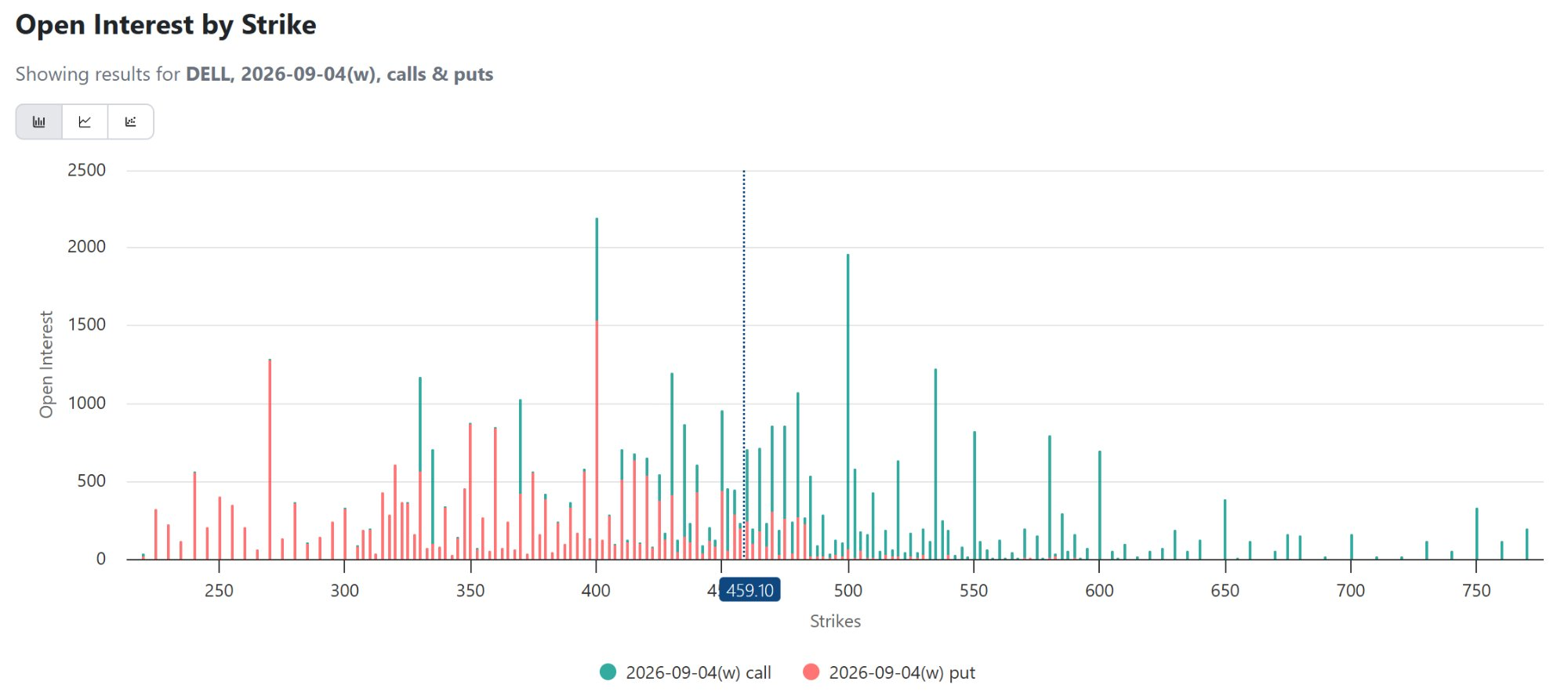
Dell Technologies reports fiscal second quarter results Tuesday after the close, and the options market is braced for a large reaction. Contracts expiring September 4 imply a swing of roughly 11% in either direction.
The at-the-money straddle, a paired call and put at the same strike, cost about $52 against Dell’s $456.01 close on Monday. Buyers profit only if the stock travels further.

What Dell Guided For, and What Analysts Expect
Dell guided to revenue of $44 billion to $45 billion for the quarter, adjusted earnings of about $4.80 a share, and roughly $15.5 billion of AI server revenue. It expected its Infrastructure Solutions Group, the server and storage division, to grow about 75%.
Zacks Investment Research puts the consensus at $4.72 a share across five forecasts. Dell earned $2.10 in the year-ago quarter.
The bar is high because the previous quarter reset it. Revenue reached $43.8 billion in Dell’s record first quarter beat, up 88% year over year, and adjusted earnings of $4.86 landed far above Wall Street’s estimate.
Management then raised the full-year revenue outlook to $167 billion at the midpoint and lifted its AI server target to $60 billion. Shares have climbed roughly 260% in 2026 on that artificial intelligence demand.
“We booked $24.4 billion in AI orders and recognized $16.1 billion of AI server revenue. We’re increasing our AI server revenue expectations for FY27 to $60 billion, which only goes to show the AI opportunity shows no signs of slowing,” said Jeff Clarke, Dell vice chairman and chief operating officer, in the quarterly release.
Follow us on X to get the latest news as it happens
The Numbers That Will Move Dell Stock
Orders and backlog now matter more than the headline figure. Dell booked $24.4 billion of AI orders last quarter and closed with a record $51.3 billion AI backlog.
Margins are the second test. AI servers earn thinner margins than storage, and Chief Financial Officer David Kennedy has flagged memory chips, processors and hard drives as supply bottlenecks.
Dell has also described an inflationary parts market that forces frequent repricing, so a revenue beat paired with weaker margins would land badly. Data center names have already drawn profit-taking after big rallies.
Wall Street still leans positive. Of 15 analysts covering the stock, 11 rate it a buy and four a hold, with an average target of $523.54 and a low of $434.

Nvidia’s own quarterly beat drew only a modest reaction last week. Whether Dell raises its full-year guide again, and what it says about second-half supply, will decide which side of the straddle pays.
The post Dell Earnings Could Swing the Stock 11% This Week, a $52 Straddle Shows appeared first on BeInCrypto.


Strategy purchased 4,603 Bitcoin for $369.7 million between Aug. 24 and Aug. 30, returning to accumulation after more than two months without a confirmed purchase.
Summary
- 4,603 Bitcoin cost Strategy $369.7 million, lifting its total holdings to 845,050 BTC.
- Strategy financed the purchase through MSTR sales that generated $602.8 million in weekly net proceeds.
- Strategy also spent $151.8 million repurchasing STRC while increasing unrestricted dollar cash by $30 million.
- MSTR traded near $127.31 before Monday’s opening, down 7.4% from Friday’s close in premarket trading.
- Strategy reported $6.71 billion across its restricted reserve and broader cash liquidity account combined Sunday.
The Virginia-based company paid an average of $80,318 for each Bitcoin, including fees and expenses, according to an Aug. 31 filing with the U.S. Securities and Exchange Commission.
The acquisition increased Strategy’s holdings from 840,447 BTC to 845,050 BTC. It paid a combined $63.73 billion for those assets at an average cost of $75,412 per Bitcoin.
Bitcoin traded near $78,023 at 12:18 UTC on Monday, placing the market value of Strategy’s holdings near $65.9 billion. That was approximately $2.2 billion above its reported aggregate purchase cost. The calculation changes alongside Bitcoin’s price and does not represent realized profit.
Strategy funded the Bitcoin purchase by selling MSTR
Strategy financed the entire acquisition through its at-the-market common-stock program. It sold 4,531,421 MSTR shares during the week, generating $602.8 million in net proceeds after commissions.
The company allocated $369.7 million of that amount to Bitcoin. It directed another $151.8 million toward repurchasing STRC preferred shares, used $50.7 million to fund STRC dividends and added $30 million to its unrestricted USD Cash account.
The structure means Strategy issued common shares while buying back preferred shares and adding Bitcoin. It did not issue any STRC, STRF, STRK or STRD preferred securities during the reporting period.
Strategy retained authority to sell another $19.09 billion of MSTR under its existing offering program. That capacity gives management room to fund further purchases, cash reserves or other capital-management activity, although the company has not committed to using the full amount.
Michael Saylor described the return to buying as “We’re back” in an Aug. 30 post. The statement signaled intent but did not disclose the transaction’s size before Monday’s filing.
STRC repurchases continued alongside accumulation
Strategy repurchased 1,557,177 STRC shares for $151.8 million during the same week. That implies an average repurchase cost near $97.48 per share, below STRC’s $100 stated amount.
STRC traded near $97.33 before Monday’s regular U.S. session, down approximately 0.7% from Friday’s close. Its recovery toward $100 followed a period in which the security traded as low as the mid-$70 range.
The company has used repurchases and a variable dividend to support STRC’s market price. As previously reported, Strategy maintained STRC’s annualized dividend at 12% after the preferred stock traded below its stated amount.
After the latest transaction, Strategy retained $364.8 million under its preferred-securities repurchase authorization. It also retained a separate $1 billion authorization to repurchase MSTR, although no common shares were bought back during the week.
Strategy’s dollar assets reached $6.71 billion
Strategy reported a $5.10 billion USD Reserve and $1.61 billion in USD Cash as of Aug. 30. Together, the two accounts held $6.71 billion, including proceeds from shares sold but not yet settled.
The accounts serve different purposes. The board-designated reserve supports preferred-stock dividends and interest on outstanding debt. USD Cash can be used more broadly for Bitcoin purchases, reserve expansion and other corporate needs.
Saylor said the combined dollar assets brought Strategy’s “net leverage” to 0.0%. That figure is a company-defined capital metric and should not be interpreted as meaning Strategy has no debt or preferred-stock obligations.
The filing shows only $30 million of the week’s MSTR proceeds went into USD Cash. Since the account increased by $29 million overall, other cash movements reduced the net addition by approximately $1 million.
MSTR falls despite Strategy’s return to Bitcoin buying
MSTR traded near $127.31 in Monday’s premarket session, approximately 7.4% below Friday’s closing price. STRC changed less sharply, trading near $97.33.
Bitcoin was also down approximately 0.9% over 24 hours. Its price near $78,023 was about 2.9% below Strategy’s latest average purchase price of $80,318.
The acquisition followed several weeks in which Strategy prioritized liquidity and preferred-stock support. In related coverage, Strategy raised roughly $2 billion without buying or selling Bitcoin during the previous reporting week.
The return to accumulation also follows two confirmed Bitcoin sales. Strategy sold 1,638 BTC between July 27 and Aug. 2, then sold another 1,690 BTC to finance STRC repurchases during the following week.
The latest purchase exceeded those combined sales by 1,275 BTC. Strategy’s holdings consequently reached a new reported high.
Future purchases will depend on Bitcoin prices, MSTR’s market value, available offering capacity and management’s preferred-stock strategy. The next weekly SEC filing should show whether the company continues accumulating or redirects proceeds toward its dollar accounts and STRC.
Crypto World
Bitcoin, Ethereum, Tron, and Cardano Tell Four Very Different Stories Through Active Addresses

A sharp contrast has emerged in active addresses across Bitcoin, Ethereum, Tron, and Cardano, as the four blockchains continue to show different patterns when it comes to network usage.
Bitcoin’s count, for one, has dropped significantly compared with previous major cycles, even though its price remains far above historical levels. According to the latest observation by Alphractal founder Joao Wedson, this does not necessarily indicate weaker usage.
Very Different Usage Trends
Bitcoin investors now tend to hold for longer and move coins less frequently, while ETFs, custodians, exchanges, and the Lightning Network are being used more often. The growing role of ETFs is particularly notable, as US-based spot Bitcoin exchange-traded funds have recorded $3.31 billion in inflows so far in August. This shift in how investors access and hold BTC could help explain why on-chain activity is not increasing at the same pace as the asset’s price.
Rather than indicating that the crypto asset is necessarily being used less, the trend may reflect its growing role as a reserve asset, as more activity takes place through financial products and other structures instead of directly on the blockchain.
Ethereum’s network activity has once again begun to accelerate, and active addresses are now close to reaching 1 million, even with a significant share of the ecosystem operating on Layer 2 networks. Such a trend evidences that the asset remains highly relevant as financial infrastructure.
Meanwhile, Tron was found to have recorded more than 4 million active addresses, which makes it the strongest case among the four networks by this measure. According to Wedson, much of its activity appears to be driven by payments and stablecoins, particularly USDT, rather than simply speculation around TRX’s price. The network has become a major infrastructure layer for transferring digital dollars.
Is Cardano Struggling?
The same cannot be said for Cardano, which has witnessed its activity fall sharply since 2021 and remains at very low levels compared with its own history. Wedson explained that price can increase because of narratives, liquidity, and speculation, while on-chain activity offers a clearer indication of whether people are actually using a blockchain.
Cardano’s weak activity comes after years of criticism over the network’s slow development and its struggle to turn its technology into broader usage. More recently, the network has come under tremendous pressure, including a public warning from founder Charles Hoskinson about a “wave of failures” and closures of important dApps.
On the price side of things, ADA briefly reached $0.254 this month, before pulling back to $0.196 at the time of writing. Despite the recent weakness in price, market commentators remain optimistic. One such analyst, Sssebi, said that he expects the ADA to return to its previous all-time high of $3.10 during the coming bull market and believes it could push above that level.
The post Bitcoin, Ethereum, Tron, and Cardano Tell Four Very Different Stories Through Active Addresses appeared first on CryptoPotato.
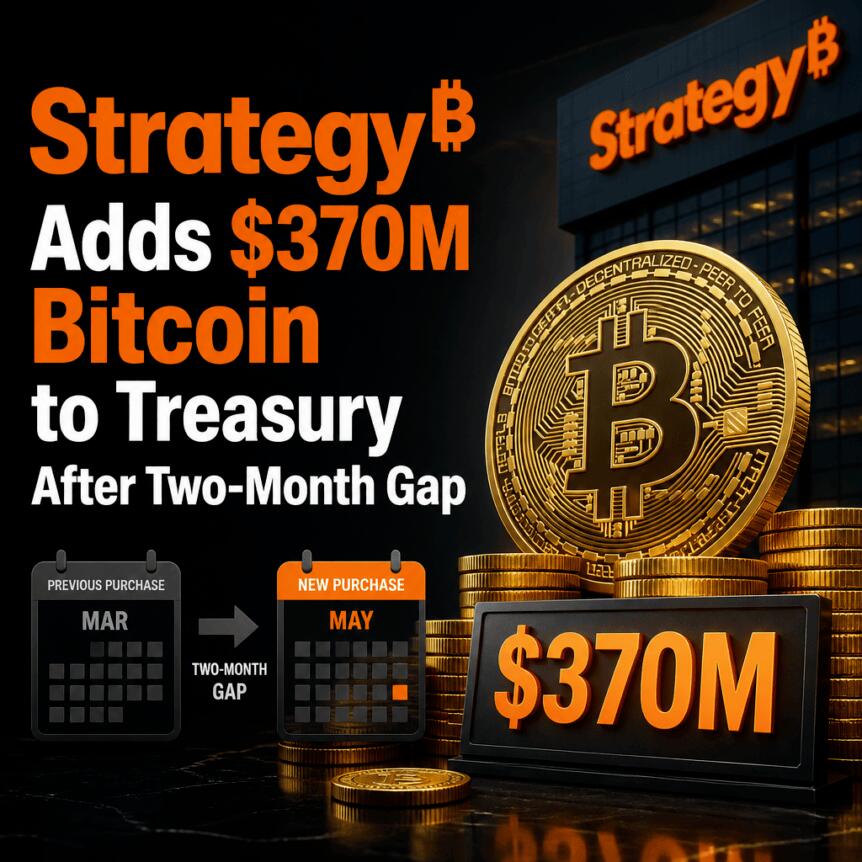
Strategy has added another sizable batch of Bitcoin to its corporate treasury, purchasing 4,603 BTC for about $370 million, according to an 8-K filing with the U.S. Securities and Exchange Commission released this week. The acquisition takes the company’s total holdings to 845,050 BTC.
The news also arrives shortly after Strategy last reported a Bitcoin buy in mid-June, and it follows a weekend signal from Strategy executive chairman Michael Saylor that the firm was preparing to resume accumulation. Investors are also watching how the company’s preferred stock funding mechanism—STRC—behaves as Strategy continues to finance new purchases.
Key takeaways
- Strategy bought 4,603 Bitcoin for an average price of $80,318 per BTC, bringing total holdings to 845,050 BTC.
- The purchase was funded using net proceeds from a $602 million common stock sale, with part of the proceeds added to USD cash reserves and part used for STRC repurchases.
- This is Strategy’s first corporate Bitcoin acquisition in roughly two months, after its prior buy of 1,587 BTC in mid-June.
- STRC trades below its $100 intended par value, which can affect the company’s ability to raise capital through STRC sales and may increase pressure on dividend terms.
A new Bitcoin tranche—and where the money came from
In its SEC filing, Strategy states it acquired 4,603 BTC at an average purchase price of $80,318, amounting to roughly $370 million. The company reports this brings its total Bitcoin holdings to 845,050 BTC, acquired for a cumulative $63.3 billion at an average price of $75,413.
The filing also outlines the capital flow behind the transaction. Strategy funded the purchase through the net proceeds of a 602 million MSTR common stock sale. It allocated $30 million of those net proceeds to increase its USD cash reserve, and it directed $151.8 million to repurchase its preferred STRC stock.
For investors, the mix of funding matters because Strategy’s Bitcoin program is designed to be capital-efficient while preserving flexibility—cash reserves provide liquidity, while repurchasing STRC can support the preferred stock’s market standing.
First buy in about two months, following Saylor’s “We’re Back” signal
The acquisition marks Strategy’s first reported corporate Bitcoin purchase since mid-June. At that time, the company last bought 1,587 BTC for roughly $100 million, according to earlier coverage referenced in the 8-K context.
On Sunday, Saylor posted a short teaser indicating a return to buying. He shared a widely viewed X post with the message “We’re Back,” a pattern that has previously preceded official announcements about Strategy’s treasury actions, as noted in earlier reporting. While weekend hints are not a substitute for filings, they often help investors anticipate the direction of future moves.
In Monday’s pre-market trading, Nasdaq-listed MSTR was reported up by less than 1% after falling more than 7% on Friday, according to the article’s market snapshot.
STRC discount and what it implies for future funding
Strategy’s STRC preferred stock remains central to how the company finances Bitcoin accumulation. In Monday’s pre-market activity, STRC rose about 0.44% to $97.33, which corresponds to a 2.67% discount to its intended $100 par value, based on Yahoo Finance data.
The discount is not just a pricing detail—it can influence how effective STRC becomes as a fundraising tool. As noted in the source reporting, trading below par can limit Strategy’s ability to raise funds through STRC sales. That limitation can create a feedback loop: if preferred shares consistently trade at discounts, Strategy may need to adjust economics—such as the dividend rate—to attract buyers and protect the instrument’s pricing.
The company previously signaled that it is willing to actively manage its capital structure. In a June 29 8-K filing, Strategy laid out a capital framework that contemplates using Bitcoin sales to fund dividends, and it increased the annual dividend rate on STRC to 12%. The same period included disclosure that Strategy sold 32 Bitcoin in early June, described as its first reported Bitcoin sale since a 2022 transaction tied to tax-loss considerations.
Taken together, the STRC discount and the dividend adjustments point to a consistent theme: Strategy wants the ability to keep buying Bitcoin while maintaining a workable funding channel through preferred stock. Whether the current discount narrows or widens in the weeks ahead could therefore influence how aggressively Strategy leans on STRC versus other sources of liquidity.
Why the details matter for traders and long-term holders
Strategy’s disclosed average purchase price—$80,318 per BTC—provides more than just a headline valuation. Because Strategy reports its total cost basis and holding size, each new acquisition affects how investors model the company’s treasury exposure over time, including how much unrealized gain or loss might be implied relative to recent market prices.
Just as important is the financing approach: the company used a common stock issuance rather than relying solely on balance-sheet liquidity. That choice can affect equity market dynamics and dilution expectations, while repurchasing STRC with $151.8 million suggests an effort to manage the preferred component alongside the Bitcoin program.
Meanwhile, the fact that Saylor’s “We’re Back” post preceded this acquisition reinforces how investors often treat Strategy’s leadership communications as early signals of treasury activity. The most reliable confirmation, however, remains the SEC filing and the detailed breakdown of how the Bitcoin was purchased and funded.
As Strategy continues to scale its portfolio—now at 845,050 BTC—readers should watch for two closely linked developments: whether STRC continues to trade at a discount to par, and how that pricing interacts with the company’s dividend and financing plans. Any future capital-structure changes could determine how smoothly Strategy converts access to capital into additional Bitcoin exposure.
Crypto World
For BTC and XRP holders, learn these 4 steps to join XRPPower for free and explore daily earnings plans

For many users holding digital assets like BTC and XRP, understanding how to efficiently manage their returns, in addition to long-term holding, has become an increasingly important topic.

XRPPower offers users a simple way to participate. No complicated procedures are required; simply follow four basic steps to create a free account and learn more about the platform’s daily return plans.
Whether you’re new to digital assets or have been holding BTC or XRP for a long time, you can learn about different service plans through a simple registration and operation process and choose whether to participate based on your needs.
Join for free, learn easily: 4 steps to start your XRPPower experience.
1. Create an account using your email address
2. Choose a suitable period and plan
Based on your personal needs, choose the service period and corresponding return plan that interest you, and understand the relevant rules and participation conditions.
3. Pay with Mainstream Digital Assets
Users can pay contract fees using XRP, BTC, and other mainstream digital assets supported by the platform.
4. View Daily Account Earnings
According to the rules of the selected plan, the relevant earnings will be displayed in the account balance. Users can withdraw directly or continue to purchase yield contracts.
Some Popular Yield Contracts
Investment Amount: $1000, Investment Period: 7 days, Daily Earnings: $13.2, Principal Refund at Maturity: $1000
Investment Amount: $5000, Investment Period: 15 days, Daily Earnings: $70.5, Principal Refund at Maturity: $5000
Investment Amount: $10000, Investment Period: 20 days, Daily Earnings: $153, Principal Refund at Maturity: $10000
Click to view all contract earnings
How to Achieve Long-Term Earnings with Zero Investment
Additional Referral Rewards
Log in to your account using your referral code or request link to invite friends and family to join the XRPPower platform and earn permanent rewards of 3% + 2%.
Example Description:
(A) User A refers User B to make an additional investment; if B invests $10,000, A will receive a 3% ($300) reward.
(B) User B refers User C to make an additional investment; if C invests $10,000, B will receive a 3% ($300) reward, while A will receive a 2% ($200) second-level referral reward.
XRPPower: Continuously Improving the Security and Transparency of Digital Services
Multi-Layer Security Protection
The platform employs technologies such as encrypted data transmission, two-factor authentication (2FA), multi-signature, and cold/hot wallet isolation to strengthen the security management of account access and digital asset-related operations. Simultaneously, through access control and abnormal access identification mechanisms, it continuously reduces potential risks.
Intelligent System Monitoring
XRPPower combines automated analysis with intelligent auxiliary monitoring technologies to continuously monitor system operation status and identify abnormal activities and potential risks. Simultaneously, it incorporates DDoS protection and Web Application Firewall (WAF) technologies to continuously improve system stability.
Clear and Transparent Information
The platform continuously optimizes the presentation of service rules, contract periods, participation conditions, and risk descriptions, helping users easily understand relevant information and make choices based on their needs.
Continuously Optimized Management System
In risk management, XRPPower follows mature international industry practices and implements publicly released risk management and corporate governance concepts from professional institutions such as PwC, continuously improving the platform’s management and service system.
About XRPPower
With the continuous development of digital technology, XRPPower continuously improves its platform’s technical architecture and service system, focusing on account security, system stability, intelligent technology applications, and information transparency.
Since its official launch in 2023, XRPPower has attracted over 3 million registered users, serving more than 180 countries and regions worldwide. In the future, the platform will continue to drive technological upgrades and service optimizations to provide users with a clearer and more convenient digital service experience.
Learn more:https://xrppower.com/
Email: [email protected]
Strive, BitMine and MicroStrategy each disclosed fresh crypto purchases on Monday. The two Bitcoin buyers alone spent more than $500 million in a single week.
Buying high is the business model, not a failure of it. These firms turn share sales into coins, and shares sell best when coins are rising.
What the Three Firms Bought
Strive, run by chief executive Matt Cole, added 1,800 bitcoin (BTC) at an average of $79,431. Its stack reached 23,156 BTC, worth about $1.83 billion on Monday.
The filing shows the mechanism plainly, after Strive issued 3,579,147 new Class A shares that week, and its cash still climbed $11.6 million to $183.5 million.
BitMine is playing a different game. Its 53,501 ether (ETH) marked a 65th consecutive week of buying, a streak running back to June 2025.
Yield is the distinction, given BitMine has staked 5,067,309 ETH, or 86% of the pile, through MAVAN, its American validator network.
Chairman Tom Lee projects $335 million to $390 million a year from that. The company now holds 4.9% of ether supply, leaving it 133,888 tokens short of the 5% target Lee set.
MicroStrategy was the third buyer. Its 4,603 coins ended a 10-week pause, and unlike BitMine it publishes an average cost per coin, currently $75,412.
ETF Money Turned Before the Treasuries Did
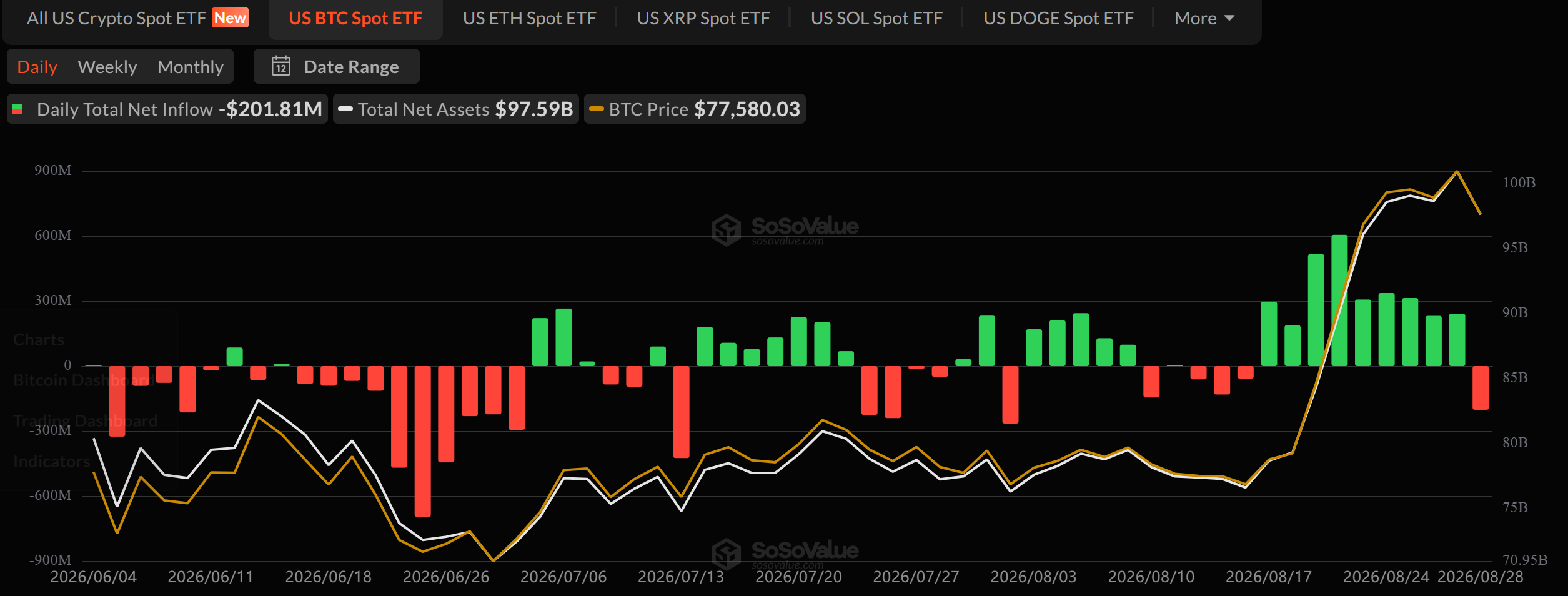
So why now? The answer starts with fund flows. US spot bitcoin funds absorbed more than $3.3 billion in August, according to SoSoValue data. In June they bled $4.5 billion.

Ether funds traced the same arc, adding roughly $1.75 billion after two months of withdrawals. Prices answered, and Bitcoin climbed 25.7% over the month and ether rose 33.3%.
That sequence is the engine, seeing as fund demand lifts coins, coins lift the treasury stocks, and selling those stocks buys more coins.
What Else Changed in August
Crypto funds drew $3.2 billion in inflows last week, marking their largest weekly intake since October 2025, according to Bank of America. This suggests growing optimism in the market.
One popular story says money fled a wobbling AI bubble, but the calendar disagrees. July did that damage, where the Philadelphia Semiconductor Index fell 20.6% and Korea’s KOSPI shed 22%. August was kinder, with the Nasdaq 100 up 4.2%.

The rotation shows elsewhere, as foreign investors pulled 10.17 trillion won from Korean equities in August. Volumes on Upbit, the country’s largest exchange, jumped roughly eightfold.
America also helped, after President Donald Trump pressed Congress on August 19 to pass the CLARITY Act, and a Senate vote is expected on September 15.
In tandem, the Treasury also widened long-dated bond buybacks that day, from $2 billion to at least $4 billion per operation. That relief proved thin. The 30-year yield dipped to 5.19% before settling back at 5.25%.
Bitcoin traded near $78,818 on Monday. What halts these companies is not a falling coin price. It is a closed financing window.
The post Wall Street Crypto Treasuries Are Buying Bitcoin and Ethereum Again. Why? appeared first on BeInCrypto.
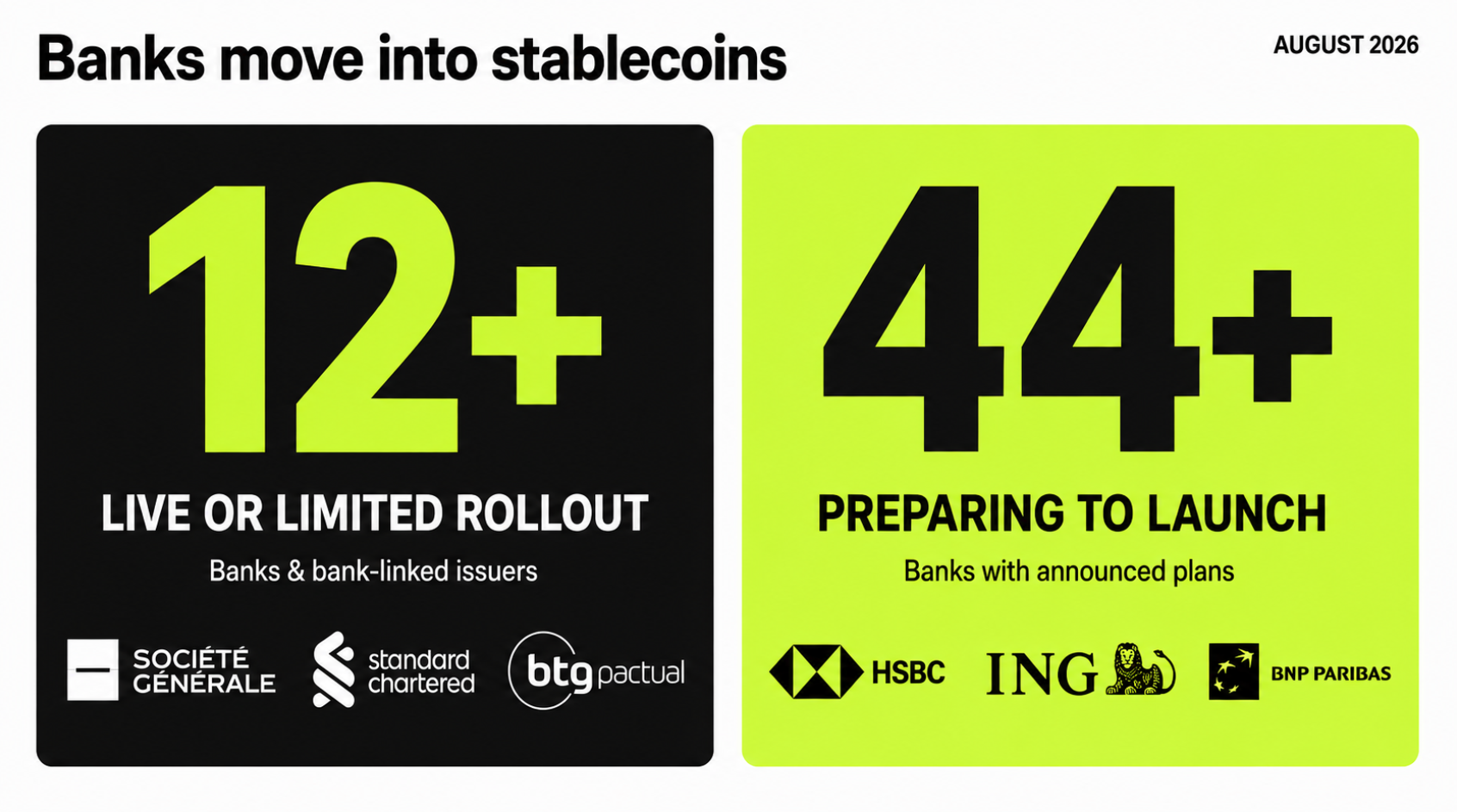
Stablecoins could make borrowing more expensive. That was the warning from Bank for International Settlements chief Pablo Hernández de Cos on August 28, as banks expand into digital money.
These digital assets are becoming an awkward asset class for banks. Because it’s almost killing their business model and forcing them to introduce new products.
The stablecoin market now holds roughly $304 billion, including about $183 billion in Tether and $74 billion in USDC. Federal Reserve researchers describe these tokens as potential competitors to traditional transaction accounts.
Arthur Firstov, Chief Business Officer at Mercuryo, told BeInCrypto why that matters.
“Stablecoins stopped being a crypto product and became a payments product. For years banks could wave it off as ‘crypto infrastructure’ – that’s a much harder line to hold when stablecoins are being used for payments, treasury, cross-border settlement, cards, merchant payouts, and institutional settlement. At that point they’re competing directly with one of the most valuable products a bank has: the transaction account.”
Banks are responding. A Federal Reserve survey in September 2025 found roughly half of respondents were prioritizing growth in at least one stablecoin or digital-asset area over the following three years.

What Happens to the Deposit?
J.P. Morgan’s JPM Coin represents a bank deposit on a blockchain. Société Générale-FORGE’s CoinVertible is a MiCA-regulated stablecoin backed by segregated collateral. Similar technology carries different promises to customers.
Nitin Gaur, Head of Institutions at Nethermind, explains the distinction.
“The interesting question stopped being whether a bank can issue and became what a bank is issuing. A tokenized deposit and a bank-issued stablecoin are two different liabilities with different legal character, different capital treatment, different insurance status and different settlement properties.”
A tokenized deposit remains bank funding. Under the US GENIUS Act, payment stablecoins require at least one-to-one backing with eligible reserves, such as cash or short-dated Treasuries. Treasury proposed implementation rules on August 17.
Gaur describes what that can mean for a bank’s balance sheet.
“A stablecoin issued under a GENIUS pathway is not a deposit. It is a payment instrument backed by segregated reserves the issuer cannot lend against. When a treasurer moves a hundred million from a demand deposit into the bank’s own coin, the bank has converted a funding source into a matched, non-lendable reserve pool,” Gaur said.
The wider effect depends on where reserves end up. Money deposited back at banks can still provide funding, although it may be more concentrated and quicker to leave.
Adrian Wall, Managing Director of the Digital Sovereignty Alliance, identifies the risk.
“If stablecoin adoption ultimately shifts funding away from bank deposits rather than recycling those funds back into the banking system, banks could face higher funding costs and potentially less capacity to extend credit.”
Payments Beyond Banking Hours
Customers already have reasons to use these products. In July, Citi reported a dollar payment from London to Thailand over a US holiday weekend, using its tokenized-deposit service alongside round-the-clock clearing.
Western Union launched USDPT in May, with Anchorage Digital Bank issuing the stablecoin on Solana.
The models are growing at different scales. J.P. Morgan reports around $7 billion in daily activity across Kinexys products. CoinVertible reported €156.6 million of euro tokens and $12.55 million of dollar tokens outstanding on August 31.
Those figures measure transaction volume and circulating supply respectively, so they cannot establish which model is winning.
37 Banks, One Coin
As more banks enter, separate coins could leave money scattered across smaller pools, with users having to exchange one bank’s token for another. Connecting the technology does not guarantee conversion at face value during market stress.
Europe’s Qivalis has assembled 37 banks across 15 countries around a planned euro stablecoin. It targets a launch in the second half of 2026, subject to regulatory authorization.
Ernesto Olmedo Pereira, Head of Strategy & DeFi at Qivalis, says sharing the currency is deliberate.
“If every bank launches its own token, you get dozens of thin, incompatible pools instead of one deep, liquid euro instrument. Qivalis, an independent company backed by 37 banks, exists precisely because the banks behind it decided to build one shared, interoperable euro rail together rather than compete with 37 separate ones.”
Banks could then compete through services surrounding that money, such as foreign exchange and corporate lending. The shared coin would carry payments between them.
Qivalis’s launch will test whether that cooperation can attract regular business beyond its founding banks.
Customers need money they can use across banking relationships. Banks will have to show that the services sold around those payments justify any higher cost of funding their loans.
The post The Stablecoin Race Could Make Bank Loans More Expensive appeared first on BeInCrypto.
How Stock Picking Can Compress The Path To A $1 Million Portfolio (NYSEARCA:SPY)

Bybit EU Partners with MEXC to Support a Seamless User Transition in the Dutch Market

How Riccardo Calafiori provided Arsenal’s spark in statement win at Aston Villa





-

 Crypto World6 days ago
SpaceX stock could rise 75% to $240, JPMorgan says
-

 Fashion3 days ago
Weekend Open Thread: Maeve – Corporette.com
-

 Crypto World4 days ago
Bitcoin’s 22% rally now needs real demand to outlast Treasury liquidity boost
-

 Crypto World5 days ago
Warsh Jackson Hole keynote puts financial innovation first
-

 Crypto World7 days ago
A $30 Billion AI Fund Implodes, Now the SEC Is Investigating Wall Street’s Role
-

 Business4 days ago
Salesforce Stock Soars 19% as Blowout Earnings and Agentforce AI Growth Silence Software Skeptics
-

 Crypto World6 days ago
Did Trump Just Move SpaceX Stock With One Truth Social Post?
-

 Crypto World5 days ago
Elon Musk Grok Bot Promise: We Will Make You Whole if AI Loses Your Money
-

 Business4 days ago
Apple Confirms September 9 Keynote and Reveals Its Full Pre-Order Schedule
-

 Business3 days ago
Onto Innovation Stock: AI’s Next Bottleneck Is Yield (NYSE:ONTO)
-
 NewsBeat5 days ago
Lindsay Clancy jury braces for closing arguments as judge tells court: ‘You’ve heard all the evidence’ – Live updates
-

 Business5 days ago
Walmart takes aim at younger shoppers with new fashion brand
-

 Crypto World3 days ago
Bitcoin price tests $82K resistance as Brandt stays long
-

 Business6 days ago
Thailand’s Eastern Economic Corridor Capital City (EECiti): Key Developments and Investment Opportunities
-

 Crypto World5 days ago
NVIDIA revenue hits $96.2B as AI demand doubles
-

 Business3 days ago
iPhone 18 Pro Pre-Orders Could Shift to Saturday as Apple Reportedly Avoids September 11 Anniversary
-

 NewsBeat6 days ago
Trump’s trade truce with China faces test with Iran effort
-

 Crypto World5 days ago
Nvidia Q2 Earnings Reveal $96.2 Billion Beat, So Why Is NVDA Falling?
-
 Tech5 days ago
Claude Cowork gets its own browser that doesn’t touch your tabs, bookmarks, or saved passwords
-

 Crypto World4 days ago
Truflation calls for Fed rate cut after PCE forecast
You must be logged in to post a comment Login