


Connect with us

Business

Autonomous aircraft: Pilot-free crop dusters lead the way

Published

on

Close-up of orangutan's eyes

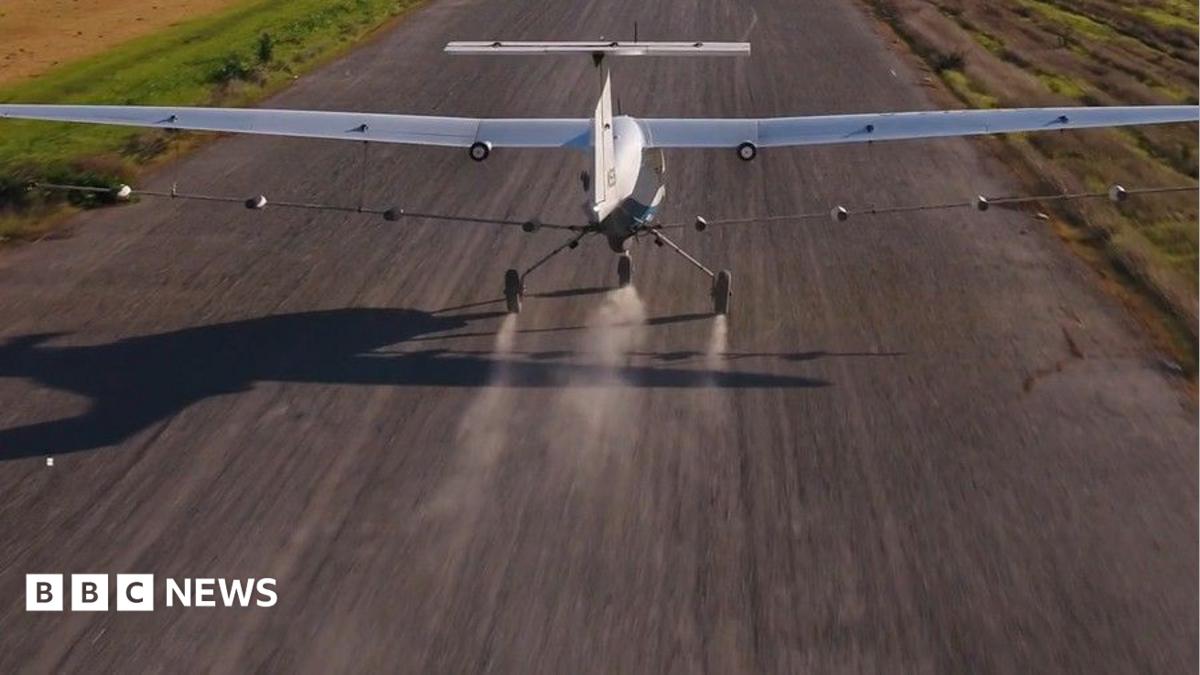
Pyka and Windracers are building aircraft from scratch, arguing this allows autonomy to be designed in from the outset and the aircraft tailored to the job.

Others are retrofitting existing larger planes.

Backed by Boeing’s investment arm, US-based Reliable Robotics is currently testing its system on the Cessna 208B Grand Caravan, a single-pilot cargo plane that can carry about 1360kg of payload over hundreds of kilometers.

Retrofitting on certified aircraft lets the company focus exclusively on proving the autonomous system’s safety rather than also having to seek approval for a new aircraft, says Robert Rose, its co-founder and CEO.

Advertisement

Merlin Labs, also US-based, has been working its way up through progressively larger military aircraft and is now applying its system to the two-pilot Lockheed Martin C-130J military transport plane, with commercial multi-crew cargo planes next.

“It is a common autonomy brain that can transition between different aircraft,” explains Matt George, Merlin’s founder and CEO.

The companies also differ in their approach to AI.

Reliable is avoiding it altogether, arguing it would complicate certification.

Advertisement

Merlin, meanwhile, is taking a far more AI-centric approach.

The divide is evident in so-called detect and avoid systems.

One of autonomous flight’s biggest challenges is replicating a pilot’s ability to spot and maneuver safely around other aircraft and obstacles, and there is virtually no margin for error.

With no perfect solution yet, companies are adding different sensor systems as well as duplicating those that already come as standard to provide extra back-up.

Advertisement

Reliable has added forward-looking air-to-air radar to detect other aircraft more than eight kilometers ahead, with software that follows fixed rules to decide how the plane should respond.

It is “better than a pilot’s eyeballs” says Rose.

Merlin, meanwhile, is using AI-powered cameras to detect and classify objects.

Pyka has used lidar from the outset to detect trees, vehicles, large birds and terrain. But it’s short range, so the company also plans to add AI-powered cameras, its first real use of AI onboard.

Advertisement

“For a lot of things there’s no need to use AI…but for figuring out that six pixels in the distance are an airplane versus some other smudge, it is perfect territory,” says Norcia.

The AI dilemma also extends to communicating with air traffic control.

In shared airspace, aircraft must be able to receive, interpret and respond to radio instructions, typically from air traffic control.

Reliable’s solution is to have a remote pilot on the ground, initially fully trained, to handle communications and make safety-critical decisions.

Advertisement

Merlin plans to use generative AI, trained on thousands of hours of recorded exchanges, to interpret instructions and respond itself.

“Our problem is harder… but we want to move beyond remote piloting,” says George.

Merlin plans to reduce pilots in stages, from two to one and eventually none.

Pyka, says Norcia, is content to let others “blaze the trail” in finding the best way to operate in shared airspace.

Advertisement

Meanwhile, even if fully autonomous passenger flight remains elusive, many expect the technology being pioneered will inch into commercial aviation, potentially making piloted flying safer.

That, notes ALPA, the US pilots’ association, would be a welcome development.

Continue Reading
Click to comment

You must be logged in to post a comment Login

Leave a Reply

Business

Rupee closes at near 2-month high of 94.95 to the dollar

Published

on

Rupee closes at near 2-month high of 94.95 to the dollar
Mumbai: The Indian rupee ended with its strongest closing in nearly two months to close at 94.95 on Tuesday, versus its previous close of 95.16. The strength came from flow-related dollar offers from foreign banks and aggressive central bank intervention through nationalised banks. The rupee gained past the 95 per dollar levels, which was a strong resistance zone, triggering stop losses for many.

The gains came in despite high crude oil prices and overall weak Asian currencies during the day. Strong Q1 GDP growth of 7.8% along with dollar sales by the Reserve Bank both in the offshore as well as domestic markets caused this rise, traders said.

“The strength reflects continued RBI dollar sales, both in the NDF and OTC (over the counter) market, along with flows from National Investment and Infrastructure Fund of nearly $ 2.2 billion on Tuesday,” said Anil Bhansali, head of treasury, Finrex Treasury Advisors.

Read more: Global Market: AI could force central banks to rethink monetary policy

Advertisement

The rupee traded between 94.79 and 95.11 on Tuesday, and according to these levels, it has erased nearly all losses of this financial year. The rupee had closed at 94.83 in March.


The positive sentiment however is not expected to last very long, as dollar demand is likely to continue amid high oil prices, while global bond sentiments are negative. “The positive growth outlook is helping offset pressure from higher oil prices and keeping sentiment towards the rupee stable. Going ahead, crude, dollar movement and FII flows will remain key triggers. Rupee range can be seen between 94.70 and 95.40 in the near term,” said Jateen Trivedi, VP, research analyst, LKP Securities.

Continue Reading

Business

China Humanoid Robots Shift to Industrial Utility

Published

on

China Humanoid Robots Shift to Industrial Utility

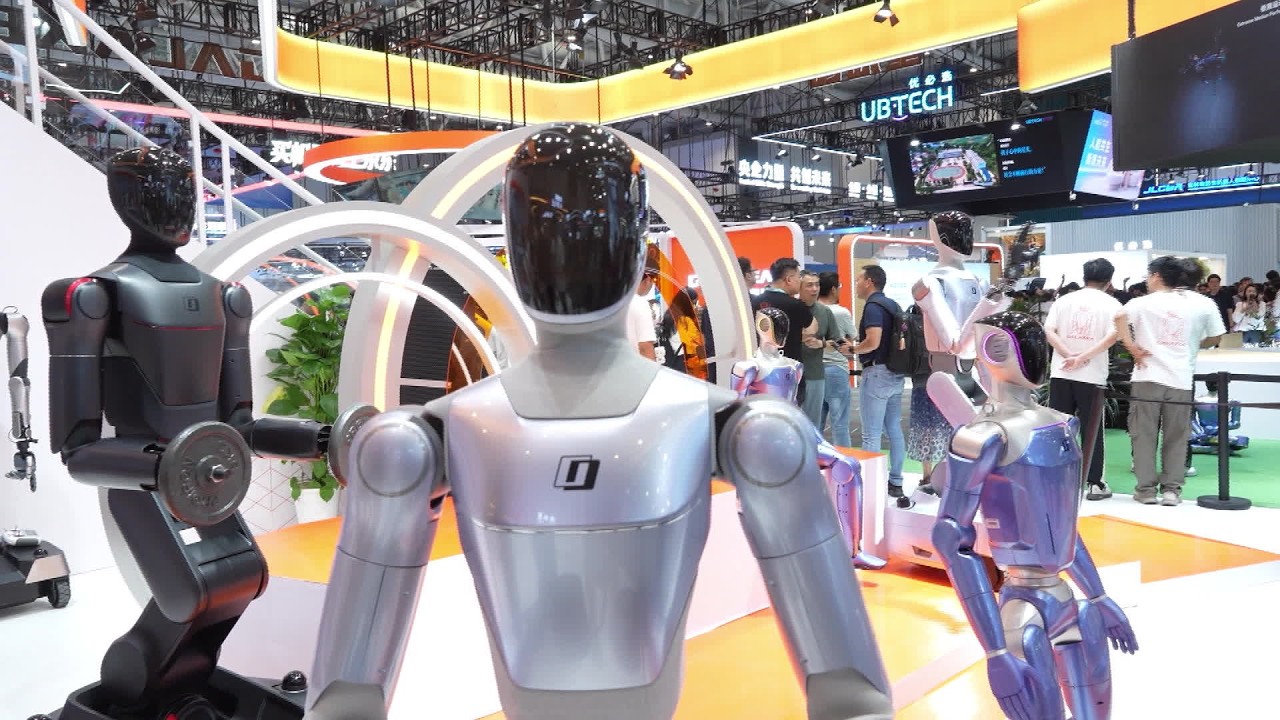
At this year’s World Robot Conference in Beijing, Unitree’s founder announced plans to accelerate humanoid robot development. The company aims to enhance robot intelligence, mobility, and versatility, competing globally in the robotics industry. Their focus includes improving robot adaptability for various applications, highlighting China’s growing capabilities in humanoid robotics innovation.


China’s humanoid robots are experiencing a significant shift from research prototypes to practical industrial applications. This transition reflects China’s growing emphasis on automation to boost manufacturing efficiency, reduce labor costs, and improve safety standards. Companies are increasingly deploying these intelligent robots in tasks such as assembly, logistics, and quality inspection, where human workers previously performed manual labor.

The advancement of AI and sensor technologies has enabled humanoid robots to perform complex and repetitive tasks with higher precision and reliability. As costs decrease and technology matures, more factories across China are adopting these robots to stay competitive in the global market. This trend is also aligned with China’s broader push towards high-tech innovation and smart manufacturing.

Overall, the shift of Chinese humanoid robots to industrial utility marks a major milestone in robotics development. It signifies China’s commitment to leading in industrial automation and reflects a future where humans and machines collaborate more seamlessly in manufacturing processes, driving economic growth and technological progress.

Advertisement

source

Continue Reading

Business

Credo Technology Group Holding Ltd (CRDO) Q1 2027 Earnings Call Transcript

Published

on

OneWater Marine Inc. (ONEW) Q1 2026 Earnings Call Transcript