
Business
When honours turn to dishonour


Yes. Corporate subscriptions are available for teams and organisations, with discounted rates as user numbers increase. Pricing starts from $1,625 + GST per user.
Get in touch
to discuss the right option for your organisation.
Business News subscriptions are used by executives, investors, consultants and professionals who need to stay informed and make better decisions about the WA market. When you subscribe you’ll get
- Unlimited access to WA’s most trusted business journalism
- Data & Insights — detailed profiles of WA companies, people, projects and deals
- MyBN — a personalised feed based on the companies, people and sectors you follow
- Special publications and industry reports
- Daily and weekly email newsletters
Data & Insights is a research tool built specifically for the WA market. It draws on more than 30 years of Business News reporting, updated regularly to reflect what’s happening now. Use it to:
- Look up detailed profiles of WA companies, including financials, directors and ownership
- Find decision-makers and track their career movements
- Research live and completed projects across WA industries
- Monitor deals, appointments and market activity
- Access industry rankings and league tables
Data & Insights is updated daily by our dedicated research team, which uses the latest announcements, ASX filings and editorial coverage to keep our person, company, list and project records up to date.
Business News welcome all opportunities to make our dataset accurate, complete and current, so if you have an update request, please email the team at
general@businessnews.com.au, and we’d be happy to assist.
MyBN
is part of every subscription. It’s your personalised view of Business News. You can follow the companies, people, sectors and projects that matter to you, and get a news feed and alerts tailored to your interests. You can save articles to read later and retain only what you need.
Only subscribers have full access to all content on the Business News website.
If staying informed about the WA economy is part of your job, and/or you’re looking for networking opportunities in WA, Business News is built for you.
Business News subscribers are:
- Executives and directors tracking competitors, clients and market movements
- Investors and advisers researching companies, deals and industry trends
- Consultants and professionals staying across sectors relevant to their clients
- Business owners looking for leads, context and market intelligence
Most Business News publications cover national or global markets. Business News is focused entirely on Western Australia, which means the journalism, the data and the intelligence are all built around WA companies, people and projects — not adapted from a national feed. Data & Insights, included with every subscription, combines more than 30 years of WA-specific editorial research with live business data. There’s no comparable product for the WA market.
The Morning Digest Email provides a comprehensive wrap of the major headlines, relevant to WA business, and includes with a snapshot of the overnight news covering oil, gold and ASX-listed companies.
The Afternoon Wrap Email focuses on the news covered by our team of journalists during the course of the working day, including exclusive stories and analysis, all of which relates to WA business and the local economy.
The BN Weekender Email contains a wrap of the Business News from the week that was, highlighting the top stories in each area of WA business.
Sign up for free.
We’re happy to help.
Get in touch
and our team will come back to you.


DX Group appoints Karl Hodgkinson to new strategic role

The Nifty MidCap 150 has rallied nearly 3821 points, or 20%, since the start of April. Of the total gains, 15 stocks, including Coforge, Vodafone Idea, One97 Communications, Larus Labs, BHEL, Lenskart Solutions, MCX, BSE, IDFC First Bank, Federal Bank, Dixon Tech, PB Fintech, Billionbrains Garage, Info Edge India and Yes Bank contributed more than 1,924 points, or over 50%, of the gains.
 ET Bureau
The trend is similar in the Nifty SmallCap 250, which has rallied 4,074 points, or 28.5%, over the same period. 28 stocks such as Meesho, Ather Energy, Welspun Corp, HFCL, RBL Bank, Sona BLW Precision, Aster DM Quality, Redington, Neuland Lab, Gland Pharma, Navin Flurine, Aegis Logistics, Sai Life Sciences, Syrma SGS Tech, PNB Housing Fin, Craftsman Automation, Kirloskar Oil, RR Kabel, IIFL Finance, Piramal Pharma, Anand Rathi, Cartrade, Aditya Infotech, Urban Co, Himadri Speciality, Wockhardt, Tata Tech, Karur Vysya Bank – contributed around 2,038 points, or 50%, of the gains.
“The mid- and small-cap indices at record highs, driven disproportionately by a relatively small set of stocks, point to a selective rather than broadly healthy rally,” said Saurabh Jain, head of fundamental research at SMC Global Securities. “Narrower breadth means headline gains are less representative of the underlying universe.”
For the Mid-cap 150, the remaining 109 gainers contributed nearly 2,216 points, while 26 stocks dragged the index down by around 318 points. In the case of Small-cap 250, the remaining 182 gainers contributed about 2,227 points, while 40 stocks shaved nearly 189 points off the index.

Jain attributed the concentration of gains to stronger earnings growth in select companies, sustained domestic liquidity, sector rotation into capital goods, defence, metals, financials and manufacturing, and stock-specific re-ratings. Elevated valuations in some pockets have amplified the skew, he said.
Read more: US stocks today: US stocks end lower as oil, yields raise September jittersAnalysts said the current phase is more stock-specific than some of the broader mid- and small-cap rallies seen after 2020 and during parts of FY24. Frequent index reconstitution also complicates historical comparisons, with more than 10% of constituents changing over six months and nearly half over two years.
Valuations, meanwhile, have become demanding. The Nifty MidCap 150 trades at a one-year forward Price-to-Earnings (PE) Ratio of 28.95 times, compared with its 10-year average of 26.78 times, while the Nifty SmallCap 250 trades at 25.23 times against its 10-year average of 19.96 times.
Kranthi Bathini, equity strategist at WealthMills Securities said a broadening of the rally would require more uniform earnings growth across companies, continued domestic inflows and improved market breadth.
“If gains remain concentrated, the market could become more vulnerable to profit-taking, liquidity shocks or earnings misses in the stocks leading the rally,” said Bathini. “Selectivity and focus on balance-sheet strength remain essential.”
Business
South Korea’s KOSPI Plunges Nearly 4% As Chip Stocks Sink And Global Bond Selloff Deepens Amid Iran Fears

SEOUL — South Korea’s benchmark KOSPI index tumbled nearly 4% on Wednesday, one of its steepest single-day drops in weeks, as renewed U.S. strikes on Iran sent oil prices higher and fueled a punishing selloff in global bond markets that dragged down semiconductor heavyweights Samsung Electronics and SK Hynix.
The KOSPI stood at 6,569.16 points, down 266.64 points, or 3.90%, in trading around 3:05 p.m. local time, according to Korea Exchange data. The decline erased much of the modest gains the index had posted a day earlier, when it closed at 6,835.80 points after a session driven largely by domestic share buybacks from Samsung and SK Hynix.
Wednesday’s rout came after the United States launched fresh military strikes against Iran, escalating a conflict now in its seventh month and reigniting fears over disruptions to global energy supplies. The attacks pushed crude oil prices sharply higher overnight, stoking concerns that renewed inflation pressure could force central banks worldwide, including South Korea’s, to keep interest rates elevated for longer.
The sell-off was broad-based, but semiconductor stocks — which together account for more than half of the KOSPI’s total market weight — led the market lower. Samsung Electronics and SK Hynix, the two chipmakers that have powered much of the index’s rally this year on the back of surging artificial intelligence demand, both fell sharply, with declines that widened as the session progressed. Other major exporters including SK Square and Hyundai Motor also posted steep losses.
The selling pressure in Seoul mirrored declines across the rest of the region. Trading Economics data showed Asian equity markets broadly under pressure as oil climbed and global bond yields surged to multi-year highs. Japan’s benchmark 10-year government bond yield touched 3% for the first time since 1996, while Australia’s 10-year yield jumped to its highest level in 15 years, reflecting a global repricing of inflation and fiscal risk that spilled directly into equity markets.
Moomoo Australia chief market strategist Tapas Strickland, describing the broader market dynamics driving the selloff across Asia-Pacific markets, said the shift in sentiment traced directly back to the Middle East.
“The catalyst for the sudden shift in sentiment stems from escalating Middle East tensions following strikes near the Strait of Hormuz, raising immediate concerns over potential bottlenecks in critical global shipping channels,” Strickland said. “Higher energy costs risk re-igniting headline inflation just as central banks seek confirmation that price pressures are contained.”
Strickland added that the pressure was expected to weigh heaviest on rate-sensitive growth stocks — a description that fits South Korea’s technology-heavy market closely, given how reliant its largest listed companies are on capital-intensive chip production and export demand.
South Korea’s own inflation data added another layer of pressure on investor sentiment this week. The country’s annual inflation rate climbed to 3.1% in August, up from 2.8% in July, according to government figures, even as authorities noted that price growth excluding a temporary telecom billing effect was closer to 2.5%. The uptick in inflation, combined with rising oil costs, has fueled speculation that the Bank of Korea could face growing pressure to maintain a more cautious policy stance in the months ahead.
South Korea’s economy is particularly exposed to swings in Middle East oil supply. The country sources roughly 70% of its crude oil imports from the region, making it one of Asia’s most vulnerable major economies to any disruption in Gulf shipping lanes, a dynamic investors have repeatedly cited during previous bouts of conflict-driven volatility this year.
Wednesday’s losses also extended a turbulent pattern that has defined Korean equities for much of 2026. The KOSPI has swung wildly between record highs and sharp corrections over the past several months, driven largely by shifting sentiment around the artificial intelligence boom and its implications for global chip demand. Despite Wednesday’s drop, the index remains up substantially for the year, reflecting a rally that has made it one of the best-performing major stock markets globally in 2026, even after accounting for repeated bouts of severe volatility.
Foreign and institutional investors led the selling on Wednesday, according to exchange data cited by local market trackers, while retail investors stepped in to buy some of the dip — a pattern that has become familiar during this year’s volatile trading sessions, though the buying was not enough to offset the broader institutional retreat.
The losses in Seoul followed a similarly cautious tone on Wall Street overnight, where all three major U.S. indexes closed lower as investors weighed the implications of the renewed Iran conflict alongside a deepening global bond rout. Technology shares were among the hardest hit in U.S. trading, setting a negative tone for Asian markets tied closely to the same sector.
Analysts said the path forward for Korean equities would likely hinge on how the Middle East conflict evolves in the coming days, along with any signs of stabilization in global bond markets. A sustained rise in yields, driven by concerns over inflation and swelling government debt levels in major economies including the United States, has become an increasing source of anxiety for equity investors worldwide, compounding the geopolitical risk already weighing on sentiment.
For now, South Korea’s chipmakers — and the broader KOSPI along with them — remain caught between two powerful forces: continued strong demand for AI-related semiconductors that has underpinned this year’s rally, and mounting macroeconomic headwinds from oil prices, bond yields and shifting central bank expectations that have made the market one of the most volatile among major global indexes in 2026.
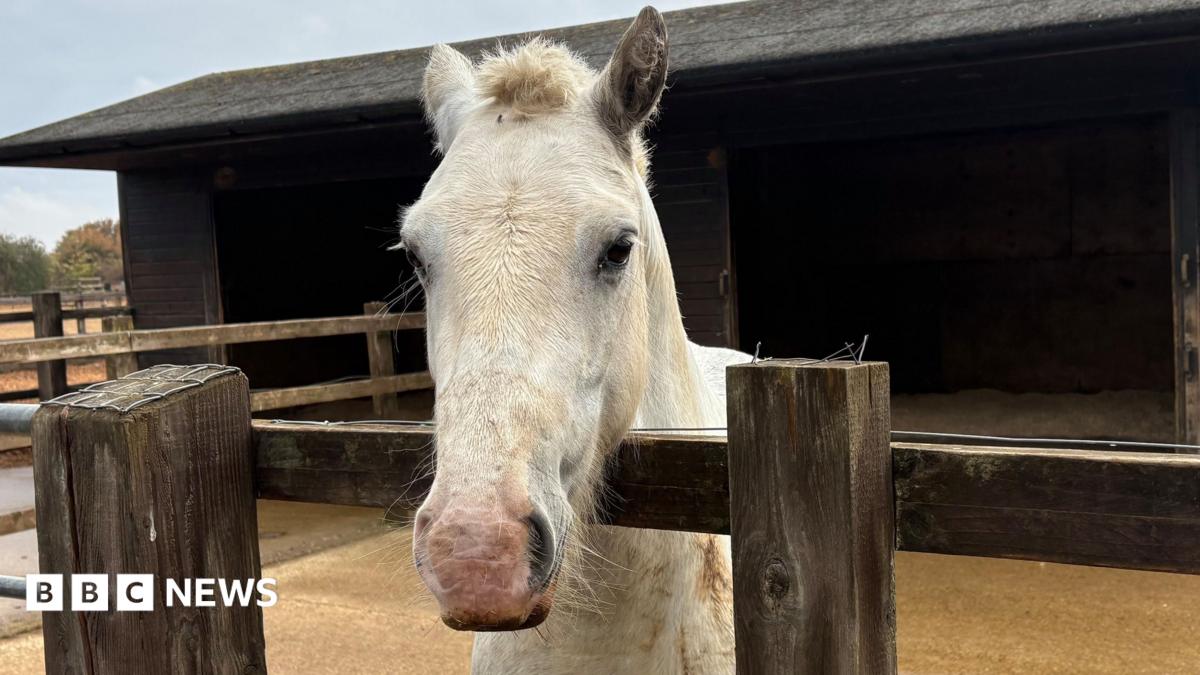
The rising cost of caring for horses is putting more owners under financial pressure, with an animal welfare charity reporting an increase in horses being given up.
The Blue Cross in Burford, Oxfordshire, says the situation has been made more difficult this year by the dry weather, leading to hay shortages and more expensive food prices.
The site is currently taking in 20 to 30 horses a month, and the charity across the UK saying it has seen a “160% surge in relinquished horses in recent years”.
Admissions coordinator Freya Long says: “There’s no grass, very little hay. I’ve started getting an increase in requests and I can only imagine it’ll get higher with the cost of living.”
The charity says the costs for owners can extend well beyond feed, with veterinary care, vaccinations, worming and farrier visits all essential to a horse’s welfare.
Horse centre manger Vicki Alford adds: “It all adds up. We are finding, unfortunately, that people are contacting us because they can’t financially look after their horses anymore.”
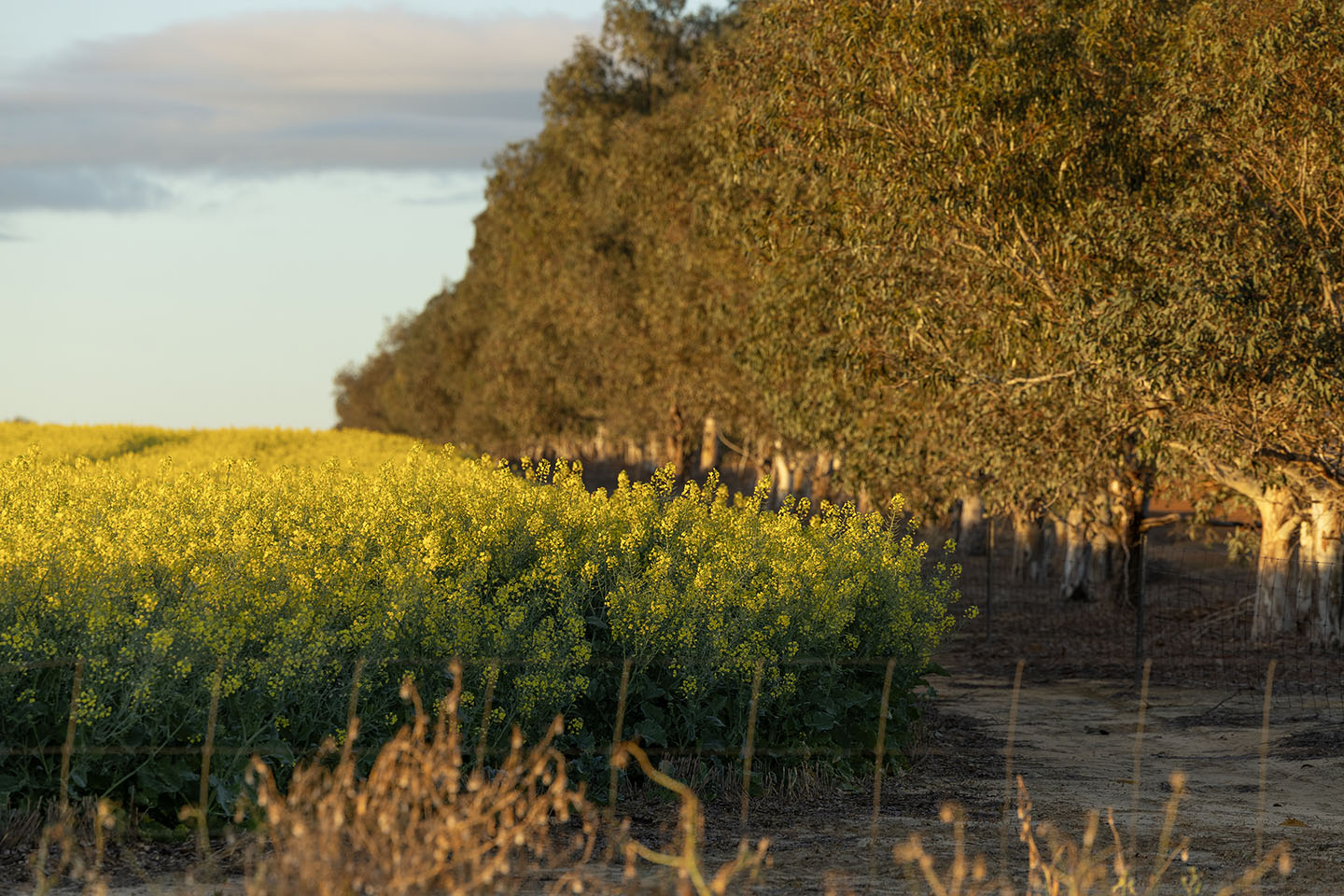
Western Australia’s agriculture sector pumps more than $44 billion into the state economy, according to a new report released on Wednesday.
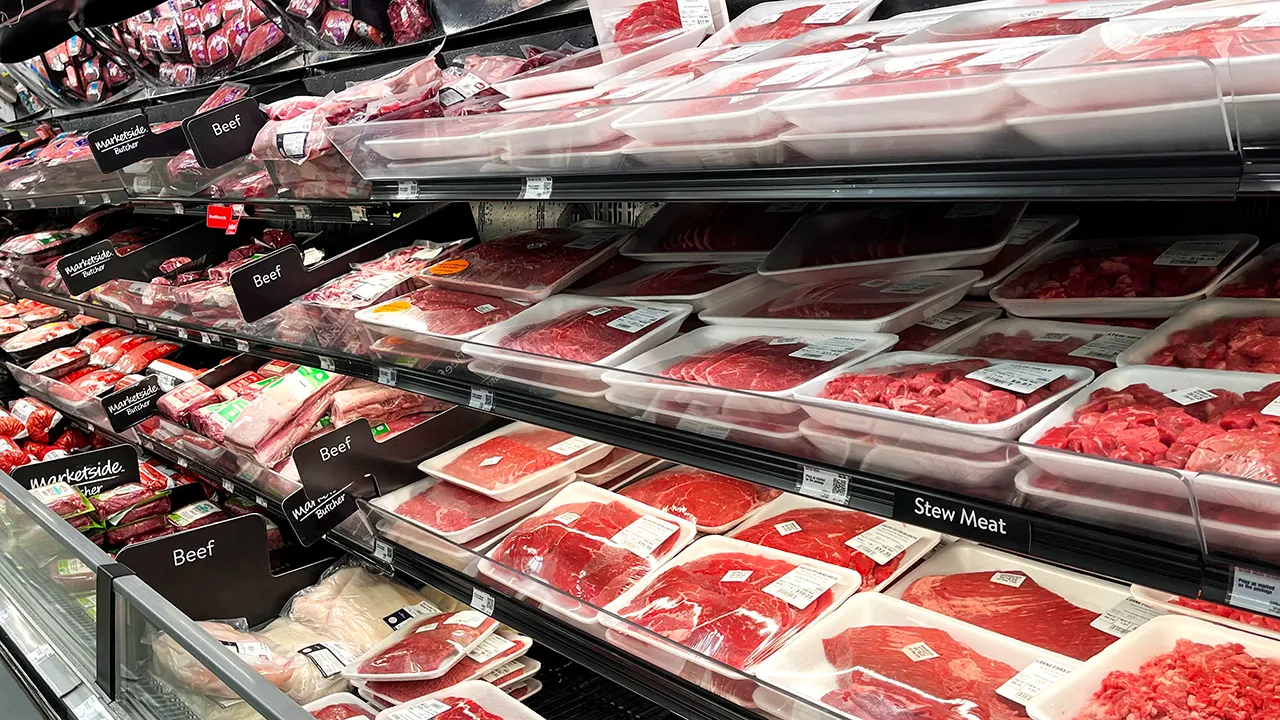
Montana Congressman Troy Downing discusses President Donald Trump’s plan to target the meatpacking monopoly as beef prices soar. Plus, North Dakota Senator Kevin Cramer weighs in on the House spending bill and the GOP legislative agenda.
The Department of Justice (DOJ) Antitrust Division on Tuesday said it had expanded its investigation into beef affordability to include eight of the largest grocery retailers in the United States.
The expansion comes after the DOJ launched an antitrust probe in May into the “Big Four” meatpackers — JBS, Cargill, Tyson Foods and National Beef — which the department said control more than 85% of the U.S. beef processing market.
Tuesday’s announcement expands the federal government’s scrutiny to the retail level of the food supply chain.
The DOJ said the retailers under investigation are Kroger, Publix, Walmart, Albertsons, Aldi, Ahold Delhaize, Costco and Amazon.
TRUMP GOES AFTER THE COMPANIES RANCHERS BLAME FOR THE BEEF PRICE SQUEEZE
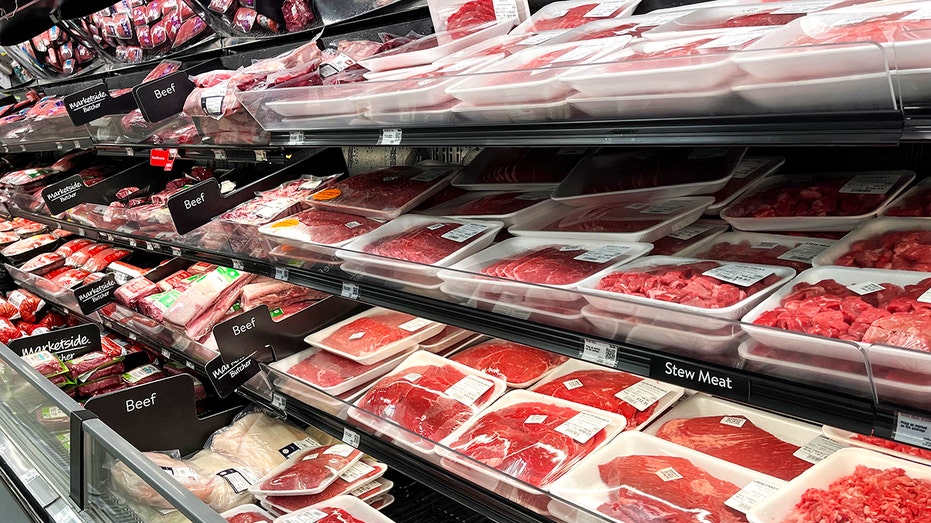
The Justice Department expanded its investigation into beef affordability to include eight major grocery retailers amid scrutiny of rising prices. (Ronald Schemidt/AFP via Getty Images / Getty Images)
Associate Attorney General Stanley E. Woodward Jr. sent letters to the eight companies regarding “recent increases in the retail price for beef,” according to the Justice Department.
“Beef prices are a critical concern to Americans, and a priority for this Justice Department,” the DOJ wrote on X.
FOX Business has reached out to the Justice Department for additional information and copies of the letters.
After announcing its investigation into potential antitrust violations in U.S. cattle and beef markets in May, the Justice Department said it was reviewing more than 3 million documents and interviewing industry participants.
US FARMER PUSHES FOR ONE MAJOR CHANGE AS IMPORTED BEEF DEBATE HEATS UP
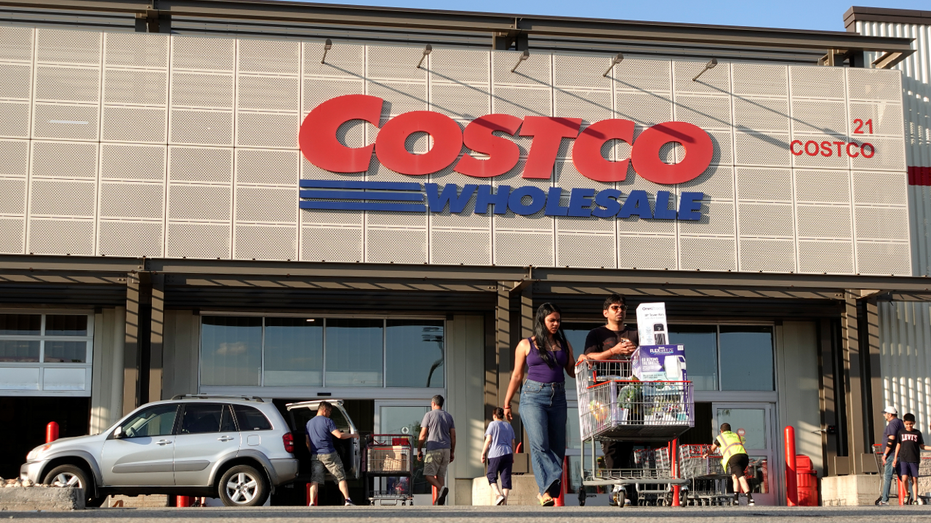
Costco was named among the major retailers included in the Justice Department’s expanded investigation into beef affordability. (Gary Hershorn/Getty Images / Getty Images)
Federal officials have been examining whether concentration in the meatpacking industry has contributed to high beef prices.
Attorney General Todd Blanche said at a news conference at the time that whistleblowers could receive substantial rewards for providing information that leads to successful enforcement actions.
“If the information you provide helps us secure a criminal penalty in excess of $1 million, you can be entitled to recover and receive 15% to 30% of the money that we recover,” Blanche said, describing the DOJ’s whistleblower rewards program.
Agriculture Secretary Brooke Rollins also tied the probe to broader concerns about food security and shrinking domestic cattle supplies, saying the U.S. had about 86.2 million head of cattle and calves as of Jan. 1 — “the lowest since the 1950s.”
A HISTORIC SHORTAGE IS SQUEEZING AN AMERICAN DINNER STAPLE AND RELIEF COULD BE YEARS AWAY
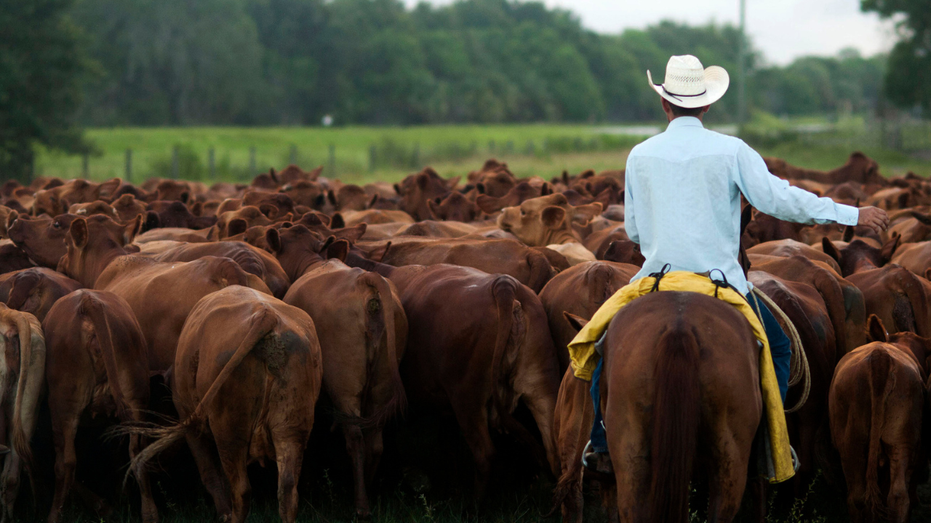
Federal officials have been examining whether concentration in the meatpacking industry has contributed to high beef prices for American consumers. (Ty Wright/Bloomberg/Getty Images / Getty Images)
Last week, President Donald Trump said he would authorize the drafting of legal documents aimed at giving farmers and ranchers “the right to process their own food,” casting the move as an effort to break what he called a “nasty monopoly” in the meat industry.
The move was intended to give ranchers another way around the powerful meatpacking companies that stand between their cattle and grocery-store shelves, following backlash in farm country over Trump’s decision to allow more foreign beef imports.
Trump’s announcement came after cattle producers and some Republicans pushed back on his plan to temporarily allow tariff-free imports of up to 300,000 metric tons of foreign beef, a move intended to ease pressure on consumers facing high prices at the meat counter.
CLICK HERE TO DOWNLOAD THE FOX NEWS APP
FOX Business has also reached out to Kroger, Publix, Walmart, Albertsons, Aldi, Ahold Delhaize, Costco and Amazon for comment.
FOX Business’ Eric Mack and Amanda Macias contributed to this report.
Business
Kate Middleton and Prince William Stay Silent on Meghan Markle and Prince Harry’s Return to Britain
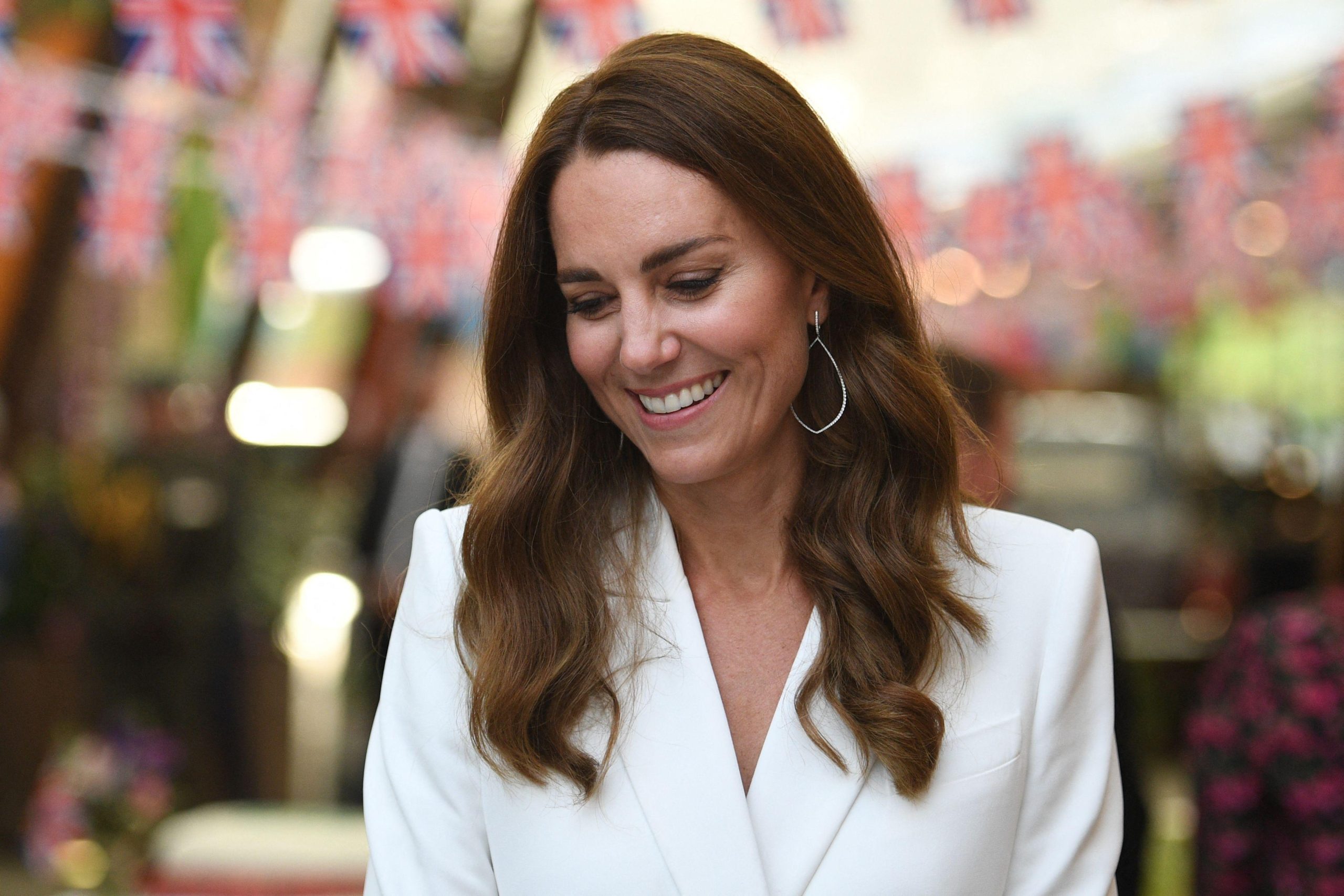
LONDON — More than a week after Prince Harry and Meghan Markle relocated to Britain with their two children, Kate Middleton and Prince William have offered no public comment on the couple’s return, according to people close to the Prince and Princess of Wales, who describe the silence as a deliberate choice rather than an oversight.
A source close to William and Kate told People magazine that the couple is taking a cautious approach as Harry and Meghan settle into their extended stay in the U.K., resisting the urge to react quickly to the news. “They are watching this space,” the source said. “It’s private — they don’t feel the need to say anything or demonstrate anything outwardly.”
Harry, Meghan and their children, Prince Archie and Princess Lilibet, arrived in Birmingham last week following a private flight from California, beginning what the family has described as an extended period living in Britain. The move has drawn widespread attention across British media, with much of the coverage focused on the prospects for reconciliation between Harry and the rest of the royal family after years of public estrangement.
Those prospects appear limited for now, at least between the brothers. Sources told People last week that Harry and William remain in “no contact,” with William in particular not yet ready for that dynamic to shift.
People close to William and Kate point to the strain the couple has faced privately in recent years as a factor shaping their current posture. Kate was diagnosed with cancer in 2024 and underwent treatment before announcing in January 2025 that she was in remission. A palace insider told People the couple has weathered significant hardship during that period. “They have suffered a lot,” the source said, adding that their focus remains on their royal duties, their three children and Kate’s continued recovery.
The insider suggested that steadiness, rather than public statements, has defined the couple’s approach throughout the period of tension with Harry and Meghan. “They have been dutiful, doing what they do well and keeping the family together,” the source said. “Anything else, from their point of view, isn’t critical.”
Despite the current distance, a source told People that reconciliation between the two couples is not out of the question, though any thaw would likely take time. “If the two couples reconcile, it will be a slow build,” the source said, pointing to lingering hurt from years of public disagreements. “There is a deep sense of betrayal.”
That same source suggested that proximity alone may eventually create opportunities for the estranged relatives to interact, even without a formal reconciliation. “There are bound to be moments where their worlds overlap,” the insider said, “and everyone will be watching how those encounters unfold.” The remark alluded to the possibility of Kate and Meghan crossing paths at official or family events now that the Sussexes are living in the U.K. for an extended stretch.
The rift between the two couples, once dubbed the royal “Fab Four” during the early years of William and Harry’s joint public engagements with their wives, has been closely tracked by royal watchers since Harry and Meghan stepped back from official royal duties in 2020 and relocated to North America. Tensions deepened following the couple’s subsequent interviews and Harry’s 2023 memoir, “Spare,” which detailed private family conflicts and drew criticism from some members of the royal family.
Buckingham Palace and representatives for William and Kate have not issued any formal statement addressing Harry and Meghan’s return, and palace officials have generally declined to comment publicly on the family’s internal dynamics throughout the dispute. Representatives for Harry and Meghan have likewise not detailed the family’s specific plans beyond confirming that Archie and Lilibet are now enrolled in school in the U.K.
King Charles III has also not issued public remarks on his younger son’s return, though earlier reporting indicated the King learned of the couple’s plans only shortly before their arrival. Royal commentators have suggested that any broader shift in the family’s dynamic is more likely to unfold gradually and privately than through public statements from any of the parties involved.
For now, People’s sources indicate that William and Kate intend to maintain their current posture of quiet observation, prioritizing what they see as their core responsibilities over any public engagement with the developments surrounding Harry and Meghan’s move. Whether that approach shifts as the Sussexes settle further into life in Britain remains to be seen.

Oil climbs for 3rd straight day on renewed U.S.-Iran fighting

Sydney-based Fife Capital has cleared a planning hurdle to expand its Western Australian footprint after an assessment panel approved its $30 million warehouse plan.
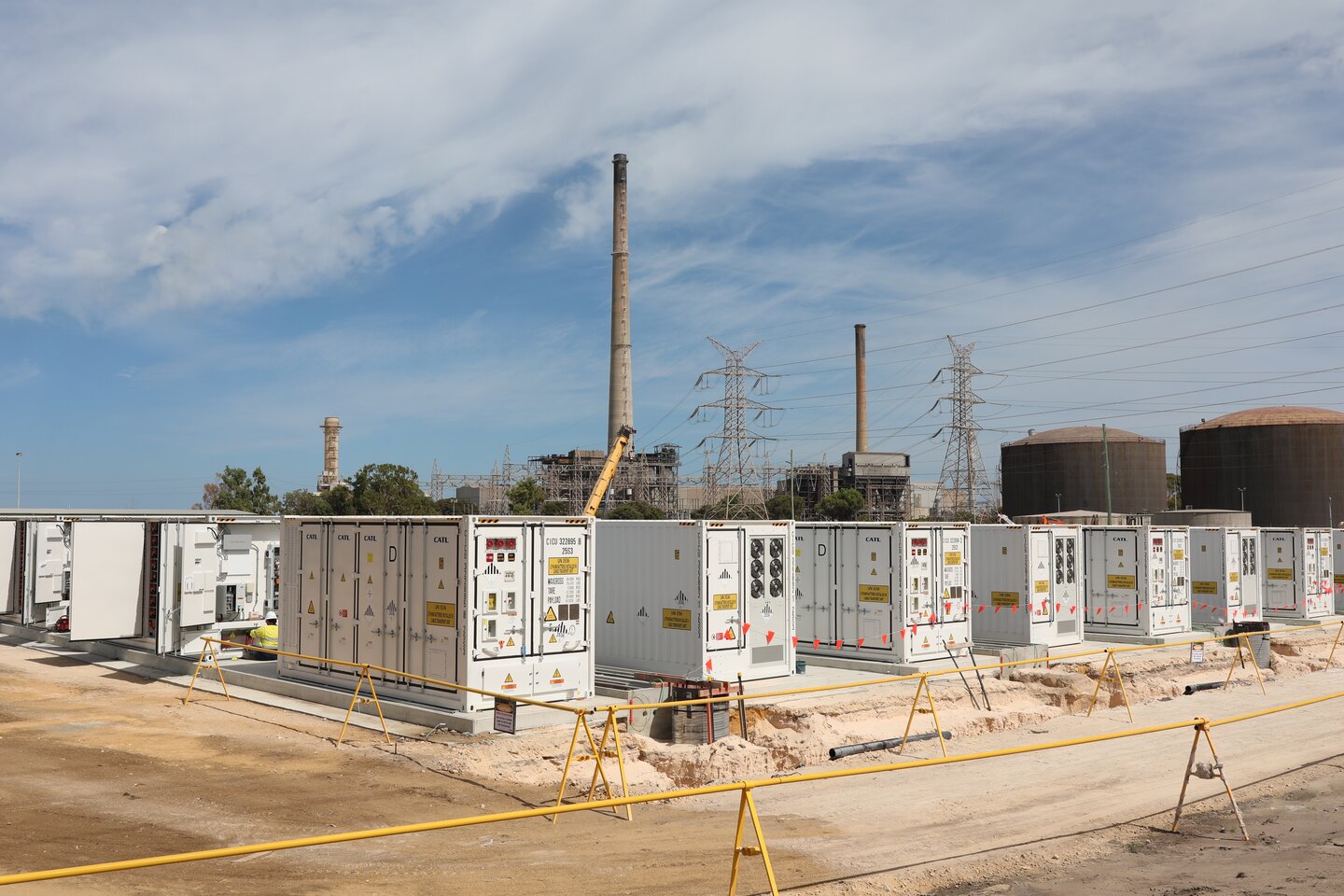
The Economic Regulation Authority has fined state-owned Synergy $1.2 million, after it found a software error inflated wholesale power prices from the Kwinana big battery.

Why US Marines Don’t Fly Apache Or Black Hawk Helicopters

Bus crash in Egypt tourist hotspot kills 16 people and leaves 28 injured
DX Group appoints Karl Hodgkinson to new strategic role





-

 Fashion5 days ago
Weekend Open Thread: Maeve – Corporette.com
-

 Crypto World5 days ago
Bitcoin’s 22% rally now needs real demand to outlast Treasury liquidity boost
-

 Crypto World7 days ago
Warsh Jackson Hole keynote puts financial innovation first
-

 Business5 days ago
Apple Confirms September 9 Keynote and Reveals Its Full Pre-Order Schedule
-

 Crypto World6 days ago
Elon Musk Grok Bot Promise: We Will Make You Whole if AI Loses Your Money
-

 Business5 days ago
Salesforce Stock Soars 19% as Blowout Earnings and Agentforce AI Growth Silence Software Skeptics
-

 Business4 days ago
Onto Innovation Stock: AI’s Next Bottleneck Is Yield (NYSE:ONTO)
-
 NewsBeat6 days ago
Lindsay Clancy jury braces for closing arguments as judge tells court: ‘You’ve heard all the evidence’ – Live updates
-

 Business7 days ago
Walmart takes aim at younger shoppers with new fashion brand
-

 Crypto World6 days ago
NVIDIA revenue hits $96.2B as AI demand doubles
-

 Crypto World4 days ago
Bitcoin price tests $82K resistance as Brandt stays long
-

 Business5 days ago
iPhone 18 Pro Pre-Orders Could Shift to Saturday as Apple Reportedly Avoids September 11 Anniversary
-
 Crypto World6 days ago
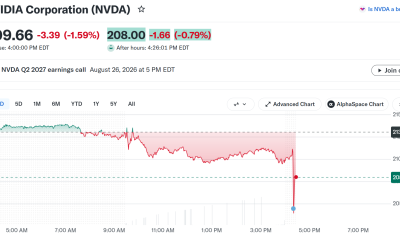
Nvidia Q2 Earnings Reveal $96.2 Billion Beat, So Why Is NVDA Falling?
-
 Tech3 days ago
Hugging Face built a $4.5 billion empire on free AI models. Now Nvidia is buying it for $12.9 billion
-
 Tech6 days ago
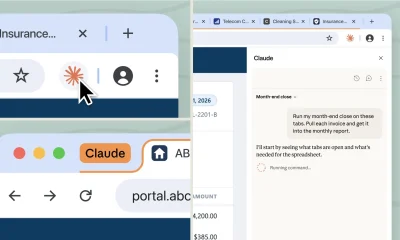
Claude Cowork gets its own browser that doesn’t touch your tabs, bookmarks, or saved passwords
-

 Crypto World5 days ago
Truflation calls for Fed rate cut after PCE forecast
-

 Tech4 days ago
PaperCut releases second emergency patch for exploited flaws
-

 News Videos3 days ago
Charlie Munger on Robinhood: No one should believe that Robinhood’s trades are free
-

 Tech6 days ago
Apple’s iPhone 18 Pro event is on September 9
-

 Crypto World6 days ago
GENIUS Act missed its deadline as OCC writes rules anyway
You must be logged in to post a comment Login