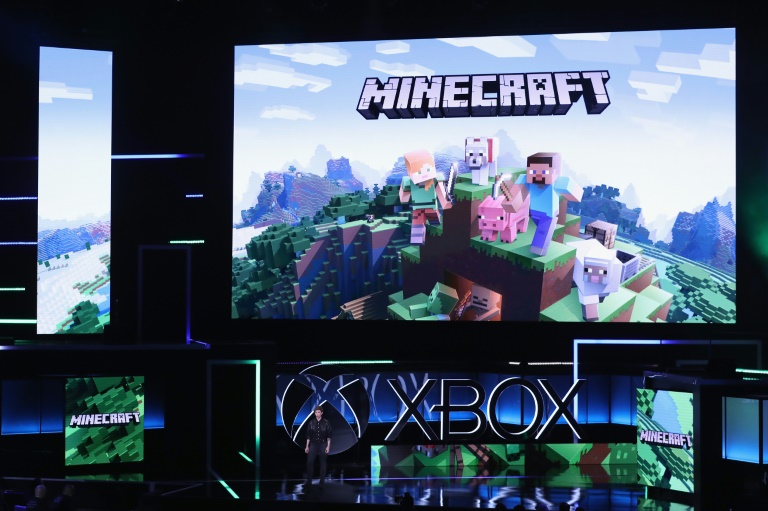
Minecraft players across the United States and beyond began reporting widespread trouble accessing the game Wednesday morning, with outage tracking site Downdetector logging a sharp spike in complaints starting around 8:42 a.m. EDT.
The outage tracker’s official account flagged the surge in a post shared shortly after the problems began, asking affected players how the disruption was impacting them and pointing users to its live outage map for updates. The hashtag “MinecraftDown” quickly began trending on social media as frustrated players compared notes on which parts of the game were affected.
According to breakdowns of user-submitted reports, login failures accounted for the largest share of complaints, at roughly 43%, followed by server connection issues at about 31% and problems launching the game entirely at around 24%. Players attempting to sign in described being stuck in repeated authentication loops, while others reported being unable to connect to multiplayer servers or access Minecraft Realms, the game’s subscription-based hosting service for private servers.
As of Wednesday afternoon, Mojang Studios, the Microsoft-owned developer behind Minecraft, had not issued an official statement addressing the outage or confirming a root cause. Coverage of the disruption noted that a search of the company’s official channels and social media accounts turned up no acknowledgment of the issue at the time reports were first surfacing, leaving affected players largely reliant on crowdsourced outage trackers for information about the scope and likely cause of the disruption.
Wednesday’s disruption is not the first time this year that Minecraft’s online services have faltered. The game, one of the best-selling video game titles in history with hundreds of millions of copies sold worldwide, relies on a network of authentication and multiplayer servers to allow players to log in, verify ownership of the game, and connect to both official and player-run servers. When those backend systems experience trouble, players are frequently locked out of single-player and multiplayer modes alike, even when their own internet connection and hardware are functioning normally.
Earlier this summer, Minecraft experienced a similar disruption that began in the early morning hours, when players reported being unable to launch the game through the official Minecraft Launcher. At the time, affected users encountered error messages indicating the game could not connect to Minecraft’s servers and was unable to verify which products the account owned, both hallmarks of authentication-server trouble rather than a problem tied to any individual player’s device or internet connection.
Outage tracking services have also logged a steady stream of smaller, shorter-lived disruptions to Minecraft throughout the year, including issues affecting sign-in functionality, multiplayer access, and Minecraft Realms specifically. One such incident tied to Realms saw the game’s support team publicly acknowledge “intermittent service disruption” affecting the subscription hosting service, though the company did not immediately specify a timeline for a permanent fix.
The largest and most disruptive Minecraft outage in recent memory came in October 2025, when a broader outage affecting Microsoft’s Azure cloud computing platform knocked out a range of services tied to the tech giant, including Minecraft’s authentication systems and Xbox Live. That incident illustrated how deeply Minecraft’s online infrastructure, like many modern online games, depends on cloud computing services that also underpin a wide array of unrelated products and platforms, meaning a single point of failure at the infrastructure level can ripple outward to affect millions of players simultaneously.
Minecraft’s ownership under Microsoft, following the tech giant’s roughly $2.5 billion acquisition of Mojang more than a decade ago, has tied the game’s backend infrastructure closely to Microsoft’s broader cloud and identity-verification systems. That integration allows players to use a single Microsoft account to access Minecraft alongside other Microsoft and Xbox products, but it also means outages affecting Microsoft’s authentication services can directly translate into Minecraft access problems, even when the game’s own core servers remain functional.
For most players affected by outages of this kind, the practical impact is straightforward but frustrating: an inability to launch the game, log into an existing account, or connect to online multiplayer servers and Realms, even though locally stored single-player worlds may, in some cases, remain accessible depending on the specific nature of the disruption. Troubleshooting guides commonly circulated during such incidents typically advise players to check official status trackers before assuming a problem lies with their own device, since authentication-related outages tend to affect large numbers of users simultaneously regardless of individual hardware, internet speed or geographic location.
Downdetector and similar outage-tracking platforms compile user-submitted reports in near real time, comparing the volume of incoming complaints against a baseline level of normal background reports to determine whether a genuine service-wide outage is underway. A sudden, sharp spike in reports across many users, as was recorded early Wednesday, is typically treated as strong evidence of a broader service disruption rather than isolated, unrelated technical problems affecting individual players.
Minecraft remains one of the most widely played video games in the world, maintaining a large and highly active player base across personal computers, consoles and mobile devices more than a decade and a half after its original release. The game’s enduring popularity, combined with its heavy reliance on centralized authentication and server infrastructure for both single-player and multiplayer access, has made outages of this kind a recurring point of frustration for its community whenever backend systems falter, even for relatively brief windows of time.
As of Wednesday afternoon, it remained unclear how long the latest disruption would persist or what specifically triggered it. Players affected by the outage were advised to monitor official Minecraft and Mojang support channels, along with independent outage trackers, for updates on when full service would be restored.
























































You must be logged in to post a comment Login