
Crypto World
The Danger of Ignoring Nepal



We are still burying or cremating our dead. We are still searching for our missing people. We are still gasping at the emptiness where our homes stood.
And we know something: the furious deluge that came crashing down from a mountain peak in northern Nepal, like a scene from an apocalyptic movie, and tore through the valleys of the Rasuwa and Nuwakot districts of our country was not a freak accident.
It was a warning from the Himalayas. Our majestic mountains and their glaciers are warming because of climate change caused by greenhouse gas emissions from industrialized nations that have been burning fossil fuels since the Industrial Revolution. We, in Nepal, produce a mere 0.1% of global greenhouse gas emissions. And it is time for the industrialized nations to take responsibility for it.
On Monday, Nepal’s National Disaster Risk Reduction and Management Authority estimated that at least 1,050 people have died in the floods, 292 are injured and 3,916 are missing. More than 90,000 people have been affected. Around 600 of the missing people are foreign nationals from 39 countries.
The first reports, which pointed toward an earthquake setting off the glacial rage, were quickly reversed. What the seismometers registered was a warming glacier shearing off Langtang Lirung mountain peak and slamming into the valley floor with enough force to register a magnitude 5.2 shock, sending a wall of rock, ice, mud and water thundering down the Bhotekoshi-Trishuli River valley at a ferocious speed that gave communities along the riverbanks almost no warning.
Chinese monitors clocked just six to seven minutes between the collapse and the moment the surge hit Gyirong Port at the China-Nepal border. In Rasuwa district, officials recorded the Trishuli River rising as much as nine meters in 30 minutes.
Nepal is familiar with a pattern of extreme climate events induced by climate change. In July 2025, a smaller flood washed away the Friendship Bridge, which connected Rasuwagadhi in Nepal with Gyirong on the Chinese side of the border. In Aug. 2024, a glacial lake let go near Mount Everest, tearing through Thame village and destroying homes, a school and a health post overnight. These natural calamities are becoming more frequent and fiercer.
Nepalis are resilient. Every time a disaster hits, we mourn our dead, rebuild, and carry on. We call it karma, or fate, or the mountains doing what mountains do. But this isn’t karma. The climate is changing, and human activity is changing it. Our resilience becomes a quiet abandonment, a way for the rest of the world to admire how well we absorb losses it helped create.
A Himalayan warning
In Oct. 2023, UN Secretary-General Antonio Guterres stood near Mount Everest and pleaded, “I am here today to cry out from the rooftop of the world: stop the madness…The glaciers are retreating, but we cannot. We must end the fossil fuel age.”
The Hindu Kush Himalaya is warming faster than the global average. Go up to the mountains and you can see it: bare grey rock where there was snow and ice just a decade ago. The region is often called the “Third Pole” because it holds the largest volume of ice outside the two poles. It is also one of the planet’s most important water towers, feeding ten major river systems and sustaining nearly two billion people downstream.
In March, the International Centre for Integrated Mountain Development (ICIMOD), an intergovernmental group working in the Himalayan region, confirmed what mountain people already feel: glaciers across the Hindu Kush Himalaya are now losing ice at roughly twice the rate they did before 2000, and have disappeared 65% faster between 2011 and 2020 than in the preceding decade. Nepal alone holds more than 2,000 glacial lakes.
An assessment by the Nepal government and ICIMOD identified 21 glacial lakes across the Koshi, Gandaki and Karnali basins of the country as potentially dangerous and capable of producing a damaging outburst. In 2016, the government of Nepal and UNDP worked together to lower water levels in Imja Tsho, one of the largest and most closely watched glacial lakes in the Everest region. The initiative successfully drained Imja Tsho to a safer level and installed community-based early warning and response systems.
But new lakes keep forming, and old ones keep growing, faster than any single country can monitor them. Imja took years of international effort and millions of dollars to make it safe. Nepal has dozens of glacial lakes like it. We don’t have a fraction of the money required.
The arithmetic of climate injustice
And here is the arithmetic of the injustice: Nepal is one of the smallest contributors to global greenhouse gas emissions, yet its people, from remote villages to the Kathmandu Valley, keep paying the price for it. Nepal has grown its forest cover to nearly 46% of its land and draws around 90% of its electricity from clean hydropower. The climate disasters we face are the essence of climate injustice: those least responsible for the crisis are the first and worst affected, and too often the least equipped to recover.
Just as Nepal was turning a corner, under a reform-minded government promising good governance and attracting foreign investment, this disaster could set this part of the country back by about a decade. Our finance minister, Swarnim Wagle, estimates that rebuilding will cost between four and five billion dollars, close to a tenth of our entire economy, against a national budget of around $14 billion for the year.
Every major disaster forces the country to divert scarce resources away from education, healthcare, infrastructure and development and back into rebuilding what was lost. A country that spends its future paying for someone else’s emissions cannot develop. It can only tread water. Nepal doesn’t need another pledge recited at another international conference. We need the international community to move from symbolic gestures to real action.
We need climate finance that actually reaches Nepal. We need a Loss and Damage Fund that pays out when a village needs it, not years after the water has receded. Nepal also needs investment in early warning systems, continuous monitoring of glaciers and glacial lakes, and disaster preparedness that reaches the most remote mountain communities. Six minutes of warning is not a policy failure of Nepal’s alone; it is what underinvestment in mountain monitoring buys.
And finally, the people who live in these mountains and the billions who depend on the water flowing from them deserve a voice in climate policy. Nepal should be central to that conversation. We are not debating what climate change might do. We are already living it.
Nature has a way of reminding us just how interconnected and interdependent we are. A glacier destabilized in one country can, within minutes, devastate villages, infrastructure, and livelihoods in another, while the bodies of the dead are found hundreds of kilometers downstream in another country. Nepal, China, and India share not only mountains and rivers, but also a common exposure to the accelerating risks of climate change. We need more regional cooperation, and Nepal, sitting at the head of these shared watersheds, must play a central role.
Nepal’s mountains are our identity. They feed our rivers, our tourism, our sense of who we are. Now they are also ground zero for the climate emergency. The world needs to heed this warning: we need shared, urgent, and just action before more mountains give way.

Bitcoin has all the factors in place to a seven-figure price over the next four years, according to BitMEX co-founder Arthur Hayes.
But he’s buying ETH right now, because he believes it could easily do a “3x to 5x pretty quickly.”
On the latest episode of Trade Secrets, Hayes says the collapse of the AI bubble, “massive” money printing, and potential US yield curve control are among some of the reasons why Bitcoin could go to $1 million by 2030
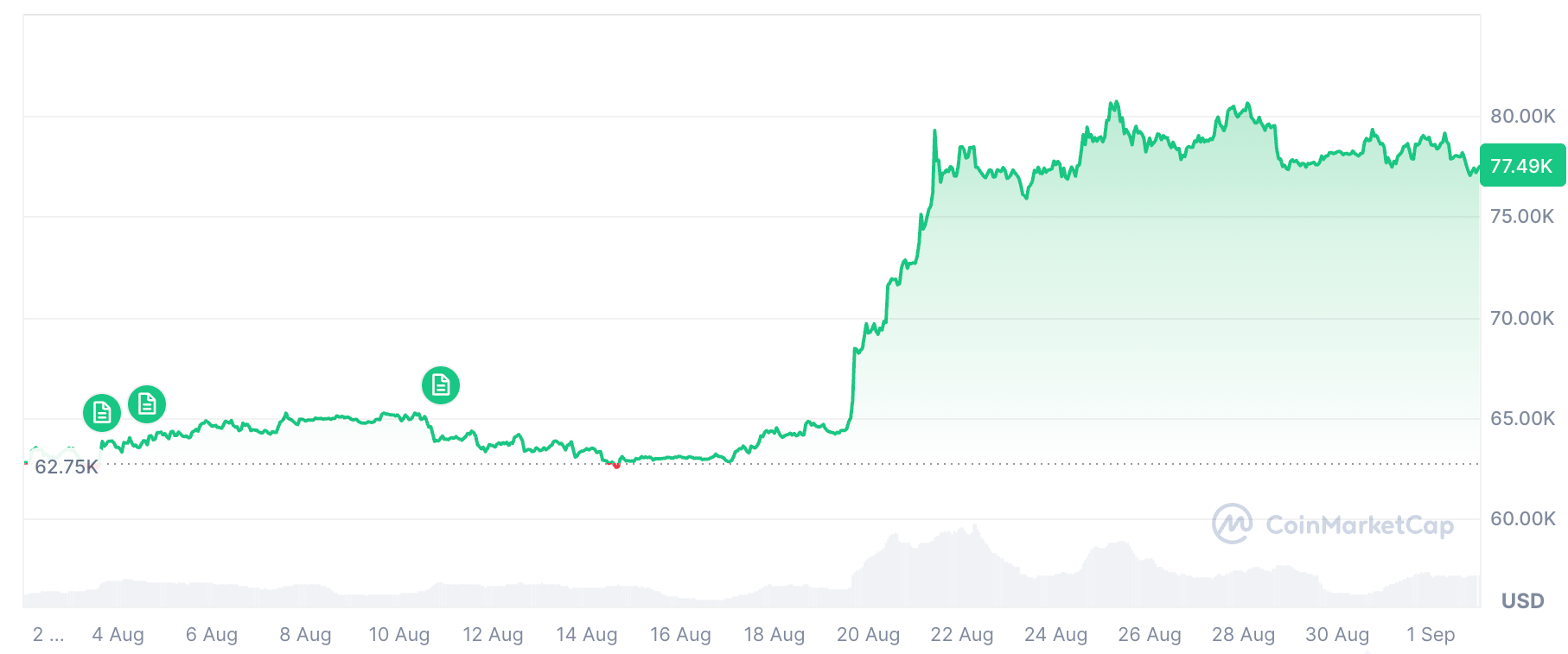
“We have the ingredients. The time is now. So I think the $58,000 was probably the bottom in Bitcoin, and now it’s going to grind higher in this hate fuck rally,” the 41-year-old billionaire says.
Hayes’ prediction comes just a couple of weeks after 10x Research head of research Markus Thielen told Trade Secrets that reaching that figure by 2030 was “mathematically impossible.” He argued that the amount of capital inflows Bitcoin saw over the past 15 years that pushed it to the current price suggest it has little chance of attracting the trillions in inflows over the next four years required to reach $1 million.
Arthur Hayes loses interest in Hyperliquid
While Hayes is still bullish on Bitcoin, he is less optimistic than he once was about Hyperliquid’s future upside d.
Bitcoin is up 22.15% over the past 30 days. (CoinMarketCap)
“I don’t think there’s that type of asymmetry in the price right now. Everybody knows that Hyperliquid is here,” he says. “It’s not an it’s not this like unknown thing that’s outperforming expectations, right? […] There are massive expectations now on Hyperliquid.”
“That doesn’t necessarily mean it’s not going to go up in price, but I think there’s better risk-reward at least for the capital at Maelstrom to deploy into the shitcoin space than Hype,” he says.
The comments come shortly after US President Donald Trump said the US is working to bring Hyperliquid into the country. However, Hayes, who was pardoned by Trump in 2024, now says the president has little influence over crypto asset prices.
“It’s irrelevant. What Trump says or does is irrelevant. Look at what Bessant does. Read the Treasury, read the Fed, read the monetary authorities. Like Trump is just a very entertaining politician, but he has no effect on the price of Bitcoin,” Hayes says.
Hayes also questioned whether Trump would be willing to spend the political capital required to push through crypto legislation such as the CLARITY Act, particularly when other issues matter more to the average voter. He suggested that the “median under-sighted voter” does not care about the legislation.
Hayes ‘feels excellent’ about BitMEX shutdown
Hayes began his career as an equity derivatives trader at Deutsche Bank and Citibank in Hong Kong after graduating from the University of Pennsylvania in 2008.
Hayes co-founded the pioneering crypto derivatives exchange BitMEX in 2014 alongside Ben Dolo and Samuel Reed. The exchange recently announced it would be shutting down on Sept. 23 and urged users to close positions and withdraw funds before the deadline.
Hayes says it “feels excellent” that the exchange is shutting down on its own terms.
“We shut it down because we wanted to shut it down, not because we got hacked,” he says, adding that it is the “best way” to go.
“We landed the plane on our own terms,” he adds.
Hayes says that competition is now so fierce that running a crypto exchange now is “really a mug’s game” unless you have the scale of a major player like Binance or OKX.
“There’s no point in even playing because it’s just so expensive to secure it, so expensive to run the tech in the data centers, like it doesn’t make any sense as a business,” Hayes says.
Hayes’s number one pick is Ethereum
Hayes says that his “number one pick” at the moment is Ethereum. “I think that is a better risk-reward for a spare unit of fiat that’s gonna be deployed into crypto than Hyperliquid,” he says.
“That doesn’t necessarily mean that Hyperliquid won’t rise in price. I just don’t think it’s poised for a 5x, and like where I think Ethereum could do, you know, 3x to 5x pretty quickly,” he says.
“Everybody hates it. It’s the one megacap crypto that has not eclipsed its 2021 all-time high.”
Hayes points out that it is the base layer for DeFi and, while “hated” for many reasons, is long overdue for a surge. “I think now it’s time to perform because it’s been so beaten down and so forgotten. And we saw it rip 20% when Bitcoin ripped,” he says.
Cointelegraph publishes long-form journalism, analysis and narrative reporting produced by Cointelegraph’s in-house editorial team with subject-matter expertise. All articles are edited and reviewed by Cointelegraph editors in line with our editorial standards. Some articles contain affiliate links, from which Cointelegraph may earn a commission. These relationships do not influence which products we review or our editorial conclusions. Content published in here does not constitute financial, legal or investment advice. Readers should conduct their own research and consult qualified professionals where appropriate. Cointelegraph maintains full editorial independence.


Buying a joke coin on Robinhood Wallet now looks a lot like buying a movie. Reported test purchases through payments firm Crossmint posted on Visa and Mastercard as digital media, not as crypto.
One code decides who earns credit card rewards. Chase says the wrong one was used, and it has taken the case to Visa.
Why the Robinhood Memecoin Code Matters
Visa’s rulebook is such that crypto buys must use merchant category code (MCC) 6012 or 6051. They must also carry a quasi-cash flag, which strips most reward points.
Reported tests of dogwifhat (WIF) buys came back as 5815 instead. That code covers books, films and music sold online. Points and cashback posted as normal.
Chase’s own rewards agreement rules out cash-like spending and names cryptocurrency. The bank said the points should never have landed.
Crossmint answers with securities law, not card law. Its help pages limit the product to memecoins it treats as collectibles born from internet memes. Stablecoins and payment tokens stay barred.
That defense has real backing. Securities and Exchange Commission (SEC) staff called meme coins akin to collectibles in 2025. A March interpretive release then named WIF as an example, next to CryptoPunks. Visa’s manual grants no such exception.
Cutting friction is the entire pitch.
“Apple Pay is something that every iOS user uses in their everyday lives. The experience of buying a memecoin is no different from purchasing your morning coffee” said fomo CEO Se Yong Park.
New York Attorney General Letitia James is reviewing the setup. Her office knows payment rails. It took $45 million from Block in July over Cash App fraud controls. In April it sued Coinbase and Gemini over prediction markets.
WIF traded near $0.19 on Wednesday, down 2% in a day, worth about $197 million in total. Dogwifhat price levels barely moved on the dispute.
The $20 Million Loss That Was Not
A viral post claimed one wallet fat fingered $20 million into Artificial Inu (AI) and lost $19.8 million in seconds. The token is a Robinhood Chain meme coin paired against tokenized NVDA.
That figure came from a price tracker, not the chain. The tracker read one hop of a multi-pool route as a finished trade. Traders who rebuilt the route put the real spend near $650,000, a trace BeInCrypto could not independently confirm.
Robinhood’s tokenized stocks and meme coins push sits under both stories. Easy checkout produced one. Thin liquidity produced the other.
Visa can recode the merchant, warn it, fine it or claw back fees. Each of those endings kills the rewards.
The post Robinhood Memecoin Buys Coded as Digital Media: Will Visa Force a Change? appeared first on BeInCrypto.


Officials in the G20, under the US’ presidency, recognized that digital assets could support “broad-based economic growth” and called for improvements in cross-border transactions.


Click here to read the full 2026 list.
In 2005, following Hurricane Katrina’s devastating August landfall, Resilience Force founder and executive director Saket Soni moved to Louisiana to help the workers facilitating the state’s recovery. Confronted by the realities of the storm’s aftermath, Soni had a clarifying conversation with his mentor, historian Vincent Harding, who, he said, told him that the country they lived in was a work in progress: “This is a place that’s still being built, and you’re part of building it.”
To this day, it’s this ethos that underpins Soni’s advocacy, in which he supports and protects the crews who rebuild after disaster. It also provides a powerful shorthand for the apparent mission of every innovator featured on our inaugural TIME Trailblazers list, which recognizes those leaders who, across the world, are designing and making the future.
Among them: Aicha Evans of Zoox, who imagines a future where our roads are dotted by safe, and time-efficient, robotaxis. Bjarke Ingels, a visionary architect who helped design The Dryline, the U.S.’s largest urban climate adaptation project. Mike Schultz, a gold-medalist whose company, BioDapt, creates prosthetics used by many athletes in the Paralympics. And Jason Ballard, the CEO of Icon, which 3D prints homes he hopes “will become a part of humanity’s toolkit”—and potentially help solve the growing housing crisis.
This is a world full of potential, promise, and problems to solve. This is a world that is still being built. These 14 Trailblazers are standout examples of the many committed to building it.
In this week’s Crypto Long & Short, Varun Datta of Truth Ventures writes that crypto venture capital’s retreat to later-stage deals is a consensus trade dressed as discipline. With proven companies taking 57% of last quarter’s capital, he argues the founding-stage gap is where the returns are, and lays out three things to look for.
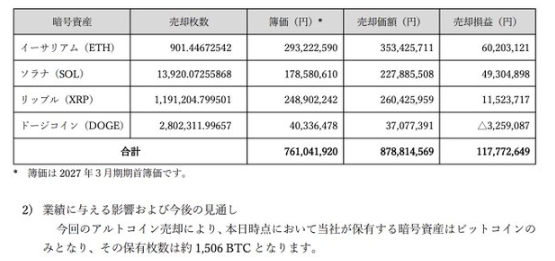
Japanese firm Remixpoint sold its entire altcoin portfolio in a single session on September 1, pocketing a ¥117.77 million ($598,400) profit while consolidating its crypto treasury exclusively into Bitcoin.
The move marks a sharp reversal from a diversification bet the company made just months earlier.
From Altcoin Diversification to a Bitcoin-Only Standard
Back in June, Remixpoint pursued a different strategy entirely. Seeking to protect capital from a weakening yen, the company built a position of roughly 1.2 million XRP tokens while also adding Solana and Dogecoin to its balance sheet.
Internal financial models at the time projected that revenue from that crypto segment would reach up to ¥12.44 billion ($63.21 million). Management’s thinking shifted over the summer, however, after assessing the market risks and volatility tied to holding multiple altcoins.
Leadership settled on what the company called a selection-and-concentration strategy. On September 1, Remixpoint liquidated all its altcoin positions in a single trading day.
Follow us on X to get the latest news as it happens.

The total transaction value reached ¥878.81 million ($4.47 million), against a book value of ¥761.04 million ($3.87 million) at the start of the period, producing that net profit. Results varied sharply by asset.
Ethereum delivered the largest gain at ¥60.20 million ($305,900), followed by Solana at ¥49.30 million ($250,500), with both tokens also generating ¥29.87 million ($151,800) combined in staking rewards. XRP contributed a smaller ¥11.52 million ($58,500) profit, while Dogecoin posted the only loss, at ¥3.25 million ($16,500).
Remixpoint plans to direct the realized profit toward its core energy business, expanding its fleet of industrial battery storage systems and strengthening its overall financial position.
Why Bitcoin Won Out Over the Rest
Remixpoint’s crypto holdings now consist exclusively of approximately 1,506 BTC. Company leadership framed the decision as pragmatic rather than ideological, pointing to Bitcoin’s ability to generate stable passive income through lending.
Between February and August 2026, the firm’s Bitcoin lending program accumulated 14.92 BTC in interest, generating ¥164.21 million ($834,300) without requiring any sale of the underlying asset.
That yield advantage helped tip the balance away from altcoins, which offered price exposure but little in the way of an equivalent income mechanism. The company’s brief diversification experiment has effectively ended, with its capital now consolidated around a single asset.
Remixpoint’s pivot reflects a broader pattern among Japanese corporate treasuries navigating currency weakness and seeking yield, though few have reversed course this decisively in such a short window.
Subscribe to our YouTube channel to watch leaders and journalists provide expert insights.
The post Japan's Remixpoint Dumps XRP, ETH, SOL and DOGE to Go All-In on Bitcoin appeared first on BeInCrypto.
The wallet makes USDT and TON spendable through familiar bank QR codes. The shortcut is genuinely useful, but users give up self-custody and accept opaque third-party settlement.
At a café in Bangkok or Hanoi, the merchant sees a familiar local bank QR code. The customer sees a crypto balance. Antarctic Wallet is built to make both sides of that checkout work without asking the merchant to learn anything about USDT, TON, wallets, or blockchains.
That is the product’s sharpest idea. The merchant still receives fiat through the payment rail it already uses. The customer scans the code, approves an amount, and the equivalent crypto leaves an Antarctic balance. The complexity moves out of the checkout and into the settlement layer.
The convenience is real. So is the trade-off.
Antarctic is not a self-custody wallet, the merchant is not receiving crypto, and a payment can depend on the wallet, an unnamed service provider, a local payment system, and the underlying blockchain all working at once.

Is Antarctic Wallet Any Different?
Antarctic describes the service as a direct crypto payment. There are no P2P transfers, and only direct QR payments. After a user scans a QR code, a request goes to a verified counterparty, that counterparty pays the fiat invoice, and Antarctic deducts crypto from the user.
The company calls this P2C and defines service providers as third parties that make fiat payments to sellers in exchange for a user’s digital currency. For a virtual card, a partner bank issues the card and the merchant again receives fiat.
Antarctic provides the interface and technical connection; it does not issue the card.
This structure is why Antarctic can work with QR systems that were never designed for crypto. The customer gets a familiar checkout while the merchant continues to receive fiat through its normal payment rail.
| Note: Antarctic does not make a merchant accept crypto. It coordinates a crypto sale and a third-party fiat payment behind an ordinary merchant QR code. That distinction matters for fees, failures, disputes, and regulatory responsibility. |
Why the Model Fits its First Markets
Antarctic says the service is available across a CIS grouping, Vietnam, and Thailand, with 12 more markets planned. The choice of Southeast Asia is logical because users and merchants are already trained to scan. Bank of Thailand data recorded 2.53 billion PromptPay transactions worth THB 4.66 trillion in May 2026.
In Vietnam, official figures show QR transaction volume rose 61.63% and value 150.67% in the first nine months of 2025.
Crypto adoption is also unusually high. Chainalysis ranked Vietnam fourth and Thailand seventeenth in its 2025 Global Crypto Adoption Index.
Vietnam’s regulatory direction is tightening, though: Reuters reported in March 2026 that authorities were preparing locally licensed exchanges and rules that would prohibit nationals from trading on overseas platforms. Digital assets are not recognized as money or legal tender there.
Features, Access, and What can be Verified
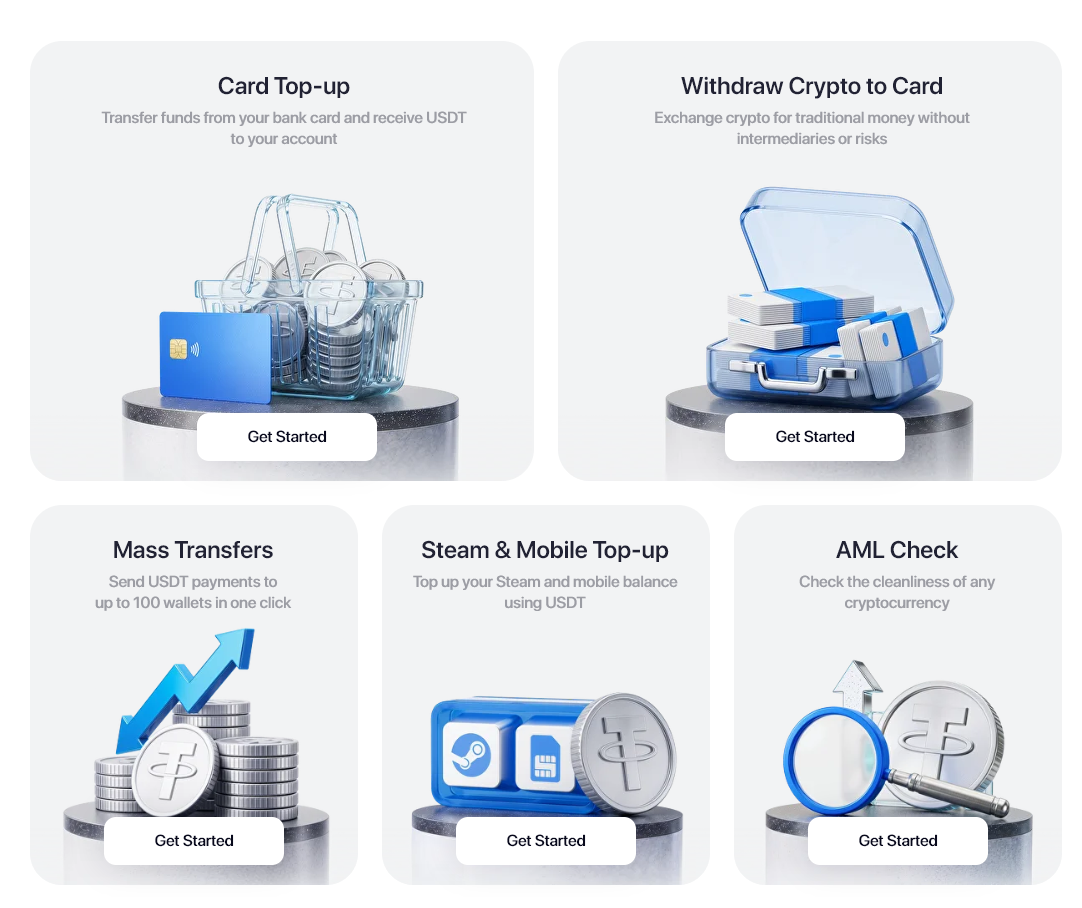
The wallet supports USDT and TON over TON and TRC20, with access through the web, mobile apps, and a Telegram Mini App. Its wider menu includes card top-ups and withdrawals, virtual cards, AliPay, Steam and mobile top-ups, mass transfers, AML checks, and a referral program.
There are positive controls on paper. Antarctic requires KYC, names Sumsub as its verification provider, screens deposits and withdrawals under its AML policy, and offers passcode and two-factor protections.
The company also holds an active Kyrgyz virtual-asset exchange operator license—number 167, form VA 0188—issued in May 2025 for the territory of the Kyrgyz Republic.
There are visible signs of usage. Google Play showed more than 50,000 downloads at review time. Telegram displayed roughly 148,000 monthly users. The Apple App Store showed a 4.6 rating, but from only 10 ratings.
BeInCrypto confirmed that the public web onboarding loaded and offered email and Telegram sign-in. It did not complete account creation, KYC, or a funded payment.

The five-second figure, live exchange rate, checkout fee, and end-to-end settlement therefore remain company-reported rather than independently reproduced in this review.
Custody is the Biggest Trade-Off
Antarctic’s company page says users control their assets and that the company has no access to their funds. The terms say the opposite in an operational sense. They describe an omnibus wallet controlled by Antarctic and state that the company manages and retains control of private keys to transact on a user’s instructions.
For risk assessment, the terms should prevail. Users own a contractual balance, but Antarctic controls the keys and can suspend access, freeze assets, reject deposits, or request enhanced due diligence.
A Telegram-only account carries an additional warning: the terms say deleting the linked Telegram account can cause irreversible loss of access if no email was attached.
Who the Antarctic Wallet is Best For — and Who It Is Not
| BEST SUITED TO | NOT IDEAL FOR |
| Stablecoin holders making small, routine purchases through local QR rails | Anyone storing savings or keeping a large balance |
| Users in supported markets who already pay merchants by bank QR code | Users who require self-custody and direct control of private keys |
| Users comfortable with KYC and a custodial spending account | Privacy-sensitive users or anyone who needs audited reserves and clearer local authorization |
The Verdict: Useful Spending Wallet, Lacks Maturity
Antarctic Wallet addresses a real gap. Many crypto users can hold USDT more easily than they can spend it, while merchants have little reason to add a crypto checkout. Antarctic connects those worlds through payment behavior that already exists. That is a more practical proposition than asking every café, shop, or online seller to adopt a new rail.
For small, routine purchases in a supported market, the convenience may justify the KYC, custody, and partner risk. The interface is accessible across web, mobile, and Telegram; the asset and network choices are focused; and the official Kyrgyz license is verifiable.
The wallet is harder to recommend for savings, large balances, or users who expect self-custody.
Antarctic needs to reconcile its custody language, name or clearly classify settlement and card partners, publish a fee schedule and service-level data, align its privacy labels, and release a credible security audit. It should also distinguish a Kyrgyz VASP license from authorization or partnership arrangements in each market where it operates.
Bottom Line: Interested users should consider Antarctic Wallet like a funded spending account: keep only what you expect to spend, verify the rate and fee before each transaction, attach an email recovery method, and withdraw surplus funds. The product’s idea is stronger than its present disclosure layer.
Antarctic Wallet FAQ
Is Antarctic Wallet self-custodial?
No. Antarctic’s terms define custodial wallet services and say the company controls the private keys and omnibus wallet infrastructure. Users instruct transactions but do not hold the keys themselves.
Which assets and networks does Antarctic Wallet support?
The public FAQ lists USDT and TON, using the TON and TRC20 networks. Supported assets, limits, and services can vary by jurisdiction, so users should confirm the current in-app route before sending funds.
How fast are Antarctic QR payments?
Antarctic advertises a five-second average, while its FAQ says a payment takes about eight seconds. BeInCrypto did not execute a funded payment, and the company has not published an independently audited latency or success-rate report.
Is Antarctic Wallet licensed?
Yes, Antarctic Wallet LLC holds an active license as a virtual-asset exchange operator in the Kyrgyz Republic. The official registry limits the license territory to Kyrgyzstan. That should not be read as proof of local authorization in every market the product serves; availability and legal treatment depend on local rules and partner arrangements.
The post Antarctic Wallet Review: Fast QR Payments, Custody Trade-Offs appeared first on BeInCrypto.
Disclosure: This content is provided by a third party. Neither crypto.news nor the author of this article endorses any product mentioned on this page. Users should conduct their own research before taking any action related to the company.
Bitwise’s Solana ETF (BSOL) has seen net inflows exceeding $1 billion in less than a year.
Summary
- Bitwise’s Solana ETF has recorded $1.02 billion in net inflows, making BSOL the largest Solana ETF by size.
- SOL has not seen a comparable price increase despite the ETF inflows, with the promotional release citing continued caution among investors.
- EX DeFi claims some SOL holders are turning to its cloud mining contracts as an alternative way to generate returns from their crypto holdings.
- The platform advertises daily settlements and returns of up to $7,517 per day, though these earnings claims are presented by EX DeFi and are not independently verified.
According to data released by Arkham on Tuesday (September 1), this milestone makes BSOL the largest Solana ETF by size.
BSOL’s total net inflows currently stand at $1.02 billion. While sustained inflows typically drive up the value of the underlying asset, the price of SOL has not surged, a trend that has reinforced investor caution.
Amid a global economic downturn, rising oil prices, and the increasing cost of living, many investors in today’s volatile cryptocurrency market are questioning whether long-term Solana holding truly yields the best returns.
Many SOL holders are quietly shifting their investment strategies toward cloud mining, seeking a more stable way to grow their assets without being swayed by market volatility.
On the EX DeFi cloud mining platform, there is no need to purchase mining hardware or possess technical expertise. Simply select a contract, and the system handles operations and settlements automatically. Waking up to see your balance steadily grow offers true peace of mind.
Some users are easily earning $7,517 per day. This is no exaggeration, it represents a smart, sustainable source of passive income.
Why are investors flocking to EX DeFi?
As a leading cloud mining service provider in recent years, EX DeFi attracts a growing user base for several key reasons:
Beginner-friendly, zero-barrier experience: Sign up and receive $17 in trial funds, which can be used immediately for Bitcoin mining.
No hardware investment required: Manage everything via smartphone—no need to buy or maintain mining equipment.
Daily profit settlement: Earnings are distributed every 24 hours, with options to withdraw or reinvest.
Affiliate rewards program: Earn up to 5% in affiliate rewards to build a long-term income stream.
Green energy-powered: Mining operations run on 100% green energy, committed to environmental sustainability and reduced carbon emissions.
Security and compliance: Adheres to international security standards like McAfee® and Cloudflare®, utilizing cold wallet isolation to enhance fund security.
How do I get started with EX DeFi?
The investment process is simple:
1. Register an account:
2. Activate a contract:
Deposit any major cryptocurrency (BTC, ETH, SOL, XRP, etc.) and purchase your desired mining contract. Mining begins immediately after purchase.
3. Earnings settlement:
Earnings are automatically settled to your account every 24 hours. Investors can withdraw earnings at any time or choose to reinvest them to boost overall returns.
Popular mining plans:
Investment: $100 | Duration: 2 days | Daily return: $4 | Total profit: $100 + $8
Investment: $500 | Duration: 6 days | Daily return: $6.5 | Total profit: $500 + $39
Investment: $1,000 | Duration: 10 days | Daily return: $13.4 | Total profit: $1,000 + $134
Investment: $5,000 | Duration: 20 days | Daily return: $73.5 | Total profit: $5,000 + $1,470
Investment: $10,000 | Duration: 30 days | Daily return: $161 | Total profit: $10,000 + $4,830
Visit the EX DeFi platform to view more Bitcoin mining contracts.
About EX DeFi
Founded in 2021 and headquartered in the UK, EX DeFi is a platform dedicated to cloud mining. It currently serves over 2 million users across more than 180 countries and regions worldwide.
By combining AI-driven computing resource allocation with green energy, EX DeFi aims to create an efficient, secure, and sustainable channel for potential investor returns.
Disclosure: This content is provided by a third party. Neither crypto.news nor the author of this article endorses any product mentioned on this page. Users should conduct their own research before taking any action related to the company.

Uber Technologies (UBER) is planning to lay off 10% of its workforce as part of a broader restructuring. Uber stock edged higher Wednesday morning following the news. The job cuts include about 3,300 roles. The cuts will focus on reducing management layers while reallocating spending toward Uber’s core business and initiatives like autonomous vehicles, as Chief Executive Dara Khosrowshahi described…
Copyright ©2026 Investor’s Business Daily, LLC. All rights reserved. 87990cbe856818d5eddac44c7b1cdeb8
Any TRON price prediction for September 2026 must start with a contradiction. Network usage sits at record highs, yet TRX just lost a trendline that held since February.
The token changed hands near $0.3225 on Wednesday, down 2.2% over 24 hours. Its market value stands at roughly $30.6 billion, ranking eighth among all crypto assets.
TRON Network Growth Keeps Setting Records
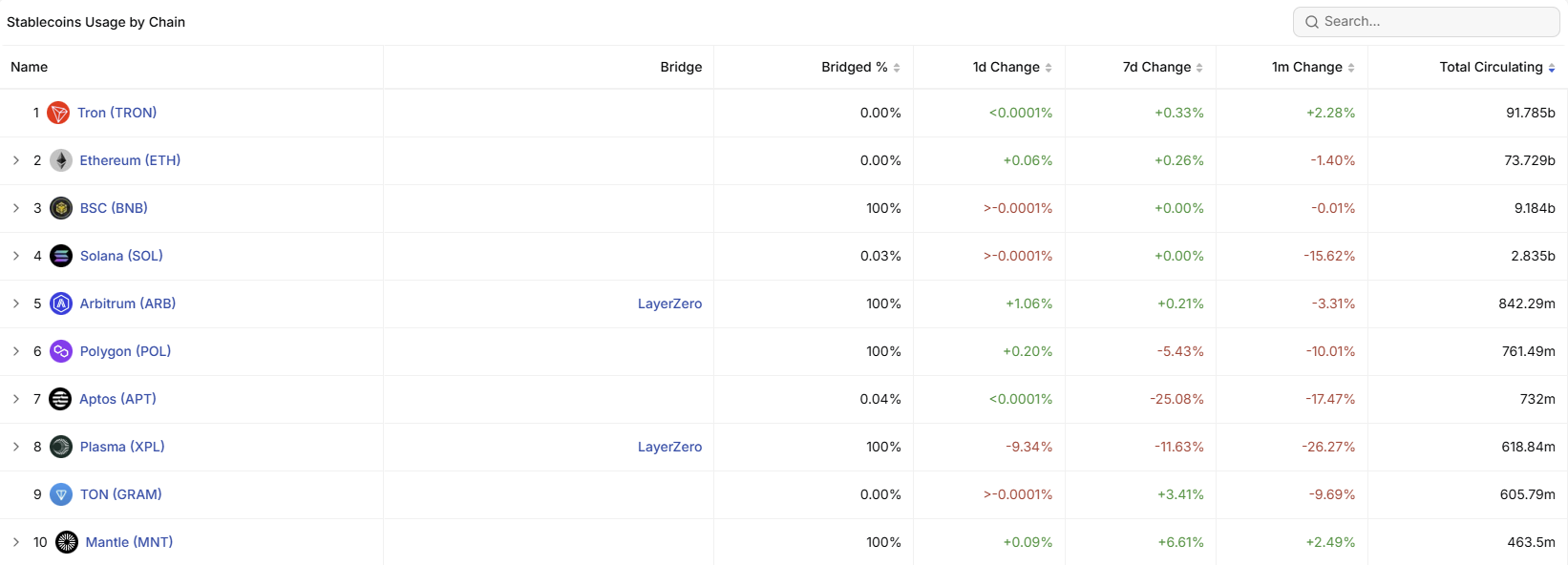
TRON settles more Tether (USDT) than any other blockchain. Data from DefiLlama shows $91.8 billion of the stablecoin on TRON, against $73.7 billion on Ethereum.

The gap is also widening. TRON’s USDT supply grew 2.28% over the past month, while Ethereum’s contracted 1.40%.
Account growth points the same way. Tronscan recorded 401 million total accounts on Aug. 29, six days after TRON DAO announced the 400 million milestone.
However, accounts measure cumulative sign-ups rather than live users. The pace of growth therefore matters more than the headline total, a point earlier analysis of TRON addresses also made.
TRON has separately targeted the third quarter for its quantum-resistant mainnet. Post-quantum signatures reached the Nile testnet in July, which leaves September as the deadline.
TRON Price Prediction Points Toward $0.307
The daily chart tells a harsher story. TRX peaked at $0.3775 in late May, then corrected into the 0.618 Fibonacci retracement at $0.3101.
Support held there through June. Price then built an ascending triangle and tested its rising support line six times (blue circles). That line runs back to the February low. Bulls were therefore defending a seven-month structure, not a summer pattern.
TRX broke above the triangle on Aug. 20, with a measured target of $0.3612. The advance stalled at $0.3518 and reversed. The failed breakout now works against buyers. TRX has lost the 0.382 retracement at $0.3359 and trades just under the 0.5 level at $0.3230.
A confirmed close below could open the way to $0.3067, roughly 5% lower. That level combines the 0.618 retracement, a visible demand zone, and the June low.

Volume reinforces the case. Buyers produced a genuine spike during the breakout attempt, but participation has contracted as the price slipped back through the pattern.
The Relative Strength Index (RSI) sits near 34, its weakest reading since mid-June (purple circle). That is not yet oversold, which leaves room for further weakness.
A reclaim of $0.3359 would invalidate the setup. Such a move could put $0.3518 and $0.3612 back in play.
The wider issue concerns value capture. TRON reduced transaction fees sharply in 2025, which cut the volume of TRX destroyed by network activity.
Circulating supply has since edged higher instead of shrinking. TRX also trades about 25% below its record $0.4313 from December 2024, despite record settlement volume.
September therefore looks less like a catalyst month and more like a test of $0.3067. Several other altcoins face similar decision points.
The post What to Expect From Tron (TRX) in September 2026 appeared first on BeInCrypto.

BTC Will Hit $1M By 2030… But Arthur Hayes Is Buying ETH Instead

A PRE-FALL PURPLE EDIT

Candid Coaches: Who is the best college basketball team of the 21st century?





-

 Fashion5 days ago
Weekend Open Thread: Maeve – Corporette.com
-

 Crypto World6 days ago
Bitcoin’s 22% rally now needs real demand to outlast Treasury liquidity boost
-

 Business6 days ago
Apple Confirms September 9 Keynote and Reveals Its Full Pre-Order Schedule
-

 Crypto World7 days ago
Elon Musk Grok Bot Promise: We Will Make You Whole if AI Loses Your Money
-

 Business6 days ago
Salesforce Stock Soars 19% as Blowout Earnings and Agentforce AI Growth Silence Software Skeptics
-

 Business5 days ago
Onto Innovation Stock: AI’s Next Bottleneck Is Yield (NYSE:ONTO)
-
 NewsBeat7 days ago
Lindsay Clancy jury braces for closing arguments as judge tells court: ‘You’ve heard all the evidence’ – Live updates
-

 Crypto World7 days ago
NVIDIA revenue hits $96.2B as AI demand doubles
-

 Crypto World5 days ago
Bitcoin price tests $82K resistance as Brandt stays long
-
 Crypto World7 days ago
Nvidia Q2 Earnings Reveal $96.2 Billion Beat, So Why Is NVDA Falling?
-
 Tech4 days ago
Hugging Face built a $4.5 billion empire on free AI models. Now Nvidia is buying it for $12.9 billion
-

 Business5 days ago
iPhone 18 Pro Pre-Orders Could Shift to Saturday as Apple Reportedly Avoids September 11 Anniversary
-

 Tech7 days ago
Claude Cowork gets its own browser that doesn’t touch your tabs, bookmarks, or saved passwords
-

 Crypto World6 days ago
Truflation calls for Fed rate cut after PCE forecast
-
 Crypto World7 days ago
GENIUS Act missed its deadline as OCC writes rules anyway
-

 Tech5 days ago
PaperCut releases second emergency patch for exploited flaws
-

 News Videos3 days ago
Charlie Munger on Robinhood: No one should believe that Robinhood’s trades are free
-

 Tech7 days ago
Apple’s iPhone 18 Pro event is on September 9
-

 Tech6 days ago
The fix for the AI agent that hijacked a company’s DNS: it can propose the change, but it can’t approve it
-
 Entertainment5 days ago
‘Adults’ Creators Break Down Season 2’s Most Shocking Moments and Tease a Potential Season 3
You must be logged in to post a comment Login