New York City mayor Zohran Mamdani just announced a one-year ban of generative AI tools in public schools for students up to eighth grade. The legislation takes effect during the 2026-2027 school year and will impact around 600,000 students.
“This moratorium is a commitment to getting the future right,” Mayor Mamdani said. “We will embrace new technology, but only when it serves our students.” New York Governor Kathy Hochul added that the state “has been leading the way in our efforts to keep kids focused on learning and growing — not clicking and scrolling.”
Mayor Mamdani said this move was made to protect “human connection” in classrooms, suggesting that kids should develop problem-solving and social skills via teachers and peers instead of chatbots.
Advertisement
Throughout the one-year ban, studies will be conducted to analyze the technology’s impact on children. This coalition of educators, parents and elected officials will recommend next steps after that.
This doesn’t impact high schools, and a number of those classrooms will be allowed to participate in various AI pilot programs, though they will be closely monitored. All high school students will receive twice-yearly lessons “designed to help them think critically about AI before they begin to rely on it.”
Teachers will be able to use gen AI for lesson planning and administrative work, as long as the tools comply with public school safety standards. Additionally, there will be exceptions made for assistive technology usage by kids with disabilities, multilingual learners and students participating in career readiness programs, including computer science.
Today’s policy also introduces new screen time guidelines for children. This includes daily caps of 30 minutes for many elementary school students and 45 minutes for middle schoolers. It’s worth noting that these are just guidelines. Households can do whatever they want.
Advertisement
This crackdown comes as NYC parents grow increasingly concerned about the impact AI is having on their kids. Advocacy groups have pushed for this moratorium and more than half of City Council members signed a letter urging the Mayor and the Department of Education to stop expanded AI use in classrooms.
United Federation of Teachers (UFT) President Michael Mulgrew recently told ABC News that AI was a “dangerous thing” and that “parents are getting very, very upset with AI because all they hear are these horror stories” and “they’re rightfully protective of their children.”
To that end, NYC isn’t the only place instituting these kinds of bans. Norway did something similar and Italy passed legislation that requires parental consent in order for kids under 14 to use the tech. The American Senate and House have been discussing a bill that would require AI companies to implement an age-verification process and ban them from providing chatbots to minors. We’ll have to see what happens there, though the industry has spent a whopping $41.8 million on lobbying in just the first half of 2026 alone.
“The tech industry wants us to believe that AI-powered early education is not only inevitable, but necessary. We do not see it that way,” Mayor Mamdani said in a statement ahead of today’s announcement.
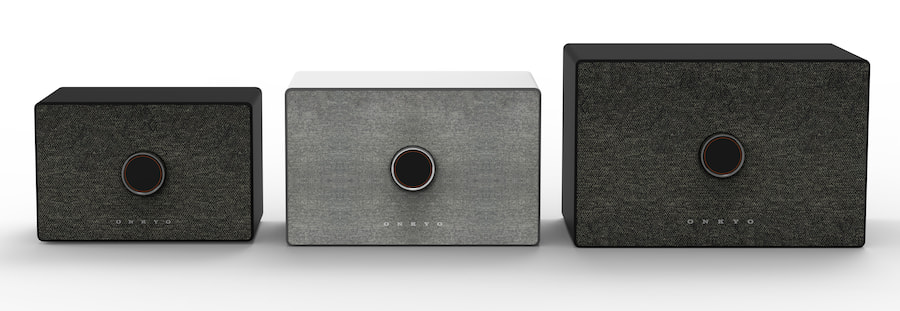
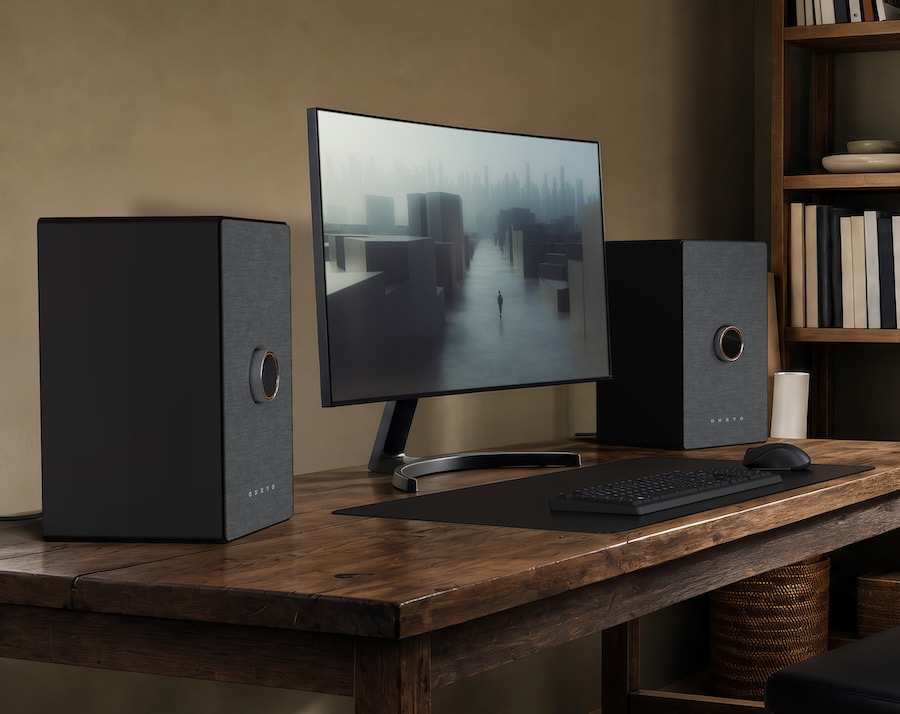
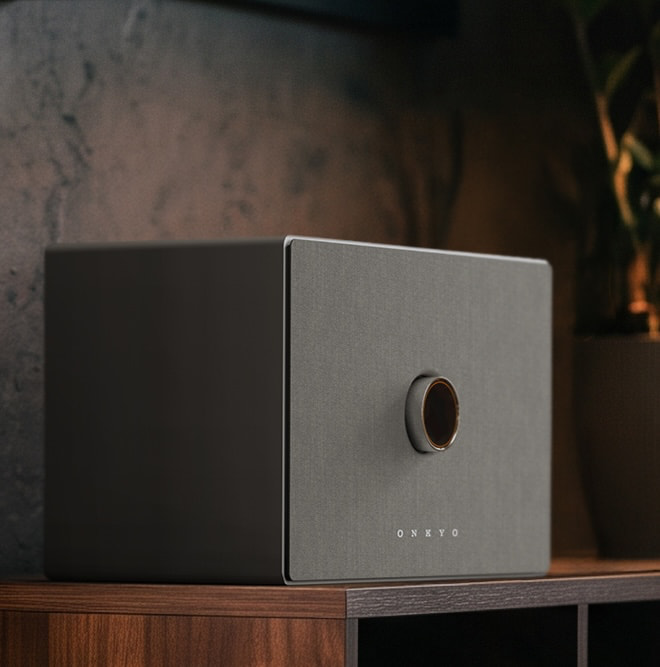
Onkyo is taking its Creator Series off the desktop and into the rest of the house with three new GX-AiO wireless music systems that combine stereo speakers, a dedicated subwoofer and amplification inside a single enclosure.
The Onkyo Creator GX-AiO 50, GX-AiO 100 and GX-AiO 150 (small, medium, and large wireless speakers) start at $399 and offer considerably more flexibility than the average Bluetooth tabletop speaker. HDMI ARC, USB-C, optical digital and a switchable line/phono input allow the GX-AiO to work with televisions, computers, turntables and other sources without requiring an external amplifier or a growing collection of little black boxes.
Onkyo clearly wants these to function as compact stereo systems rather than expensive kitchen speakers that spend their lives streaming playlists from a phone.
Onkyo introduced the Creator Series with the GX-10DB and GX-30ARC powered speakers, targeting computer users, gamers, content creators and listeners who wanted better sound without giving up half their desk.
The GX-AiO range extends that concept into bedrooms, kitchens, living rooms and other spaces where a conventional pair of speakers might not make sense. Each model uses what Onkyo calls a true 2.1-channel architecture, combining two main drivers with a dedicated, independently amplified subwoofer inside the same cabinet.
That subwoofer is one of the more interesting elements of the design. Instead of asking two compact drivers to handle the entire frequency range, Onkyo gives the lower frequencies their own driver and acoustically optimized enclosure, with the bass-reflex duct incorporated into the illuminated rear slit. Full-digital Class D amplification and DSP handle the signal processing and amplification.
There is, however, a rather significant hole in the launch specifications. Onkyo has not disclosed the individual driver sizes, amplifier output, frequency response, dimensions or weight for the GX-AiO 50, 100 or 150, nor has it explained exactly what changes internally as buyers move from $399 to $499 and then $599.
Those are not insignificant details when three models occupy the same product family, and we will be looking for answers at CEDIA.
Advertisement
HDMI ARC, Phono and USB-C
Connectivity might be the strongest reason to pay attention to the GX-AiO Series. All three models include Bluetooth 5.3, HDMI ARC, USB-C audio and playback, optical digital and a switchable line/phono input, creating enough flexibility for a television, computer, turntable and additional digital source.
The inclusion of a phono input is particularly useful because it eliminates the need for an external phono preamplifier with compatible turntables. HDMI ARC also gives the GX-AiO considerably more television flexibility than many traditional tabletop music systems, without turning the product into a soundbar.
Advertisement. Scroll to continue reading.
Onkyo specifies support for 32 kHz, 44.1 kHz and 48 kHz sampling rates at 16-bit and 24-bit resolution. The supplied specifications do not indicate support above 24-bit/48 kHz, so anyone expecting 24/96 or 24/192 playback should adjust expectations accordingly.
Advertisement
Also absent from the launch specifications is Wi-Fi. Onkyo does not list AirPlay, Google Cast, Spotify Connect or another integrated network streaming platform, which makes the GX-AiO a very different proposition from the growing number of smart wireless speakers built around an app and streaming ecosystem.
Two Boxes Make a Real Stereo Pair
Onkyo does offer another useful wireless trick. Two GX-AiO systems can be paired using True Wireless Stereo, with one enclosure becoming the dedicated left channel and the other handling the right.
That creates real physical channel separation rather than attempting to manufacture a giant stereo image through DSP from a single cabinet. For listeners who begin with one GX-AiO and eventually want something closer to a conventional stereo system, the upgrade path is already built in.
The math becomes more interesting at the top of the range. Two GX-AiO 150 systems would cost $1,198, which puts the combination against some very capable powered stereo speakers. Convenience is wonderful, but it has never been granted immunity from comparison shopping.
Advertisement
Three Power Modes and Flexible Placement
Each GX-AiO offers Eco, Standard and Max power modes. Eco is intended for lower-volume listening and smaller spaces, Standard covers normal everyday use, and Max provides the greatest available output for larger rooms or gatherings.
All three modes retain the same 30-step volume scale while changing the available output range. The Onkyo Controller app communicates over Bluetooth Low Energy and can be used to select power modes, manage inputs and customize the integrated illumination around the front control ring and bass-duct area.
Onkyo also designed the GX-AiO for either vertical or horizontal placement. Magnetic fabric grilles work in both orientations, while black and white smudge-resistant finishes should make the systems relatively easy to integrate without demanding that the entire room be redesigned around them.
Competition
The Klipsch The Three Plus might be the most obvious competitor, and not merely because both brands reside under the same corporate roof. The $399 Klipsch is also a single-cabinet 2.1 system and includes Bluetooth 5.3, USB-C, optical digital and an RCA input with a built-in phono preamp. Its 120-watt amplifier drives two 2.25-inch full-range drivers and a 5.25-inch woofer, although it lacks the Onkyo’s HDMI ARC connection.
The Marshall Woburn III occupies the other end of the GX-AiO pricing range at $599. Marshall combines a 90-watt woofer amplifier with four 15-watt Class D channels and provides Bluetooth, HDMI, RCA and 3.5mm analog inputs. The Onkyo counters with optical digital, USB-C audio and an integrated phono stage, making the GX-AiO potentially more flexible for traditional audio sources.
Advertisement
The JBL Authentics 500 takes a more network-centric approach. Its 270-watt 3.1-channel configuration includes a 6.5-inch subwoofer, Dolby Atmos Music, Wi-Fi, Bluetooth and integrated streaming features. JBL is clearly chasing the smart wireless speaker customer, while Onkyo appears more interested in buyers who still connect televisions, computers and turntables with actual cables. Some of us remain stubborn that way.
The Bottom Line
The Creator GX-AiO Series lands somewhere between a Bluetooth tabletop speaker, powered stereo system and compact TV audio solution, which may be exactly why it makes sense.
Advertisement. Scroll to continue reading.
HDMI ARC handles the television, the phono input takes care of vinyl, USB-C and optical cover digital sources, and the built-in subwoofer means owners do not immediately need to find room for another box on the floor. The option to add a second GX-AiO and create dedicated wireless left and right channels also gives the platform somewhere to go after the initial purchase.
Advertisement
What remains unanswered is how much performance separates the three models. Onkyo has given us the pricing and shared feature set, but not the individual driver configurations, amplifier output or frequency response that would tell us why somebody should spend $599 instead of $399.
CEDIA seems like a good place to ask.
Price & Availability
The Onkyo Creator GX-AiO 50, GX-AiO 100 and GX-AiO 150 are expected to be available in the United States during Fall 2026 in black and white finishes.
In today’s slightly unexpected acquisition news, the world’s largest mod-sharing platform just bought SteamDB. Nexus Mods announced that it had acquired the Steam-focused independent database in a news post on its website, where it called SteamDB “one of the most trusted resources in PC gaming.”
SteamDB was launched in 2013 by two people who go by the names of Marlamin and xPaw as little more than a hobby, but as it grew in size it became more difficult to maintain. Nexus Mods said it started talking to xPaw when the programmer — who had eventually assumed sole responsibility of managing the site — started looking for someone who could give it “the resources, development capacity, and long-term stability” he was struggling to provide alone.
Nexus Mods says it shares a lot of the same values as SteamDB, both of which were primarily built to serve a large community of hardcore PC gamers. SteamDB logs player charts, price history, updates and other data for the entire Steam catalog, and the ability to better track which version of a particular game players are installing mods into was especially appealing to Nexus Mods. Updates are notorious game-breakers when mods are involved and SteamDB’s enormous amount of historical data should prove beneficial for ongoing development.
SteamDB will keep its current name and won’t change much in the short-term, so you can continue to use it as you do now. The main changes, Nexus Mods says, will be behind the scenes, as a dedicated team will eventually transition into managing the database, improving its “infrastructure, security, and scalability.” SteamDB has also traditionally relied on donated Steam keys for tracking game files, and while it will still lean heavily on its community going forward, Nexus Mods will also start funding keys itself.
Advertisement
In his own separate statement on SteamDB, xPaw reassured the community that it was in good hands with Nexus Mods, and said the aim was to invest in and help it survive rather than “change what makes the project special.” He also pointed to the rise of AI in a post-COVID world contributing to the end of “the internet we once loved”, and with it his own passion for continuing.
“I have full confidence the team will be able to continue improving the project for gamers, developers and publishers alike,” xPaw said in a statement. “I will be helping the team ensure a smooth transition in the coming months. This project has occupied my whole adult life. Thank you to everyone who has used SteamDB, contributed to it, reported bugs, shared it with others, or simply found it useful.”
Creating a marketing graphic or editing a PDF is now as easy as sending a Slack message. Starting today, Adobe for Slack lets you turn everyday conversations, shared files, and project briefs into polished images, videos, and documents, without leaving your Slack workspace.
Slack can now create Adobe content with simple prompts
Everything runs through Slackbot, Slack’s built-in AI assistant. Tell it what you’re after, like turning a marketing thread into a poster, and it figures out which Adobe tool needs to handle the job. That could be Firefly, Photoshop, Premiere, Acrobat, Illustrator, InDesign, or any of the other 70-plus tools now plugged in.
Adobe
What makes this feature useful is that Slackbot reads context on its own. It’ll pull from relevant conversations, Canvases, and shared files, so you’re not stuck typing out background info it could’ve just found itself. You can also ask it to dig through your Creative Cloud library, searching by subject, style, or even mood, then pull those older assets straight into your current chat to keep working on them.
Repetitive stuff gets easier too, such as batch editing product shots, resizing approved campaign creative for different platforms, or turning a raw spreadsheet into something you can share with a client.
Creative teams can collaborate without leaving Slack
Adobe
Adobe says the integration is built for more than individual creators. Teams can review assets, share feedback, and iterate on designs directly inside Slack channels while keeping projects connected to Adobe’s creative ecosystem. Businesses can also use Adobe Experience Platform agents to automate marketing and customer experience workflows from within Slack.
This feature isn’t free, though. You’ll need a qualifying Slack plan, either Business+ or Enterprise+, and your own separate Adobe subscription on top of that. This launch follows Adobe’s integration for ChatGPT last month, and an existing Claude integration. Adobe plans to release the same capabilities for Gemini in the sometime in future.
The Trump Administration just took OpenAI’s side in the artificial intelligence company’s legal battle with the New York Times.
The media juggernaut sued OpenAI and Microsoft in 2023, alleging that the companies had violated copyright law by training their AI tools on its articles without permission. Now, the government has stepped in, arguing that OpenAI’s actions were within bounds.
On Tuesday, the federal government submitted a letter to the court stating that the United States has a “strong interest” in whether AI training on copyright works is considered “fair use,” because it connects to whether the country’s AI industry can “retain global leadership in artificial intelligence.” (The “fair use” rule shields certain uses of copyrighted materials.)
The letter argued that the Times’ definition of fair use is “inconsistent” with current copyright law, and that a win for the paper could have disastrous consequences. “Constraining LLM development under a misunderstanding of fair use doctrine would thwart such creative and scientific progress while hindering American prosperity and economic mobility,” lawyers for the government wrote.
Advertisement
While the letter focuses on the New York Times and OpenAI, the government noted that its arguments apply to all of the parties in this case and related cases, including other publishers and authors.
Training LLMs on copyrighted works is considered “extraordinarily transformative,” meaning that these systems meaningfully change their inputs, the administration argued. The administration also wrote that OpenAI’s LLMs do not significantly compete with The New York Times’ articles. Courts consider both of these conditions, as well as others, when deciding if the fair use doctrine is met.
Conflating AI training with what artificial intelligence tools produce would lead to “problematic implications for copyright law generally” by implying that it would be similarly illegal for human writers to practice their craft by training on the words of others, per the letter. (The lawyers compared it to how a teenage Joan Didion typed out Ernest Hemingway’s stories to figure out how to write.)
Evan Brown, an intellectual property lawyer with the firm Neal & McDevitt, tells WIRED that the US district judge overseeing this case, Sidney H. Stein, is not obliged to let this letter influence his ultimate decision. However, Brown says that Stein and other judges overseeing cases like this will almost certainly “take it quite seriously because it comes from the Department of Justice, and inherently carries a lot of weight.”
Advertisement
Pamela Samuelson, a copyright lawyer who codirects the Berkeley Center For Law & Technology, tells WIRED that the government’s brief is a “significant development,” and one which is consistent with AI copyright rulings thus far.
“The Administration is siding with a handful of trillion-dollar AI companies at the expense of the countless American creators whose work they stole,” New York Times spokesperson Graham James tells WIRED. “Both AI and creators can thrive–AI companies simply need to pay fairly for the content that makes their products possible, as copyright law requires.”
OpenAI and Microsoft did not immediately respond to WIRED’s request for comment.
Other plaintiffs are unhappy at the government’s incursion. Mary Rasenberger, the chief executive of the Author’s Guild—which filed its own lawsuit against OpenAI in 2023—tells WIRED that the nonprofit is “extremely disappointed” about the letter, which she calls ”replete with faulty arguments and a gross misunderstanding of the fair use doctrine and copyright law.”
Advertisement
There are dozens of ongoing, high-profile lawsuits over the legality of AI companies training their tools on copyrighted work. The two biggest decisions so far took place last year. Meta technically won its copyright case, Kadrey v. Meta, although the judge noted that the plaintiffs did not produce enough evidence that the training caused them harm while stressing that in other circumstances, training on copyrighted materials without permission might indeed be illegal.
If you occasionally face network-related issues over Wi-Fi, whether it’s slow internet speeds or high latency, you may have considered switching to a wired connection. It seems simple, too. You get an Ethernet cable, plug one end of it into the router and the other into the device. But, as surprising as it may sound, setting up an Ethernet connection at home is neither simple nor convenient for many users. And it isn’t the best option either. Sometimes, Wi-Fi just makes more sense.
There are several downsides to using Ethernet cables. For instance, you sacrifice portability. While this works with largely stationary devices, smaller, more portable devices may suffer. There’s also the cost consideration. You can connect multiple devices to a regular home router without noticing any major impact on performance, but if you have the same in a wired setup, you will need as many or more Ethernet cables. Your router’s Ethernet ports are another limiting factor you can’t ignore. To bypass this limitation, you will need to invest in a network switch, an additional expense. And let’s not forget the cable runs themselves, which can be a hassle to set up.
Remember, there’s no denying that Ethernet has its benefits over Wi-Fi. The connection is more stable, has lower latency, and is less prone to interference from household appliances. So, if you are into gaming or other latency-intensive tasks, using Ethernet cables makes perfect sense. But for others, the downsides may far outweigh the benefits.
Advertisement
You lose out on portability
Chainarong Prasertthai/Getty Images
One of the biggest drawbacks of using Ethernet cables is that you can’t move the devices around as freely. As we said earlier, this may not be a problem with desktops, gaming consoles, and smart TVs — basically devices that stay in one place — but your laptop is designed to be moved around. And with an Ethernet cable, it’s restricted to a particular spot. If the cable is long enough, you can move it a little, but you will still be limited by its length. As a result, you lose out on the freedom to work in any corner of the house.
Of course, you can unplug the Ethernet cable as you please, but that defeats the very purpose of setting up a wired connection. You invest in cables and, sometimes, other networking devices, only to switch back to Wi-Fi because there’s little freedom of movement. Another option is to run Ethernet cables through the house and have a wall jack in every room, but that’s expensive.
Advertisement
That’s why a wired setup may not be the best choice if Wi-Fi already meets your requirements. Ethernet predates Wi-Fi by over two decades, and there’s a reason why people moved to the latter. Devices were no longer stationary; they had to be moved around, and Wi-Fi made that possible.
Advertisement
Ethernet is not always faster
ANDRANIK HAKOBYAN/Shutterstock
For the longest time, it wouldn’t have been wrong to say that Ethernet is faster than Wi-Fi, but that’s no longer the case, at least for the average home user. We now have newer Wi-Fi generations that can deliver multi-Gbps speeds. So, as long as your router is in an optimal position near the critical devices, you should get good speeds. It goes without saying that older ones, say Wi-Fi 4 routers, may struggle, but newer ones, like Wi-Fi 6 and 7 routers, offer better performance, speed, and range.
Switching to Ethernet does not automatically guarantee faster speeds. There are a lot of variables at play. For instance, you could be using an older-generation Ethernet cable, say CAT5, which was designed to deliver speeds of up to 100 Mbps. Similarly, your router’s Ethernet ports could be the bottleneck in the network. That’s because not all Ethernet ports work the same way on your router. Some deliver faster speeds; others may be slower, and you may even find a dedicated gaming port on some routers that automatically prioritizes traffic from the connected device.
That said, Ethernet is still more stable and has lower latency. But if all you are looking for is faster internet speeds, perhaps upgrading the router will do the trick. It will also save you from the inconvenience of running Ethernet cables.
Advertisement
Cable runs can be a hassle
Fabrikacr/Getty Images
Running a cable from your router to a nearby PC isn’t necessarily a problem. A neater setup will require a little bit of effort, but it’s still relatively easy. Running cables throughout the house for every device, on the other hand, is a challenge. The bigger the house, the bigger the challenge, unless the cables are pre-routed.
As soon as the cable hits the floor, it suddenly becomes more exposed. Someone may trip over the cable, or your pet may chew on it. There are many ways it could be damaged. As for concealing the cables, cable raceways are an option, but they entail additional expense. Similarly, you could run cables through the walls for a more permanent setup, but this, too, is not an easy feat. In homes with multiple floors, the setup is even more complicated.
Remember, running Ethernet cables from your router to different devices is not the problem. That’s the easy part. You simply need cables of the right length. The real challenge lies in making the setup more aesthetically pleasing rather than looking temporary. You could get a professional to do it, but that’s another expense. That money could instead be spent on a modern router and a Wi-Fi mesh system, which could significantly improve signal strength and, in turn, internet speeds across the entire house.
Advertisement
The setup is more expensive than you think
kubais/Shutterstock
For many people, Ethernet cables seem like the only requirement for a wired connection. But that’s far from true, especially if you plan to connect five to seven devices using Ethernet. Generally speaking, an average home router, even modern ones, has 4-5 Ethernet ports. Among them, one is typically reserved for the WAN connection. So, you have only 3-4 left.
This means you can only connect that many devices. If you have more, you will need a network switch. A network switch typically has anywhere from 5 to 48 LAN ports and lets you connect multiple devices to the network. And while a network switch is not that expensive, it’s still an expense most people don’t factor in initially. Similarly, if you don’t have cables that are long enough, you will need Ethernet couplers to join two or more cables, another expense many overlook.
A basic setup with one or two devices connected to the router via Ethernet cables doesn’t cost much. All you need are a couple of Ethernet cables, and they are affordable. But as the complexity of the setup increases, so does the cost. Apart from that, every new networking device you introduce is a potential bottleneck in your network and an additional potential point of failure.
Advertisement
Not every device features an Ethernet port
SOLDATOOFF/Shutterstock
Ethernet is reliable and stable, but you benefit from this only when the device can actually connect using it. While you will find an Ethernet port on computer monitors, smart TVs, gaming consoles, desktops, and more, many devices we rely on heavily don’t have one. Even laptop manufacturers are dropping Ethernet ports from newer models to achieve thinner, sleeker designs. That’s why you don’t see an Ethernet port on many modern laptops.
So, for devices like your smartphones, tablets, and laptops, you will need a dedicated USB-to-Ethernet adapter to establish a wired connection. Additionally, depending on the port type on your devices, you may need more than one adapter. For instance, you may need a USB-A-to-Ethernet adapter for your laptop and a USB-C-to-Ethernet adapter for your smartphones and tablets. Let’s not forget that you will need an adapter that supports the internet speed your ISP offers. Besides, devices like smart plugs and other smart home appliances don’t support wired connections, so you will always have to rely on Wi-Fi.
Advertisement
All of this makes the setup much less appealing to the average home user. If Wi-Fi already meets your requirements, there’s little reason to switch to Ethernet cables. While Ethernet lowers latency and improves connection stability, you sacrifice convenience and portability and often end up spending way more than you initially anticipated.
Ryobi power tools are currently being utilized, or at least safely stored in, residential dwellings all over the globe. It is, perhaps, less certain what specific variety of Ryobi tool you might find in those dwellings, as the Techtronic Industries-owned manufacturer offers a variety of devices that are powered by multiple different power sources, ranging from low-voltage USB models to the punchier 40V set.
Somewhere in the middle is Ryobi’s generally well-regarded One+ 18V lineup, which features more than 300 different tools to choose from. And yes, any Ryobi battery bearing the 18V brand can be used to power those devices. There are also different types of 18V batteries, and we aren’t just talking about their ampere hour (Ah) ratings. Over the years Ryobi has developed the One+ Lithium Edge variety of 18V battery pack alongside its standard 18V models. Even some Ryobi diehards may not be entirely sure about what makes them different.
Advertisement
In the simplest terms we can offer, the Lithium Edge 18V batteries are high-performance models that are intended to provide both a power and a runtime upgrade over the standard 18V packs. They do so by utilizing Ryobi’s tabless cell design, which purports to improve the flow of energy and thus the overall performance of the tool. Lithium Edge 18V batteries can also help tools run cooler during heavy usage, and are designed to charge faster than standard-cell 18V power packs as well.
Advertisement
What’s the price difference between Ryobi’s standard 18V and 18V Edge batteries?
Ryobi’s standard 18V battery packs are still designed to deliver solid results when it comes to power and performance. One could easily argue that the long-running popularity and general effectiveness of Ryobi’s 18V tools have helped it earn a spot alongside the best power tool brands in the game. There’s also one very good reason to opt for Ryobi’s standard 18V battery packs over those with the Lithium Edge branding, which is that they tend to be notably cheaper at the point of purchase.
In comparing the price points, we’ll look at the lowest-rated comparable batteries in both the standard 18V and Lithium Edge lines for ampere hours. As the latter group starts at 4Ah, we’ll tell you that a single 18V Lithium Battery in that range costs $149, and it does not come with a charger. By comparison, the standard 4Ah-rated 18V battery without a charger is priced at just $99. Moreover, in the standard 18V battery lineup, Ryobi also makes 2Ah and 1.5Ah models that can be purchased for far less.
As you can imagine, the prices increase incrementally with every jump in ampere hours. That will lead many shoppers to debate whether or not it’s better to buy several of the cheaper, standard 18V batteries, or pay extra to have fewer of Ryobi’s Lithium Edge models on hand, as their performance enhancements will likely require fewer battery swaps on the job. Unfortunately, we cannot make that decision for you.
Attackers created Lenovo IDs with victims’ emails, bypassing login; 2FA absence worsened impact
Dropbox ended Lenovo ID logins, expired sessions, and urged password changes plus 2FA setup
Around 5,000 Dropbox user accounts were compromised when hackers found a vulnerability in the Lenovo ID verification process. What does a Lenovo flaw have to do with people’s Dropbox accounts, you might ask? Here is what happened:
Earlier this week, Dropbox started notifying affected individuals about the incident. In the data breach notification email, the company explains:
“Dropbox partners with Lenovo as an identity provider so that users can log in to their Dropbox accounts using verified Lenovo IDs. While you may not have an existing Lenovo ID, our investigation determined that an issue with Lenovo’s email verification process allowed an unauthorized party to register a Lenovo ID using your email address and then use that Lenovo ID to log into the Dropbox account associated with that email address.”
Latest Videos FromTechRadar
Advertisement
Fixing the flaw
In other words, all criminals needed to have to pull this off was people’s email addresses. Using that information, they created Lenovo IDs and simply waltzed right into Dropbox accounts.
The attack took place between August 4 and 21, the company further said, adding that most of the accounts that were accessed did not have 2FA enabled. In around a third of them, there is evidence stored documents were either viewed or downloaded.
The vulnerability has since been addressed, and further steps taken to protect Dropbox users’ privacy. The company said it “promptly expired all sessions logged in through Lenovo IDs,” and terminated all links between Lenovo and Dropbox accounts. Now, it made it mandatory to submit a password when logging in through a Lenovo ID.
“No one can access your Dropbox account via a Lenovo ID without first entering your Dropbox password,” it said. Still, it urged users to change their passwords, enable two-step verification, and change the password for their email accounts.
Sign up to the TechRadar Pro newsletter to get all the top news, opinion, features and guidance your business needs to succeed!
“Every single one of the compromised accounts lacked multi-factor authentication. In 2026, for cloud storage accounts holding data, that’s an indefensible gap and it’s one that users could have closed themselves regardless of what Lenovo or Dropbox did or didn’t do with their legacy integration,” said Muhammad Yahya Patel, vCISO and cybersecurity advisor for EMEA at Huntress.
Advertisement
“The combination of an unreviewed third-party authentication pathway and accounts without MFA is essentially an open invitation. The practical lesson is straightforward and applies well beyond this specific incident. Every organisation and every individual should periodically audit what third-party services have authentication access to their accounts. OAuth grants, SSO connections, and third-party login integrations accumulate silently and rarely get removed when the relationship that created them ends.”
Facepalm: Security experts recently uncovered a malicious campaign that had been active for years. Unknown cybercriminals abused Chrome’s extension system to infect tens of thousands of systems, and many victims may still be vulnerable if they haven’t manually changed their browser’s configuration.
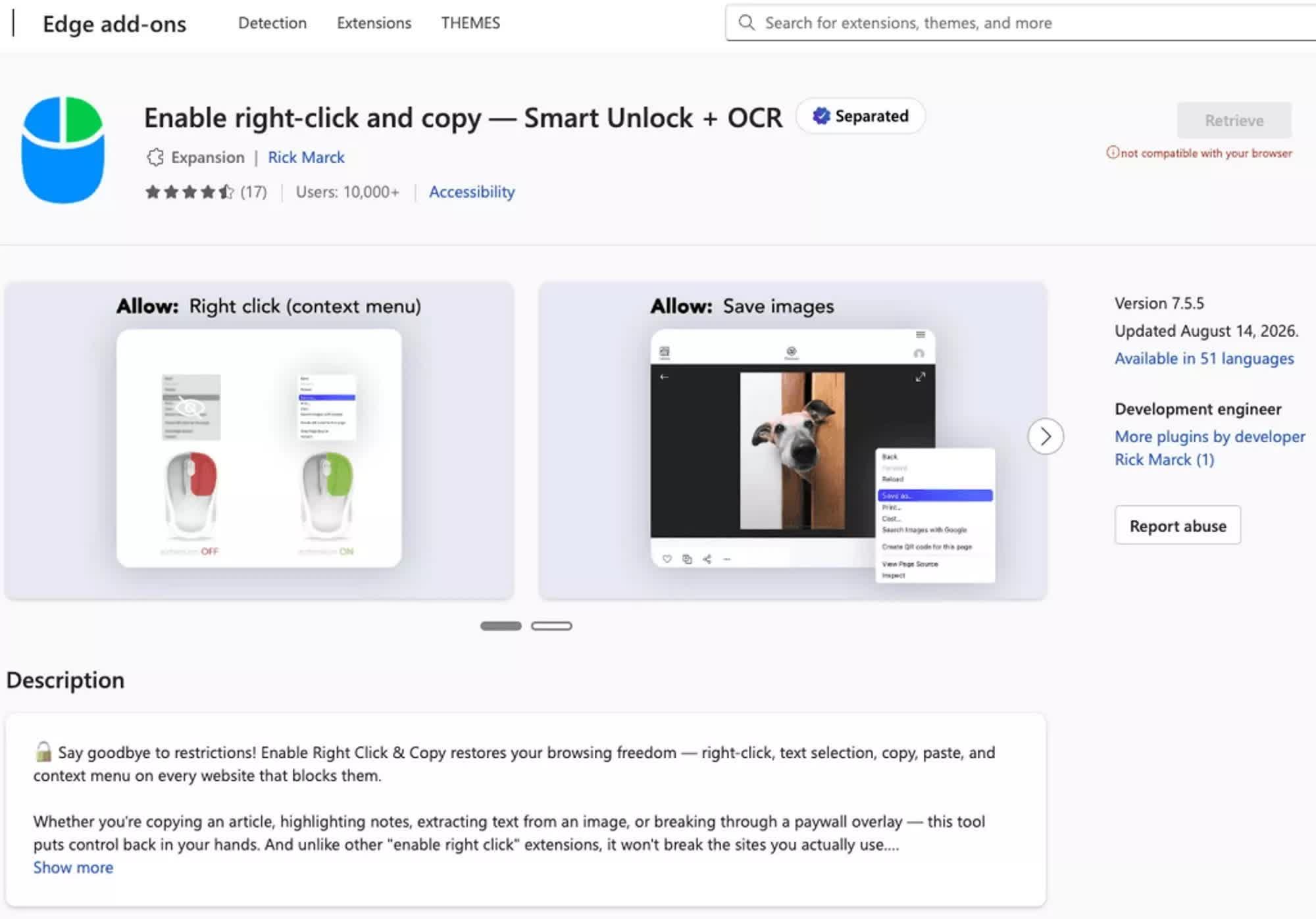
Socket Inc. researchers have identified 19 malicious extensions targeting Chrome and Edge users. The cybercriminal campaign primarily targeted Google’s browser, but one extension gained significant popularity on both Chrome and Edge. In any case, the analysts believe a single “mind” is behind the campaign – and it’s determined to keep going even after the extensions have been removed from both browsers’ stores.
All of the malicious add-ons employed a similar strategy, Socket said. A majority of the extensions (14) were developed directly by the cybercriminals, while five others were purchased from legitimate developers and companies. Initially, the add-ons simply provided their advertised functionality. Over the past six months, however, the hackers updated the extensions with malicious code designed to compromise systems or start harvesting users’ data.
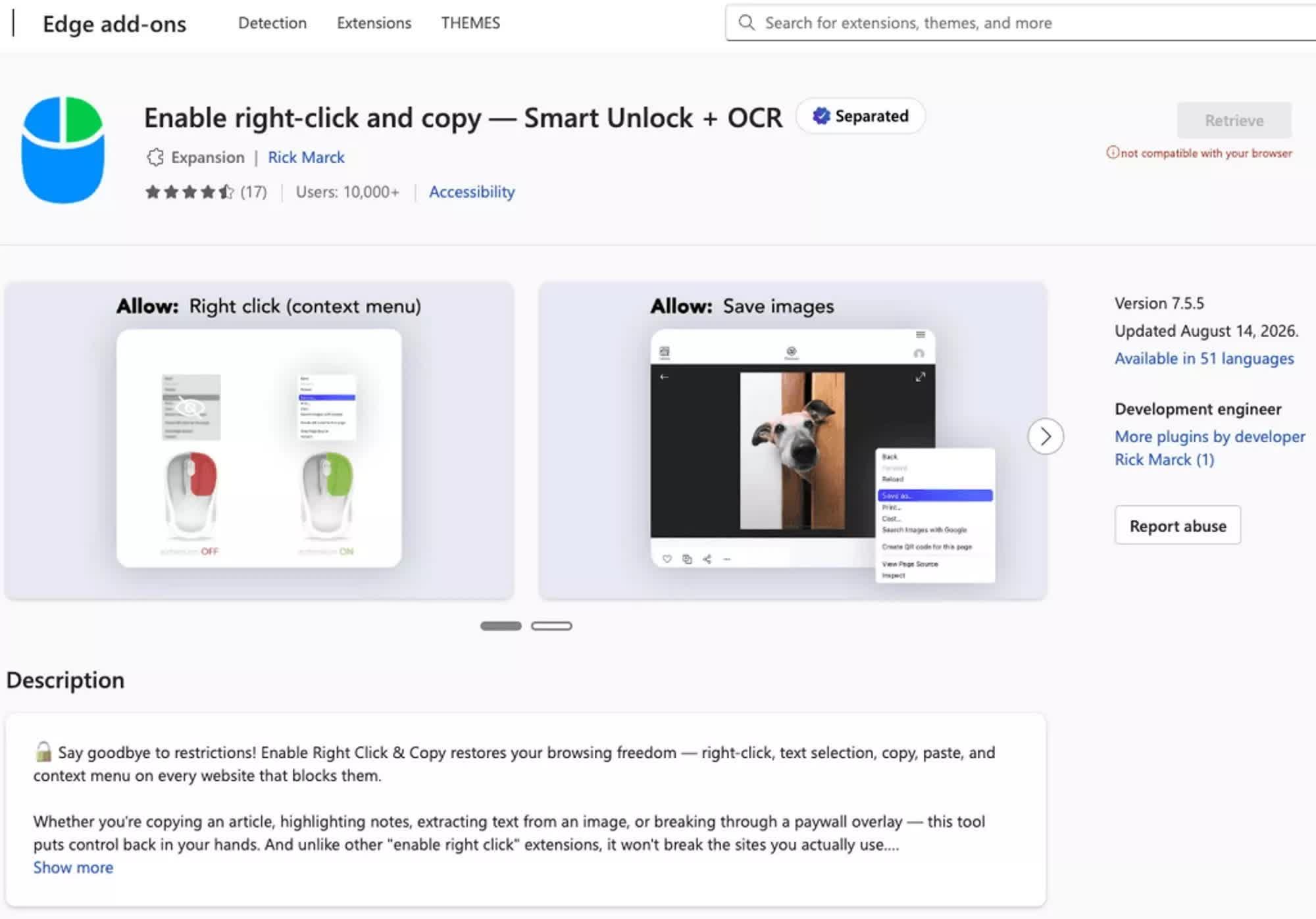
The list of add-ons included a particularly popular extension named “Enable Right Click & Copy – Smart Unlock + OCR.” It was ultimately installed on 70,000 Chrome browsers and another 10,000 Edge browsers. A total of 80,000 users were eventually exposed to the malicious extension, which primarily targeted crypto wallets and other cryptocurrency-related data.
Advertisement
The cybercriminals used some code-based attack patterns that were first identified in February 2024, Socket said. They injected malicious payloads after accumulating a considerable number of potential victims, managing the crypto-stealing campaign remotely through a flexible command-and-control domain infrastructure.
The malicious extensions were eventually removed from the Chrome and Edge stores. However, users might still be part of the C2 infrastructure if they haven’t checked for and manually removed all 19 add-ons listed by researchers.
In 2018, Google announced a major change to the extension technology used by the Chromium project. The Manifest V3 API was intended to improve the security architecture of add-ons across Chromium-based browsers, including Chrome and Microsoft Edge.
As the 19 malicious extensions retrofitted with malicious payloads clearly show, Google’s attempt to strengthen security might very well turn out to be wishful thinking. Cybercriminals are likely to continue targeting popular browser extensions even after Manifest V2 is gone.
The internet has a trust problem, and it’s not just because social media feeds are filling up with AI slop. AI-generated text and images are now making their way into job applications, product reviews, and even insurance claims, leaving platforms and users alike scrambling to figure out what’s real.
A handful of startups have cropped up in the past couple of years to become the “trust layer” the internet needs — including Pangram. The startup recently snapped up $9 million for its AI detection system and landed a partnership with Substack, which is now using Pangram’s tech to show readers which of their favorite authors use AI to write their newsletters. Pangram also recently dropped a new AI image detection tool.
Watch as Pangram co-founder and CEO Max Spero joins TechCrunch’s Equity podcast to dig into the promise of AI detection tools and where to draw the line between AI assisted and AI generated.
As you would probably expect, given its job, a riding mower can get pretty gross after a few runs across your lawn. If you look around your yard for tools to clean it with, you’ll probably notice your garden hose. Technically speaking, you can use your hose to clean your riding mower, but it’s important that you only use it to clean the mower deck on the bottom. If you spray the top of the mower, where all of its sensitive components are stored, it could end up doing more harm than good.
Indeed, the hose has always been a quick and easy option for spraying down dirty stuff, and both the mower deck on the bottom and the housing on top can get covered with dirt, grass stains, and little bits of debris. But besides being unseemly, dried crud can gradually start to clog up the mower’s moving parts. This is why properly maintaining your mower is important, but you need to use the right tools for the job, and be careful when using them.
Advertisement
Don’t spray the top, but the deck is fine
The Jungle Explorer/Shutterstock
As tempting as it may be to start spraying down your entire riding mower with reckless abandon, that’s a temptation that’s best tempered. While a blast from a hose may dislodge some stains and debris from the top housing of your mower, that housing almost definitely isn’t water-tight. That means you’re going to get water inside your mower’s more delicate components, including the oil and air filters and the spark plug housing. If any of these components get wet, they could suffer permanent damage. It’s the same reason you shouldn’t use a hose on an engine bay. Instead, you should clean off the top of your mower by hand, using useful mower cleaning tools like a wire brush or blower to physically dislodge debris and cleaning off stains with a rag.
On the literal flip side, the mower deck on the bottom of your riding mower is prime territory for a good hose-down. The mower deck is mostly self-contained, so as long as you’re careful to only spray the deck, it’s a great way to loosen any accumulated gunk. In fact, some mowers even have built-in washing ports that you can plug a hose right into, running the water alongside the blades to get a good, thorough wash going on the deck. If your mower doesn’t have a built-in port, however, just run the blades and spray the ground next to a corner of the deck. This will splash water up into the deck while it’s running. Just make sure to aim low to the ground so you don’t accidentally splash any parts of the upper housing.



































































You must be logged in to post a comment Login