

Connect with us

NewsBeat

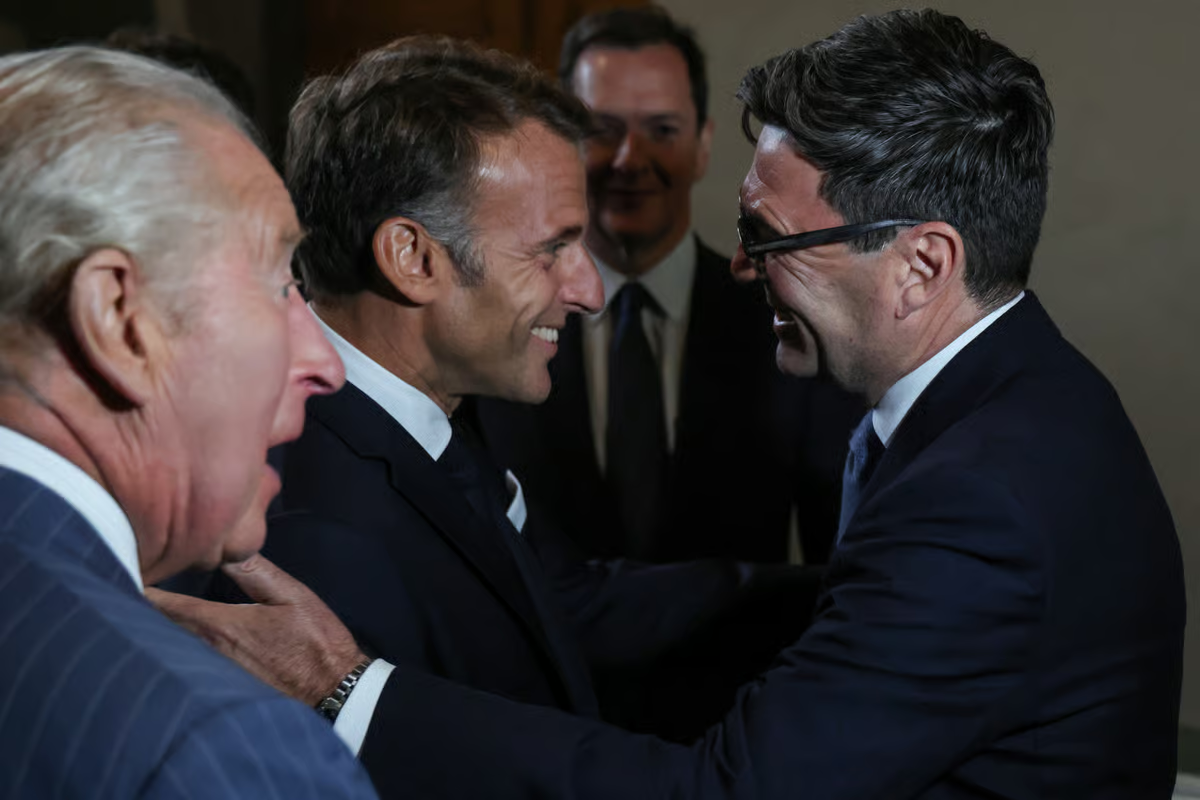
Bayeux Tapestry tickets ‘more sought after than Chelsea-Arsenal’ says Burnham, as King and Macron visit British Museum

Published

on

Bayeux Tapestry tickets 'more sought after than Chelsea-Arsenal' says Burnham, as King and Macron visit British Museum

“Indeed, it is thanks to the certainty you have always had – and which I very much share – that we are here this evening in order that the tapestry should be seen, in London, for the benefit of the peoples of both our countries: the best possible symbol of that ‘entente amicale’, of which we have both spoken so fondly.”

Source link

Continue Reading
Click to comment

You must be logged in to post a comment Login

Leave a Reply

NewsBeat

Andrew Garfield doubles down on his call for a gay Spider-Man: ‘Anyone can be in that suit’

Published

on

Andrew Garfield is standing by his 2013 call for a gay Spider-Man saying that he still believes the Marvel superhero is beloved by fans because he is an inclusive character. Above, in July

Advertisement

Andrew Garfield once advocated for a gay Spider-Man and 13 years later, he still believes that the comic superhero could ‘like boys.’

The British actor doubled down on his theory that the Marvel character is an inclusive one.

‘I just still believe that anyone can be in that suit,’ he said in an interview with Entertainment Weekly.

‘That’s the point of why it’s such a kind of universally beloved character…. because you don’t see skin color, you don’t see gender, you don’t see sexuality. Anyone can project themselves into that suit,’ he explained.

Advertisement

Garfield, 43, played the role of Peter Parker and his alter-ego in 2012’s The Amazing Spider-Man and again in the 2014 sequel.

The success of the movies catapulted him into the top tier of actors in demand in Hollywood. 

Andrew Garfield is standing by his 2013 call for a gay Spider-Man saying that he still believes the Marvel superhero is beloved by fans because he is an inclusive character. Above, in July

Advertisement
'I just still believe that anyone can be in that suit,' he told Entertainment Weekly. 'Because you don't see skin color, you don't see gender, you don't see sexuality.' Above, Garfield in The Amazing Spider-Man 2 in 2017

‘I just still believe that anyone can be in that suit,’ he told Entertainment Weekly. ‘Because you don’t see skin color, you don’t see gender, you don’t see sexuality.’ Above, Garfield in The Amazing Spider-Man 2 in 2017

He characterized his initial call for a gay Spider-Man in 2013 as ‘an exercise in rebellion’ and said he ‘felt passionate about it’ at the time. 

‘I like the idea of a place where everyone is being honored and everyone is being included, and it was just a kind of act of saying, ‘Well, why not?’ And you’ll be telling on yourself if you have a strong opinion either way,’ he said.

Garfield, who is currently promoting his new historical drama The Uprising, left the Spider-Man franchise when Marvel re-booted it to align with their slate of Avengers movies and cast Tom Holland in the role.

Advertisement

Back in 2013, he revealed to Entertainment Weekly that he’d gone so far as to have a discussion with The Amazing Spider-Man producer Matt Tolmach about gender-swapping Peter Parker’s love-interest Mary-Jane.

‘Why can’t we discover that Peter is exploring his sexuality?’ he told the publication at the time.

‘It’s hardly even groundbreaking! … So why can’t he be gay? Why can’t he be into boys?’

Back in 2013, he revealed he'd gone so far as to have a discussion with The Amazing Spider-Man producer Matt Tolmach about gender-swapping Peter Parker's love-interest Mary-Jane. Above, with co-star Emma Stone in Paris in 2014

Back in 2013, he revealed he’d gone so far as to have a discussion with The Amazing Spider-Man producer Matt Tolmach about gender-swapping Peter Parker’s love-interest Mary-Jane. Above, with co-star Emma Stone in Paris in 2014

Advertisement
'Why can't we discover that Peter is exploring his sexuality?' he told EW at the time. 'It's hardly even groundbreaking! … So why can't he be gay? Why can't he be into boys?'

‘Why can’t we discover that Peter is exploring his sexuality?’ he told EW at the time. ‘It’s hardly even groundbreaking! … So why can’t he be gay? Why can’t he be into boys?’

He even suggested that his replacement as the superhero in a queer Spider-Man movie could be then rising star Michael B Jordan who found fame on TV series The Wire.

‘He’s so charismatic and talented. It’d be even better—we’d have interracial bisexuality!’ Garfield mused.

While he cast his final web in a Spidey movie 12 years ago, he did get the chance to wear the web-themed suit one more time in 2021’s Spider-Man: No Way Home.

Advertisement

He and previous Spider-Man star Tobey Maguire teamed up with Holland in the MCU’s third movie in which the multiverse is broken open and characters from alternate realities arrive in Pater Parker’s universe. 

Garfield is currently promoting his new historical drama The Uprising which opens in theaters on September 10

Garfield is currently promoting his new historical drama The Uprising which opens in theaters on September 10

In 2023, Holland revealed that the trio had maintained contact since filming that reunion he’s in a special group chat with Garfield and Maguire ever since they all played Peter Parker together in the 2021 multi-verse flick.

‘We have this amazing bond as three people who have been through something that is so unique that we really are like brothers,’ the 29-year-old Englishman gushed to THR Magazine.

Advertisement

‘We have a great group chat and we catch up every now and then. It’s called the Spider-Boys.’
Advertisement

Source link

Advertisement
Continue Reading

NewsBeat

Premier League transfer spending spree has made a dog’s dinner of Europe’s old elite | Football

Published

on

Premier League transfer spending spree has made a dog’s dinner of Europe’s old elite | Football
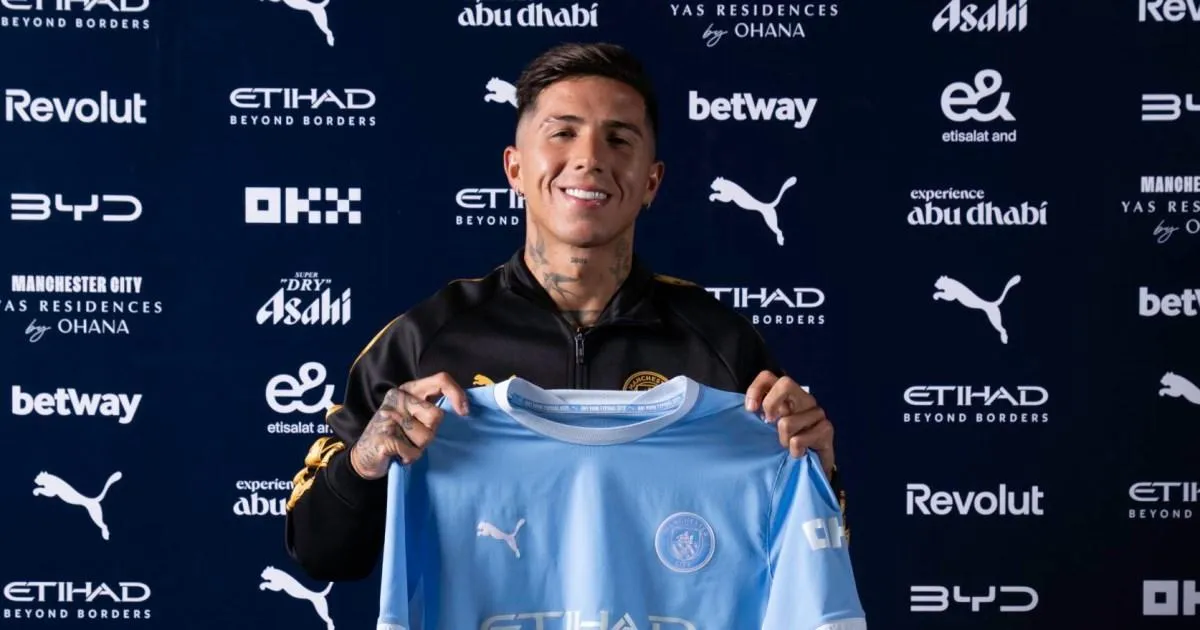
Enzo Fernandez joined Man City in a £125m deal from Chelsea on deadline day (Manchester City FC)

You know what’s fun? Tight games of football with a couple of nice goals.

Interspersed with plenty of creative passages of play until the team you support wins and you go for a lovely pint. Or, actually, battering the other lot 5-1, who cares about the quality then?

You know what’s not? Contracts, painstaking negations to make the rich richer, sub-clauses, arithmetic.

The transfer window is closed. Resources have been moved between Premier League teams and fans of every club are a bit annoyed except, perhaps, Ipswich? (Write in).

Advertisement

Exclusive Premier League previews

Get ahead of the start of the season with our weekly football newsletter. Sign up now for free.

One of my friends (big up Tim Spiers at The Athletic) got the unenviable task of ranking (and justifying the rank) of every transfer made into a Premier League club this window. All 155 of them, only half of which, you’ll be amazed to know, have been made by Manchester City and Tottenham.

Advertisement

Tim is largely joking but the point is this fairly arbitrary ranking reflects what fans are trying to do in every argument about transfers across social media and in real life all the time. More to the point, much of this goes on before any signing has even kicked a ball for the club.

HULL, ENGLAND - AUGUST 22: Oliver McBurnie of Hull City (C) applauds the fans after a 2-0 win uring the Premier League 2026/27 match between Hull City and Manchester United at MKM Stadium on August 22, 2026 in Hull, England. (Photo by Freddie Yeo/MB Media/Getty Images)
Hull City spent more money this window than 36-time Italian champions Juventus (Getty)

The belief you can make this make sense is kind of the point of the transfer window for the fan. It’s not real.

These aren’t real sums of money, the players aren’t real people, you can’t form accurate opinions on it because who knows? The variables are infinite and team chemistry is an art.

This feeling of throwing your hands up and enjoying the ride makes sense as a fan, because the angst you feel has zero impact. You might as well get exercised, have a pop, believe yourself all-knowing, because why not?

Ask Metro


Advertisement

Use AI to go deeper into the stories you care about – powered by Metro and trusted publications.

But that same energy seems at times to be driving recruitment strategies at our clubs. The summer 2026 obsession has been with the Premier League-proven player. As I’m sure you get, it just means buying a guy from one of the other teams in the league, not anything more significant like actually having proven yourself in the Premier League.

History may report it went like this. Premier League clubs set up scouting departments, bought occasional flops from various other leagues and then thought, okay here’s one way of removing an unknown variable: just buy the players belonging to the clubs with lower resources in the league than you. Call it a reverse-Moneyball, if you will.

Advertisement

Premier League top 10 most-expensive deals this summer

Chelsea FC Unveil New Signing Morgan Rogers
(Getty)
  1. Enzo Fernandez – Chelsea to Man City – £125m
  2. Morgan Rogers – Aston Villa to Chelsea – £117m
  3. Elliot Anderson – Nottingham Forest to Man City – £116m
  4. Bradley Barcola – PSG to Liverpool – £106m
  5. Sandro Tonali – Newcastle to Tottenham – £92.5m
  6. Mateus Fernandes – West Ham to Tottenham – £85m
  7. Ayyoub Bouaddi – Lille to Manchester City – £81.4m
  8. Bruno Guimaraes – Newcastle to Arsenal – £75m
  9. Savinho – Manchester City to Tottenham – £75m
  10. Carlos Baleba – Brighton to Manchester United – £70m

And here we are where Enzo Fernandez becomes a £100 million-plus player on two separate occasions. I am old enough to remember when £100m was a fee reserved for once-in-a-generation talents like Kylian Mbappe.

The sums of money involved in all of this are obviously gross. That’s one reason I think I’m sitting here considering them only as units that compare with each other, rather than, say, what the analysts themselves might make at a Premier League club. Or, worse still, people doing real work in hospitals or schools in the UK.

There is one market that can be used to draw useful comparisons, though, without making ourselves sick and that’s with other top-tier leagues in Europe – the Premier League’s competitors for Champions League and Europa League spots.

Newly promoted Hull, who came up by winning the Championship play-off final (so in absolute terms the lowest-ranked team starting this season’s Premier League) spent more money this window than 36-time Italian champions Juventus, current Serie A title holders Inter, Bayern Munich and Atletico Madrid.

Advertisement

Celebratory-sounding posts after the window slammed shut confirmed the top flight had again broken the all-time summer transfer record, with half a billion spent on deadline day alone. This paints the £3.49bn spent as symbolic of us plucky Brits overwhelming the footballing product of other nations with our unparalleled canniness and grit. But, in reality, flooding one corner of European football with money doesn’t seem smart for its future.

Looking at these sums alerted me to something I’d missed. I had spent the last few seasons enjoying the fact smaller English clubs were lately going up against traditional European football superpowers. It felt like an underdog story when Crystal Palace won the Conference League.

But looking at the numbers this window you come to realise it is not.
Nearly all European clubs are now underdogs to anyone in the Premier League and that’s not good news for anyone with a dog in that fight.

For more stories like this, check our sport page.

Advertisement

Follow Metro Sport for the latest news on
FacebookTwitter and Instagram
.

Advertisement

Source link

Advertisement
Continue Reading

NewsBeat

Fresh blow for Trump as judge blocks latest attempt to ‘strip’ birthright citizenship from newborns

Published

on

Fresh blow for Trump as judge blocks latest attempt to ‘strip’ birthright citizenship from newborns

A federal judge has blocked Donald Trump’s administration from enforcing his latest executive orders targeting birthright citizenship after the president lost a landmark Supreme Court case challenging his attempt to unilaterally redefine who gets to be a citizen.

Trump signed executive orders last month taking aim at children who were born to employees of foreign governments as well as the children of mothers who are accused of lying about their intentions for visiting the country while pregnant. The orders also seeks to block citizenship to children whose parents are accused of being “alien enemies,” as well as newborns in U.S. territories.

Lawsuits were swiftly filed, including a challenge on behalf of babies who would be deprived citizenship under Trump’s original 2025 order. Lawyers asked a judge to block Trump’s latest orders to ensure their clients would retain their citizenship under the new rules.

Maryland District Judge Deborah Boardman, an appointee of Democratic President Joe Biden, noted that the question before her is not whether Trump’s new “carveouts” to birthright citizenship are constitutional but whether the plaintiffs suing to stop the orders are entitled to protections against it.

Advertisement

“The answer to that question is yes,” she wrote Wednesday. Trump’s latest efforts are “almost certainly unconstitutional” as applied to the Supreme Court’s decision, which has “already decided that the children in the class are citizens at birth,” according to Boardman.

“This Court must, once again, preliminarily enjoin enforcement of the President’s most recent attempt to strip the right to citizenship from them,” she wrote.

The judge stressed that the language in Trump’s latest order does not indicate whether it applies retroactively.

Trump’s initial order indicated that it applied only to children who were born 30 days after it went into effect, or on February 19, 2025.

Advertisement

His latest order, however, “says nothing like that,” according to Boardman.

She argued that “the only fair reading of the plain language” of Trump’s executive order is that it applies to any babies born after February 19, 2025, putting thousands of babies in legal limbo.

The 14th Amendment’s citizenship clause plainly states that “all persons born or naturalized in the United States, and subject to the jurisdiction thereof, are citizens of the United States and of the state wherein they reside.”

But in an executive order signed on his first day in office, Trump sought to unilaterally redefine that amendment to state that babies born on U.S. soil would be denied citizenship at birth if their mother was “unlawfully present” or had “lawful but temporary” status, and if the father “was not a United States citizen or lawful permanent resident at the time of said person’s birth.”

Advertisement

A divided ruling from the nation’s high court in June determined that children born in the U.S. to parents “unlawfully or temporarily present” are indeed “subject to the jurisdiction” of the U.S. and thus citizens at birth.

This is a developing story

Source link

Advertisement
Continue Reading

NewsBeat

School responds to angry parents after children turned away on first day of term

Published

on

Daily Record

One parent claimed multiple children were turned away on their first day

A school has defended its strict uniform policy after pupils were reportedly turned away on their first day of term for wearing skirts that sat “a couple of inches” above the knee.

Parents claimed that students at Denton Community Academy were refused entry on Wednesday despite wearing garments purchased through an approved uniform supplier, according to the Manchester Evening News.

One father, who asked not to be named, said he had spent a “fortune” equipping his two daughters for the new school year, only for them to be denied access to lessons over the length of their skirts.

Advertisement

“They were ringing us saying they weren’t allowed to enter the school. The skirts they had on were not rolled at all and fell a couple of inches above the knee, if that”, one parent, who did not wish to be named, told the M.E.N.

“It was throwing it down with rain and there were 40 or 50 kids standing outside, not allowed in. They were soaking wet and some were crying.”

The father told the publication that other parents also went to collect their children, while his two daughters spent the rest of the day at home and missed their first day back.

Advertisement

Northern Education Trust, which runs Denton Community Academy, defended the decision, adding that parents have been reminded of the uniform expectation several times ahead of the new academic year, describing the policies as being applied “consistently” and “fairly”.

“Denton Community Academy is committed to maintaining the high standards that have driven significant improvements in our students’ educational outcomes”, the trust said.

“The academy is the most improved secondary school in Tameside and is now the highest-performing non-selective secondary school in the borough. We are incredibly proud of our students and the high expectations that have driven this improvement.”

Families were reportedly reminded of the expectations on May 6, May 18, July 16 and August 20, the trust claimed, adding, “We cannot comment on individual cases, but we strongly encourage parents with any concerns to speak directly to the academy.

Advertisement

“We will always work with families to resolve issues, and believe that direct conversation with the school, rather than through the media, is the most constructive way to do that.”

The parent said he had since returned to TopMarks Schoolwear in Ashton, where he claimed the longest skirts available were around 20 inches, which would still not fall below his daughters’ knees.

He also pointed to a photograph in the uniform section of the academy’s website, which he said showed a female pupil wearing a skirt several inches above the knee.

Ensure our latest stories always appear at the top of your Google Search by making us a Preferred Source. Click here to activate or add us as your Preferred Source in your Google search settings.

Advertisement

“This is not an army camp. They’re treating them like soldiers, but they are children, they need an education. It feels like punishment.”

Denton Community Academy’s website says its uniform policy is intended to “set an appropriate tone for education”. It says the uniform provides “a sense of belonging and identity for all students”, while also being “comfortable” and allowing pupils to be themselves.

The policy also prohibits make-up, hoodies and jewellery, as well as “writing on hands or arms for any reason”.

It states: “We do not exclude students for wearing jewellery, having mobile phones or any other breaches of this policy. We will, however, always ask students to rectify the issue that we have raised. These are reasonable requests.”

Advertisement

Source link

Continue Reading

NewsBeat

D-Day forecaster’s ‘head would have exploded’ at modern weather tech

Published

on

D-Day forecaster’s ‘head would have exploded’ at modern weather tech

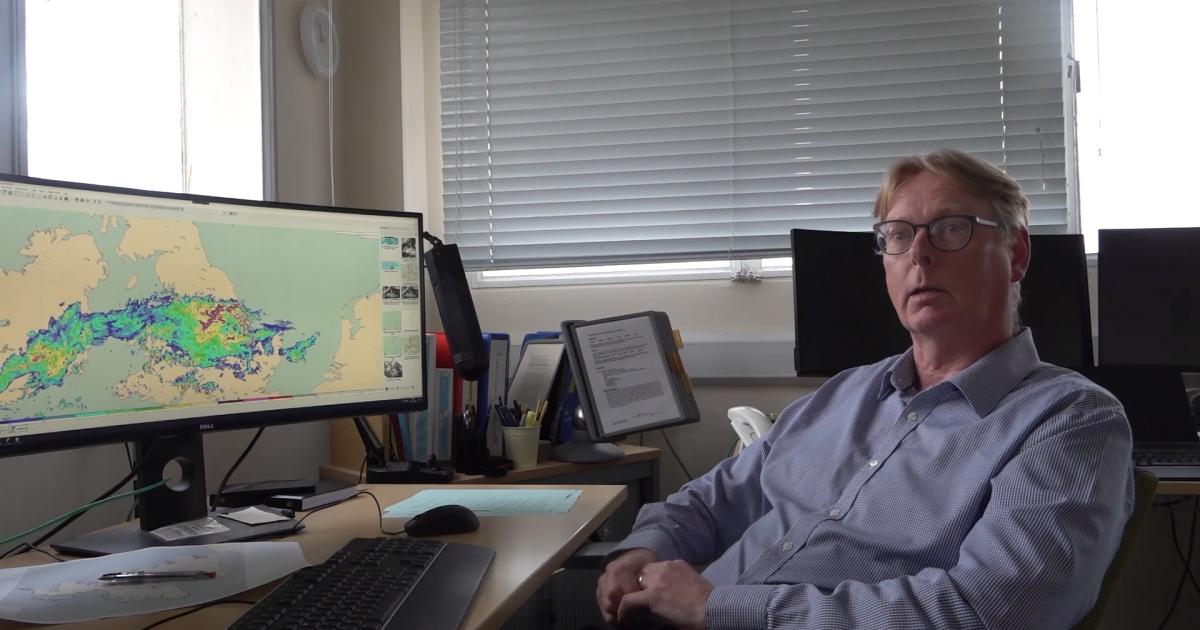
Bill Shiel Dods, who performs a similar role in 2026 to what Stagg was doing in 1944, said it was like “Disneyland” for a forecaster when he worked as an extra on the new movie Pressure, which centres on his predecessor’s advice about the timing of the Normandy Landings.

Mr Shiel Dods said he fully understands the pressure Stagg was under when his advice on the likely weather in the Channel was crucial to General Eisenhower’s decision-making for the invasion.

“Hopefully, I will never be in that situation where I have the fate of thousands and thousands of soldiers and airmen on the line,” he told the Press Association.

Advertisement

Mr Shiel Dods said: “There’s a scene in the film where (Stagg) is briefing the Joint Chiefs of Staff, and (General Bernard) Montgomery says ‘not good enough’, because Montgomery wants to get off and start the invasion as soon as possible and not delay because of weather.

“I’m not going to say I’ve been anywhere near the level of pressure that Stagg was under, but I’ve had to brief aircrew, and they haven’t been always been thrilled with the message I’m passing to them.

“And you do get pushed back as to how confident you are in the forecast, and where could it go wrong.

“Those questions are bread and butter to us, really.”

Advertisement

Mr Shiel Dods has been with the Met Office for more than 40 years, and a forecaster at RAF Leeming, since 1993.

With his team, he provides detailed weather information for the flight crews flying out of the base, near Northallerton, as well as others across the north of England.

Asked what Stagg would have made of the technological differences between 1944 and 2026, Mr Shiel Dods said: “I think his head would have exploded.”

He said the biggest differences are the use of satellite imagery and live radar data.

Advertisement

He said: “The level of detail we have now is head-and-shoulders above.

“I’m sure Stagg would have killed to have this amount of data available to him.”


Read next:


Mr Shiel Dods said: “The technology we use is vastly different, but I think essentially we are doing the same job that my predecessors were doing in World War Two, which is providing advice and support to our military users so they can operate safely and make the most of their often limited resources.”

Advertisement

He is very familiar with what information Stagg was working with 82 years ago, and said that “history’s proved him right”.

“Fortunately, Stagg was right and Eisenhower, in his wisdom, followed the British guidance rather than American because I think, otherwise, it could have been quite a bit poorer for the outcome of the war,” he said.

Mr Shiel Dods has a small part in the movie, as a meteorological assistant working in the office, which came about because he is one of the few forecasters still working who was trained to draw weather charts by hand.

When he first heard they were making it, he told colleagues: “It’d be great if they’re looking for a gin-soaked old forecaster to play a part.”

Advertisement

He said: “And then, quite by chance, a few weeks later, I got a message from one of my colleagues saying they were looking for people with experience of drawing up charts.

“Obviously, when I started in the Met Office in 1984, this was what I was doing on a day-to-day basis.

“So I sent off an email to the production company and said, ‘This is my background. Would you be interested?’, and they got back almost straight away.”

He said he was “blown away” by the set.

Advertisement

Mr Shiel Dods said: “It felt totally authentic.

“I went into the forecast room on the first day, and I knew it was going to be good, but I was blown away by the level of detail.

“It was like Disneyland for a Met forecaster.”

He said: “It was a thrill just to be in the forecast room because it took me back to when I started my career, but also to see Oscar-winning and Bafta-winning actors was quite exciting.”

Advertisement

Source link

Continue Reading

NewsBeat

Man United signed three midfielders – but not the one Bruno Fernandes ‘really likes’

Published

on

Manchester Evening News

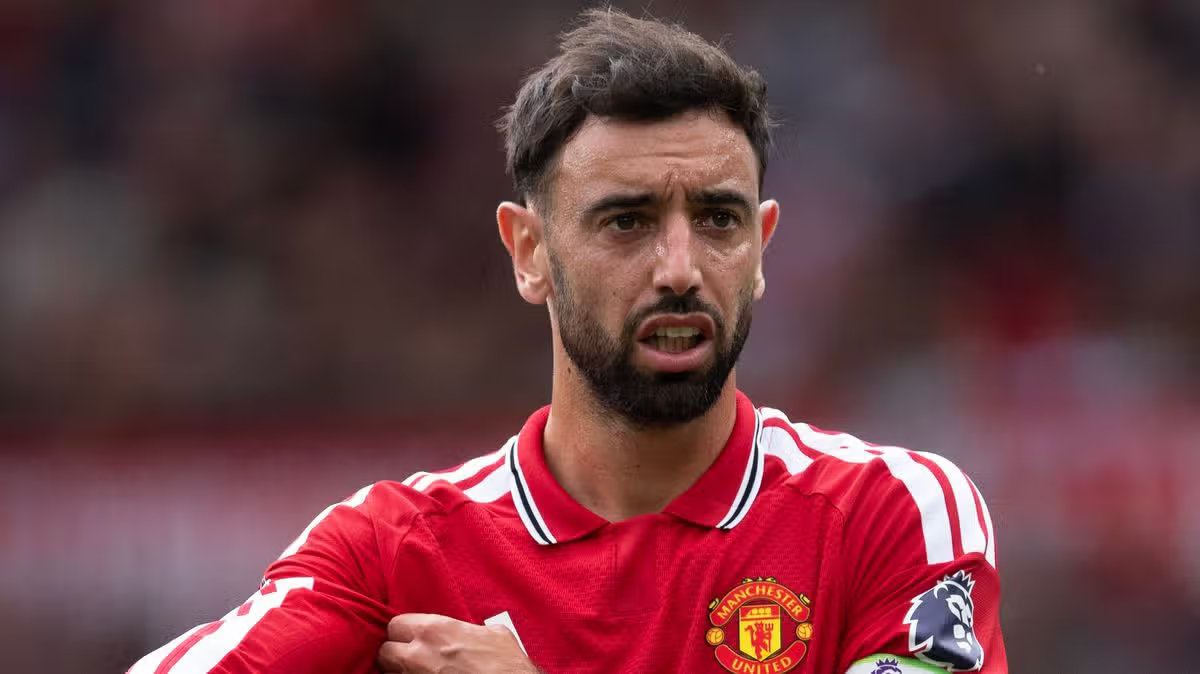
Manchester United splashed out on three new midfield recruits this summer, but there’s one midfielder in particular that Bruno Fernandes rates highly

Manchester United added Andrey Santos, Youri Tielemans and Carlos Baleba to their midfield this summer, but there remains one Premier League talent Bruno Fernandes is particularly fond of. United signed the trio for a combined £155million.

Advertisement

The Portuguese star singled out Bournemouth’s Alex Scott as his player to watch – a midfielder who has already been linked with a move to Old Trafford. Scott has become a fixture in the Cherries’ midfield, with the club refusing to sanction his departure during the summer transfer window.

Chelsea made a late push to sign the 23‑year‑old – having already seen a £64m bid rejected earlier in the summer and even made him their No.1 choice to replace Enzo Fernandez. But Bournemouth stood firm on not selling one of their prized assets.

United, Arsenal and Liverpool also tracked the England prospect, widely regarded as one of the country’s most gifted ball‑playing midfielders. Scott was unlucky to miss out on England’s World Cup squad, and Fernandes, who collected his PFA Players’ Player of the Year award last week was then asked which player he’d like to see claim the honour next.

“There’s always a lot [of exciting players],” the Reds captain replied. “There is one player that I really like and that is Alex Scott from Bournemouth.

“Obviously you always know that the big teams get looked at a little bit more than other teams but I think what he did last season was great. I think he’s someone that could easily be up for that [the PFA Team of the Year].”

FOLLOW OUR MAN UNITED FB PAGE! Latest news and analysis via the MEN’s Manchester United Facebook page

Scott has rejected a new contract at Bournemouth and is now into the final two years of his current deal – a situation that has alerted clubs to the possibility of striking a move. The Cherries signed Scott from Bristol City for £25m three years ago.

Advertisement

Bournemouth could make at least four times their original investment, with Scott now viewed as a £100m‑calibre midfielder.

Source link

Continue Reading

NewsBeat

‘Selfless’ teenage passenger killed after car smashes into tree

Published

on

'Selfless' teenage passenger killed after car smashes into tree
Harriet Boyles died four days after sustaining serious injuries in the crash (Picture: Staffordshire Police)

A teenager who died four days after a crash in Staffordshire has been remembered as ‘compassionate’ and ‘selfless’.

Harriet Boyles, 19, was travelling as a passenger in a Ford when it hit a tree on Lichfield Road in Armitage early in the morning of August 22.

Despite the best efforts of medics, she died four days later on Wednesday, August 26.

Her heartbroken family have since paid tribute to Harriet, from Stoke-on-Trent, and shared that she helped to save many lives through organ donation.

Advertisement

They said: ‘Harriet was a beautiful young woman whose kindness, warmth and caring nature touched everyone who knew her.

‘At just 19 years of age, she had already made a lasting impression on the lives of so many people through her compassion, intelligence, and unwavering love for those closest to her.

‘Family meant everything to Harriet. She treasured every moment spent with her loved ones and brought joy, laughter, and comfort wherever she went.

‘Her caring personality and selfless nature made her a devoted daughter, sister, relative and friend, and she will be deeply missed by all who had the privilege of knowing her.

Advertisement

‘Harriet was exceptionally bright and determined. During her time at high school, she was recognised as Head Girl, reflecting her leadership, dedication, and the respect she earned from both her peers and teachers.

‘She was due to begin an apprenticeship in finance and was excited about the future, taking the first steps towards what promised to be a successful and fulfilling career.

They added: ‘Harriet’s loss leaves an immeasurable void in the hearts of her family and friends. She was taken far too soon, but her legacy of kindness, love and selflessness will live on, not only in the memories of those who loved her, but also in the lives of those she helped save.

Advertisement

‘She will be forever loved, forever remembered, and never forgotten.’

A 23-year-old man who was driving the Ford has been arrested on suspicion of driving offences.

He has been bailed as Staffordshire Police investigate the crash.

A spokesperson for the force said: ‘The driver of the Ford, a 23-year-old man from Newcastle-under-Lyme, has been arrested on suspicion of driving offences.

Advertisement

‘He has since been released on bail with conditions whilst our investigation continues.

‘We are keen to speak to anyone with any information or dashcam footage which could help collision investigators.’

Get in touch with our news team by emailing us at webnews@metro.co.uk.

For more stories like this, check our news page.

Advertisement

Source link

Advertisement
Continue Reading

NewsBeat

United Nations says Britain should put statues of ‘people of African descent’ in public spaces to atone for the slave trade

Published

on

Britain should erect more statues honouring people of African descent as a way of atoning for the slave trade, the United Nations has said.  Pictured: An 18th century illustration of slavery

Britain should erect more statues honouring people of African descent as a way of atoning for the slave trade, the United Nations has said. 

Legal experts are calling on former slave-trading nations to carry out the act, alongside other deeds of ‘reparatory justice’ because they have an ‘obligation to repair’ the harm caused by the slave trade.

The recommendations feature in new guidance published by the UN Committee on the Elimination of Racial Discrimination (CERD) and come six months after UN member states backed demands for reparations. 

CERD consists of 18 independent human rights experts who have been elected to serve four-year terms.

Advertisement

The proposals include the creation of artworks and statues in public spaces that pay tribute to the contributions of people of African descent. 

‘Public spaces should honour the contributions of people of African descent and clearly acknowledge the wrongs of those who supported or benefited from historical atrocities,’ the guidance states.

‘Satisfaction to people of African descent can include the right to investigation and truth, public judgments and acknowledgements, apologies, acceptances of responsibility and public commemorations, including memorials and dedications of public spaces.’

By contrast, the authors referred to the Black Lives Matter protests of 2020 during which demonstrators targeted monuments linked to slavery and colonialism. 

Advertisement

Britain should erect more statues honouring people of African descent as a way of atoning for the slave trade, the United Nations has said.  Pictured: An 18th century illustration of slavery

In Bristol in 2020, protesters tore down a statue of 17th century slave trader Edward Colston and dumped it in the harbour

In Bristol in 2020, protesters tore down a statue of 17th century slave trader Edward Colston and dumped it in the harbour

In Bristol, protesters tore down a statue of 17th century slave trader Edward Colston and dumped it in the harbour following the death of George Floyd in America.

Advertisement

Footage showed demonstrators heaving the metal monument down with ropes before cheering and dancing around it, with many placing their knees on the fallen statue as it lay on the ground.

The statue had been in place since 1895 before it was toppled.

Along with the tobacco trade, Mr Colston’s wealth helped develop Bristol in the 17th Century. He used much of his riches, accrued from his extensive slave trading, to build schools and almshouses in his home city.

The guidance, which was largely devised by the CERD panellists, US lawyer Gay McDougall and Liberian legal expert Pela Boker-Wilson, says compensation should not only be financial but also bring about change to society.

Advertisement

On hate speech and xenophobia, Britain and other countries ‘must act early to prevent prejudice and address misinformation about transatlantic chattel slavery and its ongoing harms to people of African descent’.

Schools and curriculums meanwhile should provide unbiased accounts of slavery, its consequences and the experience of people of African descent in modern times. 

The report has come just ahead of the King’s planned autumn tour of the Caribbean, where the Royal Family’s links to the slave trade could come under scrutiny. 

Researchers are looking into the extent to which the British Royal Family was involved in, supported or benefited from the transatlantic slave trade, through the Royal African Company that it patronised.

Advertisement

In March, Britain and other former colonial powers faced a fresh demand from African and Caribbean states to make trillions of pounds in reparations. 

The president of Ghana used a speech at the United Nations in New York to attack the ‘deafening silence’ from European states ‘enriched’ by the abduction and forced labour of more than 12million Africans over four centuries.     

John Dramani Mahama lashed out before he presented a new resolution, backed by the African Union and Caribbean states, seeking formal recognition of the transatlantic slave trade as a ‘grave crime against humanity’.

He was loudly applauded when he said: ‘People sometimes try to put a disclaimer on slavery by insisting that you cannot use the social norms of today to judge the actions and events that took place in the past. Well such people are loud and wrong.

Advertisement

‘Just because everyone is doing something doesn’t make it right. Slavery is wrong now, it was wrong then.’

In 2023, a UN judge said the UK could owe more than £18trillion in reparations

Source link

Advertisement
Continue Reading

NewsBeat

The lesson Canada’s prime minister learned from Brexit is helping in its trade rift with US

Published

on

The lesson Canada’s prime minister learned from Brexit is helping in its trade rift with US

The trade conflict between Canada and the United States is heating up and has moved beyond rhetoric. After the latest round of negotiations failed, the US imposed 50% tariffs on around C$27.6 billion (£14.68 billion) of Canadian goods on August 22. Canada is responding swiftly with dollar-for-dollar retaliation to take effect on September 8.

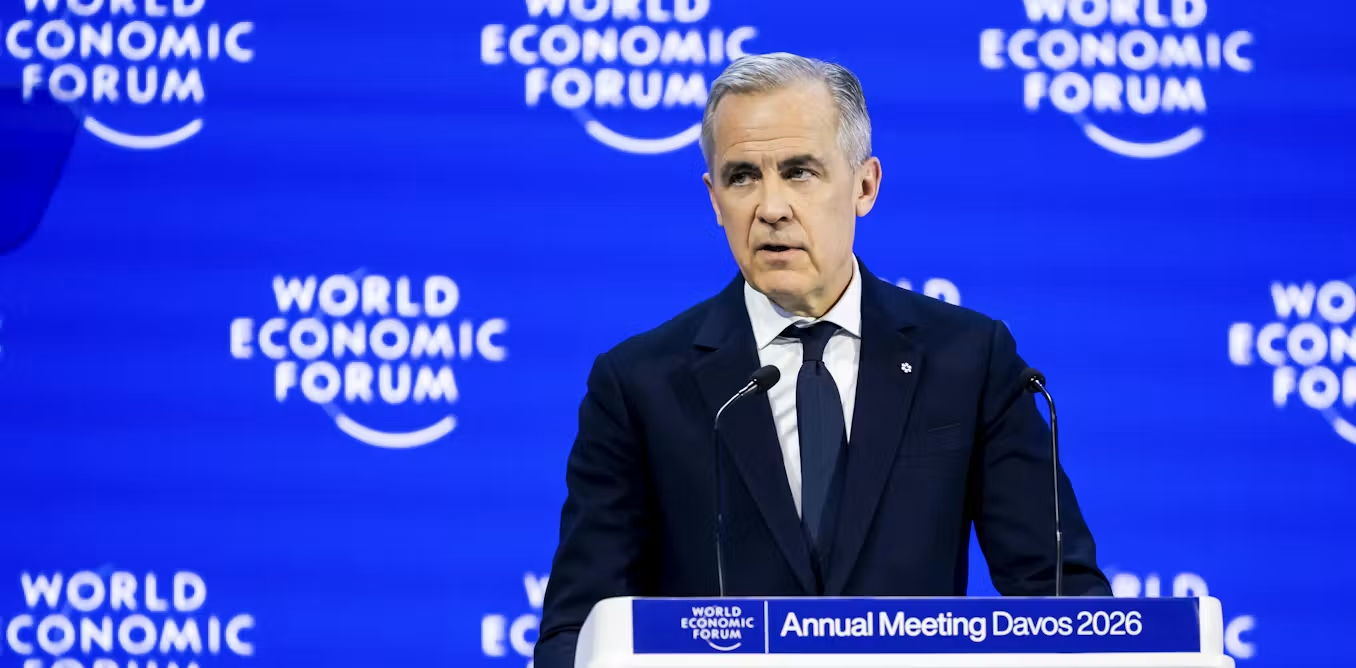
Two other events in September give this confrontation wider significance. The first is that from September 1 Britain and Canada can trade with each other under the Comprehensive and Progressive Agreement for Trans-Pacific Partnership (CPTPP) trade framework. And on September 17, the Canadian prime minister Mark Carney is due to address the European parliament seeking an ever closer relationship with the EU.

Having sent 75.9% of its merchandise exports to the US as recently as 2024, Canada now sees such close trade integration with its nearest neighbour as a vulnerability, yet it cannot discard the benefits to its economy. This raises a longer-term question: how can Canada reduce its economic dependence on its more powerful neighbour?

Britain has been wrestling with a version of the same question since Brexit. Its experience offers Canada both a warning and, perhaps surprisingly, an opportunity.

Advertisement

There are obvious differences. Britain chose to leave the EU – Canada did not choose the current disruption of its trading neighbour. But both cases demonstrate the same uncomfortable economic reality: we can’t change geography.

Canada’s response has been rapid and has sought to diversify without decoupling. According to the government’s Global Affairs Canada, the share of Canadian goods and services exports going to markets outside the US rose from 29.7% in 2024 to 32.8% in 2025 – its highest level in more than four decades.

Canada’s exports to the EU increased by 16.4% in 2025, with goods exports rising by 23.5%, driven partly by higher crude oil exports.

Statistics Canada estimates that Canadian domestic goods exports to non-US markets rose by C$27.6 billion in 2025, but C$13.5 billion of that impressive growth was led by gold exports to Britain. Even excluding precious metals, non-US merchandise exports still increased by C$14 billion.

Advertisement

Canada’s push to diversify its trade arrangements.
Canadian Politics Daily/Facebook

When Canadian gold producers increased exports beyond the US, the UK offered a ready alternative: a “friend” with an established global gold-trading infrastructure capable of absorbing them.

This focus on markets able to absorb specific Canadian exports has been a hallmark of Canada’s response to the escalating trade rift with its muscular neighbour. Carney is not simply promoting “middle powers” working together, he is attempting to implement it.

Europe, Britain and the Indo-Pacific offer different channels, allowing Canadian sectors to target whichever market can absorb their exports. So the Carney government’s trade diversification strategy is less about replacing America than building alternatives around it.

Advertisement

Brexit: different circumstances, useful lessons

With Brexit, Britain left a highly integrated, low-friction economic relationship with its largest trading bloc and sought to expand trade elsewhere – where there was considerably more friction.

But geography proved a major barrier to decoupling. In 2015, the EU accounted for 44% of UK exports and 53% of its imports. A decade later, in 2025, those shares were still 41% and 50% respectively. Despite Brexit and Britain’s subsequent efforts to expand trade elsewhere, the geographical concentration of UK trade has not shifted the needle meaningfully.

Nor did the comprehensive US trade deal once envisaged after Brexit materialise: talks began in 2020 but stalled. The subsequent Economic Prosperity Deal offered only sectoral concessions – a reduced-tariff quota for cars, exemptions for aerospace parts, and mutual agricultural quotas.

Canada by contrast, already has 15 free trade agreements covering 51 countries and around 61% of the global economy, including CETA with the EU, CPTPP with major Indo-Pacific economies and existing arrangements with Britain.

Advertisement


À lire aussi :
Canada walked away from a U.S. trade deal. What happens now?


Canada’s response to the US dispute therefore looks less like a search for somewhere else to go and more like high-speed crisis management. It aims to protect as much access to US markets as possible while urgently making greater use of alternatives that already exist. That difference in sequencing may matter.

Britain increased friction with its largest market before knowing how much additional trade could realistically be generated elsewhere. Canada is trying to reduce friction elsewhere while resisting increased friction with its largest market.

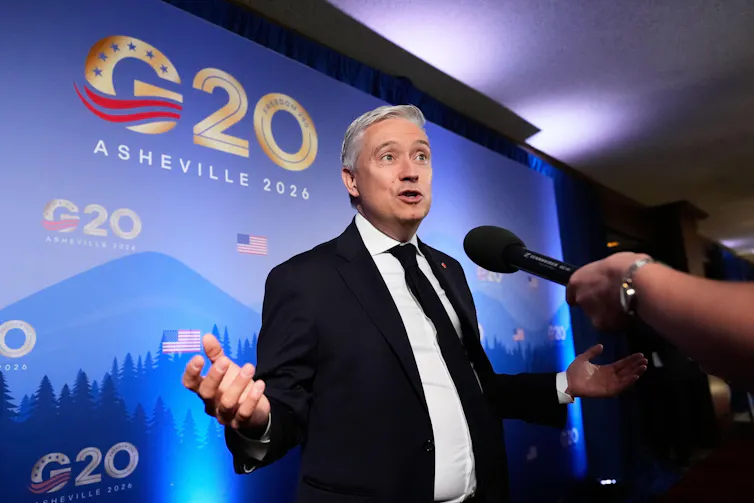
Canadian finance minister, Francois-Philippe Champagne, addresses the G20 at Asheville in North Carolina, September 1 2026.
‘Trusted partner’: Canadian finance minister, Francois-Philippe Champagne, addresses the G20 at Asheville in North Carolina, September 1 2026.
AP Photo/Gerald Herbert

Canada’s experience shows some success, but economic pain may persist in the short to medium term. Canada’s merchandise trade surplus with the US fell from C$101.3 billion in 2024 to C$81.6 billion in 2025. Its merchandise trade deficit with the world widened from C$7.2 billion in 2024 to C$31.3 billion in 2025.

Yet the wider economy has proved surprisingly resilient. Statistics Canada reported on August 28 that real GDP grew by 0.8% in the second quarter of 2026 after growth of 0.1% in the first quarter.

Advertisement

This does not mean that Canada has defeated economic geography. Around 71.7% of Canada’s merchandise exports still go to the US. But it does suggest that reducing concentration risk may be possible without attempting complete economic decoupling.

Can sharing a king help Canada and UK?

It is not only a king that Canada and the UK share. They share a language and membership of NATO, Five Eyes (the intelligence-sharing agreement between the UK, UK, Australia, New Zealand and Canada), the G7, the G20, while Britain is already Canada’s largest European trading partner. According to UK government figures, trade in goods and services between the two countries rose from £27.6 billion in 2024 to £33.7 billion in 2025.

CPTPP won’t revolutionise bilateral trade overnight, most bilateral goods trade is already tariff-free under the existing agreement. But it opens opportunities in services, investment, government procurement and integrated supply chains across its wider membership.

The lesson from Brexit is not that diversification is impossible. But the UK’s experience tells us that the opportunities presented by alternative markets are unlikely to simply replace the economic advantages of geography.

Advertisement

Canada’s experience so far suggests a different approach. It is aiming to maintain as much access as possible to its dominant neighbouring market while moving as fast as it can to reduce dependence on it.

For Britain and Canada, closer economic relations cannot provide a complete treatment for their respective dependence on the EU and US. But they may provide some pain relief.

Source link

Advertisement
Continue Reading

NewsBeat

Ludwig set to return as BBC teases Christmas special with unbelievable guest star

Published

on

Cambridgeshire Live

David Mitchell has announced a Ludwig Christmas special will be hitting screens this festive period.

The BBC has teased an upcoming Christmas special of Ludwig, as David Mitchell confirmed the show was set to return this festive season. The comedian addressed the news during an appearance on The One Show, while Ludwig continues to air its second series.

David stars as John Taylor, a reclusive puzzle enthusiast operating under the alias Ludwig, whose world is thrown into turmoil when his twin brother, a police detective, inexplicably disappears. He appears alongside Anna Maxwell Martin in the detective drama, as she plays the missing brother’s wife, Lucy Betts-Taylor.

Advertisement

The duo are now set to be joined by a murder mystery legend, with Poirot actor Sir David Suchet confirmed for the forthcoming Christmas special, alongside the likes of Kiell Smith-Bynoe and Catherine Tyson. The BBC also released a first-look image of the special, showing Sir David alongside the Ludwig actor grinning in front of a Christmas background.

David told The One Show hosts Alex Jones and JB Gill: “As always with Ludwig, there’s an over-arching, terrifying mystery that will chill you to the bone. And also, a weekly, cosier murder that you don’t have to worry about so much. It’s got everything, it’s got the over-arching threat that we all live in in the current political situation, and just a cosy bit of ‘I wonder why he’s dead’.”

David went on to tease the upcoming Christmas special, laughing as he said “it’s really festive”. He continued: “I’ve never done an exclusive announcement, what if we run out of time? There’s going to be a Ludwig Christmas special this Christmas, and it’s really Christmassy, set in an isolated hotel and there’s a murder and they have to solve it.

Advertisement

“It’s lovely and it stars Sir David Suchet, it’s a great cast. Joe Wilkinson, Jason Flemyng, Catherine Tyson, great case but David Suchet, he was so lovely to work with, I’m a huge fan of his and Poirot and everything. It’s really festive, if you don’t mind a little bit of killing!”

The complete line-up also features Dylan Hughes returning as Henry Betts-Taylor and Dipo Ola as DCI Russell Carter, while guest appearances include Alexandra Roach, Kiell Smith-Bynoe, Rebekah Staton, Claire Price, Ariella Glaser, and George Rainsford, reports Wales Online.

The BBC has previewed: “Set in Yorkshire, the Christmas episode sees John, Lucy and Henry arrive at a remote Christmas themed hotel for what should have been a much-needed escape, when a sudden blackout turns the festivities into a locked-room murder mystery. Trapped by a blizzard and cut off from the outside world, the guests must spend the night with a killer in their midst. With John reluctantly pulled into one of his strangest puzzles yet, the race is on for the Taylors to solve the crime before Christmas.”

Advertisement

This comes after David spoke about the new series of Ludwig, which is also set to return for a third instalment next year. He teased: “The overarching plot thickens, but I think our main aim is to give people the same satisfaction, the same intriguing entertainment as we did the first time, and not to let that slip. I think Mark, the writer, has done a brilliant job and it draws you in even further.”

When asked why people love cosy crime, he went on: “The truth is that we live in troubled times. The golden age of crime, as they call it, was the 1930s, and that’s when people disappeared into their Dorothy L. Sayers novels, and Agatha Christie. That was also an extremely troubled era. Let’s hope that this cosy crime boom ends more happily than the 1930s one did.”

He continued: “The balance between mystery and humour was something, particularly in the first series, that we were quite worried about getting right. It’s a comedy drama, not a straight drama. Although, my view is that any drama with no comic element is flawed.

Advertisement

“The main thrust is caring about the plot and the characters and then the comedy is decorative to that. The risk in Ludwig was putting too many jokes in, so the plot is undermined and becomes silly and a spoof. You need it to be broadly straight, but then to have funny elements that are believable for the characters.”

Ludwig is available to watch on BBC iPlayer.

Source link

Advertisement
Continue Reading

Trending

Copyright © 2025