Connect with us

NewsBeat

Entire education authority put into highest level of monitoring

Published

on

Wales Online

An MS has demanded action saying pupils and parents deserve better as ‘significant concerns’ raised in troubled Flintshire

An entire education authority has been placed into the highest level of Estyn monitoring after a dire report from inspectors. Since the last inspection in 2022 the majority of secondary schools in Flintshire have been placed in Estyn follow-up and almost half the authority’s schools are in deficit or close to deficit, the watchdog said.

Advertisement

MS demands action saying pupils and parents deserve better as education service put into highest level of Estyn monitoring

Inspectors detailed failings in safeguarding and leadership. School deficits are now so bad that the situation now threatens the authority’s financial sustainability as a whole, inspectors warn.

The authority’s approach to this “has had limited impact in preventing schools from moving into deficit or supporting them to recover,” the report warns. On top of this, over the last four years 10 of Flintshire’s 11 secondary schools have been inspected, with two being put into special measures, two judged to need significant improvement and two needing Estyn reviews. Read the biggest stories in Wales first by signing up to our daily newsletter here

Leadership and self evaluation are also not working as well as they should, Estyn added as it labelled Flintshire LEA as “causing significant concern”. There are only two outcomes of for a local education authority Estyn inspection – not in follow up, or causing significant concern, the watchdog confirmed.

On deficits, the report does not give a figure but warns: “The authority views the financial viability of schools as its highest corporate risk. With almost half of schools in deficit and many others close to that position, this issue has the potential to affect the authority’s overall financial sustainability.

“Although addressing this is a priority, the authority’s approach has had limited impact in preventing schools from moving into deficit or supporting them to recover. This heightens the significance of this issue.

Nigel Williams MS, Reform Party member of the Senedd for Fflint Wrecsam, demanded “urgent action”. He said that “complete transparency, and root-and-branch accountability” was needed following Estyn’s “damning assessment” of Flintshire’s education services.

Advertisement

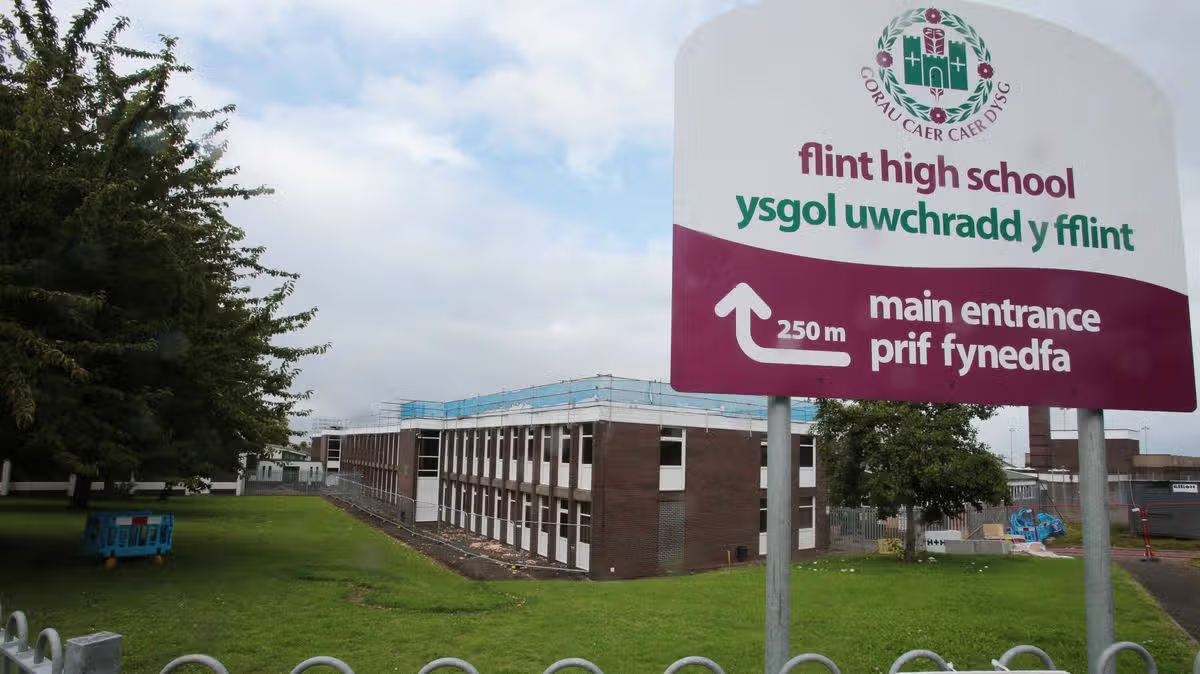
Mr Williams, who grew up locally and is a former pupil of Flint High School, which was recently placed into special measures. The other secondary in special measures is St David’s High in Saltney.

“This is not just an administrative failure; it is a systemic betrayal of pupils, parents, and hardworking teachers across Flintshire,” Mr Williams said.

“As someone who grew up in Flintshire and went to Flint High School, seeing our schools in this state is deeply personal.

“This is not an isolated problem. When six out of 10 inspected secondary schools require formal follow-up, the rot runs straight to the core of the local authority. For years, councils and the Welsh Government have hidden behind glossy self-evaluations and endless committees while standards fell, school deficits mounted, and neurodiverse children were left without timely support.

Advertisement

“Reform’s stance is straightforward: public services must deliver real results, not warm words and bureaucratic excuses. Parents deserve to know their children are safe, teachers deserve the leadership and backing to maintain discipline, and pupils deserve a quality education. We will not let this report be swept under the carpet.”

Mr Williams said he will be raising the findings in the Senedd. He has also written to Flintshire’s Chief Executive Neal Cockerton demanding a timetable for action to improve education in the county and for Flintshire High specifically.

On a more positive note Estyn’s report also says: “Flintshire’s education services are led by committed senior officers who have maintained a strong focus on supporting schools and vulnerable learners during a period of considerable financial and organisational pressure.”.

Schools and partners value officers’ accessibility, professionalism and willingness to work constructively with them. The authority has also made “purposeful changes” to strengthen its work in recent years, including establishing its own school improvement service, expanding specialist provision and developing wider approaches to inclusion and belonging.

Advertisement

“These developments are beginning to improve aspects of provision and support. The new school improvement service is strengthening relationships with schools and provides regular advice and challenge,” the report adds.

Inspectors detail how the authority also has a strong commitment to inclusion. Specialist and outreach services provide valued support for pupils with additional learning needs, including many neurodivergent learners, although provision for neuro divergent Welsh speaking pupils needs improvement.

There is also a broad range of work to support learners affected by poverty, including early years, youth, family engagement and community-based provision, but measures to support attainment of less well off children need strengthening.

Responding to the inspection report Flintshire County Council Chief Executive Neal Cockerton said: “The Estyn report on the council’s education service specifically makes five recommendations, acknowledges the pressurised environment the service is working in and the steps being taken to continue to deliver high quality education services to our schools.

Advertisement

“The five recommendations set out in the report by Estyn have already started to be built upon and the areas strengthened. I, and officers in the service, take seriously the matters raised in the report and are fully committed to taking action to address them as we work closely with Estyn.

“Staff within both services have and continue to work incredibly hard and this has been noted within both reports. I take this opportunity to thank them for the work they continue to carry out with our children and young people.”

Councillor Dave Hughes, Council Leader, said: “While the report identifies areas where we need to improve, it also recognises the many strengths within the service which give us a solid foundation on which to build.

“We are committed to learning from these findings and driving forward the changes needed.”

Advertisement

The council said it will draw up an action plan setting out how it will address inspector’s recommendations. Estyn will monitor progress during regular follow-up visits.

The five recommendations Estyn makes are:

  • Address the safeguarding concerns identified during the inspection at both corporate and service level
  • Strengthen strategic planning to address risks posed by school deficits and improve the financial sustainability of schools
  • Improve effectiveness of scrutiny so that elected members focus consistently on strategic risks, learner outcomes and the long-term improvement of education services
  • Strengthen strategic leadership and improve the quality and consistency of self evaluation and improvement planning
  • Strengthen collaborative working across portfolio and service areas to ensure more effective support and challenge for schools

Source link

Continue Reading
Click to comment

You must be logged in to post a comment Login

Leave a Reply

NewsBeat

Donald Trump’s Washington makeover faces new review by federal panel

Published

on

Donald Trump's Washington makeover faces new review by federal panel

The latest pieces of President Donald Trump’s wide-ranging Washington makeover are set for an airing Thursday in front of a federal panel that already has blessed other big-ticket plans from the designer-in-chief.

The National Capital Planning Commission, which this spring approved Trump’s White House ballroom proposal after he razed the Executive Mansion’s East Wing without authorization, will discuss a proposed fence around Lafayette Park in front of the White House.

The panel also will review a proposed underground security screening center for White House visitors. It’s the first time the commission will take up either idea, and votes are not expected. But the commission and the separate U.S. Commission of Fine Arts thus far have not been an obstacle for Trump’s plans for the capital.

The fine arts panel, which is controlled by Trump appointees, approved the visitors’ center plans at its July meeting. It heard a presentation on the Lafayette Square fencing but took no action. The fencing also carries the most potential for controversy and opposition on Thursday.

Advertisement

The planning commission is not as dominated by Trump appointees but still has a clear tilt in the Republican president’s favor. The 12 members include three presidential appointees, plus Defense Secretary Pete Hegseth, Interior Secretary Doug Burgum, General Services Administrator Ed Forst and, from Congress, Sen. Rand Paul and Rep. James Comer, both Republicans. The new chairman, Mark Paoletta, will chair his first meeting. White House Counsel Will Scharf previously held the role.

Both proposals come at a time when security for the president is a top concern. The administration says the projects would be an improvement over temporary structures that have long been used for security, such as bicycle racks fashioned into barriers.

Trump has been the target of multiple assassination attempts, including two during the 2024 campaign and a third this past April as he attended a Washington dinner with White House journalists. Those concerns were heightened in May after U.S. Secret Service officers fatally shot a man who opened fire near a White House security checkpoint.

But Lafayette Square fencing still would be a marked permanent change to the usual access and appearance of the grounds in front of the White House. The square last had permanent fencing in the late 1800s.

Advertisement

The administration’s 79-page proposal for the 8-acre (3-hectare) park calls for fencing all the way around with larger gates at the north and south entrances. Options call for either including or excluding monuments located at each of the park’s four corners.

The White House Visitor Screening Facility, meanwhile, has been viewed as a noncontroversial part of the administration’s call for increased security measures.

Advertisement

The administration says the permanent facility, which it wants open by July 2028, would replace a series of temporary tents that have been used for years, in a bid to improve security on the White House complex and enhance the experience for visitors. The original design had it being built underground near the southern end of Sherman Park, just southeast of the White House. But consultations with other entities led to it being moved to the western edge, away from utility infrastructure.

Source link

Advertisement
Continue Reading

NewsBeat

York Hospital maternity services rated ‘good’ by CQC

Published

on

York Hospital maternity services rated ‘good’ by CQC

The Care Quality Commission (CQC) upgraded the rating of the maternity services at York Hospital following a two-day inspection in April.

It follows the watchdog improving the wider hospital site’s rating from inadequate to ‘requires improvement’ last year.

Maternity services at Scarborough Hospital were also rated good overall after a separate two-day inspection by the CQC in April.

The director of midwifery at the York and Scarborough Teaching Hospitals NHS Foundation Trust, which runs York and Scarborough hospitals, said it was a “proud moment” for the trust and “for the women and families we care for”.

Advertisement

York Hospital (Image: Newsquest)

CQC inspectors praised the “kindness and dedication” of staff and found “strong evidence of teamwork, learning and collaboration”.

The CQC said the reports also highlighted improvements in incident management, safer and more consistent triage, fire safety arrangements, maternity equipment, baby tagging and staffing arrangements, alongside stronger governance and oversight.

Inspectors found women received personalised care and that staff respected their personal, cultural, social and religious needs.


Recommended reading:

Advertisement

Gill Hodgson-Reilly, the CQC’s deputy director of operations in the north-east, said: “Women and their babies are now getting the quality of care they deserve led by kind and dedicated staff teams

“Women consistently told us staff were kind, supportive and listened to their concerns, with some describing them as ‘real life angels’. We saw thank you cards displayed across all areas showing positive feedback and gratitude.”

She added that staff told the CQC that the hospital had a “strong culture of teamwork, and collaborative working”, adding: “Leaders and staff should be pleased with the positive findings, and we look forward to seeing their continued progress. We’ll continue to monitor the trust, including through future inspections, to ensure the improvements are embedded and sustained.”

‘We know our work does not stop here,’ says trust boss

The York and Scarborough trust’s director of midwifery, Sascha Wells-Munro, staff had been on a “significant journey” since York Hospital’s maternity services were rated inadequate.

Advertisement

“Behind this rating are hundreds of people who have supported one another and remained absolutely focused on providing safe, high-quality and compassionate care. I want to say a heartfelt thank you to every member of our maternity teams. They should feel enormously proud of what they have achieved,” she said.

“Importantly, thank you to every woman and family who has taken the time to share their experiences with us. Listening to those experiences, learning from them and acting on what we hear is fundamental to how we continue to improve our services,” Ms Wells-Munro added.

“We know our work does not stop here. I want to assure all women and families that we will keep listening to you and learning from you. We will build on this progress, sustain the changes we have worked so hard for and keep looking at how we can improve.”

The trust’s chief nurse, Joe Hague, added: “This rating provides important independent recognition of the progress we have made in the quality and safety of care.

Advertisement

“It’s an important milestone, but our responsibility now is to sustain these improvements and continue getting better. We will take confidence from this report while remaining focused on providing consistently safe, high-quality and compassionate maternity care for every woman, baby and family who relies on us.”

Source link

Advertisement
Continue Reading

NewsBeat

Whether you’re an introvert or extravert may decide how you should use AI

Published

on

Whether you’re an introvert or extravert may decide how you should use AI

More than a century ago, the Swiss psychiatrist Carl Jung made introversion and extraversion central to his theory of psychological types.

Today, we tend to use “introvert” and “extrovert” as shorthand for how sociable someone is. Jung’s preferred spelling was “extravert”, and his distinction went considerably further than whether someone enjoys a party or likes to be around others.

Jung’s original distinction raises a question in the age of generative AI. If people differ in how they naturally orientate themselves towards their inner and outer worlds, should they also use AI differently?

In Psychological Types, published in 1921, Jung described introversion and
extraversion as different orientations. He distinguished them by the direction of our interest: towards the subjective, inner world or towards objects and events outside ourselves.

Advertisement

Contemporary personality research does not simply reproduce Jung’s types. Recent
studies examining personality and AI generally measure extraversion as one of the
Big Five personality traits: openness, conscientiousness, extraversion, agreeableness, and neuroticism. This means that they should not be read as direct tests of Jung’s original theory.

For someone who tends towards introversion, generative AI may provide a useful bridge between private reflection and outward expression. For example, an introvert might feel that an idea feels very clear in their head, but when they try to explain it to someone else, the other person doesn’t get it. For some introverts, this can lead to frustration.

This is because people with this personality type sometimes have trouble moving from private thought to outward expression.

With AI, an idea does not have to arrive fully formed. Someone can give the AI model fragments, contradictions or half-developed thoughts and ask it to question them.

Advertisement

This is good for the introvert because the idea can be explored and externalised gradually in a relatively low pressure space. The AI can ask questions, request examples or challenge them before the idea is shared with another person.

This does not mean introverts “need” AI, or that extraverts do not reflect deeply.
Personality and people are much more complex.

For someone who tends towards extraversion, the more useful role of AI might be almost the reverse. AI can supply more conversation, ideas and feedback. An extravert might gather opinions from colleagues and friends first, before sifting through the information to work out what they think. For people who tend towards this personality type, it may be about separating the signal from the noise.

Yet, AI, rather than clearing things up, may actually provide an externally orientated person with more noise. A better way might be to instruct the AI to stop generating ideas and create space for reflection, for instance: “Ask me questions that help me explore my own thoughts, rather than telling me what to think.”

Advertisement

Moving beyond

The same technology can reinforce our habitual way of thinking or help us move
beyond it. This matters because emerging research suggests that we often like AI that resembles us.

A 2026 study published in Communications Psychology found that extraverted participants reported greater affiliation with an AI that used extraverted language.

People may also adapt to the AI system they are using.
Tada Images

In a separate experiment that was part of the same study, 64% of participants felt more engaged with an AI that mirrored their wider Big Five personality profile than one designed to display the opposite profile.

There is an important wrinkle. The researchers did not find equivalent evidence that introverted participants preferred an introverted AI. Moreover, they suggest that introversion may be harder to communicate through a short text conversation.

Advertisement

It is a useful reminder that personality matching is unlikely to be as simple as giving everyone an AI system that communicates like them.

Affirming behaviour

Other recent research further complicates the picture. A study presented at CHI 2026, an international conference on human-computer interaction, found that after people discussed personal topics with an AI, their reported self-concepts became more aligned with personality characteristics exhibited by the AI system.

Longer conversations were associated with greater alignment with the AI. Greater alignment was also associated with greater enjoyment of the conversation. Enjoyment, however, does not necessarily tell us whether an interaction is helping us.

Research published in Science in 2026 examined sycophantic AI: systems that excessively affirm the user’s views or behaviour, even when challenging them would be more appropriate.

Advertisement

When people discussed interpersonal conflicts with these systems, they became more convinced that they were right and less willing to take steps to repair the conflict.

Yet they also trusted the more agreeable responses, rated them more highly and were more willing to use the AI again. The troubling part is that the less helpful interaction may also be the more appealing one.

That creates a problem for the growing push towards personalised AI. If personalisation is primarily designed around what feels comfortable or validating, we may end up creating increasingly sophisticated psychological mirrors.

But which side of the mirror are we on? Does the AI become more like us, do we
become more like the AI, or do we gradually meet somewhere in the middle?

Advertisement

Jung was not arguing that one orientation – introversion or extraversion – was better than the other. His concern was with psychological one-sidedness and what can happen when one psychological orientation becomes too dominant.

Perhaps personalised AI should not simply accommodate whichever tendencies come most naturally to us. For the introvert, it might sometimes provide a bridge from reflection to expression. For the extravert, it may be more useful as a way of slowing things down and creating space for reflection.

If AI can both adapt to our tendencies and subtly influence how we see ourselves, it has deeper implications for what personalisation actually means.

Perhaps the question is not simply what kind of AI suits us, but what our repeated interactions with it might encourage us to become.

Advertisement

Source link

Continue Reading

NewsBeat

Inside Liam Payne’s trashed hotel room: From the burned Coca-Cola can lids to the pills lined up on the sofa, incredibly detailed 3D model explores troubled star’s third-floor suite

Published

on

Inside Liam Payne's trashed hotel room: From the burned Coca-Cola can lids to the pills lined up on the sofa, incredibly detailed 3D model explores troubled star's third-floor suite

Advertisement

Source link

Continue Reading

NewsBeat

Smile, you’re on ClooneyCam! Star turns snapper as he celebrates Venice film award with paparazzi

Published

on

George Clooney was honoured with the prestigious Golden Lion award as the Venice Film Festival opened last night but he swapped his award for a film camera, borrowing a photographer's lens to take his own pictures instead

Advertisement

How do you celebrate when you’re given a lifetime achievement award for your work in front of the camera? Well, if you’re George Clooney, you get behind the camera instead.

The actor, 65, was honoured with the prestigious Golden Lion award as the Venice Film Festival opened last night.

But he swapped his film award for a film camera, borrowing a photographer’s lens to take his own pictures instead.

Tiziana Fabi, a photographer with news agency Agence France-Presse, posed for Clooney while holding the actor’s trophy.

Advertisement

Accepting the award, Clooney said it was an ‘incredible honour’ before joking: ‘Do [the award committee] know something I don’t?’

In a politicised speech, the star said we are ‘living through a moment in time where people in charge… are telling us to fear one another’.

He continued: ‘The first people that authoritarians try to shut down are not politicians. They’re journalists who ask questions. 

Advertisement

George Clooney was honoured with the prestigious Golden Lion award as the Venice Film Festival opened last night but he swapped his award for a film camera, borrowing a photographer’s lens to take his own pictures instead

Clooney appeared on the red carpet with his wife Amal for the premiere of Danny Boyle's film Ink

Clooney appeared on the red carpet with his wife Amal for the premiere of Danny Boyle’s film Ink

Tiziana Fabi, a photographer with news agency Agence France¿Presse, posed for Clooney while holding the actor's trophy

Tiziana Fabi, a photographer with news agency Agence France-Presse, posed for Clooney while holding the actor’s trophy

‘They’re the artists who refuse simple answers. They’re the filmmakers, writers, actors and musicians who insist that someone you have never met is deserving of your empathy. Stories are always dangerous to people who peddle in fear.’

Advertisement

Back on the other side of the lens, Clooney also appeared on the red carpet with his wife Amal for the premiere of Danny Boyle’s film Ink. The actor dressed in a Giorgio Armani tuxedo, while Amal, 48, wore an elegant, black Tom Ford gown.

Ink, based on the 2017 play by James Graham, follows Rupert Murdoch’s takeover of The Sun in 1969.

It stars Guy Pearce as Murdoch, Jack O’Connell as the paper’s editor Larry Lamb and Claire Foy as a fictional executive

Ms Foy said she found the world ‘really intoxicating’, adding: ‘They had power at their fingertips. They knew what they wrote would be… what people believed.’

Advertisement

Advertisement

Source link

Continue Reading

NewsBeat

The overlooked factor driving the childhood obesity crisis

Published

on

BBC InDepth

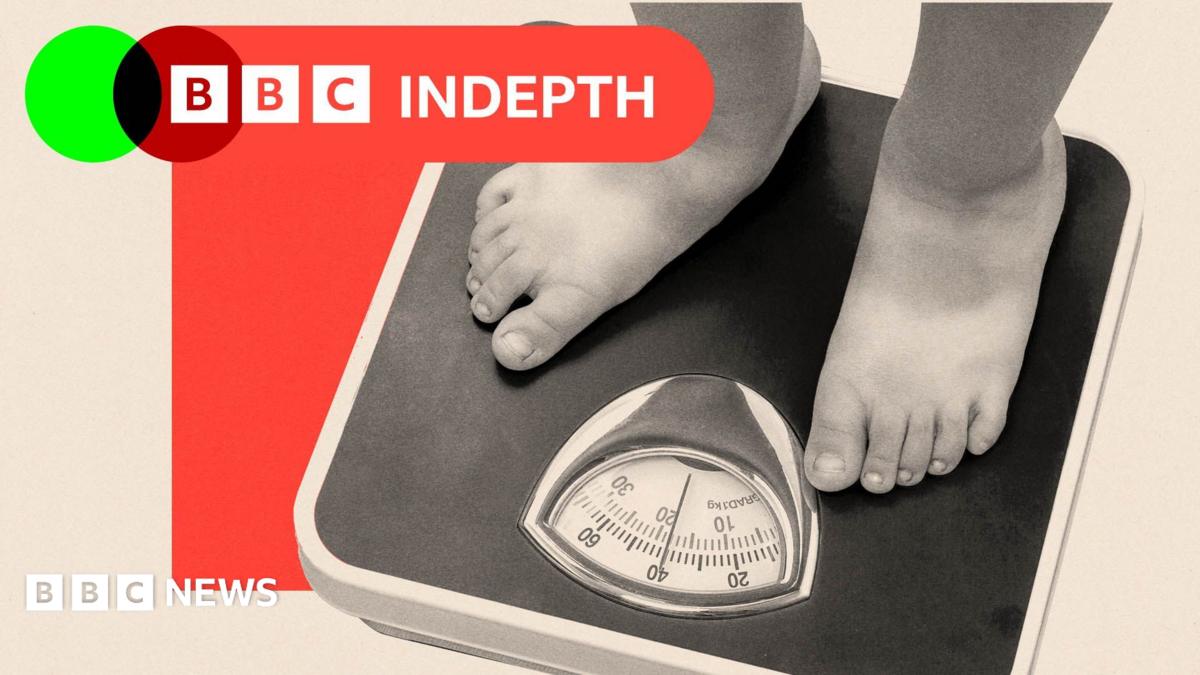
There has been no extensive research in Britain on why school absence might be causing obesity, but doctors who have spoken to the BBC have their theories.

One factor is diet. Since the 2000s – when all four UK governments passed laws to make school lunches healthier – it’s become much harder to find high-sugar or high-fat foods in most canteens. At home, those restrictions don’t apply. By 2010, a few years after the new laws were introduced, a study from the University of Leeds found that only 1.1% of home-packed lunches met the nutritional requirements that would apply to a meal bought by a child at school.

And a US study from earlier this year found that child obesity rose in states where a universal free school meal programme was withdrawn in 2022 (presumably because it prompted children to eat unhealthy food at home).

“While school food is not as good as it should be, there are some regulations around it,” says Keith Godfrey, an epidemiology professor at the University of Southampton. “Whereas in the home environment, it’s much more variable in terms of what children receive.”

Advertisement

Exercise also matters. A British study from 2014 looked at step counts measured with electronic sensors, and found that most children are more active on school days than weekends.

Source link

Continue Reading

NewsBeat

San Miguel is back in Wetherspoons to keep summer going

Published

on

San Miguel is back in Wetherspoons to keep summer going

After two years away, San Miguel is back in Wetherspoons — following a wave of demand from drinkers who made it clear they wanted their favourite Spanish beer brand back.

And to celebrate its return, San Miguel is bringing one of Britain’s most familiar summer holiday rituals to the local: the great towel dash.

Because nothing says British holiday quite like the race to reserve a sunbed. The towel over the lounger. The strategic early alarm. The unspoken battle for the best spot by the pool.

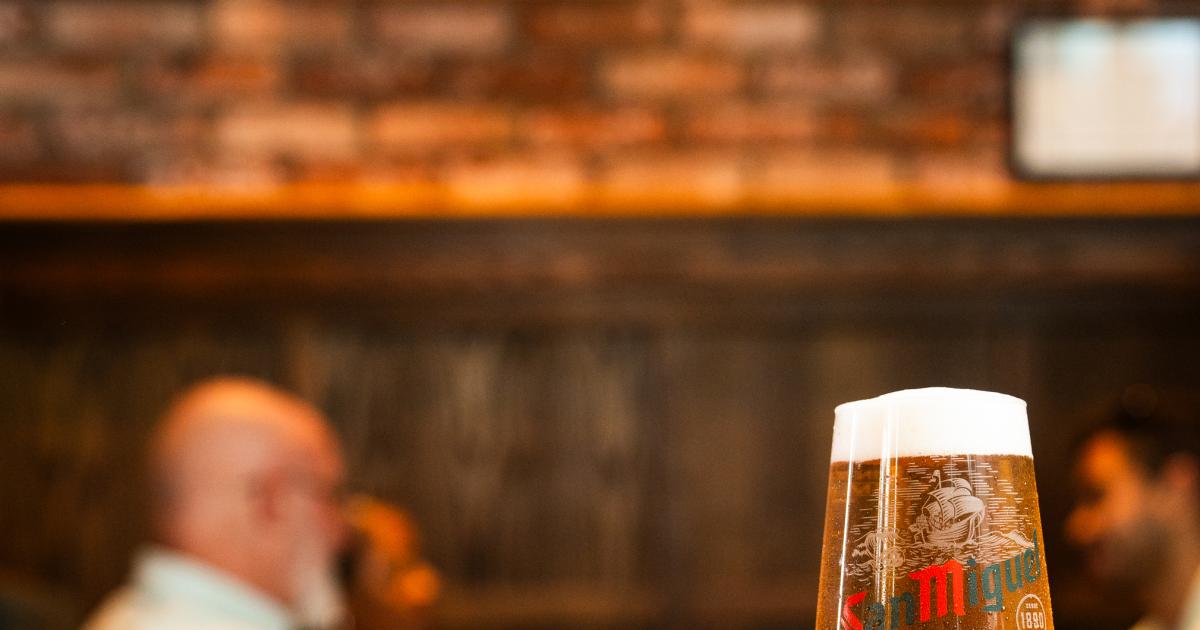
Wait is over: Sam Miguel is back in Wetherspoons – just in time to keep summer going (Image: Wetherspoons)

Now, San Miguel is giving the ritual a Spanish Summer twist — bringing it out of the resort and into the pub.

Advertisement

Enter the Great San Miguel Towel Dash.

From Thursday 3rd September, the first customers through the doors at selected Wetherspoons pubs will be met by holiday-style attendants ready to hand out limited-edition San Miguel towels and complimentary ice-cold San Miguel pints.

The towel dash will take place across three cities:

·       Thursday 3 September – London: The Sir Alexander Fleming

Advertisement

·       Friday 4 September – Birmingham: Figure of Eight

·       Saturday 5 September – Manchester: Paramount

Each activation will run from midday, on a first-come-first-serve basis. There’ll be a limited number of San Miguel towels up for grabs, but if you miss out, don’t panic. Bring your own towel and you’ll still have the chance to bag a free pint, but just like on holiday, there are only so many prime spots.

The mission is simple: get there first, grab your towel and claim your spot with a refreshing San Miguel.

Advertisement

Just like on holiday, there are only so many prime spots — and only the quickest will get their hands on the coveted towel and free San Miguel pint.

It’s a playful nod to a ritual that millions of Brits know all too well, turning the familiar sunbed scramble into a reason to make the most of San Miguel’s long-awaited return.

And that’s exactly what the Spanish summer is all about.

San Miguel believes summer shouldn’t be confined to a few weeks of annual leave or a flight to Spain. It’s a feeling you can bring into everyday life — whenever, wherever and however you choose.

Advertisement

The campaign encourages us to hold on to that holiday attitude for longer: turning an after-work pint into a long evening, stretching a catch-up with friends into the night, or simply choosing to stay out a little longer.

Throughout September, San Miguel is on a mission to keep the Spanish Summer spirit going. With San Miguel back in Wetherspoons, that Spanish Summer feeling is now closer to home — at the local, whenever you’re ready for it. And San Miguel isn’t stopping there. Spanish Summer celebrations will culminate with San Miguel Day on 29 September.

Full details on ticketing and the line-up will be shared via San Miguel’s social channels. For more information, please contact sanmiguel@wcommunications.co.uk.

Ed Hussey, Senior Brand Manager at San Miguel UK, said: “When San Miguel left Wetherspoons, Britain made it pretty clear that they wanted us back. So, we wanted to make our return feel like something worth celebrating. The towel dash felt like the perfect way to do it. It’s one of those brilliantly British holiday rituals that everyone knows — and we’re bringing it to the local, with a San Miguel in hand. Because Spanish Summer doesn’t have to end just because the holidays do.”

Advertisement

One last taste of Spanish summer.

On 29 September, San Miguel Day will give Britain one more reason to keep summer going, with the brand’s annual celebration of Spanish summer attitude, anytime, anywhere.

To mark the occasion, San Miguel will take over the popular Queen of Hoxton in London for a true Spanish Summer rooftop party. Guests arriving with their San Miguel towel in hand will receive complimentary entry and a free ice-cold San Miguel — giving summer one final hurrah before autumn takes over.

Advertisement

Source link

Continue Reading

NewsBeat

RICHARD EDEN: Night Oasis Noel gave The Sun’s editor a slap

Published

on

David Yelland

He’s the one-time editor of a raucous red-top newspaper who now panders to the luvvie set on a BBC podcast.

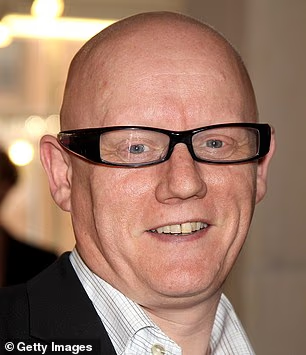
But this week David Yelland inadvertently secured an infinitely wider audience when he derided Tory MP James Cleverly for his decision to run for London mayor, confusing him with Kwasi Kwarteng by describing him as Liz Truss’s Chancellor – prompting Cleverly to reply on social media: ‘David, I’m the other black one.’

Yelland, 63, said that ‘making an admittedly idiotic error then saying sorry does not make you a buffoon’. But perhaps there’s no need for him to establish his credentials in that regard.

Dominic Mohan, Yelland’s showbiz correspondent at The Sun in the 1990s, recalls a party at a club in London’s West End, spent in the company of Noel Gallagher and models Kate Moss and Helena Christensen. Yelland was not invited, but ‘stumbled in’.

Advertisement

‘He hadn’t really done his homework,’ Mohan tells me, remembering events which he describes compellingly in his new book, 1996: My BackStage Pass To The Wildest Year Of Britain’s Wildest Decade.

Begging to be introduced to Gallagher, Yelland insisted he was a fan. ‘I had no choice,’ recalls Mohan, who pleaded with Noel to ‘treat him gently’.

Gallagher felt unable to oblige. ‘What? You’re the actual editor of The Sun? You bald ***t.’ Yelland replied that he’d seen Oasis ‘perform live at Madison Square Garden’.

Advertisement
Noel Gallagher

Dominic Mohan, David Yelland’s showbiz correspondent at The Sun in the 1990s, recalls a party at a club in London’s West End, spent in the company of Noel Gallagher

‘Oh, really?’ Noel retorted. ‘What did we open our set with that night?’ ‘Oh, I can’t, er, remember,’ stammered Yelland, adding: ‘I’m also a massive Manchester City fan, like you, Noel…’

‘In that case,’ Gallagher replied, ‘who scored the winning goal when we were last promoted to the top division?’

The clueless Yelland was then, Mohan says, slapped about the head by Gallagher.

Advertisement

Cleverly’s let him off lightly.

On the day Andy Burnham was blaming our economic woes on the Thatcher boom, one of Mrs T’s original Cabinet ministers was taking his leave of parliament. Michael Jopling, government chief whip in 1979, has retired from the House of Lords aged 95. It was Jopling who said of his colleague Michael Heseltine: ‘The trouble with Michael is that he has had to buy all his own furniture.’ Given that Jopling’s father was an auctioneer, you might have thought he would have approved of that. The old boy will now observe politics from the fastness of his mini stately home, Ainderby Old Hall near Thirsk, North Yorkshire. 

Imagine… Beatle legend Lennon’s first grandchild 

Sean Ono Lennon, 50, and fellow musician Charlotte Kemp Muhl, 39, have aparents to Aurelius

Sean Ono Lennon, 50, and fellow musician Charlotte Kemp Muhl, 39, are parents to Aurelius

John Lennon has a grandchild, 46 years after he was shot dead in New York at the age of 40.

Advertisement

The Beatles star’s younger son, Sean Ono Lennon, 50, is celebrating the birth of his first child with fellow musician Charlotte Kemp Muhl, 39.

They have named the boy Aurelius.

Lennon’s elder son, Julian, 63, whose hits include Too Late For Goodbyes, once blamed his father’s poor parenting skills for his lack of children. ‘He was young and didn’t know what the hell he was doing,’ Julian said. ‘That’s the reason I haven’t had children yet.’

Lennon was 22 when his first wife, Cynthia, gave birth to Julian.

Advertisement

Sir Paul McCartney wrote Hey Jude, originally Hey Jules, to console Julian after his father left Cynthia.

Sean’s mother is Lennon’s widow, Yoko Ono, 93.

Why Strictly will be a holiday for Josh

Strictly Come Dancing has not yet returned, but Josh Widdicombe is already exhausted.

He joins Emma Willis and Johannes Radebe to host the new series when it airs in a couple of weeks, but the comedian, 43, says spending the summer looking after his two children has left him at breaking point.

Advertisement

‘The amount of people that have said to me, “It’s good to have a rest before your busy autumn,” ’ he says. ‘Yeah, I’m really going to be knackered with my busy autumn of working two days a week compared to having holidays where you’re parenting seven days a week.

‘You just get no time to yourself.’ He adds: ‘I’m knackered.’

Josh Widdicombe joins Emma Willis and Johannes Radebe to host the new series

Josh Widdicombe joins Emma Willis and Johannes Radebe to host the new series

Known for his acclaimed biographies of Napoleon Bonaparte and Winston Churchill, historian Andrew Roberts can look forward to a major event in his own timeline.  

Advertisement

Lord Roberts’ son Henry, 29, has got engaged to Annabel Grant, also 29, whom he met at Bristol University.

He clearly impressed her with his stamina. ‘I ran 1,000km [621 miles] in 22 days on Australia’s longest straight road, which stretches from Balladonia to Caiguna in the Outback for 149km,’ says Henry, who works for Boris Johnson’s former right-hand woman Munira Mirza at Civic Future. ‘I just felt like doing it.

‘I hope to run across America with Annie after we’re married.’

Was Holly ‘tipsy’ on One Show?

Amol Rajan thinks Holly Willoughby may have been tipsy on The One Show when he was host

Amol Rajan thinks Holly Willoughby may have been tipsy on The One Show when he was host

Advertisement

Amol Rajan, who presented Radio 4’s Today programme for the last time yesterday, has rushed to the defence of Holly Willoughby after critics mocked her attempt at making jerk chicken on her new YouTube show.

‘Holly is not a mate, and I don’t know her well,’ asserts Rajan, who plans to launch his own online channel. ‘I met her only once, when I was hosting The One Show and she was [a] guest, a bit tipsy if I recall.’ Whether that was before, during or after the broadcast, Rajan does not clarify.

But of her cookery skills, or lack of, he says: ‘Can we please move to a position in our country and in our culture where the default is to applaud those who give it a go; who pick themselves up and dust themselves off and try and try again, by failing better.’ Not exactly ringing praise…

Source link

Advertisement
Continue Reading

NewsBeat

US Open 2026 results: Aryna Sabalenka continues title defence with one of the quickest Grand Slam wins of her career

Published

on

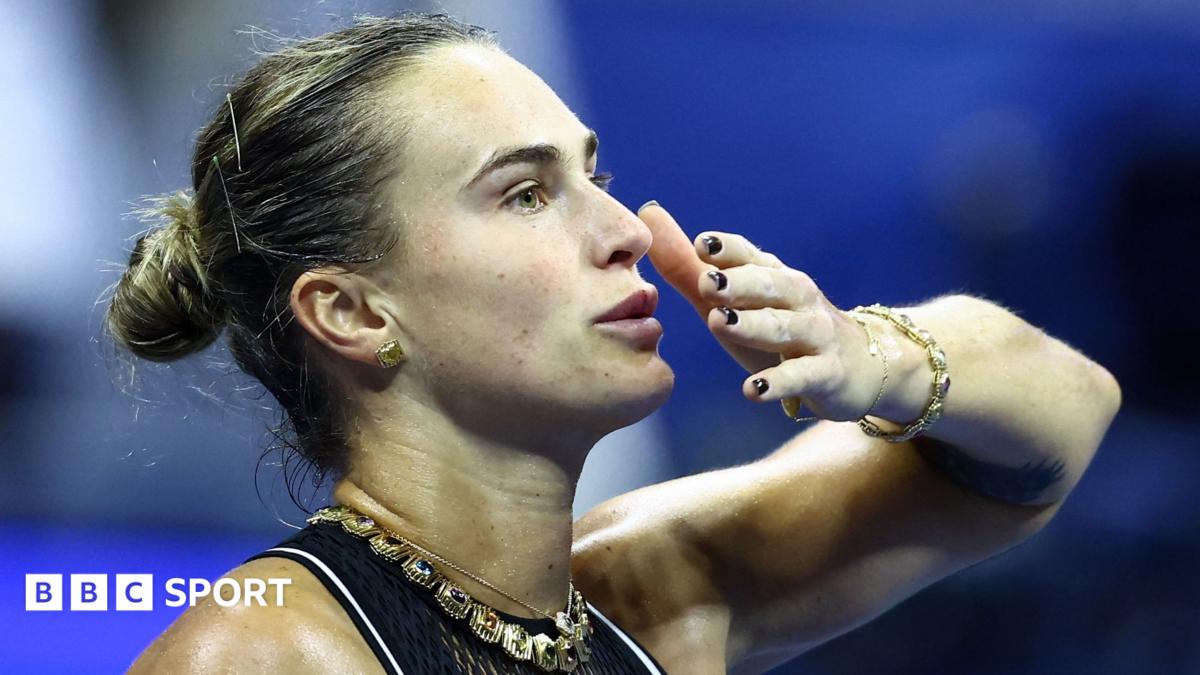
Aryna Sabalenka blows a kiss to the US Open crowd

Sabalenka’s pace and power was too much for world number 160 Iatcenko, who managed just three winners compared to the 24 put away by the top seed.

Iatcenko looked a bundle of nerves in the biggest match of her career, but composed herself to get on the scoreboard for 5-1 and immediately broke out into a relieved smile.

It was merely respite as Sabalenka held to love in less than 90 seconds to clinch the opening set.

Despite only being on court for 24 minutes, Iatchenko decided she wanted a bathroom break to change her kit – but more likely for a mental reset than anything else.

Advertisement

Sabalenka kept loose while she waited by practising her serves and maintained her rhythm as she surged a double break ahead for 3-0 in the second set.

It was not all plain-sailing for Sabalenka as she lost serve in a sloppy fourth game, but reasserted her authority with two more breaks as Iatchenko was taught a harsh lesson.

The Russian can console herself with the knowledge she has gained valuable experience against the world number one on the biggest court on the planet – and a bumper paycheck.

Coming into the US Open, she had earned $300,000 (£220,000) in her career but takes another $190,000 (£140,000) home from New York to reinvest into her future.

Advertisement

Earlier on Wednesday, third seed Pegula continued her quest for a maiden Grand Slam singles title with a comfortable victory over fellow American Sofia Kenin.

Pegula also has a shot of replacing Sabalenka as world number one if she wins the title, as does fourth seed Coco Gauff, and kept her dream alive with a 6-3 6-1 win.

There were also straight-set wins for Wimbledon runner-up Karolina Muchova, two-time major semi-finalist Marta Kostyuk and teenage American sensation Iva Jovic as the patten of few shocks in the women’s draw over the opening two rounds continued.

Source link

Advertisement
Continue Reading

NewsBeat

when snoring is more than a noisy night

Published

on

when snoring is more than a noisy night

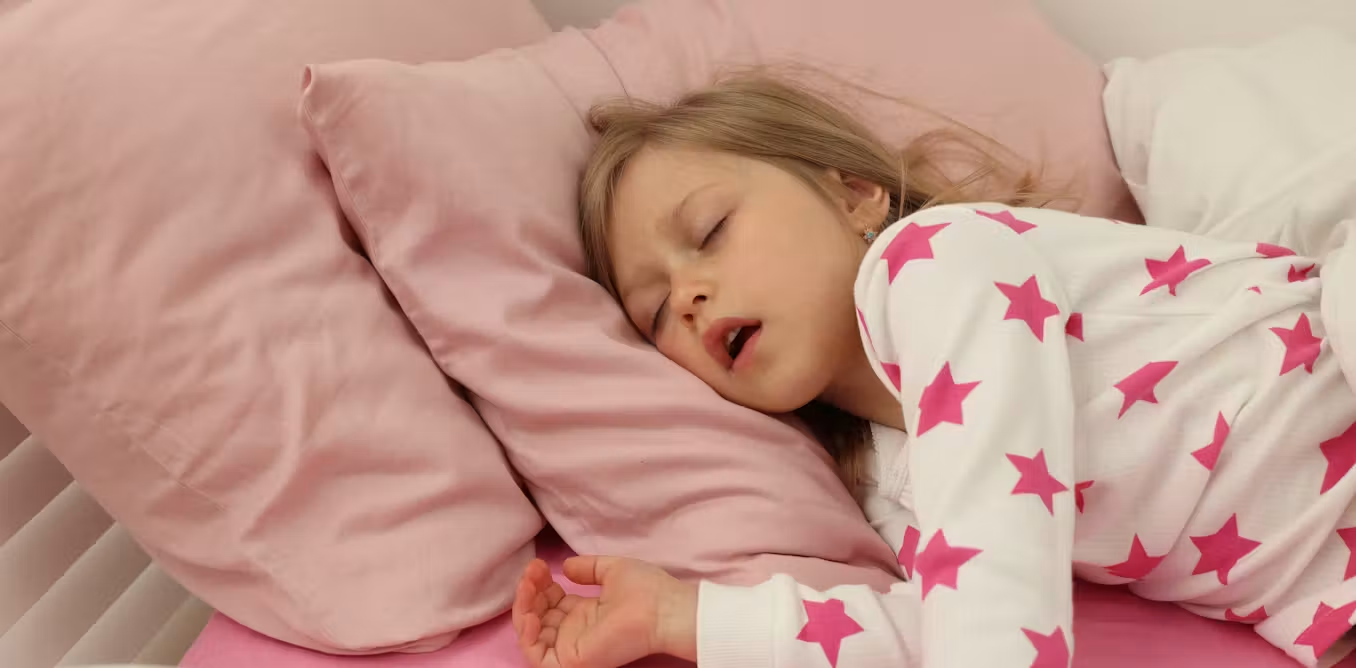
A child who snores loudly every night might seem like a funny sight. But if that snoring accompanies repeated narrowing or blockage of the airway, the effects can reach far beyond a noisy night.

Obstructive sleep apnoea is often associated with adults who snore and struggle to stay awake during the day. Children can develop it too. Its prevalence is difficult to pin down: a 2024 systematic review of 30 studies found that recent estimates in preschool children ranged from 12.8% to 20.4%, but definitions and testing methods varied considerably. Only two population studies used a full overnight sleep study, so the true figure remains uncertain.

In children, habitual loud snoring is an important warning sign. Parents may also notice mouth breathing, restless sleep, pauses followed by gasps or snorts, or the chest and abdomen working hard to draw breath. Not every child who snores has sleep apnoea, however, and symptoms alone cannot confirm it.

Daytime symptoms

The daytime signs can be less obvious. Rather than appearing sleepy, some children become irritable or unusually active, struggle to concentrate or develop behavioural and learning difficulties. These problems can resemble or worsen symptoms of attention deficit hyperactivity disorder (ADHD). The conditions can also occur together, so this should not be treated as a simple either-or diagnosis.

Advertisement

During sleep, the muscles that help keep the upper airway open relax. In obstructive sleep apnoea, the passage behind the nose and mouth repeatedly narrows or closes. The child then has to work harder to breathe. These episodes can lower blood oxygen and briefly disturb sleep, even when the child does not appear to wake fully.

Repeatedly disrupted sleep is associated with poorer behaviour, learning and quality of life. Research also links childhood sleep apnoea with changes in blood-pressure control and metabolism, including how the body regulates blood sugar, although the severity of these effects varies between children.

In younger children, enlarged tonsils and adenoids are a leading cause. The tonsils sit at the back of the throat; the adenoids are similar tissue behind the nose. Because a child’s airway is narrow, enlarged tissue can leave too little room for air to pass comfortably.

Obesity, differences in the shape of the skull or jaw and allergic rhinitis, which is inflammation inside the nose caused by an allergy, are also associated with greater risk. Research has additionally found associations with asthma and premature birth. Children with some genetic conditions, particularly Down syndrome, have a much higher prevalence. Globally, obesity among five to 19-year-olds rose from about 2% in 1990 to about 8% in 2022, according to a large analysis of population studies.

Advertisement

Air pollution may contribute too, but the evidence requires caution. Observational studies have linked exposure to fine airborne particles with habitual loud snoring and other breathing problems during sleep. Such studies cannot establish that pollution causes obstructive sleep apnoea.

A child who regularly snores loudly, has pauses or gasps, breathes through their mouth or seems to struggle for breath during sleep should be assessed by a doctor. A GP may refer the child to a paediatrician, sleep service or ear, nose and throat specialist.

The reference test is polysomnography, usually called an overnight sleep study. Sensors record brain activity, airflow, breathing effort, heart rate and blood oxygen, allowing clinicians to see whether breathing is repeatedly obstructed and how severely sleep is affected.

A short video of the child sleeping may also help. Preliminary research on smartphone recordings suggests that they could help clinicians screen and prioritise children, although they cannot diagnose sleep apnoea or replace a sleep study.

Advertisement

Treatment

Treatment depends on the cause and severity. When enlarged tonsils and adenoids are obstructing the airway, removing them is often the first treatment offered. In a randomised trial involving 464 children, surgery improved symptoms, behaviour, quality of life and sleep-study findings compared with watchful waiting. It did not produce a significantly greater improvement on the trial’s main objective test of attention and the mental skills used to plan and control behaviour.

An operation does not always resolve the condition. Up to 40% of children may have persistent sleep apnoea after surgery, with higher rates among those with obesity, severe disease or other medical conditions.

For mild cases, a clinician may recommend monitoring or treating nasal inflammation. Anti-inflammatory steroid nasal sprays may help selected children, but the evidence is mixed. Mouth and facial muscle exercises are sometimes considered, although the supporting studies are small and inconsistent. Evidence for orthodontic devices in children also remains limited.

If surgery is unsuitable or sleep apnoea persists, continuous positive airway pressure (CPAP) can hold the airway open by delivering gently pressurised air through a mask during sleep.

Advertisement

Some mild cases resolve as children grow, but others persist or worsen. Follow-up is therefore important. Routine child health checks should include a question recommended in paediatric guidance: “Does your child snore?”

Obstructive sleep apnoea is treatable but easy to miss. When a child is restless, unusually active or struggling to concentrate, asking what happens after bedtime may reveal an important part of the picture.

Source link

Advertisement
Continue Reading

Trending

Copyright © 2025