
Politics
Will There Be A Practical Magic 3? Sandra Bullock Already Has Ideas


Practical Magic 2 hasn’t even hit cinemas yet, but Sandra Bullock already has an idea for a third instalment.
The cult classic film’s star alluded to the possibility of a Practical Magic 3 in a new interview with Vanity Fair.
“We’ll do a number three if this takes off,” Sandra said, claiming a third movie would “pass the torch to the girls”, referencing her on-screen daughters Joey King and Maisie Williams, who play Kylie and Antonia Owens in the upcoming sequel.
Practical Magic 2, the follow-up to the 1998 autumnal favourite, brings back Sandra and Nicole Kidman as the magical Owens sisters, with Stockard Channing and Dianne Wiest also returning as the guiding aunts who raised them.
However, this time around, Nicole and Sandra step into the role of advisers, with an official synopsis for the film teasing: “A multi-generational family of witches, cursed to be loveless for centuries, attempts to break the spell by confronting dark secrets and sacrificing for each other.”
Practical Magic 2 centres on Kylie and Antonia after they inherit the family’s magical legacy, unaware of the curse that comes with someone falling in love with them.
Sandra told People earlier this week that honouring generations of women inspired her and Nicole to return to the Owens’ family story.
“We forget that our mothers and grandmothers were young women with dreams and hopes and desires as well. And we never looked at them as human beings like that,” the Oscar winner explained.
“They were just Mom and Grandma. So in this, we get to look behind the curtain and go, ‘I didn’t know you felt that way, I didn’t know you were longing’.”
Sandra’s comments about any upcoming film focusing on the next generation come days after the original film’s Kylie Owens, Evan Rachel Wood, spoke out about being replaced by Joey King without being notified.
“I really appreciated Joey King reaching out to me, because no one who worked on the original film did,” Evan said in an Instagram story earlier this week. “She’s a sweetheart.”
Director Susanne Bier told Variety at the premiere earlier this week that replacing Evan with Joey wasn’t “a personal thing”.
“It was that the kids in the story are right out of college, and so it wasn’t really a question, you know? We had to recast,” she explained.
Practical Magic 2 releases in cinemas on 11 September

Credit: Adobe Stock
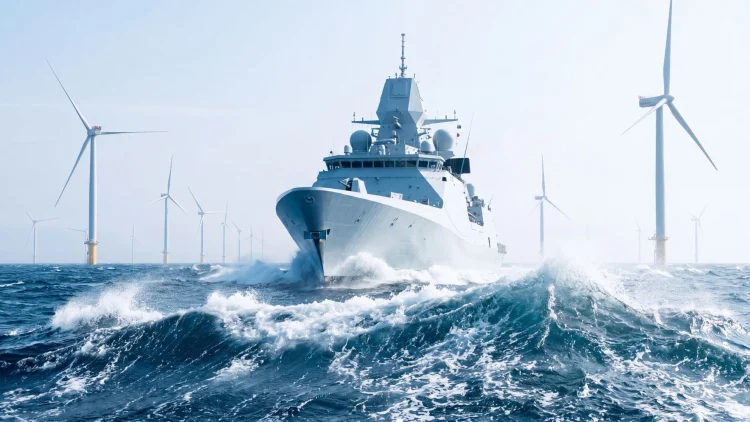
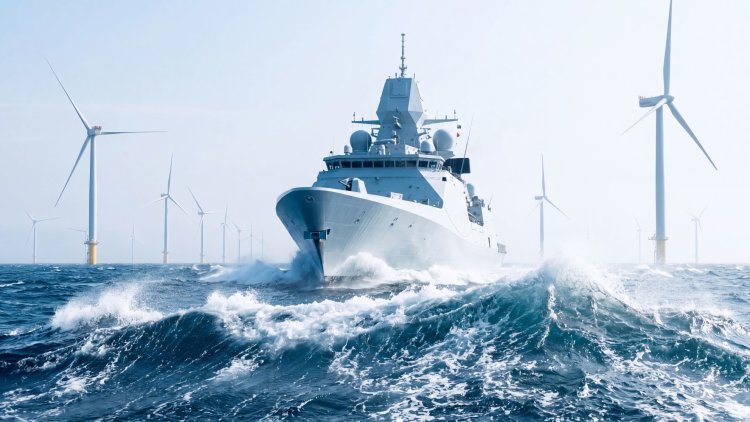
Britain’s energy security can no longer be separated from its national security. Reinforcing Britain’s offshore wind fleet is critical to the UK’s strategic resilience
Britain’s energy security debate is evolving. Alongside the familiar trilemma of affordability, sustainability and security a fourth dimension has emerged: resilience in an age of geopolitical confrontation.
From suspected sabotage of subsea infrastructure in the Baltic Sea to cyberattacks on critical energy assets and growing concern over hostile activity in the North Sea, energy systems are no longer merely economic assets. They are critical national infrastructure.
For the UK, the answer is not simply to generate more clean electricity. It is to build an energy system that is more secure, more resilient and rooted in British industrial capability.
That makes offshore wind about much more than clean energy targets and net zero.
As the UK develops one of the world’s largest offshore wind sectors, its wind farms and associated infrastructure are becoming increasingly important national assets. Offshore wind farms are vast networks of sensors, communications systems, subsea cables and digital infrastructure operating across strategically significant waters. By their nature they are exposed to attack by hostile nations.
With the right levels of protection, that infrastructure could do more than generate electricity.
ORE Catapult’s soon-to-be-published report, the “Offshore Wind Energy Security, Protection and Resilience study”, demonstrates that the same systems that support offshore wind operations could help strengthen Britain’s defence capabilities. Distributed Acoustic Sensing systems with integrated fibre-optic cables could potentially support the detection of unusual vessel movements and threats to critical subsea infrastructure. Offshore substations could provide platforms for monitoring equipment, while operational data and sensor networks could contribute to a better understanding of activity across the air, surface and subsea domains.
The UK’s 2025 Strategic Defence Review signals a growing role for the Royal Navy in protecting critical undersea infrastructure and enhancing maritime surveillance. The opportunity now is to ensure offshore wind contributes to that mission. Policymakers must move beyond seeing renewables as solely part of energy and climate policy and recognise them as strategic infrastructure central to national resilience.
Building greater security into offshore wind infrastructure from the outset could create demand for precisely the high-value capabilities Britain needs more of; advanced manufacturing, digital technology, subsea engineering, autonomous systems and skilled technical jobs.
And crucially, these opportunities can generate investment and employment in the industrial towns, coastal communities and regional economies that will power Britain’s future economy.
But the benefits need not be confined to coastal areas. The security of offshore wind is a national industrial opportunity, with supply chains, technology companies and research organisations spread across the country. From Plymouth to Aberdeen groundwork is already being established.
The policy implications are clear; embed security-by-design into offshore wind developments; create stronger partnerships between industry, defence, government and regional leaders; and invest in the technologies and skills needed to protect critical national infrastructure. ORE Catapult’s work shows what that means in practice: adapting designs, strengthening operational processes, creating new partnerships and fundamentally rethinking the relationship between energy infrastructure and national security.
Energy security is national security, and both can define our future energy system, whilst simultaneously becoming engines of generational regional growth.


6 min read
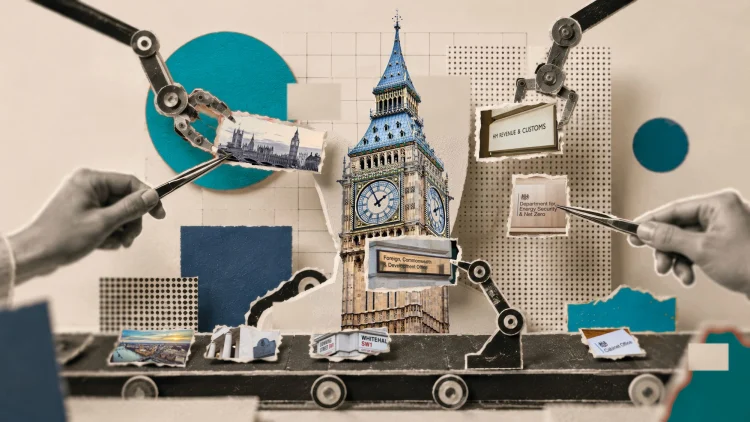
Britain’s Civil Service has evaded responsibility for the decline of the state for too long – it is time to restore the primacy of ministerial power, argues Danny Kruger
For decades, incoming British administrations have succumbed to a quiet, insidious delusion: the belief that winning a parliamentary majority translates automatically into the exercise of power. Political parties arrive in Whitehall expecting the ancient machinery of state to passively translate their democratic mandates into reality. Instead, they encounter a system engineered, above all, for its own self-preservation.
The modern Senior Civil Service is not an agile, neutral instrument awaiting an operator; it is a self-perpetuating administrative state, risk-averse, process-driven and structurally insulated from the consequences of failure. The historic compact between the British people and their elected representatives has broken down, replaced by bureaucrats that treat democratic mandates not as binding instructions but as temporary disruptions to be managed and absorbed.
This institutional decay lies at the very root of Britain’s national stagnation. Over generations, authority has systematically drained away from elected ministers and pooled in the dark corners of Whitehall, especially in the network of unaccountable quangos that have appeared in the last two decades. When public services deteriorate, infrastructure projects stall, or control of our border is lost, the civil servant who controlled the advice, managed the budget and operated the bureaucratic levers faces no sanction whatsoever. Meanwhile, the minister – with no practical ability to direct those levers or even choose their own staff – takes the blame.
This is not democratic stewardship; it is a profound abdication of governance that hollows out our civic institutions and breeds legitimate public cynicism toward the entire parliamentary system.
At Reform UK, we will confront this constitutional breakdown head on. As head of our ‘Preparing for Government’ team, I will ensure that when Nigel Farage enters No 10 we do not fall into the administrative trap that has ensnared successive governments.
Reform is building a rigorous operational setup capable of executing systemic change from day one. We recognise that the window of opportunity for an incoming government to effect structural reform is brief, while the economic, social and cultural challenges facing Britain are monumental. When permanent secretaries meet our future ministers and their teams, they will not be expected to nod politely at vague political aspirations while quietly shunting them into administrative oblivion. They will be met with explicit, non-negotiable operational directives for transforming the state, grounded in the absolute principle that civil servants answer to ministers, ministers answer to Parliament, and Parliament answers to the sovereign British people.
The work of my team in the Preparing for Government unit is focused on the painstaking, unglamorous mechanics of institutional restoration. We will overhaul the Civil Service and ministerial code, establishing clear lines of accountability, and restoring the actual, rather than merely formal, responsibility of ministers for policy delivery. We will dismantle the Cabinet Office, the bloated centre where executive decision making goes to die. We will split the conflicted role of cabinet secretary into focused, functional parts: an agile political chief of staff to advise the PM, a chief secretary responsible for Cabinet governance, and a dedicated CEO responsible for the administration of the Civil Service.
Furthermore, we will give ministers the long-overdue power to appoint and dismiss their permanent secretaries and immediate advisory teams, ending the absurdity of a bureaucracy that effectively selects its own overseers. To address the problem of ‘posh generalists’ who float from department to department making policy without domain expertise, we will proactively identify proven talent from the private sector and civil society to enter the Senior Civil Service. We will streamline processes through the ambitious adoption of artificial intelligence, overhaul performance management to reward genuine capability, and eliminate the pervasive DEI industry in favour of a culture dedicated solely to public service.
Concurrently, the vast majority of quangos will be ruthlessly pruned or absorbed back into departments, returning public authority directly to accountable ministers.
Over generations, authority has systematically drained away from elected ministers and pooled in the dark corners of Whitehall
Contrast this comprehensive, constitutional approach with the Labour alternative under Andy Burnham. His recent machinery of government changes represent a textbook case of technocratic tinkering: shuffling organograms and changing executive titles while leaving the central engine of administrative power completely untouched. By scattering economic policy across competing institutional hubs in the Treasury, the Department for Business, Innovation, Science and Trade and a glossy new ‘No 10 North’, Burnham’s administration has not decentralised power – it has merely multiplied institutional friction and created entirely avoidable structural conflict.
Worse still, the Prime Minister has fallen victim to the Senior Civil Service’s favourite trick: allowing politicians to announce superficial reorganisations while the top mandarins quietly consolidate actual authority. Under Burnham’s watch, Cabinet Secretary Dame Antonia Romeo has successfully expanded her institutional grip, now commanding the Office of the Prime Minister and Cabinet, the Cabinet Office, ‘No 10 North’ and the Civil Service simultaneously. To reflect her supremely powerful position, she was promptly given a new office right next to the Prime Minister’s study. But be under no illusions: once Burnham’s star fades, she will move fast against her benefactor to defuse any changes that threaten the primacy of the Civil Service.
While Burnham shuffles the deck within the parameters permitted by Whitehall, Reform UK intends to change the rules of the game entirely. Restoring the British state cannot be achieved through management consultancy buzzwords or superficial departmental reshuffles. It requires a fundamental shift in political philosophy: a return to a Burkean understanding of institutional stewardship where democratic sovereignty is respected, executive power is properly accountable, and the administrative apparatus serves the public interest rather than its own institutional hegemony.
The work we are undertaking every day in the Preparing for Government team is the essential prerequisite for everything else we hope to achieve if we win office. A functional, accountable state machine will ensure that our promises on border security, economic growth and public services can be delivered quickly. In contrast, we can observe in real time how Burnham’s failure to prepare for the realities of power is proving to be his preparation for failure.
We will not make the same mistake. When the British people grant us their mandate, we will be ready to govern, and ready to reform.
Danny Kruger is the Reform UK MP for East Wiltshire

It’s cosy season. Finally! After a long and hot summer, the collective urge for a little chill in the air has been palpable.
Instead of sweating through your daily commute, you’ll be wrapped in cosy argyle jumpers, sipping on autumn-inspired hot coffees, and bundling up in scarves and hats.
September might be the start to the school year, but who’s to say it can’t usher in a new mindset for adults too?
One of the best ways to embrace the new season – I think – is to decorate your home.
It’s where you’ll be spending most of your time for the foreseeable, so you might as well deck it out in the full works: browns and plaids, pumpkins, and fluffy textured blankets.
If you’re as ready to cuddle up on the sofa as I am, I’ve rounded up the best cosy and cute autumn home decorations – including candles, blankets, pumpkin trinket bowls, and an adorable hedgehog doorstop.
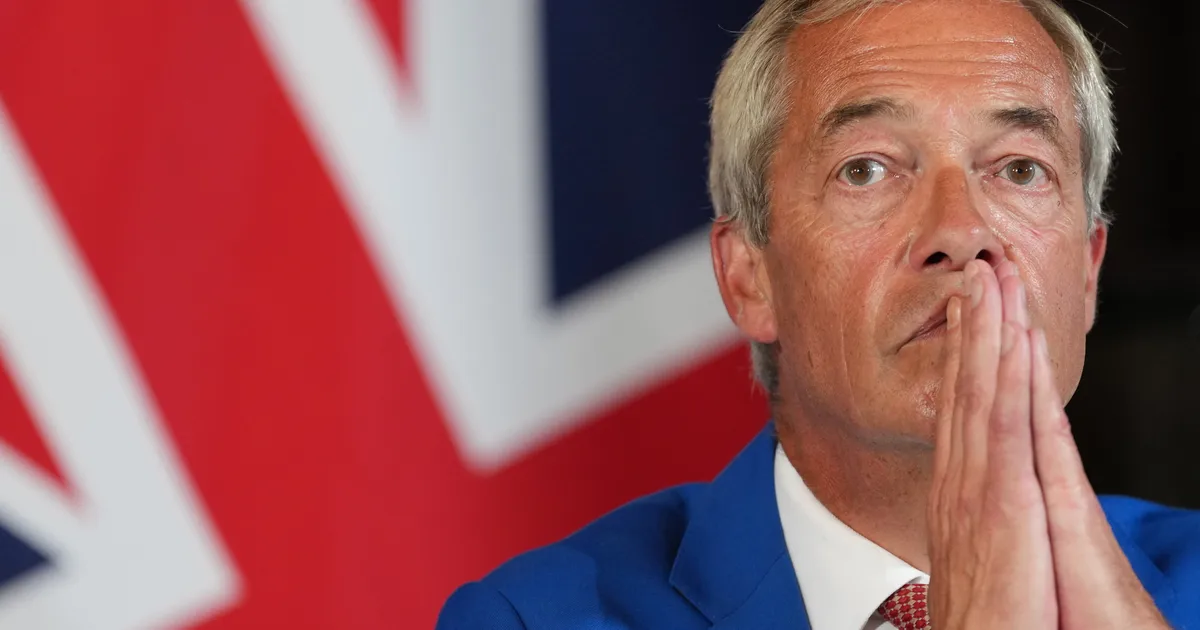
Nigel Farage has insisted Reform UK has done “nothing wrong” after a sting operation raised questions over the party’s foreign donations.
Speaking just as Reform’s annual conference begins in Birmingham, the party leader tried to shrug off an explosive undercover report from Channel 4 News which has already caused two of his aides to step down.
Investigative journalists from Verbatim have accused the party of allegedly taking funding from a US company to commission three supposedly independent polls at £32,500 earlier this year.
Reform’s head of policy James Orr and Farage’s close aide Dan Jukes organised the donation. They were unaware the donors were actually undercover reporters from the investigative group Verbatim.
The journalists, posing as an American father and his British son “William Lockwood”, also suggested donating £500,000 to Reform UK.
British electoral law says political donations can only be made by someone eligible to vote in the UK or a UK-registered company.
Jukes allegedly proposed a way for them to work around the law by sending the US funds via the British son.
Farage spoke out for the first time about the investigation on Friday morning, telling LBC’s Nick Ferrari at Breakfast: “The party has broken no laws. The party has not taken any dodgy money or anything like that whatsoever.”
He accused the reporters of “entrapment” after getting “a couple of our contractors to say things that perhaps should not have been said”.
The Clacton MP admitted: “I’m not happy about it.”
He also defended the polls themselves, saying: “There’s no question of illegality over the polling whatsoever.
“Whilst the poll benefited Reform, it wasn’t commissioned by Reform. It had nothing to do with Reform.”
He also claimed “the polling is not even an issue”, adding: “The party has not done anything wrong, but entrapped conversations don’t look good, and that’s why we’ve taken the action we have.”
On his top allies stepping down, Farage added: “The issue is when they talked about putting money in that might have come originally from America… But on the face of it, they said things that shouldn’t have been said.”
Reform UK has launched an internal investigation over the incident.
Listen to Commons People, the podcast that makes politics easy. Every week, Kevin Schofield and Kate Nicholson unpack the week’s biggest stories to keep you informed. Join us for straightforward analysis of what’s going on at Westminster.

Miriam Margolyes is facing criticism over comments she made to Andi Peters during her latest appearance on This Morning.
On Thursday morning, the Bafta was interviewed by Andi and co-host Christine Lampard live on the ITV daytime show about her new book Miriam’s Full English, in which she reflects on modern-day British culture.
During the conversation, Miriam began imitating Christine’s Northern Irish lilt, before turning to Andi and asking: “What accent would be normal for you? What are you?”
“What am I?” Andi responded, to which Miriam said: “Well, you’re a mix, aren’t you? You’ve got a Black daddy and a white mummy?”
“No, no, both my parents are Black,” he then clarified, with Miriam going on to comment more on his skin colour.
Making light of the situation, Andi questioned whether the show’s make-up team had made him a “lighter shade than normal”, before the Harry Potter star remarked: “I think you’re what I would call ‘high yella’. That’s what they call it in America when someone isn’t deeply Black.”
“High yellow” – described by Merriam Webster as a “dated” and “often offensive” term – was historically used to refer to Black people who had a lighter complexion.
When Andi commented that he “didn’t even know there were shades”, Miriam told him: “There are shades. And this is what we have to incorporate…”

Ken McKay/ITV/Shutterstock
Andi then interrupted to say that the producers in his earpiece were “getting nervous now”, but Miriam then said: “Don’t be nervous. We [in Britain] welcome everybody. And that’s what I want to write about in my book!”
This uncomfortable exchange didn’t sit well with many viewers, some of whom claimed that the exchange was removed from the conversation when the broadcast was made available to watch on ITV’s catch-up services.
HuffPost UK has contacted representatives for Miriam Margolyes, Andi Peters and This Morning for comment.
Over the years, Miriam has become known for candid and unfiltered approach in interviews.
However, this has led to controversy on some occasions, including back in 2024, when she, again, asked an interviewer “what are you?” while speaking live on an Australian panel show.
This Morning airs every weekday from 10am on ITV1 and ITVX.
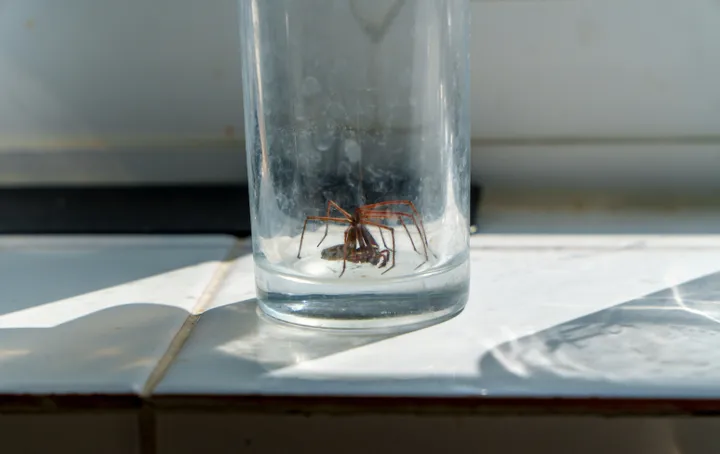
I don’t know about you but I’ve noticed a lot of spiders indoors of late – from the bulbous ones making Halloween-esque webs in my garage, to the smaller ones gracing each and every window frame, to the spindly lass who decided to have a billion babies in a suitcase under my bed (not a fun find).
Autumn is typically deemed peak spider season in the UK – that is, the time when spiders head indoors to find a mate and we see a lot more of them. But are there more this year? And did spider season happen upon us earlier than usual?
Professor Adam Hart, an ecologist, conservation scientist and entomologist at the University of Gloucestershire, told HuffPost UK: “There does seem to be a perception that ‘spider season’ has started slightly earlier this year, and anecdotally I’ve noticed house spiders appearing a little earlier myself.
“I’ve seen several over the last couple of weeks, whereas I’d normally expect them to become particularly noticeable around the beginning to middle of September.”
That said, he doesn’t think it’s “dramatically early” for them to be making an appearance in people’s homes.
“The spiders haven’t suddenly appeared or necessarily come into the house because autumn has arrived,” he added.
“Many house spiders live in and around our homes throughout the year. What changes in late summer and autumn is that adult males become much more mobile as they wander around looking for females, which is why we suddenly see these large spiders running across floors or becoming trapped in baths.”
We’ve also had a pretty hot summer which means windows will have been left open on repeat, giving spiders a free pass to head inside. Another reason why you might be seeing a lot more of them than usual.

How to keep spiders away from your home
Prof Hart noted preventing spiders is “much easier than trying to repel spiders once they’re inside”.
That said, he’s pretty sceptical of some of the more traditional spider deterrents (think conkers and peppermint oil) as there “isn’t convincing evidence that putting these around the home provides reliable protection against spiders”.
So, how can you prevent them from coming inside then? “If people really don’t want spiders entering the house, the most useful measures are physical ones: insect screens on open windows and doors, sealing obvious gaps around windows, doors and pipes, and using draught excluders where appropriate,” he said.
But it’s also worth remembering that spiders are beneficial predators. “They feed on flies and many of the other small invertebrates that share our homes, so if a spider is living unobtrusively somewhere, leaving it alone is often the easiest option,” he added.
The best way to get rid of spiders if they’re freaking you out
Not everyone is enthralled by the prospect of sharing their home with spiders, so if you do spot one, the best way to get it outside again is with a glass and a piece of card.
“Put a glass or other container gently over the spider, slide a piece of reasonably stiff card underneath and carry it somewhere suitable,” said Prof Hart.
“There are also some useful spider-removal products you can buy and their long handles often make them easier to use if you really aren’t keen on spiders.”
If you spot a big old house spider in your home, he suggests popping it in a shed, garage or other sheltered location “because these spiders are strongly associated with buildings and sheltered environments”.
And if you find one in your bath, it’s not necessarily because it’s climbed up your plughole Incy Wincy-style. “Spiders generally fall into baths and then can’t climb the smooth sides. You can remove it with a glass and card, or simply provide something such as a towel over the side that it can climb up,” added the expert.
If your home is particularly appealing to spiders, you might spot the odd egg sac knocking around too. “Firstly, don’t panic. An egg sac doesn’t necessarily mean you’re about to have hundreds of large spiders running around the house,” continued Prof Hart.
“Different species have very different reproductive cycles and the spiderlings that emerge are tiny and disperse.”
If the sac is somewhere unobtrusive, he suggests there’s no need to do anything with it. But if you genuinely don’t want it inside, he recommends “carefully moving it, ideally with the female if she is obviously guarding it, to a sheltered location such as a shed, garage or outbuilding, rather than destroying it”.
Politics
Politics Home Article | Senior Reform UK Aides Step Down After Undercover Report On Donations
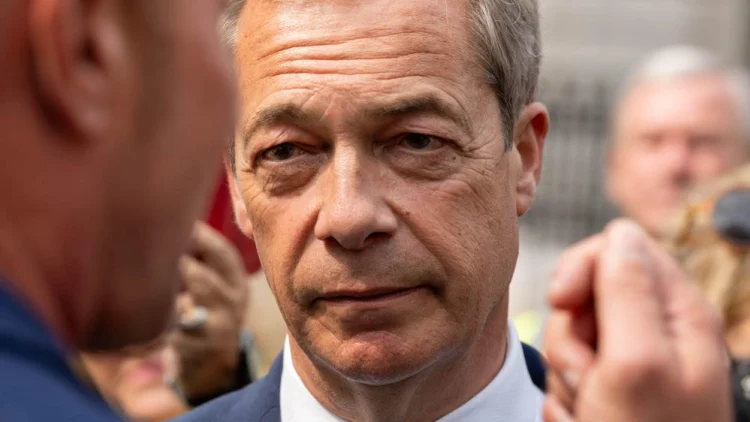

Nigel Farage (Alamy)
3 min read
Two of Nigel Farage’s closest allies have stepped down pending the outcome of an internal party investigation after a report broadcast by Channel 4 alleged that the pair arranged party donations that breached UK electoral rules.
On Thursday, Verbatim and Channel 4 aired an investigation appearing to show senior officials James Orr and Dan Jukes arranging for polls commissioned by the party to be paid with money from an American company.
Over the course of a year, Verbatim used an undercover reporter to investigate whether Reform UK was using foreign donations to fund the party’s activities. The reporter posed as the British-born son of a wealthy American businessman who was looking to give money to Farage’s party.
The donations totalled more than £32,000. Under UK electoral law, foreign companies are not permitted to fund party activities.
Reform UK is currently holding its annual conference in Birmingham, where the party had hoped to regain some of the momentum lost over the past year. Farage is currently under investigation over an undeclared £5m gift he received before becoming an MP.
In the investigation, footage filmed across several meetings appears to show the undercover reporter discussing and agreeing the funding with both Orr, Reform’s head of policy, and Jukes, a senior aide.
While Orr originally claimed that Farage would not be involved, a meeting with the party leader and the undercover reporter in Clacton this summer appeared to show the leader was aware of the transactions, apparently calling the deal “bang for buck”.
On Thursday evening, a spokesperson for Reform UK said the party had been the target of a “hoax” and denied any wrongdoing.
On Friday morning, Reform UK issued another statement, saying that the party had launched an investigation following the broadcast.
The spokesperson said: “Reform UK has launched an investigation following the broadcast of a Channel 4 News programme.
“Both individuals involved have stepped down from their respective positions pending the outcome of the investigation.
“The party believes it is important that the investigation is allowed to proceed independently and without prejudice. No further comment will be made while the investigation is ongoing.”
Reform MP and chairman Lee Anderson has said the party has been advised by a KC that it did not break the law.
But he also told Sky News on Friday morning that there was “no chance” of Orr and Jukes returning to their positions. This was later contradicted by deputy leader Richard Tice who said the possibility of their return was yet to be determined.
Orr said: “I have agreed to step down from my current role at Reform UK pending the outcome of the party’s internal investigation into the conduct of the program, with which I will cooperate fully.”
Since Verbatim and Channel 4 published the investigation on Thursday evening, Labour and the Liberal Democrats have reported the allegations to the Metropolitan police.
A spokesperson for the force said: “We’re aware of media reporting on Thursday, 3 September involving political party donations and an alleged breach of the Political Parties, Elections and Referendums Act 2000 relating to polling.
“We will assess this matter and any information provided to us.”
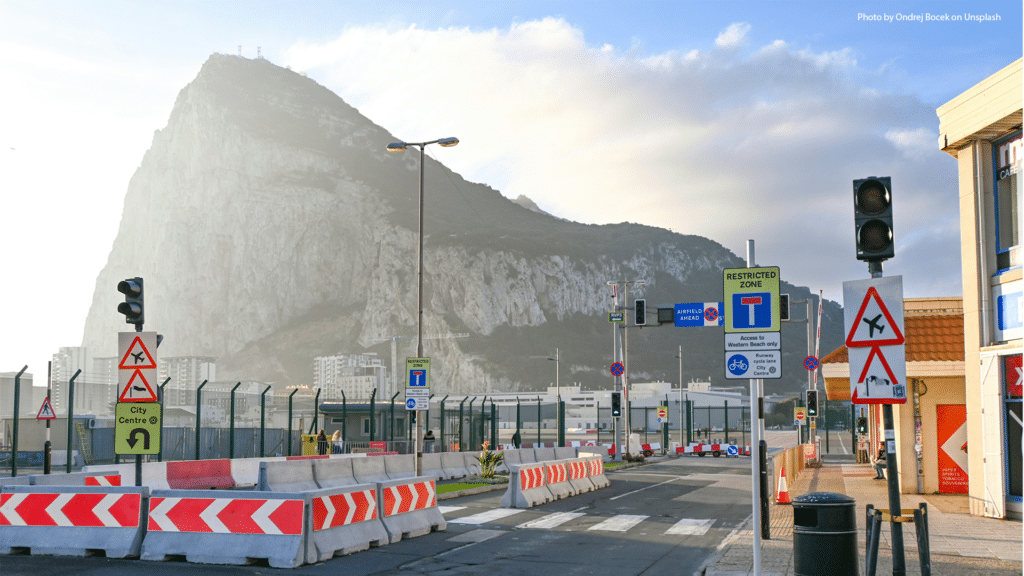
Jamie Trinidad KC explains how the implementation of the UK-EU Agreement in respect of Gibraltar agreed by the UK and EU will affect both Gibraltar and Spain and the border between the two.
Brexit was widely regarded as a disaster in Gibraltar. In the 2016 referendum, 96% of Gibraltarian voters chose Remain, on a turnout of 84%. Gibraltar is British by political choice, but it is geographically and culturally European. Communities on both sides of the Gibraltar-Spain border – now an external border of the EU – depend on its fluidity for their livelihoods. This is not just a question of economics – many families and friendships straddle the border. Brexit therefore posed a unique set of problems, and there was little point viewing them through the ideological prisms of Westminster politics.
Gibraltar was excluded from the scope of the UK-EU Trade and Cooperation Agreement. A ‘Proposed Framework’ agreement concluded by the UK, Gibraltar and Spain on New Year’s Eve of 2020, hours before the end of the Brexit transition period, sketched the outlines of a post-Brexit settlement. However, converting that political understanding into a binding agreement between the UK and EU has taken several years of complex negotiations. The resulting UK-EU Agreement in respect of Gibraltar was signed in Brussels on 14 July 2026 and was applied provisionally (pending ratification) from the following day.
The Treaty contains hundreds of pages of dense legal text, but its central bargain is easy to understand. The physical barriers and routine immigration checks at the Gibraltar–Spain land border disappear, allowing people and goods to move across it far more easily. In return, Gibraltar (or, formally, ‘the UK, in respect of Gibraltar’) accepts substantial regulatory alignment with the EU. This includes rules protecting the integrity of the Schengen Area, and a customs union with the EU. Gibraltar’s services-based economy depends on some 15,000 frontier workers, most of whom are EU nationals, so the removal of restrictions at the border is a ‘win-win’.
Historically, the status of the border has dominated life in Gibraltar, shaping Gibraltarian identity itself. Spain, which has often used border restrictions as a political stick, closed the crossing completely in 1969. It was during the difficult closed-border years that Gibraltar joined the EEC with the UK in 1973, on special terms that excluded Gibraltar from, among other things, the Customs Union, VAT and the Common Agricultural and Fisheries Policies. The border reopened gradually between 1982 and 1985, shortly before Spain joined the EEC. For Gibraltarians who remember the years of enforced isolation, questions concerning border arrangements have profound emotional as well as economic significance.
The most controversial aspect of the Treaty settlement is the issue of EU (i.e. Spanish) officials conducting Schengen-facing border controls on persons who arrive in Gibraltar by air and sea. With the physical infrastructure of the border disappearing, the integrity of the Schengen area had to be protected at Gibraltar’s external points of entry. Under the Treaty, passengers arriving at the Gibraltar airport and port must therefore undergo both Gibraltar checks and Spanish Schengen checks. Maritime passenger volumes (excluding cruise passengers, who are generally exempt from Schengen checks) are tiny, so port arrivals are bussed to the airport border checkpoint.
The presence of Spanish officials exercising regulatory functions at the airport, while Spain continues to claim sovereignty over Gibraltar, is a bitter pill to swallow for many Gibraltarians, and prominent UK Brexiteers have described it as a ‘betrayal’. However, the Treaty expressly states that nothing in it affects the UK or Spanish legal positions on sovereignty or jurisdiction. Spanish and British border officers will perform their respective functions within a small ‘Joint Facility’ attached to the airport and located equidistantly in Gibraltar and Spain. Gibraltar remains outside both the EU and Schengen, so EU law is not directly applicable in Gibraltar. Where alignment is required, Gibraltar gives effect to the relevant rules through its own legal order, and the CJEU has no enforcement jurisdiction.
The Treaty arrangements differ radically from the status quo ante. Before Brexit, Gibraltar was inside the EU but outside the customs union and Schengen; now it is outside the EU but in a customs union with it and applying Schengen border rules. Gibraltar has lost valuable aspects of EU membership, such as participation in the single market for services. However, the Treaty offers new opportunities. Beyond the benefits of a free-flowing border, the Treaty opens the possibility of direct air links between Gibraltar and EU destinations, and provides a framework for cooperation in areas such as policing and the environment.
Neither Gibraltar nor Spain is a party to the Treaty, but both have played important roles in bringing it to fruition. A UK–Gibraltar Concordat records that the UK entered into its Treaty obligations with the Gibraltar government’s consent and following its ‘full participation’ in the negotiations. Gibraltar will carry much of the burden of implementation. And although the UK remains responsible for Gibraltar’s international relations, it has undertaken (‘other than in the most exceptional circumstances’) not to terminate the Treaty without either a three-quarters majority in Gibraltar’s Parliament or majority support in a Gibraltar referendum.
Regardless of the Concordat, democrats across the UK political spectrum ought to respect Gibraltar’s wishes regarding the continuing application of the Treaty, in line with the current UK government’s commitment to Gibraltar of ‘nothing about you without you’.
The fate of the Treaty also depends on Spanish cooperation and goodwill. Within four years of ratification, a committee appointed under the Treaty will submit a report evaluating its implementation, and if Spain asks the EU to terminate the Treaty in the light of that report, the EU must ‘take the necessary steps’ towards termination, ‘in accordance with its internal procedures’.
The success of this Treaty should be judged from the perspective of the people who are most affected by it. Gibraltar did not vote for Brexit, and its interests differ from those of the UK. Considering the actual choices available to Gibraltar – i.e. a hard external Schengen border, or a negotiated accommodation with its European neighbours – the Treaty settlement, for all its compromises, is vastly preferable to a no-deal scenario.
Ultimately, the Treaty does not restore what Gibraltar lost as a result of Brexit, but it does provide a solid foundation for Gibraltar’s future as an open, prosperous, European democracy.
By Professor Jamie Trinidad KC, Fellow of Wolfson College, University of Cambridge. He has advised the Gibraltar Government on aspects of the Treaty, but the views expressed here are personal.
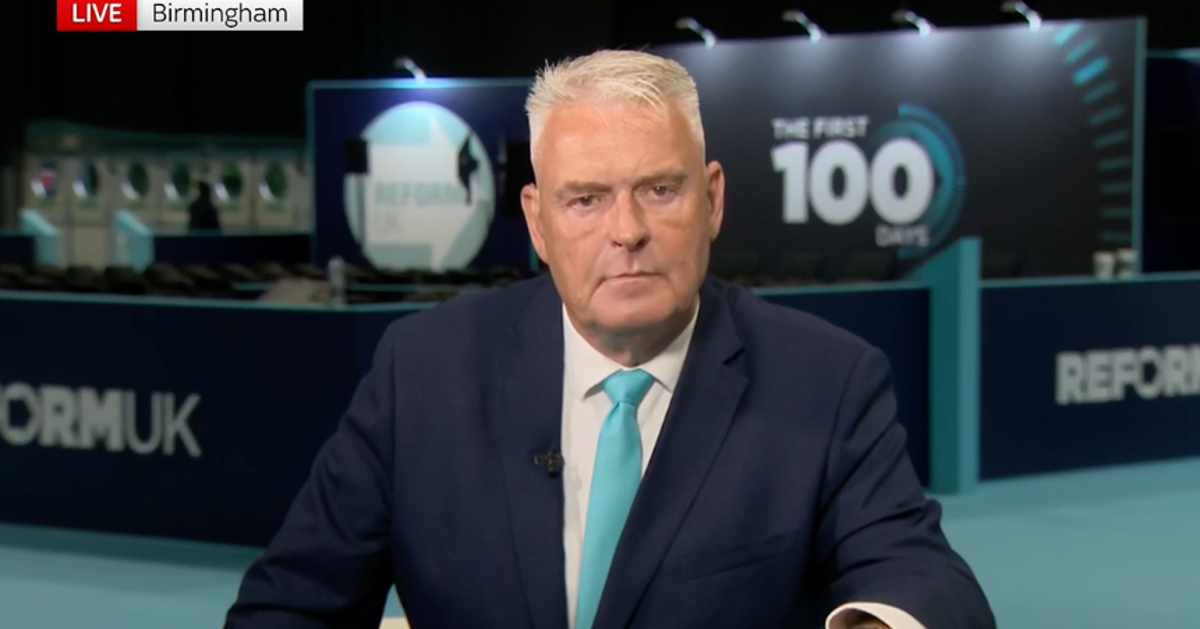
Two Reform UK officials have stepped down after an undercover sting operation raised questions over foreign donations, according to Lee Anderson.
The party chair told Sky News that Reform’s head of policy James Orr and Nigel Farage’s close aide Dan Jukes have both quit following an explosive report from Verbatim.
As first reported by Channel 4 News, Farage’s party took funding from a US company to commission three supposedly independent polls at £32,500 earlier this year.
Orr and Jukes organised the donation. They were not aware the donors were actually undercover reporters from the investigative group Verbatim.
The reporters, posing as an American father and his British son “William Lockwood”, also suggested donating £500,000 to Reform UK.
British electoral law says political donations can only be made by someone eligible to vote in the UK or a UK-registered company.
The party denied any wrongdoing and called the whole operation a “hoax”.
The incident has been reported to the Metropolitan Police who are assessing the reports.
Anderson told Sky News: “The two men involved, James Orr and Dan Jukes, they’ve stepped down from their roles, they’ve stepped away. It’s only fair now we launch a full internal investigation.”
He said the party would remain “fair, open and transparent” while looking into what happened.
“It’s right to get rid of this distraction straight away,” Anderson added, as Reform prepares to open its annual party conference in Birmingham today.
He added that there was “no chance” of the two men coming back as Reform is a “serious party”.
When asked if more senior staff, such as party leader Farage, should take responsibility, Anderson said it “wouldn’t be fair” for him to comment until “the investigation is completely over”.
However, the party chair was unable to say who is leading the internal probe when speaking to other broadcasters.
He also told BBC Breakfast: “We have spoken to our KC which advised no laws have been broken.
“Reform UK has launched an internal investigation to see what we can only describe as far left agitators have got that close to the party to make this documentary.
“One of the other questions we are asking is how is this funded?”
Verbatim, founded by the Centre for Climate Reporting and is funded out of the United States.
Listen to Commons People, the podcast that makes politics easy. Every week, Kevin Schofield and Kate Nicholson unpack the week’s biggest stories to keep you informed. Join us for straightforward analysis of what’s going on at Westminster.
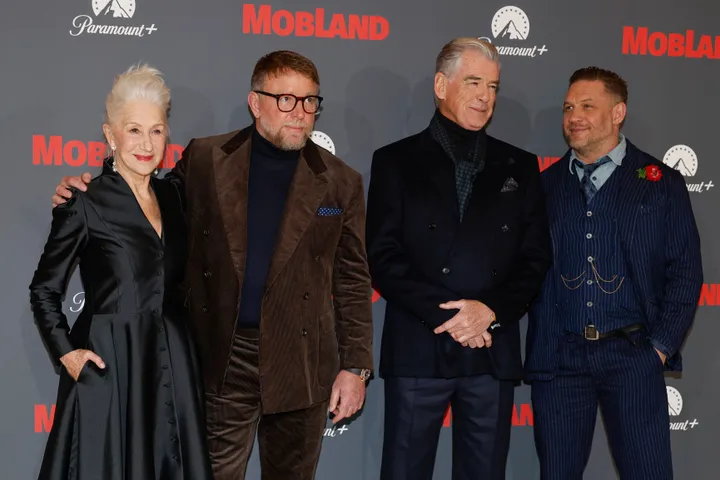
Despite no end of speculation as to whether or not he’d be returning, it’s now been confirmed that Tom Hardy will, in fact, be appearing in the forthcoming third season of MobLand after all.
Last year, Tom made his debut as fixer Harry Da Souza in the Paramount+ crime drama, sharing the screen with Dame Helen Mirren and Pierce Brosnan.
However, in the lead-up to season two’s release, it was initially reported over the summer that the Oscar nominee had parted ways with the show, amid supposed behind-the-scenes tension.
Following this, conflicting reports downplayed this speculation, with bosses finally confirming on Thursday evening that season three will be moving forward – with Tom still part of the cast.
Dame Helen had previously defended her co-star, insisting she’d work with him again in a “heartbeat” despite their “different” creative “processes” on set.
She enthused: “I love Tom. I think he’s the most amazing actor.”

Before the wheels start turning on season three, though, there’s MobLand’s second offering to get out of the way first.
The next episodes of the popular gangster series will begin streaming on Paramount+ later this month, with an official synopsis teasing: “In season two, the Harrigans struggle to show a unified front as rising rivals threaten their fractured criminal empire – and Harry Da Souza, their street-smart and formidable ‘fixer,’ must walk a dangerous tightrope when tensions within the family intensify.
“As violence spills into every corner of their lives, loyalties snap, safety proves temporary, and the battle for power leaves no room for mercy.”
Janet McTeer, Joanne Froggatt, Johnny Flynn, Mandeep Dhillon, Paddy Considine and Toby Jones are among the actors who will also be making appearances in season two.
Take a look at the trailer for MobLand season two – which will premiere on Friday 18 September – below:
Netflix raises prices in Germany and Austria, Citi comments

IMF confirms El Salvador’s bitcoin growth was funded by private donations, not public money

Zooey Deschanel’s Comfy-Chic Pull-on Pants Style Is on Amazon





-

 Fashion7 days ago
Weekend Open Thread: Maeve – Corporette.com
-
 Crypto World1 day ago
CLARITY Act could advance within weeks, Atkins says
-

 Business6 days ago
Onto Innovation Stock: AI’s Next Bottleneck Is Yield (NYSE:ONTO)
-

 Crypto World2 days ago
Elon Musk Says Grok 4.7 Lands in 10 Days and Will Beat Every Model
-

 Crypto World6 days ago
Bitcoin price tests $82K resistance as Brandt stays long
-
 Tech6 days ago
Hugging Face built a $4.5 billion empire on free AI models. Now Nvidia is buying it for $12.9 billion
-

 Business7 days ago
iPhone 18 Pro Pre-Orders Could Shift to Saturday as Apple Reportedly Avoids September 11 Anniversary
-

 Sports5 hours ago
Devon Dampier throws for 3 TDs as No. 21 Utah demolishes Idaho
-
 Entertainment7 days ago
‘Adults’ Creators Break Down Season 2’s Most Shocking Moments and Tease a Potential Season 3
-

 Tech6 days ago
PaperCut releases second emergency patch for exploited flaws
-
 News Videos5 days ago
Charlie Munger on Robinhood: No one should believe that Robinhood’s trades are free
-

 Crypto World1 day ago
Kalshi seeks CFTC approval for WTI perpetual
-

 Tech5 days ago
As the influencer economy drives retail sales, Seattle startup raises $22M to play matchmaker
-
 Crypto World2 days ago
Bitcoin slips below $77.5K as macro pressure offsets ETF inflows
-

 Tech5 days ago
Tamagotchi Ring Takes the 30-Year Digital Pet and Places it on Your Finger
-
 Business2 days ago
Oil Price Today (September 2): Crude oil nears $97 as war tensions escalate. Will it hit $100 again?
-
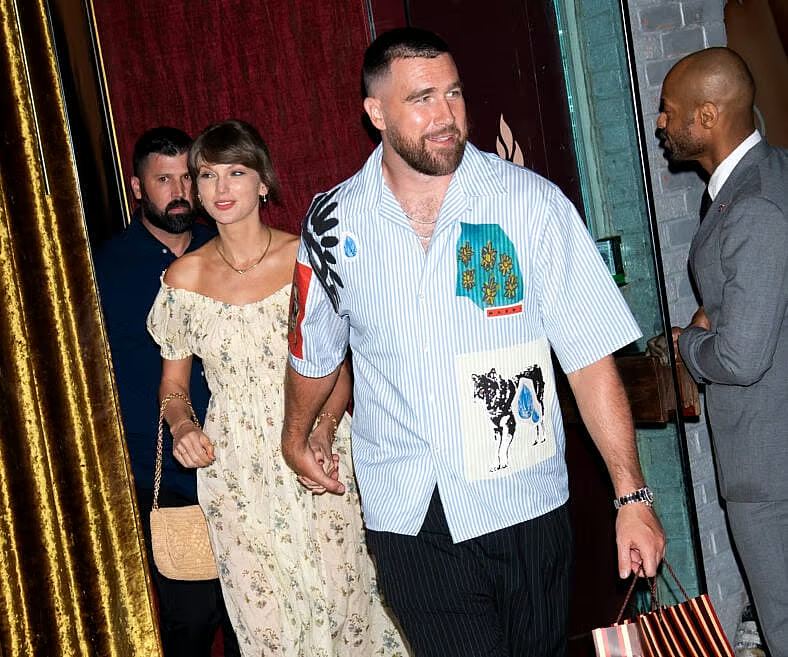 Entertainment4 days ago
Taylor Swift Reportedly ‘Frustrated’ With Travis Kelce After ‘Short’ Honeymoon
-

 Business7 days ago
Apple Confirms September 9 iPhone Launch Event as Tim Cook Prepares to Hand CEO Reins to John Ternus
-

 News Videos5 days ago
News kii Crypto ugu danbeeyey & Suuqa oo dhaqaaqey
-
 NewsBeat5 days ago
Trump posts AI video of ‘Lake America’ being protected by an army of bequiffed ‘Donald Ducks’
You must be logged in to post a comment Login