
Business
Global Market Today: Asia stocks waver as yen surges, Iran warns of retaliation


Japan’s Nikkei 225 fluctuated between gains and losses before edging up 0.2%, as the yen jumped as much as 0.6% to 153.51, its strongest level since February 18.
MSCI’s broadest index of Asia-Pacific shares outside Japan was up 0.2%, led by a 1.2% gain in the KOSPI. S&P 500 e-mini futures were down 0.1% after a holiday in the U.S. on Monday.
“While U.S. Labor Day made for a somewhat quieter start to the week for trading volumes, the weekend’s tit-for-tat strikes between the U.S. and Iran continued to put upward pressure on oil prices, acting as a drag on risk sentiment more broadly,” Westpac analysts said.
Oil prices moved higher for a third day as trading resumed in Asia, with Brent crude futures edging up 0.04% to $97.04 a barrel, after hitting a six-week high on Monday after Iran threatened to retaliate against any new attacks by targeting energy infrastructure across the Gulf, including U.S. oil and gas interests.

The yield on the U.S. 10-year Treasury bond was up 0.6 basis points at 4.788%. Traders are still pricing an implied 60% probability of a 25-basis-points hike at its next two-day meeting on September 16, according to the CME Group’s FedWatch tool, about the same chance as a week ago.
The U.S. dollar index, which measures the greenback’s strength against a basket of six currencies, was trading around a two-week low of 98.82.On the broader economic front, the growth picture appeared mixed as data released Tuesday blew hot and cold.
Japan’s economy grew faster than initially estimated in the April-June quarter from the previous three months, supported by business spending, revised data showed on Tuesday, but the figure still lagged analysts’ forecasts.
Meanwhile, data showed Japanese real wages rose 2.4% in July from a year earlier, marking the biggest increase since May 2021.
“With wage growth going from strength to strength, the case for the Bank of Japan to hasten the pace of tightening is becoming increasingly compelling,” Capital Economics analysts wrote in a research report.
Over in Australia, shares slumped 0.6% after a measure of local consumer sentiment fell sharply in September.
Gold was up 0.5% at $4,428.23, while in cryptocurrencies, bitcoin nudged 0.1% higher to $79,333.01, while ether climbed 0.2% to $2,498.94.

Business
Nathan Fielder’s Elizabeth Holmes Documentary ‘You Can See Everything’ Debuts As Telluride Secret Screening
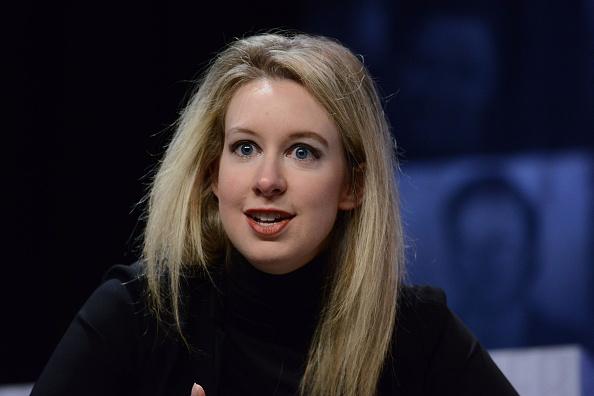
TELLURIDE, Colo. — A years-in-the-making documentary about disgraced Theranos founder Elizabeth Holmes, secretly filmed by comedian Nathan Fielder just weeks before she reported to federal prison, made its world premiere Sunday night at the Telluride Film Festival, revealed as the event’s long-rumored mystery screening.
The film, titled “You Can See Everything,” is co-directed by Fielder, best known for the comedic series “Nathan for You” and “The Rehearsal,” and Lance Oppenheim, the documentary filmmaker behind “Some Kind of Heaven” and the recent Robert Pattinson-starring film “Primetime.” The A24-backed project is set for release in theaters in October.
According to the film’s official logline, “thirty-four days before she’s sent to prison, notorious Silicon Valley founder Elizabeth Holmes invites a skeptical film crew to document her every move. What begins as an intimate portrait of an enigmatic felon becomes a mind-bending three-year journey into the abyss.”
Deadline reported that just 36 days before reporting to Federal Prison Camp in Bryan, Texas, Holmes, who had not given an interview in nearly a decade at that point, invited Fielder and his crew into the San Diego home she shared with her partner and the father of her two children, Billy Evans, under the understanding that “you can see everything.” The resulting hybrid documentary runs nearly three hours.
A24 shared a teaser trailer for the film Sunday night, featuring Holmes speaking to Fielder from her couch as she pushes back on suggestions she is being dishonest.
“I’m not that person, I can promise you that. I don’t have anything to deceive you on, of course I’m not deceiving you,” Holmes says in the clip. “I’m engaging with you as a human being. Why would I deceive you? There’s no reason for me to do that.”
Fielder presses her further in the exchange.
“Okay. Alright. Okay, good chat … You’re being real right now?” Fielder asks.
“I’m always being real,” Holmes replies, before the camera pulls back to reveal her infant daughter in a bouncer nearby.
Holmes and Evans welcomed their second child together, a daughter named Invicta, Latin for “invincible,” following the birth of their first child, son William Holmes Evans, in July 2021.
Sunday’s screening was staged with unusual secrecy. Festival organizers took away cell phones from every attendee at the Herzog Theatre before revealing the surprise film to a packed house, following days of speculation over what the mystery screening might turn out to be.
Speaking during a question-and-answer session following the premiere, Fielder described his own continued uncertainty about what he had captured over the course of the project, despite following Holmes and Evans for three years.
“What I am really excited about is for you to see the movie and tell me what I experienced,” Fielder said. “I don’t know why they wanted me there. Why am I there?”
Fielder elaborated further on that sense of confusion in comments reported by Rolling Stone, describing repeated conversations with Oppenheim and the rest of the crew as they tried and failed to reach consensus on what they were witnessing inside Holmes and Evans’ home.
“Lance and I would talk with the rest of the crew about what we thought happened or what we thought these moments meant, and no one could reach a consensus,” Fielder said. “And that’s when we really realized, ‘Oh, this is really interesting to follow this. We’re all smart and we’re really working at the top of our intelligence — why can’t we make sense of what’s happening in this house?’”
Fielder said that uncertainty has persisted even after the project’s completion.
“I really am struggling to this day to understand exactly what I experienced,” Fielder said. “And one of the things I’m genuinely excited about is for this movie to come out and for people to help me understand what I experienced. Truly, to this day, I don’t quite know what I went through.”
Variety’s review of the film, published following the Telluride premiere, described the documentary as a fascinating and shameless look at Holmes’ continued self-presentation, noting scenes in which Evans takes an active role in managing his partner’s public image, including allowing the iconic photograph of Holmes making an “OK” hand gesture to be used on billboards and striking a profit-sharing arrangement with A24 executives, a negotiation that reportedly appears within the film itself. According to the review, Holmes maintains throughout the documentary that she never cared about money, even as questions of the value tied to her name and image remain central to the story the film ultimately tells.
Holmes’ rise and fall as the founder of Theranos, the blood-testing startup that promised to revolutionize diagnostic health care before being exposed as fraudulent, has already been chronicled in Hulu’s 2022 miniseries “The Dropout,” starring Amanda Seyfried. Holmes has previously told People she found that dramatization “difficult” to watch.
Holmes began serving her prison sentence on May 30, 2023, following her conviction on multiple counts of fraud tied to Theranos’ collapse. She is now more than three years into an 11.25-year sentence, reduced to nine years for good behavior, and remains incarcerated at Federal Prison Camp Bryan in Texas, with an expected release date of Dec. 30, 2031.
In her most recent interview with People, conducted in February 2025, Holmes continued to maintain her innocence, describing the experience of being separated from her young children as something that “shatters her world.”
“It’s surreal. People who have never met me believe so strongly about me. They don’t understand who I am,” Holmes said at the time. “It forces you to spend a lot of time questioning belief and hoping the truth will prevail. I am walking by faith and, ultimately, the truth. But it’s been hell and torture to be here.”
With “You Can See Everything” set to expand into wider theatrical release in October, the film is expected to reignite public fascination with Holmes’ story, offering audiences an unusually intimate, if deliberately ambiguous, look at the weeks immediately preceding her imprisonment, filtered through the lens of two filmmakers who, by their own account, remain uncertain what to make of what they witnessed even years after the cameras stopped rolling.


I am a specialist in Asian equities after having been a sellside analyst for 13 years. In addition, I have also spent time covering US hardware and semiconductor stocks on the sellside. Within Asia, I have covered the casino, automotive, industrial, consumer and technology sectors. I have also worked on the buyside as a fund manager in long only and as an analyst in hedge funds all covering Asian equities where I have developed a keen understanding of Asian companies and economies with a focus on China. From a global equities perspective, I enjoy covering companies globally by examining key metrics such as financial statements strength, valuation upside, and conducting proper analysis of the competitive advantages of the company. Throughout my career, I have found and written on undiscovered small cap companies which have increased in equity value by multiple times. I would like to write for Seeking Alpha where my goal is to help investors cut through the noise and to focus on fundamentals and the company’s competitive outlook instead of the momentum trade.
Analyst’s Disclosure: I/we have no stock, option or similar derivative position in any of the companies mentioned, and no plans to initiate any such positions within the next 72 hours. I wrote this article myself, and it expresses my own opinions. I am not receiving compensation for it (other than from Seeking Alpha). I have no business relationship with any company whose stock is mentioned in this article.
Seeking Alpha’s Disclosure: Past performance is no guarantee of future results. No recommendation or advice is being given as to whether any investment is suitable for a particular investor. Any views or opinions expressed above may not reflect those of Seeking Alpha as a whole. Seeking Alpha is not a licensed securities dealer, broker or US investment adviser or investment bank. Our analysts are third party authors that include both professional investors and individual investors who may not be licensed or certified by any institute or regulatory body.

Running a business requires more than just hard work—it also requires smart financial management. Whether you’re a startup founder, freelancer, online seller, contractor, or owner of a growing SME, having the best business credit card in the Philippines can help improve cash flow, earn valuable rewards, simplify expense tracking, and even provide emergency funding when needed.
Business credit cards have become an essential financial tool for entrepreneurs because they offer benefits that personal credit cards often don’t. From cashback on office supplies to travel rewards for business trips and extended payment terms for inventory purchases, choosing the right card can save your business thousands of pesos every year.
In this guide, we’ll discuss how business credit cards work, their advantages, and the factors you should consider before applying.
Why Your Business Needs a Business Credit Card
Many Filipino entrepreneurs still rely on personal credit cards for business expenses. While this may work initially, it often creates accounting problems and makes expense tracking difficult.
A dedicated business credit card allows you to:
- Separate personal and business expenses.
- Improve bookkeeping and accounting.
- Manage company cash flow more effectively.
- Build your business credit profile.
- Earn cashback, travel miles, or reward points.
- Receive purchase protection and insurance benefits.
- Access installment plans for large purchases.
For businesses that regularly purchase supplies, pay for digital advertising, or travel frequently, these benefits can quickly outweigh the annual fees.
Benefits of Business Credit Cards
1. Better Cash Flow Management
One of the biggest advantages is extending your payment period. Instead of paying suppliers immediately, you can use your credit card and pay during the next billing cycle.
This provides additional working capital that can be used for inventory, payroll, or operational expenses.
2. Cashback Rewards
Many business credit cards offer cashback on categories such as:
- Fuel
- Office supplies
- Utilities
- Dining
- Online advertising
- Telecommunications
These savings accumulate over time and reduce overall operating costs.
3. Reward Points
Reward points can often be redeemed for:
- Gift certificates
- Office equipment
- Travel vouchers
- Airline miles
- Cash credits
For businesses with high monthly spending, rewards can become a valuable source of additional savings.
4. Travel Benefits
Business owners who travel frequently can enjoy:
- Airport lounge access
- Travel insurance
- Airline miles
- Hotel discounts
- Priority check-in
These perks improve the overall travel experience while reducing travel expenses.
Features to Look for in a Business Credit Card
Low Annual Fees
Compare annual membership fees and determine whether the benefits justify the cost. Some banks waive annual fees based on spending requirements.
High Credit Limits
Businesses with significant monthly expenses should look for higher credit limits to avoid maxing out their cards.
Flexible Installment Options
Installment conversion allows businesses to spread payments over several months without straining cash flow.
Expense Management Tools
Some banks provide online dashboards and downloadable statements that simplify accounting and tax preparation.
Fraud Protection
Choose cards with:
- Real-time SMS alerts
- Mobile app controls
- Purchase protection
- Zero liability protection
Common Business Expenses You Can Charge
- Office rent
- Utilities
- Internet subscriptions
- Software subscriptions
- Facebook Ads
- Google Ads
- Office furniture
- Laptops
- Printers
- Business travel
- Hotel bookings
- Fuel
- Inventory purchases
- Courier services
- Employee meals during meetings
How to Choose the Right Business Credit Card
Not every business has the same spending habits.
Consider these questions:
- Do you spend heavily on fuel?
- Do you travel frequently?
- Do you run online advertisements?
- Do you need installment financing?
- Do you prefer cashback over reward points?
- Will multiple employees use supplementary cards?
Answering these questions helps narrow down the most suitable option.
Tips for Using Business Credit Cards Responsibly
Pay the Full Balance Every Month
Avoid carrying balances whenever possible. Interest charges can quickly outweigh any cashback or rewards earned.
Track Employee Spending
If your company issues supplementary cards, establish clear spending limits and regularly review transactions.
Keep Receipts
Maintain receipts for accounting, tax filing, and auditing purposes.
Monitor Your Statements
Review your monthly statement to identify unauthorized transactions and billing errors.
Who Should Get a Business Credit Card?
Business credit cards are ideal for:
- Small business owners
- Freelancers
- Online sellers
- Importers
- Contractors
- Consultants
- Professionals with business expenses
- Corporations
- Partnerships
- Startups
Common Requirements When Applying
Although requirements vary by bank, applicants are commonly asked to provide:
- Government-issued IDs
- Business permits
- SEC or DTI registration
- BIR Certificate of Registration
- Latest Income Tax Return
- Bank statements
- Financial statements
- Proof of business income
Some banks may also require a minimum annual business revenue or years in operation.
Mistakes to Avoid
- Using business cards for personal shopping.
- Making only minimum payments.
- Applying for multiple cards simultaneously.
- Ignoring annual fees.
- Missing payment due dates.
- Not monitoring employee purchases.
- Exceeding your available credit limit.
Frequently Asked Questions
Can sole proprietors apply?
Yes. Many Philippine banks allow sole proprietors with registered businesses to apply, provided they meet income and documentation requirements.
Can freelancers get a business credit card?
Yes. Freelancers with consistent income and proper business registration may qualify depending on the bank’s underwriting policies.
Is a business credit card different from a corporate card?
Yes. Business credit cards are generally intended for small businesses and entrepreneurs, while corporate cards are designed for larger companies with multiple employees and centralized expense management.
Does using a business credit card improve credit history?
Responsible usage, such as paying on time and maintaining low balances, can strengthen your financial profile with the issuing bank and may support future financing applications.
The right business credit card is more than just a convenient payment method—it is a valuable financial tool that helps entrepreneurs manage cash flow, simplify accounting, earn rewards, and finance business growth.
Before applying, compare annual fees, interest rates, reward programs, cashback categories, travel benefits, and eligibility requirements. The best choice depends on your company’s spending habits and financial goals.
Used responsibly, a business credit card can become an important part of your company’s financial strategy while helping you save money, improve operational efficiency, and access additional purchasing power whenever opportunities arise.

Business News Philippines was launched in October 2015 as a portal for readers to learn more about operating a business in the Philippines.

China’s exports up 25% y/y in August, imports surge 28.2%

Gold rises as yen surge weakens dollar; oil and Fed bets cap gains
Business
Doctor Explains How Prostate Cancer Screening And Treatment Have Evolved To Reduce Unnecessary Biopsies
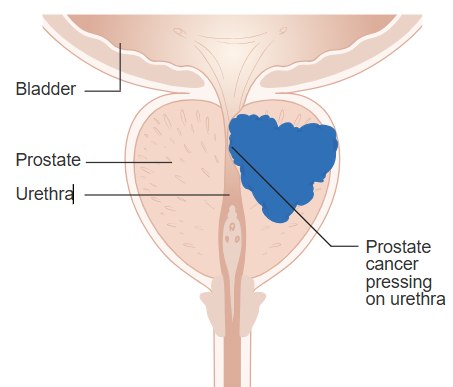
Roughly 1 in 8 men will be diagnosed with prostate cancer during their lifetime, according to the American Cancer Society, and the disease remains the second-leading cause of cancer death among American men. The National Cancer Institute estimates more than 333,000 new prostate cancer cases will be diagnosed in the United States this year alone.
Despite those numbers, Dr. Mina Fam, medical director of urologic oncology at Hackensack Meridian Jersey Shore University Medical Center and medical director of robotic surgery at Ocean University Medical Center, said the outlook for most men diagnosed with the disease is considerably better than the statistics might initially suggest.
“Most men diagnosed with prostate cancer do not die from it,” Fam said, pointing to significant advances in early detection and treatment that have reshaped how doctors approach the disease in recent years.
Fam emphasized that a patient’s primary care doctor plays a central role in catching prostate cancer early, given the ongoing relationship most men already have with that physician.
“The primary care doctor is the one who knows the patient’s medical history the best,” Fam said.
Because men can sometimes feel hesitant to discuss urinary or sexual health concerns with their doctors, Fam encouraged patients to be direct and honest about any fears or symptoms when prostate health comes up during an appointment.
The prostate-specific antigen, or PSA, blood test has returned to its position as a standard starting point for prostate cancer screening after a period during which some in the medical community had moved away from relying on it. Fam said the purpose of the test is not to trigger unnecessary alarm, but to establish a baseline that can help doctors track meaningful changes over time.
“The goal of the test isn’t to overdiagnose but rather to establish a healthy baseline and catch any potential issues early,” Fam said.
Screening timelines vary depending on individual risk factors, according to Fam, who outlined general guidance for when men should begin discussing screening with their doctors. Men at average risk should begin those conversations around age 50. Black men and those with a family history of prostate cancer, both groups considered at higher risk, should start discussions closer to age 45. Men with a known genetic predisposition, such as a BRCA mutation, face hereditary risk and should begin screening conversations between ages 40 and 45.
Fam stressed that interpreting PSA results requires more nuance than simply checking whether a number falls above or below a specific threshold.
“A PSA test isn’t a simple ‘pass or fail,’” Fam said. “It’s the trend — how your PSA levels change over time — along with your age and prostate density, that is far more revealing than the absolute number on your lab report.”
One of the more significant shifts in prostate cancer care in recent years involves how doctors respond to an elevated PSA reading. According to Fam, an elevated score once led almost automatically to a prostate biopsy, a pattern that has since changed considerably as newer diagnostic tools have become available.
“In the past, anyone with an elevated PSA would get a prostate biopsy, but that’s not the case anymore,” Fam said. “Today, specialists utilize advanced MRI tests, alongside new blood and urine biomarkers, to accurately determine if a biopsy is truly necessary.”
For patients who do ultimately need a biopsy, Fam said technological improvements have made the procedure considerably safer and more tolerable than many men expect.
“While doctors are always mindful of minimizing risks like sepsis, modern biopsies are not always the highly invasive or painful procedures men might fear,” Fam said.
Fam also addressed a common misconception surrounding prostate cancer symptoms, noting that sudden urinary changes are frequently misinterpreted by patients as a likely sign of cancer.
“Frequently point to completely benign non-cancerous prostate conditions,” Fam said of such symptoms, adding that early-stage prostate cancer often presents with no noticeable symptoms at all, a key reason routine screening remains so important for catching the disease before it advances.
Even when a diagnosis is confirmed, Fam said patients should not assume aggressive treatment is automatically necessary. Depending on the specific characteristics of a given cancer, he said many men are well-suited to a strategy known as active surveillance, in which doctors closely monitor the cancer over time rather than pursuing immediate intervention.
“Many men are excellent candidates for active surveillance, which is a safe strategy of closely monitoring the cancer without immediate medical intervention,” Fam said.
Fam closed by encouraging men not to let discomfort or fear stand in the way of prioritizing their long-term health.
“Don’t let fear or embarrassment keep you from prioritizing your health,” Fam said. “Routine screenings are simple, highly individualized, and life-saving.”
The broader shift Fam described, from reflexive biopsies toward more targeted, individualized diagnostic pathways using MRI imaging and newer biomarker tests, reflects a wider trend across oncology in recent years, as doctors increasingly aim to avoid unnecessary invasive procedures while still catching aggressive cancers early enough to treat them effectively. For prostate cancer specifically, that shift has meant fewer men undergoing biopsies that ultimately reveal no cancer or only slow-growing disease unlikely to ever threaten their health, while still preserving the ability to identify and treat more aggressive cases before they progress.
As with any specific health concern, men with questions about their individual prostate cancer risk, screening schedule or treatment options are encouraged to discuss their circumstances directly with their own doctor, given how significantly personal factors such as age, race, family history and genetic background can shape the most appropriate approach to screening and care.

Check out what’s clicking on FoxBusiness.com.
More than 1,500 pounds of imported ready-to-eat pork products have been recalled over concerns about possible listeria contamination.
Two U.S.-based companies are issuing recalls for a total of about 1,513 pounds of dry-cured pork jowl products, also known as guanciale, the U.S. Department of Agriculture’s Food Safety and Inspection Service (FSIS) announced on Sunday.
The recall is classified as a Class I recall, the USDA’s most serious recall classification, indicating there is a reasonable probability that consuming the products could cause serious adverse health consequences or death.
Florida-based Prime Line Distributors, Inc. and New Jersey-based Ferrarini USA, Inc. recalled two products each over fears they “may be adulterated with Listeria monocytogenes (Lm),” FSIS said in its announcement.
E COLI BLUEBERRY EXPANDING TO FROZEN MIXED BERRY PACKAGES SOLD AT WALMART IN 16 STATES

More than 1,500 pounds of imported ready-to-eat pork products have been recalled over concerns about possible listeria contamination. (U.S. Department of Agriculture’s Food Safety and Inspection Service)
Prime Line Distributors recalled various weight cardboard cases of two individually vacuum-packed “Prime Line Distributors, Inc. Guanciale Pork Jowl Product of Italy” items and various weight individually vacuum-packaged “Guanciale Pork Jowl Product of Italy” items.
Ferrarini USA recalled various weight cardboard cases with two pieces of individually vacuum-packed “Guanciale Pork Jowl Product of Italy” and various weight individually vacuum-packed “Ferrarini Guanciale Dry-Cured Pork Jowl” products.
Each of these recalled products include a best if used by date of May 16, 2027, and a lot number of 263311US printed on the label. The items also have the establishment number IT 1937 L CE printed inside the Italian mark of inspection or on the items’ case label.
The affected food items were produced at Est. 1937L Bome SRL in Italy on May 21 and imported into the U.S. in July.

The issue was discovered during routine import reinspection testing, when a product sample confirmed positive for Listeria monocytogenes (Lm). (Getty Images / Getty Images)
The recalled Prime Line Distributors food items were sent to food service and retail companies in Florida, while the Ferrarini USA products were shipped to distributors and food service locations in California, Florida, Idaho, Illinois, Michigan, New Jersey, New York and Texas.
The issue was discovered during routine import reinspection testing, when a product sample confirmed positive for Listeria monocytogenes (Lm).
Consumption of food contaminated with Lm can cause listeriosis, a serious infection that primarily affects older adults, people with weakened immune systems and pregnant women and their newborns.
Listeriosis can cause fever, muscle aches, headache, stiff neck, confusion, loss of balance and convulsions, sometimes preceded by diarrhea or other gastrointestinal symptoms. An invasive infection spreads beyond the gastrointestinal tract.
POPULAR SQUISHY TOYS RECALLED OVER POTENTIALLY DEADLY WATER BEAD HAZARD
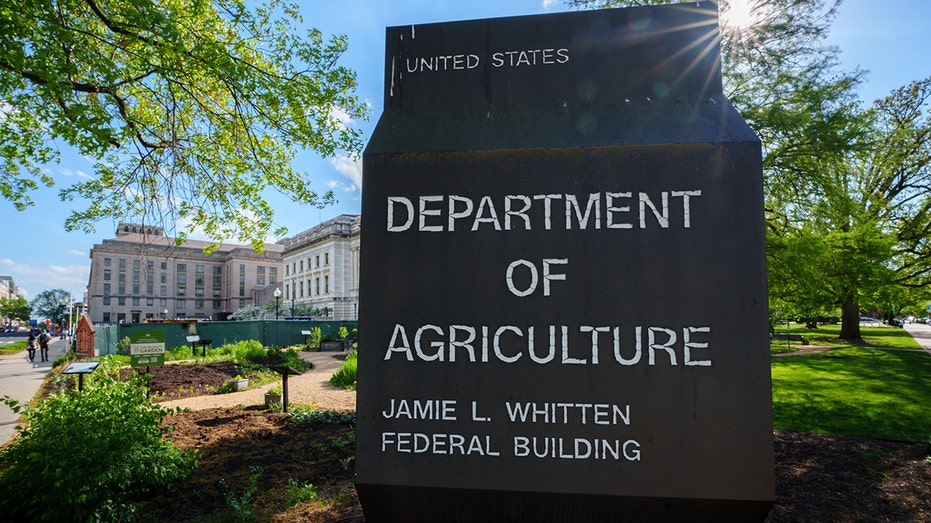
FSIS is concerned that some products may be in food service and retail refrigerators and freezers. (J. David Ake/Getty Images / Getty Images)
In pregnant women, the infection can cause miscarriages, stillbirths, premature delivery or life-threatening infection of the newborn. In addition, serious and sometimes fatal infections can occur in older adults and people with weakened immune systems.
CLICK HERE TO GET FOX BUSINESS ON THE GO
FSIS advised that people in higher-risk groups experiencing flu-like symptoms within two months of eating contaminated items should seek medical attention.
There have been no confirmed reports of illness in connection with the consumption of these products. Anyone concerned about an illness is urged to contact a healthcare provider.
“FSIS is concerned that some products may be in food service and retail refrigerators and freezers. Food service and retail locations are urged not to serve or sell these products,” the agency said.
Food items affected by the recall should be discarded or returned to the place of purchase.

FUNDAMENTALS
Spot gold was up 0.3% at $4,418.79 per ounce, as of 0048 GMT. U.S. gold futures for December delivery were down 0.3% at $4,464.80.
The U.S. dollar index slipped 0.3%, making greenback-priced metals more affordable for other currency holders.
The U.S. producer price index data is due on Thursday, and the consumer price index data is scheduled for Friday.
Gold prices fell on Sept. 4 after data showed U.S. job growth accelerated sharply in August, while the unemployment rate held steady at 4.1%.
According to the CME FedWatch Tool, traders currently see a 60% chance of a rate hike at the Fed’s policy meeting next week.
Despite being known as an inflation hedge, elevated rates tend to reduce the appeal of non-yielding gold.Deutsche Bank now expects the European Central Bank to raise interest rates by 25 basis points in December in addition to a September hike, as persistent energy risks keep pressure on the inflation outlook.
On the geopolitical front, Iran threatened to retaliate against any new U.S. attacks on its assets, warning that energy infrastructure across the Gulf, including U.S. oil and gas interests, was vulnerable.
Among other metals, spot silver gained 0.3% at $66.34 per ounce, platinum rose 0.6% at $1,836.97 and palladium climbed 0.9% to $1,401.47.
DATA/EVENTS (GMT)
N/A China Exports, Imports YY Aug
N/A China Trade Balance USD Aug
Business
‘I performed on stage to get my first job’ – the firms turning recruitment into competitions

Melissa Alcruz now works in marketing for a US real estate business based in New York City, but in the past she did the same job for TV channel MTV.
While at MTV she competed in an internal competition for a promotion that she says was referred to as a “bake-off”. Candidates had to come up with sponsorship and marketing campaigns, and then pitch to a room of seven people.
“This is intimidating, even for a seasoned professional. I ultimately got the job, but even though I won I disliked the process,” says Alcruz.
She points out that she already had a demanding full-time role at the company, and was then “expected to complete several substantial projects” for the competition in her spare time.
MTV’s current parent company, Paramount Skydance Corporation, has been asked for a comment.
Former recruitment consultant Katrina Collier, now an author, speaker and recruiter trainer, is concerned that competition-based recruitment processes that potentially require candidates to give up lots of their time for free can create “economic discrimination”.
“Not everyone can take time, possibly months, to participate in the challenges for the chance to secure one of a limited number of roles,” she says. “Does that mean only people from financially strong backgrounds proceed?
“Is that leaving talented applicants who don’t have the bank of mum or dad, for example, unable to take part?”

President Donald Trump has warned Canadian aircraft company Bombardier that it can no longer sell in the US unless it moves its manufacturing there.
“NO MORE SELLING BOMBARDIER IN THE UNITED STATES!” Trump wrote in a Truth Social post on Monday. “If they want our Market, they must build here, and stop treating America like a ‘piggybank’.”
The move comes amid an escalating trade war between the two neighbours, and hours before Canadian retaliatory tariffs are set to be imposed on $20bn (£14.7bn) worth of US goods.
In a statement, Bombardier underscored that it employed thousands of American workers and said it valued its partnerships with American companies.
The BBC has reached out to Prime Minister Mark Carney’s office for comment.
It is unclear how Trump intends to block Bombardier from doing business in the US.
The Montreal-based company already operates a factory in the US state of Kansas that builds special mission military planes, and employs 3,500 American workers.
It also operates sites in Texas, Arizona, Florida, Connecticut, Illinois, Delaware, California, DC and New Jersey.
About half of its fleet – 5,100 aircraft – is operated by Bombardier customers based in the US.
In a statement on Monday, Bombardier did not address Trump’s threat directly, but said its operations “create tens of thousands of US jobs through the company’s growing American footprint”.
“Bombardier values its great partnership with American companies and its US employees,” its statement said. “Our plan is to continue to invest in our people, our customers and the communities in which we operate across the country.”
Bombardier’s jets are built at facilities in Canada, the US and Mexico, according to the company’s website. They also comply with the North American free trade agreement signed by Trump during his first term, known as CUSMA in Canada and the USMCA in the US.
The company is one of Canada’s largest, having contributed C$7.4bn ($5.4bn; £4bn) to the country’s GDP in 2024, according to a report commissioned by Bombardier.
It is also one of the largest employers in Quebec’s manufacturing sector.
In a post on X on Monday, Quebec premier Christine Fréchette called the company “a source of pride” for her province and “a flagship of our economy”.
She added that she has reached out to Bombardier CEO Éric Martel and offered her government’s full support.
On Trump’s threat, Fréchette wrote: “I will not respond to provocation with provocation.”
“Quebec will not allow anyone to dictate where our companies must produce in order to access a market.”
Trade talks between Canada and the US collapsed late last month after Canada walked away from the negotiating table, after which the US imposed new 50% tariffs on a range of Canadian goods.
Prime Minister Carney accused the Trump administration of presenting last-minute terms that were “unfair” and “uneconomic”, while US officials accused him of refusing to sign a deal for political reasons because of Trump’s unpopularity in Canada – an accusation he denied.

Portsmouth, Dover and the fury of the masses

META MONEY: Tax revenue BOOSTS local teacher pay #shorts

Bangor man sawed his way into neighbour’s flat before setting it on fire, court is told

Weekend Open Thread – Corporette.com

Weekend Open Thread: Brooks Brothers

London Mayor Sadiq Khan handed a peerage by Keir Starmer alongside 15 other Labour figures… just days before the PM leaves No10
META MONEY: Tax revenue BOOSTS local teacher pay #shorts

Crypto Live Trading| 26 AUG #vinbullindia #livetrading #vinbulllive #live #trading #cryptotrading

Bond Market Breakdown: Are We Headed for Another Fall Financial Crisis?
-

 Fashion3 days ago
Weekend Open Thread: Beyond Yoga
-
 Crypto World4 days ago
Bitcoin price stalls near $82K as key resistance holds
-

 Politics4 days ago
Best Gaming Laptops, CPUs, TVs, And Keyboards To Upgrade Your Set Up For GTA VI
-

 Tech4 days ago
The Birds Outside, Drawn For You Automatically
-

 Crypto World4 days ago
IMF Says El Salvador’s Post-Review Bitcoin Purchases Used No Public Funds
-
 Crypto World4 days ago
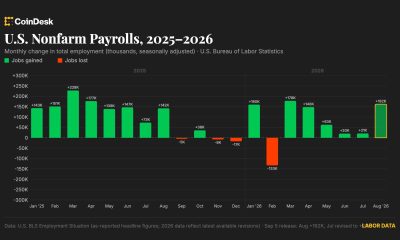
U.S. added stronger than expected 162,000 jobs in August as labor market bounced back
-

 Sports4 days ago
Alexandre Pato consortium’s Northampton Town investment approved
-

 Sports4 days ago
Commanders’ Chig Okonkwo is a top breakout fantasy football candidate
-

 Sports4 days ago
Golden Eaglets Drawn in Group B for 2026 WAFU B U17 Championship
-
 Crypto World4 days ago
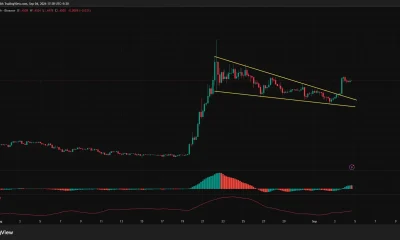
XRP price breaks falling channel as bulls target $1.53
-

 Politics4 days ago
A new European chapter for Gibraltar
-

 Politics4 days ago
How To Avoid Winter Colds: 4 Everyday Habits That Spread Germs, Says Pharmacist
-

 Politics4 days ago
The House | Bin the lectures, bring gossip and be ready to banter: how the new PM should prepare for his Trump encounter
-

 Crypto World4 days ago
From warning to listing: UK’s largest retail investment platform opens access to crypto ETNs
-

 Crypto World4 days ago
FinCEN flags $12.7B tied to Southeast Asia crypto investment scams
-

 Tech4 days ago
A Worthy Android Ereader, With Some Tradeoffs
-

 Tech4 days ago
How To Edit Claude’s Memory
-

 Crypto World4 days ago
Trezor Data Breach Impacts 67,000 More US Customers
-

 Politics4 days ago
33 Cosy Autumn Home Decor Ideas: Blankets, Pumpkin Decorations, And Candles
-

 Tech4 days ago
beyerdynamic AVENTHO Y Debuts at IFA 2026 and Makes Wireless Headphones Less Disposable
You must be logged in to post a comment Login