
Connect with us

Tech

Girl Scouts Unleash Treats for Dogs and Allergy-Safe Cookies for Humans

Published

on

Girl Scout cookie season doesn’t start until January, but when it arrives, two new cookies will appeal to groups who likely haven’t been able to indulge in Girl Scout cookies before: people with dietary restrictions, and dogs.

Sparkables, a crunchy, allergy-friendly oatmeal cookie with chocolate chips and rainbow sprinkles, is formulated for those who are nut-free, gluten-free and vegan. They were developed with Partake Foods, and include whole-grain oats, organic brown sugar, semisweet chocolate chips, cassava flour, oat flour, white rice flour and more. See the full ingredient list online.

Sparkables allergy-friendly Girl Scout cookies
Sparkables are meant to include people with food allergies in Girl Scout cookie season.Girl Scouts of the USA

Patch Pals, a soft-baked, blueberry muffin-flavored treat specifically for pups, was developed with the pet-product company Bark. The treats, which feature four designs representing iconic Girl Scout patches, are for dogs who weigh more than 5 pounds and are older than 6 months. Nutritional info and other details available online.

Sparkables and Patch Pals will only be sold online, so you can’t order them from Girl Scouts outside your local store. The new varieties will be available for shipping when Girl Scout cookie season launches on Jan. 12. You can sign up now to receive a reminder when that date comes.

Source link

Continue Reading
Click to comment

You must be logged in to post a comment Login

Leave a Reply

Tech

Wind Turbines Are Becoming Safer For Birds: Here’s How

Published

on


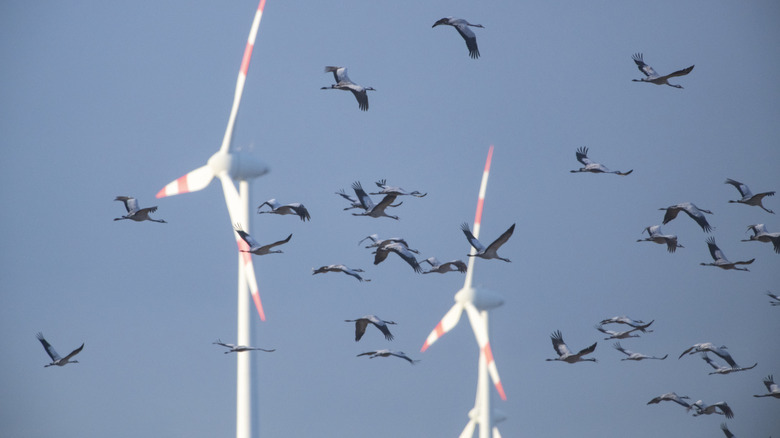
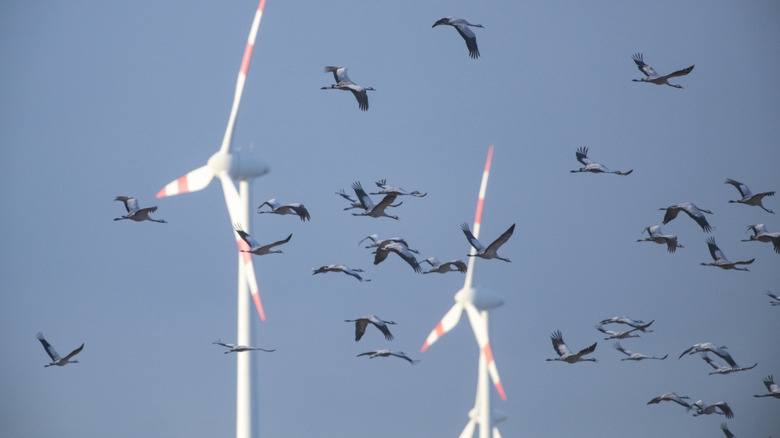
Your average wind turbine has a far lengthier lifespan than the average bird, and yet it’s more than capable of cutting the bird’s life even shorter. Estimates for the United States alone say that wind turbines kill anywhere between a couple hundred thousand and over a million birds a year. It’s fair to assume that wind farms in other countries face similar challenges. Recently, however, there are real efforts to reduce these numbers, and at a handful of these sites, researchers have already watched it happen.

The oldest example is Altamont Pass, a run of grassland hills situated east of San Francisco where roughly 5,400 turbines went up starting in the 1960s. While these hills receive plenty of wind, they’re also famous for being one of the densest golden eagle nesting areas in North America. Enough birds have died here that environmental groups actually sued Alameda County. A 2007 settlement then committed the wind companies to halving turbine deaths among four raptor species. Since then, operators have pulled out many smaller individual turbines researchers had flagged as the worst killers and replaced them, project by project, with a few dozen larger ones that were placed more carefully.

Subsequently, ICF International, the consultancy Alameda County hired to count carcasses under those turbines, reported that the fatalities among those four species went down by roughly half. From this, the rest of the industry realized that the deadliest thing about a turbine is usually where somebody chose to put it up. But there are other factors, too.

Advertisement

Painting the blades to make them more visible to birds

But what if you can’t really move a turbine or replace it, simply because it’s expensive or because they are absolutely necessary? In that case, it becomes important to understand why birds — especially ones known for having incredibly sharp eyesight — keep crashing into these at all. A researcher at England’s University of Birmingham explains that large-eyed birds actually carry a blind patch above their heads. Their eyes are typically glued downward as they spend hours scanning the ground for prey. Things get worse for them when turbine blades are painted white or pale grey, a deliberate design choice to get the machines to vanish against the sky for nearby residents. It’s a case of design prioritizing people rather than wildlife, much like the serrated edges some wind turbine blades carry to soften their whooshing noise. Once these blades start spinning, they turn into a single translucent smear, effectively going invisible to birds.

Advertisement

At a wind farm in Smøla, a wind farm on an island off Norway, a team from the Norwegian Institute for Nature Research decided to fix this problem. Back in 2013, they painted one of three blades black on four turbines while leaving four neighbors untouched. Annual deaths fell a whopping 71.9% at the painted ones.

That said, the same trick does not apply everywhere. Dutch researchers tried to do something similar in 2022, when they painted a single blade black on seven of 14 monitored turbines at Eemshaven. It made little difference, proving that what saves birds at one wind farm can do nothing at the next one.

Advertisement

Teaching a turbine to notice a bird

While paint could genuinely help reduce the problem at a lot of wind farms, it’s not exactly a smart solution that can adapt to its surroundings. And that’s a gap a Colorado firm called Boulder Imaging aims to address, with a system that watches whether a bird is closing in. The system is called IdentiFlight, and it puts camera towers around a wind farm, tracking anything flying within a kilometer. Individual turbines then get an order to stop when a flagged species looks likely to reach the blades, much like how wind turbines already stop themselves in extreme weather. Researchers from The Peregrine Fund, a raptor conservation group, put this tech to the test by comparing two farms about nine miles away from each other in Wyoming. They found the equipped farm saw a notable 82% drop in eagle deaths.

Another route, one that’s more economical too since it doesn’t involve stopping windmills, is speakers. Spanish firm Liquen has come up with a system called DTBird that spots birds the same way, but rather than bringing things to a halt, simply fires off warning sounds from the tower. This system was successful in cutting down the odds of certain birds approaching the blades by 20 to 30% across two American wind farms that the Renewable Energy Wildlife Institute studied. In the end, it’s clear that with the right method for the place and the right species of bird can work wonders. The only thing remaining is a global fix.

Advertisement


Source link

Advertisement
Continue Reading

Tech

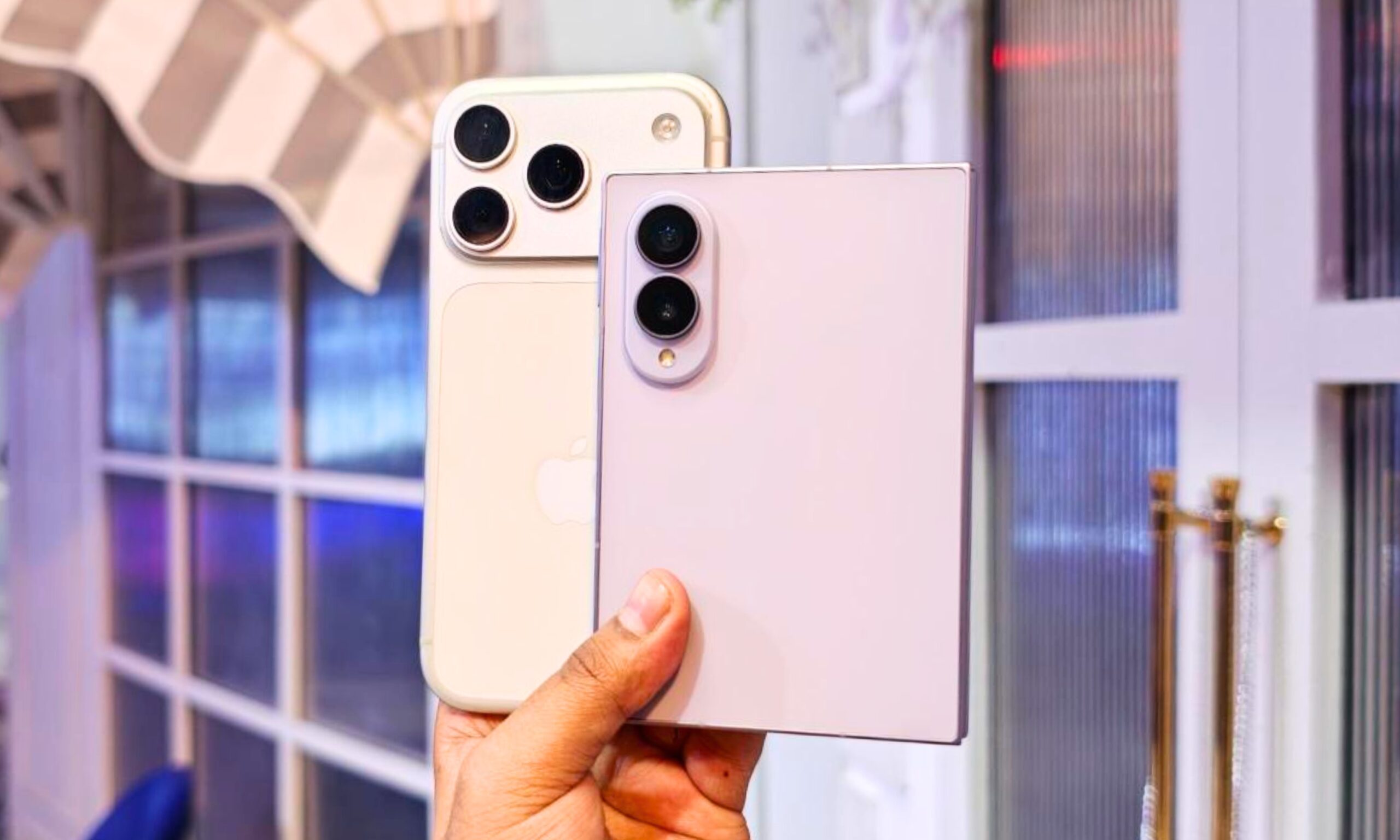
Apple’s foldable iPhone could cost $2,199, and that’s somehow less than expected

Published

on

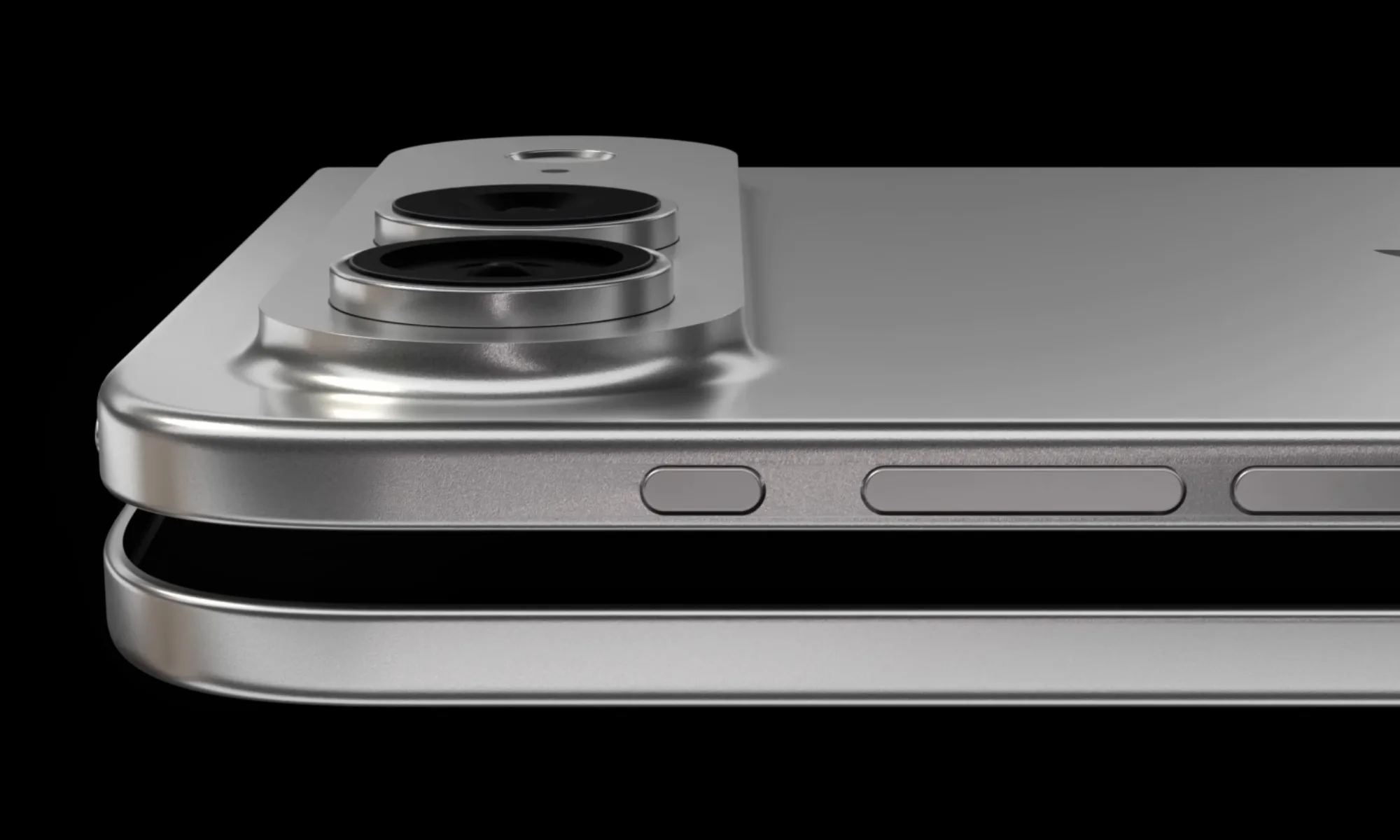
Apple’s first foldable iPhone is almost here, and just hours ahead of the launch, we may finally have a better idea of how much it will cost. According to a new Bloomberg report, Apple has recently discussed pricing the device as high as $2,199, while higher-storage versions could get close to the $3,000 mark

There is no getting around it. $2,199 is a lot of money for a smartphone. However, the figure is also a little lower than some of the estimates we have been hearing over the past few months, which placed Apple’s first foldable somewhere around $2,300 to $2,500.

First-generation foldables have never been cheap

Apple entering the foldable market at $2,199 sounds extreme, but first-generation foldables have never been cheap. Samsung’s original Galaxy Fold launched in the U.S. for $1,980 back in 2019.

Samsung has had several generations to refine the formula since then. Its new Galaxy Z Fold 8 starts at $1,899, despite moving to the shorter and wider form factor that has helped make this generation particularly well received.

Apple, meanwhile, is launching an entirely new iPhone category, and the timing is not exactly helping. Bloomberg says the company initially wanted to keep the starting price at $1,999, but the ongoing memory shortage reportedly pushed costs beyond its original targets.

So while $2,199 is still a huge amount of money for a phone, there is some context behind it. Apple is entering a category that has always commanded high prices, while also dealing with unusually expensive RAM and NAND storage at launch.

Advertisement

Getting one could be the bigger problem

The price may not be the only obstacle at launch. Ming-Chi Kuo previously estimated that Apple would have just 500,000 to 1 million foldable iPhones ready during the third quarter, despite plans to build around 7 million to 8 million units during the second half of 2026.

Kuo also previously pointed to a price of around $2,300 to $2,500, so Bloomberg’s latest figure would actually put the starting price below those expectations.

Apple also appears pretty confident in its foldable plans. Bloomberg previously reported that a second-generation model, codenamed V78, is already being lined up for 2027. The first one has not even launched yet, so Apple clearly seems to be treating foldables as something it wants to stick with rather than a one-year experiment.

We should find out soon whether $2,199 is the number Apple finally settles on. The foldable iPhone is expected to debut on September 9, but Apple has not confirmed the price yet.

Advertisement

Source link

Continue Reading

Tech

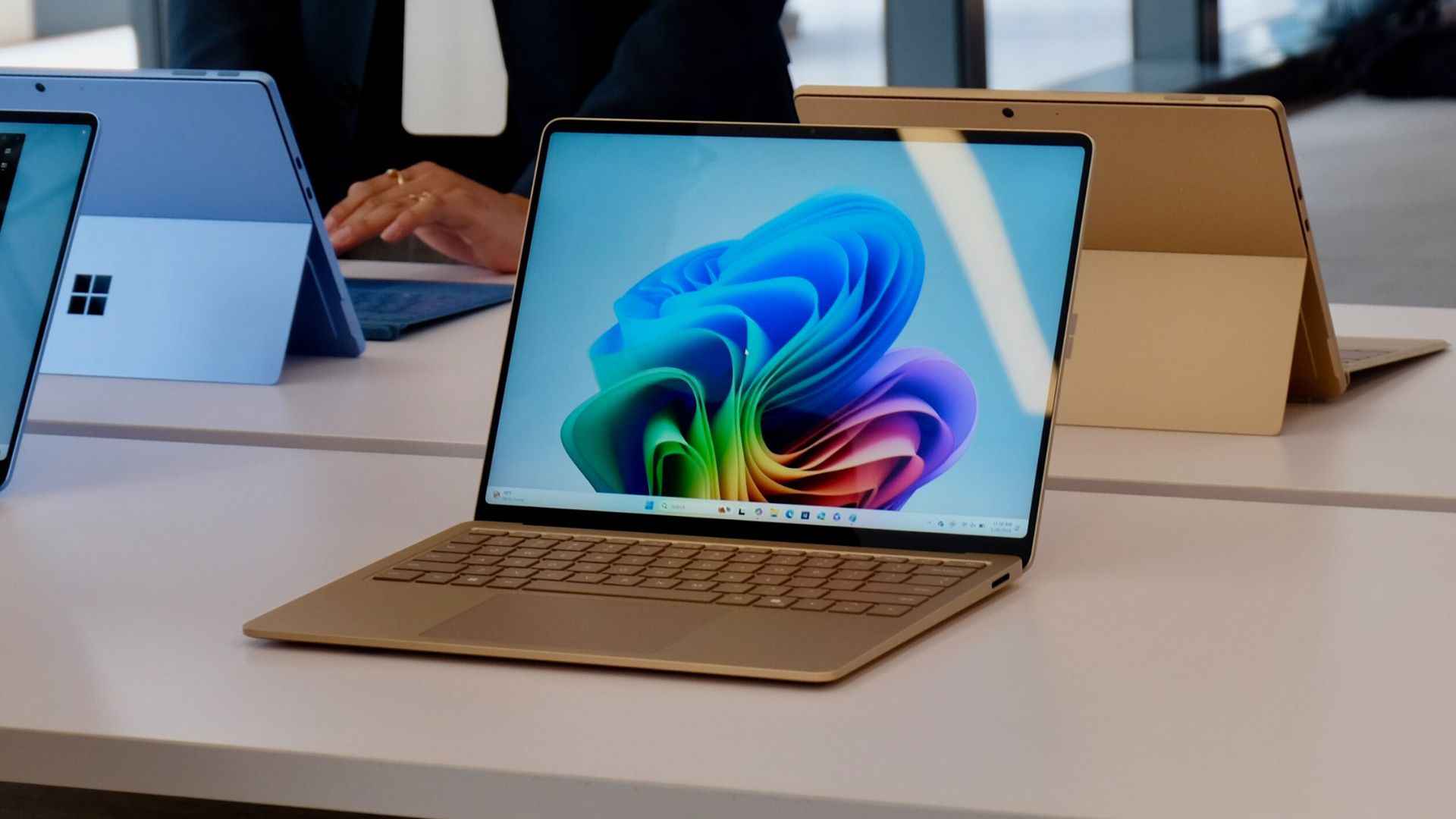
Microsoft is teasing a snappier Windows 11 experience

Published

on

Microsoft is working on performance improvements for Windows 11 that could make the operating system boot faster and feel more responsive. The company says it has already made “significant gains” in startup speeds, although the changes aren’t available to Windows Insiders just yet.

Speaking at IFA 2026, Mark Linton, VP of Windows & Devices at Microsoft, said the company has been improving both boot times and Windows Hello responsiveness. “We’ve made significant gains on things like boot time, Windows Hello responsiveness,” Linton told Windows Latest.

That could mean less time waiting at the lock screen before you can actually start using your PC. Windows Hello is Microsoft’s biometric authentication system, commonly using facial recognition through a compatible infrared webcam, so faster responsiveness should make signing into Windows feel snappier too.

There’s a catch, though: Microsoft hasn’t started testing these particular improvements publicly. The work is currently being refined in internal builds, so there’s no indication yet of when Windows Insiders or the wider Windows 11 user base will get access.

Advertisement

Microsoft’s ambitions also extend beyond simply getting Windows to start faster. The company is working on broader performance improvements designed to make menus more responsive and apps load more quickly. Some of that work is already appearing in Windows 11, including a CPU-boosting feature called Low Latency Profile.

Advertisement

The push could be particularly useful for the growing number of Windows 11 laptops with 8GB of RAM. Rising memory prices have made lower-memory configurations more relevant again, and Microsoft says it is specifically working to make Windows 11 perform better on machines with 8GB.

“We’re continuing to improve on the fundamentals,” Linton said, adding that Microsoft is “optimizing so that 8 gig of RAM runs great on machines as well.”

Advertisement

Microsoft hasn’t put a figure on how much faster Windows 11 could become, so it’s too early to know whether these improvements will be immediately noticeable. Still, with faster startup, quicker Windows Hello authentication and wider performance optimisations in development, Microsoft appears to be putting more focus on making Windows 11 feel faster rather than simply adding more features.

Source link

Advertisement
Continue Reading

Tech

Lenovo ThinkPad T1g Gen 8 business laptop review

Published

on

Why you can trust TechRadar


We spend hours testing every product or service we review, so you can be sure you’re buying the best. Find out more about how we test.

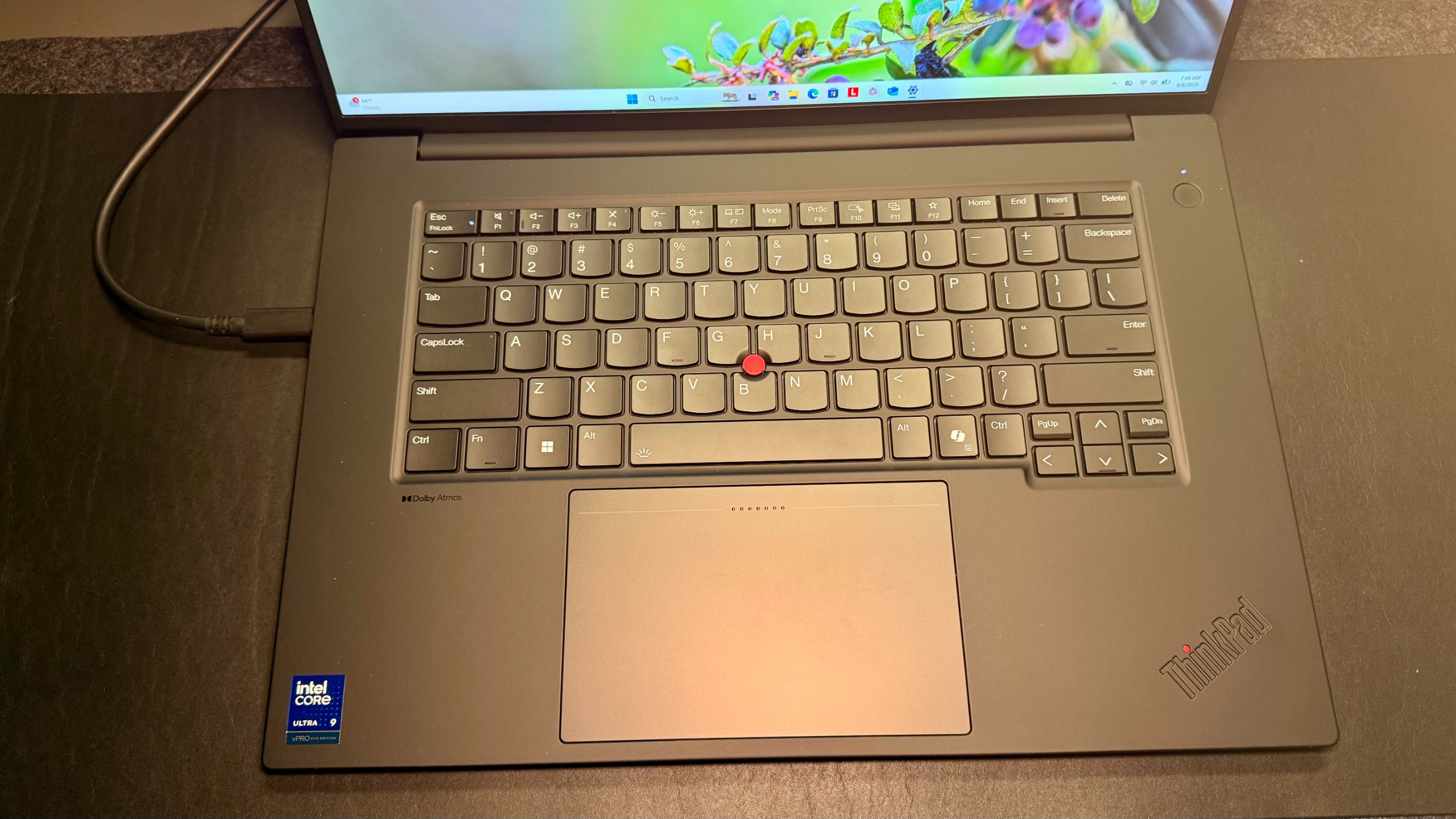
The Lenovo ThinkPad T1g Gen 8 is a powerhouse and a semi-portable shell. It takes on the power of the beloved X1 Extreme, pairing an ultra 9 processor with quick memory, Thunderbolt 5, and decent storage. It’s designed for engineers, creatives, and other power users who need a machine that can do it all while still having that hint of portability.

I think of this quite like the 16-inch MacBook Pro. It’s the bigger choice in the line-up, but you would get it because you want the power and the ability, not necessarily the portability. The people who would get this laptop are the people who need the ports as well.

Advertisement

Source link

Advertisement
Continue Reading

Tech

Australia To Let Social Media Users 'Opt Out' of Algorithm-Based Feeds

Published

on

Australia is proposing the “My Feed, My Way” initiative that would force social media platforms to let users over 16 turn off algorithmic recommendations and instead see only posts from people and creators they follow. Platforms that fail to comply could face fines of up to $79 million. CNBC reports: The legislation, which is being drafted and released Tuesday for targeted consultation, would require platforms to send notifications to new and existing users so they can choose their default feed. […] The measures, set to be introduced to the Parliament of Australia this year, will also require AI chatbots, online games and other digital services to take action to protect under-18s from addictive design features. “This is not about giving government control. It’s about giving people control. It’s about putting choice back into the hands of Australians online,” said Prime Minister Anthony at a press conference on Tuesday.

“This is sensible, pragmatic, practical reform. It gives users choice, and it will hold the big tech companies responsible for inaction.”

Read more of this story at Slashdot.

Advertisement

Source link

Continue Reading

Tech

Meta debuts its Muse AI agent. Will consumers trust it?

Published

on

Less than two weeks after Meta agreed to a massive $18 billion multistate settlement in a lawsuit over social media’s consumer harms, the company announced its biggest bet on consumer AI to date — and one that requires significantly more trust than social media ever did. On Tuesday, the company introduced Muse, its new personal AI agent that helps consumers with everyday tasks and projects for users in the U.S.

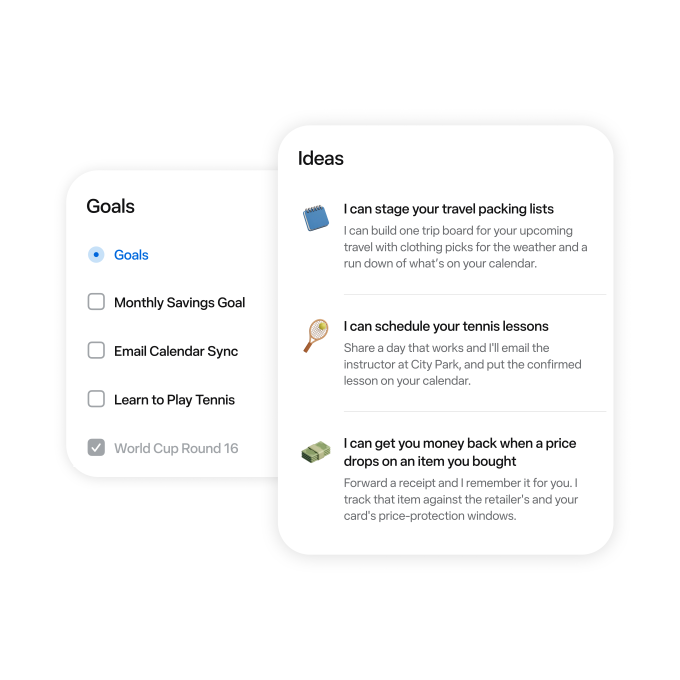
To use Muse, consumers will have to trust Meta with more of their personal information than ever before. The AI agent works by connecting to the user’s apps and services that are a part of everyday workflows, like email, calendars, payments, and other things the individual may regularly use, like apps for health and fitness, the smart home, dining, shopping, music and events, and more.

The idea is a sizable bet on what comes after the ChatGPT era, where AI chatbots answered questions, served as sounding boards, or even became digital companions. Instead, Muse is focusing on AI that can actually do things for you.

Image Credits:Meta

The company says the agent can do things like sending emails, booking travel, lowering bills, filling out forms, creating plans, turning recipe reels into grocery lists, sending party invitations, and making purchases, leveraging Link by Stripe for checkout. The latter offers purchase protections, which could potentially ease consumers’ fears of letting an AI check out on their behalf. (Shopify’s Shop Pay and 1Password integrations are also coming soon.)

Muse’s users can decide which apps and services they want to connect, doing so one at a time, to make the opt-in nature of using Muse more transparent. The agent is powered by Meta’s AI model, Muse Spark, and ships with built-in connectors (pictured below) for several services, with plans to add more over time. If a service the user wants isn’t available but offers a public API, Muse can set up a connection using credentials the user provides. When no API is available, Muse can access the service via the browser instead.

Advertisement
Image Credits:Meta

Muse will initially be available via the web at muse.ai, through apps on iOS and Android, and through chats in WhatsApp. It will soon also make its way to Meta’s AI glasses, the company says. It will be free to use, with subscription plans kicking in as usage increases, which is why Muse requires a payment card to get started.

Two paid plans will be available at launch: Power at $20/month and Maximum at $100/month. Both of these subscriptions offer more Muse usage for handing off everyday tasks, though Meta believes most people will remain on the free tier. (The company says the app includes a usage meter that shows users what percentage of their usage they have left. It will also warn users when free usage runs out and present options to subscribe.)

Like other AI agents, Muse will continue to work even after the user leaves the app. It will also improve over time by learning from the user’s conversations what’s important to them to make suggestions unprompted, Meta noted.

Image Credits:Meta

The concept is not unique to Meta. The agentic era is now coming into its own, as larger companies and smaller startups alike are experimenting with how AI agents will make the most sense for consumers and can become integrated into people’s daily lives.

Some have tried AI web browsers or services, like Gemini Spark or Claude Cowork, that can kick off various tasks on consumers’ behalf. Others are integrating AI into the chat applications consumers use the most, like Apple’s iMessage platform, SMS, and WhatsApp.

Image Credits:Meta

Despite their usefulness, these powerful agents have forced consumers to wrestle with difficult questions about how much privacy they’re willing to give up. Many early testers of the AI assistant Instinct were shocked to see the app required a broad “perpetual and irrevocable” license to “access, use, host, cache, store, reproduce, transmit, display, publish, distribute, and modify” any of the user’s materials, including for training its AI models. 

Image Credits:Meta

Under the hood, Meta claims that Muse runs in its own “dedicated, secure computer with its own browser,” Muse Secure VM, which offers various privacy, safety, and security protections over customers’ data. The company says a separate Sentinel agent runs on that same virtual machine, but is kept apart from Muse at the system level.

Image Credits:Meta

This means Muse won’t have visibility into people’s passwords or payment methods. Meta also claims that Muse doesn’t share people’s conversations or data with Meta’s ads systems.

(These claims are explained in more detail in a technical post, also released today, but will require deeper investigation by security experts.)

Advertisement

Could Meta’s history hurt Muse adoption?

Despite Meta’s documentation of its security measures, it remains to be seen whether the company has enough consumer trust for its agent to be successful.

As it stands, Meta has a history of proclaiming one thing and doing another. In 2011, for instance, the tech giant settled with the FTC over charges that it deceived consumers by making users’ private information public without their approval. In 2019, the FTC penalized Facebook in a then record-breaking $5 billion settlement over eight separate privacy-related violations. In 2023, the FTC charged Meta with violating a privacy order that was filed after the 2019 settlement.

In terms of technical matters, Meta has also had some big missteps before, having discovered in 2019 a number of users’ passwords in readable formats, exposing people to potential hacks. The massive Cambridge Analytica data scandal, which saw Facebook data belonging to millions of consumers collected by a third-party without their consent, still lingers in some people’s minds, too.

Mark Zuckerberg, chief executive officer of Meta Platforms Inc.
Mark Zuckerberg, chief executive officer of Meta Platforms Inc., exits Los Angeles Superior Court in Los Angeles, California, US, on Wednesday, February 18, 2026. Zuckerberg testified that it’s “very difficult” to enforce Instagram’s age limits and downplayed how much teen users do for the company’s business during a landmark trial over social media addiction.Image Credits:Kyle Grillot/Bloomberg (opens in a new window) / Getty Images

Meta has also been repeatedly hauled before Congress to testify on how it protected — or failed to protect — minors from harm. With Congress failing to act, Meta ultimately became the target of several related lawsuits, including the one Meta just settled with 29 states in August, a New Mexico lawsuit over harms for children, where Meta was ordered to pay $942 million, and the thousands of personal-injury and school-district cases that are still pending against multiple social media giants.

To ease consumers’ fears, Meta not only talks in depth about its security promises, offering technical documentation and explanations. The company has also designed Muse in a way that would make consumers feel more connected with the agent itself. Users can customize Muse by giving it a name, picking out its avatar, and configuring its look and various settings that dictate how the agent communicates with them.

Advertisement

Time will tell if this personal connection and the utility Muse provides are enough for consumers to once again trust Meta with their personal information.

When you purchase through links in our articles, we may earn a small commission. This doesn’t affect our editorial independence.

Source link

Advertisement
Continue Reading

Tech

Floating nuclear startup Bluecore lands $50M funding before setting sail

Published

on

SYSTEMS

Startup wants to take atomic power generation on a barge to wherever the need is

Startup Bluecore Energy has raised $50 million in seed funding to develop floating nuclear power plants intended to supply ports and other locations with rapidly growing energy demands.

Advertisement

The California-based company said the Silverton Partners-led round, which includes $10 million in previously announced pre-seed funding, brought in several new investors. It plans to use the money to engineer and test its compact nuclear power system and pursue regulatory approval and maritime classification.

Its initial design is intended to generate about 10 MWe – megawatts of electrical output – continuously using light-water reactor technology. Bluecore says the maritime system would be able to operate for years at a time and require refueling only once every few years.

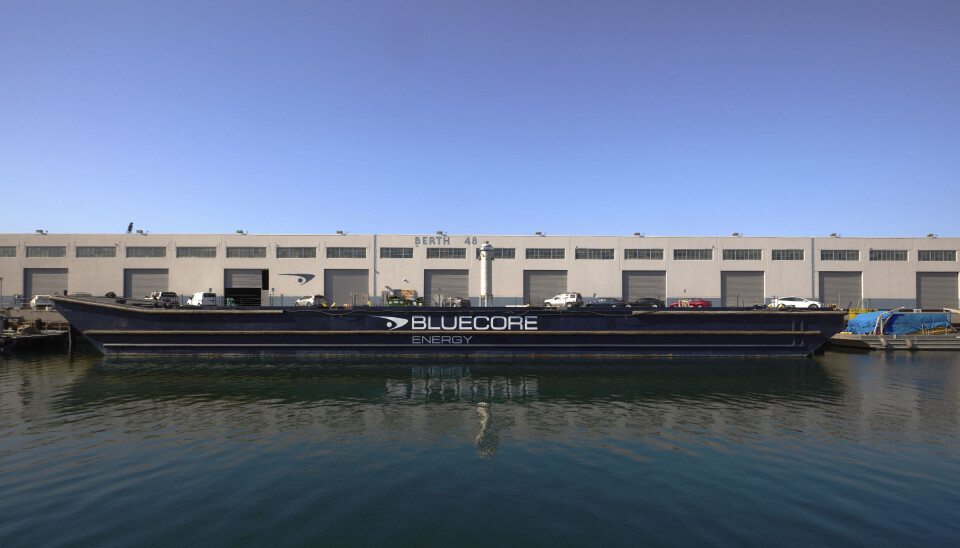
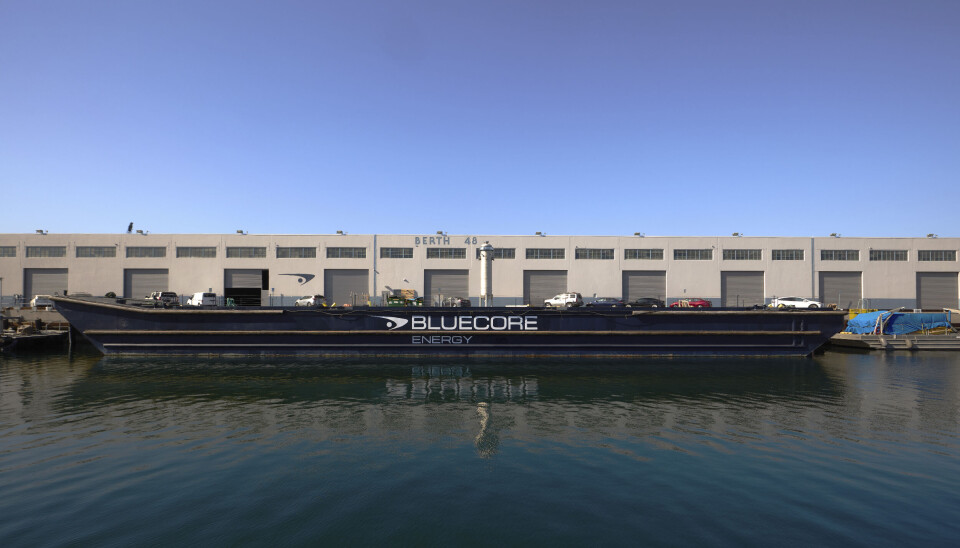
The company has secured its first barge and is developing a non-fueled, electrically heated reactor module prototype at its Port of Long Beach headquarters to test monitoring, sensor, and control systems.

Bluecore is targeting ports, AI datacenters, and coastal infrastructure, with the reactors potentially deployed offshore and connected to customers by subsea cables. Remote islands and coastal settlements in places such as Alaska may also lack practical connections to a wider electricity grid.

Advertisement

Bluecore claims its approach could provide reliable, zero-emission power to energy-intensive locations and open additional markets for nuclear generation.

“Six months ago, we were building the foundation. Today, we have the capital, the team, the hardware, and some of the most important institutions in nuclear and maritime working alongside us,” said Bluecore founder and CEO Kofi Asante.

A Bluecore barge moored at the company's headquarters in the Port of Long Beach, California

Bluecore barge

“Our focus now is simple: create and deliver zero-emission energy as safely and quickly as possible.”

The move follows the launch of the International Atomic Energy Agency’s (IAEA) Atomic Technologies Licensed for Applications at Sea (ATLAS) initiative in the US capital last month.

Advertisement

Secretary of Energy Chris Wright linked that event to the Department of Energy’s own efforts to rapidly expand the provisioning of atomic energy generating capacity in order to meet the requirements of AI datacenters and other industries.

Bluecore has begun discussions with the US Nuclear Regulatory Commission (NRC) and Coast Guard. The two agencies recently signed a memorandum of understanding to coordinate oversight of the design, construction, and operation of civilian floating nuclear power plants. The NRC says it is ready to license maritime reactors under existing federal regulations, while it develops an additional framework for microreactors and similarly low-risk designs.

Bluecore remains years from commercial deployment. It has yet to build a fueled reactor or apply for the approvals required to operate one, and its Long Beach proposal must also navigate California’s restrictions on new nuclear power plants.

While some may have concerns about waterborne atomic power plants, America has a long history of maritime nuclear generation. All of the US Navy’s active aircraft carriers are nuclear-powered, but the technology first went to sea aboard the submarine USS Nautilus in 1955. USS Enterprise became the first nuclear-powered aircraft carrier in 1961, while the cruiser USS Long Beach, commissioned the same year, was the first nuclear-powered surface combatant.

Advertisement

Bluecore says its team includes former US Navy nuclear submarine officers and leaders with experience across organizations including SpaceX, Northrop Grumman, Toyota, Rivian, and Uber.

Russia currently operates the world’s only floating nuclear power plant. The barge-like Akademik Lomonosov is considerably larger than Bluecore’s proposed design and can generate up to 70 MWe. ®

Source link

Advertisement
Continue Reading

Tech

This is set to be the world’s most expensive gas power plant ever built and the second most powerful one

Published

on


  • South Korea could invest $22.3 billion in a massive Texas gas plant
  • The proposed facility would generate 6.3 GW of electricity for AI
  • Seoul says negotiations remain unfinished, leaving the reported investment unconfirmed

South Korea and the United States have reportedly settled on how much Seoul will contribute towards a new energy facility in southern Texas.

Korean outlet Edaily, citing unnamed officials and lawmakers, reported the contribution at close to $22.3 billion for the venture, which would be built in Encinal, Texas, and is expected to produce 6.3 gigawatts of electricity to power AI data centers once fully operational.

Source link

Continue Reading

Tech

Nintendo Reveals Ocarina of Time Remake Release Date, a Zelda Switch 2 and a Real Ocarina

Published

on

Nintendo held its The Legend of Zelda 40th Anniversary Direct on Tuesday to reveal a new release for one of its biggest franchises. The big news was the reveal of The Legend of Zelda: Ocarina of Time remake release date or a special edition Nintendo Switch 2. But the gaming giant also announced an actual ocarina that fans can buy to annoy their friends and family while learning how to play.

The Legend of Zelda: Ocarina of Time remake will launch on Nov. 5, according to Tuesday’s presentation. A week before its release, a special edition Switch 2 for the 40th anniversary will be released on Oct. 29, along with a Switch 2 Pro Controller and carrying case. Then, to complete the anniversary package for Zelda fans, Nintendo plans to release an official ocarina identical to the one Link plays throughout Ocarina of Time. There will be a traditional acoustic model and an electric version made by Hori.

The main star of Tuesday’s direct was the Ocarina of Time remake. As expected, it will make full use of the Switch 2’s graphics power to give a modern look to the almost 30-year-old game, first released for the N64. Visuals weren’t the only upgrades, as controlling Link is much easier using both analog sticks, which weren’t around in 1998, and instead of jumping automatically near any ledge, there’s a jump button to let Link get across gaps.

Advertisement

Another interesting feature involves the ocarina Link uses in the game. This is a key item as it lets Link do various magical feats when a certain tune is played by pressing the correct buttons. Something different is that players can now hum the tune, and the game will recognize the sound via the Switch 2’s microphone and complete the input to activate the song.

Only the intro sequence of the game in Kokiri Forest and the first section of Hyrule Castle Town were shown during the presentation. All the characters received a visual upgrade as well as voices, with new fully voiced cutscenes. Link, however, is still not going to talk.

First-time players who get lost or a little confused in the game will be able to check out Zelda Notes, a new feature added into the Nintendo Switch app that lets players track their progress, gives some hints on in-game location and provides other info for players.

Advertisement

Before playing Ocarina of Time remake, fans can pick up the Nintendo Switch 2: The Legend of Zelda 40th Anniversary Edition system. The new Switch 2 variant will have a unique look on the console and dock inspired by the game. There will also be a Switch 2 Pro Controller and a carrying case with their own inspired looks that will be sold separately. Nintendo also plans to have an exclusive Switch 2 Pro Controller with its own display stand for sale only at the Nintendo Store in New York City and San Francisco.

a switch 2 with designs inspired by the legend of zeldaNintendo

Then, there’s the ocarina. Two ocarinas will be available for purchase: a standard acoustic ocarina and an electric one made by Hori that can play songs via a button. Eiji Aonuma, the producer of the Zelda series, gave a demo of how the ocarina sounds during the show. Nintendo didn’t provide a price or release date for these ocarinas, but it said in a press release that they will be available later this year.

two blue ocarinas Nintendo/Screenshot by CNET

Other Zelda news mentioned in the show was the April 30, 2027, release date for a film based on the game, officially called The Legend of Zelda. A 40th anniversary concert series featuring the game’s music will also kick off in January in Japan and in February in the US, starting in Chicago. Also out next year are the Young Link and Young Zelda amiibo figures.

Nintendo didn’t officially put a price on the Ocarina of Time remake, but the digital version is expected to be $60. There is a listing for the physical version of the game on the Nintendo Store for $70 that appeared shortly after the presentation and was taken down by Nintendo. It’s unclear what items shown during the event will be available at other retailers and which ones will be available only through the Nintendo Store.

Source link

Continue Reading

Tech

Xiaomi Unveils Ultra-Thin Magnetic and 165W Fast-Charging Power Banks

Published

on

Xiaomi, at least in China, makes some of the best smartphone accessories, and power banks are definitely at the top. And after giving Indian consumers access to its latest air purifiers, Xiaomi has just expanded its portable charging lineup in India with three new power banks. The new range includes the Xiaomi UltraThin Magnetic Power Bank 5000, Xiaomi Magnetic Power Bank 10000, and the flagship Xiaomi Power Bank 20000 165W.

While the two magnetic models focus on wireless convenience and portability, the 20,000mAh variant is designed for users who need to fast-charge laptops, phones, and multiple devices simultaneously. Prices start at ₹3,699, with sales beginning on September 11.

Xiaomi UltraThin Magnetic Power Bank 5000 is Just 6mm Thick

Side profile of the ultra thin powerbank

If portability is your top priority, Xiaomi’s new UltraThin Magnetic Power Bank 5000 is the standout option. The company claims it’s only 6mm thick and weighs 98g, making it slim enough to slip into a pocket without adding much bulk.

It packs a 5,000mAh battery and supports 15W magnetic wireless charging for compatible devices. For faster charging, the USB-C port can deliver up to 22.5W. It can also charge two devices at once, combining wired and wireless charging.

On the other hand, the mid-range model is aimed at travelers and heavy smartphone users who need more capacity without sacrificing magnetic charging.

Advertisement

It features a 10,000mAh battery, 25W Qi 2.2 wireless charging, and a built-in USB-C cable so you don’t need to carry one separately. Wired charging reaches 45W, while support for PD, PPS, and QC 2.0 ensures compatibility with a wide range of phones and accessories.

Xiaomi Power Bank 20000 165W Can Fast-Charge Laptops

165w powerbank

The flagship model is built for power users. With a 20,000mAh battery and 165W combined output, it can charge multiple devices at the same time, including compatible laptops.

USB-C 1 delivers up to 120W, while USB-C 2 supports 45W. There’s also an integrated 120W USB-C cable and a USB-A port for additional devices. A built-in color digital display shows battery percentage, charging speed, estimated time remaining, and system status.

Xiaomi says the power bank supports major fast-charging standards, including PD 3.0 (PPS), QC 3.5, BC 1.2, and Apple 2.4A.

Power bank Launch price Sale date
Xiaomi UltraThin Magnetic Power Bank 5000 ₹5,599 Sept. 11, 2026
Xiaomi Power Bank 20000 165W ₹4,999 Sept. 11, 2026
Xiaomi Magnetic Power Bank 10000 45W ₹3,699 Sept. 15, 2026

Source link

Advertisement
Continue Reading

Trending

Copyright © 2025