
Tech
This app applies Nvidia DLSS 5 to the entire Windows desktop


The takeaway: Nvidia’s controversial DLSS 5 is essentially just an AI filter. In the days since the technology leaked, modders have applied it to just about every PC game they could think of. Now, a new app proves that DLSS 5 can “enhance” almost anything, including live-action movies and pre-recorded game footage.
NeuralScreen, developed by DLSS 5 modder Perseval_BLR with help from Claude, overlays Nvidia’s recently introduced neural rendering technology onto any app running in windowed mode. Although Nvidia designed the filter specifically to make PC games look more realistic, it can technically run on top of almost anything.
In the video demonstration above, Perseval applies NeuralScreen to a YouTube clip of Cyberpunk 2077 gameplay, recreating the effect of modding the actual game. He then switches to a scene from the film Interstellar, showing that DLSS 5 cannot distinguish between video game graphics and footage of real actors. Ironically, the technology attempts to generate more realistic shadows and skin tones in both. Finally, Perseval uses the app to run DLSS 5 on Doom 3 in windowed mode.
NeuralScreen can seamlessly switch between windows or apply DLSS 5 to the entire screen. By default, users control window switching, recording, screenshots, and the customization menu using the number keys, but they can also reassign the key bindings. Like other DLSS 5 mods, the app also lets users select visual presets and adjust several sliders to control the output. It can even display a screen-wipe comparison during runtime. However, the app does not support games running in exclusive full-screen mode.

Even in windowed mode, DLSS 5 carries a substantial performance cost. Perseval’s demo shows that an RTX 5070 Ti struggles to maintain 60 fps even when applying the filter to Doom 3, a game originally released 22 years ago, at a resolution of 2,576 × 1,487.
NeuralScreen is just one of several DLSS 5 mods that have emerged since a DLL file containing Nvidia’s AI model leaked through NBA 2K27 less than two weeks ago. Two such mods have uncovered novel methods for substantially reducing the filter’s performance cost, though both come with clear caveats.
Normally, DLSS 5 can cut performance by 50% to 75%, but applying the filter before DLSS Super Resolution rather than afterward can reduce that penalty by more than half, at the cost of image quality. Meanwhile, simply dedicating a second GPU to the task can eliminate the performance burden almost entirely.
Although DLSS 5 currently supports only Nvidia’s RTX 50-series graphics cards, modders have also extended its support to RTX 20-series cards.

Tech
John Coltrane’s Ascension Review: Both 1966 Versions Come Together on Verve’s Superb 2LP Vault Edition
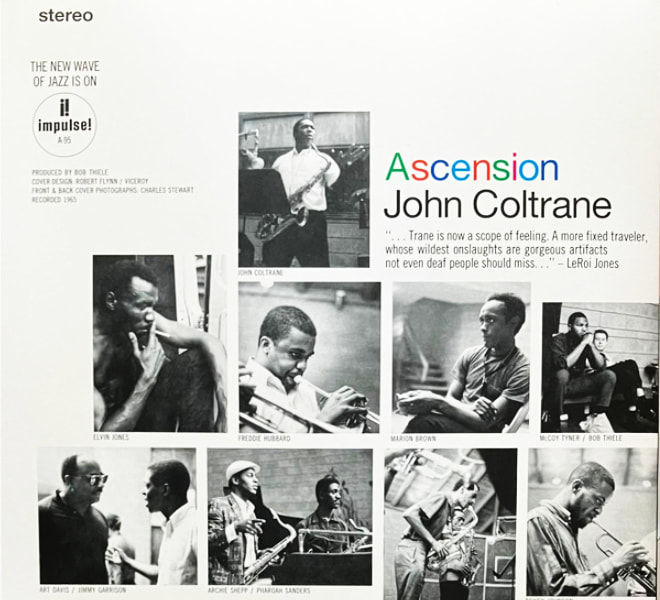
How would you follow up after making one of the most influential recordings in jazz history? If you were John Coltrane, you would confound all expectations, releasing one of the most challenging, complex pieces of music to date in his career one year after January 1965’s A Love Supreme.
His first “free jazz”-leaning release, February 1966’s Ascension, was far from an unstructured free-for-all, but it inevitably divided audiences. Add in the fact that Coltrane decided he preferred an earlier take, resulting in a remastered repress being rushed to market, and a wonderfully confusing legacy of jazz collecting and listening ensued.
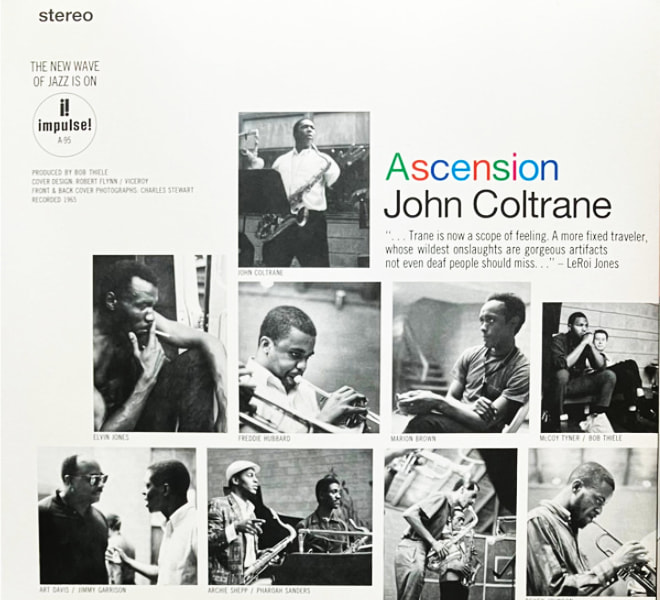
My introduction to the free jazz universe was, in fact, through Ascension (and I thank one of my older brothers for turning me on to it and explaining how to listen to/appreciate it). It wasn’t until years later that I learned of the different versions. Thus far, I only own a very clean 2nd press from that initial rollout (with “Edition II” etched in the deadwax) and a pretty nice monaural pressing of “Edition I” (which has no etching in the deadwax at all!).
If all this sounds confusing, don’t worry: it is! But fortunately, there are fine liner notes by writer (and former professor of music at Rutgers University in Newark, NJ) Lewis Porter in the fine-sounding new 2LP “Verve Vault” edition of Ascension, which explain everything. Apparently, this is the first time both versions are being presented together on vinyl (a complete CD edition was released back in 2000, which I also own).
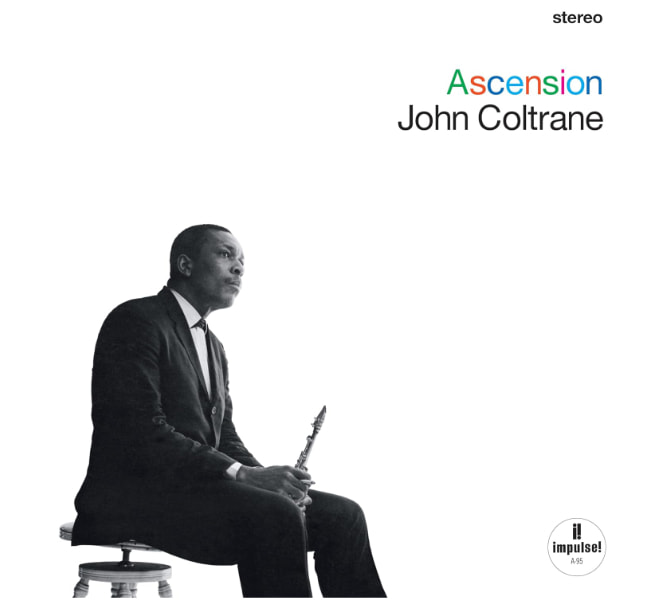
This is a good-sounding reissue, arguably better than my originals due to sympathetic remastering and quiet vinyl. It is an almost all-analog production, pressed on 180-gram vinyl at Optimal in Germany from new lacquers cut from original sources by Ryan K. Smith at Sterling Sound. I used the term “almost” intentionally, as we learn from the liner notes that Side 2 of “Edition II” features a new digital reassembly of a key performance moment.
While the packaging features the original album art, it is not the same sort of laminated deluxe sleeve presentation that we’ve become accustomed to from Universal Music’s Acoustic Sounds and Tone Poet reissues. This flat, matte-style cover is nice but crafted in a simpler, more modern aesthetic, which no doubt helps keep costs down.

Do you need this new 2LP edition? If you are a “completist” collector who already owns Editions I and II on original vinyl, the answer is probably yes. If you always wanted both versions on vinyl but have grown weary of trying to find a reasonably priced, good-condition copy (the album doesn’t show up frequently in used stores), this is a perfectly fine reissue, which recreates the original labels (in not quite the right orange color, but that is a nitpick) and even includes an “Edition II” etching in the Disc 2 deadwax.
You can order then new 2LP edition of John Coltrane’s Ascension at Amazon for $37.99.
Our Ratings
★★★★★★★★★★ Music
★★★★★★★★★★ Sound
★★★★★★★★★★ Packaging
Where to Buy
Mark Smotroff is a deep music enthusiast / collector who has also worked in entertainment oriented marketing communications for decades supporting the likes of DTS, Sega and many others. He reviews vinyl for Analog Planet and has written for Audiophile Review, Sound+Vision, Mix, EQ, etc. You can learn more about him at LinkedIn.

The University of Washington on Thursday celebrated the opening of a public-access battery manufacturing lab that aims to propel energy innovation.
The new lab — the first of its kind on the West Coast — is housed within the UW’s Clean Energy Testbeds, a site that has helped launch multiple battery startups.
The expanded facility for researchers and entrepreneurs comes as battery demand surges, particularly for large deployments supporting solar energy and grid operations. Over the past three years, U.S. utility-scale battery storage capacity has grown at an average annual rate of about 70%, according to federal data. Other key applications include batteries for defense and transportation.
While China and other Asian nations overwhelmingly dominate the global supply of batteries, there is still room for U.S. companies to grow, particularly in developing new technologies, said Dan Schwartz, founding director of the Clean Energy Institute, which operates the Testbeds.
“We want to be part of the new chemistries that can serve new markets,” he said.
Those innovations include batteries using sodium or potassium ions, or replacing graphite with silicon-carbon materials in traditional lithium-ion batteries.
The new 1,600-square-foot lab was created by repurposing storage space inside the current 15,000-square-foot testbed facility, located east of the UW’s main Seattle campus. The $7.5 million capital project was completed in February and funded by the state’s Climate Commitment Act, which also supports additional facility staff.
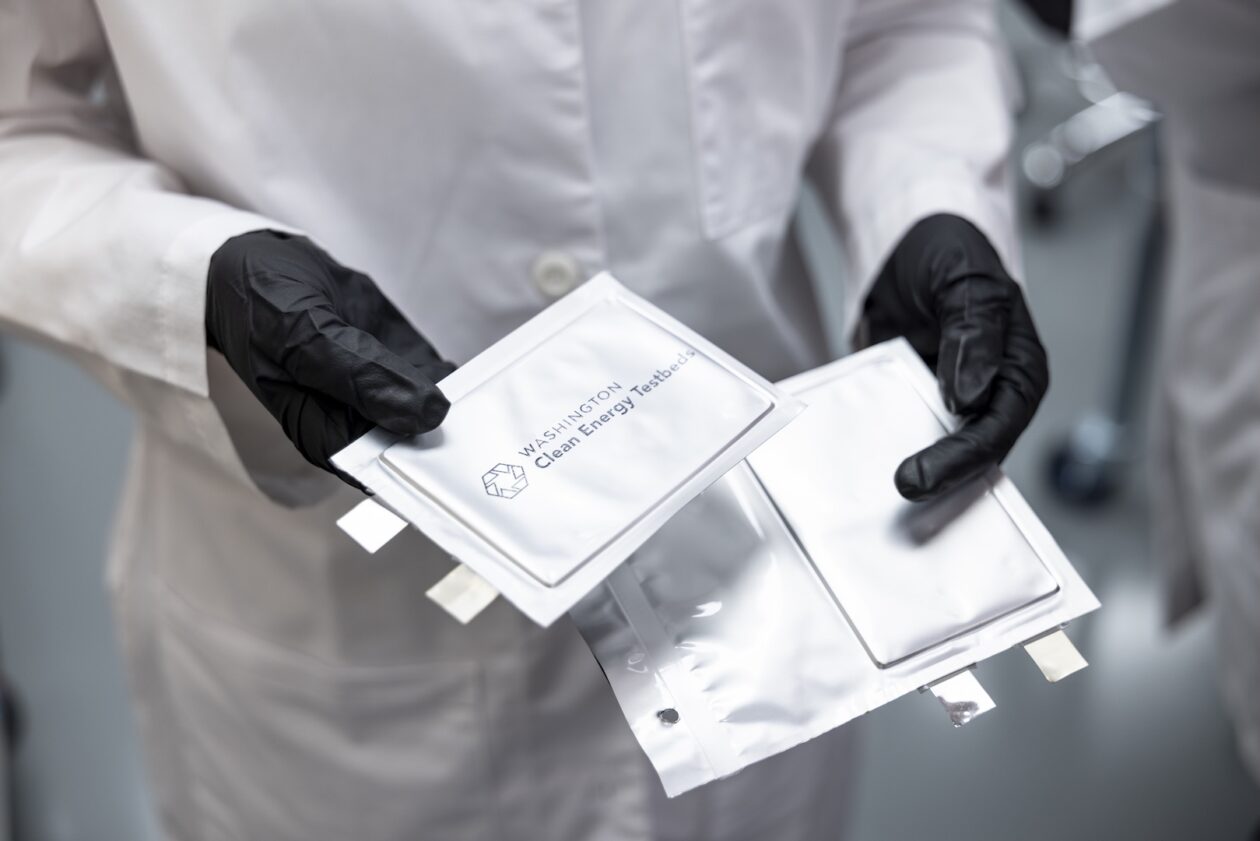
The lab is focused on building pouch cells, a format that offers more flexibility than traditional cylindrical cells used in consumer goods. The metallic pouch, which resembles a Pop-Tart package, enables users to create and test both small-scale experimental cells and larger prototypes for wide-ranging applications.
The facility features a dry room equipped to mix electrode slurries, coat electrodes and assemble components inside plastic-lined aluminum pouches, alongside a room with tools to test battery performance. UW experts are on-hand to help.
Seattle startup Emerald Battery Labs produced its first pouch cells in the new facility. The company is developing sodium-ion batteries, which use cheaper raw materials, offer longer lifespans and pose fewer fire risks compared to lithium-ion alternatives.
“We wouldn’t have started this company in Seattle if not for the Testbeds,” said Kjell Schroder, co-founder and CTO of Emerald Battery Labs, in a statement. He added that the facility allows the startup to iterate and produce demo cells “for a range of potential applications without major capital expenditure.”
The UW announced plans for the lab in October 2024 with an expected summer 2025 launch. Permitting challenges and long lead times for high-demand tools delayed the opening until early 2026, Schwartz said.
The entire Clean Energy Testbeds was originally slated to relocate to a new building called Brightwork, but ground was never broken and the project was quietly scuttled.
Schwartz said the new lab is booked out for the coming months. Other companies using the space include a California startup called Project K Energy that’s pursuing potassium-ion batteries. The Testbeds also partners with academic institutions such as Big Bend Community College in Moses Lake, Wash., to offer battery fabrication workshops.
Schwartz sees potential for the facility to support specialized, high-value applications with Pacific Northwest ties, including aviation, data centers and electric semi-trucks.
When it comes to clean energy, “batteries are just winning,” Schwartz said. “And the question is, who’s going to win in all the sectors that batteries are transforming?”

Microsoft’s September 2026 Patch Tuesday is its largest ever, fixing a record 966 vulnerabilities, including 105 rated critical and two zero-days already being exploited in attacks. BleepingComputer reports: This Patch Tuesday addresses 105 “Critical” vulnerabilities, 81 of which are remote code execution, 20 are elevation of privileges, 2 are information disclosure, and 1 security feature bypass.
The approximate number of bugs in each vulnerability category is listed below:
– 438 Elevation of Privilege Vulnerabilities
– 19 Security Feature Bypass Vulnerabilities
– 258 Remote Code Execution Vulnerabilities
– 173 Information Disclosure Vulnerabilities
– 56 Denial of Service Vulnerabilities
– 16 Spoofing Vulnerabilities Last month, Microsoft’s Patch Tuesday updates fixed 570 security flaws, following 400 vulnerabilities patched in August.


Read more of this story at Slashdot.


PUBLIC SECTOR
Procurement officials promise to police the scandal-hit supplier’s voluntary bidding moratorium
The UK government has told MPs that Fujitsu has promised not to pursue contracts with new public sector customers through frameworks potentially worth billions of pounds while its voluntary bidding moratorium remains in place.
In July, The Register revealed that the Japanese supplier had won a place on a UK government framework worth up to £14.9 billion despite its role in the Post Office Horizon scandal, one of the greatest miscarriages of justice in modern times. The supplier’s place on the Digital Outcomes and Specialists 7 (DOS7) framework came after it won spots on two other frameworks, including Technology Services 4, worth up to £19.08 billion, and Transport Technology worth around £2.3 billion.
In January 2024, Fujitsu voluntarily committed to stop bidding for contracts with new government customers until the public inquiry into the Horizon scandal had concluded.
After Fujitsu secured places on the three government frameworks, House of Commons Business and Trade Committee chair Liam Byrne wrote to the government seeking assurance that the company would not use them to pursue work from new public sector customers. He also asked what discussions the government had held with Fujitsu about its participation and compliance with the moratorium.
Horizon is an EPOS and back-end finance system that was first implemented in the 1990s by ICL, a UK tech firm majority-owned by Fujitsu at the time and fully acquired in 1998. It has since undergone two upgrades.
Between 1999 and 2015, the Post Office prosecuted 700 subpostmasters in cases in which Horizon evidence may have featured, while almost 300 more cases were brought by other bodies. Hundreds were wrongfully convicted, devastating lives in the process. A statutory inquiry into the scandal was launched in 2021 and remains ongoing. The inquiry’s first report said the families of at least 13 people believed their deaths by suicide were linked to their experiences with Horizon and the Post Office.
Fujitsu has apologized for its role in the scandal.
Frameworks are procurement vehicles that let public bodies buy from pre-approved suppliers under agreed terms, although a place on one does not guarantee any work. The Government Commercial Agency (GCA) – which replaced the Crown Commercial Service – is the Cabinet Office agency that manages the framework and receives a 1 percent levy on sales made through it.
In a letter published this week, Cabinet Office Parliamentary Secretary Mark Ferguson said: “While appointment to a GCA framework, such as DOS7, places a supplier on a list of approved providers, Fujitsu has assured the GCA that its voluntary moratorium fully applies to call-off contract opportunities that arise via its participation on GCA frameworks. Consequently, inclusion on a framework does not override Fujitsu’s commitment not to seek work with new public sector customers.”
He added that the GCA monitors Fujitsu’s compliance with its self-imposed bidding restrictions and that agency officials were in regular contact with the company to oversee its framework activity.
“To date, GCA can confirm that Fujitsu have kept to these self-imposed restrictions,” Ferguson wrote.
In April 2025, The Register revealed that Fujitsu had won a £125 million contract to build Northern Ireland’s new land registry system for the Department of Finance, a new government customer, more than a year after its voluntary moratorium came into effect.
At the time, a spokesperson for Fujitsu told The Register: “Fujitsu was named preferred bidder for this contract in 2023, before the voluntary restrictions came into place.”
Fujitsu’s 2024 letter said the company would assess its continued involvement in procurements that were already underway when the moratorium began. However, it also said Fujitsu would bid for work with a new government customer only if asked to do so.
Fujitsu said it had been named preferred bidder for the Northern Ireland contract before introducing the restrictions. The Northern Ireland government subsequently confirmed to The Register that it had not asked the company to continue bidding. Ferguson’s letter does not explain how that award was reconciled with Fujitsu’s undertaking.
The Register has asked the Cabinet Office for clarification. ®

AppleInsider’s Andrew O’Hara is at Apple Park for the iPhone 18 Pro launch and has been reporting back on how he fared with Apple’s special welcome run, walk, or roll activity.
Attendees of the “Surprise and shine” event at Apple Park were also invited to take part in a pre-launch gathering the afternoon before. Runners, walkers, and wheelchair users were hosted by the Apple Fitness+ team with an hour around the campus to get those exercise rings filled.
On the way, Andrew used the Flighty app on his iPhone to help with a tight turnaround between aircraft. Flighty is a long-standing flight trip app that’s particularly good with Live Activities.
Even the best technology can’t get around all traffic problems, though. Here’s a notice that Cupertino residents may be very used to.
But then finally, Andrew got to take part in the run around the Apple Park campus. He says he got to meet up with old friends, and also recognized the Apple Fitness+ team members from workouts he’s done at home.
At the end of the hour, everyone who completed the session was rewarded with a drink and a special Apple Fitness+ hat.
For bragging rights though, perhaps nothing can beat what Andrew’s iPhone showed him after the run. That’s a 1.24 mile run around the entire ring of Apple Park.
That run also took Andrew within sight of the Steve Jobs Theater. This is where he’s going to be during the launch event and he’ll be reporting back from both the presentation and the area where he’ll get to try the new iPhones.
Tech
Audio-Technica ATH-AL5NC Open-Back Wireless Headphones Offer LDAC, ANC and Up to 75 Hours of Battery Life
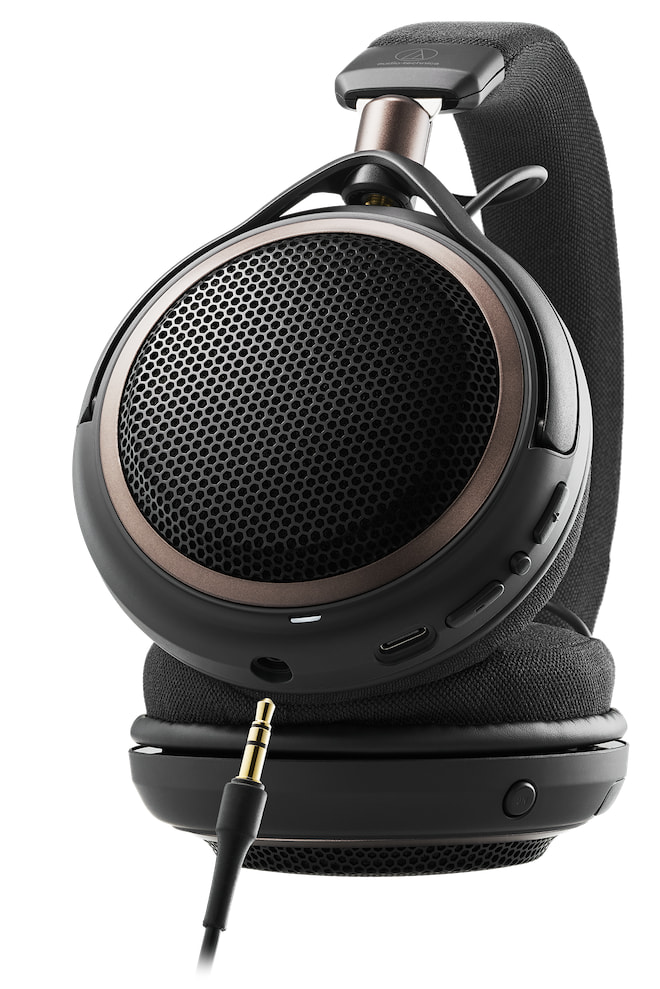
Consumers are hardly suffering from a shortage of wireless headphones. The category is packed at both ends, with increasingly capable budget models fighting for attention below $200 and premium designs from Sony, Bose, Sennheiser, Apple, Bowers & Wilkins, and others pushing well beyond $400. The $250 to $300 range has become particularly competitive, and the arrival of Sony’s new $299 WH-1000XM4C only makes that fight more difficult for everyone else.
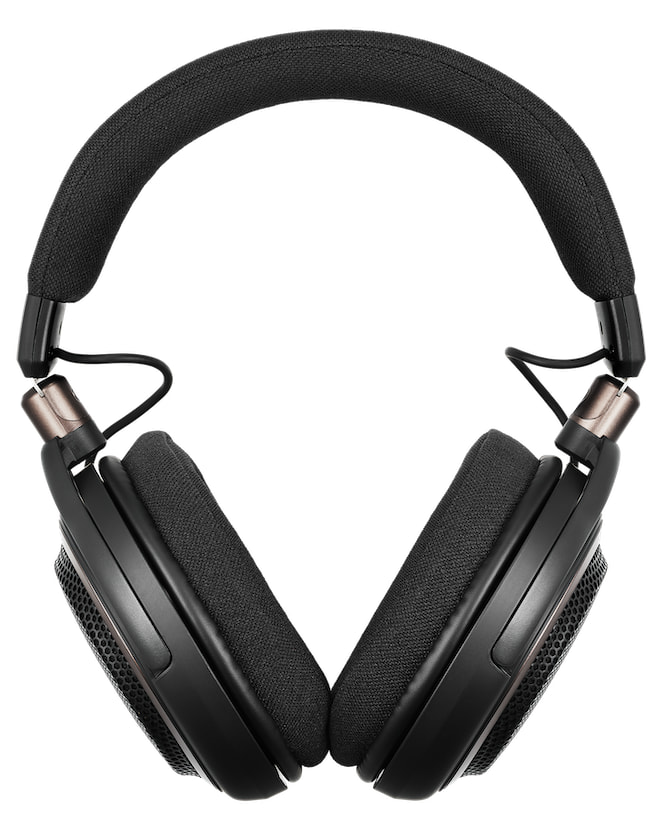
Audio-Technica is taking a somewhat different approach with its newly announced ATH-AL5NC Wireless Headphones, combining a lightweight, open-back over-ear design with wireless connectivity, high-resolution LDAC audio, noise reduction, and up to 75 hours of battery life. Rather than simply adding another closed-back ANC model to an already crowded market, the ATH-AL5NC attempts to deliver the more spacious presentation associated with traditional open-back headphones without requiring listeners to remain tethered to a headphone amplifier or source component.
Following the success of the R-Series (ATH-R30x, ATH-R70ax and ATH-R50x) developed for music production, and the recently expanded ADX Series for audiophile listening, the ATH-AL5NC rounds out Audio-Technica’s open-back headphone lineup by adding both wireless and wired connectivity.
Open-Back Sound With Wireless Freedom
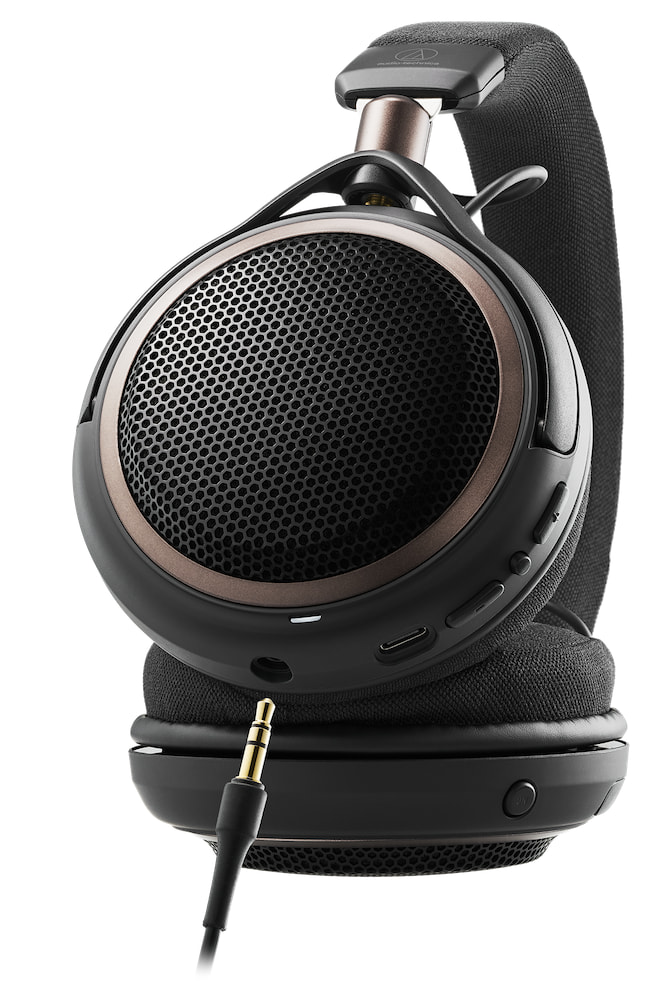
Targeted at hi-fi music listeners, remote workers, gamers, and others who value sound quality, long-term comfort, and greater awareness of their surroundings, the ATH-AL5NC offers an alternative to both traditional wired open-back headphones and more isolating closed-back wireless models.
The ATH-AL5NC incorporates 53 mm dynamic drivers designed to produce a wide, detailed soundstage with a natural presentation.
For wireless listening, the ATH-AL5NC supports Bluetooth with high-resolution 24-bit/96 kHz LDAC audio, along with AAC and SBC codec support. The open-back design also allows listeners to maintain greater awareness of activity around them than they would with most closed-back wireless headphones.
Bluetooth Multipoint pairing allows the headphones to remain connected to two Bluetooth devices simultaneously, while a built-in microphone supports calls, virtual meetings, and gaming communication.
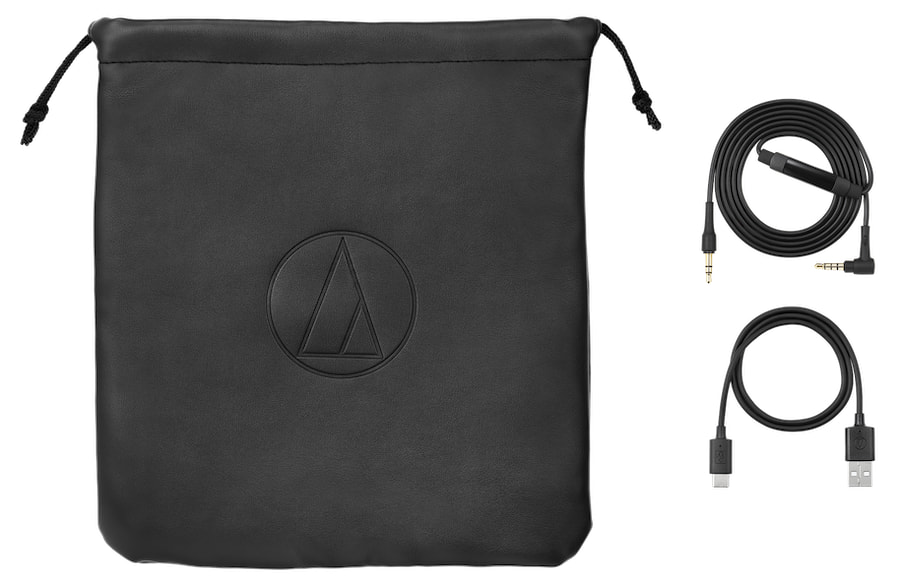
For those who prefer a physical connection, the ATH-AL5NC includes a 1.2-meter (3.9-foot) cable terminated with a 3.5 mm (1/8-inch) stereo mini-plug. The cable also incorporates an electret condenser microphone.
Active noise cancellation is available with both wireless and wired connections. Audio-Technica also includes a Sound Leakage Prevention mode, designed to reduce the amount of sound escaping from the open-back earcups and minimize disturbance to people nearby.
Comfort is another major part of the design. The open-back earcups promote airflow to reduce heat buildup, while the headphones weigh just 240 grams (8.5 ounces). Audio-Technica also says the earpads rest gently around the ears with minimal clamping pressure, which should make the ATH-AL5NC better suited to extended listening sessions.
Battery life extends up to 75 hours of continuous playback with Bluetooth enabled and noise cancellation switched off. With noise cancellation enabled, that figure drops to a still substantial 50 hours. A 15-minute quick charge provides up to eight additional hours of playback.
The Audio-Technica CONNECT app provides additional customization, including adjustable EQ, preset and flat sound settings, codec selection, a headphone-locating function, low-latency mode for gaming and video playback, and Soundscape, which offers nature sounds, masking noise, and meditation audio.
Comparison
| Audio-Technica Model | ATH-AL5NC (2026) | ATH-R70xa (2025) | ATH-R50x (2025) | ATH-R30x (2025) |
| Price | $279 | $379 | $169 | $99 |
| Type | Open-Back | Open-Back | Open-Back | Open-Back |
| Connection Options | Wireless, Wired | Wired | Wired | Wired |
| Driver Diameter | 53mm | 45 mm | 45 mm | 40 mm |
| Frequency Response | Not Indicated | 5 to 40,000 Hz | 5 to 40,000 Hz | 15 to 25,000 Hz |
| Maximum Input Power | Not Indicated | 1,000 mW | 1,600 mW | 1,000 mW |
| Sensitivity | Not Indicated | 97 dB/mW | 93.3 dB/mW | 92 dB/mW |
| Impedance | Not Indicated | 470 ohms | 50 ohms | 36 ohms |
| ANC | Yes (for both wireless and wired connections) | – | – | – |
| Bluetooth | Yes | – | – | – |
| Codec Support | SBC, AAC, LDAC, LC3 | – | – | – |
| Hi-Res Audio | Up to 24bits/96kHz | – | – | – |
| Multipoint Connectivity | Yes | – | – | – |
| App Support | Yes – AT Connect App | – | – | – |
| Microphone | Yes | – | – | – |
| Battery Life | Up to 75 hours | – | – | – |
| Weight | 240 g (8.5 oz) | Approx. 199 g (7.0 oz), without cable | 207 g (7.3 oz), without cable | 210 g (7.4 oz), without cable |
| Wired Connections | 1.2 m (3.9′) cable with a 3.5 mm (1/8″) stereo mini-plug. | 3.5 mm (1/8”) stereo headphone jack | 3.5 mm (1/8”) stereo headphone jack | 3.5 mm (1/8″) gold-plated stereo mini-plug |
| Accessories Included | 1.2 m (3.9′) cable with a 3.5 mm (1/8″) stereo mini-plug. Protective carrying pouch |
Detachable cable (3.0 m (9.8’) / 3.5 mm (1/8”) gold-plated stereo mini-plug), 6.3 mm (1/4”) stereo adapter Protective carrying pouch |
Detachable cable (1.2 m (3.9’) / 3.5 mm (1/8”) gold-plated stereo mini-plug), 6.3 mm (1/4”) stereo adapter Detachable cable (3.0 m (9.8’) / 3.5 mm (1/8”) gold-plated stereo mini-plug) Protective carrying pouch |
6.3 mm (1/4″) stereo adapter |
| Replacements/separately sold items | Not Indicated | Earpads Head pad Detachable cable, 6.3 mm (1/4”) stereo adapter Pouch |
Earpads, Headpad, Detachable cable, 6.3 mm (1/4”) stereo adapter, Pouch | Earpads, headpad, 6.3 mm (1/4″) stereo adapter |
The Bottom Line
We don’t yet have enough information about the ATH-AL5NC’s tuning and overall performance to make a meaningful comparison with Audio-Technica’s R-Series or considerably more ambitious ADX models. What is already clear, however, is that Audio-Technica is trying something rather different in a wireless headphone market overflowing with closed-back ANC designs.
The ATH-AL5NC attempts to bridge two categories that rarely overlap: the spacious presentation, ventilation, and long-term comfort of an open-back headphone with the convenience of Bluetooth, LDAC, active noise cancellation, wired connectivity, and up to 75 hours of battery life with ANC switched off. At just 240 grams, that combination could make it especially appealing for music listening, gaming, and remote work where comfort and some awareness of the surrounding environment are more important than complete isolation.
There is, however, an obvious trade-off. Open-back headphones intentionally allow outside sound in and some of your music out. Audio-Technica’s Sound Leakage Prevention mode should help reduce the latter, and ANC can reduce lower-frequency background noise, but neither feature turns the ATH-AL5NC into a conventional closed-back travel headphone. They might work on a train at moderate volume, but commuters who want maximum isolation from rail noise and minimum annoyance from the person sitting beside them, will probably be better served by a closed-back alternative.
That is also what makes the ATH-AL5NC interesting. Instead of building another Sony or Bose clone, Audio-Technica has taken some of the qualities that make open-back headphones attractive for serious listening and attempted to make them substantially more practical for everyday use. If the sonic performance lives up to that premise, the ATH-AL5NC could occupy a rather useful middle ground.
But what about the competition?
At $299, the Sony WH-1000XM4C takes the more conventional route with a closed-back wireless ANC design aimed squarely at commuters and travelers. It also supports wired listening, but its stronger isolation makes it a more practical choice on trains and airplanes. Its 27-hour battery life, however, falls well short of the ATH-AL5NC’s maximum 75-hour rating.
The Final UX5000 is an even closer price rival at $249.99. It supports Bluetooth, LDAC, aptX Adaptive, ANC, and a 3.5mm wired connection, with up to 65 hours of playback with ANC switched off. Like the Sony, however, it uses a closed-back design intended to provide substantially greater passive isolation than the ATH-AL5NC.
That leaves Audio-Technica with a rather unusual proposition. Sony and Final offer the isolation most commuters expect from wireless ANC headphones, while the ATH-AL5NC trades some of that isolation for airflow, environmental awareness, and the more open presentation associated with traditional open-back designs.
Price & Availability
The ATH-AL5NC Open-Back Wireless Headphones are available for a price of $279 at Audio-Technica and Authorized Resellers.
Related Reading:

Good morning everyone! Welcome to our live coverage of today’s Apple media showcase.
We will have two reporters on the scene at Apple Park in Cupertino, California, to bring you live coverage. You’ll be hearing from Julian Chokkattu, Boutayna Chokrane, Lauren Goode, Reece Rogers, and Michael Calore throughout the event. We might have some special guests pop in as well. We’ll be posting frequent news updates here, with the highlights also going on our social platforms.
Apple’s presentation begins at 10 am Pacific, 1 pm Eastern, and 6 pm in the UK. We have a complete rundown on how to watch the show and what to expect.
Come back approximately 30 minutes before the presentation starts—about 9:30 am in California—and you’ll see the words on this page replaced by a feed of our live updates.
A Folding iPhone Today
The short version of what to expect: The folding variant of the iPhone should make its debut today. The word around Silicon Valley is that it’s expected to be named the iPhone Ultra and that it will likely cost more than $2,000.
We’ll probably also see a Pro version iPhone today, and we can expect the folding iPhone and the Pro models to go on sale later in September.
What about the base model iPhone 18? That might not arrive until early next year, though Apple might tease it today. The longer wait could be because of a number of factors, including rising manufacturing costs and the ongoing memory crisis affecting the whole PC industry. Also, delaying the next generation of cheaper iPhones—the 18, the 18e, and the Air—would give Apple an opportunity to promote its premium handsets more heavily.
It’s also likely we’ll see the newest Apple Watch and Watch Ultra models debut at today’s event.
Both the new iPhones and the new Apple Watches will be getting some additional capabilities enabled by Siri AI, the newest version of Apple’s artificially intelligent assistant. So, expect lots of talk about the beefed-up new chips in these devices as well as “on-device AI,” secure computing, and battery optimization. Siri AI is actually powerful and impressive in our testing of the beta version, but just like the various Siris that came before it, there are limits to how helpful it can really be in your day-to-day life.
Also notable is the list of things we’re not expecting: Apple’s various smart-home products that have been rumored to be close to release, including new HomePod speakers and a smart home device that’s used to interacting with Siri’s camera-based Visual Intelligence capabilities.
Along those lines are the rumored AirPods with tiny cameras in them that can be used, in conjunction with voice commands, to give Siri AI some additional context about what you’re looking at and inquiring about. Those earbuds might come today, but we could just as well see them at an additional event in late September or in October. (It’s likely the smart-home products will show up at the next event too.)
How to Watch
To watch the livestream, you can, of course, just hit Play on the video stream on this page. But it’s better on the big screen.
You can watch it in your TV’s YouTube app; just tune into Apple’s YouTube channel. You can also watch it on Apple’s own streaming app. If you have an Apple TV or any streaming box, just go into the Apple TV app. When you open the app, the livestream for the event should be displayed prominently right at the top. This works even if you don’t subscribe to Apple’s paid streaming service. Watching it on the television frees up your laptop screen so you can follow the live blog. Convenient!
We’ll see you back here about half an hour before the event begins.
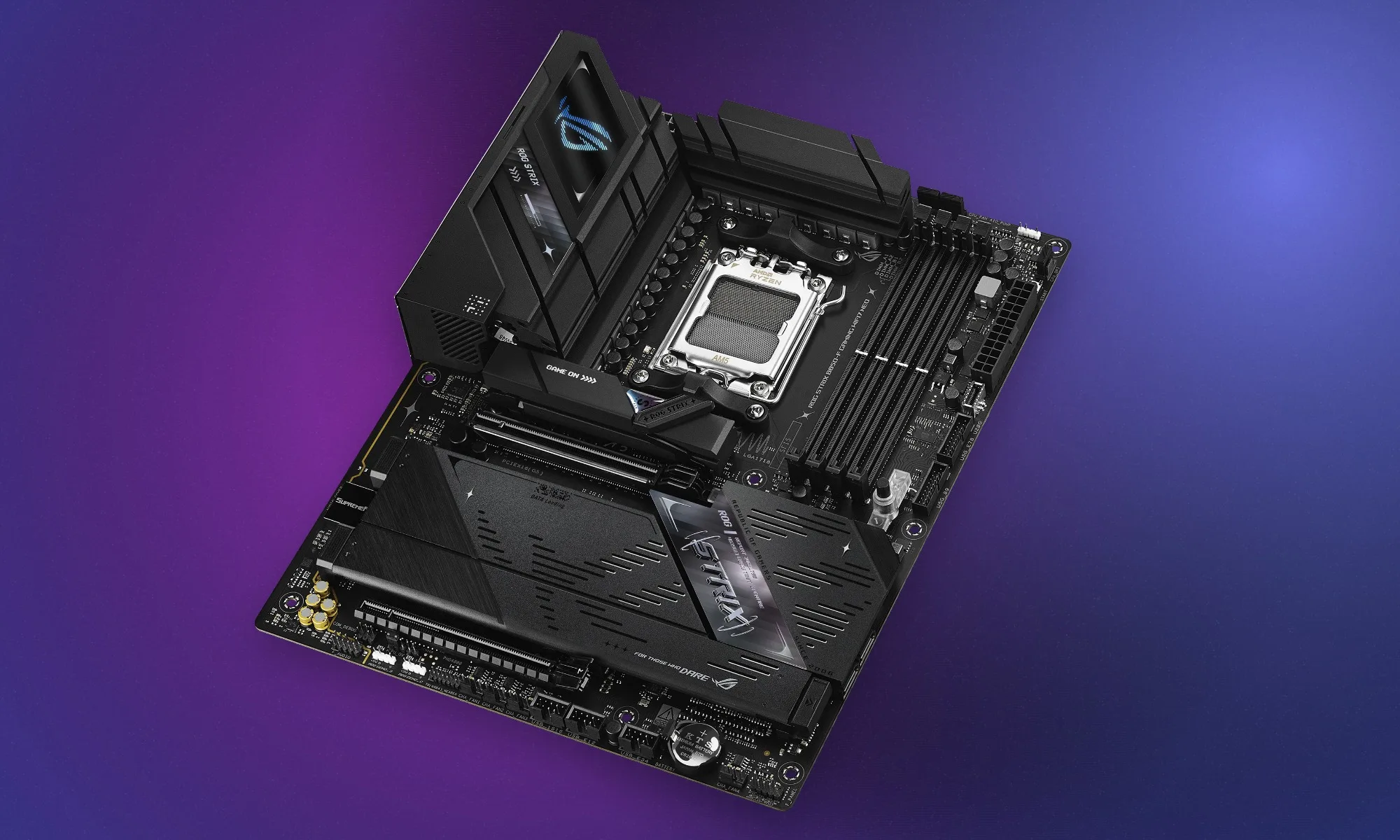
AMD’s Ryzen 9000-series processors have made the AM5 platform an increasingly attractive choice for gaming PCs, but picking the right motherboard can be almost as important as picking the CPU itself. The motherboard determines everything from memory and storage support to connectivity, expansion, networking, and how much room you have to tune your system. For most gamers building a new Ryzen 9000-series PC, B850 is a particularly interesting sweet spot. It brings modern connectivity and PCIe 5.0 support without the enthusiast-level investment tied to AMD’s most expensive platforms.
1. ROG STRIX B850-F GAMING WIFI7 NEO
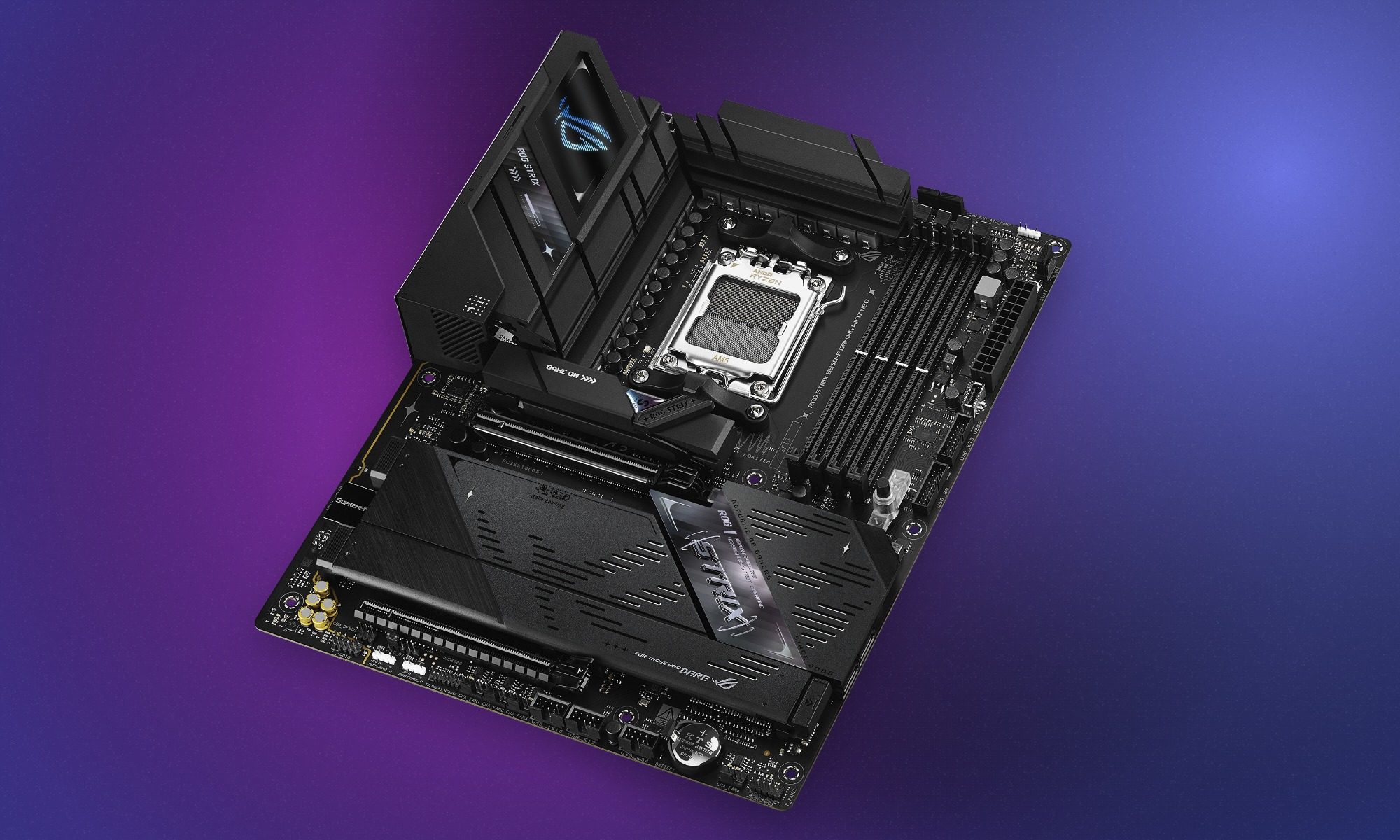
Who is it for: Gamers and enthusiasts building a high-end Ryzen 9000-series PC who want strong performance, fast connectivity, and plenty of room for tuning.
The ROG STRIX B850-F GAMING WIFI7 NEO is built to get the most out of AMD’s Ryzen 9000, 8000, and 7000-series processors, pairing a robust 16+2+2 power-stage design with 80A stages and dual ProCool power connectors with support for DDR5 speeds of 9000+ MT/s (OC). That gives demanding Ryzen 9000 chips plenty of power-delivery headroom while leaving room for enthusiasts to push their memory further.
Storage and expansion are equally well covered, with four M.2 slots comprising two PCIe 5.0 x4 and two PCIe 4.0 x4 slots, alongside a PCIe 5.0 x16 slot for the GPU. That makes the B850-F a particularly well-rounded foundation for a high-end gaming rig, especially if you want to take advantage of faster PCIe 5.0 SSDs as they become more commonplace.
The Neo series also brings some more unusual tricks to the table. AI Cache Boost is designed to optimize CPU cache and Infinity Fabric behavior for AI workloads, with ASUS reporting gains of up to 14.23% in its AI computer-vision benchmark and up to 26.45% higher tokens per second in a local LLM workload. Meanwhile, the built-in Asynchronous Clock generator separates the CPU base clock from memory, PCIe, and Infinity Fabric domains, giving enthusiasts greater flexibility when tuning CPU frequencies.
And then there’s the stuff that makes actually building and managing the PC less of a chore. PCIe Q-Release, M.2 Q-Release, Q-Latch, Q-Slide, Q-LED, a Start button, Clear CMOS, BIOS FlashBack, and Q-Antenna are all designed to make installation and troubleshooting easier. Add 5Gb Ethernet, Wi-Fi 7, a 20Gbps USB-C connection, SupremeFX audio, and a 64MB BIOS, and the B850-F GAMING WIFI7 NEO feels like a motherboard that’s trying to eliminate compromises rather than simply tick the usual spec-sheet boxes.
2. ROG STRIX B850-A GAMING WIFI7 NEO
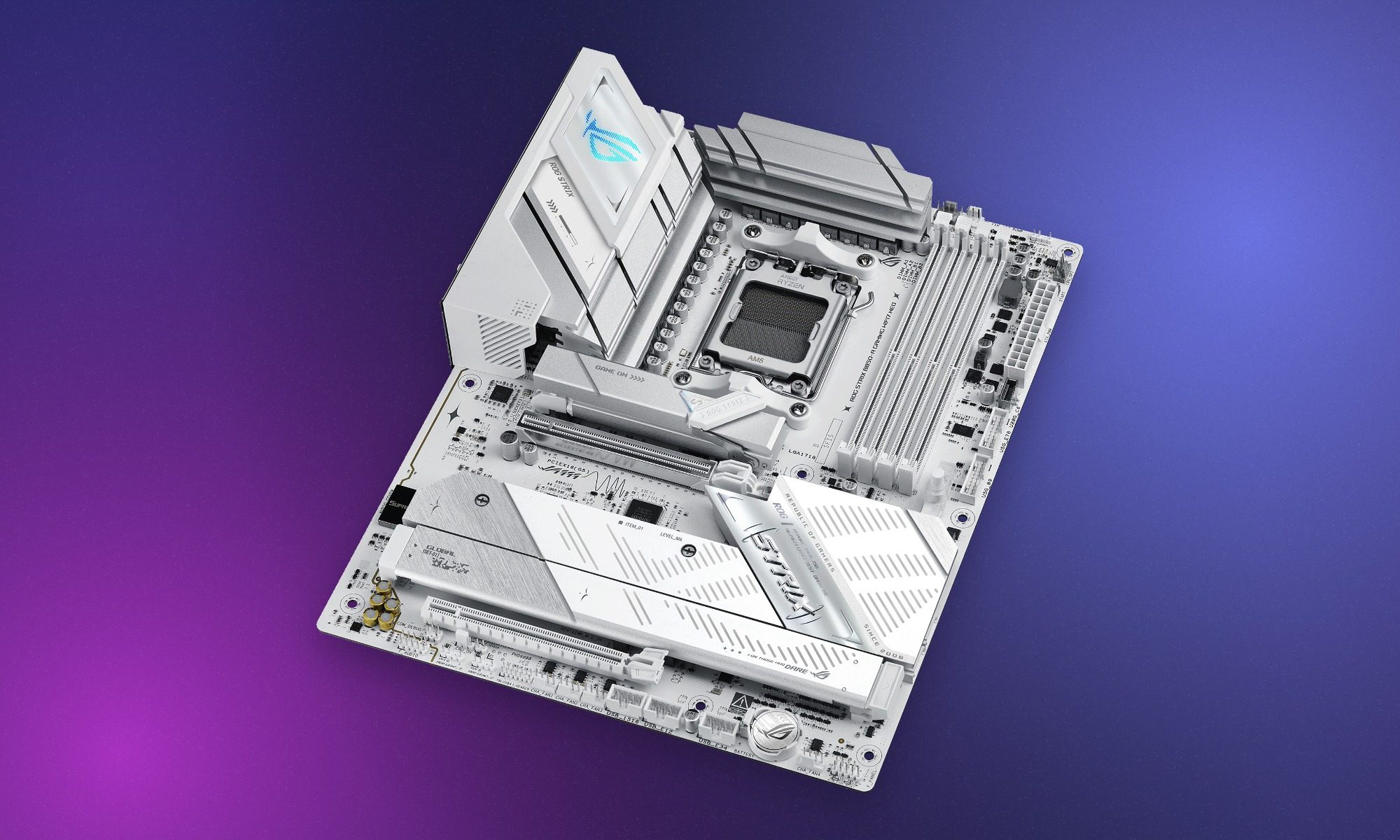
Who is it for: Builders putting together a high-end white or silver Ryzen 9000-series gaming PC who want premium features without compromising on aesthetics.
The ROG STRIX B850-A GAMING WIFI7 NEO brings ASUS’ Neo-series feature set to a clean white-and-silver design, making it a natural fit for showcase builds. Its 14+2+2 power-stage design with 80A stages and support for DDR5 speeds up to 9000+ MT/s (OC) gives it plenty of headroom for demanding Ryzen processors, while a PCIe 5.0 x16 slot handles the GPU. Storage is covered by four M.2 slots, including one PCIe 5.0 x4 and three PCIe 4.0 x4 connections.
Connectivity is equally well equipped, with 5Gb Ethernet, Wi-Fi 7, a 20Gbps USB-C connection, four USB 10Gbps ports, and six USB 5Gbps ports on the rear I/O. You also get optical S/PDIF and SupremeFX audio, giving the B850-A the sort of connectivity you’d expect from a premium gaming motherboard.
It also packs ASUS’ broader Neo toolkit, including AI Cache Boost, AI Networking II, AI Cooling II, Aura Sync, a 64MB BIOS, and a pre-installed Wi-Fi driver. So while its white-and-silver finish may be the first thing that catches your eye, the B850-A GAMING WIFI7 NEO has plenty going on underneath to make it a capable foundation for a powerful Ryzen 9000 gaming rig.
3. MSI MAG B850 TOMAHAWK MAX WIFI
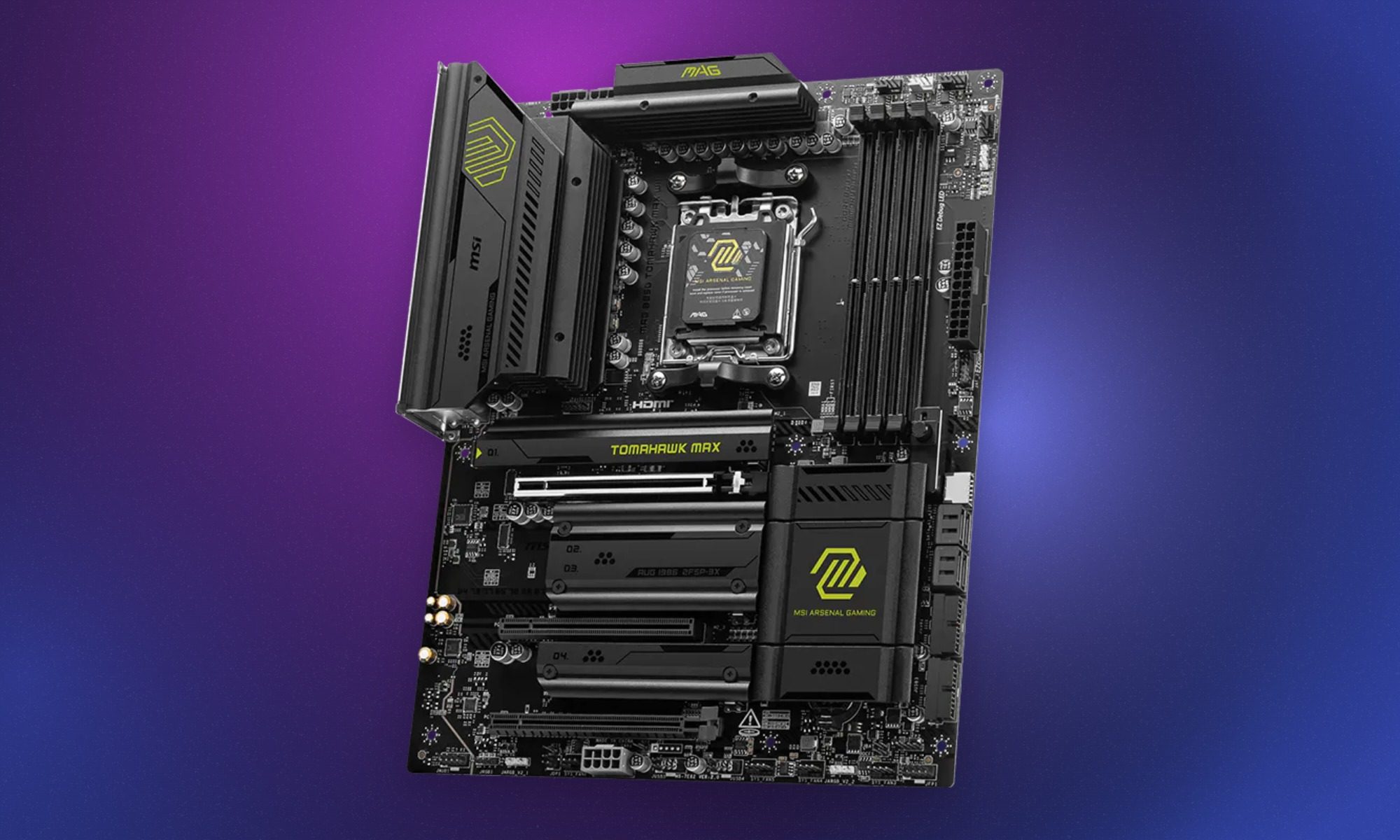
Who is it for: Gamers who want a feature-packed Ryzen 9000 motherboard focused on practical performance rather than enthusiast-level extras.
The MSI MAG B850 TOMAHAWK MAX WIFI brings a robust power-delivery design, DDR5 support, and PCIe 5.0 for the primary graphics slot, while four M.2 slots—including two PCIe 5.0 M.2 connections—give you plenty of flexibility for a multi-drive gaming setup. It’s a well-rounded foundation for a Ryzen 9000 build without pushing into unnecessarily extravagant territory.
Connectivity is another strong point, with 5Gb Ethernet and Wi-Fi 7 handling high-speed wired and wireless networking. MSI also provides a generous selection of USB ports, while the Realtek ALC4080 audio solution means you can get capable onboard audio without immediately needing a dedicated sound card.
Compared with the ROG Strix B850 boards, the Tomahawk MAX WIFI takes a more straightforward approach. You get the key ingredients—fast storage, PCIe 5.0, DDR5, high-speed networking, and plenty of expansion—without as much emphasis on AI and enthusiast-focused features. If you want a no-nonsense B850 board that puts practical gaming hardware first, the Tomahawk MAX WIFI is a compelling alternative.
4. Gigabyte B850 AORUS ELITE WIFI7
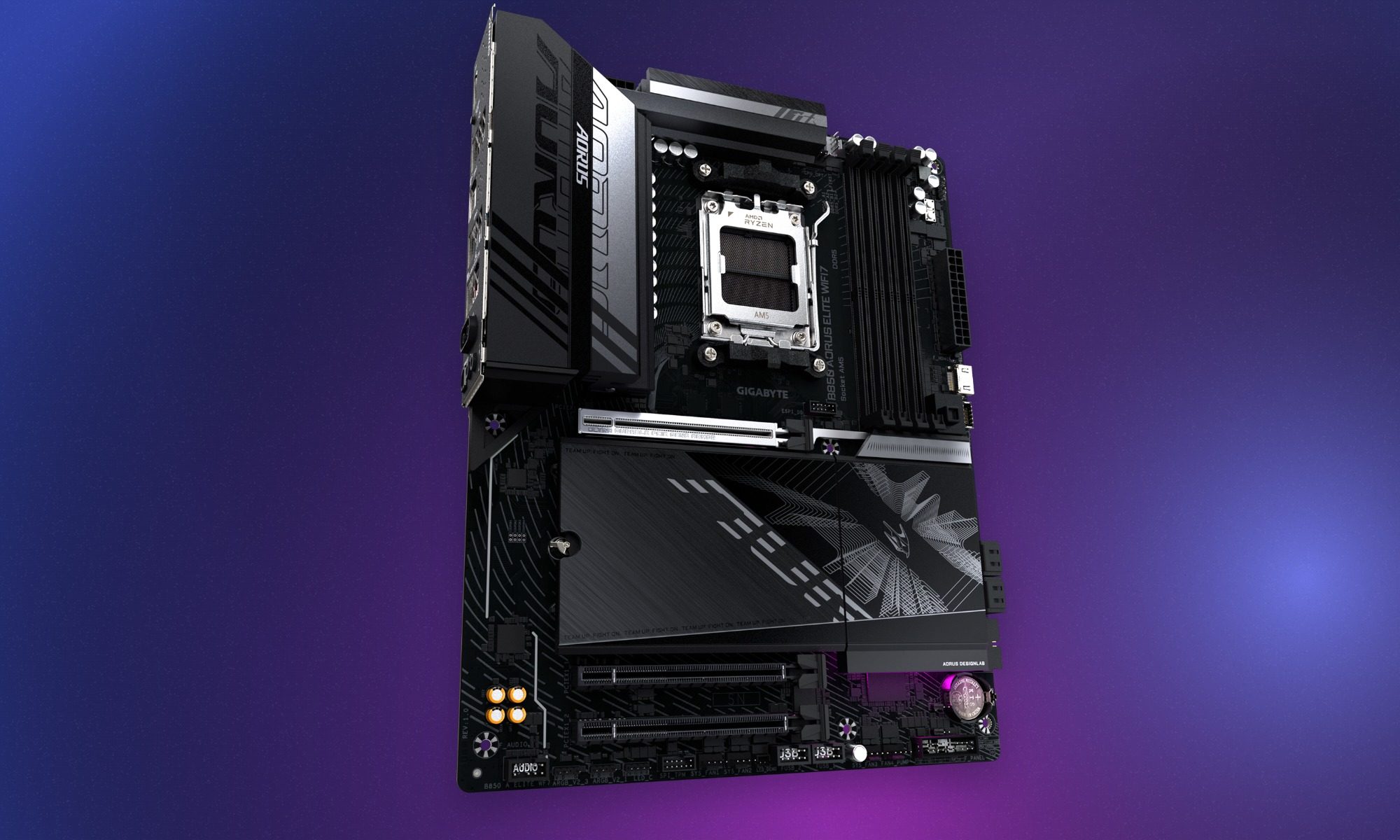
Who is it for: Ryzen 9000 builders who want a strong mix of performance, connectivity, and expansion without stepping into enthusiast-level pricing.
The Gigabyte B850 AORUS ELITE WIFI7 pairs AMD’s AM5 platform with a 14+2+2 digital VRM design, support for DDR5 speeds up to 8200 MT/s (OC), and a PCIe 5.0 x16 slot for the graphics card. Three M.2 slots provide plenty of room for NVMe storage, making it a well-equipped foundation for most modern gaming PCs without going overboard on features you may never use.
As its name suggests, Wi-Fi 7 is part of the package, alongside high-speed wired networking. That makes the AORUS ELITE WIFI7 a particularly sensible choice for gamers with fast home networks who want the flexibility of either wired or wireless connectivity. Add the capable power delivery, fast memory support, PCIe 5.0 graphics, and multiple M.2 slots, and you have most of what a Ryzen 9000 gaming system needs.
Compared with the ROG Strix boards, Gigabyte takes a more straightforward performance-first approach. You miss out on some of ASUS’ Neo-specific tuning and DIY features, but if those aren’t priorities, that may not matter much. The B850 AORUS ELITE WIFI7 is a solid middle-ground option for anyone who wants modern connectivity and plenty of expansion without paying for unnecessary enthusiast extras.
5. ASRock B850 Steel Legend WiFi
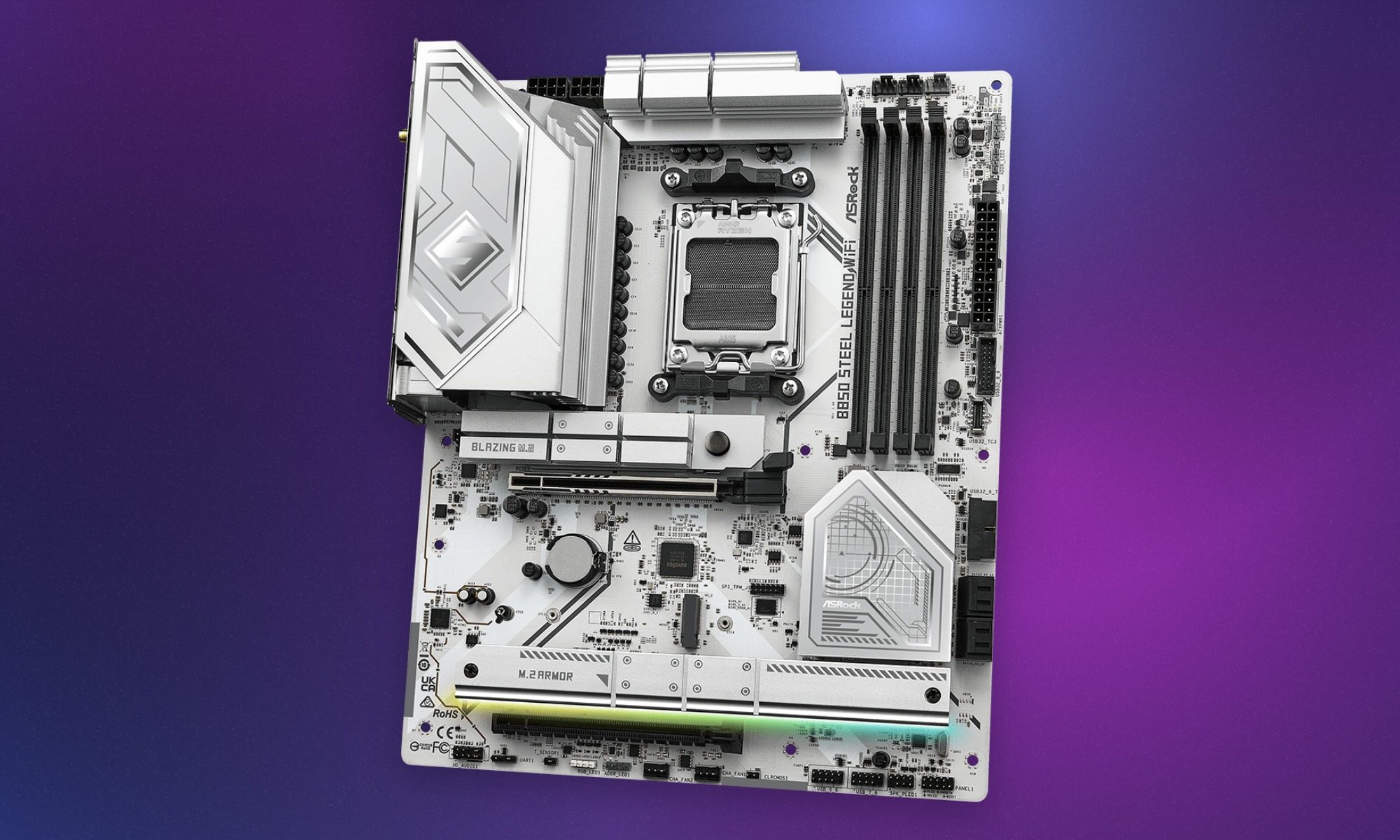
Who is it for: Budget-conscious Ryzen 9000 builders who want modern features and plenty of expansion without spending big on enthusiast extras.
The ASRock B850 Steel Legend WiFi packs a surprisingly capable feature set for a value-focused motherboard. Its 14+2+1 power design with 80A stages supports PCIe 5.0 for the primary graphics slot, while four M.2 slots give you plenty of flexibility for adding multiple NVMe drives. It also brings the distinctive Steel Legend design to the AM5 platform, making it a good fit for builders who want their motherboard to stand out.
Connectivity covers the essentials, with Wi-Fi 7, 2.5Gb Ethernet, modern USB connectivity, and BIOS Flashback. The 2.5Gb Ethernet isn’t quite as fast as the 5Gb networking on the ROG Strix Neo boards, but it’s still more than enough for most gaming setups. More importantly, the Steel Legend delivers the core ingredients of a modern Ryzen 9000 system without loading up the price with features you may never use.
That’s ultimately where this board makes the most sense. If you’d rather put the money you save toward a faster GPU, the Steel Legend gives you PCIe 5.0, Wi-Fi 7, four M.2 slots, and capable power delivery without demanding an enthusiast-level budget. It doesn’t match the ROG Strix B850-F’s broader connectivity and tuning features, but that’s not really the point—the B850 Steel Legend WiFi is a practical, value-focused foundation for a powerful Ryzen 9000 gaming PC.
Frequently Asked Questions
1. What is the best motherboard for AMD Ryzen 9000 series gaming PCs?
The ASUS ROG STRIX B850-F GAMING WIFI7 NEO is the best overall motherboard for AMD Ryzen 9000 series gaming PCs, offering flagship PCIe 5.0 speeds, DDR5-9000+ memory support, 5Gb Ethernet, and Wi-Fi 7. It delivers the ultimate blend of robust 80A power delivery and enthusiast tuning features for high-end AM5 gaming builds.
2. Which ASUS motherboard is best for Ryzen 9000 series processors?
The ASUS ROG STRIX B850-F GAMING WIFI7 NEO is the top option for high-performance builds, while the ROG STRIX B850-A GAMING WIFI7 NEO is the premier pick for white-themed Ryzen 9000 gaming rigs. Both boards feature exceptional power delivery, quad M.2 NVMe storage support, and effortless toolless Q-Design installation mechanisms.
3. What is the best white motherboard for AMD Ryzen 9000 series PCs?
The ASUS ROG STRIX B850-A GAMING WIFI7 NEO is the best white gaming motherboard for Ryzen 9000 builds, combining sleek silver-and-white thermal armor with PCIe 5.0 bandwidth and Wi-Fi 7 connectivity. It provides high-end DDR5 memory overclocking headroom and premium SupremeFX audio without compromising showcase build aesthetics.
4. Is the AMD B850 chipset good for Ryzen 9000 gaming PCs?
Yes, the AMD B850 chipset offers the ideal price-to-performance sweet spot for Ryzen 9000 gaming rigs, providing essential PCIe 5.0 bandwidth and DDR5 overclocking at a much lower cost than X870 chipsets. Top-tier boards like the ASUS ROG STRIX B850-F give gamers full enthusiast features and 5GbE networking without extreme flagship price markups.
5. Which motherboard brand offers the easiest PC building features for AM5 rigs?
ASUS leads the market in DIY user-friendliness on the AM5 platform thanks to its signature Q-Design mechanisms like PCIe Q-Release Slim, M.2 Q-Latch, and toolless Q-Antenna hardware. These innovations make installing graphics cards and M.2 SSDs completely tool-free on ROG Strix B850 motherboards.
6. Do B850 motherboards support fast DDR5 memory overclocking for Ryzen 9000?
Yes, high-end B850 gaming motherboards like the ASUS ROG STRIX B850-F support memory speeds up to DDR5-9000+ (OC) for AMD Ryzen 9000 processors. This ultra-fast memory headroom ensures maximum frame rates and low-latency gaming performance on modern AM5 platforms.
7. Is Wi-Fi 7 necessary on a Ryzen 9000 series gaming motherboard?
Wi-Fi 7 delivers multi-gigabit wireless speeds and lower latency for online gaming PCs when paired with modern compatible Wi-Fi 7 routers. Leading B850 motherboards like the ASUS ROG Strix Neo series and Gigabyte B850 AORUS Elite include native Wi-Fi 7 support to future-proof your network speeds.


This article is crossposted from IEEE Spectrum’s careers newsletter. Sign up now to get insider tips, expert advice, and practical strategies, written in partnership with tech career development company Parsity and delivered to your inbox for free!
I lost a cushy engineering management position at the same time I purchased a business, with a mortgage, three kids, and every other financial obligation of being an adult. It was one of the most stressful stretches of my life. If something similar has happened to you, I feel your pain.
You lose more than the income
For many of us, our work became our identity, so we don’t just think, “I don’t have a job anymore.” We start thinking, “I’m not an engineer anymore.”
An apple tree in winter is still an apple tree. A car parked in a driveway is still a car. You’re still an engineer, the same way you were still one every evening you clocked out, and the same way you’ll be one at the next job. Your skills took years to build and won’t evaporate because a company stopped paying for them. This feeling can be particularly rough if part of your identity was tied to a recognizable employer.
However, this can also be a chance to catch up on what you’ve been putting off: working out, being present with your kids, writing, whatever hobby got shelved for a deadline three years ago.
Once you’ve caught your breath, here are some tips for when the actual work starts:
1. Don’t sprint on day one
I started applying for jobs the next morning after the layoff. It felt productive, but it gave me no time to settle my nervous system or consider what I actually wanted next. I took the first offer that came along, at a company I already knew wasn’t right, and quit after exactly 30 days. Give yourself a few days before deciding anything. Plans built out of desperation rarely work out well.
2. Audit your spending
Go through every subscription and recurring charge and cut what isn’t essential. Every dollar you stop bleeding buys you patience instead of forcing a bad offer out of fear.
3. Build a list wider than LinkedIn
Start with former colleagues and vendors, or businesses with a relationship to your previous employer. They already know you or your company, which gives you the halo effect: Some of the trust from your employer carries over to you automatically.
LinkedIn is table stakes and is the most popular place to find work, but that doesn’t mean your search should stop there. Try Facebook, Instagram, and other social media channels too, where plenty of people who aren’t on LinkedIn might have leads for open roles. I found my first job years ago from a Facebook post, and both roles I landed after being laid off came from startup job boards and recruiters I found entirely outside LinkedIn. Your mileage may vary, but LinkedIn isn’t the only game in town.
Don’t skip your inner circle either: Text your family and friends. Good leads rarely come from someone you know directly, but they do come from someone that person knows. Work this list daily and track who you’ve contacted.
4. Eight hours is a long time
With no work to fill your day, you may default to treating the search like an eight-hour shift. You can’t apply productively for 8 hours straight, and that’s why people burn out. Use a focused morning block for the list in step 3, then spend the rest of your day on activities you’ve been putting off.
5. Catalog your wins before you study interview questions
Cataloging your wins is a higher-leverage move than drilling practice questions this early. Can you explain the most impactful project you worked on in the last year? Probably not.
Most people skip this step, then default to generic answers when a recruiter asks about their last role. Write down specific stories showing leadership, technical ability, and grace under pressure. They’ll come up once you’re in interviews, and cataloging them rebuilds your confidence along the way too. Save the deep prep for once an interview is on the calendar.
Ask yourself daily whether today’s work is generating interest in you, or leading you to someone who might hire you. If not, consider skipping it.
One last thing
A layoff rarely reflects your skills. It’s usually a company protecting revenue—nothing more personal than that. Knowing that doesn’t make it easier, but hopefully this gets you back on your feet faster.
—Brian
Looking for a job? For the first time, IEEE is taking its Career Fair worldwide. The inaugural IEEE Global Virtual Career Fair runs September 23 (5:00 PM EST) through September 24 (8:00 PM EST), following the sun across every region to connect engineering and technology professionals with employers around the world.
Read more here.
While most engineering Ph.D. grads end up in jobs at commercial companies, academia and industry often operate in their own bubbles. Now, the U.S. National Science Foundation is investing in a program to integrate industry experience into STEM doctoral programs and help bridge the gap. Modeled after similar programs in other countries, students in the I-PhD will spend at least one year working on research at an industry site and receive a combination of funding from the company, NSF, and the university.
Read more here.
When systems engineer Richard Mitchell designed a digitally-controlled nuclear plant, he made a counterintuitive decision: including manual steps for the human operator that a machine could execute on its own. The strategy was meant to keep the operator sharp, and it’s one that could help address one of the biggest issues facing the workforce today: What happens to human expertise when AI does the work that used to build it?
Read more here.
From Your Site Articles
Related Articles Around the Web

Closed-toe shoes? Check. Bags on the ground? Check. Phone in airplane mode? Check. Why all this prep? I took a ride on the Goodyear Blimp, y’all, and hung out with a pilot who dressed like one.
On Wednesday, Goodyear and Spirit Halloween dropped a new collaboration for 2026: the Goodyear Blimp is officially a costume option this season. While you could make a DIY version if you want (we love cosplayers over here), you should pop up at a party in this $80 inflatable that has Goodyear’s stamp of approval. No papier-mache, metallic tape, glue gun or sewing machine needed.

I had a chance to preview the new costume a few weeks ahead of launch, and along with that, climbed aboard the actual blimp when it stopped in Atlanta. I joined a few other members of the media who were invited to float in the clouds to celebrate the rollout, because for the first time ever, the famous airship is now a retail-ready Halloween costume. Designed with a battery pack and cooling fan, it comes with a cap and a one-piece, one-size-fits-all ensemble for adults.
Tethered to the ground at a local airport, the Goodyear Blimp looked massive up close, where a crew held the levitating ladder for us as we climbed inside one by one. Two pilots, Jeff Capek and Fayth Rascon-Ryn, were seated at the controls, ready to fly us around the outskirts of the city. Like on an airplane flight, we were instructed to buckle our seat belts for takeoff. Slowly and steadily, the airship ascended upward, and then we began our ride, hitting a maximum speed of around 35 miles per hour. Outfitted with windows all around, the gondola allowed for some great shots of the skyline, local scenery below and even the little propellers on the blimp.
Our guide and crew member, Jensen Kervern (who’s also a pilot), hit the runway — on the tarmac and inside the ship’s gondola — to model the costume while sharing history and facts about the ubiquitous blimp with us passengers. What you may recognize as the helium-filled “big part” of the blimp is called the envelope, and its pressure is maintained by two ballonets that also keep the ship level and upright. If you’re curious about helium refills, she shared that it’s replenished over time and filtered when grounded at home base.

“When we’re at home, we’ll hook it up to a big machine — a purifier — that operates a lot like a dialysis machine. It’ll pull out all the impurities and put the helium back inside. We try to reuse it; it’s a finite resource that’s very expensive,” said Kervern. She also graciously snapped a few photos with us.
As you may imagine, your Spirit Halloween costume won’t come equipped with any helium for added drifting effect, but it does have a battery-operated fan to keep it aloft. I hope the visuals and details I’ve shared from my experience can lend a little razzle-dazzle to your creative Halloween aspirations. And yeah, it really does feel like you’re floating on air.
Check out the Goodyear Blimp costume at Spirit Halloween’s website.

Viral Altcoin VVV Hits a New ATH: More Fuel Left or Time to Take Profits?

Previewing the Top 2026 Week 2 Pac-12 Football Games

John Coltrane’s Ascension Review: Both 1966 Versions Come Together on Verve’s Superb 2LP Vault Edition

Memory prices are slowing because buyers ran out of money

Bitcoin price risks $76K drop as $78K support weakens

Ethereum price stalls below $2,500 as ADX drops to 11

Top 5 free budgeting apps to manage your personal finance #budgeting #personalfinance

$5.5 Trillion Is FLOODING into Crypto (Top 7 Winner Altcoins)

The Man Who Owns 4% Of All Bitcoin: “I Made $15 Billion By Using ChatGPT!” | Michael Saylor
-
Tech1 day ago
Memory prices are slowing because buyers ran out of money
-
 Crypto World16 hours ago
Bitcoin price risks $76K drop as $78K support weakens
-
 Crypto World17 hours ago
Ethereum price stalls below $2,500 as ADX drops to 11
-
 Sports1 day ago
Phones confiscated, players sent home: Pakistan’s England tour turmoil revives memories of Mohammad Amir, Salman Butt and Mohammad Asif’s 2010 Lord’s spot-fixing scandal | Cricket News
-

 NewsBeat1 day ago
England up in reading, maths and science rankings as Scotland and Wales dip
-

 Crypto World1 day ago
Robinhood Stock: How To Take Advantage With Reduced Risk
-

 Business1 day ago
Egyptian TV Presenter Sarah Khalifa, 11 Others Sentenced To Death In Major Drug Trafficking Case In Cairo
-
 Crypto World1 day ago
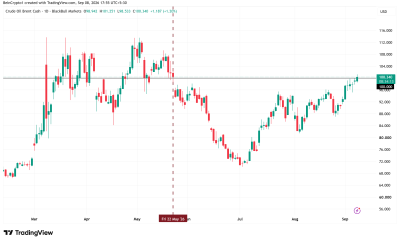
Brent Crude Oil Moves Above $100 for the First Time in 3 Months
-

 Business14 hours ago
Meta debuts long-awaited personal AI agent, Muse
-

 Crypto World1 day ago
Visa expands stablecoin card network to 160 programs
-
 Tech1 day ago
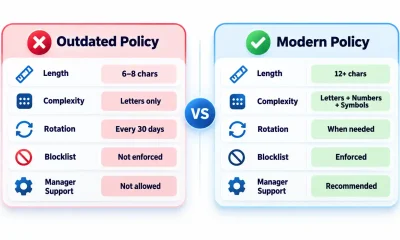
Strong Password Policy and Password Manager Guide
-
 Crypto World1 day ago
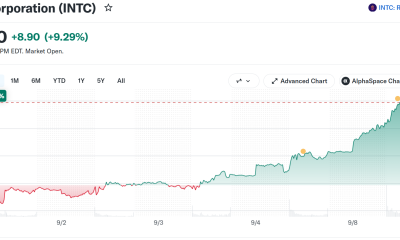
Intel Stock Jumps 9% on Chip Price Hike Report, US Stake Gains $36 Billion
-
 NewsBeat1 day ago
Tehran’s assertive rhetoric signals a new and dangerous phase in conflict
-

 Sports23 hours ago
Ballon d’Or 2026 Nominees: Lionel Messi In, Cristiano Ronaldo Out; Erling Haaland Included In Top 30
-

 Tech1 day ago
Google’s revived nuclear power plant gets $1.9B loan from US government
-
 Business20 hours ago
Oil Higher on Hormuz Escalation, Weighing on Sentiment
-
 Tech21 hours ago
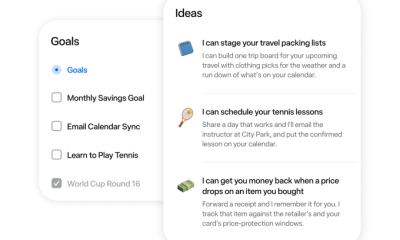
Meta debuts its Muse AI agent. Will consumers trust it?
-

 Business1 day ago
Claim Your Share Of $50 Million Disney Streaming Price Settlement By Sept. 8 Tonight
-

 Tech1 day ago
Stoke Space raises another billion to rival SpaceX at re-flying rockets
-

 Business18 hours ago
Target opening 8 new stores this fall across six states
You must be logged in to post a comment Login