Longtime Slashdot reader fahrbot-bot shares a report from the BBC: A top safety researcher at Anthropic has warned AI is advancing so quickly he believes there is a greater than 10% chance it “could kill all humans” within the next decade. Evan Hubinger said in a post on X the risk from the models which currently exist was “low” but he was “worried” the technology might develop and improve itself soon to the point where it posed an existential risk to humanity. He did not spell out how he thought AI systems could in the future result in humans being wiped out. But his comments are the latest in a series of increasingly stark warnings about AI, with the debate shifting from whether it truly poses a risk to how big that risk is.
Hubinger’s intervention was in response to another post on X from Jacob Coxon, an AI researcher who has just quit Anthropic and previously worked at OpenAI.
“Neither company is acting responsibly,” he wrote. “These will soon be superhuman systems that can hack anything, revolutionize any field overnight, and acquire real power and resources.”
[No word on how AIs feel about Black Jack and hookers, though. :-)]
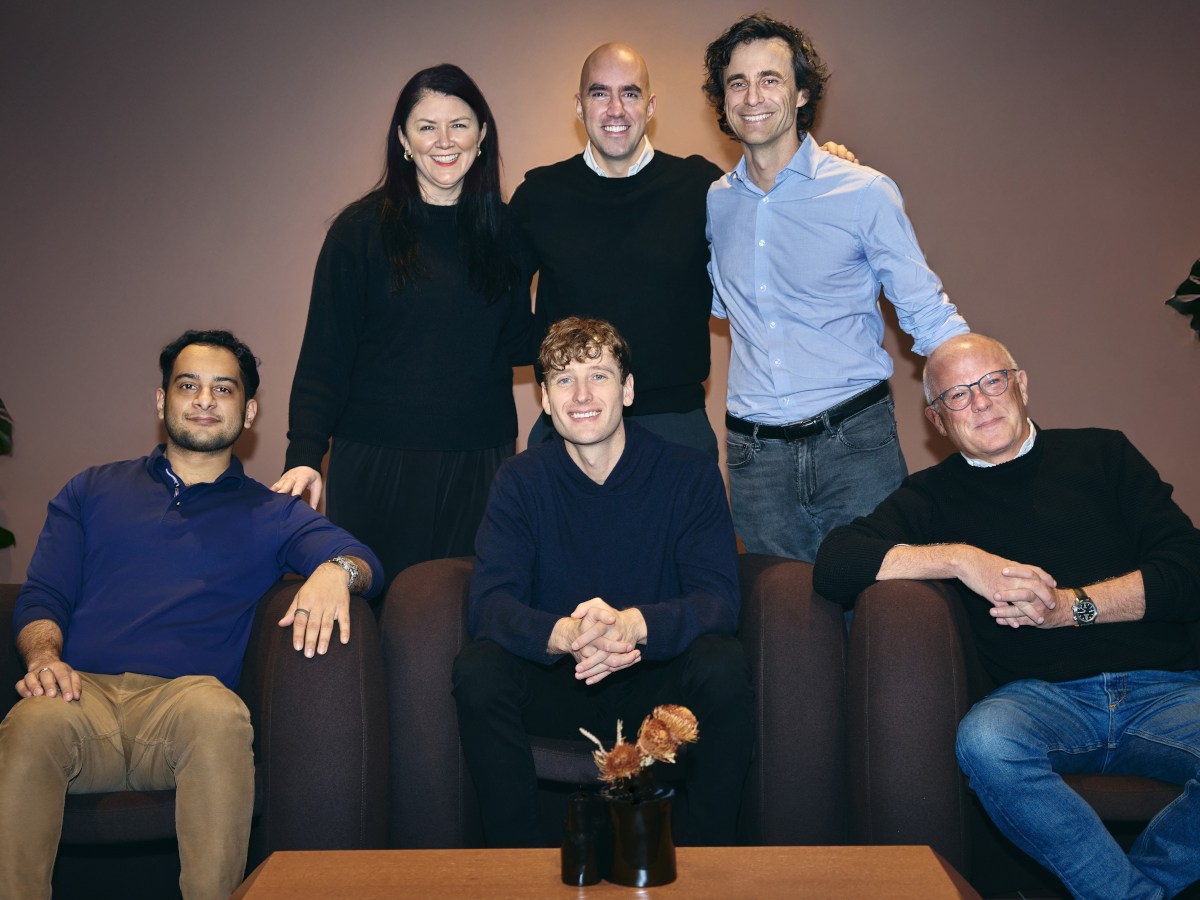
They joined as part of a funding round that totals $13 million, according to a Form D filed with the Securities and Exchange Commission. NLM has reported at least $26 million in funding since 2018, according to SEC filings.
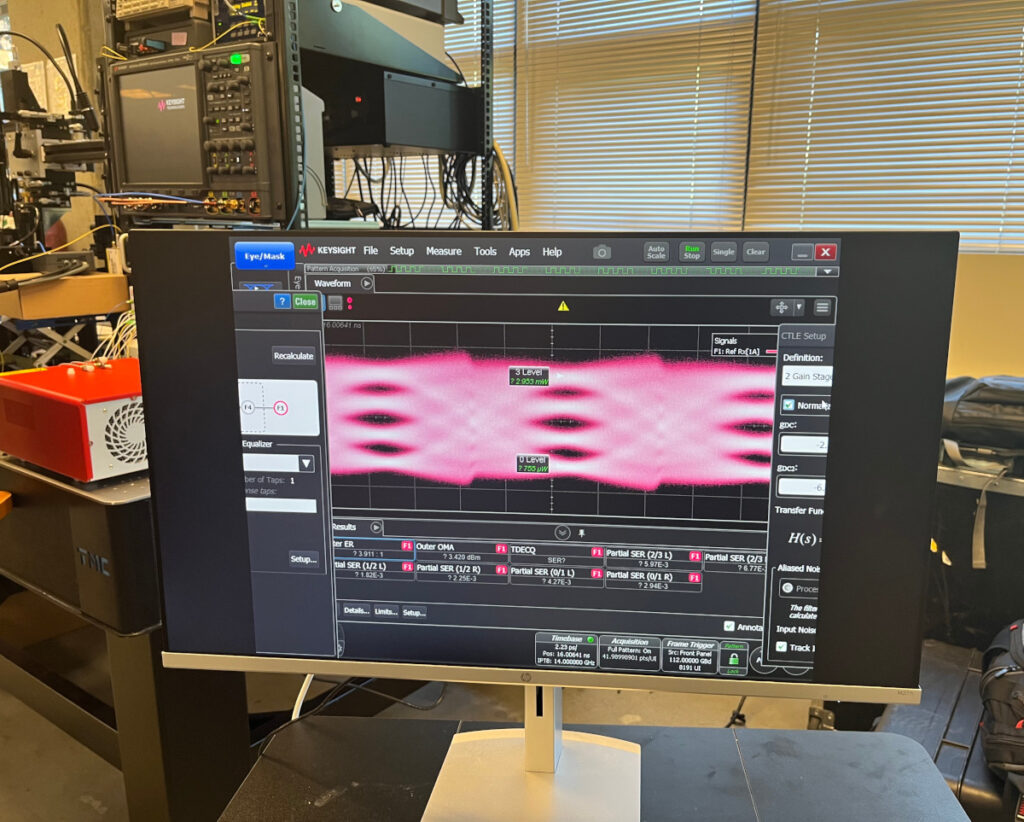
The company offers a way to move more data without burning more power. Inside a data center, information travels between chips and servers as pulses of light. The part that puts the data onto the light beam, called a modulator, is normally made of silicon. It limits how much data a link can carry, and how much power that takes.
NLM’s technology, sold under the name Selerion, is an organic electro-optic material that goes on as a liquid and hardens in place on the chip, taking over the modulator’s job from the silicon underneath. The company says it does the work 10 to 15 times more efficiently.
Applications for the technology include fiber-optic networking equipment and the links between servers in AI data centers. NLM says it could also be used in quantum computing.
Advertisement
Five existing investors participated in the round, which the company described as a Series A2: Emerald Technology Ventures, Oregon Venture Fund, Idemitsu, Tokyo Ohka Kogyo and StoryHouse Ventures. Private investors and company employees also took part.
Pangaea Ventures, which has offices in Canada, the United States and Japan, backs startups built on advances in materials, chemistry and biology. It says it has invested in more than 40 companies over more than 20 years. David Weekes of Pangaea is joining NLM’s board, which already includes Frank Balas of Emerald.
Diamond Edge Ventures, led by president Curtis Schickner, has $200 million to invest through 2030. It backs companies in Mitsubishi Chemical’s core markets, including advanced materials, polymers and electronics, and its portfolio includes Boston Materials, DigiLens and Eridan.
Hamamatsu Photonics, which invested previously, is not part of this round but is still a shareholder, according to the company.
Advertisement
The company was incorporated in 2018 as Nonlinear Materials Corp. It licensed its patents from the University of Washington, building on 25 years of research there in the labs of chemists Larry Dalton and Bruce Robinson. Robinson is one of the company’s co-founders, as is Lewis Johnson, a longtime UW researcher who is chief technology officer.
Pack Ventures, the UW-affiliated venture fund, is an investor in NLM and is also listed among the advisors to its board.
GeekWire covered NLM’s launch in 2019, when the company was raising a $1.25 million seed round and running a small production lab on campus.
NLM Photonics CEO Brad Booth. (NLM Photo)
Brad Booth, who spent nine years at Microsoft and joined NLM’s board in 2023, took over as CEO in 2024 from co-founder Gerard Zytnicki, who is now a corporate advisor to the company. The company raised $1 million from Tokyo Ohka Kogyo and Hamamatsu in 2023.
Last year NLM said outside testing confirmed that a 1.6-terabit chip combining silicon with its materials ran at 224 gigabits per second on each of eight channels. It started sending samples of 1.6- and 3.2-terabit chips to customers in March.
Advertisement
NLM is not alone in trying to build a better modulator. Lightwave Logic, a publicly traded Colorado company also working with organic materials, named NLM among its smaller competitors in its annual report for 2024.
Some of the company’s rivals have raised a significant amount of funding. HyperLight, a Harvard spinout that uses a crystal called lithium niobate instead of an organic material, has raised $117 million, including $80 million in June led by MediaTek.
NLM has worked to get its materials onto other companies’ production lines. In March the company said the chips going out to customers were made at GlobalFoundries, and that it had built modulators using Tower Semiconductor’s high-volume silicon photonics process.
The company opened a Dublin office earlier this year with plans to hire 40 people.
Legal AI start-up Harvey has raised $550m at a $15.5bn valuation in a round co-led by Diffusion and Lightspeed Venture Partners.
The round marks an almost $5bn valuation growth for the start-up, coming less than six months after it announced a $200m raise at an $11bn valuation.
Other investors, including Sequoia, Kleiner Perkins, a16z, Coatue, Conviction, Elad Gil, Evantic, GIC, Goldman Sachs Alternatives, Verified Capital, Sapphire Ventures, Whale Rock and WNDR, participated in the latest round.
Advertisement
Alongside the raise, Harvey also announced its acquisition of San Francisco-based Guardrails AI, a security platform for AI agents. Guardrails’ co-founders Shreya Rajpal and Zayd Simjee and their team will join Harvey’s product and engineering organisation, the legal-tech company said in an announcement today (9 September).
“The opportunity for companies to accelerate their competitive advantage with AI has never been higher,” Harvey co-founders Winston Weinberg and Gabe Pereyra said in a statement.
“Harvey wants to be the global partner legal teams turn to for this work, and we plan to hire and develop the best team in the space to support our clients through the next wave of AI transformation.”
The San Francisco-based Harvey provides AI for legal and professional services. Similar to many domain-specific large language models, its platform leverages data tuned using legal, tax and business knowledge, utilising a multi-model approach powered by leading AI models.
Advertisement
The company’s platform is used by a majority of the world’s largest law firms and by in-house legal teams at five of the Fortune 10, it said.
The latest funding round comes just after Harvey unveiled its first post-trained open-weight model, Harvey Tenet. The model has a base built from Chinese AI start-up Moonshot’s Kimi K3 and is trained specifically for legal tasks.
Apple surely took its time to launch its first foldable iPhone. However, the device it has revealed comes with an IP68 rating for dust and water resistance. For a folding phone, the 6 in that rating is the part worth paying attention to.
IP ratings use two numbers. The first measures protection against solid particles such as dust, while the second covers water resistance. A rating of IP68 means the iPhone Duo gets the highest level of dust protection under the standard and strong protection against water. Apple says the phone was tested at depths of up to 6 meters for 30 minutes.
Dust protection is where the iPhone Duo stands out
Water resistance is already common on expensive foldables. Dust is a much tougher problem because hinges, moving parts, and tiny gaps give sand, lint, and other debris more places to get inside.
Apple
Samsung’s Galaxy Z Fold 8 carries an IP48 rating. Its 8 still represents strong water resistance, but the 4 does not certify the phone as dust-tight. The iPhone Duo’s 6 does. That gives Apple’s first foldable the highest dust-protection level under the IP standard.
Google has already reached the same level
Apple is not the first foldable maker to get there. Google’s Pixel 11 Pro Fold also carries an IP68 rating, so it matches the iPhone Duo for certified dust and water protection.
Advertisement
Still, IP68 is reassurance, not a free pass to abuse the hardware. Apple notes that dust and water resistance can decrease through normal wear. In other words, your $1,999 foldable may be dust-tight, but giving it a dust bath is still a terrible idea.
Apple is trying to get consumers to accept, and even welcome, a new reality: Your tech is always listening.
At Wednesday’s “Surprise and Shine” iPhone event, where the company introduced its new hardware lineup, the real surprise turned out not to be the foldable iPhone, but how the famously privacy-sensitive tech giant has decided its watches will now be able to process live audio and transcribe what was said.
Does this mean you’re always being recorded if the person you’re interacting with is wearing an Apple Watch? Not exactly — though it may make some people uncomfortable regardless.
It also raises the question of whether consumers actually want this technology, or if Apple forged ahead in this area because it was afraid that another company, such as OpenAI, would soon introduce a competitive AI device of its own.
Advertisement
Today, a number of startups are acting on the belief that AI-powered transcription is a key consumer use case for AI. So far, this more often involves transcribing meeting notes or recording lectures or interviews. Some companies, like the AI pendant Friend and Amazon’s Bee, ventured into other areas, too, with always-available AI companions that can help you remember your day by passively taking notes.
Apple decided to go a slightly different route. With its new watches’ “audio intelligence,” “Live Rewind,” and “Siri Recap” features, the company is straddling the line between accessibility and utility on one side, and what starts to feel like invasive technology on the other.
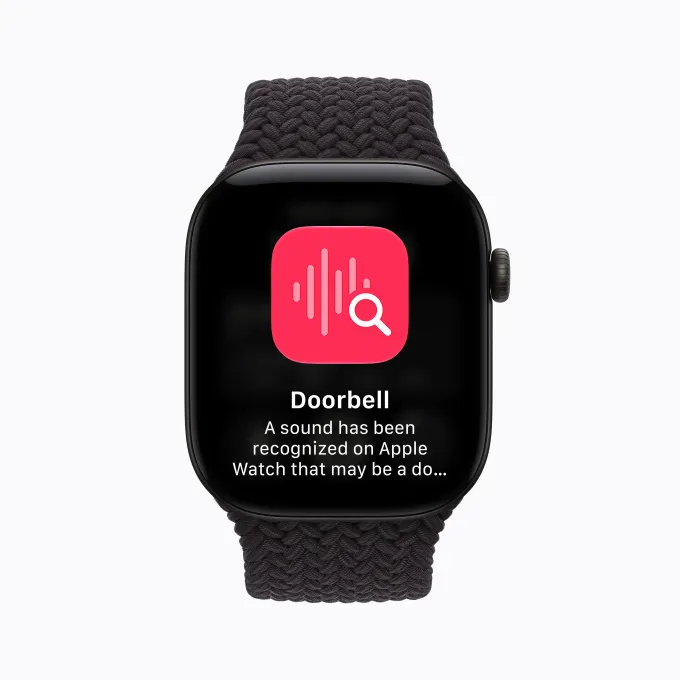
On its own, Audio Intelligence seems to be a useful feature for the deaf or hard of hearing, as it can alert Apple Watch owners to sounds like sirens, alarms, doorbells, babies crying, and more, using on-device AI. This can work even when the wearer’s iPhone is not with them and, in some cases, could provide life-saving assistance, such as when a fire alarm or carbon monoxide detector goes off. It’s doubtful anyone would take issue with this type of audio AI.
Image Credits:Apple
However, Live Rewind and Siri Recap move out of the assistive tech space and into a murkier area.
While Apple’s data protections may make these features more palatable to some, there’s still the possibility that normalizing listening technology may not be the best move for a privacy-conscious company. This is especially true given the broader consumer backlash againstsurveillance technology like Flock cameras, AI data centers, and AI apps in general.
Advertisement
For starters, the Live Rewind AI feature lets you go back in time 15 seconds and transcribe what was just said by double-pressing the watch’s digital crown. This transcription can then be saved to Apple’s new standalone Siri app so you can revisit the information later.
Image Credits:Apple
Apple suggests that this could be used to remember things like a “book recommendation, a colleague’s brilliant idea, or something you didn’t hear the first time,” but it also means that you can essentially catch anyone saying something they didn’t necessarily mean to have recorded and make a note of it.
This has implications around consent, not only from an ethical standpoint but from a legal one as well. AI device-maker Plaud, for instance, advises customers to obtain legally required consent before recording. Amazon’s Bee‘s terms of service remind users that they’re solely responsible for complying with the law around minors’ data privacy, not Amazon.
Since Apple isn’t saving audio, it’s unclear how the court system might handle these new, text-only transcripts. It’s possible the notes could be introduced as evidence in court, but their lack of audio could make them harder to authenticate or verify. Plus, the evidentiary rules around their use will also likely vary by state.
Beyond the legal issues, the idea that someone can always record from their watch has cultural implications.
Advertisement
Already, recording devices have impacted the way people behave in real life, studies have shown, as has social media and data surveillance culture. Knowing you could be recorded at any time has a dampening effect on how you interact with others and engage in self-expression.
Image Credits:Apple
However, recording a photo or video still requires a fairly obvious move on the recorder’s part: you have to hold up your phone and face it toward the action. Snapping up a bit of audio to turn into a transcript just by pressing the watch’s digital crown is arguably a much subtler gesture, even though it comes with an audible chime and full-screen animation of a microphone, as Apple says.
Another new Apple Watch feature, “Siri Recap,” uses ambient listening to “take high-level notes” of your conversations, which can be reviewed in the Siri iOS app. These notes will automatically generate a title, summary, and key points based on what was recorded and summarized by AI. They will not be exact transcripts.
Apple suggests this could make sense for recording meeting takeaways or key info from a parent-teacher conference, for instance.
The company also tried to assure users that it has approached these listening features with respect for user privacy.
Advertisement
Apple notes that Siri Recap doesn’t default to always being on like some other AI wearables are. Instead, you can choose when it’s enabled, like only at work or only during the day. Plus, you can turn the feature off and on at any time from Control Center.
Notably, Apple points out that it does not create or store audio recordings, and that the raw audio isn’t accessible, even to Apple. It also doesn’t identify or attribute the speakers, and it protects the generated transcripts and recaps with end-to-end encryption.
Whether that’s enough for consumers not to feel like the feature is creepy is another matter. Either Apple has found the right balance between utility and privacy, or it’s about to see some consumer backlash.
When you purchase through links in our articles, we may earn a small commission. This doesn’t affect our editorial independence.
During today’s iPhone Duo event, Apple made a point of noting a couple of times that some of its new devices would not go up in price. The Apple Watch 12 and Apple Watch Ultra 4, for instance, both start at the same price that their predecessors did — $399 and $799, respectively. What it didn’t mention is that its older iPhones now cost more than they did yesterday.
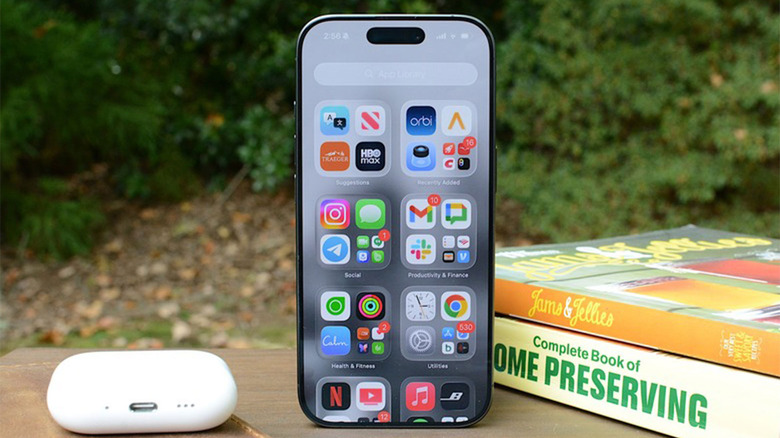
In a change spotted byThe Verge, Apple increased the price of all of the previous generation iPhones it still sells by $100. The iPhone 16, now starts at $799, up from $699. That means the device is back to its 2024 launch price after it was discounted following the release of the iPhone 17. The iPhone 17 family, meanwhile, now starts at $699 with the iPhone 17E. Apple began selling the entry-level model at $599 just earlier this year. The iPhone 17, with 256GB of storage, is currently priced at $899, instead of $799. As for the iPhone Air, pricing there now starts at $1,099, up from $999.
The price of AirPods hasn’t gone up. The AirPods Pro 3, for instance, remain at $249, likely due to the fact they don’t include onboard memory.
Healthcare technology company Veradigm disclosed a data breach after a cybersecurity incident at one of its third-party vendors exposed patients’ personal data.
The company says the incident did not cause operational disruptions but affected a small number of customers.
Formerly known as Allscripts Healthcare Solutions, Veradigm is a Chicago-based healthcare technology company that supplies medical practices with electronic health records, e-prescribing, patient-engagement, practice-management, and revenue-cycle software.
Thousands of hospitals, clinics, and biopharmaceutical firms across the United States use its solutions.
Advertisement
The company says in a filing with the U.S. Securities and Exchange Commission (SEC) that an attacker obtained credentials from a vendor’s environment for a Veradigm API reserved for customer services. The threat actor then used their access to copy patient data.
Veradigm’s disclosure notes that the stolen data includes personal details and Social Security numbers (SSNs) for some of the patients. Clinical or medical information remained safe.
“The vendor’s compromised credentials provided access only through that limited interface and did not provide access to any other part of the Company’s environment, including the Company’s broader network, servers, databases, or other systems,” the company says in the SEC filing.
After discovering the breach, Veradigm initiated its incident-response procedures, notified law enforcement, and is currently investigating to determine the scope.
Advertisement
Affected customers and individuals are being notified, with credit-monitoring services offered where applicable.
The investigation is ongoing, but based on current information, Veradigm does not believe the incident is reasonably likely to materially affect its business, operations, financial condition, or results.
The Gentlemen ransomware claims the attack
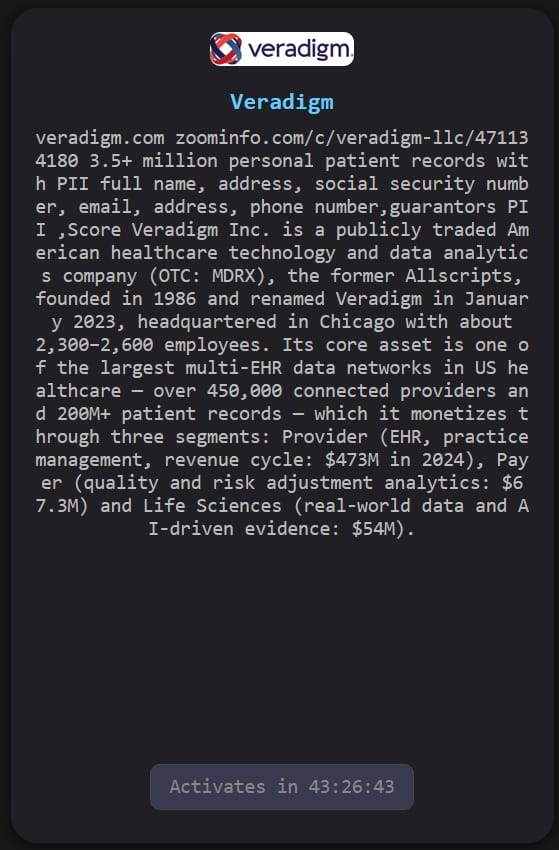
Although Veradigm’s disclosure did not identify the attacker, The Gentlemen ransomware group has claimed the intrusion on September 5 and listed the company on its data leak site.
The threat actor alleges to be holding 3.5 million patient records that include full names, home addresses, SSNs, email addresses, phone numbers, and personally identifiable information or guarantors.
Advertisement
The ransomware actor threatens to leak the stolen data by Friday, September 11, if the company doesn’t engage in a ransom payment negotiation.
The Gentlemen extortion page Source: BleepingComputer.com
The Gentlemen threat actor emerged around mid-2025 and operates as a double-extortion group, combining data theft with data encryption on Windows, Linux, NAS, BSD, and ESXi systems.
On its data leak site, the gang listed more than 800 victims from 86 countries and various sectors, including manufacturing, technology, healthcare, transportation, and financial services, indicating opportunistic attacks that rely only on access availability.
In April 2026, Check Point reported that it discovered a SystemBC proxy malware botnet with more than 1,500 hosts and linked it to an affiliate of The Gentlemen ransomware gang.
In June 2026, ESET said that The Gentlemen was employing a new endpoint detection and response (EDR) killer called GentleKiller.
Advertisement
Overall prevention scores can hide what happens after initial access. Once attackers are using valid credentials, prevention drops sharply.
The Blue Report 2026 measures defenses technique by technique across 338 million simulations run in customer production environments.
Class D amplification has spent the better part of two decades trying to convince audiophiles that small, efficient and cool-running are not synonyms for cheap, sterile and disposable.
We have covered that evolution rather extensively at eCoustics, including the rise of Hypex, Purifi and GaN-based designs that have made some of the old complaints about Class D sound increasingly like arguments over whether CDs can ever replace cassettes.
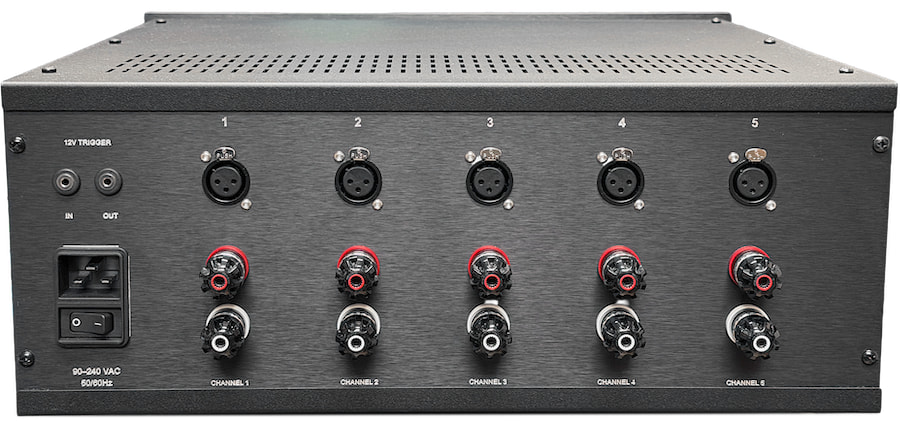
Orchard Audio has been part of that conversation for years with its Starkrimson amplifiers. Now the New Jersey manufacturer is moving the technology into home theater with the Starkrimson HT Ultra Series, available in three, four and five-channel configurations.
The last part is relevant because this is not our first encounter with Orchard Audio in a theater system. At Capital Audiofest 2025, we heard an SVS 5.2.4 system powered by Orchard amplification and came away impressed by its dynamics, control and value. The HT Ultra simply turns that concept into a purpose-built product rather than an audiophile science project involving a small mountain of separate amplifiers.
GaN stands for gallium nitride, a wide-bandgap semiconductor material used here in place of the silicon MOSFETs found in most Class D amplifiers.
GaN transistors can switch faster with lower switching losses than conventional silicon devices. That does not automatically make every GaN amplifier sound better; circuit topology, feedback, power supply, PCB layout and output filtering still matter enormously, but it gives designers considerably more room to work at higher switching frequencies while controlling heat and efficiency.
Orchard’s Starkrimson Ultra circuitry switches at approximately 800kHz, which the company says is three to four times faster than traditional silicon-based Class D designs. Its modulation is performed entirely in the analog domain, using Orchard founder Leo Ayzenshtat’s proprietary DC-coupled, fully balanced dual-feedback modulator and bridged GaN output stages.
Advertisement
And no, the “D” in Class D still does not mean digital. We have been over this.
The Power Supplies Are the More Interesting Part
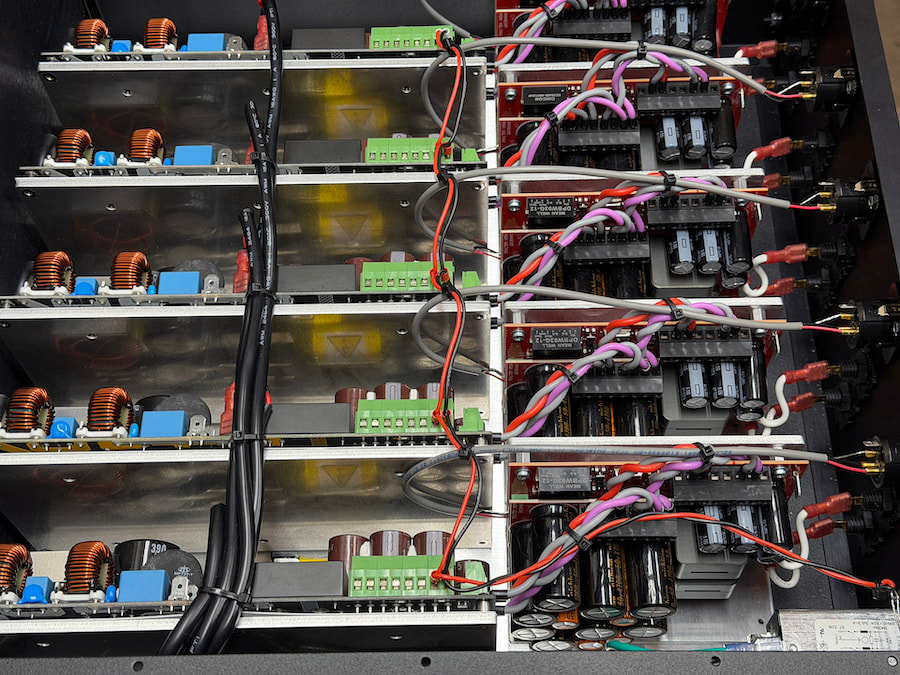
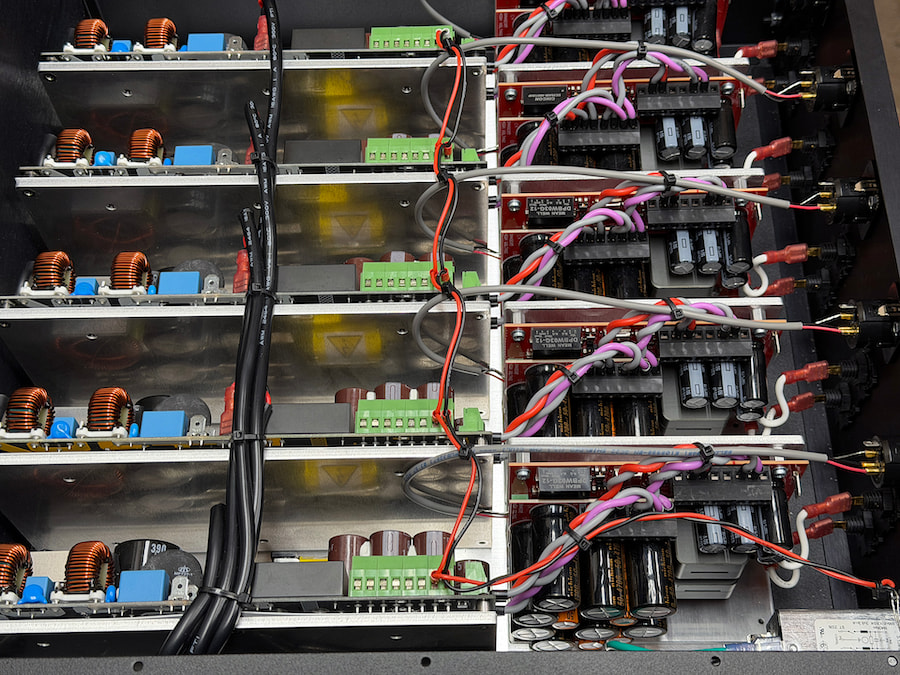
The HT Ultra uses Orchard’s Starkrimson Ultra 500W amplifier modules and 1200W power supplies, but buyers can determine how those resources are distributed.
The five-channel model can be configured with one, three or five 1200W supplies. The four-channel version offers one, three or four, while the three-channel model uses one shared supply. Higher-performance configurations add 43,600µF capacitor boards to channels that receive dedicated supplies.
Advertisement. Scroll to continue reading.
Advertisement
That allows someone building a hybrid music/home-theater system, for example, to give the front left and right channels dedicated power supplies and capacitor reserves while the center and surrounds share another supply.
That is considerably more interesting than simply putting five identical amplifier modules in a box and hoping nobody asks what happens when all of them get hungry at once.
Starkrimson HT Ultra Specifications:
Channels: 3, 4 or 5
Output: 250W into 8 ohms / 500W into 4 ohms*
Gain: 19dB
Amplifier topology: GaN Class D
Switching frequency: approximately 800kHz
Signal path: fully balanced
Power supplies: 1200W each, configuration dependent
Capacitor boards: 43,600µF each on selected configurations
Load capability: 2-ohm capable; Orchard specifies stability down to 1 ohm
Inputs: Balanced XLR
Power-on: Front-panel control or trigger input
*The 250W/500W rating applies when a channel has its own power supply or when two channels share one. That qualification matters rather more than the number printed in 72-point type on an amplifier brochure.
One installation detail also deserves attention. Orchard specifies that the five-channel/five-power-supply configuration requires a 20A circuit in 110/120V countries. Your electrician may therefore become part of the upgrade path.
Price & Availability
The Orchard Audio Starkrimson HT Ultra Series is available for preorder now, with current discounted pricing ranging from $3,199.95 to $6,399.95, depending on configuration. Orchard says the preorder pricing represents 20% off MSRP, with initial shipments expected in December 2026 or January 2027.
Advertisement
The Bottom Line
GaN itself is no longer enough to make an amplifier unusual. What makes the Starkrimson HT Ultra interesting is Orchard Audio taking the same amplifier architecture it developed for serious two-channel systems and allowing home-theater buyers to decide where the expensive power-supply hardware actually goes.
A five-channel amplifier with five independent 1200W supplies is very different from one asking all five channels to drink from the same trough.
Class D already won the argument over whether it belongs in high-end audio. Orchard Audio now wants to know whether your home theater has been paying attention.
In addition to the $111 billion Paramount/Warner Bros merger just being foundationally bad for creatives, labor, and consumers, the Ellison family-owned company’s executives just keep demonstrating why they’re not really the kind of folks you want dominating the lion’s share of U.S. media.
Neighbors for Strong Communities doesn’t disclose its funding donors and insists it’s not being “directly funded” by Paramount, but it has all the telltale signs of “astroturf,” or fake public interest advocacy. One of the things the group does is generate comments to California AG Rob Bonta urging him to drop the 12-state antitrust lawsuit against the merger. You know… for the children.
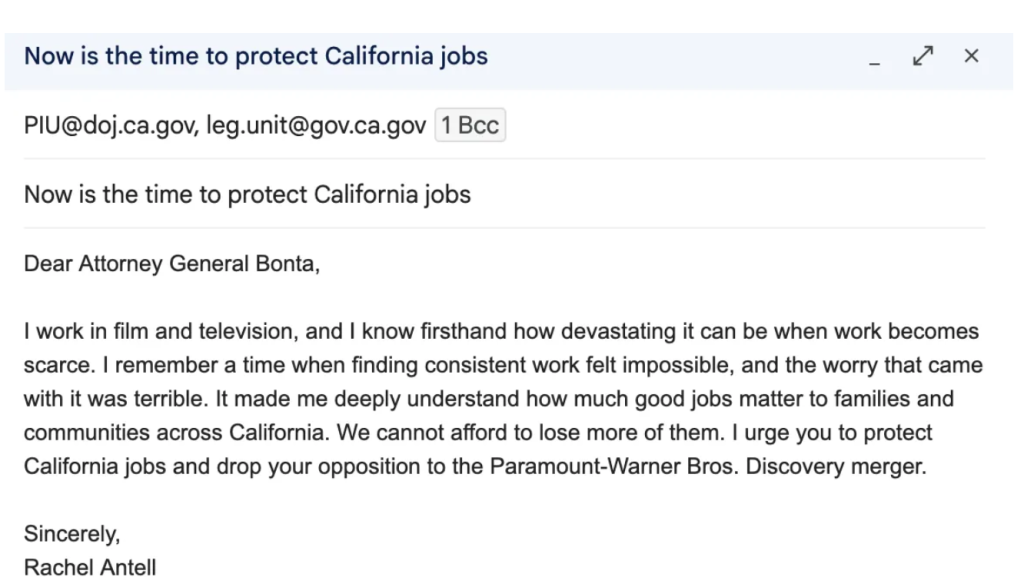
Rachel Antell at The Contrarian took a closer look at the Neighbors for Strong Communities website, and tried to fill out a letter to Rob Bonta opposing the merger, only to see something curious happen: The website’s AI-assisted letter system simply changed her writing to not only express support for the merger, but make up an entire fake backstory about her. This is not what she told it:
Advertisement
Antell notes the astroturf group’s letters leverage Influent, an AI vendor founded by a guy named Tanner Kelly, who registered as a California lobbyist last year. Antell herself is an archival producer who founded the Archival Producers Alliance and has crafted guidelines for the use of generative AI aimed at more transparently disclosing when it’s being used.
U.S. corporations have a very long history of flooding regulatory comment proceedings (or the press) with completely artificial support for what’s almost always bad policy few people actually support. You may recall how the telecom industry was caught using fake and dead people to support the Trump administration’s destruction of net neutrality rules and other consumer protections.
This stuff was bad before AI, now everything’s been taken to the next level. There’s no meaningful effort afoot to stop or identify it anywhere in the U.S. government. It exists as an effective way to drum out genuine public interest opinion and replace it with lazy cack that supports whatever shitty policy companies drum up (gaining merger approvals, gutting oversight).
In this case, that means creating fake workers who are super excited about a merger that’s going to result in thousands of layoffs as the bigger company’s executives offload their massive new debt obligations to labor and consumers. How do we know this? It’s what happens literally every time regulators rubber stamp more media consolidation — particularly when Warner Brothers is involved.
This week Jonathan chats with Olivier Vernin of Updatecli, the tool that helps you update everything! Need to roll out dependency updates intelligently? Or even automatically deploy to a server on changes? Updatecli can help!
Did you know you can watch the live recording of the show right on our YouTube Channel? Have someone you’d like us to interview? Let us know, or have the guest contact us! Take a look at the schedule here.
Gaming Comfort: Gaming chairs are often one of the most overlooked pieces of furniture in a gaming setup. While luxury “thrones” can be left to customers with truly deep pockets, most gamers should at least consider investing in a somewhat expensive chair to ease the discomfort that comes with long gaming sessions.
Corsair recently launched the TC80 Gaming Chair, a new armchair designed to provide a durable and comfortable seating option for PC-focused gaming setups. The Fremont-based corporation highlights how its new chair has undergone more than 30 durability and safety tests, suggesting that it should accommodate gamers with a wide range of body types.
The TC80 Gaming Chair meets the BIFMA X5.1 and EN 1335 standards for office chairs, Corsair said. The chair underwent a series of demanding durability, stability, and weight-load tests, with Corsair particularly proud of how its new product survived the onslaught.
These tests included dropping a 136kg load onto the center of the seat, applying a 1,001N load to the backrest for 60 seconds, and placing 13 heavy discs against the backrest. Furthermore, the chair survived 100,000 cycles of a 57kg weight falling onto the seat, 60,000 cycles of 400N being applied to each armrest, and 120,000 swivel-test cycles with 122kg placed on the seat at both its maximum and minimum height.
Advertisement
The TC80 Gaming Chair provides a “generously” wide and flat seat with plush padding, breathable fabric upholstery, and 100mm of adjustable seat height. There is even a detachable neck pillow for people who like to alternate between office work sessions and more relaxing activities. The chair’s stability comes from a steel five-star base, 50mm casters, and a Class 4 steel gas lift that should last for years.
Talking about comfort, Corsair’s new chair offers a recline range of 90° to 115°. Users can adjust and lock the chair at their preferred angle, so there is no need to settle for a fixed position straight out of the box.
Corsair is already selling the TC80 Gaming Chair through its own store and other major retailers. The chair costs $200 in the US, while customers in Europe and the UK can get it for €180 and £170, respectively. The company’s official announcement provides a full list of regional launch prices.
Corsair also highlights the TC80 as an entry-level product in its growing lineup of gaming chairs. The company already offers more expensive models, such as the TC100 Relaxed and the premium TC500 Luxe.
Advertisement
The TC500 comes with a €550 price tag in Europe, which is still a relatively affordable purchase compared with some truly expensive chairs, such as the obscenely priced Herman Miller x Logitech Embody. For now, I think I’ll stick with my cheap Songmics gaming chair.


















































You must be logged in to post a comment Login