Connect with us

Tech

OpenAI Wants to Know if an AI Industry Slowdown Would Even Be Legal

Published

on

OpenAI has asked members of Congress in recent weeks for clear guidance about whether orchestrating an industry-wide slowdown on frontier AI development would be legal, people close to the company tell WIRED.

Substantive coordination on safety between AI labs may risk running afoul of antitrust law, the people say, which poses a significant obstacle to bringing major tech giants on board with the effort.

Last weekend, OpenAI’s chief scientist, Jakub Pachocki, published a blog post arguing that the best path forward for the AI research world includes “coordinating to slow down future development,” which he thinks will be key to ensuring that self-improving AI systems are safe. In the short term, he expects “voluntary slowdowns to become commonplace until shared safety bars are established.”

But some legal scholars say such an effort could conflict with US antitrust laws. Nicholas Felstead, assistant director of the Australian Competition and Consumer Commission and a former AI policy fellow at the Center for Law & AI Risk, argued in a March article that a coordinated pause in AI development may amount to companies restricting output, potentially violating the Sherman Antitrust Act. It would depend “entirely on the precise details of any agreement,” Felstead wrote. “But even if most safety collaborations would ultimately survive antitrust scrutiny, legal uncertainty can act as a powerful deterrent.”

Advertisement

OpenAI did not respond to a request for comment ahead of publication.

There are some early signs that Congress is listening. In July, a bipartisan, bicameral group of lawmakers introduced a bill titled “Collaboration on Adversarial Threats and Security Risks Act,” which would explicitly permit AI labs to coordinate on security and safety work without the risk of violating antitrust statutes. The House version was referred to the Judiciary Committee but has yet to be taken up.

Caleb Knapp, director of government affairs at the nonprofit AI Policy Network, which endorsed the bill, says it would create legal channels for AI labs to work together to address safety and security incidents. Knapp adds that Congress has a “growing appetite to get something done” on AI safety but says enacting anything into law may have to wait until after the upcoming midterm elections.

While some AI executives may have genuine concerns about antitrust, another camp of AI leaders argue those worries are just convenient cover to avoid discussing the real reasons that AI developers may be wary about collaborating, which go far beyond potential legal liabilities.

Advertisement

For one, AI is a massive business, and these companies are fiercely competing to capture a slice of the nascent market for frontier models. Some executives share the Trump administration’s view that staying ahead of China in AI is crucial for national security. Perhaps most importantly, different AI developers have vastly different opinions about the best way to develop safe artificial intelligence, and therefore may be reluctant to work with one another on the issue.

“First step is for industry leaders OpenAI and Anthropic to stop feuding and work on a pacing proposal together,” John Schulman, an OpenAI cofounder who is now chief scientist at the rival AI lab Thinking Machines, wrote in a post on X earlier this week. “They’ll cite antitrust, but that’s fake—antitrust prohibits certain agreements, but not from jointly developing a proposal.”

Long-simmering fears about the race among AI companies to build and release ever more powerful models erupted into the national spotlight this summer. This week, former Anthropic and OpenAI researcher Jacob Coxon added to the growing alarm when he issued a stark public warning that AI developers were putting humanity at risk. In recent months, a number of security incidents, including OpenAI’s agents hacking Hugging Face, highlighted how the industry’s safeguards have failed to keep pace with the rising capabilities of models. The succession of events has led many lawmakers to make urgent calls for AI regulation.


This is an edition of Maxwell Zeff’s Model Behavior newsletter. Read previous newsletters here.

Advertisement

Source link

Continue Reading
Click to comment

You must be logged in to post a comment Login

Leave a Reply

Tech

Jeep Recalls Nearly 400K Grand Cherokee SUVs

Published

on


To say that the Jeep brand has had some issues with recalls lately would be a bit of an understatement. Over the last several years, models like the Jeep Wrangler and Jeep Grand Cherokee have been the subject of regular, wide-reaching, and sometimes quite serious recalls — including one in June of 2026 that recalled over one million models for a potential fire risk. Other recalls for recent model-year Jeep vehicles have included issues with hybrid power systems, seat head restraints, and detaching exterior trim pieces.

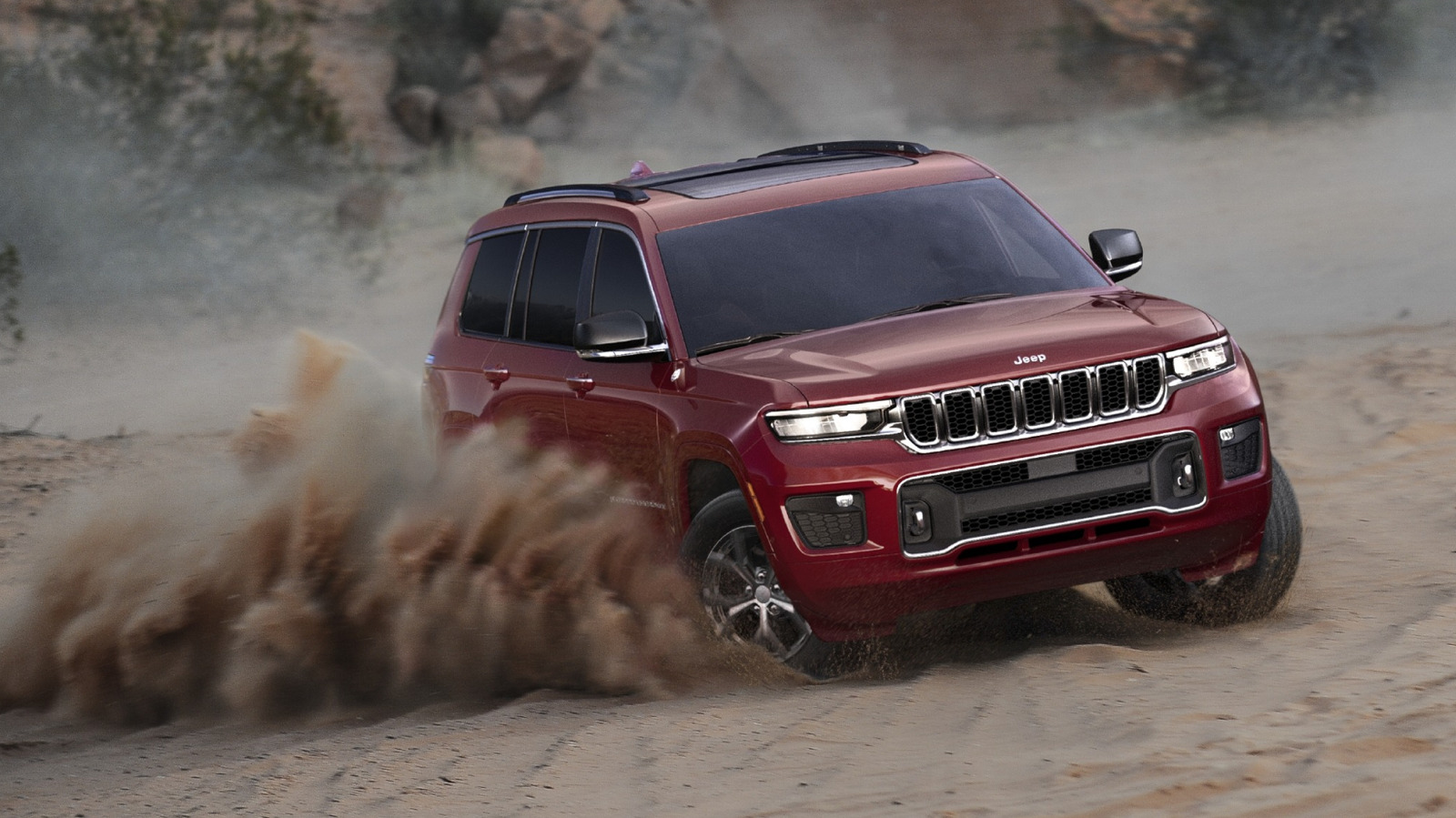
Now, the brand has been hit by another significant recall, this time affecting more than 300,000 Jeep Grand Cherokee and Grand Cherokee L models built in the early 2020s. The problem this time is with rear coil springs that may have been installed incorrectly, which could cause an unsafe suspension failure for Grand Cherokee owners and also a potentially dangerous road hazard for drivers nearby.

Advertisement

Some good news for Grand Cherokee owners is that the problem is only estimated to be present on a small percentage of the recalled vehicles. However, given the potential danger and the time needed for inspection and repair, the coil spring issue makes for an inconvenience for owners and another black mark on what’s already been a spotty reputation for modern Jeep build quality.

Advertisement

Another problem for the Grand Cherokee

The recall, which was submitted to the NHTSA on September 1, 2026, covers a total of 328,381 Jeep vehicles from the 2022 and 2023 model years. All of the affected models come from the Grand Cherokee lineup and include the 2022-2023 Jeep Grand Cherokee and Jeep Grand Cherokee 4xe plug-in-hybrid, as well as the long-wheelbase Grand Cherokee L. 

Rather than a defect with the construction of the rear coil spring itself, the problem comes from the possibility that the springs may have been installed in the wrong position. Using vehicle production records, Jeep was able to narrow down the window of potentially affected vehicles; the problem was corrected on Grand Cherokees built after May of 2023. 

Whether it’s a minor software glitch or a potentially serious mechanical issue, nobody enjoys having their vehicle recalled. But the good news is that among the nearly 330,000 recalled vehicles, Jeep says that only 0.1% of them are estimated to have the improperly installed springs. Additionally, if your Grand Cherokee is one of the higher-end Summit or Overland models that happens to be equipped with the available factory air suspension system, you can rest easy because this particular recall only applies to non-air suspension models.

Advertisement

A potentially dangerous situation

While there may be a relatively small chance of a given Grand Cherokee actually having improperly installed springs, if it does, it could lead to a dangerous situation on the road. If they were installed incorrectly, the rear coil springs could come out of position and even detach from the vehicle completely while driving.

Obviously, if a coil spring were to fly off the vehicle at speed, not only could that cause an accident for the Jeep itself, but the loose spring could become a dangerous projectile for other motorists or pedestrians who might be nearby. Owners should already be able to search by their VIN number to see if their vehicle is part of the recall, and Jeep will begin notifying owners of the affected models in late September to bring their Grand Cherokees to the dealer to be inspected and fixed as necessary. 

Advertisement

The recall work — which will be done free of charge, of course — will have dealers inspect the affected vehicles and install new lower isolators on the rear coil springs, ensuring that they are secure in the correct position. In our ranking of the best Grand Cherokee generations, we had plenty of good things to say about the current fifth-generation Grand Cherokee but recalls and a less-than-stellar reputation for quality have had an impact on this popular American SUV.


Advertisement

Source link

Continue Reading

Tech

Anthropic details how Claude was misused for surveillance and weapons

Published

on

Anthropic has published its most detailed account of Claude misuse, laying out how people tried to use its models for harm. The company said it detected and shut down these operations. They ran across cyberattacks, state surveillance, influence campaigns, conventional weapons work and biological research.

It set out the cases in a threat intelligence report released on 10 September. The report covers activity its Threat Intelligence team disrupted between December 2025 and August 2026.

The report spans seven harm areas. They are cyber operations, influence operations, surveillance, conventional weapons development, biological misuse, scams and fraud, and illicit distillation. Anthropic said the misuse involved its Claude Haiku, Sonnet and Opus models.

None of the cases involved its Fable or Mythos-class models, it added, with the exception of one distillation case. In each instance the company said it banned the accounts and strengthened its safeguards. It also shared intelligence with authorities and industry partners where appropriate.

Advertisement

Cheaper attacks, not new ones

The largest section covers cyber operations. Its central claim is that AI has narrowed the gap between well-resourced state hackers and lone operators. Anthropic pointed to a hacktivist using stolen API keys, financially motivated individuals, and a state espionage operator. Each ran multi-victim campaigns.

A year earlier, it said, that work would have required teams of skilled people. The company reported breaches completed in two to three hours, with dozens of victims handled in parallel by single operators.

One case, which Anthropic tracks as GTG-20006, involved a Russian-speaking operator running espionage against Ukrainian and European government targets. Diplomatic and defence organisations were among the targets too.

The company attributed it in line with public reporting on the group known as Midnight Blizzard. It said the actor used AI to check whether security products had flagged their malware, then automatically rebuilt it to slip past detection.

Advertisement

Anthropic traced a separate operation to two people it described as undergraduate students in Hunan, China. It said they ran what it called agent swarms against roughly fifty organisations. Those included a Southeast Asian government agency, from which the actor retrieved citizen records.

Surveillance built by a single consultant

Anthropic said state-aligned actors and commercial spyware vendors used Claude to build surveillance systems between January and July. The cases spanned China, Iran and West Africa. It presented one as the most striking. A single subscriber used Claude as the engineering workforce for a platform named Lakana 360.

The company assessed the subscriber to be a Bamako-based consultant working with Mali’s state intelligence service.

The system monitored roughly 25 million SIM cards across all three of the country’s mobile operators. Anthropic said it bypassed a legal requirement for a court order before an operator could disclose certain records. It also ran on local models on-premises, so banning the account did not affect the deployed system.

Advertisement

Other surveillance cases named Iranian actors deploying a malicious Firefox extension that harvested users’ identities from social networks. Anthropic also described a religious affairs intelligence unit in China. It said the unit had shrunk from many teams of analysts to a single office. That office now produces thousands of investigations a month with an AI assistant.

In another Chinese case, the company said Claude scored social media posts by political sensitivity and flagged people for what the operators termed control. The report follows earlier TNW coverage of AI turning up in police search tools.

Jacob Klein, who leads threat intelligence at Anthropic, told Axios that AI was making state surveillance cheaper and more efficient. It was not changing who governments target, he said.

“They’re effectively automating parts of the job within the intel apparatus,” he said. He added that the pattern was no longer theoretical. “Authoritarian states are using AI for surveillance, repression and influence operations today,” he told Axios.

Advertisement

A new category: weapons

The report documents what Anthropic described as a new form of misuse. That is the use of Claude to write software for conventional weapons. It detailed six cases, three in China, two in Russia and one in Yemen.

In the Yemen case, the company said a cell in the north of the country ran three weapons programmes. They included a guided rocket, a multi-stage ballistic missile with a stated range goal above 2,000 kilometres, and a set of missile variants that included a hypersonic glide vehicle.

Anthropic said the actors used Claude Code in place of software engineers to develop guidance and control code. It added that they test-fired a guided rocket, a test that appears to have failed.

The Russian cases included freelance actors working on an autonomous kamikaze drone swarm.

Advertisement

Biology, and the judgement calls

Anthropic said it presented five cases of people using its models in ways that could support biological weapons development. It stressed how hard those judgements are to make.

The company withheld the names of the institutions, the countries and the specific biological agents involved. It said the individuals were working scientists, and it did not assert that they intended harm.

In one example from May, it said a request for help writing a grant application involved gain-of-function research on the chikungunya virus. That work was intended to be carried out at a military research institute.

“You are not seeing someone in a comic book kind of way say, ‘Hey, I want to build a biological weapon to kill everybody,’” Klein told The New York Times. “It’s an incredibly nuanced situation.”

Advertisement

On the chikungunya case, he told the paper the company did not know whether the research was meant to be weaponised, but that a military institution doing gain-of-function research was concerning. Anthropic said older models such as Claude Opus 4 were well below the level where they could meaningfully assist such work.

It said it had launched more recent models with stronger safeguards. That shift echoes an earlier report in which the company ran its bioweapon classifiers off during testing. The distillation thread, meanwhile, runs back to White House claims that Moonshot distilled Anthropic’s Fable.

The Chinese distillation cases

The report also expands on illicit distillation. Anthropic defines that as covertly extracting a model’s capabilities to train a rival.

The company said it had identified campaigns from seven China-based labs, all targeting its generally available models rather than Mythos. It named Moonshot AI, which it said silently forwarded customer requests to Claude and displayed the responses as though they came from its own Kimi model.

Advertisement

Over one ten-day period, Anthropic said, Moonshot relayed almost 300,000 requests through a network of 5,380 fraudulent accounts. It attributed more than 23 million exchanges to Moonshot between May and July. The company made similar allegations against DeepSeek, Zhipu, Xiaomi, SenseTime and MiniMax.

Some of the relayed queries exposed sensitive user data, it said, in one instance live credentials tied to a Russian defence agency.

The distillation findings land alongside a US intelligence advisory naming six Chinese firms and Beijing’s rejection of those claims. Anthropic said most of the influence operations it caught drew little or no authentic engagement before it disrupted them. Other platforms have made the same caveat.

Anthropic said it published the report out of an obligation to disclose the misuse, and to give governments and civil society a clearer view of how such threats take shape.

Advertisement

Source link

Continue Reading

Tech

Jensen Huang explains why Nvidia will grow an astounding 70% next year

Published

on

Founder, CEO, and tireless Nvidia hype man Jensen Huang told attendees at the Goldman Sachs Communacopia + Technology conference on Thursday why his company’s AI domination — and revenues — will continue its record-breaking growth streak through the end of next year.

He can see the future.

There’s been endless hand-wringing over whether Nvidia’s party will end as it faces increasing competition for GPUs and AI chips from all directions: the hyperscalers (Amazon, Microsoft, and Google, each building their own) and the AI labs (Anthropic and OpenAI, which are building their own), as well as from newly public competitor Cerebras and startups such as Etched.

“Most people think Nvidia builds a chip. I mean, you need airplanes to ship what we build,” Huang said, adding that the company continues to battle a perception from its early days. Nvidia invented the GPU, which back then were largely sold to consumers to improve PC gaming. “One GPU now is not $399. It’s $8.5 million dollars. That’s one GPU, all connected with NVLink, 2 million parts, right? 250,000 kilowatts. That’s a GPU, and we ship thousands of them.”

Advertisement

He added that orders for just one product, a computer system that combines 36 Grace CPUs with 72 Blackwell GPUs, is currently experiencing 27% month-to-month sales growth.

Huang didn’t limit his bullish view to current sales though. He took the opportunity to reiterate Nvidia’s revenue outlook for next year — guidance the company provided last month when it reported yet another record-breaking revenue quarter. That’s when he first said revenue could grow by 70% next year.

“I think we could grow 70% year over year. We’re confident about that,” Huang said again on Thursday. Analysts expect the company to end its current fiscal year at about $400 billion in revenue. So 70% growth would mean around $680 billion next year.

Huang explained why he’s confident: His company is so embedded in every area of AI that he believes he can see the future.

Advertisement

“Nvidia runs every model. Every single lab can use us,” the CEO said, mentioning that this includes models from Anthropic, OpenAI, and Google, as well as open-weight offerings. “We are a foundational platform of the AI ecosystem, foundational platform of the AI industry.”

Nvidia’s fingers extend all the way from its suppliers, such as memory chip makers, to data center projects and startups.

“We’re tracking every single gigawatt of land, power, shell around the world. Literally everything on the planet,” he said. (“Shell” refers to the shell of a data center building before it is outfitted with computers).

“I mean, just think about all my partners. How many neoclouds are reporting back to us? How many OEMs are reporting back to us? How many clouds are reporting back to us? How many AI-native companies are reporting back to us? We’re working with everybody, and so we kind of know where everything is,” he said.

Advertisement

That comment led to inevitable questions about Nvidia’s so-called circular deals, in which it invests in companies that turn around and buy its wares. Such schemes famously contributed to the downfall of a previous generation of internet build-out suppliers like Lucent Technologies.

Huang had a simple, albeit cheeky, response. “Well, it’s not circular because we put a little bit of money in, and a lot of money comes back.” He went on to joke, “I look at the spreadsheet, we put in $1 and $100 comes back in. Is that circular? If that is, let’s do more of that.”

Quips aside, he insisted that before any of these companies gets an investment, Nvidia makes sure it has real contracts generating revenue from customers. All told, he said he’s seen $100 billion worth of such contracts, “I’m not taking any risks. … I need a sure thing.”

Time will tell whether Nvidia’s stronghold on AI can really persist long term. If there’s one golden rule of the tech industry, it’s that all big things get disrupted. Right now, even Huang admits that much of AI’s growth is coming from AI-native startups that are raising vast sums and spending most of that cash on their own AI use. As the AI industry matures, expect companies to become more efficient in how they use infrastructure and tokens.

Advertisement

But for now, Nvidia has its finger in every pie and sees another year of plenty in its future.

When you purchase through links in our articles, we may earn a small commission. This doesn’t affect our editorial independence.

Source link

Advertisement
Continue Reading

Tech

Palantir and Anduril land $192 million Army deal as TITAN finally moves from prototypes into production for ground forces

Published

on


  • The US Army has moved TITAN from prototypes into production
  • Palantir received $127 million under the latest TITAN contract award
  • Anduril secured $65 million for TITAN hardware and integration work

The US Army has shifted its Tactical Intelligence Targeting Access Node (TITAN) program from prototype status into full production this week.

Palantir Technologies and Anduril Industries together received a combined $192 million award covering the next production phase.

Source link

Advertisement
Continue Reading

Tech

PowerA Enhanced Wireless Controller Puts Rear Buttons and 30 Hours on a Licensed Switch Pad

Published

on

PowerA Enhanced Wireless Controller Switch
Nintendo’s official Pro Controller is still somewhat expensive for a full-size wireless pad. PowerA’s Enhanced Wireless Controller for Nintendo Switch, priced at $35 (was $70) answers that with an officially licensed Bluetooth gamepad that keeps the familiar button layout, adds two programmable buttons on the back, and runs for up to 30 hours on a built-in 900mAh battery.


Pairing uses Bluetooth 5.0. After the first connection, the pad can wake a sleeping Switch the same way Nintendo’s own controller does, and then you’ll be ready to go. It’s compatible with the original Switch, Switch OLED Model, Switch Lite, and Switch 2. If you’re using the Switch 2, you’ll miss out on the extra C-button from Nintendo’s GameChat, which this pad didn’t have to begin with.


The rear grips feature two advanced gaming buttons, AGL and AGR. To assign a button to one of these paddles, simply hold the back button for a few seconds, then tap the desired action on the face button, bumper, trigger, or D-pad, followed by pressing the rear button you want to link. This happens immediately in the middle of a game, without the need to deal with settings or launch an app. Even when you turn off the console, the assignments are retained. So, if you’ve been wanting to map leap, aim, or map to a finger that can stay on the analog sticks without having to move, these two extra paddles are probably the major reason you’d pay a little more for this controller than a cheaper generic Bluetooth controller.

PowerA Enhanced Wireless Controller Switch
Motion controls are also good to go, as they function well in games that rely heavily on gyro aiming or tilt-based controls. The analog sticks have anti-friction rings, allowing your thumbs to glide across them without sticking on the plastic. The face buttons use Nintendo’s ABXY layout and are very large, which is a welcome departure from the Joy-Con buttons. The D-pad is a convenient plus-shaped 8-way controller that handles menus and 2D games without a problem. Then there are the shoulder buttons, digital triggers, and the typical +, -, Home, and Capture keys, all of which will be familiar to anyone who has used a Switch previously.

PowerA Enhanced Wireless Controller Switch
Power comes from a rechargeable lithium-ion cell that PowerA claims can last up to 30 hours, but as with any battery estimations, actual use times will vary. The box includes a 10-foot USB-C cable, which is quite long enough to play from the couch while filling it up. The LEDs on the object display the player number, mapping mode, and a low battery alert. Just keep in mind that the Switch will not display the amount of power remaining on this controller in the same manner that it does on Nintendo’s original.

Source link

Advertisement
Continue Reading

Tech

It looks like Google has finally killed the Pixel Tablet

Published

on

Google may have quietly pulled the plug on the Pixel Tablet. The three-year-old tablet has disappeared from the Google Store, while the company has also removed the “Tablet” category from the navigation menu on its homepage.

The Pixel Tablet’s removal was first spotted by Jetstream, which had already reported that the device was marked as out of stock just days earlier. Google has yet to confirm whether the tablet has officially been discontinued, but taking the product down entirely is a pretty strong hint that its time may be up.

The signs don’t stop there. Google’s Pixel Tablet accessories are still listed, but most are also unavailable. The Pixel Tablet Case and Charging Speaker Dock, for example, can currently only be set up for stock notifications rather than purchased. The only accessory still available to buy is the Wasserstein Pixel Tablet Speaker Stand.

The tablet is also becoming harder to find elsewhere. It is no longer available from Amazon, while Best Buy lists it as “no longer available in new condition”. That makes the Google Store disappearance look less like a temporary stock issue and more like the end of the road for the device.

Advertisement

Google originally announced the Pixel Tablet at I/O 2023, positioning it as a tablet that could double as a smart home hub when docked. It launched at $899, with the charging speaker base included, making the two-in-one setup a key part of its appeal.

Advertisement

For now, though, Google hasn’t officially called time on the Pixel Tablet, but if it does confirm the discontinuation, it would mean the Pixel Tablet lasted only around three years. And with no replacement on the way, anyone who was hoping for a second-generation model may have to wait a little longer or accept that Google’s tablet experiment is over.

Advertisement

Source link

Continue Reading

Tech

AI researchers back an extinction warning as the Pentagon rejects it

Published

on

A warning from a departing Anthropic researcher has drawn a wave of responses this week. Senior scientists at rival labs backed the claim that AI could threaten humanity, while a top Pentagon official rejected it. The reaction followed Jacob Coxon’s resignation from Anthropic. In a post on X, he said AI firms were “racing straight to self-improving superintelligence and gambling with our lives”.

The post has since passed 150 million views, according to Bloomberg.

Coxon said he had spent about three years in AI research across both OpenAI and Anthropic. He wrote that the people building AI earnestly believe it could kill everyone by the end of the decade. His posts reached more than 100 million people within days, according to Wired.

He told Axios he had left Anthropic two months before his equity would have vested, after roughly four months at the company. He no longer had anything to gain by juicing up Anthropic’s valuation, he said in that interview.

Advertisement

Colleagues and rivals back the claim

Several researchers at Anthropic and OpenAI publicly supported the warning. Evan Hubinger leads Anthropic’s alignment science team. He wrote on X that the company’s staff really do earnestly believe AI could kill all humans. He put the chance at more than 10 percent within the next decade.

Anthropic researcher Samuel Marks wrote that AI developers believe their technology could cause human extinction. In general, he said, the more senior the employee, the more concerned they were.

Paul Christiano also weighed in. He was formerly head of safety at the US Commerce Department’s Center for AI Standards and Innovation. Recent progress had led him to see a meaningful risk, he wrote. He said rapid acceleration in AI capabilities could lead to a catastrophic and irreversible loss of control in the very near term.

Most people could die, he added.

Advertisement

OpenAI announced that Christiano was joining the board of its nonprofit foundation. Geoffrey Hinton is one of the researchers often called a godfather of AI. He told BBC Newsnight that a 10 percent risk of human extinction seemed a not unreasonable estimate.

OpenAI researchers joined the calls to slow development. Julie Steele works on the company’s safety team. In her personal capacity, she wrote, she also thought the industry needed to slow down, CNBC reported. The statements followed an open letter in July. Roughly 1,400 employees across frontier AI companies signed it.

The letter urged the US government to build tools to deliberately pace automated AI development.

The Pentagon pushes back

Not everyone accepted the warning. Emil Michael, the US Defense Department’s chief technology officer, rejected it at a defence industry conference in Washington on Thursday, Bloomberg reported. It was easy to get caught up in this sort of doom loop, he said. He described Coxon’s message as all the fears that had coalesced in one well-written tweet.

Advertisement

Michael, a former Uber executive, said the free market, industry collaboration and engagement with government could mitigate the potential harms.

Michael also told reporters that the Defense Department had moved about 90 percent of its classified AI workload away from Anthropic. He said it was on track to shift the rest by the end of the month. His remarks followed the Pentagon’s dispute with Anthropic over safeguards on military use of its models, a case now before the courts.

Gary Marcus, an AI researcher, told Business Insider he saw cyberattacks and disinformation as serious risks. But he knew of no realistic scenario for actually killing all humans, he said.

The response reaches Washington

The warning drew a quick political reaction. Representative Lori Trahan, a Massachusetts Democrat, wrote that safety researchers were resigning, powerful AI models were breaking out of their labs, and companies were racing ahead anyway. She pointed to the bipartisan FRONTIER Act, which would establish oversight of advanced models.

Advertisement

A separate bill, the Ban Artificial Superintelligence Act, would pause advanced development until safety rules were set. Senator Bernie Sanders said he would introduce legislation to pause AI development. Senator Ted Cruz called the risk “scary as hell”, according to Politico.

David Sacks, chair of the President’s Council of Advisors on Science and Technology, addressed the matter on X. Anthropic’s planned public offering must be paused until the claims of the whistleblower can be investigated, he wrote.

Anthropic declined to comment on that post. The company is expected to begin marketing its initial public offering in mid-October at the earliest. The listing would follow shortly before the US midterm elections in November.

Anthropic’s position

Anthropic did not respond to a request for comment on Coxon’s resignation, and OpenAI did not immediately respond either, according to the Associated Press. An Anthropic spokesperson told CNBC that the company had always been transparent that AI would bring both enormous benefits and unprecedented risks.

Advertisement

The spokesperson said it was building models with some of the strongest safeguards in the industry. Anthropic was the first lab to publish a framework for mitigating catastrophic risks from AI models, the spokesperson added.

Coxon was not the first researcher to raise such concerns. Hinton left Google in 2023 to speak freely about the risks. In May, the Turing Award winner Yoshua Bengio issued a similar AI extinction warning.

OpenAI chief scientist Jakub Pachocki wrote this month that the systems of the next few years were likely to increasingly drive their own development, and that the moment called for extreme caution.

What set this week apart was the scale of the reaction, measured by view count and by the seniority of those who echoed the warning, rather than the argument itself.

Advertisement

Source link

Continue Reading

Tech

Shopify extends lifeline to Tailwind as vibe coding erodes web dev platform’s bottom line

Published

on

DEVOPS

Acquisition gives open source CSS framework ‘a stable long-term home’

Tailwind CSS may still be open source, but it’s not independent anymore: It’s now a Shopify product.

Advertisement

Tailwind Labs CEO Adam Wathan shared news of Shopify’s acquisition of his company in a blog post Thursday. Wathan said that he chose to sell to Shopify because the ecommerce platform was an early adopter of Tailwind CSS, and will serve as an ideal place for his open-source web development platform to “be developed in service of a real product.” 

“I believe deeply in Shopify’s mission to help more people start, run, and grow their own business,” Wathan added. “Tailwind is a very important part of the stack at Shopify, and they’re invested in making sure it’s actively maintained and continues to improve and adapt for how the ways we build are changing.” 

For those unfamiliar with Tailwind CSS, it’s an open source framework that simplifies web development by providing utility classes that can be applied directly to elements in HTML documents. Traditional CSS, on the other hand, often involves maintaining separate stylesheets containing rules that are applied to HTML elements.

It’s a useful tool, and one that’s installed over 110 million times a week, per Wathan, if you can believe that. But as we’ve seen several times, the rise of AI is making it hard for the platform’s overlords to make ends meet. 

Advertisement

Wathan said in January that AI coding tools had started eating into Tailwind Labs’ bottom line to the degree that he was forced to lay off three employees. He blamed the fact that vibe coding tools have begun to come between his product and potential customers, causing traffic to plummet and income to dry up. 

So Shopify has come to the rescue to save Tailwind CSS from languishing in maintenance hell like other open source projects.

“We’re joining Shopify to give Tailwind a stable long-term home where it will be actively maintained for the millions of people who depend on it,” Wathan explained in his blog post.

The precise details depend on what type of Tailwind CSS user you are. 

Advertisement

“Nothing changes with Tailwind CSS or any of our other open-source projects,” Wathan said. “Everything will always be MIT-licensed, and our team will continue to lead and maintain these projects for the community with the support of Shopify.”

But users of Tailwind’s premium services might find things changing, as Wathan said his team will no longer be trying to grow the business. That means Tailwind Plus, the company’s paid, UI-based package of templates and other tools, and ui.sh, Tailwind’s package of AI skills designed to help non-coders build user interfaces, are going the way of the dodo. 

“We’re closing sign ups for new customers to focus on Tailwind CSS at Shopify,” Wathan explained. Existing customers who’ve paid for access to those tools and other paid Tailwind Labs offerings will still have access, Wathan stressed.

We reached out to get more details on future support for those paid products, and will update this post if we hear back. ®

Advertisement

Source link

Continue Reading

Tech

Jell-O and Beer May Hold the Keys to Brewing Houses on Mars

Published

on

Establishing life on another planet is a multifaceted process with many problems. Housing is one major challenge, but a new study suggests researchers have found a way to build living quarters on Mars using materials already present on the planet, along with a couple of other clever ingredients. 

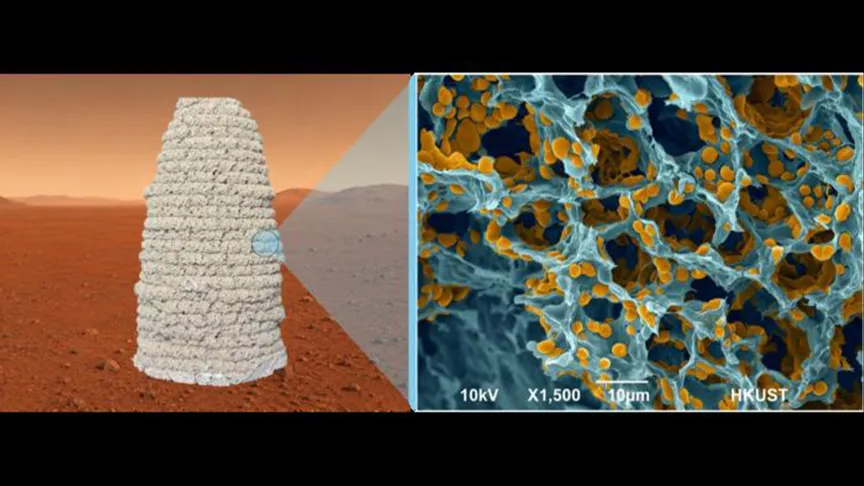
The study, published on Sept. 10 in the journal Chem Circularity, reports that researchers found a way to turn the sand on Mars into what is functionally low-grade concrete using little more than gelatin, yeast, and the natural Martian environment. Combine the three ingredients, and the dry, cold, low-pressure environment of Mars freeze-dries the mixture, turning it into a porous, foam-like material strong enough to build houses on the red planet. 

“My inspiration came from freeze-dried fruits that become harder,” senior author Jishen Qiu of The Hong Kong University of Science and Technology said in a statement. “So, I asked myself if we can take advantage of that and make some materials.”

According to Qiu, the concrete produced by this method measures 10 to 12 megapascals (a metric unit of pressure), putting it on par with low-grade concrete here on Earth. This concrete is strong enough to build a one- or two-story house on Earth, and since Earth has three times the gravity of Mars, it’s more than strong enough to build structures on Mars too. 

Advertisement

The gelatin is run-of-the-mill porcine gelatin, which means it’s made from pigs, and it’s quite literally the same stuff that Jell-O uses to make its jiggly dessert. For the yeast, Qiu created a specially engineered version covered in the same proteins mussels use to attach themselves to rocks. These two ingredients, along with pounded-up Martian rocks and water, create the material. 

Mars’ frigid cold, low-pressure environment effectively freeze-dries the material, causing water to sublimate, which means it turns directly from a solid to a vapor, leaving the Martian concrete behind. Because this process is so fast, items must be 3D-printed in real time to work properly.

The team tested it by 3D printing two small beehive-shaped structures about the size of a wine cork in a simulated Martian environment, but the team believes the process can scale up. Once the structures have reached the end of their usefulness, people on Mars can break them down, mix them in a bioreactor, and brew a new building with the same materials, as long as there’s still yeast alive to reproduce. 

An elegant solution to a long-standing problem

A graphic showing what a house on Mars would look like and its molecular structure.
Houses on Mars made with this method would resemble beehives, but be made of what is essentially concrete. Nin Liu

Delivering humans to Mars is already a tall order. Elon Musk tried to get it done by 2025 and missed the mark by at least a decade. However, getting people there is only half the battle. Once there, they need a place to live that can withstand the Martian environment, which includes temperature swings of nearly 100 degrees Celsius and virtually no radiation protection from the sun due to the thin Mars atmosphere. 

There are many ideas about the subject, ranging from inflatable domiciles to the idea of letting self-propagating fungi grow whole buildings. Some enterprising scientists from the Indian Space Research Organisation even made space bricks from Martian soil, guar gum, urea, nickel chloride and a bacterium called Sporosarcina pasteurii, which converts urea and calcium into calcite. This lets the soil harden into something resembling concrete.

Advertisement

NASA held a habitat challenge from 2015 to 2019 that tasked companies and researchers to 3D-print homes using unique methods and materials. The winners took home over $2 million in prizes. In short, no stone has been left unturned, and people are using all sorts of exotic materials to try to find the best solution for habitats on Mars, including Qiu.

“I always ask myself: Is there any physical law or fundamental mechanism that prevents us from doing this?” Qiu said. “I can’t see any at this point in time. We are confident in scaling it up. It would surprise me if materials for future Martian engineering will not be as diverse as those used in Earth engineering, and biology will certainly contribute.”

Source link

Continue Reading

Tech

Irish workers considering new routes as AI reshapes work, finds Microsoft

Published

on

A new report found that Irish employees’ workplace expectations and experiences are being transformed by artificial intelligence.

Microsoft Ireland has today (10 September) released the findings of its 2026 Work Trend Index. The report explores how Ireland’s employees are responding to a working environment under constant evolution in response to AI.  

This year’s Work Trend Index, in collaboration with 3Gem, surveyed 1,000 nationally representative adults based in Ireland, in casual and part-time work, including frontline employees and knowledge workers. 

The survey builds on the year-on-year comparisons of the changing trends, experiences and workplace expectations between 2022 and 2026.

Advertisement

What was discovered is that nearly half (48pc) of workers who participated in the research have changed employers in the last 12 months, a figure which has risen from 38pc in 2025.

47pc of professionals explained that AI is making them seriously reconsider their career path. This has risen from 34pc just last year. 

The AI influence

The report found that there is significant optimism around the potential of AI, as 76pc of participants believe it offers Ireland a major economic opportunity. Almost two-thirds believe skills in this area are critical when competing in the wider jobs market and 61pc are of the opinion that developing AI skills will support career progression.

There are some concerns also, as almost 60pc of people fear falling behind if they are too slow to adapt, and 13pc are considering changing their employer if there is insufficient access to advanced AI tools. This is perhaps not unexpected, as Microsoft’s report suggests that AI use at work has risen to 63pc. 

Advertisement

Many employers, however, are failing to meet the expectations of a workforce that is becoming increasingly used to embedded AI.

While 57pc of participant workers can identify where AI agents could help in their role and 48pc are already using AI agents regularly, organisations are in catch-up mode, with employers yet to provide the right levels of upkilling, investment and leadership, according to the index. 

Only 40pc of contributors feel that they have had enough AI training or guidance, less than half agreed that their employer provides the tools and resources they need, and only 48pc find that leadership expectations around AI use are clear. 

The report said: “The findings suggest Ireland’s AI opportunity is not constrained by employee appetite, but by how quickly organisations can translate that enthusiasm into practical capability, trusted adoption and business value.”

Advertisement

The Work Trend Index identified the ways in which organisations can accelerate their AI adoption to match employee needs and that is largely by viewing the workforce as an asset that requires consistent upgrading.  

65pc of employees are open to new ideas and ways of working with AI, 89pc said AI has improved the quality of their work, 61pc are curious about what AI could unlock for them or their team, and 65pc said they treat AI output as a starting point while remaining responsible for the final work. 

“Leadership will be critical to converting employee interest into confident adoption. However, more than half of workers (51pc) say leadership is out of touch with employees, while fewer than half say their manager actively uses AI, encourages AI adoption or supports experimentation,” the report said. 

“The findings point to a clear opportunity for leaders to model responsible use, set expectations and give employees the confidence and permission to explore where AI can add value.”

Advertisement

Catherine Doyle, general manager at Microsoft Ireland, said, “Ireland’s workforce is adapting quickly to a changing world of work. People are thinking differently about the skills they need, the career paths they want and the opportunities they expect from their employers. 

“At the same time, there is strong recognition of AI’s potential, both for individual careers and for Ireland’s future competitiveness. What is particularly encouraging is that workers are not waiting on the sidelines. They’re developing new future-ready skills and exploring how AI can help them in their current and future roles. 

“The challenge now is whether organisations can keep pace with this momentum. The next phase is about turning AI adoption into meaningful value by building organisational capability and trust, strengthening governance and security, and redesigning work around better outcomes.

“The organisations that get this right will be better placed to create meaningful value for their people, customers and the wider economy.”

Advertisement

Don’t miss out on the knowledge you need to succeed. Sign up for the Daily Brief, Silicon Republic’s digest of need-to-know sci-tech news.

Source link

Advertisement
Continue Reading

Trending

Copyright © 2025