A Manchester Storm game at the AO Arena has been called off following a ‘technical issue with the ice’. The popular ice hockey team was set to take on the Nottingham Panthers in the Challenge Cup on Sunday evening (September 13).
The game was set to be the team’s first competitive match in the heart of of Manchester in more than 20 years. Last week, Storm made a triumphant return to the arena in a sold out pre-season friendly against the Sheffield Steelers on Sunday (September 6).
Fans been advised to keep their tickets which will be valid for the rescheduled fixture. The rescheduled game is set to take place on Wednesday October 14.
Advertisement
Click here to get the biggest stories straight to your inbox in our Daily Newsletter
A statement from the club reads: “Unfortunately today’s Manchester Storm game vs PanthersIHC has been suspended due to a technical issue with the ice.
“We sincerely apologise to supporters and ticket holders for the disruption and would like to thank everyone in attendance for their patience.
Advertisement
“We advise attendees to retain their tickets which will remain valid for the rescheduled fixture. Those with single-game tickets for this game and seeking a refund are advised to contact their point of purchase.
“The rescheduled game will take place on Wednesday 14th October 2026. Manchester Storm and AO Arena would like to thank attendees for their understanding.”
Donald Trump now has a new proposed timetable for his war with Iran, albeit without a clear purpose. Heading to the Republicans’ midterm convention in Texas this week, the US president told reporters the war would end “immediately after the election”. This is coming from a president seven months into a conflict that he predicted would last only weeks.
For all that time, the US has been jostling with Iran for military and strategic control over the Strait of Hormuz while seeking to further degrade the Islamic Revolutionary Guard Corps’ military capabilities. But without strategic direction, victory is impossible and Iran’s leverage over the Strait allows it to keep defining the negotiating battlefield.
Capability without a definition of victory produces exactly what we have watched for weeks: tit-for-tat strikes that have failed to move the needle on the Strait, let alone Iran’s nuclear program.
But behind the shortcomings of Trump’s kinetic application of hard power lies a more profound failure. As much as wars depend on a coherent military strategy, they also need a strategic narrative – a story that provides and sustains the legitimacy of war. Trump’s war has never had one.
Advertisement
With the mid-term elections looming in November, the political costs of that absence are only becoming more acute for Trump and the Republican party.
Consider the inventory of justifications offered since February. Before the war began, Trump promised anti-government protesters that “help is on its way”. But when the bombing started it was about destroying Tehran’s nuclear and ballistic missile programmes. Then, within a day, it was also about forcing regime change.
Over several months, none of these ambitions were realised. In August, the vice-president, JD Vance, announced a new hierarchy of aims: keeping oil and gas cheap for Americans as “goal No. 1”, with Iran’s nuclear question demoted to second place.
Last week Vance went further by insisting that there isn’t a “war” at all, even though Iran had fired missiles at Kuwait in retaliation to US strikes on the cities of Bandar Abbas, Ahvaz, Aghajari, and Sirik. With each new justification and framing of this conflict, the original rationale for the war becomes harder to identify.
Advertisement
This matters because legitimacy is itself a source of state influence, especially in the context of wars of choice. It is what generates societal resolve at home, sustains the support of allies, and preserves the institutional prestige of the military asked to do the fighting. Strategic narratives are the vehicle through which such legitimacy is achieved; they can convert painful sacrifice into a cost that is worth sustaining.
And there is now a great deal of sacrifice that has yet to be given meaning. US Navy sailors enforcing the blockade have suffered from low morale – one crew member of the USS Abraham Lincoln went overboard in August due to mental health, after a record deployment without a port call.
American military fatalities resulting from Iranian retaliatory strikes on US bases in the region have been quietly reclassified by the Pentagon and moved out of the war’s official death toll. There are mounting accusations of civilian casualties in Iran, where Iranian officials claim that a US strike targeted a wedding ceremony near the Hormuz coast last week that killed four.
Unconvincing narrative
These losses strain America’s image among allies. However, the audience that most needs convincing is Trump’s own. His Maga approach was built on the premise that: “Great nations do not fight endless wars” and his support base is clearly concerned about lengthy foreign entanglements. Yet these are the voters now being asked to absorb the war’s costs without a compelling story that justifies them.
Advertisement
Donald Trump and the Republican Party will need to convince US voters that the war against Iran is justified. Sue Dorfman/ZUMA Press Wire
Come the mid-terms, they will inevitably vote with inflation and gas prices in mind when they reach the ballot box. Polling already shows an erosion in support for the war.
Wars of choice have failed this legitimacy test before – sometimes before a single shot was fired. In August 2013, the then UK prime minister David Cameron asked parliament to sanction airstrikes against Syria’s Assad regime after chemical attacks and lost.
The government’s case rested on a story of salvation, national standing and the moral duty to act. But that narrative could not compete with a rival story of loss, in which intervention meant repeating the errors of Iraq: mission creep, the futile sacrifice of soldiers’ lives, and further damage to a reputation already bruised by two inconclusive wars in Iraq and Afghanistan.
There is an uncomfortable lesson for Washington here. The British case suggests that once a public comes to view a war of choice through the frame of loss – futile sacrifice, eroded prestige, no discernible end – no quantity of firepower can restore its legitimacy. The problem Trump has is that he initiated a shooting war with Iran first, leaving the narrative vacuum to be filled afterwards. Now it is filled with images of a bombed wedding, exhausted sailors and vessels sitting stranded in the Strait of Hormuz.
Advertisement
Stories which successfully sustain public consent for military force often share two main ingredients: an immediate threat to the homeland, and an opportunity for the initiator to assume the role of saviour. Twenty-five years ago, the September 11 attacks supplied both in their most visceral form. This is why the invasion of Afghanistan garnered public and allied support.
Trump currently has neither of these to fall back on. There is no communicated threat to Americans at home and no one is being rescued. There is only a rotating stock of rationales, none of which has held long enough to become convincing.
Until his administration can communicate a narrative that speaks to an existential Iranian threat at home and casts America as the saviour of something worth saving, Trump’s story will be written for him.
He risks being remembered as just another gung-ho president who rushed into a Middle Eastern war he did not understand – the very legacy he promised voters he would never repeat.
Countryfile viewers got a look at an unusual activity
The latest edition of long-running BBC series Countryfile featured a guest who shared a warning over an unusual activity.
Advertisement
This Sunday’s episode (September 13) saw the show take a look at ‘an old estate in a modern world’. Its description from the TV listings explained that Joe Crowley, Datshiane Navanayagam and Adam Henson all head to Westacre in Norfolk to discover how a historic rural estate is adapting to survive in the modern world.
At a financially critical time of year, Datshiane looked at its valuable yet vulnerable crop of blueberries. They also met the owner to find out how traditional estates are diversifying and evolving to secure their future.
Joe joined the conservation team working to restore an important area of wet woodland, boosting biodiversity and creating habitats for wildlife. Their final spot was a tenant brewery crafting local ale before sampling some themselves in the village pub.
Meanwhile, Adam met the farm manager, who is looking at ways to help run the land in a more cost-effective way through collaboration between livestock and arable farming. However, one special guest took part in something very different.
Advertisement
The show also introduced Nicola Crockford who enjoys a unique pastime on the estate – river snorkelling. She described it as thrilling and said she gives the owners a different perspective of their land.
Footage showed Nicola in action as she drifted down the river with her camera. She said one of the things that owners are usually interested in finding out about, is how much trout are in their waters.
She said: “I love a mission. I love that the thing that gives me personal pleasure can also be useful and give other people pleasure. I feel so lucky, I feel so blessed to be given this treat in life.”
Advertisement
While in the river, she tries to film as much fish, food and everything she can find to make a record of what is below the surface. Later, as she’s in the water she told the camera: “Worries? What worries? There’s no worries, there’s no aches, no pains, this is heaven.”
Nicola recommended the activity to viewers but it came with a warning. She urged: “Obviously, don’t just get in the river without checking out on the website for health and safety. Getting landowners’ permission as necessary and that way you can have a wonderful snorkel.”
Over the years of snorkelling, Nicola claimed she has found other ‘extraordinary’ artefacts. These include skulls, a World War Two bomb and a horde of jewels. She said you never know what you could find.
Advertisement
According to the British Sub-Aqua Club website, river snorkelling is one of the “UK’s hidden gems”. They state that it allows divers to explore a a completely different environment from the coast on a rewarding, relaxed adventure.
Countryfile continues next Sundays at 7pm on BBC One and BBC iPlayer.
Every year, between 80,000 and 140,000 people die from snakebites worldwide. Hundreds of thousands more are left with amputated limbs or permanent disabilities.
India accounts for roughly half of these deaths, with around 58,000 people dying from snakebites each year. Many of the victims are farmers, labourers and children in rural communities, bitten while working in the fields or walking home after dark.
Yet the basic way we treat snakebite has changed little in more than a century. Traditional antivenom is made using horses: they are injected with small doses of snake venom, prompting their immune systems to produce antibodies. Blood is then collected from the horse and processed to make the antivenom.
This type of antivenom has saved countless lives, but it has drawbacks. The antivenom can vary from batch to batch, cause severe allergic reactions and is expensive to produce.
Advertisement
It can also offer limited protection. For example, in India, antivenom is mainly made using venoms from four snake species known as the “big four”: the Indian spectacled cobra, common krait, Russell’s viper, and saw-scaled viper. But these antivenoms do not always work well against venoms from other snake species, or populations of the same snake species, found across the country.
We wanted to know whether modern biotechnology could offer a better approach. Our new study in mice, suggests it might.
Small antibodies, big ambitions
Our approach uses nanobodies, tiny versions of antibodies. Antibodies are proteins made by the immune system that recognise and help neutralise harmful substances, including toxins. Nanobodies do a similar job but are much smaller.
Their size could make them useful for treating snakebites because they can move through tissue quickly and reach venom before it causes permanent damage. They can be also be produced in microbes, rather than using horses.
Advertisement
Are scientists close to a cure for world’s deadliest snakebites? Kartik Sunagar, Author provided (no reuse)
We have already developed nanobodies that can neutralise venoms from African cobras and mambas. Because different cobra species produce many of the same types of toxins, we wanted to see whether these nanobodies could also work against Indian cobra venoms.
In our lab, we mixed five nanobodies and tested them against venoms from several cobra and king cobra species from India. We found that all five were able to target the toxins across the different venoms. This was encouraging because the nanobodies had originally been developed using African snake venoms.
From lab to living animal
We then tested the cocktail in mice. When the venoms and treatment were given together, all of the treated mice survived. While untreated mice died within 30 minutes because of neurotoxicity, typical of cobra bites.
We also tested what would happen if the treatment was given after a simulated bite. The mice received venom first, followed by the nanobody treatment through a vein. This was to simulate someone reaching a clinic after being bitten by a snake.
Advertisement
We found that the treatment still saved the mice when given 20 minutes after the venom. The treatment also prevented the severe effects of the venom, including paralysis and breathing failure.
We checked that the nanobodies did not bind to human proteins, which is important as doing so could cause unwanted side effects. We also found that the nanobodies remained intact at high temperatures, which is important in places where keeping medicines cold can be difficult.
A long road still ahead
These results are promising, but this was a study in mice, so the findings do not necessarily translate directly to people. What works in an animal model may not work in humans in exactly the same way. So the results are best seen as an indication that this approach could be worth developing further.
Advertisement
The cocktail is also not a universal antivenom. Our tests showed that it doesn’t work against Indian kraits, meaning that additional nanobodies would be needed to target these and India’s dangerous vipers. More research is also needed to understand the right dose, how long the treatment lasts and how well it works when treatment is further delayed in larger animal and humans.
The next step would be to test the antivenom in people. First, we would need to make sure it’s safe, decide the right dose and produce it to pharmaceutical standards. The treatment would then be tested in people who come to hospital after being bitten by a snake.
So even though there’s some way to go before this way of making antivenoms could actually be used in humans, these results build on our previouswork and suggest that nanobody-based antivenoms could eventually provide a more flexible and effective approach to treating snakebite.
This means that instead of developing a completely new treatment for every snake species, a shared set of nanobodies could potentially be combined and adapted for different geographical regions.
Advertisement
For the people and communities living with the greatest risk of snakebite, this could make an enormous difference. And potentially save tens of thousands of lives every year.
This series was commissioned as part of a partnership between Videnskab.dk and The Conversation, where articles are published in English and Danish.
Pro Ref, formerly PGMOL, have recognised that Erling Haaland’s winner in the Manchester derby was an error of judgment
21:33, 13 Sep 2026Updated 21:58, 13 Sep 2026
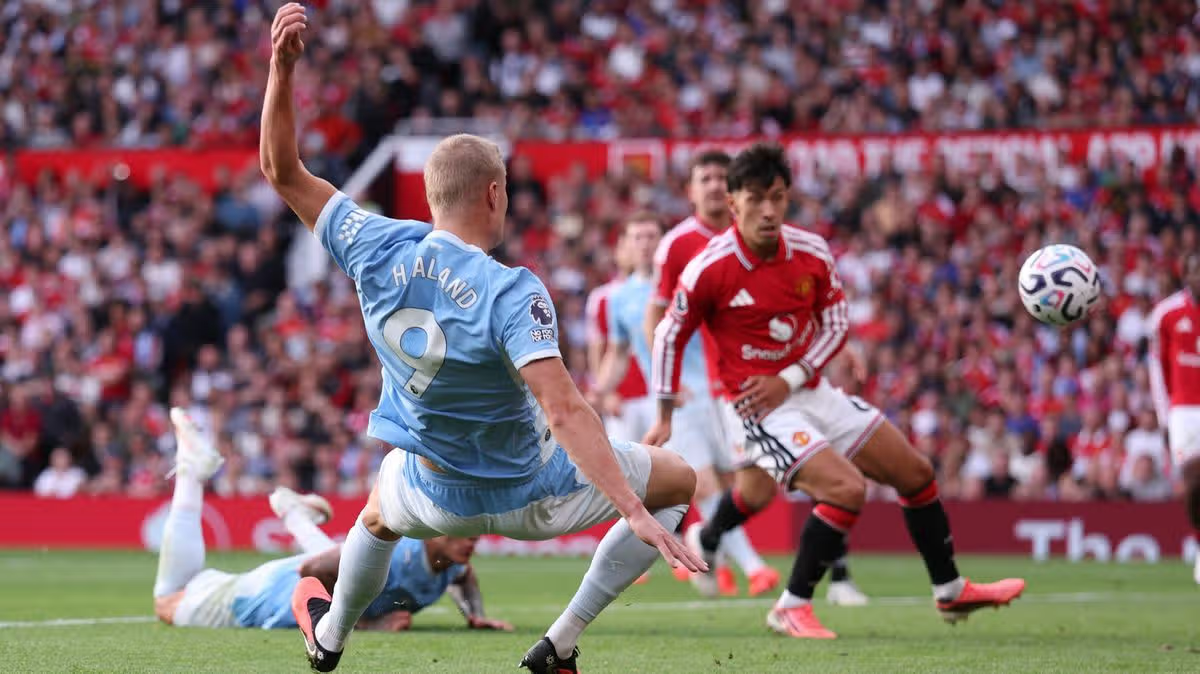
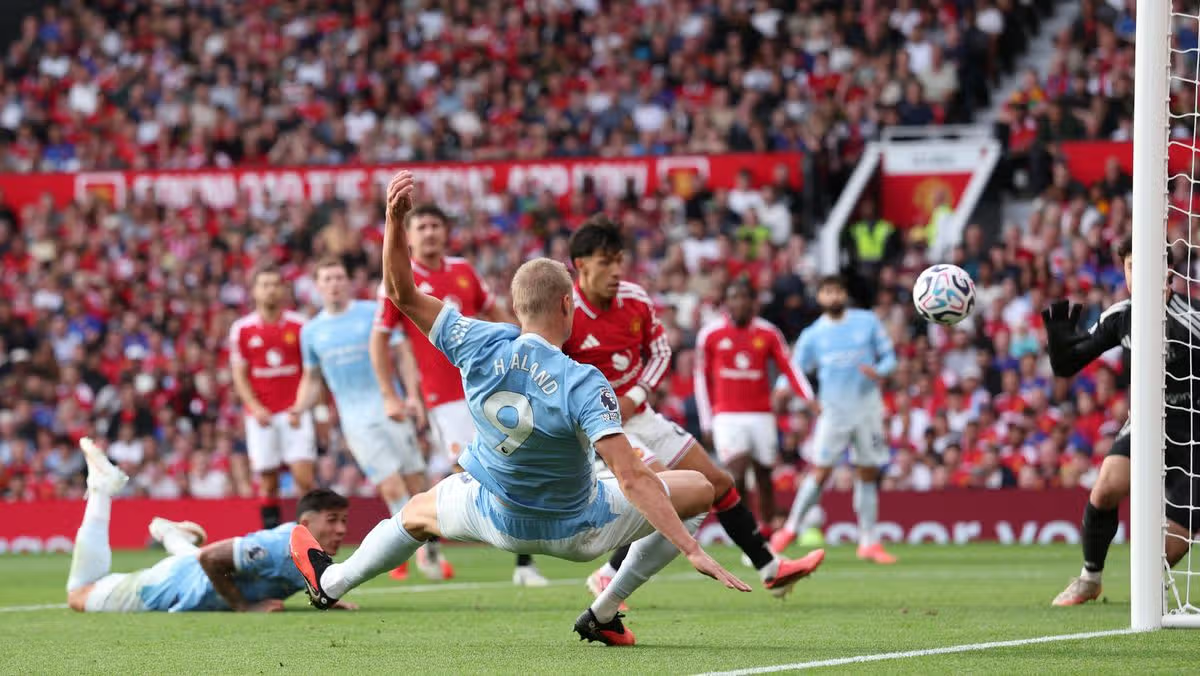
Pro Ref have taken accountability for an ‘error of judgement’ during the Manchester derby and a review will take place after Erling Haaland’s winner was allowed to stand.Haaland scored the decisive goal for Manchester City against Manchester United when Josko Gvardiol’s cross deflected towards the back post, where the striker applied the finish.
Lisandro Martinez was positioned between Enzo Fernandez and Haaland, but the City midfielder launched himself toward the ball in an effort to convert a diving header. However, officials ruled that the former Chelsea man had not interfered with play.
The linesman initially raised his flag to deny 10‑man City, but VAR reviewed the incident and instructed Michael Oliver to award the goal. Further clarification has now been provided by Pro Ref, formerly PGMOL, who say VAR failed to recognise the likely impact of Fernandez’s position and should have recommended an on‑field review.
Advertisement
A Pro Ref spokesperson said: “Following the incident in the 60th minute of Sunday’s Premier League fixture between Manchester United and Manchester City at Old Trafford, we can provide clarification regarding Erling Haaland’s awarded goal.
“The on-field decision was offside against Erling Haaland – that was checked by VAR and he was found to be in an onside position. In the same attack, it was established that Enzo Fernandez did not play the ball and therefore that makes any offside offence subjective, however, on this occasion, the VAR did not recognise the likely impact of his position and should have recommended an on-field review.
“Contact has been made with Manchester United this evening to acknowledge what we deem is an error of judgement. A review of the incident will take place.”
Advertisement
The decision left Sky Sports co‑commentator Gary Neville baffled. “I’m going to need the offside law explaining to me, it’s lost me,” he said on air.
Meanwhile, Reds head coach Michael Carrick admitted he was deeply worried about the outcome, adding: “Confused, not even confused, we’ve put things in place to help referees’ decisions, screens, referees in an office somewhere. It’s more worrying about if that’s the interpretation about football.
“If we’ve got people in place that are meant to understand the game of football or not interfering with play or impacting an attack, throwing your body at it with a defender next to him, it’s really worrying for me, if that’s how it’s interpreted. It’s a staggering decision. I can’t understand it once I seen it then the explanation almost makes it worse. Well, the explanation that he’s not interfering with play. Incredible.”
Advertisement
A furious Martinez made his feelings known after the game, saying he shifted towards Fernandez and away from Haaland because he was trying to score.
“I think he was offside,” he said. “And what I can’t understand is the rules, you know? He was there!
“I went to him because he was there in front of me. That’s why Haaland was free at the back [post]. I want to be calm now, I want to control myself. It is so hard. It is so hard because you lose a derby, you lose three points at home.
“Every season they [officials] come to our club and explain an hour, an hour-and-a-half the rules and they look so confident with that. Then after, five or six people [officials] doing this kind of mistake in the Premier League is unacceptable. It’s the best league in the world and you have the best teams and players in the world. We have to go home with this injustice.”
Advertisement
Haaland’s strike proved to be the winner, with City taking all three points despite being reduced to ten men. Phil Foden was sent off in the first half for a challenge on Bruno Fernandes.
Content cannot be displayed without consent
Pro Ref have taken accountability after Erling Haaland’s controversial winner against Manchester United
21:34, 13 Sep 2026Updated 21:43, 13 Sep 2026
Pro Ref have apologised to Manchester United for an ‘error of judgement’ to allow Erling Haaland’s Manchester City winner.
The organisation has provided clarity and taken accountability after it was deemed that Enzo Fernandez hadn’t interfered with play, despite being in an offside position when he made an attempt to steer home Josko Gvardiol’s cross.
A Pro Ref spokesperson said: “Following the incident in the 60th minute of Sunday’s Premier League fixture between Manchester United and Manchester City at Old Trafford, we can provide clarification regarding Erling Haaland’s awarded goal.
Advertisement
“The on-field decision was offside against Erling Haaland – that was checked by VAR and he was found to be in an onside position.
“In the same attack, it was established that Enzo Fernandez did not play the ball and therefore that makes any offside offence subjective, however, on this occasion, the VAR did not recognise the likely impact of his position and should have recommended an on-field review.
“Contact has been made with Manchester United this evening to acknowledge what we deem is an error of judgement. A review of the incident will take place.”
There will be more to follow on this breaking news storyand Mirror Sport will bring you the very latest updates, pictures and video as soon as possible.
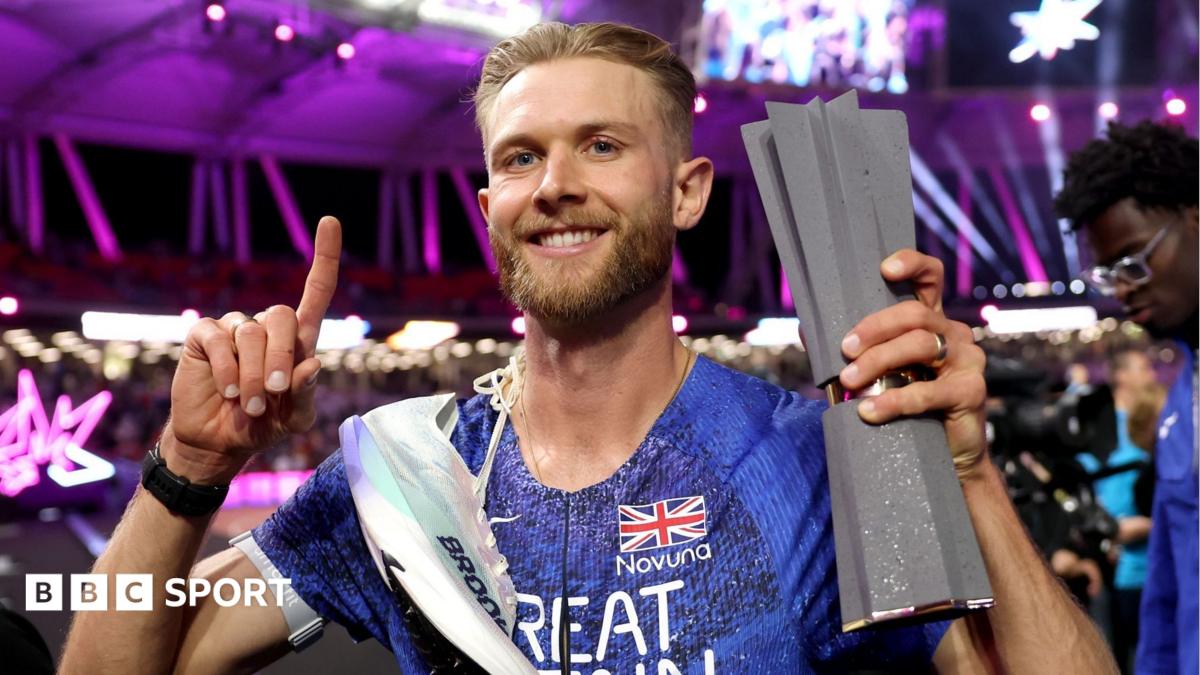
Speaking after his victory, Kerr referenced the “stick” he receives for not competing as much as others.
But he is in no doubt that it is because of that approach that he is able to seize the career-defining moments when they arrive.
In response to criticism from Ingebrigtsen over his decision to skip the European Championships in Birmingham, Kerr said he “was not a robot” and would continue to approach each season by targeting only a few competitions to avoid injury and maintain consistent high levels of performance.
While the Ultimate Championship was not one of those dates at the beginning of the year, it was no surprise that World Athletics made sure he could be present – nor that Kerr took the sport’s governing body up on the offer.
Advertisement
Kerr is, after all, blockbuster. He underlined his position as one of the sport’s biggest draws when he boldly announced his record-breaking intentions months in advance before delivering his historic mile performance in front of 60,000 British fans in July.
There were also no mistakes in Scotland, despite the pressure which came with his role as headline act in front of an expectant home crowd.
It is just 12 months since Kerr’s world title defence was ended by a calf tear in Tokyo.
But, having recovered to reach career-best fitness, the next three years now provide him with the opportunity to cement himself among the all-time greats.
Advertisement
With two World Championships – the second potentially in London – either side of the next Olympic Games, Kerr will continue to ignore the outside noise and follow his established winning formula.
“Obviously I get a lot of stick for not racing so much,” Kerr said. “But it allows me to come here fresh and ready to go.”
The incident happened at around 7.30pm on Sunday evening
20:58, 13 Sep 2026Updated 21:20, 13 Sep 2026
Emergency services have tonight been in attendance at a serious road traffic incident in West Belfast.
It’s believed at least two cars collided at high speed with one another on the Monagh Bypass which links Kennedy Way with the Whiterock Road.
Footage shared on social media showed two badly damaged cars with members of the public attempting to assist those inside. Debris was scattered right across the four lanes and smoke was visible from one of the vehicles. The road remains closed as of 9pm on Sunday September 13.
Advertisement
Northern Ireland Fire and Rescue and Police Service of Northern Ireland were also on the scene within minutes. A number of casualties were attended to at the scene.
No further details on injuries are known at this time.
Sinn Fein MLA Aisling Reilly said: “My thoughts are with everyone involved in the serious road crash on the Monagh Bypass at Áit na Móna this evening.
“The road is currently closed in both directions while emergency services deal with the incident. I would ask people to please avoid the area and allow those responding to the crash to do their work.”
Advertisement
Local councillor Paul Doherty posted on social media: “The Monagh Bypass remains closed in the Aitnamona/Turf Lodge direction and is expected to remain closed for some time while emergency services continue to deal with a serious road traffic collision.
“Please avoid the area if you can and allow emergency services to carry out their work. Thinking of everyone involved.”
A brief statement from the PSNI said: The Monagh bypass in west Belfast is currently closed in both directions between the Glen Road roundabout and the junction with Springfield Road following a road traffic collision. Diversions are in place.”
Apple’s traditional September iPhone event was very different this year. The company’s new CEO, John Ternus, hosted it (though the former CEO Tim Cook made a guest appearance), announcing the iPhone 18 Pro, AirPods 5, Apple Watch ultra 4 and a folding phone. Here’s everything that was announced, including when they’re coming and how much they’ll cost.
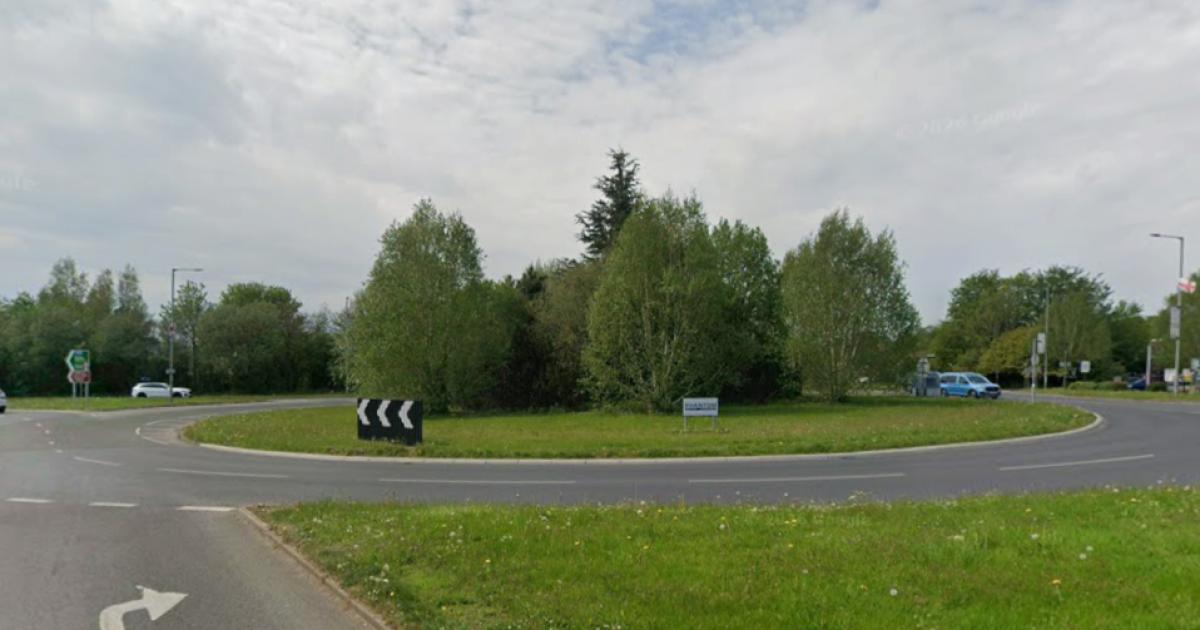
Emergency services were called to a roundabout at the junction of Chorley New Road and De Havilland Way in Horwich shortly before 4pm.
As a result of the crash, one car was overturned, with specialist equipment used by Greater Manchester Fire and Rescue Service (GMFRS) to turn the car back onto its wheels.
Four people received care from North West Ambulance Service, with one person taken to Royal Bolton Hospital.
Advertisement
A spokesperson for GMFRS said: “Shortly after 3:44pm this afternoon (Sunday 13 September), two fire engines from Horwich and Atherton fire stations were called to reports of a road traffic collision involving an overturned car at a roundabout at the junction of Chorley New Road and De Havilland Way in Horwich, Bolton.
“Crews arrived quickly at the scene. Firefighters worked with colleagues from Greater Manchester Police to secure the area and used specialist equipment to turn the car back onto its wheels. Four casualties were taken into the care of North West Ambulance Service, with one later taken to Royal Bolton Hospital for precautionary checks.
“Crews were in attendance for around two hours and 50 minutes.”
Greater Manchester Police and North West Ambulance Service were approached for comment.
Channel 4 are hoping to have UK TV’s next big hit on their hands with the series
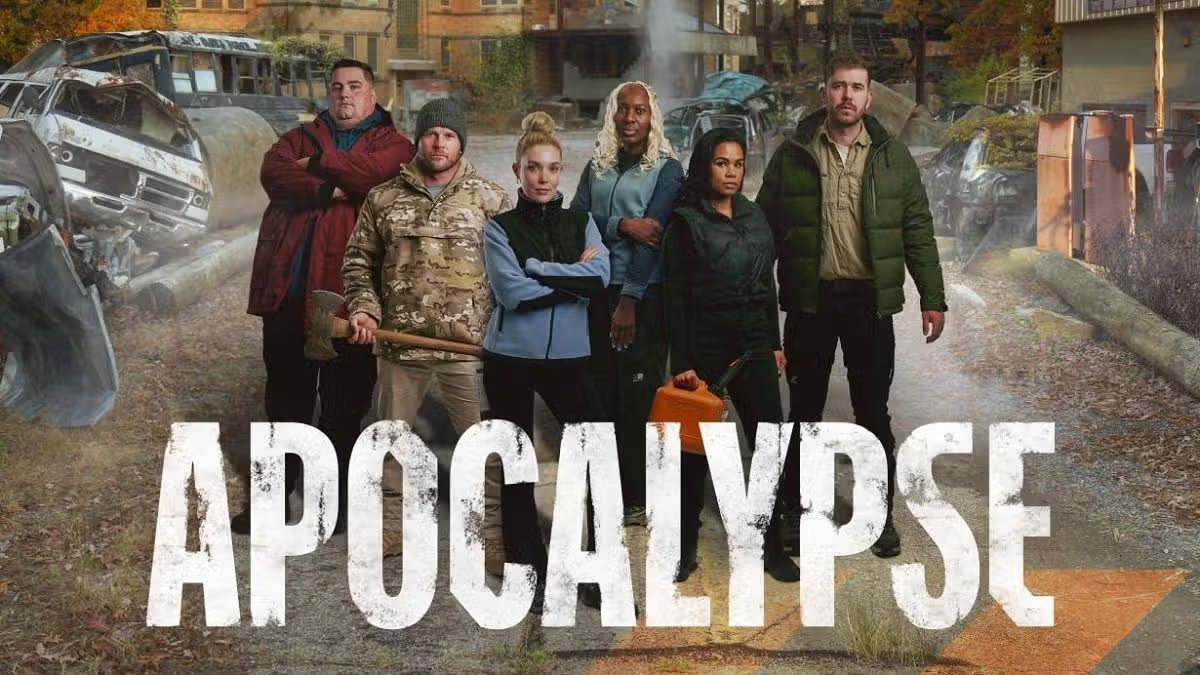
Apocalypse has arrived on Channel 4, but who’s in the full line-up, what are the rules and how do you win the survival series?
Advertisement
It’s been a winning period for reality TV in the UK. BBC viewers are patiently waiting for the next season of The Celebrity Traitors at the minute.
A new batch of 21 celebrities who will face one another for the chance to win a cash prize of up to £100,000 for a charity of their choice. As last year proved, with Alan Carr emerging as sole champion, anyone can win.
Click here to get the biggest stories straight to your inbox in our Daily Newsletter
Set in a Scottish castle in the Highlands, the game follows the celebrity contestants, the majority of whom are known as faithfuls, as they try to seek out the murderous traitors among them, who kill off players in the middle of the night.
Advertisement
With just weeks to go until the new series gets underway, perhaps Channel 4’s brand new programme will reach the same global heights. Here’s what you need to know.
What are the rules of Apocalypse?
Fourteen ordinary people from the UK and Australia face the ultimate test in Apocalypse. Two unsuspecting groups of strangers are dropped into a real abandoned town.
In a brilliant twist, each team is unaware of the other’s existence, presumably leading to a dramatic and realistic realisation.
Advertisement
Without electricity, running water or food, the survivors must scavenge, recycle, reuse and reinvent anything they can find just to get by. To make things even more tense, they’re surrounded by the remnants of modern life.
The teams must discover whether reverting to primitive instincts is what it takes to make it through the Apocalypse, or whether cooperation is the key to survival.
How do you win Apocalypse?
Unlike the bulk of reality competitions, there is no winner of Apocalypse. Instead, each contestant has signed on in an attempt to prove that they could survive in an end of the world scenario.
No one is voted off the programme, and there is no prize money at the end. The series is designed to test whether society crumbles or people cooperate when faced with a global disaster.
Advertisement
A Channel 4 spokesperson teased: “The survivors are split into two rival camps – Eastside and Westside – with no knowledge of who else is out there.
“With limited resources on offer, the Westside group soon find themselves in direct conflict with their Eastside counterparts when Eastside are first to break into the town’s only supermarket and loot its contents.”
Apocalypse’s Full Cast
EastSide Team
Steven McKell – Content Creator, 32, from Lincoln
Kiera Madison – Psychologist, 29, from Australia
Bertie Watkins – Theatre director, 34, from London
Kyra Muzvaba – Student nurse, 20, from Northamptonshire
Louise Baker – Mechanic, 43, from Birmingham
Scott McMinn – Beef farmer, 42, from Barongarook (Aus)
Laura Powell – Paramedic, 38, from Bristol
Westside Team
Ioan Humphreys – Farmer, 32, from Wales
Freddie Browne – Event Emcee, 30, from London
Brooke McCreaner – Cab driver, 42, from London
Celia Hibbert – Politician, 43, from Wolverhampton
Matthew Wilson (Matty) – Diesel mechanic, 33, from Perth (Aus)
Kelly Cartwright – Paralympian, 37, from Geelong (Aus)
Dean Sganga – Chef, 30, from NSW (Aus)
Apocalypse airs on Channel 4 on Sunday, September 13, at 9pm










































You must be logged in to post a comment Login