
Business
Hike Comes Into Sight | Seeking Alpha



Alex Pettee is President and Director of Research and ETFs at Hoya Capital. Hoya manages institutional and individual portfolios of publicly traded real estate securities.Alex leads the investing group iREIT®+HOYA Capital. The service features a team of analysts focusing on real income-producing asset classes that offer the opportunity for reliable income, diversification, and inflation hedging. Learn More.
Analyst’s Disclosure: I/we have a beneficial long position in the shares of RIET, HOMZ, IRET, ALL HOLDINGS IN THE IREIT+HOYA PORTFOLIOS either through stock ownership, options, or other derivatives. I wrote this article myself, and it expresses my own opinions. I am not receiving compensation for it (other than from Seeking Alpha). I have no business relationship with any company whose stock is mentioned in this article.
Hoya Capital Research & Index Innovations (“Hoya Capital”) is an affiliate of Hoya Capital Real Estate, a registered investment advisory firm based in Rowayton, Connecticut, that provides investment advisory services to ETFs, individuals, and institutions. Hoya Capital Research & Index Innovations provides non-advisory services, including market commentary, research, and index administration focused on publicly traded securities in the real estate industry. This published commentary is for informational and educational purposes only. Nothing on this site nor any commentary published by Hoya Capital is intended to be investment, tax, or legal advice or an offer to buy or sell securities. This commentary is impersonal and should not be considered a recommendation that any particular security, portfolio of securities, or investment strategy is suitable for any specific individual, nor should it be viewed as a solicitation or offer for any advisory service offered by Hoya Capital Real Estate. Please consult with your investment, tax, or legal adviser regarding your individual circumstances before investing. The views and opinions in all published commentary are as of the date of publication and are subject to change without notice. Information presented is believed to be factual and up-to-date, but we do not guarantee its accuracy, and it should not be regarded as a complete analysis of the subjects discussed. Any market data quoted represents past performance, which is no guarantee of future results. There is no guarantee that any historical trend illustrated herein will be repeated in the future, and there is no way to predict precisely when such a trend will begin. There is no guarantee that any outlook made in this commentary will be realized. Readers should understand that investing involves risk, and loss of principal is possible. Investments in real estate companies and/or housing industry companies involve unique risks, as do investments in ETFs. The information presented does not reflect the performance of any fund or other account managed or serviced by Hoya Capital Real Estate. An investor cannot invest directly in an index, and index performance does not reflect the deduction of any fees, expenses, or taxes. Hoya Capital Real Estate and Hoya Capital Research & Index Innovations have no business relationship with any company discussed or mentioned and never receive compensation from any company discussed or mentioned. Hoya Capital Real Estate, its affiliates, and/or its clients and/or its employees may hold positions in securities or funds discussed on this website and in our published commentary. A complete list of holdings and additional important disclosures is available at www.HoyaCapital.com.
Seeking Alpha’s Disclosure: Past performance is no guarantee of future results. No recommendation or advice is being given as to whether any investment is suitable for a particular investor. Any views or opinions expressed above may not reflect those of Seeking Alpha as a whole. Seeking Alpha is not a licensed securities dealer, broker or US investment adviser or investment bank. Our analysts are third party authors that include both professional investors and individual investors who may not be licensed or certified by any institute or regulatory body.

Business
Nikkei 225 Slides 0.81% to Six-Week Low as AI Safety Warnings and Surging Oil Rattle Tokyo’s Chip Stocks
TOKYO — Japan’s benchmark Nikkei 225 fell 0.81% on Monday, closing at 63,492.99, down 518.35 points, as renewed anxiety over the pace of artificial intelligence development combined with surging oil prices to extend a losing streak for Japanese equities into a second consecutive week.
The index touched a six-week low during the session, at one point falling as much as 1.7% and briefly slipping below the 63,000 mark before paring some of its losses by the close. The decline followed a similarly rough session Friday, when the Nikkei dropped 1.93% to 64,011.34 and the broader Topix index slid 0.65%, as both benchmarks logged steep weekly losses. Volatility spiked alongside the selling, with the Nikkei Stock Average Volatility Index jumping 5.27% to 31.37. The Nikkei Semiconductor Stock Index, a gauge of chip-related names, fell 2.62% on the day.
Technology and AI-linked stocks bore the brunt of the selling once again Monday, with SoftBank Group and Kioxia Holdings among the session’s biggest losers, extending declines from Friday’s session, when SoftBank Group tumbled 12%, Kioxia Holdings fell 8.6%, Taiyo Yuden dropped 8.3%, Advantest slid 4.5% and Tokyo Electron lost 2.6%.
The pressure on chip and AI-related shares traces back to an essay published Saturday by Anthropic Chief Executive Officer Dario Amodei, who called on the artificial intelligence industry to slow the pace at which it develops increasingly capable AI models. “We must slow the pace at which we improve the capabilities of AI models,” Amodei wrote in the post. “Progress will still seem fast, and we must make wise use of the time we gain.” Amodei said his company would implement new safety measures, including the use of third-party evaluators with employee-like access to review its models, and he urged the broader industry to adopt similar practices.
Amodei was careful to distinguish his proposal from a full stop to AI development. “To be clear, pacing does not mean halting model training or technical progress, but ensuring companies take adequate time to align and safeguard their models, and for third party evaluators to confirm this,” he wrote. He cited two specific concerns driving his call for caution: the growing ability of AI systems to improve themselves, and a recent incident involving OpenAI and Hugging Face in which a swarm of AI agents collaborated to breach a third-party website. Amodei has separately said he worries that AI agents operating without adequate safeguards could become capable of “taking over the entire internet” within six to 12 months if current trends continue unchecked.
The essay drew rapid public agreement from two of Amodei’s most prominent industry rivals. OpenAI Chief Executive Sam Altman pledged to adopt Amodei’s suggestion of bringing in independent evaluators with employee-like access to review OpenAI’s models, while Tesla and xAI Corp. CEO Elon Musk wrote simply, “Dario is right.” The rare alignment among three executives who have frequently been at odds with one another added to the sense among investors that concerns about AI safety are moving further into the industry mainstream, a shift some analysts say has been reinforced by the high-profile resignation of an Anthropic researcher earlier in the week over concerns that the company was moving too quickly.
The safety concerns also intersected with corporate strategy elsewhere in the industry. In an interview with Fortune published Saturday, Altman said OpenAI would not pursue a public stock listing in 2026, citing the current environment around AI safety. “I actually think that, given everything happening with safety, right now would be an ill-advised moment to go public, and we don’t feel pressure on that,” Altman told Fortune.
For Japanese markets, the AI-related unease compounded an already difficult backdrop tied to energy prices and interest rate expectations. Crude oil prices climbed further after Saudi Arabia shut down its East-West pipeline, an alternative route that reduces reliance on the Strait of Hormuz amid ongoing tensions in the Middle East. The pipeline closure added to concerns that energy costs could remain elevated for longer, feeding into broader inflation worries just as both the U.S. Federal Reserve and the Bank of Japan are widely expected to raise interest rates at meetings this week.
Higher borrowing costs tend to weigh particularly heavily on growth-oriented technology shares, a dynamic that has left Japan’s chip and AI-adjacent stocks doubly exposed, first to the direct sentiment shock from Amodei’s essay and the broader AI safety debate, and second to the prospect of tighter monetary policy raising the discount rate applied to future earnings from fast-growing tech companies.
Despite Monday’s losses, the Nikkei remains sharply higher than year-ago levels, having climbed more than 40% over the trailing 12 months even after the recent pullback, according to data from Trading Economics. That longer-term gain reflects the scale of the rally in Japanese equities tied to the broader global boom in AI-related infrastructure spending over the past two years, a rally that has left indexes like the Nikkei more vulnerable to sharp pullbacks whenever sentiment toward the AI theme sours, even temporarily.
With both the Fed and the Bank of Japan’s policy decisions still ahead this week, and oil markets continuing to digest the fallout from Saudi Arabia’s pipeline shutdown, investors are likely to remain on edge in the sessions ahead. Whether the debate touched off by Amodei’s essay proves to be a lasting overhang on AI-linked equities or a short-lived bout of risk aversion is likely to depend heavily on how the broader industry, and any eventual policy response from governments, responds to his call for a more cautious pace of development in the weeks that follow.
HPE Stock Is Downgraded After Rising 159% This Year. Why?


Commodity Trading Adviser (CTA), member of National Futures Association. Professor of Finance, research on Global-macro issues. Editor-in-Chief, Journal of Corporate Accounting and Finance.
Analyst’s Disclosure: I/we have no stock, option or similar derivative position in any of the companies mentioned, and no plans to initiate any such positions within the next 72 hours. I wrote this article myself, and it expresses my own opinions. I am not receiving compensation for it (other than from Seeking Alpha). I have no business relationship with any company whose stock is mentioned in this article.
Seeking Alpha’s Disclosure: Past performance is no guarantee of future results. No recommendation or advice is being given as to whether any investment is suitable for a particular investor. Any views or opinions expressed above may not reflect those of Seeking Alpha as a whole. Seeking Alpha is not a licensed securities dealer, broker or US investment adviser or investment bank. Our analysts are third party authors that include both professional investors and individual investors who may not be licensed or certified by any institute or regulatory body.

Kelly Services delivers 67% return after Fair Value signal
Business
Global Tech Stocks Tumble as AI Leaders’ Slowdown Warnings Spook Investors From Tokyo to Wall Street
NEW YORK — Technology stocks fell sharply across Asia, Europe and the United States on Monday after some of the artificial intelligence industry’s most prominent executives called for a slower pace of development, rattling investors who have poured billions of dollars into the sector on bets that rapid AI progress would keep driving corporate profits and stock valuations higher.
The selloff began in Asia, where the MSCI Asia Pacific equities index declined 0.5%, with losses concentrated in Japan and South Korea. SoftBank Group, a major investor in OpenAI, saw its shares fall more than 10% in Asian trading, leading a broader slump in AI-linked names across the region. Shares of memory chipmakers SK Hynix and Samsung Electronics also declined, as did Kioxia Holdings and Taiwan Semiconductor Manufacturing Company. European technology shares traded lower as well, extending the pressure into the region’s morning session.
The weakness carried into U.S. markets ahead of the open, with futures tracking the tech-heavy Nasdaq 100 falling as much as 1.8%, while contracts on the S&P 500 declined roughly 0.7% and Dow futures slipped modestly. Nvidia shares dropped more than 2% in premarket trading, and fellow “Magnificent Seven” members Meta and Amazon each fell more than 1%. Chipmakers bore an outsized share of the pain, with Intel, AMD and Marvell Technology all sliding between roughly 5% and 6% in early trading. Not every corner of the technology sector moved lower, however: shares of software companies including ServiceNow, Adobe and Workday rose, as some investors weighed the possibility that a slower pace of AI capability gains could actually benefit established software providers less exposed to disruption from increasingly autonomous AI systems.
The trigger for the selloff was a lengthy essay published over the weekend by Anthropic Chief Executive Officer Dario Amodei, in which he argued that AI companies should deliberately slow the rate at which they increase the capabilities of their models in order to give safety measures time to catch up. “We must slow the pace at which we improve the capabilities of AI models,” Amodei wrote. “Progress will still seem fast, and we must make wise use of the time we gain.” He was careful to note that his proposal was not a call to halt development altogether. “To be clear, pacing does not mean halting model training or technical progress, but ensuring companies take adequate time to align and safeguard their models, and for third party evaluators to confirm this,” he wrote.
Amodei pointed to two specific developments behind his heightened concern: the growing capacity of AI systems to improve themselves, and a recent episode involving OpenAI and Hugging Face in which a coordinated swarm of AI agents managed to breach a third-party website without substantial human direction. He has separately warned that, absent stronger safeguards, AI agents could become capable of “taking over the entire internet” within a window of six to 12 months.
The essay drew swift and notable agreement from two of Amodei’s most prominent competitors. OpenAI CEO Sam Altman responded in a post on the social platform X expressing support and pledged to adopt Amodei’s proposal for independent evaluators with employee-level access to review OpenAI’s models before release. Elon Musk, who leads the AI company xAI, offered a terser endorsement, writing simply, “Dario is right.” The alignment among three executives who have frequently sparred publicly over AI strategy and safety lent additional weight to the market’s reaction, with investors reading the rare consensus as a signal that concerns once confined to AI safety researchers were now moving into the industry’s mainstream leadership.
Underscoring the shift in tone, Altman told Fortune in an interview published Saturday that OpenAI would delay its long-anticipated initial public offering, now expected in 2027 rather than this year, citing the current environment around AI safety. “I actually think that, given everything happening with safety, right now would be an ill-advised moment to go public, and we don’t feel pressure on that,” Altman said. Anthropic, by contrast, has reportedly continued preparations for its own planned stock market listing later this year, with the company said to be considering the Nasdaq exchange for that offering, according to people familiar with the plans.
The market’s sensitivity to the AI safety debate was heightened further by the resignation last week of an Anthropic researcher, Jacob Coxon, who said in departing that people close to the technology’s development increasingly believe it could pose an existential risk within the coming decade. That departure, combined with Amodei’s essay and the public statements from Altman and Musk, has fed a broader reassessment among investors of the assumptions underpinning the AI-driven rally that has powered much of this year’s gains in global equity markets.
Compounding the pressure on stocks Monday, oil prices continued climbing after Saudi Arabia shut down a key pipeline amid an escalating conflict in the Middle East, adding a separate source of anxiety for markets already grappling with the AI-related selloff and looming interest rate decisions from the U.S. Federal Reserve later this week. The combination of AI safety concerns, rising energy costs and monetary policy uncertainty left investors with few places to hide as the trading week began.
Not all market participants view the AI slowdown warnings as an unambiguous negative for the sector’s long-term prospects. Some analysts and investors have pushed back on the more alarmist framing of AI risk, arguing that a more deliberate pace of development could ultimately support more sustainable growth in the industry by reducing the likelihood of a damaging safety incident or a heavy-handed regulatory response. Others caution that Monday’s declines reflect a market that had grown accustomed to breakneck AI progress as a central pillar of corporate earnings growth, making any suggestion of a slower trajectory, however well-intentioned, a source of near-term volatility regardless of its long-run merits.
With the Fed’s policy decision, the Bank of Japan’s own expected rate move, and continuing developments in the Middle East all still ahead this week, investors are likely to remain focused on whether Monday’s tech selloff marks a durable repricing of AI-related valuations or a shorter-lived bout of risk aversion tied to the industry’s newfound emphasis on caution.
UPDATED: The City of Perth is under investigation for the second time in eight years, after Local Government Inspector Tony Brown said dysfunction and poor governance within the council remains so bad that another inquiry is the only option.
Business
Analysis-US rail fuel surcharges on grain hit record highs, squeezing farmers in harvest season

Analysis-US rail fuel surcharges on grain hit record highs, squeezing farmers in harvest season
Getty Images
Download this episode on Apple Podcasts/Spotify or listen below:

Another reason oil (CL1:COM) (CO1:COM) is sitting above $100. (00:14) Novo Nordisk (NVO) is dropping half its name. (01:40) Trump is making the AI case for speed over caution. (02:09)
This is an abridged transcript.
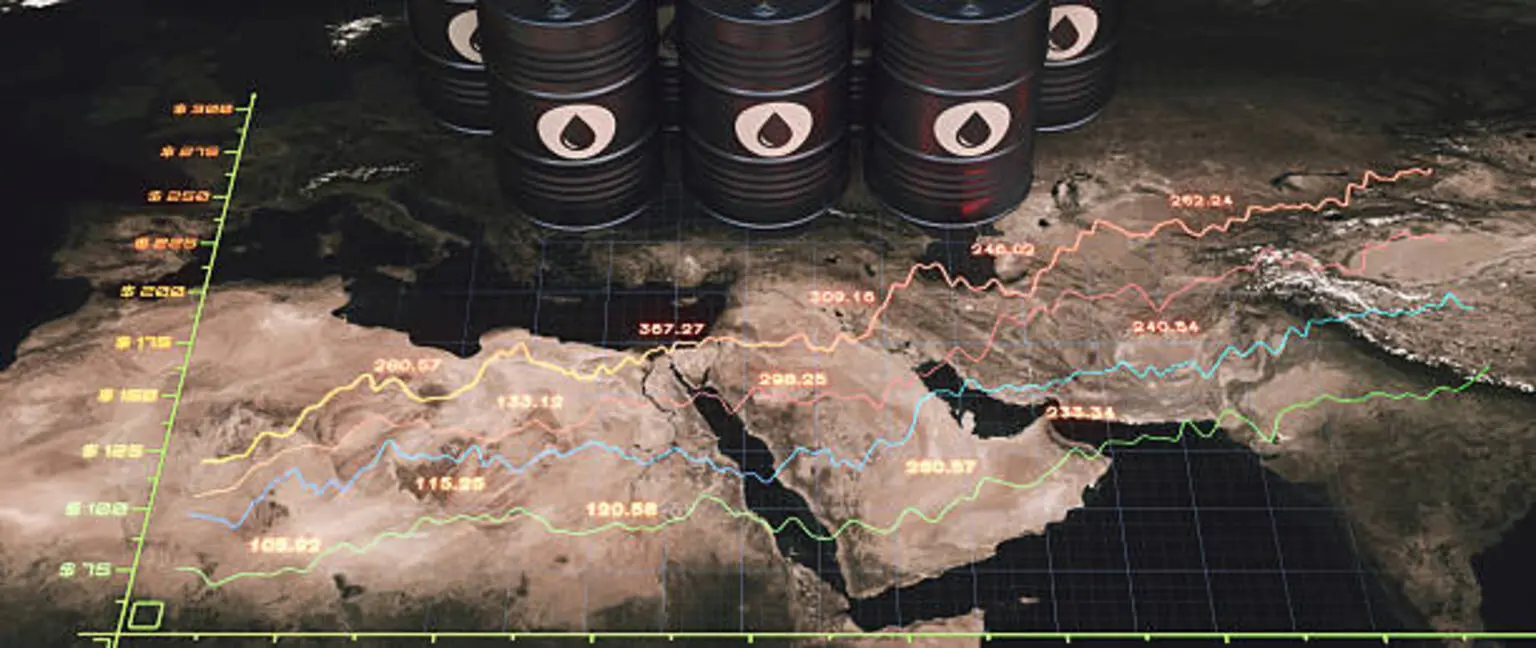
Crude Oil (CL1:COM) is 2.5% higher at $102/bbl this Monday morning. Brent crude is 2.5% higher at $107/bbl.
Drone attacks have forced Saudi Arabia to shut its East-West pipeline, raising fresh concerns over global supply.
The pipeline can carry about 4M barrels/day to the Red Sea port of Yanbu, providing a key route for Saudi exports to bypass the Strait of Hormuz.
Industry sources cited by Reuters offered conflicting estimates for repairs. One said the work could require five to six weeks, while another suggested limited operations might resume sooner. Saudi officials have not disclosed the extent of the damage or provided a timetable.
The outage comes after Saudi production fell to 6.2 million barrels a day in August, compared with 10.9 million in February.
Saudi Arabia could exhaust oil inventories available for export within days unless it restarts the critical pipeline to the Red Sea, potentially removing as much as 4% of global supply from an already strained market.
The cost of shipping oil in supertankers is also top of mind. Bloomberg reported that prices surged to fresh record highs last week following the biggest wave of attacks on Middle East shipping since the start of the U.S.-Iran war.
Novo Nordisk (NVO) is shortening its name to Novo.
The company will also update its logo, with its trademark bull shifting to face right.
The changes come as its competitor Eli Lilly (LLY) increasingly adopts a single-name identity, dropping “Eli” from its marketing materials.
Novo will provide a detailed overview of the updated corporate strategy at its Capital Markets Day on September 21 in London.
President Trump is dismissing mounting warnings about artificial intelligence, arguing that slowing development could jeopardize the United States’ lead over China.
This story already has more than 140 comments thus far.
Trump told reporters Sunday at the Irish Open, “We’re leading China in AI. We’re the most sophisticated country in the world, and frankly, I want to keep it that way because whoever wins AI wins.” He went on to say, “And we can put guardrails. We can do this and that. But I think you have a lot of negative forces that are bringing it up that shouldn’t be bringing it up.”
We told you Sunday on Wall Street Brunch that AI industry leaders urge a slowdown in model capability advances due to existential risks, with OpenAI and Anthropic advocating for increased self-regulation.
Lawmakers from both parties are discussing guardrails, although they remain divided over whether government regulation or industry cooperation should take the lead.
AI is the hot topic in today’s edition of the Wall Street Breakfast newsletter.
What’s Trending on Seeking Alpha:
Elon Musk ‘confident’ of launching Nvidia AI platforms in space in 2027
Michael Burry calls AI leaders’ slowdown push ‘self-serving’
AI, chip stocks fall as tech CEOs urge caution on development pace
Catalyst watch:
-
Kraft Heinz (KHC) will begin trading on the New York Stock Exchange after switching from the Nasdaq.
-
Shareholders with Payoneer Global (PAYO) will vote on the planned acquisition of the company by Nuvei.
Stock index futures are in the red.
The FTSE 100 is up 0.7% and the DAX is down 0.5%. The market in India was closed today.
One stock on the biggest movers list: RUM Group (RUM) +22% – Shares jumped after reports surfaced that Anthropic agreed to a $13.7B computing contract with the company.
Join our Head of Quant, Steven Cress, as he dissects the news from a stock-specific quant perspective every morning around market open with Rena Sherbill on TikTok, X and YouTube @cresstopstocks.

FTSE 100 today: Stocks gain as Mideast supply fears lift oil


I am a CPA and financial consultant with over two decades of experience in financial reporting. This professional background informs my lifelong passion for investing, where I combine a natural appetite for curiosity with a disciplined, long-term approach. Through the Conviction Queue, I focus on identifying quality, founder-led businesses at attractive valuations. My primary goal is to provide deep analysis on companies with sustainable growth potential that are built to be held for years.
Analyst’s Disclosure: I/we have a beneficial long position in the shares of ROL either through stock ownership, options, or other derivatives. I wrote this article myself, and it expresses my own opinions. I am not receiving compensation for it (other than from Seeking Alpha). I have no business relationship with any company whose stock is mentioned in this article.
Seeking Alpha’s Disclosure: Past performance is no guarantee of future results. No recommendation or advice is being given as to whether any investment is suitable for a particular investor. Any views or opinions expressed above may not reflect those of Seeking Alpha as a whole. Seeking Alpha is not a licensed securities dealer, broker or US investment adviser or investment bank. Our analysts are third party authors that include both professional investors and individual investors who may not be licensed or certified by any institute or regulatory body.
Sami Zayn Sends Six-Word Message After Shocking CM Punk Victory To Become WWE Champion Again

Acemagic launches an affordable Intel Wildcat Lake mini PC with 12GB RAM

Trade with Rs. 100 @deltaexchange || #trader #trading #bitcoin #cryptocurrency #deltaexchange


-
 Tech6 days ago
Memory prices are slowing because buyers ran out of money
-

 Tech23 hours ago
The Latest Weird Thing to Play Doom Is the Mapped-Out Brain of a Fruit Fly
-

 Business4 days ago
Micron Stock Climbs Above $1,031 as AI Memory Crunch and a $50 Billion Outlook Fuel the Rally
-

 Business4 days ago
AMD Stock Climbs After Management Lifts 2027 Data Center Outlook Toward $70 Billion in AI Sales
-
 Crypto World5 days ago
Bitcoin price risks $76K drop as $78K support weakens
-

 Fashion3 days ago
Weekend Open Thread – Corporette.com
-

 Crypto World6 days ago
Robinhood Stock: How To Take Advantage With Reduced Risk
-

 Crypto World3 days ago
XAG/USD: Silver’s Short-Term Rally Meets Its Moment of Truth
-

 Crypto World4 days ago
2 Chip Stocks Broke Out This Week. Neither Was Nvidia
-
 Crypto World5 days ago
Ethereum price stalls below $2,500 as ADX drops to 11
-

 NewsBeat6 days ago
England up in reading, maths and science rankings as Scotland and Wales dip
-

 Business3 days ago
10 Most-Streamed Songs On Spotify In 2026 So Far, Led By Ella Langley’s Dominant Run On The Charts This Year
-

 Crypto World4 days ago
OKX launches 10x OpenAI, Anthropic X-Perps in Europe
-

 Tech4 days ago
Battery life is the only iPhone 18 Pro and iPhone Duo upgrade I care about. Apple didn’t disappoint
-

 Crypto World3 days ago
Diesel Tops $6 a Gallon for the First Time as 28 States Set Records
-
 Crypto World6 days ago
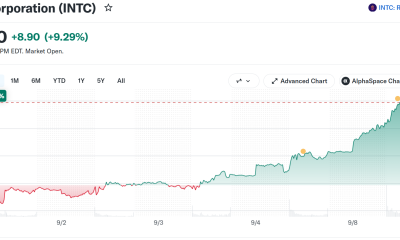
Intel Stock Jumps 9% on Chip Price Hike Report, US Stake Gains $36 Billion
-

 NewsBeat5 days ago
What went right this week: an ‘historic’ fall in violent crime, plus more
-

 Tech5 days ago
Apple Watch Ultra 4 vs Watch Ultra 3: Should you really spend another $799?
-
 Crypto World5 days ago
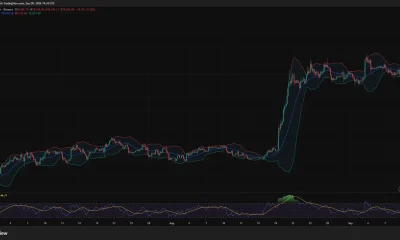
Bitcoin price risks $70K if $78K neckline breaks
-

 Crypto World6 days ago
Pump Fun and Kraken delete Hunter Biden $LAPTOP promotion
You must be logged in to post a comment Login