
Crypto World
ECB calls on online merchants to join digital euro pilot ahead of 2029 target

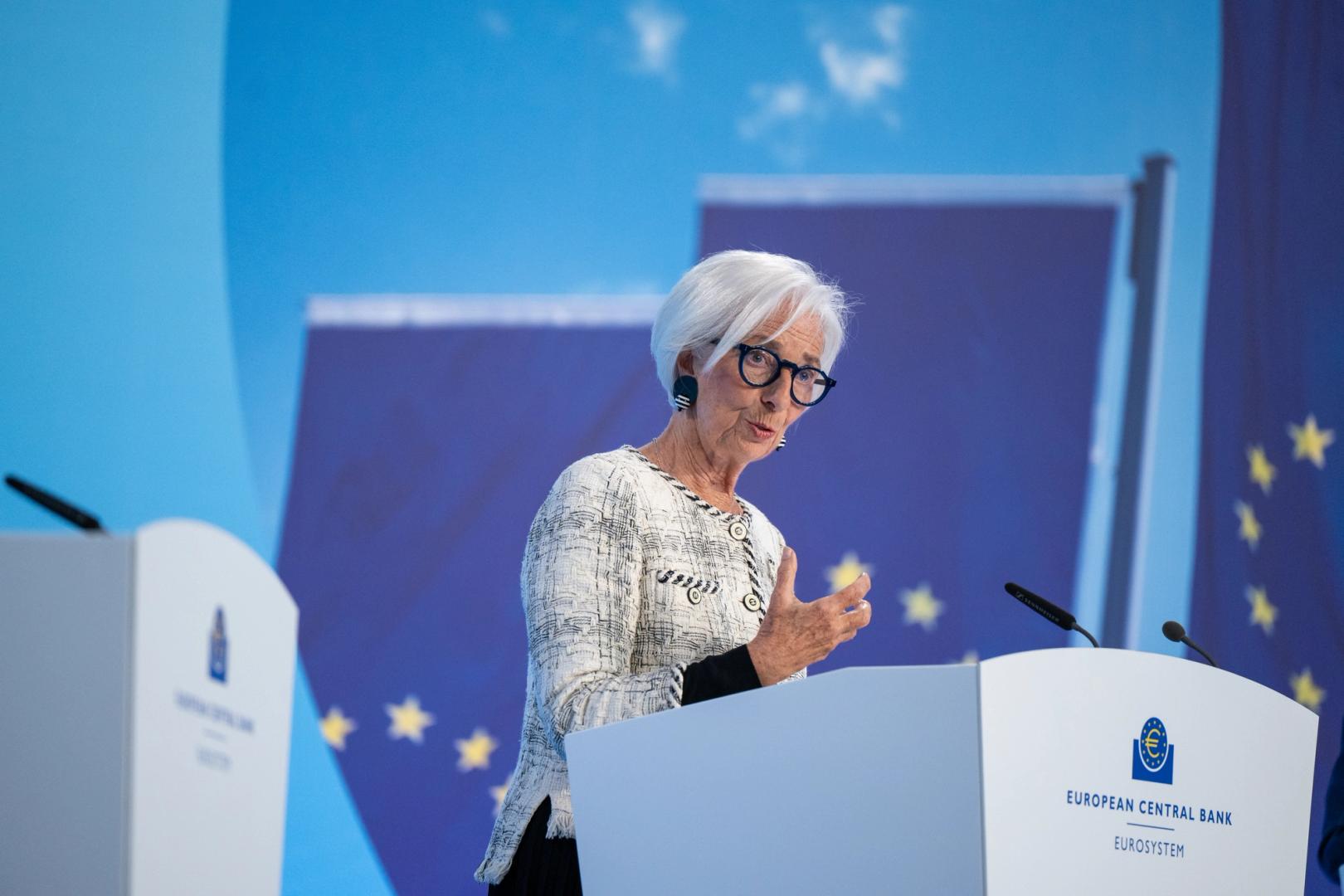
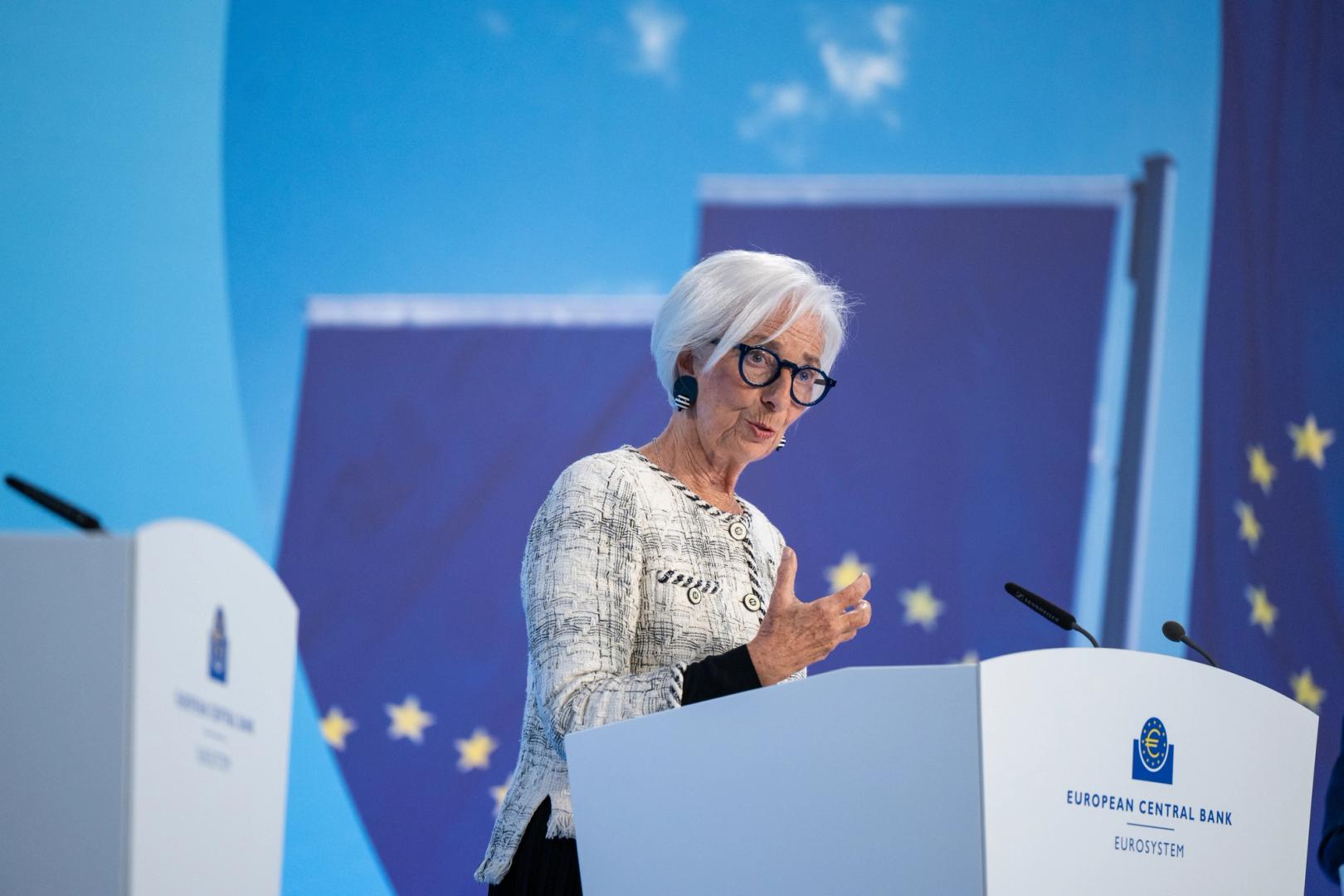
The European Central Bank (ECB) on Tuesday called on e-commerce and mobile commerce merchants in the euro zone to join a digital euro pilot as it prepares a retail central bank digital currency (CBDC) for possible issuance in 2029.
The pilot will test the technology, operational processes and user experience of a beta version of the currency, which will resemble the digital euro, but will not be legal tender.
The ECB’s call for merchants is about more than just technical testing. A digital euro will need enough places to spend it if consumers are to use it, making merchant acceptance a commercial question as much as a policy one.
“Many people think the digital euro’s success will depend on how governments and the public sector explain its usefulness,” Isadora Arredondo, vice president of global policy at Hedera, told CoinDesk via LinkedIn. “But the more difficult part will be making the project work commercially.”
Arredondo said merchants would need incentives to join in sufficient numbers and to ensure consumers do not encounter barriers when paying. One option, she said, could be for payment service providers to lower the fees merchants pay to accept digital-euro payments.


Ethereum’s exchange supply has fallen sharply over time. There are now 6.06 million ETH on such platforms compared with 22.9 million at the network’s June 2020 peak.
According to Santiment’s estimates, that represents a 73% decline in easily sellable supply.
Ethereum’s Supply Drain
Fewer ETH sitting near order books means less supply available for market sells and panic exits. The decline is supported by ETH moving into staking, ETF wrappers, treasury strategies, and long-term custody.
Validators are also locking the crypto asset to help secure the network. The analytics firm explained that demand does not need to surge for price moves to become stronger. As liquid supply shrinks, even smaller waves of buying can have a larger impact.
ETH remains at a structural inflection point, according to Crypto Patel, who identified the $2,567-$2,666 zone. A rejection could send the crypto asset toward $2,150, $2,000, or $1,800. A confirmed higher-timeframe close above $2,666 could instead open the path toward $3,100 and $4,000.
Meanwhile, Daan Crypto Trades stated that the asset has been on another “rollercoaster” ahead of the CLARITY Act vote and FOMC. Traders have been pre-positioning around the uncertainty. That has created high volatility and caused both sides to get taken out. The analyst sees little hope around the vote right now. If the vote fails or gets pulled, more downside is expected, followed by chop into the FOMC. After that, price action could become somewhat more normal again.
A Growing Treasury
One company in particular has been steadily adding to its Ethereum position. BitMine now holds 5,956,378 units after adding 27,180 tokens over the past week.
That gives the company 4.9% of Ethereum’s 122 million total supply. Its stated goal is to reach 5% under its Alchemy of 5% strategy. It has reached 98% of the way toward the target after buying the token every week since June 30, 2025. Most of its treasury is already staked. The company has 5,067,309 units locked through its MAVAN validator network. That is about 85% of its ETH holdings.
Tom Lee expects annualized staking revenue to reach $334 million. The estimate rises to $392 million once the entire ETH treasury is staked. Bitmine’s total crypto, cash, and moonshot holdings stood at $15.8 billion.
Separately, Ethereum ETFs recorded nearly $197 million in net inflows last week. The final trading session saw $216.4 million flow into the funds, which more than offset earlier outflows. The bullish momentum has carried into the new week. Monday brought another $121 million in net inflows, which pushed the monthly total closer to $450 million.
The post Ethereum Holders Are Pulling ETH Off Exchanges at a Historic Pace appeared first on CryptoPotato.

What does the repeal of power plant pollution limits mean?
The EPA’s repeal concerns climate pollution standards originally finalized by the Biden Administration in 2024. The regulations applied to coal-burning plants in operation and any prospective gas-burning plants, and required coal plants to install technology to capture most of its carbon emissions by 2039 in order to keep operating, while gas plants would have been required to operate on cleaner fuels, like hydrogen.
The Biden Administration predicted that the rule would have prevented up to 1,200 premature deaths, 360,000 cases of asthma symptoms, 48,000 school absence days, and 57,000 lost work days in 2035 alone. It also projected up to $370 billion in climate and public health net benefits over the next two decades.
The repeal of this rule is the latest in the Trump Administration’s attempts to roll back federal climate regulation. In February, the EPA finalized its repeal of the endangerment finding, the landmark 2009 ruling that provided a legal underpinning for greenhouse gas regulation. The agency also ruled that the Clean Air Act does not authorize the EPA to regulate vehicle tailpipe emissions, and eased Biden-era restrictions on hydrofluorocarbons, polluting chemicals used in refrigerators and air-conditioning.

In climate change crypto news, Bitcoin miners have spent years pitching hydropower as proof the network can run clean. Ethiopia just showed what happens when the water backing that pitch stops showing up on schedule.
The state utility slashed electricity supplied to Bitcoin and other data-mining companies by roughly 75%, leaving them with about 23% of contracted power.
NEW: — Africa Bitcoin News
 Ethiopia Cuts Power to Bitcoin Miners Amid Hydro Shortfall.
Ethiopia has sharply reduced electricity available to data-mining operations, including the country’s growing Bitcoin mining sector, as lower water inflows put pressure on hydropower generation.
Read More:… pic.twitter.com/Cds8KJLHAf

 (@AfriBitcoinNews) September 15, 2026
The question worth asking isn’t whether climate change killed Bitcoin mining in Ethiopia; it didn’t, but whether this is an isolated dry spell or a preview of what hydro-dependent mining hubs should expect more often.
This news dropped as BTC USD trades for $76,850, down -1.2% over the past 24 hours, following a -2.2% drop over the last seven days. Daily trading volume sits at $31.9Bn.

Climate Change Crypto News: Why Ethiopia’s Hydro-Powered Mining Bet Is Under Stress
Bitcoin-mining companies accounted for 35% of Ethiopian Electric Power Corp.’s revenue in the past financial year and consumed almost a third of the country’s total electricity production of 9,730 megawatts, according to Bloomberg.
That’s not a rounding error in a national power system; it’s a customer segment large enough to move the utility’s balance sheet and its dispatch decisions in the same breath.
EEP’s installed generation capacity grew 23% to that 9,730 MW figure over the past year, yet capacity utilization still fell to 60% against a 67% target, according to the Ethiopian Business Review. Data mining alone generated 50.37 billion birr in the last fiscal year, more than any other customer category.
The 23% figure making headlines is easy to misread. It’s the share of contracted mining supply that EEP is currently delivering, not 23% of Ethiopia’s total electricity consumption.
That distinction matters for anyone trying to size the real exposure here: mining’s slice of national output is still material, but the cut is a curtailment of one customer class, not a systemwide blackout.
For traders watching how operational risk feeds back into sentiment, it’s worth pairing this against the broader macro risks already weighing on BTC’s price action.
Never Miss a Swing Again: Use AI Copy Trading Bots From CryptoHopper
Cheap Renewable Power Is Still Weather-Dependent
The cut in power supply is primarily due to reduced inflows into Ethiopia’s hydroelectric dams, which generate about 95% of the Ethiopian Electric Power (EEP) output.
CEO Ashebir Balcha said the reduction was a pre-emptive measure ahead of a dry period, with incoming water levels tracking at least 20% below expectations.
Consequently, EEP adjusted its revenue and supply forecasts and reported losses of up to 50 megawatts per generating unit as reservoir levels declined.
While the situation highlights seasonal hydrological changes rather than direct climate change impacts, it underscores that a low-carbon power source isn’t always reliable. This distinction is important when considering Bitcoin price forecasting tied to stable global hashrate growth.
Earn $50 and Enter $300K Prize Draw on EdgeX
The Strongest Case Against Reading This as the Climate Change Crypto Reckoning
It’s tempting to read a 75% power cut as evidence that hydro-powered mining is fundamentally unsound. That reading overshoots what’s actually documented.
EEP said it plans to reassess its position in October, once clearer data on generation capacity for the new water year comes in – this reads as a seasonal management decision with a defined review point, not an announced phase-out.
The primary evidence describes a utility responding to declining inflows by protecting public supply, then explicitly planning to revisit the decision once the picture clarifies.
Broader claims circulating about a 2025 permit freeze, tariff reform, or a formal transition plan for crypto mining in Ethiopia sit outside what’s verified here and should be treated as separate reporting threads rather than confirmed facts tied to this event.
Discover: The Best Token Presales
The post Climate Change and Crypto: Ethiopia’s 75% Power Cut Tests Bitcoin Mining’s Green Pitch appeared first on Cryptonews.
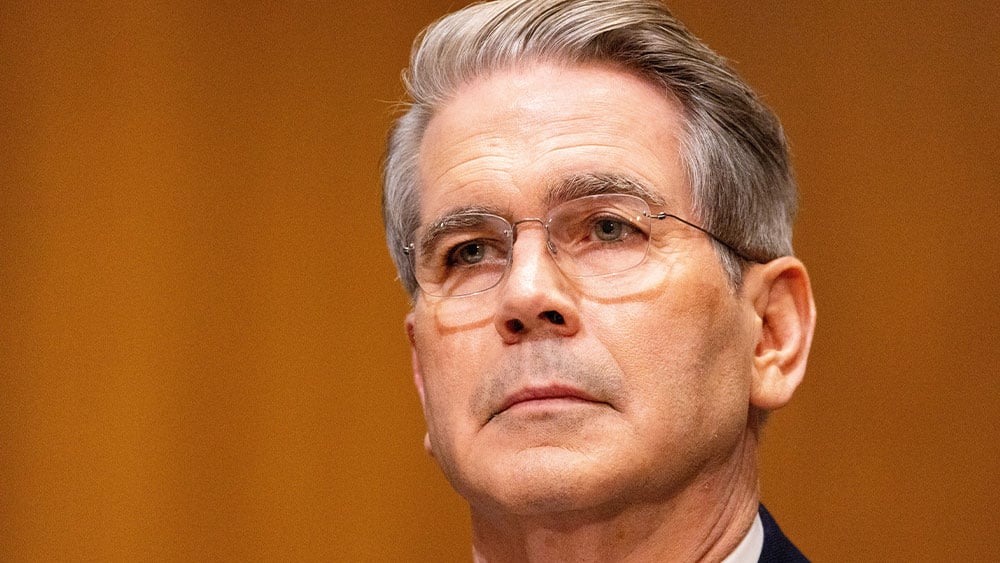
Federal Reserve Chairman Kevin Warsh and Treasury Secretary Scott Bessent both face credibility tests this week in their respective roles of fighting inflation and serving as the nation’s top bond salesman. With the 10-year Treasury yield holding near 5% on Tuesday, only one appears to have a good chance of success. A hawkish outcome of Wednesday’s Fed meeting, including a…
Copyright ©2026 Investor’s Business Daily, LLC. All rights reserved. 87990cbe856818d5eddac44c7b1cdeb8
XRP’s post-rally cooldown continues to take shape, with the asset struggling to convert its August surge into a renewed impulsive advance. The price remains trapped within a corrective structure, leaving the next breakout as the key signal for determining whether buyers can regain control.
Ripple Price Analysis: The Daily Chart
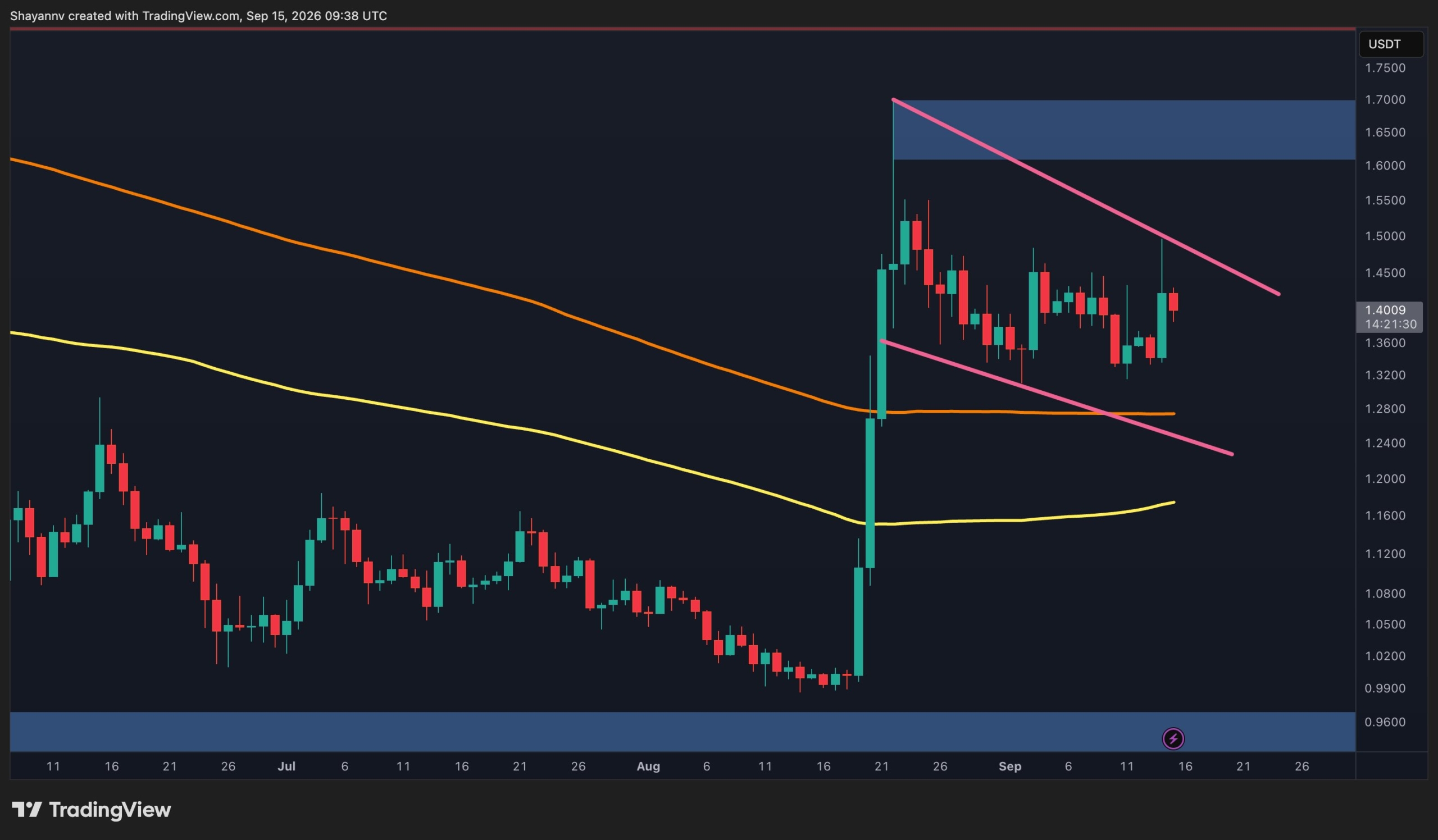
On the daily timeframe, XRP is trading around $1.40 after the explosive move from roughly $1.00 toward $1.55. Since that rally, however, the market has transitioned into a descending channel, producing a sequence of lower highs while volatility gradually contracts.
The latest rebound from the $1.32-$1.35 support area was rejected near $1.48, where the price also encountered the channel’s upper boundary. This rejection reinforces the descending trendline as the main technical obstacle. At present, that resistance is approaching the $1.43-$1.45 area.
Therefore, a confirmed daily breakout above the channel could represent an important bullish structural shift. In that case, XRP could initially challenge the previous $1.48-$1.55 highs before potentially targeting the major $1.61-$1.70 resistance zone.
On the downside, the $1.33-$1.36 region remains the nearest significant support. A breakdown below this area would weaken the recovery scenario and could expose the lower channel boundary, which is gradually converging toward the broader $1.22-$1.27 demand zone.
XRP/USDT 4-Hour Chart
The 4-hour chart shows the corrective structure more clearly. XRP recently bounced strongly from the $1.34-$1.36 support zone and rallied toward $1.48, but buyers were unable to break through the descending channel resistance. The rejection has since returned the price to approximately $1.40.
This leaves XRP caught between the $1.34-$1.36 support zone and descending resistance around $1.43-$1.45. A breakout above the latter would be the first meaningful indication that short-term momentum is shifting back toward buyers, potentially opening the path toward $1.48 and then $1.53-$1.55.
Conversely, another rejection followed by a loss of the $1.34-$1.36 support area would favor continuation of the correction. In that scenario, the lower boundary of the descending channel could become the next target, with the larger $1.22-$1.27 support zone providing a more substantial area of demand underneath.
For now, XRP remains in a corrective phase rather than a confirmed bearish breakdown. The reaction at the channel boundaries should provide the clearest indication of the next directional move.

The post Ripple Price Analysis: XRP Trapped in Descending Channel as Key Levels Loom appeared first on CryptoPotato.
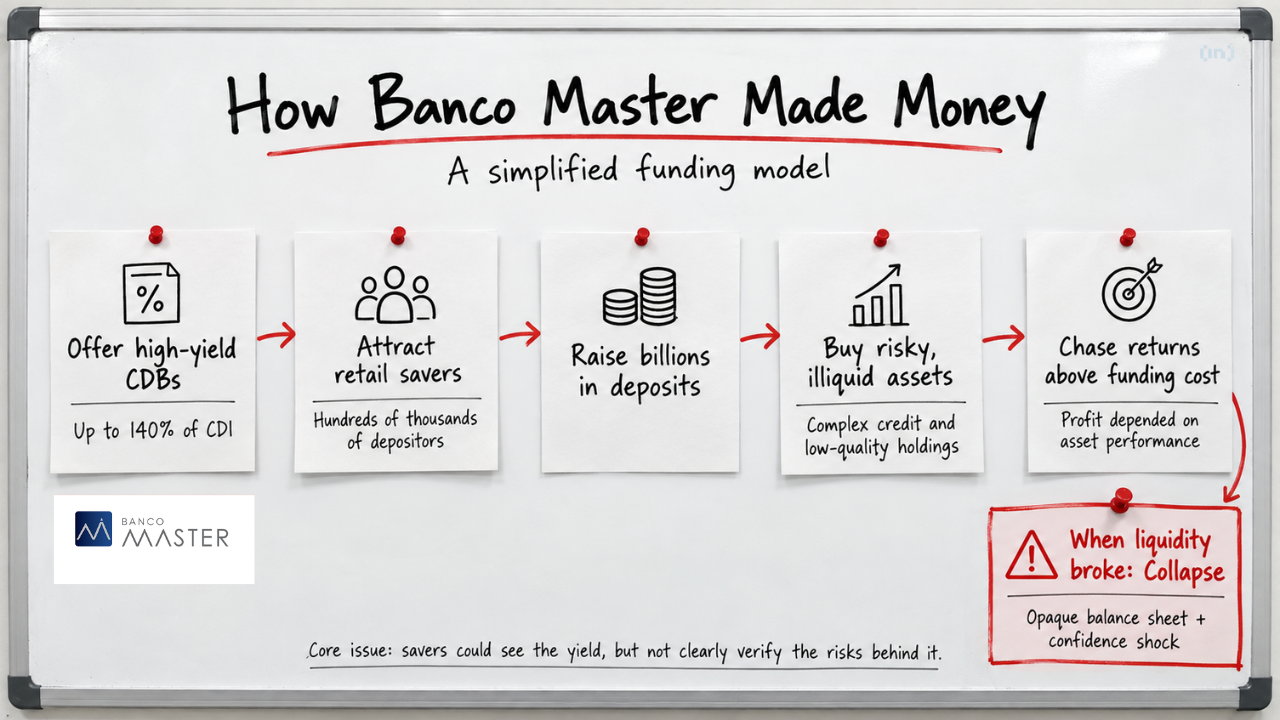
A Brazilian bank collapse that cost depositors and insurers billions has now reached the country’s Supreme Court and presidential election.
Banco Master failed in November 2025 after attracting hundreds of thousands of savers with unusually high returns. Ten months later, allegations around its owner, Daniel Vorcaro, have pulled one of Brazil’s most powerful judges into the scandal.
On September 15, the Supreme Court is due to consider whether Justice Alexandre de Moraes should face an investigation over his contacts with Vorcaro. The hearing puts the court in the extraordinary position of examining one of its own members.

Brazil’s Biggest Banking Scandal?
Police evidence released this month alleges that the Bank’s owner Vorcaro contacted Justice Moraes shortly before his arrest. Moraes’ wife’s law firm also held a R$130 million contract with Banco Master.
Moraes denies wrongdoing. He has accused Justice André Mendonça, who oversees the investigation, of abusing his authority by releasing the material. The dispute has added a new layer to an already costly banking failure.
Banco Master had offered CDBs paying as much as 140% of Brazil’s CDI benchmark. It used that expensive funding to grow quickly while holding complex and illiquid assets.
Then the model broke.
Brazil’s central bank liquidated Master after citing a severe liquidity crisis and serious violations. The country’s deposit guarantee fund has since paid about R$40.2 billion to 722,000 clients linked to the group.

The legal consequences could extend further if investigators establish a conflict involving Moraes.
The legal consequences could extend further if investigators establish a conflict involving Moraes. “Potentially, but not automatically,” said João Luiz, managing partner at J. Pereira Advogados, when asked whether previous rulings could face challenges.
He said proven misconduct would not erase Moraes’ entire judicial record. However, defendants in individual cases could have stronger grounds to challenge decisions if they prove he lacked impartiality.
Meanwhile, the scandal has entered Brazil’s election campaign.
Senator Flávio Bolsonaro has called for Moraes’ removal and told supporters that voting for the current President Lula da Silva means supporting this scandal.
“Anyone who votes for Lula is voting for Alexandre de Moraes,” said Bolsonaro.
But even Bolsonaro is not free from this scandal. He also faces questions over financing linked to the Bank for a film about his father. He denies wrongdoing.
A bank that once sold extraordinary returns has now created a much larger problem for Brazil. This has now turned into a fight over trust in its courts, regulators and political system.
The post A $10 Billion Bank Collapse Is Now Shaking Brazil’s Election appeared first on BeInCrypto.
Crypto World
Standard Chartered predicts Arbitrum’s ARB to rise 70-fold to $10, citing Robinhood Chain revenue


There is a catch. ARB holders currently have no direct claim on that revenue, something Kendrick himself listed among the risks to the call. CoinDesk reported earlier this month that Robinhood Chain pays 10% of its net protocol revenue into the Arbitrum ecosystem, with 8% going to the DAO treasury and 2% to a developer fund. None flows directly to token holders currently.
Read More: Robinhood’s new crypto network is printing cash, and it’s sending Arbitrum’s token soaring
Robinhood Chain’s early growth has also come from a somewhat different crowd than the traditional-financial users behind Kendrick’s longer-term thesis. Memecoin launchpads and trading apps have supplied much of its activity even though the network was built primarily around tokenized stocks and other traditional assets.
Robinhood Chain paid about $360,000 in licensing fees in July, accounting for 35% of Arbitrum DAO income that month. The chain was generating $3.75 million in user fees by Sept. 1 and sending roughly $370,000 to Arbitrum over 24 hours.
Kendrick expects $4 trillion of traditional assets to be tokenized by the end of 2028 and sees Arbitrum capturing a growing share of the infrastructure behind them. He forecasts ARB at 50 cents by year-end, $1.50 in 2027, $3.50 in 2028, $6.50 in 2029 and $10 in 2030.


The pullback is also showing up on Kalshi, where traders are increasingly pushing any breakthrough further into the future. The contract for a crypto market structure bill becoming law before Oct. 1, 2027, fell to 36% Tuesday, down from around 53% Monday morning.
For comparison, traders on Monday had put the chances of passage before July 1, 2027, at 53%. By Tuesday, the longer timeline was looking more plausible: Kalshi traders gave the bill, or another qualifying crypto market structure measure, a 51% chance of becoming law only by Jan. 1, 2028.
The reversal comes after prediction markets surged on Monday on hopes that Republican concessions could finally break the months-long stalemate. That optimism quickly faded as banking groups pressed lawmakers to tighten restrictions around stablecoin interest and rewards, while a bipartisan group of state attorneys general warned the legislation could weaken states’ ability to police crypto-related fraud.
Republicans released what they called their final draft over the weekend after making more than 100 changes requested by Democrats, including concessions on ethics provisions. The Senate is scheduled to vote Tuesday afternoon on whether to invoke cloture on the motion to proceed, which requires 60 votes.

The US House Ways and Means Committee is set to consider a 114-page cryptocurrency tax package on Wednesday, designed to bring more structure to several areas of digital-asset taxation. The bill, H.R. 10357—the Digital Asset Tax Certainty Act—was published alongside the committee’s markup materials on Monday.
While the proposal retains multiple provisions affecting mining and staking, it does not include a key feature that would have delayed taxes on new rewards until the tokens are actually sold for cash. That omission could be a practical sticking point for miners and stakers who argue that taxing rewards as soon as they are received may create liquidity problems.
Key takeaways
- The House Ways and Means Committee will mark up H.R. 10357 (the Digital Asset Tax Certainty Act) on Wednesday, with markup text published Monday.
- The bill removes a proposed rewards-timing option that would have allowed deferring taxation until sale, as described in Rep. Mike Carey’s earlier staking/mining legislation.
- Beyond mining and staking, the package targets multiple tax mechanics, including treatment of network/transaction fee payments (up to $10) and special rules for certain stablecoins.
- The proposal extends wash-sale and constructive-sale style rules to crypto and creates a voluntary disclosure pathway for taxpayers seeking to remedy past digital-asset tax issues.
- The House effort arrives as the Senate weighs the CLARITY Act, which would reshape how federal regulators split oversight of crypto markets.
What the House bill keeps—and what it drops
H.R. 10357 is framed as a broad effort to reduce uncertainty in how the tax code applies to digital assets. According to the committee’s bill text, it would classify income from blockchain validator activities as ordinary income and address whether such income is sourced within or outside the United States.
The package also includes provisions meant to preserve the tax status of certain investment trusts that stake qualifying digital assets. In other words, it attempts to address questions that matter not just to individuals, but also to broader investment structures.
However, the legislation stops short of including a rewards-timing provision that had been part of Rep. Mike Carey’s earlier “Tax Clarity for Mining and Staking Act,” which was introduced in June. In the earlier proposal, taxpayers would have had a choice: treat newly created tokens as income when received, or instead handle them in a manner akin to self-created property—effectively triggering taxation when the tokens are sold.
Without that option, the underlying tax treatment in the House package keeps mining and staking rewards taxable when received or when they come under the recipient’s control, potentially before any cash sale occurs.
How H.R. 10357 handles payments, stablecoins, and ordinary crypto transactions
Beyond staking and mining, the bill targets several areas that have repeatedly complicated day-to-day crypto reporting.
For one, the proposal includes a mechanism to prevent taxpayers from recognizing gains or losses when crypto is used to pay network or transaction fees of up to $10. That change is aimed at reducing the tax friction that can arise from frequent, small fee payments across on-chain activity.
The bill also proposes special tax treatment for qualifying US dollar stablecoins and includes rules allowing certain qualifying digital asset loans to occur without being treated as taxable sales. Additionally, it calls for simplified accounting for widely traded crypto assets, a category that generally reflects the reality that many taxpayers interact with large, liquid assets rather than a narrow set of obscure tokens.
Another major thread in the proposal involves expanding rules commonly associated with wash sales and constructive sales. In practice, those provisions are meant to limit tax outcomes that can be achieved by replacing an asset before taxes are realized—rules that the bill would extend to crypto.
Voluntary disclosure and the push for “certainty”
H.R. 10357 also creates a voluntary disclosure program for taxpayers who want to correct earlier digital-asset tax violations. The existence of such a path suggests the committee is not just writing new rules, but also attempting to manage the compliance landscape for taxpayers who may have already made reporting decisions under prior ambiguity.
The committee’s markup process did not begin with H.R. 10357 alone. Earlier in June, Ways and Means circulated seven crypto tax drafts ahead of a digital asset taxation hearing. Those proposals reportedly covered stablecoins, mining and staking, and measures aimed at reducing the tax-reporting burden created by the structure of crypto transactions.
As the process developed, industry stakeholders pressed for specific changes. Reporting on earlier advocacy noted that the Blockchain Association, Crypto Council for Innovation, and Digital Chamber urged Congress to pass Rep. Carey’s legislation as introduced, arguing that taxing staking and mining rewards before tokens can be sold risks creating liquidity problems. They also opposed an amendment that would have limited the potential deferral to five years.
In this latest House package, that rewards-timing aspect did not survive into the committee’s published markup text. That makes Wednesday’s committee consideration especially significant for miners, stakers, and their tax advisors—because it determines whether liquidity concerns remain central to the bill’s final form or are addressed only indirectly through other provisions.
House tax drafting unfolds alongside Senate market-structure debate
The House crypto tax package is moving forward as lawmakers elsewhere consider a separate but related policy track: the CLARITY Act, which would clarify how the US Securities and Exchange Commission and the Commodity Futures Trading Commission divide oversight of the crypto market.
While H.R. 10357 focuses on taxation mechanics—how and when gains, income, and losses are recognized—the Senate’s regulatory-oversight debate affects a different dimension of the same ecosystem: what kinds of activities, products, and exchanges may fall under which regulator’s authority. For investors and builders, those questions can influence compliance costs, product design, and the willingness of firms to offer services that touch on crypto’s broader market infrastructure.
Taken together, the developments show Congress grappling with both “how to tax” and “how to regulate,” two policy domains that often move at different speeds but ultimately affect similar stakeholders.
As the House committee considers H.R. 10357 on Wednesday, market participants should watch whether the missing rewards-timing provision becomes a focal point for amendments, and whether the bill’s other operational changes—fee de minimis treatment, stablecoin rules, and the expansion of wash/constructive-sale style restrictions—survive intact into any later legislative steps.
Bitcoin is entering a potentially decisive macro catalyst with its short-term structure already under pressure. The asset has drifted back toward the lower boundary of its recent consolidation, while the market awaits tomorrow’s FOMC interest-rate decision, an event that could trigger a sharp expansion in volatility as expectations remain heavily skewed toward a rate increase.
Bitcoin Price Analysis: The Daily Chart
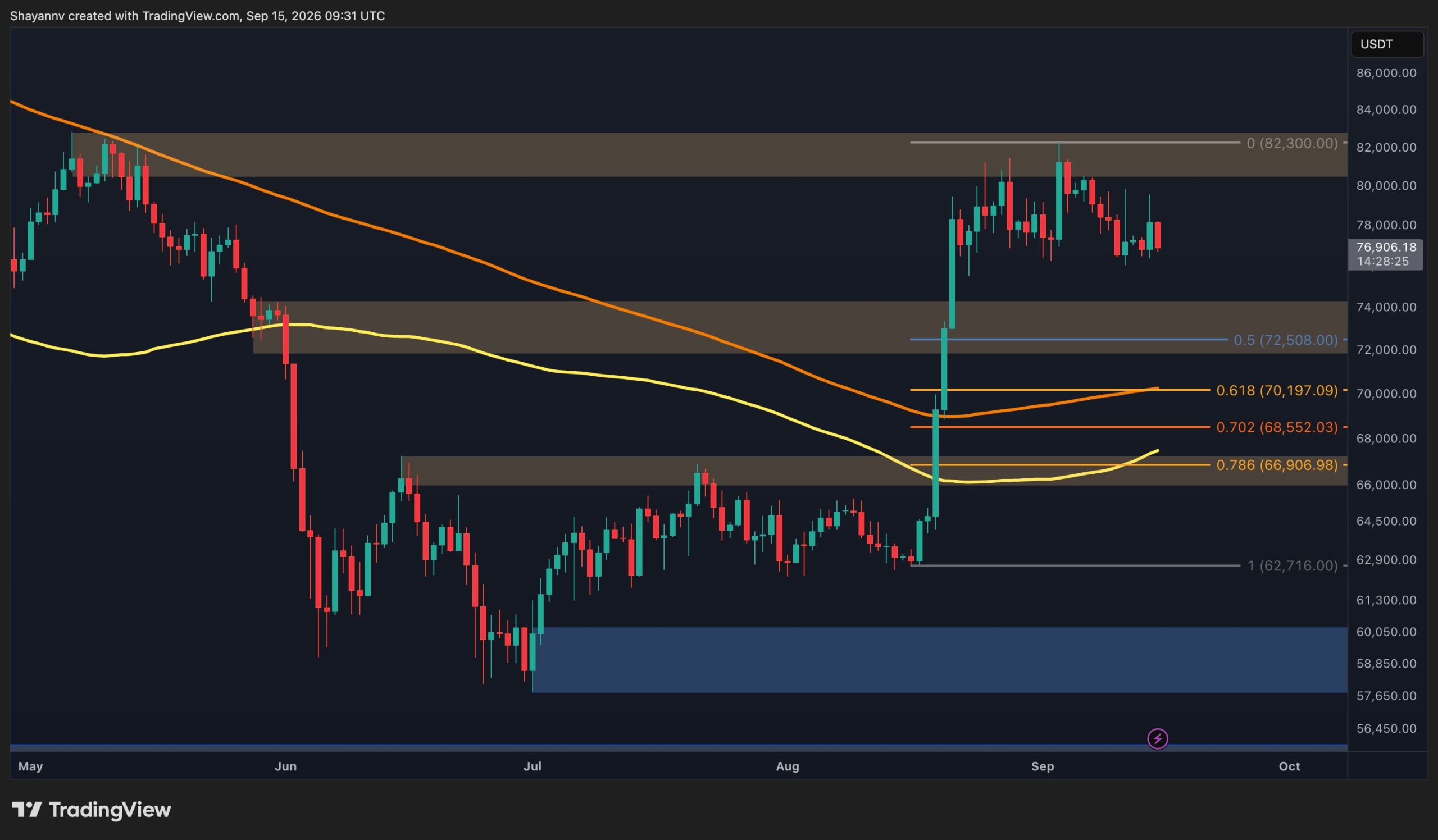
On the daily timeframe, Bitcoin is trading around $77K after repeatedly failing to establish itself above the $80K-$82.3K resistance zone. The rejection from this area has gradually weakened momentum, with the latest sequence showing lower highs and renewed pressure toward the lower end of the post-breakout range.
Despite this weakness, the broader structure has not broken down yet. The explosive August rally remains intact as long as BTC holds above the major support areas underneath. The first significant downside region is the $72K-$74K zone, with the 0.5 Fibonacci retracement positioned near $72.5K. Below it, the 0.618 retracement around $70.2K and the moving average provide another important confluence.
Therefore, a deeper correction toward $72K-$74K would not necessarily invalidate the broader bullish structure. However, continued rejection from $80K-$82.3K combined with a loss of these lower supports would indicate that the post-breakout correction is becoming considerably more significant.
BTC/USDT 4-Hour Chart
The 4-hour timeframe puts the immediate risk into sharper focus. BTC has been moving inside a broad ascending channel since the August breakout, but recent price action has progressively shifted toward its lower boundary.
The latest rejection from around $79K has pushed BTC back to roughly $76.9K, placing the market directly around the ascending support near $76K-$77K. This makes the current area particularly important. A decisive breakdown could confirm that the multi-week consolidation is resolving lower rather than simply continuing within the channel.
In that scenario, the $72K-$74K support zone becomes the primary downside target. Conversely, another successful defense of $76K-$77K could preserve the range and allow BTC to rotate back toward $79K-$80K, followed by the major $80.5K-$82.3K resistance zone.
With the FOMC meeting approaching tomorrow, however, short-term technical signals may become less reliable as traders wait for the interest-rate decision. The proximity of price to channel support means that any volatility generated by the announcement could determine whether the current structure survives or finally breaks.

Sentiment Analysis
Bitcoin’s Futures Average Order Size provides additional context on participation in the derivatives market. The latest readings are predominantly gray and light green around the $77K-$80K region, indicating a mixture of normal orders and smaller whale activity rather than clear dominance from exceptionally large participants.
Notably, the recent price recovery toward $80K has not been accompanied by the kind of concentrated large-order activity that would clearly signal aggressive conviction from major futures traders. This fits with the hesitant price action visible on the technical charts, where BTC has struggled to generate sustained momentum despite remaining relatively close to its recent highs.
With the FOMC decision now approaching, this lack of decisive positioning may also reflect traders reducing conviction ahead of a major macro event. A meaningful increase in larger orders after the announcement, particularly alongside a confirmed move away from the current $76K-$77K support area, could provide a stronger indication of where institutional futures participants expect Bitcoin’s next directional leg to develop.

The post Bitcoin Price Analysis: BTC Tests Key Support Ahead of Crucial FOMC Decision appeared first on CryptoPotato.

“Regulatory Skies Clearing” for Crypto? Tyrone Ross, Jr. on Bitcoin’s Path Ahead

Oasis Live ’27 Knebworth age restrictions confirmed as four huge shows announced

Carney offers airports and tax cut

Memory prices are slowing because buyers ran out of money

Weekend Open Thread – Corporette.com

Micron Stock Climbs Above $1,031 as AI Memory Crunch and a $50 Billion Outlook Fuel the Rally
“Regulatory Skies Clearing” for Crypto? Tyrone Ross, Jr. on Bitcoin’s Path Ahead

Why the Next 10 Years Will Decide Your Financial Future & What You Should Do | Vijai Mantri | FWS109

Minecraft Crypto Thief Stole $245 Million and Facing 20 Years
-
 Fashion4 days ago
Weekend Open Thread – Corporette.com
-
 Business6 days ago
Micron Stock Climbs Above $1,031 as AI Memory Crunch and a $50 Billion Outlook Fuel the Rally
-

 Tech2 days ago
The Latest Weird Thing to Play Doom Is the Mapped-Out Brain of a Fruit Fly
-

 Business6 days ago
AMD Stock Climbs After Management Lifts 2027 Data Center Outlook Toward $70 Billion in AI Sales
-

 Crypto World7 days ago
Robinhood Stock: How To Take Advantage With Reduced Risk
-
 Crypto World7 days ago
Bitcoin price risks $76K drop as $78K support weakens
-

 Crypto World4 days ago
XAG/USD: Silver’s Short-Term Rally Meets Its Moment of Truth
-

 Crypto World5 days ago
2 Chip Stocks Broke Out This Week. Neither Was Nvidia
-

 Crypto World7 days ago
Ethereum price stalls below $2,500 as ADX drops to 11
-

 Business4 days ago
10 Most-Streamed Songs On Spotify In 2026 So Far, Led By Ella Langley’s Dominant Run On The Charts This Year
-

 Tech5 days ago
Battery life is the only iPhone 18 Pro and iPhone Duo upgrade I care about. Apple didn’t disappoint
-

 Crypto World5 days ago
OKX launches 10x OpenAI, Anthropic X-Perps in Europe
-
 Crypto World7 days ago
Intel Stock Jumps 9% on Chip Price Hike Report, US Stake Gains $36 Billion
-

 Crypto World6 days ago
Pi Network ships Protocol 27 on a network with 14 million users and zero DeFi
-

 Crypto World4 days ago
Diesel Tops $6 a Gallon for the First Time as 28 States Set Records
-

 Tech6 days ago
Apple Watch Ultra 4 vs Watch Ultra 3: Should you really spend another $799?
-

 Crypto World7 days ago
CLARITY Act runs out of calendar as crypto regulation stalls
-

 News Videos4 days ago
Facing Financial Fears
-

 Crypto World6 days ago
Bitcoin price risks $70K if $78K neckline breaks
-

 Crypto World6 days ago
Bitcoin price holds near $79K as cycle drawdowns narrow
You must be logged in to post a comment Login