Connect with us

Business

Anutin and Blair Talk About Thailand’s Economic Transformation

Published

on

Anutin and Blair Talk About Thailand's Economic Transformation

Thailand’s Prime Minister Anutin Charnvirakul met with former UK Prime Minister Tony Blair to discuss economic transformation, artificial intelligence, and clean energy. The meeting aimed to leverage Blair’s expertise to support Thailand’s accession to the OECD and boost its global competitiveness.


Key Points

  • Prime Minister Anutin Charnvirakul met with former UK Prime Minister Sir Tony Blair on September 14 to explore Thailand’s economic transformation and future industries. Discussion topics included AI, advanced industries, and clean energy, with Anutin seeking guidance from the Tony Blair Institute for Global Change (TBI).
  • Key conversation points included investments in AI and semiconductors, enhancing workforce skills through AI, and improving public administration. Thailand is also revising data center investment regulations to maximize domestic benefits while considering environmental impacts.
  • Anutin requested TBI’s support for Thailand’s OECD membership by 2028, focusing on green and digital transitions. Both parties discussed enhancing economic competitiveness, energy solutions, and potential cooperation, with Anutin suggesting working-level coordination and Blair offering to provide insights to the Thai government.

Prime Minister Anutin Charnvirakul met former UK Prime Minister Sir Tony Blair at Government House on September 14 to discuss Thailand’s economic transformation, future industries, and technology. Anutin is seeking expertise from the Tony Blair Institute for Global Change (TBI), where Blair serves as executive chairman, as Thailand develops new economic engines in AI, advanced industries, and clean energy.

Government Spokesperson Ekkapob Pianpises reported that discussions covered investment in AI, semiconductors, and advanced industries, as well as the use of AI to boost productivity, develop workforce skills, and improve public administration. Thailand is also reviewing data center investment rules to increase domestic benefits while managing environmental effects. Blair stressed the value of data ownership in supporting Thai applications and startups.

Anutin also sought TBI support as Thailand pursues full membership in the Organization for Economic Co-operation and Development by 2028, including work on the green and digital transitions. Energy discussions covered solar rooftops and other technologies that could support domestic needs, international trade, and Thailand’s role in global supply chains.

The two sides discussed further cooperation on economic competitiveness, AI and digital development, the climate and energy transition, and OECD accession. Anutin later proposed working-level coordination with TBI, while Blair expressed readiness to provide information and advice to the Thai government.

Advertisement

Source : Anutin and Blair Discuss Thailand’s Economic Transformation

Continue Reading
Click to comment

You must be logged in to post a comment Login

Leave a Reply

Business

Carney pitches AI for All to investors

Published

on

Carney pitches AI for All to investors

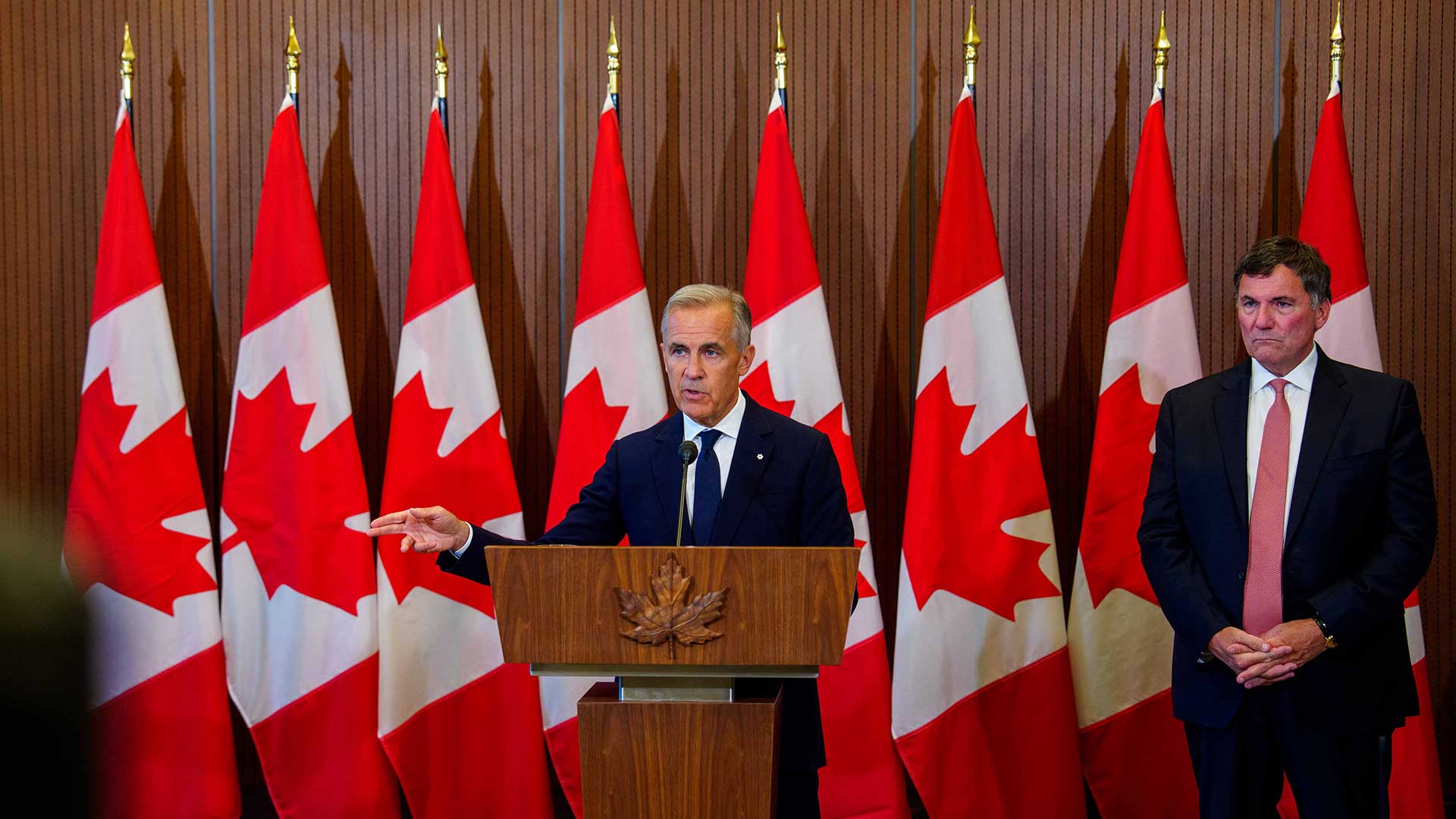
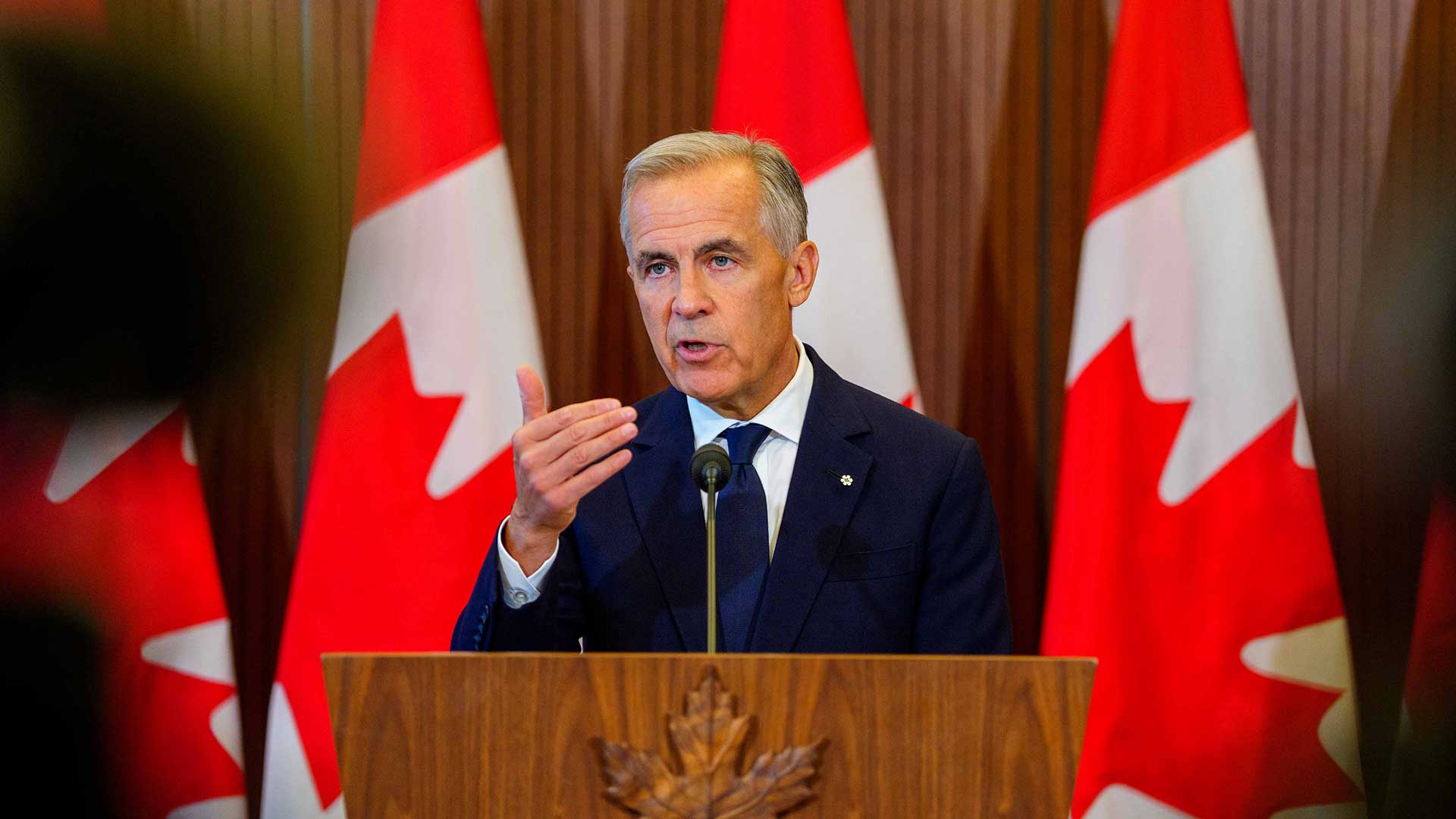
Canadian Prime Minister Mark Carney set out his government’s artificial intelligence strategy to global investors yesterday, pledging to give every post-secondary student in the country access to a trusted AI agent.

Speaking at the Canada Investment Summit in Toronto, Carney said the AI for All strategy would aim to capture the technology’s potential “across the entire intelligence infrastructure stack: the clean energy that powers it, the compute and cloud that run it, and the frontier AI, quantum, and robotics that will transform our economy.”

He told delegates: “Canadians, some of them in this room, helped develop AI.”

Free newsletters
Advertisement

The stories that matter to UK business, straight to your inbox.

Advertisement

The speech formed part of a wider pitch in which Carney said the government’s goal was “to catalyze $1 trillion of investment in Canada over the next five years, in energy, in transportation, in tech and data, in defence, and beyond.” The figure is in Canadian dollars.

A focus on people

Carney said the strategy was “distinguished by a singular focus on empowering people.” He said the government would build AI literacy across Canada and “help our workers, our businesses, and our government adopt AI to become more productive and efficient.”

He linked the approach to Canada’s social programmes. “We believe in equal access to education, to health care, and to social services,” he said, adding that “those same principles inform our approach to artificial intelligence.”

The strategy was launched on 4 June. In a release from the prime minister’s office, the government said AI for All “targets an additional $200 billion of economic growth to create 250,000 new AI-related jobs over the next five years.”

Advertisement

The same release set a goal to “increase AI adoption from just over 12% to 60% by 2034”, and said the strategy would provide up to 90,000 AI-related jobs and work placement opportunities for young Canadians. It said AI literacy would reach one million entry-level post-secondary students.

For businesses, the release said the government would “help small and medium-sized businesses adopt AI to support workers, raise productivity, and drive breakthroughs.” On infrastructure, it committed to “build a world-leading public AI supercomputer and invest in sovereign compute and cloud infrastructure.”

At launch, Carney said: “AI is here. The question is whether it will improve the lives of all Canadians or benefit only a few.”

Sovereignty and power

In yesterday’s speech, Carney placed AI within a broader push for what he called strategic autonomy. “Today, strategic autonomy extends to building partnerships in core capabilities across AI, payments, space, critical minerals, and clean energy,” he said.

Advertisement

He argued that combining domestic investment with the strengths of trusted partners abroad would “create greater scale for Canadian companies, greater resilience for our country, and greater opportunities for investors.”

Carney also pointed to energy, saying Canada had “the lowest-cost power in the G7 and the second-lowest-emission power in the OECD”, and said it plans to double its electricity grid. “If you need clean, affordable power, and who doesn’t, Canada is your answer,” he said.

He also said the government’s Defence Industrial Strategy would build on Canadian strengths including AI, cyber, quantum, robotics and autonomous systems, describing these as “dual-use applications that will drive innovation and productivity across the wider economy.”

Alongside the AI measures, Carney announced immediate expensing for most new capital investment, with software, patents and R&D among the assets that qualify.

Advertisement

In the UK, the government recently opened a £100m Sovereign AI procurement competition for British start-ups, while the Tony Blair Institute has warned the UK risks missing the AI boom without a hardware push.

Paul Jones
About the author

Paul Jones

Harvard alumni and former New York Times journalist. Editor of Business Matters for over 15 years, the UKs largest business magazine. I am also head of Capital Business Media’s automotive division working for clients such as Red Bull Racing, Honda, Aston Martin and Infiniti.

Advertisement

Advertisement
Continue Reading

Business

Spiceology’s winning flavor strategy | Food Business News

Published

on

Spiceology’s winning flavor strategy | Food Business News

SPOKANE, WASH. — A core value of Spiceology, a spice blend manufacturer, is cooking and eating should be joyous experiences.

The company was founded in 2013 by Pete Taylor, an executive chef, and Heather Scholten, a food blogger, with the intention to liven up the spice category. Since its establishment, the company has introduced more than 300 spices and spice blends for both foodservice and retail.

The company prides itself on its commitment to creating fresh versatile blends. Each blend is formulated with whole spice that’s domestically sourced.

Spiceology manufactures its blends in small batches, leading to fresher products, McLean said.

Advertisement

However, with premium ingredients comes premium prices.

“We don’t use extracts or artificial flavoring; we don’t do any funky stuff,” McLean said. “Those things are more expensive to include, and yet we feel it’s absolutely worth it.”

The company’s commitment to premium coincides with its commitment to flavor innovation.

“We have an obsession with breaking spices and flavor out of application prison,” McLean said. “Spiceology’s products are, in addition to being innovative, they’re versatile.

Advertisement

“You might get something like Greek Freak and put it on your chicken, and it’ll be delicious and blow your mind, but you might think, ‘Oh, boy, what if I put that on my asparagus?’ or ‘I could rim a glass with this.’ If you really think about the blend, you could put a whole meal around it.”

McLean said the company is data driven, using trends to map out its next class of spices.

Additionally, Spiceology collaborates with its consumers to test an experimental flavor through its Test Kitchen program. The company shares a flavor it is considering launching and, if enough consumers pledge to purchase the spice once it’s launched, it gets added to the company’s portfolio.

“Test Kitchen is really a fantastic way for us to engage with our audiences, find what they’re liking,” McClean said. “It’s a really fun way for us to make sure that flavor enthusiasts and our biggest fans are also the ones deciding what’s coming out in the coming weeks ahead for Spiceology.”

Advertisement

The company’s mission to elevate the spice category comes at an apt time, as younger consumers are interested in elevating comfort meals with experimental flavors.

“Younger consumers don’t just want the tried-and-true flavors, they are curious about what different flavor profiles might mean,” McClean said. “They’re curious about ways they could spice up, for lack of a better term, the food they received at home as children. Spiceology meets them where they are with high-quality ingredients, ideas and a community with whom they can share ideas and recipes.”

Spiceology’s portfolio is distributed to foodservice providers nationally and may be found at select retailers. McLean said consumers can expect to see the company’s products expand into regional grocery stores in 2027. 

Continue Reading

Business

Rs 1.13 lakh crore boom in one corner, a bust in another: What changed in the AI trade?

Published

on

Rs 1.13 lakh crore boom in one corner, a bust in another: What changed in the AI trade?
Calls in the US to slow down artificial intelligence (AI) growth turned out to be a double-edged sword for investors on Dalal Street as the Nifty IT Index surged 5%, adding Rs 1.13 lakh crore in market value, even as stocks tied to the power and infrastructure buildout needed to support AI models fell as much as 6%.

The slowdown calls turned out to be good news for India’s battered software technology stocks as HCL Tech and Tech Mahindra gained 5% each while Infosys, LTIMindtree and Tata Consultancy Services (TCS) advanced 4%.

The move was exactly the opposite in the power play segment. TD Power slid 6% while Sterlite Technologies and GE Vernova T&D India lost 4%. HFCL, Hitachi Energy, CG Power and Siemens declined 2-3%.

The divergence reflects a rapid shift in investor positioning. Technology leaders, including representatives from Anthropic and OpenAI, have advocated industry-wide guardrails to address AI safety risks, prompting investors to rotate away from semiconductor manufacturers and other infrastructure beneficiaries and toward software companies.

Advertisement

Also Read | Infosys, HCLTech, TCS, other IT stocks soar up to 6%; Nifty IT rallies 5% as global AI slowdown calls boost sentiment


India’s IT stocks have been major laggards over the past year as new AI tools threatened the business models of traditional software services companies. But calls to slow the pace of frontier AI development are now offering the sector a potential reprieve, with investors betting that disruption may take longer to play out.
Analysts said when the narrative shifts from unchecked development to regulated and responsible use of AI, short-covering backed by fresh buying in frontline IT stocks is quite possible.The trigger was a call by Anthropic Chief Executive Officer Dario Amodei for AI companies to slow the pace at which they develop the technology. He called on Saturday for an industry-wide accord to “pace the frontier” and better control the breakneck progress of AI, citing the risk of attacks by swarms of AI agents going rogue.

“It’s my worry that in 6-12 months such a swarm could be capable of taking over the entire internet,” potentially causing hundreds of billions of dollars in damage, Amodei wrote in a 3,800-word post on his website.

His warning won support from OpenAI Chief Executive Officer Sam Altman and Elon Musk of xAI. The comments initially spooked markets, sending AI and other technology stocks lower and weighing on broader equity markets. But they also triggered a reassessment of the relative risks facing software companies and AI infrastructure providers.

Also Read | Fed hike, rising US Yields could trigger fresh selloff in Indian stocks

Advertisement

A more measured pace of frontier-model development could reduce concerns over rapid obsolescence and disruption for traditional software companies, while raising questions about the speed and scale of spending on chips, data centres, power and related infrastructure.

Valuations are giving investors another reason to revisit Indian IT stocks. The Nifty IT Index remains 37% below its record high and trades at about 16 times forward earnings—two standard deviations below its five-year average, according to data compiled by Bloomberg.

That depressed valuation leaves the sector more sensitive to any improvement in sentiment.

The implications for Indian IT could extend beyond short-covering. A more measured AI development cycle could give enterprises greater visibility on technology choices, reducing concerns around near-term obsolescence and encouraging customers that have adopted a wait-and-watch approach to resume technology spending, according to Choice Institutional Equities.

Advertisement

That would be incrementally positive for Indian IT companies involved in AI implementation, cloud transformation, governance and cybersecurity. It could also extend the monetisation window for technology vendors, giving them more time to offset productivity-led pressure on legacy services.

The structural risk remains that AI-driven productivity gains are passed on to clients, putting pressure on the pricing and revenue of traditional services companies. The key monitor, according to Choice, will be the pace of AI-led revenue creation relative to productivity-led deflation.

The market’s reassessment is also raising questions around the infrastructure commitments made in anticipation of accelerating AI demand. Anthropic is preparing for an imminent initial public offering to raise billions of dollars for development and massive data centres supporting its power-hungry models. Altman, meanwhile, has said OpenAI will not pursue an IPO this year, calling it “ill advised” amid the safety concerns.

The developments have revived investor worries over “circular investments,” in which AI companies invest in one another. Nvidia, the AI-chip behemoth, has been described as the “central bank of AI” for providing large amounts of infrastructure financing to companies around the world.

Advertisement

Companies have also committed to building their own power plants, supporting demand in so-called picks and shovels sectors such as construction and logistics.

The near-term direction of Indian IT stocks will also depend on the Federal Reserve. Markets are pricing in about a 90% probability of a 25-basis-point rate cut at the September 16 decision, according to Choice Institutional Equities. Fed guidance, US yields and inflation commentary will remain important drivers for Indian IT companies given their high exposure to North America.

(Disclaimer: This article has been written by Nikhil Agarwal, who is not a SEBI-registered Research Analyst or an Investment Adviser. Nikhil Agarwal and his/her ‘relative(s)’ (as defined under Section 2(77) of the Companies Act, 2013) do not hold any financial interest in the companies mentioned in this article as of the date of publication. The views/recommendations mentioned in this article, wherever applicable, are those of the respective SEBI-registered Research Analyst/brokerage and have been reproduced/reported with due attribution. They should not be construed as the views or recommendations of The Economic Times Digital or the journalist. Readers are advised to consider the original research report and make their investment decisions based on their own assessment. Brokerage disclaimers here)

Advertisement
Continue Reading

Business

Kymera Therapeutics, Inc. (KYMR) Presents at Morgan Stanley 24th Annual Global Healthcare Conference Transcript

Published

on

OneWater Marine Inc. (ONEW) Q1 2026 Earnings Call Transcript