

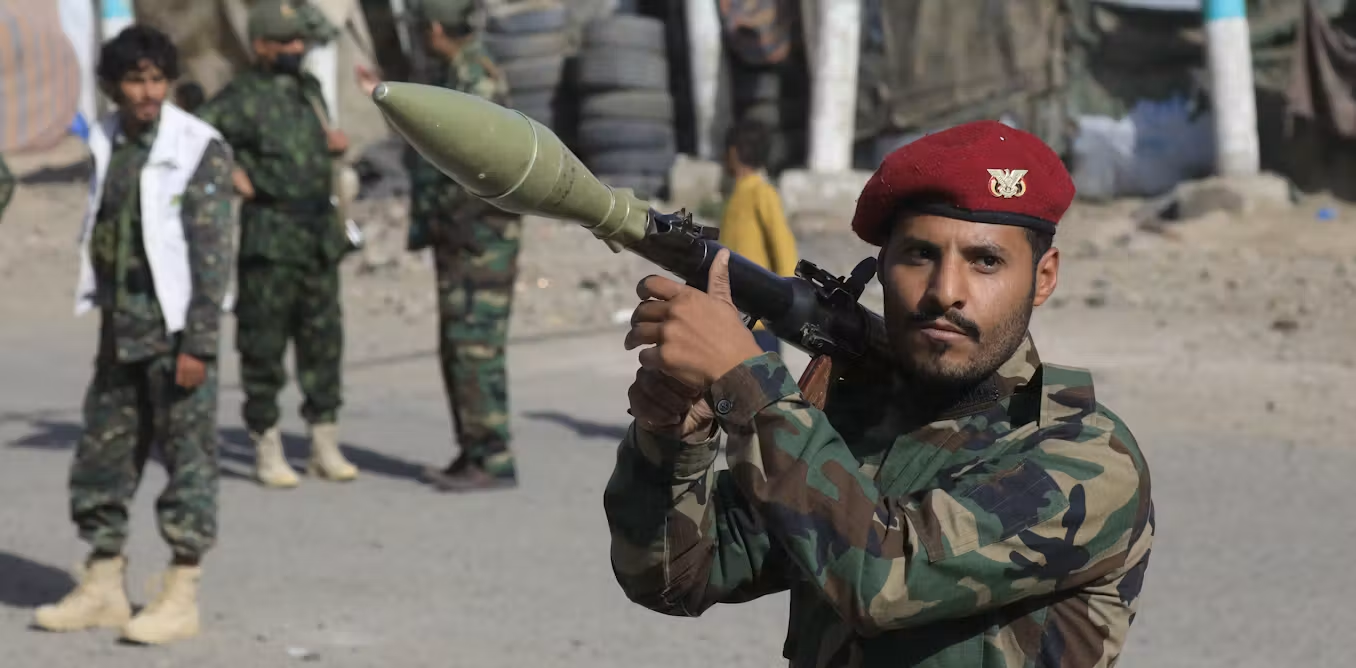
The dormant conflict in Yemen has erupted once more, with the Houthi rebel group seizing control of the Red Sea port city of Mocha and a number of islands from Yemeni government forces in recent weeks. This has given the Houthis a foothold close to the Bab al-Mandab Strait, a key trade gateway linking Asia and Europe.
The advance of the Houthis has alarmed Yemen’s northern neighbour, Saudi Arabia, for three main reasons. First, the Houthis’ drive down the coast constitutes a military setback for the Saudis and the pro-government forces they have long supported militarily and financially in Yemen.
Second, the Saudis have become more reliant than ever on access to Bab al-Mandab to export their oil since the effective closure of the Strait of Hormuz following the outbreak of war between the US, Israel and Iran in February 2026. Control of Yemen’s western coast would allow the Houthis to further restrict Saudi Arabia’s energy exports.
And third, the Houthis are closely allied with Iran. This means Tehran now has the possible means to control two of the most important maritime chokepoints for the transit of global oil supplies. The Bab al-Mandab Strait was carrying roughly 7% of global oil supplies by June.
Rainer Lesniewski / Shutterstock
How did we get here?
The renewed hostilities bring to an end a ceasefire in the Yemeni conflict that had been in place since 2022. The Houthis, in origin a movement that emerged in the 1990s to protect the interests of Yemen’s substantial Zaydi Shia Muslim population, had previously engaged in armed conflict with the longtime Yemeni president, Ali Abdullah Saleh.
In the aftermath of Saleh’s forced resignation in 2012, which followed popular mobilisation against his autocratic rule, the country entered a period of instability. During this period, the Houthis moved from their stronghold in the north of the country to take control of the capital, Sana’a, in 2014.
Unwilling to see its southern neighbour come under the control of forces allied to Iran, Saudi Arabia launched an all-out war in March 2015. The objective was to restore the internationally recognised government of Abd-Rabbu Mansour Hadi, Saleh’s one-time deputy who had succeeded him in office, to power.
The fighting persisted for several years, but an effective stalemate was reached early on. While attempts to negotiate a lasting agreement to end the war failed, all sides agreed on a ceasefire in April 2022. The ceasefire lapsed in October of that year but both sides largely refrained from major escalatory actions and the level of conflict remained low.
Hopes for a more substantial deal between the warring parties were briefly raised in March 2023. That month saw China broker a rapprochement between Iran and Saudi Arabia, restoring diplomatic relations between the two countries after their 2016 suspension.
But in a clear assertion of its independence from Iran, Houthi leadership expressly rejected the notion that normalisation of relations between the two regional powers should lead to a deal between the Houthis and Saudi Arabia.
The prospects of a long-term deal to end the conflict were dealt a further blow by the Houthi response to Israel’s military campaign in the Gaza Strip, which followed the deadly Hamas-led attack on southern Israel on in October 2023.
Shortly after that war began, Houthi fighters fired several missiles and drones at an Israeli ship in the Red Sea. The US Navy also shot down Houthi-launched missiles and drones heading towards Israeli territory, in what was the first US action in defence of Israel since the start of the conflict in Gaza.
There was further escalation in January 2024, when the Houthis staged a large-scale attack on several US Navy vessels in the Red Sea. This was followed by US and UK airstrikes against Houthi targets. In May 2025, the US and the Houthis agreed a ceasefire which was mediated by Oman.
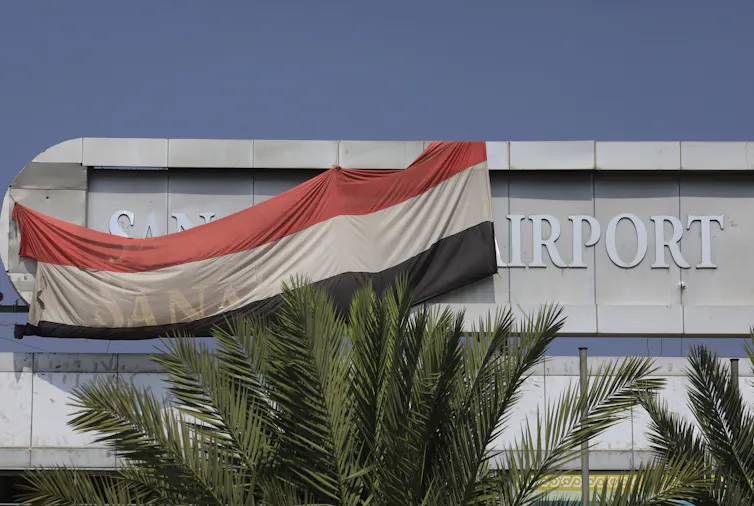
The relative peace that followed came undone in July 2026. On July 13, the Saudis attacked Sana’a International Airport in order to prevent a plane carrying the Houthi delegation to the funeral of Iran’s slain supreme leader, Ali Khamenei, from landing. The Yemeni government and Saudi Arabia claimed the flight represented a violation of Yemen’s sovereignty.
The Houthis launched missile attacks on airports in the south of Saudi Arabia in response, while also declaring the imposition of a strict maritime embargo against Saudi vessels. On Telegram, Houthi official Yahya Saree announced an end to what he called the “de-escalation phase” of the conflict.
Yahya Arhab / EPA
The recent rapid advance of the Houthis along Yemen’s western coast has focused attention on the group’s potential to disrupt global oil supplies even further. However, the offensive also has major implications for Yemen itself.
It constitutes a major setback for the Saudi-backed forces in Yemen, which are far more diverse than is commonly assumed. These forces include those under the control of Tareq Saleh, nephew of the fallen autocrat, as well as southern groups with aspirations for autonomy and other tribal and local forces.
The advance also represents a challenge for the Houthis themselves. They now control a swathe of new territory, and with it a larger population. There are questions regarding the capacity of the Houthis to withstand the inevitable attempts to dislodge it from its new position.
Earlier in the conflict, in 2015, the Houthis won control of areas in the south such as Aden, Abyan and Lahj. But they were soon pushed back by government forces and resistance fighters, and forced to relinquish their control of these areas.
Recent reports suggest that the Saudi crown prince, Mohammed bin Salman, has requested that the US launch airstrikes against the Houthis. The invitation was apparently declined, but is unlikely to be the final word in the seemingly endless conflict between Riyadh and its antagonists in its southern neighbour.















































You must be logged in to post a comment Login