
Tech
Nonprofit that tracks meteors taken down by “critical blow” from a cyberattack


The International Meteor Organization, the nonprofit that coordinates and publishes amateur and professional observations of meteor phenomena, said its infrastructure has suffered a “critical blow” from a cyberattack.
“We recently suffered a cyberattack that dealt a critical blow to aging infrastructure, taking much of our site offline,” a static page on its website on Wednesday said. “We expect several weeks of partial downtime as we transition to new infrastructure and services.”
“I am very sad to see the site down”
In the meantime, the IMO said it’s prioritizing the reporting of fireball observations, which can be reported here. The organization is also providing some information on its Facebook page.
The IMO has helped forge unified standards for reporting meteor observations. Its databases of reported meteor and fireball observations—made up of text, photos, and videos—are also considered essential by many in the field. The IMO also publishes the bimonthly WGN journal, which in English is short for Working Group News. The body was formally founded in 1988.
It’s unclear why an organization that tracks large, fiery space objects hurtling toward Earth would be the target of a damaging cyberattack. It’s equally unclear why someone would want to steal its data (assuming that was the motive), which is mostly public.


Snap is taking another swing at the idea that glasses could become the next computer. The company has officially introduced SPECS, a pair of augmented reality glasses with an AI-native operating system designed to put digital information directly into the wearer’s view. Unlike some AR experiments that need a separate computing puck or tether, SPECS packs its computing hardware directly into the glasses.

And this isn’t just Snapchat with a fancy pair of frames. SPECS can handle navigation, real-time translation, entertainment, fitness, education, shopping, and even productivity. Users can get directions overlaid onto the real world, translate conversations into subtitles across 60 languages, stream content onto a virtual 115-inch display, and wirelessly connect the glasses to a computer for a larger workspace.
The real trick is SPECS Intelligence
The more interesting part of the announcement is SPECS Intelligence, Snap’s new anticipatory AI service. Rather than waiting for a question, it is designed to understand a user’s goals, priorities, relationships and routines from the apps they choose to connect, then surface useful information when it matters. That could mean preparing someone for an upcoming meeting or pulling together flight, hotel and dinner details before a trip.
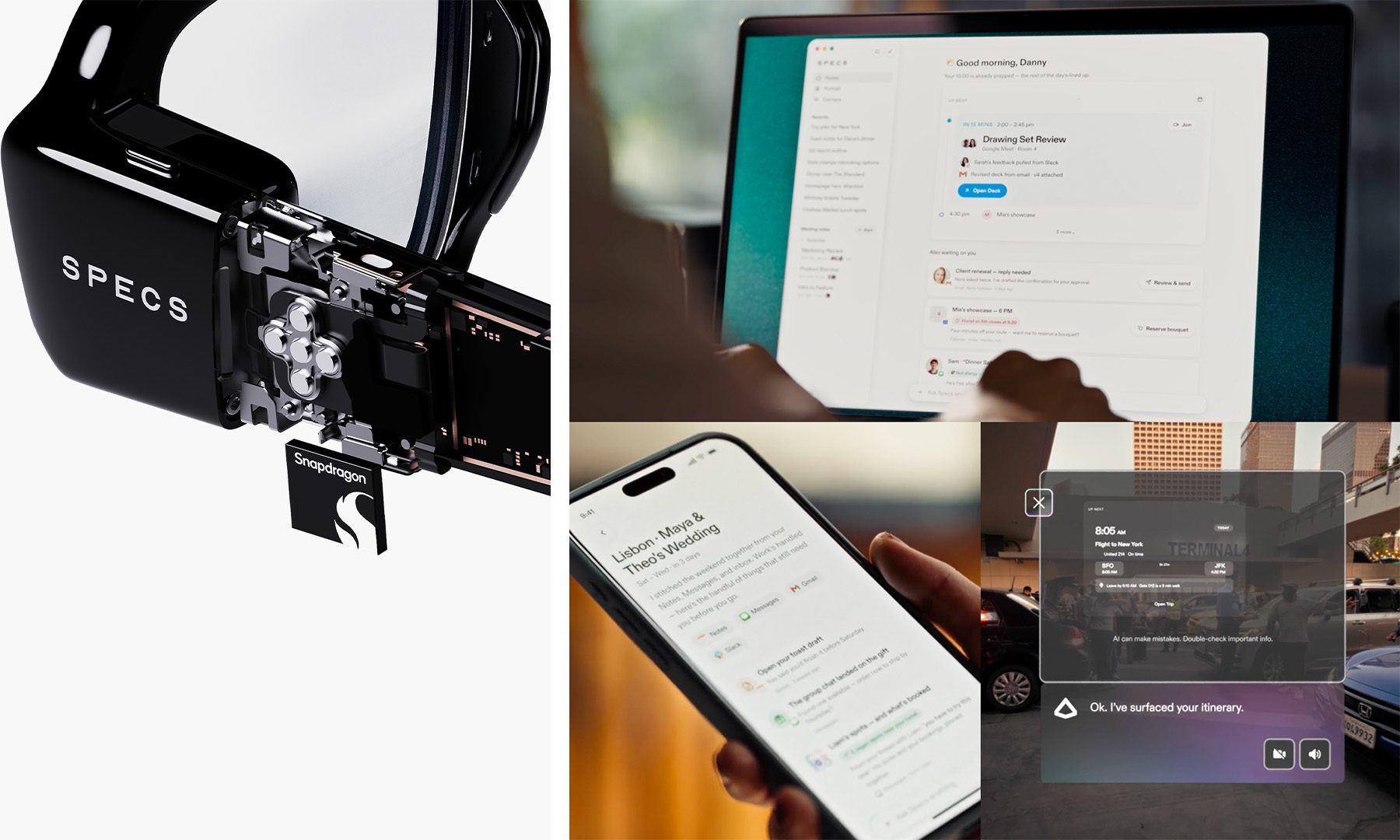
The AI works across iPhone, Mac and SPECS, meaning the glasses are essentially another window into the same personal context. Ask about a day while wearing SPECS, and the idea is to get a briefing, schedule information, and meeting preparation without digging through half a dozen apps. The iOS preview is available now in the U.S. for users aged 18 and over, while the fuller Mac experience is coming through an invitation-only early-access program.
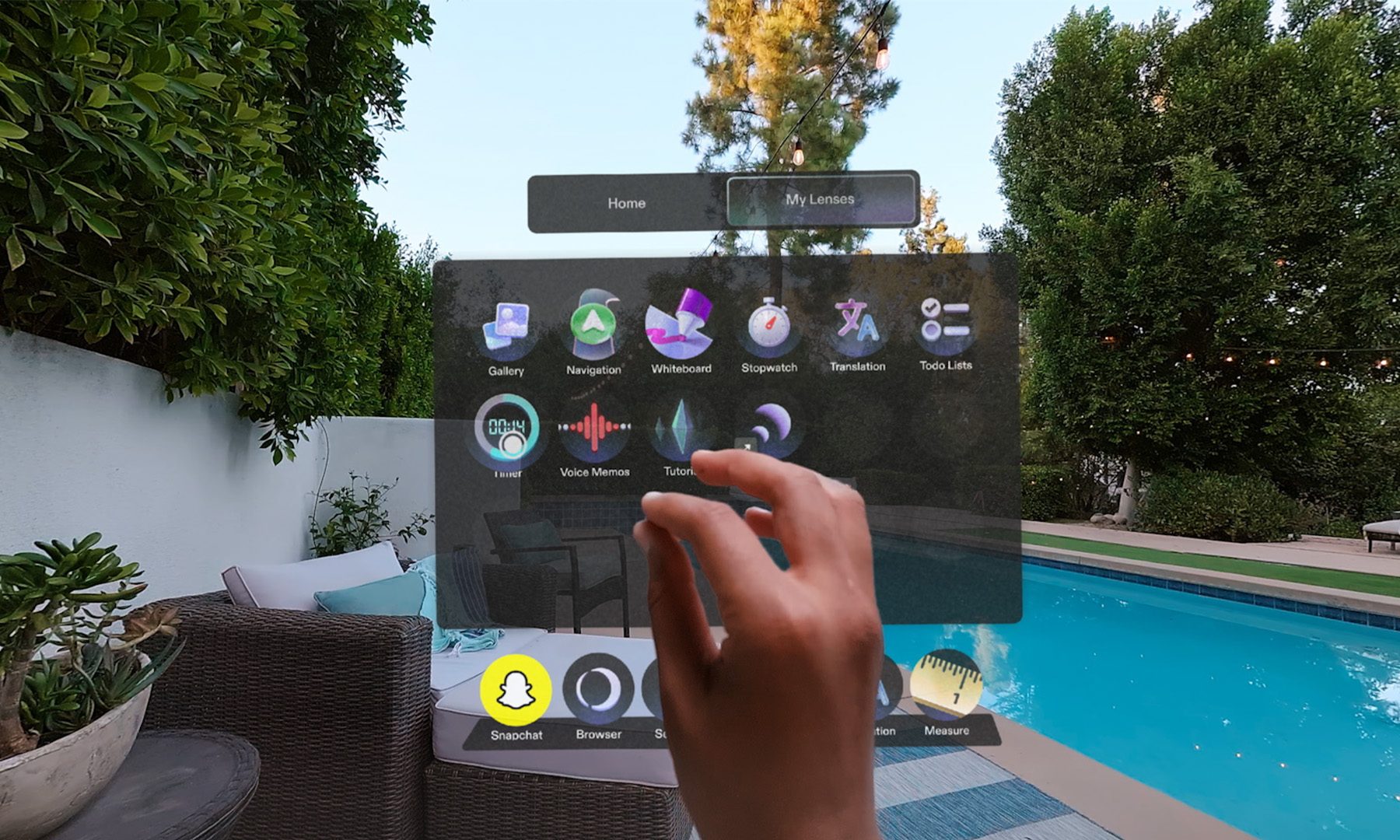
Privacy is also a major part of the pitch. Snap says SPECS does not use facial recognition, does not continuously record the surrounding world, and uses an external LED when photos, video, or audio are being captured. For SPECS Intelligence, connected personal content isn’t used to train Snap’s AI models or serve personalized ads.
SPECS is ambitious, but it isn’t exactly pocket change
Snap is positioning SPECS as a genuine computing platform rather than simply another pair of smart glasses. Developers can build AR experiences through Lens Studio, while enterprise partners including NVIDIA, AWS and Salesforce are exploring hands-free uses in workplaces such as factories, retail floors and field operations.
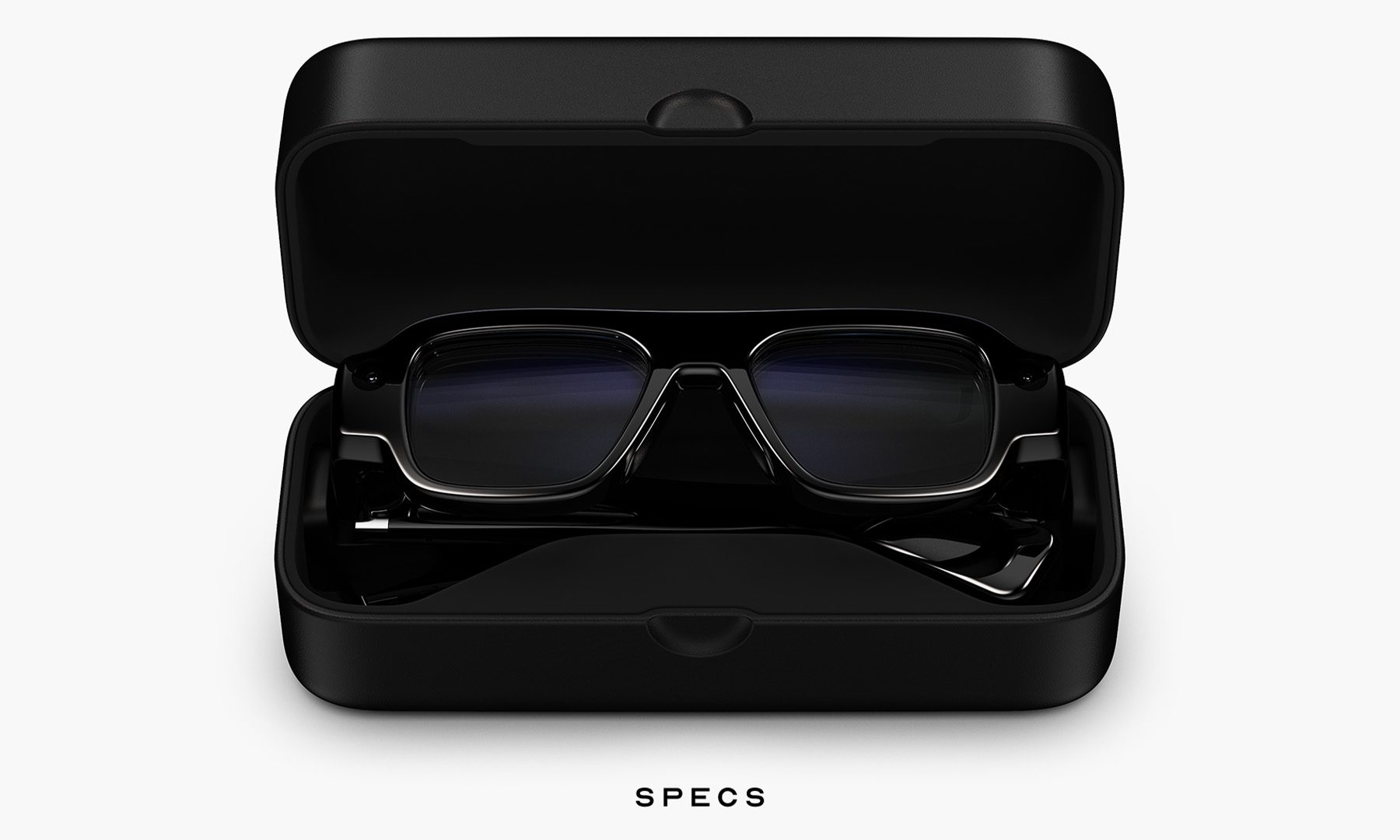
The glasses are available to preorder for $2,195, with a $200 refundable deposit, and shipping is expected later this fall in the U.S., U.K. and France. A new cellular charging case, which provides four additional charges and cellular connectivity, brings the U.S. Connected Case bundle to $2,395.
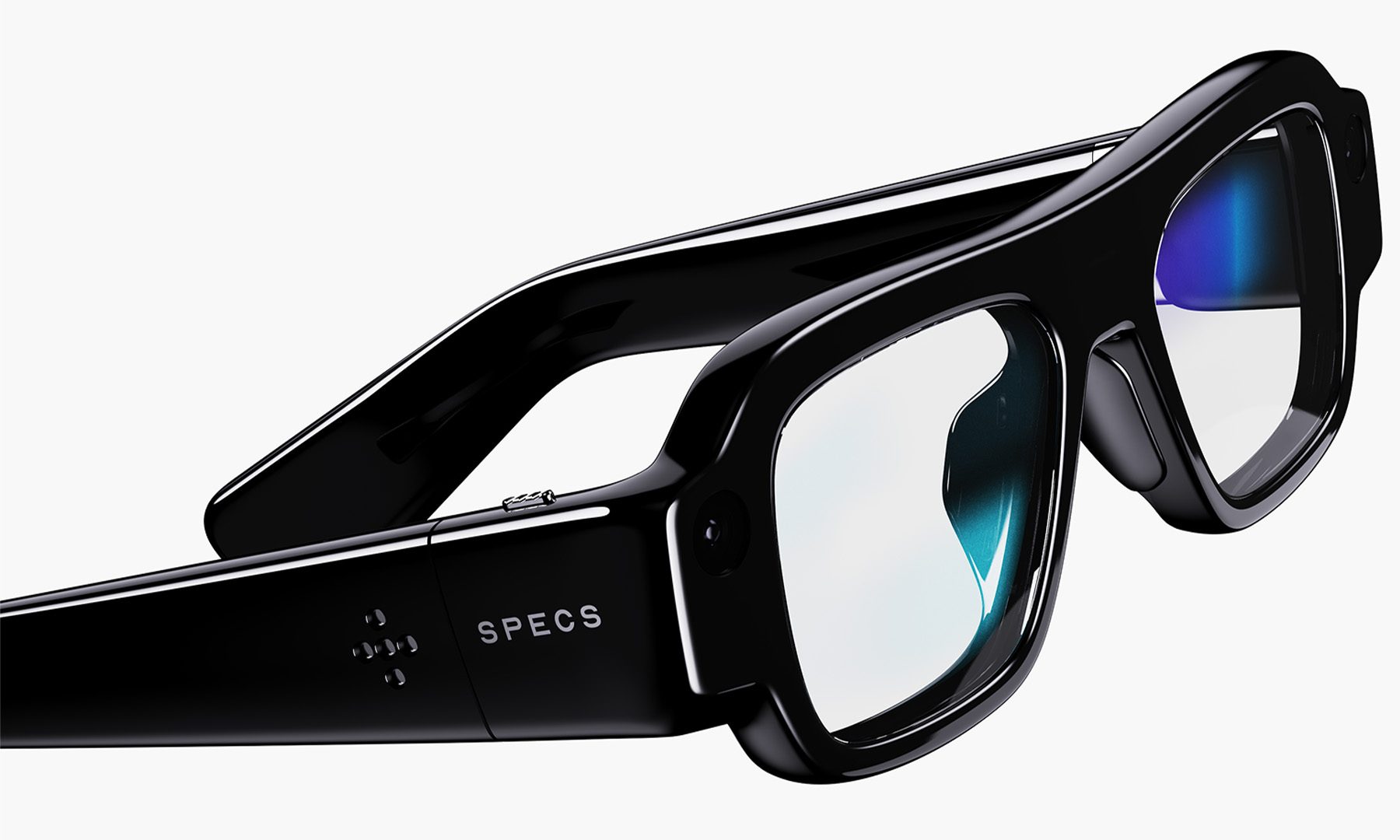
At that price, SPECS is very much an early look at where Snap thinks computing is headed, rather than a mass-market phone replacement. But the interesting bit is the combination of AR plus anticipatory AI. If SPECS Intelligence can genuinely figure out what matters before being asked, Snap may have found a more compelling reason to wear a computer on the face than simply taking hands-free selfies
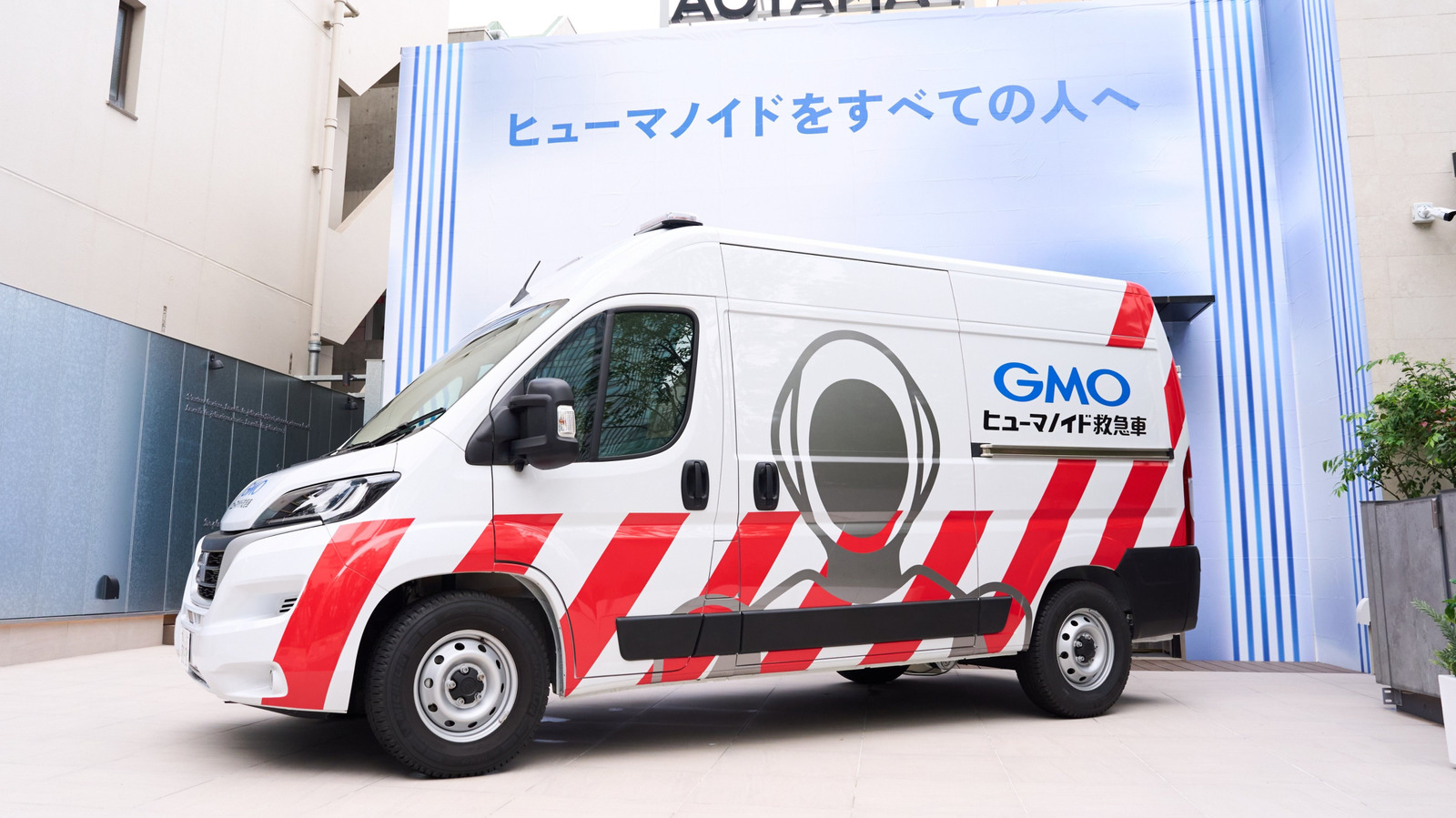
If you see what looks like an ambulance with a set of flashing lights weaving through Tokyo traffic, it might not be rushing to save a human. GMO Internet Group is unleashing what it calls Japan’s first “humanoid ambulance” on the streets of Tokyo this month.
A maintenance van designed to make house calls when humanoid robots break down, the ambulance carries diagnostic equipment, spare parts, repair tools and engineers to wherever a robot has stopped working. If a robot can’t be fixed at the roadside, there’s a spare humanoid on board ready to be subbed in and take over on the spot. Meanwhile, the broken unit is ferried back to GMO’s repair base at its Humanoid Lab in Shibuya, Tokyo.
There’s only one ambulance stationed at its Tokyo headquarters for now, and it won’t be used to respond to any and all stricken robots; the service only covers humanoids deployed by GMO AI & Robotics Trading (also known as GMO AIR), with dispatch decided on a case-by-case basis. That’s the same company behind the humanoid robots working as baggage handlers at a Tokyo airport. It’s currently running a trial of Unitree-built machines at Haneda in a collaboration with JAL Ground Service through 2028.
“When humanoids become more popular, this kind of service will be needed,” said Shota Takizawa, an engineer at GMO AIR, at a press event covered by Euronews. The interior and exterior styling of the ambulance came from designer Yasumichi Morita of Tokyo firm GLAMOROUS, who modeled the look on emergency vehicles from around the world. Its exterior features purple roof-mounted lightbars and the text “Humanoid Ambulance.”
GMO says that the ambulance service was created after damaged humanoids had to be sent away for repair, leading to service disruptions. “Learning from that experience, we came up with the idea of providing replacement humanoids,” GMO AIR’s CEO, Tomohiro Uchida, said. GMO’s parent business is internet infrastructure: domains, hosting, that type of thing. Its robotics unit doesn’t build robots at all, but instead resells hardware from Unitree and other manufacturers, then sells services around the machines.
Japan’s government published an AI Robotics Strategy back in April that targets more than 30 percent of the global robot market and a roughly $135 billion domestic industry by 2040. One flashy van isn’t going to have much of an impact on those numbers, but GMO is clearly pitching the ambulance as a solution built ahead of need; a way to bank field-repair experience before humanoids are common enough to demand it.


GM is overhauling its infotainment interface on the 2027 Chevrolet Silverado and GMC Sierra, giving Apple CarPlay and Android Auto their own window alongside native apps rather than the whole screen, after saying phone mirroring would be removed from its cars. Euro NCAP’s 2026 protocol asks for separate physical controls on five functions, which a redesigned touchscreen does not address.
GM is rebuilding the interface in its trucks and giving Apple CarPlay and Android Auto a window of their own beside its native apps, InsideEVs reported. It arrives on the 2027 Chevrolet Silverado and GMC Sierra.
The layout is split by default, so more than one app is visible at once. The blue background and pale icons give way to jet black and higher contrast, the quick access menu becomes customisable, and the gauge cluster has been reworked.
“What we heard was that people were hunting for controls, navigating through too many steps,” said Sebastian Bauer, GM’s executive director of human interface. The team went after fewer taps and clearer visual, auditory and haptic feedback.
The phone half is a reversal. GM stripped mirroring out of its electric cars and Mary Barra said petrol models would follow as models were refreshed, calling the switch between systems clunky. Cars already sold keep it.
Now projection holds the right-hand side rather than swallowing the display. Customers want that simplicity while keeping quick access to the car, said Michael Wahlstrom, who runs software product management.
Europe changed the test in January.
Euro NCAP’s 2026 protocol asks for separate physical controls on five functions, being indicators, hazard lights, the horn, the wipers and the emergency call. A car without them cannot take five stars. The point is to cut the time a driver spends looking away from the road.
Fewer taps is not the same thing. Those five have to leave the screen, not move up a menu.
China went considerably further. Its new standard names 19 functions needing physical controls, each at least 10mm square and working when the power does not, from July 2027.
GM’s announcement mentions physical buttons for the headlights, which survive in the quick menu. Headlights are not among the five.
The trucks are not sold in Europe. Cadillac is.
GM sells the Optiq, Lyriq and Vistiq across the continent, the Optiq from about EUR 65,000, and has been opening the brand in the UK. It says the new interface will spread across its lineup over time.
Whether that includes the European cars, and whether phone projection travels with it, GM would not say. Rivian went the other way and still offers no projection at all.
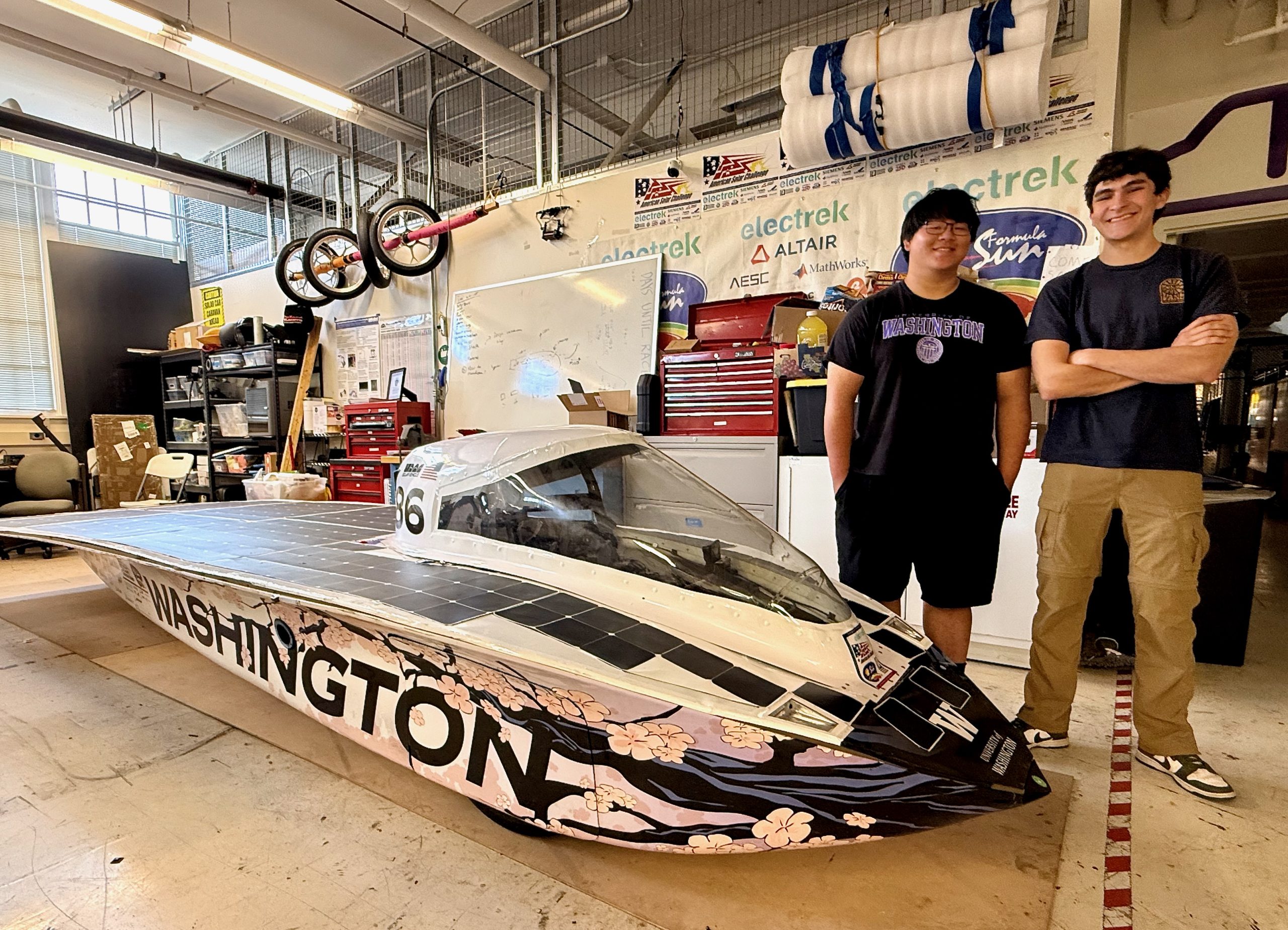
In a cramped corner workspace in a mechanical engineering building at the University of Washington, a team of students is working to harness the power of the sun.
They operate on a fraction of the budget of elite international programs, fitting build hours around class schedules and other extracurriculars. Yet this summer, the scrappy crew took their handmade, solar-powered car — dubbed Sakura — out of the shop and onto the open road.
Over seven days in July and 1,778 miles from Minnesota to Texas, they outpaced nearly every competitor to finish fourth overall and cross the line as the top-ranking American team in the American Solar Challenge.
Now entering its fourth year, the Solar Vehicle Team at UW (SVTUW) is still a relative newcomer to collegiate solar racing. Officially affiliated with the university’s Mechanical Engineering Department, the roughly 50-person group has evolved into a broader interdisciplinary effort spanning electrical engineering, computer science, business, aerodynamics, and more.

Operated entirely by undergrads, the club handles every aspect of the operation in-house — from sponsor outreach and logistics to hands-on fabrication.
While top international competitors rely on multi-million dollar budgets and years of development, the Huskies assembled their vehicle (named after the Japanese word for cherry blossom) in just 11 months — a lightning-fast turnaround for a machine built entirely from scratch.
For team president Rudy Heredia-Jantz, an electrical and computer engineering senior, even making it to the starting line felt like a triumph.
“Frankly, we have no idea [how we pulled it off],” Heredia-Jantz said. “This car — it was a little bit of a miracle. We did not have it up and running until the day before we left for competition. We didn’t even have it moving. We just spun the rear motor, threw it in the trailer, and figured we’ll blow something up eventually.”
Things did indeed blow up — 12 tires in total along the way — but the Huskies kept rolling. For a third-year program competing against seasoned international juggernauts, simply keeping the car on the road was an achievement; outpacing them was a statement.
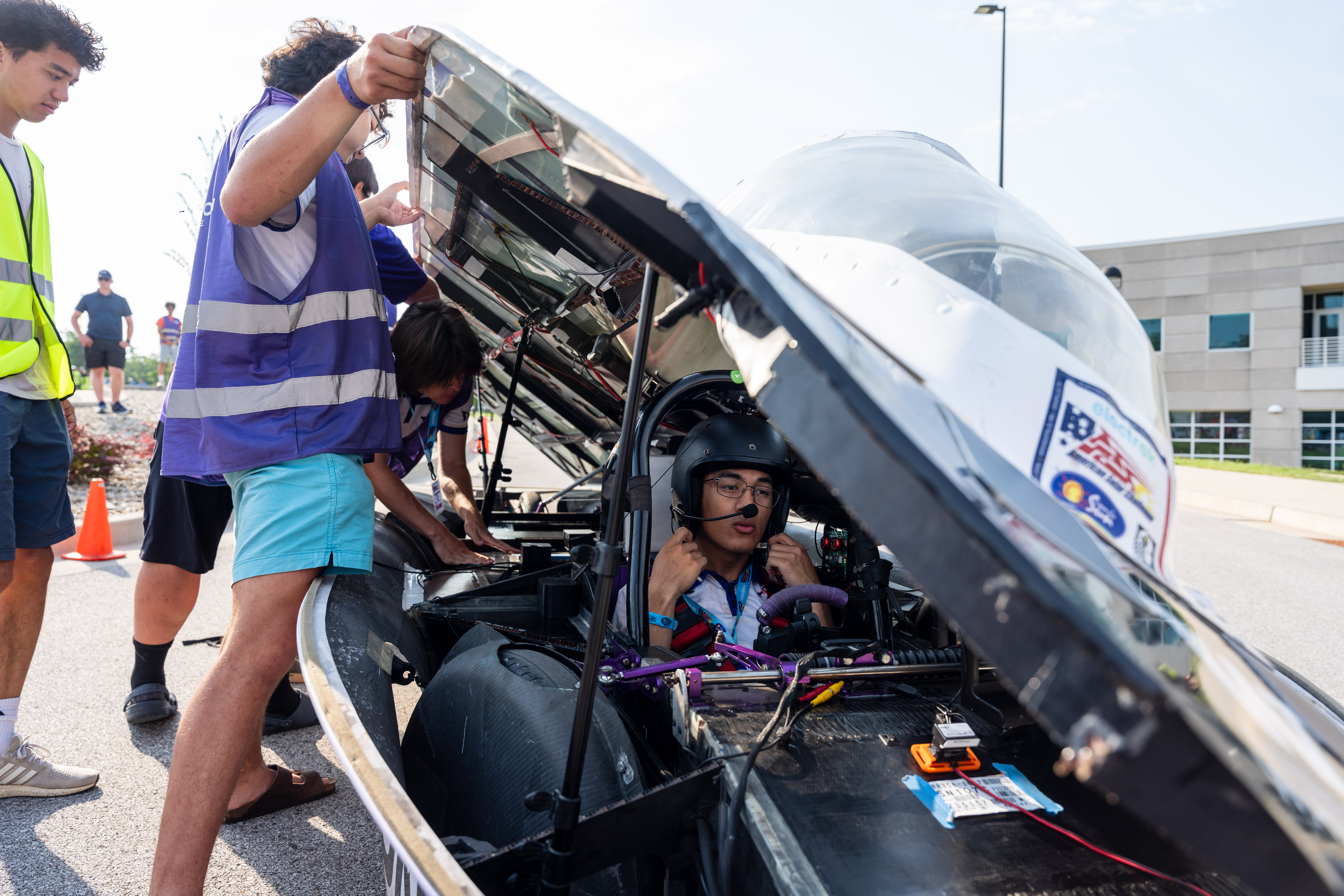
UW didn’t just survive the route to Texas — they blew past expectations for a young club, clinching the Aesthetics Award and Spirit of the Event Award alongside their top-four finish.
For second-year mechanical engineering student Elijah Yan, who serves as the team’s mechanical lead, the learning curve was immediate.
“Building a car is just not something I’ve done before, so it’s very new to me, and it’s super cool to learn that type of stuff — suspension stuff, how to do vehicle dynamics,” Yan said.
That hands-on engineering paid off when Sakura hit highway speeds on open pavement. Designed to maximize efficiency, the ultra-lightweight vehicle — weighing roughly 500 pounds with a driver inside — stretches 19 feet long to fit its array of solar panels while keeping its profile as narrow as possible.
Under the hood, Sakura is a blend of precision engineering and strict energy conservation:
- Solar array: 386 Maxeon Gen 7 photovoltaic cells covering six square meters, producing up to 1,540 watts of max power output directly from sunlight.
- Battery pack: A student-built 5.125 kWh lithium-ion battery in a 36S9P cell configuration (121V nominal), supplemented by a secondary backup battery used solely for system startups.
- Drivetrain and motor: Powered by a 2 kW Mitsuba 2096-III hub motor capable of pushing the 500-pound vehicle up to 65 mph on open highways.
- Data and cockpit: A custom steering wheel equipped with push-to-talk comms, digital telemetry displays, and regenerative braking controls, paired with an onboard Samsung Galaxy smartphone that streams real-time battery and motor analytics back to the pit crew.
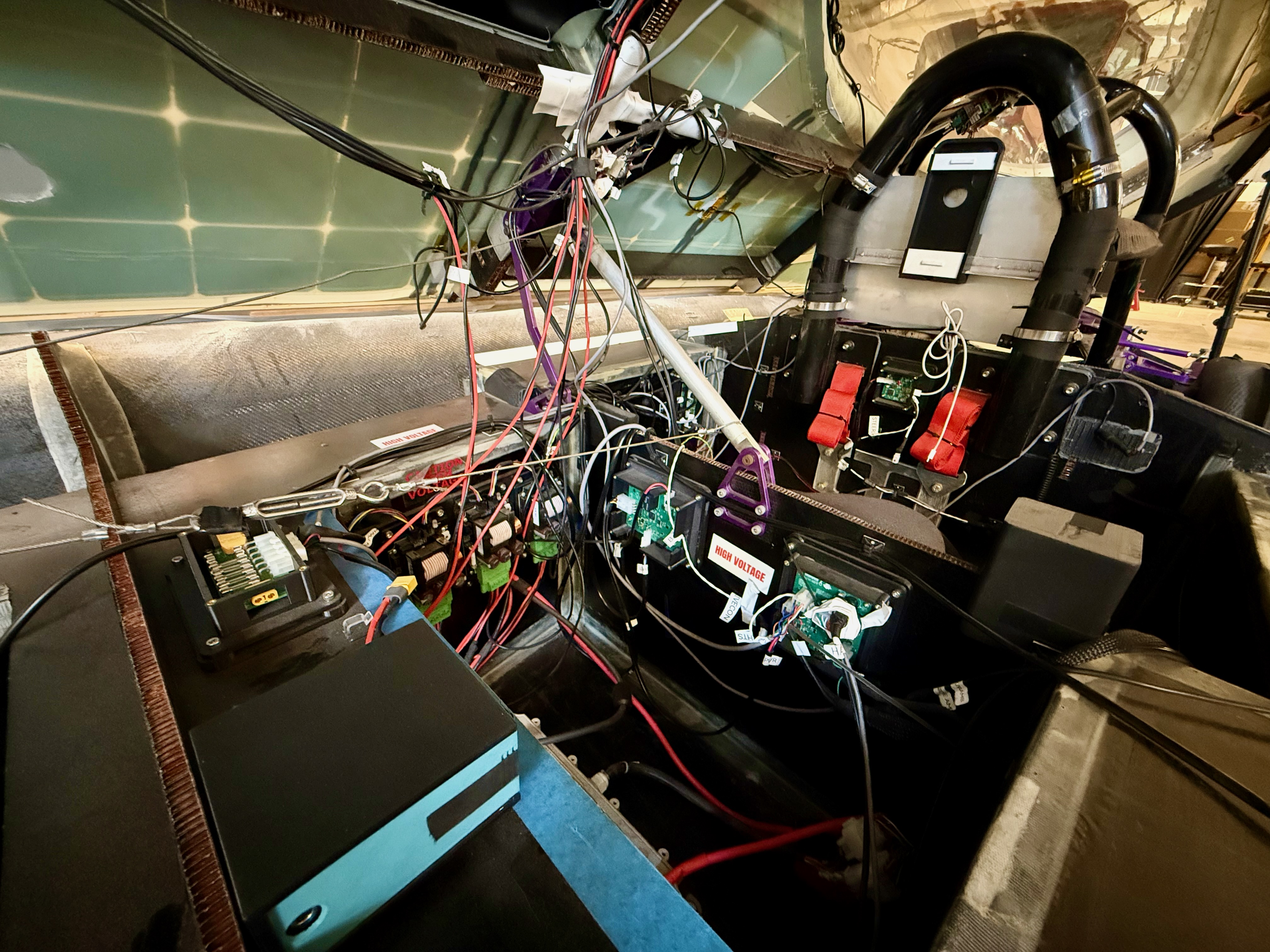
To pull off a competitive build on a shoestring budget, the team combined its resourcefulness with local industry support. The vehicle’s lightweight frame, for instance, relies on carbon fiber sandwich panel flooring donated by Boeing, held together with specialized fiberglass tape.
“It’s the perks of being a Seattle-based team — we work with some amazing materials,” Heredia-Jantz said.
Yet even with aerospace-grade composites, bringing a prototype car across the finish line required plenty of improvised shop hustle.
“The car is held together with cardboard and duct tape, essentially,” Yan joked.
And managing the technical hardware on the road is as much a game of data processing as it is driving.
During the race, a dedicated strategy team monitors Sakura‘s health in real time. Using a custom dashboard that feeds off the onboard smartphone’s data stream, students track battery state-of-charge, individual array voltages, and motor temperatures from a trailing support vehicle.
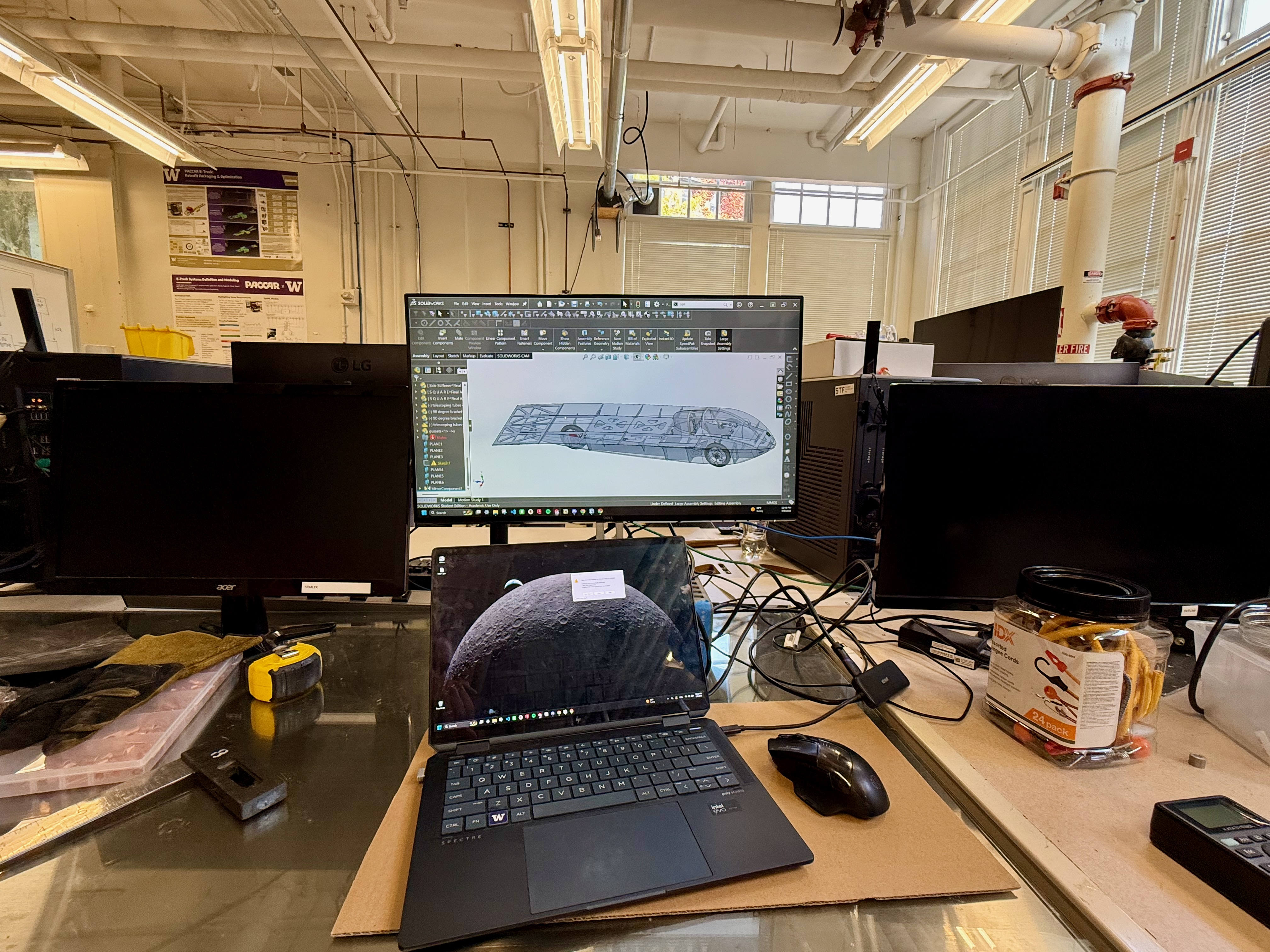
By pairing live telemetry with incoming weather forecasts, the crew calculates optimal cruise speeds on the fly — relaying instructions to the driver via walkie-talkie so they can balance energy consumption, leverage regenerative braking, and avoid tripping the battery’s protection systems on steep climbs or hard accelerations.
That real-time power management was also put to the test right before the cross-country journey, when the team competed in the Formula Sun Grand Prix — an annual three-day track race where cars run on a single initial charge and whatever sunlight they can harvest along the way. Despite navigating a track that pushed their power distribution system to its limits, the track time gave the team crucial baseline data and momentum before taking on the road race.
Now the club is already preparing for its next evolution. While repairing Sakura for upcoming competitions, students are designing their next-generation vehicle from scratch — overhauling power distribution, reinforcing the chassis, and building a new solar array.
For a club building sun-powered technology in a city known for grey skies, the project is ultimately driven by something deeper than weather.
“I believe this team is building something special in the early morning hours on UW’s campus: talent that shows up before sunrise, a refusal to wait for better resources before doing great work, and a stubbornness that looks a lot like faith,” said Caoilin Krathaus, the team’s administrative lead. “It reminds me of the story behind Boys in the Boat, and what I’ve always thought of as the true Husky experience.”

realme has revealed the design of its upcoming 16 Pro Harry Potter Edition. The phone takes inspiration from Hogwarts and the wider Harry Potter wizarding world. realme developed the edition through an expanded collaboration with Warner Bros. Discovery Global Consumer Products following the realme 15 Pro Game of Thrones Limited Edition. The company will also launch a Hogwarts-themed limited-edition gifting box with the phone. realme will showcase the new edition at a special pop-up launch on September 21.
Design and Limited-Edition Box
The realme 16 Pro Harry Potter Edition brings several Hogwarts-inspired details to the phone’s design. It uses a brown finish with a premium leather texture. The Argyle pattern on the back takes inspiration from the Wizard’s Chess scene. The phone also features Hogwarts Crests at the center of its rear panel. realme uses the Metal Mirror Camera Deco from the standard realme 16 Pro. However, the camera module draws inspiration from Hedwig’s bright and spirited eyes. A laser-engraved “Welcome to Hogwarts” slogan also appears on the metallic mid-frame.
realme will also offer a Hogwarts-themed limited-edition gifting box for Harry Potter fans. The company plans to produce only 5,000 units worldwide. The box recreates Harry Potter’s iconic trunk as a 1:1 replica. Inside, buyers will find a Hogwarts Welcome Pack with several themed items. These include a Hogwarts acceptance letter, train ticket, and Hogwarts Crest bookmarks. The pack also includes postcards featuring Harry, Hermione, and Ron. A Hogwarts-logo phone case and phone pin complete the collection. realme says the edition combines its phone design with the spirit of the wizarding world.
realme 16 Pro Harry Potter Edition Price and Availability
realme has not yet revealed the price of the 16 Pro Harry Potter Edition. The company will showcase the device at a special pop-up launch on September 21. The event will follow a young wizards theme and highlight the Hogwarts-inspired experience. realme has also confirmed that it will produce only 5,000 units of the limited-edition gifting box worldwide. realme is expected to share more information through its website and social media platforms. Until then, buyers will need to wait for the company’s official pricing and availability details.
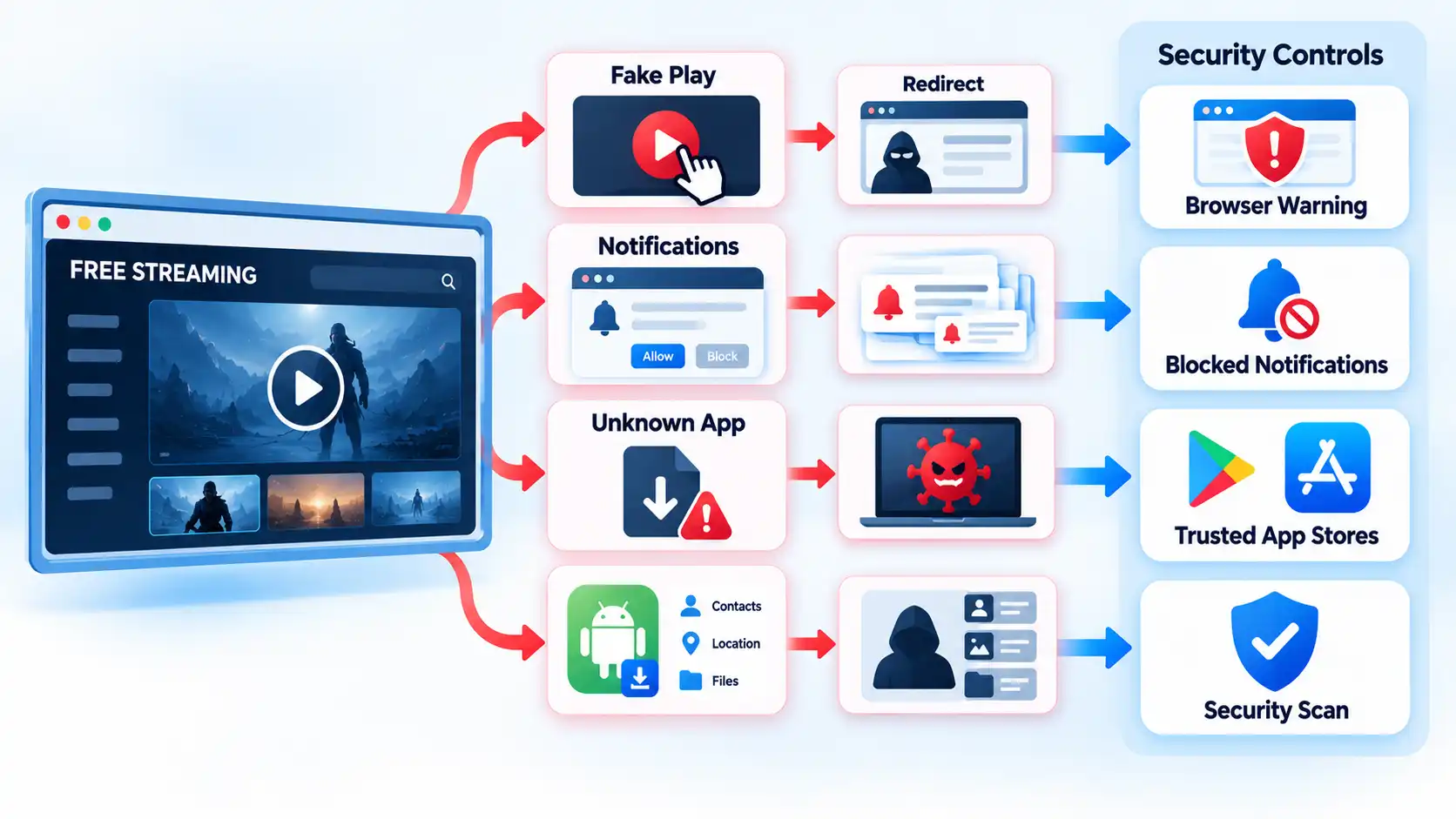
Some free streaming services are legitimate and reasonably low-risk, but unfamiliar streaming sites can expose you to phishing, deceptive advertising, malicious downloads, notification spam, and unsafe apps. The biggest risk usually comes from what a page persuades you to click, install, allow, or enter, not simply from the fact that the stream is free.
Quick Take
- Free does not automatically mean unsafe. Licensed ad-supported streaming services are a different category from unfamiliar sites distributing unknown apps or questionable streams.
- A pop-up is not the same thing as a malware infection, but deceptive pop-ups can lead to phishing pages, fake updates, dangerous downloads, or fraudulent payment prompts.
- Installing an unknown streaming app or APK creates more risk than simply viewing a webpage because installed software can request permissions and run code on the device.
- Browser warnings, forced notification prompts, unexpected downloads, and demands to disable security tools are strong reasons to leave.
- If you already installed something, entered a password, or supplied payment information, the appropriate response depends on exactly what happened.
Are Free Streaming Sites Safe?
Some are. “Free” describes how a service charges you, not whether it is secure. A legitimate ad-supported streaming service can provide programming without a subscription because advertising funds the service. That is different from an unfamiliar site that sends you through several redirects, demands a browser extension, or tells you to install an unknown “HD player” before a video will start.
It helps to separate three situations. The first is a recognizable streaming service delivered through its normal website or an established app marketplace. The second is an unfamiliar browser-based streaming site that may rely on aggressive advertising, redirects, or questionable content sources. The third is an unofficial app, Android application package, or modified streaming device that asks you to install software from a source you cannot confidently verify.
An Android application package, usually called an APK, is a file format used to install Android apps. Sideloading means installing an app from outside the device’s usual app marketplace. Neither term means the software is automatically malicious, but software from an unfamiliar source deserves more scrutiny because installing it lets code run on the device.
The practical safety question is therefore not just “Is this streaming site free?” It is also: Does it push you to override a browser warning, install something, grant a permission, enter a password, provide payment details, or trust software from an unknown publisher?
Where the Risk Actually Comes From
Streaming-related security problems often develop through a chain of small interactions. A page itself might display little more than a player and advertisements. Risk increases when a click moves you into a different process.
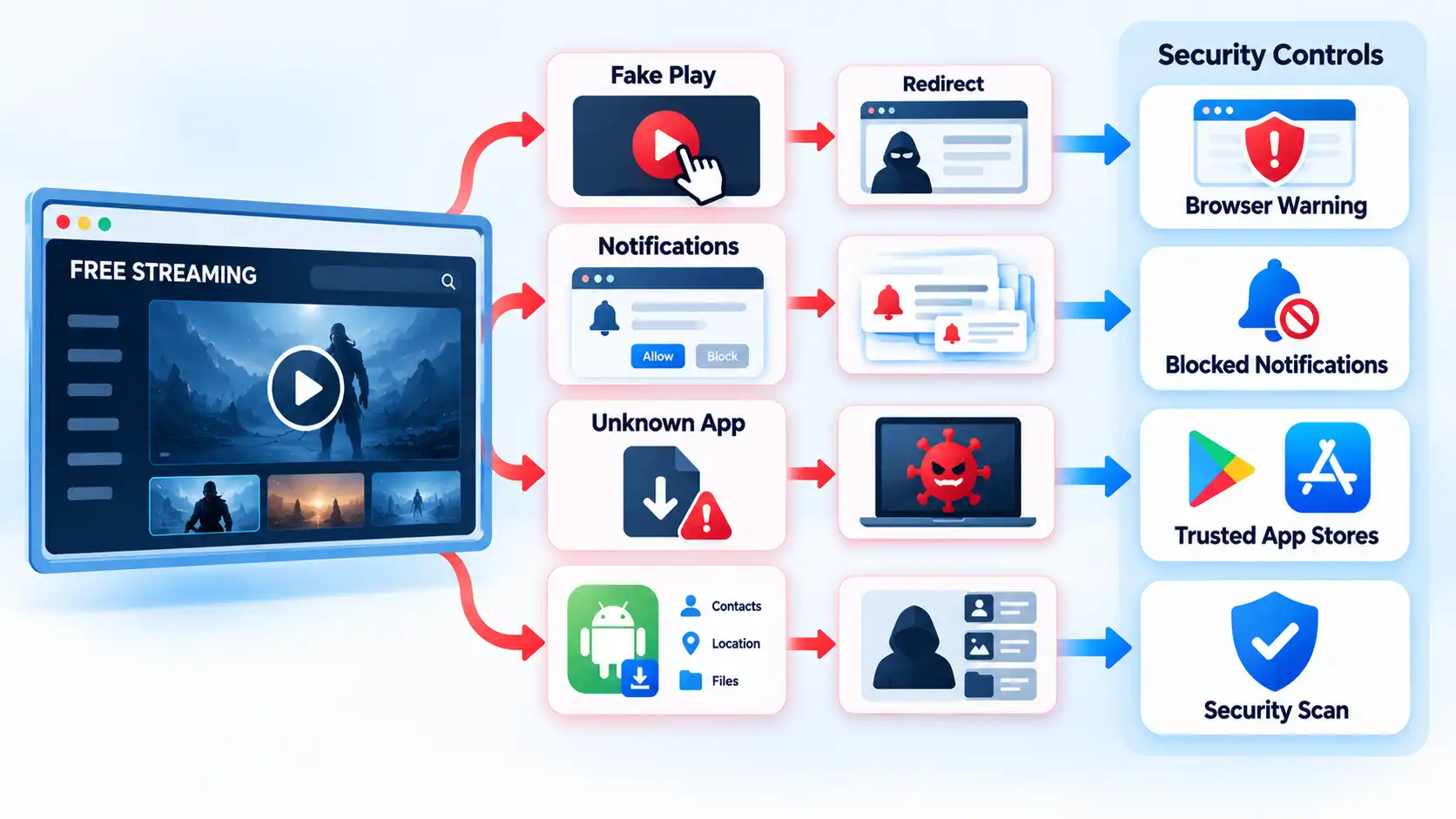
For example, what looks like a large Play button might actually be an advertisement. Clicking it can open another tab. The new page might then claim that your browser is outdated, that a codec is missing, that your device has a virus, or that you must complete an account check before watching. The next interaction may ask for a download, notification permission, password, or card details.
This is an example of social engineering: persuading someone to perform an action that benefits an attacker or scammer. A redirect simply moves the browser from one page to another. Redirects are used legitimately across the web, but an unexpected chain can also move users from a streaming page into phishing, scam, or malicious-download pages.
Malvertising is malicious or deceptive activity delivered through advertising channels. In practice, a user may encounter a fake system warning, a misleading download control, or an advertisement designed to resemble part of the streaming interface. That does not mean every advertisement is malicious. The risk is that deceptive advertising can blur the line between the video player and an unrelated action.
Modern browsers include defenses against some of these paths. Google Chrome’s Safe Browsing warnings can flag phishing, malware, unwanted software, malicious or intrusive advertising, and other unsafe pages. Firefox can warn about deceptive sites and block dangerous downloads. These controls reduce risk, but the absence of a warning does not prove that a page is trustworthy.
Pop-Ups, Redirects, and Fake Play Buttons
A pop-up is a browser window, tab, overlay, or alert that appears in addition to the page you intended to use. Pop-ups are not automatically dangerous. Banks, stores, and other legitimate sites sometimes use them for ordinary functions. The important question is what the pop-up tries to make you do.
Microsoft’s Edge guidance notes that pop-ups can use phishing tactics involving fake warnings, prizes, and free downloads. Google’s unwanted-software guidance lists persistent pop-ups, unfamiliar redirects, fake virus alerts, unwanted extensions, and changed browser settings among signs that unwanted software or malware may be present.
Warning
If a streaming page says your device is infected, demands an urgent browser update, or tells you to install a special player, do not use the button inside that warning. Leave the page and obtain any genuine update from the product’s official website or built-in update mechanism.
Google specifically advises users not to click suspicious update or download pop-ups and instead to obtain software from its official source. A webpage showing an alarming “virus detected” graphic should therefore not be treated as equivalent to a warning from your operating system or installed security software.
A redirect is also different from an infection. If clicking Play sends you to a gambling page, fake store, or unrelated site, the redirect itself does not prove malware was installed. It does show that the original page is generating or allowing unwanted navigation, and continuing to interact creates more opportunities for phishing, deceptive downloads, or permission prompts.
Why Notification Spam Can Continue After You Close the Site
Browser notifications are not ordinary pop-ups. They use a site permission that lets a website send notifications through the browser or operating system after you have left the page.
A suspicious streaming page may display a message such as “Click Allow to continue,” “Allow to prove you are not a robot,” or “Enable notifications to watch.” Granting that permission can result in advertisements, fake security warnings, or other unwanted messages appearing later.
Microsoft’s Edge notification documentation distinguishes website notifications from pop-ups and confirms that website notifications can still appear even after Edge is closed.
The practical check is the source of the message. A notification sent under a website permission is not the same thing as a warning generated by Windows Security, Android, or another installed security product. If a browser notification claims that a virus has been detected, avoid its “clean,” “scan,” or “renew” button and manage the site’s notification permission through the browser instead.
Fake Streaming Apps and APKs Are a Different Risk
Installing software changes the risk model because the app can execute code and ask the operating system for access to device features or personal data. A webpage is constrained by browser and operating-system security controls. An installed app can potentially do more, depending on the permissions it receives and the protections the platform enforces.
On Android, Google recommends obtaining apps from Google Play and warns that apps from unknown sources can put the device and personal information at risk. Google Play Protect checks apps from Google Play and other sources for potentially harmful behavior, can warn about harmful apps, and may disable or remove them. It can also request a code-level evaluation of some previously unscanned apps installed outside Google Play.
This does not mean every APK distributed outside Google Play is malware. Developers and organizations can legitimately distribute software outside the Play Store. The important questions are whether you can verify the publisher and download source, whether the requested permissions make sense for the app’s function, and whether the operating system raises a security warning.
A streaming app available only as a file on an anonymous download page deserves particular caution if it requests sensitive access unrelated to playing media. An entertainment app requesting powerful device privileges without a clear functional reason should prompt investigation rather than automatic approval.
Apple’s alternative app distribution model requires separate treatment. In supported regions, Apple allows qualifying apps to be installed through alternative marketplaces or web distribution. Apple says those apps undergo a baseline Notarisation review intended to check platform integrity and known security threats. Apple also states that alternative distribution does not receive all of the App Store’s broader review and support protections and can involve additional privacy, security, fraud, payment, and support risks. That controlled system is not equivalent to downloading an arbitrary APK from an unidentified file host.
What About Modified Streaming Boxes and “Free TV” Devices?
The risk is not limited to phones and computers. Internet-connected streaming devices can also contain malicious software or insecure modifications.
A residential proxy routes someone else’s internet traffic through a household or business internet connection so that the traffic appears to originate from that connection. In March 2026, the FBI warned that compromised internet-connected devices can be enrolled in residential proxy networks.
The FBI specifically warns about TV streaming devices that claim to provide free sports, television, and movies because compromised devices may contain malware or backdoors. It also advises using official, trusted app stores and warns that sideloading unofficial applications onto streaming sticks or Android TV boxes increases the chance of installing malicious software.
This does not mean every inexpensive Android TV box or third-party streaming device is infected. The higher-risk case is a device or application that has been compromised, maliciously modified, distributed through an untrusted channel, or sold with implausible promises of unrestricted premium programming.
How to Judge a Free Streaming Site Before You Interact
No single visual clue can certify a streaming website as safe. Instead, look at what the site asks you to do. The table below separates ordinary behavior from patterns that deserve more caution.
| Signal | Lower-risk interpretation | Higher-risk pattern or action |
|---|---|---|
| Advertising | Normal ads displayed around or during programming | Fake system warnings, forced redirects, misleading Play buttons, or advertisements designed to look like security tools |
| Account request | Ordinary signup with an identifiable provider | Card details supposedly required only to “verify” that free viewing can begin |
| Downloads | The stream plays in the browser or through an established app | A surprise EXE, APK, browser extension, codec, ZIP archive, or “HD player” is required |
| Notifications | Optional notifications with a clear purpose | The page says you must click Allow to continue, prove you are human, or start the video |
| Browser warning | No browser security warning appears | The browser flags phishing, malware, dangerous downloads, or deceptive content and the page tells you to bypass the warning |
| App source | Established app marketplace or clearly identifiable publisher | Unknown APK, anonymous file-sharing page, unverifiable marketplace, or preloaded modified streaming device |
These are warning signals, not a certification system. A polished site can still be malicious, and a plain-looking website is not automatically unsafe. HTTPS is also only one part of the picture. It encrypts the connection between your browser and the website, but it does not prove that the operator behind the encrypted connection is trustworthy.
What a VPN, Incognito Mode, HTTPS, and Ad Blocking Do Not Fix
Several useful privacy and browser tools are sometimes treated as if they make an untrusted streaming site safe. They do not.
A virtual private network, or VPN, encrypts traffic between your device and the VPN server and usually changes the public Internet Protocol address websites see. That can be useful for privacy on untrusted networks, but it does not inspect every file you download or stop you from giving a password to a phishing page. Understanding what a VPN actually protects helps separate connection privacy from malware and phishing protection.
Private or Incognito mode mainly changes what the browser stores locally after the session. It does not make you anonymous to every website or network, prevent malware installation, or establish that a stream is licensed.
HTTPS encrypts traffic between the browser and the site. A phishing site can also use HTTPS, so the padlock is not proof that the person operating the site is honest.
An ad blocker can reduce exposure to some advertising, overlays, and tracking scripts. It does not certify the underlying service, inspect an unknown APK, undo a granted notification permission, or guarantee that a deceptive download cannot reach you through another route.
If You Already Clicked, Installed Something, or Entered Details
The safest response depends on what actually happened. Clicking one unwanted tab requires a different response from installing software or entering a password on a fake login page.
I clicked a pop-up or was redirected, but I did not download or enter anything
Close the unwanted page and do not interact with fake virus, update, prize, or download prompts. A redirect by itself does not prove that malware was installed. If the browser begins behaving abnormally afterward, such as repeatedly opening tabs, changing its homepage, or redirecting searches, investigate for unwanted software rather than assuming the incident ended with the closed tab.
I clicked Allow and now I keep receiving strange notifications
Revoke notification permission for the site through the browser’s site-permission settings. Do not click notification messages claiming that your antivirus has expired or your device is infected. Website notifications are separate from ordinary pop-ups and can continue after the original page is closed.
I downloaded a file but did not open or install it
Do not run the file. Remove it if you did not intentionally obtain it from a trusted source, and do not disable browser or antivirus warnings to force it to open. Browsers such as Chrome and Firefox can block downloads they consider dangerous or deceptive, so an unexpected warning is a reason to stop rather than an obstacle to bypass.
I installed an unknown Android streaming app or APK
Remove the unfamiliar app, keep Google Play Protect enabled, install available Android and security updates, and review whether other suspicious apps or permissions remain. Google’s Android malware-removal guidance recommends enabling Play Protect, applying security updates, and removing problematic apps. If abnormal behavior continues afterward, treat it as a broader device-security issue rather than repeatedly reinstalling the app.
I installed unknown software on a Windows PC
Use Windows Security to scan the device. Microsoft documents Quick, Full, Custom, and Microsoft Defender Offline scans. Defender Offline restarts the PC and scans outside normal Windows operation, which can make it harder for persistent malware to hide or defend itself. If symptoms continue after reputable scanning and removal, consider qualified technical help rather than repeatedly disabling security controls.
I entered my password on a suspicious page
Go directly to the real service’s official website or app and change the compromised password. If you reused that password elsewhere, change it on those accounts as well and enable two-factor authentication where available. FTC scam-recovery guidance recommends replacing a password given to a scammer, updating reused passwords, and enabling two-factor authentication.
I entered my card or banking information
Contact the card issuer, bank, or payment provider immediately through its official app, website, or the verified number on your card. Review the account for activity you do not recognize and report suspicious transactions promptly. The FTC advises people who made a fraudulent card payment or experienced unauthorized card or bank activity to contact the relevant financial institution immediately and ask about reversing the transaction where applicable.
The Practical Safety Rule
Free streaming and safe streaming are not opposites. The more useful dividing line is whether you can identify the provider and whether the service behaves like ordinary media software instead of trying to push you through security warnings, forced permissions, unexpected downloads, or unverifiable apps.
If the browser starts warning you, a page demands an unknown player, or an app source cannot be verified, leaving is usually safer than trying to make the site trustworthy with more tools. When the goal is simply to avoid another subscription, free legal streaming services provide a cleaner starting point than an unfamiliar download or modified device.
Oracle is laying off 359 employees in Washington state — its second significant job cuts this year — according to a filing Wednesday with the state Employment Security Department.
The cuts affect remote employees across Washington state as well as on-site staff at Oracle’s downtown Seattle facilities, located in the Russell Investments Center on 2nd Avenue and at 2025 5th Ave.
Oracle noted in its Worker Adjustment and Retraining Notification, signed by HR Senior VP Anje Dodson, that its “Seattle sites are not closing.” Impacted employees received notice Monday and their last day will be Nov. 13.
The cuts heavily impact technical engineering and management roles across the enterprise software giant. According to the filing, affected titles include dozens of software developers, core infrastructure and platform software engineers, program managers, and site reliability engineers. Senior leadership was also affected by the reduction, with notices sent to multiple vice presidents, directors of engineering and product management, and principal data scientists.
The cuts are part of broader nationwide layoffs at Oracle. Business Insider reported this week that the tech giant is trimming payroll and raising capital as it racks up tens of billions of dollars in debt to fund massive AI data center infrastructure investments.
Internal emails sent to affected employees cited a “broader organizational change,” coming on the heels of a regulatory filing where Oracle explicitly noted that the deployment of AI technologies across its operations has resulted in workforce reductions. Oracle’s global headcount fell by roughly 21,000 employees, or 13%, over the past fiscal year.
The new round of layoffs comes just six months after Oracle eliminated 491 jobs in Washington state in March. That reduction similarly targeted engineering talent — sweeping up more than 230 software developers alongside senior directors and vice presidents — as part of an initial wave of cuts tied to the company’s shift toward AI-led software development.
Combined, the two workforce reductions have slashed 850 Oracle positions in the state this year.
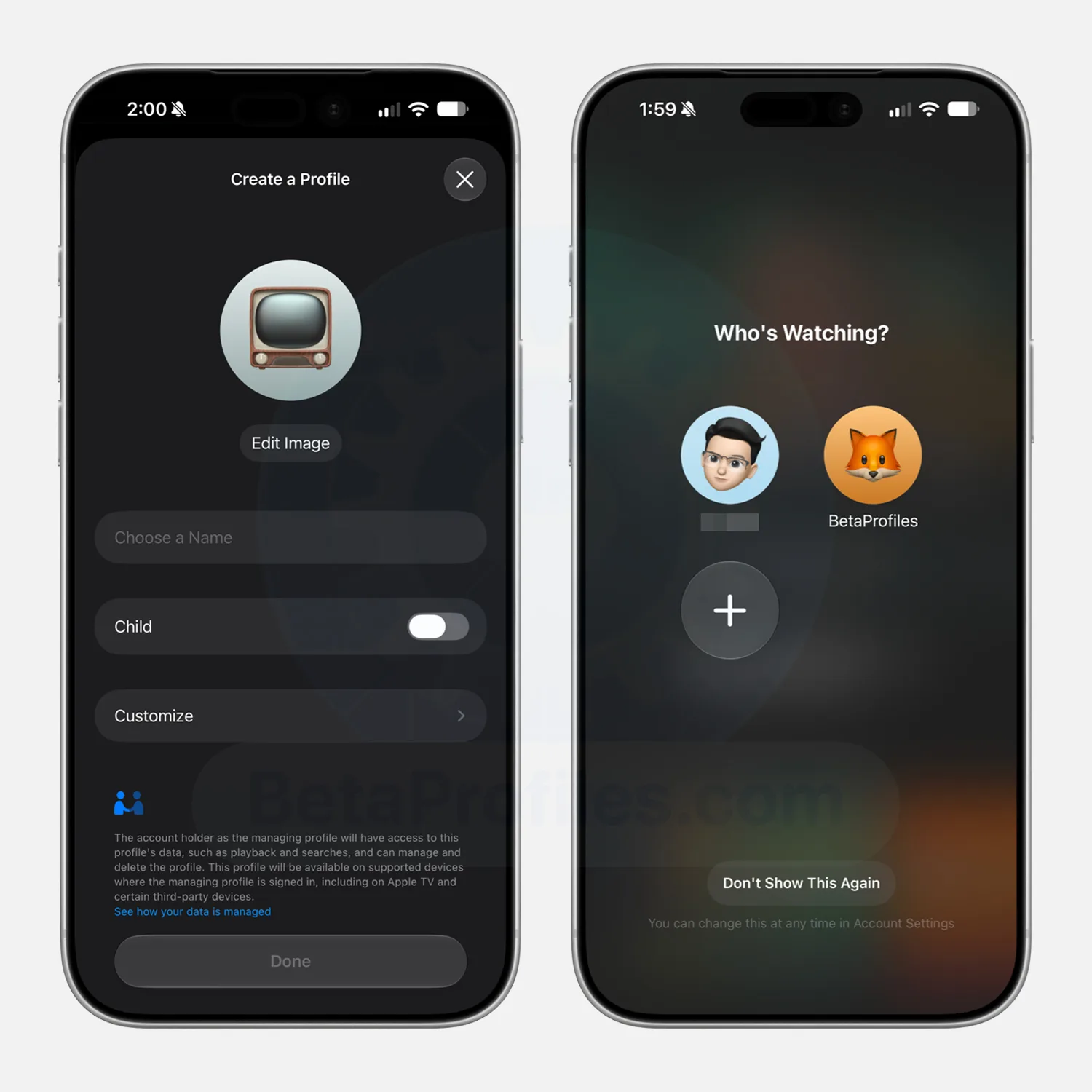
Handing your phone to a kid usually means their cartoons take over your entire watch history, but Apple just fixed that annoyance. With iOS 27.2, currently in beta, the Apple TV app finally supports separate user profiles on iPhone and iPad, a feature that’s existed on the Apple TV box for a while but never made it to Apple’s mobile devices until now (via 9to5mac).
What can you do with Apple TV profiles?
After updating, open the Apple TV app, and you’ll see a screen listing any profiles already tied to your account, along with an option to add a new one. Setting one up only requires a name, a content rating, and whether the profile belongs to a child. The setup also supports profiles for people who don’t have their own Apple Account. That makes it possible to create a dedicated profile for a younger child.
If you choose a kid’s profile, Apple defaults to a PG rating automatically, though you can dig into the settings for more specific control over which shows and movies fit their age. If profiles aren’t something you want cluttering your phone, just select the “Don’t Show This Again” option to skip the whole thing.
Why does this matter?
Apple TV profiles aren’t exactly new, and tvOS 26.2 added the guest mode option last November. The real benefit shows up the moment you hand your device to a kid. Their viewing stays contained to their own profile, meaning your “Continue Watching” row doesn’t suddenly fill up with content you never chose, and your own account stays exactly as you left it.
It also gives kids a safer space to browse on their own, since what they can see gets capped by the rating you’ve picked. For those who want this option right away, iOS 27.2 is currently rolling out as a developer beta, with a wider public release expected in the coming weeks.


Porsche has opened orders in Germany and other European markets for an 11 kW wireless charging pad for the Cayenne Electric, at EUR 6,961.49 for the floor pad and the car-side hardware together, with efficiency of up to 90%. The pad must be permanently installed in the ground, and Europe’s rules on installing home charging are weaker than the phrase right to plug suggests.
Porsche has opened orders for a wireless charging pad for the Cayenne Electric in Germany and other European markets, the first offered on a car in either Europe or North America, InsideEVs reported.
It delivers up to 11 kilowatts at an efficiency Porsche puts at up to 90%, against roughly 94% for a cable. That is enough to fill the 113 kWh battery overnight, and well ahead of the 70% to 80% a phone manages.
In Germany the three-phase floor pad costs EUR 5,116.99 and the car-side hardware EUR 1,844.50, which is EUR 6,961.49 together. Ordering only the pre-installation, for a later retrofit, costs EUR 226.10.
The pad weighs about 50 kilograms, is waterproof and takes the weight of the car. Radar sensors cut the power if they find metal, an animal or a person.
Park assist lines the car up over the pad. The receiver is liquid-cooled, the transmitter air-cooled, and the system sends direct current straight to the battery, going around the onboard charger entirely.
It also has to be fixed to the ground.
That makes it a building alteration rather than a plug, and Europe’s right to plug is thinner than the phrase suggests.
Article 14(8) of the recast buildings directive asks member states to streamline and accelerate installation for tenants and owners alike. Transposition fell due in May, and there is no binding requirement to pre-equip existing blocks.
Transport and Environment calls that too weak to count as a right, because a request can be refused on serious and legitimate grounds the directive never defines.
France is the strongest. Co-owners there get three months to object, and only on grounds of technical infeasibility or existing shared infrastructure.
Germany, Italy, Poland and Spain have partial rules, typically covering owners but not tenants. Britain has no specific provision at all.
A Cayenne Electric starts at EUR 105,200, so the early buyers will mostly own the floor they are drilling into. The car itself is built at Volkswagen’s plant in Bratislava, where series production began in February.
Porsche will take the pad to its other markets in stages, with one exception. China, where inductive charging is already deployed and Xiaomi is about to sell a robotic arm that plugs the cable in for you, is not on the list.
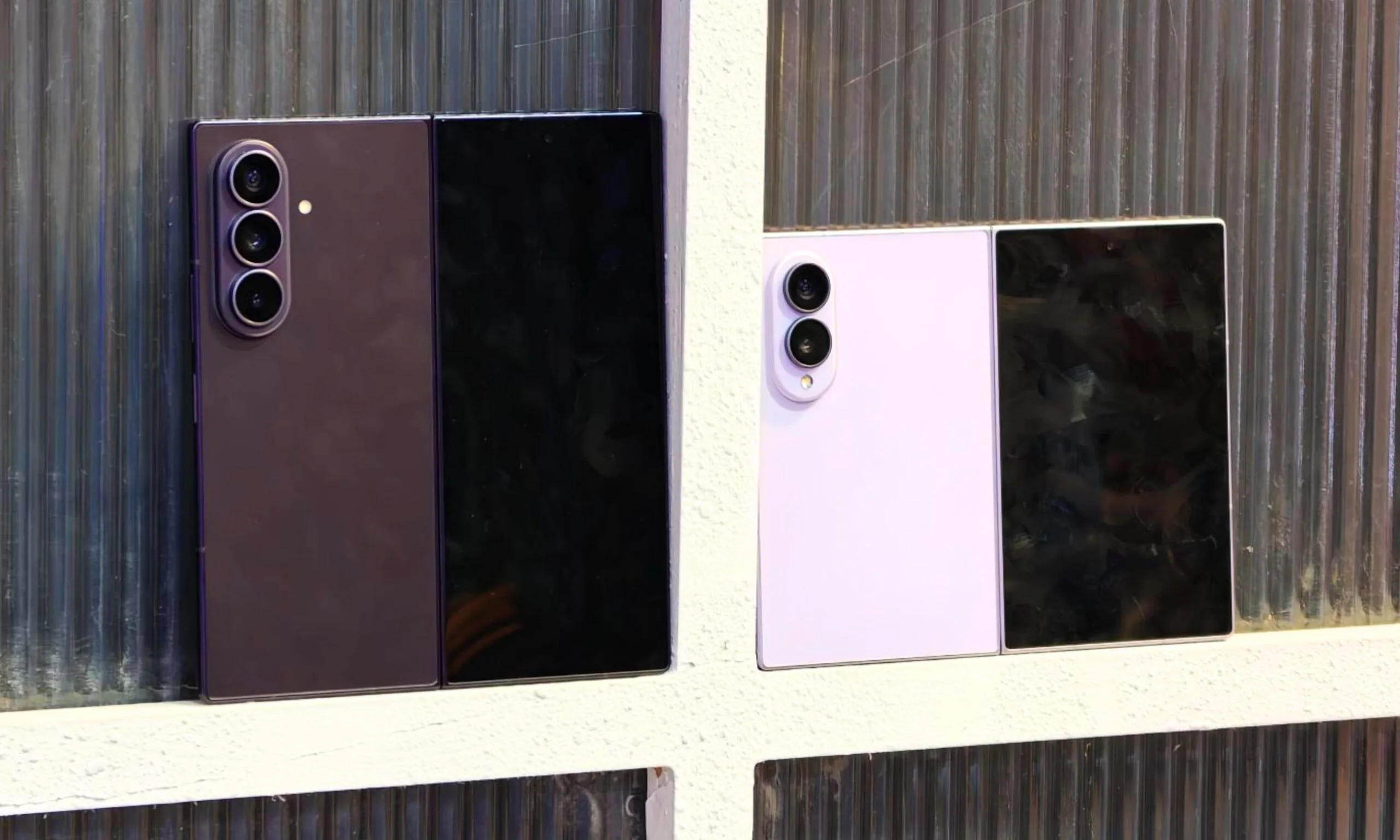
Passport-style foldables are returning, but in a foldable format. Samsung completely changed direction with the Galaxy Z Fold 8, Xiaomi followed with the 18 Fold, and Apple has now entered the category with the iPhone Duo. Even though the original Google Pixel Fold explored the same short-and-wide idea years ago, this is looking like the new smartphone trend in 2026.
After spending years with book-style foldables, I am warming up to this decision. I prefer the idea of keeping the phone compact when closed and opening it only when I need more room.
Someone recently told me they thought the iPhone Duo looked beautiful. Their only complaint was that they wished it ran Android. Don’t get me wrong, I like what Apple has done with the Duo in plenty of places. The software transitions are gorgeous. Still, the iPhone Duo is incredibly squat when closed. The outer display does match the inner one in terms of aspect ratio, but I can’t help but feel like the design lags behind.
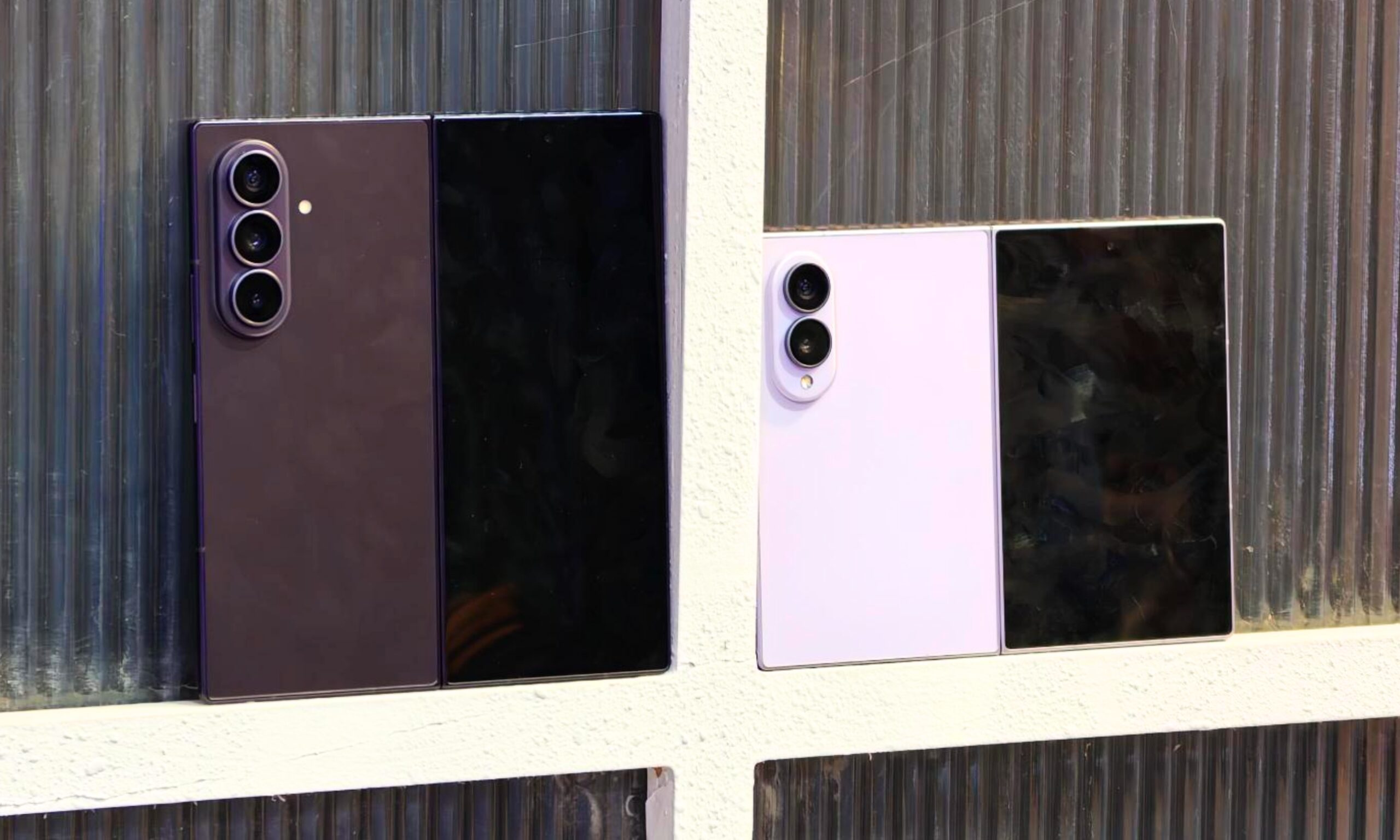
Passport foldables aren’t all the same
Put the two phones next to each other, and they initially look like variations on the same concept. The Galaxy Z Fold 8 has a 5.5-inch 10:16 cover display and opens into a 7.6-inch 4:3 canvas. Samsung designed the outer screen for quick scrolling and messaging, then lets the inner display handle tasks that need more immersion.
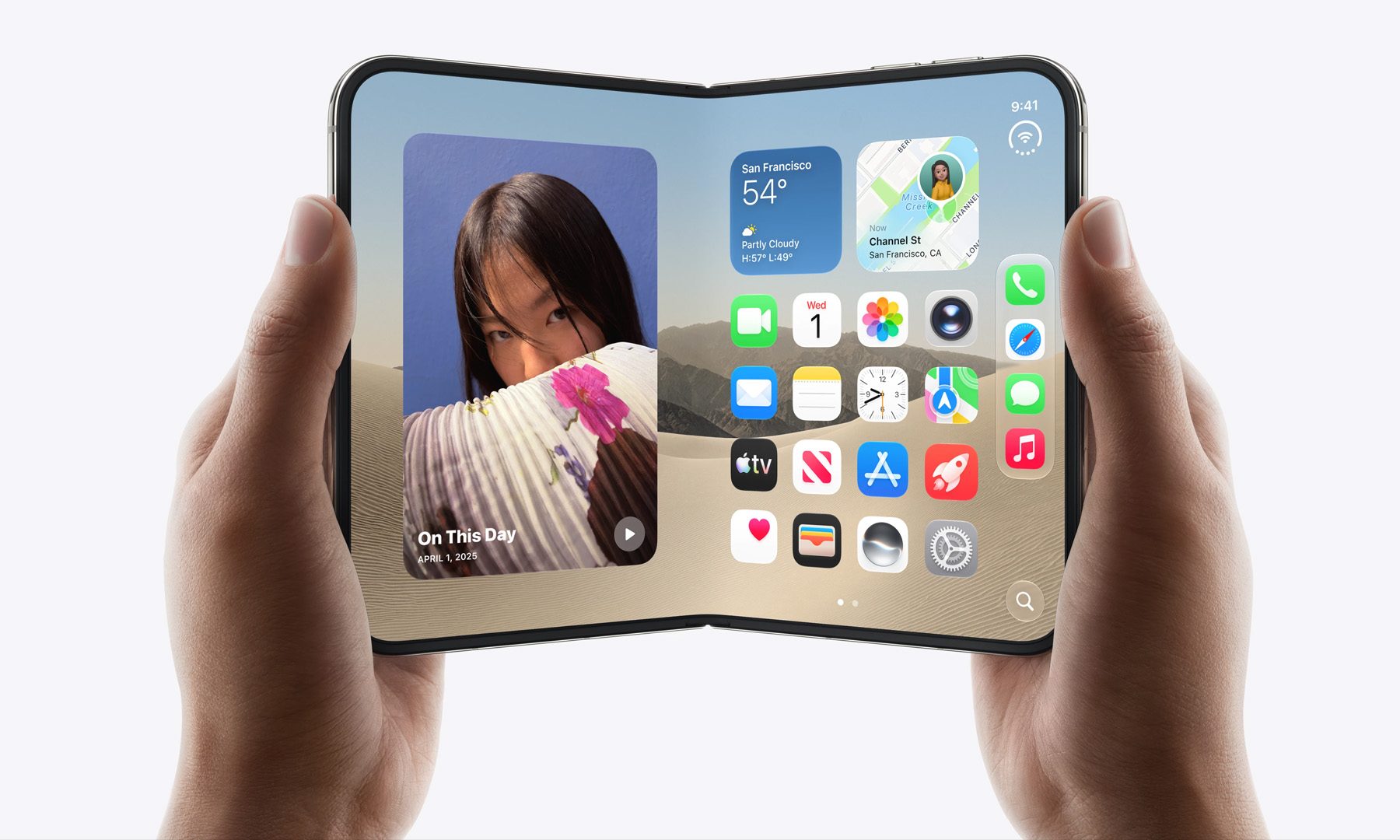
Apple does essentially the same thing with the Duo: a 5.4-inch outer display opens into a 7.6-inch inner screen. Apple even claims that the outer display is compact enough for one-handed use while the inner screen handles multitasking and entertainment.
| Features | Galaxy Z Fold 8 | iPhone Duo |
|---|---|---|
| Closed dimensions | 123.9 x 81.9 x 9.7mm | 117.8 x 84.1 x 11.3mm |
| Outer display | 5.5 inches, 10:16 | 5.4 inches, 14:10 (roughly) |
| Inner display | 7.6 inches, 4:3 | 7.6 inches, 14:10 (roughly) |
| Weight | 201g | 254g |
Overall, the Duo is a little shorter and heftier, not to mention wider too. Those numbers explain quite a lot about how differently the two devices come across in the hand. Samsung’s Fold 8 is wide enough to feel distinct from a conventional slab without tipping too far into miniature-square territory. The Duo goes farther, and that extra width combined with the weight makes the whole thing look and feel more substantial when you’re simply trying to use the outer screen.
The UI debate
Apple knows the Duo’s proportions create a software challenge. Its own developer guidance explains that the Duo’s wider aspect ratio creates more horizontal space but reduces the amount of useful vertical room. Apple therefore moves controls that normally sit at the top and bottom of an iPhone onto the side of the interface, where they preserve vertical space and become easier to reach.
It also reinforces why I’m not entirely sold on the hardware shape. On a normal iPhone, developers have spent years assuming a tall display. We’re all familiar with how navigation bars go along the top, while tab bars sit at the bottom, and your thumb moves through an interface built around those proportions. Apple deserves credit for actually changing up this formula.
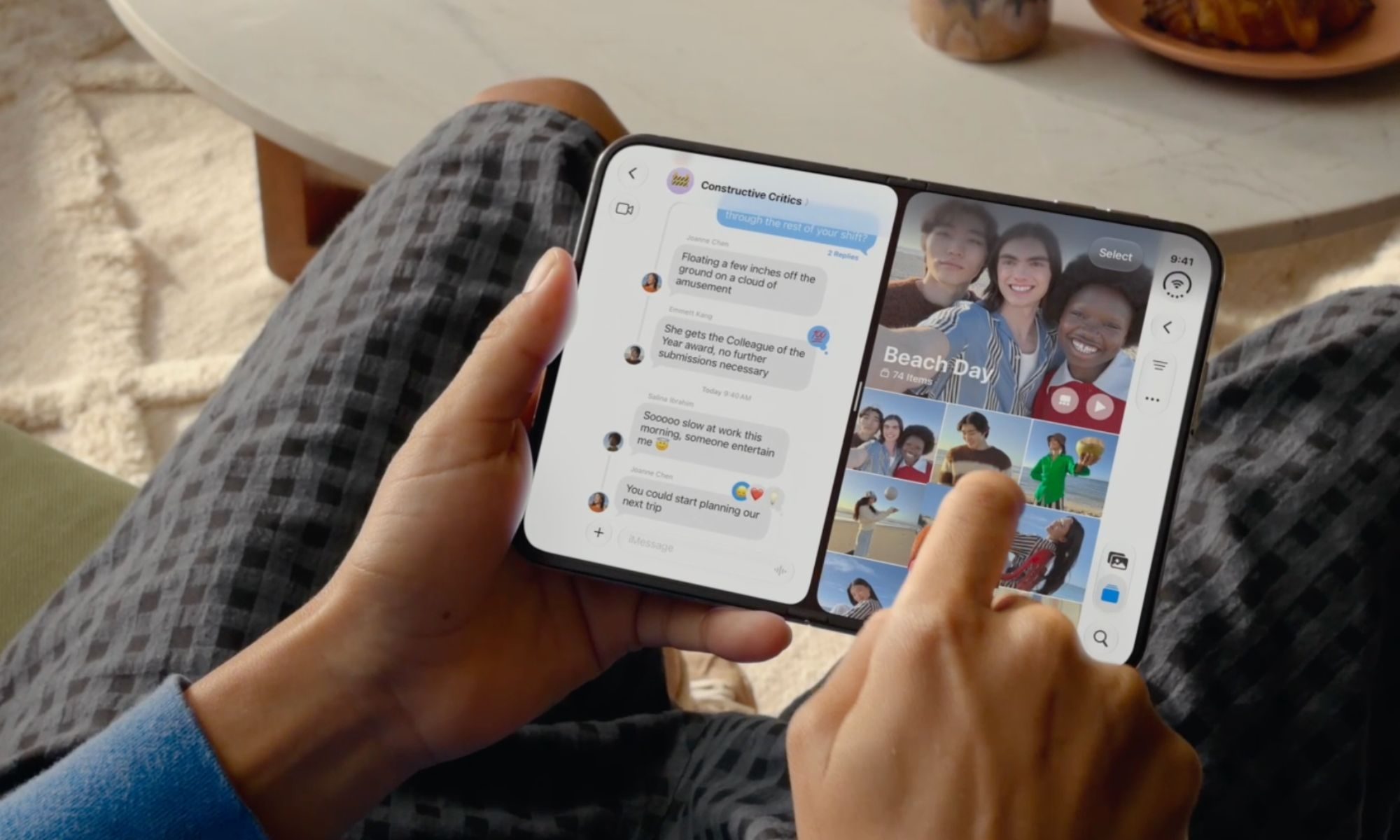
I already like how iOS 27 adapts across the Duo, and the software is one of the device’s biggest strengths. But Samsung’s Fold 8 has a simpler advantage with its 10:16 cover display that is still tall enough.
Samsung’s Galaxy Z Fold 8 is meant to be your main device
The ergonomics are another part of this conversation that gets lost when we obsess over diagonal screen sizes. The difference between 81.9mm on the Fold 8 and 84.1mm on the Duo looks tiny on a spec sheet. Once you combine it with the Duo’s shorter shape, 11.3mm folded thickness, and 254g weight, the device becomes a much chunkier object to move around in your palm.
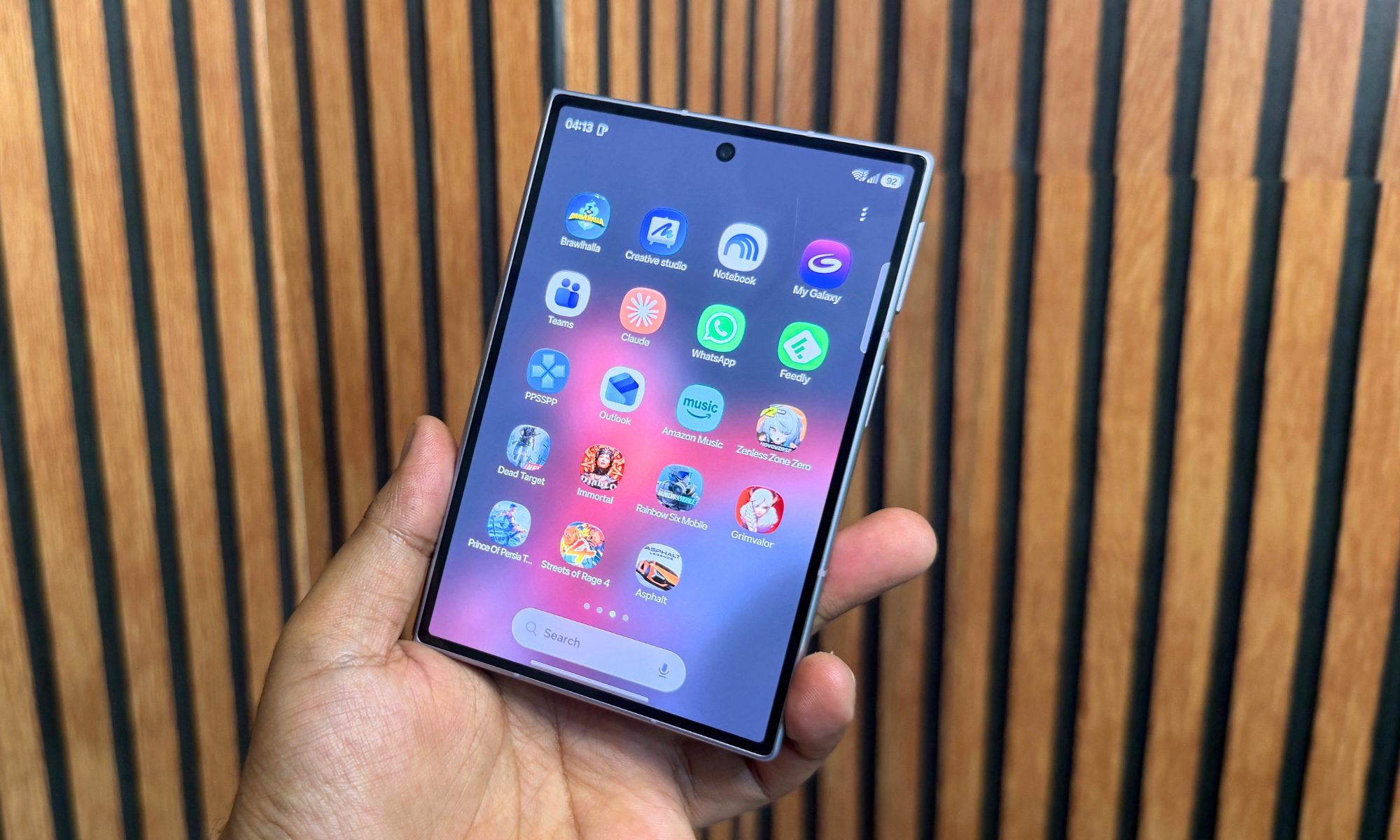
Something that really impressed me was just how much Samsung’s phone weighs. At just 201 grams, it is surprisingly light for a book-style foldable. I’d argue that this is what the pinnacle of foldables should look like. All the specs and features aside, having a phone that feels handy is much better than a phone that is a chore to hold after a while.
Samsung can give me the unusual passport proportions without making every quick interaction remind me that I’m holding two halves of a folding phone. Not saying it’s as light as the truly compact phones like the Galaxy S26 and Pixel 11 Pro, but it gets realistic enough.
I’d pick the Z Fold 8 any day

I’ve already argued that compact, wide foldables could solve one of the biggest problems with small phones. You get something manageable for calls, notifications, and quick interactions, then unfold it whenever you need more room for gaming, email, reading, or multitasking.
The question is how compact you make that outer experience. The Duo embraces a much squatter display and then uses thoughtful software to make that unfamiliar canvas work. Samsung’s Fold 8 feels a little closer to a conventional phone without losing the passport design. Its best part is still that it’s lighter and thinner, which makes the shape easier to drive daily.
I might change my mind once I try out the Duo… maybe. Even so, the Galaxy Z Fold 8 is much closer to what I want from a passport foldable.

US Charges Robinhood Engineers Over Crypto Listing Trades

Brand New Day Becomes Highest-Grossing Domestic Movie Ever

What are the best variations of Blackjack?



-

 Fashion5 days ago
Weekend Open Thread – Corporette.com
-

 Business7 days ago
Micron Stock Climbs Above $1,031 as AI Memory Crunch and a $50 Billion Outlook Fuel the Rally
-

 Tech3 days ago
The Latest Weird Thing to Play Doom Is the Mapped-Out Brain of a Fruit Fly
-

 Business7 days ago
AMD Stock Climbs After Management Lifts 2027 Data Center Outlook Toward $70 Billion in AI Sales
-

 Business6 days ago
10 Most-Streamed Songs On Spotify In 2026 So Far, Led By Ella Langley’s Dominant Run On The Charts This Year
-

 Crypto World6 days ago
XAG/USD: Silver’s Short-Term Rally Meets Its Moment of Truth
-

 Crypto World6 days ago
2 Chip Stocks Broke Out This Week. Neither Was Nvidia
-

 Tech6 days ago
Battery life is the only iPhone 18 Pro and iPhone Duo upgrade I care about. Apple didn’t disappoint
-

 Crypto World7 days ago
Pi Network ships Protocol 27 on a network with 14 million users and zero DeFi
-

 Crypto World6 days ago
OKX launches 10x OpenAI, Anthropic X-Perps in Europe
-

 Crypto World6 days ago
Diesel Tops $6 a Gallon for the First Time as 28 States Set Records
-

 News Videos5 days ago
Facing Financial Fears
-
 Business6 days ago
Western Digital Slips 2.7% as AI Storage Rally Cools After Record Cash and Guidance
-

 Entertainment7 days ago
Case Sees Major Update As Jury Deliberations Begin
-

 Business4 days ago
Rivals Sam Altman and Elon Musk Rally Behind Dario Amodei’s Call for a Slowdown in AI Development
-

 Crypto World2 days ago
Elon Musk Drops a Bombshell: Grok 5 Could Be the AGI Breakthrough
-

 Business7 days ago
Five Leading AI Experts Warn Superintelligence Could Kill Humans and Explain Their Case
-
 Crypto World7 days ago
Ethereum price breakout hinges on a close above $2,535
-
Crypto World6 days ago
Ethereum Price Analysis: Consolidation at $2.5K Tests Momentum as On-Chain Activity Surges
-

 Crypto World7 days ago
Ant International joins Visa, Mastercard to build AI agent payment standards
You must be logged in to post a comment Login