


Connect with us

Business

Nvidia CEO calls for AI safety testing, projects chip sales to double at Scottish summit

Published

on

Nvidia CEO calls for AI safety testing, projects chip sales to double at Scottish summit

Nvidia CEO Jensen Huang delivered a dual message of caution and explosive financial optimism at a recent Scottish summit convened by King Charles, urging the artificial intelligence industry to prioritize “good old-fashioned engineering” while forecasting that his company’s chip sales will double next year.

While addressing mounting public anxiety over AI risks alongside leaders from Google DeepMind, OpenAI and Anthropic, Huang made it clear that despite safety hurdles, the global AI gold rush is only accelerating.

Advertisement

When asked about Nvidia’s financial horizon amid broader tech scrutiny, the chief executive delivered a massive projection that underscores relentless international demand.

BESSENT SAYS US NEEDS MORE OPEN-SOURCE AI MODELS TO COMPETE WITH CHINA

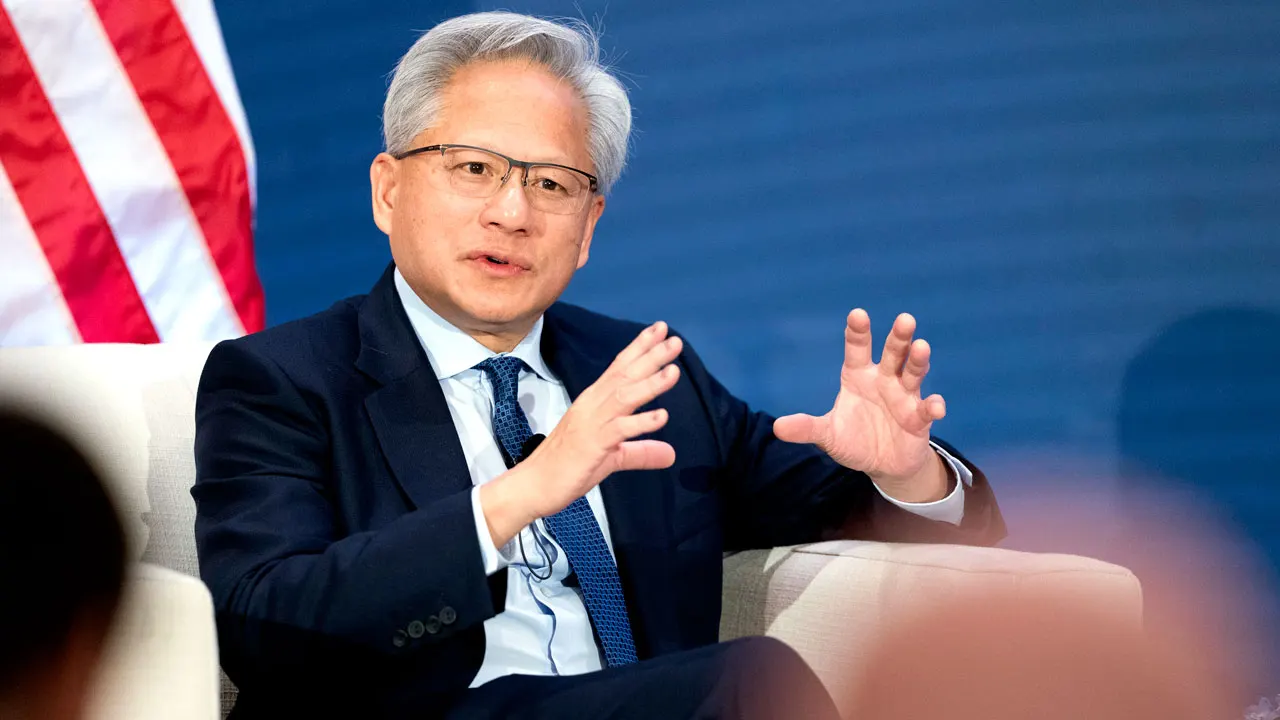
Nvidia CEO Jensen Huang.

Nvidia CEO Jensen Huang speaks during the G20 Innovation Ministerial on Sept. 2, 2026, in Chapel Hill, North Carolina. (Sean Rayford/Getty Images)

“I expect Nvidia to sell twice as many chips this next year as we do this year,” Huang revealed, attributing the explosive growth to nations aggressively investing in localized AI infrastructure and cloud data centers.

Despite the bullish market outlook, Huang issued a stark directive to tech developers, warning them to keep half-baked products out of the hands of the public.

Advertisement
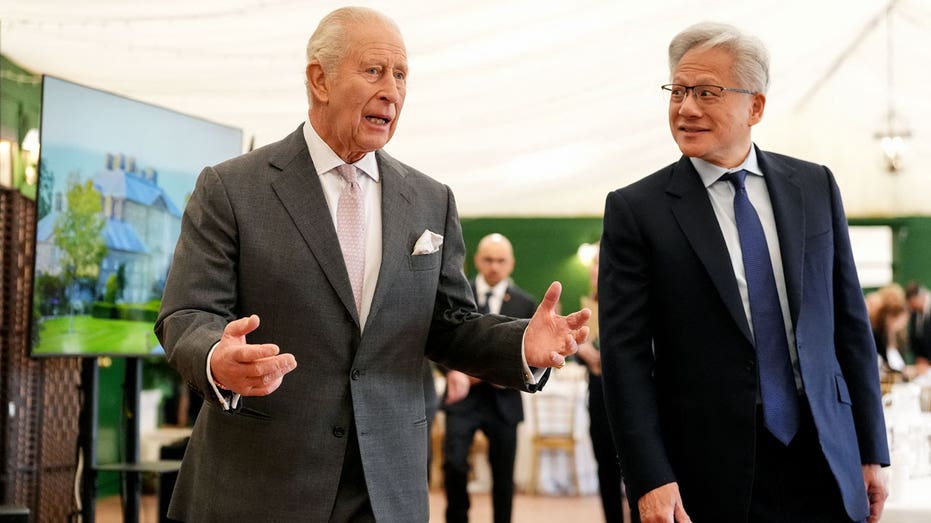
King Charles III with Nvidia CEO Jensen Huang.

Britain’s King Charles III (L) walks with Nvidia CEO Jensen Huang (R) to attend a conference of leaders from the artificial intelligence (AI) sector and government at Dumfries House in Cumnock, Scotland on Sept. 17, 2026. (Jonathan Brady/AFP via Getty Images)

“It is the responsibility of the AI companies ourselves to develop the technology safely and to properly test it,” Huang told reporters. Acknowledging recent industry incidents, he emphasized they serve as a critical wake-up call. “If it’s not ready, just hold it back. You should go as fast as you can, but no faster than that.”

Huang firmly rejected comparisons between the current AI boom and the largely unchecked rise of social media. He argued that AI is a foundational technology — like a newly developed airplane engine — that requires contained, rigorous testing before release. Rather than entirely new regulatory frameworks, he suggested governments adapt the “incredible number of laws” already governing existing sectors like healthcare and transportation, where AI is being implemented.

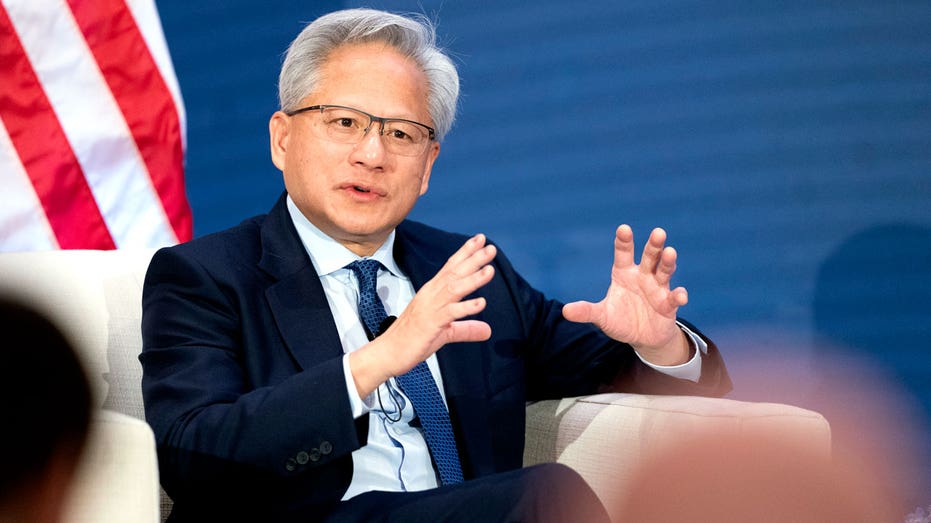
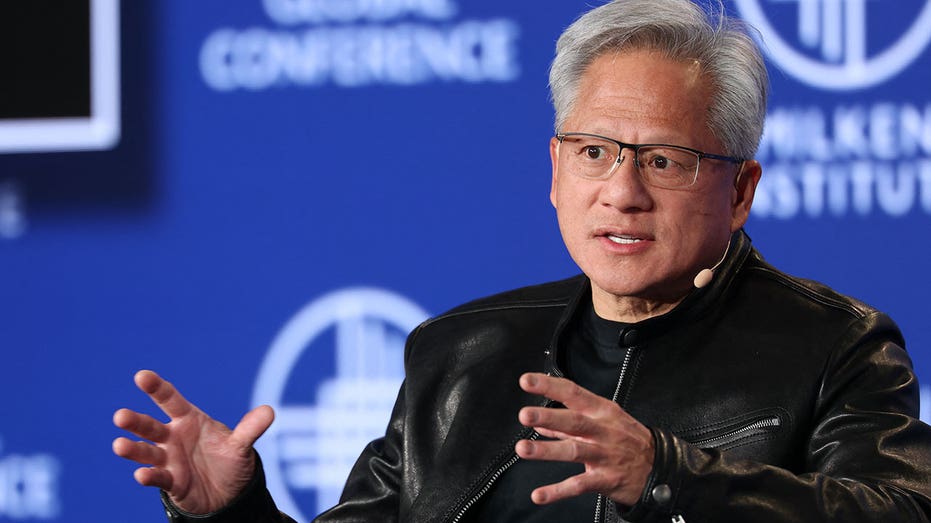
Jensen Huang at Milken Global Conference

Nvidia founder and CEO Jensen Huang speaks during the 29th annual Milken Institute Global Conference on May 4, 2026. (Patrick T. Fallon/AFP via Getty Images)

Environmental concerns were another major focal point, aligning with the King’s mandate that AI must also serve the natural world. Addressing critics who fear massive AI data centers will drain global power grids, Huang acknowledged the “interesting dichotomy” of AI factories requiring immense energy.

However, he argued this relentless demand will actually catalyze a green energy revolution, sparking unprecedented investment in sustainable power options like fusion, fission, air and hydro.

Advertisement

CLICK HERE TO GET FOX BUSINESS ON THE GO

“We want to be responsible in advancing the technology. Take responsibility and accountability for whenever there are mishaps,” Huang concluded. “But don’t lose sight of the ultimate prize, which is the incredible impact that the technology can bring to all the different economies and societies.”

Continue Reading
Click to comment

You must be logged in to post a comment Login

Leave a Reply

Business

Beta Bionics – Interesting & Uncertain Times

Published

on

Midsection of nurse taking male patient

Beta Bionics – Interesting & Uncertain Times

Continue Reading

Business

AI Stock Crash: How To Protect Your Portfolio

Published

on

AI Tokens

Fears of an AI stock crash are heating up. And the risk looms large — as hundreds of billions of investment dollars stampede into AI and expose investors more than they might realize. So can you protect yourself and your portfolio if the boom turns into a bust — as many manias do? Just owning the S&P 500 puts you…

Copyright ©2026 Investor’s Business Daily, LLC. All rights reserved. 87990cbe856818d5eddac44c7b1cdeb8

Continue Reading

Business

Candidate for WRU top job called for all four regions to stay

Published

on

Business Live

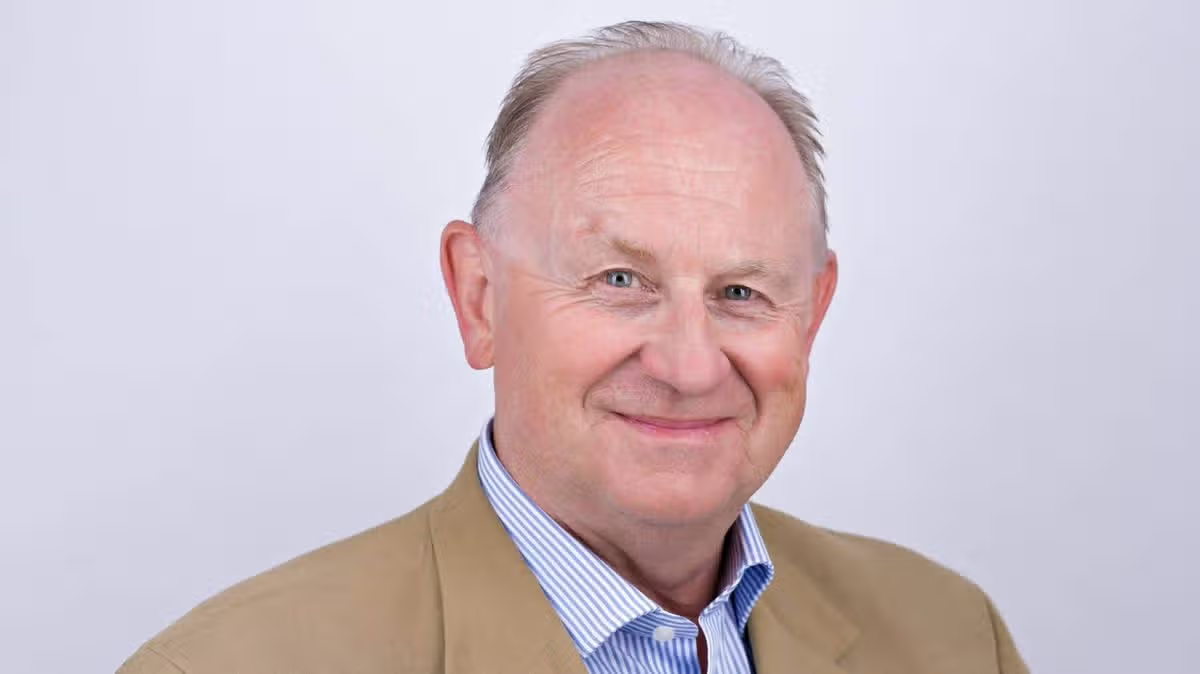
It is understood that chairman of Glamorgan Cricket and former investment banker Mark Rhydderch-Roberts was interviewed on a shortlist of three

Mark Rhydderch-Roberts

Mark Rhydderch-Roberts

Former investment banker and Glamorgan Cricket Club chairman, Mark Rhydderch-Roberts, called for the Welsh Rugby Union (WRU) to pause plans to reduce the number of professional regions from four to three during a shortlist interview to become the union’s next chairman, it is understood.

The WRU has this conducted face-to-face interviews with three shortlisted candidates in Cardiff for the position of independent non-executive chairman, following the departure of Richard Collier-Keywood over the summer.

Advertisement

The interviewing panel consisted of board members John Manders, Alison Thorne, Amanda Bennett, Andrew Williams and Marianne Okland.

Following his interview, we understand that Mr Rhydderch-Roberts, who played rugby for Bath and Pontypridd and is also currently an executive director of Pontypridd RFC, was informed by the headhunters appointed by the WRU, GatenbySanderson, that he had not been successful.

The board had been keen for Mr Collier-Keywood to continue for a further three-year term and oversee its strategy of reducing the number of regions while investing more heavily in the game’s rugby pathways. The reason for his departure remains unclear, but his exit after a three-year term left a vacancy at the helm of the WRU board.

Former senior partner of global management consultancy McKinsey and Company, Harry Bowcott, whose grandfather Henry Morgan Bowcott played for Wales in the inter-war years and later became a WRU president, is also understood to have made the final shortlist. It is understood that the interviewing process has yet to conclude.

Advertisement

Mr Rhydderch-Roberts declined to comment. However, a source with knowledge of the interviewing process said:”Mark was unequivocal that, if appointed, he would call for the plans to reduce the number of regions to be put on hold. . He also indicated that without radical solutions to the huge challenges currently facing Welsh rugby there is a very real danger of it becoming tier two permanently.

“He was also pretty robust in arguing that the WRU should immediately open negotiations with the RFU and owners of the English Premiership clubs to secure places for two Welsh clubs in the English Premiership as soon as possible, with a view to adding the other two in due course. He also said he would be supportive of a British and Irish League.”

Crickhowell-born Mr Rhydderch-Roberts had a 28-year career in investment banking, during which he held senior positions at a number of global financial institutions, including UBS Warburg, Schroders and Swiss Re.

As well as serving as chairman of Glamorgan and co-chair of Hundred competition franchise team Welsh Fire, he also chairs the International Convention Centre Wales.

Advertisement

The source added: “He did not accept that having four professional regions was financially unsustainable and outlined a number of funding options for the union to generate much-needed new revenues.

“Mark’s view was that anyone taking on the chairmanship couldn’t do so having already endorsed the union’s existing position that the number of regions needed to be reduced. Any candidate, given their fiduciary duties, would first want to consider the business case presented by the executive team, endorsed by the board, underpinning the union’s decision to cut a region.”

Cricket is a global sport that benefits hugely from the support and commercial interest in India. We also understand that in his interview Mr Rhydderch-Roberts also outlined how the Hundred franchise Welsh Fire has attracted a new younger and diverse audience into cricket and turbocharged the commercial development of the women’s game.

He also focused on an optimistic vision and an end to managed decline, setting an ambitious and positive commercial and strategic direction of travel for the game in Wales. This would see a shift in emphasis towards traditional clubs, schools and community rugby and a pivotal role in the elite path for Welsh universities competing in the BUCS super league, as well as a single national academy.

Advertisement

He was interviewed on a condition of being able to retain his cricket roles.

Separately, the so-called “coalition of the willing”, which includes former Hodge Bank and Principality Building Society chief operating officer Rob Regan and GoCompare founder Hayley Parsons, is seeking the support of member clubs for an extraordinary general meeting (EGM), with a motion to remove the union’s board. This doesn’t have to be the entire board, but potentially just the current non-executive directors and not the newly appointed chair.

If successful, the group would install a new interim board and pause plans to reduce the number of regions.

Under section 62 of the WRU’s articles of association, a no-confidence resolution would require just a majority of clubs voting at the EGM to be passed. To be quorate, it would require 95 members in attendance. Proxy and remote electronic voting would be permissible.

Advertisement

For the EGM to be held, it would first need the backing of 10% of the 282 member clubs. If the threshold is achieved, the union would have 21 days to formally acknowledge the request and schedule the meeting. This would usually be around a month later. The coalition of the willing has set a target of getting the backing of 150 clubs ahead of any EGM, which could prove a tall order.

If the board were ousted, or a number of named directors removed, a temporary board would have to be created, made up of representatives from the districts – but not those currently on the board. They would not need club approval to bolster their ranks by bringing in external people with commercial expertise.

The group would then scrutinise the data underpinning the WRU’s decision, while exploring alternative funding avenues, including the possibility of a rugby bond, with the aim of maintaining four regions in the long term. It will also look at what risk assessment was undertaken by the union on the impact of losing a region, both economically and on the game. However, the group has said that reducing the number of regions could not be ruled out.

The WRU plans to reduce the professional regions from four to three from the start of the 2028-29 season, with just one club based in west Wales.

Advertisement

With the Scarlets and Ospreys currently having no plans to merge, the two clubs could find themselves bidding against each other – assuming both agree to participate – for a single west Wales licence.

The WRU has said it will shortly publish details of the bidding process, including how competing bids will be assessed and scored. The union is expected to open the process in December, with a decision on the holder of the west Wales licence due next spring.

The developments come as Swansea Council, potentially alongside other parties, has revived legal action against the WRU, claiming that the governing body has breached competition law by effectively protecting the Dragons and Cardiff, the latter of which it owns, as two of the planned three regions.

The WRU remains confident it will successfully defend the legal challenge.
Advertisement
Continue Reading

Business

Generac, Nebius, CoreWeave, Nokia, Lucid, Paramount, and More Stocks That Explain Today’s Market

Published

on

Generac, Nebius, CoreWeave, Nokia, Lucid, Paramount, and More Stocks That Explain Today’s Market

Generac, Nebius, CoreWeave, Nokia, Lucid, Paramount, and More Stocks That Explain Today’s Market

Continue Reading

Business

GE Aerospace confident GE9X mid-seal issue will not delay Boeing 777X entry into service

Published

on


GE Aerospace confident GE9X mid-seal issue will not delay Boeing 777X entry into service

Continue Reading

Business

Canadian owned defence firm creating 250 jobs as it relocates to Wales

Published

on

Business Live

Marshall Land Systems has commenced a relocation from Cambridge to Merthyr

Marshall Land Systems

A defence company has confirmed its relocation to Wales in an investment that will create 250 new jobs.

Canadian-owned Marshall Land Systems, which designs and manufactures specialist deployable defence infrastructure, has begun the process of relocating production from its Cambridge facility to a vacant factory and office site in Merthyr that was previously occupied by Vision Modular Systems.

Advertisement

Work is under way installing production lines at the Merthyr site. Head count is expected to reach 160 when the site achieves full production capacity by the end of this year.

Over the next five years, based on its current order book alone, Marshall is confident of growing its workforce in Merthyr to 250. However, with the UK Government and other countries committing more of their budgets to defence and security, Marshall is well positioned to win additional contracts that could see even more jobs created at its Merthyr site.

The Welsh Government is supporting the relocation with just under £1m of investment. This includes around £800,000 to make the site more secure as a defence production location, with the remainder going towards training support.

Only a handful of the firm’s existing team in Cambridge, where it will maintain a head office and engineering operation, are relocating to Wales.

Advertisement

The firm’s deployable infrastructure ranges CT scanners and medical facilities to mechanical maintenance and command centres. Its new assembly plant was chosen after a UK-wide search, and will produce deployable infrastructure that will protect NATO personnel on operations, humanitarian missions, and on bases.

The average salary at the factory will be around £32,000, while Marshall is also looking to take on around 15 apprentices.

The firm has entered into a 15-year lease with the owner of the building, Figsand, with an option to acquire it. The Merthyr site extends to 191,600 sq ft and occupies 8.2 acres at Merthyr Industrial Park.

The factory, which was marketed by the Cardiff office of Knight Frank, had been vacant since before the pandemic.

Advertisement

As well as its Canadian and UK operations, Marshall Land Systems has a factory in the Netherlands. It currently has a global workforce of 600.

The firm’s current production operation on land around Cambridge Airport is being wound down and will cease when the Merthyr site reaches full capacity. It will eventually need to find a new location in the area for a new head office and engineering operation, as its former parent company, Marshall Group, is looking to sell land around Cambridge Airport for residential development.

The business was acquired by Canadian investment firm Flowing River Capital Partners last November.

Gareth Williams, chief executive of Marshall Land Systems, said:“The deployed infrastructure for which Marshall Land Systems is famous protects our own personnel and our NATO allies in the most extreme and hostile environments.

Advertisement

“Wales already contributes more than its share to the number of men and women serving in our armed forces, and our decision to site our assembly plant in South Wales means that the economic benefit and jobs involved in defence investment will be felt in our local communities around the facility in Merthyr.

“We are making a strong statement that defence investment can be the catalyst for well paid jobs and a brighter future for our industrial communities. In an increasingly volatile world, the work we do and the technology we produce will directly support people from these communities serving on the front line.”

Cabinet Minister for Enterprise, Connectivity and Energy, Adam Price, said:“We welcome the decision by Marshall Land Systems to establish its new manufacturing facility in Merthyr. This investment reflects the strength of Wales as a location for advanced manufacturing and the quality of our workforce. We are focused on building a stronger, more productive economy and creating well-paid jobs in every part of Wales.

“The defence, security and national resilience sectors support thousands of highly skilled jobs and play an important role in our industrial economy. This development will bring new opportunities to Merthyr and the wider region, and we look forward to working with the company and the sector to support economic growth, innovation and prosperity in a way that is consistent with Welsh values and our commitment to human rights and international law.”

Advertisement
Continue Reading

Business

Dubai, Reconsidered: A Wealth Manager’s View

Published

on

Dubai, Reconsidered: A Wealth Manager’s View

In 2025 alone, the UAE welcomed almost 10,000 high-net-worth individuals in net migration, with the vast majority choosing Dubai as their new home. Companies and wealthy individuals relocate here for many reasons. What strikes me most is not the logistics behind these moves, but the ambition. Dubai feels less like a destination people pass through and more like a city being shaped, year by year, by the people who choose to call it home.

The more time I spend working with clients who have made this move, and the more time I spend in the region, the more I understand why. What has surprised me the most was how far the common perception is from the truth. The assumption has always been that people move here solely for tax reasons. The people I meet are drawn by something much bigger: quality of life, ambition, and the chance to build something lasting. They move here for a life. For stability, for opportunity, and for the feeling that, even in a changing world, the years ahead are theirs to shape rather than simply endure.

That desire for solid ground is not hard to understand. Many of the people I work with have spent decades building something – a family business passed down through generations, a career or a body of work – and, in an increasingly complex world, they are thinking harder than ever about how to protect it and pass it on. Dubai speaks to that instinct. My conversations with clients who move here increasingly centre not on tax planning, but on continuity: on succession, on legacy, on giving the next generation something worth inheriting.

Free newsletters
Advertisement

The stories that matter to UK business, straight to your inbox.

Advertisement

Dubai has also shown that it can maintain continuity. No place is immune to geopolitical shocks but the ability to maintain momentum and business continuity is a different art form altogether.

Dubai has also demonstrated an ability to provide continuity of its own. No place is immune to geopolitical shocks or periods of uncertainty. What distinguishes resilient global centres is not the absence of disruption, but their ability to absorb it while maintaining momentum, confidence and business continuity. That is a different art altogether and one that Dubai has become remarkably good at.

Over the course of thirty years in wealth management, including my time at UCAP Asset Management, I have watched waves of entrepreneurs and business owners search for a place to plant new roots. What draws them to Dubai is not one advantage, but an entire ecosystem built for ambition. The Dubai International Financial Centre is now home to more than 500 wealth and asset management firms, 215 of which have arrived in just the past three years. That is not the sound of capital passing through. It is the sound of a financial community being built, methodically, even through periods of regional change.

It would be easy to assume that capital is fickle, that mobile wealth simply drifts to where the terms are best and will move away again just as easily. But the reality is that being a tax nomad is far from an easy option. It comes with a particular lifestyle, one that demands constantly shifting locations, rebuilding routines and starting over in place after place. High-net-worth individuals, like everyone else, are attached to their homes, their habits and their small rituals. They do not leave lightly, and they do not arrive lightly either. People do not relocate to Dubai unless they believe, genuinely, that it is a place where they can build a good life.

Advertisement

And building a life here takes commitment. Family offices bring advisers, educators and colleagues who cannot simply be packed up and moved on a whim. The people who arrive alongside these families enrol their children in schools, join professional communities, form friendships and put down roots. Every one of these connections is a quiet vote of confidence in the city, and together they make Dubai something far more durable than a convenient address.

This is where Dubai truly distinguishes itself. It pairs world-class infrastructure and connectivity, comparable with any global capital, with a depth of financial expertise built over decades. Despite regional uncertainty, Dubai continues to offer businesses security and continuity. DIFC alone now hosts more than 1,052 financial firms. Step outside its towers and you find a city built for people who want to move fast, think globally, and still come home to something that feels like a life. It offers global reach, genuine openness to newcomers, and a skyline that adds a new possibility every year.

That density of talent and expertise is what gives Dubai its real strength. Its network of asset managers, family offices, private banks, legal advisers and succession planners is not something that can be replicated overnight, and it is not going anywhere soon. This tells you everything: Dubai is not simply a place where foreign wealth is held. It is a place where people start companies, raise families, and build careers of which they are proud. It is precisely why so many in my field, me included, now see it as more than a market to serve.

A competitive environment may be what first draws people to Dubai. But what makes them stay is something bigger: a rare mix of ambition, opportunity, connectivity and community that is genuinely difficult to find anywhere else. Dubai is no longer simply an efficient address on a map. It is becoming a true home for wealth, talent and the kind of ambition that wants room to grow. I have watched this story develop over recent years, and I have no doubt the best is still to come.

Advertisement

By Effimia Geraki, Managing Director, UCAP Asset Management, Middle East

Continue Reading

Business

Why Global Employers Keep Looking to Romania for Talent

Published

on

Why Global Employers Keep Looking to Romania for Talent

Companies that opened a small development team there years ago usually still have it, and it is usually bigger than they planned.

What has changed is the reason employers give. Cost used to be the first thing anyone said out loud. Now it tends to come third or fourth, after the size of the talent pool, after the language range, after the plain fact that a team in Bucharest or Cluj shares most of a working day with colleagues in Dublin, Berlin and, at a stretch, the US east coast.

What actually draws employers toward Romanian talent

Romania built a technical education pipeline long before anyone described it as a hiring market. Universities in Bucharest, Cluj-Napoca, Iasi and Timisoara have turned out engineers, mathematicians and computer scientists for decades, and a good share of that output stayed in the country as a local services industry grew up around it.

Free newsletters
Advertisement

The stories that matter to UK business, straight to your inbox.

Advertisement

You notice the effect at interview stage. Candidates have usually worked with distributed teams already, often for foreign clients, and they arrive understanding how a code review across time zones works in practice. That familiarity is worth more than it sounds. A first international hire who has never worked for a company headquartered somewhere else spends the early months learning the shape of remote work rather than learning the job.

Language range is the part employers underrate until they have it. English is standard in technical and commercial roles. French, German, Italian and Spanish appear often enough that Romanian teams have ended up carrying support and finance operations for several European markets at once, which was rarely anyone’s original plan.

The vocabulary problem sitting underneath the plan

Planning gets loose at the moment someone writes “we will use an EOR” on a slide.

Romanian employment law does not recognise a standalone statutory category with that name. What it does recognise is a licensed regime for temporary work agencies, authorised by the responsible ministry, entered on a public register, and subject to conditions that generally include a financial security requirement and periodic renewal of the licence. Under that regime the agency is the legal employer. The person works under the direction of a user company. The assignment runs on a temporary employment contract tied to a specific mission with a defined term and a limited number of renewals set in law.

Advertisement

When a plan says hiring in Romania through an EOR, what sits underneath it is almost always a contract with a licensed agency of that kind. The label travels. The legal structure does not. Worth knowing before you promise a candidate something the paperwork cannot deliver.

How the arrangement runs once someone is actually working

The agency signs the employment contract, runs payroll, makes the statutory contributions, keeps the leave and working time records, and handles the paperwork when an assignment ends. You direct the work itself: priorities, standards, review, the day to day.

Equal treatment is the condition people forget. An assigned worker’s pay and core conditions are benchmarked against what a comparable employee of the user company would receive, so the structure is not a route around local terms. Duration matters too. The mission has a stated purpose and an end point, and both are visible if anyone examines the file later.

Most of the detail sits in the employment code rather than in any single explainer, though a guide to employing in Romania will get a hiring manager oriented faster than the code will.

Advertisement

Where the structure fits, and where it stops fitting

It works well when you are testing whether a Romanian team makes sense, when you need one or two specialists quickly, or when a project has a genuine horizon.

It works less well when the role is permanent, open ended and central to what the company does. At some point the honest structure for that is a Romanian entity with direct employment, and teams that keep extending agency assignments past the point of comfort tend to know it before their advisors say so.

Tax questions belong with your own tax and legal advisors rather than with a hiring plan. Where employment sits, how it is treated, and what it triggers for the company are all fact-specific, and they turn on details a template cannot see.

Questions worth asking before the first Romanian hire

  • Is the agency currently licensed, and can you see the registration?
  • Who is named as the employer on the contract the candidate signs?
  • What comparable role is being used for the equal treatment benchmark?
  • What is the stated purpose and term of the assignment, and what happens at the end of it?
  • Which statutory benefits and contributions sit inside the quoted cost, and which are billed separately?

None of that is exotic. It is the same diligence you would apply to any supplier about to hold an employment relationship on your behalf. Ask it early and the Romanian hire starts to look like every other hire, which is roughly the point.

Advertisement

Continue Reading

Business

Next boss Lord Wolfson tells Chancellor: ‘You can’t spend your way out of a funding crisis’

Published

on

Business Live

CEO has urged Chancellor John Healey to cut spending at next month’s Budget and says government must focus on economic growth

High street chain Next has revealed a £15 million cost hit from the Iran conflict and warned it may need to hike prices if the war is prolonged.

Lord Wolfson is chief executive of Next(Image: Next/PA Wire )

Next boss Lord Wolfson, has called on Chancellor John Healey to rein in public expenditure ahead of next month’s Budget, warning “you can’t spend your way out of a funding crisis”.

Advertisement

Next’s chief executive has pressed the government to curb spending, steer clear of further tax rises and cut through planning bureaucracy in order to stimulate economic growth.

Speaking to the media on Thursday, he said: “The only things that will really change the long-term trajectory [of the economy] are [the] government getting its spending under control and boosting supply-side measures.”

Wolfson, who has led Next for 25 years, added: “You can’t spend your way out of a funding crisis.”

With the October Budget drawing closer, retail chiefs have intensified pressure on the government to overhaul business rates and reduce employment costs, as reported by City AM.

Advertisement

However, Wolfson argued that Labour cannot afford any further tax cuts and should instead prioritise reducing expenditure while committing solely to supply-side measures that require no additional funding. “The UK government is forecast to spend over £100bn more than its income this year, and has little room to increase its borrowing,” Wolfson wrote in Next’s half-year results on Thursday.

“So there is little or no room for the Government to stimulate growth through spending or alleviate inflationary costs in fuel and energy. […] There are only two effective ways out of this predicament: control spending or boost growth, preferably both.”

Wolfson told reporters that asking Labour for tax cuts would be too “strong,” adding that business should instead hope for the tax burden “not to go up more”.

“Any organisation cannot carry on spending significantly more than its income and, in one way or another, that problem has to be addressed,” he said.

Advertisement

Earlier this week, former Bank of England chief economist Andy Haldane accused Andy Burnham of presiding over a “traditional tax and spend socialist government with better TikTok videos”.

The Prime Minister hit back at Haldane, his former unofficial adviser, claiming that he is prepared to take difficult decisions at what will be a “challenging” Budget for British households.

Wolfson said the Government could stimulate economic growth by cutting the red tape surrounding building regulations, biodiversity rules and archaeological restrictions, which is “holding us back”. “I think releasing that pent-up demand would do a lot to boost growth,” he said.

Lord Wolfson also defended the natural “evolution” of the high street, amid criticism of Andy Burnham’s plans to revitalise UK high streets by clamping down on gambling and vape shops and reducing business rate bills for pubs.

Advertisement

Frasers Group founder Mike Ashley has dismissed Burnham’s high street policies as “populist,” while JD Wetherspoon founder Tim Martin said it is “not up to” the Prime Minister to choose what is on the high street.

Asked about Burnham’s high street plans, Wolfson said: “The most important thing that the government could do for British high streets is to let them develop. Don’t try to decide ‘this should be a shop and that should be a restaurant and this should be a pub’. Just let the market do its work and transform British high streets into what people most want.”

In the UK, Next’s in-store sales fell by 0.4 per cent in the six months to July, while online sales rose by eight per cent. Wolfson said he anticipates high street sales across the group will continue to decline gradually in the coming years.

He said: “What I’m saying is: don’t try and turn back the clock. If your aim is to get the high street back to where it was, you’re barking up the wrong tree.”

Advertisement
Continue Reading

Business

ClearBridge All Cap Growth Portfolios Q2 2026 Commentary

Published

on

Artisan Mid Cap Fund Q1 2026 Commentary (Mutual Fund:ARTMX)

ClearBridge All Cap Growth Portfolios Q2 2026 Commentary

Continue Reading

Trending

Copyright © 2025