
Business
Beauty, health and wellness are converging into one retail category

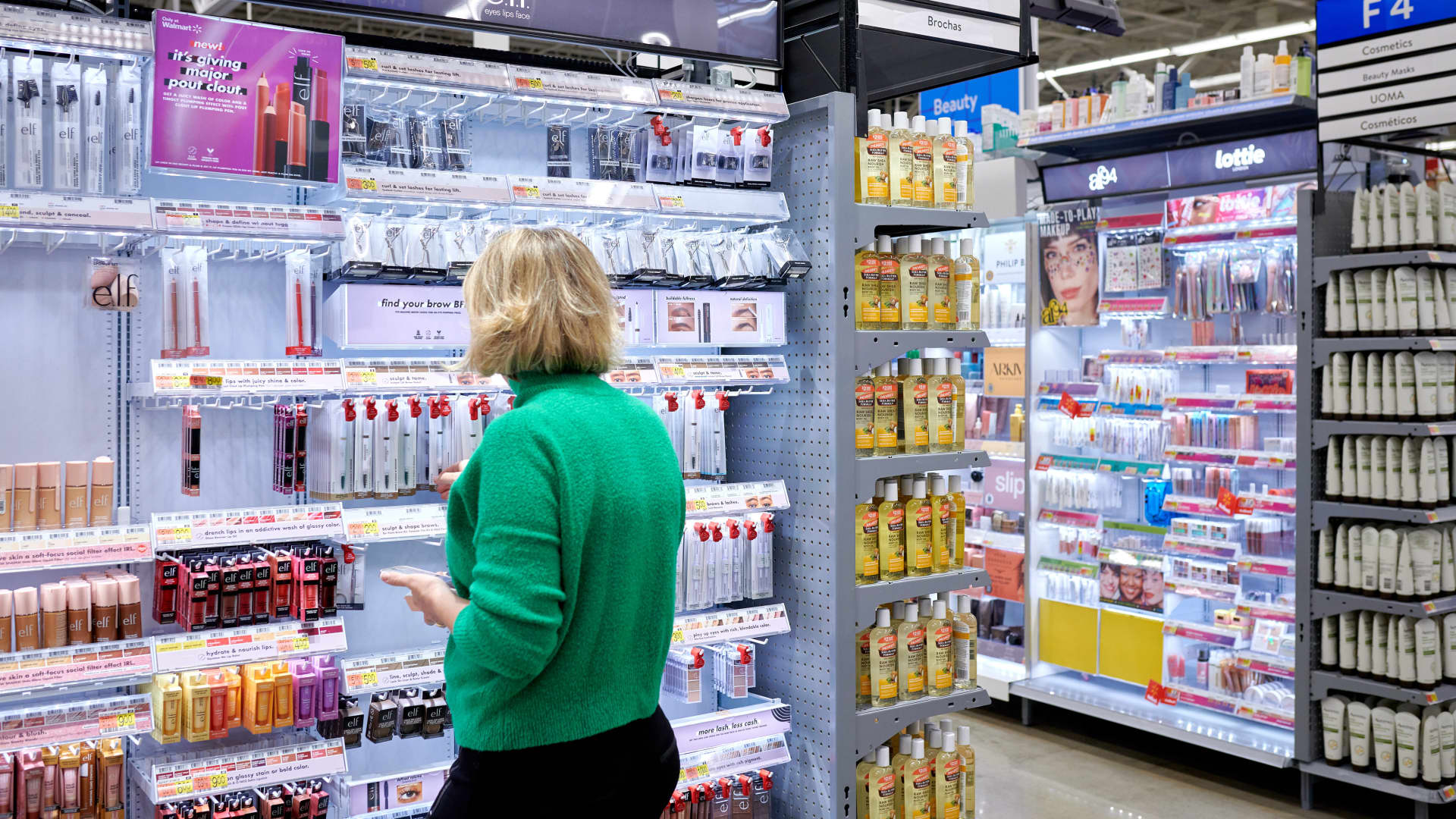
A customer shops for makeup at a Walmart store in Secaucus, New Jersey, March 5, 2024.
Gabby Jones | Bloomberg | Getty Images
As consumers become more educated about the products they’re buying and look to make more holistic purchases, a new retail category is emerging.
What were once three separate sections — beauty, health and wellness — have converged into one large category as consumers look for products that serve multiple purposes. That change in consumer behavior is creating more competition for companies racing to win over the corresponding share of customers’ wallets, industry experts said.
According to a new study from consulting firm AlixPartners, nearly 100% of consumers surveyed believe that the category is just one budget item, whereas it was three before.
The survey, conducted jointly between CEW and AlixPartners between May and June, sampled 1,000 consumers age 18 and over and split across gender, age, income brackets and regions. The survey also polled 127 executives in the beauty, health and wellness industries.
“What we found in the data is a consumer is just as likely to trade off a night cream for another night cream as a night cream for a personal trainer,” Lindy Firstenberg, co-lead of the company’s beauty, health and wellness practice, told CNBC. “Anything in beauty, health and wellness is within the consideration set.”
As wellness becomes more mainstream, 40% of consumers in the survey said they want traditional beauty companies to expand their reach in terms of the products they offer. At the same time, the AlixPartners study found that 42% of executives said they wanted their companies to stay in their lane.
“What that shows is a fundamental disconnect that consumers are asking for more; they’re asking for different, they’re asking for a new playbook, and executives are saying, ‘No, that’s way too scary. That’s not going to happen,’” Firstenberg said.
Firstenberg said she believes companies may be hesitant to take on a big bet that won’t necessarily immediately pay off on a quarterly cycle. It’s a move that would also include lengthy time for research and development and consumer profiling.
“They’re not willing to look outside of themselves in order to see that broader beauty, health and wellness bucket, which is the exact opposite of consumers,” Firstenberg said.
That trend comes as consumers are also becoming more knowledgeable about the products they’re buying and integrating a more science-backed approach to their beauty purchases, a trend AlixPartners calls the “consumer PhD.”
Firstenberg said people are also looking to other consumers, especially on social media, for which products to buy and which ones will have the best results, instead of relying on the brands.
How retailers are responding
Ulta is expanding its wellness shop to have more health-focused brands and more shelf space for those items.
Melissa Repko | CNBC
Some companies are choosing to team up with existing brands on the other side of the sector to expand their offerings.
In 2022, luxury brand Gucci partnered with wearable fitness tracker brand Oura on a specially designed ring. Last month, consumer packaged goods company Procter & Gamble agreed to acquire supplements brand Thorne for $3.8 billion in a bid to grow its health business.
Another approach is making sure those products are highlighted together.
Ulta Beauty has launched in-store wellness boutiques, which feature product categories such as supplements and skin and hair serums. Target launched the Target Beauty Studio on Sept. 10 after phasing out its shop-in-shop partnership with Ulta in August. And Sephora now has a dedicated wellness and skincare section on its website.
Walmart has been investing in varied product assortments in its stores over the past few years and leaning into both entry-level price points and premium brands, said Silvia Kawas, who leads the consumables business for Walmart U.S.
“Our customers today are actually thinking about solving problems across their health and wellness and beauty journeys more holistically than ever, and so you’ll see a lot of blurring of the lines,” Kawas told CNBC.
Kawas said Walmart, which is currently in the process of remodeling many of its stores, is placing beauty products in high-traffic areas to ensure the company stays ahead of trends. It’s also making sure store associates who are knowledgeable in the beauty and wellness industry are available to help customers, in addition to leveraging the expertise of its pharmacists.
“We have this unique advantage of being an omnichannel retailer that allows us to help service customers both from a store perspective through great assortments. … [And] we also are trusted for our everyday low price and consistency,” Kawas said.
She added that Walmart has seen its consumers going through a trial-and-error process, so the company has had success with its mini and single-serve products.
“We’re very intentional about creating this exploration, discovery and navigation in-store and online that gives [customers] confidence in the solutions that they’re buying from Walmart,” Kawas said.
A new retail landscape
Walmart’s mobile wellness tour, offering flu vaccines, immunizations, boosters and free health and vision screenings.
Michael Siluk | UCG | Universal Images Group | Getty Images
While some larger players in the retail space are leaning into the trend, others may be missing the mark, said Pierre Dupreelle, the global leader for beauty at Boston Consulting Group.
Dupreelle said the “revolution” of the beauty and wellness industry is leading to a “complete reshape,” especially with the rise of GLP-1 drugs as consumers focus on how health intersects with beauty.
“The brands that consumers are now favoring are extremely efficacious brands that are very focused on science, derm-backed, doctor-backed type of products, so there’s a set of brands that are really benefiting from this explosion of the category,” Dupreelle said. “The more traditional, more sensible skincare brands, even at the top of the price points, are definitely struggling.”
Even as consumers are squeezed by macroeconomic pressures like high gas prices, rising inflation and uncertainty from global politics, Dupreelle said they’re more likely to cut their spending on other categories before they rein in their beauty, health and wellness budget.
According to an August report from market research firm Circana, unit demand in the beauty industry remained positive through the first half of 2026 despite consumer selectivity.
The report found that skincare sales revenue grew 8% in the first half of the year, benefiting from consumers’ interest in whole body wellness.
For retailers like Walmart, that means leaning into the product assortments and price points that customers are looking for to ensure they keep coming back.
Kawas said the company is already seeing returns on that strategy with customers building bigger baskets on their way to the cash register.
“That’s the advantage, is affordability, access and flexibility to customize and personalize,” Kawas said. “I think that’s the role that we need to be playing. … The more we do that, the more repeat and loyalty we will get out of them because we’re consistent in our offering.”


Lucid: Implications Of The Bolt Deal

Fr8Tech launches AI module to validate delivery documents
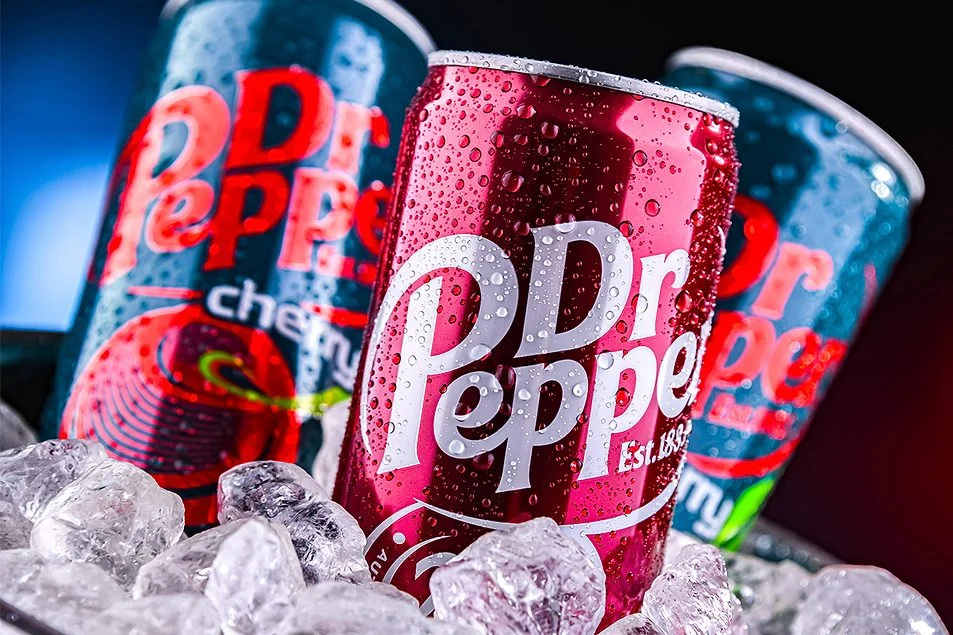
BOSTON – With approximately $6 billion in annual sales, Dr Pepper is the largest brand in Keurig Dr Pepper Inc.’s (KDP) portfolio. Two years ago, the brand became the second largest carbonated soft drink brand in the United States, according to Beverage Digest, and KDP management is charting a course to maintain that position and apply the strategies that propelled Dr Pepper to other brands within its portfolio.
“(Dr Pepper is) the No. 1 brand … among teens today,” said Timothy Cofer, chief executive officer of KDP, during a Sept. 10 presentation at the Barclays Global Consumer Staples Conference. “That’s a good indicator of future health vitality of the brand. And we’re a brand that very much invests in continuous recruitment … to really fortify that share. In fact, year-to-date, we’re on track for share growth, and when we achieve it, it will be our tenth consecutive year of market share growth on brand Dr Pepper.”
Innovations that have helped drive brand growth include Dr Pepper Zero Sugar, Dr Pepper Creamy Coconut and Dr Pepper Blackberry.
“Dr Pepper is now the second largest zero sugar brand in the marketplace and over $1 billion in retail sales,” Cofer said. He added that in the company’s most recent quarter, the variety had a 30% growth rate.
From a marketing perspective, KDP is attempting to position Dr Pepper as a unique, one-of-a-kind brand.
“I think … a lot of our consumer cohorts … identify with that because they’re unique and one of a kind,” Cofer said. “So, a distinctive positioning, really strong marketing and marketing that we’re investing (in) to get even better, more precise and more personalized, but it’s a hell of a platform.”

KDP’s 7Up brand has been reformulated with an emphasis on lime flavor in marketing.
| Photo: Cully WrightKDP is now applying the playbook that helped Dr Pepper gain share to other brands in its Refreshment Beverages portfolio like Canada Dry and 7Up.
“Canada Dry (is a) billion-dollar-plus brand; far and away leader in ginger ale,” Cofer said. “(It has a) distinctive positioning; all about the demand space of a relax and rejuvenate time …”
Innovation from the brand includes Canada Dry Fruit Splash, which is the combination of the flavors ginger, cherry and strawberry.
“(We’re) finding that platform to be highly incremental to the base business, driving overall trademark sales, great sales execution,” Cofer said.
With the 7Up brand, KDP has reformulated the product and is emphasizing the lime flavor in marketing.
“So, we’ve got an all-new formula, lime over lemon,” Cofer said. “We’ve got a new visual ID. We’ve got a really clever marketing campaign. I think that’s part of the success formula you’re going to start to see employed across these brands.”



Semtech: Probably Too Much Optimism


We’ll miss them when they’re gone.
Middle managers are on the chopping block at Uber, Intel, Coinbase and other companies. Top executives seem to view them as unnecessary speed bumps on the highway to innovation, and rank-and-file workers love to gripe about layers of bosses who do, what, exactly?
Copyright ©2026 Dow Jones & Company, Inc. All Rights Reserved. 87990cbe856818d5eddac44c7b1cdeb8

An air traffic control system failure that sparked widespread travel chaos earlier this month was caused by a “software defect”, the UK’s National Air Traffic Services (Nats) has said.
The failure led to more than 2,000 flights being cancelled and hundreds of thousands of passengers affected, with some sleeping on airport floors or getting stuck overseas.
Flights in and out of the UK’s main airports were affected, including Heathrow, Gatwick, Luton and Glasgow.
The incident prompted questions over the resilience of Nats’ systems, and some airlines questioned the position of its chief executive Martin Rolfe.
The government had previously ruled out a cyber attack, and last week the Ministry of Defence denied a report that a military aircraft was to blame.
In an initial report, Nats said the defect happened in the system which “underpins the management of UK airspace”.
The problem happened “in the space of a millisecond”, Nats said, leading to the system producing corrupted data.
Air traffic controllers then had reduced information available, so restrictions were put in place to limit air traffic to maintain safety.

The odds of a September rate hike have increased after the Reserve Bank of Australia warned that the inflation outlook had deteriorated amid soaring fuel prices from the Middle East conflict.

The University of Western Australia has launched its first international campus, opening in Mumbai in a move Roger Cook hailed as a step for WA-India relations.

Has long-term dollar strength arrived? Standard Chartered weighs in.

Lucid: Implications Of The Bolt Deal

In PBS's Heartrending Trespasses, Love Defies War in '70s Belfast

‘Fargo’ Star Officially Reunites With Noah Hawley for New Video Game Series



-

 Fashion7 days ago
Weekend Open Thread – Corporette.com
-

 Tech5 days ago
The Latest Weird Thing to Play Doom Is the Mapped-Out Brain of a Fruit Fly
-

 Crypto World4 days ago
Kraken Lets xStocks Holders Earn Yield Through DeFi
-

 Crypto World2 days ago
US Charges Robinhood Engineers Over Crypto Listing Trades
-

 Entertainment7 days ago
News Specials, Movies, Shows, More
-

 Crypto World6 days ago
Can AI Build a Startup in 72 Hours? Elon Musk's Team Will Livestream the Test
-

 News Videos7 days ago
Facing Financial Fears
-

 Crypto World4 days ago
Elon Musk Drops a Bombshell: Grok 5 Could Be the AGI Breakthrough
-

 Business5 days ago
Rivals Sam Altman and Elon Musk Rally Behind Dario Amodei’s Call for a Slowdown in AI Development
-
 NewsBeat4 days ago
‘Sick conspiracy’: Trump says only guardrails AI needs is ‘a strong and smart (High IQ!) president’ in all-caps rant
-
 Crypto World5 days ago
New Tesla Roadster Uses SpaceX Tech. Will It Impact the Stock Price?
-

 Crypto World6 days ago
Robinhood Chain Never Stopped But its Blobs Did Stop Reaching Ethereum For 14 Minutes
-

 Crypto World2 days ago
What Is the Status of the U.S.-Iran Peace Talks? Here's What Both Sides Are Saying
-
 Entertainment7 days ago
New Horror Movie Officially Earns a Rare Stephen King Recommendation
-
 Crypto World3 days ago
NVIDIA Analysis: Attempted Rising Wedge Breakout Amid Pressure on the AI Sector
-

 Business6 days ago
Marvell: Most Potent Setup Of The AI Factory Decade
-

 Crypto World4 days ago
DOJ Seeks to Seize $61M in Iran Oil Funds From Binance Accounts It Vouched For
-

 Crypto World6 days ago
Bitcoin ETFs lose $462.7M as Ethereum funds gain $196.9M
-

 Crypto World4 days ago
3 Token Unlocks to Watch in the Third Week of September 2026
-

 Crypto World4 days ago
Revolut Attackers Warn of Ongoing Daily Customer Data Leaks
You must be logged in to post a comment Login