Singapore marks Waymo’s first expansion into Southeast Asia & outside of the US
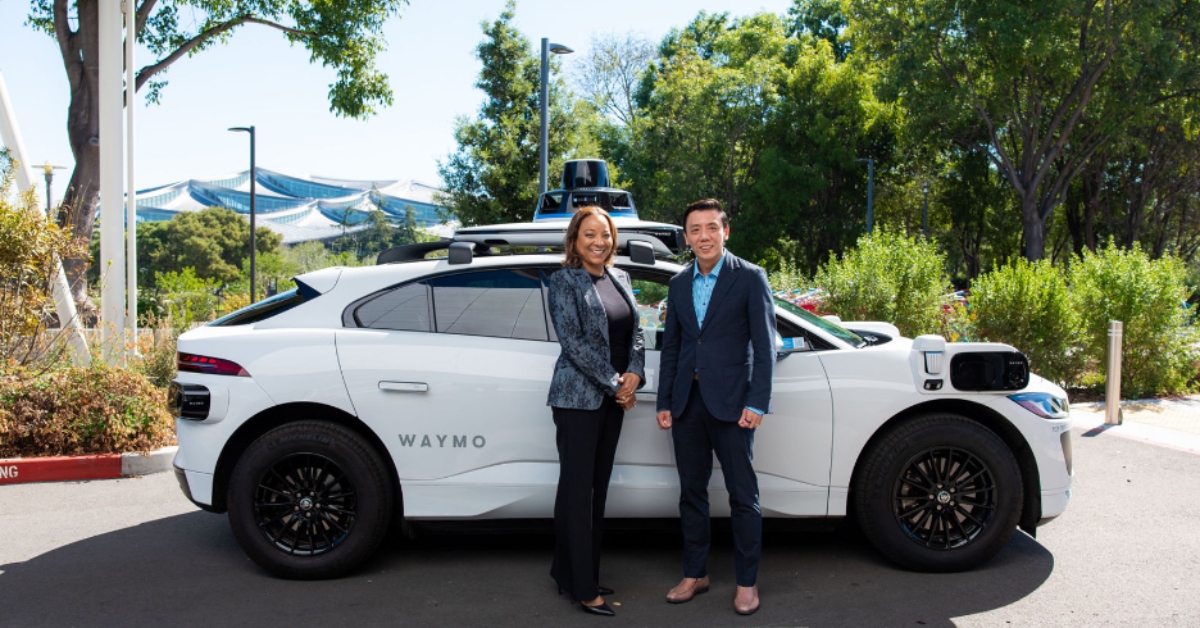
Autonomous ride-hailing operator Waymo will roll out its fully self-driving ride-hailing service in Singapore by 2028, marking its first foray into Southeast Asia.
The Alphabet-owned company announced on Friday (Sep 18) that it is partnering with the Ministry of Transport and Land Transport Authority to lay the groundwork for an all-electric commercial ride-hailing service in Singapore, which commuters will be able to book through the Waymo app.
Waymo said its first vehicles are expected to arrive in Singapore in the coming months.
The initial fleet will consist of Jaguar I-PACE sports utility vehicles, though the operator did not disclose how many cars will be deployed or its eventual target fleet size.
Advertisement
These vehicles will be driven by trained autonomous vehicle (AV) specialists, allowing the on-board systems to familiarise themselves with Singapore’s road and weather conditions.
The specialists, along with staff for other operational roles such as fleet maintenance and customer support, will be hired locally.
Filling the gaps in Singapore’s transport network
Waymo said many of its customers use its rides to connect to public transport, noting that more than a third of riders in San Francisco are picked up or dropped off near transit stops.
“We aim to bridge first-and-last-mile transit gaps across residential and commercial hubs,” the company said.
Advertisement
It remains unclear whether Waymo’s vehicles will be available islandwide or limited to certain parts of Singapore once the service launches, with further details expected to be released in due course.
The company also noted that its fully electric fleet directly supports the Singapore Green Plan 2030.
Checks on corporate intelligence platform Sayari showed that Waymo’s Singapore subsidiary was registered on May 20, with the company’s financial controller and deputy general counsel listed among its directors.
Waymo currently operates across 15 US cities, and its Singapore launch marks the AV operator’s second confirmed market in Asia, following Tokyo, where it plans to begin commercial services in 2027.
Advertisement
Beyond Japan and Singapore, Waymo has also been laying the groundwork for further regional expansion, having set up a subsidiary in South Korea in Jul—though a timeline for commercial operations there has yet to be disclosed.
Read other articles we’ve written on Singaporean businesses here.
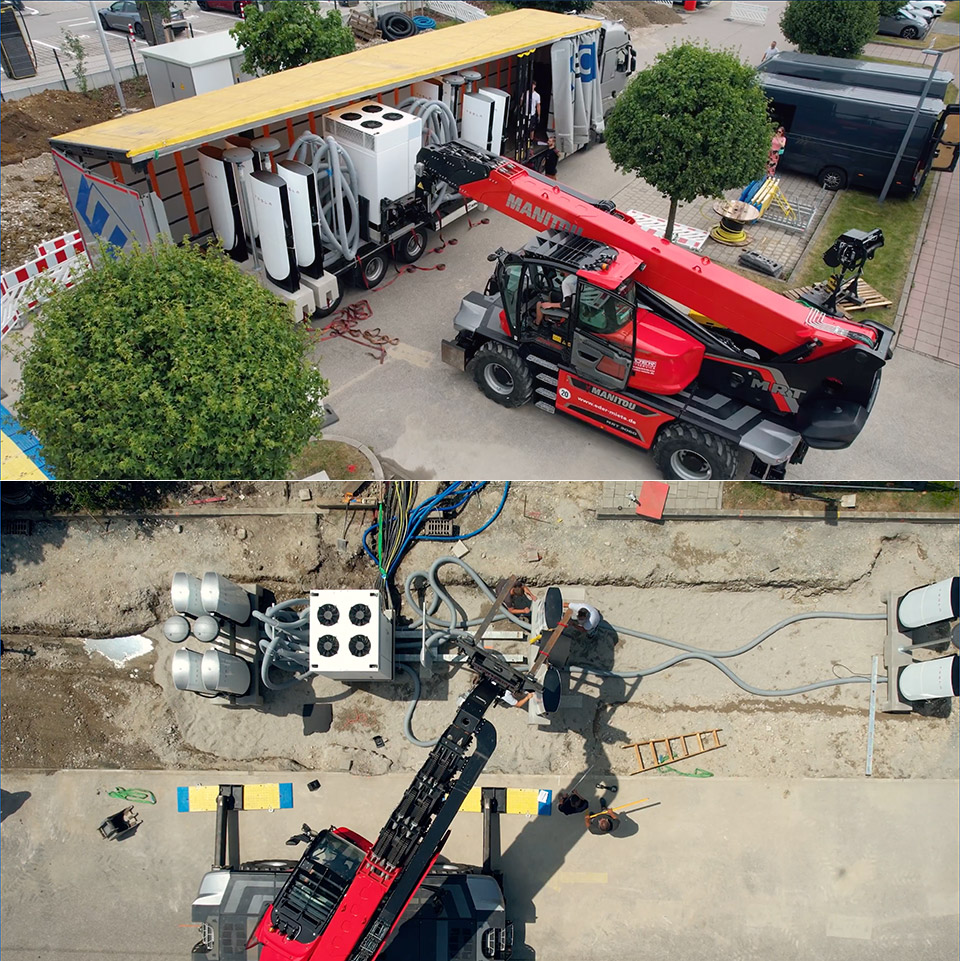
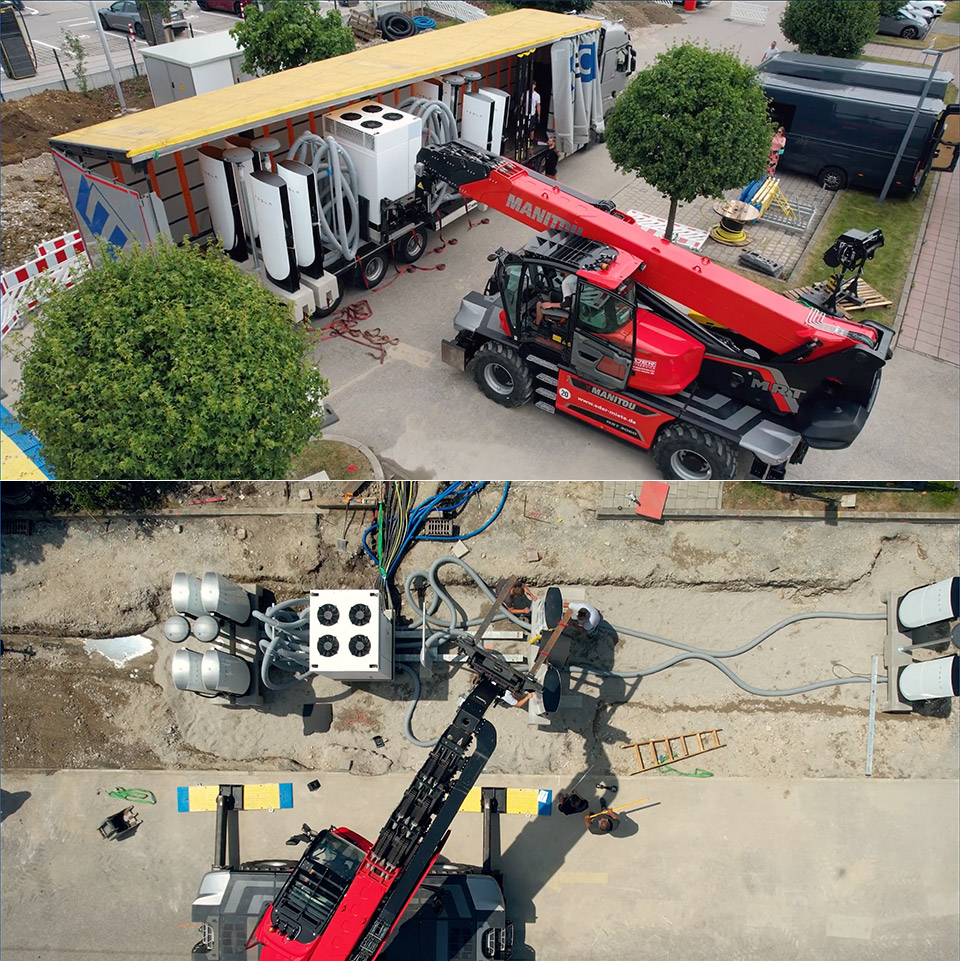
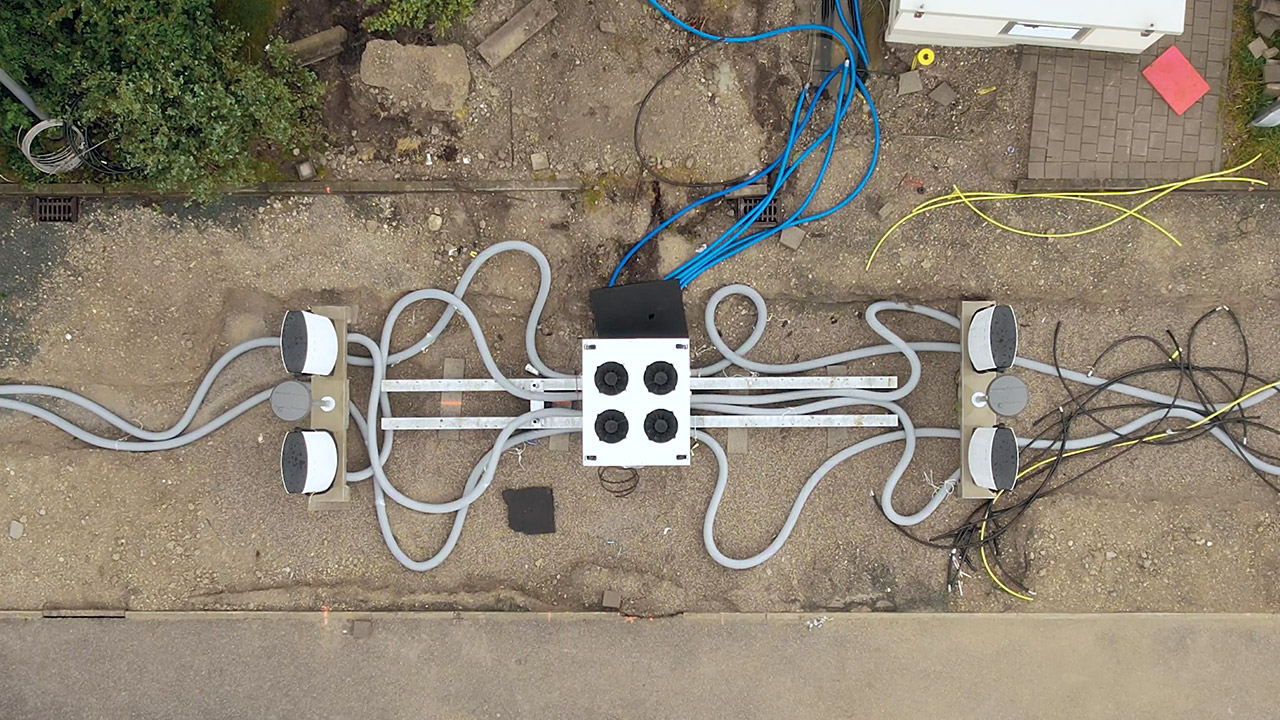
Tesla Charging posted the first Accordion Supercharger on September 15 and laid the plan out in one short clip. Factory work now covers the posts, the cabinet, the wiring, the cooling lines, and the concrete pads so a finished island leaves the plant instead of a pile of parts. Two of those eight-stall packages fit on a single truck, which means sixteen V4 stalls arrive in one run. Tesla says that package costs about 20 percent less to put in the ground than a conventional station and commissions as soon as utility power is tied in.
Our first Accordion Supercharger
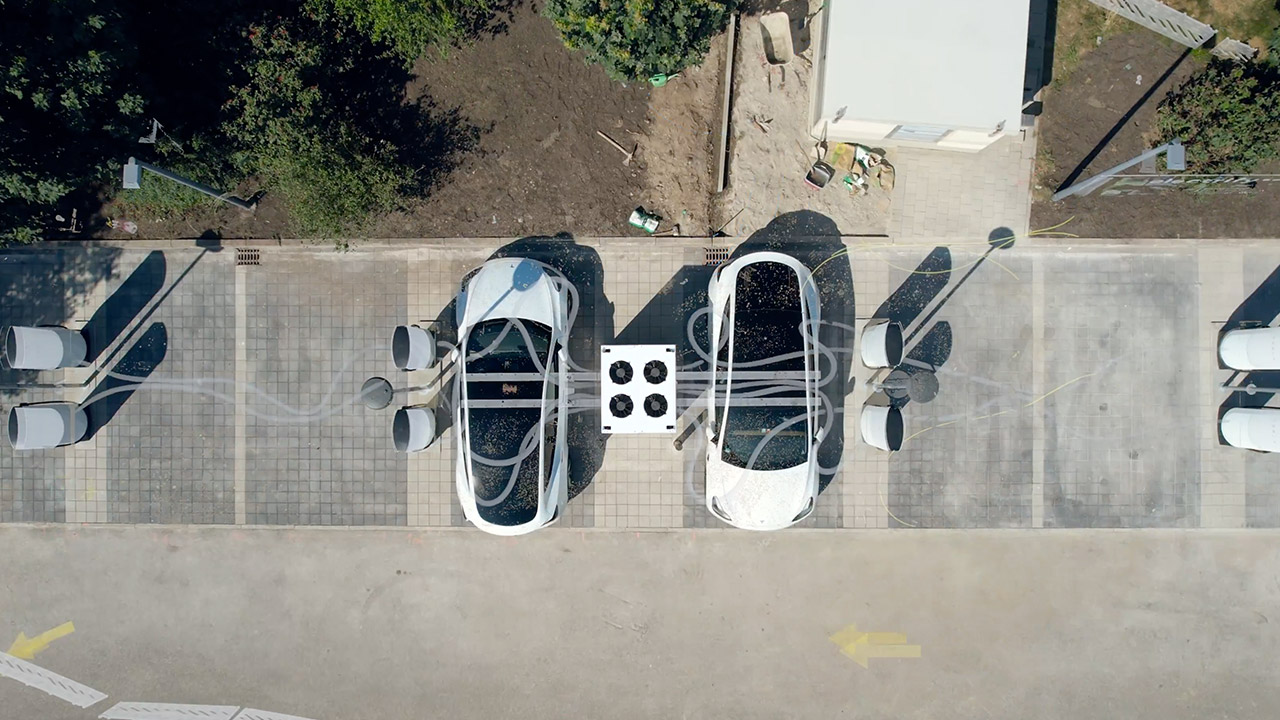
Our goal is to pre-assemble all Superchargers in a factory. If we can’t install Superchargers behind a curb, we now have a pre-assembled solution for Superchargers between parking spaces.
Factory crews place each pair of stalls on a prefabricated platform and simply insert a central V4 cabinet rated at 1.2 megawatts. Heavy gage conduits extend from the cabinet to the pedestals, allowing the island to fit across a painted parking bay. That’s crucial, because there won’t be enough curb strip on retail properties to dig a standard trench for a cabinet. To set up, a forklift or telehandler takes the entire bundle off the trailer, personnel lower it into a shallow trench, the pedestals spread outwards, the trench is filled back in, pavers are placed in, and the utility feed is connected. There is no need to complete any DC busbar work on-site. There’s no need to call a Tesla service professional to switch everything on either.
[288Wh On-the-Go Power] – Only 9.4 lbs lightweight, carry it anywhere during storms! 288Wh capacity meets daily & outdoor needs—camping, road trips…
[600W Continuous & 1500W Surge Power] – Get a full 600W output—twice as much as others. When you need serious power, activate Power Lifting Mode for…
[50% Lower Power Consumption] – Upgraded UltraCell tech & smart cooling system cut power consumption by 50%. Enhances overall energy efficiency…
The first real example is already in Irschenberg, Bavaria, and it includes eight V4 Superchargers on display at the FC Bayern store lot, sandwiched between two fast food restaurants. The site became active in August, and each Supercharger can deliver 500 kilowatts to a car. The total combined cabinet power is 1.2 megawatts, which already exceeds the 1,050 kilowatt minimum that Europe will require from all charging pools on major routes by the end of 2027, and they must be located within 60 kilometers of one another.
This variation was inspired by the variety of parking lots found throughout Europe. Tesla unveiled the Folding Unit (FU) a few months ago, with the idea that two fixed portions would fold out along a curb, reducing manufacturing time from eight to four days. Accordion maintains the core idea of being manufactured in a factory first, but with a twist: the pedestals now stretch as needed between rows rather than attempting to line up behind a curb. That is how most supermarket and shop lots are painted. Max de Zegher, the man in charge of Tesla Supercharging, put it simply: building in a factory is preferable to building on-site, and all jobs and servicing comments go directly back to the production line, so the following unit is already better.
Advertisement
As a result, the parking lot owners receive a finished product without having to deal with weeks of digging trenches, laying conduits, erecting pads, and hammering in single posts. According to Tesla, the plan is to pre-assemble each Supercharger in a factory, with the Accordion version reserved for sites that will not accommodate a cabinet behind the curb. You get 16 stalls per shipment, 20% less installation cost, rapid commissioning, and V4 hardware that can already meet the European power norm for 2027, with the first one now operational in Bavaria; the next ones will demonstrate whether this manufacturing concept can keep up with trucks.
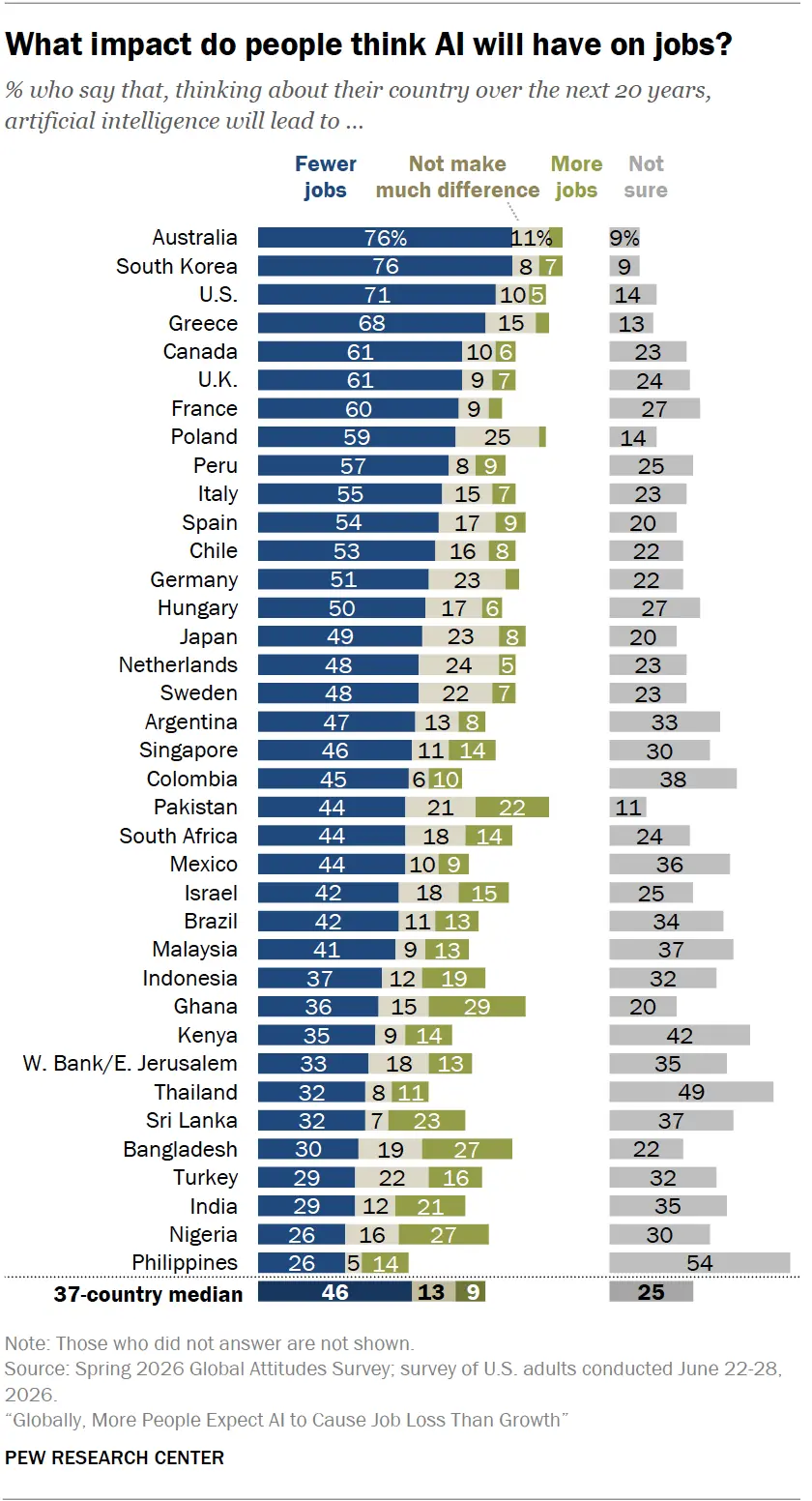
Sounding off: We hear a lot about US views of AI and its effect on jobs, but does the rest of the world agree? Yes, according to a new global Pew Research Center poll, which found that more people in 34 out of 37 countries believe AI will lead to fewer rather than more jobs.
The US was the third most pessimistic nation when it comes to AI’s effect on the workplace, with 71% of participants saying it will lead to fewer jobs in the country over the next 20 years. Only South Korea and Australia, both on 76%, were higher.
Across a 37-country median, 46% said there will be fewer jobs, 13% said there wouldn’t be much difference, 9% said there will be more jobs, and 25% weren’t sure.
The table illustrates the disparity between nations with higher and lower GDPs. The “fewer jobs” result is much lower in poorer countries: Nigeria was the only one to believe AI will create more jobs (26% vs. 27%), while more people in Thailand and the Philippines picked the “not sure” option. It’s likely that this is a reflection of fears in wealthier regions that AI will take mostly white-collar jobs – as Dario Amodei predicted.
Advertisement
Interestingly, the only country where Pew has asked this question before is the US. Over the past two years, the share of people who believe more jobs will be lost from AI has increased 7 percentage points, showing that fears are intensifying rather than easing in the States.
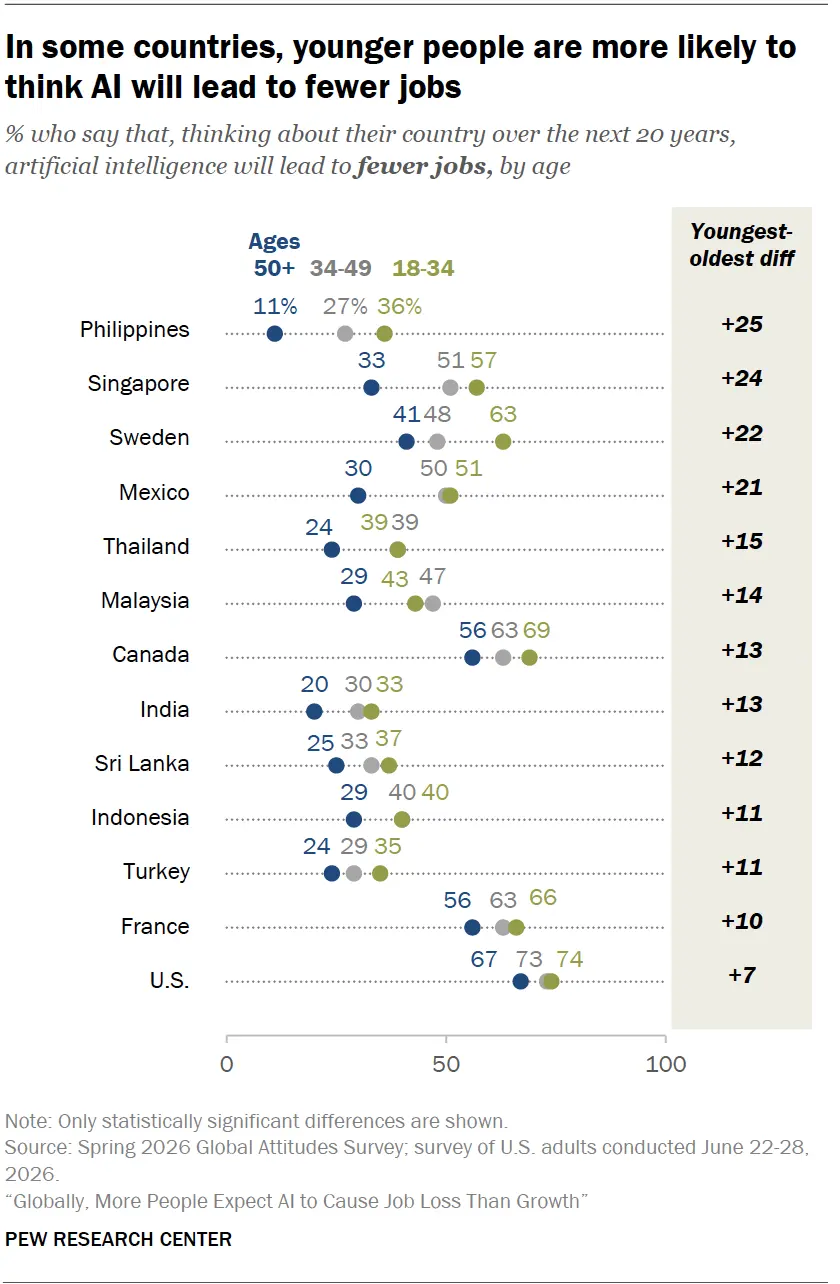
In a number of countries, younger people aged between 18 and 34 are the group most concerned about AI job losses. In the US, concern about job losses from AI has increased the most among this demographic.
In many of the middle-income countries surveyed, wealthier and more educated respondents are more likely to expect AI to reduce job numbers over the next two decades. Much of that gap reflects greater uncertainty among people with lower incomes and less education about how the technology will affect employment.
It’s certainly telling that more people who have high awareness of AI are more concerned about its impact on jobs.
Advertisement
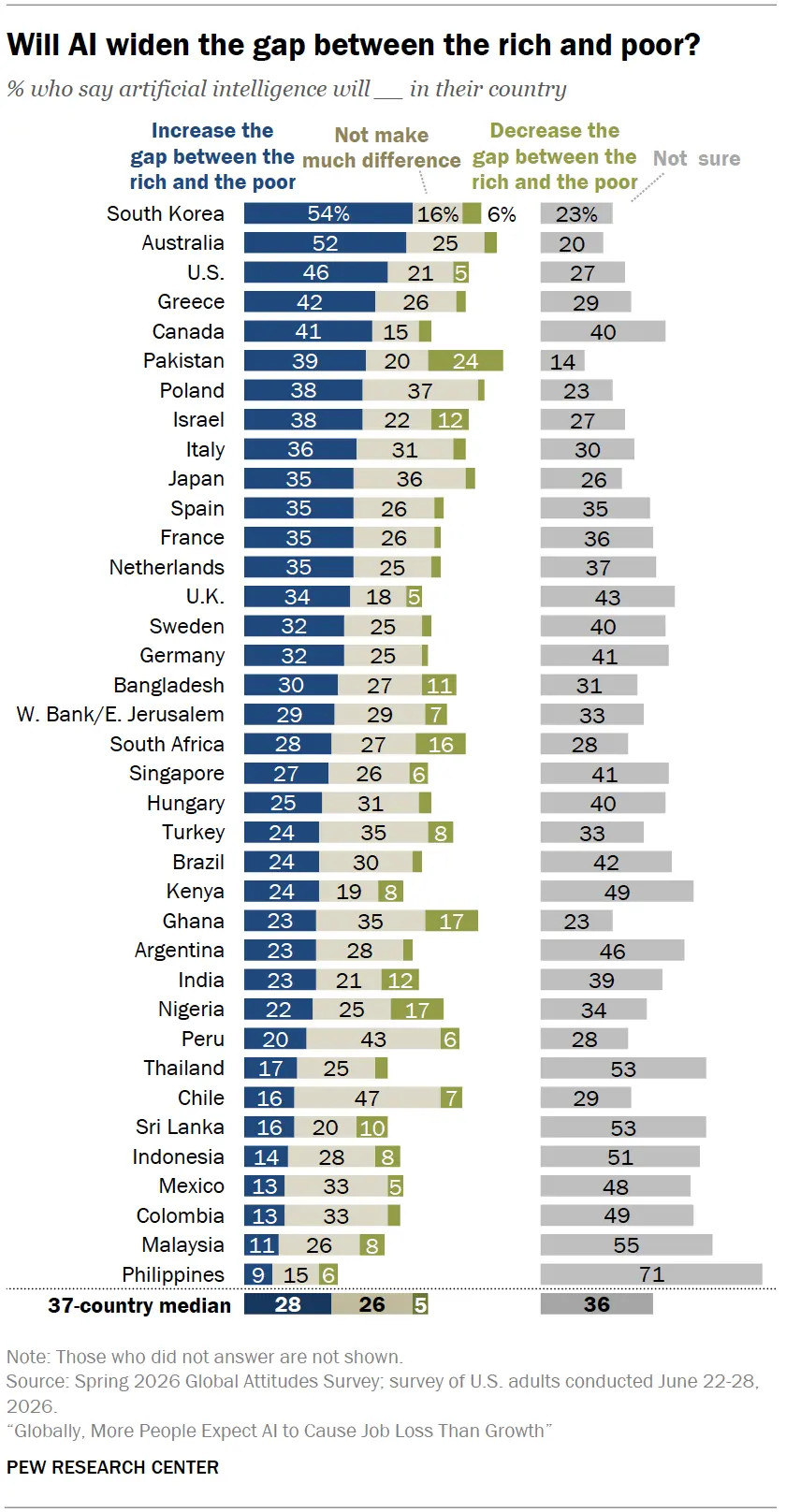
Some industry execs have claimed AI will close the gap between the rich and the poor. But more people believe the opposite is true. Again, this is more often the case in richer countries.
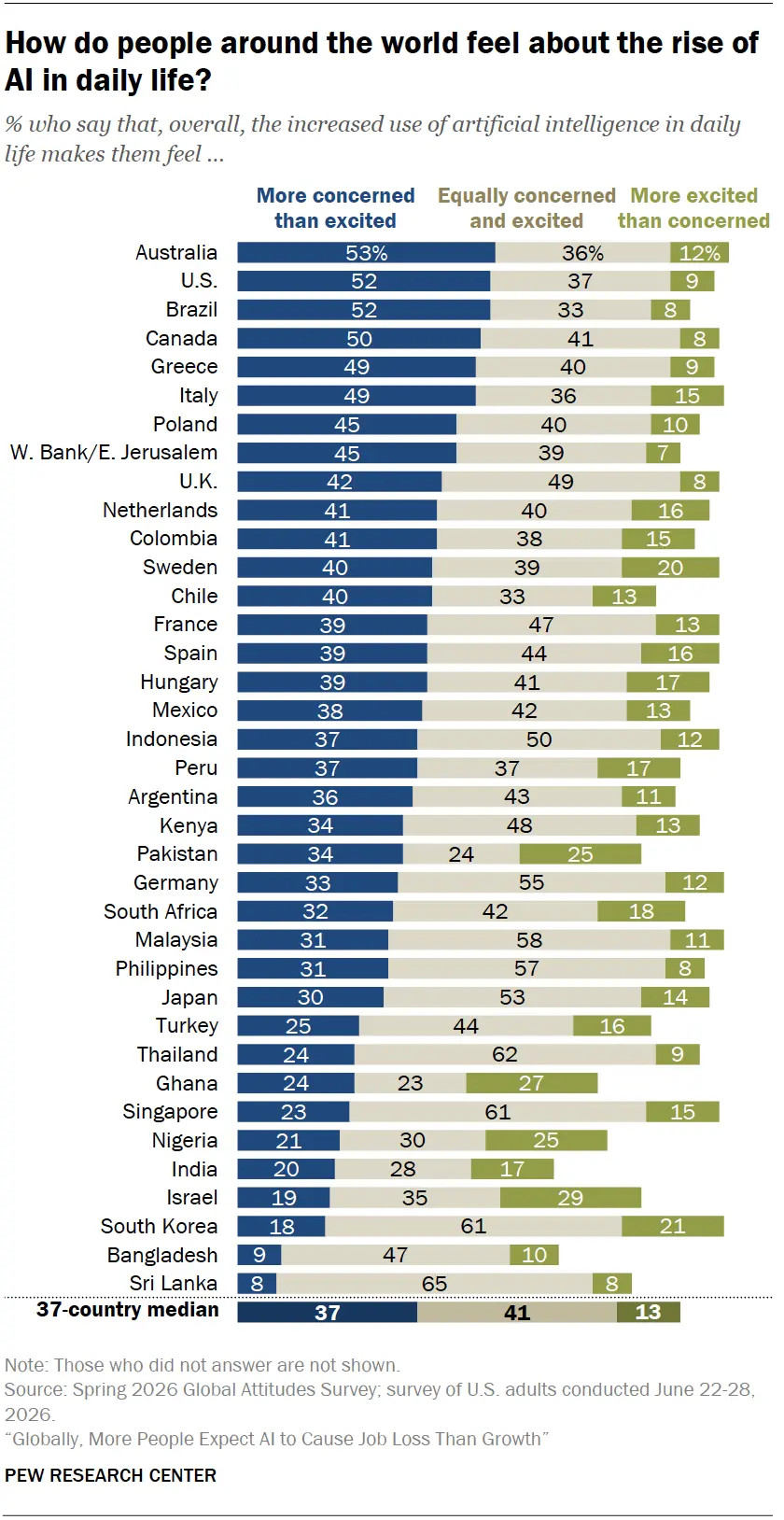
We’ve also heard of some AI luminaries who are genuinely angry that people don’t share their excitement about AI. Results in this area are more mixed, with a 37% median across 37 countries more concerned than excited, while a 41% median are equally concerned and excited. Israel is the only nation in which more people are primarily excited than primarily concerned.
Those fears are understandable. A Mercer survey found that 99% of executives questioned expected AI to lead to job cuts within two years, while Meta cut 10% of its workforce before abandoning plans for a second wave amid disappointing AI results and employee resistance. There have also been signs that companies are putting too much faith in the technology: some employers are rehiring workers they replaced with AI after automation failed to deliver. That offers a bit of hope, though it’s unlikely to reassure all workers.
A countdown clock comes attached to this first price cut, since the deal is only running for today (September 17). Bose has held this exact model at full price since launch, making a cut like this worth considering.
Advertisement
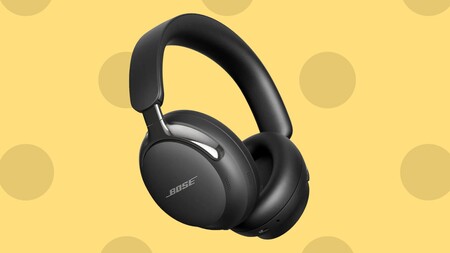
Bose’s CustomTune technology scans the shape of your ears the moment you put the QuietComfort Ultra Headphones on, then adjusts the sound output to match your exact shape instead of relying on one generic profile for everyone.
That same personalisation carries into Immersive Audio, which pulls sound out from inside your head and places it around you instead, while Cinema Mode extends that spatial trick specifically to whatever you happen to be watching.
Advertisement
Quiet Mode brings Bose’s best noise cancellation to date, built to shut out an airplane cabin, a chatty office or a television playing in another room without needing you to turn the volume up to compensate.
Advertisement
Plus with up to 30 hours of battery life, or 23 hours with Immersive Audio enabled, the QuietComfort Ultra (2nd Gen) headphones are the perfect travel companion too. Not only that, but a speedy 15-minute top-up adds another 2.5 hours of listening on its own, and the USB cable doubles as a charger you can use while music keeps playing rather than forcing a pause in the middle of a call.
Calls hold up just as well as the music does, with noise-rejecting microphones and AI-based background suppression working together to filter out wind and surrounding chatter so the other person hears only your voice clearly.
If Bose’s current flagship experience has ever felt out of reach, $399 for a pair of QuietComfort Ultra Headphones, with $50 off a price that has never dropped before, closes that gap today.
The QuietComfort Ultra Headphones 2nd Gen gain some useful updates over the previous pair with increased battery life, improved sound and ANC but they are better-sounding and slightly better ANC efforts than Bose available for less money
Antfly co-founders James McDermott, left, and AJ Roetker. (Photos courtesy of Antfly)
Antfly, a Portland startup building software to streamline how artificial intelligence systems access corporate data, announced Thursday that it has raised $2 million in pre-seed funding.
The round was led by venture capital firm Heavybit, with participation from 8-Bit Capital.
The company is tackling what developers call the “Retrieval Gap” — the disconnect between the information an AI agent needs to answer a query and what current search systems actually deliver.
When an AI agent handles a complex task, like investigating a customer refund, it must simultaneously search real-time account data, recent policy changes, and old support emails. Today, software teams typically stitch together five or six separate databases and search tools to fetch those scattered records.
Antfly says it replaces that fragmented setup with a single engine and unified API, allowing agents to retrieve grounded, permission-checked data instantly without developers having to maintain a complex pipeline.
Advertisement
Antfly is the third Portland-based startup for CEO and co-founder James McDermott, who previously founded the customer data platform Lytics, which was acquired last year. Drawing on their experience building data platforms at a scale of billions of profiles, McDermott and co-founder AJ Roetker designed Antfly to eliminate the heavy operational burden developers face when building custom retrieval stacks from scratch.
“Every AI team eventually builds the same retrieval stack,” McDermott said in a news release. “Search. Vectors. Graphs. Rerankers. Inference. Memory. Glue code. We don’t think developers actually want six retrieval systems. We think they’re assembling them because the retrieval engine hasn’t existed. That’s what we’re building.”
The practical impact is already playing out for one customer: Visiting Media, a Portland-based immersive sales platform for the hospitality industry.
Before adopting Antfly, CTO Eric Sniff said his team tried building a custom retrieval system in-house, describing the process as “like pushing through mud.”
Advertisement
Using Antfly, a small team of three engineers at Visiting Media indexed more than 100 terabytes of media and text in under 24 hours. That infrastructure now powers an AI agent capable of pulling exact visual and textual assets from their library to build custom digital sales proposals for clients in under a minute.
“None of it was the product we actually wanted to build,” Sniff said of their previous DIY setup. “With Antfly, the team was experimenting within days — trying new indexes and different models. Nobody maintains a retrieval pipeline anymore, and nobody misses it.”
Antfly, which currently employs six engineers working out of a Kiln co-working space Kiln in Southeast Portland, will use the fresh capital to expand its product engineering team and scale support for customers deploying the retrieval engine in production.
The core software is currently available as a free, self-hosted engine for developers to run locally or in private environments, with a fully managed cloud service currently in waitlist status.
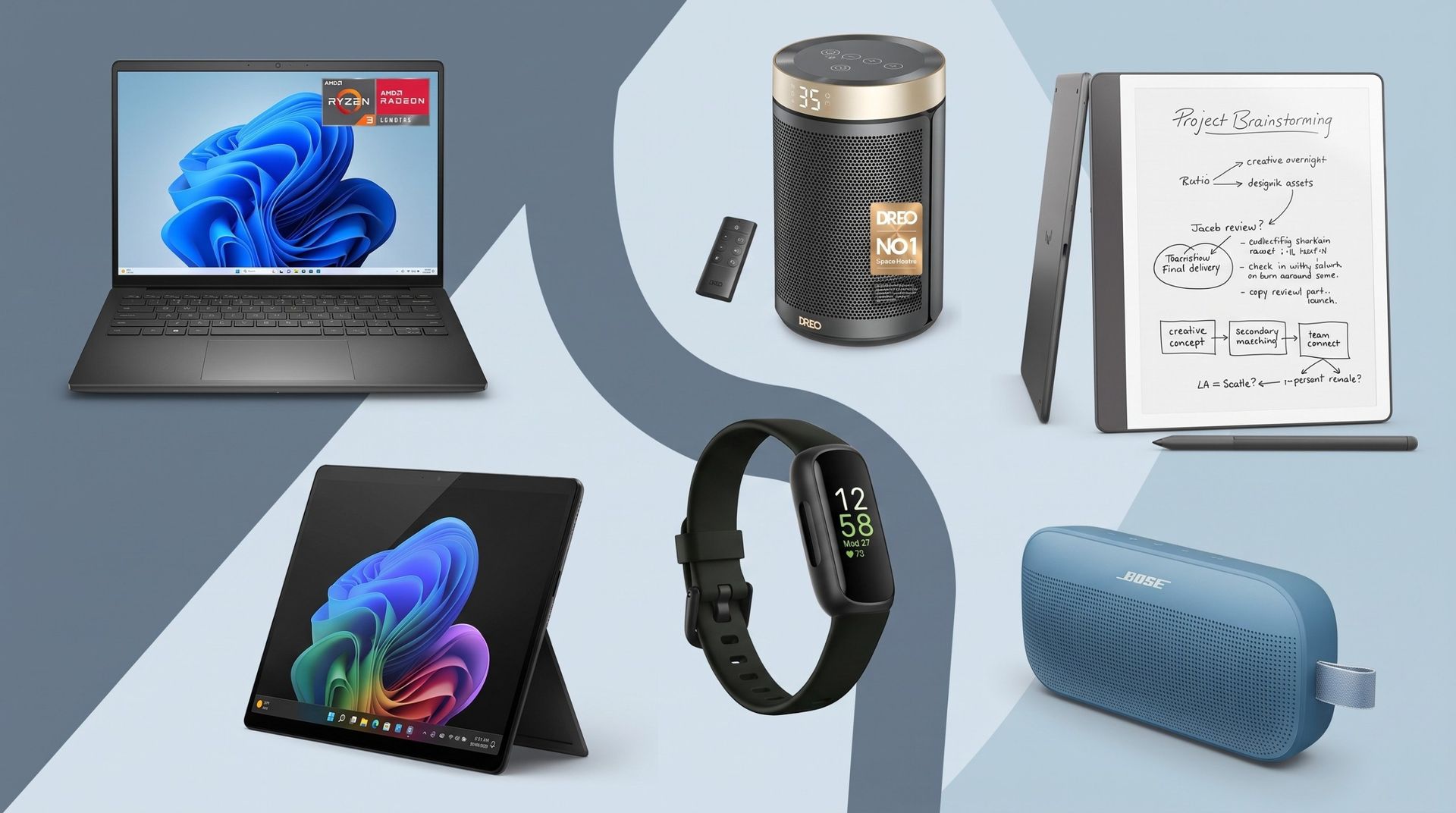
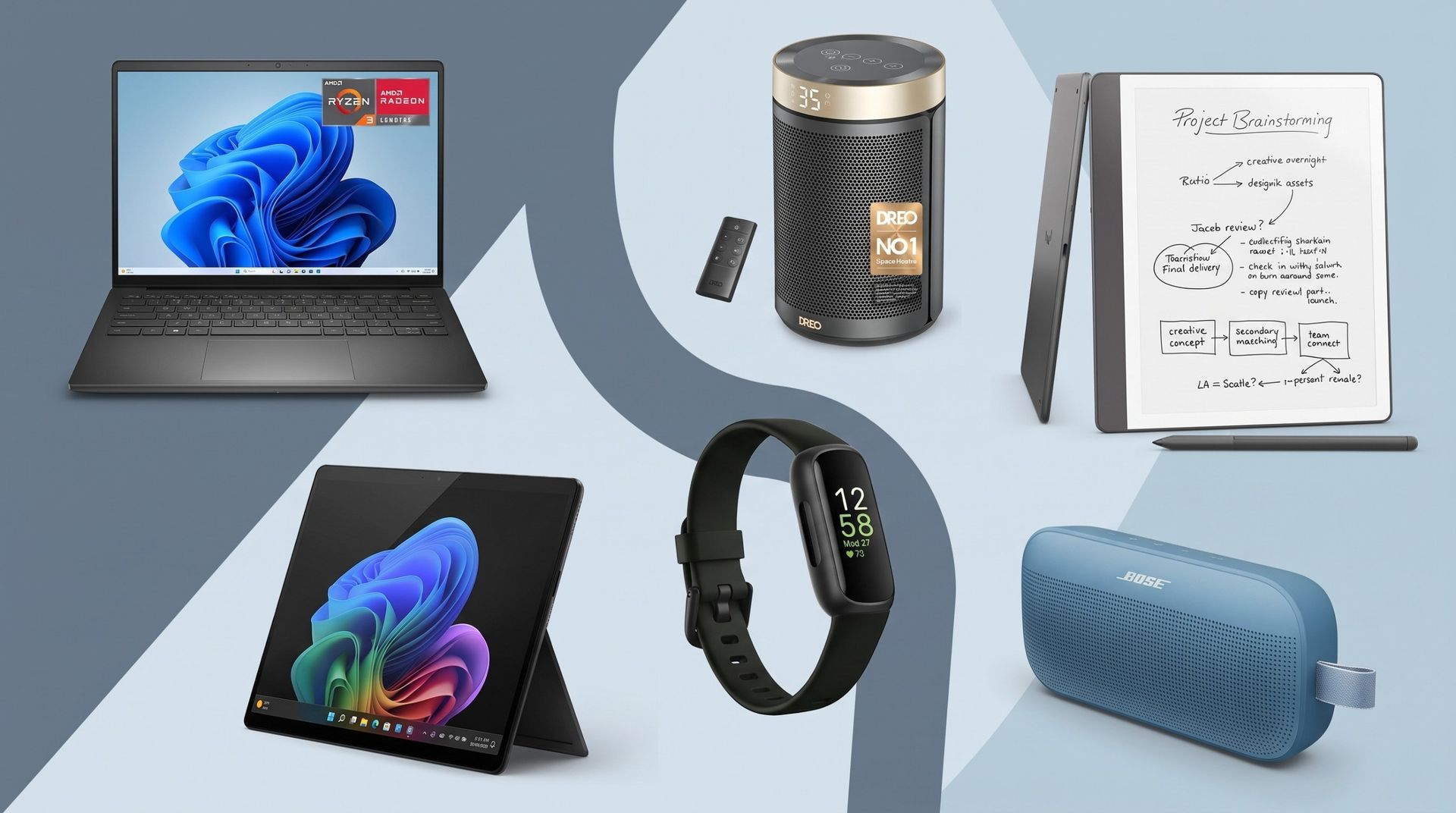
Even though we’re waiting for Amazon to kick off its Prime Big Deal Days sale at the start of next month, the retailer is already running several strong tech offers this weekend. So, I’ve taken a look through the latest batch and picked out 16 of the best deals that I’d recommend buying now across laptops, appliances, health and beauty, and accessories.
One of the strongest offers that even surprised me when I saw it is this Kindle Scribe for £279.99 (was £429.99). It stands out because it’s a record-low price for the ereader and e-ink notepad hybrid with 64GB of storage, which is rare to see outside of a major sales event. I guess Amazon didn’t want to wait around until Prime Big Deal Days to make this one available.
A good range of solid offers, then, for a fairly random weekend in the middle of September. Do have a browse through all of my top picks below, and be sure to check in with TechRadar from October 6, when we’ll be sharing all of the best deals from Prime Big Deal Days.
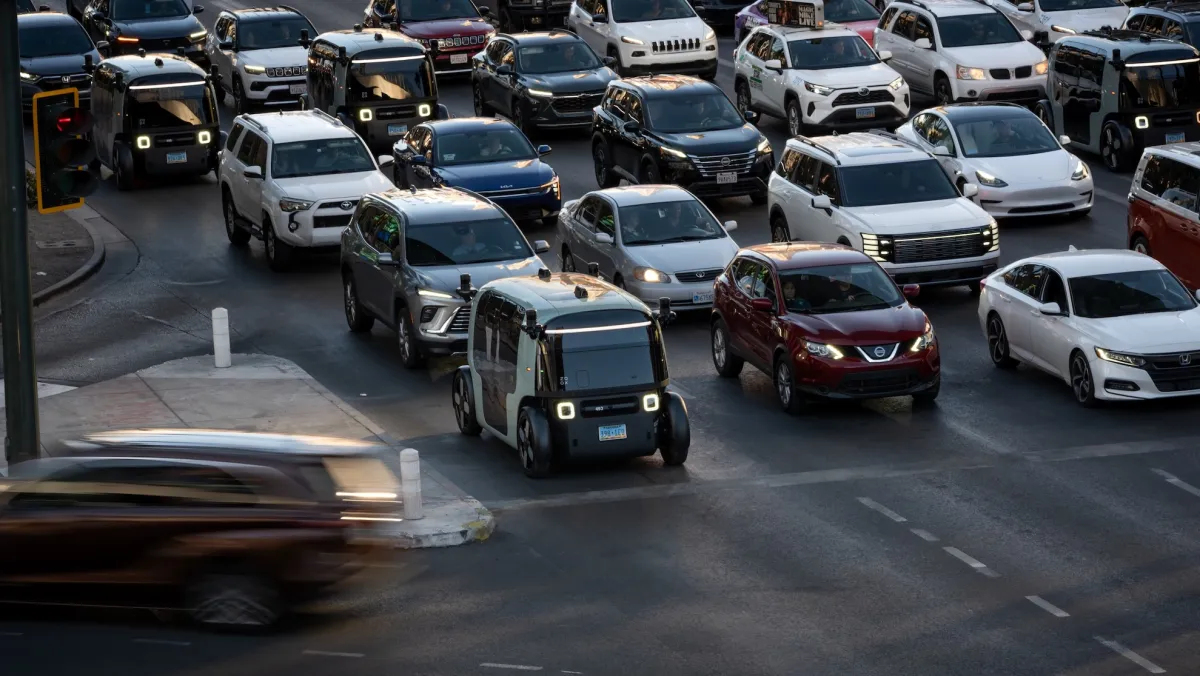
A regulatory cap limiting Zoox to 100 robotaxis in Nevada is set to expire this month, clearing the way for the Amazon-owned company to expand its commercial fleet of custom-built robotaxis in Las Vegas just as competition heats up.
The Nevada Transportation Authority (NTA) permit that imposed the 100-vehicle cap is set to expire September 25, TechCrunch has learned. An NTA official and a Zoox spokesperson confirmed the change, which is also outlined in an updated permit.
This doesn’t mean Las Vegas is about to be inundated with hundreds of Zoox robotaxis. But it does give Zoox more freedom to grow — and at a critical moment. Waymo recently launched a commercial service in Las Vegas, while Tesla and Uber have secured their own driverless ride-hailing permits.
Today, Zoox has about 100 custom-built robotaxis — cube-like vehicles that lack steering wheels and pedals — spread across four U.S. cities, including Austin and Miami. The bulk of the fleet is in Las Vegas and San Francisco. And for now, Las Vegas remains the only city where Zoox is charging for rides. Zoox must still obtain another permit from California regulators before it can charge for passengers there.
Advertisement
Zoox began charging for robotaxi rides in Las Vegas last month after receiving a temporary exemption from certain federal motor vehicle safety standards from the National Highway Traffic Safety Administration (NHTSA).
That exemption was crucial for Zoox because unlike Waymo, its robotaxis were designed without a steering wheel, pedals, or other traditional and federally mandated controls. The commercial exemption allows Zoox to deploy up to 2,500 vehicles per year for the next two years.
It’s unclear how quickly Zoox will take advantage of its newfound freedom in Nevada. A Zoox spokesperson declined to say how many robotaxis the company plans to add to its Las Vegas fleet or even how many are in operation there today. Robotaxi Tracker, which collects data on autonomous vehicles, estimates Zoox has more than 30 vehicles operating in the city.
The spokesperson told TechCrunch that Zoox plans to steadily increase the size of its robotaxi fleet over the next several months “to meet the high demand in Las Vegas and other markets.”
Advertisement
Zoox will have lots of company, no matter how fast it expands. In August, the NTA approved three permits that will allow Tesla, Uber, and Waymo to operate commercial robotaxi services in Clark County, home to Las Vegas. Together, the permits could bring up to 7,000 robotaxis to the area over the next 12 months.
Waymo has wasted little time acting on that permit. The company opened its robotaxi service to customers in Las Vegas earlier this month. Waymo told TechCrunch at the time that it would start with “dozens” of its new Ojai minivan robotaxis in a 23-square-mile area that includes the Strip south of Highway 589 and into Boulder Junction.
When you purchase through links in our articles, we may earn a small commission. This doesn’t affect our editorial independence.
Looking for the most recent NYT Strands puzzle answers? CNET publishes daily answers and hints for The New York Times Mini Crossword, Connections, Connections: Sports Edition and Strands puzzles.
Strands is like a word find game, but without the list of words to find. Sometimes I see the theme and begin recognizing the answers right away. But for those times when I can’t seem to manage this, there’s a loophole: Strands lets you make as many words of four or more letters as you want. For every three of those words you find, the puzzle will highlight one of the answers. You’re still going to have to unscramble that answer, though, which can be very tough.
Today’s puzzle isn’t too tough, though some of the answers are tricky to unscramble. Read on for hints and all the answers.
Hint for today’s Strands puzzle
Today’s Strands theme is: Shake on it.
Advertisement
If that doesn’t help you, here’s a clue: Shared understanding.
Clue words to unlock in-game hints
Your goal is to find hidden words that fit the puzzle’s theme. If you’re stuck, find any words you can. Every time you find three words of four letters or more, Strands will reveal one of the theme words. These are the words I used to get those hints, but any words of four or more letters that you find will work:
These are the answers that tie into the theme. The goal of the puzzle is to find them all, including the “spangram,” a theme word that reaches from one side of the puzzle to the other. When you have all of them (I originally thought there were always eight, but learned that the number can vary), every letter on the board will be used. Here are the nonspangram answers:
PACT, TREATY, CONTRACT, COVENANT, AGREEMENT
Today’s Strands spangram
The completed NYT Strands puzzle for Sept. 18, 2026.NYT/Screenshot by CNET
Today’s Strands spangram is LETSMAKEADEAL. To find it, start with the L that’s two letters over on the top row, and wind down.
CNET editor Gael Fashingbauer Cooper, a journalist and pop-culture junkie, is co-author of “Whatever Happened to Pudding Pops? The Lost Toys, Tastes and Trends of the ’70s and ’80s,” as well as “The Totally Sweet ’90s.” She’s been a journalist since 1989, working at Mpls.St.Paul Magazine, Twin Cities Sidewalk, the Minneapolis Star Tribune, and NBC News Digital. She’s Gen X in birthdate, word and deed. If Marathon candy bars ever come back, she’ll be first in line.
See full bio
We don’t live in a world of only slab-like phones. Flip phones were among the most popular forms of cell phones 15-20 years ago, and they’ve made a return in the modern world, now with cutting-edge technology. They not only come with real smartphone power, but the high end ones also have displays that literally fold to retain the clamshell form factor. If you have also been thinking about buying a flip phone, now is a great time to jump in. While Samsung brought them to the mass market, there are multiple alternative options on the market too. Even Apple is getting in on it with the announcement of the iPhone Duo.
A lot of people assume flip phones are fragile and, in a way, a step backward; something you would want to buy if you want few features. That is not really true anymore. Yes, flip phones are fragile, but having used a couple of them, I can say they are not that fragile, thanks to the high-quality materials being used. And if you thought premium flip phones are out of your budget right now, there are plenty of affordable and practical flip phones available — you don’t have to spend thousands to get one.
These days there are compelling reasons why switching to a modern flip phone might be one of the smarter decisions you could make this year. It’s not about giving up features, but rather, about gaining something different that a regular phone cannot offer.
Advertisement
You stand out from the crowd
Framesira/Shutterstock
Walk into any coffee shop and count how many phones look the same. Big black rectangle, camera bump in the corner, maybe a different case. Most smartphones today are basically copies of each other. A flip phone breaks that pattern instantly. The second you close it, it turns into a small square, which can easily fit in your pocket. It doesn’t try to be flashy, it just looks different because it works differently. This alone makes it memorable in a room full of identical slab-like smartphones.
A flip phone still turns heads simply because so few people actually carry one. According to Counterpoint Research, they account for only about 2% of global smartphone shipments, even though the category is only growing. But that is exactly why a flip phone stands out on a table in a public place. You are not holding the same phone as everyone else, and that small detail gets noticed more often than you would expect, especially when you flip it to close.
Advertisement
If budget is part of the reason you haven’t switched yet, there are real options at different price points, too. Some Samsung Galaxy Flip7 alternatives demonstrate that you don’t need to spend flagship money to get that same head-turning design.
Advertisement
Nostalgia for older flip phones
Gabo_Arts/Shutterstock
I used the original Moto Razr phone back in the day, and I believe many would agree that snapping a flip phone shut just feels good. Beyond that, it is one stylish way to cut a call. Modern flip phones bring that memory back, except now the screen inside is sharp, the camera is good, and the whole thing runs real apps. So, you get the nostalgia you can actually use every day, not just a design trick.
The pull toward simpler stuff isn’t just a personal feeling either. Americans in 2025 spent a daily average of 5 hours and 16 minutes on their phones, a 14% jump from 2024, and that rising screen time is part of why so many people are shifting to minimal phones and phones that feel less demanding. A flip phone doesn’t dial down average screen time drastically, but it changes how the device sits in your hand. It is closer to something you use rather than something that uses you.
Brands have noticed this shift too, which is why many companies are leaning towards that retro appeal, proving it isn’t just a niche trend. Choosing a modern flip phone lets you keep that familiar snap and shape while still getting a phone that can actually keep up with your day.
Advertisement
You get more screens to play with
Gabo_Arts/Shutterstock
Old flip phones had a tiny external screen that barely showed anything other than the clock and message notification icon. And opening them up also did not often reveal a large inner display. But that is a thing of the past, as modern flip phones have a huge display, not only on the inside, but on the outside as well. The cover display is capable of running almost any app. They are so feature-rich that most of the tasks can be done on the cover display, and you don’t have to flip open your phone to use the bigger inner display.
The cover display is not only big enough to run apps or show full messages; you can also reply to messages, check your schedule, or even watch YouTube videos. So, you are not sacrificing screen space with a flip phone. You are actually getting more than you would have had if you went for a regular slab phone.
If you own a Samsung Galaxy Z Flip phone, you can use the Good Lock module and unlock more use out of that outer display. That way, if your tasks can be handled by the cover display, you won’t even need to flip open your phone to use an app.
Advertisement
Acts as a selfie stand
While taking a selfie is perfectly possible on a standard smartphone, you may often need an extra device like a tripod or a selfie stand, just to get the right shot. Otherwise, you have to hand it over to another person for a quick shot. A flip phone skips all of that. Fold it halfway, set it on a flat surface, and it stands on its own. There’s no extra gadget or stranger involved, just the phone doing double duty.
And since a steady camera means sharper and clearer images, the photo quality instantly improves with a flip phone. Selfies are also a different game on flip phones. On a standard slab phone, you need to find something to rest it on and then adjust the camera by looking at the main screen to get the perfect frame. On a flip phone, you can make it stand on its own and use the cover screen as your viewfinder to capture selfies easily.
Advertisement
You don’t need to open the phone or go back and forth just to adjust the camera so you are getting everyone in a selfie. You can also fold your flip phone in a position so that it can be held like a camcorder, better for steady video recordings. And of course, you can also use the primary cameras for selfies, so they are much better quality than those selfie cameras on slab phones.
Advertisement
Compact form factor
Framesira/Shutterstock
As modern slab-like smartphones grow taller and taller, they are becoming a mismatch for our pockets. Even with big hands, one has to perform gymnastics just to reach either corner of a modern phone. A flip phone solves this problem in the simplest way. It is small enough to go easily inside your pocket and easily usable with one hand. It is roughly the size of a stack of cards and can easily disappear in front pockets, a small bag, or even a jacket pocket.
That smaller footprint makes the phone more comfortable to use and carry every single day. An ergonomics study published in Applied Sciences found that screen size and overall device size directly affect grip comfort and hand fatigue during everyday phone use. A folded flip phone just flips the script and takes away a lot of that strain simply by being smaller and lighter to hold when you’re not actively using the main display, since it can handle most quick tasks from the compact, closed shape alone.
The compact form factor is one of the unique selling points of a flip phone, and really the foundation every other advantage on this list builds on. Once you get used to it, it is a bit hard to look at a regular smartphone the same way again.
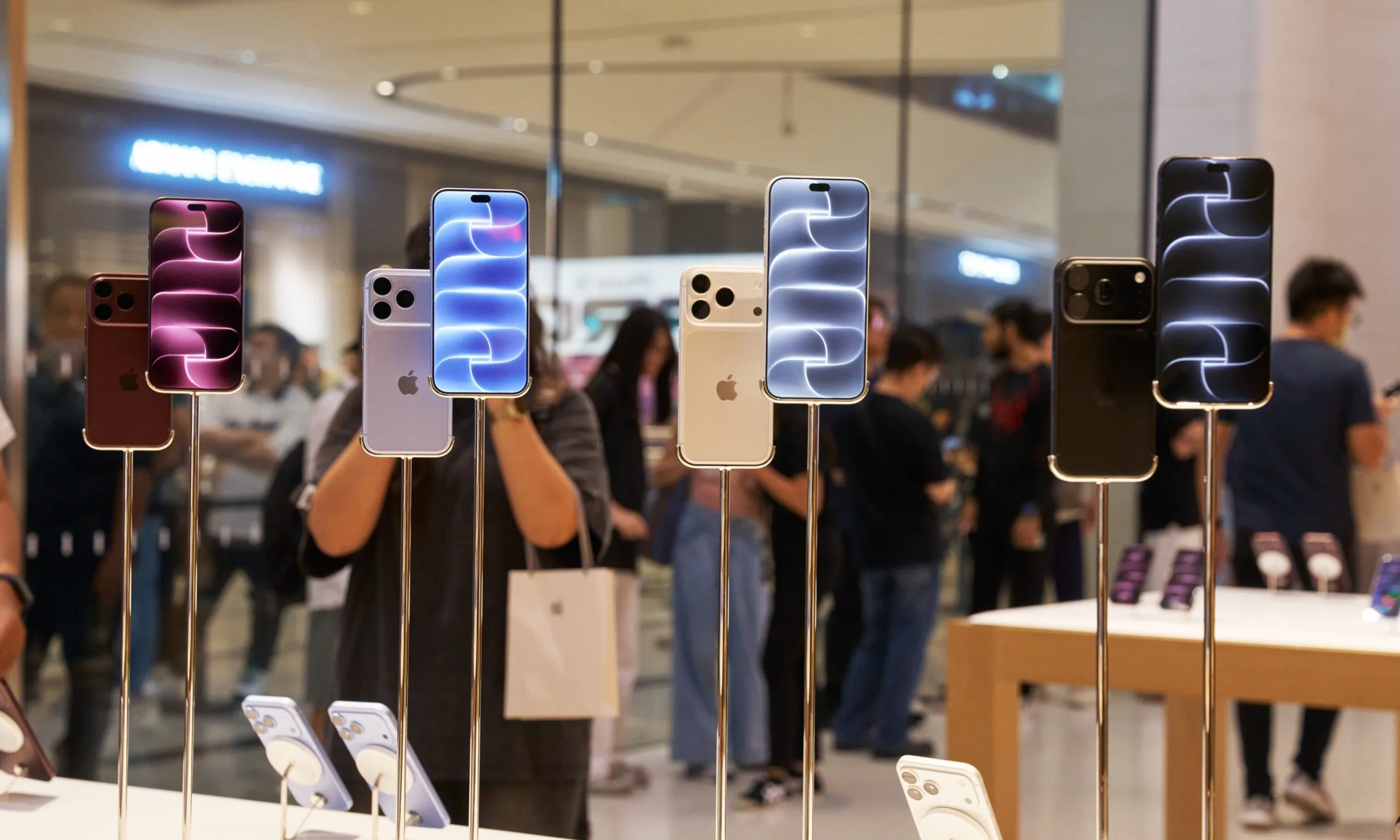
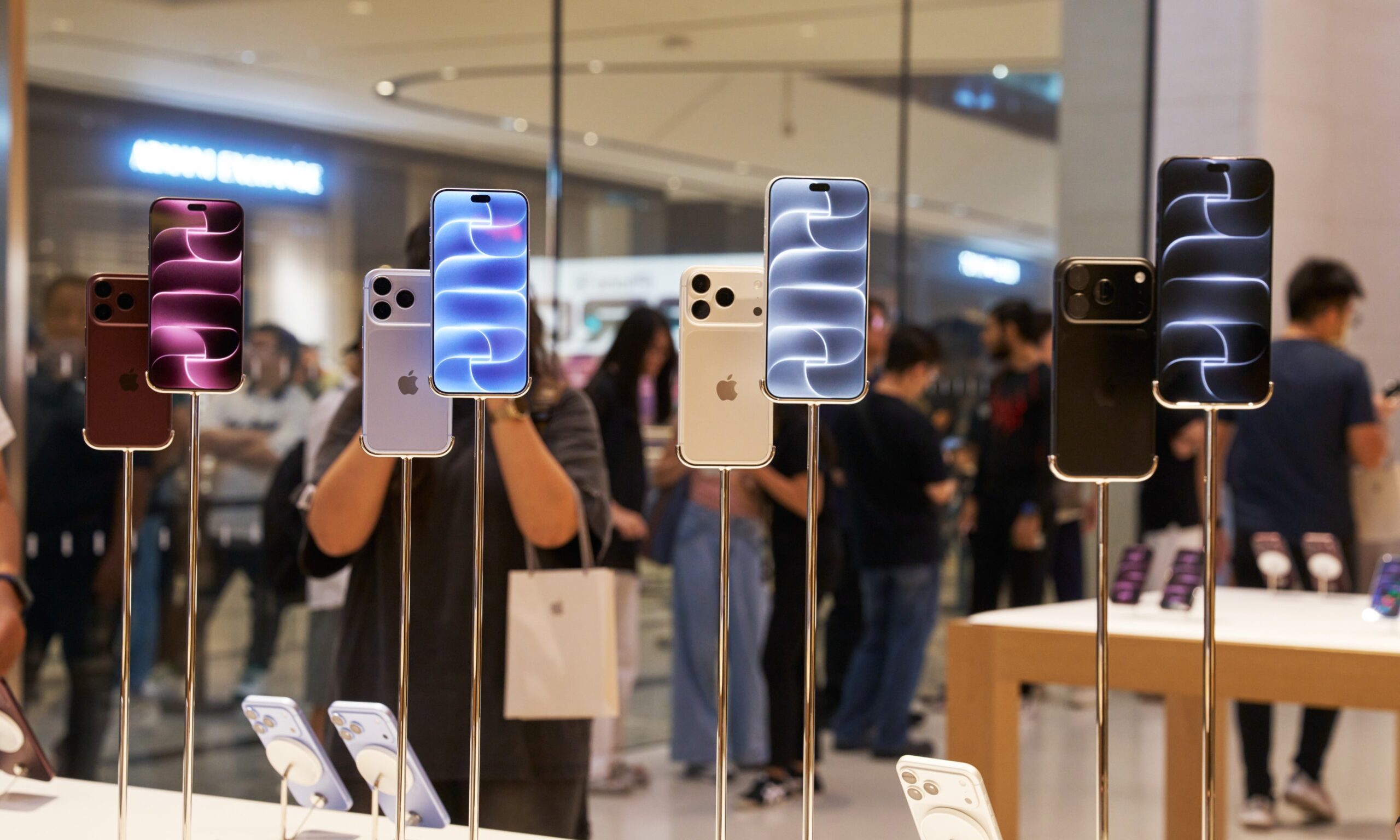
Apple’s latest Pro iPhones have officially moved past the preorder stage. The iPhone 18 Pro and iPhone 18 Pro Max are now available to purchase online and at Apple Store locations worldwide, with the first preorder deliveries also arriving today.
The iPhone 18 Pro starts at $1,199 for 256GB, while the iPhone 18 Pro Max starts at $1,299 with the same storage. Both phones are available with 256GB, 512GB, 1TB, or 2TB of storage in Burgundy, Glacier, Silver, and Black.
Apple is selling the phones through its website, the Apple Store app, and physical stores. Major US carriers and retailers are also carrying the new models. Apple offers trade-in credit toward the purchase, alongside financing and carrier promotions.
Apple
Apple’s new Pro iPhones bring some meaningful upgrades
The iPhone 18 Pro and Pro Max introduce Apple’s A20 Pro chip, the company’s first iPhone processor built on a 2nm process. Apple also increased battery capacity this year, with the eSIM-only models rated for up to 36 hours of video playback on the Pro and 45 hours on the Pro Max.
Camera hardware received a notable upgrade as well. The 48MP Fusion Main camera now uses a physical variable aperture, and the Camera app adds manual controls for aperture, shutter speed, and white balance. Apple also made the Dynamic Island smaller and updated the vapor chamber to improve sustained performance.
Customers buying in person can get hands-on demos and setup assistance, while online orders are available through Apple’s website and Store app. Apple says Personal Setup is also available for customers who want help getting their new devices ready to use.
In context: Iran threatened Big Tech companies earlier this year, warning that it could target and destroy their facilities in the Middle East in retaliation for US-Israeli bombing of the country. Now, Amazon appears to be tacitly confirming that Tehran did indeed destroy some crucial IT infrastructure belonging to the US giant.
Amazon recently confirmed that Iran’s threats against US tech corporations were all but real. The company provided a few updates on the health of its AWS services in the Middle East, stating that some of its facilities have been damaged to the point of becoming completely inoperable for the foreseeable future.
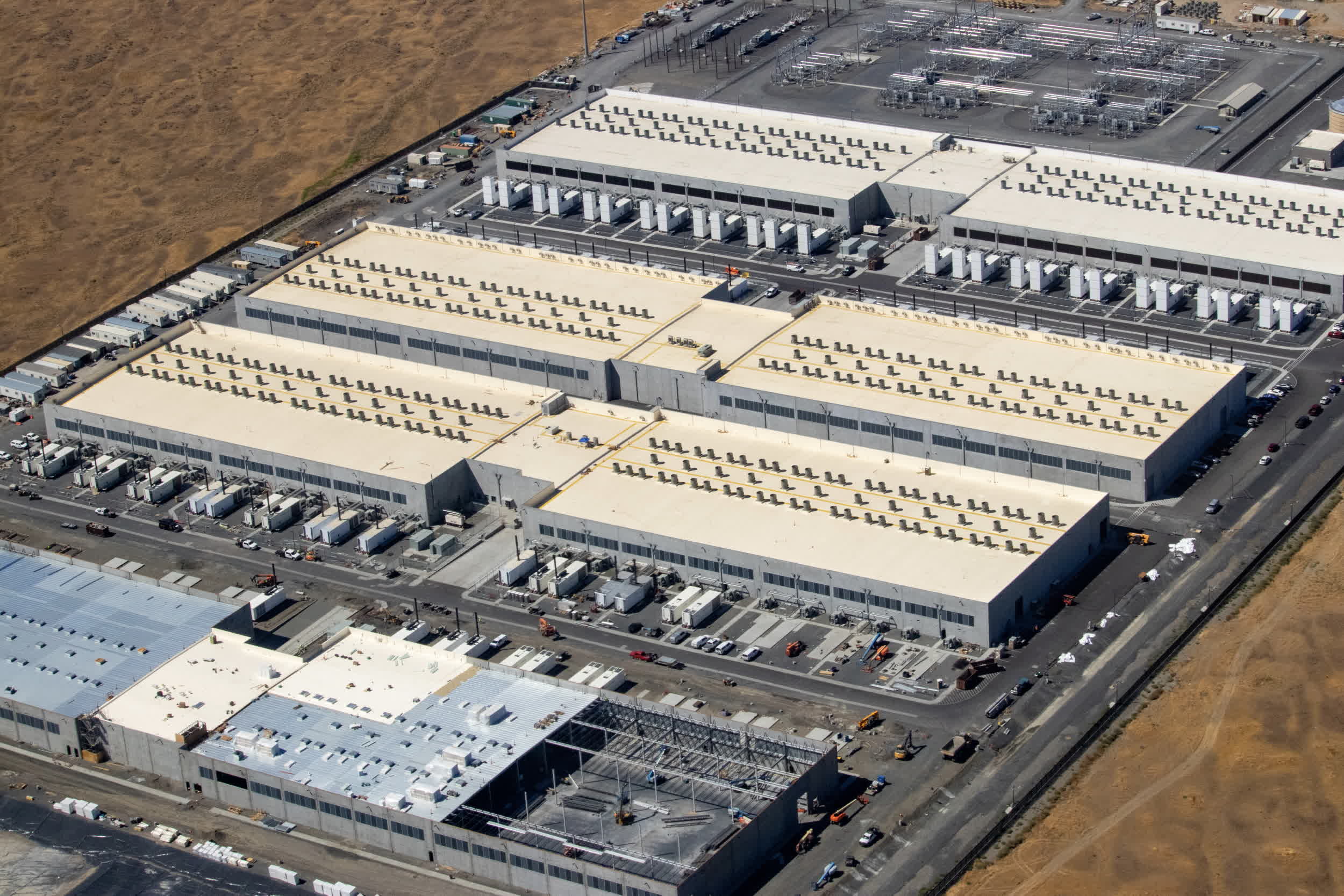
The situation is particularly dire in the Bahrain AWS Region (me-south-1), which was allegedly destroyed by Iranian drone and missile strikes earlier this year. Amazon has now said that the damage to its cloud infrastructure spans multiple Availability Zones (AZs), exceeding the company’s ability to withstand disruptions affecting regional and multi-AZ services.
“After a thorough assessment, we have determined that we are unable to restore access to the resources and data hosted exclusively in this region,” the company said.
Advertisement
Amazon defines an Availability Zone as a major node in the global AWS infrastructure. A Zone includes one or more physical data centers with redundant power, networking, and connectivity within a single AWS Region. The me-south-1 Region was damaged to the point that its service can no longer be restored, and customers are advised to move their cloud operations to other Regions – preferably in Europe, or at least far away from Iran’s reach.
Amazon has also confirmed that AWS infrastructure is experiencing multiple “operational issues” in the United Arab Emirates (UAE). The UAE Region (me-central-1) had its data center resources destroyed in the mec1-az2 Availability Zone, while the company is trying to recover other regional and zonal resources hosted in the disrupted mec1-az1 and mec1-az3 Availability Zones.
The disruption affecting the UAE’s me-central-1 Region began in March, and most customers have already relocated their cloud products elsewhere while restoring backups or copying data that remained accessible. Amazon is apparently trying to replace or rebuild the damaged infrastructure in the UAE, so there could be positive updates on the AWS service dashboard over the next few months.
After Iran warned tech companies that it would target their IT infrastructure in the Middle East, AWS and other cloud giants warned customers that they could lose their data – and potentially their businesses – without a backup plan. Amazon asked its customers to enact their disaster recovery plans, redirecting cloud resources and internet traffic to different Regions outside the Middle East warzone.
















































You must be logged in to post a comment Login