
Crypto World
CFTC Sends Crypto Regulatory Framework to White House for Review


The U.S. Commodity Futures Trading Commission has taken another step toward formal rulemaking for crypto-related markets, submitting a regulatory action for White House review as it continues to outline how digital asset transactions could be regulated under existing authorities.
According to a filing posted to the Office of Information and Regulatory Affairs (OIRA) on Reginfo.gov, the action—titled “Regulation Crypto Asset Transactions and Regulation Crypto Asset Markets”—was received on Sept. 17 and is currently listed at the “prerule” stage. That designation signals the process is still early and the agency has not yet issued a formal proposed rule.
Key takeaways
- The CFTC filed a new crypto-focused rulemaking action with OIRA on Sept. 17, but it remains in the early “prerule” stage.
- The filing does not provide specific regulatory details, suggesting further information will come later in the rulemaking timeline.
- Recent U.S. legislative momentum weakened after the Senate failed to advance the CLARITY Act, while both the CFTC and SEC signaled they would proceed with or without new law.
- In the days following Sept. 15, the regulators also took separate enforcement-adjacent steps: a CFTC no-action position and an SEC temporary exemption framework.
What the CFTC filing indicates—and what it doesn’t
The OIRA posting for the CFTC’s action, labeled “Regulation Crypto Asset Transactions and Regulation Crypto Asset Markets,” confirms the agency is moving toward a more structured regulatory approach for crypto trading activity and market infrastructure. However, the filing itself does not lay out the substance of what the CFTC intends to regulate, such as which categories of market participants, trading arrangements, or operational requirements would be covered.
The “prerule” listing matters for readers because it usually precedes a proposed rule by moving the action through early interagency or administrative review. That means market participants should treat the filing as a signal of direction rather than a preview of enforceable standards.
For investors and firms planning compliance work, the practical takeaway is that the CFTC is building a pathway toward a dedicated crypto asset market regime. The missing details, meanwhile, leave compliance teams with uncertainty about timing and scope—until a proposal is published.
Legislation stalls as regulators lean on existing authority
The filing arrives shortly after the U.S. Senate did not advance the CLARITY Act, a bill intended to establish a federal framework for regulating crypto markets. With that legislative path effectively blocked in the near term, senior regulators have repeatedly pointed to their ability to move using existing statutory authority.
Coinciding with that backdrop, CFTC Chair Michael Selig posted on X that the agency was “locked in and ready to ship” rules for crypto markets using existing authority. In parallel, SEC Chair Paul Atkins said the SEC would advance “with or without legislation,” as reflected in his posts on X.
Earlier remarks from Selig also suggested that the CFTC had considered a rulemaking approach even if Congress did not act. Speaking at the CFTC’s Innovation Advisory Committee conference on Aug. 20, he said the agency was prepared to use existing authority to establish a crypto asset market regime if the CLARITY Act stalled. He also discussed directing CFTC staff to explore rule concepts that could allow existing registrants and currently unregistered crypto exchanges to operate within a “crypto asset market” structure—an arrangement that would be overseen under CFTC rules and could include leveraged or margined crypto trading.
For the sector, this signals an ongoing tug-of-war between market expectations of comprehensive legislation and the reality that regulators may still set guardrails via rulemaking and targeted regulatory relief.
Regulatory actions after Sept. 15: relief and exemptions move in parallel
A day after the Sept. 15 Senate vote, the CFTC and SEC each took actions that, while different in scope, pointed to a broader theme: regulators are continuing to shape the crypto trading environment even without a new overarching statute.
On the CFTC side, the agency issued a no-action position for providers of passive software, as described in earlier coverage. While the details of eligibility are specific to the no-action framework, it underscores that the CFTC is willing to use regulatory discretion to manage particular technical implementations around crypto trading.
On the SEC side, it announced temporary exemptions for certain platforms facilitating onchain trading of tokenized securities, according to posts on X from the SEC.
Industry reaction: expectation of near-term rulemaking
Outside the regulators, industry leaders have also signaled readiness for regulatory work to proceed. Coinbase CEO Brian Armstrong said he expected regulators to move forward after the vote, stating that the SEC and CFTC have “the tools they need to create clear rules under existing authority.” In that same Sept. 15 X post, Armstrong said he expected them to begin working on the issue “in earnest,” adding that “So clarity is coming to crypto regardless.”
While those comments are not the same as regulatory text, they reflect how market participants are interpreting the balance of power: when legislative clarity is delayed, compliance strategies increasingly have to follow the pace of rulemaking and regulatory relief.
What to watch next
The immediate uncertainty is what the CFTC’s Sept. 17 “prerule” action will translate into once it advances toward a proposed rule—especially around the scope of “crypto asset transactions” and “crypto asset markets.” Market participants should watch for the next OIRA steps and any CFTC releases that clarify which market structures, trading practices, and platform roles will be prioritized.


If Zach Cregger’s career tells us anything, it’s that starting out as a comedian might be the best training for becoming a horror filmmaker. Cregger’s 2022 surprise hit (and directorial debut) Barbarian paved the way for an even bigger success, 2025’s Weapons, a well-written, intelligently directed picture featuring sterling performances from Julia Garner, Josh Brolin, and most of all Amy Madigan, who won an Academy Award for her role as Aunt Gladys, an unctuously polite polyester-pantsuit-wearing costume jewelry addict who also happens to be a witch, having lured a town’s schoolkids away in the middle of the night for her own nefarious purposes. So many contemporary horror films lack a sense of humor, about the world or about themselves. But Cregger, a founder of the comedy troupe The Whitest Kids U’Know, gets that it’s an essential ingredient. Weapons, despite its overarching aura of dread (and more than a few mildly traumatizing visuals), didn’t come at its audience like a doomy thundercloud. Instead, it found ways to lure us in, with scattered morsels of terror as well as laughs. And unlike too many modern horror films, it featured a confident, definitive ending that was both mortifying and funny, the exact opposite of the carelessly worked-out wrap-up we so often get. Cregger didn’t leave you wondering what the heck you just watched—or, worse, wondering why you’d invested the time.
His latest film, Resident Evil, a riff on the enduring and now practically antique Japanese video game, isn’t as clever, funny, or grimly haunting as Weapons—but then, it’s simply a different type of beast altogether. The picture is loose-limbed and rambling by design, a kind of shaggy-dog story that reflects the experience of maneuvering a character, via a controller, through a landscape of obstacles. And while some fans of the game have complained that Cregger has failed to include their favorite characters, he has perhaps wisely decided to focus on one: Austin Abrams, who portrayed the drug addict James in Weapons, plays Bryan Hodukavich, a hapless medical courier charged with transporting a very important parcel to far-away Raccoon City General Hospital, which can be reached only by driving across treacherous, icy mountain terrain. His ramshackle vehicle slips and slides on the slick roads, and his headlights flash on the figure of a wild-eyed, bloodied woman just as he hits her.
We know, though he doesn’t seem to, that she’s a zombie lady. Stricken with horror at what he’s just done, he locates the woman—she was hit hard enough to be thrown into the woods nearby—and bundles her into the passenger seat, barely taking note of the fact that she’s shoeless and wearing a sleeveless floral dress in the middle of winter. As he drives, frantically, she repeatedly reaches toward his face with her clawlike fingers, as if to caress him; each time, he fails to notice, and she draws back abruptly, her glassy eyes registering nothing but raw need. It’s a predictable yet somehow hilarious gag, and Andrea Miltner, as the zombie woman, does a lot with a little.
The mishaps pile up one by one: a state trooper stops Bryan for speeding, and reluctantly agrees to transport the zombie woman in his own vehicle—a good solution but, as it turns out, only a temporary one. Other stuff happens. Bryan must race across a fenced-in field, pursued by a dog—which is of course not exactly a dog. He’s thrilled to have located a shotgun in what looks to be a deserted farmhouse—he’s just got to find some ammo learn how to load the thing. Later, he’ll encounter a duo of travelers (Paul Walter Hauser and Kali Reis) who inform them they’re representatives of a shadowy group known as the Umbrella Corporation, and they reveal the significance of the package he has been protecting so gingerly. (Previously, he’d been convinced it was a tiny heart destined to save the life of a child.) Amid all this, he worries about a cellphone call he’d received earlier from his girlfriend, informing him of a potentially relationship-changing situation. He’s desperate to get back to her, but he can’t get a signal. And over and over again, he’s flummoxed by a single, ancient device: he encounters one padlock after another, but of course, he’s never got the key.
Naturally, as the story moves forward, the zombies begin piling up in alarming quantities. To describe the creatures in detail would be giving too much away: let’s just say, for now, that there are slimy tentacles involved, and vomit and pustules also make an appearance. Resident Evil is largely a one-man show, and Abrams carries it deftly. In the movie’s early scenes, his eyes have a checked-out quality; he’s like an absentee participant in his own life. But as the action, and the danger, intensifies, he becomes more and more alive. By the end of this movie’s fleet 90 minutes, his battle seems unwinnable, and Cregger and his co-write Shay Hatton leave him almost literally hanging, begging for a sequel. The Resident Evil gestalt has been interpreted in movie form before, in the series of pictures made by Paul W.S. Anderson in the early 2000s through 2016; a ten-year gap is certainly a reasonable length of time to warrant a series reboot. In the meantime, although Bryan’s fate is unknowable, Resident Evil leaves you satisfied enough. Time, as we measure it in movies, has already proved that zombies aren’t going anywhere. We need them even more than they need us.
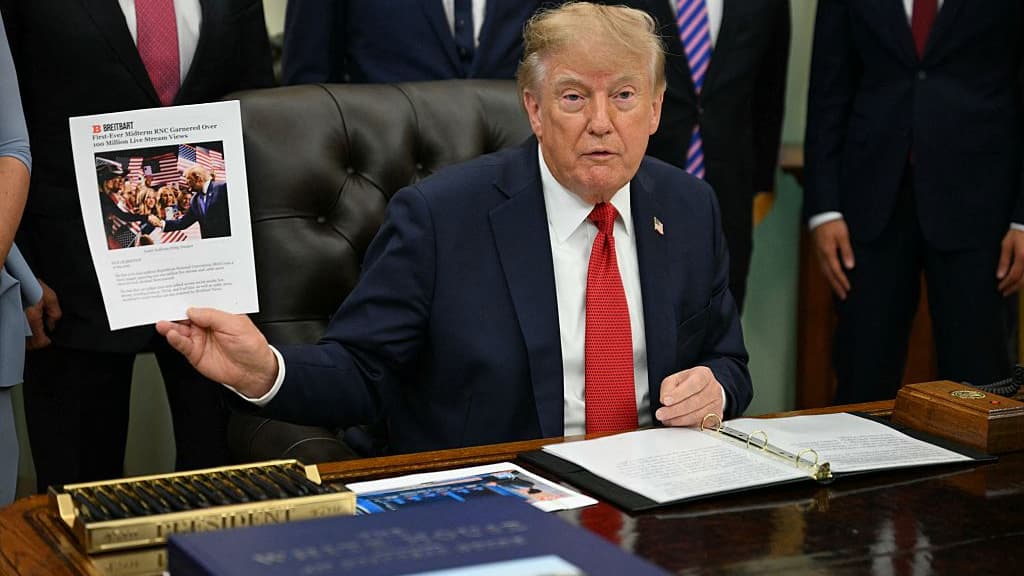
Taking questions from reporters in the Oval Office later, Trump said there were no particular stories that prompted the decision. “It’s really just cumulative stories over the last few years, you get sick of it,” he said. “They purposely write negative news, and they do that because they want to try and diminish the Republicans and a Republican administration.”
It was not immediately clear whether the White House would enforce the prohibition. Despite Trump’s announcement that the ban was effective immediately, reporters from CNN remained at the White House on Friday and continued covering the Administration
More recently, Trump barred reporters from The Associated Press from the Oval Office, Air Force One, and other events with limited space after the news organization declined to update their widely used stylebook to adopt his preferred name, “Gulf of America,” for the body of water long known as the Gulf of Mexico. The Associated Press sued, and the case remains ongoing.


Coinbase wants to bring 24/5 perpetual futures trading to individual US stocks, with its proposed contracts now awaiting regulatory approval.

Sure, investing is all about performance. But placing big bets on hot stocks, piling into top-performing sectors or swinging for the fences to turbocharge gains isn’t required to retire in comfort. An index fund can do the job. The data shows you don’t have to beat the market to build wealth or boost the odds of a secure retirement. Just…
Copyright ©2026 Investor’s Business Daily, LLC. All rights reserved. 87990cbe856818d5eddac44c7b1cdeb8
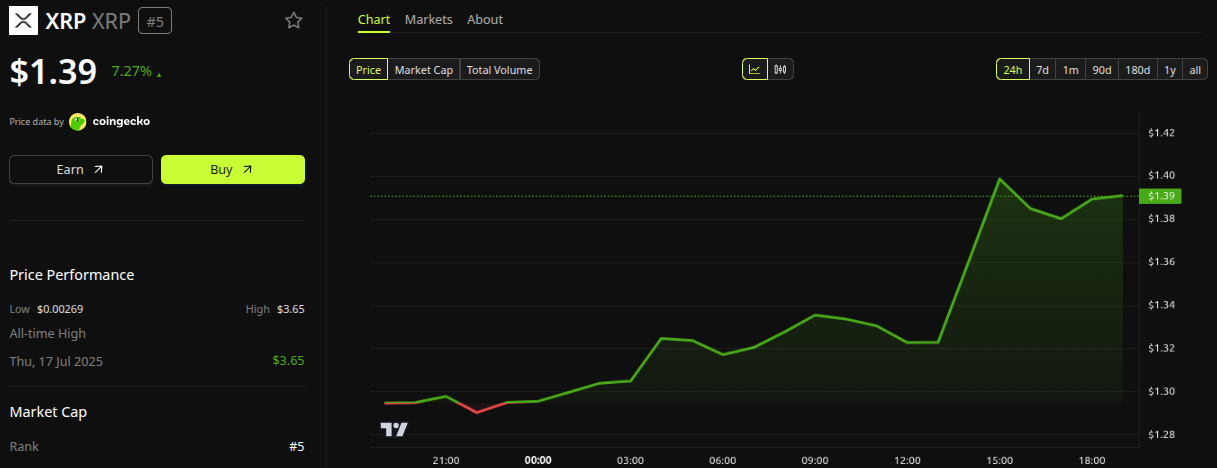
XRP shook off a sharp regulatory setback this week, climbing more than 7% over 24 hours to trade near $1.39 after briefly touching lows around $1.27.
The rebound followed a rocky 48 hours that combined a failed Senate vote with the Federal Reserve’s first rate hike since 2023.
What Actually Triggered This Week’s Selloff
Cloture is the Senate procedure required to end debate and move a bill toward a final vote, needing 60 senators to succeed. On September 15, the CLARITY Act fell short in a narrow 50-49 tally, missing that threshold and stalling a proposed federal framework for digital assets.
XRP dropped more than 8% in the immediate aftermath, touching lows near $1.27 to $1.28. Pressure intensified the next day when the Fed raised its benchmark rate by 25 basis points to a range of 3.75% to 4.00%, a move that typically weighs on risk assets broadly.
The sell-off, however, proved short-lived. XRP has since rebounded to $1.39, up 7.23% over 24 hours, even as the token slipped slightly by 0.30% in the past hour. Trading volume held near $3.9 billion, close to its 30-day average, suggesting genuine buying rather than thin, low-liquidity trading.
Follow us on X to get the latest news as it happens.

Is This Rebound Built on Solid Ground?
Whale deposits to Binance reached six-month highs, according to CryptoQuant data, while futures open interest climbed back above levels seen before the failed vote, both signals of renewed large-scale participation.
The broader market moved in tandem. Bitcoin gained 5.49% to trade near $80,752, Ethereum rose 5.53% to roughly $2,595, and Solana surged 10.75% to $112.34. Total altcoin market cap climbed to $222 billion, its highest level in eight months.
Some analysts point to a potential inverse head-and-shoulders pattern forming on the daily chart, with a neckline around $1.55 that could open a path toward $2 if confirmed.
The RSI sits near neutral territory at 54, leaving room for further upside without yet flashing overbought conditions. XRP still trades 62% below its all-time high and remains inside a broader consolidation range that has persisted for months.

Subscribe to our YouTube channel to watch leaders and journalists provide expert insights.
Whether the token can consistently close above $1.41 on strong volume will likely determine whether this recovery becomes a durable trend reversal or another temporary bounce within the same range.
For now, the market has clearly absorbed both the CLARITY Act’s failure and the Fed’s rate decision without lasting damage.
The post XRP Shakes Off CLARITY Act Failure to Surge 7%: Will It Hold? appeared first on BeInCrypto.

Elon Musk owns 28% of Tesla (TSLA) — making him the largest shareholder of the S&P 500 stock. The same goes for Mark Zuckerberg’s 13% CEO and founder position of Meta Platforms (META). What about Nvidia (NVDA)? Not even close. The company’s founder and CEO Jensen Huang only owns 3.6% of the AI giant — ranking him just fifth, says…
Copyright ©2026 Investor’s Business Daily, LLC. All rights reserved. 87990cbe856818d5eddac44c7b1cdeb8


Weyerhaeuser Company (WY) is one of the world’s largest private owners of timberlands and a major U.S. producer of wood products. The company manages millions of acres of timberlands across the U.S. and Canada, harvesting trees and turning them into lumber, oriented strand board, engineered wood products and other materials used in construction. Headquartered in Seattle, Washington, Weyerhaeuser has a market capitalization of roughly $16.1 billion.
Weyerhaeuser also generates revenue from timberland real estate, natural resources, energy and emerging climate solutions, giving the company several ways to monetize its vast land portfolio. That scale has pushed WY into “large-cap” territory, sitting comfortably above the commonly used $10 billion threshold for large-cap stocks.
More News from Barchart
Shares of Weyerhaeuser have had a rough stretch lately. Shares are down 21.4% from their 52-week high of $27.75, reached on Feb. 12. The weakness has continued over the past three months, with WY stock falling 12%, while the S&P 500 Index ($SPX) has managed marginal gains over the same period.

And if you zoom out a little, the picture does not get much prettier. Over the past 52 weeks, WY has slipped 12.6%, even as the S&P 500 has climbed 14.3%. So far in 2026, the gap remains visible, with WY down 7.9% compared with a 10.3% gain for the broader index.
The technical picture adds another layer of caution. WY is trading below both its 50-day and 200-day moving averages, suggesting the stock remains under pressure.

Weyerhaeuser’s weak stock performance over the past year has largely reflected a problem that is bigger than the company itself – the U.S. housing market. After the post-COVID construction boom faded, higher mortgage rates and expensive financing have kept homebuilding activity under pressure. And with long-term rates still elevated, investors have little reason to expect a quick turnaround. Fewer homes being built ultimately means less demand for lumber and other wood products, which has weighed on expectations for WY’s earnings.
There is a bit of a twist, though. Lumber prices have recently bounced back as supply constraints tightened the market. That sounds encouraging, but investors appear more focused on whether those higher prices can last when residential construction and renovation activity remain soft. With demand recovery potentially stretching into 2027, the earnings outlook remains difficult to read.


It’s not easy to adapt a classic novel across cultures, but The Scandal does it beautifully. Like The Handmaiden before it, the Netflix series transposes a story originally set in the Western world—in this case, the frequently adapted 1782 French novel Les Liaisons dangereuses—into the setting of 18th century Joseon. Under Jung Ji-woo’s masterful direction, the story of two aristocrats who toy with the lives of others for fun moves seamlessly into the rigid, Confucian society of the East Asian kingdom.
There, Son Ye-jin (Crash Landing on You, Decision to Leave) stars as Lady Cho Yun, a deeply intelligent woman whose potential is hindered by her sex. Bored within the limitations placed on her, Lady Cho suggests a game with her cousin Cho-won (The Colony’s Ji Chang-wook), a writer and consummate libertine. If Cho is able to seduce An Hui-yeon (Mask Girl’s Nana), the widow who vows to remain chaste following the death of the husband she never met, then Cho will sleep with Cho-won after years of denying him. However, if he fails to do so, then he must impregnate So-ok (Shin Yoon-ha), the aspiring concubine of Lady Cho’s husband, Lord Yoo (Lee Ji-hoon).
As the game develops, things get messy, leading to a conclusion that is as devastating as it is inevitable.
What is The Scandal based on?

The Scandal is based on Les Liaisons dangereuses, the 1782 French epistolary novel by Pierre Choderlos de Lactos. The book’s many adaptations include a 1988 film starring Glenn Close, John Malkovich, and Michelle Pfeiffer. It was also the basis of 1999’s Cruel Intentions, which transposes the action to contemporary Manhattan and stars Sarah Michelle Gellar, Ryan Phillipe, and Reese Witherspoon.
In 2003, Korean filmmaker E J-Yong directed an adaptation set in 18th century Korea. Called Untold Scandal in English, the film stars Lee Mi-sook (Queen of Tears) as Lady Cho, Jeon Do-yeon (Possible Love) as Lady Jeong, and Bae Yong-joon (Winter Sonata) as Cho-won. While The Scandal Netflix series does not follow the exact same plot as Untold Scandal, it is quite close. In this way, The Scandal is an adaptation of Untold Scandal as much as it is an adaptation of Les Liaisons dangereuses.
The Scandal ending, explained

In the final act of The Scandal, Lady Cho’s scheme spirals out of her control. In an attempt to seduce Hui-yeon, Cho-won convinces her to run away in the middle of the night. Everyone thinks she has finally done the respectable thing and killed herself to join her dead husband, and begins celebrating her extreme virtue. Her mother-in-law, the Left State Councilor’s wife (Kang Ji-eun) pressures Lady Cho into writing to the King to request that a memorial gate be built in Hui-yeon’s honor.
Unfortunately for most of the powerful people in this story, Hui-yeon is not actually dead. Also, now that she has further interpreted the religious teachings from the secret Catholic gatherings she has been attending, she now believes that it would be wrong to take her own life. When she and Cho-won sleep together, she falls in love with him, finally believing his months of vows that she is also the one he loves. Hui-yeon realizes that she wants to live.
Meanwhile, Cho-won has been tasked by the King with finding Hui-yeon’s body so that he can rule on the memorial gate request. When he brings these updates to Yun, she outlines the easy solution: Hui-yeon must be convinced to kill herself, wrapping up this situation in a nice, tidy bow. However, Cho-won has begun to develop feelings for Hui-yeon. He decides to run away with her, asking his servant Chil-seong (Kwon Do-gyun) to prepare a ferry for them to leave Joseon.
The situation is a heartbreaking echo of the plan Cho-won once had with Yun. Years prior, when the two were young, they decided to run away together, rather than allow Yun to marry someone who wasn’t Cho-won. They booked the ferry, but before Yun could sneak out of her home, she found her father crying. When she asked what was wrong, he lamented the fact that she was born a woman, and therefore she could not reach the heights of her massive potential. The conversation convinced Yun to stay and marry Lord Yoo. Cho-won was left waiting for Yun at the ferry port until daybreak, and then yelling for Yun as she married Lord Yoo. Following the heartbreak, Cho-won fell into the life of a notorious playboy, never fully giving up on Yun.
Worried that Cho-won will face harsh repercussions for lying to the King, Hui-yeon flees to Lady Cho’s in the middle of the night, not knowing Yun’s role in her predicament. When Cho-won finds her there, Yun asks him outright: Who do you choose? In that moment, Cho-won decides he cannot go with Hui-yeon, as he had planned. Even if he loves her, he realizes he is not willing to let go of Yun. A heartbroken and betrayed Hui-yeon runs into the night without her gat to disguise her as a man.
Lady Cho believes she has won, and that she still has Cho-won’s complete loyalty. However, after he leaves, he finds Hui-yeon and gives her the gat. He tells her the truth, and she tells him that she will live with the resentment she now has for him. They part ways. Meanwhile, Lady Cho realizes that Cho-won has gone to Hui-yeon, and worries that she has lost him. She tears apart her wardrobe in anger before asking her servant to help her look pretty.
Later, Cho-won brings the official report on Hui-yeon’s supposed death. Written by Lady Cho, it outlines how a papermaker saw a woman fitting Hui-yeon’s description jump from a cliff into the raging river below. The King decides to grant Hui-yeon’s memorial gate in recognition of her exemplary virtue as a lady, but later calls Cho-won into a private meeting. He knows that the report was false because the details of a torrential downpour the night before the death do not match up with his other reports. Cho-won is shocked, either set-up by Lady Cho or felled by her showy arrogance in coming up with the vivid imagery of the report. The King tells Cho-won that he shall never again be welcome in his presence.
In a letter to Yun, Cho-won spares his cousin of this particular outcome, instead saying that the report moved the King to tears and was a resounding success. Lady Cho asks her servants to bring in celebratory drinks and food. She doesn’t yet understand that her schemes have lost her Cho-won forever.
Does Cho-won die in The Scandal?
Cho-won dies in the final episode of The Scandal. After breaking Hui-yeon’s heart and realizing that Yun will never choose him, Cho-won goes to the Mapo port, where he had previously prepared a ferry to bring himself, Hui-yeon, Chil-seong, and Eun-sil to Yanjing (the historical name for Beijing). However, before the ferryman can bring him all the way across, Cho-won jumps off of the boat into the water. The ferryman looks for him in the darkness, but can only see his gat, floating in the water. Cho-won is gone.
Does The Scandal have a happy ending?

Definitely not. As in the novel on which it is based, the cruel machinations of Lady Cho and Cho-won could never lead to happiness. They could only ever lead to the confirmed status quo of their miserable lives as lords and ladies. Yun gets what she ostensibly wants: a continuation of the comfortable life she leads as Lady Cho. However, without Cho-won, she has neither a way to get her writing to a broader audience, nor a confidant in her games. The final shot of the character sees her alone, at her writing table, “left with nothing but longing.” Longing for a love that she will never see again, and for a life she didn’t choose, with no one left to write to.
Hui-yeon is not doing particularly well, either. She is alive, and committed to her Catholic faith, but she has to live life in the margins. When Eun-sil, her former servant who believes her to be dead, comes to a secret Catholic service of which she is a part, Hui-yeon has to take off into the night to keep from being discovered. She travels to Cho-won’s old home, where she sees a stack of letters Lady Cho has continued to write to her cousin. Cho-won’s loyal servant comforts her, and beckons her inside for a warm cup of tea because it is what Cho-won would have wanted. She cannot, however, offer Hui-yeon the comforting lie that Cho-won is still alive; it’s clear this woman who has known Cho-won since he was a child believes he is dead.
So-ok is doing comparatively well. She has become a concubine for Lady Cho’s husband, but she has continued her love affair with In-ho (Chani), the Left State Councilor’s younger son. When So-ok becomes pregnant, it’s pretty clear to everyone but Lord Yoo that the baby is In-ho’s. For now, So-ok is happy, but there’s an implication that it will not always be like this. What will her future look like? In-ho is unable to claim his child as his own, and So-ok is stuck as a member of Lady Cho’s household. Throughout The Scandal, we see examples of youthful characters able to withstand bitterness solely through their naivete. What will be waiting for So-ok when the ignorance of her youth fades?
Much of the narration for these things left unsaid is given in the form of pansori, a traditional Korean art form that includes a single singer and a drummer. In the final episode, we learn that the pansori describing much of the plot is actually diegetic, as Lady Cho and other members of her household listen to the pansori singer describe their lives through the thinnest veil of fiction. This is a brilliant nod to Les Liaisons dangereuses’ status as one of the earliest and most famous examples of roman à clef, a French term translating to “novel with a key.” It is used to describe works of fiction that are about real-life events, and featuring real-life public figures, overlaid with the facade of fiction.
What is The Scandal ultimately about?

Like its source material, which famously depicted the French nobility as corrupt shortly before the French Revolution took hold of the country, The Scandal is interested in critiquing the ruling class, giving the series a complexity missing from many romantic historical dramas. Following Cho-won’s jump into the water, the man ferrying him across says aloud to the night, seemingly somewhat facetiously: “Do you know how hard it is to be born a nobleman?” The line serves as a judgment of Cho-won and Lady Cho’s life choices, which, in their carelessness, caused so much pain for those around them.
In the end, the couple that seems the happiest is also the poorest of our main characters. Prior to his death, Cho-won paid for the freedom of nobi Chil-seong and Eun-sil, who fell in love with one another while serving Cho-won and Hui-yeon, respectively. In the final episode, we see them happy with a baby, and with a steady income. In some ways, they serve as a representation of what Cho-won and Hui-yeon, or perhaps Cho-won and Yun, could have been, if they were not noble. But, in other ways, there is no comparison. A self-involved superiority, born of their social class, is integral to who Cho-won, Yun, and even Hui-yeon are as characters. That—as The Scandal argues through its constant, background depiction of the vibrant, working class life going on around these noble characters—is the point.


Binance is expanding its derivatives offering into foreign exchange with the launch of 24/7 perpetual futures, starting with a US dollar-Brazilian real contract on Monday.
Unlike traditional FX markets, which close for the weekend, Binance’s contracts will trade continuously using a dual-mode pricing system. During regular FX trading hours, prices will track a weighted index from third-party data providers, while weekends and public holidays will use an orderbook-based pricing mechanism.
The USDBRLUSDT contract will go live on Sept. 21, settle in USDT and offer up to 100x leverage, according to a Friday announcement. Binance said the weekend system uses an exponentially weighted moving average of orderbook prices, rather than relying on external price feeds.
Binance trading head Shunyet Jan said the contracts are intended to extend price discovery beyond traditional FX trading hours, while giving traders a venue to hedge or take positions around the clock.
Related: Binance brushes off Lagarde MiCA speculation, reaffirms Europe commitment
Crypto exchanges expand into foreign exchange
The launch comes less than two weeks after Bybit introduced 24/7 perpetuals tracking EUR/USD, GBP/USD and USD/JPY, also settled in USDT and offering up to 100x leverage.
Other crypto exchanges entered the market earlier. Kraken launched FX perpetuals tracking the euro, British pound, Australian dollar, Japanese yen and Swiss franc in April 2025, with up to 50x leverage. The exchange had offered spot FX trading since 2020 and reported $5.7 billion in FX spot volume in the first part of 2025.
The products give crypto traders exposure to currency movements without owning the underlying currencies, tapping into a market that handles more trading than any other financial market. Global OTC FX turnover averaged $9.6 trillion a day in April 2025, according to a report from the Bank for International Settlements.
Magazine: Bitcoin treasury firms can outperform BTC… but is the risk worth taking?


Fake YouTube tutorials promoting AI-powered crypto arbitrage bots have tricked 224 victims into deploying malicious smart contracts that stole 274.6 ETH worth about $517,000.
Summary
- Nine similar YouTube videos directed users to compilers controlled by the scam operators.
- Victims deployed 234 contracts and funded them through transactions they approved themselves.
- A malicious backend replaced the code shown to users with contracts designed to steal ETH.
- Stolen funds moved to six collection addresses, with the median victim losing 1 ETH.
TRM Labs said in a Sep. 14 report that the operation disguised malicious Ethereum contracts as automated trading tools built with Anthropic’s Claude, allowing the scammers to steal funds without relying on conventional phishing links or suspicious wallet approvals.
The blockchain intelligence firm traced 234 contracts deployed by victims, although the campaign affected 224 people because some participants created more than one contract. Funds taken through the contracts eventually reached six collection addresses controlled by the operators.
Based on ETH’s value when the transfers occurred, the 274.6 ETH stolen was worth approximately $517,000. TRM calculated a median loss of 1 ETH per incident, showing that the total did not depend on a single large victim.
Fake AI trading bot tutorials turned victims into contract deployers
Rather than sending users to a page that immediately requested access to their wallets, the operators presented the scheme as an educational process. Victims found the videos, followed the instructions, and took each onchain step themselves.
TRM identified nine nearly identical YouTube tutorials presented under different creator identities. AI-generated virtual hosts and voiceovers gave the videos the appearance of independent guides, while each tutorial promised to help viewers create a fully automated crypto arbitrage bot using Claude.
During the videos, users were told to copy code and open a compiler website selected by the presenter. Some of the websites copied the design of Remix, a commonly used browser-based development environment for writing and deploying Ethereum smart contracts.
Victims then connected their wallets, compiled what appeared to be trading software, and deployed the resulting contracts. Because the users initiated and approved each action, the transactions looked different from attacks in which a fraudulent site asks for a direct token allowance or an unclear signature.
Funding the newly deployed contracts completed the trap. Users believed they were supplying capital that the bot would use to exploit price differences between trading venues, but TRM found no arbitrage system or AI function in the malicious contract variant it examined.
The malicious contracts drained deposits above 0.05 ETH
In one version of the scheme, a backend script ignored the source code that victims pasted into the compiler. The website instead retrieved a separate contract from a server operated by the scammers and prepared the replacement for deployment.
As a result, the clean code displayed in the browser was never placed onchain. Victims saw one program on their screens while their wallets deployed another, preventing them from verifying the real contract through a visual check of the compiler window alone.
The replacement contract could accept ETH deposits, matching the expected behavior of a trading bot that needed funds to operate. Once its balance exceeded 0.05 ETH, however, the contract was set to transfer the money to an address controlled by the operators when the user selected either the Start or Withdraw function.
Both buttons therefore served the same purpose despite carrying labels associated with normal bot controls. Pressing Start did not activate a trading strategy, while pressing Withdraw did not return the deposited funds to the user.
No AI model interacted with the deployed contract, according to TRM’s findings. The Claude branding formed part of the sales pitch, while the onchain code only received deposits and moved qualifying balances to the scammers.
The method also reduced the chance that common wallet protections would interrupt the process. A wallet could accurately show that its owner was deploying a contract, sending ETH to it and later calling one of its functions, yet still lack the context needed to determine that the tutorial and compiler had misrepresented the code.
AI trading bot scam bypassed common phishing defenses
Traditional crypto phishing campaigns often depend on copied domains, poisoned search results or prompts that request broad token permissions. Blocklists and wallet simulations can sometimes identify a known malicious address, deceptive domain, or transaction that grants an attacker control over existing assets.
The AI trading bot operation used a different path because each victim became the deployer of a newly created contract. A fresh address would not necessarily appear on an existing blacklist, and the wallet owner authorized the deployment and funding transactions without surrendering a seed phrase.
In July, crypto.news explained how drainers commonly abuse legitimate blockchain permissions. Such tools often convince a user to approve a malicious contract, which can then transfer tokens while the blockchain processes the action as authorized.
The campaign described by TRM moved the deception one step earlier by controlling the code-generation and deployment process. Instead of asking victims to trust an existing contract, the tutorials convinced them that they were creating the software themselves.
A separate Hyperliquid phishing case in August showed how online advertising can also direct crypto users toward malicious infrastructure. One user lost about 550,000 USDC after a sponsored Google result led to a fake Hyperliquid website linked by security firm Salus to the Inferno drainer ecosystem.
Salus said the infrastructure in that incident automatically divided stolen funds among addresses connected to the operation. Investigators linked related groups to approximately $52.74 million in losses, showing how backend services can handle theft, swaps, consolidation, and revenue sharing while separate operators focus on attracting victims.
U.S. users can report crypto losses through the FBI
For U.S. users, the FBI’s Internet Crime Complaint Center accepts reports involving cryptocurrency fraud and other cyber-enabled crimes. The bureau says complaint data can help investigators identify connected cases, follow emerging methods and, in some situations, freeze stolen funds.
The FBI recorded $16.6 billion in reported internet-crime losses during 2024, up from $12.5 billion in 2023, according to figures published by the center. The agency advises victims to file reports even when they are unsure whether a complaint meets a specific crime category because submissions may be shared with federal, state, local, or international law enforcement agencies.
Onchain security groups have also increased their focus on attacks that use valid user actions to execute theft. In February, the Ethereum Foundation backed a Security Alliance engineer assigned to track and disrupt wallet drainers targeting Ethereum users.
Security Alliance cited data placing drainer-related losses at $84 million in 2025, the lowest level on record. Its security network includes MetaMask, Phantom, WalletConnect, and Backpack, which share threat intelligence designed to identify phishing campaigns and other malicious infrastructure.

Cooper Flagg’s NBA Journey: From No. 1 Pick to Rookie of the Year

Schools Scramble as Budget Cuts Force Reset of Free Lunch Programs

BORIS JOHNSON: Cricket legend Imran Khan is rotting to death in a tiny jail cell in Pakistan. It’s time Britain used its influence to help free him

Weekend Open Thread – Corporette.com

Memory prices are slowing because buyers ran out of money

Micron Stock Climbs Above $1,031 as AI Memory Crunch and a $50 Billion Outlook Fuel the Rally

A Powerful Prayer for Financial Breakthrough | God Will Make a Way Where There Seems to Be No Way

Crypto Holders.. this is not good

Does Financial Audit Help You?! Blanko Caleb Hammer #fyp #calebhammer #financialaudit #money
-

 Tech5 days ago
The Latest Weird Thing to Play Doom Is the Mapped-Out Brain of a Fruit Fly
-

 Crypto World4 days ago
Kraken Lets xStocks Holders Earn Yield Through DeFi
-

 Entertainment7 days ago
News Specials, Movies, Shows, More
-

 Crypto World2 days ago
US Charges Robinhood Engineers Over Crypto Listing Trades
-

 Crypto World6 days ago
Can AI Build a Startup in 72 Hours? Elon Musk's Team Will Livestream the Test
-

 Crypto World4 days ago
Elon Musk Drops a Bombshell: Grok 5 Could Be the AGI Breakthrough
-

 Crypto World3 days ago
What Is the Status of the U.S.-Iran Peace Talks? Here's What Both Sides Are Saying
-

 Business6 days ago
Rivals Sam Altman and Elon Musk Rally Behind Dario Amodei’s Call for a Slowdown in AI Development
-

 Crypto World7 days ago
Robinhood Chain Never Stopped But its Blobs Did Stop Reaching Ethereum For 14 Minutes
-
 NewsBeat4 days ago
‘Sick conspiracy’: Trump says only guardrails AI needs is ‘a strong and smart (High IQ!) president’ in all-caps rant
-
 Crypto World5 days ago
New Tesla Roadster Uses SpaceX Tech. Will It Impact the Stock Price?
-

 Crypto World4 days ago
NVIDIA Analysis: Attempted Rising Wedge Breakout Amid Pressure on the AI Sector
-
 Entertainment7 days ago
New Horror Movie Officially Earns a Rare Stephen King Recommendation
-

 Business7 days ago
Marvell: Most Potent Setup Of The AI Factory Decade
-

 Crypto World4 days ago
Revolut Attackers Warn of Ongoing Daily Customer Data Leaks
-

 Crypto World4 days ago
DOJ Seeks to Seize $61M in Iran Oil Funds From Binance Accounts It Vouched For
-

 Crypto World7 days ago
Bitcoin ETFs lose $462.7M as Ethereum funds gain $196.9M
-

 Crypto World5 days ago
3 Token Unlocks to Watch in the Third Week of September 2026
-
Crypto World4 days ago
Can Circle’s Arc Repeat Robinhood Chain’s Meme Coin Boom?
-
Business4 days ago
SK Hynix ADRs Fall More Than 6% as Memory Rally Breaks on Fears of Slower AI Spending
You must be logged in to post a comment Login