Connect with us

NewsBeat

Sophie started going bald at 16 – it took 12 years before she discovered the 60-second fix that made her feel like herself again

Published

on

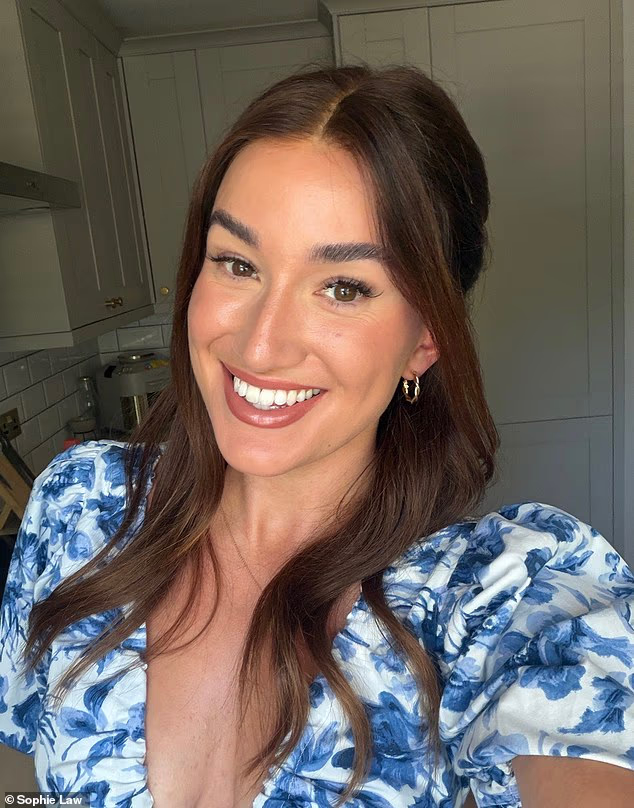
Sophie Law 28, from Kent, is pictured after finding a solution for her hair loss

Sophie Law was at the salon when her hairdresser broke some unexpected news: she had a patch of hair missing.

At just 16 years old, she was horrified. ‘How had I never noticed this before?’ she asked herself.

After leaving the salon, she booked in with her GP, where a blood test revealed she had an underactive thyroid, which the doctor said was the likely cause of her hair loss.

But medication to stabilise her thyroid hormones didn’t make a difference. Her hair continued to shed. 

Advertisement

She spent the following decade trying everything from density-boosting shampoos to cutting out gluten and even a red‑light therapy helmet, but nothing worked. 

By the time she was 23, she began to notice multiple bald patches when running her fingers through her hair. 

Eventually, aged 26, the Kent-based logistics manager was diagnosed with alopecia areata – the autoimmune condition that caused Jada Pinkett Smith to suddenly lose her hair.

Crucially, it cannot be cured.

Advertisement

Sophie Law 28, from Kent, is pictured after finding a solution for her hair loss

Sophie is pictured before losing her hair
Sophie felt embarrassed about her bald patches caused by alopecia areata

Sophie is pictured before her hair loss (L) and when the alopecia areata took hold (R)

‘I used to cry about my hair loss every single day,’ says Sophie. 

Advertisement

Some patients see success with medication like steroids that stop the immune system from attacking the hair follicles. 

Sophie, however, decided against it due to worries about side effects. 

Instead, she relied on a temporary hair-colour powder to fill in the areas where her bald patches were visible, but was constantly worried about it rubbing off. 

‘Every time I would leave the house, I would worry about the wind blowing my hair in the wrong direction,’ she says.

Advertisement

‘I was hiding my hair loss from everyone around me. The only people who knew about it were my family. 

‘It consumed so much of my brain, and that then left very little space for me to actually be present in the moment and be happy.’

She considered clip-in hair extensions, but this was not an option as there was not enough hair for them to clip on to.

Then, earlier this year, she found a solution that finally restored her confidence: an £800 wig. 

Advertisement

Ready-to-wear wigs, which can be made from human hair or artificial fibres, are popular options for people experiencing hair loss. 

Human hair wigs usually range between £200 and over £2,000 and can be styled with curling irons and straighteners, like normal hair. They need to be washed every seven to ten wears. 

Those made from artificial fibres are a more affordable option, usually costing between £50 and £300, and typically last four to six months with regular wear.

Sophie’s wig, which she purchased from Wig and Weaves by Hediye in Ashford, Kent, is made from human hair and features a transparent lace hairline that blends into the scalp.

Advertisement
Sophie's hair loss is pictured
Sophie is pictured using a red¿light therapy helmet

To try and stop her hair falling out, Sophie tried everything from density-boosting shampoos to a red‑light therapy helmet

Sophie is pictured wearing her £800 human hair wig, which has restored her confidence

Sophie is pictured wearing her £800 human hair wig, which has restored her confidence

‘As soon as I put the wig on, I cried happy tears,’ says Sophie. 

‘It made me feel normal – and like my old self before I even had any hair loss.’

Advertisement

Harley Street trichologist Marie Royce says she sees women every day whose confidence is destroyed by hair loss. 

Hair loss can knock a woman’s confidence far more than people realise,’ says Ms Royce, who is based at The Wimpole Clinic

‘I see women who are constantly checking mirrors, avoiding certain lighting or worrying that somebody is looking at their scalp. 

‘It becomes exhausting, because you are thinking about your hair all the time.

Advertisement

‘There are medical treatments that can help, but that is not right for everyone, and neither is a transplant. 

‘Some women are not suitable candidates, some do not want surgery, and some simply want a solution that gives them an immediate cosmetic improvement.

‘A really good wig can be completely life-changing. It gives back density and coverage straight away, but more importantly, it can take away that constant anxiety.’

Sophie, who regularly speaks about her hair loss on TikTok, says her family have seen a major change in her personality.

Advertisement

‘My hair is the best it’s ever looked and this has meant my confidence has increased so much,’ says Sophie

‘My mum and dad really struggled seeing me so upset with my hair loss,’ she says. 

‘They can see how much more confident I am now, which means they worry about me a lot less.’   

While she initially planned to wear the wig on special occasions, she now wears it every day.

Advertisement

‘Given how good it makes me feel about myself, I wish I’d done it sooner,’ she says. 

‘My hair is the best it’s ever looked and my confidence has increased so much. 

‘Before, when I looked in the mirror, all I saw was my hair loss –  but now, if I’m feeling sad about it, I can just put on the wig and forget about it.

‘I don’t hide the fact that I wear a wig either; if someone compliments my hair, I will tell them it’s a wig.

Advertisement

‘It felt so shameful and embarrassing when I first started considering wigs – but I’ve changed my mindset on this and I really hope we can start to change other people’s too.

‘Wearing a wig is the same as wearing hair extensions or makeup – you wear it because it makes you feel good about yourself – and it doesn’t need to be a dirty secret.’ 

Source link

Advertisement
Continue Reading
Click to comment

You must be logged in to post a comment Login

Leave a Reply

NewsBeat

8 Actors Who Never Read The Book Their Character Is Based On

Published

on

8 Actors Who Never Read The Book Their Character Is Based On

If you’re a reader, 2026’s movie and TV schedule ought to make you pretty happy.

From all-new Pride and Prejudice and Sense and Sensibility adaptations to the controversial Wuthering Heights and yet another instalment in the Dune franchise, book adaptations abound.

Still, not every Project Hail Mary viewer needs to have read the 2021 novel it’s based on to enjoy the movie. And some actors have given incredible performances in film and TV adaptations, despite having never so much as opened the original text.

Here are just a few stars who went in cold:

Advertisement

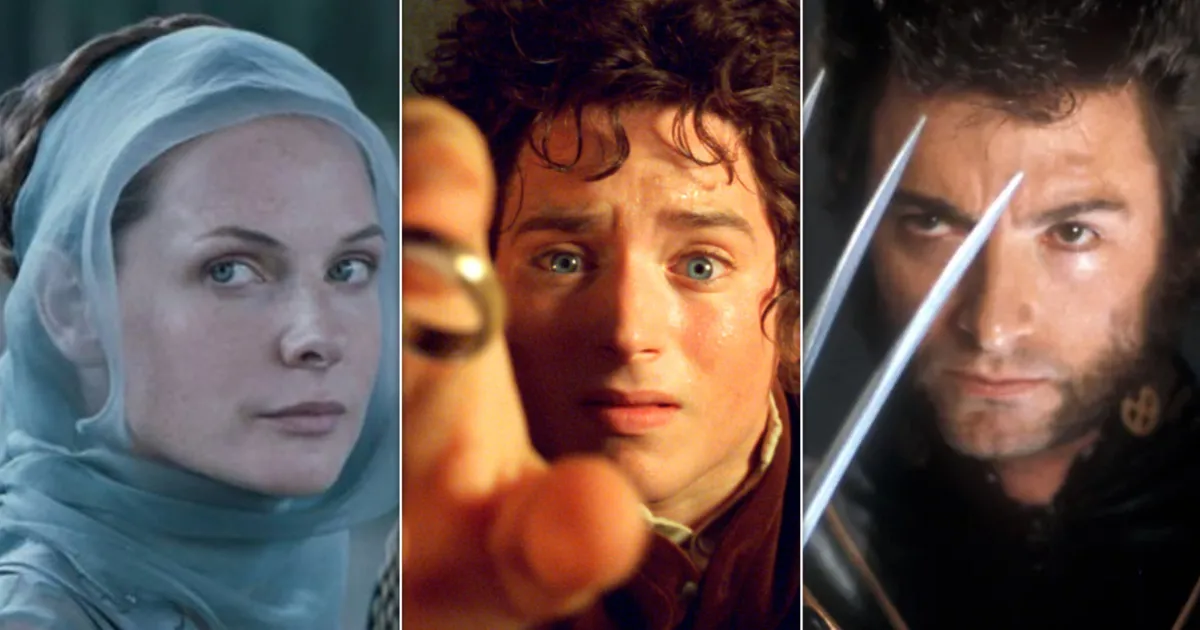
1) Not only had Hugh Jackman not read the X-Men comics before Wolverine, he reportedly didn’t even know wolverines existed

“I knew nothing,” the actor told Men’s Health. “I didn’t even know a wolverine was a real thing.

“I remember going to an IMAX, watching a documentary on wolves, [and] thinking Wolverine was part wolf.”

He also said that Wolverine’s director told him to “go to the zoo” after he started moving like a wolf on set.

Advertisement

Hugh has also claimed comics were banned on the set of 2000’s X-Men – he said director “Bryan Singer had this thing that people would think he really wanted to take comic book characters seriously, as real three-dimensional characters, that people who don’t understand these comics might think they’re two-dimensional, so no one was allowed [comics]”.

2) Ella Bruccoleri thought Austen was “posh” before landing The Other Bennett Sister

The Other Bennet Sister’s star, Ella Bruccoleri, said she’d she’d never read Pride and Prejudice, on which both Janice Hadlow’s The Other Bennet Sister novel and its following BBC period drama are based, before landing the part.

The Other Bennet Sister

“It’s mad, isn’t it? But I’m from North Yorkshire, and I just thought Jane Austen wasn’t a writer for me. She was more for posh southern people. I used to read loads of Brontë because that was the world I was from,” the actor said.

Still, she’s since read – and praised – the iconic novel.

Advertisement

3) Billy Burke had no idea about Twilight before he accepted the role of Charlie Swan

He told Collider, “I had no idea what Twilight was, at all. [Director] Catherine Hardwicke had seen a movie that I did a number of years ago, called Dill Scallion, and she requested to have me in.

“So, I came in, and we talked a little bit about it… But I just thought it was a really nice love story. I didn’t really pay attention to the whole vampire aspect, actually.”

Twilight

“I haven’t read the books; I still have not cracked… I’m not a good reader — I can’t sit down and read books very well; I don’t have the attention span,” the actor added.

4) Viggo Mortensen only accepted the role of Aragorn because his son was a Lord of the Rings super-fan

Advertisement

Originally, Viggo’s part was meant to go to 27-year-old Stuart Townsend; he was a last-minute replacement. It took his super-fan son’s encouragement to make the actor accept his part.

Viggo hadn’t read The Lord of the Rings at this point: his son “knew the story, you know. I didn’t” (to be fair, Viggo was familiar with The Hobbit).

Lord Of The Rings

He later told Yahoo! Entertainment that he “felt unprepared” for the role. But now, it seems he’s so familiar with the source text that he turned down a cameo in The Hobbit due to his loyalty to the novels: “Before they started shooting, back in 2008, one of the producers did ask if I would be interested.

“I said, ‘You do know, don’t you, that Aragorn isn’t in The Hobbit? That there is a 60-year gap between the books?’” he revealed.

5) If you think that’s bad, Elijah Wood only started the Lord of the Rings books this year

Advertisement

In 2021, Elijah Wood, who plays Frodo in the franchise, told Esquire: “The book is dense and verbose and incredible and literary and beautiful, but heavy.

“I found it taxing to read the book with all the work in tandem I was doing on my character. I sort of pivoted my focus to just live in the world of the character as written in the scripts and trust the process.”

Lord of the Rings

At the time, he added: “I still haven’t read it, 20 years later. It’s ridiculous that I haven’t. It is my cross to bear. It’s so dumb. Everybody else has read it”.

Later, speaking on The Late Show with Stephen Colbert decades after his Lord Of The Rings debut, said, “25 years later… I have started” reading the books.

To be fair, he also said they were “incredible”.

Advertisement

6) Ewan McGregor never read Jane Austen’s Emma before playing Frank Churchill

At least, that’s according to The Guardian, in an article where he described the role as the worst thing he’d done, work-wise.

“I made the decision to do that film because I thought I should be seen to be doing something different from Trainspotting. My decision-making was wrong. It’s the only time I’ve done that,” he confessed.

7) Maisie Williams wasn’t deemed old enough to read Game of Thrones when she joined the HBO show (which is fair enough, really)

Advertisement

Maisie was just 12 when she was cast as Arya Stark. So perhaps it’s not all that surprising that she told Deadline, “my mum deemed [the very explicit books] inappropriate. But also, at the time, I didn’t really understand the importance of that in my craft.

“I was a non-actor, never trained, and I never really had any passion for reading. I just was Arya when I was younger, and that’s kind of the way it worked out… I brought what I brought to Arya, and I’m thrilled with the character I’ve strangely created now.”

Maisie Williams in Game of Thrones

She added, “It would be amazing to go back and read them after the fact and see exactly what she was supposed to be like. But I keep thinking how funny it’d be if someone sees me on the Underground reading Game Of Thrones”.

8) Rebecca Ferguson didn’t finish Dune before playing Lady Jessica

Dune is a towering six-part series, but the movies have only focused on the first influential book so far. Still, Rebecca told Empire the 600-plus-page-book was hard to wrap her head around at first.

Advertisement
Rebecca Ferguson as Lady Jessica

“When I eventually started reading the book, I found it so complex and difficult, I didn’t finish it. It was like doing a crossword puzzle: ‘What’s in the middle of a stone?’ and I’m going, ‘I don’t know – a hard f*cking material?’ and then it’s like the letters in the middle of the word,” she said.

“My mindset was not there… I eventually sat down with [director] Denis [Villeneuve] and said, ‘I don’t get the book. Can you please explain it to me as if I’m a child?’”

Source link

Advertisement
Continue Reading

NewsBeat

Why the places we love in books can never quite be found in real life

Published

on

Why the places we love in books can never quite be found in real life

From the Brontës’ Haworth to Jane Austen’s Bath, Wordsworth’s Lake District and Thomas Hardy’s Dorset, literary places continue to exert a powerful hold over readers.

Literary tourism appears to be enjoying renewed popularity, from visits inspired by classic novels to the TikTok trend of turning books into travel itineraries. But what exactly are literary tourists hoping to find when they get there? The answer is more complicated than it might seem.

Haworth, Bath and Dorset all exist, obviously. They can be found on a map and visited. But the Brontë moors, Austen’s Bath, Wordsworth’s Lakes and Hardy’s Wessex are also literary reimaginings of those places. They may never have existed in quite the form readers imagine.

Our fascination with literary places has a long history. Literary geography, which combines physical geography with literary studies, emerged in the late 19th century as the novel grew in popularity and, in many ways, grew alongside literary tourism.

Advertisement

In 1899, William Lyon Phelps created his Literary Map of England, marking locations associated with authors and literary works. A few years later, William Sharp’s Literary Geography (1904) mapped regions such as “Dickens land”, “the Brontë country” and the literary geography of the English lakes.

Parade of people dressed in period costume from the Georgian era as part of the annual Jane Austen festival in Bath.
Jeremy Richards/Shutterstock

These early literary maps invited readers to see where fictional and geographical worlds appeared to overlap. More than a century later, readers are still seeking those points of intersection.

Thomas Hardy’s Wessex offers a notable example. Hardy borrowed and invented place names to create a fictional territory mapped onto the geography of southern England. Readers soon came to regard this invented landscape as real. Guides to its literary landmarks even appeared during his lifetime, prompting Hardy to worry that readers were taking his landscape too literally.

Wessex was, in Hardy’s words, a “partly real, partly dream” country: an amalgamation of imagined and real-world geography. That dream country continues to attract visitors. In 2025, a Guardian article described a walking pilgrimage through Hardy’s Dorset in search of the landscapes associated with his fiction.

Advertisement

The novelist V.S. Naipaul offers an insight into why literary places can become so powerful. Reflecting on reading Dickens as a child in Trinidad, Naipaul wrote of how Dickens created “a city of fantasy” that readers could reconstruct using what they already knew to imagine what they did not.

What’s remarkable about Naipaul’s observation is that it turns conventional assumptions about realism upside down. Dickens’s achievement was not simply that he described London accurately. His language was open enough to allow readers to create their own version of the city.

The London in a reader’s head could therefore become as vivid as the one on a map.

Real versus imagined

When visitors reach Haworth, Grasmere or Dorset, they are not encountering those places for the first time. They have already visited them in their imagination. Their version of the landscape has been assembled from books, films, photographs, places they have visited and other cultural references. When they arrive, they compare the physical location with that imagined one.

Advertisement

The feeling that emerges from this comparison might be described as “anemoia”, a term coined by writer John Koenig to describe “nostalgia for a time you’ve never known”. Naipaul’s account of reading Dickens suggests a spatial equivalent: a longing for a place never personally experienced.

Literary tourism is one expression of this process. Readers do not simply consume literary landscapes but participate in creating them in their imagination. This may be particularly true of 19th-century realism. Realist writers sought to represent the social and geographical world around them, but their novels still depended on selection, omission and invention.

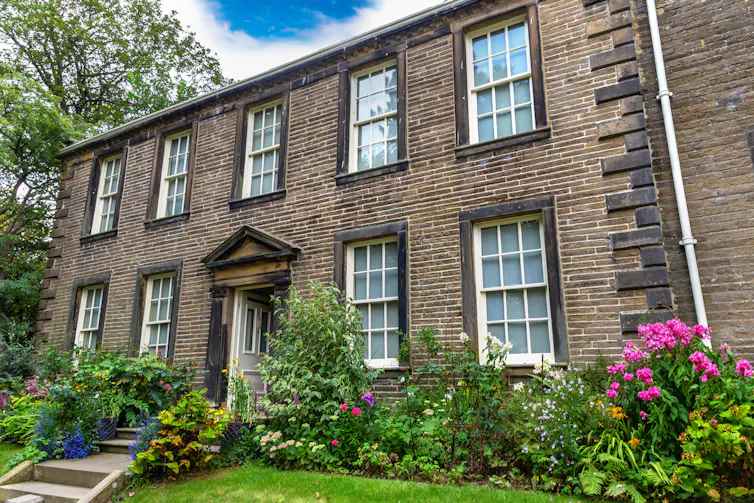
Exterior of the Bronte Parsonage Museum in Haworth, the historic former home of the Bronte sisters in West Yorkshire,
Bronte Parsonage Museum in Haworth, the historic former home of the Bronte sisters in West Yorkshire,
Sergii Figurnyi

Do museums blur fact and fiction?

Many of the most popular literary destinations are writers’ houses. They promise access to authors and to the origins of literary works: the room where a novel was written, the house where a writer lived or the landscape believed to have inspired it.

In this sense, literary pilgrimage attempts to anchor literature in geography. Yet these sites rarely draw a clear line between life and art. Instead, they often weave biography and fiction together. At Haworth, visitors move through domestic spaces associated with the Brontë family while simultaneously encountering the imaginative worlds of Jane Eyre and Wuthering Heights.

The Brontë Parsonage museum in Haworth derives much of its power from bringing biography, landscape, family tragedy and fiction together in one place. Jane Austen’s house at Chawton makes a similar move. Its director has described how visitors seek intimacy with Austen through the house and hope to enter the world of her novels.

Advertisement
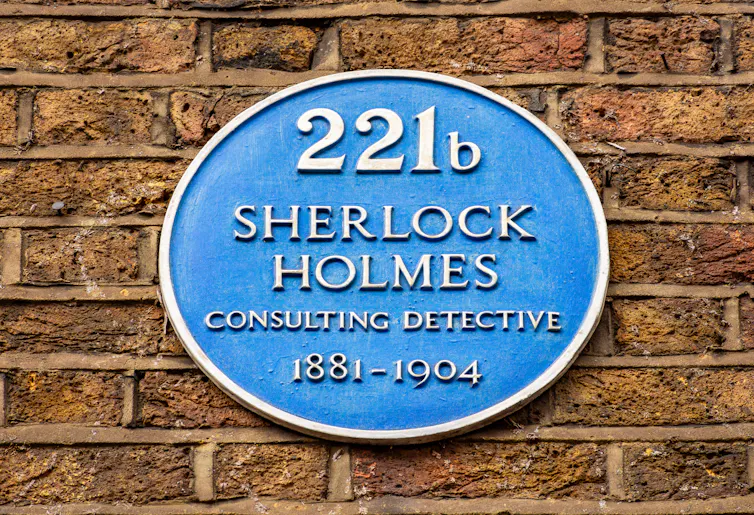
Blue plaque with detective Sherlock Holmes name on Baker Street 221b, London.
Sherlock Holmes’ blue plaque at 221b Baker Street, London.
Mistervlad/Shutterstock

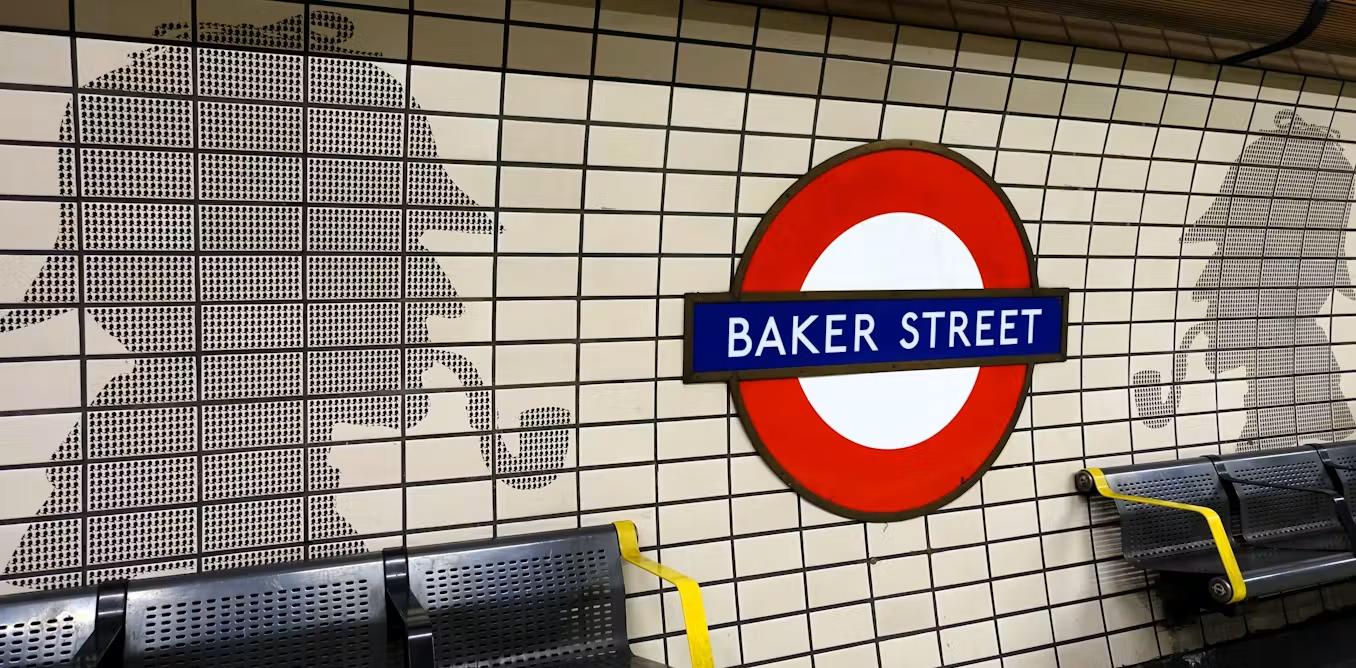
Some literary sites go further by giving geographical form to places that never existed at all. Sherlock Holmes’s famous address, 221B Baker Street, appears not to have corresponded to a real house when Arthur Conan Doyle began writing the Holmes stories. Indeed, the address itself was impossible within the street numbering system of the time.

Today, however, visitors can tour the Sherlock Holmes Museum – located at a now very real 221B Baker Street – as though Holmes really lived there. An imaginary location has become a geographical destination.

From the earliest maps of Dickens land and Brontë country to today’s literary pilgrimages, the goal has remained remarkably consistent: to find the point at which real and fictional worlds collide. Literary geography suggests that this point may never quite be reachable. Perhaps that is precisely why readers keep looking for it.

Source link

Advertisement
Continue Reading

NewsBeat

Oldham man helping Coronation Street with Kit Green story says ‘men don’t realise they get breast cancer’

Published

on

Manchester Evening News

An Oldham man has shared why he has been involved in helping Coronation Street with its latest hard-hitting health storyline in which Kit Green has been seen being given a breast cancer diagnosis.

As viewers of the ITV soap, which is filmed in Salford, know, the diagnosis comes on the back of the death of Kit’s great-aunt, Celeste. Before she died, she made Kit’s half-sister, Gemma Winter-Brown, aware that the family may carry the familial BRCA gene.

Carrying a familial BRCA (Breast Cancer) gene mutation means inheriting a harmful change in the BRCA1 or BRCA2 genes from a parent, which significantly raises your lifetime risk of developing certain cancers.

Click here to sign up for more Coronation Street updates in our newsletter

Advertisement

But as their mum, Bernie Winter-Alahan, and Gemma face testing, unbeknownst to them, Kit has already been seeking medical help due to concerns about his own health and was recently diagnosed with stage 3 breast cancer, something almost 500 men in the UK face every year.

The Coronation Street production team are working closely with Macmillan Cancer Support and Breast Cancer Now to accurately portray Kit’s cancer while raising awareness of the very real risks of the illness amongst men.

Although male breast cancer is real, it is rare, and as it accounts for less than one per cent of all breast cancer cases, many men do not realise they can get it, which leads to embarrassment, delayed diagnoses, and higher mortality rates.

David is among those men who have received their own diagnosis. He was 62 when he was diagnosed with ductal carcinoma in 2019.

Advertisement

He explains: “I went to the doctor at first about the fatty breast issue, medically known as gynecomastia, but was told, ‘It’ll never come to anything’. Then I had an inverted nipple, so I went back to the GP and got a referral for a biopsy and tests. I was diagnosed with an invasive ductal carcinoma grade 3.

“I had a mastectomy and then axillary clearance, chemotherapy, and radiotherapy. My first thought was how was I going to tell my wife and my sons.” David adds: “In 2022, I had a repair to my original mastectomy site, and a risk-reducing mastectomy to the other side as I tested positive for BRCA 2.”

According to Macmillan, the BRCA1 and BRCA2 genes usually protect us from cancer. A variant in either of these genes reduces the level of protection. Over time, this may mean some types of cancer are more likely to develop. For men, and people assigned male at birth, who have a BRCA2 gene variant, they have a higher risk of developing prostate, breast and pancreatic cancer.

The cancer spread to David’s lungs in 2023, so it is now classed as stage 4 breast cancer. The cancer is treatable but incurable. “I’ve been told treatment is available until it either doesn’t work, or my body can’t take it or the side effects,” he says. “The purpose of these meds is to prolong life and sadly not cure. Cancer will eventually overcome the meds and build a resistance and sadly return. Until then, we fight on.”

Following his diagnosis, David has received support from Macmillan through welfare advice and grants, specialist nurses, the Support Line, community forum and the local Macmillan support service in Oldham.

“With Macmillan, it felt like someone was fighting my corner, particularly after I was made redundant and I felt like I was a man with breast cancer in a world where no one wants me,” David shares. “My specialist breast cancer nurse at The Christie gave me permission to be myself. I don’t have to hide anything or pretend nothing’s bothering me. You become yourself, and that’s all because she allows you to do that.”

Advertisement

Now, David is using his own experience to help others. “I’m a cancer champion for an organisation in Manchester which targets harder to reach groups that don’t attend screening programmes,” he explains. “There’s no screening programme for men. I say to the ladies, please go along, it might be uncomfortable, but it’s a few minutes, and then you could be told you have it, or thank God you haven’t. But by raising awareness to women, off the back of that, they can remind men to do the same thing and check [their] breast tissue.”

He adds: “People often don’t realise that the [Macmillan] helpline is there and the forums, because if you don’t have cancer, why would you look for these things? I used Macmillan forums a lot when I was first diagnosed and used to call the support line a lot to get support on side effects.

“They have always given me the right advice at the right time and been a lifeline. Macmillan is amazing at signposting, which shows they are supporting the person affected by cancer and have their best interests at heart.”

Advertisement

It has led David to work with the Corrie cast recently on Kit’s male breast cancer storyline. “I am involved in some exciting social media activity as part of the Macmillan partnership with Coronation Street,” he shares. “I am pleased that Coronation Street are running this storyline because it increases the awareness about breast cancer in men and highlights that men can and do get this cancer.

“I know myself, seven years on from my primary diagnosis, that there are still men who don’t realise that men can get breast cancer. Those people see the illness as a female condition and don’t equate that while men don’t have a lot of breast tissue, there’s enough to develop breast cancers and it can run in families. Men might be more likely to have more awareness if family members have had or died through having certain cancers.”

He adds: “Talking about these things saves lives and this story being on prime-time TV will absolutely help people. Even if it’s a female telling her spouse, brother, or father, ‘I told you men can get it!’”

Source link

Advertisement
Continue Reading

NewsBeat

Limitless lobster? The posh buffet is Britain’s last gulp of democratic luxury

Published

on

Limitless lobster? The posh buffet is Britain’s last gulp of democratic luxury

High-end buffets are all the rage in London. Set prices help: restaurants like to know how much they’re going to make in Burnham’s Britain. But aren’t they a bit… naff? Probably, but just as they work for accountants, guests quite like to know how much they’re going to spend. À la carte can bring unwelcome surprises.

At the glitzy Italian restaurant Bocconcino, the £80 price tag, or £105 with bottomless prosecco (somebody order a beveragino?), sounds extortionate, but a night out in Mayfair is rarely under a ton. I mean, a bowl of olives there is £8; a green salad is £16. Yet at its “grande buffet”, find oysters, lobsters, prawns, smoked salmon and mussels, presented ornately next to salads, pizza, pasta and, inexplicably, Sunday roasts. All this might be considered haplessly ostentatious, like what Trump would do every day if he ate anything other than McDonald’s, but who on earth doesn’t get giddy at a buffet?

Source link

Continue Reading

NewsBeat

Road to close for a month amid major Black Cat roundabout roadworks

Published

on

Cambridgeshire Live

Diversions will be put in place

A road will completely close for a month as part of the Black Cat roundabout roadworks. Roadworks are ongoing on the A428 Black Cat roundabout to transform it into a three-tier grade separated junction.

Advertisement

As a result, multiple road closures have been put in place while the work has been going on. The latest road closure will be on Barford Road in Little Barford between Friday, September 25 and Monday, October 19.

National Highways will be carrying out the works. In a letter to Abbotsley Parish Council, a National Highways spokesperson said: “Barford Road, Little Barford, will be closed from 9pm on Friday, September 25 until 6am on Monday, October 19 2026.

“This closure is needed so we can carry out drainage works and final tie-in works for the new alignment safely. The road will be closed 24 hours a day for the duration of these works. Access for residents within the closure area will be maintained. Please be advised, there will be no through route between St Neots and Tempsford via Barford Road, Little Barford Road during this period.”

During the works, National Highways will remove the existing road surface, install deep drainage, kerbs and the road base, build a new access to residential properties, and complete the final surfacing and white lining.

Advertisement

National Highways added: “We will make every effort to complete these works as quickly as possible, however, please note that all dates are subject to change due to weather conditions and operational requirements. We appreciate that this may cause some inconvenience and thank you in advance for your patience and understanding while we carry out these essential works.”

Diversion routes will be in place during the roadworks:

  • From A1 northbound: Traffic will continue on the northbound and join the A428 eastbound at Wyboston. Traffic will continue eastbound along the A428;
  • From A428 westbound: Traffic will continue heading west along the A428 before heading south on the A1. Traffic can then leave the A1 at Tempsford.

Source link

Continue Reading

NewsBeat

Haxby Town Council urges residents to report ASB to police

Published

on

Haxby Town Council urges residents to report ASB to police

Haxby Town Council published a guide with a reminder to residents on its website on Monday, September 14 with a distinction given between anti-social behaviour and criminal offences.

A council spokesperson said it is working actively with North Yorkshire Police, ward councillors, the deputy mayor for policing, fire and crime for York and North Yorkshire, and the MP for York Outer Luke Charters to reduce incidences of crime and anti-social behaviour.


Recommended reading:

Advertisement

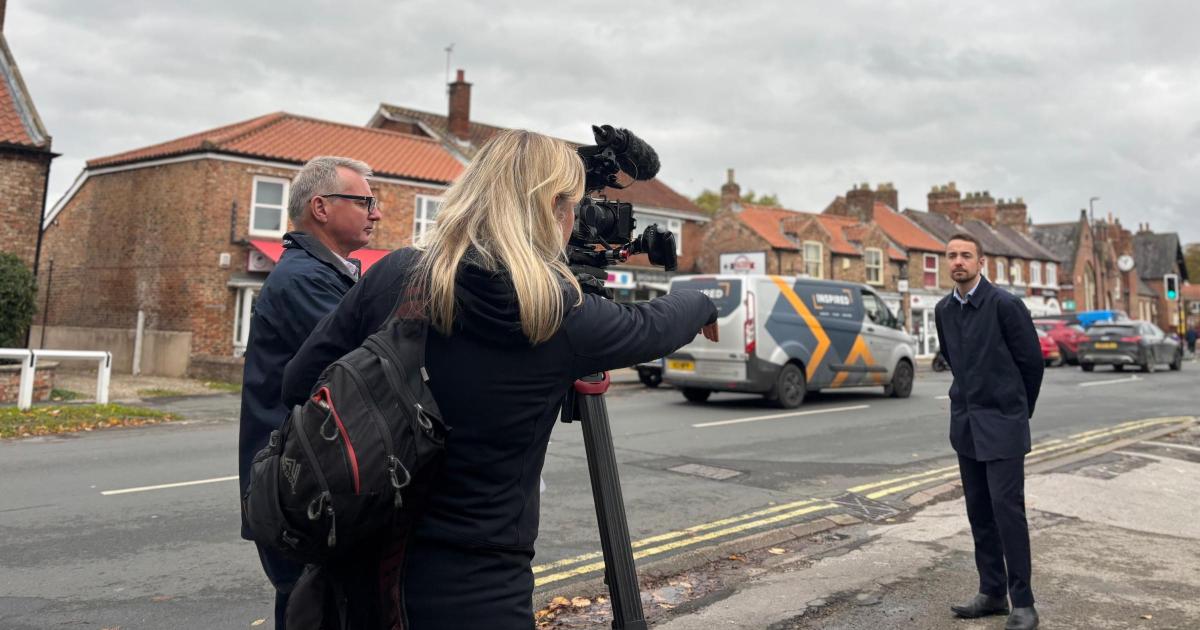
Back in the Autumn last year Luke Charters was in Haxby filming a piece for Channel 4 about anti-social behaviour on the high street.

Mr Charters said at the time he’d been working hard to tackle the issue over the past year alongside Deputy Mayor Jo Coles and had been filming for a piece that aired on The Political Slot on Channel 4.

In May 2025, North Yorkshire Police identified Ethel Ward Playing Field in Haxby as one of the county’s anti-social behaviour hotspots but at the time said targeted enforcement had helped cut incidents significantly.

In a statement, a Haxby Town Council spokesperson said: “We receive police ASB reports every month and discuss these at every meeting.

Advertisement

“Recently, the local police and PCSO attended one of our meetings and it is clear that there has been a spike in ASB nationally – and Haxby is not immune to this.

“However, we were pleased to hear that North Yorkshire Police are expecting an increase in newly-trained and recruited police officers, which should improve police presence and availability.”

The council said its website advice is essentially provided as guidance for which incidents should be reported to 101, or in emergencies to make a 999 call.

The spokesperson added: “If incidents are not properly reported then we cannot expect a police response.

Advertisement

“We actively encourage our residents to continue to report ASB incidents as this enables more police presence in the area. 

“Posting on social media and comments on press articles will not be captured by the police so residents need to ensure they report through the official channels to ensure long term action is successful.

“Police advise us to use the 101 phone number, as call wait times are much improved.”

The council said it, alongside Wigginton Parish Council, funds youth services through the Haxby and Wigginton Youth and Community Association, which provides youth workers at Oaken Grove Community Centre.

Advertisement

This support aims to keep young people engaged and reduce incidents of ASB, the spokesperson said.

The council said it will continue working with police, bus services, and youth projects to address the problem.

Suggestions under consideration include improved street lighting, clearer sight lines, and the potential installation of CCTV cameras.

The council spokesperson added: “Separately, following ASB incidents earlier this year, we are also looking at ways to prevent vehicular access to the Ethel Ward Playing Field.

Advertisement

“We are optimistic that newly refurbished courts will mean more people using the playing field more often; and this we hope will discourage isolated incidents of bad behaviour.”

Source link

Advertisement
Continue Reading

NewsBeat

An expert A to Z guide to what’s in your laundry detergent

Published

on

An expert A to Z guide to what's in your laundry detergent

Builders

This is a catch-all term for chemicals that boost the cleaning efficiency of your detergents. Builders are used to soften water, which enhances the performance of your detergent. Sodium carbonate does this by raising the alkalinity of the water while silicates work to keep dirt off fabrics once it has been lifted and protect your washing machine against corrosion.

Capsules

Also known as pods or tabs, these are sachets containing liquid detergent. They’re quick and convenient because you don’t have to worry about dosing, but you can’t use them for pre-treating stains like you can with liquids. My top tip: place your pod at the back of the drum before you put the clothes in. This stops it from falling on the washing machine door and not mixing with the clothes. Some pods have sections that break down at different times in water, which helps to release ingredients like fabric softener at the right time in a wash cycle. If you live in a hard water area, you may need a double dose which can be costly.

Enzymes

Found in biological detergents, these are proteins that accelerate the breakdown of specific stain molecules. Just like how the enzymes in our bodies break down food, these chomp through tough stains including grease, sweat and blood. There are four classes of enzymes you might find on an ingredients list. Protease breaks down protein stains, such as blood, grass, egg and sweat; amylase is best for starchy stains, such as pasta or gravy; lipase handles fats and oils, including butter and cooking oil; while cellulase works on the cellulose fibres of fabric to prevent build-up on your clothes. Look for enzymes if you want to sanitise delicates without washing at high temperatures.

Advertisement

Fragrance-free

You should only see this on the packaging when there are no added perfumes or chemicals to create a scent.

Gels

Gels are a thicker variant of laundry liquids. They tend to come in squeezable bottles for easy application. You can apply them directly to the stains to treat them before washing.

Liquids

Liquids are thinner and runnier than gels. They penetrate fibres quickly making them great for delicates, but they’re prone to spilling which wastes product.

Source link

Advertisement
Continue Reading

NewsBeat

Running slowly for just ten minutes can help you think faster and feel happier, study finds

Published

on

A study suggests that just 10 minutes of very slow running may improve mood and brain function, even at a pace only slightly faster than walking (stock photo)

Advertisement

If you want to think clearer and feel happier then try running very slowly for just ten minutes.

While previous research has shown cognitive benefits from moderate-intensity exercise, a study suggests that similar gains can be made even at a pace just above walking speed.

Researchers from the University of Tsukuba in Japan asked 24 healthy people with an average age in their early twenties to run on a treadmill for ten minutes at just 3km (two miles) to 6km (four miles) an hour.

This pace corresponds to a very light exercise intensity of only 35 per cent of peak oxygen uptake.

Advertisement

The participants also did a resting control session with no exercise, to help compare the performance of their brain and examine brain activity.

Activity in their prefrontal cortex – an area associated with executive functions such as thinking, emotions and behaviour, as well as mood regulation – was measured using a device that tracks changes in oxygen-rich blood flow in the brain.

The study found that after the slow jogging, brain activity increased in the prefrontal regions.

Executive function was measured using the Stroop effect, the extra delay in your reaction time when you try to name the ink colour of a word that spells a different colour.

Advertisement

A study suggests that just 10 minutes of very slow running may improve mood and brain function, even at a pace only slightly faster than walking (stock photo) 

For example, the word ‘red’ written in blue ink.

The results showed that after slow jogging, participants had a shorter Stroop ‘interference’ time, suggesting faster brain processing skills.

Advertisement

They also reported feeling happier. The researchers found that the vertical up-and-down movement of the head during slow running was associated with improvements in mood.

The authors wrote: ‘This discovery of the relationship between head acceleration and improved mood may be one of the underlying mechanisms through which very slow running promotes mental health.

‘To this end, these findings contribute to social wellbeing by encouraging people to keep physically and mentally active through very slow running.’

Advertisement

Source link

Advertisement
Continue Reading

NewsBeat

Monster Season 5: What We Know, And Who It Could Be About

Published

on

Monster Season 5: What We Know, And Who It Could Be About

If you’re a fan of Ryan Murphy’s gruesome anthology series Monster, you’ve likely spent the last few days hooked its newest iteration, which focusses on the case of Lizzie Borden.

While the horror series was originally conceived as a limited series, after the success of Monster: The Jeffrey Dahmer Story, Netflix renewed it as an anthology, which was followed by Monsters: The Lyle and Erik Menendez Story in 2024, Monster: The Ed Gein Story in 2025 and the most recent incarnation, Monster: The Lizzie Borden Story, which debuted just this week.

For those who’ve already binge-watched The Lizzie Borden Story, and aren’t already disturbed and haunted enough, you might already be looking ahead to the future, and whether a fifth season could be on the cards.

Here’s everything we know so far about what’s next for the Monster franchise…

Advertisement

Will Monster get a season 5 on Netflix?

A fifth outing for Netflix’s Monster anthology series has not yet been officially renewed.

However, it’s fair to say its showrunner seems keen on continuing to explore the dark world of true crime with more instalments to come.

Speaking to Variety in September 2025, Ryan Murphy revealed that he and his collaborators “have a ‘maybe one day’ file” consisting of ideas for future seasons, indicating the American Horror Story creator already has many more chilling stories of real-life murders still to explore.

Advertisement

What has Ryan Murphy said about who Monster season 5 could be about?

Season four marks the first time that a female character has been at the centre of Monster

While Ryan hasn’t revealed exactly who he has in mind as the central character in season five of Monster, he has teased the type of person he has in mind.

Ryan admitted to Variety last year he had been considering making a series of the Netflix show about Luigi Mangione, the accused killer of UnitedHealthcare CEO Brian Thompson, although he acknowledged this was something he might have to revisit much later in the future.

“We know nothing about him,” he pointed out. “There was nothing to write — we didn’t have information yet. Maybe something will come out in the trial.”

Advertisement

He’s also ruled out other potential ideas for future seasons of Monster

While the show’s creators haven’t revealed who a fifth season could centre on, Ryan Murphy has ruled out some famous names for true crime fans.

He told Variety last year that his intention with Monster is to “provoke questions” about broader social issues, through the lens of true crime.

For this reason, co-showrunner Ian Brennan has ruled out a series dedicated to John Wayne Gacy, claiming he feels there is “nothing redemptive” about the murderer.

Advertisement

The team also feel the same way about the Golden State Killer and Original Night Stalker, Joseph James DeAngelo Jr.

Ian claimed: “The second the name comes up for us, every year, both of us go, No. There’s no pathos.”

Although there had been rumours that an upcoming series would revolve around Ted Bundy, Ryan said he was uninspired by the man who kidnapped and killed multiple women in the 1970s.

Ryan suggested: “When you look at those crimes, what are the themes there? It doesn’t ask you any questions about society. It feels too murderous — not interesting enough.”

Advertisement
Charlie Hunnam and Ryan Murphy at the premiere of Monster: The Ed Gein Story last year

So, who could Monster season 5 be about?

For years, fans have speculated about who could be the focus of an upcoming anthology series.

One popular suggestion on the Netflix subreddit named Richard Ramirez as a potential story idea for season five, noting that his story has “societal commentary” that fits Ryan Murphy’s interests.

“The 1985 Los Angeles setting provides the perfect gritty, sun-drenched noir aesthetic. More importantly, Ramirez’s crimes happened right at the peak of the 1980s Satanic Panic,” the post said, suggesting that the series could also “explore how heavy metal culture, media sensationalism, and religious hysteria completely gripped and terrified the public”.

Another heavily “upvoted” Reddit comment mentioned Gerard Schaefer, the so-called Butcher of Blind Creek, and George Tiaffay, the Las Vegas firefighter sentenced for hiring a hitman to kill his wife, during a similar discussion.

Advertisement

One idea that the fandom is in agreement would be a bad one is a season focussed on the Columbine tragedy.

While Ryan has previously touched on the trauma of school shootings in a controversial episode of American Horror Story, Reddit users are near-unanimous that this is a piece of American true crime history that should be left alone, especially given the backlash to Ryan Murphy’s handling of past cases, most notably Jeffrey Dahmer.

Monster could also return to a past case in the future, too

Nicholas Chavez and Cooper Koch on the set of Monster's second season
Nicholas Chavez and Cooper Koch on the set of Monster’s second season

Back in 2024, Ryan admitted he was interested in revisiting The Lyle and Erik Menendez Story, after changes were made to their case once his show was already complete.

Speaking to Variety, Ryan claimed: “I think what I would be interested in doing, if Nicholas [Alexander Chavez] and Cooper [Koch] would agree to do it, is maybe one or two episodes that continue the story.”

Advertisement

All four seasons of Monster are streaming now on Netflix

Source link

Advertisement
Continue Reading

NewsBeat

Two killed in ‘massive’ Ukrainian drone attack on Moscow region, says Russia

Published

on

Plumes of smoke rise from fires at an oil refinery in Moscow after an overnight Ukrainian drone attack. Photo: 20 September 2026

At least two people have been killed and six injured in a “massive” overnight Ukrainian drone attack on the Moscow region, Governor Andrei Vorobyev has said.

Vorobyev said 249 drones had been shot down, and he reported fires in several residential houses. A local warehouse was also ablaze. In the capital Moscow, an oil refinery was damaged, and flight restrictions were in place at two airports.

Earlier, a Ukraine official said seven people, including two children, were killed in Russian attacks in the Kyiv and Sumy regions on Saturday.

Russia and Ukraine have recently intensified their strikes, targeting energy-generating and transport facilities, as well as major logistics hubs.

Advertisement

In a post on Telegram on Sunday, Vorobyev said a 44-year-old woman was killed in Sofyino after a drone hit a three-storey residential building. Another five people – including two children – were injured, he said.

In the Orekhovo-Zuevo district, an elderly man died after a private house was hit, the regional governor said.

Videos have emerged on social media purportedly showing explosions in the night skies in the Moscow region, and of a burning warehouse. The footage has not been verified by the BBC.

Meanwhile, Moscow Mayor Sergei Sobyanin said a drone struck a building near one of the capital’s boulevards and a facility at an oil refinery was damaged.

Advertisement

He said on social media that 450 drones heading for Moscow had been shot down in what he called an “unprecedented attack”.

Sheremetyevo – Moscow’s biggest airport – warned passengers about “temporary restrictions” in place, while at the capital’s Vnukovo airport all arrivals and departures were halted.

In Ukraine, a mother and her two small children, a boy and a girl, were killed in Saturday’s Russian attack in the city of Fastiv, Kyiv regional head Tymur Tkachenko said.

He added that several private houses were also damaged.

Advertisement

In the north-eastern Sumy region, four people were killed when a Russian drone hit the car they were travelling in, top local official Oleh Hryhorov said.

Both Russia and Ukraine have continued to hit energy infrastructure targets in the past week, despite US President Donald Trump claiming on social media that the two sides had agreed not to.

Russian President Vladimir Putin launched a full-scale invasion of Ukraine in February 2022.

Source link

Advertisement
Continue Reading

Trending

Copyright © 2025