

Join Mikko Hyppönen and security leaders from the NFL, CHANEL, and Atlassian for a two-hour digital summit on what AI-speed attacks change, what defenders should stop doing, and how to validate, decide, fix, and re-validate at machine speed.
Tech
Bluetti FridgePower Review – Trusted Reviews


Verdict
Bluetti’s FridgePower does exactly what it says, with enough storage and a high enough output to keep even an ancient, inefficient fridge/freezer going for a few hours off grid. You’ll get longer with modern devices, with our tests suggesting likely backup time of more than a day for today’s efficient fridges. The Bluetti FridgePower isn’t scared of a little heavier duty work, either; it’s got enough poke to run a microwave or two-slot toaster, but it’s not really optimised to be a power-everything kitchen workhorse.
-
Adds a day’s backup power to a fridge
-
Very slim and expandable
-
Strong value
-
A little noisy
-
Slightly odd time-of-use behaviour
Key Features
-

Review Price:
£1299
-
A slim power station for fridges
This power station is designed to keep your fridge running through a power outage. It stores enough power to last a modern fridge/freezer around a day, and it can even handle some other more power-hungry kitchen devices.
-
Quite specialised
The FridgePower has only two mains output sockets, with no USB or DC outputs for charging phones, so it’s not really built as a general-purpose power supply.
Introduction
If you live out in the sticks, or you’re often on the road in a camper van, you might be familiar with the problem of keeping a fridge running when you’re away from a reliable source of power. The Bluetti FridgePower aims to provide an answer: it’s a slimline battery power station for fridges, designed to slip in alongside them or sit unobtrusively on top. Its narrow section is deceptive, as Bluetti has squeezed in enough batteries to store just over two kilowatt hours (kWh) of power.
In theory that’s enough to last a modern fridge freezer for over a day of running; perfect for riding out even a significant power cut. And if you live in an area that frequently sees multi-day outages, you can even add up to three expansion batteries, potentially keeping the milk fresh and your peas frozen for a week or more.
While most of today’s fridges top out at only 200-300W of consumption – and typically use quite a bit less – the FridgePower can deliver up to 1,800W. That means you could use it to backup a couple of coolers and perhaps even a microwave or two-slot toaster, but it doesn’t have the grunt for very powerful appliances such as a kettle or oven. We wanted to put this specialised power station through our usual tests, and more.
Design and features
- Slim, but heavy
- Handle and wall-mounting bracket
- Basic but practical display
As you might expect, this power station’s 2kWh of batteries make it rather heavy – almost 20kg in fact – but it comes with a screw-on handle if you do need to cart it around. There’s also a sturdy wall mount if you want to keep it off the floor or counter top.

The other recommended orientation is to place the Bluetti FridgePower on top of the fridge – that’s how I positioned it, but I’d advise taking great care when lifting it into place or back down again.

This isn’t built as a general-purpose battery power station, so its ports and inputs are comparatively limited. Around the back you’ll find a standard mains power input and an XC60 connector for DC sources including solar panels. There are also just two mains output sockets. The most significant omission is that you won’t find any USB connectors, a shame if the FridgePower is within reach and you wanted a convenient place to charge a phone.
While Bluetti’s power stations usually get a display showing battery, input and output status, here you get a simplified version that uses five green LEDs to show the state of charge, plus a couple of other indicators for things like grid power availability. This is better than the norm in one important way; it’s always on, giving you an at-a-glance battery check in the middle of a power cut.

Alternatively you can buy the FridgePower with a magnetic screen designed to stick onto the side of the fridge. I didn’t have one to test, but it appears to work along the same lines as Bluetti’s standard on-device displays, showing the charge state, input and output power at a glance.
This display’s a neat idea, but I’m not convinced it’s necessary given you can get the same information from Bluetti’s app. Here you get the usual range of information and settings, including a choice of function modes. The default Standard UPS mode is fine for straightforward power security: when the grid is up the FridgePower will recharge and provide power, and when it’s down it’ll switch to battery power within 10 milliseconds. There’s also a PV priority mode, which lets you set a battery threshold above which the unit stops recharging on mains power: useful for favouring solar panels if you have them. In this mode, you can configure the use of some mains power to quickly recover a baseline amount of stored energy after a long power cut.

There are two time-control UPS modes, where the FridgePower recharges and provides standard UPS support during your off-peak hours, then powers your fridge from stored battery power during peak rate. That could be a good way to lower your fridge running costs, but if a power cut occurs late in the day when the battery’s depleted, you’ll get less backup time before your ice cream goes runny.
It isn’t just food that goes off; even the heavy-duty lithium iron phosphate (LFP) batteries in the fridge power will lose some of their capacity over time. Bluetti says that they’ll retain at least 80% of their rated capacity after 4000 full charge cycles, which equates to more than eight years of daily use. You can extend this life by using the app to limit both the maximum state of charge and the maximum depth of discharge. The flipside is that this will leave you with a smaller working battery range, and less time off the grid when you need it.
Bluetti has designed the FridgePower to be expandable. Additional battery units are priced at about £900 each, and could give you a total storage capacity of up to 8,064Wh (8kWh) – enough to power a single fridge freezer for four to eight days. The port for connecting each pack is behind a rubber bung on one of the long edges, seen at the right of this photo.

The Bluetti FridgePower is the latest example of how battery storage prices are falling. We calculate a power station’s value by dividing its price by the amount of energy you could expect it to store over its batteries’ working lifetime – in this case that’s the 80% over 4,000 cycles figure I mention above. Low values are good, with most of the supplies we’ve tested recently working out somewhere between 10-25p per kWh. Assuming steady degradation over time, and calculated for the discounted £999 launch price, you’d pay about 14p for every kWh stored in the FridgePower, which is among the best we’ve seen.
Charging
- Charge from the mains. Solar or vehicle charging are optional
- Maximum 1800W AC charging power
- Full recharge in a little over an hour and a quarter
If you’re installing the Bluetti FridgePower to backup your fridge or freezer at home, you’ll almost certainly be recharging it from the mains. Typically for a Bluetti power station you can choose from Silent, Standard or Turbo modes, with the latter drawing a maximum of around 1800W. Starting with fully empty batteries, I timed a Turbo recharge to 100% full at 83 minutes. This consumed 2089Wh – only a little more than this power station’s stated capacity.
In truth, there’s unlikely to be much need for recharging this power station in a hurry. At the default Standard mode it demanded around 1200W and finished charging in a couple of hours, consuming 2041Wh in the process. Silent mode demanded 600W, took nearer four hours, and consumed only 2011Wh – actually slightly less than the battery pack’s 2016Wh rated capacity. Based on these tests, Silent recharging would be the ideal choice if you’re using the FridgePower in time-control mode, provided you get at least four hours of off-peak power each night.

The presence of a DC input port does open up some options, particularly if you have a few solar panels near your kitchen or on the roof of your RV. The Bluetti FridgePower can accept up to 1000W of solar input. If you have an RV and don’t mind shelling out the extra £500 or so for Bluetti’s Charger 2, you could recharge at up to 800W from your van’s alternator alone – provided you also won’t mind losing about 1 horsepower of engine output. This power station supports simultaneous AC and DC charging up to a 2200W maximum.
It’s worth noting a couple of quirks depending on your market. US models will only charge at up to 1440W from the mains, while Japanese models top out at 1200W. UK and EU customers also get the best surge performance (a momentary 3600W) and bypass power output (a sustained 2300W), although even the lowest capabilities as found in the Japanese model should be plenty high enough for a couple of domestic fridges.

Performance
- Stable at maximum power
- A bit noisy even at light duty
- Very strong efficiency
While I usually head straight for our standard load tests, I first wanted to understand how this power station performed in its intended role. With it connected to my fridge and fully recharged, switching the mains power on and off didn’t cause any noticeable effects at all: the fridge continued working steadily.
I was interested to see whether the FridgePower’s Time Control mode might be a useful way to combine backup power with cheaper off-peak electricity, so I configured it to charge during my overnight off-peak tariff and discharge during the day. My Bosch fridge/freezer typically uses only around 60W, but even so I was amazed at how long the FridgePower’s battery lasted, with a slow discharge that suggested it could go for almost four days between charges. The maths suggested this shouldn’t be possible.
Switching back to Standard UPS mode helped clear things up. Here I put a separate smart socket on the FridgePower’s input cable, scheduled to turn the AC input on only during off-peak hours. The battery power state dropped far quicker when working from battery power in this configuration, suggesting that in Time Control mode the FridgePower had been consuming some grid power during peak hours.

With a couple of mains power meters added to the setup, I could see that the FridgePower did indeed consume around 60W of mains electricity in Time Control mode. This was constant, and occurred even during peak hours: the time period during which I was trying to avoid any power use. However, because of this the battery was less depleted by the end of peak hours, so there was less off-peak consumption to replenish it.
I let the fridge run for 48 hours in each configuration. The FridgePower (3kWh) and fridge (2kWh) consumed exactly the same amount of power during each test, but in Time Control mode some of the FridgePower’s mains use was during more expensive peak hours – if you were aiming to save money, you’d want to avoid that.
Things were much more straightforward on our standard tests, where we fully recharge a power supply and subject it to a constant load until its batteries are empty. At the maximum 1800W this device supplied only 1558Wh – some way short of its rated storage – while at a steady 1000W load it delivered 1696Wh. Using these figures I calculated a best round-trip efficiency of 84.3% – that’s excellent, meaning that of every 8kWh you store in the FridgePower, you might get nearly 7kWh back out again.
One small annoyance to mention is that the Bluetti FridgePower isn’t fully silent, even when it’s hardly under load. During the day it cycled its cooling fan on and off quite regularly and, while not loud, this was audible enough that it bothered me when watching TV on the other side of our living room. To be fair, I bother easily when it comes to noise – my partner barely noticed it.
Should you buy it?
You need dependable backup for your fridge
The Bluetti FridgePower really is suited to backing up one or two fridges for at least several hours during a power cut, and you can extend this with extra batteries. It’s a good choice if that’s your focus.
You want a general-purpose battery power station
This power station performs well, but it isn’t optimised for more general use in the home. If you want backup power for all your appliances, buy a generalist supply with more ports.
Final Thoughts
If you live somewhere that regularly gets power cuts, the Bluetti FridgePower could be ideal. It stores a sensible amount of power, can easily be upgraded with more, and has a high enough output to cope with the surges of fridge compressors switching on and off. It’s even got a bit of headroom spare to deal with other kitchen gadgets. For the owners of smaller camper vans, this might actually make the FridgePower an option for powering a modest kitchen where a more conventionally shaped power supply simply wouldn’t fit. Whatever you need it for, its 14p per kWh of lifetime energy storage makes it great value.
Personally however, I’d go for a more general-purpose power station where space allows. Alternatives like the Anker SOLIX C2000 Gen 2 offer similar storage and charge modes, combined with more ports and a higher maximum output. That makes them more flexible in a power cut and for everyday device powering and charging – even if they won’t fit neatly down the side of your fridge.
How We Test
We test every power station we review thoroughly over an extended period of time. We use standard tests to compare features properly. We’ll always tell you what we find. We never, ever, accept money to review a product.
Find out more about how we test in our ethics policy.
- We test with a variety of devices to see how long the battery will last.
- We test different charging methods to see how quickly the battery can be topped up.
FAQs
Where can I buy the Bluetti FridgePower?
Bluetti announced the FridgePower several months before it launched, leading to some confusion among people who wanted to buy it. It’s now available via the Bluetti website, and through resellers like Amazon in territories including the UK, US and Canada.
Can the Bluetti power a refrigerator?
Battery power stations with an output of at least five hundred watts can usually power a refrigerator. In fact, some supplies with just a couple of hundred watts’ output can do it, provided they’re able to cope with the momentary power surge each time the fridge’s compressor starts up. Bluetti’s been sensible with the FridgePower: its 1.8kW output is enough to cope with several coolers cycling on and off, and it gives headroom to spare for other mid-to-high power devices.
Test Data
Full Specs
| Bluetti FridgePower Review | |
|---|---|
| Manufacturer | – |
| Quiet Mark Accredited | No |
| Battery | 2016 Whr |
| Size (Dimensions) | 350 x 580 x 78 MM |
| Weight | 19.7 KG |
| ASIN | B0FXDRZHR9 |
| Release Date | 2026 |
| First Reviewed Date | 04/09/2026 |
| Battery type | Rechargeable |
| Battery technology | Lithium-ion |
| Battery size | AA |
| UK RRP | £1299 |
| USA RRP | $1497 |
| EU RRP | TBC |
| CA RRP | CA$1299 |
| AUD RRP | TBC |
Continue Reading


An ongoing npm malware campaign involving the ‘indexed-btree’ package shows how threat actors bypass supply chain defenses by hiding malicious code in a package’s normal runtime behavior rather than in installation scripts.
The package, spotted by Checkmarx researchers, attempts to impersonate the legitimate ‘sorted-btree’ library and has already amassed 2 million weekly downloads.
The campaign may also have generated significant profits for the attackers, who, according to Checkmarx, use a wallet holding 109 ETH. However, the report does not say those funds came from cryptocurrency theft.
Bypassing latest security measures
In June 2026, GitHub announced a set of npm security measures designed to help prevent supply chain attacks that have shaken open-source ecosystems repeatedly since late 2025.
One key security measure is to block dependency lifecycle scripts such as ‘preinstall’, ‘install ‘, and ‘postinstall,’ unless explicitly approved.
Other measures prevent npm from automatically retrieving dependencies from Git repositories or remote URLs without permission.
The malicious indexed-btree package sidesteps these protections by avoiding installation scripts and instead hiding its loader in the package’s BTree.prototype.set() method, which executes at runtime when the application calls it with a specific key value.
As a result, installation appears clean and triggers none of npm v12’s approval mechanisms.
“The malware loader hides inside the library’s own BTree.prototype.set method, which is the main function that every user would call constantly,” explains Checkmarx.
“This triggers the sharedLoad.min.js, which contains the obfuscated first stage of the malware. This is a well-built way to sneak past standard taint-analysis tools and most static scanners.”

Source: Checkmarx
Once the malware is executed, it can collect system details, including architecture, hostname, CPU, memory, and uptime, and exfiltrate the information through hardcoded Slack and Telegram channels.
The malware also polls an Ethereum smart contract on the Sepolia test network for command-and-control (C2) information. It uses X25519 key exchange to derive an AES key and decrypt a second-stage payload stored in the contract.
When the operators choose to end the attack, the malware can delete its files and remove the malicious trigger from the package code to wipe its traces.
The researchers note that the threat actors have gone to great lengths to make the project appear legitimate, including building a legitimate-looking GitHub repository, populating its commit history, and curating the developer account.

Source: Checkmarx
Checkmarx also discovered nine additional npm packages linked to the same operation, which it has now removed from npm. Those also achieved significant download numbers, as seen here:
- ordered-kv-index (448,184 downloads)
- btree-leaderboard (493,685 downloads)
- priority-slot-queue (402,860 downloads)
- btree-range-store (468,092 downloads)
- btree-core (1,951,274 downloads)
- btree-time-index (425,312 downloads)
- btree-lru-cache (372,185 downloads)
- neighbor-key-map (366,019 downloads)
- sliding-score-window (448,024 downloads)
Developers are advised not to rely on install-time scanning alone, and to also employ runtime behavioral analysis.
Those who installed indexed-btree or any of the above-listed packages should rotate all secrets and restore their development environment from a safe backup.


Pavlo Bazilinskyy still can’t believe he was on PornHub for work. He’s an assistant professor at the Eindhoven University of Technology in the Netherlands, and has spent more than a decade researching AI-driven interactions between humans and robots. But he found himself typing “public transport” into the search bar of a very specific website’s “amateur section.” 297 hits.
“People are hard to predict,” Bazilinskyy says. It’s why he researches what he does. So his prurient pursuit had a point. Robotaxis without cabbies behind the wheel have started picking up passengers in a handful of countries, including the US. Meanwhile, there’s a long history of people getting up to antisocial behavior inside the quasi-private or straight-up public spaces of trains, planes, and automobiles—think the prom night limo, the “Mile High Club,” Tom Cruise in slow motion aboard the Chicago L in Risky Business, the stuff he found on PornHub.
What might riders do when there’s no authority figure inside a vehicle to say, “Hey, stop that!”? What do they do? Can people be convinced to stop before they start?
This week, Bazilinskyy and academic colleagues with backgrounds in systems engineering, computer science, psychology, and tourism studies are hosting an industry workshop asking participants to brainstorm along those very lines: How do you stop people from doing it in self-driving cars? Thinking about sex in autonomous vehicles, they theorize, can let anyone who cares about the future of mobility “stress-test” the role the vehicles might eventually play as communal spaces, where social norms get acted out every day.
The event focuses on prevention not just because these academics are no fun (though Alexandros Rouchitsas, an engineering psychologist who is also hosting the event, admits they are “taking the side of the parents, the elderly—we are not the cool people here”). They don’t want people to have sex in self-driving cars because they’re worried it will give a potentially positive technology a really bad rep.
“We want to see automated mobility solutions accepted, trusted by the general public,” Rouchitsas says. Self-driving could have huge upsides for the elderly, children, and people with disabilities, who have a harder time getting around places where driving is quicker and sometimes necessary. The tech might eventually move beyond private taxis and into public transit, where all sorts of people should be able to travel safely and comfortably. “We want automated mobility solutions to be seen as something that is equitable, serious, societally minded,” he says.
Rouchitsas’ biggest fear is that self-driving gets co-opted by the partiers, the drug users, the sort of hedonistic folk who have descended on some islands of his native Greece. “You know ‘Bang Bus’?” he says. “We don’t want that.”
The four-hour workshop—rise and shine, it starts at 8:30 am—is part of an industry conference in Gothenburg, Sweden, focusing on how people interact with vehicles and larger mobility systems. The organizers expect participants from academia but also the wider industry. (Gothenburg is home to Volvo Cars and the tech supplier SmartEye; BMW and Google are conference sponsors.) Those who show up will be prompted to come up with physical and design interventions that encourage people to not do that. The workshop will focus on preventing consensual interactions, its organizers say.
Rouchitsas, who studies human-machine interactions, says he hopes participants will get creative with their anti-action designs. But just off the top of his head: Maybe the vehicles could be transparent? Maybe a light begins to blink if the technology senses behavior it disapproves of? The organizers intend to publish a paper based on the workshop’s results.
Sex is the fun, eye-catching part here, made all the more alluring because it’s “the elephant in the room” for those thinking about how humans might interact with machines in the future, says Bazilinskyy—very under-studied. But the results of this sort of inquiry could help designers, companies, and lawmakers figure out how to compel people to safely share communal spaces like public self-driving buses in the future.
Prevent sex and maybe you’ll also prevent robbery, bullying, and homicide. “It could be helpful for the industry and academics to use this example to design other things,” he says.

There’s a frightening new digital threat that Android users should be aware of. New AI-powered malware called RatHat can automatically gain admin-level control over your Android device, stealing whatever it wants.
RatHat was discovered by mobile security firm Zimperium, which notes that the program tricks people into downloading what appears to be a legitimate app, such as Google Chrome, via a fake web page that mimics the Google Play Store. Once opened, the app seemingly innocently asks for accessibility permissions, which it then uses to take over your entire device.
RatHat uses the accessibility permissions users grant it to navigate your phone’s menu system and unlock Wireless Debugging, a legitimate developer tool commonly used in app testing, then grants itself ADB Shell permissions. This effectively grants the malware admin access to your device. Next, RatHat installs an AI-assisted agent that runs system commands to steal information and a proxy client that tunnels that stolen information back to the hacker.

“That sort of infection chain isn’t necessarily more complex than, say, following a phishing email on Windows and saying yes when the program asks for administrator permissions,” Sav Wheeler, a research engineer for Malwarebytes, said in an email. “Escalation in the Android landscape often relies on granting apps additional permissions that the OS locks away by default to keep the devices secure.”
Per Zimperium, the malware can be traced to attackers in China and primarily targets apps like WeChat Pay and Alipay, which are as popular in China as Apple Pay and Venmo are in the US. Malwarebytes notes that other financial apps can also be targeted. So far, researchers have found 162 infected apps in the wild, which report back to a dozen servers run by attackers.
What can this malware do?
The worrisome part is that the malware doesn’t do anything wonky the user would notice immediately, unlike with a ransomware attack. Instead, it bides its time, runs in the background, and captures information that appears on the screen, including usernames, passwords and two-factor authentication codes.
It can also steal raw touch input from your touchscreen, allowing it to recreate PIN codes and pattern unlock codes. It can capture SMS messages, too, thereby intercepting security codes. There isn’t much that the app can’t steal if it wants to.
How can I find out if I have RatHat on my phone?
The only way to find it is to run an antivirus scan that detects the software. Malwarebytes is a free option on Google Play that can do this. Wheeler told CNET that it can detect the malware pretty easily, which is good news for anyone who’s worried about whether or not they have it.
The bad news is that RatHat is sneaky and difficult to quarantine.
“Unfortunately, because of the behavior of the program itself — remasquerading as other apps, dynamically changing its behavior using the AI endpoint — static analysis and quarantining is not enough to remove the malware,” Wheeler said.
In short, the only way to actually get rid of this malware is a complete factory reset of your device. This effectively removes the hidden secondary files the malware installs, which antivirus apps can’t deal with. Uninstalling the app doesn’t work because the malware retains its admin access through those hidden files, which then let it reinstall the app over and over again.
How do I avoid RatHat?
This is also good news. RatHat’s infection method is complex and can be thwarted at multiple points during the process. First, you should never click a link from an SMS or email from a source you don’t know or trust. That stops almost all social engineering threats right out of the gate, including RatHat. Verify that you’re using the official Google Play app rather than a deceptive imitation website. Look at the top of the screen. If it has an address bar where you type URLs, it’s just a website disguised as an app. Real apps do not have address bars.
Also, note that preinstalled or existing versions of Chrome do not require reinstallation, so if you’re being asked to reinstall an app you know you have, think twice.
Denying accessibility permissions is the critical final line of defense against mobile malware. While downloading a malicious application is risky, the software remains largely powerless until you grant it advanced system privileges.
Wheeler says that SMS phishing is targeted to each specific user, so you won’t see the same phishing attempt as another person, and the tactics the app uses vary from region to region. Following standard antiphishing practices and not enabling accessibility permissions largely removes the threat of RatHat.


A £249.01 discount on a full SteamOS handheld is the kind of deal you usually only hear about after it’s already gone.
Catch this one while it’s still live: Lenovo has cut the Legion Go Steam Handheld Gaming Console to £399.99 as part of its EE Game Day offers this September, down from £649, a straight saving of £249.01, or roughly 38 percent off.
Lenovo Legion Go handheld gaming console drops to £399.99, save £249
This Lenovo Legion Go handheld gaming console has been slashed to just £399.99, saving buyers a huge £249.01 off its original price.

A saving of this size brings a genuine SteamOS handheld, the kind of device that plays full PC games rather than watered-down mobile ports, down close to the price most people pay for a mid-range tablet.
Powering all of that is the AMD Ryzen Z2 Go processor, a chip built specifically for portable gaming, pushing smooth frame rates through demanding titles rather than settling for the choppy compromises handheld gaming used to mean.
An 8-inch PureSight display backs that up with a 120Hz refresh rate and a 37 percent larger view than most 7-inch handhelds. Colours stay accurate too, with 100 percent sRGB coverage and 500 nit brightness keeping every detail visible in bright light.
Handling all of that is a pair of Legion TrueStrike controllers, built with hall effect joysticks that resist drift and adjustable triggers that switch between short clicks and full presses depending on what the game demands.
SQUIRREL_PLAYLIST_10148964
Legion ColdFront cooling keeps things running quietly during longer sessions, using a high-efficiency fan and larger heat sinks to manage airflow so performance stays consistent without the console overheating or throttling mid-match, even on the longest gaming nights.
A full 1TB SSD leaves plenty of room for a proper Steam library, while dual USB4 ports and Wi-Fi 6E keep the Legion Go connected to monitors, TVs and fast downloads with barely any lag.
So with a genuine Steam library, console-level power and £249.01 already saved, what is actually stopping you from ordering the Legion Go before this Game Day price disappears?


“You guys should understand that we pulled off the biggest supplychain [sic] maybe ever recorded in modern history,” one TeamPCP member wrote in the leaked chats.
Michael Fletcher, a former AFP analyst who now works in the threat research division of an Australian telecom firm, says he approached Larsen around that time about methods for monitoring the group’s members and activities. He says that Larsen responded by asking Fletcher to approach the hackers with caution because one of them was a “friendly,” Fletcher remembers. “I thought, damn, you all have been inside this early,” he says.
Google’s undercover analyst, Larsen says, gained access to a server where TeamPCP was storing its trove of credentials stolen from its many victims: the usernames, passwords, and access tokens it had obtained through its hacking and seemingly planned to use to extort target companies. So Google’s team decided to take action to warn victims and prevent TeamPCP’s ransom scheme. “My thought was: How can we, as quickly as possible, disrupt their campaign before more compromises can happen?” Larsen says. “Let’s go mess up what they’re doing. That was my goal.”
Rather than focus on alerting the owners of the stolen credentials at victim companies directly, which Larsen says would have taken too long given the sheer number of breached companies, Google first reached out to providers where those credentials could be used, like Amazon Web Services and Microsoft, to have the credentials revoked and prevent the hackers from exploiting them. Larsen and his team sent out hundreds of notification emails to those providers and then to victims, many of which got immediate responses.
Around the same time, Larsen says, Google’s visibility into the TeamPCP internal chat also allowed it to learn that someone within the group’s core circle was, distinct from the group’s supply-chain hacking, using an AI tool to develop a zero-day exploit in a widely used piece of login software that would allow the hackers to bypass its two-factor authentication. Google’s team got a copy of the exploit code, tested it out, and found that, with a few tweaks, it worked—a rare instance of an in-the-wild AI-created hacking technique that took advantage of a previously unknown software vulnerability. Google warned the software’s developer, who was able to patch its security flaw. (The incident was described in a case study Google released in May, but without naming TeamPCP or detailing how Google learned about the exploit.)
Tech
Microsoft patent describes in-game advertising triggered by boss fights, loading screens, and cutscenes
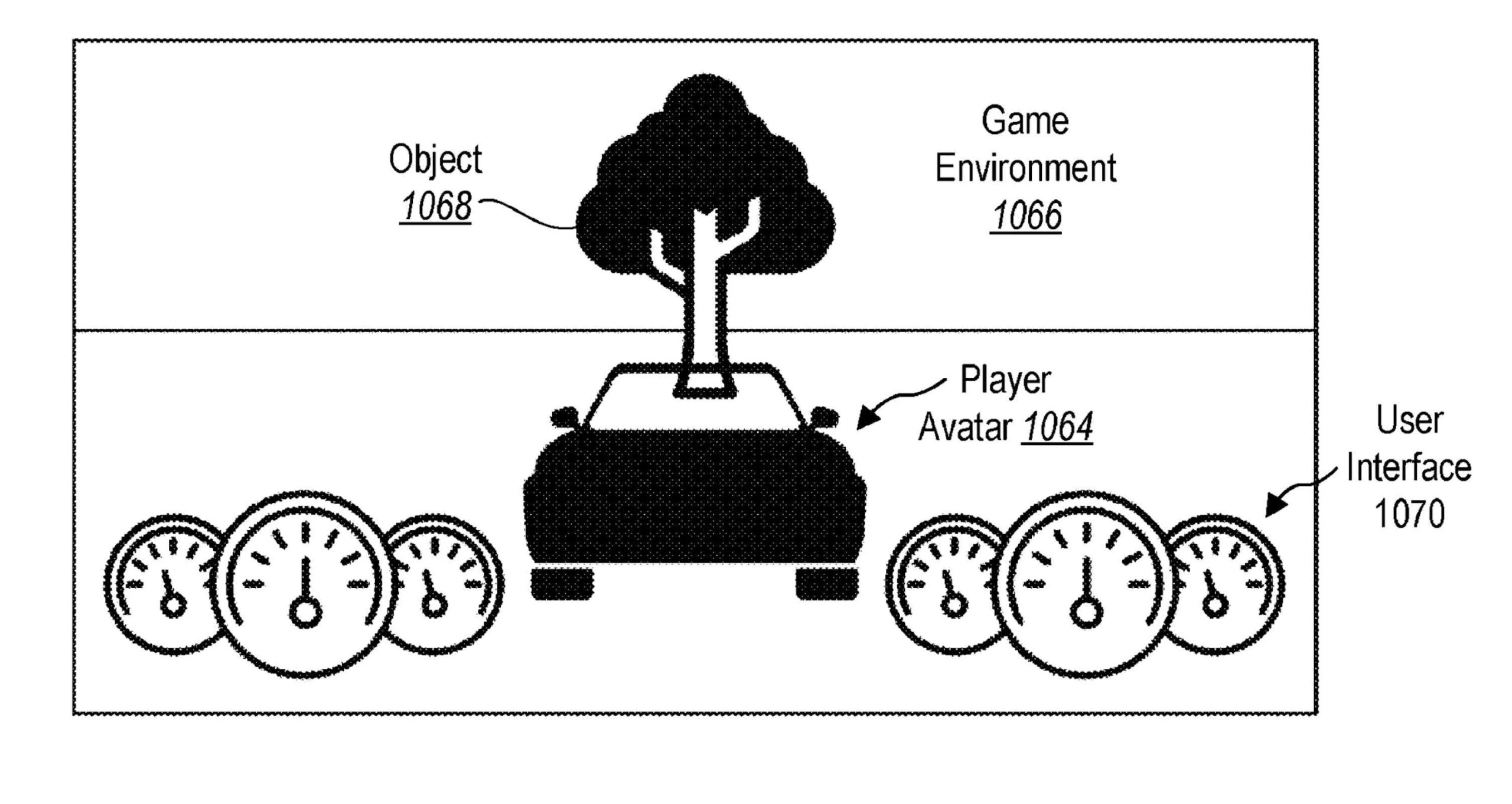
What we know so far: Microsoft has filed a patent application for a system that would place ads in PC and console games during breaks the game itself identifies. Instead of interrupting play on a fixed schedule, the system would use game data to find a natural break, such as after a boss fight or while a new level loads.
The filing points to a possible ad-supported model for PC and console games that is less disruptive than the approaches commonly used in mobile titles.
The application, published as US 2026/0260258 A1 and titled “Contextually Aware Management of Interactive Software Application Access,” describes a way to support free-to-play games without inserting ads at random points in a session.
Under the proposed system, players would receive an initial period of ad-free access. That could be a set amount of time, such as 30 minutes, or an allowance tied to game progress, such as completing a full level.
As that period nears its end, the system would wait for the game to reach a suitable pause point. The patent identifies examples including the end of a boss fight, a completed quest, the end of a cutscene and a loading screen.
The game would send an event to a content-management system when one of those moments occurs. The system could then pause the player’s interaction, display video or static promotional material, and resume the game after the ad has run.
Viewing the ad would give the player another block of uninterrupted access. The patent calls that block a credit, which would delay the next gameplay suspension.
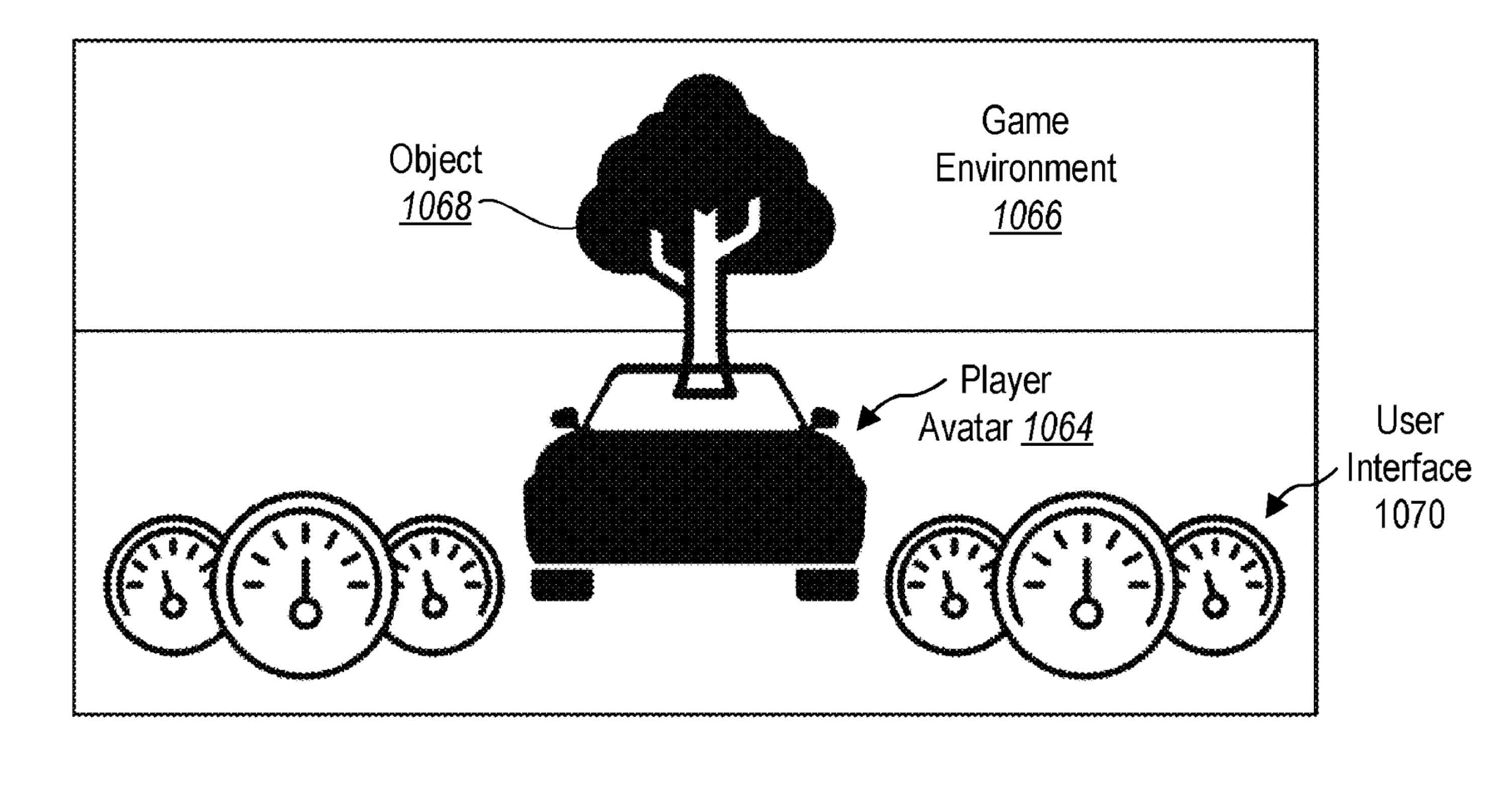
The key element is the use of game-state data. Instead of relying on a timer alone, the proposed system would use game-engine information to determine when an ad can run with less chance of interrupting active play.
That would require a game to provide signals about events such as level completion, checkpoints, menus, transitions and other points when the player is not actively engaged in an important task. The advertising platform could use those signals, along with the player’s remaining credit, to decide whether to show promoted content.
The filing does not identify a specific Microsoft game, Xbox service or product plan. A patent application also does not mean the technology will be commercialized. It does, however, show one way Microsoft is considering ad-supported access for interactive software.
Advertising is already common in mobile games, where ads often run between levels or after failed attempts. Applying a similar model to PC and console games is more complicated because game sessions can be longer and less structured. A fixed-timer interruption could cut into combat, dialogue or another important part of a game.
Microsoft’s proposed approach would try to avoid that by tying ad delivery to in-game events. The result would be a system in which a player earns more play time by viewing an ad at a moment chosen by the game’s own state.


While each European country is certainly unique, in general, the continent’s wealth of history, food, and culture all combine to entice visitors from the U.S. However, as much as American travelers and expatriates might appreciate Europe’s distinct vibe, they might also struggle with a little culture shock. Sometimes, this comes in the form of realizing that Europeans may go about certain daily tasks differently than their American counterparts. Consider the example of clothes-drying. Everything from TikTok reaction videos to official statistics indicate Europeans own and use clothes dryers at much lower rates when compared to folks from the U.S. Although there’s no universally-accepted reason for this, there are some good theories.
First, it’s important to understand that dryers aren’t unheard of in Europe. Per the European Commission, in 2020, there were about 50 million laundry dryers in use across EU homes. This roughly translates to about one dryer in every four households. However, according to the EPA, about 79% of U.S. households have clothes dryers. Clearly, Americans are much more likely to own clothes dryers than Europeans are. Research also confirms that drying clothes by hanging them on a clothesline is, in general, considerably more common in Europe than the U.S. For example, line drying outdoors is almost twice as common in Germany as it is here. Once more, there may be a few explanations for this disparity.
Why Europeans opt for line drying over clothes dryers more than Americans do

It can’t be reiterated enough: This topic is a little more complex than TikTok might make it seem. As a whole, Europeans use clothes dryers to a lesser degree than Americans do. Still, clothes dryers are more common in some parts of Europe than others.
That said, academics and others have proposed a few theories for why clothes dryers aren’t as abundant in the EU and other countries. One explanation is that houses in Europe are often built in ways that make it difficult to accommodate clothes dryers, particularly vented ones. Surveys also indicate that Europeans may have different attitudes about the effectiveness of various clothes drying methods. In one survey, UK participants indicated a preference for line-dried towels, while American respondents preferred using towels that had been dried in clothes dryers.
Essentially, researchers say this all might come down to a matter of tradition. Due to their history of not relying on clothes dryers, European households might be more comfortable with line drying or other options.
Of course, if you do use a clothes dryer, and you’re in the market for a new one, you want to be confident you’re investing in a unit that will live up to your expectations. Thus, you might want to research the top dryer brand, or you may want to learn about the clothes dryer features most worth paying for. Learning about the average lifespan of a dryer can also help you get a better sense of whether it’s time to replace yours.


Hubble’s new frame of NGC 4698 arrives from 55 million light years out in Virgo, a spiral tucked into the nearest big cluster of more than a thousand galaxies bound by gravity. Brown dust lanes cut through the outer disk and young blue stars light the same curves, yet those arms refuse to spiral into the middle. They hang in a ring around the perimeter and leave the bright core standing on its own, with reddish pockets of fresh star birth mixed among the dust.
Pale older stars form a vast bulge with a faint off-white tint that spins around a monster black hole several million times heavier than our sun, and this black hole just keeps feeding, growing larger with each passing instant, dining on gas that is pulled in. The bulge is perched at a 90-degree angle to the disk, so a delicate thread of faint starlight can be seen peeking up and down from the dusty plane. The stars and gas closest to the center behave strangely, moving in straight lines at a right angle to the outer ring, so there is no overlap between the inner stars and the outer disk because they spin in different directions.

LEGO Icons Hubble Space Telescope 11382
- EXPLORE THE HUBBLE SPACE TELESCOPE – Celebrate one of humanity’s greatest scientific feats while enjoying a relaxing building experience with the…
- REPLICA SPACE MODEL – Recreate the legendary space-based telescope with posable solar arrays and antennas, an opening aperture door and a detailed…
- AUTHENTIC DETAILS – Remove the exterior panels to reveal a detailed instrument bay, which features gyroscopes alongside primary and secondary…

It is now assumed that some of the gas that strayed in from outside developed its own inner disk with a different angle from the one we see now, and that a short hydrogen tail on one side represents the ghost of a minor galaxy that NGC 4698 swallowed up a long time ago. Hubble captured this light with the Wide Field Camera 3 as part of program 18103, which was led by D. Thilker and the MAUVE-HST team. They used ultraviolet to red filters, as well as a unique line, to map out star clusters and nebulae across the Virgo Cluster. This same set of data provides some unique insights into how a galaxy’s journey through a crowded neighborhood can either impede or reshape any new star formation that occurs.
NGC 4698 is one of a small number of spirals in which the inner stars ignore the spin of the outer disk and go on anyway, and this Hubble image shows that mismatch in a single glimpse, from the quieter ring of blue stars to the sideways brightness in the center.




“I do see this as a continued trajectory of their main business model of controlling what people see, putting ads in front of them, and collecting more data,” Mir says.
It’s definitely rational to be anxious about handing over your credit card to an agent. Even if you could trust these AI tools wouldn’t be tricked into spending money in ways you don’t want, outsourcing your shopping decisions can have unintended consequences. Consumer advocates see this purchasing automation as potentially opening the door for companies to prioritize certain brands or other products in an agent’s output, based on sponsorship deals. Meta’s Chief AI officer Alexandr Wang hinted in an interview with Axios that it’s looking for more revenue opportunities in Muse that aren’t ads, without disclosing specifics.
Personally, I enjoy the slow scrolls of online shopping, where I can spend an hour on a website and leave with nothing in my cart. There’s a whimsical inefficiency to browsing Depop for leather jackets I likely won’t even buy. By exploring the Internet on my own, I’m slowly building my own sense of taste and curating an understanding of what I actually enjoy. If Muse does everything for me, I lose out on the journey that led to the decision.
“At some point, the AI is making all of your meaningful taste decisions, your preference decisions, decisions about where you go, where you eat, what you do, what vacations you take,” Schroeder says. “That’s kind of the joy of being human—getting to test things out and figure out what you like. So, the concept of turning all of that over to a machine is pretty horrifying to me.”
Sharing Machines
Relying on agents, like Meta’s Muse, could degrade our functioning while these tools collect data about us.
“The design of AI agents is such that it disengages users,” says Margaret Mitchell, a researcher and chief ethics scientist at Hugging Face. “So, users become more passive.” Mitchell recently co-wrote a research paper unpacking how agentic tools are not effectively designed for human oversight and may actually worsen the user’s ability to assess what the agent is doing on their behalf.
People who use agents may become overly reliant on the tools, even more so than when interacting with a standard chatbot, since agents have access to more information and can do more tasks. One potential impact is “cognitive degradation,” where users rely on automations from a confident-sounding, external source and are less able to make independent decisions.
Mitchell also sees high levels of personalization as potentially priming users to share even more data about themselves. “It’s not only that it knows about you, so you trust it more,” she says. “It’s that it’s actually aligning to you in what it talks about and how it talks about it, in a way that further pulls you into interacting with it and divulging more private information.” Recent research shows that AI tools may start to mirror a user’s speaking style as they collect more interaction data.
While Muse is powerful, I’ve decided to send this data goblin back to its cave, and deleted the app after my initial experiments.
Before I could remove Muse from my phone, the agent sent me one final ping. A tip! I wonder what it could be. “Connect your apps so I can do more,” the notification read. Alright, buddy. I heard you the first time.


Back in 2018, a new appliance brand hit the marketplace called Café. This wasn’t an entirely new name though. GE Appliances first introduced the Café name back in 2007 as a luxury appliance line, but it was just one line of appliances under the greater GE umbrella. That changed when GE Appliances decided that Café should be its own standalone brand, which it has been since 2018. While GE Appliances is its parent company, the true owner of Café Appliances is Haier. This is a Chinese conglomerate that owns many different appliance brands around the world, and it acquired GE Appliances in 2016.
Despite being a subsidiary of a Chinese company, appliances from Café are still primarily manufactured in the United States. Café Appliances headquarters is located in Louisville, Kentucky, which is also the home to GE Appliances’ headquarters, and while that is the main hub, it’s not the only place these appliances are built. GE’s plant in Lafayette, Georgia is where the cooking products are built, and there’s another a smaller facility in Selmer, Tennessee that focuses primarily on refrigerators and freezers for Café and other Haier-owned luxury brands like Monogram and GE Profile.
Unlike many other appliance brands, Café focuses exclusively on kitchen appliances. These include ovens and stove ranges to refrigerators and dishwashers. There’s also a number countertop appliances it produces, like toasters and coffee makers. The company specializes in high-end luxury appliances for those looking to revamp their kitchen, both in performance and aesthetics. Consequently, Café Appliances sells its products at a premium as well, but the reason its prices are so high goes beyond it just being your average luxury brand.
Why are Café appliances so expensive?
GE Profile is one of GE Appliance’s brands that focuses on luxury and smart appliances. As a comparison point, the most expensive GE Profile double wall oven costs $4,099 and is the only model above $4,000 it offers. This is a combination oven that includes the ability to bake, air fry, or steam your food. Café Appliances, on the other hand, has six double wall ovens costing over $4,000 with the most expensive model going for $7,019. It includes all of those cooking modes on the GE Profile model plus a French door opening for the top oven. The most important thing upping the cost though is the ability for aesthetic customization.
This double oven allows you to choose between three different look bases — stainless steel, matte white, and matte black — and six different finishes for the hardware, such as handles that are bronze, copper, black, or another finish. These are the kinds of options Café has all over its appliance selections, but the customization doesn’t stop there either. It also has the Café Style Studio. This is a service that lets you consult its in-house interior design experts to help you select the best aesthetic options for your kitchen. This is a free service, but Café offering it means the money needs to come from somewhere else, hence the increased appliance prices. Some appliances, like fridges, even have the option for a completely customizable panel in order for it to blend in seamlessly with your kitchen cabinetry. While Café doesn’t place particularly high in SlashGear’s ranking of smart fridge brands, you can surely get one that looks tailor-made for your kitchen.

Entertainment43 seconds ago
Tom Cruise Details Race Against Time For ‘Digger’ Transformation

News Videos3 minutes ago
SEND THIS TO A FUTURE MILLIONAIRE. #motivation#success#shorts#saamirclipping #fyp#money#mindset

NewsBeat4 minutes ago
Putin-backing United Russia party is predicted crushing victory with around 50% of the vote in country’s parliamentary elections, exit polls say

Fashion1 week ago
Weekend Open Thread – Corporette.com

Fashion2 days ago
Weekend Open Thread: Talbots – Corporette.com

Tech2 weeks ago
Memory prices are slowing because buyers ran out of money
News Videos3 minutes ago
SEND THIS TO A FUTURE MILLIONAIRE. #motivation#success#shorts#saamirclipping #fyp#money#mindset

News Videos10 minutes ago
Bitcoin Round-Trips the First Fed Rate Increase Since 2023 as Zcash Runs to $1,3

News Videos23 minutes ago
Money Money Come To Me | Listen to This Manthra Daily, Be Rich.
-
 Fashion2 days ago
Weekend Open Thread: Talbots – Corporette.com
-
 NewsBeat2 days ago
Trump says US has reached an agreement to take permanent control of Greenland’s security
-

 Crypto World2 days ago
Circle launches Arc Studio AI agent for building onchain apps
-

 Crypto World6 days ago
Revolut Attackers Warn of Ongoing Daily Customer Data Leaks
-

 Crypto World6 days ago
Kraken Lets xStocks Holders Earn Yield Through DeFi
-

 Crypto World5 days ago
Robinhood engineers charged over $50K crypto scheme
-

 Crypto World5 days ago
What Is the Status of the U.S.-Iran Peace Talks? Here's What Both Sides Are Saying
-

 Crypto World4 days ago
US Charges Robinhood Engineers Over Crypto Listing Trades
-

 Crypto World2 days ago
Bitcoin price breaks channel as RSI climbs to 63
-

 Crypto World6 days ago
Elon Musk Drops a Bombshell: Grok 5 Could Be the AGI Breakthrough
-
 NewsBeat6 days ago
‘Sick conspiracy’: Trump says only guardrails AI needs is ‘a strong and smart (High IQ!) president’ in all-caps rant
-

 Crypto World5 days ago
NVIDIA Analysis: Attempted Rising Wedge Breakout Amid Pressure on the AI Sector
-
Business6 days ago
SK Hynix ADRs Fall More Than 6% as Memory Rally Breaks on Fears of Slower AI Spending
-

 Tech5 days ago
Webb’s IC 348 Mosaic Includes Two-Jupiter Dwarfs, Twin Jets, and a Nursery Still Making Worlds
-

 Crypto World7 days ago
3 Token Unlocks to Watch in the Third Week of September 2026
-
Crypto World6 days ago
Can Circle’s Arc Repeat Robinhood Chain’s Meme Coin Boom?
-

 Crypto World6 days ago
DOJ Seeks to Seize $61M in Iran Oil Funds From Binance Accounts It Vouched For
-
 NewsBeat2 days ago
US was ‘on brink of war’ with China over false AI report of nukes moving in Middle East
-

 Business5 days ago
Federal Reserve expected to hike interest rates 25 basis points at FOMC meeting
-

 Entertainment5 days ago
Big Brother Update: Melody Explodes at Drew as Illness Sweeps BB28 House
You must be logged in to post a comment Login