
Business
Main Street Capital Went Public at $15 a Share. $10,000 Invested Then Now Collects About $177 a Month in Regular Dividends.

Main Street Capital (NYSE: MAIN) completed its initial public offering on Oct. 4, 2007, at $15 per share. If you invested $10,000 into the business development company (BDC) stock at its IPO, you’d have purchased around 667 shares. Those shares would now generate around $177 per month in regular dividend income alone at the current rate of $0.265 per share. You’d also currently collect another $200 each quarter in supplemental dividends at the current $0.30 per share rate.
Here’s a look at Main Street Capital’s impressive dividend track record.
Missed AI’s “Act 1”? Act 2 Could Be 15x Bigger. Most investors think they missed the AI boat because they didn’t buy Nvidia in 2005. But according to our analysts, we’re only at the end of “Act 1″—the R&D phase. “Act 2” is the global rollout. Continue »

An income-producing machine
As a BDC, Main Street Capital must distribute 90% of its taxable income to shareholders each year to remain compliant with IRS regulations. It has a unique strategy to meet that obligation while also providing income investors with the stability they desire. It has set its monthly dividend at a level it can sustain throughout market cycles. Main Street Capital currently generates enough distributable net investment income to cover its regular monthly dividend by a comfortable 1.39 times. The BDC pays supplemental quarterly dividends to return excess taxable income to shareholders and remain compliant.
Main Street Capital has grown its monthly dividend by 141% since its IPO. It has paid a cumulative $42.465 per share in regular monthly dividends during that period, and an additional $8.74 per share in supplemental dividends. It has never suspended or reduced its regular dividend, though it has at times stopped paying supplemental dividends.
What’s driving the dividend growth?
Main Street Capital stands out from other BDCs for its growth. The company has grown its net asset value (NAV) per share from $12.85 at its IPO to $33.92 at the end of the second quarter, 164% total growth (5.4% compound annual growth rate). One of the keys to its success is its dual investment strategy of investing in the secured debt of smaller private companies with meaningful equity participation. The company’s equity investments provide upside.
For example, this past June, Main Street announced the exit of a portfolio investment. Its initial investment consisted of a $2.4 million revolving line of credit, a $12.2 million first-lien senior secured loan, and a $5.8 million direct equity investment. It subsequently completed seven follow-on investments, growing its total debt and equity investments to $42.3 million and $6.4 million, respectively. The BDC recently realized a $46.4 million gain on its equity investment in this portfolio holding, which had also generated $2.2 million in cumulative dividend income. Gains like these have supported its growing NAV per share while providing the BDC with additional capital to reinvest to grow its portfolio. That portfolio growth has helped support its rising dividend.


Bitdeer Technologies Group (NASDAQ:BTDR) reiterated in its September 16 operating update that it had fully contracted graphics processing unit (GPU) capacity at its A102 facility in Malaysia. The facility has 9.5 megawatts of IT capacity, with long-term commitments representing more than $800 million of expected revenue.
The five-year commitments were previously disclosed in an announcement posted August 31. They imply more than $160 million in average annual revenue before costs, an illustrative calculation rather than annual guidance. The operating update lists data-center readiness for November 2026 and expects revenue recognition to begin in the first quarter of 2027.
The investment question now shifts from finding customers to delivering services at an attractive return.

Bull Case
Contracting capacity before energization gives Bitdeer Technologies Group (NASDAQ:BTDR) a firmer basis for committing capital. Signed demand can help management coordinate equipment purchases, deployment and financing around identifiable customers.
The five-year term also provides a period over which to evaluate equipment spending against expected receipts. If construction and deployment stay on schedule, A102 could establish a meaningful source of AI revenue with greater visibility than projects still under commercial discussion.
Bitdeer Technologies Group (NASDAQ:BTDR) says it generally seeks customer prepayments covering approximately 50% of associated capital expenditure. Achieving that structure could reduce the cash required before service begins and limit reliance on additional borrowing or equity issuance.
Customer advances would finance part of the build while creating obligations to provide future services. Their value lies in improving funding timing, with profitability still determined by the cost of fulfilling the contracts.
A102 could also provide an operating reference for subsequent projects. Reliable service and documented returns would offer stronger evidence that the expansion model can be repeated than signed capacity alone.
Bear Case
The $800 million figure covers expected revenue over the contracts. It is neither current revenue nor profit, and the illustrative annual average does not establish how revenue will be distributed across individual years.
Bitdeer Technologies Group (NASDAQ:BTDR) must turn site readiness into a functioning GPU service. Power availability, hardware deployment, cooling, and network performance all matter. Delays could push receipts further out while capital remains tied up.
SCHB: The Mega-Cap Premium Is Losing Its Edge
Marion Campbell, Sonic Drive-In’s vice president of integrated marketing and communications, on the fast-food chain’s beverage and fall flavor strategies.
As restaurant chains increasingly turn to specialty beverages to attract customers beyond the traditional meal, Sonic Drive-In believes a business model built around drink customization gives it a head start.
Marion Campbell, Sonic’s vice president of integrated marketing and communications, told FOX Business that the quick-service restaurant industry is still figuring out how to make specialty beverages a bigger part of its business, while Sonic has spent years building customization into its operations.
“I think that the market is just getting started. And QSR in particular is just figuring out a way to serve these types of beverages to their guests and make it a pivotal part of their DNA. It’s already a part of our DNA,” Campbell said.
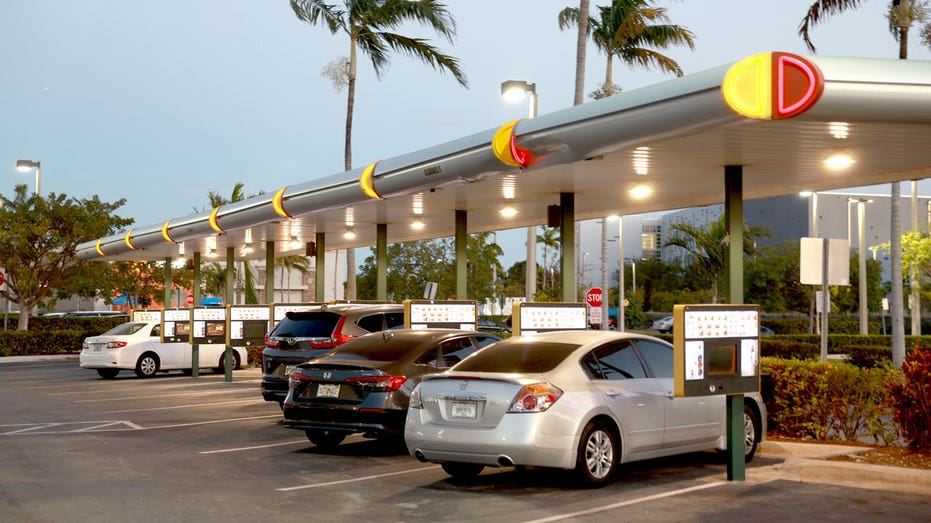
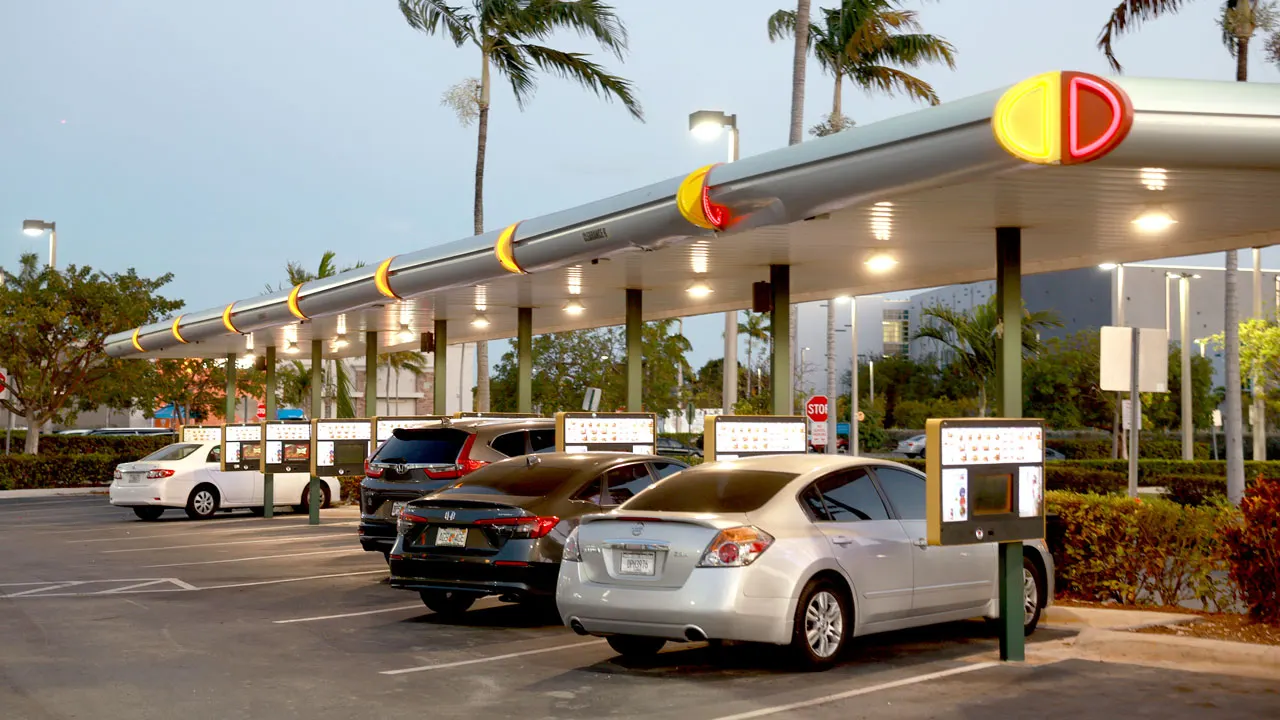
Customers in their vehicles wait for their orders at a Sonic restaurant drive-in on April 17, 2024, in Miami, Florida. (Joe Raedle/Getty Images)
The competition for beverage customers comes as restaurant brands experiment with specialty drinks, customization and limited-time flavors to give consumers additional reasons to visit. Rival fast-food chains McDonald’s, Taco Bell and Jack in the Box each offer their own versions of dirty sodas.
The nonalcoholic beverage market generated $264.1 billion in consumer spending at U.S. foodservice establishments in 2025, accounting for 23% of industry-wide sales, according to data from Technomic. The data also showed that cold beverage spending in 2025 climbed 3.4%, compared with a 1.2% rise for hot beverages, with Technomic saying that “innovation and consumer preference are driving cold beverages to the forefront of market growth.”
KRAFT HEINZ UNVEILS NEW PHILADELPHIA CREAM CHEESE FLAVORS TO WIN BACK SHOPPERS
For Sonic – which operates more than 3,400 restaurants and generates $5.2 billion in annual system sales – drinks can bring customers through its drive-ins even when they aren’t looking for a burger, hot dog or other full meal.
“A beverage-only guest is a very frequent guest. So beverage is always going to play a pivotal role because of the frequency it drives for the business versus just a check driver,” Campbell said.
She added that beverages can also increase how much a customer purchases when paired with food.

Sonic’s seasonal beverage lineup featured in the chain’s “Hotumn” campaign highlighting customizable fall-inspired drinks. (Sonic)
The company’s customization infrastructure has also allowed the chain to capitalize on the popularity of dirty sodas, which typically combine soda with additions such as cream and flavored syrups.
The dirty soda trend has exploded over the past two years, with case volume at quick-service restaurants jumping 318% during that time, according to data from market research firm Circana.
MAJOR BURGER CHAIN IN-N-OUT CHANGES TWO KEY INGREDIENTS, SENDING FANS INTO A FRENZY
“I think dirty sodas is a place we’ve actually played long before they were really deemed dirty sodas,” Campbell said.
Campbell said Sonic was positioned to capitalize on the trend because customers were already accustomed to customizing drinks at its restaurants.
The chain is now using that platform to experiment with new flavors and seasonal products, including its recently launched fall-inspired lineup and banana-flavored offerings.
CHECKERS & RALLY’S CEO SAYS AMERICANS’ DEMAND FOR FAST-FOOD VALUE IS ‘INTENSIFYING’
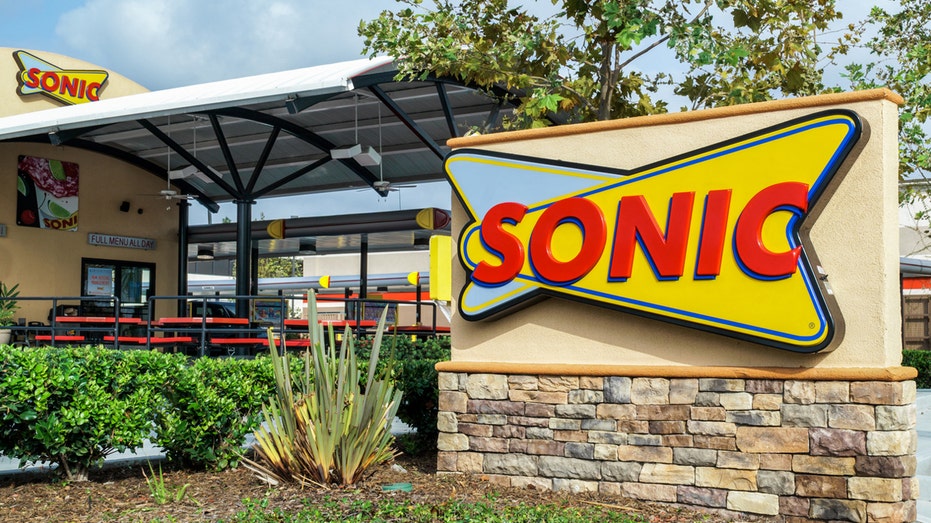
Sonic Drive-In has over 3,400 restaurant locations in 47 states. (iStock)
The strategy comes as consumers remain sensitive to restaurant prices, forcing chains to balance novelty and indulgence with value.
Campbell said beverage pricing can vary widely, from an everyday carbonated soft drink to more elaborate specialty offerings, and argued that consumers can be willing to spend more for an experience they consider distinctive.
Sonic’s latest seasonal marketing push also illustrates how the company is trying to translate beverage experimentation into customer traffic.
DUNKIN’ OPENED ITS FIRST-EVER DOG DRIVE-THRU WITH TREATS AND TOYS FOR PUPS ON NATIONAL DOG DAY
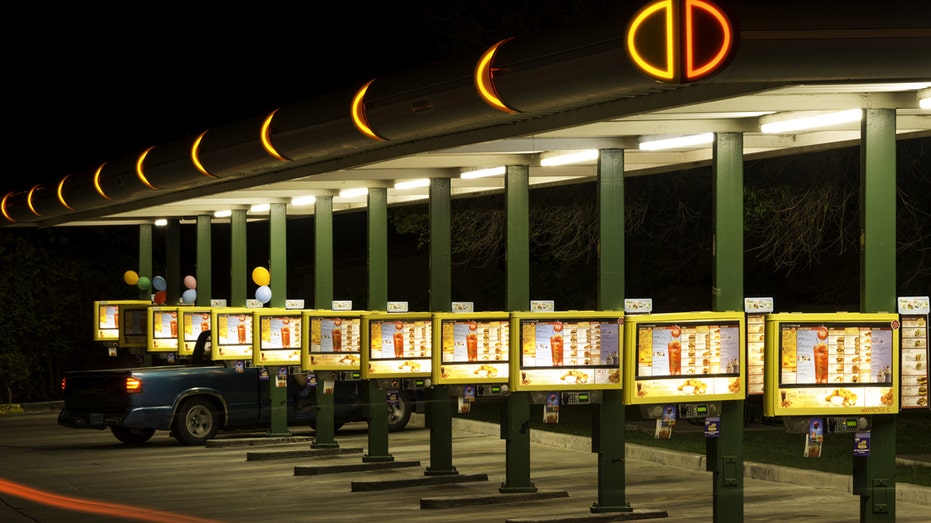
Sonic Drive-In serves burgers, hot dogs, fries, shakes and specialty drinks. (iStock)
The chain created a campaign around “Hotumn,” its name for the period when consumers begin embracing fall flavors and clothing even as temperatures remain hot, particularly in Sonic’s core Southern markets. The campaign is scheduled to run for about four weeks.
Looking further ahead, Campbell expects customers’ appetite for personalization to continue shaping the beverage business.
“Again, customization’s not going anywhere. It’s been here forever. People like to be in control of the flavors they consume. They like to feel like they’re the creator, and they have that ability,” Campbell said.
She also pointed to flavored water as an area with room for additional experimentation as consumers look for customizable beverages beyond traditional soft drinks.
CLICK HERE TO GET FOX BUSINESS ON THE GO
Sonic has more beverage concepts in development, according to Campbell, although she declined to disclose what the company plans to introduce next.
Business
He Converted $40,000 a Year for Ten Years. His Brother Left the Same $450,000 Alone and Watched It Grow to $730,000. Only One of Them Owns What the Statement Says
Quick Read
-
A traditional IRA balance overstates true wealth because every withdrawal is taxed as ordinary income, meaning the government owns a portion of every dollar on the statement.
-
Converting $40,000 annually at 12% using outside funds beats a $730,000 traditional IRA balance taxed at 22% on withdrawal, leaving the converter with more spendable money.
-
Roth owners avoid required minimum distributions, Medicare IRMAA surcharges, and pass tax-free balances to heirs. These advantages hold regardless of future tax rates.
-
Two retirees, same $1 million, same 4% rule, buy one finished with $1.4 million, the other hit $0 in 12 years. Our free reader guide explains the flaw that separated them, and the income-first method built to avoid it.
Two brothers, same starting balance of $450,000 in a traditional IRA, same age, same market. Imagine that one spent a decade moving $40,000 a year into a Roth, paying tax on each conversion at the 12% federal rate. The other brother did nothing and watched the balance climb to $730,000. On paper, the second brother looks like he came out ahead. In practice, he owns less of what his statement says than his brother owns of a smaller one.

Why the Statement Includes the Government’s Share
A traditional IRA balance is money on which no federal income tax has ever been paid. Every dollar withdrawn is taxed as ordinary income in the year it comes out. If the eventual tax rate is 22%, then twenty-two cents of every dollar on that statement belong to the Treasury. The account holder is a custodian for a share he does not own.
A Roth statement works differently. Tax has already been settled. Qualified withdrawals in retirement come out untaxed. The number on the page is the number the owner can spend. Two brothers whose statements read the same figure do not have the same wealth if one is a Roth and the other is pre-tax. Almost no one adjusts for this when deciding whether they have enough saved.
The 4% Rule is Broken, Built On A World That No Longer Exists
Every retiree knows about the 4% rule, but it frames retirement as a slow liquidation and still causes retirees with seven-figure accounts to agonize over a dinner out.
There’s a different way to run the math that makes more sense today. Build an income floor — dividends, interest, and Social Security that cover your essential bills every month — and you never have to sell shares into a down market just to pay them.
Our free reader guide, The 4% Rule Is Broken, walks through it in about 15 minutes. Access the report here.
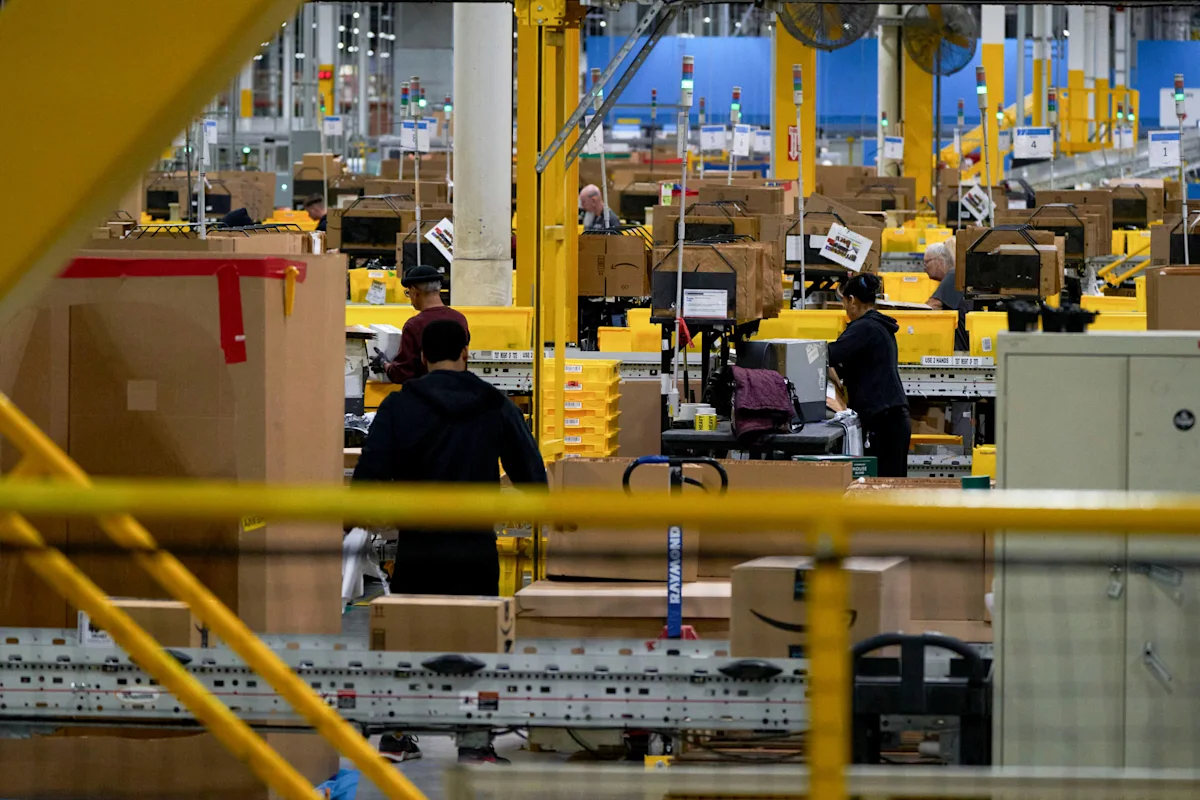
Amazon employs hundreds of thousands of people in warehouses and delivery operations across the United States. On September 16, it told them their pay is going up.
The company announced a $1-per-hour raise for eligible U.S. core operations employees, bringing the minimum starting wage for full-time roles to $20 an hour, according to Amazon’s press release. Average hourly pay for core operations workers rises to nearly $24. With benefits factored in, average total compensation exceeds $32 an hour. Amazon said the minimum starting wage has now risen more than 17% over the past three years.
What the $1.5 billion investment actually covers
Amazon said the pay increases will cost more than $1.5 billion. The investment covers workers involved in fulfilling and delivering customer orders, including fulfillment-center workers and delivery drivers. Amazon did not describe it as a companywide raise for every employee.
Udit Madan, Amazon’s senior vice president of Worldwide Operations, said the company evaluates pay and benefits annually. “I often hear that they appreciate a good paycheck, but also really value the full range of benefits that we offer, which together help them support their families and grow in the long run,” he wrote in a blog post announcing the changes.
More Amazon:
For a full-time employee working 40 hours a week year-round, the $1-per-hour increase works out to about $2,080 more annually before taxes. The $1.5 billion figure is a significant outlay in absolute terms and comes to roughly 0.06% of Amazon’s current market capitalization of about $2.68 trillion.
The federal minimum wage is $7.25 and Congress has not raised it since 2009. Amazon’s new $20 floor is nearly triple that. Many states have passed their own higher minimums, some above $15, so Amazon’s starting wage lands above most state floors too. The company says it sets pay by looking at what it takes to fill and keep positions in its busiest markets.
What new benefits Amazon is adding
The pay increase comes alongside a new banking benefit and grocery discounts, both effective October 1, 2026.
Amazon is giving employees access to Day 1 Financial, a lifetime membership in First Tech Federal Credit Union. Qualified employees and their families keep the membership for life. Access begins rolling out in late 2026 and is expected to be broadly available in 2027. The credit union is federally insured by the National Credit Union Administration.


Specialised Therapeutics expands Incyte partnership to Australia

S&P 500: Ready For A Melt Up (Technical Analysis)

Harbor Transformative Technologies ETF Q2 2026 Commentary
Fidelity’s mission is to strengthen the financial well-being of our customers and deliver better outcomes for the clients and businesses it serves. With assets under administration of $12.6 trillion, including discretionary assets of $4.9 trillion as of December 31, 2023, Fidelity focuses on meeting the unique needs of a broad and growing customer base. Privately held for 77 years, Fidelity employs more than 74,000 associates with its headquarters in Boston and a global presence spanning nine countries across North America, Europe, Asia and Australia. Note: This account is not managed or monitored by Fidelity, and any messages sent via Seeking Alpha will not receive a response. For inquiries or communication, please use Fidelity’s official channels.

Ukraine’s Zelenskiy says he and Trump agree to meet in New York
Bamburgh village pub named among North East’s top dog-friendly pubs

Bitdeer (BTDR) Fully Contracts A102. Can Signed Demand Become Profitable AI Revenue?

Massive grudge match officially added to WWE RAW




-

 Fashion2 days ago
Weekend Open Thread: Talbots – Corporette.com
-

 Crypto World2 days ago
Circle launches Arc Studio AI agent for building onchain apps
-
 NewsBeat2 days ago
Trump says US has reached an agreement to take permanent control of Greenland’s security
-

 Crypto World6 days ago
Revolut Attackers Warn of Ongoing Daily Customer Data Leaks
-

 Crypto World6 days ago
Kraken Lets xStocks Holders Earn Yield Through DeFi
-

 Crypto World5 days ago
Robinhood engineers charged over $50K crypto scheme
-

 Crypto World5 days ago
What Is the Status of the U.S.-Iran Peace Talks? Here's What Both Sides Are Saying
-

 Crypto World4 days ago
US Charges Robinhood Engineers Over Crypto Listing Trades
-

 Crypto World2 days ago
Bitcoin price breaks channel as RSI climbs to 63
-

 Crypto World6 days ago
Elon Musk Drops a Bombshell: Grok 5 Could Be the AGI Breakthrough
-
 NewsBeat6 days ago
‘Sick conspiracy’: Trump says only guardrails AI needs is ‘a strong and smart (High IQ!) president’ in all-caps rant
-
 Crypto World6 days ago
NVIDIA Analysis: Attempted Rising Wedge Breakout Amid Pressure on the AI Sector
-
Business6 days ago
SK Hynix ADRs Fall More Than 6% as Memory Rally Breaks on Fears of Slower AI Spending
-
 Crypto World7 days ago
3 Token Unlocks to Watch in the Third Week of September 2026
-

 Tech5 days ago
Webb’s IC 348 Mosaic Includes Two-Jupiter Dwarfs, Twin Jets, and a Nursery Still Making Worlds
-
Crypto World6 days ago
Can Circle’s Arc Repeat Robinhood Chain’s Meme Coin Boom?
-

 Crypto World6 days ago
DOJ Seeks to Seize $61M in Iran Oil Funds From Binance Accounts It Vouched For
-
 NewsBeat2 days ago
US was ‘on brink of war’ with China over false AI report of nukes moving in Middle East
-
 Business5 days ago
Federal Reserve expected to hike interest rates 25 basis points at FOMC meeting
-

 Entertainment5 days ago
Big Brother Update: Melody Explodes at Drew as Illness Sweeps BB28 House
You must be logged in to post a comment Login