






Connect with us

Tech

Control Resonant reviews praise its spectacular world and bold new direction

Published

on

Control Resonant takes Remedy’s supernatural series into a semi-open-world Manhattan, with Dylan Faden replacing Jesse as protagonist. Reviewers like the reality-bending environments, art direction, story, and exploration, while reactions to the redesigned combat are more mixed.

Read Entire Article
Source link

Continue Reading
Advertisement
Click to comment

You must be logged in to post a comment Login

Leave a Reply

Tech

Elon Musk’s latest Boring Company pitch involves a Hyperloop between Austin and San Antonio

Published

on

Elon Musk recently claimed that his tunneling startup The Boring Company is working on “a simple precursor Hyperloop” between Austin and San Antonio that will reduce the journey between the two cities to less than 30 minutes.

The Boring Company account shared Musk’s statement and said it “would be excited and honored to build this massive infrastructure project.”

Many of The Boring Company’s announced projects — including tunnel systems in Chicago, Los Angeles, and between New York City and Washington, D.C. — have not materialized. However, it does operate a transportation system combining tunnels and surface routes in Las Vegas, and it recently raised a $3 billion round led by the United Arab Emirates.

Musk’s comments about a potential Austin-San Antonio Hyperloop were actually in reply to an AI-generated video depicting a generic science fiction future with human colonies on other worlds. Musk re-posted the video and declared, “This is the future we shall bring into being”.

Advertisement

Musk’s critics have argued that his vision of the future is apparently inspired by pulp science fiction and comic books; historian Jill Lepore recently told me that he seems to favor sci-fi that “completely defeats and defies all of his political beliefs.”

Source link

Continue Reading

Tech

Senators urge FTC to investigate whether Amazon and Walmart chatbots bury “Made in USA” products

Published

on

In a nutshell: Two senators are urging the Federal Trade Commission to examine how Amazon’s and Walmart’s shopping chatbots handle questions about products labeled “Made in the USA.” Sens. Tammy Baldwin and Rick Scott said Amazon’s Alexa and Walmart’s Sparky may fail to clearly indicate whether products are made domestically. In a letter to the FTC, the senators said the systems could “obscure and suppress” information about US-made goods and products falsely advertised as American-made.

The request follows a July report from Columbia University’s Center for Law and the Economy. The report said the two AI systems did not consistently surface information about domestic-origin claims, even though they could provide information on goods made in other countries.

The concern is not simply whether product data exists on a retailer’s website. It is whether a chatbot can find and present that information when a shopper asks for it. As retailers put more AI tools between consumers and product listings, the quality of the chatbot’s response can shape what shoppers see and buy.

The report’s authors tested Alexa and Sparky using prompts about US-made products. Alexa initially said it could not access that information. But when the wording of the request changed, the assistant returned products labeled as made in the US.

Advertisement

Sparky initially said it could not determine whether “Made in USA” claims were accurate. After more detailed prompts, it ranked products in a shopping cart based on the apparent reliability of their labels. The chatbot described its first response as “overly cautious.”

Baldwin said the results could put domestic manufacturers at a disadvantage. “If Americans want to buy products made in America, Amazon and Walmart should be helping them, not giving away their business to foreign knockoffs,” she said in a statement.

Amazon rejected the suggestion that it deliberately withholds country-of-origin information. The company said it provides manufacturing-location details when manufacturers or third-party sellers supply that information. It also said country-of-origin information is shown on product-detail pages when available.

Amazon said it is working to improve Alexa for Shopping’s ability to provide that data. Walmart declined to comment.

Advertisement

The FTC has previously warned both companies about origin claims made by third-party sellers. Last year, the agency wrote to Amazon and Walmart stating that some sellers on their marketplaces appeared to be falsely marketing goods as made in the US. The agency said those claims could violate federal standards and the companies’ own terms of service.

Baldwin and Scott said the newer report suggests the issue may not be limited to inaccurate product listings. They said chatbot behavior could make the problem harder for consumers to detect if the systems do not clearly identify products with credible domestic-origin claims.

“We all share the goal of strengthening American manufacturing and small businesses through initiatives such as Made in USA labeling, all while ensuring consumers receive accurate information about where the products they buy are made,” the senators wrote.

The request comes as the FTC continues to enforce its Made in USA Labeling Rule. The rule, which took effect in 2021, allows the agency to seek civil penalties against companies that falsely label products as made in the US.

Advertisement

The FTC brought 11 enforcement actions after the rule took effect under the Biden administration, including a case that resulted in a multimillion-dollar judgment against home-goods retailer Williams-Sonoma. The agency has continued taking action over national-origin claims during the Trump administration and has issued warning letters to other businesses.

President Trump also signed an executive order in March calling for truthful advertising and suggesting that the FTC require e-commerce platforms to develop procedures for verifying country-of-origin claims from third-party sellers.

Erie Meyer, a senior fellow at the Center for Law and the Economy and a co-author of the July report, said the bipartisan support for an FTC investigation was notable. “Seeing Sen. Baldwin and Sen. Scott sign the same letter gives me hope that supporting American businesses is still a bipartisan issue,” Meyer told The Wall Street Journal.

Advertisement

Source link

Continue Reading

Tech

Demand for new iPhones prompts Evercore to raise its target price

Published

on

Investment firm Evercore believes that upgrade demand for the iPhone 18 Pro range and new Apple Watch Series 12 is higher than predicted, prompting a target rise of $15.

Back in May 2026, Evercore raised its price by $35 to $365, arguing that investors were ignoring Apple’s long term prospects. Now it’s raised the price again, but this time because of what appear to be short term issues.

Specifically, the company reports that its survey of consumers suggests that the new iPhone range will prompt more upgrades than expected. The improvement is slight, but clear, and also focused on the iPhone 18 Pro and iPhone 18 Pro Max.

In a note to investors seen by AppleInsider, Evercore says, for instance, that 32% of its survey plan to buy the iPhone 18 Pro Max. That’s up from 29% who intended to buy the iPhone 17 Pro Max.

Advertisement

The company maintains that while there are impressive new features in the latest models, most upgraders are driven by their current iPhone aging. Some 67% of respondents said this, compared to 48% in 2025.

For Apple’s earnings, Evercore further notes that buyers are continuing to prefer higher storage capacity models. This tends to benefit Apple which charges heavily for those configurations.

It’s a similar story for the new Apple Watch Series 12 and Apple Watch Ultra 4. The analysts report that 38% of respondents intend to buy, compared to 34% in 2025, with an unspecified majority favoring the Apple Watch Series 12.

Evercore’s reasoning does run counter to many recent analysts who have focused on what appeared to be a comparatively slow start to iPhone 18 Pro pre-orders online. But this year’s launch is significantly different with fewer models plus a new foldable, so much of the analysis appears to be guesswork.

Advertisement

iPhone Duo outlook

One area that Evercore does not yet expect to do well for Apple is the new foldable iPhone Duo. At present, its survey suggests 14% of respondents expected to buy it.

That is, though, an improvement on the 9% who in 2025 said they would be buying an iPhone Air.

Plus Evercore cautions that iPhone Duo demand could improve once it has actually launched and buyers can test it out. Plus its analysts also note that its survey was confined to the US and although they don’t mention this, foldables have traditionally done significantly better in China.

Pre-orders for the iPhone Duo begin on October 16, 2026. The iPhone 18 Pro is now available both online and in Apple Stores.

Advertisement

Source link

Continue Reading

Tech

Luke Creatives Spent Eight Months Building a Voice Powered AI Soda Machine That Mixes Any Flavor You Can Speak

Published

on

Luke Creatives AI-Powered Soda Machine Any Flavor
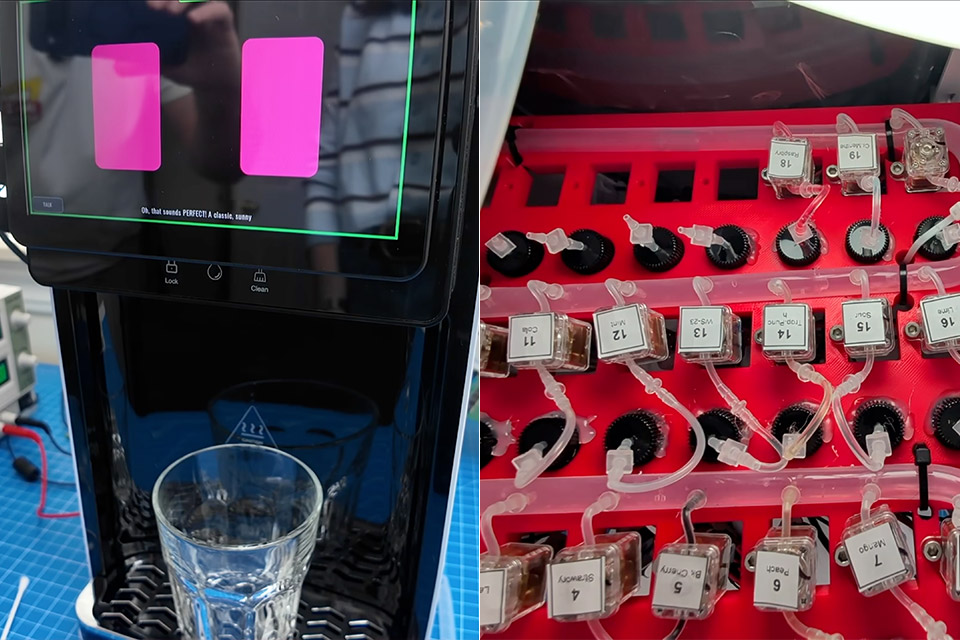
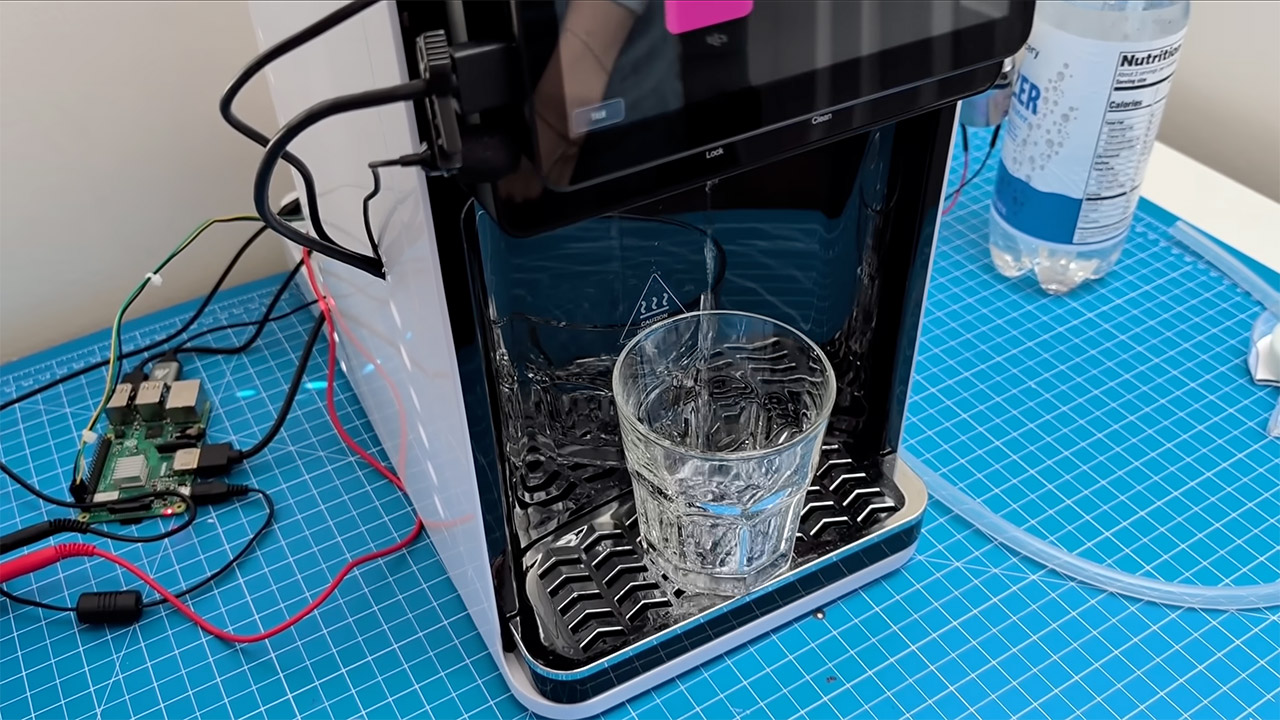
Luke Creatives spent more than eight months on a soda machine that listens to a spoken request and mixes a drink from a bank of concentrated flavors. Ordinary fountain buttons give you one listed option. This cabinet aims at anything you can say out loud, from strawberry lemonade to a summer night, and it draws on roughly half a million possible mixes to do it.


Ordinary soda fountains lock you to a short printed list. Luke wanted a machine that could connect an idea to a taste, the way a midsummer night or a thunderstorm might feel if you had to drink it. He treated flavors like primary colors, believing that with enough base selections, you could achieve practically any desired result. Claude assisted him in selecting twenty concentrations that would provide them with the most variety, including one that is said to taste like freezing cold. Although two of them (lavender and capsaicin) refused to dissolve in water, they were replaced with cardamom and crème de menthe. That left them with about 18 bottles that actually worked and hundreds of thousands of possible combinations.


SodaStream TERRA Sparkling Water Maker, Value Bundle, CQC CO2 System, Includes 2 Quick Connect 60L CO…
  • FRESH FIZZ ON DEMAND: The SodaStream TERRA turns plain tap water into fresh sparkling water in seconds, right on your countertop. One slow press gives…
  • A SECURE SNAP AND SEAL: The Quick Connect CO2 cylinder clicks in with one push, and the bottle snaps into place before you fizz. The seal is built to…
  • THE QUICK CONNECT CO2 SYSTEM: Each 60L Quick Connect cylinder makes up to 60 liters (16 gallons) of sparkling water. When it runs low, return, refill…

Luke Creatives AI-Powered Soda Machine Any Flavor
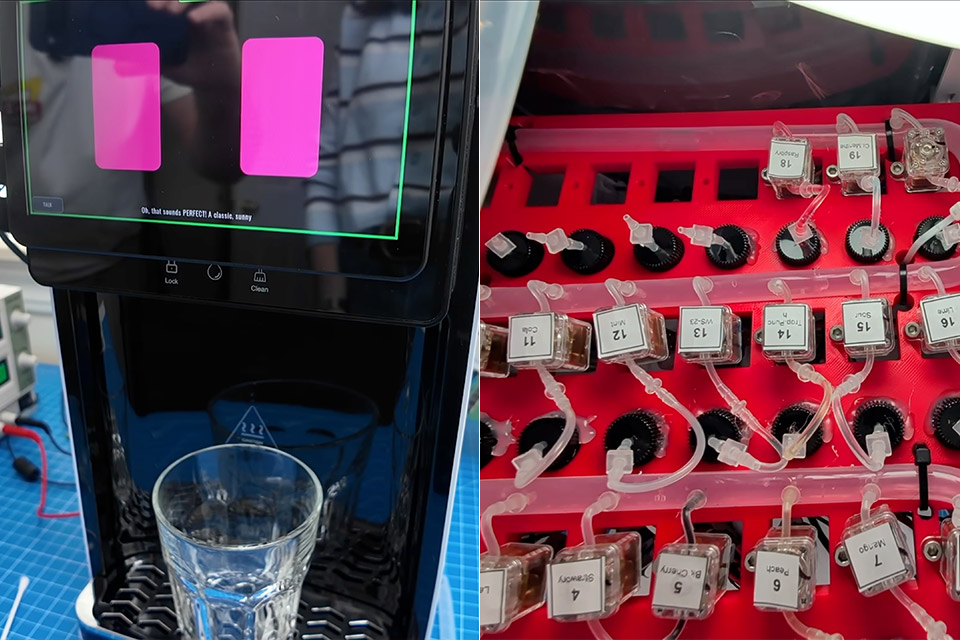
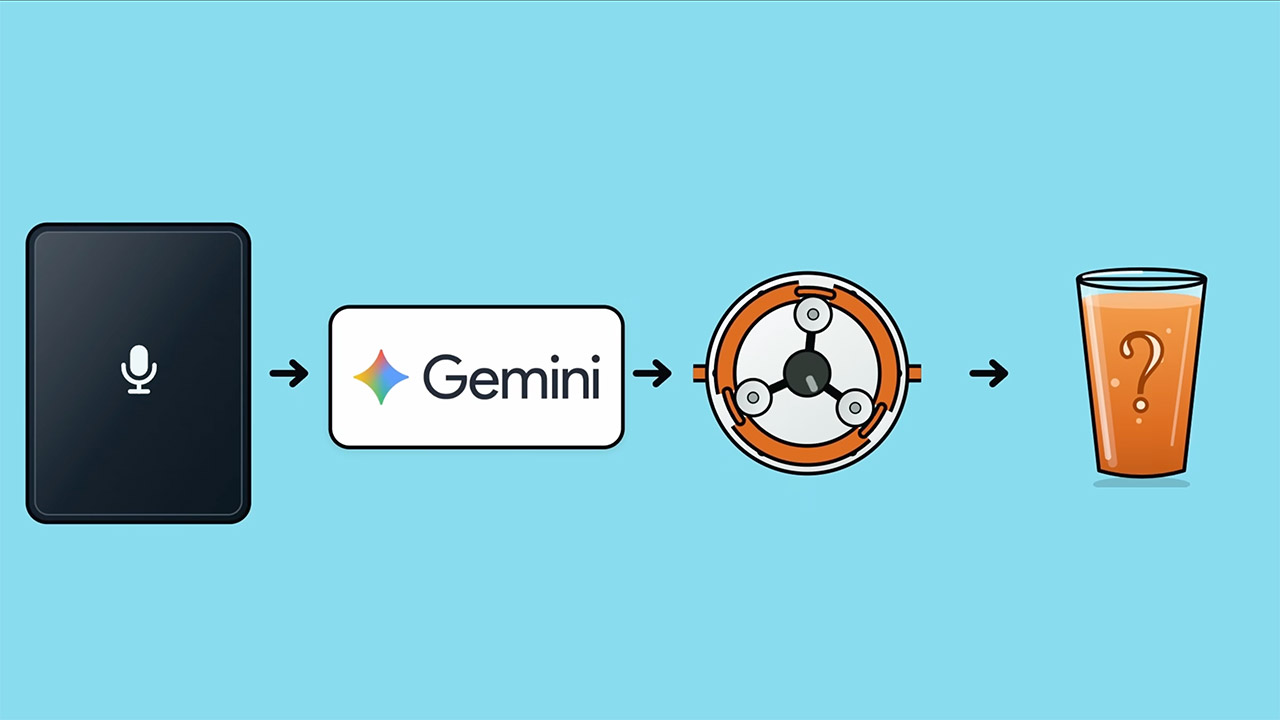
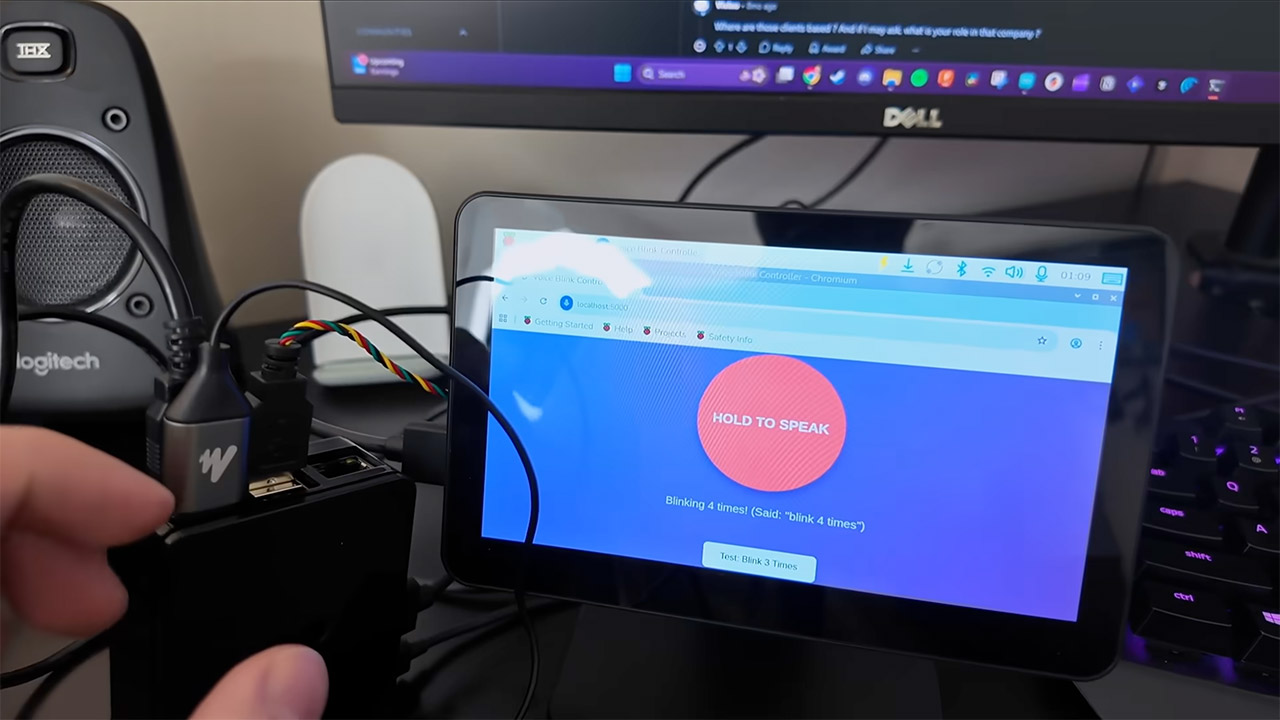
Voice control is based on a Raspberry Pi and includes a touch screen and microphone, making it an all-in-one device. Hold down a button and chat, and Google Gemini will hear what you say and write down a recipe with measured doses to use before sending the information to the pumps. A large peristaltic pump circulates pre-carbonated water through a silicone tube, ensuring that the liquid never contacts the motor parts. There are twenty smaller pumps that perform the same thing with the flavor vials, first flushing the flavors through the system and then introducing water to mix them up in the cup. There is no carbonator inside the box; instead, the team uses bottled sparkling water to save money and simplify plumbing.

Luke Creatives AI-Powered Soda Machine Any Flavor
Before the finished cabinet could be built, Luke had to develop a smaller version of the system consisting of a single Pi, screen, microphone, and pump to test the concept. If that didn’t work, he assumed the entire thing was doomed. Scaling it up nearly ruined the entire project, as the first circuit board with two copper layers became a nightmare when they tried to add twenty-one pumps and a Pi. Josh at VentureVici solved the problem by building a six-layer board using GPIO expander chips and I2C, allowing the computer to communicate with each pump via a single wire. JLCPCB constructed the boards, however they still managed to fry a handful of Raspberry PIs due to power issues, and one of the finished boards was also destroyed. Half of the tiny pumps arrived with incorrect settings and had to be manually switched around, while early tube rips caused leaks over the electronics.

Luke Creatives AI-Powered Soda Machine Any Flavor
They discovered the ideal enclosure for the machine on eBay: an old reverse osmosis filter housing. A flavor train of glass vials and pumps was fixed inside the cramped space, held together with hot glue and whatever else they could think of. Claude offered some very valuable dilution tables to keep each flavor at a manageable strength so that one flavor did not overshadow the others. Before they began testing with drinks, they conducted a few test runs with simply water to identify leakage.

Luke Creatives AI-Powered Soda Machine Any Flavor
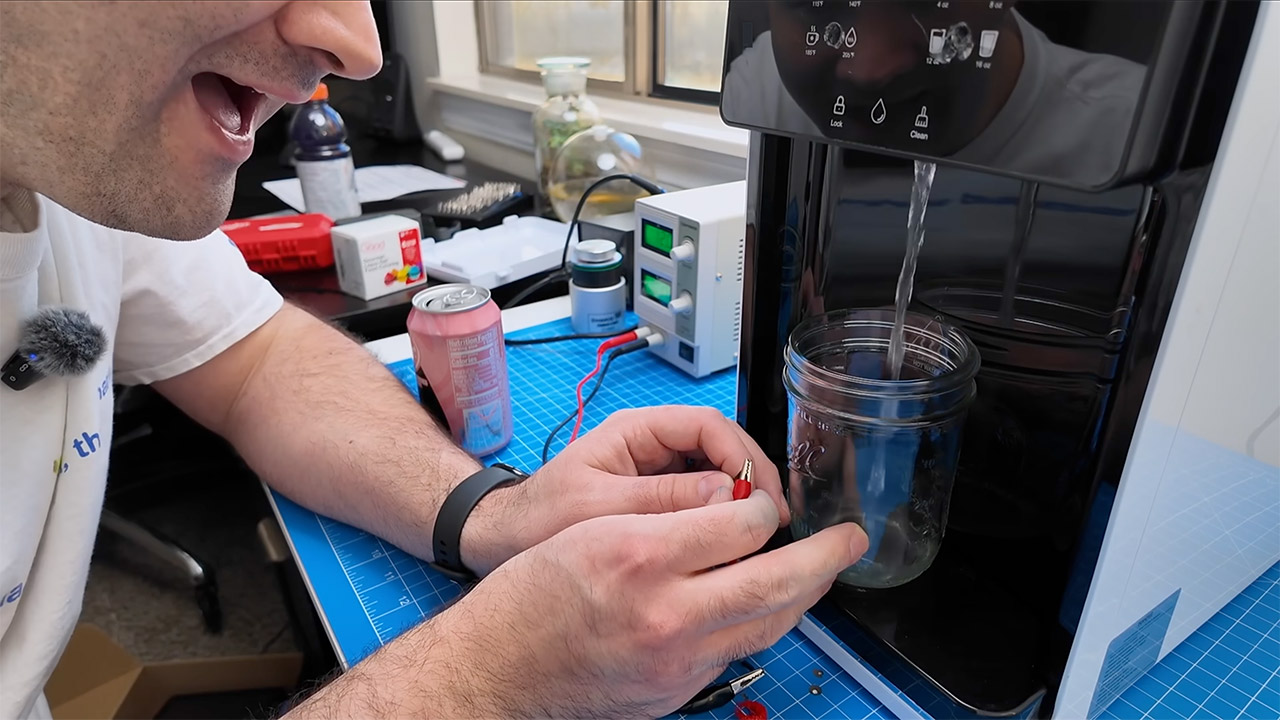
When they finally had a drink that didn’t leak all over the place, they began to experiment with other flavor combinations. The family who assisted recognized a few popular refreshments, including strawberry lemonade, rocky road fudge ice cream, and blue moon ice cream. Then some unexpected ones came about, such as a summer night with vanilla and hibiscus, a thunderstorm with ginger and fire, and grief with a salty and muted flavor. Pine tree tasted similar to a heavy version of Sprite, but with a foresty touch. After the pour, Gemini Live even spoke back to them in a natural voice.

Source link

Advertisement
Continue Reading

Tech

S’pore retrenchments hit highest level since 2020 as vacancies fall

Published

on

Laid off workers also took longer to find jobs

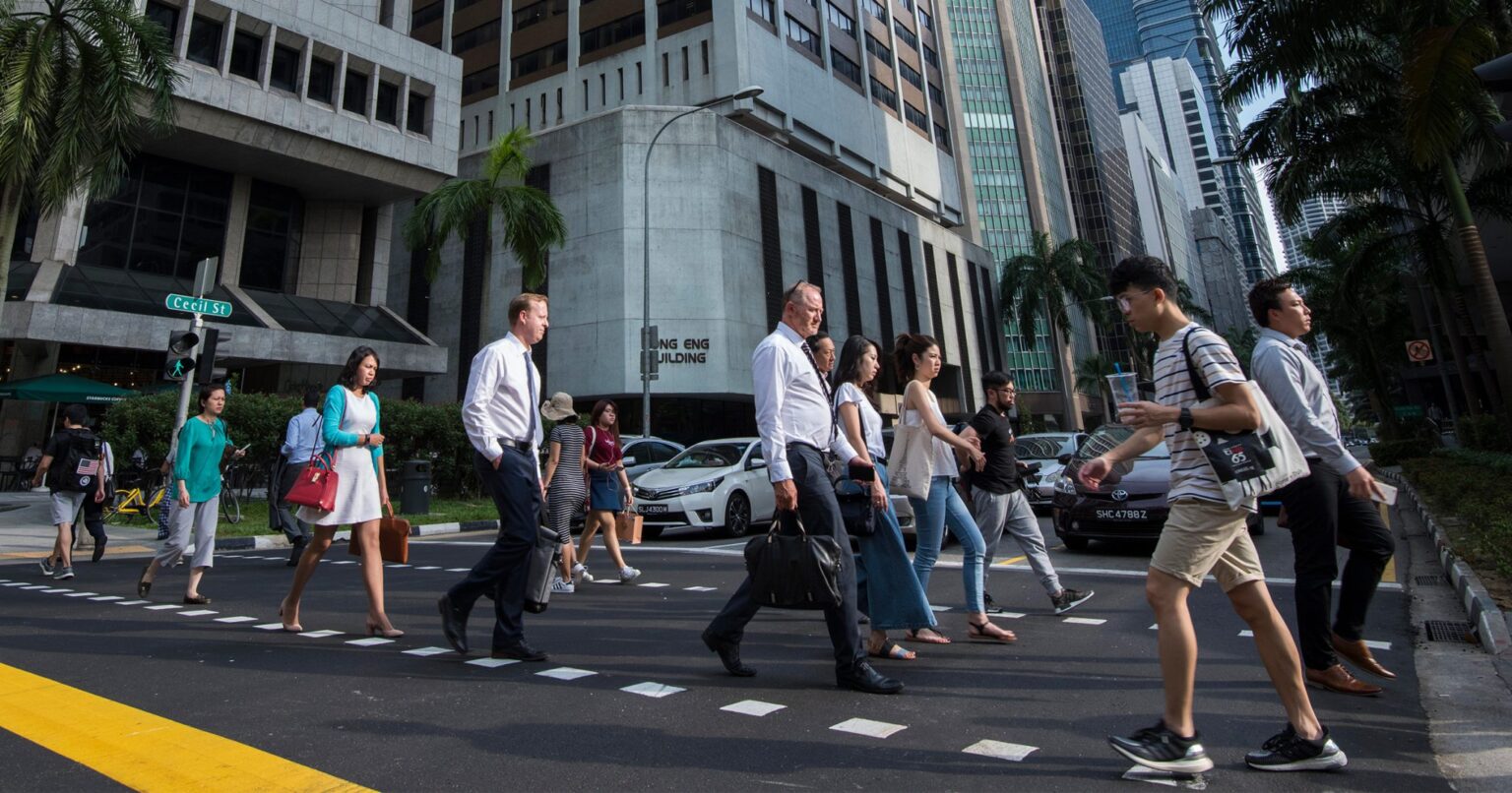
Job vacancies in Singapore kept falling in the second quarter of 2026, even as retrenchments climbed to their highest level since the pandemic.

About two in every 1,000 employees were retrenched in the second quarter, with the number of laid-off workers rising to 4,620, the highest since the fourth quarter of 2020, when the COVID-19 pandemic was under way.

This is up from 3,830 retrenchments, or about 1.6 retrenched workers for every 1,000 employees, in the first quarter.

The Ministry of Manpower (MOM), in its labour report released on Sep 21, said the labour market is showing signs of softening. The rise in retrenchments was driven by restructuring among businesses in outward-oriented sectors such as manufacturing, information and communications, and financial services.

Advertisement

He added that the layoffs are not broad-based and are mostly concentrated in outward-oriented sectors.

A slower path back to work

Retrenched workers were also taking longer to find jobs: 54.9% found new employment within six months in the second quarter, down from 60.7% in the first. Even so, close to 70% found work within a year.

Acting Minister for Manpower Jasmin Lau said some workers were finding that the transition to their next role was taking slightly longer, which she called “a concern for some Singaporeans.”

Speaking on the sidelines of a visit to technology company Acronis, she said job opportunities remained, but moving between jobs could be challenging. She added that the Government will help workers learn, adapt and prepare for new roles through career conversion programmes.

Advertisement

“Instead of learning a new skill and then hoping to find a job that uses it, workers train for actual roles that companies need,” she said.

Acronis, has supported more than 50 of its employees since 2024 through career conversion programmes, helping them build new skills in cybersecurity, software development and artificial intelligence.

Lau said: “This is the shift I hope we can all make together, learning new skills not just to protect what we have, but to open up more possibilities for what comes next.”

Fewer non-entry-level PMET openings

At the same time, job vacancies fell to 68,600 in Jun from 73,300 in Mar, the MOM report said.

Advertisement

The drop mainly reflected fewer openings for professionals, managers, executives and technicians (PMETs) in sectors such as financial services and information and communications.

Entry-level PMET vacancies, however, remained “broadly stable and sizeable”, making up 45.3% of all job openings in June.

Despite the overall decline, there were still more vacancies than unemployed people, at 1.48 vacancies per unemployed person as at Jun.

In general, Singapore’s labour market expanded in the second quarter, MOM said.

Advertisement

Total employment rose by 11,400, the 19th consecutive quarter of growth and up from the 9,400 jobs added in the first quarter.

A “positive but cautious” outlook

Resident employment growth, however, slowed from the previous quarter.

The growth came mainly from domestic-oriented sectors such as transportation and storage, public administration and education, and health and social services, although some outward-oriented sectors, including professional services, financial services, and information and communications, also expanded.

On the other hand, non-resident employment growth was driven by work permit holders in construction and manufacturing.

Advertisement

Unemployment rates remained “low and stable” in Jun, at 1.9% overall and 2.9% for residents, though the resident long-term unemployment rate edged up to 1% from 0.9% in Mar.

MOM said the labour market remained resilient overall, but conditions became less favourable for some resident workers as employment growth moderated, retrenchments increased and six-month re-entry outcomes weakened.

Looking ahead, MOM described the labour market outlook as “positive but cautious”, based on its business expectation polls in July.

Hiring expectations improved across more sectors, with 48.7% of companies intending to hire in the next three months, up from 43.9% in June.

Advertisement

The share of companies intending to raise wages, however, fell to 27.9% in July from 29.3% in June.

“Despite the improvement, both hiring and wage expectations remained below their Feb levels,” MOM added.

  • Read other articles we’ve written on Singaporean businesses here.

Featured Image Credit: Shadow_of_light/ depositphotos

Advertisement

Source link

Continue Reading

Tech

Silent Hill: Townfall review: come for the scenery, stay for the gameplay

Published

on

Why you can trust TechRadar


We spend hours testing every product or service we review, so you can be sure you’re buying the best. Find out more about how we test.

Traditionally set in North America, the Silent Hill series has been known to stray beyond the continent on occasion, most notably with the recent Silent Hill f, which takes place in sixties Japan.

Review info

Platform reviewed: PS5
Available on: PS5, PC
Release date: September 24, 2026

Advertisement

With Townfall, we’re headed to nineties Scotland, but that’s not the only change: we also get a new perspective — in more ways than one.

Source link

Advertisement
Continue Reading

Tech

ASUS Googlebook revealed in leaked images with glowing lid and dedicated G key

Published

on

ASUS’ upcoming Googlebook has appeared in a new set of images, offering a closer look at the laptop’s design, keyboard and internal cooling system. The images, obtained exclusively by The Mac Observer, reveal a dark grey chassis, a large touchpad, a dedicated Google-branded G key, and a multicolour light bar on the lid.

The laptop is part of Google’s new premium Googlebook category, which aims to combine elements of ChromeOS and Android. However, ASUS has not yet confirmed the device’s final name, specifications, pricing or release date.

Glowing lid and dedicated Google key take centre stage

The leaked images show a conventional clamshell laptop with slim display bezels and a raised section around the webcam. The lid features an ASUS logo positioned beneath a narrow, multicolour light bar, which Google has previously referred to as the “glowbar.” The feature is expected to become a recognisable design element across the Googlebook family.

Inside, the laptop includes a wide rectangular touchpad, a keyboard without a number pad, and grilles on either side of the keyboard. A dedicated Google G key sits on the bottom row, immediately to the left of the Alt key. The images don’t show what the key does.

A full-size USB-A port is visible on the right edge, although the complete port selection and specifications remain unconfirmed.

Advertisement

The internal images also show a cooling fan beneath the right side of the keyboard, connected to a heat pipe extending towards the centre of the laptop. This suggests an actively cooled design, although the processor remains unknown.

Googlebook focuses on Gemini and Android integration

Google announced Googlebook in May as a new premium laptop category, with ASUS among its hardware partners alongside Acer, Dell, HP and Lenovo. The platform is designed around Gemini and includes features intended to connect laptops more closely with Android smartphones.

Google’s Magic Pointer allows users to select content on the screen and ask Gemini for assistance. Other features include Create My Widget, which generates custom widgets through prompts, and Cast My Apps, which lets users open Android phone apps on the laptop without reinstalling them. Quick Access also brings phone files into the laptop’s file browser. These smartphone features require Android 17 or later.

Google’s website says Googlebook preorders begin on September 21, but it remains unclear whether ASUS’ model will be available immediately. Details including its processor, memory, storage, display, battery capacity and price are still pending.

Advertisement

Source link

Continue Reading

Tech

World model companies are keeping a lot of secrets

Published

on

This week, I moderated a panel on world models at the All In conference (no relation to the podcast), and it gave me a chance to dig into one of the most mysterious corners of the AI world. The big players in the space are Yann LeCun’s AMI Labs and Fei-Fei Li’s World Labs — and while both have accumulated a lot of buzz and funding, they also rank pretty low on the trying-to-make-money scale.

At their core, world models are about automating spatial intelligence, so the field could head in lots of exciting and lucrative directions, from robotics to interactive video to more complex self-driving systems. 

But when I started to press on where we would actually see the tech commercialized, things got foggy. The closest thing I found to an authority was Michael Rabbat, a co-founder of AMI Labs and the company’s VP of World Models, who joined me on the panel. But when I pressed him on exactly what the company was working on, he was cagey. “We’ll talk about it when we’re ready to talk about it.” Over email, he clarified, “We’re still in a research and building phase, so we’re not talking publicly about any product plans or timeline.”

To be fair, AMI is less than a year old, so it’s fair enough to keep quiet. But this sort of caginess extends to the whole world-modeling space. World Labs’ Marble is probably the most fully developed product in the space, and its demos range from straightforward media creation, building explorable environments for video games, or CGI effects. There are robotics use cases too, but the whole platform seems more designed to demonstrate capabilities. 

Advertisement

That secrecy even extends to these companies’ suppliers. On the sidelines of the same conference, I spoke to Alex de Vigan, CEO of Physicl — a data supplier for the burgeoning world model business. He says he knows Physicl’s data has been useful for whatever they’re building, but he’s still in the dark about what exactly that is. “I wish they would tell us more. We could build more useful data if we knew what they were working on,” de Vigan told me.

Part of the mystery comes from how versatile world models are as an idea. The simplest version is a navigable map of the world, similar to the AI models that power self-driving cars. But the same modeling approach that helps a Waymo weave through traffic could also help a humanoid robot carry boxes, or turn a few minutes of video footage into an explorable environment. AMI has already dipped its toe in manufacturing, biomedicine, robotics, and even AI software for doctors through its Nabia partnership. Surely it won’t pursue all of those — but maybe one or two of them are standing out?

No one doubts that there are lots of viable businesses to be built on world model tech — and as long as it’s easy to fundraise, there’s no particular pressure to focus on one. In fact, there’s good reason not to. If AMI announced tomorrow that they had built a humanoid OpenClaw or a next-generation Hollywood rendering system, a lot of other labs would suddenly be very interested in the space. Soon, the lab would face potential competition from the other world model companies, the neolabs, and even OpenAI and Anthropic. 

In some ways, it’s the flip side of all that easy fundraising. Your competitors can fundraise, too — and the same money that lets you build under the radar is also funding lots of potential rivals once the path to market becomes clear. But even if that competition is inevitable, it’s best if you delay it for as long as possible, which means keeping quiet about exactly what you’re building.

Advertisement

Cixin Liu fans will recognize this as a dark forest scenario: If you don’t know who else is in the woods, it’s best not to attract attention.

This post was first published on September 18, 2026.

When you purchase through links in our articles, we may earn a small commission. This doesn’t affect our editorial independence.

Source link

Advertisement
Continue Reading

Tech

An Editor’s Picks: The Best Gifts for Bird Lovers

Published

on

You may be familiar with the various memes detailing the fact that once you reach middle age, you’re automatically sorted, Harry Potter hat-style, into one of a handful of hobbies, such as sourdough bread making, gardening, or bird-watching. I can’t contradict this, since I’m a middle-aged person who got sorted into bird-watching. But I do know that enjoying birds and their various activities is fun for all ages. Birds are beautiful, interesting, and unpredictable, and it’s fascinating to keep a running life list of all the birds you’ve seen and hope to see in your lifetime.

Whether someone you know is in their bird-watching phase, preparing for this phase, or has been in it for decades, all of these unique gifts—for traveling bird-watchers and backyard bird enthusiasts alike—are things either I or another bird-loving Reviews team member tested, was gifted, or bought IRL and enjoyed.

For more specific equipment recommendations, check out our guides to the Best Smart Bird Feeders and the Best Binoculars. For other gift ideas, check out all our gift guide coverage, including the Best White Elephant Gifts, Best Gifts for Men, and Best Viral TikTok Gifts.

Updated September 2026: I added a birdseed subscription and a puzzle, and ensured links and prices are up to date.

Advertisement

Featured Gifts

A Smart Bird Feeder

Netvue Birdfy Lite Smart Bird Feeder

Read more

For Beginning Birders

Bushnell Powerview 2 8×21 Binoculars

Read more

A Custom Seed Subscription

The Happy Birdwatcher Co. HappySeed Box

Read more

Camera Lenses for Your Phone

Moment T-Series Lenses

Advertisement

Read more

Our Favorite Smart Bird Feeder

Netvue

Birdfy Lite Smart Bird Feeder

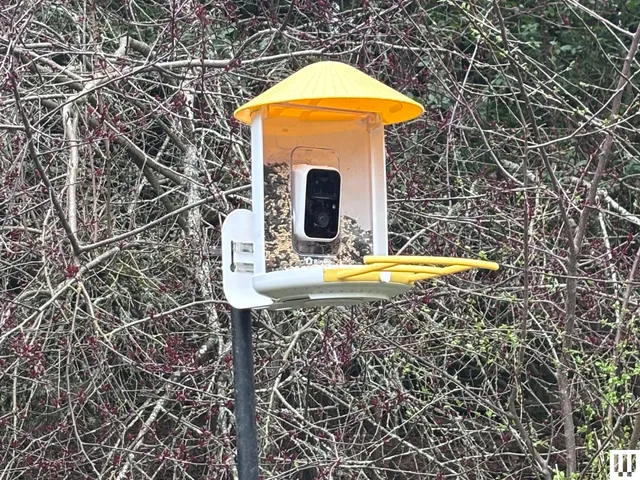
If you love birds, nothing beats seeing them up close and personal, conducting all their birdy activities. I have learned more about birds in the past two years of testing smart bird feeders than I have over my entire lifetime, such as the fact that cowbirds will lay their eggs in other birds’ nests (such as juncos) and the “host” birds will raise the cowbird chicks as their own, even if they look nothing alike. Or that jays and other corvids are scatter-hoarders and will spend an entire day picking nuts out of a feeder’s seed mix to hide caches around the yard. There are many smart seed feeders on the market, but Birdfy’s high-quality basic model (available with a blue or yellow roof) stands out for its balance of price, features, reliability, and usability without a subscription, making it a great gift option that I have personally given.

A Family Pick

Advertisement
Image may contain: Animal, Bird, Adult, and Person

My mom gifted this to my family about 10 years ago, and to this day, it is the single most-played and most-enjoyed game we have ever owned, in any genre. Shuffle the small cards and call them out; players place a blue cardstock square on their bingo card if they have that bird. My son loved it, his friends loved it, neighbors loved it, extended family loved it—it can be played by up to six people at a time, and is suitable for all ages. No reading or parsing of rules required. Best of all, neither my husband nor I minded playing it multiple times a day for years on end (a bonus feature important for any parent of young kids).

For Beginning Birders

The Bushnell Powerview binoculars compactly folded in the palm of a person's hand, lenses facing inward.

Bushnell

Powerview 2 8×21 Binoculars

Experienced birders probably already have a decent set of binoculars, but for the birding-curious, kids, or someone just starting out, quality binoculars and a life list journal ($22) would make a great gift. WIRED contributing reviewer Caramel Quin declared these the Best Budget Binoculars. I bought a set for each member of my family for a cruise to Alaska last summer, and I’m glad I did. They’re lightweight (7.2 ounces) yet sturdy, with an aluminum casing instead of plastic, and small enough to slip into a pocket if you’ll be hiking and don’t want to deal with them around your neck.

A Customized Bird Seed Subscription

The Happy Birdwatcher Co.

HappySeed Box

Advertisement

The one thing a bird-watcher could always use more of is seed, and this service offers a fun spin on what would otherwise be a boring gift. You can choose either a subscription or a one-time purchase of three boxes: The Starter consists of one 10-pound bag of seed custom-blended to appeal to birds in your recipient’s zip code. The Simply Seeds (pictured above) adds a 5-pound bag of a specialty blend (I received a fruit and nut mix), and the Splendid tacks on suet and mealworms. The blend for my yard—black-oil sunflower seeds, peanut splits, safflower, and millet—was spot-on; birds loved it so much there was little to no mess. (Though you can also specifically opt for No Waste, Hot Pepper, and No Starling versions of your blend.) Each box comes with a personalized letter from founder Susan Vandergriff about which birds to look out for in your area. This latter part needs a bit of fine-tuning, as my letter featured blue jays and summer tanagers, neither of which exist in my region, but I found the whole package charming nonetheless.

A Bird Nerd Classic

David Allen Sibley

“What It’s Like to Be a Bird: From Flying to Nesting, Eating to Singing—What Birds Are Doing, and Why”

This 8- by 11-inch hardcover by famed ornithologist David Sibley (known for his Sibley field guides) may be too big and too heavy to fit in a backpack for field reading, but it remains the definitive source for interesting bird facts. Did you know mallard nestlings have only a 15 percent chance of fledging, and that once they hatch, fewer than half of ducklings survive? And that jays in the Northeastern US often eat paint chips in search of calcium, which doesn’t occur naturally in that region’s soil? Or that chickadees specifically seek out spiders to feed their young for the first week after they hatch, as spiders are high in taurine? Whether you want to or not, you will learn all these things and more if you give someone close to you this book.

Advertisement

A Different Kind of Bird Food

My husband and I received this feeder basket and some suet cakes as a gift about 10 years ago. The basket has fallen on the ground countless times; been chewed on and used as gymnastics equipment by squirrels; and survived windstorms, snow, and pretty much everything Pacific Northwest winters have to offer. Sure, looks-wise, it’s seen better days, but it still does the job.

Suet—beef fat, if we’re being explicit; the solid-form cousin to rendered tallow—attracts a different variety of birds than seeds, primarily insect-eaters like woodpeckers and bushtits. It tends to melt and go rancid in the heat, so I like the melt-free hot pepper variety, which can be used year-round and has been deemed unpalatable by our neighborhood squirrels.

Camera Lenses for Your Phone

Moment T-Series Lens for smartphones

Phone cameras keep getting better, but photos taken with that tiny lens aren’t going to win you any awards. If you want more detailed and dramatic photos from your birdwatching expeditions but don’t want to schlep a full camera setup around, try a professional-grade phone lens. WIRED reviewer Julian Chokkattu has tested several of these from Moment and recommends the 1.33X Anamorphic Lens for cinematic video, the 10X Macro Mobile Lens for close-ups, and the 14-mm Fisheye Mobile Lens for fun.

To use these lenses, you’ll need a Moment Phone Case (available for recent iPhones) and, if you have an iPhone, the $5 drop-in lens mount in order to screw the lenses into the case. You will also want to use Moment’s Pro Camera app, and Julian recommends this filter, which can help cut glare from bodies of water and shoot long exposures. Note that Julian doesn’t recommend buying these lenses if you have a Google Pixel or Samsung phone, as Moment seems to have stopped making cases for Android.

Advertisement

The Ultimate Bird Poster

Pop Chart Lab

Birds of North America Poster

If you’ve ever wondered how many birds live in North America, this poster displays all 740 of them in one chart, both native and non-native, arranged by size and order. It’s educational and a surefire conversation starter. In fact, I’ve had this chart framed in my home’s entryway for almost eight years, and I don’t think a single person has visited my house for the first time and not commented on it, regardless of their ornithological interest level. It’s really fascinating in person, and even if your giftee is already well-versed in birds, they’ll probably still learn something new.

For Birders Who Love Adventure

Advertisement

Jonathan C. Slaght

“Owls of the Eastern Ice: A Quest to Find and Save the World’s Largest Owl”

Until reading this book, I had never heard of Blakiston’s fish owl. And apparently neither had the author, bird-watcher and biologist Jonathan Slaght, until he caught sight of one—the world’s largest living owl. What followed was a five-year passion project to catalog the owl in a remote region of eastern Russia. Part travel adventure, part scientific study, part memoir, this much-lauded nonfiction book reads like a novel and will be a page-turner for anyone who enjoys birds, exploration, or the outdoors.

Make Your Existing Bird Feeder Smart

If your recipient has an existing bird feeder they like, or a seasonal nesting site somewhere around their home or property, they might love a stand-alone bird camera. This one is the best I’ve tested, compatible with both 2.4-GHz and 5-GHz Wi-Fi networks. The cute green owl face streams 4K HD video and pushes 1080p pics to the Hibird app. There’s access to AI identification (which I found to be just OK), livestreaming, and Hibird’s “Dr. Bird” ChatGPT-like help feature, which allows you to ask bird-related questions. (I didn’t find it to be particularly helpful, but YMMV.)

The auxiliary solar panel can be mounted separately, or you can just take the camera inside to charge when the battery runs out, as I did—the battery lasts at least several weeks. The camera comes with a bracket and bendable arm for precise positioning, or you can jury-rig a custom solution. No subscription is needed, though a Hibird rep says that may change in the future.

Advertisement

For Bird-Loving Gamers

wingspan board game

Courtesy of Stonemaier Games

WIRED reviewer Simon Hill, our staff board game aficionado, says this award-winning card-driven game will appeal to anyone interested in birds, as it pairs strategy with plenty of educational information about different bird species. It can feel complex at first, so it’s probably best for families with kids older than 10, but once you get the hang of it, it can be addictive. (Up to five people can play, but you can also play solo.) Playing time is 40 to 70 minutes.

A Smart Birdhouse

Contrary to popular belief, birds don’t always sleep in birdhouses. Some cavity-nesting birds may use them for shelter during inclement weather, but where I live on the West Coast, birdhouses are primarily used for nesting, which happens during the spring. This is not my first go-round with a smart birdhouse; I tested the interestingly shaped Birdfy Polygon last year, which did not attract any birds then, and this year it kept going offline. As an alternative, I tried Birdfy’s newer Nest Duo, which has two 2-MP cameras, one facing the entrance and one tucked discreetly inside. This one worked perfectly, both connection-wise and in terms of bird interest—mine raised a family of black-capped chickadees, and seeing their activity on the Birdfy app each day has been the most fun bird-watching experience I have ever had.

Become a More Observant Naturalist

Advertisement
Overhead view of drawing pads, watercolor palette and blank pages.

Photograph: Scott Gilbertson

John Muir Laws

The Laws Guide to Nature Drawing and Journaling

In his guide to Gifts for Hikers, Backpackers, and Outdoorsy People, WIRED reviewer Scott Gilbertson said he loved this book by John Muir Laws (no relation to the famed naturalist John Muir) so much that it changed the way both he and his kids looked at the world, allowing them to see a level of detail they’d never noticed before. You don’t even have to be an artist to appreciate this one, as it’s more about the art of observation. He recommends including these pens with the book, which I have also owned in the past and love.

A Perfect Puzzle

Nautilus Puzzles

The Parliament of Fowls Wooden Jigsaw Puzzle

Advertisement

If you’re a puzzle enthusiast and haven’t yet tried wooden jigsaw puzzles, you must. My go-to brand is Liberty Puzzles—the quality and designs are truly unmatched—but California-based Nautilus Puzzles is a close second. Especially appealing is Nautilus’ Parliament of Fowls, a visual interpretation of the 14th-century Chaucer poem. Though it’s only 511 pieces, they are all individually shaped, many with a bird theme, which makes this puzzle both beautiful and extremely challenging.


Power up with unlimited access to WIRED. Get best-in-class reporting and exclusive subscriber content that’s too important to ignore. Subscribe Today.

Source link

Advertisement
Continue Reading

Tech

This startup believes smaller, modular data centers can solve AI’s infrastructure bottleneck

Published

on

In context: Crusoe, the AI infrastructure company behind a major data-center campus in Abilene, Texas, has raised $3.9 billion and is expanding into smaller, factory-built facilities aimed at handling AI inference workloads. It is counting on those modular sites to add computing capacity more quickly than traditional projects, which can be held up by shortages of power, labor and construction resources. The move broadens Crusoe’s business beyond massive data-center campuses and gives it another way to serve AI customers.

The funding round values Crusoe at about $30.9 billion after the investment, Chief Executive Chase Lochmiller said. Atreides Management, Valor Equity Partners, and Mubadala Investment co-led the round. Other investors include Founders Fund, TPG, and several sovereign wealth funds, including the Qatar Investment Authority.

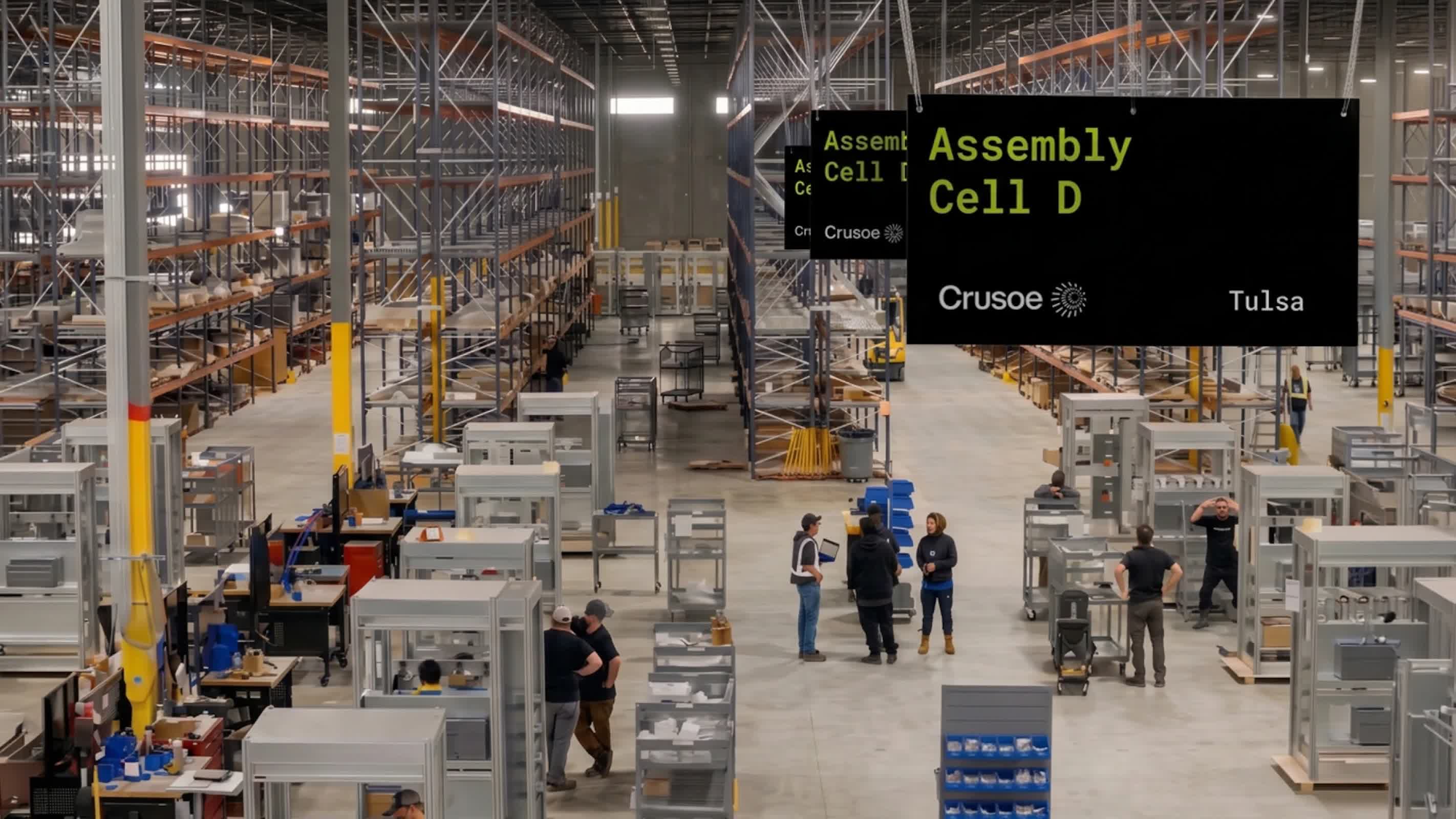
Crusoe is known for building large-scale AI computing infrastructure, including the Abilene campus developed for Oracle, which rents computing capacity to OpenAI. The company now sees an opportunity for smaller installations that it can produce in its own facilities, ship by truck, and set up in areas with available electricity.

The units, called Spark, are intended mainly for inference. Training leading models can require massive clusters with hundreds of thousands of chips. Inference does not always require that scale, Lochmiller said.

Advertisement

“You don’t actually need an Abilene to do that,” he told The Wall Street Journal. Running inference at that scale, he added, “can be a bit of overkill.”

The shift reflects a growing divide in AI infrastructure. Large campuses remain important for model training, where developers need vast numbers of Nvidia GPUs, high-bandwidth networking, and large power supplies. But inference can be spread across smaller facilities, particularly as companies look for ways to add computing capacity without waiting years for design, permitting, and construction.

Crusoe’s approach is to build Spark facilities in advance, then move them to places where power is available. That could reduce the need for large construction crews and shorten the time required to bring new AI capacity online. Access to electricity and labor has become a central issue for data-center developers nationwide.

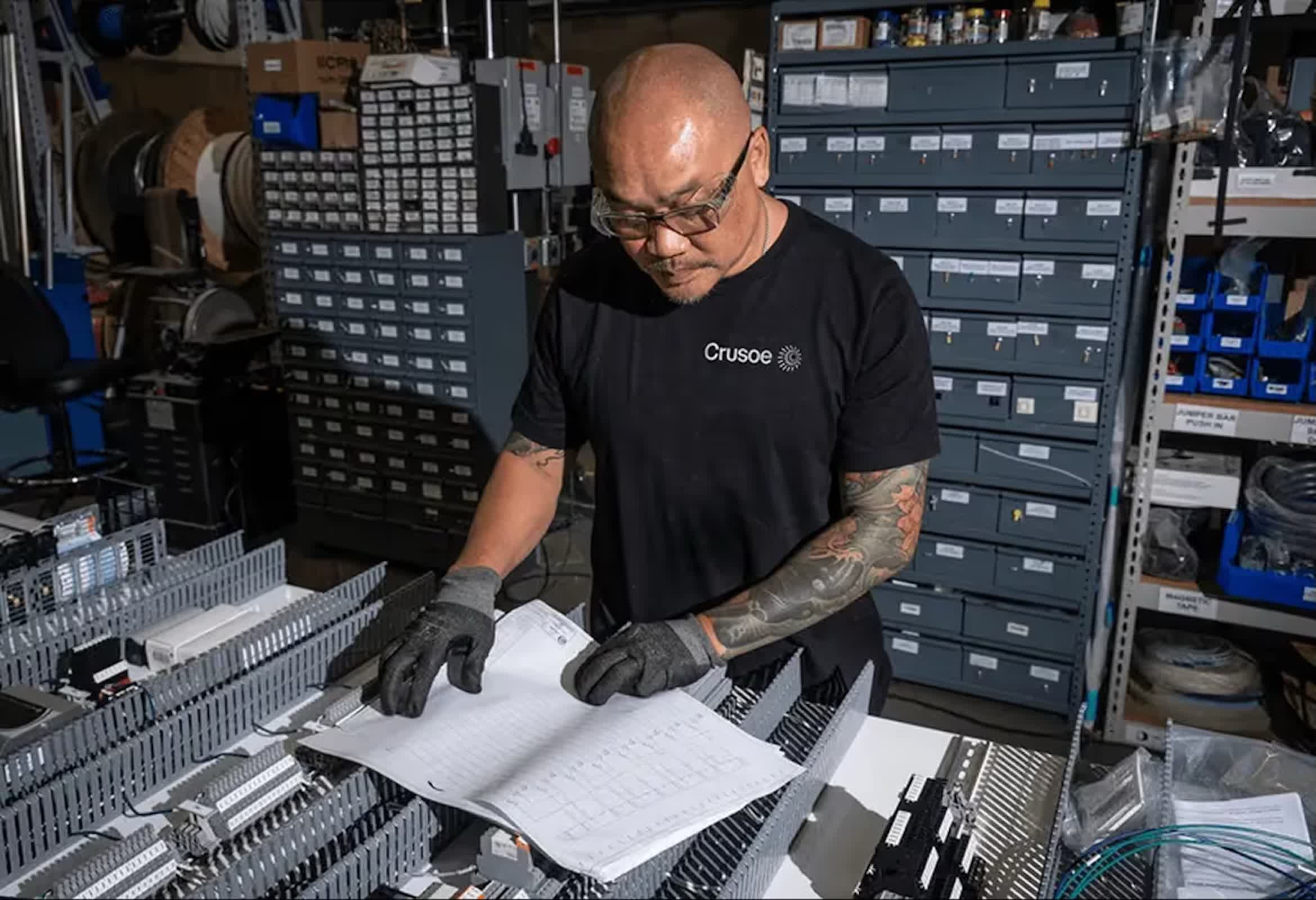
Crusoe has a manufacturing facility outside Denver that Lochmiller said could eventually produce as much as one gigawatt of Spark capacity each year. The company already operates Spark units in Reno, Nevada, using power from solar panels and former electric-vehicle batteries.

Advertisement

“We’re going to put them everywhere,” Lochmiller said.

The company is also pursuing larger developments. Crusoe initially developed eight buildings in Abilene for Oracle. It had expected to expand the campus with Oracle and OpenAI, but those companies later signed deals with other developers. Crusoe instead leased additional Abilene buildings to Microsoft.

The campus has about 2.1 gigawatts of planned power capacity, according to Lochmiller. That includes a 900-megawatt gas plant planned to supply Microsoft’s portion of the development.

Crusoe is also working with Google on a project in Armstrong County, Texas, according to people familiar with the development. It has two other projects underway in Texas and one in Missouri. Lochmiller said the company has more than six gigawatts of data-center capacity under contract.

Advertisement

Founded in 2018, Crusoe began by placing computing equipment near oil and gas sites to use excess energy. It initially served cryptocurrency miners before shifting toward AI infrastructure as demand grew for computing powered by Nvidia GPUs.

The company differs from many newer AI cloud providers because it operates across several parts of the market. It develops and leases data centers, rents GPU capacity and runs models for customers through a managed-inference business.

“We sell data centers, GPUs and tokens,” Lochmiller said.

Lochmiller said the managed-inference business grew from almost no revenue at the start of 2026 to an annualized revenue run rate of more than $100 million by the summer. Perplexity is among Crusoe’s cloud customers, he said.

Advertisement

The strategy has prompted some debate within Crusoe’s board, according to people familiar with the discussions. Some directors have argued that the company should narrow its focus. Lochmiller has maintained that operating across the stack gives Crusoe a clearer view of customer demand and helps it build infrastructure for changing workloads.

Source link

Advertisement
Continue Reading

Trending

Copyright © 2025