
Crypto World
Coinbase opens US IPO access with Oura listing

Coinbase has opened initial public offering access to eligible U.S. retail customers, starting with Oura’s $2.2 billion offering, as COIN shares gained more than 5% on Sep. 21.
Summary
- Coinbase users can request Oura shares at the IPO price before public trading begins.
- Oura is offering 50 million shares at an expected price of $40 to $44.
- Selling allocated shares within 30 days may trigger a 60-day IPO access restriction.
- COIN rose 5.7% to $205.38 following the announcement.
Coinbase IPO access starts with Oura
Coinbase said in a Sep. 21 announcement that eligible U.S. retail customers can request IPO allocations through its mobile application, beginning with smart-ring maker Oura’s public offering this week.
Customers can open the IPO section of the Coinbase app, select an active deal, and fund their accounts to cover the requested shares. Once an expected price range becomes public, users can submit a conditional offer to buy the stock.
Investors may change or cancel an offer while the order book remains open. Coinbase said customers must submit another request if the IPO price rises above a limit attached to the original offer.
After the order book closes, Coinbase will distribute the available shares using its allocation system. Demand and the number of shares provided by the underwriters will determine whether each request receives a full allocation, a partial allocation, or no shares.
Allocated stock will enter the customer’s account at the final IPO price. Trading through Coinbase will start when the shares begin changing hands on the public market.
Oura and its existing shareholders are offering 50 million shares at between $40 and $44 each, according to Reuters. At the top of the range, the deal would raise as much as $2.2 billion and give the company a fully diluted valuation of about $15.62 billion.
The maker of wearable rings plans to list on Nasdaq under the ticker OURA. Goldman Sachs, Morgan Stanley and JPMorgan are serving as the lead underwriters, while Eli Lilly has expressed interest in buying up to $100 million of shares and Dragoneer may purchase up to $300 million, Reuters reported.
Oura generated $1.21 billion in revenue during the nine months through June 30, representing a 74% increase from the same period a year earlier, according to the report.
Allocation rules favor longer holding periods
Coinbase said its allocation method will favor customers who appear more likely to retain their shares instead of selling shortly after an IPO begins trading.
Investors who dispose of allocated shares during the first 30 days may lose access to upcoming IPOs for 60 days. Repeated early sales could also result in smaller allocations or fewer opportunities compared with users who hold their shares longer.
“Our allocation algorithm prioritizes investors who believe in what they’re purchasing for the long haul,” the company said.
IPO shares will be offered through Coinbase Capital Markets, the exchange’s Financial Industry Regulatory Authority-registered broker-dealer. Securities accounts and crypto accounts will remain separate, and Securities Investor Protection Corporation coverage will not apply to digital assets or cash held with Coinbase’s crypto business.
Before requesting shares, each customer must complete a standard FINRA questionnaire designed to identify people who may face restrictions on participating in an offering.
Coinbase Capital Markets will act as a best-efforts selling-group member, collecting customer requests and sending them to Apex Clearing Corporation. The broker will act as an agent rather than an underwriter, meaning it will not purchase inventory or take the opposite side of customer orders.
Execution, custody, and clearing will be handled by Apex. Coinbase said additional IPOs will become available when its broker-dealer receives allocations from future selling groups.
IPO investing adds to Coinbase’s Everything Exchange
The IPO service adds another U.S. securities product to Coinbase’s plan to combine crypto, stocks, derivatives and other investments in one application.
“This new feature is yet another step toward growing the Everything Exchange, as our US customers now gain early exposure to high-interest companies before they hit public exchanges,” Coinbase said.
During a June product event, the company introduced an SEC-registered automated investment adviser alongside stock options, crypto options, prediction markets and equity index products. As crypto.news previously reported, Coinbase also disclosed plans for private-company derivatives tied to OpenAI and Anthropic.
Unlike the new IPO service, those pre-IPO perpetual contracts do not give investors company shares. The derivatives provide price exposure to a private business without ownership, voting rights, or a direct claim on its stock.
Coinbase began offering such contracts outside the United States with a SpaceX-linked perpetual before adding planned products connected to OpenAI and Anthropic. A June report on the contracts noted that pricing private-company derivatives can be difficult because the underlying businesses do not trade continuously on public exchanges.
Within the United States, Coinbase has also submitted registrations related to single-stock perpetual contracts. Two filings dated Sep. 1 seek to register Coinbase Derivatives as a security futures exchange and Coinbase Financial Markets as a limited-purpose security futures broker-dealer, according to a report on the filings.
Single-stock futures fall under the joint authority of the SEC and Commodity Futures Trading Commission. Coinbase has not provided a launch date, leverage limits or a final list of shares for the proposed U.S. contracts.
Outside the country, the company has already issued tokenized versions of U.S. stocks backed by securities held through an offshore structure and a regulated American broker. The products remain unavailable to U.S. persons under the current Regulation S offering, although verified overseas holders can request redemption. Coinbase CEO Brian Armstrong has said the structure is based on real underlying shares rather than synthetic exposure or unsecured debt.
COIN stock gains more than 5%
Coinbase shares rose 5.7% to $205.38 during U.S. trading on Sep. 21, adding $11.13 from the previous close. COIN opened at $205.05 and traded between $196.48 and $208.28 during the session.
Trading volume had reached 7.73 million shares by 3:15 p.m. UTC, while the company’s market capitalization stood at approximately $54.1 billion.

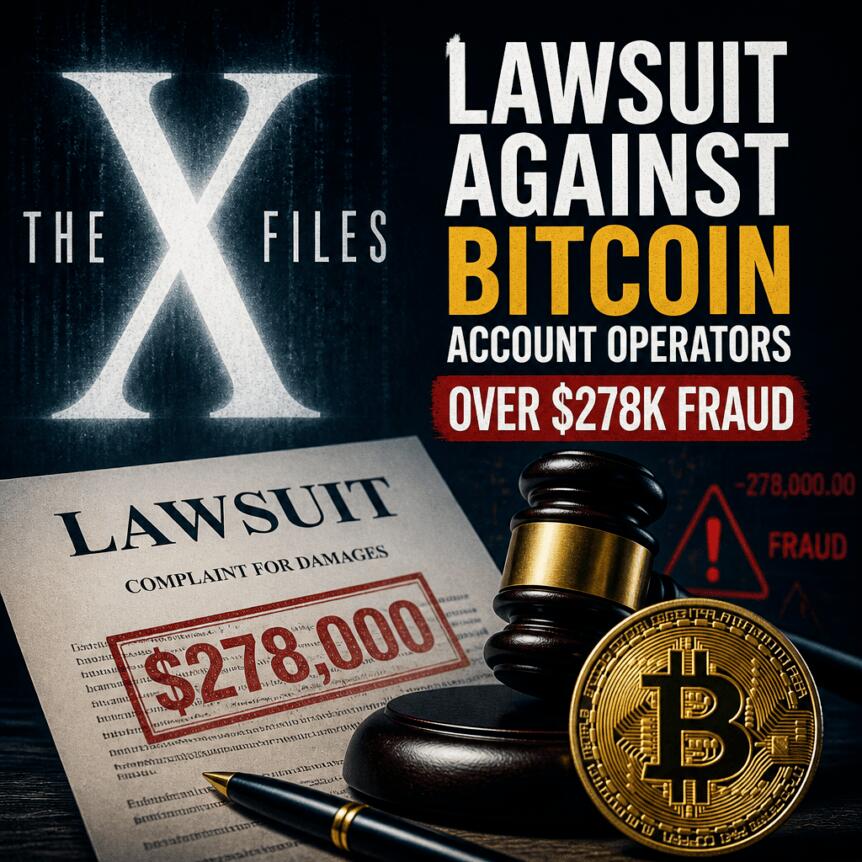
Elon Musk’s X has filed a lawsuit in the High Court of England and Wales accusing operators behind a network of Bitcoin-focused accounts of manipulating engagement to obtain payouts from the platform’s creator revenue-sharing program. In the complaint, X seeks recovery of at least £207,384 (about $278,000), alleging the defendants fraudulently received creator payments by coordinating posting and interactions to create a false impression of genuine human engagement.
The suit—submitted against Vivek Kumar Sen, Zamyang Sherpa, and unidentified account operators—points to activity that X says was designed to inflate engagement metrics used to calculate creator payouts. X also states it expects additional investigation and remediation expenses, bringing its claimed and projected losses higher when legal costs and interest are considered.
Key takeaways
- X says the defendants coordinated multiple Bitcoin-themed accounts to generate engagement in a way that looked “human” while allegedly being artificial.
- The complaint seeks recovery of at least £207,384 linked to creator revenue-sharing payouts tied to account activity between August 2023 and February 2026.
- X suspended the accounts involved on Aug. 18 after alleging creator revenue-sharing fraud and platform manipulation.
- The company’s filing argues that engagement used for payouts was artificially manufactured through reposting, liking, and near-simultaneous posting.
- X also expects at least £75,000 in investigation and remediation costs, increasing its overall loss estimate.
What X alleges in the lawsuit
According to the court filing, X claims Sen and Sherpa used coordinated networks of accounts enrolled in its creator revenue-sharing program to obtain payments from engagement-driven revenue sharing. The complaint describes a pattern in which multiple accounts allegedly boosted each other’s visibility by reposting and liking one another’s content and publishing identical or closely similar posts.
X characterizes this behavior as creating a “false appearance of genuine, human communication and interaction.” The alleged purpose, per the filing, was to influence engagement signals that the revenue-sharing system used to determine payouts to participating creators.
The lawsuit was filed in the High Court of England and Wales on Thursday, and X says the court document is available through its Transparency Center. The complaint identifies the parties and the accounts X alleges were involved.
Account links and the alleged “network”
The filing names six X profiles it says were enrolled in the creator revenue-sharing program. X identifies these accounts as: @Vivek4real_, @Bitcoin_Teddy, @saylordocs, @TrendingBitcoin, @Kalshibacktest, and @PolyBackTest.
In its complaint, X links Stripe accounts associated with the first three of those profiles to Sen, while it says the Stripe accounts tied to the other three were associated with Sherpa. X also states that the six profiles joined the program between August 2023 and February 2026.
X further alleges the scheme reached beyond those six creators. The complaint also names additional accounts—@BTC_Vibes, @MrSuperBitcoin, and @Laserlump—claiming they repeatedly liked, replied to, and reposted content from the defendants’ accounts to help manufacture engagement.
How the payouts were allegedly generated
Under the creator revenue-sharing program described in the filing, eligible creators received a share of platform revenue based on engagement produced by their posts from other users. X’s complaint argues the defendants engineered that engagement through coordinated activity designed to meet the engagement thresholds used by the program.
To illustrate the alleged mechanism, the filing points to an example dated Aug. 5. X says @Vivek4real_ and @TrendingBitcoin published substantially similar posts within 11 seconds of each other—an alignment X treats as evidence of orchestration rather than independent participation.
Timing and operational changes also feature in the narrative. X retired the revenue-sharing program on Sept. 7 and then began rolling out access to a replacement initiative, Original Content Rewards, the day after. Separately, X says it suspended the accounts involved on Aug. 18 as part of its response to what it described as creator revenue-sharing fraud and platform manipulation.
Costs, legal exposure, and what comes next
Beyond the amount targeted for recovery, X says it expects at least £75,000 in investigation and remediation costs. Including this figure, the complaint states X’s claimed and projected losses total at least £282,384, before interest and legal costs.
Cointelegraph attempted to obtain comment by reaching out to an email address linked in the filing to Sen; no response had been received by the time of publication. Sherpa could not be reached for comment.
For investors and market participants, this type of case is less about Bitcoin-specific content and more about enforcement against engagement manipulation—particularly where creator reward systems rely on user interaction metrics that can be gamed through coordinated account behavior. If the allegations are validated in court, it may reinforce scrutiny of reward programs that depend on engagement patterns, while also pressuring platforms to strengthen detection around synthetic interaction networks.
Readers should watch how the court process develops—especially whether X can substantiate its linkage between account activity and fraudulent intent—and whether the case influences how platforms design, audit, or transition creator monetization programs like Original Content Rewards.
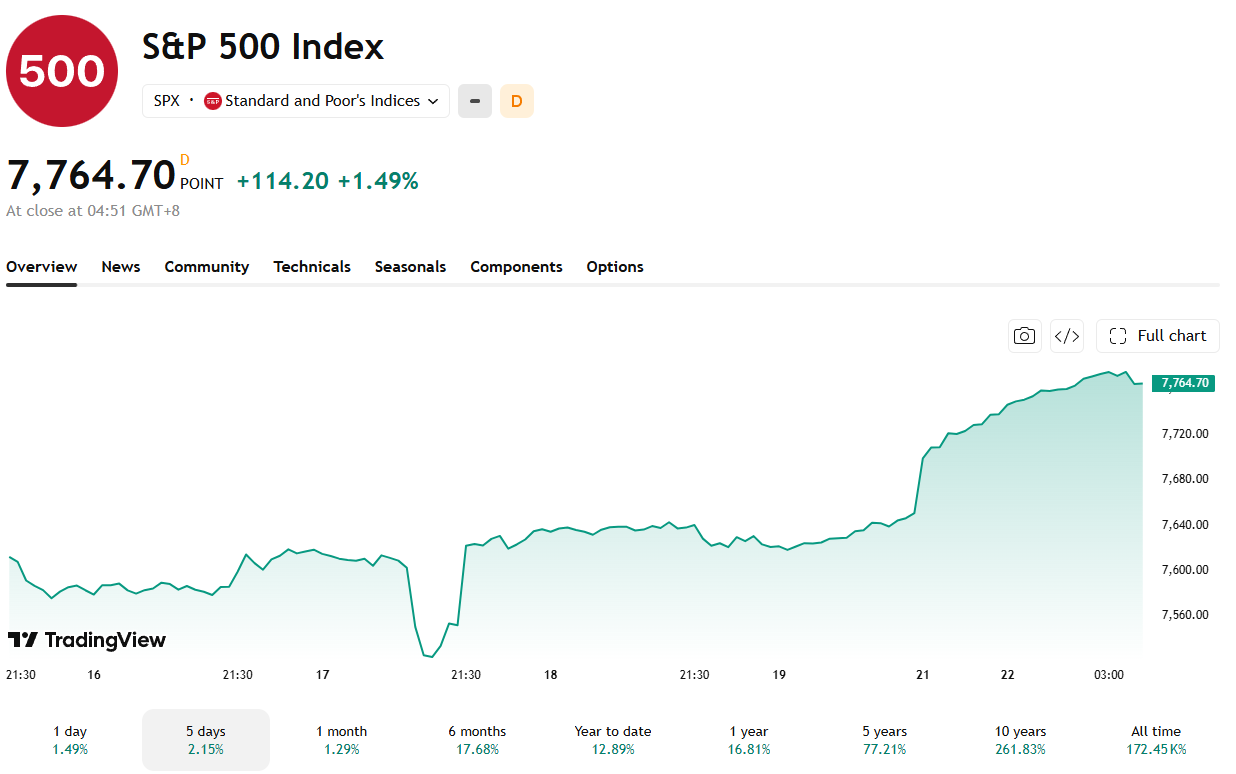
President Donald Trump and Chinese leader Xi Jinping meet in Washington this week for their second summit of the year. The meeting came at a time where Wall Street suddenly turned bullish.
The visit aims to shore up a fragile trade truce as artificial intelligence, tariffs, and Iran sanctions complicate the agenda. The outcome of the meeting is being closely watched by the markets for any more positive signs to bolster the burgeoning rally.
Markets React
Wall Street rallied Monday as AI-linked stocks led gains ahead of the summit.
The S&P 500 climbed 1.5% to post its best day since Aug. 4. The Nasdaq Composite jumped 2.3% for its first record close since June.

Intel, Advanced Micro Devices, and Qualcomm all posted double-digit percentage gains.
Oil prices fell more than 4%, and Treasury yields eased. Middle East tensions had pushed both higher in prior sessions.
The Federal Reserve raised interest rates last week for the first time in three years. Analysts pointed to persistent energy prices as a key inflation risk.
What’s Happened Between China and US Before?
A one-year truce reached in Busan, South Korea, expires Nov. 10, a week after the US election. Analysts expect a modest extension rather than a breakthrough deal this week.
Tariffs on both sides remain elevated despite last year’s de-escalation.
The effective US tariff rate on Chinese goods sits near 23%. That is among the highest levels charged to any major trading partner, according to the Penn Wharton Budget Model.
Under the Busan deal, China agreed to suspend rare earth export controls and buy US farm products. Washington eased some tariffs in return.
Treasury Secretary Scott Bessent said Monday the truce would likely hold. He pointed to progress on a proposed reciprocal tariff cut covering non-critical goods.
Artificial intelligence has emerged as a central flashpoint in the talks. Trump has pushed for unrestrained AI infrastructure growth. He wrote in a Truth Social post that the US is winning the artificial intelligence race.
“WHOEVER WINS AI, WINS! We are leading China, and all others, and will continue to do so.”
Trump, Truth Social
Bessent said the two countries discussed a dialogue to notify each other of AI-related incidents.
What to Watch
Iran sanctions loom over the talks. Washington has targeted Tehran’s financial enablers, putting China, Iran’s largest trading partner, in the spotlight.
Bessent said the two governments discussed the sanctions program over the weekend. No direct action against Beijing has been announced.
Bank of America Global Research analysts see a full one-year truce extension as the base case. They also flagged potential Chinese purchases of additional Boeing aircraft.
Deeper concessions on semiconductor access or export controls appear unlikely, the same analysts said.
With the truce set to lapse just after the US election, this week’s outcome carries weight. It will help shape market direction into year-end for AI-exposed equities and energy prices.
The post Trump, Xi Meet on S&P 500's Best Day Since Early August: Will Markets Stay Bullish? appeared first on BeInCrypto.
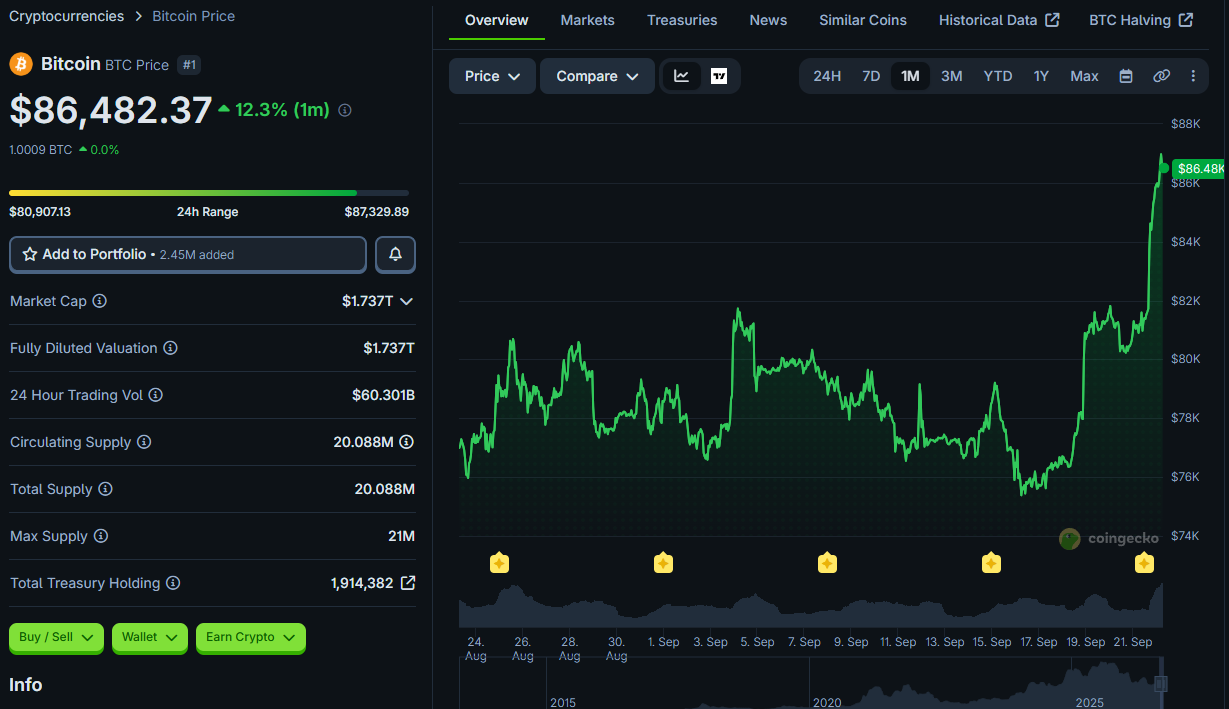
Wall Street strategists say markets have cleared several of September’s biggest fears. Bitcoin (BTC) jumped more than 6% to trade near $86,600 as risk appetite returned.
Anastasia Amoroso is chief investment strategist at Partners Group. She told CNBC’s Closing Bell that fears over oil, artificial intelligence (AI) safety and higher rates have eased. That has cleared room for stocks to climb further into year end.
Fed and BOJ Hikes Fail to Rattle Markets
The Federal Reserve and the Bank of Japan (BOJ) both raised interest rates this month. The move initially unsettled investors bracing for tighter policy.
Ryan Detrick, chief market strategist at Carson Group, said the Fed’s tone came across as more dovish than expected. That has helped extend a stretch in which the S&P 500 has gone 37 days without a 1% decline.
That steadiness echoes a market’s resilience pattern strategists have flagged recently. Investor caution, in that view, has acted as fuel rather than a warning sign.
Katie Stockton, founder of Fairlead Strategies, said mega-cap technology and semiconductor stocks are again leading the advance. She called that rotation necessary for the broader uptrend to hold.
Will the Bitcoin Rally Follow Stocks Higher?
The optimism raises a pointed question for crypto investors. Will Bitcoin ride the same wave if equities keep climbing into the fourth quarter? Or will capital rotate back toward traditional assets instead?

Bitcoin’s history offers a mixed answer. The asset has previously sat out stock rallies entirely, breaking from its usual role as a high-beta tech proxy.
For now, Bitcoin’s price move over the past day tells a different story. Traders appear to be reading a more dovish Fed as bullish for both markets at once. That reading treats it as a tailwind, not a reason to rotate away from crypto.
Whether that alignment holds may depend on earnings and Fed commentary in the coming weeks. It will also hinge on whether the Bitcoin rally can keep pace with equities into the fourth quarter.
The post As Wall Street Turns Suddenly Bullish, Questions Arise if Bitcoin Will Follow or Flop appeared first on BeInCrypto.
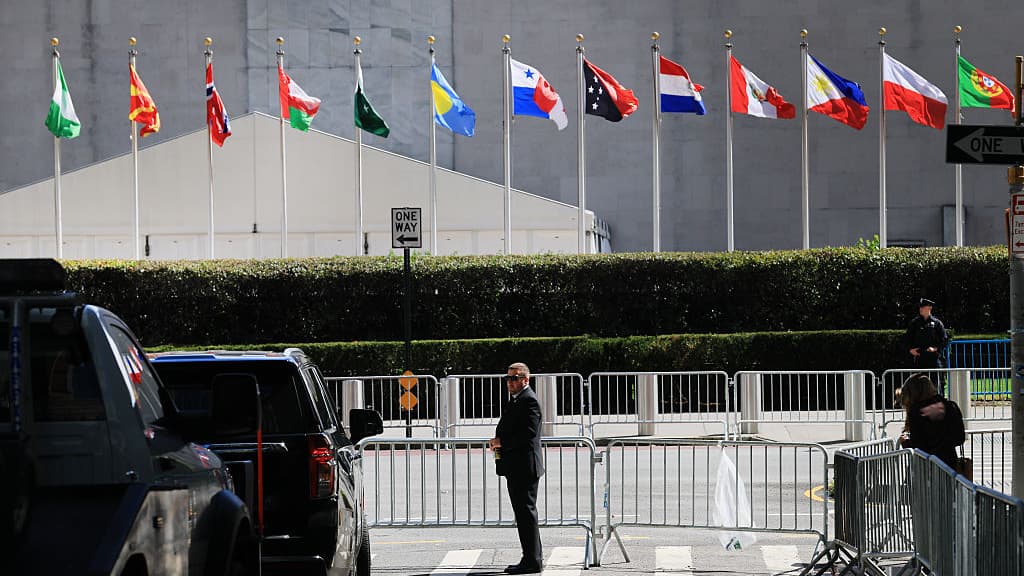
Vaez says, however, that any effort to revive peace talks between the two countries during the event will largely rely on mediation by Gulf states.
Trump is set to hold talks with leaders from the Gulf Cooperation Council—a regional alliance including Saudi Arabia, the United Arab Emirates, Qatar, Kuwait, Oman, and Bahrain—on the sidelines of the gathering in the coming days. Sources with knowledge of the anticipated meeting told Axios, which first reported the news, that discussions are expected to concern next steps in the war with Iran, with a focus on U.S. ideas for a strategy after the conflict concludes.
Vaez believes that the Qataris could play a leading role in mediation efforts, with the support of countries such as Saudi Arabia, Oman, Turkey, Pakistan, and Egypt.
“It all depends on whether the mediating countries would be able to find a mutually acceptable formula,” he says of the possibility of the U.S. and Iran coming to some kind of agreement. “Because at this moment, both sides are in a zero-sum situation in which there is literally no overlap between what the Iranians demand and what the U.S. is seeking to achieve.”
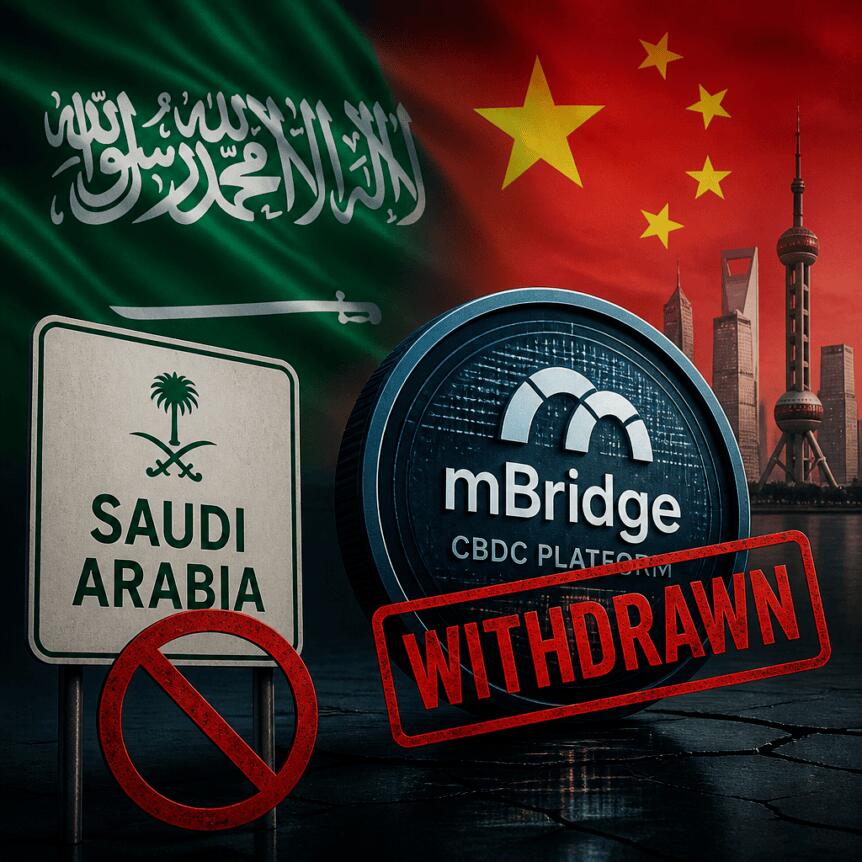
Saudi Arabia’s central bank has withdrawn from mBridge, a China-backed project aimed at enabling cross-border transactions between central banks using digital currencies on a shared infrastructure. The Financial Times reported that the Saudi Arabian Monetary Authority (SAMA) joined as a full participant in June 2024 and completed its proof of concept before ending its involvement on May 13, 2025.
SAMA said it had planned to finish participation after completing the proof-of-concept stage, according to the central bank’s statement cited by the Financial Times. The move highlights both the practical limits of CBDC experimentation and the geopolitical scrutiny that increasingly surrounds cross-border digital currency networks.
Key takeaways
- SAMA participated in mBridge as a full participant starting June 2024, then ended its involvement after completing a proof of concept on May 13, 2025.
- mBridge is designed for central banks to issue and transact in their own digital currencies on a shared ledger rather than relying on a single stablecoin.
- The BIS-led project was handed over to participating central banks after reaching a “minimum viable product” stage in October 2024.
- US policymakers have raised concerns that mBridge-like systems could become alternatives for countries seeking to evade US sanctions.
- Separately, China’s central bank research arm has emphasized monitoring stablecoins and closer international coordination as cross-border use grows.
Saudi Arabia exits after proof-of-concept milestone
According to the Financial Times, SAMA joined mBridge in June 2024 as a full participant. The central bank then concluded its participation after completing a proof of concept on May 13, 2025. The report attributes the timing to SAMA’s stated plan to end participation after the proof-of-concept phase.
While SAMA’s exit does not necessarily signal that mBridge failed as a technical exercise, it does underscore a common reality in CBDC experimentation: participation often remains bounded to specific trials, governance requirements, and policy risk management. For market observers, it raises an immediate question—whether other participating central banks will extend their roles beyond initial testing, or similarly treat mBridge as a time-limited sandbox.
How mBridge works: multiple central-bank currencies on one ledger
mBridge was established in 2021 through a collaboration between the Bank for International Settlements (BIS) Innovation Hub and central banks from China, Hong Kong, Thailand, and the United Arab Emirates. The project’s stated goal was to make cross-border payments faster and cheaper.
Crucially, mBridge does not rely on a single stablecoin. Instead, participating central banks are able to issue and transact in their own digital currencies on a shared ledger. The platform is intended to support cross-border payments and foreign exchange transactions, reflecting an architecture designed to connect sovereign digital money systems rather than substitute for them.
That design choice matters for investors and builders because it frames mBridge as an interoperability experiment among central-bank systems, not a token economy that depends on one public-asset issuer. It also affects regulatory complexity: each participating jurisdiction remains responsible for the issuance and rules around its digital currency, even if settlement logic is coordinated on shared infrastructure.
BIS handover in October 2024 and ongoing political scrutiny
Development of mBridge continued under the BIS until October 2024. At that point, the BIS handed the project over to the participating central banks after the network reached what the BIS described as a minimum viable product stage.
The BIS has previously said its departure was not politically motivated. Then-BIS General Manager Agustín Carstens made remarks on the future of finance, noting that the BIS role in such projects should not be read as a political signal. The project’s institutional transition—from BIS experimentation to central-bank operation—suggests a move from proof-of-concept toward potential operationalization, but the ultimate pace depends on each country’s policy stance and technical readiness.
Even so, mBridge has attracted attention in Washington. A 2024 report by the US-China Economic and Security Review Commission said mBridge could eventually provide an alternative cross-border settlement system for countries trying to evade US sanctions. The report reflects a wider policy concern that digital settlement platforms—particularly those involving major financial hubs—might shift clearing and settlement dynamics in ways that complicate existing sanctions regimes.
For readers tracking the intersection of crypto infrastructure and regulation, this is a key tension. Technical interoperability efforts between central banks can be framed as efficiency improvements, but they can also become political touchpoints—especially if they mature into real settlement channels.
China’s stablecoin stance keeps evolving alongside CBDC experiments
As mBridge developments unfold, China has also been shaping its approach to stablecoins in cross-border payments. In June, People’s Bank of China Research Bureau director general Wang Xin called for closer monitoring of stablecoins and central bank digital currencies in cross-border payments, along with greater international coordination. The remarks were reported by Cointelegraph.
Wang’s comments came after Chinese authorities restricted unauthorized issuance of renminbi-pegged stablecoins and tokenized real-world assets, including those issued by foreign entities. Taken together, the pattern suggests that China is not simply embracing tokenized payments; it is attempting to manage risks and jurisdictional boundaries while positioning itself for future cross-border digital settlement.
For market participants, the implication is that cross-border digital settlement will likely remain a patchwork of models—some centered on regulated sovereign issuance, others on stablecoin rails—each subject to increasingly explicit monitoring requirements. Investors should watch whether international coordination steps translate into clearer compliance frameworks for tokenized payment systems, or whether restrictions tighten further.
What to watch next
SAMA’s exit from mBridge after a defined proof-of-concept period may be only one chapter in a broader CBDC experiment cycle. The next developments to track are whether remaining central-bank participants expand their work beyond trials, and how US policy scrutiny and China’s stablecoin monitoring agenda influence the direction of cross-border digital settlement infrastructure.

Qazaqstan Investment Corporation, IT Park Ventures, Mirae Asset Venture Investment and SparkLabs Group have signed a term sheet to establish a new venture capital fund targeting Series A and later stage startups across Central Asia, with AI native companies forming a key part of its investment focus.
Summary
- SparkLabs and Mirae Asset are establishing a new venture fund targeting Series A and later stage startups across Central Asia.
- Kazakhstan’s QIC and Uzbekistan’s IT Park Ventures are set to participate as anchor investors in the fund.
- The fund will invest across sectors but will focus on AI native companies with proven business models ready to expand internationally.
- Portfolio companies will receive support for expansion into South Korea, the United States and the MENA region.
According to SparkLabs Group, the SparkLabs Mirae Silk Road Fund I LP will be managed by Mirae Asset Venture Investment and SparkLabs, while Kazakhstan’s Qazaqstan Investment Corporation and Uzbekistan’s IT Park Ventures are set to participate as anchor investors.
The agreement was signed in Seoul during state visits by the presidents of Kazakhstan and Uzbekistan to South Korea and the first Central Asia Republic of Korea Summit. The signing came during a week in which South Korea and Kazakhstan entered commercial agreements valued at $18.95 billion.
Central Asia fund will target companies ready to scale
The new fund will invest in Central Asian startups from Series A onward, focusing on companies that already have proven business models and are preparing to expand outside their home markets.
While the investment mandate is sector agnostic, SparkLabs said AI native businesses will be a focus, covering companies where artificial intelligence sits at the center of the product and business model.
Separate details released around the agreement put the fund’s initial capital at $2 million, with scope to increase it to $10 million. IT Park Ventures is considering participation as an anchor limited partner in stages, subject to legal, regulatory and corporate approvals.
Qazaqstan Investment Corporation operates as Kazakhstan’s national fund of funds under Baiterek National Managing Holding. It currently participates in 19 funds with combined capitalization of $2.8 billion, investing alongside private and international partners to bring long term capital into the country.
IT Park Ventures serves as the venture investment arm of Uzbekistan’s state technology park, backing companies from Uzbekistan and other Central Asian markets while working with international funds.
Portfolio companies selected for the Silk Road fund will gain access to the networks of SparkLabs and Mirae Asset, with support for expansion into South Korea, the United States and the Middle East and North Africa.
SparkLabs has invested in more than 600 startups across six continents since 2013, while Mirae Asset Venture Investment forms part of Mirae Asset Financial Group, which manages more than $845 billion in assets across 18 markets.
Kazakhstan’s first unicorn strengthens the AI focus
SparkLabs Mirae Silk Road co founder and General Partner Aslan Sultanov pointed to the rise of Higgsfield as evidence that technology companies built by founders from the region can reach global scale.
“Higgsfield becoming Kazakhstan’s first unicorn was a turning point,” Sultanov said. “It showed that a world class AI company can be built in Central Asia.”
Higgsfield crossed a $1 billion valuation in 2025, becoming Kazakhstan’s first technology startup to reach unicorn status. The AI video generation company was founded by Yerzat Dulat and Alex Mashrabov, a former head of generative AI at Snap.
Sultanov said more than half of Central Asia’s population is under 30 and governments across the region are investing in AI, while international venture investment remains limited compared with more established technology markets.
The Silk Road fund comes as venture firms are directing more capital toward companies that combine AI with other emerging technologies. In June, crypto.news previously reported that Framework Ventures launched a $400 million fund covering crypto, AI, robotics and energy, with roughly half of the capital already deployed at the time.
A month later, Paradigm raised $1.2 billion for its fourth fund, retaining crypto as part of its mandate while expanding investment across AI, robotics and other emerging technologies.
Kazakhstan is building out its digital asset sector
Kazakhstan has been developing other parts of its technology and digital asset market alongside its AI initiatives.
Former Coinbase chief technology officer and former Andreessen Horowitz general partner Balaji Srinivasan reopened Network School in Kazakhstan in August. The project operates as a technology community for founders and digital nomads, with plans tied to entrepreneurship, AI and startup development.
Telegram has established its first regional office in Kazakhstan and launched an AI laboratory in the country, adding another international technology company to the local ecosystem.
Government involvement has extended into digital assets. Kazakhstan announced plans in September to establish a National Cryptocurrency Analytics Center on the National Bank’s SupTech platform. The planned system will monitor fiat and crypto transactions, wallets and customer information while providing verification tools to banks, law enforcement and licensed digital asset providers.
In July, authorities approved a strategic crypto mining framework that gives qualifying large scale miners regulated access to electricity in exchange for contributing part of their mined digital assets to a state backed reserve. Companies must meet infrastructure and operational requirements before receiving strategic miner status.
Kazakhstan had earlier outlined plans to use digital assets seized by law enforcement as one source of funding for its national crypto reserve, alongside foreign currency and gold reserves.
Uzbekistan is expanding its regulated technology infrastructure
Uzbekistan, the second Central Asian anchor represented in the Silk Road fund, has been developing its own technology and digital asset framework through IT Park and other state initiatives.
The country established a regulated crypto mining zone in Karakalpakstan this year, giving approved companies access to several power sources while offering tax incentives through 2035. The framework allows miners to use grid electricity, renewable energy and hydrogen, while proceeds from the sale of mined crypto must remain within Uzbekistan’s banking system.
The Beshkala Mining Valley framework covers licensed mining operations across Karakalpakstan and permits companies to sell mined digital assets through foreign platforms under the country’s regulatory requirements. Operators can use excess heat from mining facilities for greenhouse farming.
IT Park Ventures is meanwhile using its role in the Silk Road fund to connect regional startups with investors and markets outside Central Asia. Plans surrounding the agreement include a SparkLabs office at IT Park in Tashkent to support investment activity and help portfolio companies expand internationally.
Recent venture data has shown capital increasingly concentrating in later stage companies. Crypto and blockchain startups raised $5.683 billion across 384 deals during the second quarter of 2026, with later stage companies receiving 78% of the capital deployed during the quarter, according to Galaxy Research.
The first half of 2026 produced $10.018 billion in crypto venture investment across 744 transactions, while U.S. headquartered companies accounted for 73.5% of capital invested during the second quarter.
Stripe has added Samsung Pay support to its Crypto Onramp tools for Android applications built with React Native, giving developers another wallet option for users purchasing digital assets with fiat currency.
Summary
- Stripe added Samsung Pay support to Crypto Onramp for Android developers using React Native applications.
- Version 0.75.0 introduced Samsung Pay configuration, availability checks, payment collection, and integration examples for developers.
- Stripe released version 0.75.0 on August 18, before the feature drew attention September 21 publicly.
- Stripe’s public Crypto Onramp page still lists cards, Apple Pay, Google Pay, and ACH methods.
- Version 0.77.0 is current today, adding identity fields while fixing Android Crypto Onramp presentation failures.
Stripe’s official React Native changelog shows that Samsung Pay support arrived in version 0.75.0, released on Aug. 18, 2026, nearly five weeks before the feature received fresh attention on Sept. 21. The release added configuration tools, availability checks, payment-method collection and an example implementation for Crypto Onramp on Android.
The update means React Native developers using Stripe’s Android integration can offer Samsung Pay inside supported Crypto Onramp flows, subject to the payment method being available for the user and integration. It does not represent a newly released Stripe version on Sept. 21, since the SDK has since moved through versions 0.76.0 and 0.77.0.
Stripe added Samsung Pay in its August SDK release
Version 0.75.0 introduced four Samsung Pay components for Crypto Onramp: configuration, availability checks, payment collection and example integration. Stripe listed each feature specifically under Android in the React Native release notes.
React Native lets developers maintain mobile applications for both Android and iOS using a shared JavaScript-based codebase. Stripe’s React Native SDK provides prebuilt payment interfaces and lower-level payment tools that developers can incorporate into their applications.
The SDK handles sensitive payment details through Stripe instead of requiring developers to send card information through their own servers. Its existing mobile payment support includes integrations such as Apple Pay and Google Pay, alongside standard card collection.
Samsung Pay support is specifically documented under Crypto Onramp for Android. Stripe’s release notes do not describe the feature as an iOS option, which fits Samsung Pay’s use on supported Android devices.
Crypto Onramp lets users buy assets without leaving apps
Stripe’s Crypto Onramp is designed to let users buy cryptocurrencies directly inside third-party applications instead of leaving the app for a separate exchange or payment website.
Stripe handles the payment and purchasing flow while developers embed the service inside their own products. The company says Crypto Onramp supports multiple digital assets and blockchain networks and provides crypto settlement after a successful fiat purchase.
Before the Samsung Pay SDK addition, Stripe publicly listed credit cards, debit cards, Apple Pay, Google Pay, instant ACH and regular ACH among its preferred Crypto Onramp payment methods. Its main product page still showed that list when reviewed on Sept. 21 and had not yet added Samsung Pay to the published payment-method section.
The GitHub changelog nevertheless confirms that Samsung Pay functionality exists in the Android React Native Crypto Onramp SDK. Developers can check whether Samsung Pay is available before presenting the option, then collect the selected payment method through the integration.
Stripe first introduced its fiat-to-crypto onramp in 2022 as an embeddable tool for wallets, decentralized applications and other Web3 services.
React Native developers can check Samsung Pay availability
The availability-check component is important because Samsung Pay may not be usable on every Android device or in every customer setup.
Stripe’s 0.75.0 release lets an application determine availability before attempting payment collection. The SDK then provides the configuration and payment collection functions required to incorporate Samsung Pay into the Crypto Onramp flow.
The release included example integration code, reducing the amount of custom implementation developers need to create before testing the wallet option.
Stripe did not publish separate Samsung Pay transaction fees, supported-country lists or cryptocurrency limits in the React Native changelog. Existing Crypto Onramp availability and compliance requirements therefore remain relevant when developers implement the feature.
The React Native SDK has continued changing since Samsung Pay arrived. Version 0.76.0, released Sept. 1, added the ability for Crypto Onramp users to delete a registered wallet address from their current Link account.
Version 0.77.0 followed on Sept. 16 and is the latest version listed in Stripe’s changelog. It added additional Crypto Onramp identity-document fields covering U.S. Social Security numbers, Canadian SINs, Colombian NITs and Philippine TINs.
The same release fixed an Android issue that could cause Crypto Onramp presentation failures after an Android Activity was recreated. Stripe moved Google Pay payment-method and token creation flows to Android’s Activity Result API in that release.
Version 0.77.0 also removed support for React Native’s old architecture, requiring developers using the current SDK to enable the newer architecture for Android, iOS or Expo applications.
Stripe keeps expanding crypto payment infrastructure
Samsung Pay support arrives as Stripe continues adding crypto payment products beyond its original fiat onramp.
Stripe acquired stablecoin infrastructure company Bridge in a transaction valued at approximately $1.1 billion and has since incorporated stablecoin payments, issuance and financial-account tools into its payment business.
Stripe launched Stablecoin Financial Accounts in more than 100 countries in 2025, allowing businesses to hold stablecoin balances and send digital dollars through its infrastructure.
Bridge has since expanded its regulated footprint. The Stripe-owned company secured MiCA and Electronic Money Institution authorization in Luxembourg, giving it a framework for regulated stablecoin services across the European Union.
Stripe’s crypto tools are reaching consumer applications as well. World launched its World Money product across more than 150 countries on Sept. 17, with Stripe powering the U.S. Apple Pay funding route, according to related crypto.news coverage.
Meanwhile, Stripe-owned Bridge has worked with Visa on stablecoin-backed payment cards planned for more than 100 countries by the end of 2026. Visa’s program uses Bridge infrastructure for stablecoin-linked card issuance and on-chain settlement.
Stripe has expanded further into blockchain infrastructure through Tempo, the payments-focused network developed with Paradigm. The network launched its mainnet in March alongside a machine-payment protocol designed for automated transactions, For Android developers, Samsung Pay remains an SDK-level Crypto Onramp option introduced with version 0.75.0. Stripe’s current 0.77.0 release keeps the Crypto Onramp stack active while adding identity fields and correcting Android presentation issues that appeared after Activity recreation.

SecondFi has warned holders of compromised wallets not to redeem upcoming NIGHT allocations after confirming that Midnight’s claim system requires tokens to be claimed through the original wallet address.
Summary
- SecondFi has warned affected users not to claim upcoming NIGHT allocations through compromised wallets.
- Midnight requires NIGHT allocations to be claimed from the original wallet and does not support another address.
- SecondFi said its migration and recovery tools cannot process or protect NIGHT claims.
- The June incident resulted in roughly 16.1 million ADA being stolen from 374 wallets.
According to SecondFi, some users affected by its June security incident are scheduled to claim NIGHT tokens on Sept. 22, but the wallets tied to those allocations remain permanently compromised. The company said it contacted the Midnight Foundation to explore alternative claiming options before issuing the warning.
Midnight’s current redemption system does not support moving an allocation to another wallet before it is claimed. NIGHT tokens assigned to an affected SecondFi address must therefore be redeemed through that original address, which could expose the newly claimed assets to theft.
SecondFi urged affected users not to attempt the redemption while the issue remains unresolved.
SecondFi says NIGHT claims cannot move to safe wallets
The restriction comes from the NIGHT claim process operated by the Midnight Foundation, which manages the token’s redemption rules separately from SecondFi.
SecondFi said it has no control over the NIGHT claiming mechanism and directed users seeking alternative options to the Midnight Foundation’s official channels.
The company’s own recovery tools cannot solve the problem. Its Wallet Migration Tool is designed to transfer eligible assets still held in SecondFi wallets, while a separate Asset Recovery Tool covers assets affected by the June incident.
Neither system can process or cover a NIGHT claim.
The warning expands on guidance SecondFi has previously given affected users. Its incident FAQ says recovery of NIGHT tokens redeemed to compromised wallets cannot be guaranteed because of the nature of the vulnerability. SecondFi said it was working to help affected users secure their Glacier Drop allocations and would publish verified updates through its official channels.
Midnight launched its mainnet in March as a privacy focused network using zero knowledge technology. Its NIGHT token forms part of the network’s ecosystem and was distributed to eligible users through the Glacier Drop program.
The token distribution has involved allocations that become available under scheduled redemption periods, leaving some SecondFi users with NIGHT claims tied to addresses later identified as compromised.
SecondFi wallet flaw exposed private key material
The problem stems from the SecondFi wallet security incident that occurred between June 21 and June 23.
An independent investigation commissioned by EMURGO found that approximately 16.1 million ADA, valued at roughly $2.6 million, was stolen from 374 wallets during the incident.
SecondFi traced the root cause to a cryptographic flaw in the way its wallet software generated signatures for individual transactions. A value that should have depended on secret information could, under certain conditions, be calculated using publicly available transaction data.
The flaw could allow affected private key material to be derived from information recorded on the public Cardano blockchain. Unlike a temporary application vulnerability, the exposure remains tied to the affected address and private key.
SecondFi has since patched the flaw and said wallets created with the corrected software are not known to be vulnerable.
Groom Lake, an independent forensic investigation and blockchain intelligence provider engaged by EMURGO, reviewed code, code history and public blockchain records while investigating the breach.
Its investigation found evidence of two separate attackers. The primary operation was described as sophisticated, external and well funded, with indicators being assessed for possible overlap with known DPRK linked Lazarus Group activity. A second party appeared to have targeted a separate group of wallets during the same period, with no overlap between the affected addresses identified at the time.
Recovery tools cannot protect upcoming NIGHT redemptions
Following the attack, SecondFi began separating its response into migration and recovery processes.
The wallet recovery plan initially involved engineers testing several methods to return assets safely. SecondFi moved approximately 129 million ADA to an independent third party custodian as an emergency measure while work continued.
Its Wallet Migration Tool now lets users transfer eligible ADA, Cardano native tokens and NFTs remaining in SecondFi wallets to newly created Cardano wallets with another provider. Non Cardano assets need to be moved through their respective network and wallet processes.
Affected users face a different procedure. SecondFi has been developing a recovery portal that uses zero knowledge proofs to allow users to prove ownership of compromised wallets and submit claims for assets affected by the June incident.
The NIGHT redemption sits outside both processes because the allocation has not yet entered the compromised wallet and its claiming rules are controlled by Midnight.
SecondFi’s warning means users whose allocations are tied to affected addresses currently face a choice between leaving their NIGHT allocation unclaimed or attempting to redeem it into an address whose private key may already be exposed.
The company has explicitly advised users to avoid the latter.
SecondFi is focused on asset recovery
SecondFi’s recovery work has become its main remaining operation since EMURGO confirmed in July that the wallet platform would not resume normal operations.
crypto.news previously reported that EMURGO instructed users to migrate from SecondFi even if their wallets were not identified as affected. Work on the platform was redirected toward migration, claims and recovering assets for users caught in the incident.
SecondFi has warned users not to delete its app and to retain their seed phrases because at least one of the two will be needed for the recovery process. Users who have already deleted the application need to retain their seed phrase to recover eligible assets.
The company has separately cautioned users against fake recovery services and impersonation attempts. SecondFi says it will never request private keys, recovery phrases or wallet credentials, while its official tools do not require users to sign transactions simply to check whether an address was affected.
For NIGHT holders approaching their scheduled redemption, SecondFi said questions about a safe alternative claiming method should be directed to the Midnight Foundation because changes to the claim process remain outside SecondFi’s control.
Join Our Telegram channel to stay up to date on breaking news coverage
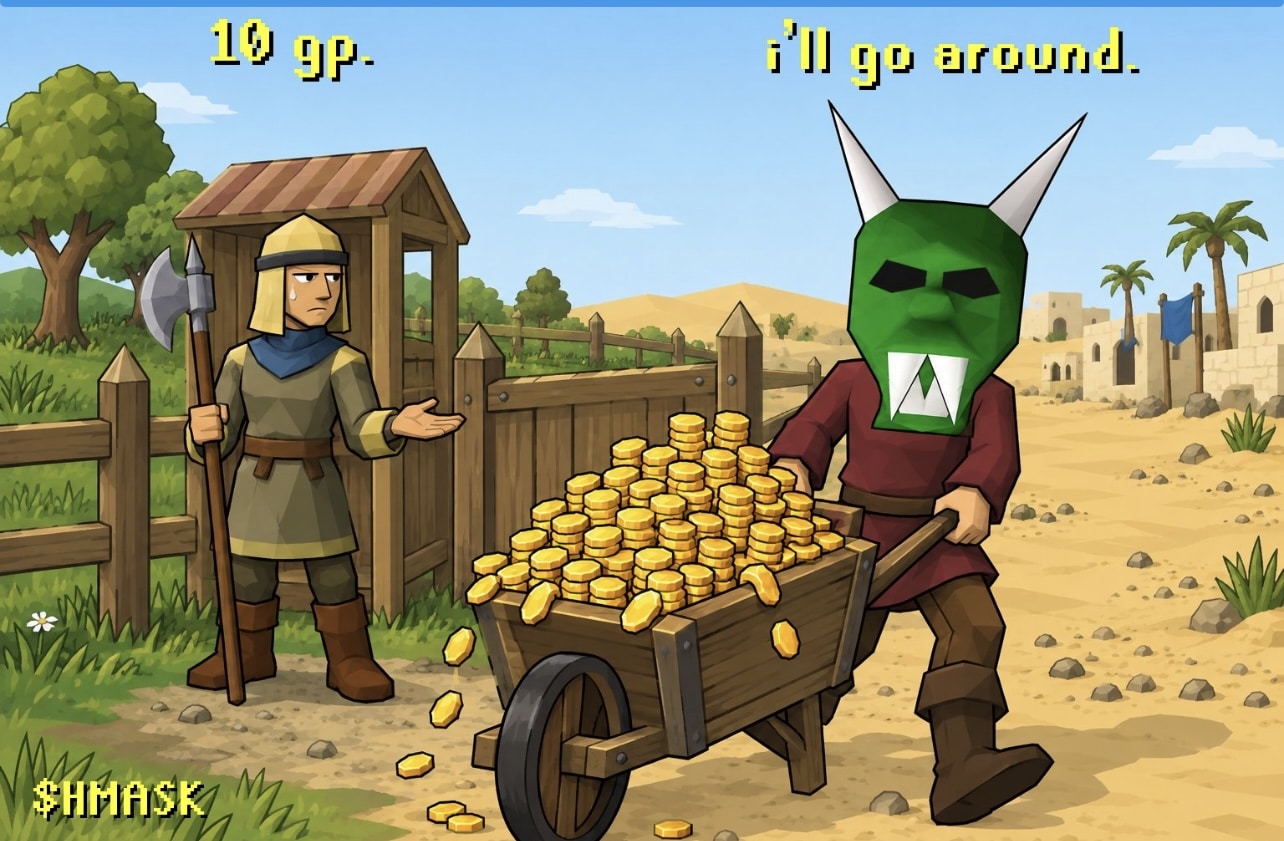
Halloween Mask (HMASK), a Solana-based meme coin inspired by the RuneScape nostalgia, recently came into the spotlight after seeing strong price action that attracted the attention of one of the crypto industry’s analysts, Jacob Crypto Bury.
Jacob, who is very popular on Discord and YouTube, spoke at length about the token in a series of posts on X, highlighting it as an asset to keep an eye on and potentially the best crypto to buy now.
The token exploded 1430% on the daily timeframe to hit the $0.0001 level, easily making it one of the strongest gainers in today’s broad-based rally
At the same time, its market cap has surged from $10k to $148k at press time, delivering nearly 14x returns to early buyers.
Jacob feels HMASK’s performance is a signal that the RuneScape meme coin narrative remains alive ahead of a new bull market.
GM crypto😎
20X for early buyers – INSANE
Woke up and saw $HMASK absolutely flying today, what a surprise!
Spotted this gem at $5-10k MC and naturally with a meme coin you get sceptical for a while
The RuneScape meme coin narrative remains strong @HMASKonchain is rallying… pic.twitter.com/AD58Q0MquH
— Jacob Crypto Bury (@BuryCrypto) September 21, 2026
What is Halloween Mask?
Halloween Mask is a meme coin that draws its identity from RuneScape, a gaming culture known for its deep-rooted nostalgia and iconic virtual economy.
This narrative has existed for decades before meme coin projects began to adopt it, tapping into its established internet community to gain traction.
So, it’s clear that much of Halloween Mask’s popularity comes from this phenomenon.
And like many other RunScape-themed meme coins such as $GNOME, $GP and $BOND, $HMASK doesn’t promise any practical utility.
Rather, its value is heavily influenced by social media trends and community sentiment.
One more unique advantage is that the project is built entirely for holders – no team allocation at launch, no dev buy.
The official mint and every market move are public on Solana, an attribute that has helped broaden its appeal within the investing community. Its contract address is EPJQWq9AUPsAEnT9ZU1vdj7mk1woAHt4QwaYdZLoPprb.
Halloween Mask Price Prediction
Halloween Mask has been on fire today, registering some of the strongest bounces amid the broad-based rally.
It is currently trading at $0.0001, up by 138% on the four-hour timeframe.
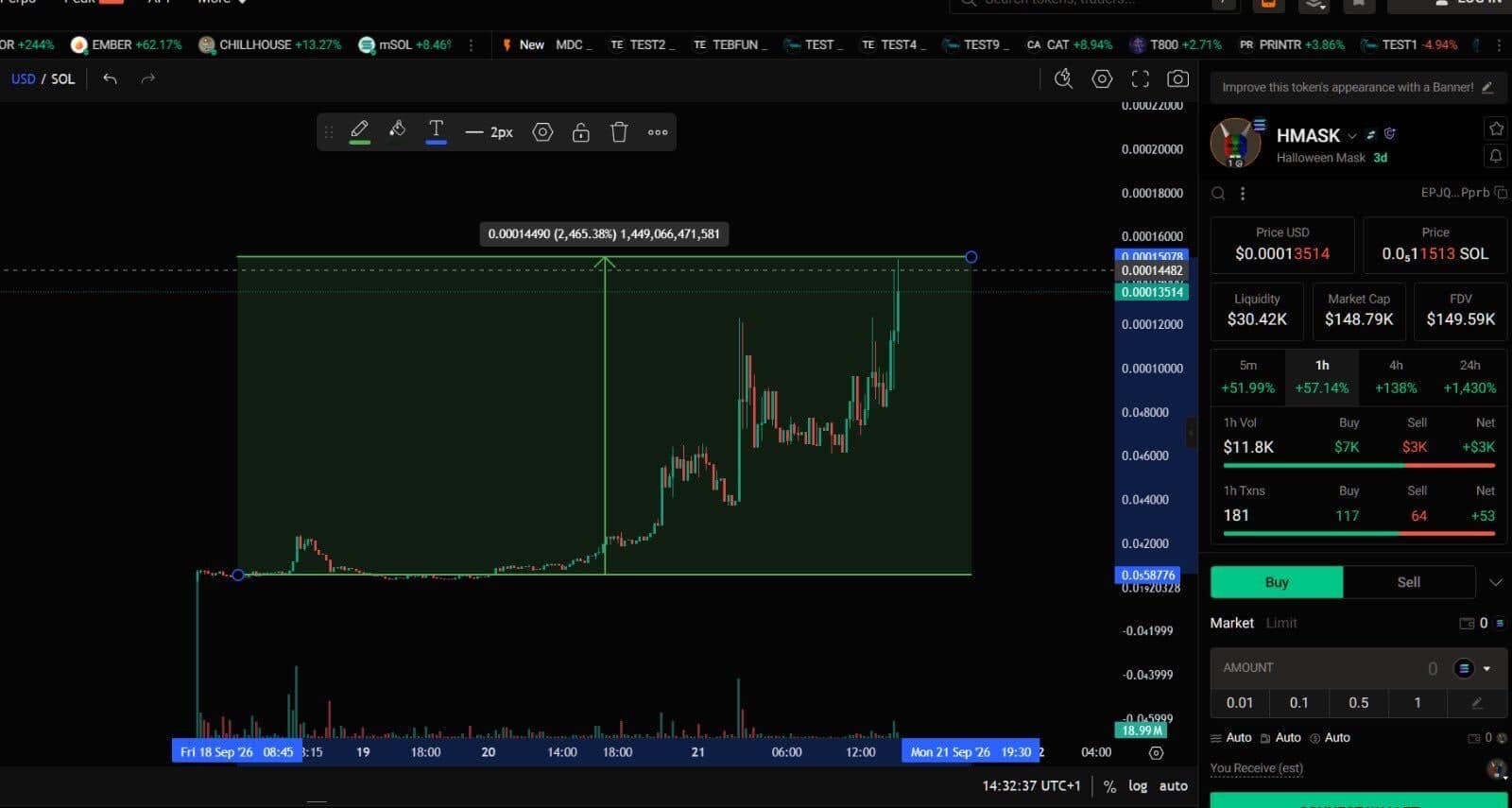
The meme coin’s recent rally is marked by soaring token holders and heavy whale investment. According to data from Birdeye, it boasts 428 holders at press time, an impressive figure for a relatively new token.
A breakout above its current level could pave the way for new highs. A rejection could result in more downside volatility, which could offer a better entry point for sidelined investors.
Unsurprisingly, prominent analysts are optimistic about its prospects. Popular Discord analyst Jacob Bury projects that the meme coin could be a top project to watch in 2026, considering its relatively small market cap.
All eyes will also be on Bitcoin, which has already crossed the $87k level and is targeting $90k. In the event that it sustains its bullish trajectory, there is a strong possibility that Halloween Mask will hit the $500k market cap milestone before the end of September.
What this means is that new buyers at today’s price would see 8x returns on their investments, which underscores its attractiveness to whales and retailers alike.
Is HMASK the Best Crypto to Buy Now?
Given Halloween Mask’s potential for growth in terms of value, it could be listed as the best crypto to buy now, particularly for short-term returns.
Smart money investors could also bet on other high-potential low-caps, out of which Bitcoin Hyper stands out.
A high-performance Layer-2 network, this project seeks to tackle the network congestion issues on Bitcoin without sacrificing security.
So far, it has raised nearly $35 million in its ICO, thanks to continuous investments from both short and long-term investors.
Crypto experts believe it is highly undervalued during its presale and could offer substantial returns when it eventually arrives on exchanges.
Join Our Telegram channel to stay up to date on breaking news coverage

Strategy has spent $174 million repurchasing STRC preferred shares and $75.7 million buying Bitcoin, directing 2.3 times more cash toward its stock buyback even as it resumed BTC accumulation.
Summary
- Strategy spent $174 million on STRC shares and $75.7 million on 950 BTC.
- The company used existing cash while making no sales through its stock offering programs.
- Bitcoin holdings reached 846,000 BTC, acquired for a combined $63.80 billion.
- Strategy also paid $57.4 million in preferred dividends and debt interest.
Strategy divides $307.1 million among three uses
Strategy’s Sep. 21 Form 8-K, filed with the U.S. Securities and Exchange Commission, showed that the company deployed $307.1 million across Bitcoin, preferred-share repurchases, dividends and interest between Sep. 14 and Sep. 20.
Of that amount, $174 million went toward repurchasing STRC shares, while $75.7 million funded the purchase of 950 BTC. Another $57.4 million came from the company’s USD Reserve to cover preferred-stock dividends and interest on outstanding debt.
The transactions mean nearly 57% of the disclosed weekly spending went to STRC repurchases. Bitcoin accounted for about 25%, while dividends and interest represented the remaining 19%.
Strategy bought 1,751,480 STRC shares during the period at an average price of approximately $99.34 each. The variable-rate Series A perpetual Stretch preferred stock carries a $100 stated amount and trades on the Nasdaq Global Select Market.
After the latest transactions, $876 million remained available under the company’s digital credit securities repurchase program. Strategy also retained its separate authorization to repurchase up to $1 billion of MSTR common stock.
The company made no sales through its MSTR, STRF, STRC, STRK, or STRD at-the-market offering programs during the week. As a result, it financed both the Bitcoin acquisition and STRC buyback with existing cash rather than proceeds from newly issued shares.
STRC remains the larger cash commitment
Strategy has continued buying back STRC after spending $139.3 million on 1,420,467 shares between Sep. 8 and Sep. 13. The company paid an average of about $98.06 per share during that earlier period, according to its previous SEC filing.
Combined, the two latest weekly disclosures show $313.3 million spent repurchasing STRC shares. Bitcoin purchases over the same two periods totaled $75.7 million because the company made no BTC transactions during the first week.
As previously reported by crypto.news, Strategy entered the latest reporting period after two weeks without buying or selling Bitcoin or issuing shares. Instead, the company had used cash to reduce the amount of STRC outstanding.
The latest filing changes part of that position because Bitcoin purchases have resumed. STRC, however, continued to receive more than twice as much cash as BTC during the reporting week.
Strategy’s February financing plans presented preferred stock as a way to raise money for additional Bitcoin purchases while offering a dividend-based product to investors. The company’s preferred-stock funding plan added another financing route beyond common-stock sales and convertible debt.
Its more recent filings show cash moving in the opposite direction through STRC repurchases. Each share bought back reduces the amount of preferred stock on which Strategy may need to pay future dividends.
The company’s SEC filings identify STRC as variable-rate perpetual preferred stock. Because the security has no maturity date, its dividend obligation can continue for as long as the shares remain outstanding, subject to the terms of the offering.
Strategy buys 950 Bitcoin without issuing shares
Alongside the STRC transaction, Strategy acquired 950 BTC for $75.7 million, including fees and expenses. The average purchase price was $79,670 per coin.
The acquisition lifted its Bitcoin holdings from 845,050 BTC to 846,000 BTC. Strategy reported an aggregate acquisition cost of $63.80 billion and an average purchase price of approximately $75,416 per BTC.
Bitcoin’s price recovery placed the latest acquisition above the company’s total cost basis but below BTC’s subsequent market price. Bitcoin traded above $85,000 during Monday trading after rebounding from lows near $75,000 earlier in September.
At $85,000 per coin, Strategy’s 846,000 BTC would carry a market value of about $71.91 billion. The position’s value changes with Bitcoin’s market price and does not represent realized proceeds.
Before the latest transaction, Strategy last purchased Bitcoin on Aug. 31. The company acquired 4,603 BTC for approximately $370 million at an average price of $80,318, ending a buying pause that had lasted about ten weeks.
The company has also sold Bitcoin during 2026 under a capital plan that allows BTC to be used for funding obligations and managing liquidity. During the week ending Aug. 3, Strategy sold 1,638 BTC for $104.73 million while raising $290.6 million through MSTR sales and repurchasing $81.2 million of STRC.
That earlier Bitcoin sale lowered its holdings to 842,138 BTC at the time. Purchases made since then have taken the position to a new disclosed total of 846,000 BTC.
Strategy’s cash balances fall after weekly spending
Following the Bitcoin and STRC purchases, Strategy’s USD Cash balance declined from $1.30 billion on Sep. 13 to $1.05 billion on Sep. 20. The approximately $250 million reduction corresponds with the $174 million STRC repurchase and $75.7 million Bitcoin acquisition.
Its separate USD Reserve fell from $5.10 billion to $5.04 billion after the company used $57.4 million for dividends and interest. Strategy maintains the reserve to support payments on its preferred stock and outstanding debt.
USD Cash serves a different role under the company’s capital framework. Management may use it to acquire Bitcoin, add money to the USD Reserve, repurchase securities, or cover other corporate purposes.
For U.S. investors, the weekly filing separates the financial exposure carried by Strategy’s Nasdaq-listed securities. MSTR holders own common equity, while STRC and the company’s other preferred shares carry their own dividend rates, payment terms, and positions within the capital structure.
The filing lists MSTR, STRC, STRF, STRK and STRD as securities registered under Section 12(b) of the Securities Exchange Act. All five classes trade on the Nasdaq Global Select Market.
TriplePoint Private Venture Credit announces leadership changes and board reduction

X Files Lawsuit Against Bitcoin Account Operators Over $278K Fraud

ICE Agent Shoots DoorDash Delivery Driver In Austin, Texas




-

 Fashion3 days ago
Weekend Open Thread: Talbots – Corporette.com
-

 Tech1 day ago
Researchers escape OpenAI Codex sandbox to run commands on host
-

 Crypto World3 days ago
Circle launches Arc Studio AI agent for building onchain apps
-

 Crypto World6 days ago
Robinhood engineers charged over $50K crypto scheme
-
 Crypto World7 days ago
Kraken Lets xStocks Holders Earn Yield Through DeFi
-
 NewsBeat3 days ago
Trump says US has reached an agreement to take permanent control of Greenland’s security
-

 Crypto World3 days ago
Bitcoin price breaks channel as RSI climbs to 63
-

 Crypto World5 days ago
US Charges Robinhood Engineers Over Crypto Listing Trades
-

 Crypto World6 days ago
What Is the Status of the U.S.-Iran Peace Talks? Here's What Both Sides Are Saying
-

 Crypto World1 day ago
Who Needs CLARITY Anyway? ARB Could See 70X Increase: Hodler’s Digest
-
 Crypto World7 days ago
NVIDIA Analysis: Attempted Rising Wedge Breakout Amid Pressure on the AI Sector
-

 Tech6 days ago
Webb’s IC 348 Mosaic Includes Two-Jupiter Dwarfs, Twin Jets, and a Nursery Still Making Worlds
-

 Crypto World3 days ago
Trading Bitcoin on Robinhood? Why 2% Spread Has Traders Worried
-

 Crypto World3 days ago
World Money launches in 150+ countries with Stripe
-

 Crypto World4 days ago
Silver prices recover quickly, hitting weekly high today
-

 Entertainment6 days ago
Big Brother Update: Melody Explodes at Drew as Illness Sweeps BB28 House
-
 NewsBeat3 days ago
US was ‘on brink of war’ with China over false AI report of nukes moving in Middle East
-

 Crypto World7 days ago
DOJ Seeks to Seize $61M in Iran Oil Funds From Binance Accounts It Vouched For
-

 Crypto World4 days ago
Mortgage and refinance interest rates today, Thursday, September 17, 2026
-

 Business6 days ago
Federal Reserve expected to hike interest rates 25 basis points at FOMC meeting
You must be logged in to post a comment Login