Connect with us

Business

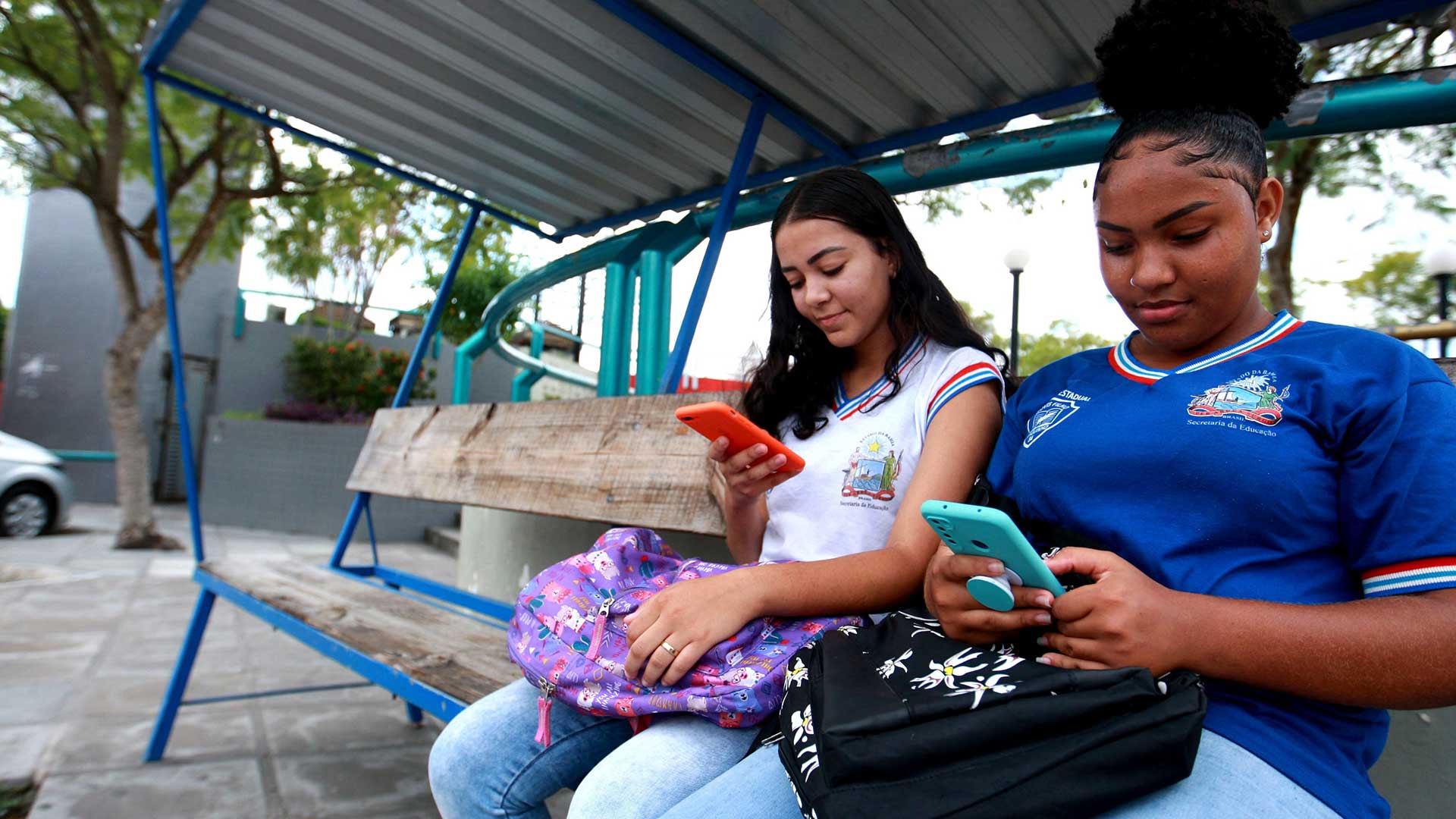
WhatsApp harmful content alerts top apps outside U16 ban

Published

on

WhatsApp harmful content alerts top apps outside U16 ban

WhatsApp accounted for 71.82 per cent of harmful-content alerts from identified apps outside the Government’s planned under-16 social-media ban, according to data published by phone safety software maker SafetyMode.

The company analysed an anonymous, random sample of more than 25,000 content blocks from children’s phones running its parental-control software. It removed detections in apps the Government has indicated will be covered by the ban before calculating each app’s share.

On that basis, WhatsApp’s share was more than six times the 11.36 per cent recorded for the Google app, which ranked second. Chrome accounted for 4.21 per cent, Messages for 3.86 per cent and Spotify for 1.72 per cent.

Free newsletters
Advertisement

The stories that matter to UK business, straight to your inbox.

Advertisement

Messaging apps outside the ban

The Government confirmed in its announcement of the under-16 ban on 15 June that the restrictions will cover platforms including Snapchat, TikTok, YouTube, Instagram, Facebook and X. Messaging services such as WhatsApp and Signal will not be included. The Government has said regulations are expected to go before Parliament before Christmas, with the protections coming into force in spring 2027.

SafetyMode said its data suggests a large volume of potentially harmful material is being detected inside apps viewed as traditional messaging services rather than social-media platforms.

The company said that, aside from the messages themselves, some of the material may be shared from social media, viewed through links or browsers, or appear because WhatsApp contains a number of social features that many parents may be unaware of.

Breakdown by category

According to SafetyMode, WhatsApp accounted for 78.86 per cent of triggers involving swearing, slurs and other banned words among the identified apps outside the planned ban. It was responsible for 58.60 per cent of obscenity triggers, 80.12 per cent of harassment triggers and 39.88 per cent of nudity triggers.

Advertisement

When WhatsApp and Android Messages are combined, the company said, messaging services accounted for 63.48 per cent of obscenity triggers and 87.39 per cent of harassment triggers.

Bertie Aspinall, co-founder of SafetyMode, said: “SafetyMode and OtherPhone users are typically more aware of the harms of social media and abstain from letting their kids have access. Which indicates that WhatsApp is an app perceived to be OK, but may be where harm is being viewed. Google, Chrome and spotify are two others that parents may not instinctively think of in the same way as social media.”

He added: “According to the actual blocks taking place on our children’s phones, WhatsApp is the main culprit for detected issues outside the apps covered by the planned ban. It accounted for more harmful-content triggers than every other app combined, and was top of every category.”

Aspinall pointed to changes in how messaging apps work. “One issue is the scope creep of many apps acting more like social media, with statuses, anonymised channels, live streams and vertical-scroll video content. All of which open the door to more problematic content,” he said.

Advertisement

“Another is that all it takes is one person with access to share harmful content from one platform to another for a seemingly safe app like WhatsApp to change. It makes it even worse that links and content from elsewhere on the internet can be viewed without really leaving that environment.”

He said: “We are seeing that children do not experience online harm according to neat app categories. They do not care whether an app is officially classed as social media, private messaging or entertainment. If images or links can be shared or viewed, the risk is there.”

Aspinall added: “A social-media ban may stop some children accessing TikTok, Instagram or YouTube, but it may not stop harmful content being shared and viewed in WhatsApp groups, channels and private messages.

“This is why protection has to work across the entire phone. App-by-app regulation will always leave gaps, and children will inevitably find them.”

Advertisement

SafetyMode’s software operates across the device, detecting and blocking potentially harmful content regardless of which app is being used.

The ban has drawn criticism from other quarters since it was confirmed, with industry groups questioning whether age limits alone will work. Prime Minister Sir Keir Starmer had earlier reversed his opposition to Australia-style age restrictions before the policy was set out.

Amy Ingham
About the author

Amy Ingham

Amy Ingham is a reporter at Business Matters, covering UK business news with a focus on breaking news, business policy, late payments and insolvency. She joined the magazine in 2026 after completing the NCTJ Diploma in Journalism at Harlow College’s journalism school. Her recent reporting includes British Steel’s nationalisation and its impact on SME suppliers, the decline in late payments by large firms, and Insolvency Service director disqualifications. Reach her at aingham@cbmeg.co.uk.

Advertisement

Advertisement
Continue Reading
Click to comment

You must be logged in to post a comment Login

Leave a Reply

Business

Royal Caribbean nears deal to take 50% equity stake in Sandals

Published

on

Royal Caribbean nears deal to take 50% equity stake in Sandals
Royal Caribbean reportedly nearing deal to take 50% stake in Sandals for $3 billion

Royal Caribbean is nearing a $3 billion deal to take a 50% equity stake in Sandals, according to a person familiar with the matter.

The person, who spoke on the condition of anonymity to discuss talks that had not been made public, said the deal values the Caribbean resort chain at $6 billion and that it was expected to boost for growth for both companies. The talks are ongoing and may not result in a deal, according to the person.

Royal Caribbean shares fell roughly 6% on the news, which was first reported by the Financial Times.

The company’s stock is down roughly 25% over the past year after it trimmed its forecasts for revenue growth on softer demand for European sailings.

Advertisement

The cruise company has been intent on diversifying beyond cruises and becoming a leader overall in vacations. Royal Caribbean already operates several private destinations for its cruise passengers, but it has been working to build out those land offerings.

Sandals and its Beaches brand, meanwhile, have more than a dozen properties across the Caribbean, which would give Royal Caribbean a foothold in all-inclusive options.

Neither Royal Caribbean nor Sandals immediately responded to a request for comment.

Choose CNBC as your preferred source on Google and never miss a moment from the most trusted name in business news.
Advertisement
Continue Reading

Business

Are vet bills about to get cheaper?

Published

on

A man sat on a brown, leather chair holding up his small, brown dog.

Written prescription fees from vets will be capped at £21 as part of a raft of changes that practices will be legally required to bring in over the coming months.

Continue Reading

Business

Coveo Solutions Inc. (CVO:CA) Shareholder/Analyst Call Prepared Remarks Transcript

Published

on

OneWater Marine Inc. (ONEW) Q1 2026 Earnings Call Transcript

Laurent Simoneau
Founder, CEO & Director

Good morning, ladies and gentlemen, and welcome to Coveo’s 2026 Annual General Meeting of Shareholders. [Foreign Language] My name is Laurent Simoneau, and I’m the CEO of the company. With me here on this virtual AGM are Karine Hamel, the Chief Financial Officer of Coveo; and Jérémie Ste-Marie, the Senior Vice President and General Counsel of Coveo as well as a number of other executives and Board members in listen-only mode.

As you know, the company has decided this year again to conduct this meeting virtually by way of a live broadcast — live webcast, I should say, to maximize shareholder attendance for those who would be unable to attend the meeting in person. By holding the meeting virtually, all shareholders, regardless of their geographic location, have an equal opportunity to participate in real time and vote at the meeting.

Dear shareholders, this is an exciting time for Coveo. Over the past several years, the conversation around enterprise AI has evolved rapidly from experimentation to implementation and now to operational scale. Organizations are no longer asking whether AI can deliver value. They are focused on deploying AI across critical business processes while ensuring reliability, governance, measurable outcomes, and return on investment. As AI becomes increasingly embedded in the enterprise, the ability to deliver trusted and contextually relevant information has become foundational.

Advertisement

We believe this shift plays directly to Coveo’s strengths. Against this backdrop, fiscal 2026 was another year of strong execution. We continue to expand our SaaS business, strengthened relationships with strategic customers and drove meaningful adoption of our AI relevance platform across both

Continue Reading

Business

Fall Officially Begins Tonight With the Equinox, But Warmer Than Normal Temperatures Are Still Expected

Published

on

Solar Panel

The astronomical start of fall arrives Tuesday evening in the Northern Hemisphere, but forecasters say anyone hoping the change of season will bring a quick break from summer heat may be disappointed, with a combination of El Niño and climate change expected to keep U.S. temperatures running warmer than normal through much of the fall.

The autumnal equinox occurs precisely at 8:05 p.m. Eastern time Tuesday, the moment worldwide at which the sun sits directly above the equator. The word “equinox” derives from the Latin words “aequalis” and “nox,” meaning equal night, reflecting the fact that day and night run roughly 12 hours each across most of the world on the date of the equinox. That near-equal split will hold true Tuesday from as far north as Utqiagvik, Alaska, formerly known as Barrow and located north of the Arctic Circle, all the way south to Wellington, New Zealand, the world’s southernmost capital city. Day and night are not precisely equal on the equinox itself because Earth’s atmosphere refracts, or bends, sunlight in a way that creates the appearance of slightly more daylight than technically exists at that moment, meaning the date when day and night are truly equal in length typically falls a few days after the equinox.

South of the equator, Tuesday’s equinox marks the opposite seasonal transition, signaling the start of spring rather than fall for the Southern Hemisphere.

Despite the equinox’s popular association with the “official” start of fall, no government or scientific administrative body actually designates it as such in any formal capacity. Meteorologists and climatologists instead define the seasons differently, using a system based on the calendar month rather than the sun’s position relative to Earth. Under that meteorological definition, summer, defined as the three hottest months of the year in the Northern Hemisphere, June, July and August, officially ended on August 31, more than three weeks before Tuesday’s astronomical equinox.

Advertisement

Whichever definition is used to mark summer’s end, forecasters say the transition into fall is unlikely to bring the kind of widespread cooldown many might expect. Zach Labe, a climate scientist at Climate Central, said the combination of a developing El Niño pattern and the broader effects of human-caused climate change points toward a high likelihood of warmer-than-normal temperatures continuing through the fall season. “The summer that is just ending was one for the record books, with record ocean heat, the warmest month recorded globally,” Labe said. “And extremes like these could be just the beginning.”

According to Labe, global temperature records set this summer were substantial in scope. Worldwide, August ranked as the warmest such month on record when accounting for combined land and ocean temperatures, and the U.S. national average for August set records across all three standard measurements: maximum, average and minimum temperatures. Labe explained that El Niño’s influence on those record-setting figures stems from the pattern’s underlying mechanics. “El Niño is all about redistributing heat,” he said, describing how the phenomenon transfers stored ocean heat into the atmosphere, a process that tends to provide an additional boost to global temperatures during El Niño years.

The scale of this year’s warmth has extended well beyond isolated regional records. Through August, the average temperature across 2026 has ranked as the warmest on record for the contiguous United States as a whole, according to Labe. At the state level, Arizona, California, Colorado, Montana, Nevada, New Mexico, Oklahoma, Texas, Utah and Wyoming have each recorded their warmest start to a calendar year on record through the same period.

Even as El Niño draws attention for its role in this year’s heat, Labe was careful to emphasize that the underlying driver of the broader warming trend lies elsewhere. “It’s not really El Niño that is breaking those records,” he said. “It’s human-caused climate change. That’s what’s driving the long-term trend.” Federal forecasters expect the current El Niño pattern to peak later this fall or in early winter and to rank among the strongest El Niño events on record, though Labe cautioned against assuming that intensity alone will translate directly into more severe weather impacts. “That doesn’t always necessarily mean stronger impacts,” he said. “Every El Niño has its own flavor. Each one is different. And so that’s really important to keep in mind.”

Advertisement

For much of the country, the practical upshot of Tuesday’s equinox is likely to be more symbolic than immediately noticeable in day-to-day weather. While the sun’s angle and daylight hours will continue shifting toward shorter days and longer nights as the Northern Hemisphere moves deeper into fall, the broader warmth that has defined this record summer appears poised to linger well past the calendar’s official seasonal marker, according to the forecast outlined by Labe and other climate researchers tracking the current pattern.

With El Niño’s peak still weeks or months away and the long-term warming trend tied to climate change continuing to shape baseline temperature expectations nationwide, forecasters say residents across much of the United States should prepare for a fall season that, despite its astronomical start Tuesday evening, may look and feel considerably warmer than the season traditionally has in years past.

Continue Reading

Business

Auto Parts Retailers Can Turn the Corner | Markets A.M. for Sept. 21

Published

on

Auto Parts Retailers Can Turn the Corner | Markets A.M. for Sept. 21
Spencer Jakab

Stocks appear set to start the week on a strong footing and oil futures are lower for the fourth day in a row. Hope is rising for diplomatic progress on the Middle East as world leaders convene for the U.N. General Assembly in New York. Chinese leader Xi Jinping’s state visit to Washington this week is also stoking cautious optimism on trade issues. One of my WSJ colleagues will write tomorrow’s newsletter. I’ll be back with you on Wednesday.

​📈 Follow our live markets data and coverage.

Copyright ©2026 Dow Jones & Company, Inc. All Rights Reserved. 87990cbe856818d5eddac44c7b1cdeb8

Continue Reading

Business

Royal Caribbean Cruises stock hits 52-week low at 231.97 USD

Published

on


Royal Caribbean Cruises stock hits 52-week low at 231.97 USD

Continue Reading

Business

AutoZone, Inc. (AZO) Q4 2026 Earnings Call Transcript

Published

on

OneWater Marine Inc. (ONEW) Q1 2026 Earnings Call Transcript