
Crypto World
Stock Market Today: Nasdaq Dips After Hitting Record Highs; Micron, Sandisk Sink In Buy Zones (Live Coverage)

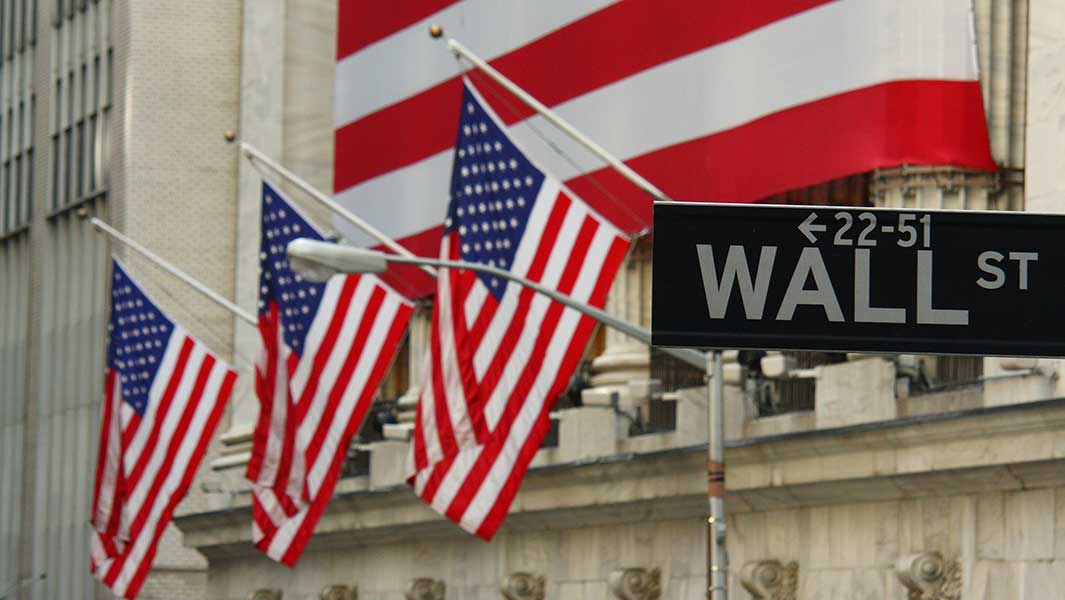
Futures for major stock indexes dropped Wednesday in the wake of the Nasdaq’s record high. Meanwhile, Micron Technology (MU) and Sandisk (SNDK) were early losers on the stock market today after the memory chip leaders hit buy points. Ahead of Wednesday’s open, Nasdaq-100 futures moved down 0.3% in early morning trading. The Nasdaq hit both a record intraday and closing…
Copyright ©2026 Investor’s Business Daily, LLC. All rights reserved. 87990cbe856818d5eddac44c7b1cdeb8


Cosmos Hub validators halted block production on Tuesday, following a governance attack on Neutron which initially led to losses of $9.5 million.
Of that sum, the attacker was only able to extract around 20%, with the remainder stuck on halted networks.
With block production having resumed since 12:00 UTC on Wednesday, Cosmos Hub was ultimately offline for over 24 hours after halting at block height 33086740.
This latest incident marks the third security scare in recent months for the wider Cosmos ecosystem.
Read more: Cosmos Labs under fire over disclosure of bug affecting four blockchains
The governance attack
A malicious “AI Agent Takeover” governance proposal was passed on Neutron, a Cosmos-ecosystem chain which entered its “long-term maintenance phase” earlier this year.
The proposal allowed the attacker to take control of two Neutron-based applications, Astroport and Drop, and drain contracts of assets worth $4.9 million and $4.4 million, respectively.
The attacker reportedly spent just $20,199 to acquire the NTRN tokens needed to pass the vote.
The response
In response to the attack, Neutron was paused, trapping an estimated $5 million worth of assets.
In turn, Cosmos Hub validators also decided to halt, securing a further 1.2 million ATOM (over $2.2 million) held in the attacker’s address. The scheduled restart is set to include a queued refund of the trapped ATOM balance.
The hacker’s Ethereum address holds $1.8 million, with a further transaction worth over $300,000 pending on THORChain, though this is set to be refunded to the Cosmos Hub address upon restart.
Read more: Osmosis took 74 days to discover 40-BTC Nomic exploit
Chaos in the Cosmos ecosystem
In late August, a bug in Cosmos Labs’ Cosmos EVM module led to protocol-level exploits on four blockchains.
The disclosure procedure was heavily criticised by one of the affected projects, KiiChain, which dubbed the loss of $9 million worth of its KII tokens “avoidable.”
Earlier this month, Cosmos-based exchange Osmosis revealed that a June 25 exploit of Nomic’s bridge had minted 40 nBTC (worth $3.6 million at the time) out of thin air, which left Osmosis’ allBTC partially (36%) unbacked.
Got a tip? Send us an email securely via Protos Leaks. For more informed news and investigations, follow us on X, Bluesky, and Google News, or subscribe to our YouTube channel.

Polo’s intensification is similar to Hurricane Otis in 2023, which had a wind increase of 105 miles per hour in 21 hours before it made landfall near Acapulco, Mexico, and caused catastrophic damage.
What areas are affected?
Mexican authorities have issued tropical storm warnings along Mexico’s southwestern coast from Tecpan de Galeana to Punta San Telmo. The outer bands of Polo are expected to bring heavy rainfall of 3 to 6 inches to coastal Guerrero and Michoacán through Thursday, with isolated totals of up to 8 inches of rainfall. Coastal areas in Oaxaca, Colima, and Jalisco could receive 2 to 4 inches of rain.
The rainfall could cause severe flooding and mudslides, especially in steep terrain. The region has suffered devastating flooding caused by a hurricane before, when Hurricane John produced deadly flash flooding and mudslides in southern Mexico in September 2024.
Swells from Polo are also expected to produce life-threatening surf and rip currents, as well as coastal flooding, along the southwestern Mexican coast over the next few days. Waters off Baja California Sur are forecast to see worsening conditions beginning Friday, as the hurricane may approach the southern tip of the Baja Peninsula over the weekend, according to the U.S. Embassy in Mexico. NWS San Diego said there could be “at least some peripheral impacts” to parts of Southern California, including possible coastal flooding and erosion.
Crypto World
Bitcoin trades near $85,000 ahead of one of deribit’s largest options expiries of the year
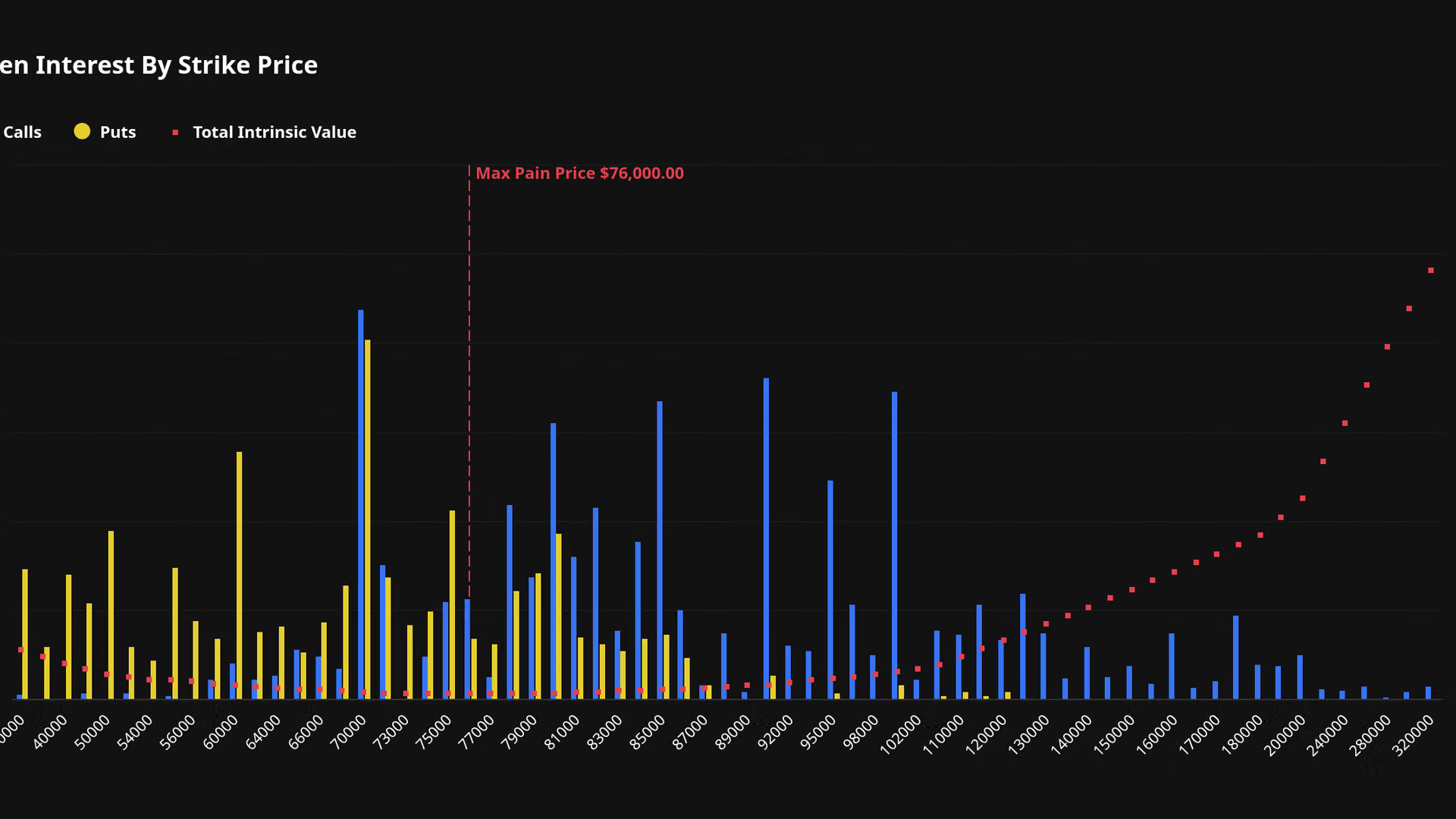
Open interest distribution
The $70,000 strike has more open contracts than any other, and the calls there are now deep in the money.
Strijers said 55% of the $9.4 billion in call bets due for expiry are in the money. Puts, meanwhile, are mostly worthless right now. Put it together, and about a third of the entire $15.9 billion book is currently in the money.
Being in the money means being in profit – an option has intrinsic value because the market price is on the favorable side of its strike. For a call, the underlying trades above the strike; for a put, it trades below the strike.
Deribit’s Chief Commercial Officer Jean-David Péquignot said the distribution of open interest across strike prices suggests a price floor around $75,000.
“Open interest is heavily concentrated at the $85k, $90k, $95k, and $100k call strikes, underscoring the ongoing influence of large 85k/90k/95k/100k call condor blocks that are now coming directly into play as spot trades near $86k,” Péquignot said. “On the put side, defensive structures are firmly anchored at $60k, $70k, and $75k, creating a multi-layered support floor.”
What happens on the expiry day?
Friday’s expiry could breed some market turbulence, eventually resetting the trading range for BTC’s spot price.
That’s because, as per Strijers, the expiry will clear out dealer-related hedging.
Crypto World
Nexo says 67% of affluent investors own crypto but few make it central to wealth plans – CoinJournal


- Nexo says 67% of affluent investors own crypto, but integration stays low.
- Security, fees and platform complexity emerge as key barriers to adoption.
- US investors show deepest crypto integration despite lower ownership rates.
High-net-worth investors are increasingly buying crypto, but many are still reluctant to make it a major part of their long-term wealth plans, according to a new Nexo survey.
The report found that 67% of affluent investors across the US, UK and Argentina already own crypto. However, security concerns, high fees and complicated platforms are stopping many from using digital assets for retirement planning or replacing traditional investments.
Nexo published its “Future of Digital Wealth 2026” report on September 23 after surveying 1,000 affluent investors. Its new Crypto Integration Index, which measures how deeply crypto is incorporated into investors’ finances, produced an average score of 4.83 out of 10.
Ownership outpaces deeper integration
Nexo said a score near the survey average of 4.83 represents a small, short-horizon crypto position outside retirement planning.
Only 4.7% of surveyed investors scored seven or higher, a level Nexo describes as structurally integrated, where crypto has replaced a traditional asset and forms part of longer-term financial planning.
The report found that just under 20% of respondents expect crypto to become their number-one personal wealth driver over the next decade, ahead of salary, equities and real estate.
More than 40% are already invested in crypto without yet building wealth with it.
“Once an investor gets past the risk perception stage, what’s left is security, fees, and platform user-friendliness and capabilities – the same things we’ve spent years building Nexo to solve,” said Neil Steinhardt, COO, Nexo US.
That’s the gap between owning crypto and actually building wealth with it, and it’s exactly where our platform is designed to meet investors.
Integration also varies by market. Argentina had the highest ownership rate at 74%, but a CII score of 4.62. The US had the lowest ownership at 62%, but the deepest integration with a score of 5.07.
The UK recorded 65% ownership and a CII score of 4.75.
Platform trust becomes the next hurdle
The report said crypto integration peaks among investors aged 35 to 44, with 28% treating digital assets as a core retirement asset.
Investors aged 18 to 25 reported the highest ownership and conviction, with more than 90% holding crypto, but only 2% maintaining a horizon of 10 years or longer.
Among structurally integrated investors with CII scores of seven or more, reported frictions shift towards platform trust. Security concerns were cited by 36%, high fees by 34%, and platform complexity by 28%.
“Risk perception used to be the story in every crypto adoption survey. It isn’t anymore,” said Iliya Kalchev, analyst at Nexo.
In our data, risk perception barely separates investors who’ve built real wealth with crypto from those who haven’t — what actually divides them is whether they’ve substituted crypto for a traditional asset and folded it into retirement planning. For affluent investors it’s the planning and the smoothness of operating with that crypto that remains to be resolved.
The survey was fielded in February and March 2026 through Attest. Respondents needed at least $100,000 in liquid assets in the US and UK, or $40,000 in Argentina, thresholds calibrated to capture the top 25% to 30% of each market by investable wealth.

Nearly 67% of affluent investors across the United States, United Kingdom and Argentina have owned crypto, but only 4.7% have integrated digital assets deeply into long term financial planning, according to new research from Nexo.
Summary
- Nearly 67% of affluent investors surveyed by Nexo own crypto, but the average Crypto Integration Index score was only 4.83 out of 10.
- Only 4.7% scored 7 or higher, indicating that relatively few respondents had incorporated crypto deeply into long term financial and retirement planning.
- Security concerns, high fees and platform complexity were the main sources of friction among investors with the highest levels of crypto integration.
- The U.S. recorded the deepest crypto integration despite having the lowest ownership rate among the three markets surveyed.
According to Nexo’s “The Future of Digital Wealth 2026” report, operational issues such as security, fees and platform complexity remain among the main obstacles for wealthy investors who already have exposure to digital assets.
The survey covered 1,000 affluent investors and was conducted through research platform Attest in February and March 2026. Participants needed at least $100,000 in liquid assets in the U.S. and U.K. or $40,000 in Argentina, thresholds Nexo said were designed to capture the top 25% to 30% of investors by investable wealth in each market.
Ownership was relatively common across the surveyed group, with roughly two thirds holding digital assets. Their average score on Nexo’s new Crypto Integration Index, however, stood at 4.83 out of 10.
High net worth investors own crypto but integration remains limited
Nexo created the Crypto Integration Index to measure how digital assets fit into an investor’s finances beyond simply owning them. Five factors receive equal weight: allocation size, holding period, retirement integration, replacement of traditional assets and perceived risk.
An investor near the 4.83 survey average typically held a relatively small crypto position over a shorter period and had not incorporated it into retirement planning, according to the report.
Only 4.7% of respondents scored 7 or higher. Nexo classified investors above that threshold as “Structurally Integrated,” meaning their crypto positions had generally been held for longer, had replaced part of a traditional asset allocation and had become part of long term financial planning.
Conviction appeared stronger than the integration figures suggested. Just under 20% of surveyed investors expected crypto to become their biggest source of personal wealth creation over the coming decade, ahead of salary, equities and real estate.
Nexo analyst Iliya Kalchev said perceived risk showed little difference between investors who had deeply incorporated crypto into their finances and those who had not.
“What actually divides them is whether they’ve substituted crypto for a traditional asset and folded it into retirement planning,” Kalchev said.
Interest in incorporating crypto into managed portfolios has appeared elsewhere in the wealth industry. A September poll shared by Bitwise found that 60% of participating wealth managers planned to allocate to crypto within a year, even though 67% said they were not currently allocating client portfolios to digital assets.
Security and fees remain hurdles for deeper crypto use
Operational concerns became more prominent among investors who had already reached higher levels of crypto integration.
Among respondents with Crypto Integration Index scores of 7 or above, 36% cited security concerns as a source of friction. High fees were identified by 34%, while 28% pointed to platform complexity.
Neil Steinhardt, chief operating officer of Nexo US, said investors who had moved beyond concerns about crypto risk were left dealing with security, fees and the usability and capabilities of platforms.
“That’s the gap between owning crypto and actually building wealth with it,” Steinhardt said.
Nexo has a commercial interest in digital asset adoption and acknowledged that relationship in disclosures accompanying the research. The company said its index is intended as a descriptive measure of reported investor behavior and that a higher score should not be interpreted as representing a better investment strategy.
The findings come after Nexo returned to the U.S. market in February 2026 with investment, trading and crypto backed credit products. As crypto.news previously reported, the relaunch followed the company’s earlier withdrawal from the country and a $45 million settlement with U.S. regulators over its Earn Interest Product.
Nexo said at the time that its U.S. services would operate through a compliance focused framework. CryptoQuant data cited around the relaunch showed the platform had issued approximately $863 million in loans during the preceding year.
Crypto integration differs across the U.S., U.K. and Argentina
Nexo’s survey found a gap between the number of people holding crypto in each market and the extent to which those holdings had become part of their financial planning.
Argentina recorded the highest ownership rate at 74%, but its average Crypto Integration Index score was 4.62, the lowest of the three markets surveyed.
The United States produced the opposite pattern. Crypto ownership among U.S. respondents stood at 62%, below Argentina and the U.K., while its average integration score of 5.07 was the highest.
U.K. respondents sat between the two markets, with 65% reporting crypto ownership and an average index score of 4.75.
Argentina has become a growing market for Nexo itself. The company launched a crypto card in the country in July, allowing eligible clients to make purchases in Argentine pesos and U.S. dollars while using digital assets through the platform. Nexo appointed Andres Ondarra as general manager for Argentina as part of the same expansion.
The country’s relatively high ownership rate comes as the number of people holding crypto worldwide continues to grow. Henley & Partners estimated in September that global crypto ownership had reached 742 million people, even as the number of crypto millionaires fell to 135,694 during a contraction in the digital asset market.
Retirement use peaks among investors aged 35 to 44
Age produced another gap between crypto ownership and its use in long term financial planning.
Investors between 35 and 44 recorded the deepest retirement integration in Nexo’s survey, with 28% treating crypto as a core retirement asset.
Respondents between 18 and 25 showed the highest ownership and conviction. More than 90% in the age group reported holding crypto, but only 2% said they had an investment horizon of at least 10 years.
Retirement products have gradually begun opening additional routes for digital asset exposure in some markets. Coinbase Australia, for example, added support for self managed super funds in May, allowing eligible trustees to incorporate crypto exposure into self directed retirement portfolios.
Institutional surveys have shown a similar willingness to consider larger allocations. A Coinbase and EY Parthenon survey of 351 institutional investors conducted in January found 73% planned to raise their digital asset allocations during 2026, while 74% expected crypto prices to rise.
Nexo cautioned that its own findings apply specifically to the surveyed group of affluent investors and are not representative of the general population. The company described crypto assets as speculative and high risk instruments whose value can fall rapidly, while advising investors to seek independent financial, legal and tax advice before making investment decisions.
Morgan Stanley’s Andrew Slimmon sees opportunities in Japanese and European markets, with European defense among the sectors he flagged.
Slimmon said the impression that these markets lag the US because earnings often disappoint is starting to change.
What Morgan Stanley Sees in Japan and Europe
Slimmon, a managing director and senior portfolio manager at Morgan Stanley Investment Management, spoke on CNBC’s Squawk Box Asia. He tied Japan’s gains this year to companies lifting their earnings estimates.
“We’re seeing a lot of companies that are starting to revise up their earnings estimates, and that’s, I think, the key reason why the Japanese stock market has done well this year,” Slimmon said.
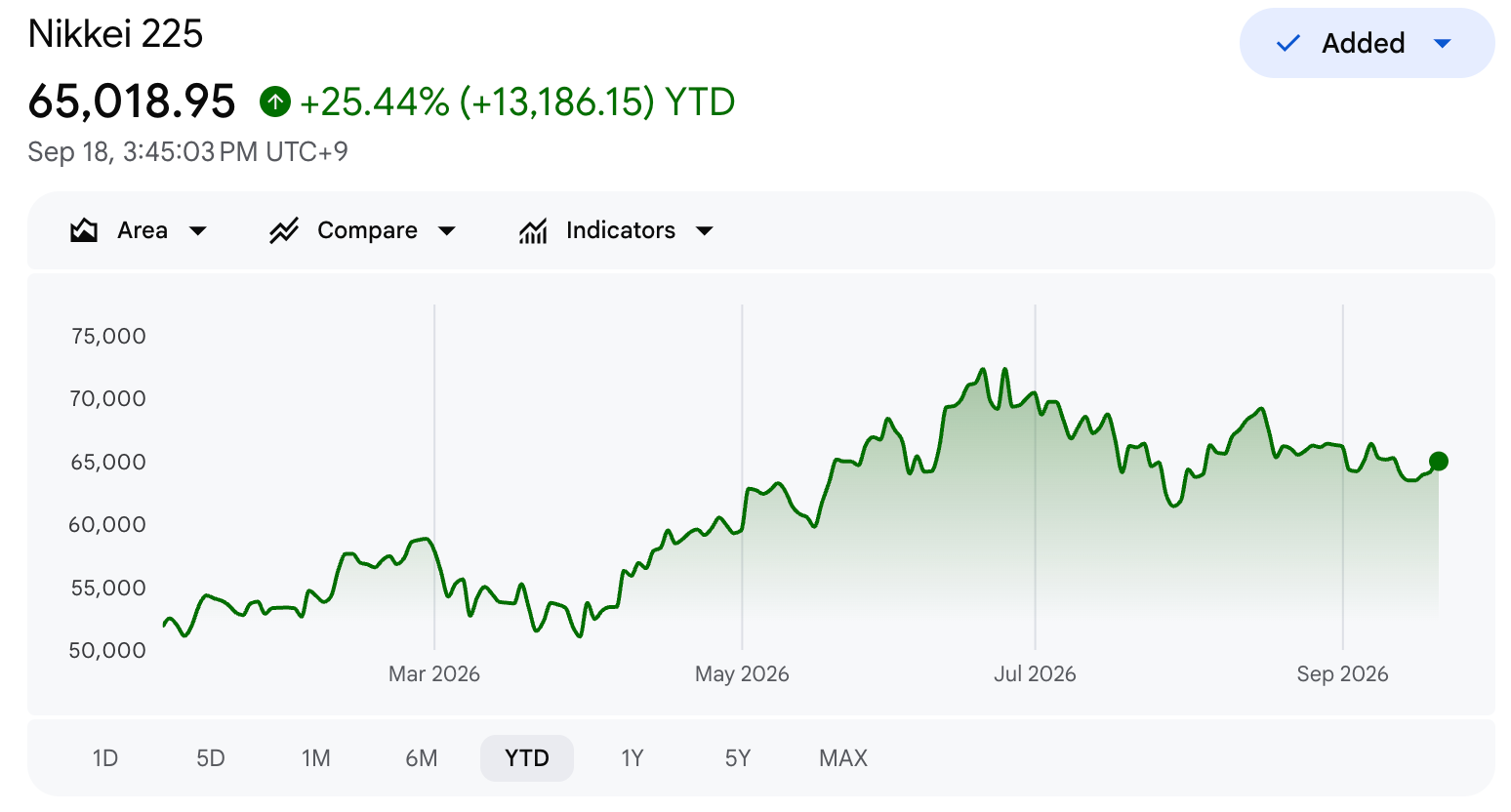
The Nikkei 225 shows how well Japanese stocks have done this year. By September 18, Japan’s Nikkei 225 had climbed about 25.4% this year but remained nearly 12% below its June record.

In Europe, he described defense as one opportunity but not the only one. He pointed to banks, which he said have performed very well. The STOXX Europe 600 Banks index had gained about 18.87% this year.
Slimmon said stocks are now responding to the growth reflected in earnings revisions. He called this the key difference between 2026 and earlier years.
On US stocks, he also said narrow breadth, where a few mega-caps carry the US index, is not always bad for stocks. The Federal Reserve lifted its benchmark rate by 25 basis points to a target range of 3.75%-4% on September 16. It was the central bank’s first increase since 2023.
Slimmon noted the market sat at the same level on the day of the hike as in May.
“So the market has really treaded water here for a while, and yet earnings revisions keep going up. They keep going up. So I think that’s why I remain optimistic,” he added.
Mike Wilson, the bank’s chief US equity strategist, struck a more cautious tone earlier this month. He warned that oil climbing to $120 or higher within 30 days would drain liquidity.
Follow us on X to get the latest news as it happens
Morgan Stanley Swaps 12 of 15 Picks After a Market-Beating Year
The bank’s equity strategists have also made their own call on US stocks. Morgan Stanley refreshed its Vintage Values list, a roster of stocks to hold for 12 months. The 2026 edition returned 32.12% between September 9, 2025, and September 11, 2026.
The S&P 500 gained nearly 19% over the same period, leaving the list 1,316 basis points ahead. Strategists narrowed more than 50 analyst recommendations to 15 for the 2027 edition. Only Amazon, McKesson, and Visa carry over from last year.
Alphabet, Apple, Coca-Cola, Dynatrace, Eli Lilly, Equinix, and Williams Companies are among the new picks.
Of the 15 stocks, 60% sit in the top two quality tiers, compared with 56% for the S&P 500. The list also trades at a premium to the broad market on most valuation measures.
Equity strategist Michelle Weaver said the list has an “anti-momentum” tilt.
“The stocks on the list are not simply stocks that have worked recently but rather ones our analysts have identified for their strong bottom-up drivers,” Weaver wrote in a note.
Several of the new picks have lagged this year. Eli Lilly was up about 8% as of September 21, trailing the S&P 500’s 13% gain.
Alphabet had risen 10.5% through September 15, leaving it behind the index. Coca-Cola has been the standout, gaining roughly 28%.
That mix lines up with Weaver’s point that the list is not simply a collection of recent winners. Third-quarter earnings season, which includes Coca-Cola’s report on October 20, will offer an early read on whether those company-level drivers hold up.
Subscribe to our YouTube channel to watch leaders and journalists provide expert insights
The post Why Morgan Stanley Sees Opportunities in Japanese and European Stocks appeared first on BeInCrypto.
President Donald Trump’s stock accounts sold shares of Strategy, formerly MicroStrategy, in June and early July. Weeks later, they bought back in, and the stock has since climbed about 83%.
A federal ethics filing posted on September 22 shows the buyback. MicroStrategy is the largest company holder of Bitcoin, so its shares tend to rise and fall with the pioneer crypto.
How Trump’s Accounts Sold, Then Bought Back
The selling started in June. The accounts sold Strategy shares on June 23 and June 24, worth $16,002 to $65,000 combined. Two days later, the stock hit $81.81 during trading, its lowest point of the summer.
The new Office of Government Ethics report covers 1,156 trades from July, according to Bitcoin Treasuries. It shows one more Strategy sale, worth $1,001 to $15,000, on July 8.
Then the buying began. The accounts bought $1,001 to $15,000 of the stock on July 24 and $50,001 to $100,000 on July 27. The form gives dollar ranges, not share counts or prices.
Strategy closed at $91.67 on July 24 and at $167.33 on September 22, according to StockAnalysis. That is the 83% gain flagged by Quiver Quantitative, which tracks politicians’ trades.
The larger July 27 purchase, made at a $98.65 close, is up about 70%.
Why Strategy Stock Was Cheap in July
In July, Strategy had stopped buying Bitcoin. Its holdings sat at 843,775 BTC while it sold new shares to raise cash.
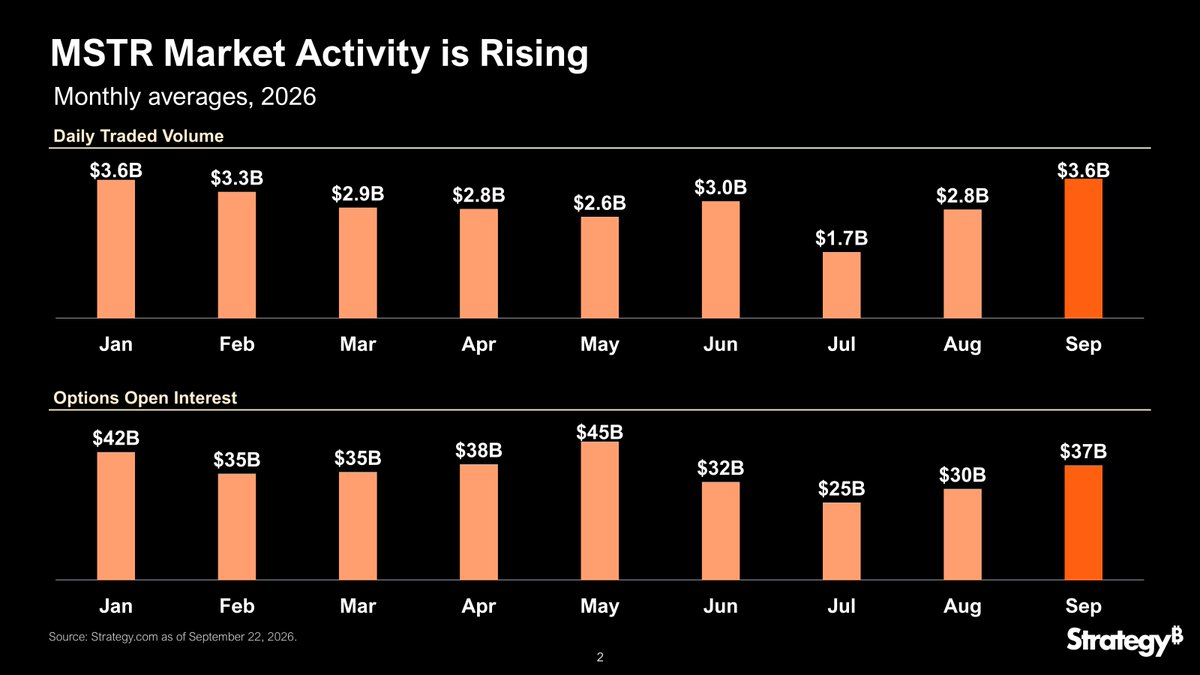
Investor interest also faded. Strategy’s own data shows its stock traded an average of $1.7 billion a day in July, the lowest of 2026. That figure was back to $3.6 billion in September.

Bitcoin has since recovered to about $86,423 per coin. MicroStrategy has resumed buying and held 846,000 BTC as of September 21.
Who Actually Made the Trades
The Trump Organization says outside firms manage the accounts.
“Neither President Trump, his family, nor The Trump Organization plays any role in selecting, directing, or approving specific investments,” CBS reported, citing the Trump Organization.
The Strategy buys are small next to the month’s total trading of $79 million to $270 million. Still, Sen. Elizabeth Warren and Rep. Robert Garcia questioned the timing of Trump’s trades in an August letter.
The filing does not show whether the accounts still hold the shares. The next report will cover August.
The post Trump Accounts Bought MicroStrategy Stock Before an 83% Rally appeared first on BeInCrypto.
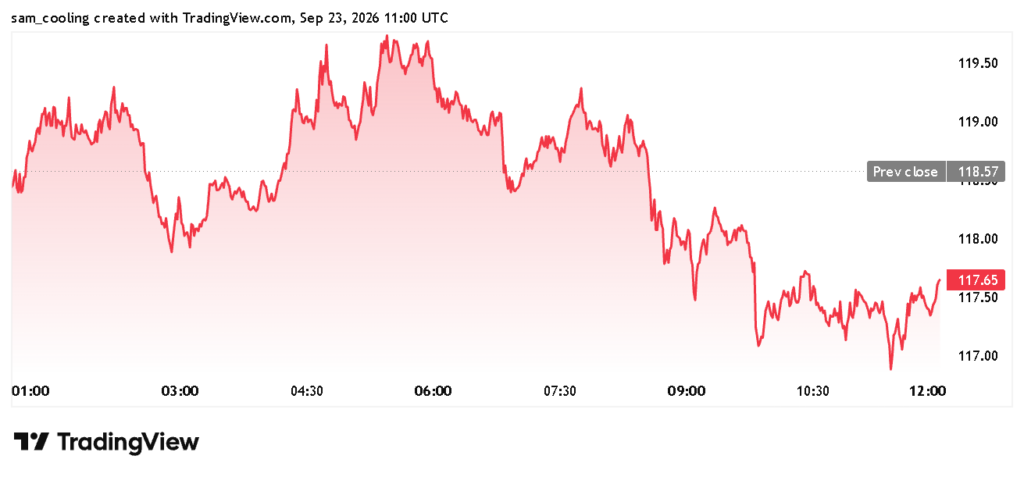
Solana (SO) is changing hands near $117, down 0.78% on the day, as the network’s biggest structural overhaul in years quietly clears a critical testing milestone. There’s a number buried in this story that traders chasing the next leg up need to see before they place another order.
Developers have pushed the Alpenglow upgrade to Solana’s public testnet, targeting a reduction in transaction finality from roughly 13 seconds to 0.15 seconds, replacing the current TowerBFT consensus mechanism with a new voting protocol called Votor.
Validators running Agave 4.3 can now test the migration on a live copy of the network without risking real funds, following more than four months of trials on a dedicated test environment.
Anza, the firm maintaining Agave, confirmed the move via its feature-gate tracker, and mainnet activation is currently penciled in for around September 28.
The timing matters. Spot Solana ETFs pulled in $26.1 million in net inflows on September 21, and network usage metrics, 23.2 million x402 AI-agent transactions in the trailing four weeks, suggest institutional and application-layer demand are both building into the upgrade window.
Can Solana Price Hit $150 This Week?
SOL USD price is testing the lower edge of a resistance band between $116 and $123.35, a level it needs to clear decisively to open the path toward $137.65 and eventually $144.76.
The four-hour RSI sitting near 71 tells a mixed story: momentum is real, but that reading also flags a market getting stretched, one where a pullback wouldn’t be surprising.
Support sits around $114.67, with a deeper floor near $106.95 if sentiment sours.

(Source – TradingView, SOL USDT)
It is worth flagging buying walls at $123 and $132, with $150 emerging as the consensus upside target if both levels give way.
The base case has SOL grinding against resistance into the September 28 Alpenglow activation, using the catalyst as the trigger for a breakout attempt.
The bear case: a rejection at $120–$123 sends price back to retest $114.67, delaying the $150 conversation.
Watch volume on any resistance test, a low-volume push through $123 would be far less convincing than one backed by real size.
For deeper context on how the upgrade interacts with capacity and adoption trends, see this recent Solana infrastructure update.
LiquidChain Targets Early Mover Upside as Solana Tests Key Levels

Anyone holding SOL from the sub-$100 range is sitting comfortably. But buying in now, chasing a token already up 22.57% over seven days and pressing into resistance, is a different risk calculus entirely, the easy money on this leg has largely been made.
That’s pushing some traders toward earlier-stage plays with more room to run, and cross-chain infrastructure is one of the more active corners of that search right now.
LiquidChain (LIQUID) is building a Layer 3 execution environment designed to fuse Bitcoin, Ethereum, and Solana liquidity into a single unified layer — a “deploy-once, access-all” model for developers tired of fragmenting liquidity across chains.
The presale is priced at $0.014958 per token, with $971,680.17 raised to date. Core features include single-step execution and verifiable settlement, aimed at removing the friction of bridging between ecosystems. As with any presale, there’s no secondary market yet and no guarantee the mainnet delivers on the roadmap, due diligence matters here.
Those tracking the Solana-LiquidChain connection can research LiquidChain further before deciding.
Gain Special Access to Layer 3 Trading Here
Key Takeaways
- SOL must clear $120–$123.35 resistance to realistically target the $132–$150 zone flagged by analysts.
- A rejection at current resistance risks a retest of $114.67 support, or deeper to $106.95 on heavier selling.
- LiquidChain’s unified liquidity layer targets BTC, ETH, and Solana interoperability, with presale pricing at $0.014958.
- Alpenglow’s mainnet feature-gate activation, expected around September 28, is the next major catalyst for SOL price action.
The post Solana Begins Testing on Major Speed Upgrade: SOL Price to $150? appeared first on Cryptonews.
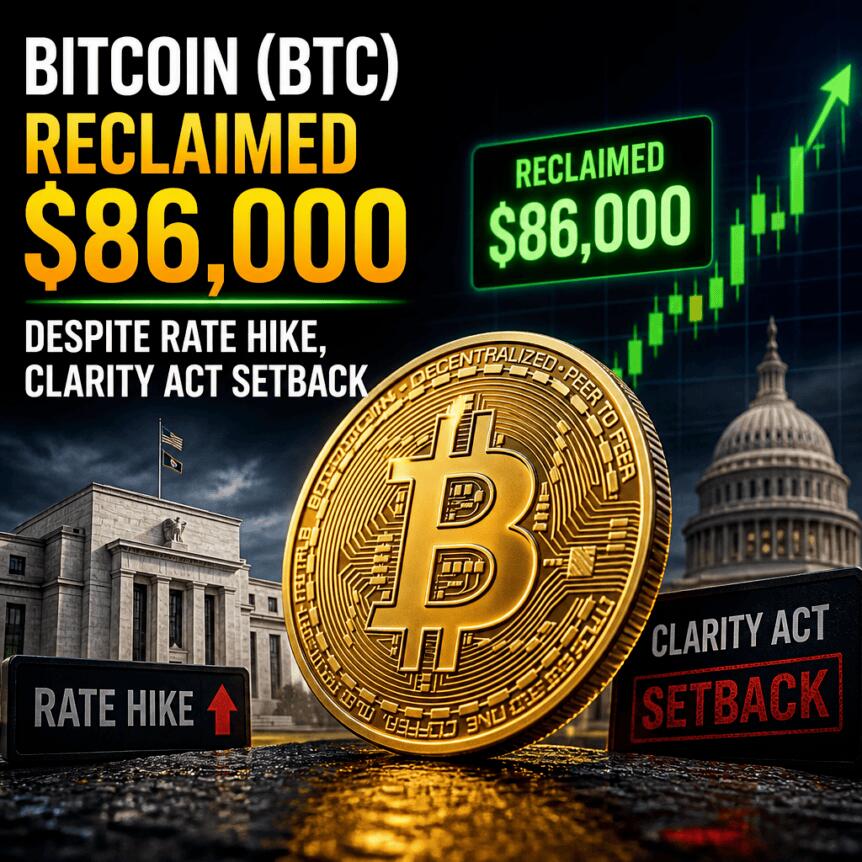
A BitGo Research report said that Bitcoin (BTC) absorbed two bearish catalysts, a rate hike by the Federal Reserve and the Senate’s failure to pass the CLARITY Act, to recover and maintain its position above $86,000.
According to the report, BTC’s price action was the outlier compared with other assets like gold and equities. The flagship cryptocurrency fell toward $75,000 following the rate hike before making a quick recovery as ETF demand and short covering supported the rally.
Bitcoin Absorbs Bearish Catalysts
According to BitGo Research Chief Greg Cipolaro, BTC’s reaction contrasted with that of traditional assets like gold after the Federal Open Market Committee (FOMC) raised interest rates. Cipolaro argued that the flagship cryptocurrency’s muted reaction to the hike and the CLARITY Act setback likely means the price action had already factored in the bearish developments. Renewed ETF demand, lower oil prices, declining Treasury yields, and short covering also supported BTC’s rally.
“Bitcoin absorbed a hawkish FOMC surprise and a failed Clarity Act vote in the same week, and shrugged off both. Gold, equities, and the dollar moved exactly as textbooks predict. Bitcoin didn’t.”
Two Bearish Catalysts for Bitcoin
The first bearish catalyst was the Senate’s failure to pass the CLARITY Act, a development that came before the Federal Open Market Committee (FOMC) decision. The US Senate rejected cloture to proceed with H.R. 3663. The vote ended 49-59, 11 votes short of the number required. The CLARITY Act aims to establish a clear federal framework, dividing oversight of digital assets between the Securities and Exchange Commission (SEC) and the Commodity Futures Trading Commission (CFTC). Senator Thom Tillis, who was actively involved in bipartisan discussions regarding crypto market rules, ultimately voted against cloture so that he could file a motion to reconsider. However, no new cloture vote is on the Senate’s official list.
The next bearish catalyst for BTC was the Federal Reserve’s decision to raise interest rates by 25 basis points. It was the first rate hike since July 2023 and was supported by all 12 voting members of the committee. BitGo said that, while the hike was expected, the Fed’s new rate projections caught markets by surprise. According to the September Summary of Economic Projections, the median federal funds rate was 4.1% for 2026 and 2027, against June projections of 3.8% and 3.6%. Meanwhile, projections for 2028’s median jumped from 3.4% to 3.9%. Additionally, 16 of the 18 committee members project at least one more rate hike this year. According to Cipolaro, the projections suggest Fed officials expect interest rates to remain elevated.
Meanwhile, the traditional markets reacted along expected lines to the Fed’s decision. The Dow Jones ended September 1.21% lower, and the S&P 500 fell 0.44%, while short-term Treasury yields rose and the dollar strengthened.
Bitcoin (BTC) Price Action: A Case for Resilience
Bitcoin’s reaction to both developments was telling. The flagship cryptocurrency dropped sharply after the Senate failed to advance the CLARITY Act, falling over 3% to $75,584. The Fed’s decision to increase interest rates drove the price lower. However, BTC rebounded from a low of $74,911 to reclaim $76,000 and close at $76,144. The recovery was attributed to the fact that the rate hike was already priced in. The flagship cryptocurrency continued its ascendancy despite the bearish developments, as ETF inflows, improved market sentiment, and short covering pushed the price higher.
BTC rose nearly 6% on Friday thanks to positive regulatory shifts and renewed institutional demand, crossing $80,000 and settling at $80,875. The flagship cryptocurrency started the current week with a 6.70% jump, crossing $86,000 and settling at $86,594. BTC is currently trading around $86,140.
The rebound occurred as spot Bitcoin ETFs recorded substantial inflows. CoinGlass data shows the ETFs recorded $159.50 million in inflows on Thursday, and $433 million on Friday. Inflows jumped to $999 million on Monday, while Tuesday recorded $714.70 million, taking total inflows to $2.3 billion over four sessions. Nansen research analyst Nicolai Sondergaard also highlighted strong inflows as a key driver behind BTC’s rally, with forced short liquidations as another factor.
According to BitGo, BTC did not behave as expected following the current hike. Cipolaro said BTC historically weakened alongside other traditional assets when market conditions became difficult. Equities, gold, the dollar, and Treasury yields behaved as expected, while BTC was the outlier. However, BitGo highlighted spot Bitcoin ETFs, which gave institutions and brokerages regulated access to the asset; several public entities held BTC on their balance sheets, and derivatives markets have also grown considerably.
Disclaimer: This article is provided for informational purposes only. It is not offered or intended to be used as legal, tax, investment, financial, or other advice.
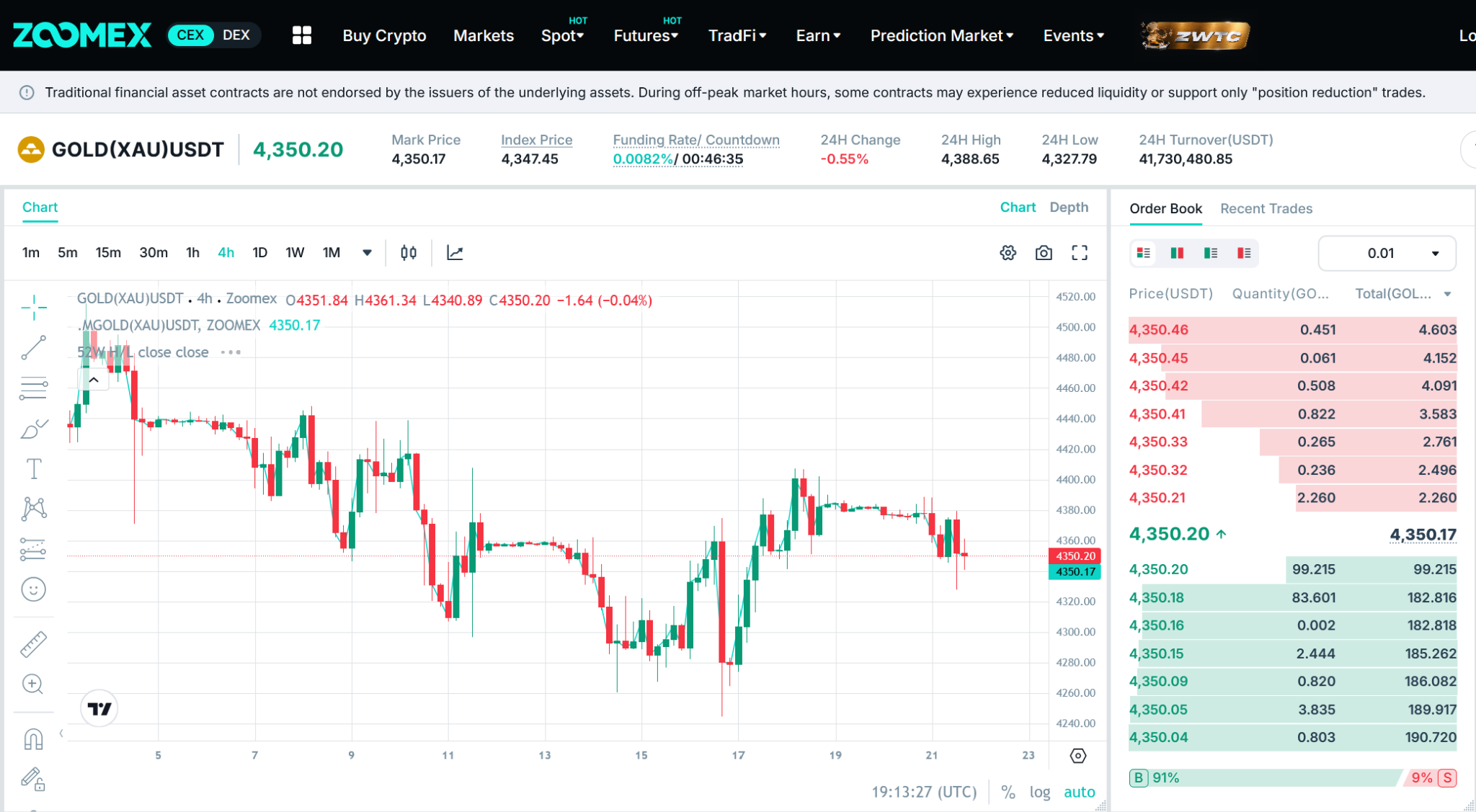
Global cryptocurrency derivatives platform Zoomex reinforces its commitment to Real-World Assets (RWA), positioning the sector not as a peripheral listing category but as a core pillar of its product roadmap.
The announcement builds on a year in which tokenized RWA markets have moved from experimental territory into mainstream institutional adoption, with on-chain RWA value (excluding stablecoins) climbing past $27 billion by April 2026, driven primarily by tokenized U.S.
Treasuries, private credit and commodity-backed tokens. For Zoomex, this shift is not simply a market trend to track, but a philosophy to build around, expressed through five defining pillars: Easy to Use, Transparent by Design, Fair Access & Rule-Based Execution, Focused on Derivatives, and Refined Brand & Trading Experience.
RWA as a Bridge, Not a Buzzword
Commenting on the expansion, Fernando Aranda said: “One of the most important moments is our expansion into Real-World Assets (RWA). We see RWA as an essential bridge between blockchain technology and everyday life. Tokenizing assets such as treasury bonds, commodities, or real estate allows blockchain to go beyond speculation to increase its real economic utility. However, for us, RWA is not limited to the listing of tokenized assets, it is about making this value accessible and spendable in real life. It is in this context that the Zoomex Card, launched in partnership with the Swiss financial institution UR, significantly changes the game.”
That statement frames Zoomex’s broader thesis, tokenization only delivers on its promise when the value it creates can move as freely as the assets it represents, flowing from a blockchain ledger into a user’s daily financial life without friction, delay, or hidden cost.
Easy to Use: Removing the Barrier Between Complexity and Access
Historically, exposure to tokenized real-world assets and the derivatives built around them has been the domain of institutions and highly experienced traders, gated by dense interfaces and opaque execution logic. Zoomex has engineered its platform to collapse that barrier, giving both first-time users and professional traders a clear, immediate read on position status, risk exposure, and potential outcomes. As RWA products draw in a broader, less specialized user base, this emphasis on usability becomes a structural advantage rather than a cosmetic one.
Transparent by Design: Rebuilding the Trust Contract
Trust has long been the central obstacle in real-world asset tokenization, users need confidence that the underlying asset genuinely exists, that valuation is fair, and that they can verify both independently. Zoomex treats transparency as an engineering requirement rather than a compliance afterthought, with balance mechanisms and trading rules built to be visible and verifiable. This philosophy extends directly into the Zoomex Card, developed alongside the Swiss-regulated financial platform UR.
According to details shared at launch, the card was built around zero card issuance fees, zero annual fees, and zero withdrawal fees for fiat returns, with cross-currency transactions anchored to real-time market exchange rates rather than hidden markups. Every layer of the asset journey, from transfer to exchange to consumption, is designed to remain traceable, reducing the risk of asset misappropriation and giving users direct control over their funds.
Fair Access & Rule-Based Execution
As institutional capital increasingly dominates the RWA landscape, the gap in infrastructure and information access between large players and individual traders has widened. Zoomex’s answer is a consistent, rule-based execution model applied equally to every participant, regardless of position size or account tier. There are no privileged lanes or preferential routing; the rules that govern order execution are fixed in advance and applied uniformly. In a market where institutional RWA issuance increasingly sets the pace, this consistency gives individual traders a rare guarantee: the same rules apply to everyone at the table.
Focused on Derivatives: Giving RWA Exposure Somewhere to Go
As tokenization extends into bonds, real estate, private credit and commodities, the market still lacks the sophisticated instruments needed to structure, hedge, or amplify that exposure. As a platform built primarily around derivatives trading, Zoomex is positioned to fill exactly that gap.

Its derivatives focus allows users to engage with RWA-driven trends actively rather than passively, managing risk, hedging exposure, and building strategies suited to a still-volatile broader crypto market. With analysts projecting the tokenized asset market could reach into the trillions by the end of the decade, the demand for mature derivatives infrastructure around RWA exposure is only expected to grow, and Zoomex intends to meet it directly.
Refined Brand & Trading Experience
Zoomex does not treat product engineering and brand identity as separate workstreams. A polished user experience, consistent visual communication, and carefully considered product flows sit alongside the platform’s security architecture as part of a single promise to users. Founded in 2021, Zoomex now serves over 3 million users across more than 35 regions and has passed comprehensive security audits from Hacken, while holding multiple regulatory licenses including U.S. and Canada MSB, U.S. NFA, and Australia AUSTRAC registrations.
As an official partner of the TGR Haas F1 Team, with goalkeeper Emiliano Martínez serving as global ambassador, the brand draws a direct line between precision on the racetrack and discipline in the trading environment.
About Zoomex
Founded in 2021, Zoomex is a global cryptocurrency trading platform focused on derivatives trading. The platform serves over 3 million users across 35+ countries and regions, offering access to 700+ trading pairs. Built around easy to use, transparency, fairness, and speed, Zoomex provides a clear and efficient trading experience for users worldwide.
Through its high-performance matching engine, clear asset and order displays, and transparent fee and rule mechanisms, Zoomex helps users better understand their account status, order execution, trading costs, and results. Zoomex maintains registrations, licenses, and regulatory statuses across multiple jurisdictions, including the U.S. MSB, Canada MSB, U.S. NFA, and Australia AUSTRAC, and has completed security audits conducted by blockchain security firm Hacken. The platform also continues to strengthen its trust framework through Proof of Reserves, Security & Transparency, Compliance Information, and Fees / Rules Transparency initiatives.
Beyond trading, Zoomex builds a refined brand experience through elite sports partnerships, including the TGR Haas F1 Team, World Cup-winning goalkeeper Emiliano Martínez, and world-class tennis events such as Wimbledon. The values of speed, precision, discipline, fair play, and rule-based execution are closely aligned with Zoomex’s approach to derivatives trading.
At Zoomex: Easy to Use. Transparent balance. Fair access to your earnings.
Frequently Asked Questions
- What is Zoomex? Zoomex is a global crypto derivatives platform founded in 2021, serving over 3 million users across more than 35 countries and regions with 700+ trading pairs.
- How does Zoomex work? Zoomex operates through a high-performance matching engine with transparent asset and order displays, allowing users to execute trades and track outcomes with full visibility into their balances and results.
- What can you trade on Zoomex? Zoomex offers 700+ trading pairs spanning cryptocurrencies such as BTC, ETH, and SOL, as well as stock-linked contracts like NVDA and AAPL and gold exposure through XAUT.
- Where is Zoomex headquartered? Zoomex operates as a global cryptocurrency exchange with regulatory registrations including Canada MSB, U.S. MSB, U.S. NFA, and Australia AUSTRAC, reflecting its multi-jurisdictional compliance approach.
- Is Zoomex available in my country? Zoomex serves users across more than 35 countries and regions. Availability can vary by local regulation, so traders should check the official Zoomex website for country-specific access and requirements.
The post Zoomex Deepens Its Real-World Asset Strategy appeared first on BeInCrypto.

Three London fish and chip shops named among UK’s best for 2027

1,000 roles to go by mid-2027

Cosmos hub halts for 24 hours after Neutron governance attack




-

 Fashion5 days ago
Weekend Open Thread: Talbots – Corporette.com
-

 Tech3 days ago
Researchers escape OpenAI Codex sandbox to run commands on host
-

 Crypto World5 days ago
Circle launches Arc Studio AI agent for building onchain apps
-
 NewsBeat5 days ago
Trump says US has reached an agreement to take permanent control of Greenland’s security
-

 Crypto World3 days ago
Who Needs CLARITY Anyway? ARB Could See 70X Increase: Hodler’s Digest
-

 Crypto World5 days ago
Trading Bitcoin on Robinhood? Why 2% Spread Has Traders Worried
-

 Crypto World6 days ago
Mortgage and refinance interest rates today, Thursday, September 17, 2026
-

 Crypto World5 days ago
Bitcoin price breaks channel as RSI climbs to 63
-

 Crypto World7 days ago
US Charges Robinhood Engineers Over Crypto Listing Trades
-

 Tech2 days ago
Google’s $899 Googlebook is a bet that you’ll buy a new laptop for Gemini
-

 Business3 days ago
Analog Devices (ADI) Bets $1.35 Billion on Chips that Let Machines Think for Themselves
-

 Crypto World5 days ago
World Money launches in 150+ countries with Stripe
-

 Crypto World3 days ago
Coinbase, Robinhood, Circle Seen as Tokenized-Stock Winners
-

 Crypto World16 hours ago
Goldman Sachs and Deutsche Bank Agree: The S&P 500 Rally Isn't Over
-

 Crypto World5 days ago
Silver prices recover quickly, hitting weekly high today
-

 Tech6 days ago
GPT-6 Astra Reached the Nether in Minecraft, Lost Its Stash to a Creeper, and Farmed Potatoes for Hours
-

 Tech4 days ago
Trump suggests rebranding AI with a new name, says he’s also creating an AI Force
-
 NewsBeat5 days ago
US was ‘on brink of war’ with China over false AI report of nukes moving in Middle East
-

 Entertainment7 days ago
Grey’s Anatomy Showrunner Teases Changes After Cast Exits
-

 Crypto World2 days ago
Bitcoin price holds above $81K as key catalysts line up
You must be logged in to post a comment Login