
Politics
Netherlands To Return To Eurovision In 2027 After Previous Boycott


The Netherlands will return to the Eurovision Song Contest in 2027 after all, it has been revealed.
Earlier this year, The Netherlands’ national broadcaster Avrotros announced it was withdrawing from Eurovision in protest over Israel’s involvement, amid the ongoing conflict in the Middle East.

When it was confirmed that Israel was once again being invited to compete in next year’s song contest, Avrotros said that, for the second year running, it would not be participating, indicating that the country would not be involved.
However, another Dutch broadcaster has since picked up the responsibility of handling Eurovision on behalf of The Netherlands.
Eurovision director Martin Green said in a statement: “We are delighted to welcome the Netherlands back to the Eurovision Song Contest in 2027.
“We value the constructive conversations we have had with NPO and look forward to working together to reinforce the Contest as a place that truly reflects the spirit of ‘United By Music’.”
He added: “The Netherlands took part in the very first Eurovision Song Contest in 1956. Its founding purpose then remains as relevant today as ever. In a world that is increasingly divided, the Eurovision Song Contest provides a unique space for people and countries to come together through music, share in a common experience and find connection.
“With that in mind, we are very happy that the Netherlands is once again joining the Eurovision family on stage in Burgas next May.”

Earlier this year, The Netherlands was one of five countries to pull out of Eurovision due to Israel’s involvement, alongside Spain, Slovenia and Iceland.
A decision on Spain and Slovenia’s participation in 2027 is yet to be decided, while Ireland has confirmed that it will not be competing next year.
Meanwhile, Belgium’s broadcaster VRT recently claimed that “chances are slim” that it would “send an artist next year”, but confirmed on Wednesday that it had made a u-turn.
“VRT has noticed that the EBU is now taking its members’ concerns seriously and is making work of the future of the contest,” a VRT rep claimed.
Eurovision will take place in Bulgaria for the first time in 2027, following Dara’s triumph at this year’s event back in May.

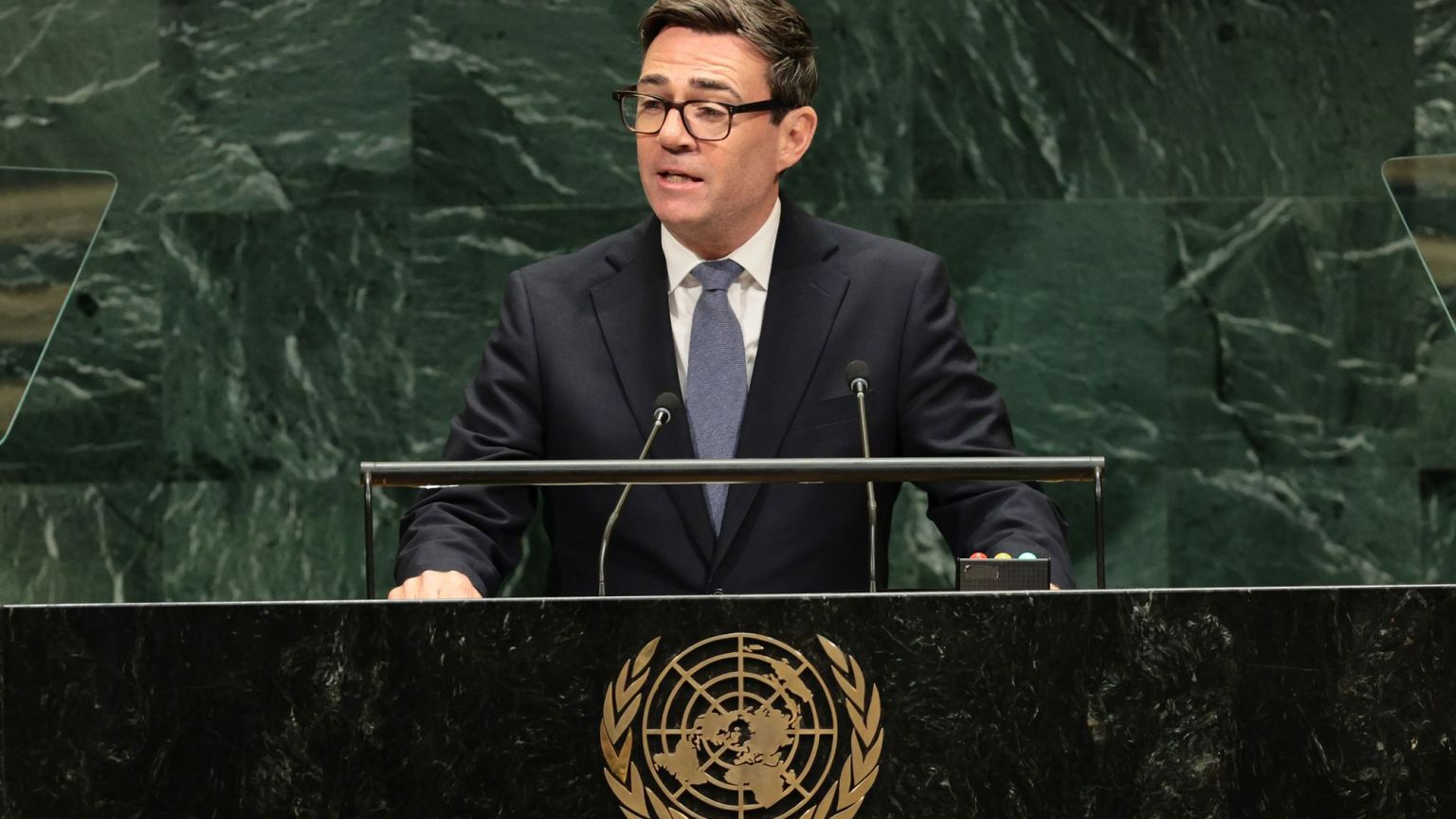
So that’s the end of the nice guy act. Like a villain in Scooby Doo, Andy Burnham has had his ‘ordinary bloke’ mask torn off to reveal the villainous censor beneath. He has announced the creation of a National Centre for Information Defence that will guard us dimwit Brits from ‘disinformation’ and ‘narratives of decline’ and tell us that actually everything’s hunky dory. If this sounds familiar it’s because it’s basically Orwell’s Ministry of Truth rebranded in the soul-eating vocabulary of corporate HR.
It was at the United Nations yesterday that Burnham took a break from saying ‘I’m just like you!’ to say ‘Actually I’m better than you and therefore I’m creating a vast infrastructure of information control to remould your minds’. From TikToker to tyrant in the space of one speech. The new national centre will ‘detect’ and ‘disrupt’ misinformation, he said, especially that which emanates from ‘hostile actors’ overseas who want to ‘twist’ our minds into thinking our country’s gone to shit. To Burnham we’re all internet-brained damsels in dire need of moral rescue.
Every single thing about the new centre sounds sinister as hell. Burnham is clearly a giddy adherent to the great chattering-class conspiracy theory of our age – namely, that a vast army of Russian bots are playing idiot Brits like fiddles and feeding us lie after lie. The Ruskies ‘spread lies and disinformation’ and ‘prey on people’s fears’, he said. They cultivate a ‘narrative of decline’. They change how Brits ‘feel about their own country and community’. They ‘sow fear and despair’. This spectacularly elitist vision of us plebs as the marionettes of evil Russians is rife in the managerial classes.
Burnham’s self-styled guardians of truth will create new forms of state ‘architecture’ to ‘stem [the] poisonous tide’ of misinformation. If you’re not scared yet, you might want to check your pulse. For masked in the greasy, focus-grouped jargon of ‘disrupting narratives’, this shiny new bureaucracy promises to do what every authoritarian in history has craved: appoint a cadre of bureaucrats to sit in judgement over what constitutes acceptable thought and what must be crushed as ‘disinformation’.
You can tell this is censorship masquerading as social concern because it is riddled with the classic paternalism of the censor. Burnham seems to think the poor in particular are susceptible to the lies of nefarious foreign actors. ‘If you’re struggling with the cost of living and your life is not improving… then you are going to be much more vulnerable to this kind of influence’, he said. Classist much? So much for his ‘man of the people’ shtick – this is a man over the people, fretting that the dirt-poor hordes are being hoodwinked by sneaky Russians.
The irony of Burnham’s Orwellian crusade against ‘lies’ is that it is built on the most intoxicating lie of our time: that Brits are angry because some bot told us to be. They said this about the vote for Brexit, and now they’re saying it about public fury over the migrant crisis – that it’s all whipped up by wicked actors online. As Burnham put it, really getting into his conspiratorial stride, there’s been an ‘insidious campaign that reaches into people’s homes and twists what they feel about their own country’. Are the bots in the room with you now, Andy?
In his haughty worldview, Brits are utterly robbed of agency. We are no longer conscious actors who freely decided to leave the EU and who now want the ‘small boats’ stopped too, but rather the witless fodder of foreigners who want to screw Britain over. But we don’t need bots to tell us our borders are broken and Britain is in decline. We can see it with our own eyes. This past month alone I’ve been flashed at by an inebriated immigrant, watched a ranting foreign bloke steal a fork from a restaurant and use it to threaten passers-by, and twice seen people steal food from a Costa Coffee. Or perhaps those events were planted in my brain by the Kremlin?
The truth is that it is Burnham’s new centre that will spread disinformation. If the aim is to relieve Brits of our apparently false belief that our once great country is in big trouble, then this is clearly a war on truth masquerading as a defence of it. Indeed, it’s officialdom that refuses to tell us the truth about things like migrant crime, and which buried the rape-gang scandal for years, and which thinks a woman can have a cock. You think we’re going to take lectures about ‘truth’ from a political class that prizes ideological conformity so much more highly than honest debate that it let girls be raped and young gays be mutilated? Get real.
Just how many taskforces against ‘misinformation’ do we need? The government already has the Defending Democracy Taskforce, the Research, Information and Communications Unit, and a raft of other ‘architecture’ designed to insulate oiks from wrongthink. All of this stuff really blew up after Brexit and the rise of populism. That’s not an accident. It was precisely ordinary people’s free-willed dissent, our rejection of the EU and infinity immigrants and technocracy more broadly, that riled the ruling class and made them think: ‘Shit, we need to regain control of the narrative.’
That’s what the new centre is really about: deploying an army of moral guardians to dislodge dissenting ideas and boost orthodox ones. They’re the bots who dream of ‘reaching into people’s homes’ and ‘twisting’ what we think. This sinister centre is not about protecting national security from foreign powers – it’s about protecting the managerial elites and their lunatic policies from angry Brits.
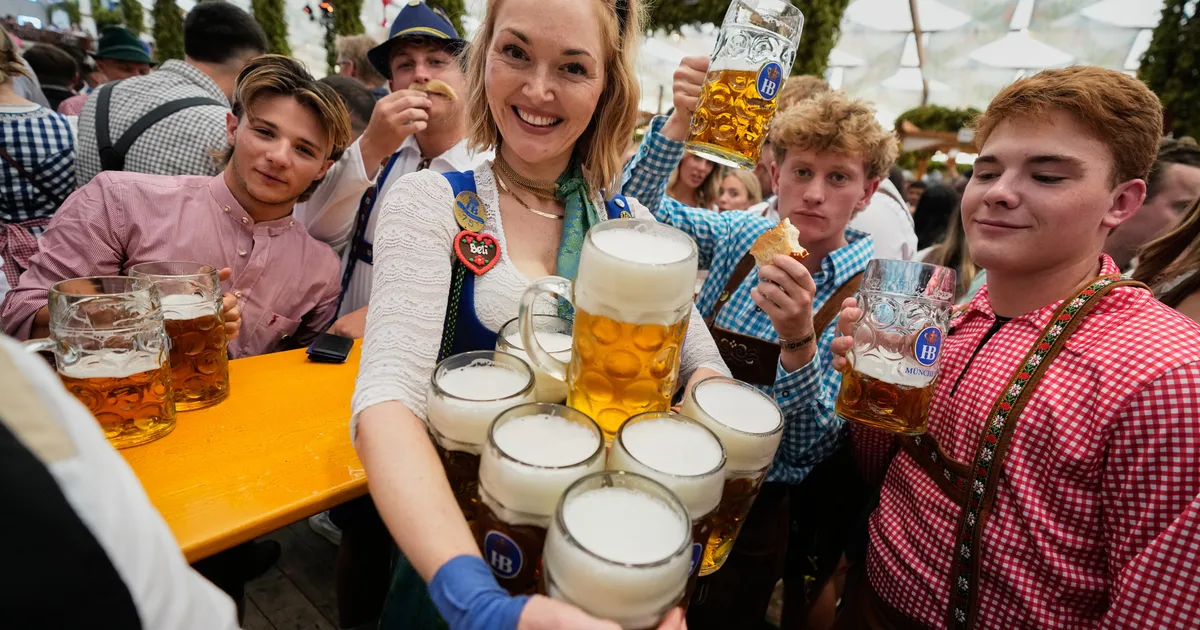
Like a lot of non-Germans, I have a pretty hazy idea of Oktoberfest ― I’m vaguely aware it has something to do with beer and pretzels, and it seems to involve a lot of plaits.
But the festival, which is taking place from September 20 to October 5 this year, has a much deeper history than I realised.
The event, it turns out, actually started off with a royal wedding, a horse race, some poems, and a fairground.
And, the City of Munich Department of Labour and Economic Development (CMDLED) explained, it wasn’t originally called Oktoberfest.
Why did Oktoberfest begin?
The holiday actually began in Bavaria, a state in the south-east of Germany.
Bavaria used to be a sovereign kingdom. Four years after it became a kingdom (in 1810) CMDLED said, Bavaria’s Crown Prince Ludwig married Princess Therese of Saxe-Hildburghausen.
The wedding celebrations lasted five days, and took place with a “folk fair” that ended on the 17th of October.
To conclude the celebrations, residents of Baravia’s capital, Munich, held a horse race outside of the city’s gates.
During the royal wedding celebrations, children, dressed in traditional Bavarian clothes, handed flowers and poems to the newlywed visiting nobles.
Per the CMDLED, “In honour of the bride, the fairground was named ‘TheresensWiese’. This is still the name of the Oktoberfest grounds today:
“Theresienwiese” – in Munich parlance called the ‘Wiesn’ for short.”
The horse race tradition didn’t survive past 1938, though in the southern parts of Germany, the Landwirtschaftsfest, or agricultural fair, is still held every four years.
What’s this got to do with beer?
Little booths always supplied fair-goers with beer. But it wasn’t until 1986 that “huge beer castles” became normal at the official Munich event.
“Soon, hearty light meals and traditional Munich delicacies were also on offer and, over time, the so-called Wirtsbudenstrasse (street of the beer tents) came into being,” the Munich government added.
Meanwhile, merry-go-rounds and swings were set up at the Bavarian event as early as 1818.
And the city of Munich has created various trademarks surrounding the word “Oktoberfest”, meaning the event ― which is the largest folk festival in the world ― has a special logo and font.
Anand Menon offers his take on the Liberal Democrat’s EU policy following their party conference.
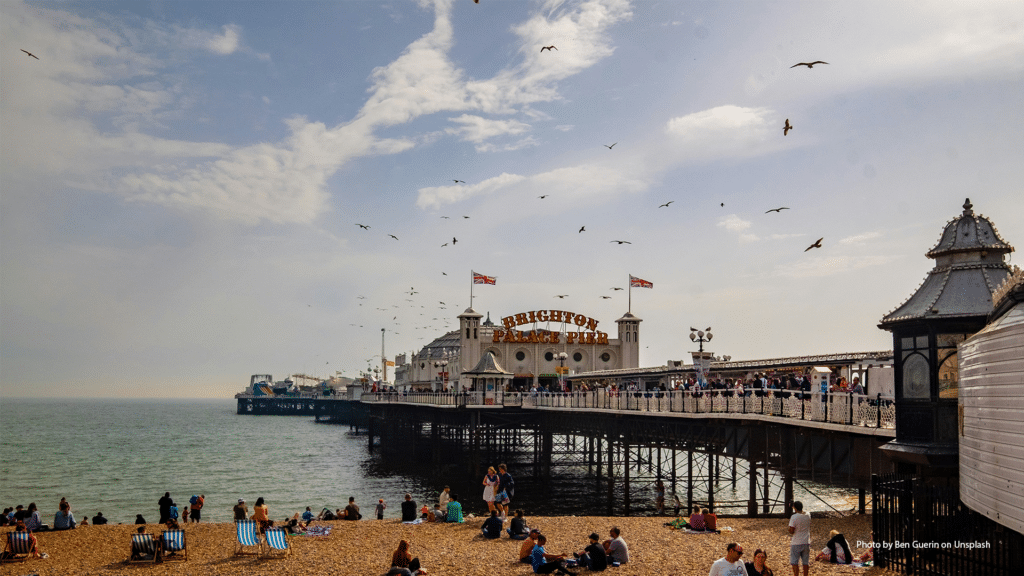
To rejoin or not to rejoin. That’s the question doing the rounds among many of the party faithful at the Liberal Democrat’s conference in Brighton. That along with whether Ed Davey should remain leader, of course.
To say the Lib Dems have tied themselves in knots over how to approach UK-EU relations would be charitable. The party has found itself caught between the fervent pro-Europeanism of its members and the more cautious approach adopted by MPs scarred by the impact of that ill-fated ‘bollocks to Brexit’ campaign of 2019.
By 2024, that had translated itself into a manifesto position proposing a gradual rapprochement with the EU and culminating over time with the UK joining the single market. It was not a policy that was promoted much during a campaign in which the party focused on local issues like sewage. I recall the party conference of that year, when two prominent MPs were (gently and politely of course) heckled by an audience of members frustrated by what they saw as a lack of ambition when it came to EU policy.
Now there are signs that the parliamentary party is starting to listen. Europe spokesperson Al Pinkerton was at pains to stress that the world is changing and that this implies the need for a closer relationship with the EU. As a former Associate Professor of geopolitics, he delights in reminding his audience (correctly) that ‘geography matters.’
The party is now calling for a ‘growth and defence partnership,’ which involves the UK joining the single market and a customs union and signing a new defence partnership with the EU. The ‘long-term goal’ is to rejoin the EU. All of which, if nothing else, speaks to the nervousness in the party about rejoin – it is hard to see why customs union and single market should appeal more than membership, and easy (as I’ll come to in a moment) to see the problems inherent in this idea.
Is this practical? In large part probably, though with some caveats. First, the party seems to be falling into the same trap that successive governments have been caught in – of assuming that the ‘EU needs and wants greater cooperation from the UK on defence’, which puts the UK ‘in a strong position to get a better deal for Britain on both trade and security’. The fate of the SAFE negotiations alone should serve to alert us that this logic is flawed.
Second, regular readers will be all too aware of my scepticism that single market membership is politically sustainable in this country. Let us be clear here. This means the EU passing laws that the UK must adopt – with no formal say over the content. The issue here is not just the inevitable outcry from Brexiters about ‘surrender’ but how powerful bodies such as the City will react the first time they are subject to EU laws of which they do not approve.
As for the argument that single market membership might serve as a gateway to membership, I’m far from convinced that the EU would be in any great hurry expedite such talks. Why, after all, would they hurry to change a situation in which the EU gets to set the rules for the UK economy to one in which London gets a seat at the decision-making table?
Under normal circumstances – and with all due respect – what the Liberal Democrats say about the EU would not matter beyond the ability of that message to attract or retain target voters. Under current conditions, however, it might have a broader relevance.
First, it might impact on what the other parties say. British politics, as we know, is now broadly divided into two blocs. Both parties in the Right/Leave bloc are proposing not only to unpick any advances made during the EU ‘reset’ undertaken by Keir Starmer, but also to take the UK out of the ECHR. This, as we’ve argued, will almost certainly lead to the EU suspending some or all of the TCA – a no deal Brexit in other words.
On the other side of the divide, the Greens, Labour, the nationalist parties and the Liberal Democrats all favour closer links with the EU. They differ, however, in terms of how ambitious they are willing to be.
Whether the more ambitious stance adopted by the Liberal Democrats and Greens is enough to convince Labour to shift in that direction will depend in part on the state of the polling. In the dog days of the Starmer administration, a number of Labour MPs were openly discussing the need for the party to be far more ambitious, not least to fight the political threat from their left flank. A lot will hinge on whether Andy Burnham’s favourability ratings remain where they are.
As importantly, the fragmented nature of politics means a hung parliament is a real possibility. It is far from inconceivable that a future Labour government will rely on other parties in the progressive bloc to sustain a majority in the Commons. This opens up the real prospect of the Liberal Democrats exercising material influence over policy.
This is all, of course, highly speculative. But it speaks to the point that what the Lib Dems were talking about in Brighton might matter far more than simply in terms of making party members happy.
By Anand Menon, Director, UK in a Changing Europe.
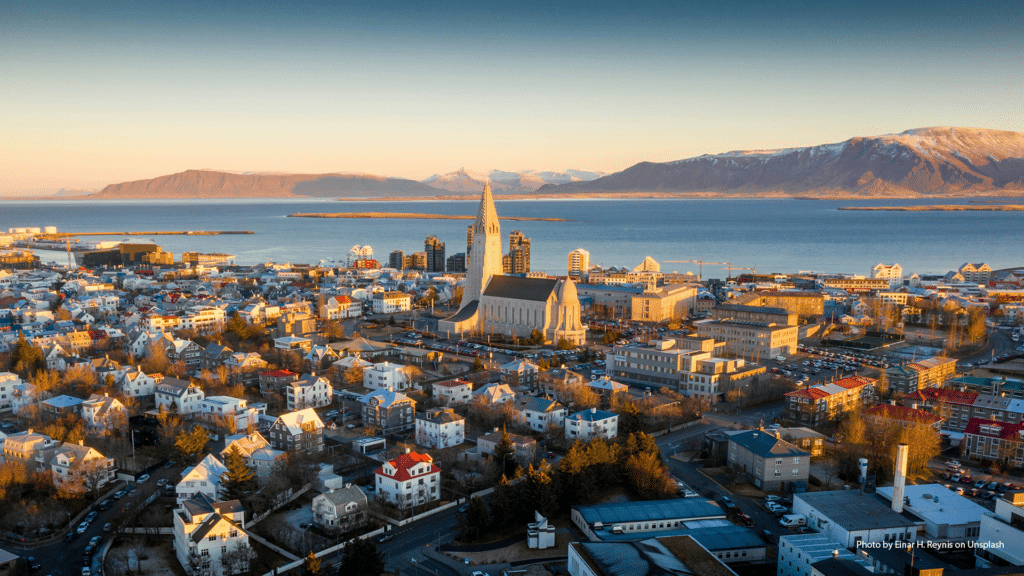
Margrét Einarsdóttir unpacks the result of the recent referendum in Iceland that saw the public narrowly vote against reopening accession talks with the European Union.
Iceland first decided to apply for EU membership in 2009, following the 2008 financial crisis which hit the country particularly hard. Negotiations were suspended in 2013 following the election of a new right-wing government, but the application was never formally withdrawn, leaving Iceland an applicant country since 2010.
A referendum on whether to reopen accession negotiations was held on 29 August this year. The result reflected a deeply divided country: 47.2% voted in favour, while 52.8% voted against. The divide was also geographical. In the capital area, around 56% voted yes, while the no vote was particularly strong in rural areas (60%-63%).
The result was a significant shift from the picture painted by a June opinion poll, where 52% of those who had made up their minds said they intended to vote yes. The most striking change appears to have taken place among the youngest voters, aged 18–29. In June, 63% said they intended to vote yes; by the final Gallup poll in August, that figure had fallen to around 40%.
The ‘No’ campaign appears to have played an important role in this shift. It ran a vigorous campaign aimed particularly at younger voters, making extensive use of social media advertising. This may well have been what ultimately tipped the balance.
I suspect that the average Icelandic ‘No’ voter was less than enthusiastic about the messages of congratulations that followed the referendum from, among others, the MAGA movement, Nigel Farage and Marine Le Pen.
After all, Icelanders were not voting against close and continuing cooperation with the European Union. Iceland is already part of the European Economic Area (EEA), which gives us access to the EU single market. It is considered our most important international agreement and there is widespread satisfaction with it. Iceland is also part of the Schengen area.
So what explains the no vote?
My sense is that, for most of those who voted no, the EEA Agreement is simply enough. It provides Iceland with much of what it needs from its relationship with the European Union, while remaining outside the EU’s Common Agricultural Policy and Common Fisheries Policy. These are two particularly sensitive areas for Iceland. For most Icelanders, therefore, the choice was not between Europe and isolation. It was about whether the existing arrangement – close economic integration with the EU while remaining outside the Union itself – is preferable to full membership.
The deteriorating international situation prompted the government to hold the referendum somewhat earlier than originally planned. Trump’s ambitions regarding Greenland were poorly received in Iceland, while the prospect of a trade war is particularly troubling for a small, open economy that depends heavily on free international trade. Icelanders are also increasingly concerned about Russia’s aggression towards European countries and the continuing war in Ukraine.
Against this backdrop, it is striking how little security and defence featured in the debate ahead of the referendum. Supporters of a ‘Yes’ vote argued that closer cooperation with the EU on security and defence could provide an additional pillar of security. Yet this argument gained little traction.
Iceland has never been occupied by a hostile power and, although recent international developments have undoubtedly caused unease, there appears to be a widespread belief that the present geopolitical situation is temporary rather than a lasting change in the international order. Many Icelanders continue to assume that the current political situation in the United States will eventually pass and that Iceland’s bilateral defence agreement with the US, alongside its NATO membership, provides the security the country needs.
The strongest opponents of reopening the accession negotiations also played down the security dimension. Instead, the debate came to focus on claims that EU membership could ultimately result in young Icelanders being conscripted into a future ‘European army’. Despite repeated interventions by experts pointing out that the EU has no common army, the claim proved surprisingly resilient during the referendum campaign.
The referendum could easily have gone either way. The government could have done more to prepare the ground for a vote on such a complex matter, which might in turn have produced a more informed and substantive public debate.
The ‘No’ campaign was more direct and effective and seems to have been better resourced. Many of Iceland’s fishing quota holders, some of whom command considerable financial resources, are staunch opponents of EU membership.
The ‘No’ campaign also placed considerable emphasis on Icelandic independence and sovereignty, arguing that Icelanders were better placed to make decisions about their country’s future than the bureaucracy in Brussels. There were prominent claims that EU membership would give the Union control over Iceland’s natural resources and enable it to impose a subsea electricity interconnector between Iceland and continental Europe against Iceland’s wishes. In the final days of the campaign, highly visible advertisements made such claims explicitly, while attempts by academics and other experts to correct them struggled to cut through an increasingly heated debate.
By this point, supporters of a ‘Yes’ vote were increasingly talking about misinformation and ‘fake news’, with some asking whether Iceland was experiencing its own version of Brexit. It is important, however, not to overstate this comparison. The most strident claims came from a relatively small group and were by no means representative of the majority of those who ultimately voted No. As noted above, many – probably most – No voters remain strong supporters of the EEA Agreement and favour close and constructive relations with the EU.
The intensity of the campaign was palpable. Most strikingly, Iceland’s Foreign Minister, Þorgerður Katrín Gunnarsdóttir, received death threats and required extensive security protection – something highly unusual in Icelandic politics. I cannot recall another political issue creating such a deep division within Icelandic society, and I fear that the divisions exposed by the campaign may take considerable time to heal.
The government immediately made clear that it would respect the result and that there would be no resumption of EU accession negotiations during the current parliamentary term. The application for membership itself, however, has not been withdrawn, meaning that Iceland formally retains its status as a candidate country.
At the same time, discussion of the possibility of Canada developing a closer relationship with the EU has prompted some debate in Iceland about whether the country might pursue deeper cooperation with the Union in areas such as security and defence. Whether the EU would have an appetite for such an arrangement with a small, unarmed island state in the middle of the North Atlantic – one that has just politely declined the opportunity to resume negotiations on joining the Union – remains to be seen.
By Dr. Margrét Einarsdóttir, Professor at Reykjavik University and Chair of the Board of RU Institute of International and European Law.

If there’s one thing writing health articles has taught me, it’s to take my exercise routine seriously.
Being physically active is linked to about two to four added years of life as a “conservative” estimate (some research puts it closer to seven years).
Strength training, meanwhile, is key for better ageing, fall prevention, and even lowering dementia risk.
But if you want to make a good thing even better for your brain, a simple step – that is, heading outside – could help.
Why might exercising outside be better for our brains?
We already know that working out can make us mentally sharper, in both the short and long term.
But according to a 2023 paper, when it comes to how well movement improves our cognitive function, “the environment in which the exercise is performed may be just as important as the exercise itself”.
Researchers conducted electroencephalography (brain activity) scans on 30 participants before and after a 15-minute walk.
These scans were conducted while participants completed “the oddball task”, which asks people to signal (through e.g. hitting a button) when an unexpected item shows up in an otherwise homogeneous pattern.
For instance, say 10% of circles flashed irregularly onto a screen are green, while the others are red; people would then be tested on how quickly and accurately they react to that surprise green circle’s appearance
Half of the participants took their walk outside, while the other 50% strolled indoors.
After comparing the brain changes following each group’s stroll, the study authors found that those who’d headed outdoors scored better on the oddball tasks than they had before their walk.
And the outdoor walkers seemed to have an “increase in the amplitude of the P300, an event-related neural response commonly associated with attention and working memory”, a response not seen among indoor walkers.
“In conclusion, we demonstrate that a brief walk outside results in a greater increase in cognitive function than a short walk inside,” the paper reads.
“Indeed, in a world where many people ‘hit the gym’ before or after work or on their lunch break, our results suggest that these people would be better served by simply ‘getting outside’.”
In general, exposure to nature is good for our health
The brain scan study was relatively small, and the researchers themselves noted that exercise’s brain benefits are often believed to kick in after 20 minutes, not 15. But other, bigger studies have found that exposure to nature seems to be great news for our health.
A review of studies found that time spent in nature can help to improve everything from cognitive function to brain activity, blood pressure, mental health, physical activity, and sleep (phew).
Add that to the fact that sunlight-derived vitamin D is key in the colder, darker months, and it looks like I’m going to have to get back to my lunchtime park power walks…
 lead image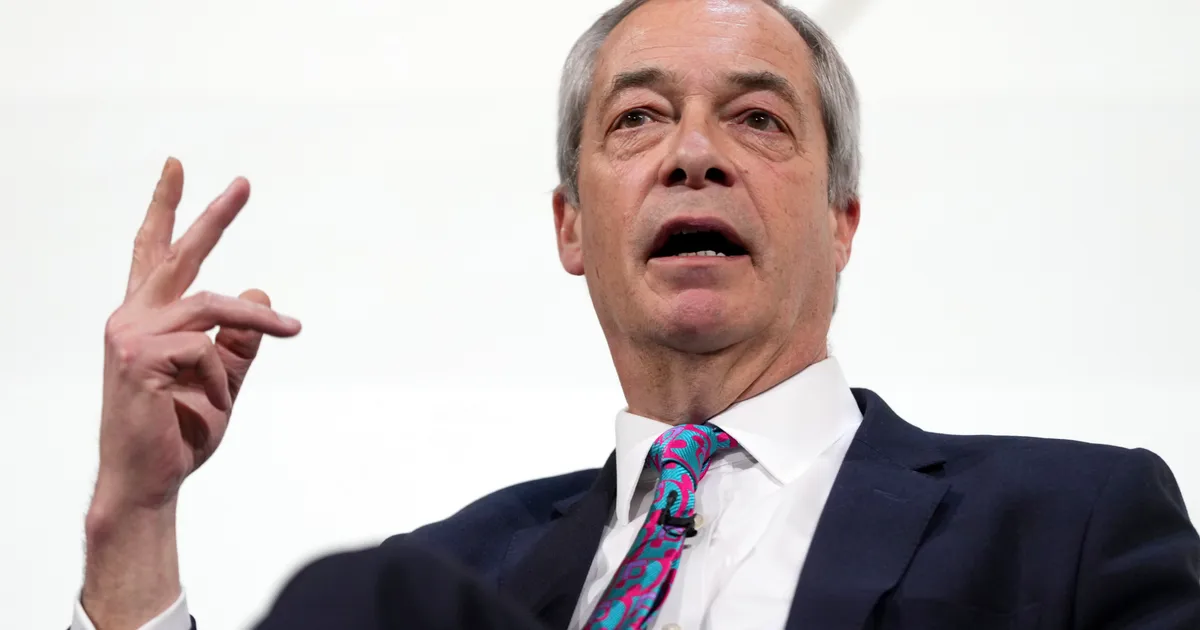
Tactical voting is set to block Nigel Farage’s path to 10 Downing Street at the next general election.
A new poll has found that voters are increasingly likely to support other parties to stop Reform UK winning.
Labour are set to be the main beneficiaries of this trend, boosting Andy Burnham’s chances of remaining prime minister.
The findings also provide further proof that Burnham has completely turned around Labour’s fortunes since he replaced Keir Starmer as PM in July.
The poll of more than 6,000 voters, which was conducted by YouGov, found that in a seat with only a Labour or Reform candidate, 41% would back Burnham’s party, with only 26% backing Farage’s.
That is a dramatic shift from last February, when 35% said they would vote Labour and 31% said they would back Reform.
In a seat with only a Tory and Reform candidate, 35% would now vote Conservative, compared to just 20% would vote for Reform.
The poll also found that around two-thirds of Lib Dem and Green voters said they would vote tactically for Labour to keep Reform out, as did 18% of Tories.
Around half of Labour and Lib Dem supporters would also vote Conservative to stop Reform, as did 26% of Greens.
YouGov said the study “shows that willingness to back Reform against Labour, the Tories or Lib Dems has declined markedly” in the past year.
“The change in prime minister appears to have heralded a greater willingness to vote for Labour in tactical voting scenarios among Green, Lib Dem and Conservative voters,” the pollster added.
Meanwhile, the poll also suggests that support for the Greens is also on the slide.
Support for Zack Polanski’s party fell in head-to-head contests with all of the other main parties.
The YouGov findings back up a separate study by the More in Common think-tank, which also showed Reform suffering due to tactical voting.
It found that left-wing voters are far more likely to vote tactically than those on the right.
Listen to Commons People, the podcast that makes politics easy. Every week, Kevin Schofield and Kate Nicholson unpack the week’s biggest stories to keep you informed. Join us for straightforward analysis of what’s going on at Westminster.


4 min read
If the UK slashed its defence spending, despite the growing threat Russia poses to our national security, the public would rightly be appalled, and ministers would be pressed to explain their decision.
Yet there is another danger to our way of life – one our intelligence services warn could result in food shortages, increased terrorism and further pandemics – where funding is quietly disappearing. It is time that decision was given the same scrutiny.
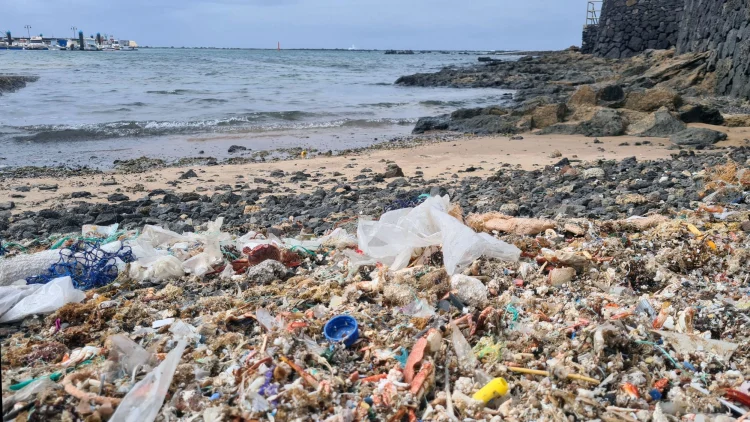
Earlier this year, a bombshell intelligence assessment laid bare how the destruction of nature and the feared collapse of essential ecosystems including rainforests, coral reefs and mangroves “threaten UK national security and prosperity”.
One stark sentence reads: “It is unlikely the UK would be able to maintain food security if ecosystem collapse drives geopolitical competition for food,” noting we depend on imports to feed our people.
Retired General Richard Nugee, giving evidence to the Environmental Audit Committee that I chair, called it “seminal” to see the potential consequences of the nature and climate crises in a national security risk assessment – and said he would expect a government strategy to deal with the threats.
I welcome the fact that the government produced this report, and acknowledged these dangers, but it now demands action.
However, the former minister for nature Mary Creagh admitted the government is not preparing for these threats “at the speed or intensity that I would wish” – and was unable to say when that would change. In fact, the UK is going backwards at the very moment it should step forward, because the 40 per cent cut to our international development budget is withdrawing money to protect and restore nature when it is needed most.
Funding to save the crucial Congo Basin rainforest, the world’s second largest, has been cut by 79 per cent. That is an astonishing decision at any time, but ministers must explain how it can be justified when the intelligence report highlights the Congo as “critical for UK national security” and at risk of collapse.
The future of the £500m Blue Planet Fund, inspired by Sir David Attenborough’s Blue Planet series to protect the world’s oceans as vital to the planet’s future stability, is also in doubt.
For years, the UK has recognised the danger of biodiversity loss by ringfencing around one-third of its international climate finance for nature – but that ringfence has gone, as climate aid has been cut by at least 30 per cent.
I am delighted by the announcement that the UK will invest £400m in the Tropical Forests Forever Facility (TFFF), which will conserve rainforests across the globe. However, the UK’s investment still pales in comparison to the billions of pounds of cuts to international climate and nature finance.
My committee urged the government to explain how the daunting challenges posed by the national security assessment can be met without this funding, but did not receive a satisfactory answer.
Within weeks, nations will gather at the COP17 biodiversity conference in Armenia, a critical staging post towards the UN target to mobilise $200bn a year in public and private funding for nature by 2030 – when ministers will be asked, “What are you doing to help achieve that?” How will they answer that question convincingly?
I welcome the taskforce the government has set up, allowing security and military experts to advise what actions the UK must take – but that advice is unlikely to include dramatic cuts to programmes to prevent ecosystem collapse.
In evidence to my committee, an expert from the Chatham House policy institute argued climate breakdown is destroying the foundations for the world’s security in a way unseen since the dawn of the nuclear era 80 years ago.
It is a wake-up call the new government under Andy Burnham must confront with the same urgency and resolve it would muster if this was a military threat.
The King showed he understands what is at stake in his address to the United States Congress earlier this year, when he urged nations to “address the collapse of critical systems” that “provide the foundation for our prosperity and our national security”. Our new Prime Minister must heed the King’s call.
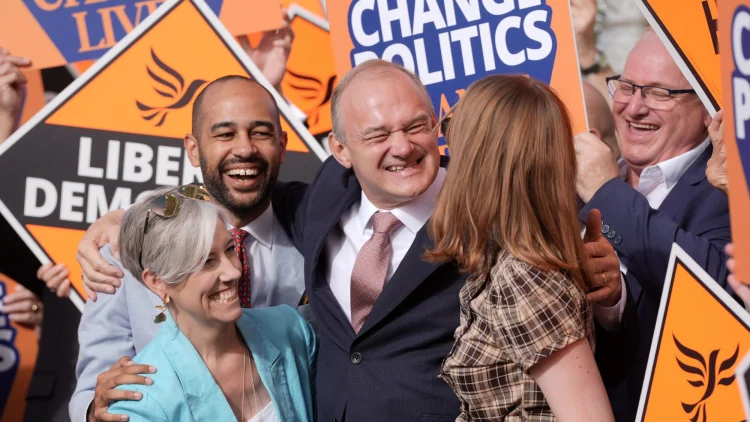
Lib Dem leader Ed Davey with party president Josh Babarinde and deputy leader Daisy Cooper at the party conference in Brighton (Alamy)
11 min read
Questions about the Liberal Democrats’ strategy, message and identity dominated the party’s conference in Brighton.
As Lib Dem parliamentarians and activists arrived on the south coast at the weekend, they were encouraged to write on a board why they support the party.
“I want to live in a country where every voice and every vote matters.” “Fairness and equality of opportunity.” “I didn’t want to stand by and see our country overtaken by malign actors.” “Honesty, decency, integrity and progressivism.” “Because it doesn’t need to be this shit.”
The range of answers reflected a growing debate within the Lib Dems that was the biggest talking point in Brighton: what, and who, are they for?
The question was putting pressure on leader Ed Davey in the weeks, even months, leading up to the weekend.
On the eve of conference, South Cotswolds MP Roz Savage said publicly what many Lib Dems had been complaining about in private: that their party is “struggling for relevance”. In an essay shared exclusively with PoliticsHome, Savage argued that liberals must “rediscover” their “insurgent spirit”, rather than being “the polite custodians of a system that leaves people feeling powerless”.
Indeed, as Lib Dem direction comes under growing scrutiny, senior party figures told PoliticsHome they had noticed more media attention than they would normally expect at this stage of a Parliament.
Davey has made no secret of his desire to see the Liberal Democrats enter government after the next general election, telling The House in a recent interview that he would be “the most experienced leader” in the event of a hung parliament.
Faced with criticism, he has pointed to the party’s electoral gains at local level as evidence of success. “We’re winning where it matters: at the ballot box,” he declared in Brighton.
Having won a record 72 MPs in the 2024 general election, the Lib Dems transformed their presence in Westminster. However, in recent months, multiple party figures have expressed frustration with what they describe as failure to capitalise on this success and stagnant polling, and fear that the Lib Dems are failing to cut through in a fragmented political climate.
Speaking to PoliticsHome at conference, one MP blamed “growing pains”: a Lib Dem central operation that had taken time to catch up with the size of the parliamentary party.
Another MP described this year’s conference as “edgier” than previous years, adding that restlessness with Davey’s leadership was leading to conversations about possible successors: “This one feels edgier about the leadership… The three who would go for it are Lisa Smart, Daisy Cooper and Max Wilkinson. Whether they’d do any better, I don’t know.”
Cooper, the party’s deputy leader, is generally seen as the most obvious potential successor to Davey. She was once widely seen as the natural heir, although that assumption has faded somewhat over the past two years as 2024-intake MPs like Wilkinson, Calum Miller and Josh Babarinde have risen through the ranks.
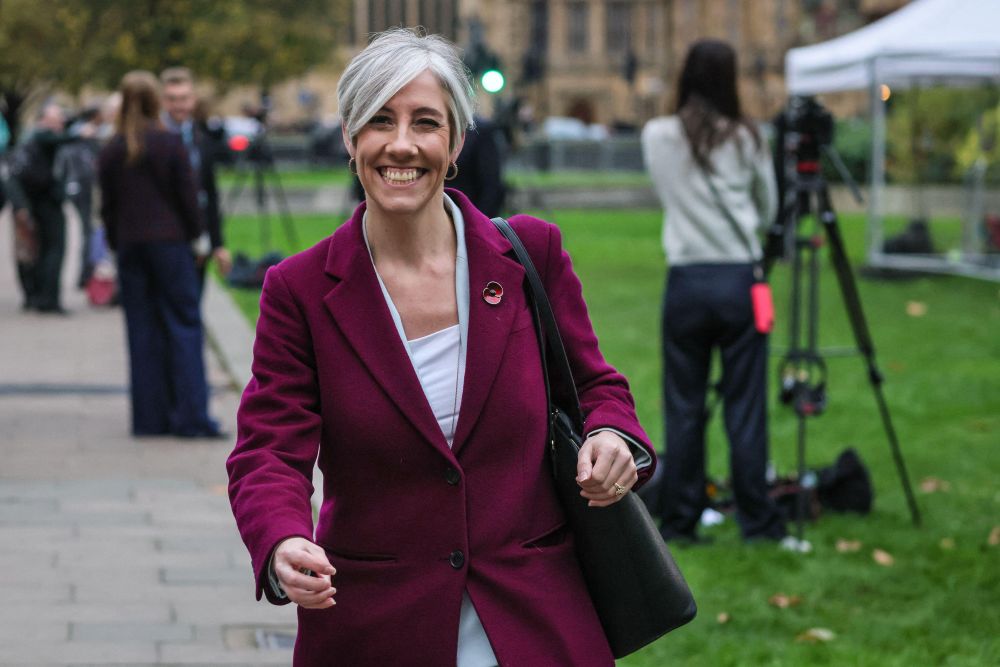
Babarinde has recently taken on the presidency of the Liberal Democrats for a three-year term, and the expectation among colleagues is that he will see that role through before considering a leadership bid – following a path similar to that taken by former leader Tim Farron.
Smart, who is a close ally of Davey, is seen as a potential continuity candidate, while Miller and Wilkinson are widely viewed as highly competent spokespeople for the party. However, MPs worry that if a leadership change were to happen now, any potential successor would struggle to achieve the same name recognition with the public that Davey has earned through years of campaigning and media stunts.
Furthermore, while there was chat about Davey’s successor in Brighton, few party figures believe a change in leadership anytime soon is a serious possibility.
While some Lib Dem MPs privately acknowledge frustrations with the party’s progress since the election, many remain relatively comfortable when looking at polling in their own constituencies, which are largely based in former-Conservative voting parts of southern England. An MRP poll carried out by Electoral Calculus in June this year shows the Lib Dems holding steady with 72 seats.
“It’s just not that deep,” one Lib Dem MP joked, arguing that some of the Lib Dem MPs most critical of Davey also “do not have an alternative” to offer.
there is an absence of underlying understanding publicly as to what the party’s purpose is
For now, the party is attempting to project unity and purpose rather than succession politics. Victoria Collins, the MP for Harrow West, described the mood of conference as one of preparation for government.
“The general tone is that we are ambitious, we are going for government, whatever that looks like, and we’re preparing for it,” she said.
That said, while Davey’s position is still regarded as secure, he is undoubtedly under pressure to clarify the party’s message beyond the so-called “blue wall” seats won at the last election.
In his conference speech on Tuesday, he made a moral case for the Lib Dems, telling the party that it is in a fight for the country’s future against the modern-day far right.
At a panel organised by the Social Liberal Forum (SLF), the SLF chair John Shreeve argued that the Liberal Democrats had become effective campaigners in areas where they already possessed capacity, but struggled to expand that model elsewhere.
“The conclusion that we reach is that there is an absence of underlying understanding publicly as to what the party’s purpose is,” he said.
“So, are we the best administrators? Well, that’s not going to exactly put us in power. It’s the scale of our delivery which is inadequate. We’re very good at delivering where we have the capacity to do so, but we are very poor at being able to stimulate and lead and inspire.”
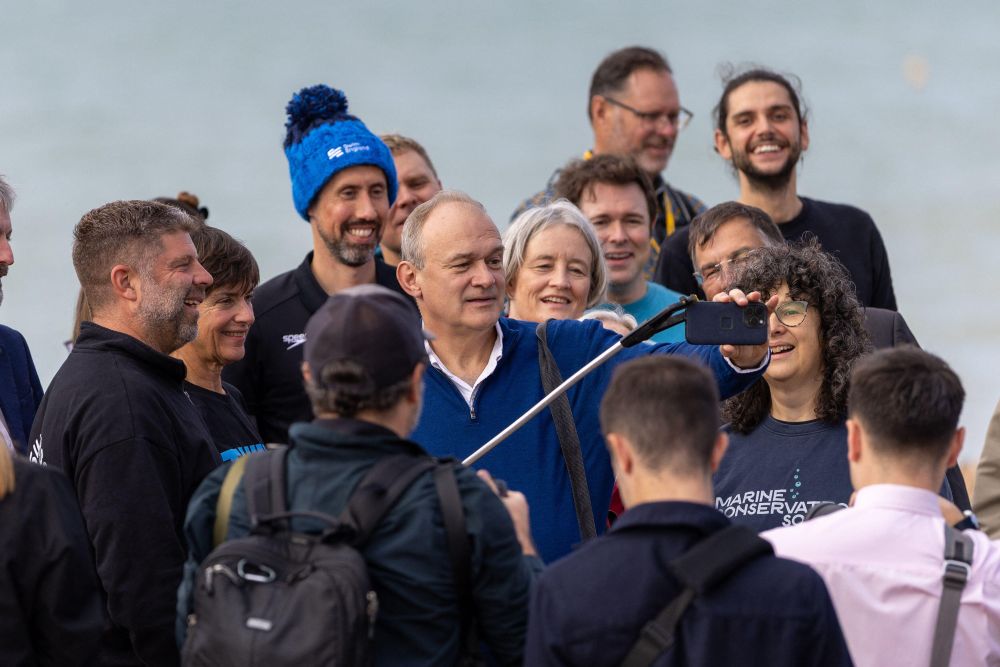
Graham Neale, chair of the Green Liberals, agreed.
“We end up, unfortunately, being sort of just populist bureaucrats,” he said at the panel event.
“‘We can get more for your council tax than this group can, or we would spend it better than that group can…’ We just end up competing to see who can be the best bureaucrats. We’ve really got a series of disconnected ideas here.”
He accused the party of being “timid” on environmental policy, taxation, and its international stance, especially around Gaza.
“We didn’t reap any benefit from our international stance in the way that the Green Party did in Southwark and other places in London.”
Other urban Lib Dems continue to feel that the party remains disproportionately focused on former Conservative territory rather than trying to make progress in some of England’s biggest cities.
Northern Lib Dems in particular are dissatisfied that the party has not done enough to address what they see as a north-south imbalance. One Manchester councillor told PoliticsHome that they had recently invited Davey to an event in the city, but that the leader declined to attend: “He doesn’t care about Manchester.”
The acknowledgement that the lack of cut-through was an issue was probably the most significant first step
Other groups have gripes with the party’s approach. Young Liberals chair Will Tennison argued that the party’s focus on the European Union was misplaced when it comes to winning over younger voters.
“They’re bored of it,” he said. “It went on too long. We’re ready to move on… The job market almost always comes out on top.”
Tennison, who sits on the party’s federal board, said the party is “aware that the messaging is not up to scratch”.
“I don’t think they’ve come up with a solution to how to fix it, but I do think it’s really good that we’ve seen an increase in the number of people at HQ that are working in the digital space. So we’ve got more social media admins, we’ve got more people doing influencer stuff. Politics isn’t won on the BBC News anymore, and in the not too distant future, it might very well be won on TikTok.”
One MP said that the party’s problem lies less in the core policies themselves – fixing the social care system, repairing the UK’s relationship with Europe and electoral reform – but more in the communication of how they would actually directly improve people’s lives.
Earlier this year, PoliticsHome reported on a “strategy rethink” inside the party, amid frustration from some MPs about the lack of progress since the general election in breaking into new ground.
The party has responded to criticisms by overhauling its communications operation, including the appointment of James Holt as political director. Holt previously served as the Liberal Democrats’ director of communications more than 10 years ago, and has returned to the UK in the last few months after working for Prince Harry and Meghan in the US.
“The acknowledgement that the lack of cut-through was an issue was probably the most significant first step,” one MP said.
“Now we’ve got people in place who should be able to help communicate and structure our vision. They won’t be able to do it overnight, but a year ago, there wasn’t even anyone working on it.”
The party has also hired content creators, reflecting a recognition that political communication is increasingly taking place away from traditional media.
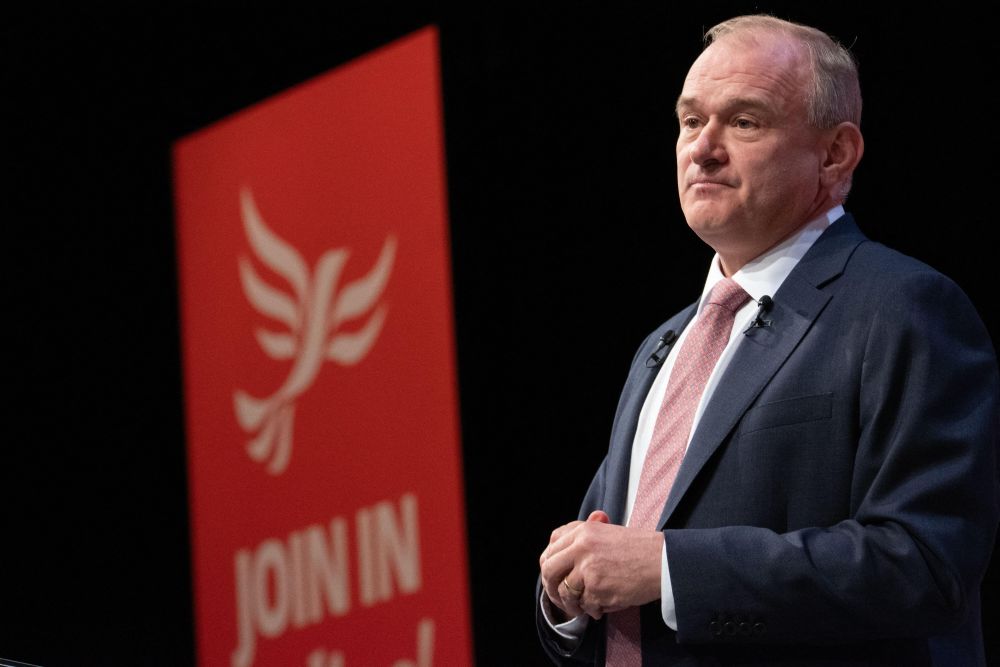
There is also a new effort to develop the intellectual infrastructure behind the party.
The Britain Project, a new think tank aiming to “convene and catalyse liberal thinking”, was launched at the conference. Davey welcomed its arrival, arguing that liberalism had lacked a dedicated Westminster think tank for too long.
“There’s been a gap in the market. There hasn’t been a liberal think tank for a long time,” he said.
“You look around Westminster and Whitehall, and there are lots of think tanks there that are supplying ideas for Labour, ideas for the Conservatives, ideas that they try to promote so that they can get policies for government. The fact that we haven’t had a think tank focused on liberalism, sharing our values, has been a real gap.”
But Davey also insisted that the organisation should not simply become a policy arm of the party.
“While we share those values, we need you to come up with ideas that I occasionally disagree with, because we need you to challenge not just me, but challenge the whole party.
“When you do come up with ideas – whether we agree with them or not – the fact that we can add them to our debate, that they can challenge us, challenge the party, is a really good thing, because that challenge, as we know, as liberals, makes those ideas better.”
If you are as close to power as we may be, you need to be serious about it
The think tank’s policy director, Lib Dem peer Lord Leunig, went further, saying his ambition was to become unpopular within his own party if that was what was required to improve its policymaking.
“My ambition is to be the least popular person in our party,” he said.
“But to be a good minister you actually have to have policies that work, and I can tell you that our party, just like all other parties… can be guilty of ‘convenientism’ – believing that what can be convenient is true – and I tell you that is not always the case.”
He later added: “We are not soft people. This is serious stuff. Because you know what? If you are as close to power as we may be, you need to be serious about it.”
Davey has hinted at a willingness to work with Labour. He has refused to completely rule out a coalition with the Conservatives, but suggested that a coalition with the Tory party in its current form under the leadership of Kemi Badenoch would be highly unlikely. One senior Lib Dem told PoliticsHome the party would never consider joining a government that wanted to leave the European Convention on Human Rights.
The MP suggested that, if coalition negotiations did eventually arise, the party should publicly identify three issues on which it would refuse to compromise: energy policy, Europe and electoral reform.
The Lib Dems feel confident that they will be a significant player come the next general election – whether it happens at the expected time or if Burnham calls an election early.
However, their own activists and MPs are still embroiled in debates about what the party’s broader purpose should be, who it should speak to, and how it can translate a collection of familiar liberal causes into a proposition that voters across the country can understand.
The SLF panellists were asked to sum up what the Lib Dems were for in just a few words. Chris Bowers, coordinator of the Yorkists group, was the only panellist to offer an answer, which placed the Lib Dems in contrast with the other political parties on the ballot box.
“We’re better than this.”

I’ve always loved singing. It’s safe to say I was a very shy child, but being in a choir as a teenager really helped me out of my shell; so much so that I found myself doing a music degree at university.
Most of all, though, I’ve always found singing therapeutic. So, when I found out that singing helps to relax your vagus nerve – the system that regulates your heart rate, breathing, and digestion – everything suddenly began to make sense.
The only problem is that I don’t personally feel I can start singing in the middle of a busy street or office when I feel my stress levels creeping up.
Sure, there’s yoga and I could do breathing exercises, but I find it difficult to stay consistent with them. And there’s nothing like the threat of another task to add to your stress!
Luckily, there could be another way around these barriers. Historically used for epilepsy treatment, vagus nerve stimulation has become increasingly popular over the last few years because you can now buy devices that do all the hard work for you.
As a shopping writer, I come across a load of health fads, so I’m usually pretty sceptical when I hear of a new device claiming to be a ‘fix-all’ for your health issues.
But considering what I knew about singing, when I heard about Neurosym, a non-invasive medical device that claims to benefit your health in a whole load of ways, I was intrigued to say the least.
Over 60 clinical studies into Neurosym have shown that its vagus nerve stimulation can see up to a 35% reduction in anxiety, 48% reduction in fatigue, 31% improvement in sleep quality, 32% increase in memory recall, and 78% decrease in inflammation – all of which I could use a helping hand with.
Shaped like a remote control, the device connects to your ear using an earpiece, which sends electrical impulses through your ear to your brain, and then helps to relax your parasympathetic nervous system.
Considering 75-90% of human diseases are linked to stress, being able to properly unwind is crucial for our wellbeing.
However, Mental Health UK’s 2026 Burnout Report finds that 91% of adults in the UK have experienced high levels of stress in the last year, leading to sleeplessness and anxiety.
Considering the benefits seen from Neurosym’s clinical studies, and the fact it’s easy to use, it seems like the kind of thing anyone could benefit from.
Unlike other vagus nerve stimulators, Neurosym doesn’t require a subscription or app to use – it’s just one upfront cost of £599, which can be paid in chunks.
The battery lasts for weeks, and you can easily take it with you wherever you go thanks to it being small and light. All you have to do to feel the stimulation is increase it to your desired frequency, and pop the earpiece in.
Although you can feel a slight tingle in your ear, Neurosym is otherwise completely non-invasive, and one of the best things about it is you can use it while doing other things, so there’s one less thing to find time for in your daily routine.
Neurosym claims that you can see the effects in as little as five days of 30-60 minutes of use per day. And if you’re wondering whether you need it – the brand has a five minute quiz on its website to check your eligibility.
The company is also currently researching whether its therapy could positively impact athletic performance, muscle recovery, weight management, and substance dependency, among other issues.
Reviewers say it’s helped them stay focused and boosts energy
The device’s reviews suggest there are many reasons why you might benefit from vagus nerve stimulation.
One customer, Lucy, said she saw a reduction in her digestion problems within a few days of using the device (some research does suggest vagus nerve stimulation can improve digestive symptoms).
Meanwhile, Hogan said the device helps him focus when he’s tired: “It levels me out helps me out a lot with being able to collect my thoughts. I also have better ability to focus, and when I do use this device on a daily basis, I find myself feeling much better in general.”
Other reviewers claimed Neurosym has helped their anxiety, boosted energy, and improved how they approach stressful situations.
With over one in five adults in the UK out of work due to sickness, and most adults citing extreme stress, anything that can result in a 35% reduction in anxious thoughts and 78% reduction in inflammation can surely only be a good thing – particularly when you can see results so quickly.


Bitcoin holds near $86,000 as spot Bitcoin ETF inflows hit 11-month high of $999 million

Nexo says 67% of affluent investors own crypto but few make it central to wealth plans – CoinJournal

‘Lioness’ Season 4 Could Change Everything for Zoe Saldaña’s Joe After That Shocking Finale

Weekend Open Thread – Corporette.com

Weekend Open Thread: Talbots – Corporette.com

Memory prices are slowing because buyers ran out of money

Bitcoin & Ethereum Price Analysis Today | Market Trend & Next Move | BTC & ETH Price Prediction 2026

Dividend Investing vs Index Funds: Which Is Better for Financial Independence?

Family Reactions When YOU ASK FOR MONEY @davidmatthew_ #shortsfeed
-
 Fashion5 days ago
Weekend Open Thread: Talbots – Corporette.com
-

 Tech3 days ago
Researchers escape OpenAI Codex sandbox to run commands on host
-

 Crypto World5 days ago
Circle launches Arc Studio AI agent for building onchain apps
-
 NewsBeat5 days ago
Trump says US has reached an agreement to take permanent control of Greenland’s security
-

 Crypto World3 days ago
Who Needs CLARITY Anyway? ARB Could See 70X Increase: Hodler’s Digest
-

 Crypto World5 days ago
Trading Bitcoin on Robinhood? Why 2% Spread Has Traders Worried
-

 Crypto World6 days ago
Mortgage and refinance interest rates today, Thursday, September 17, 2026
-

 Crypto World5 days ago
Bitcoin price breaks channel as RSI climbs to 63
-

 Crypto World7 days ago
US Charges Robinhood Engineers Over Crypto Listing Trades
-

 Tech2 days ago
Google’s $899 Googlebook is a bet that you’ll buy a new laptop for Gemini
-

 Business3 days ago
Analog Devices (ADI) Bets $1.35 Billion on Chips that Let Machines Think for Themselves
-

 Crypto World5 days ago
World Money launches in 150+ countries with Stripe
-

 Crypto World3 days ago
Coinbase, Robinhood, Circle Seen as Tokenized-Stock Winners
-

 Crypto World5 days ago
Silver prices recover quickly, hitting weekly high today
-

 Tech6 days ago
GPT-6 Astra Reached the Nether in Minecraft, Lost Its Stash to a Creeper, and Farmed Potatoes for Hours
-

 Crypto World15 hours ago
Goldman Sachs and Deutsche Bank Agree: The S&P 500 Rally Isn't Over
-

 Tech4 days ago
Trump suggests rebranding AI with a new name, says he’s also creating an AI Force
-
 NewsBeat5 days ago
US was ‘on brink of war’ with China over false AI report of nukes moving in Middle East
-

 Entertainment7 days ago
Grey’s Anatomy Showrunner Teases Changes After Cast Exits
-

 Crypto World2 days ago
Bitcoin price holds above $81K as key catalysts line up
You must be logged in to post a comment Login