

Join Mikko Hyppönen and security leaders from the NFL, CHANEL, and Atlassian for a two-hour digital summit on what AI-speed attacks change, what defenders should stop doing, and how to validate, decide, fix, and re-validate at machine speed.
Tech
Why AI Made Me a Better Principal


Artificial intelligence (AI) is often framed solely as a productivity tool for education leaders. While it does help in that capacity, I believe we are measuring AI’s value against the wrong metric.
School leaders do not simply face a shortage of time. We are facing a shortage of uninterrupted attention to our tasks at hand. Each day brings a relentless cycle of fragmented focus, decision fatigue, compliance demands and communication priorities that quietly erode the mental space needed for meaningful work – instructional leadership, relationship building and strategic systems thinking.
As a principal in a large Virginia school division (district), I have found that AI’s greatest benefit is not writing emails faster or summarizing meetings. It is reducing cognitive load so I can be more present in classrooms, coach leaders more intentionally and make better decisions when they matter most.
My Commute as a Sounding Board
Every morning, I commute approximately one hour each way to and from school. Before I began using AI, that time was divided between listening to a streaming service, mentally replaying difficult conversations and trying to remember the priorities waiting for me when I arrived. The drive was full, but it was not always reflective or productive.
Now, when conditions allow and I can use hands-free technology safely, I use ChatGPT’s voice conversation feature to turn part of my commute into a structured space for reflection and preparation. On the way to school, I might talk through the day’s priorities, anticipate a challenging conversation or identify questions to consider before a meeting. On the way home, I might process a difficult interaction, examine what went well and identify one next step for the following day.
To get the most out of these conversations, I prompt ChatGPT to draw on key leadership frameworks such as Courageous Conversations, Cognitive Coaching and Deloitte’s Courageous Principals — acting as a thought partner to refine my approach. For example, before a sensitive staff discussion, I might prompt: “Act as a cognitive coach grounded in Courageous Conversations principles. Help me outline open-ended questions to address performance concerns while maintaining trust.”
On the return drive, I might ask: “Help me process today’s leadership meeting using Deloitte’s Courageous Principals lens. What blind spots should I reflect on, and what key follow-up action should I prioritize for tomorrow?”
The value is not that ChatGPT gives me a perfect answer. Speaking aloud to a responsive thought partner helps me slow down and organize my thinking before I walk through the school doors. During the school day, I use ChatGPT selectively to synthesize information, process experiences and coach my thinking between competing responsibilities. After a meeting or classroom visit, I can drop in a few nonconfidential notes to identify patterns in teacher or student behavior, clarify next steps or prepare for a follow-up conversation.
I also use Gemini for image creation and custom Gems to streamline walk-through feedback. Because my school is under a Comprehensive Support and Improvement order, providing immediate, actionable insights following daily classroom and grade-level visits is essential.
These AI tools do not replace the human coaching relationships I am fortunate to have; they supplement them. Trusted colleagues and coaches offer professional judgment, context, challenge and care. Conversational AI simply provides a low-stakes sounding board between formal coaching sessions, helping me return to those human relationships more centered.
To be clear, I never input confidential student or personnel information into AI. I use these tools strictly in ways that protect privacy, ensure accuracy and maintain human accountability. Establishing these guardrails helped me transition from using AI merely as a personal productivity aid to leveraging it to support stronger routines and shared learning across our leadership team.
From Weekly Execution to Universal Design
As I became more comfortable using AI every day as a principal, I moved from one-time prompts to repeatable workflows. In leadership, those tasks include drafting communications, synthesizing evidence, organizing meeting notes, preparing feedback and differentiating messages for different audiences. Instead of asking AI to complete an isolated task, I am building systems around the work that takes a significant cognitive load.
For my weekly work, I rely on custom AI projects to organize recurring materials, think through priorities and create first-pass summaries that I can review and refine.
One of the most transformative shifts has been how I approach communication using tools such as Gemini Notebook. Weekly principal messages can become text-heavy and hard for busy staff members to digest. To practice what we teach about Universal Design for Learning, I use Gemini Notebook to transform my messages into podcast-style audio overviews. Instead of receiving only a dense memo, staff members have access to a quick, 90-second to two-minute overview.
This gives staff another way to engage with important information. It also reminds me that communication is not complete simply because information has been sent. Communication is successful when people can access, understand and use what they receive.
Using AI with the evidence and documents in front of me has also been valuable when making leadership decisions. Rather than asking for generic advice, I can ask for work-aligned insight by providing approved materials such as school improvement documents, assessment summaries, staff feedback, observation notes or professional learning resources. AI can help identify patterns, gaps, contradictions and questions that require further investigation.
This helps me show up to leadership meetings with a clearer picture of the evidence and better questions for my team. The decisions about what to do next still belong to me and to the people closest to the work. AI can organize the evidence, but it cannot replace professional knowledge, context or accountability.
From Individual Experimentation to Shared Professional Learning
My school division’s investment in artificial intelligence has moved my use from private experimentation to shared professional learning. Through professional learning, partnerships and access to approved tools, I have developed workflows that prioritize data privacy, protection and responsible use.
During our school’s leadership kickoff session, “AI in Action 201: Custom Gems, Projects, and Powerful Learning Design,” I learned workflows that I have adapted to improve my day-to-day messaging, communication and leadership routines. I have also shared these workflows with my principal peers so they can consider how similar tools might support their own practice and leadership.
As a lead learner, I am working to model thoughtful and responsible AI use for my assistant principals and leadership team, with the goal of eventually helping teachers and students use AI as a tool for reflection, creativity and learning. The division’s approach has helped me think more clearly about guardrails: using division-supported tools and approved environments, protecting confidential information, verifying AI-generated content and centering professional judgment and human accountability.
The value of these AI workflows is not that they make leadership less demanding. Schools are still complex, human organizations, and the most important work cannot be automated. The difference is that they bring me greater clarity. When AI helps me organize competing priorities, synthesize information or prepare for a difficult conversation, I can listen more carefully, notice who has not spoken in a discussion and respond with greater patience.
That additional capacity changes what people experience from me as their school leader. Staff members see a leader who is more prepared and present in meetings. Students see a principal who can focus more fully during walk-throughs, classroom visits and school events. Families see a leader who has more patience and attention for their questions and concerns.
Making Space for More Human Leadership
As I have grown in my AI journey, my perspective has shifted. I am no longer looking at AI to determine how many minutes it can cut from my task list. I am asking: How can I use it so I can invest more deeply in relationships, empowerment and presence?
Using AI requires discipline. Responsible AI use is not about surrendering judgment to a tool. It is about using the tool to create more space for judgment.
When AI helps offload low-value administrative friction, we reclaim the mental bandwidth required to notice the small human elements. We regain the energy to lean into empathy, walk the hallways with our eyes up and truly listen to the staff, students and families we serve.
The next time we evaluate a new tool or workflow, let us do more than ask what administrative task it can automate. Let us also ask what relationship it can protect, what decision it can help us consider more carefully and what kind of leadership it makes possible.
The scarce resource in school leadership is not simply time; it is attention. It is the ability to be fully present for the people and decisions that matter most.
If AI can help us make better use of our time and reduce the cognitive load that competes for our attention, then its greatest contribution is not greater efficiency; it is more present, human leadership.
Continue Reading


Threat actors have moved from probing WordPress sites vulnerable to CVE-2026-87902 to exploiting the flaw to write files to disk that execute shell commands when accessed.
Initial attack traffic was only for reconnaissance and started less than five hours after the patch was released in WordPress 7.1.2. Malicious activity increased by ten times, and attackers are now trying to deliver payloads.
WordPress security firm Patchstack reports that it observed the first malicious requests at 17:44 UTC on September 22 from a small group of IP addresses targeting multiple sites under its protection.
Discovered by security researcher Robert Ressl, the issue is an unauthenticated path traversal bug that can lead to remote code execution (RCE) under certain conditions.
The WordPress security team assesses that CVE-2026-87902 has critical severity, assigning a score of 9.2 out of 10.
“An unauthenticated attacker can make get_page_template() page-template resolution include a chosen readable local .php file outside the active theme directories,” reads the official advisory.
For RCE to be possible, the following conditions are required:
- Active parent or child theme must have a top-level directory with a name starting with page-, such as page-templates. The attacker must also target a local .PHP file that exists and is readable by the web server
- The included file must be readable by the web server account. The advisory gives pearcmd.php as an example when PHP’s register_argc_argv setting is active.
The WordPress advisory notes that the official PHP image for Docker is affected, and so is the default cPanel configuration when a PHP version before 8.5 is used.
WordPress addressed CVE-2026-87902 yesterday with the release of version 7.1.2, and fixes have also been backported to all branches down to 4.7 because of the critical severity of the flaw. Releases before 4.6 will not be getting a fix for this flaw.
Patchstack reports that in the observed reconnaissance activity, the attackers attempted to include ordinary WordPress core files, apparently to identify vulnerable sites.
Starting today, the researchers noticed that traffic related to the vulnerability increased tenfold and includes a writing to disk stage.
“The third stage swaps config-show for config-create, which pearcmd will happily use to write a file wherever it is told, with content the attacker controls.”
Some of the payloads only write a string that marks the host as exploitable via CVE-2026-87902. However, the researchers also saw payloads that “write a short tag that executes a shell command on access,” which indicates malicious activity.
The files are delivered to /tmp and /var/tmp and have names like wp-pear-rce-flag.php, poc87902.php, luci_
Although the security firm did not publish a working request example, it warned that the observed probes use double-encoded traversal sequences in ‘pagename’ alongside a valid ‘page_id.’
The source IPs that should be added to a blocklist are 169.58.48.193, 169.58.48.195, and 2001:df1:e8c0::106b.
Given the active exploitation of CVE-2026-87902, website administrators should update to WordPress version 7.1.2 as soon as possible and review the logs for malicious activity.

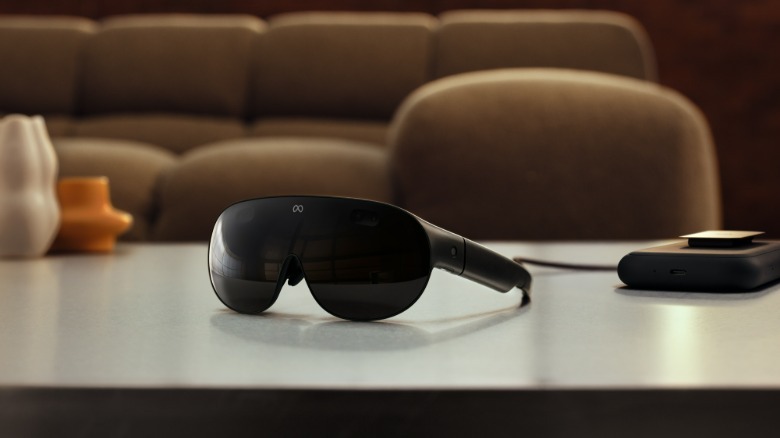
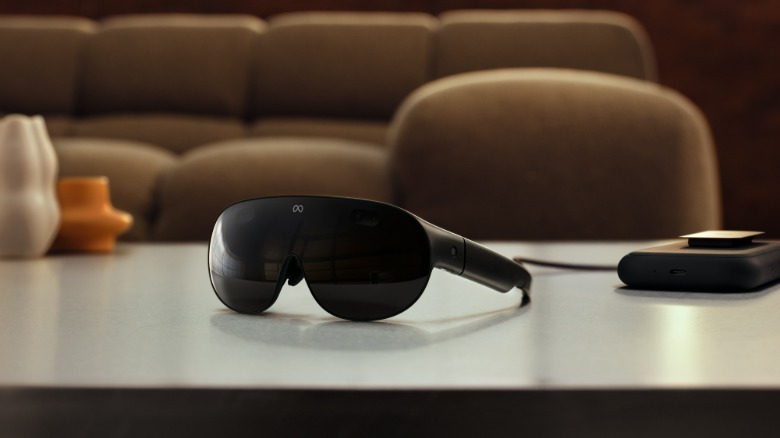
After a few leaks, Meta CEO Mark Zuckerberg finally revealed the company’s next-generation Meta VR Glasses at its Connect event tonight. Arriving in Spring 2027, they look like oversized sunglasses (similar to display frames from Xreal and other), paired with an external power and computing pod, like the Apple Vision Pro. The Meta VR Glasses also have onboard cameras to detect the wearer’s hands for gesture-based controls. While they’re not cheap at $1,300, they’re a far cry from the Vision Pro’s original $3,500 cost, or its current $3,700 price. And at first glance, they look exactly like how I’d imagine a true successor to the Vision Pro — a pair of unobtrusive and lightweight VR glasses at a more palatable price.
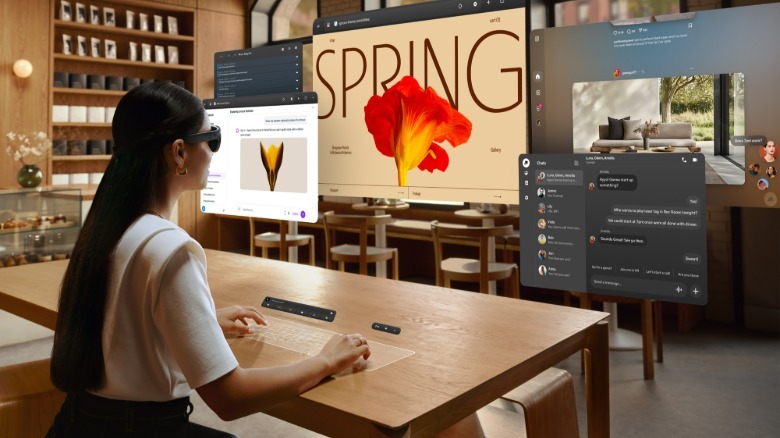
Meta is pitching the VR Glasses as an all-in-one entertainment and productivity device. Just like the Vision Pro, you can watch movies on enormous virtual screens, or connect to your computer to multitask with multiple windows floating in front of you. The VR Glasses are launching together with more than 75 hand-powered games, and you can also connect a pair of Touch Plus controllers to play existing Quest VR games.
 Meta
Meta
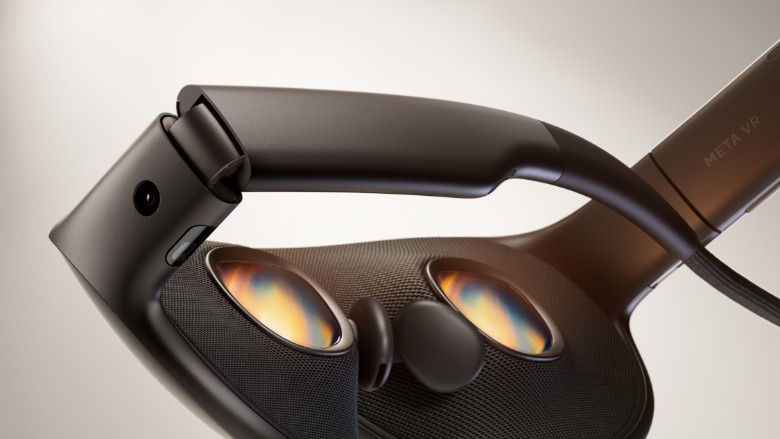
The Meta VR Glasses are powered by Qualcomm’s new Snapdragon Reality Elite processor, the XR2 Gen 3, and feature a 5K (2,412 by 2,288 pixels) 120Hz micro-OLED display. It relies on six external cameras for color passthrough and motion tracking, and also has four internal eye-tracking cameras. With a 70-degree horizontal field of view, the Meta VR Glasses won’t fill your eyes with VR as much as the Vision Pro’s 100-degree FOV, but it’s significantly higher than most display glasses. Meta’s wired computing puck, which looks compact enough to slip in a pocket, holds 12GB of RAM and 128GB of storage (along with a microSD card slot for more content).
On their own, the Meta VR Glasses weigh 100 grams, or about 0.2 pounds. That’s only a tad heavier than Xreal’s One Pro AR display glasses, and significantly lighter than the Vision Pro’s headset, which weighs between 1.3 to 1.7 pounds. (Part of that weight is counter-balanced by the Vision Pro’s head strap, to be fair.) Meta’s compute puck weighs an additional 300 grams (0.6 pounds), slightly lighter than the Vision Pro’s. Judging from the product photos, you won’t be able to wear the Meta VR Glasses over your own spectacles, but as usual, you can order custom prescription frames.
Zuckerberg has never shied away from blatantly copying competitors, and it’s pretty clear the company took plenty of inspiration from the Vision Pro for the Meta VR Glasses. Full-color pass-through lets you see the real world alongside VR experiences; the interface is entirely built around hand gestures; it’s unlocked via biometric iris recognition; and you can virtually chat with friends using a digital “Hologram” recreation of yourself. It’s like a checklist of the features that made the Vision Pro seem more thoughtful than a normal headset.
 Meta
Meta
Meta appears to be aping the Vision Pro’s approach to 3D movies as well: The Meta VR Glasses will have hundreds of 3D films available to buy or rent, and you’ll also find 3D content in streaming apps like Disney+ and Peacock. Given the death of 3D TVs, the Vision Pro has ultimately become one of the few ways to enjoy 3D films like Avatar in their full glory, so it’s nice to see Meta offering something similar. And since the Meta VR runs Quest OS, I’m hoping this 3D content storefront eventually heads to the Quest VR headsets.
Additionally, it sounds like the company is taking a cue from Apple’s Immersive Video Format — Meta says National Geographic will be launching a new app next year with 180-degree 3D Video. A new “VR Enhanced Cinema” format will let you watch 3D movies with effects that bleed into your real-world space, similar to the way dynamic ambient lighting on TVs makes content more immersive. The company says Avenger’s: Infinity War and Star Wars: Episode IV, A New Hope will be available in the VR format next year. (It’s odd Disney didn’t pick newer movies, though.)
 Meta
Meta
Unlike the similarly-priced $1,050 Steam Frame, the Meta VR Glasses are, at the very least, evolving the idea of what a VR headset can be. It likely won’t be as immersive as the Frame and other headsets that completely envelop your field of vision, but for most people, it’s probably worth losing that to have a device that’s just easier to wear. You won’t look like a huge weirdo slipping them on while flying, and since you wear them like glasses, there’s little chance they’ll mess up your hair as badly as a typical VR headset.
 Meta
Meta
The biggest downsides for the Meta VR Glasses are its $1,300 price — though I’m sure many VR diehards and Vision Pro fans would jump on it — and the fact they come from Meta, a company that not everyone is a huge fan of. Since these are obviously VR specs, I don’t think they’d have the same privacy concerns as Meta’s Ray-Ban and Display glasses, but the company has significantly poisoned the idea of wearing anything in public with cameras.
Apple’s new CEO John Ternus isn’t giving up on the Vision Pro just yet — “It’s the early days of a long journey,” he said in a recent interview with Clique TV (via MacRumors). But recent layoffs and the departure of the product’s lead haven’t been good signs for the headset. And now there’s the Meta VR Glasses, which builds on the Vision Pro’s innovations to deliver something that’s lighter, cheaper and more consumer-friendly.

I’ll say it: Starz is the “bad boy” of streaming platforms. Although competitor HBO is much better known, Starz’s content has a similar vibe, focusing on bold, often gritty, action-heavy original series like Power and Outlander. Plus, Starz has a catalog of Lionsgate studio films like The Wolf of Wall Street and Django Unchained. Starz also offers a suite of over 17 channels and on-demand streaming, with original series, blockbuster movies, and niche genres, including the Starz Encore suite, with Spanish-speaking content, action, and western movies.
Starz is also one of the most inexpensive streaming platforms, on average about $7 less than equivalent HBO Max subscriptions. Plus, you can have four simultaneous streams so the whole family can watch what they want—a sad rarity today, where titans like Netflix crack down on multiple streamers. With Starz, you’ll always get ad-free content, offline streaming via downloads, and the ability to stream on multiple devices simultaneously. Whether you want intense TV content or old film favorites, now’s a great time to see if Starz is a fit for way less when you use a Starz promo code or Starz coupon.
Grab Your Starz Promo Code: $5 Per Month for 3 Months
Never tried Starz before? You’re in luck. Now’s a great time to see if this streaming service is right for you with this Starz coupon code for new subscribers. New members can currently get Starz for only $5 per month for three months after signing up. You can stream on up to four devices at the same time, with unlimited HD streaming and downloads, so the whole family can enjoy high-quality, premium content.
How to Get a Starz Free Trial in 2026
If you have a platform like Amazon Prime Video or Hulu, you can sign up for a free seven-day Starz trial to add to your existing subscription on that platform. Here’s how to get a Starz free trial: sign up through one of these platforms for the week-long free trial, which provides full access to movies and original series. After the period expires, it will automatically convert to a monthly subscription fee of $11 or $12 per month if you don’t cancel before the trial is over.
Save More With a Starz Student Discount
If you’re a student with an existing Hulu subscription, you’re in luck. While there’s no set Starz discount for students, you can add Starz to your existing Hulu account for only $12 per month. With both, you’ll have access to hundreds of TV shows and films across various content and streaming platforms. You’ll need to verify your student status and complete the next steps to add Starz to your existing Hulu account.
.jpg)
A Thousand Blows, Tell Me Lies, and Paradise are just a few of the shows you should be watching on Hulu this month.
Keep Saving: Starz Coupon Codes for Existing Customers
While a Starz promo code for existing customers is rare, current Starz subscribers can save big by bundling offers through a cable provider or by bundling with an existing streaming account, as mentioned above. Right now, Starz is running promos on their monthly and annual plans, with plans as low as $5 per month and savings of 58% for three months. Starz also offers annual subscription deals for as low as $3 per month when you prepay $36 for 12 months.

Connecting the dots: Despite modern breakthroughs in medicine, researchers are still having a hard time studying certain traits of the brain. A new study suggests that this complex part of the human body is, in fact, composed of two distinct functional organs acting as one. Trying to generate one specific type of brain cell from the other in a laboratory setting may therefore be doomed to fail.
Scientists have tried studying and scanning every single part of the human brain, but it turns out that everything they thought they knew was (mostly) wrong. A new study by researchers at Stanford School of Medicine explains that the brain is comprised of two distinct organs that have evolved to work together over hundreds of millions of years.
The Stanford research goes way beyond the popular – and mostly incorrect – idea that the brain consists of three main regions controlling specific functions of the human body. In fact, the study says that the two organs comprising the human brain originate from two different types of stem cells.
The first part – the hindbrain – is tasked with overseeing some of the body’s most basic functions, such as the heartbeat, breathing, and swallowing. Meanwhile, the second part – the midbrain and forebrain – manages more complex functions including higher-level thinking and speech.
As researchers explain in the new study, the hindbrain is derived from a different type of stem cell than the “high-level” part of the brain composed of the midbrain and forebrain.
According to Stanford researcher Kyle Loh, the discovery “means that we can now grow neurons from the back of the brain, the hindbrain, in a petri dish and study their functions.”

So far, biologists have had a hard time developing samples of hindbrain-related neurons for research purposes. The study says that one particular type of stem cell expresses the Otx2 gene and will eventually develop into cells that form the higher parts of the brain. Meanwhile, another type of cell expresses the Gbx2 gene and will develop into hindbrain neurons.
The two cell types have other significant differences, including how DNA is packed and “condensed” inside a cell’s nucleus in a process known as chromatin organization. Chromatin structure affects which genes are expressed and how they are expressed during a cell’s lifespan, which in turn influences the cell’s developmental fate. Otx2-expressing cells and Gbx2-expressing cells have “fundamentally” different chromatin structures, the study says.
Previously, researchers tried to develop hindbrain cells from pluripotent cells that were “designed” by nature to become forebrain and midbrain neurons. The Stanford study suggests that this type of effort is essentially fruitless because it lacks a major piece of the brain’s evolutionary puzzle.
The researchers discovered that the two-part origin of the brain is also present in modern chickens, zebrafish, and acorn worms. Jellyfish, a type of marine creature that diverged from humans 600 to 700 million years ago, still have two distinct nervous systems at opposite ends of their bodies.
Now that they have a better understanding of how the two-part brain evolved, researchers hope to have a better chance of studying – and eventually treating – debilitating neurological conditions such as spinal muscular atrophy (SMA) and amyotrophic lateral sclerosis (ALS). Both SMA and ALS can significantly impair neuron function in the hindbrain, and the new study could provide clues for developing effective regenerative therapies for both conditions.
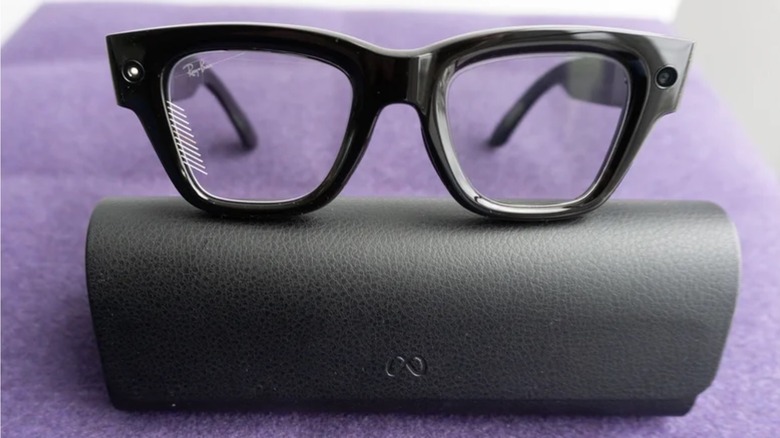
The smart glasses are also arriving in five new markets this fall.
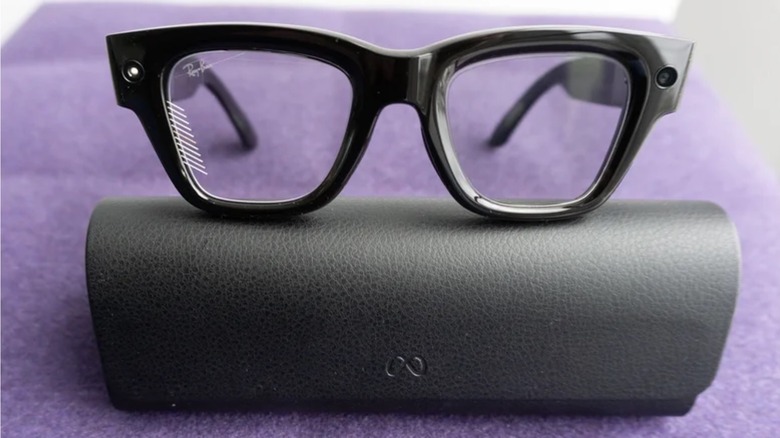
Today’s Meta Connect 2026 conference shared a lot of news about the company’s Ray-Ban Display smart glasses, which were introduced at the same event last year.
One of the notable changes coming to the device is support for a holographic avatar while taking calls. Since calls via smart glasses mean the wearer’s face isn’t visible to whomever they’re chatting with, this feature uses the Meta AI app to create a photorealistic hologram to display instead. According to the press release, “Your hologram is driven entirely by your voice, and the hologram model infers your expression from what you’re saying and how you’re saying it.” The Hologram feature will initially be available in early access later this fall for WhatsApp users in the US.
The glasses’ heads-up navigation tools have also been expanded, allowing a wearer to ask for cycling or public transit directions with a voice command. Users in the US and Canada will be the first to have this feature, rolling out later this month. Additionally, the navigation directions can now be based on the world around the person rather than solely relying on street signs for a more conversational experience. For example, you might be directed to “turn left at the yellow house” rather than to “turn left on Third Street.”
When Karissa Bell reviewed the Ray-Ban Display smart glasses last year, one of the top issues she had with the Display was a lack of available apps. A new Explore app is coming to both the smart glasses and the Meta AI app that will help users to browse available programs that do work on the set.
The other features announced today include some incremental improvements to the user experience, such as bringing Dolby Atmos audio to its capture and playback tools, photo editing within the Display screen, a more detailed calendar, mirrored phone notifications and Threads for Community Feeds.
The Meta Ray-Ban Display is coming to five new markets: the UK, Canada, France, Italy and Germany. The glasses will be available to order online in those regions, as well as in the US. Display is available starting today in the UK starting at £749 and in Canada starting at CA$1,149. Pre-orders will begin today for the other three new markets for a base price of €899 before Display becomes available on October 13.

Wireless headphones have become dramatically better, but the basic connection problem has not disappeared. Bluetooth remains convenient and power-efficient, yet higher-resolution lossless playback still runs into bandwidth, codec compatibility and battery-life limitations that become harder to ignore as headphones themselves get more sophisticated.
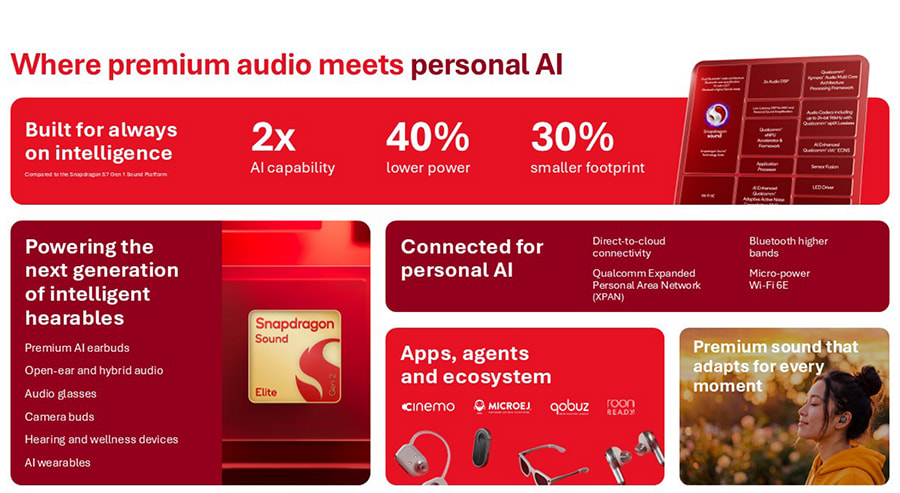
Qualcomm thinks the next step involves adding something Bluetooth headphones have traditionally avoided: Wi-Fi. Its new Snapdragon Sound Elite Gen 2 platform integrates micro-power Wi-Fi 6E, Qualcomm XPAN, aptX Lossless, substantially more AI processing and a fifth generation of Adaptive ANC into a platform designed for future headphones, earbuds, open-ear products, audio glasses and other wearables.
We recently examined whether wireless headphones really need 24-bit/192kHz lossless audio, along with HiFiMAN’s Arya WiFi and HE1000 WiFi, which already demonstrated both the sonic potential and battery-life consequences of moving serious headphone playback onto Wi-Fi.
Qualcomm would clearly prefer that tradeoff to become considerably less painful.
What Is Snapdragon Sound Elite Gen 2?

Snapdragon Sound Elite Gen 2 is not a headphone or wireless codec. It is an integrated hardware and software platform that manufacturers can build into future audio products, combining audio processing, wireless connectivity, AI acceleration, sensing and voice processing in one architecture.
The biggest audio development is integrated micro-power Wi-Fi 6E, supporting the 2.4GHz, 5GHz and 6GHz bands. Combined with Qualcomm’s XPAN technology, the platform can deliver lossless music streaming at up to 192kHz over Wi-Fi, while also extending wireless range beyond what conventional Bluetooth connections can provide.
Bluetooth is not disappearing. Qualcomm still includes aptX Lossless, and products will continue to use Bluetooth where its lower power consumption and universal convenience make more sense.
The interesting part is that future headphones could potentially move between Bluetooth and Wi-Fi depending on what you are doing rather than forcing one connection technology to handle everything.
Why Does This Matter?
We have already seen how messy premium wireless audio can become.
The Bowers & Wilkins Px8 S2 supports aptX Lossless and aptX Adaptive, but Apple hardware does not support either codec natively. The Sennheiser HDB 630 attacks the problem with its BTD 700 USB Type-C transmitter, while HiFiMAN’s Arya WiFi and HE1000 WiFi largely sidestep Bluetooth bandwidth limitations by using Wi-Fi as their primary high-quality connection.
All three approaches work, but none qualifies as completely frictionless.
Snapdragon Sound Elite Gen 2 could give manufacturers a more integrated route to Wi-Fi playback without requiring them to engineer the entire connectivity architecture themselves. Qualcomm also says the platform is up to 30% smaller than its Snapdragon S7 Gen 1 design and can use up to 40% less power in the Wi-Fi-connected idle scenario used for its internal comparison. Those are Qualcomm claims, and the company notes that actual implementations will vary.
That qualification matters. Audiophiles have heard enough miraculous battery-life predictions to know where the charger is kept.
ANC, AI and Earbuds That No Longer Need Your Phone for Everything
Qualcomm is also giving manufacturers considerably more processing power. Elite Gen 2 provides up to 128 GOPS of AI acceleration, twice the peak AI capability Qualcomm cites for Snapdragon S7 Gen 1, along with fifth-generation Adaptive ANC and enhanced cVc voice processing.
Those resources can be used for adaptive noise cancellation, voice capture, transparency modes, real-time translation, personalized hearing and contextual audio processing.
More unusually, the integrated Wi-Fi connection can provide direct cloud connectivity, allowing future earbuds or glasses to communicate with online services without routing every interaction through a smartphone. Qualcomm is packaging those capabilities under Snapdragon Sound Apps & Agents.
The target products extend well beyond conventional ANC headphones. Qualcomm specifically lists earbuds, open-ear designs, audio glasses, hearing devices and even camera-equipped earbuds, because apparently putting cameras into glasses was merely the opening act.
What Products Will Use It?
None that consumers can buy yet.
Cleer demonstrated an early audio, vision and AI concept at Snapdragon Summit 2026, but Qualcomm has not announced it as a commercial product. Qualcomm also said HP is developing a product based on the Snapdragon Sound Elite platform and that it has been working with Bose on potential future applications, without announcing specific Bose hardware.
That means the real test comes when manufacturers start shipping finished products.
Qualcomm can provide Wi-Fi, XPAN, lossless playback, AI processing and better ANC tools, but manufacturers still have to build headphones that sound good, remain comfortable, deliver acceptable battery life and do not require a flowchart to connect to your phone.
The Bottom Line
Could This Actually Change Wireless Headphones?
Potentially, yes, because the important development is not AI whispering restaurant recommendations into your ears, but the possibility that Bluetooth stops being the only practical wireless pipeline for premium headphones.
Wi-Fi could handle higher-bandwidth lossless audio, longer-range playback and cloud connectivity while Bluetooth remains available for lower-power everyday use. If Qualcomm can make that transition seamless and manufacturers can preserve battery life, wireless headphones could finally move beyond the codec compromises we have been discussing for years.
The headphone industry has spent a decade trying to squeeze increasingly ambitious audio through Bluetooth.
Qualcomm’s answer may be surprisingly simple: stop asking Bluetooth to do everything.
For more information: qualcomm.com\
Related Reading:
Tech
Meta VR Glasses Fold a Personal Cinema Workspace and Console Into a Hundred Gram Frame That Goes on Sale Next Spring


After more than a decade of headset work, Meta introduced Meta VR Glasses at Connect 2026 today as a two-piece system that keeps roughly one hundred grams on your face and parks the rest in a clip-on puck. Magnesium alloy frames sit on your ears with no head strap and open sides so you still see the room to your left, right, and below.
Dual high-quality OLED panels inside the compact pancake lenses produce 2412 by 2288 pixels per eye at up to 120 Hz and 37 pixels per degree, resulting in a significant increase in sharpness that allows tiny text to be read on virtual screens. The field of view measures 70 degrees broad and 66 degrees tall, which is not as wide as the Quest 3, but still adequate for watching movies and working on many screens at once. Full-color passthrough cameras fill in the scene in front of you at around 26 pixels per degree, while the periphery remains loose enough to keep you oriented in the real world.

Meta Quest 3S 128GB | Virtual Reality — VR Headset — Gorilla Tag Bundle
- CARDBOARD MONKENAUT — Get our best Gorilla Tag bundle yet with this Amazon exclusive deal. Purchase Meta Quest 3S to get exclusive items, including…
- NO WIRES, MORE FUN — Break free from cords. Game, play and explore immersive worlds — untethered and without limits.
- 2X GRAPHICAL PROCESSING POWER — Enjoy lightning-fast load times and next-gen graphics for smooth gaming powered by the Snapdragon XR2 Gen…
The puck contains the Qualcomm Snapdragon Reality Elite CPU, 12GB of memory, 128GB of storage, and a battery. This is connected via a thin optical wire that transmits power and data. The puck clips to a pocket or bag, weighs roughly 300 grams, has a microSD slot that accepts cards up to a terabyte, and charges at 45 watts. You can also continue to use the glasses while the puck recharges; media playback can last up to three hours before that happens, and you get Dolby Vision and Dolby Atmos built in, as well as Meta claiming to be the first VR device to receive IMAX Enhanced certification, which means certain films will look even more epic.
Hand tracking, four-camera eye tracking, face tracking, and speech recognition replace the traditional controls. You can select something by pinching, scrolling with your thumb, or simply seeing and speaking. At launch, you can use over 75 titles with just your hands while still having access to the whole Quest catalog. Touch Plus controllers can be added later or used with your existing Quest 3 or 3S. Any table transforms into a virtual keyboard and trackpad, and if you have a Mac or a Windows laptop, you can connect a Bluetooth or USB-C Displayport to feed a big private display to the glasses while maintaining an eye on your real desk and phone.
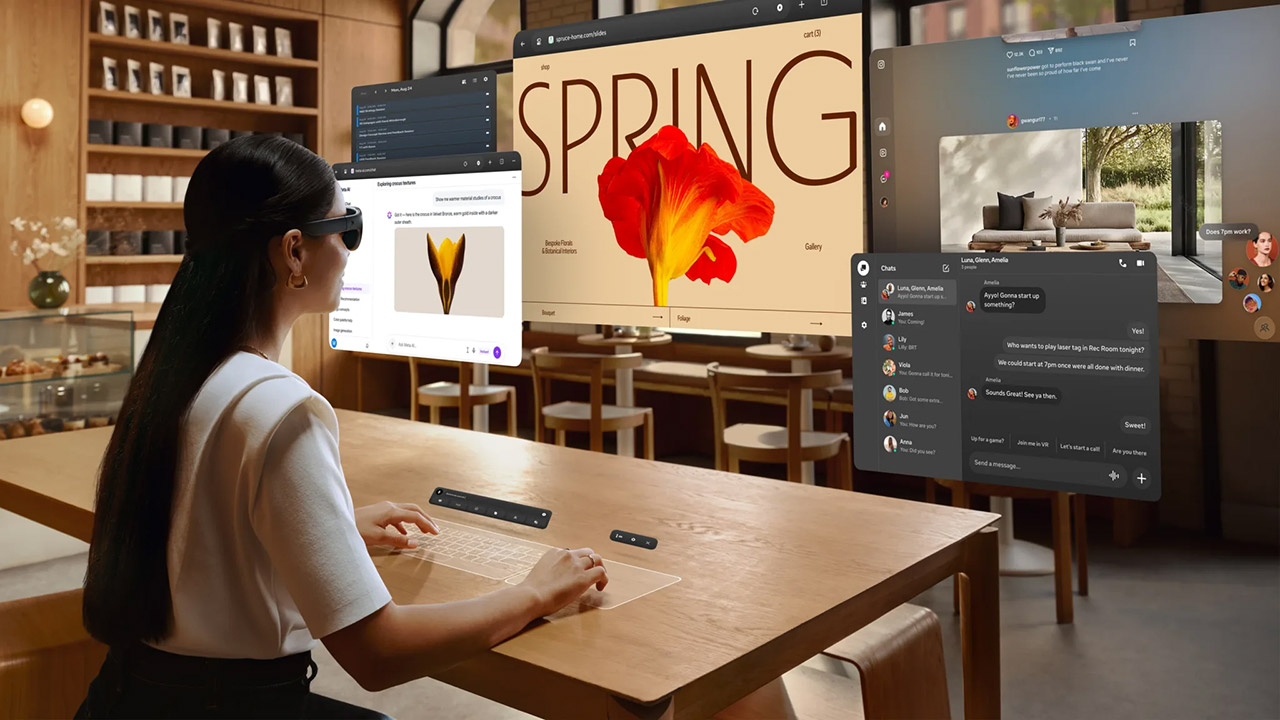
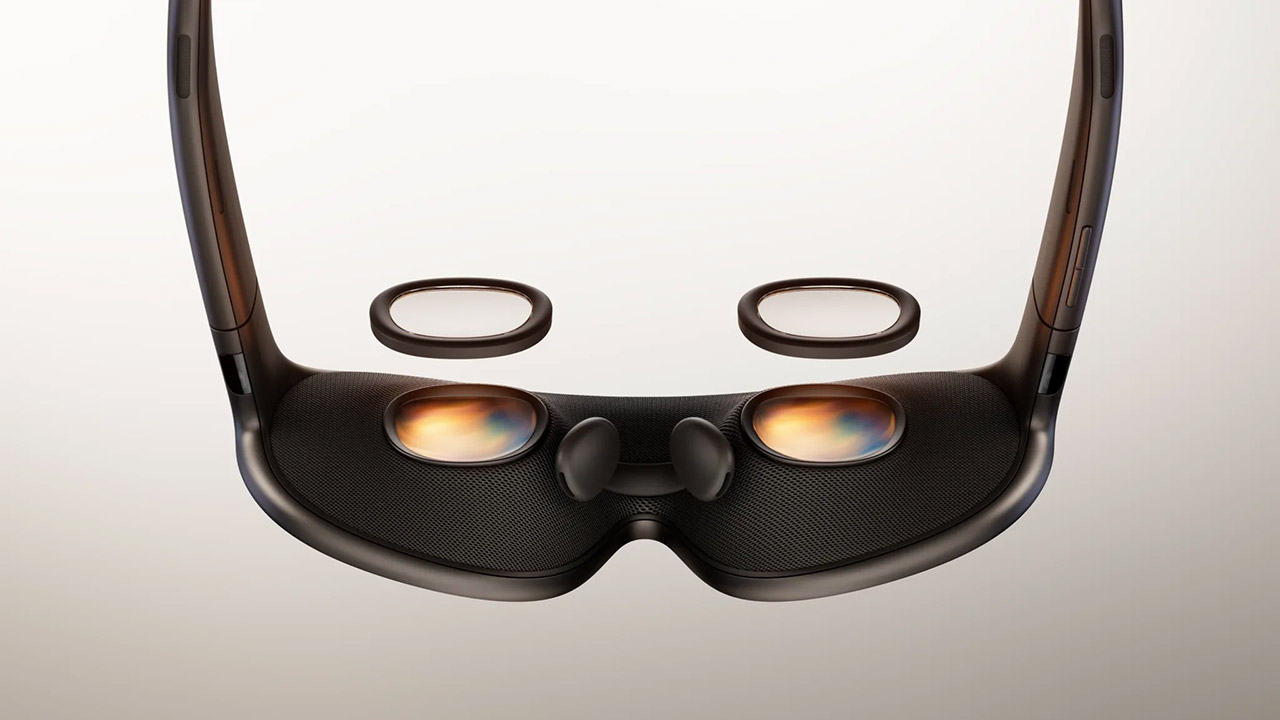
Disney+ will launch 3D movies and immersive cinema environments in November, followed by James Cameron and Lightstorm Vision 3D in 2027. Prime Video, YouTube, HBO Max, and Paramount+ are also preparing to update their 3D catalogs. ESPN, MLB, NBC Sports, TNT Sports, and the UFC are aiming for over 100 immersive live events per year, some of which will be in 8K and feature 180 degrees of action. Xbox Cloud gaming uses a Bluetooth controller, and there is hologram calling, which is based on Meta’s Codec Avatars research and allows you to communicate with people via WhatsApp or Zoom while they see a photorealistic image of you. Other VR Glasses owners get a full life-size spatial perspective, but the original version just shows a 2.5D stream of your face.

When you want to turn the theater up to complete darkness, optional light blockers can close in on the sides, and prescription inserts cost a hundred dollars because standard glasses just will not fit underneath. Muse, Meta’s AI-powered assistant, resides right alongside Quest 3 in the same operating system, so you can simply instruct it to start a movie, move the windows around, or search for something without lifting a finger. You must accept that the shorter battery life and reduced field of view are the clear trade-off for how lightweight and portable this device is. The Meta VR Glasses, priced at $1,299.99, are expected to be available in the spring of 2027; no preorders have been announced as of yet.
from the to-hell-with-those-children dept
What if all this time, we have completely misunderstood RFK Jr.’s obsession with keeping children from being vaccinated? What if the notion that he was a true anti-vaxxer, or was ignorant and confused on how this whole science things works, was completely wrong? What if he just hates children, particularly black and brown children, and wants less of them to exist?
It’s a weird premise, I know. But then you learn that Kennedy has exploded the budget for his own personal security to three-times the historical amount and he paid for it by grabbing funds meant for the Office of Minority Health.
According to a Wall Street Journal article published on Tuesday, the Department of Health and Human Services told congressional appropriators earlier this year that it was shifting about $12 million from its Office of Minority Health to help pay for Kennedy’s protection. The Journal cited people familiar with the matter and a document it reviewed.
According to The Journal’s sources, Kennedy’s security costs rose from roughly $10 million in fiscal 2025 to $17 million in fiscal 2026. Those sources said protection for previous HHS secretaries ran about $5 million a year.
The Office of Minority Health was created under Reagan when people bothered to notice that black infants in America had a survival rate well below that of their white counterparts. It has an annual budget of $74 million, meaning that Kennedy yoinked away nearly a quarter of its funding. You may also have noticed that Kennedy’s security costs rose $7 million, yet he took $12 million from OMH. Why? According to HHS, the answer is because HHS has been hit by large funding cuts. Cuts that this administration, and Kennedy, put in place.
So, to summarize, Kennedy has a security budget for himself that is over 3 times the historical budget for his position, he took more money than that security actually costs from a tiny agency in government meant to protect the health of black and brown people, mostly babies, and HHS essentially blamed all of this on itself. Black children must die so that Kennedy can feel more safe, apparently.
Oh, and it seems Kennedy may not have even needed that money in the first place.
The sources also told The Journal that the secretary’s office had a large pool of discretionary money it could have used instead.
Now, I’m not saying that Kennedy definitely wants black and brown children to die at a higher rate. I’m saying he clearly doesn’t care that they may die at a higher rate, so long as he feels more safe. After all, sociopaths don’t really want others to die or be in pain; they just don’t care if that happens so long as they benefit.
Hopefully the rest of us not dealing with that affliction can agree that this is very gross.
Filed Under: hhs, minority health, office of minority health, rfk jr., security
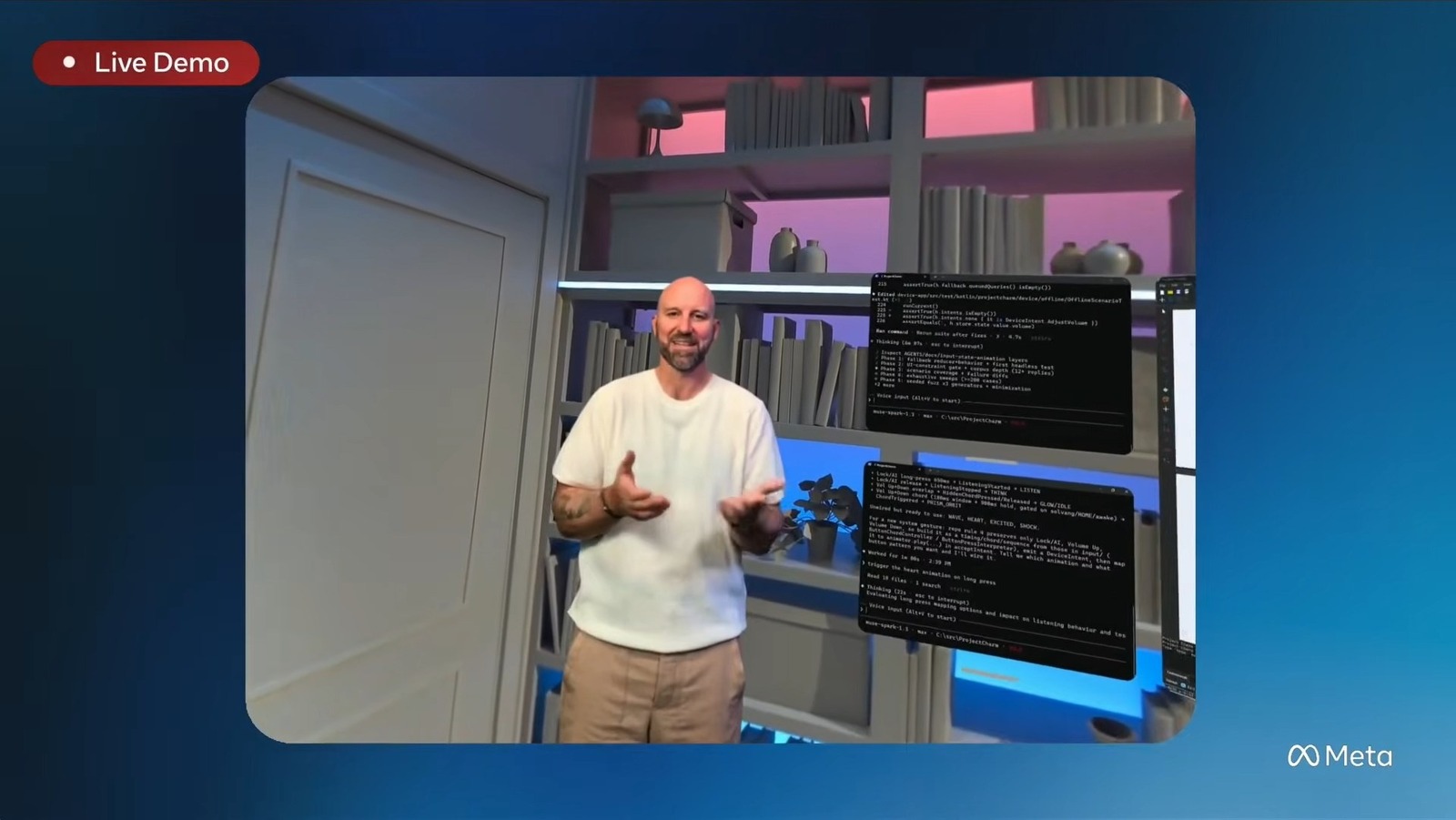
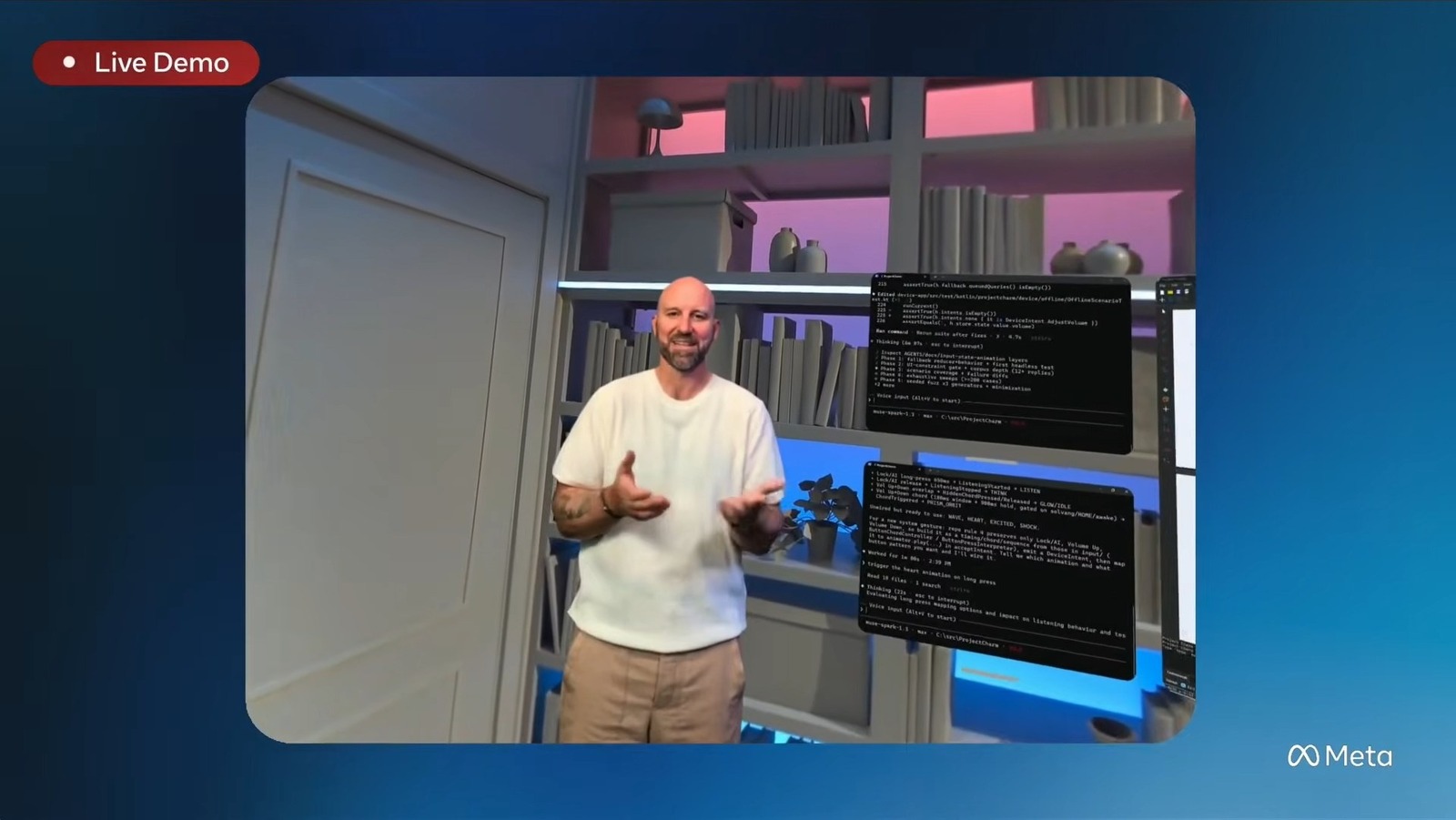
I’m almost embarrassed to admit that the first time I saw one of Meta’s new holographic avatars today, during a WhatsApp call with a Meta rep I had just met a few minutes before, I didn’t immediately clock that I was speaking to an avatar. That’s how far the company’s avatar technology has come in the last couple years.
Meta announced at Connect that it’s bringing its holographic avatars to its new VR glasses and to the Meta Ray-Ban Display frames. I got the chance to experience both ahead of the keynote and was surprised at how far the tech has come since the first time I experienced it on Meta’s Orion prototype.
Setting up an avatar is a bit different depending on which device you’re using. With the display-enabled glasses, you create an avatar in the Meta AI app through a process similar to creating a Vision Pro “persona.” Using your phone’s camera, you’re prompted to turn your head to show different angles of your face. It then asks you a series of questions that are meant to capture how your voice sounds in different interactions.
In my demo, it asked me things like “what does your perfect day look like from start to finish” and “what’s one of your hobbies, and why do you like it.” This part of the demo actually glitched. The Meta AI app kept skipping through the questions as if it couldn’t detect my voice, but the hiccup didn’t seem to affect the process. I was then prompted to “smile and show your teeth” and repeat a phrase as if I was surprised.
In all, creating a holographic avatar for the display glasses should only take about 5 minutes from start to finish. Once set up, you can use it on a video call while wearing your display-enabled glasses, whether you’re chatting via WhatsApp or Zoom.
The avatars are powered by Meta’s new Muse Realtime Avatar model, and it uses that brief training period to approximate your actual facial expressions while you speak. Watching my avatar speak was a strange experience. While I was wearing the glasses and speaking as my avatar, I could see a small preview of myself in the bottom corner of the display. It looked exactly like me, but my brain was also able to immediately recognize that it wasn’t me.
But when I tried the experience from the other side, holding the phone and chatting with an avatar, I was fooled at first. It might be because I had only just met the person I was speaking to. So I wasn’t familiar with his mannerisms or expressions, but it looked very similar to how I would have expected him to appear on a typical video call. It was only when looking more closely at his background that I could detect the video wasn’t quite normal. Meta is also adding a transparent watermark to all video calls with an avatar. In my first viewing, I mistook this for a logo on his shirt, but if you know what to look for, it is a clear identifier.
Meta’s plan for holographic avatars in its new VR glasses is even more ambitious. Because the cameras and sensors on that device are much more advanced, you can create a full-body avatar and you don’t need to “teach” it your expressions. It instead relies on the inward facing cameras and sensors to understand your facial expressions.
I was able to chat with a full-size hologram of a Meta product manager while wearing the VR glasses. And it felt less weird than I expected. It was definitely much more natural looking than Apple’s “persona” avatars, which have always looked weirdly smooth and alien-like to me. (Those also don’t show lower bodies or arms, which doesn’t help.)
But the VR avatar I spoke with looked pretty close to the person I had just met, and didn’t feel creepy either. There was some distortion toward her feet, especially if I moved around the room, and I could see some blurring towards the edges of her head. The avatars aren’t fully 3D. They only show a frontal view of a person, so there are some limitations. But I was surprised at how much more realistic it felt than any other interaction I’ve ever had with a VR avatar (a low bar, to be fair).
Holographic avatars are still in an “early preview” stage, and there’s clearly some bugs to be worked out. Availability is also limited to the device you’re using, so someone with Meta Ray-Ban Display glasses can call someone else as their avatar but only when wearing the glasses. And someone on display glasses can’t call someone wearing VR Glasses. VR avatars are limited to glasses to glasses interactions for now.
Meta has said these avatars could help people feel more of a sense of presence when on a video call, and I definitely felt that in my demo. There’s still something about calling a close friend or family member as my avatar that would feel weird and inauthentic, but I could see how some might feel otherwise. The Meta reps I spoke with told me they often call into work meetings as their avatar, which might be a nice alternative when you’re not quite camera-ready.
Holograms will be available to Meta Ray-Ban Display in early access this fall.


We sat down with Commissioner Valdis Dombrovskis last week. He told us the digital euro would offer ‘cash-like privacy’ and cut Europe’s reliance on foreign card schemes.
The digital euro could go live in 2029 if the Irish Presidency of the Council of the EU gets the legislation over the line before the end of the year, according to EU commissioner Valdis Dombrovskis, formerly prime minister of Latvia.
Speaking to SiliconRepublic.com at a visit to Research Ireland last week (17 September) Dombrovskis, the European commissioner for economy and productivity, implementation and simplification, said Brussels was firmly behind Ireland’s push to conclude talks this year.
“The Irish Presidency has an ambition to finalise the legislative process this year, and from the Commission side, we are very much supporting this,” he said. “And if this is the case, then ECB [European Central Bank] can start the preparations in earnest, and then it would go live as of 2029.”
Ireland took over the rotating Presidency on 1 July and holds it until 31 December, putting it in the chair for the final stage of negotiations between the Council, the European Parliament and the Commission, known as trilogues. The first trilogue took place on 13 July and a further round was scheduled for late September. The Irish Presidency’s programme commits it to working towards agreement on the digital euro framework by year-end.
It has been a long road. The Commission first tabled its proposal in June 2023. The Council agreed its negotiating mandate in December 2025 and the European Parliament adopted its position in July.
‘Cash-like privacy’
Much of the public debate has centred on privacy and fears that a digital currency issued by a central bank could be used to monitor how people spend. Dombrovskis said those concerns had been addressed.
“We have strong privacy safeguards in place, in the offline functionality of the digital euro. It actually offers almost cash-like privacy,” he said.
Indeed, he argued that the digital euro would reveal less about people’s spending than the payment cards they use now. “In a sense, the central bank will know less about citizens’ transactions with the digital euro than banks know now from card transactions.”
He was also keen to stress that the digital euro is not intended to replace notes and coins. “We had been very clear that digital euro is there to complement cash, not to replace cash. It’s a way to bring central bank money into the 21st century, in the digital era.”
Alongside the digital euro proposal, the Commission put forward a separate measure to strengthen the legal tender status of cash. Dombrovskis said this would mean “obliging [euro] area member states to ensure sufficient availability and acceptance of cash so that it can fulfil its legal tender functions”.
Less reliance on foreign card schemes
For Dombrovskis, the case for the digital euro rests on two points. The first is that cash, the only form of central bank money currently available to the public, is in decline.
“Currently, central bank money is cash. And cash use is declining. So that’s why digital euro is a way to bring central bank money in to the digital era and to provide it as an important monetary anchor,” he said.
The second is Europe’s dependence on payment networks based outside the bloc. “It is a way to develop European-based payment solutions because currently we are heavily relying on card schemes which are foreign-based.”
He added: “With this digital euro project, the [European] Central Bank will also develop a pan-euro area payment solution and infrastructure, which we currently don’t have.”
It is all part of the current push towards sovereignty, Dombrovskis said. “This is also a matter of strategic autonomy of the euro area in this more conflictual and less stable world. Financial stability is the blood flow of the economy, so it’s important in a sense that we have our own structure and are not dependent on outside players.”
‘We should not talk ourselves down’
The digital euro sits within Dombrovskis’s wider push on EU competitiveness. When we spoke, he acknowledged that productivity growth in Europe has trailed the US and China for at least two decades, and agreed there was no quick fix.
“There’s probably not one single bullet we can say, you know, we need to do this and that fixes our [competitiveness] problem,” he said.
But he argued Europe has more going for it than it often admits. “We also obviously should not talk ourselves down. We have many strengths. We have the largest single market of 450m consumers.”
Dombrovskis was visiting Research Ireland as part of his Irish visit, and met several prize-winning teams supported through the National Challenge Fund, which is funded under Ireland’s National Recovery and Resilience Plan. Addressing the gathering, he said the research and innovation undertaken here in Ireland continued to make a vital contribution to Europe’s overall competitiveness, resilience and prosperity today.
“It is a contribution that is needed more than ever,” he said. “We are living in a fast-changing and increasingly fragmented world. Our prosperity and security depends on generating knowledge, turning it into new technologies and bringing those innovations to market.”
He noted that Ireland recently marked 60 years since the decision to introduce free secondary school education in Ireland.
“It is credited with transforming the prospects of the Irish economy and laying the foundations for the prosperity the country continues to enjoy today. We should draw inspiration from such a far-sighted, visionary policy to help reach our common objective today: to ensure that Europe remains a global leader in science, technology and innovation.”
Don’t miss out on the knowledge you need to succeed. Sign up for the Daily Brief, Silicon Republic’s digest of need-to-know sci-tech news.

NewsBeat20 seconds ago
Middlesbrough appeal launched to help surfing dog Hattie

Business1 minute ago
OpenAI, Anthropic CEOs warn AI could pose threat to humanity

Crypto World3 minutes ago
Bitcoin price nears $84K as ETF inflows reach five days

Fashion2 weeks ago
Weekend Open Thread – Corporette.com

Fashion6 days ago
Weekend Open Thread: Talbots – Corporette.com

Tech2 weeks ago
Memory prices are slowing because buyers ran out of money

News Videos9 minutes ago
RUMUS BEBAS FINANSIAL UPAN HARIAN 160 RIBU #financialeducation #keuangan

News Videos23 minutes ago
WHY XRP IS A BLUE CHIP? – XRP SUPPLY SHOCK IS IT POSSIBLE! – WHY XRP AT $100 IS POSSIBLE!

News Videos29 minutes ago
Housing Market Logic Exposes Surprising Rent Financial Traps
-
 Fashion6 days ago
Weekend Open Thread: Talbots – Corporette.com
-

 Tech3 days ago
Researchers escape OpenAI Codex sandbox to run commands on host
-

 Crypto World5 days ago
Circle launches Arc Studio AI agent for building onchain apps
-

 Crypto World3 days ago
Who Needs CLARITY Anyway? ARB Could See 70X Increase: Hodler’s Digest
-
 NewsBeat5 days ago
Trump says US has reached an agreement to take permanent control of Greenland’s security
-

 Crypto World1 day ago
Goldman Sachs and Deutsche Bank Agree: The S&P 500 Rally Isn't Over
-

 Crypto World5 days ago
Trading Bitcoin on Robinhood? Why 2% Spread Has Traders Worried
-

 Crypto World6 days ago
Mortgage and refinance interest rates today, Thursday, September 17, 2026
-

 Crypto World5 days ago
Bitcoin price breaks channel as RSI climbs to 63
-
 Tech3 days ago
Google’s $899 Googlebook is a bet that you’ll buy a new laptop for Gemini
-

 Business3 days ago
Analog Devices (ADI) Bets $1.35 Billion on Chips that Let Machines Think for Themselves
-

 Crypto World3 days ago
Coinbase, Robinhood, Circle Seen as Tokenized-Stock Winners
-
 Business1 day ago
Oil Price Today (September 23): Crude oil below $100 on hopes of US-Iran talks. What did Trump say?
-

 Tech6 days ago
GPT-6 Astra Reached the Nether in Minecraft, Lost Its Stash to a Creeper, and Farmed Potatoes for Hours
-

 Crypto World5 days ago
World Money launches in 150+ countries with Stripe
-

 Tech4 days ago
Trump suggests rebranding AI with a new name, says he’s also creating an AI Force
-

 Crypto World6 days ago
Silver prices recover quickly, hitting weekly high today
-

 Crypto World3 days ago
Bitcoin price holds above $81K as key catalysts line up
-
 NewsBeat5 days ago
US was ‘on brink of war’ with China over false AI report of nukes moving in Middle East
-
 Crypto World2 days ago
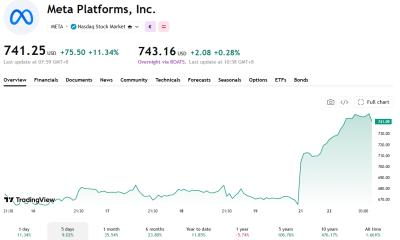
Meta Jumps 11% As Muse Shines and Investors Show an Appetite for Advancing AI
You must be logged in to post a comment Login