
Join Mikko Hyppönen and security leaders from the NFL, CHANEL, and Atlassian for a two-hour digital summit on what AI-speed attacks change, what defenders should stop doing, and how to validate, decide, fix, and re-validate at machine speed.
Tech
Hackers start exploiting critical WordPress flaw for code execution



Threat actors have moved from probing WordPress sites vulnerable to CVE-2026-87902 to exploiting the flaw to write files to disk that execute shell commands when accessed.
Initial attack traffic was only for reconnaissance and started less than five hours after the patch was released in WordPress 7.1.2. Malicious activity increased by ten times, and attackers are now trying to deliver payloads.
WordPress security firm Patchstack reports that it observed the first malicious requests at 17:44 UTC on September 22 from a small group of IP addresses targeting multiple sites under its protection.
Discovered by security researcher Robert Ressl, the issue is an unauthenticated path traversal bug that can lead to remote code execution (RCE) under certain conditions.
The WordPress security team assesses that CVE-2026-87902 has critical severity, assigning a score of 9.2 out of 10.
“An unauthenticated attacker can make get_page_template() page-template resolution include a chosen readable local .php file outside the active theme directories,” reads the official advisory.
For RCE to be possible, the following conditions are required:
- Active parent or child theme must have a top-level directory with a name starting with page-, such as page-templates. The attacker must also target a local .PHP file that exists and is readable by the web server
- The included file must be readable by the web server account. The advisory gives pearcmd.php as an example when PHP’s register_argc_argv setting is active.
The WordPress advisory notes that the official PHP image for Docker is affected, and so is the default cPanel configuration when a PHP version before 8.5 is used.
WordPress addressed CVE-2026-87902 yesterday with the release of version 7.1.2, and fixes have also been backported to all branches down to 4.7 because of the critical severity of the flaw. Releases before 4.6 will not be getting a fix for this flaw.
Patchstack reports that in the observed reconnaissance activity, the attackers attempted to include ordinary WordPress core files, apparently to identify vulnerable sites.
Starting today, the researchers noticed that traffic related to the vulnerability increased tenfold and includes a writing to disk stage.
“The third stage swaps config-show for config-create, which pearcmd will happily use to write a file wherever it is told, with content the attacker controls.”
Some of the payloads only write a string that marks the host as exploitable via CVE-2026-87902. However, the researchers also saw payloads that “write a short tag that executes a shell command on access,” which indicates malicious activity.
The files are delivered to /tmp and /var/tmp and have names like wp-pear-rce-flag.php, poc87902.php, luci_
Although the security firm did not publish a working request example, it warned that the observed probes use double-encoded traversal sequences in ‘pagename’ alongside a valid ‘page_id.’
The source IPs that should be added to a blocklist are 169.58.48.193, 169.58.48.195, and 2001:df1:e8c0::106b.
Given the active exploitation of CVE-2026-87902, website administrators should update to WordPress version 7.1.2 as soon as possible and review the logs for malicious activity.


Continue Reading

Wayfair has become a staple of online furniture sales thanks to its wide selection of furniture and home goods, fast and free shipping on orders, and 24-hour flash sales. Save even more this month with Wayfair promo codes and coupons for up to 80% off pricey purchases like furniture. Wayfair carries almost everything needed to furnish a home, including pillows, mattresses, bedding, home goods, couches, office chairs, and so, so much more (even cat furniture); and we’ve rounded up the best ways to save from this often WIRED-tested and -reviewed brand.
Top Wayfair Coupons for 2026
Wayfair has become a staple of online furniture sales thanks to its wide selection of furniture and home goods, fast and free shipping on orders over $35, limited-time deals, and exclusive daily sales. There are tons of rotating Wayfair coupons and flash deals for up to 70% off pricey purchases like furniture. Since its founding 20 years ago, the Boston-based online retailer has grown steadily and now offers 14 million items from more than 11,000 global suppliers. Wayfair carries almost everything needed to furnish a home, including pillows, mattresses, bedding, home goods, couches, office chairs, and so, so much more (even cat furniture). We’ve rounded up the best ways to save from this often WIRED-tested and -reviewed brand.
Shop Wayfair Coupons and Flash Deals Up to 80% Off Furniture
Wayfair has daily sales and early Black Friday deals, with half off or more on bedroom, kitchen, dining room, and living room furniture, including tables and TV stands. There are also Wayfair flash sales, like rotating 24-hour Deals of the Day, which change daily and are heavily discounted, up to 80% off. There are also deeply discounted Closeout Deals on discontinued and overstocked products, with up to 70% off last-chance items. I’m taking advantage of these Wayfair Black Friday sales by nabbing an office desk for 50% off from the closeout deals page, and I’ll be investing in a Wayfair office chair to complete my new WFH setup (I’m currently working on one of my favorite Wayfair mattresses from my cheap mattresses guide, which isn’t the most, ahem, professional).
Get 10% Off Your First Order With Wayfair Promo Code
First-time users can get 10% off their first order with this Wayfair promo code when they sign up for email or text alerts. While Wayfair doesn’t always offer coupons, they will send personalized promo codes directly to you via email, along with other deals, promotions, and discounts.
Shop Verified Wayfair Deals for Top-Rated Quality
Wayfair knows you’re making an investment, not just buying home goods or furniture. These are items you’ll be sleeping on, eating on, and sitting on for years to come—they should be built to last. Wayfair has hundreds of items that have been hand-verified for quality by Wayfair’s own product specialists using a 10-point inspection system. The system measures material quality, ease of assembly, functionality and features, and ratings, so you don’t have to deal with returns and know it meets market-tested value. Wayfair product specialists go through each product category and identify which items meet key quality criteria—only 1% of items on Wayfair earn the Wayfair Verified stamp of approval, including many of their budget mattresses (which we’ve reviewed many of).
Be sure to check out Wayfair Verified items here, which include goods across bedroom like down comforters, living room like couches, and other important spaces like bathroom, office, storage, kitchen, and more.
Other Ways to Save at Wayfair Right Now
You can save and find even more items and exclusive deals in the Wayfair mobile app. You can get up to 20% off in the app. The app not only helps you save more, but it also uses technology to help you visualize items in your room and provides exclusive access to handpicked products and flash sales.
If you own a business, you can join Wayfair Professional, which gives you access to exclusive discounted pricing of up to 15%, an additional 10% off specialty brands, a large selection of products across Wayfair’s brand network, 360-Degree Support, and fast, free shipping on select orders.
Whether you’re overhauling your home for a full makeover or just need affordable, fast delivery for furniture, Wayfair has practically everything you need to live comfortably. Be sure to check back often for more Wayfair promo codes, flash-sale notifications, and additional ways to save on furniture and home goods.

If you’ve been chasing an easy way to overheat, this click-together infrared sauna is easy to set up and works great.
Tech
FlyWithRookie’s Fully Enclosed Boeing 737NG Home Flight Simulator Puts a Line Jet Behind a Locking Door


FlyWithRookie streams from a Boeing 737NG flight deck that occupies a room the way a real jet occupies a hangar. Flight Deck Solutions in Canada supplied the fixed-base trainer, mixing replica hardware with real aircraft parts from the shell inward, and the result includes circuit breaker walls, a crew jumpseat, a working cockpit door that latches, and a custom galley aft of the flight deck. He has said there is nothing more satisfying than pressing TOGA and watching a real-world throttle walk forward as the jet builds toward V1, rotate, and V2.
Walking through that door puts you right in the middle of a full-size 737NG; everything is there, including the overhead panels, glare shield, main instrument panel, and aisle stand, which are all exactly where they should be on an actual jet. The captain and first officer seats are located on a unique platform designed to replicate the shaking of a real plane. There are also seismic sound transducers under both pilot seats, allowing you to feel the engine start and APU spool rather than just hearing them. Two ButtKicker LFE Mini units on the same platform add some of the heavier hits, such as speedbrakes coming out, pavement seams as you roll out of the gate, the main-gear touchdown, and the sensation of putting the gear on. Even the flight attendant chairs in the galley have their own transducers, so the rumbling of the cabin isn’t simply at the pointy end of the plane.
Behind the locked door sits a small airline world that most home sims never bother to finish. In-flight entertainment is provided by a 24 inch wall-mounted smart TV, similar to what you would find on a plane. Two speakers on the galley wall simulate the ambient cabin noise you’d hear on an actual trip. Another iPad hangs on the wall, dubbed the Flight Attendant Information Control Center, which controls everything from galley lighting to main cabin lighting, heat, air conditioning, and even flight tracking. You also got two more iPads up front, which were loaded with performance data and navigation. That back piece is what makes this configuration truly feel like a jet, rather than just a desk with a yoke.
Three Optoma short throw game projectors paint a 12 foot wrap-around screen, providing approximately 220 degrees of view. The Elise Immersive Display Pro performs an excellent job of mixing all three images, ensuring that the outside environment is not sliced up by the window frames. You can glance left and right through real window shapes in an Alu nose section, modeled from the actual airplane, and the projected world remains nice and continuous around the glare shield.
Sound work matches the metal. The main PC is equipped with a Logitech Z906 5.1 system to handle the principal airplane noise. The client PC features a Logitech Z313 2.1 stack that handles secondary aircraft sounds. There’s also an aural warning module on the first officer side that activates all of the GPWS callouts, fire bells, and other warning systems. Combined with the seat transducers and platform kickers, starting up, taxiing, and landing are truly a full-fledged physical experience, not simply a soundtrack.
Three computers ensure that the 737NG, jet, world, and stream don’t get on each other’s nerves. The primary computer is powered by an Intel Core i9-12900K processor, 64 GB of RAM, a 1,000-watt power supply, and a high-end EVGA GeForce RTX 3090 FTW3 graphics card. The main storage drive is a 4TB Samsung 980 Pro. When it comes to client work, this computer features an i9-9900K, a ROG Z390 board, 32 GB of RAM, another 1,000-watt power supply, a matching EVGA 3090 FTW3, and a matching 4 TB 980 Pro. Meanwhile, dispatch and live broadcasting are handled by an i9-11900K processor connected to a high-end ASUS motherboard, Z590 ROG Maximus Hero, 32 GB of RAM, a 1,000 watt EVGA power supply, an RTX 3090 FTW3 Ultra, and 2TB of Samsung Evo storage. Three computers and three iPads are a lot of electronics for a room, which is how a full 737NG runs smoothly even when someone is on camera.

You may have seen the headlines about a Microsoft employee calling AI scraping “the largest theft of labor in human history.” It made the rounds on social media, with plenty of people insisting it was a slam dunk admission of criminality. I think I saw this gif applied to it multiple times:

It certainly doesn’t look great. But does it actually matter? An exec’s statement doesn’t change the underlying facts: fair use isn’t copyright infringement, and even when something is infringement, it still isn’t theft. That someone colloquially calls it theft isn’t supposed to change the legal analysis, no matter how emotionally satisfying it feels.
For basically all of Techdirt’s history, we’ve explained that copyright infringement is not “theft,” and that using that term is misleading in dangerous ways. It’s been a few years since we last mentioned it, but the Supreme Court’s ruling in Dowling vs. the US has always been the clearest legal statement on this point.
Since the statutorily defined property rights of a copyright holder have a character distinct from the possessory interest of the owner of simple “goods, wares, [or] merchandise,” interference with copyright does not easily equate with theft, conversion, or fraud. The infringer of a copyright does not assume physical control over the copyright, nor wholly deprive its owner of its use. Infringement implicates a more complex set of property interests than does run-of-the-mill theft, conversion, or fraud.
That’s not to say that infringement is necessarily okay. But it’s a distinct issue from “theft.”
For years, most of the internet seemed to agree. But the arrival of generative AI has triggered a remarkable amount of backsliding, as people rush to (incorrectly) label training as “theft.” That’s wrong on two levels. First, if it were infringement, it still wouldn’t be “theft.” Theft removes something from someone’s possession. Copyright infringement doesn’t. It makes a copy without a license. Those are not the same things. At all.
But there’s an even bigger issue when it comes to AI training, which is that there’s a fairly strong argument that training is fair use. And at least one judge in one of the (many) cases exploring this issue has agreed. As Judge William Alsup noted:
To summarize the analysis that now follows, the use of the books at issue to train Claude and its precursors was exceedingly transformative and was a fair use under Section 107 of the Copyright Act. And, the digitization of the books purchased in print form by Anthropic was also a fair use but not for the same reason as applies to the training copies. Instead, it was a fair use because all Anthropic did was replace the print copies it had purchased for its central library with more convenient space-saving and searchable digital copies for its central library — without adding new copies, creating new works, or redistributing existing copies.
And here, too, the law is clear. Fair use is not a “defense” to infringement. Rather, a fair use “is not an infringement of copyright” at all. That doesn’t mean that there can’t be some aspects that are infringing and are punishable: indeed, in that very case where Alsup determined that Anthropic’s training was fair use, he also dinged them for widespread mass infringement for creating and storing “pirate libraries” of content without a license.
The point is that Alsup actually looked at the specifics of each use. An AI data scientist firing off an emotional internal message is not legal analysis, nor is it someone who understands the elements of either copyright infringement or fair use, let alone “theft” in the legal sense.
Of course, for decades now, the large copyright interests have polluted the discourse on this by deliberately equating infringement to theft (and simultaneously minimizing, dismissing, or demonizing fair use). Hollywood and others (including Microsoft!) spent years poisoning the language around copyright until calling infringement “theft” became the default, and “fair use” got treated as a grudging loophole or limited defense, rather than the public’s actual right.
Bill Patry, who knows more about the modern history of copyright law than maybe anyone, wrote a wonderful book about how the large copyright players used the language of “theft” and “piracy” to influence policy discussions.
Given all that as background, it’s somewhat hilarious that people are acting like it’s a huge deal that a Microsoft employee called AI training “theft.” This came out in a recently unredacted filing from the NY Times in its case against OpenAI.
This case is about, as Microsoft’s Director of Applied Science put it, “an astonishing theft of unprecedented proportions”; SF1437, perhaps the “largest theft of labor in human history.” SF1652. Defendants repeatedly copied millions of Plaintiffs’ copyrighted articles in their entirety without permission to produce substitutive commercial AI products.
The NY Times is trying to win a copyright lawsuit, so of course it has every interest in portraying these quotes as damning. The rest of the media doesn’t have to accept that framing — especially when it’s not how copyright law actually works. Just because a random employee of one company colloquially calls it “theft” doesn’t magically make it so, either legally or morally.
And, yes, that same filing goes after the fair use argument by quoting an OpenAI employee calling AI an “existential threat” to publishers, then insisting that this “undermines” any fair use claim. Notably, the filing quotes so little of the surrounding context that it’s not even clear what the person was referring to, but just because one employee makes such a statement doesn’t make fair use disappear. That’s not how fair use is determined.
There’s also a more basic problem with the “existential threat” argument. Lots of things can be “existential threats” to companies that refuse to adapt and change. That doesn’t make their competitors illegal. It’s just how competition itself works. This is also true of the “doom loop” quote from the filing:
A Microsoft document recognizes that nobody wins that contest: “Our AI content strategy has started a ‘doom loop’ that will hurt the performance of our models and the entire web at the same time: It is highly unusual that an end-product threatens the economic foundations of its essential suppliers, but that is the situation we have created for our LLM business with respect to its ‘content supply chain.’”
Read the full filing, though, and the Times’ lawyers seem to be playing a neat bit of sleight of hand here, conflating statements about search results that give users the facts they were looking for (rather than driving them to a separate website) with the claim that chatbot output is a substitute for news. Those are two separate things. Take the Satya Nadella testimony the filing leans on. He’s talking about chatbots answering questions a user has, not about anyone going to ChatGPT and asking it to replace the NY Times:
Microsoft’s CEO Satya Nadella agreed under oath that conversing with chatbots “has substituted … giving you the information right there on the website on the AI platform versus needing to go to the underlying source.”
And, in the end, what matters most is what users actually want, because that’s what they’re going to do regardless. The NY Times might not like that someone looking for a quick answer doesn’t want to read a long article, but that’s not the fault of an AI system. It’s how people work: the AI tools (or the search results) may simply be meeting that reader’s needs in that moment better than a long-form article does.
As an entity engaged in long-form reporting ourselves, that certainly represents a challenge for us, but we try to respond to that by providing something that can’t be replaced merely by a straight answer to a question. Instead, we focus on providing more value that makes it worthwhile to read our full commentary.
Why does the NY Times think it can’t do that? Does it really value what it does so little that it can’t compete with a word generator?
The courts still have a long way to go on the copyright questions around training, but the rush to wave a few cherry-picked quotes from the NY Times filing around as “evidence” that AI training broke the law is getting silly.
Fair use isn’t infringement. And if it is infringement, it’s not “theft.” And even if a use competes with you, competition doesn’t make it illegal. Indeed, the “effect of the use upon the potential market” is just one of four factors, and it isn’t supposed to let ordinary competition swallow the entire fair use analysis. That these employees (who are not, themselves, copyright experts) said random things does not change the actual underlying analysis of fair use. Or, at least, it shouldn’t.

A slick spectrum analyzer used to be the kind of thing that would have been tricky to include in a DIY project, but as [Mirko “mircemk” Pavleski] demonstrates, a modern microcontroller like the ESP32 can handle the task with nothing more than a display panel and a few passives.
 This particular example is built around the CrowPanel 3.5, which combines the powerful microcontroller with a 480×320 touch screen LCD. But there’s nothing inherently special about the CrowPanel, and you could get similar results with whatever display you might have kicking around the parts bin — albeit potentially with some code changes to account for the different hardware.
Beyond the microcontroller and the display, all you need to recreate what [mircemk] has done here is a handful of passives to tame the incoming analog audio signal so it can be piped into one of the analog-to-digital converter (ADC) pins on the MCU.
This project is fairly simple, but if you’re looking for something a little more advanced from [mircemk], don’t worry. The more daring home players can try their hand at recreating this high-voltage X-ray machine made from an old TV vacuum tube.

Big quote: Verified profiles, company pages, and polished job listings are being used to lure job seekers into scams that can cost them money or expose their personal information. Jay Jones, a Chicago-area job seeker who calls himself The Profiler, has made it his mission to find them. Since being laid off from an advertising role in late 2023, Jones says he has helped get nearly 60,000 fake job listings removed from the internet, most of them from LinkedIn. He has also flagged about 7,000 profiles that he believes were used in job scams.
The fraud is not limited to obvious fake accounts. Some scammers create batches of recruiter profiles using copied photos and similar account details. Others take over dormant, verified LinkedIn accounts and attach them to legitimate companies. Still others place job ads on legitimate company pages that direct applicants to outside websites or email addresses.
The approach is becoming increasingly sophisticated. Jones said scammers use artificial intelligence to tailor job pitches to a person’s résumé or career history. A recruiter might tell an applicant that their résumé needs work and then offer to help for a fee. Other scams seek more valuable information, including a driver’s license or Social Security number.
Jones recently came across several LinkedIn accounts using the name Linda Anthony. The accounts used the same image, showed recent creation dates, and listed similar roles at “Confidential Jobs.” One profile described Linda Anthony as a contract recruiter in Smyrna, Ga., while another identified her as a contract specialist in California.
Jones said the profile URLs also appeared to follow the same pattern, suggesting the accounts had been created in bulk. After he posted about them online, the links went dark.

Image credit: The Wall Street Journal
“You turn the lights on,” he told The Wall Street Journal, “and the roaches run.”
The scams are landing at a difficult time for people looking for work. In August, 27% of unemployed Americans had been searching for a job for more than six months, near the highest level in more than a decade outside the pandemic.
LinkedIn said its automated systems stop most scam activity before users see it. The company said it blocked nearly 90 million fake accounts before they went live in the second half of 2025. It has also introduced new safety features and worked with the FBI this summer to educate job seekers about scams.
Still, the platform faces a persistent problem: fake accounts and fake listings can borrow credibility from real people and real companies.
One scheme Jones has tracked involves hijacked LinkedIn accounts. Some users verify their identities on the platform, receive a verification badge, and later stop using their profiles. Scammers can take control of those accounts, change the work history, and list the account holder as a recruiter for a legitimate business.
That can give a scammer a verified profile and a company affiliation at the same time.
Jones found several such accounts listed as employees of Argenta Talent Acquisition, a Colorado recruiting firm. One account belonged to a dentist in Chile. Argenta CEO Kelley Barcus said the bogus profiles created a direct threat to her company.
“It’s my brand, it’s my reputation,” she said.

Barcus hired Jones to get the accounts disconnected from Argenta’s LinkedIn page. LinkedIn accepted reports on the profiles, but the accounts had 14 days to update their information or appeal before LinkedIn could remove their company affiliation. LinkedIn said that process can help correct inaccurate employment information.
Jones said the delay gave scammers more time to reach job seekers. “Scammers don’t deserve fairness,” he said. “It’s economic terrorism.”
Oscar Rodriguez, LinkedIn’s vice president of trust product, said scammers adapt quickly as platforms add new defenses. LinkedIn asks recruiters to verify their identities, but Rodriguez said verification doesn’t guarantee that a profile or job posting is legitimate.
The company plans to introduce a tool later this month that would allow verified employers to immediately remove users’ affiliations with their companies.
Jones also looks for fraud inside legitimate company pages. In one case, he found what appeared to be 30 job listings on Hyundai Motor’s verified LinkedIn page. The positions included data-entry specialist and customer-service representative. Screenshots reviewed by The Wall Street Journal showed that the ads contained errors and linked to an outside site not affiliated with Hyundai. Applicants were told to email résumés to an outside address.
He found a similar issue involving Capital One. Job ads for administrative assistants appeared on LinkedIn but led to an unaffiliated website. Jones compared the listings with Capital One’s own career site, where similar openings were generally listed under titles such as senior administrative assistant or administrative assistant III.
Hyundai and Capital One said they work with LinkedIn to remove fraudulent job postings.
For Jones, the work has become more than a side project. He still searches for a permanent job, drives for Uber, and trains cybersecurity professionals to recognize scam tactics. He also seeks paid speaking work, raises money online, and sells apparel with anti-scam slogans.
He often keeps about 50 browser tabs open while tracking leads, he said, and his browser crashes several times a week.

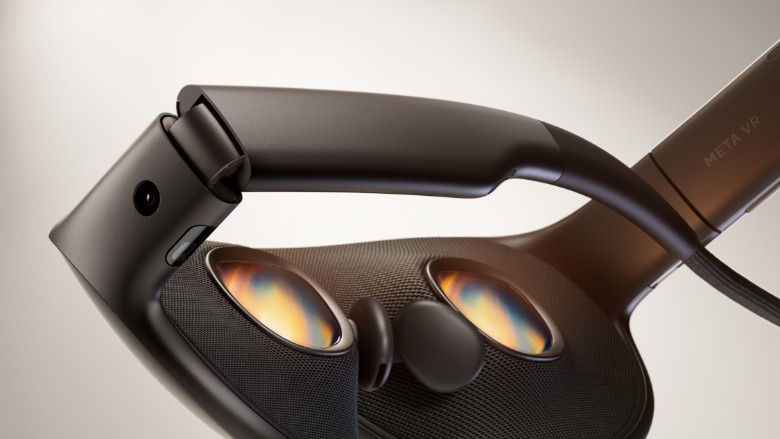
After a few leaks, Meta CEO Mark Zuckerberg finally revealed the company’s next-generation Meta VR Glasses at its Connect event tonight. Arriving in Spring 2027, they look like oversized sunglasses (similar to display frames from Xreal and other), paired with an external power and computing pod, like the Apple Vision Pro. The Meta VR Glasses also have onboard cameras to detect the wearer’s hands for gesture-based controls. While they’re not cheap at $1,300, they’re a far cry from the Vision Pro’s original $3,500 cost, or its current $3,700 price. And at first glance, they look exactly like how I’d imagine a true successor to the Vision Pro — a pair of unobtrusive and lightweight VR glasses at a more palatable price.
Meta is pitching the VR Glasses as an all-in-one entertainment and productivity device. Just like the Vision Pro, you can watch movies on enormous virtual screens, or connect to your computer to multitask with multiple windows floating in front of you. The VR Glasses are launching together with more than 75 hand-powered games, and you can also connect a pair of Touch Plus controllers to play existing Quest VR games.
 Meta
Meta
The Meta VR Glasses are powered by Qualcomm’s new Snapdragon Reality Elite processor, the XR2 Gen 3, and feature a 5K (2,412 by 2,288 pixels) 120Hz micro-OLED display. It relies on six external cameras for color passthrough and motion tracking, and also has four internal eye-tracking cameras. With a 70-degree horizontal field of view, the Meta VR Glasses won’t fill your eyes with VR as much as the Vision Pro’s 100-degree FOV, but it’s significantly higher than most display glasses. Meta’s wired computing puck, which looks compact enough to slip in a pocket, holds 12GB of RAM and 128GB of storage (along with a microSD card slot for more content).
On their own, the Meta VR Glasses weigh 100 grams, or about 0.2 pounds. That’s only a tad heavier than Xreal’s One Pro AR display glasses, and significantly lighter than the Vision Pro’s headset, which weighs between 1.3 to 1.7 pounds. (Part of that weight is counter-balanced by the Vision Pro’s head strap, to be fair.) Meta’s compute puck weighs an additional 300 grams (0.6 pounds), slightly lighter than the Vision Pro’s. Judging from the product photos, you won’t be able to wear the Meta VR Glasses over your own spectacles, but as usual, you can order custom prescription frames.
Zuckerberg has never shied away from blatantly copying competitors, and it’s pretty clear the company took plenty of inspiration from the Vision Pro for the Meta VR Glasses. Full-color pass-through lets you see the real world alongside VR experiences; the interface is entirely built around hand gestures; it’s unlocked via biometric iris recognition; and you can virtually chat with friends using a digital “Hologram” recreation of yourself. It’s like a checklist of the features that made the Vision Pro seem more thoughtful than a normal headset.
 Meta
Meta
Meta appears to be aping the Vision Pro’s approach to 3D movies as well: The Meta VR Glasses will have hundreds of 3D films available to buy or rent, and you’ll also find 3D content in streaming apps like Disney+ and Peacock. Given the death of 3D TVs, the Vision Pro has ultimately become one of the few ways to enjoy 3D films like Avatar in their full glory, so it’s nice to see Meta offering something similar. And since the Meta VR runs Quest OS, I’m hoping this 3D content storefront eventually heads to the Quest VR headsets.
Additionally, it sounds like the company is taking a cue from Apple’s Immersive Video Format — Meta says National Geographic will be launching a new app next year with 180-degree 3D Video. A new “VR Enhanced Cinema” format will let you watch 3D movies with effects that bleed into your real-world space, similar to the way dynamic ambient lighting on TVs makes content more immersive. The company says Avenger’s: Infinity War and Star Wars: Episode IV, A New Hope will be available in the VR format next year. (It’s odd Disney didn’t pick newer movies, though.)
 Meta
Meta
Unlike the similarly-priced $1,050 Steam Frame, the Meta VR Glasses are, at the very least, evolving the idea of what a VR headset can be. It likely won’t be as immersive as the Frame and other headsets that completely envelop your field of vision, but for most people, it’s probably worth losing that to have a device that’s just easier to wear. You won’t look like a huge weirdo slipping them on while flying, and since you wear them like glasses, there’s little chance they’ll mess up your hair as badly as a typical VR headset.
 Meta
Meta
The biggest downsides for the Meta VR Glasses are its $1,300 price — though I’m sure many VR diehards and Vision Pro fans would jump on it — and the fact they come from Meta, a company that not everyone is a huge fan of. Since these are obviously VR specs, I don’t think they’d have the same privacy concerns as Meta’s Ray-Ban and Display glasses, but the company has significantly poisoned the idea of wearing anything in public with cameras.
Apple’s new CEO John Ternus isn’t giving up on the Vision Pro just yet — “It’s the early days of a long journey,” he said in a recent interview with Clique TV (via MacRumors). But recent layoffs and the departure of the product’s lead haven’t been good signs for the headset. And now there’s the Meta VR Glasses, which builds on the Vision Pro’s innovations to deliver something that’s lighter, cheaper and more consumer-friendly.

I’ll say it: Starz is the “bad boy” of streaming platforms. Although competitor HBO is much better known, Starz’s content has a similar vibe, focusing on bold, often gritty, action-heavy original series like Power and Outlander. Plus, Starz has a catalog of Lionsgate studio films like The Wolf of Wall Street and Django Unchained. Starz also offers a suite of over 17 channels and on-demand streaming, with original series, blockbuster movies, and niche genres, including the Starz Encore suite, with Spanish-speaking content, action, and western movies.
Starz is also one of the most inexpensive streaming platforms, on average about $7 less than equivalent HBO Max subscriptions. Plus, you can have four simultaneous streams so the whole family can watch what they want—a sad rarity today, where titans like Netflix crack down on multiple streamers. With Starz, you’ll always get ad-free content, offline streaming via downloads, and the ability to stream on multiple devices simultaneously. Whether you want intense TV content or old film favorites, now’s a great time to see if Starz is a fit for way less when you use a Starz promo code or Starz coupon.
Grab Your Starz Promo Code: $5 Per Month for 3 Months
Never tried Starz before? You’re in luck. Now’s a great time to see if this streaming service is right for you with this Starz coupon code for new subscribers. New members can currently get Starz for only $5 per month for three months after signing up. You can stream on up to four devices at the same time, with unlimited HD streaming and downloads, so the whole family can enjoy high-quality, premium content.
How to Get a Starz Free Trial in 2026
If you have a platform like Amazon Prime Video or Hulu, you can sign up for a free seven-day Starz trial to add to your existing subscription on that platform. Here’s how to get a Starz free trial: sign up through one of these platforms for the week-long free trial, which provides full access to movies and original series. After the period expires, it will automatically convert to a monthly subscription fee of $11 or $12 per month if you don’t cancel before the trial is over.
Save More With a Starz Student Discount
If you’re a student with an existing Hulu subscription, you’re in luck. While there’s no set Starz discount for students, you can add Starz to your existing Hulu account for only $12 per month. With both, you’ll have access to hundreds of TV shows and films across various content and streaming platforms. You’ll need to verify your student status and complete the next steps to add Starz to your existing Hulu account.
.jpg)
A Thousand Blows, Tell Me Lies, and Paradise are just a few of the shows you should be watching on Hulu this month.
Keep Saving: Starz Coupon Codes for Existing Customers
While a Starz promo code for existing customers is rare, current Starz subscribers can save big by bundling offers through a cable provider or by bundling with an existing streaming account, as mentioned above. Right now, Starz is running promos on their monthly and annual plans, with plans as low as $5 per month and savings of 58% for three months. Starz also offers annual subscription deals for as low as $3 per month when you prepay $36 for 12 months.

Connecting the dots: Despite modern breakthroughs in medicine, researchers are still having a hard time studying certain traits of the brain. A new study suggests that this complex part of the human body is, in fact, composed of two distinct functional organs acting as one. Trying to generate one specific type of brain cell from the other in a laboratory setting may therefore be doomed to fail.
Scientists have tried studying and scanning every single part of the human brain, but it turns out that everything they thought they knew was (mostly) wrong. A new study by researchers at Stanford School of Medicine explains that the brain is comprised of two distinct organs that have evolved to work together over hundreds of millions of years.
The Stanford research goes way beyond the popular – and mostly incorrect – idea that the brain consists of three main regions controlling specific functions of the human body. In fact, the study says that the two organs comprising the human brain originate from two different types of stem cells.
The first part – the hindbrain – is tasked with overseeing some of the body’s most basic functions, such as the heartbeat, breathing, and swallowing. Meanwhile, the second part – the midbrain and forebrain – manages more complex functions including higher-level thinking and speech.
As researchers explain in the new study, the hindbrain is derived from a different type of stem cell than the “high-level” part of the brain composed of the midbrain and forebrain.
According to Stanford researcher Kyle Loh, the discovery “means that we can now grow neurons from the back of the brain, the hindbrain, in a petri dish and study their functions.”

So far, biologists have had a hard time developing samples of hindbrain-related neurons for research purposes. The study says that one particular type of stem cell expresses the Otx2 gene and will eventually develop into cells that form the higher parts of the brain. Meanwhile, another type of cell expresses the Gbx2 gene and will develop into hindbrain neurons.
The two cell types have other significant differences, including how DNA is packed and “condensed” inside a cell’s nucleus in a process known as chromatin organization. Chromatin structure affects which genes are expressed and how they are expressed during a cell’s lifespan, which in turn influences the cell’s developmental fate. Otx2-expressing cells and Gbx2-expressing cells have “fundamentally” different chromatin structures, the study says.
Previously, researchers tried to develop hindbrain cells from pluripotent cells that were “designed” by nature to become forebrain and midbrain neurons. The Stanford study suggests that this type of effort is essentially fruitless because it lacks a major piece of the brain’s evolutionary puzzle.
The researchers discovered that the two-part origin of the brain is also present in modern chickens, zebrafish, and acorn worms. Jellyfish, a type of marine creature that diverged from humans 600 to 700 million years ago, still have two distinct nervous systems at opposite ends of their bodies.
Now that they have a better understanding of how the two-part brain evolved, researchers hope to have a better chance of studying – and eventually treating – debilitating neurological conditions such as spinal muscular atrophy (SMA) and amyotrophic lateral sclerosis (ALS). Both SMA and ALS can significantly impair neuron function in the hindbrain, and the new study could provide clues for developing effective regenerative therapies for both conditions.

The smart glasses are also arriving in five new markets this fall.

Today’s Meta Connect 2026 conference shared a lot of news about the company’s Ray-Ban Display smart glasses, which were introduced at the same event last year.
One of the notable changes coming to the device is support for a holographic avatar while taking calls. Since calls via smart glasses mean the wearer’s face isn’t visible to whomever they’re chatting with, this feature uses the Meta AI app to create a photorealistic hologram to display instead. According to the press release, “Your hologram is driven entirely by your voice, and the hologram model infers your expression from what you’re saying and how you’re saying it.” The Hologram feature will initially be available in early access later this fall for WhatsApp users in the US.
The glasses’ heads-up navigation tools have also been expanded, allowing a wearer to ask for cycling or public transit directions with a voice command. Users in the US and Canada will be the first to have this feature, rolling out later this month. Additionally, the navigation directions can now be based on the world around the person rather than solely relying on street signs for a more conversational experience. For example, you might be directed to “turn left at the yellow house” rather than to “turn left on Third Street.”
When Karissa Bell reviewed the Ray-Ban Display smart glasses last year, one of the top issues she had with the Display was a lack of available apps. A new Explore app is coming to both the smart glasses and the Meta AI app that will help users to browse available programs that do work on the set.
The other features announced today include some incremental improvements to the user experience, such as bringing Dolby Atmos audio to its capture and playback tools, photo editing within the Display screen, a more detailed calendar, mirrored phone notifications and Threads for Community Feeds.
The Meta Ray-Ban Display is coming to five new markets: the UK, Canada, France, Italy and Germany. The glasses will be available to order online in those regions, as well as in the US. Display is available starting today in the UK starting at £749 and in Canada starting at CA$1,149. Pre-orders will begin today for the other three new markets for a base price of €899 before Display becomes available on October 13.

Wireless headphones have become dramatically better, but the basic connection problem has not disappeared. Bluetooth remains convenient and power-efficient, yet higher-resolution lossless playback still runs into bandwidth, codec compatibility and battery-life limitations that become harder to ignore as headphones themselves get more sophisticated.
Qualcomm thinks the next step involves adding something Bluetooth headphones have traditionally avoided: Wi-Fi. Its new Snapdragon Sound Elite Gen 2 platform integrates micro-power Wi-Fi 6E, Qualcomm XPAN, aptX Lossless, substantially more AI processing and a fifth generation of Adaptive ANC into a platform designed for future headphones, earbuds, open-ear products, audio glasses and other wearables.
We recently examined whether wireless headphones really need 24-bit/192kHz lossless audio, along with HiFiMAN’s Arya WiFi and HE1000 WiFi, which already demonstrated both the sonic potential and battery-life consequences of moving serious headphone playback onto Wi-Fi.
Qualcomm would clearly prefer that tradeoff to become considerably less painful.
What Is Snapdragon Sound Elite Gen 2?

Snapdragon Sound Elite Gen 2 is not a headphone or wireless codec. It is an integrated hardware and software platform that manufacturers can build into future audio products, combining audio processing, wireless connectivity, AI acceleration, sensing and voice processing in one architecture.
The biggest audio development is integrated micro-power Wi-Fi 6E, supporting the 2.4GHz, 5GHz and 6GHz bands. Combined with Qualcomm’s XPAN technology, the platform can deliver lossless music streaming at up to 192kHz over Wi-Fi, while also extending wireless range beyond what conventional Bluetooth connections can provide.
Bluetooth is not disappearing. Qualcomm still includes aptX Lossless, and products will continue to use Bluetooth where its lower power consumption and universal convenience make more sense.
The interesting part is that future headphones could potentially move between Bluetooth and Wi-Fi depending on what you are doing rather than forcing one connection technology to handle everything.
Why Does This Matter?
We have already seen how messy premium wireless audio can become.
The Bowers & Wilkins Px8 S2 supports aptX Lossless and aptX Adaptive, but Apple hardware does not support either codec natively. The Sennheiser HDB 630 attacks the problem with its BTD 700 USB Type-C transmitter, while HiFiMAN’s Arya WiFi and HE1000 WiFi largely sidestep Bluetooth bandwidth limitations by using Wi-Fi as their primary high-quality connection.
All three approaches work, but none qualifies as completely frictionless.
Snapdragon Sound Elite Gen 2 could give manufacturers a more integrated route to Wi-Fi playback without requiring them to engineer the entire connectivity architecture themselves. Qualcomm also says the platform is up to 30% smaller than its Snapdragon S7 Gen 1 design and can use up to 40% less power in the Wi-Fi-connected idle scenario used for its internal comparison. Those are Qualcomm claims, and the company notes that actual implementations will vary.
That qualification matters. Audiophiles have heard enough miraculous battery-life predictions to know where the charger is kept.

ANC, AI and Earbuds That No Longer Need Your Phone for Everything
Qualcomm is also giving manufacturers considerably more processing power. Elite Gen 2 provides up to 128 GOPS of AI acceleration, twice the peak AI capability Qualcomm cites for Snapdragon S7 Gen 1, along with fifth-generation Adaptive ANC and enhanced cVc voice processing.
Those resources can be used for adaptive noise cancellation, voice capture, transparency modes, real-time translation, personalized hearing and contextual audio processing.
More unusually, the integrated Wi-Fi connection can provide direct cloud connectivity, allowing future earbuds or glasses to communicate with online services without routing every interaction through a smartphone. Qualcomm is packaging those capabilities under Snapdragon Sound Apps & Agents.
The target products extend well beyond conventional ANC headphones. Qualcomm specifically lists earbuds, open-ear designs, audio glasses, hearing devices and even camera-equipped earbuds, because apparently putting cameras into glasses was merely the opening act.
What Products Will Use It?
None that consumers can buy yet.
Cleer demonstrated an early audio, vision and AI concept at Snapdragon Summit 2026, but Qualcomm has not announced it as a commercial product. Qualcomm also said HP is developing a product based on the Snapdragon Sound Elite platform and that it has been working with Bose on potential future applications, without announcing specific Bose hardware.
That means the real test comes when manufacturers start shipping finished products.
Qualcomm can provide Wi-Fi, XPAN, lossless playback, AI processing and better ANC tools, but manufacturers still have to build headphones that sound good, remain comfortable, deliver acceptable battery life and do not require a flowchart to connect to your phone.
The Bottom Line
Could This Actually Change Wireless Headphones?
Potentially, yes, because the important development is not AI whispering restaurant recommendations into your ears, but the possibility that Bluetooth stops being the only practical wireless pipeline for premium headphones.
Wi-Fi could handle higher-bandwidth lossless audio, longer-range playback and cloud connectivity while Bluetooth remains available for lower-power everyday use. If Qualcomm can make that transition seamless and manufacturers can preserve battery life, wireless headphones could finally move beyond the codec compromises we have been discussing for years.
The headphone industry has spent a decade trying to squeeze increasingly ambitious audio through Bluetooth.
Qualcomm’s answer may be surprisingly simple: stop asking Bluetooth to do everything.
For more information: qualcomm.com\
Related Reading:

Tech4 seconds ago
Wayfair Coupons: Up to 80% Off September 2026

News Videos1 minute ago
Rumus Bebas Finansial gaji Rp10.000.000 #investment #investasi #investing #cv

Business3 minutes ago
WRU on its finances and strategy of growing events and revenues at the Principality Stadium

Fashion2 weeks ago
Weekend Open Thread – Corporette.com

Fashion6 days ago
Weekend Open Thread: Talbots – Corporette.com

Tech2 weeks ago
Memory prices are slowing because buyers ran out of money
News Videos1 minute ago
Rumus Bebas Finansial gaji Rp10.000.000 #investment #investasi #investing #cv

News Videos7 minutes ago
monkey shot reels YouTube#shorts #youtubeshorts #money #reels #fuuny #trending #tiktok #viral

News Videos51 minutes ago
#tirumala #tirupati #srinivasa #venkateswaraswamy #venkateswara #perumal #lakshmi #money #hundi #ai
-
 Fashion6 days ago
Weekend Open Thread: Talbots – Corporette.com
-

 Tech3 days ago
Researchers escape OpenAI Codex sandbox to run commands on host
-

 Crypto World5 days ago
Circle launches Arc Studio AI agent for building onchain apps
-

 Crypto World3 days ago
Who Needs CLARITY Anyway? ARB Could See 70X Increase: Hodler’s Digest
-
 NewsBeat5 days ago
Trump says US has reached an agreement to take permanent control of Greenland’s security
-

 Crypto World1 day ago
Goldman Sachs and Deutsche Bank Agree: The S&P 500 Rally Isn't Over
-

 Crypto World5 days ago
Trading Bitcoin on Robinhood? Why 2% Spread Has Traders Worried
-

 Crypto World6 days ago
Mortgage and refinance interest rates today, Thursday, September 17, 2026
-

 Crypto World5 days ago
Bitcoin price breaks channel as RSI climbs to 63
-

 Tech3 days ago
Google’s $899 Googlebook is a bet that you’ll buy a new laptop for Gemini
-

 Business3 days ago
Analog Devices (ADI) Bets $1.35 Billion on Chips that Let Machines Think for Themselves
-

 Crypto World3 days ago
Coinbase, Robinhood, Circle Seen as Tokenized-Stock Winners
-

 Tech4 days ago
Trump suggests rebranding AI with a new name, says he’s also creating an AI Force
-
 Business1 day ago
Oil Price Today (September 23): Crude oil below $100 on hopes of US-Iran talks. What did Trump say?
-

 Tech6 days ago
GPT-6 Astra Reached the Nether in Minecraft, Lost Its Stash to a Creeper, and Farmed Potatoes for Hours
-

 Crypto World5 days ago
World Money launches in 150+ countries with Stripe
-

 Crypto World6 days ago
Silver prices recover quickly, hitting weekly high today
-

 Crypto World3 days ago
Bitcoin price holds above $81K as key catalysts line up
-
 NewsBeat5 days ago
US was ‘on brink of war’ with China over false AI report of nukes moving in Middle East
-

 Crypto World2 days ago
Meta Jumps 11% As Muse Shines and Investors Show an Appetite for Advancing AI
You must be logged in to post a comment Login