



Connect with us

Business

BSP Financial Group Shares Jump 8.07% as Papua New Guinea’s Largest Bank Extends Its Recent Rally on the ASX

Published

on

BSP Financial Group Shares Jump 8.07% as Papua New Guinea's

PORT MORESBY, Papua New Guinea — Shares in BSP Financial Group Ltd. rose 8.07% to $7.97 in trading Thursday, adding 59.5 cents, as the Pacific region’s largest bank by branch network extended a recent run of gains on the Australian Securities Exchange, where the company trades under the ticker BFL.

Thursday’s advance leaves the stock within its broader 52-week trading range of $6.79 to $9.50, a range reflecting the swings the bank’s shares have experienced over the past year even as the underlying business has continued generating strong profitability and consistent dividend income for shareholders. No specific company announcement had been identified as the direct catalyst behind Thursday’s sharp single-day gain as of the time of this report.

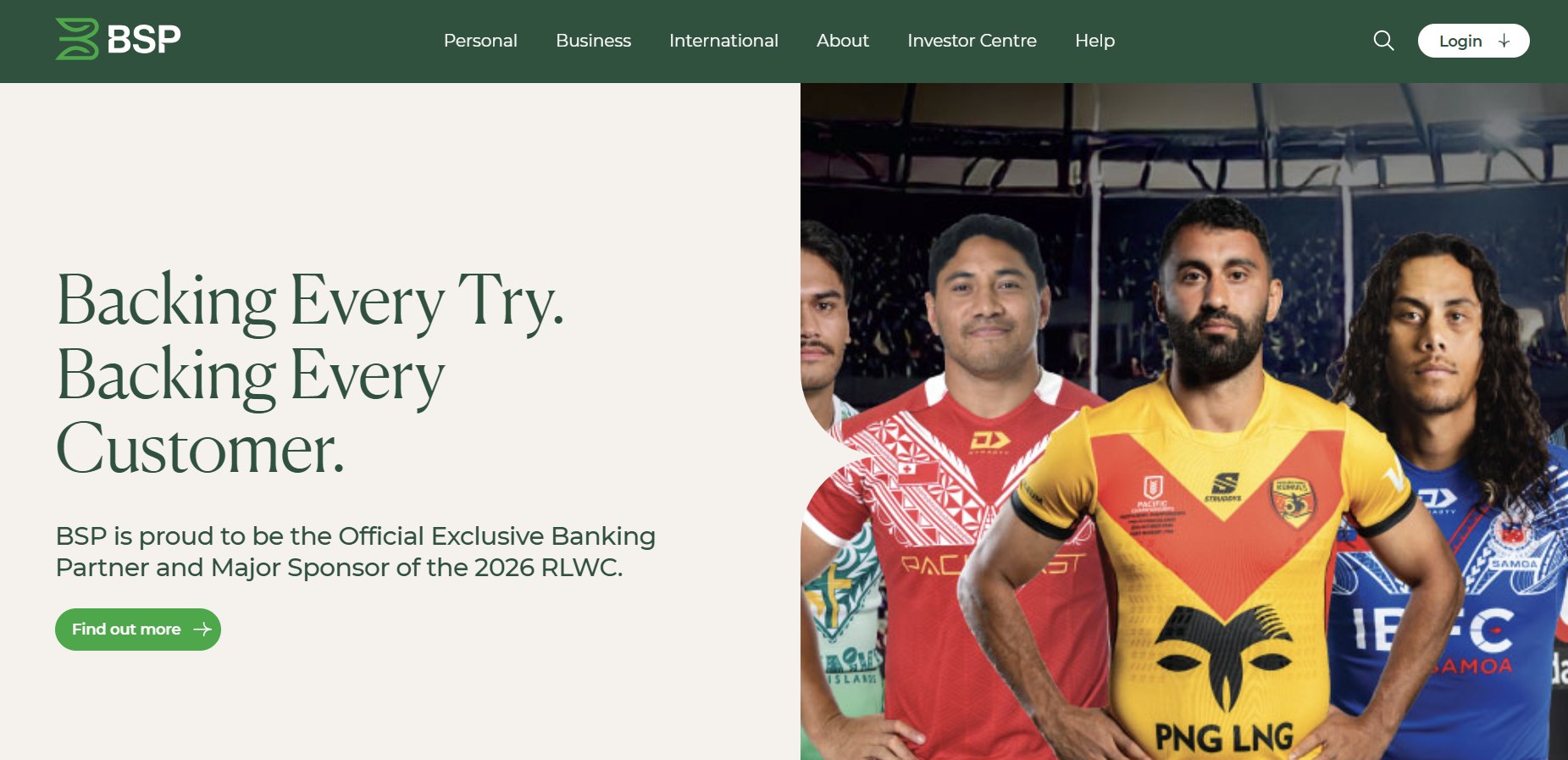
BSP Financial Group owns and operates Bank South Pacific, the dominant banking franchise across much of the Pacific region, with the largest branch network of any bank operating in Papua New Guinea, the Cook Islands, Fiji, the Solomon Islands, Samoa, Tonga and Vanuatu. The bank maintains branches and sub-branches in major cities and towns across those markets, as well as in more remote rural locations, a footprint the company has said reflects its deep, longstanding commitment to the region and what it describes as its own Melanesian identity. That physical branch network is complemented by an electronic banking platform offering online business and mobile banking, payments, payroll processing, ATM access and bill payment services.

Beyond its core retail and commercial banking operations, BSP Financial Group operates through dedicated business units covering corporate banking, retail banking, a premium banking division known as Paramount, and treasury services, drawing on the bank’s broad geographic presence and range of financial capabilities to serve clients across the Pacific. The company also owns three wholly owned subsidiaries: BSP Capital Ltd, which provides stockbroking and funds management services in Papua New Guinea; BSP Finance, a specialist asset finance company operating in Fiji and Papua New Guinea; and BSP Life, a dedicated life insurance provider based in Fiji.

Advertisement

Founded in 1957 and headquartered in Port Moresby, the company was formerly known as Bank of South Pacific Limited before adopting its current name, BSP Financial Group Limited, in March 2021. The company maintains a dual listing structure, trading on the Papua New Guinea Exchange under the code BSP and on the Australian Securities Exchange under the code BFL, giving investors in both markets direct access to shares in the bank.

Financially, BSP Financial Group has maintained a relatively attractive profile for income-focused investors, with a dividend yield around 7.43% based on recent trading levels, alongside trailing twelve-month earnings per share of approximately $2.51. Those figures reflect a bank that has continued generating substantial profitability from its dominant position across Pacific banking markets, even as its share price has fluctuated within a fairly wide range over the past year.

The bank’s business spans a comprehensive suite of both retail and business banking products. On the business side, the company offers business, solicitor’s trust and SME current and deposit accounts, business overdrafts, insurance premium funding, and a range of specialized financing products, including asset financing, bridging finance, tailored business loans, commercial and residential property investment financing, construction development finance, and seasonal finance products aimed at supporting agricultural and other seasonal industries across its Pacific markets. The bank also provides international money transfer, foreign exchange and trade finance services, along with foreign currency accounts, term deposits and loans, reflecting the cross-border financial needs of businesses and individuals operating across the multiple island nations the bank serves.

BSP Financial Group publishes its interim and full-year financial results, along with regular earnings updates and its annual report, to both the Papua New Guinea Exchange and the Australian Securities Exchange, with dividend information disclosed as part of those half-year and full-year results announcements. Shareholders can manage their holdings through either PNG Registries for shares held on the Papua New Guinea Exchange, or through MUFG Corporate Markets, formerly known as Link Market Services, for shares held on the Australian exchange.

Advertisement

As the largest bank operating across much of the Pacific region, BSP Financial Group’s performance is closely tied to broader economic conditions across Papua New Guinea and the smaller island economies where it operates, including trends in commodity exports, government spending, remittance flows and regional trade activity, all of which can influence lending demand, deposit growth and overall profitability for the bank’s diversified operations across its various Pacific markets.

With no specific catalyst confirmed for Thursday’s sharp gain, investors are likely to continue watching for the bank’s next scheduled financial disclosure to the PNGX and ASX for further clarity on the underlying operational trends driving the stock’s performance, alongside broader developments across the Pacific banking and economic landscape that could continue to influence trading in the shares in the sessions ahead.

Continue Reading
Click to comment

You must be logged in to post a comment Login

Leave a Reply

Business

ASX 200 Drops 0.76% as Oil Price Surge on Iran Peace Deal Doubts Outweighs Strong Australian Jobs Data

Published

on

Australia Housing Market 2026: Two-Speed Boom Persists as Prices Hit

SYDNEY — Australia’s benchmark share index fell 0.76% to 8,699.1 points by mid-afternoon Thursday, down 66.2 points, as a sharp overnight surge in oil prices tied to doubts over a potential U.S.-Iran peace deal outweighed encouraging domestic employment data that had briefly lifted investor sentiment earlier in the session.

The S&P/ASX 200 opened sharply lower Thursday, dropping 1.3% to 8,650 points at the market open, before recovering some ground through the morning and early afternoon to trade closer to flat by 2:58 p.m. local time. The decline followed losses on Wall Street overnight and came alongside a broad-based pullback across the local market, with 148 of the index’s 200 constituent stocks trading lower and all but two of the market’s major sectors posting losses for the session. The metals sector weighed particularly heavily on the broader index, with copper prices retreating from near-record highs.

The primary catalyst behind Thursday’s weakness traced back to a sharp jump in global oil prices. According to Bloomberg data, West Texas Intermediate crude climbed 2.4% to $92.70 a barrel, while Brent crude surged 4.1% to $103.35 a barrel, with the moves attributed to growing doubts over the prospects for a U.S.-Iran peace deal. That renewed uncertainty marked a reversal from the more optimistic tone that had prevailed in markets earlier in the week, following reports that Iran had offered to reopen the Strait of Hormuz if the United States eased military pressure and lifted its blockade on Iranian ports.

The rise in oil prices provided a clear tailwind for Australia’s energy sector, with Woodside Energy Group and Santos both positioned to benefit from higher crude prices heading into Thursday’s session, even as the broader index struggled under the weight of losses elsewhere in the market.

Advertisement

Thursday’s session also carried significant domestic economic news, with Australia’s August labour market data released during the trading day. Betashares chief economist David Bassanese offered a generally reassuring interpretation of the figures despite some mixed underlying signals. “While the August labour market report was somewhat mixed, the overall strength in employment will likely be the final nail in the coffin for a Reserve Bank interest rate increase next week,” Bassanese wrote, noting that the jobless rate had risen alongside stronger workforce participation, a combination he characterized as reflecting genuine underlying employment strength rather than economic weakness.

That reading suggested reduced pressure on the Reserve Bank of Australia to raise interest rates at its upcoming policy meeting, a notable shift from earlier in the week, when the central bank had flagged concerns about inflation risks potentially building amid elevated energy costs and firm domestic demand. Thursday’s employment data appeared to ease at least some of that pressure, even as the day’s broader market action was ultimately dominated by the oil price shock tied to the Middle East.

Thursday also brought a wave of dividend payments across several major ASX 200 constituents. PLS Group, Telstra Group, ResMed, Ramsay Health Care and Rio Tinto were all among the companies distributing dividends to shareholders during the session, with Rio Tinto paying a fully franked interim dividend of $2.96 per share.

Elsewhere on the market, Bell Potter reiterated its Buy rating on agricultural chemicals company Nufarm, raising its price target to $3.90 from $3.75, citing an improved outlook for the stock.

Advertisement

Thursday’s pullback followed a choppy but ultimately mixed stretch of trading earlier in the week. The ASX 200 closed essentially unchanged Wednesday, edging up 0.086% to 8,765.3 points according to one tracking service, though a separate data source measured a slight decline to 8,751 points, a discrepancy reflecting differences in how various providers calculate end-of-day closing levels. That indecisive session followed a stronger performance Tuesday, when the index added 26 points, or 0.3%, to close at 8,758, supported by a rally in U.S. chip stocks tied to optimism around Meta’s newly unveiled artificial intelligence agent, along with hopes for progress in Middle East diplomatic talks held on the sidelines of the United Nations General Assembly and anticipation ahead of a bilateral summit between the United States and China.

That U.S.-China summit was scheduled to take place Thursday, with tariffs, critical minerals and broader economic ties between the two countries expected to be discussed, adding a further source of potential market-moving news for investors to monitor as the session progressed.

Gold mining stocks had been standout performers earlier in the week, with Catalyst Metals surging 6.57% Wednesday to close at $6.16 despite no specific company news, part of a broader rally across gold-related shares that also lifted Northern Star Resources, Evolution Mining, PLS Group and Sandfire Resources.

The ASX 200 remains down roughly 3.87% over the trailing month and has retreated significantly from the all-time high of 9,198.6 points it touched in February, before settling closer to the 8,800 level by July. With the Reserve Bank’s interest rate decision now just over a week away, and the outcome of Thursday’s U.S.-China summit still unfolding, investors are likely to continue weighing the competing signals from domestic employment strength, elevated oil prices tied to Middle East uncertainty, and the broader path of global monetary policy in the sessions ahead.

Advertisement
Continue Reading

Business

Alphabet: The Gemini-Cloud Divergence Hides A $1 Trillion Opportunity

Published

on

Alphabet: Still Not Too Late To Jump On The 16%+ Growth Train (NASDAQ:GOOG)

Alphabet: The Gemini-Cloud Divergence Hides A $1 Trillion Opportunity

Continue Reading

Business

Holiday park firm Parkdean Resorts points to record year after ‘resilient’ 2025

Published

on

Business Live

The Newcastle firm saw a small rise in revenues and profits during 2025 but says it is seeing record spending on its park this year

Parkdean Resorts' Cresswell Towers site in Northumberland has won an award

Parkdean Resorts’ Cresswell Towers site in Northumberland (Image: Dan Prince for Parkdean Resorts)

North East holiday park operator Parkdean Resorts has hailed a “resilient” year which saw a small rise in revenues and profits.

The Gosforth-based firm, which operates 65 caravan parks around the UK, said its revenues for 2025 rose 3.3% to £527.7m. Over the same period, gross profit edged up by £1m to stand at £380.9m

Parkdean said its 2025 performance had come despite “significant inflationary and operating cost pressures”, and that it was seeing performance so far this year. It said that spending on its parks had reached record levels in 2026, with particularly strong performances in its food and drink, activities and leisure divisions.

It also pointed to the success of TV and social media campaigns in increasing its engagement with customers. The company is now planning a £70m capital investment programme for next year to enhance parks, including rolling out its “parks of the future” concept to its Thorness Bay park on the Isle of Wight and Skipsea Sands, at Bridlington.

Advertisement

A spokesperson for Parkdean Resorts, said: “Following a resilient 2025, we have seen trading performance accelerate throughout 2026 and the business has delivered double-digit profit growth. Demand for our quality, affordable UK holidays remains strong and we also delivered record on-park spend during the peak season, including all-time highs across food & beverage, and activities, as guests continue to make the most of our parks.

“Our 2025 results demonstrate the resilience of the business. Maintaining growth and stable profitability was no small achievement given the significant inflationary and operating cost pressures facing the sector. Against a backdrop of continued economic uncertainty and subdued consumer confidence, we delivered a solid performance, underpinned by the strength of our brand, the quality of our parks and the commitment of our teams.

“The momentum we’re seeing in 2026 is the result of a clear long-term strategy. This year we invested £55m across our parks, accommodation, facilities and guest experiences, as well as our technology and digital capabilities, to improve the experience for guests and holiday homeowners. That investment is delivering results, with growing demand, increasing brand awareness, stronger social media engagement and record levels of guest spending across our parks.

“We continue to see opportunities for growth in the UK holiday market. With a portfolio of 65 parks in some of the UK’s most sought-after coastal, lakeside and countryside locations, a highly engaged team and the ongoing support of our shareholders, we are well positioned for the future.”

Advertisement

Parkdean Resorts operates sites around the UK, with locations in the North East including Crimdon Dene, Cresswell Towers, Whitley Bay, Church Point and Sandy Bay.


Continue Reading

Business

Starbucks plans to close 250 North American coffeehouses this week

Published

on

Starbucks lays off 200 corporate workers as part of Brian Niccol's turnaround plan

Starbucks announced plans to close roughly 250 stores across North America this week, company COO Mike Grams revealed Thursday.

Grams announced the closure in a public statement, saying that while most of its 18,000 North American stores were profitable, a small portion has been struggling.

Advertisement

“We have carefully reviewed our North America coffeehouse portfolio and identified locations where we do not believe we can consistently deliver the experience we want for customers and partners or where we don’t see a path to acceptable financial performance,” Grams said in the announcement, which was in the form of a letter to “Partners.”

STARBUCKS RESOLVES FLORIDA DEI LAWSUIT WITH BLOCKBUSTER AGREEMENT

A shot of a Starbucks store in Manhattan.

People pass by a Starbucks coffee shop in Manhattan, New York, on Jan. 15, 2025.  (Mostafa Bassim/Anadolu via Getty Images / Getty Images)

“As a result, we will close approximately 250 coffeehouses later this week. This represents approximately 1% of our more than 18,000 North America coffeehouses,” he added.

“Closing any coffeehouse is a difficult decision, and we know today’s news will be hard for the partners, customers and communities affected,” the statement said.

Advertisement

CORPORATION TARGETED BY BRANDON GILL DIGS IN ON ‘DIVERSE WORKFORCE’ AFTER FIREBRAND OPENS DEI PROBE

The announcement comes just days after Starbucks resolved a DEI lawsuit in Florida last week. The coffee giant will pay Florida $1 million and will not use race- and sex-based goals, quotas and preferences in employment practices companywide under a sweeping settlement.

Starbucks lawsuit lactose intolerance milk

The new class action lawsuit claims Starbucks is discriminating against lactose-intolerant customers by charging extra for nondairy options. (Photos by Stephen Chernin/Waldo Swiegers/Bloomberg via Getty Images / Getty Images)

Florida Attorney General James Uthmeier’s office confirmed to Fox News Digital that the agreement applies to all Starbucks operations nationwide, not just the company’s locations in Florida.

GOP FRESHMAN FIREBRAND TARGETS GLOBAL CONSULTING GIANT OVER ‘PLAINLY ILLEGAL’ DEI PRACTICES

Advertisement

“Every Floridian deserves to be hired, promoted and compensated based on merit, qualifications and character — not race or sex,” Uthmeier told Fox News Digital. “This resolution ensures that Starbucks’ policies and practices fully comply with Florida’s civil rights laws. DEI can never be an excuse to violate civil rights.”

The negotiated resolution ends the lawsuit Uthmeier filed in December 2025 accusing Starbucks of violating the Florida Civil Rights Act through racial and sex-based goals, quotas and preferences in its workplace policies.

TRUMP ADMINISTRATION ACCUSES PRESTIGIOUS LAW SCHOOL OF FAVORING BLACK APPLICANTS OVER WHITE, ASIAN PEERS

Starbucks logo sign

A sign embellished with the Starbucks logo hangs near the entrance to the Starbucks coffee shop in Aspen, Colorado. (Robert Alexander/Getty Images / Getty Images)

Under the agreement, Starbucks committed to complying with the state civil rights law, which prohibits race- and sex-based preferences in hiring, promotions, pay, executive compensation, mentorship programs, supplier selection and board composition.

Advertisement

The company also agreed it will not participate in organizations that require it to increase the racial diversity of its board of directors.

GET FOX BUSINESS ON THE GO BY CLICKING HERE

Starbucks’ chief legal officer will be required to submit annual certifications of the company’s continued compliance for four years. The company will also pay $1 million to the Florida Department of Legal Affairs to reimburse the office for the time, expenses and costs of bringing the case.

Fox News’ Stepheny Price contributed to this report.

Advertisement
Continue Reading

Business

AO World buys camera retailer Jessops after deal with Peter Jones

Published

on

Business Live

Deal supports AO World’s expansion into new categories

A Jessops store in Birmingham after it was relaunched by Dragons' Den star Peter Jones in 2013.

A Jessops store in Birmingham after it was relaunched by Dragons’ Den star Peter Jones in 2013(Image: PA)

AO World has sealed a deal with Dragons’ Den star Peter Jones to snap up ailing camera retailer Jessops.

Advertisement

The online retailer kept the acquisition price under wraps but confirmed the purchase was funded from its “existing cash resources.”

AO World said the deal “supports our strategy of expanding into adjacent categories, giving customers and members more reasons to shop with AO and increase our share of wallet. Jessops brings a trusted brand and specialist expertise in cameras and optical technology.”

Established in 1935, the camera retailer was salvaged by Peter Jones following its collapse into administration in 2013.

Jones reopened scores of stores that had been closed down, but by 2019 the business tumbled into administration for a second time, followed by a third collapse in 2021, as reported by City AM.

Advertisement

The business now trades from merely eight stores, having previously operated more than 300 across the country, following a dramatic withdrawal from the high street.

Jessops generated just under £20m in revenues for the year ending September 2025, its latest accounts reveal, marking a 6.5 per cent rise on the previous year, driven by growing online sales.

The firm recorded a loss of £1.1m for the year, marginally down on 2025.

“I am delighted to welcome Jessops into the AO family and look forward to growing the existing business as well as integrating the category into the wider AO business,” said AO World founder and chief executive John Roberts.

Advertisement

The transaction represents the latest purchase by AO after it acquired Music Magpie in December 2024.

AO World announced on Thursday that it anticipated reporting a 5.5 per cent increase in sales and a rise in profit exceeding 20 per cent for the six months ending in September, attributing the growth to enhanced performance in its mobile and handset division.

“There continues to be a lot of uncertainty in the world but we look forward to heading into peak trading with confidence and momentum behind us,” Mr Roberts said.

Advertisement
Continue Reading

Business

Genus books $135m wind farm contract

Published

on

Genus books $135m wind farm contract

ASX-listed GenusPlus Group will extend its working relationship with Atmos Renewables, after securing a significant design and construction-based contract.

Continue Reading

Business

‘Home Improvement’ Star Jonathan Taylor Thomas Arrested for Resisting and Obstructing a Sheriff’s Deputy

Published

on

Meghan Markle

LOS ANGELES — Actor Jonathan Taylor Thomas, known for his role on the 1990s sitcom “Home Improvement,” was arrested this week on charges of resisting and obstructing a law enforcement officer, according to TMZ, which cited law enforcement sources familiar with the incident.

According to those sources, Thomas was a passenger in a vehicle that was pulled over Monday in Westlake Village, California. Deputies conducting the stop instructed Thomas to remain inside the vehicle, but he exited the car and was described by law enforcement sources as uncooperative. Sources told TMZ that Thomas appeared to be drunk in public at the time and resisted deputies during the encounter.

Thomas was subsequently arrested and booked into the jail at the Malibu/Lost Hills Sheriff’s Station on Monday, according to jail records reviewed by TMZ. He was released from custody a short time after being booked. A representative for Thomas did not provide comment when contacted by TMZ regarding the arrest.

Thomas, now in his 40s, first rose to fame as a child actor playing Randy Taylor, the middle son on the long-running ABC sitcom “Home Improvement,” which aired from 1991 to 1999 and starred Tim Allen as the show’s lead. The role made Thomas one of the most recognizable young television stars of the 1990s, and he went on to lend his voice to Simba in Disney’s animated film “The Lion King” and its sequel, further cementing his profile with audiences during that period.

Advertisement

Following the end of “Home Improvement,” Thomas largely stepped back from the intense public spotlight that had defined his childhood and teenage years in entertainment, taking a deliberate step away from acting to attend college, a decision that was frequently cited at the time as a notable departure from the more typical career trajectory of former child stars. He later returned to acting in more limited capacities, including television guest appearances and directing work, while maintaining a considerably lower public profile than during his peak years of fame on “Home Improvement.”

Monday’s arrest marks a rare instance of Thomas generating significant news coverage in recent years, given how far he has largely retreated from the entertainment industry spotlight since his time as a regular presence on network television in the 1990s. The specific charges of resisting and obstructing an officer are typically treated as misdemeanor offenses under California law, generally involving allegations that a person interfered with or failed to comply with a law enforcement officer’s lawful commands during an encounter, rather than allegations of more serious criminal conduct.

Details about the underlying traffic stop that led to Thomas’s arrest, including why the vehicle he was riding in was initially pulled over, were not included among the information provided by law enforcement sources to TMZ. It also remains unclear whether Thomas was the driver or purely a passenger with no direct involvement in whatever prompted deputies to initiate the stop in the first place, beyond the confirmation that he was riding as a passenger at the time.

Westlake Village, where the traffic stop occurred, sits within an area of California patrolled by the Los Angeles County Sheriff’s Department’s Malibu/Lost Hills station, the same facility where Thomas was booked following his arrest. Booking and release on the same day, as occurred in Thomas’s case, is a common outcome for arrests involving misdemeanor-level charges rather than more serious felony allegations, particularly when the arrested individual does not have other outstanding legal issues that would complicate their release.

Advertisement

As of the most recent available reporting, no additional legal proceedings tied to the arrest, including formal charges, an arraignment date, or a statement addressing the incident directly from Thomas himself, had been publicly disclosed. TMZ noted that a representative for the actor was reached for comment but declined to address the situation when contacted following news of the arrest.

Thomas’s arrest adds to a string of recent celebrity legal and personal news stories that have circulated in entertainment coverage this week, though the relatively minor nature of the charges against him, resisting and obstructing an officer rather than any more serious offense, distinguishes his situation from other more significant legal matters involving public figures reported around the same time.

With Thomas already released from custody and no further public statements issued by his representatives, the incident appears, based on currently available information, to represent a single, isolated legal matter rather than the beginning of a more extended legal process, though that could change if California prosecutors ultimately decide to pursue formal charges connected to Monday’s traffic stop and arrest.

Advertisement
Continue Reading

Business

General Mills’ recovery story still being written

Published

on

General Mills’ recovery story still being written

MINNEAPOLIS — Jeffrey Harmening, chairman and chief executive officer of General Mills Inc., said the food company is “off to an encouraging start in fiscal ’27,” as top-line results in the first quarter built on momentum in latter part of fiscal 2026.

“Our ‘remarkability’ playbook is working, driving improved top-line performance by delivering stronger product innovation and renovation focused on the benefits consumers are looking for today,” Harmening said in reporting quarterly results on Sept. 23. “And we have more work to do.”

For the quarter ended Aug. 30, net income fell 67% to $397 million, equal to 74¢ per share on the common stock, from $1.2 billion, or $2.22 per share, a year earlier. General Mills attributed the decrease primarily to lower operating profit.

Excluding a valuation loss on held-for-sale business, transaction and acquisition integration costs, asset impairments, and restructuring and transformation charges, among other items, adjusted net earnings fell 14% to $403.6 million, or 75¢ per share, from $469 million, or 86¢ per share, a year ago. The result topped Wall Street’s average estimate for adjusted earnings per share of 72¢.

Advertisement

Operating profit dropped 63% to $633.6 million and on an adjusted basis was down 11% to $634 million. General Mills said the decrease mainly reflects a year-ago $1 billion gain from the divestiture of its yogurt business a year ago, along with lower gross profit dollars this fiscal year.

“We’re continuing to deliver industry-leading cost savings in a volatile environment,” Harmening noted. “We are on track to deliver $750 million in savings this year between our holistic margin management program, our transformation initiative and other efficiency efforts. This work is about more than cost mitigation and reduction. It’s about making General Mills future-fit, modernizing how we operate, reimagining our supply chain and building the flexibility to innovate faster.”

First-quarter net sales totaled $4.39 billion, down 3% from $4.52 billion a year earlier. General Mills said the decline came primarily from the impact of the US yogurt divestiture, while “organic net sales essentially matched year-ago levels.” Organically, net sales in the 2027 quarter were flat, including a 1% decrease in volume.

“In terms of first-quarter performance, organic net sales were flat to last year, adjusted operating profit was down 11% and adjusted diluted EPS was down 13%,” Harmening said. “These results finished ahead of our expectations, driven largely by improved retail sales trends in North America Retail, North America Foodservice and International, as well as a good start on our cost savings programs.”

Advertisement

Dana McNabb, chief operating officer, noted that General Mills “entered fiscal ’27 with a stronger foundation,” citing “decisive action we took last year to bring more value to consumers by adjusting base prices to address key price cliffs and gaps.”

AdobeStock_1364457089_Editorial_Use_Only (1).jpg

Brands such as Pillsbury, Cheerios and Annie’s have seen more innovation and renovation this year, General Mills said.

| Photo: ©JAMMER GENE – STOCK.ADOBE.COM

“With that investment behind us, our full focus this year is on accelerating our pace of product innovation and renovation to deliver more of the lasting benefits that consumers are looking for today,” she said. “This includes more protein and fiber, clean labels, bold flavors, fun and indulgence, and pet humanization. And we’ll leverage our strategic revenue management toolkit to strengthen price/mix, with a particular focus on mix. I’m encouraged by the early signs of progress we’re seeing in Q1, driven by our focus on Remarkability, and it is evident in the results we delivered this quarter in North America Retail (NAR).”

For the core NAR unit, first-quarter net sales fell 7% to $2.45 billion from $2.63 billion, reflecting a 4-point headwind from the sale of the US yogurt business. Organic net sales were down 3% on decreases of 2% in volume and 1% in price/mix. Segment operating profit declined 15% to $478.6 million.

Advertisement

General Mills said NAR’s performance included year-over-year net sales decreases of 14% for the Big G Cereal & Canada business unit (reflecting the impact of the yogurt divestitures) and 6% for US Snacks, while sales came in flat for US Meals & Baking Solutions. The company said that, “as expected,” organic sales lagged Nielsen-measured retail sales by about 1 point, pointing to changes in retailer inventory, but noted that dollar share trends strengthened in most of its priority categories.

“NAR retail sales improved by roughly 2 points versus fiscal ’26, as we made our products and brand communications stand out more for consumers,” McNabb said. “We’ve increased the contributions from innovation and renovation in NAR this year, with core brands like Cheerios, Annie’s and Pillsbury and new brands like La Tiara and Wanchai Ferry. We’ve also stepped up our marketing game, bringing in new agency partners, building a next-generation content studio and doubling our use of influencers to maximize our reach and engagement.

“And we have further to go,” she said. “While most of NAR’s priority businesses delivered improved market share trends in Q1, some are not yet back to absolute share growth, and we’re focused on improving this trajectory.”

Quarterly net sales rose 1% to $523.1 million for the North America Foodservice unit and climbed 4% to $794.3 million for International. North America Pet sales were flat at $612.8 million. Operating profit rose 12% for Foodservice and 14% for International but sank 12% for Pet.

Advertisement

“With solid first-quarter results, improving in-market momentum, and our transformation and cost savings work on track, we are reaffirming our full-year fiscal ‘27 guidance,” Harmening said.

For fiscal 2027, General Mills forecasts adjusted EPS of $3 to $3.20, organic net sales of down 1.5% to up 0.5%, and an adjusted operating profit decline of 8% to 13%.

Continue Reading

Business

Aussie shares sink back into red as bond yields spike

Published

on

Aussie shares sink back into red as bond yields spike

Yes. Corporate subscriptions are available for teams and organisations, with discounted rates as user numbers increase. Pricing starts from $1,625 + GST per user.
Get in touch
to discuss the right option for your organisation.

Business News subscriptions are used by executives, investors, consultants and professionals who need to stay informed and make better decisions about the WA market. When you subscribe you’ll get

  • Unlimited access to WA’s most trusted business journalism
  • Data & Insights — detailed profiles of WA companies, people, projects and deals
  • MyBN — a personalised feed based on the companies, people and sectors you follow
  • Special publications and industry reports
  • Daily and weekly email newsletters

Data & Insights is a research tool built specifically for the WA market. It draws on more than 30 years of Business News reporting, updated regularly to reflect what’s happening now. Use it to:

  • Look up detailed profiles of WA companies, including financials, directors and ownership
  • Find decision-makers and track their career movements
  • Research live and completed projects across WA industries
  • Monitor deals, appointments and market activity
  • Access industry rankings and league tables

Data & Insights is updated daily by our dedicated research team, which uses the latest announcements, ASX filings and editorial coverage to keep our person, company, list and project records up to date.

Business News welcome all opportunities to make our dataset accurate, complete and current, so if you have an update request, please email the team at
general@businessnews.com.au, and we’d be happy to assist.

Advertisement

MyBN
is part of every subscription. It’s your personalised view of Business News. You can follow the companies, people, sectors and projects that matter to you, and get a news feed and alerts tailored to your interests. You can save articles to read later and retain only what you need.

Only subscribers have full access to all content on the Business News website.

Advertisement

If staying informed about the WA economy is part of your job, and/or you’re looking for networking opportunities in WA, Business News is built for you.

Business News subscribers are:

  • Executives and directors tracking competitors, clients and market movements
  • Investors and advisers researching companies, deals and industry trends
  • Consultants and professionals staying across sectors relevant to their clients
  • Business owners looking for leads, context and market intelligence

Most Business News publications cover national or global markets. Business News is focused entirely on Western Australia, which means the journalism, the data and the intelligence are all built around WA companies, people and projects — not adapted from a national feed. Data & Insights, included with every subscription, combines more than 30 years of WA-specific editorial research with live business data. There’s no comparable product for the WA market.

Advertisement

The Morning Digest Email provides a comprehensive wrap of the major headlines, relevant to WA business, and includes with a snapshot of the overnight news covering oil, gold and ASX-listed companies.

The Afternoon Wrap Email focuses on the news covered by our team of journalists during the course of the working day, including exclusive stories and analysis, all of which relates to WA business and the local economy.

The BN Weekender Email contains a wrap of the Business News from the week that was, highlighting the top stories in each area of WA business.
Sign up for free.

Advertisement

We’re happy to help.
Get in touch
and our team will come back to you.

Advertisement
Continue Reading

Business

80 Small Business Ideas for 2026 (That Actually Work)

Published

on

Graphic for "80 Small Business Ideas for 2026" blog post

There’s a version of me from a few years ago who spent $340 on a candle-making kit, four bags of soy wax, and a stack of amber glass jars, convinced I’d stumbled on the one small business idea that would finally make me my own boss. Six weeks later, I’d set off my smoke alarm twice, given away eleven candles to neighbors who hadn’t asked for them, and quietly returned the wax to the back of a kitchen cabinet, where- if I’m honest- it might still be.

Was the idea bad? Not really. Was I ready to execute it? Absolutely not. That’s the gap nobody warns you about: there are a thousand small business ideas floating around the internet, but almost nothing written about how to tell a genuinely good one from an expensive way to occupy a weekend.

So is there a formula for picking a winner? Not exactly, but there’s a much better filter than “this seems fun,” and we’ll get to it. First, a running start: 80 real ideas, organized by the situation you’re actually starting from, each with a plain-English note on why it works and who it’s for.

The Highlights, If You’re Short on Time

Pulled from the full list below, these are the ones with the clearest path from “idea” to “first paying client” right now:

Advertisement
  1. Freelance writing or copyediting
  2. Virtual assistant services
  3. AI workflow consulting for small businesses
  4. Bookkeeping for solo entrepreneurs
  5. Mobile pet grooming
  6. Residential or office cleaning
  7. Niche e-commerce (one tight category)
  8. Personal training or nutrition coaching
  9. Local SEO consulting
  10. Home organizing services
  11. Senior companion care
  12. Meal-prep delivery service
  13. Online course creation
  14. Web design for local businesses
  15. Handyman or small home-repair work

That’s the appetizer. The full 80 are below, grouped by category, but the list isn’t actually the hard part. The decision is.

What Makes a Small Business Idea Good, Instead of Just Cute?

Here’s the uncomfortable truth: almost any idea on this list can work, and almost any idea can fail. The difference usually comes down to four things:

  • You already have the skill, or can get good at it fast. Starting from zero adds months, sometimes years, to your runway.
  • The startup cost is low enough to survive being wrong. If your first attempt flops, can you try again, or are you done?
  • There’s a repeatable way to find customers — not just the first ten, who are usually friends and family, but the hundred after that.
  • It can grow without your hours growing at the same rate. A business that only makes money when you’re personally trading time for it has a ceiling built in.

It also helps to remember what “small business” actually means at scale: according to the U.S. Small Business Administration’s Office of Advocacy, small businesses make up 99.9% of all U.S. businesses and employ roughly 62.3 million people, nearly 46% of the private-sector workforce. This isn’t a fringe category. It’s most of the economy.

With that filter in mind, here’s the full list.

Low-Cost Small Business Ideas (Almost No Startup Capital Required)

Low-cost doesn’t mean low-quality, it means the idea is built around your time and skill instead of inventory and equipment. This is usually the right starting category if you’ve never run a business before and want to test the water without draining your savings.

  1. Freelance writing or copyediting — turns existing writing ability into paid work with essentially zero equipment cost beyond a laptop.
  2. Virtual assistant services — inbox management, scheduling, and admin support for founders who’d rather not do it themselves.
  3. Social media management — running content calendars and posting schedules for small businesses too busy to do it consistently.
  4. Proofreading and transcription — detail-oriented work with low startup cost and steady demand from authors, students, and podcasters.
  5. Voiceover work — a home mic and some patience are the main barriers to entry; auditions do the rest.
  6. Online research services — freelance research for writers, analysts, and small firms that need a second set of eyes.
  7. Academic or test-prep tutoring — built directly on a subject you already know, with pay that scales with your track record.
  8. Resume and LinkedIn profile writing — steady demand from job seekers, especially during hiring-season spikes.
  9. Bookkeeping for solo entrepreneurs — recurring monthly work once you land a handful of regular clients.
  10. Independent consulting in your current field — the fastest route from “employee” to “business owner” because the expertise already exists.

Service-Based Small Business Ideas (Skills You Already Have)

If you’ve spent years getting good at something inside someone else’s company, that skill doesn’t stop being valuable the moment you leave. It just needs a new home.

  1. Marketing or brand strategy consulting — for small businesses that know they need better positioning but not how to get there.
  2. Web design and development — a service almost every small business needs and few want to learn themselves.
  3. Real estate or product photography — recurring work tied to two industries (real estate, e-commerce) that never stop needing images.
  4. Interior design or home staging — project-based work with strong word-of-mouth potential once you have a portfolio.
  5. Financial or tax consulting — high-trust, high-repeat-business work, especially for other small business owners.
  6. HR consulting for small teams — hiring, policy, and compliance help for companies too small to have an in-house HR person.
  7. Graphic design and branding — logos, packaging, and visual identity work for businesses at the “we finally need this” stage.
  8. Video editing services — demand driven by every small business now needing short-form content for social platforms.
  9. Career or executive coaching — one-on-one work that scales through referrals and testimonials more than ads.
  10. Grant writing for nonprofits — a narrow, specialized skill with less competition and often better pay than general freelance writing.

“Take what I already know how to do” is unglamorous advice compared to “chase a trend,” but it’s the version with the shortest distance between idea and first paying client.

Product and E-Commerce Small Business Ideas

Service work trades hours for dollars. Product work can, eventually, decouple the two – though it usually asks for more patience and more upfront cash before that happens.

Advertisement
  1. Niche e-commerce store (one tight category) — outperforms general stores by giving customers an actual reason to choose you over Amazon.
  2. Handmade goods on Etsy or your own site — low overhead, direct customer relationships, and full control over pricing and quality.
  3. Print-on-demand apparel — no inventory risk, since items are made only after they’re ordered.
  4. Interest-based subscription boxes — recurring revenue built around a specific hobby or identity rather than a general category.
  5. Specialty food products sold online — sauces, snacks, and baked goods with a shelf-stable format and a built-in gifting angle.
  6. Curated vintage or resale — sourcing is the real skill here; a good eye is worth more than a large budget.
  7. Digital products (templates, planners, courses) — sell once, deliver infinitely, with no shipping or inventory involved.
  8. Pet products for a specific niche — senior dogs, allergy-prone cats, exotic pets — narrower focus, more loyal customer base.
  9. Home goods with a sustainability angle — appeals to buyers actively looking for lower-impact alternatives to mass-market options.
  10. Custom stationery or invitation design — event-driven demand (weddings, showers, milestone birthdays) with strong repeat referrals.

Local and Mobile Small Business Ideas

Not everything needs to scale nationally to be worth doing. Some of the steadiest small businesses are the ones that never leave a five-mile radius.

  1. Residential or office cleaning — dependable recurring revenue once you build a regular client roster.
  2. Mobile pet grooming — convenience-driven pricing premium over storefront groomers, with lower overhead than a physical shop.
  3. Dog walking and pet sitting — low startup cost, flexible hours, and strong demand in dense residential areas.
  4. Lawn care and landscaping — seasonal but reliable, with equipment as the main upfront investment.
  5. Home organizing services — a fast-growing niche driven by decluttering trends and smaller living spaces.
  6. Handyman or small home-repair work — broad demand and minimal competition in most residential neighborhoods.
  7. Power washing and exterior cleaning — low equipment cost relative to the price customers are willing to pay per job.
  8. Senior companion care — non-medical support work with rising demand as the population ages.
  9. Mobile car detailing — comes to the customer, which is the entire value proposition and pricing justification.
  10. Moving and junk removal — physically demanding but reliably in-demand, especially in areas with high rental turnover.

Local services tend to have something the internet-first ideas don’t: word-of-mouth that compounds. One good review in a neighborhood Facebook group can outperform a month of ads.

Tech-Enabled and AI-Adjacent Small Business Ideas

Every wave of new tooling creates a matching wave of people who need help using it. Right now, that’s AI and the businesses built around helping other small businesses adopt it are among the fastest-growing ideas heading into 2026.

  1. AI workflow consulting for small businesses — helping owners figure out which tools are actually worth adopting, and which aren’t.
  2. Custom chatbot or GPT setup for local companies — practical, narrow-scope tech work most small businesses can’t build themselves.
  3. Data cleanup and automation services — unglamorous but consistently in-demand as businesses accumulate messier spreadsheets and systems.
  4. No-code app or website building — technical results without requiring the client (or you) to write code.
  5. AI-assisted content editing and fact-checking — a service layer on top of AI writing tools, for businesses that don’t trust raw output.
  6. Basic cybersecurity services for small businesses — most small businesses have none in place and don’t know where to start.
  7. Tech support for non-technical business owners — patient, plain-English troubleshooting that IT firms often price out of small-business range.
  8. Paid social media ad management — running and optimizing campaigns for businesses that don’t have the time to learn the platforms.
  9. E-commerce store audits and optimization — improving conversion rates on stores that already have traffic but weak sales.
  10. Local SEO consulting — helping brick-and-mortar businesses actually show up when someone searches nearby.

Wellness and Health Small Business Ideas

Wellness spending has kept climbing for years, and it’s increasingly treated as a routine expense rather than a luxury- which is the kind of demand a small business can build a real practice around.

  1. Personal training — one-on-one or small-group fitness coaching, in a gym, at home, or outdoors.
  2. Nutrition and health coaching — personalized guidance that goes beyond generic diet plans.
  3. Mobile massage therapy — brings the service to the client, commanding a premium over studio-based competitors.
  4. Yoga or Pilates instruction — can run in-person, online, or both, with low equipment costs to start.
  5. Non-clinical mental wellness coaching — support-focused work distinct from licensed therapy, with its own growing demand.
  6. Sleep coaching — a narrow, underserved niche with a clear, specific customer pain point.
  7. Postpartum support services — doula-adjacent, non-medical support for new parents in the weeks after birth.
  8. Senior fitness classes — a growing demographic with specific, underserved mobility and strength needs.
  9. Corporate wellness consulting — bringing wellness programming into small and mid-size workplaces.
  10. Assisted stretching or mobility studio — a newer fitness-adjacent model built around guided, hands-on flexibility sessions.

Food and Beverage Small Business Ideas

  1. Home bakery under a cottage food license — one of the lowest-overhead ways to turn a baking hobby into real income.
  2. Small-batch hot sauce or condiment brand — a manageable production scale with strong farmers-market and gift-market appeal.
  3. Mobile coffee cart — lower buildout cost than a café, with the flexibility to work events and high-traffic locations.
  4. Food truck — higher startup cost than a cart, but a full menu and a loyal local following to match.
  5. Personal chef service — in-home cooking for clients who want restaurant-quality meals without eating out.
  6. Meal-prep delivery service — batch-cooked, ready-to-eat meals delivered on a weekly schedule, distinct from one-off personal-chef visits.
  7. Small-batch beverage brand — cold brew, kombucha, or specialty sodas, often starting at farmers markets before retail shelves.
  8. Cooking or baking classes — turns existing kitchen skill into a teaching business with strong repeat-attendee potential.
  9. Farmers market vendor — low commitment way to test a food product before investing in a storefront or full production.
  10. Small-event catering — a natural next step for anyone already cooking at scale for friends and family.

Creative, Content, and Education Small Business Ideas

  1. Freelance illustration or design commissions — client work ranging from branding projects to personal commissions.
  2. Stock photography or video licensing — passive-leaning income once a library of work exists.
  3. Niche YouTube channel or content creation — monetized through sponsorships, ads, or a related product line once an audience builds.
  4. Paid newsletter publishing — subscription-based writing built around a specific topic and a loyal reader base.
  5. Ghostwriting for executives or founders — high-paying, relationship-driven work once you’ve built a track record.
  6. Online course creation — packages existing expertise into a product that can sell without your ongoing time.
  7. Children’s enrichment classes — art, coding, or music instruction for kids, often run through schools or community spaces.
  8. Music lesson instruction — steady, recurring income built on regular weekly sessions with the same students.
  9. Craft workshop hosting — paint nights, pottery sessions, and similar hands-on events with built-in social appeal.
  10. Podcast production and editing services — technical and creative support for the growing number of small businesses launching their own shows.

How Do You Actually Narrow This Down?

Take whichever three or four ideas from this list made you sit up a little straighter, and run each through the same four questions:

  1. Do I already have this skill, or could I realistically learn it in a month?
  2. Could I lose the startup cost entirely and still be okay?
  3. Do I know exactly where my first ten customers would come from?
  4. Is there a version of this that doesn’t require me personally, forever?

An idea that answers “yes” to all four isn’t just cute anymore. It’s a plan.

What Actually Trips People Up

It’s rarely the idea itself. It’s usually one of three things: underpricing out of nerves, waiting for a perfect logo and website before ever taking a paying client, or picking something with no clear path to customer number two. Every idea on this list can survive a rough first attempt. Almost none of them survive six months of avoiding the actual work of finding customers.

I think about the candle wax still sitting in that cabinet sometimes- not as a failure, exactly, more as a $340 lesson in doing the filtering before the buying spree. If you take nothing else from this list, take that: the idea rarely fails you. The lack of a plan usually does.

Advertisement
Continue Reading

Trending

Copyright © 2025