Connect with us

NewsBeat

Animal activists who stole King’s lambs from Sandringham found guilty of theft

Published

on

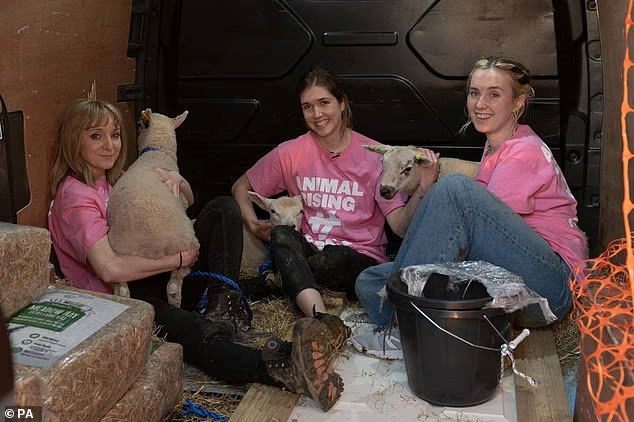
Rose Patterson, 37, along with Rosa Sharkey and Sarah Foy, both 26, spirited away three lambs during an early morning visit to Appleton Farm in Norfolk

Three animal rights activists who took lambs from the King’s estate in Sandringham and claimed Charles would have approved were convicted of theft today.

Rose Patterson, 37, along with Rosa Sharkey and Sarah Foy, both 26, spirited away three lambs during an early morning visit to Appleton Farm in Norfolk.

Footage of the women, who wore pink t-shirts bearing the name of pressure group Animal Rising, was released online afterwards by the organisation.

They were also shown brazenly standing outside Windsor Castle with signs stating they had taken the sheep before handing themselves in to police.

Advertisement

During their trial, they said they wanted to provoke a ‘discussion’ about animal farming and its impact on the environment, while the monarch was targeted because he ‘says he’s an environmentalist and an animal lover’.

Their defence rested on the claim that they had saved the animals from poor welfare conditions and slaughter and there was no ‘dishonesty’ in what they did as the so-called ‘open rescue’ was the morally right thing to do – and the King would have ‘consented’.

Prior to the hearing, Animal Rising said: ‘The open rescue tactic is an attempt to create strong case law foundations to give a legal basis for the rescue of animals from animal testing, farms or other industries.’

Advertisement

Rose Patterson, 37, along with Rosa Sharkey and Sarah Foy, both 26, spirited away three lambs during an early morning visit to Appleton Farm in Norfolk

The case follows other trials where activists have been cleared of alleged offences, leading MPs to warn such verdicts provide a ‘green light’ for people to commit crime.

But a jury took just three hours and 48 minutes to find the defendants guilty of the charge.

Judge Anthony Bate told the defendants, who showed no emotion as the verdict was returned, that he hoped to sentence them later today.

Advertisement

He indicated he was thinking of imposing a community order with unpaid work. 

Conservative MP Sir John Hayes, the founder of the Common Sense Group of parliamentarians, condemned the defendants’ actions, telling the Mail: ‘Anyone who keeps animals needs the protection of the law.

‘The distorted understanding of the relationship between humans and animals is evident in the fact that they carelessly took these babies from their mothers.’

He also branded the claim that Charles would have supported the lambs’ ‘rescue’ as ‘impertinent’, adding: ‘It’s hard to think the King would want anyone to steal animals.’

Advertisement

Immediately after the theft on May 24, 2023, livestock experts and farmers condemned the stunt.

A National Sheep Association spokeswoman said the distressed ewes would have been ‘scouring the field for their lambs, bleating endlessly with no hope of finding them’.

The activists said they target the King because he said he was 'an environmentalist and an animal lover'

The activists said they target the King because he said he was ‘an environmentalist and an animal lover’

Gareth Wyn Jones, a sheep farmer for over five decades, added: ‘These people are absolutely bonkers.

Advertisement

‘It’s distressing for these animals to be handled wrongly by amateur strangers.’

The lambs have never been recovered as they were taken to an undisclosed sanctuary where, Norwich Crown Court was told, they had begun ‘socialising with other animals and had made friends with goats’.

Animal Rising director Ms Patterson said outside court: ‘We are of course disappointed by the verdict today but it doesn’t change how I feel about rescuing Sammy, Sunny and Sooty. 

‘We rescued them because we believed they deserved the chance of a long life, rather than having their lives cut short simply because they were being farmed for food. I don’t regret for a moment giving them that chance.’

Advertisement

Ms Sharkey added: ‘I hope that the rescue of these lambs helps open the King’s eyes to the reality of farming sheep.’ 

During the trial, jurors were told that the King was the official owner of the lambs, which were worth £400-500, but they were in the care of head stockman Gordon Robinson.

Charles, who was then the Prince of Wales, admires sheep being judged at The Great Yorkshire SHow in July 2021

Charles, who was then the Prince of Wales, admires sheep being judged at The Great Yorkshire SHow in July 2021

Giving evidence, the defendants said the farming of livestock was having a devastating impact on the environment.

Advertisement

Food distribution worker Ms Sharkey, of Brighton, said: ‘We discussed wanting to save sheep and the best way to do that.

‘One of the things we were considering was the impact it would have on the farmer and knowing that farming lives are not easy.

‘That was the key reason why we went for the King’s farm as it’s not his primary source of income.

‘And we wanted to do it in a way that would have a wider impact and produce a discussion in the country.

Advertisement

‘The King says he is an environmentalist and an animal lover and I do think that the reality of sheep farming is quite hidden away, and what they face in the slaughterhouse and the impact on the land are not actually things that he’d agree with.’

Prosecutor Dingle Clark posed a hypothetical situation where someone ‘comes into a coffee shop and walks out with a cake’ and suggested: ‘That would be wrong’.

Ms Sharkey told him: ‘It would depend on the context.’

Ms Patterson, of north London, claimed electrodes that stun lambs at abattoirs were often used incorrectly, leaving them ‘paralysed while going to slaughter fully awake’.

Advertisement

The defendant – who was previously arrested on suspicion of conspiracy to cause a public nuisance after being flagged in the group’s plot to sabotage the Grand National – also claimed the ‘scale’ of the animal industry meant there were frequent violations of standards, yet there were ‘very few prosecutions’.

The defendants stood outside Windsor Castle with signs admitting what they had done before handing themselves in to police

The defendants stood outside Windsor Castle with signs admitting what they had done before handing themselves in to police

Ms Foy, an Animal Rising volunteer support co-ordinator from South Normanton, Derbyshire, told jurors the lambs were taken on a hot day and there had been no water for them.

‘We rescued them from neglect or from being killed,’ she said.

Advertisement

She also argued that ‘no aspect of the farm system actually makes sense. Every part of it needs change’.

But Mr Robinson said in a statement read to the court: ‘We unapologetically rear forest-fed lambs to sell for consumption.’

And Mr Clark told the jury in his closing speech: ‘One might have sympathy with the views of some of the defendants but they are all controversial views.’

It might be that farming practices should change, he added, but there are ‘plenty of ways to change the law [and] plenty of ways to campaign lawfully’.

Advertisement

What the defendants didn’t have, he concluded, was permission to ‘take property that belongs to other people’. 

Defence barrister Sarah-Jane Ewart, for Sharkey, said in her closing speech: ‘The three women sat behind me took three sheep. Those sheep, there’s no dispute, belonged to the King. 

‘There’s no suggestion they planned to give them back … but they didn’t do it dishonestly and so the law says that’s not theft.’

She explained that ‘someone isn’t dishonest if they believe the owner would consent to the appropriation of the property if they knew of it and its circumstances’. 

Advertisement

‘They genuinely believed King Charles would be open to this,’ added Ms Ewart.

So-called Open Rescue, where activists use ‘non-violent and transparent’ tactics to ‘rescue’ animals in captivity, was first used by protesters in Victoria, Australia.

Earlier this year, four defendants were unanimously acquitted of burglary after a jury heard they had taken 18 beagle puppies in an ‘open rescue’ at an animal testing site in Cambridgeshire in December 2022.

Other activists cleared of alleged offences include three Extinction Rebellion members who were accused of obstructing the railway after climbing onto a Docklands Light Railway train in East London in 2022.

Advertisement

The Sandringham Estate consists of 2,400 hectares of farmland, with an additional 4,000 hectares rented by tenant farmers. There are around 3,000 royal sheep present.


Source link

Continue Reading
Click to comment

You must be logged in to post a comment Login

Leave a Reply

NewsBeat

Father-of-two jailed for throwing bottle at police during anti-migrant protest

Published

on

Daily Record

Del Somerville, 42, was the first to be arrested and sentenced for violent disorder following the violence which erupted after the arrival of a small boat in Portsmouth on September 6

A father-of-two has become the first demonstrator to be imprisoned after hurling a plastic bottle at a police cordon and verbally abusing officers during an anti-migrant demonstration in Portsmouth.

Del Somerville, from Paulsgrove, received a two-year jail term at Portsmouth Crown Court after admitting to violent disorder.

The 42-year-old was the first person arrested and sentenced in connection with the disturbances that broke out following a small boat’s arrival in the Hampshire city on September 6.

Advertisement

Judge Daniel Sawyer stated his sentence would serve as a warning to others amid further demonstrations in the locality.

Branding him a “thug”, the judge told the defendant: “Police officers dedicate their lives to the protection of the public regardless of their own views, the very least they can expect is that those who engage in protests treat them with respect and the courts punish those who assault them.”

Prosecutor Edward Warren explained: “This case arises out of the violence that occurred on the night of September 6 following the arrival into the country of 114 illegal migrants who had crossed the Channel from France and were diverted to Eastney marina, escorted by the Coastguard and the RNLI.”

Mr Warren added: “Following an initial peaceful and lawful gathering from local residents, a large number of people gathered on Ferry Road near the marina.

Advertisement

“That protest apparently initially appeared spontaneous before it seemed organised elements with online encouragement from public figures having shared information on social media and elsewhere led to a much wider group and a large number of people attending.

“Public awareness spread online and a larger number of people began to congregate in Eastney.

“Protests began popping up in other parts of the area, including Hayling Island and ferry terminals.

“Hampshire Constabulary declared a major incident during the evening and a significant police presence was deployed, and significant resources were required to maintain public order and to ensure those who had arrived in the country were moved to a secure location.

Advertisement

“During the evening there were seven recorded assaults on police officers and damaged caused to police vehicles.

“Other forces were deployed from outside Hampshire to assist and approximately 50 officers from Hampshire and a further 100 supporting officers to assist.”

The court was informed that local residents had provided statements expressing fear within their own homes, while demonstrators were witnessed urinating in gardens, with property damage in the vicinity running into thousands of pounds.

Mr Warren stated that bricks, stones and bottles had been hurled at police, and community wardens found themselves confined to their vehicles for five hours throughout the disorder. The prosecution outlined how at approximately 11.20pm, Somerville, dressed in a khaki hooded top with the hood raised, first gestured to a fellow demonstrator to “back off” from the police cordon.

Advertisement

The court heard the accused subsequently “turned to face the police and was seen to throw a small bottle and he has shouted at officers to ‘f*** off’.

“He remains at the front of the group talking to protesters a short distance from the police line.”

It was further stated that at 1am, body-worn camera evidence captured Somerville “aggressively pushing” through the police barrier and “shouting verbal abuse at police officers” as well “pointing aggressively” at them.

Mr Warren explained that Somerville, who resides on a vessel at the marina, was located at his van by officers on September 11 and allegedly assaulted a constable during his arrest.

Advertisement

The defendant has denied this charge, with the matter now set to be heard at Portsmouth Magistrates’ Court.

During questioning, Mr Warren revealed Somerville “said the police were the ones responsible for the violence and he suggests he was struck by a baton multiple times and sprayed with CS gas”.

Helen Easterbrook, defending, told the court that Somerville had been aboard his boat at the marina that evening and ventured out to investigate the commotion.

She explained: “Unlike so many of those involved in disorders where people are transporting themselves across the country, he was caught up in it.

Advertisement

“He was one of the people affected by this, his original involvement was when he came out of the marina to see what was going on. This does not excuse the behaviour he began to undertake.”

She further stated: “He asked police to go back to his place of safety on his boat but he was refused.”

Ms Easterbook revealed that Somerville had initially tried to defuse the situation, but had thrown a “light plastic bottle” with no intention of causing harm.

She went on to say: “He has suffered a number of mental health issues, rebuilding his life multiple times.”

Advertisement

The judge addressed Somerville directly, stating: “You didn’t simply find yourself caught up in this disorder, this maybe how it started but you made a decision to engage in this behaviour.”

Ensure our latest stories always appear at the top of your Google Search by making us a Preferred Source. Click here to activate or add us as your Preferred Source in your Google search settings.

Source link

Advertisement
Continue Reading

NewsBeat

Is the world sleepwalking into its worst energy crisis in 50 years? Household bills could rocket 25% by January – THAT threat alone could trigger an early UK general election, SIMON LAMBERT warns on latest Deep Dive podcast

Published

on

It comes after a dramatic few weeks for global energy markets. Houthi rebels in Yemen have tightened their grip on the Bab el-Mandeb Strait. The waterway is one of the last escape routes for Saudi Arabian oil

Households in Britain could face a 25% surge in their energy bills by January, This is Money’s Simon Lambert has told the Daily Mail’s Deep Dive podcast.

The leading financial journalist joined Defence Editor Mark Nicol to speculate on whether the world is heading for its worst energy shock since the 1970s.

It comes after a dramatic few weeks for global energy markets. At the weekend, Ukraine brought Moscow‘s main oil refinery to a standstill in its biggest drone assault on the capital yet, defying Donald Trump‘s demand that Kyiv stop hitting Russian fuel supplies.

Meanwhile, Iran-backed Houthi rebels in Yemen have tightened their grip on the Bab el-Mandeb Strait. This vital waterway is one of the last remaining escape routes for Saudi Arabian oil to global markets, with Iran keeping the Strait of Hormuz closed.

Advertisement

Lambert told podcast host Chris Pleasance that he fears politicians and billpayers alike have ‘lulled themselves into a false sense of security’ over the scale of the problem.

He said: ‘There’s a sense that people have been thinking: “Oh, it’s not that bad. We’re surviving this.”

‘But we may have lulled ourselves into a false sense of security here. I know that’s not what anyone wants to hear about their bills.

Advertisement

It comes after a dramatic few weeks for global energy markets. Houthi rebels in Yemen have tightened their grip on the Bab el-Mandeb Strait. The waterway is one of the last escape routes for Saudi Arabian oil

‘The energy price cap has not risen by that much. In April though, there was an instance where actually some of the costs were taken out, which artificially lowered bills.

‘There are warnings now that the energy price cap could go up by 25% in January. That’s a big hike.

‘Natural gas prices have also reached a three year high. Storage levels are markedly lower than they usually are at this time of the year. That spells bad news for the winter.

Advertisement

‘I think we failed to learn the lesson from the last time round [Russia’s invasion of Ukraine] when there was a scramble to fill gas storage.

‘A lot of gas comes out of the Middle East. Also, liquefied natural gas is unable to come out of the region in the same volume as it was. We don’t buy much of that in this country, but Asia buys a lot of it.

‘Asia will have to go elsewhere to try and buy gas, which will push up prices for us.’

Defence Editor Nicol warned there was little sign of relief on the horizon, with Washington no closer to an exit strategy from its war with Iran.

Advertisement

Nor is there an end in sight in Eastern Europe, he said, with Putin and Trump both acting as ‘laws unto themselves’.

He added: ‘Putin and Trump are wedded to the outcomes of these conflicts.

‘Putin’s trying to avoid his head on a stick. While it’s not a life or death matter for Trump, this is about legacy.

Defence Editor Nicol warned there was little sign of relief on the horizon, with Washington no closer to an exit strategy from its war with Iran. Nor is there an end in sight in Eastern Europe, he said, with Putin and Trump both acting as 'laws unto themselves'

Defence Editor Nicol warned there was little sign of relief on the horizon, with Washington no closer to an exit strategy from its war with Iran. Nor is there an end in sight in Eastern Europe, he said, with Putin and Trump both acting as ‘laws unto themselves’

Advertisement
For the UK, Lambert said the crisis could tempt Andy Burnham to gamble on a snap general election

For the UK, Lambert said the crisis could tempt Andy Burnham to gamble on a snap general election

There is a strong economic case for going to the polls before energy bills soar, Lambert explained, with Labour's manifesto pledges on tax leaving the Government without the tools to cope with the fallout

There is a strong economic case for going to the polls before energy bills soar, Lambert explained, with Labour’s manifesto pledges on tax leaving the Government without the tools to cope with the fallout

‘At the moment, his second term will only be remembered for this catastrophic political mistake in Iran.’

For the UK, Lambert said the crisis could tempt Andy Burnham to gamble on a snap general election.

Advertisement

There is a strong economic case for going to the polls before energy bills soar, he explained, with Labour’s manifesto pledges on tax leaving the Government without the tools to cope with the fallout.

Burnham has publicly ruled out an early election, but speculation in Westminster has refused to die down.

‘Better do it now before everyone’s bills go up 25%,’ Lambert said.

‘Labour made this promise not to raise income tax, National Insurance, VAT or corporation tax in 2024. That’s partially responsible for Rachel Reeves and Keir Starmer being out of the door.

Advertisement

‘They have continued the same mistake as the Tories. Instead of being honest enough to raise the main taxes, they tinker around the edges with smaller taxes. This attack on wealth talk, for example, is really unpopular.

‘The rise in employers’ National Insurance has been held responsible for killing off a load of jobs, at the worst possible time.

‘If they stand on a new manifesto and they don’t put “we won’t raise income tax, National Insurance or VAT” in there, then they can pull one of those big levers.

‘They can also leave out a promise to stick by the triple lock, which Labour promised to do, and that is something that’s really hanging over the UK economy. So, it could get them out of a hole.’

Advertisement

Listen to the full episode by searching for Deep Dive wherever you get your podcasts.

Source link

Continue Reading

NewsBeat

Families urge tougher sentences in ‘no-body’ murder cases

Published

on

Belfast Live

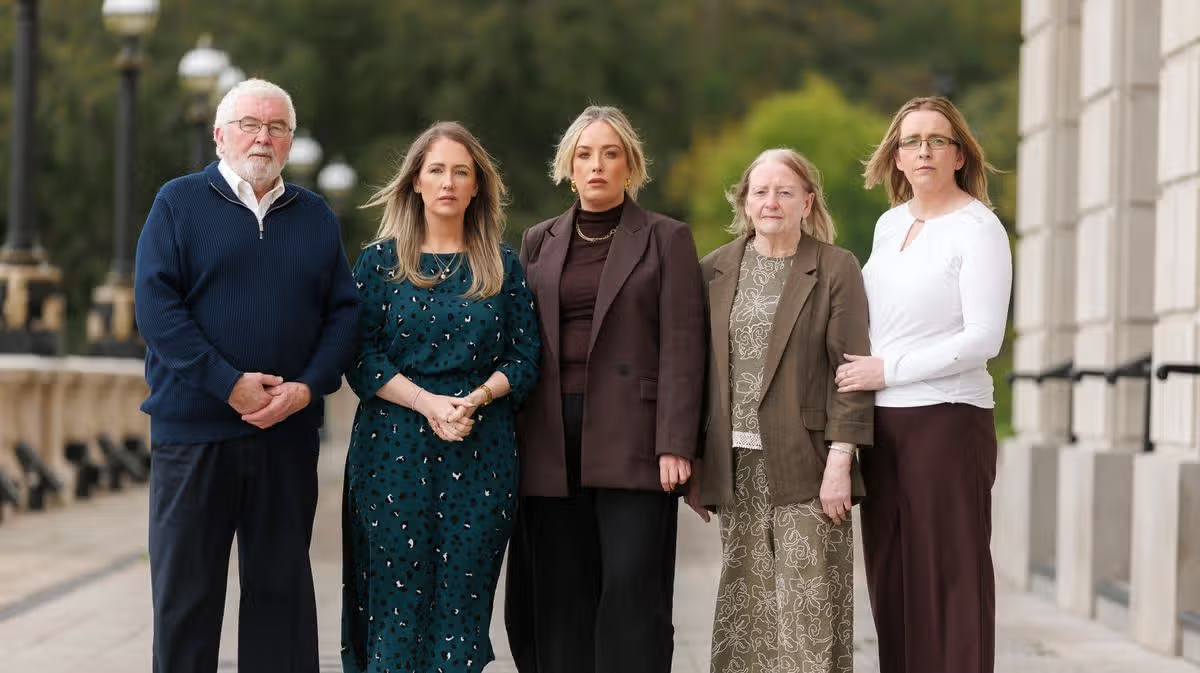
Ms Dorrian said in the last three months she has “been in the vicinity of Lisa’s suspect on three occasions”.

Families of two murdered women whose remains have never been found have called for tougher initial sentences in “no-body” murder cases.

Advertisement

Lisa Dorrian was 25 when she was last seen alive in February 2005 and is believed to have been murdered while Charlotte Murray was 34 when she was killed by her former fiancé, John Miller, who was later convicted of her murder.

Neither woman’s remains have ever been recovered despite extensive searches.

Members of the Dorrian and Murray family joined to give evidence to the Justice Committee about the Sentencing Bill currently being scrutinised by MLAs.

The wide-ranging reforms aim to strengthen the existing framework for sentencing for crimes, including bringing in Charlotte’s Law, which aims to reduce the trauma experienced by families of murder victims in no-body cases.

It would create a statutory aggravator for failure to disclose the location of victims’ remains and new sentence reductions for post-sentence disclosures.

Lisa Dorrian’s sister Joanne Dorrian outlined that the Sentencing Bill in its current form would require courts to increase an offender’s sentence by at least 30% in applicable “no-body” cases where they are believed to have information about where a victim’s remains are, or how they were disposed of, but have failed to disclose it.

If they later do disclose where a body was disposed of, a formula would decide how much their sentence would then be reduced by.

Advertisement

Ms Dorrian called for the original sentence increase to be strengthened, saying such a move “works as a deterrent”.

“People will then know when they commit a murder and are in the position where they’re deciding whether to give up a body or to hide a body, with case law going forward, that there is a significant number of years added to their sentence,” she told the committee.

“So, we would ask for you to consider strengthening that even to 40% just in order to increase the additional tariff, which would then obviously be reduced using the formula.”

The reduction is currently proposed at 50%, which Ms Dorrian also asked to be increased.

“I think if we were to look at something at around 70% – we’re giving them a bigger reduction on the sentence in order to incentivise that disclosure at the earliest point, and just to be in the strongest position to do that,” she said.

“It’s not an easy thing for any of us to sit here today and say that we want to be able to reduce the sentence of any murderer, and in an ideal world we would never want that.

“But when you’re in these really niche circumstances that we’re in, every one of us sitting here today, and I’m sure other families in this position without a conviction, would tell you we would do anything to get our loved ones back.

Advertisement

“We would not forego justice, but we’re trying to use the justice system to get what we need, and what we need is the return of the body of our loved ones.”

John Dorrian, Lisa’s father, referred to Helen’s law in place in England and Wales which puts a statutory duty on the Parole Board to take an offender’s failure to disclose the location of a victim’s remains into account when deciding whether they are safe to release.

Asked by Justice Committee chairman MLA Paul Frew if there “should be conditions placed on the perpetrator, even when they get out”, Mr Dorrian said: “I would think so, personally, it’s Northern Ireland, you know, it’s a small community.”

Ms Dorrian said in the last three months she has “been in the vicinity of Lisa’s suspect on three occasions”.

Advertisement

“That has been very difficult for me,” she said.

“He’s not aware of that, but I’m aware of seeing him in my locality three times in the last three months.”

For all the latest news, visit the Belfast Live homepage here and sign up to our daily newsletter here.

Source link

Advertisement
Continue Reading

NewsBeat

The Best Compression Socks For Varicose Veins Or Tired Legs

Published

on

The Best Compression Socks For Varicose Veins Or Tired Legs

Compression socks have a bad rap. But, in case you missed it, we’re all about vein health at the minute.

On social media, people are touting the benefits of lying with your legs up the wall every day, while elsewhere attention is being drawn to visible veins like varicose veins or spider veins.

Whether you’re worried about vein swelling, appearance, or even leg fatigue during travel or exercising, though, compression socks could help.

Who are compression socks for?

Advertisement

“Compression socks may be recommended for people with certain vein conditions, leg swelling or varicose veins, as well as some people who are recovering from surgery or have limited mobility,” Superdrug Online Doctor, Dr Babak Ashrafi told HuffPost UK.

Certain people are more at risk of developing varicose veins, such as women, older people, and those who stand for long periods of time.

“People also often think about compression socks when travelling long distances, particularly on flights, because sitting still for an extended period can affect circulation,” Ashrafi explains.

What are the benefits of compression socks?

Advertisement

Compression socks could also help support vein health for some people, Ashrafi adds.

“The veins in our legs have to work against gravity to return blood towards the heart, and compression can help encourage this process,” he says.

“They may be recommended for people experiencing problems associated with poor venous circulation, such as varicose veins or swelling in the lower legs.”

Although compression socks could help with the appearance and feeling of varicose veins, they can’t cure venous conditions.

Advertisement

“Compression socks can help manage symptoms, but they don’t necessarily address the underlying cause of a vein problem,” Ashrafi explains.

“If you’re regularly experiencing swollen, painful or heavy legs, or you’re concerned about your risk of blood clots, speak to a healthcare professional rather than relying on compression socks alone.”

The best compression socks to shop now

If you’re considering wearing compression socks, we’ve found the best to shop now, in a range of colours, shapes, and lengths, and for a variety of needs.

Advertisement

However, if you’re concerned about your cardiovascular health, Ashrafi recommends speaking to a medical professional rather than relying on compression socks alone.

How long should you wear compression socks for?

There is no set period of time you should wear compression socks for.

“How long you should wear compression socks depends entirely on why they have been recommended,” Ashrafi explains.

Advertisement

“Some people may be advised to wear them during the day and remove them before going to bed, while others may only need them in particular circumstances, such as during travel or while recovering from a procedure.”

The type and strength of compression are also important, Ashrafi adds.

“Wearing compression that isn’t appropriate for you can potentially cause problems, particularly if you have certain conditions affecting the arteries in your legs.

“If compression socks have been recommended for a medical reason, follow the advice you’ve been given about how and when to wear them.

Advertisement

“And if you’re considering them because you’ve noticed new or persistent symptoms in your legs, it’s better to seek medical advice first rather than self-diagnosing.”

Source link

Advertisement
Continue Reading

NewsBeat

John Stones in Italy – Inter start, pundit comments and familiar Man City problem

Published

on

John Stones battles with Vinicius Jnr for possession during Inter's Champions League opener against Real Madrid

It was hard not to crack a smile in July when Inter confirmed the arrival of John Stones. The Serie A club’s official website announced the deal with an 800-word story that romanticised Stones’ journey from the ‘village’ of Barnsley to Champions League winner and now Inter.

The Manchester City favourite deserved a lavish greeting, even if there was not the same fanfare that has welcomed previous big name signings to Italian football. Former Manchester United midfielder Scott McTominay was swamped by supporters in Naples when he moved to Serie A – even though his trophy cabinet pales in comparison to Stones’.

However, Football Italia editor Lorenzo Bettoni told MEN Sport that context matters. “I mean in Italy, it wasn’t for example like with Scott McTominay in the past with hundreds of people waiting for him at the airport,” he explained.

“What you have got to consider is the different environments. Naples is not quite like Milan. So you would never get that many fans unless it’s a very big name, like you would usually get in Rome or in Naples. For the very beginning, it is very different from the north cities and from the north fans, like in Milan, for example.

Advertisement

“That being said, generally speaking on social media, the reaction from journalists is quite positive because Inter managed to get an experienced defender – although he was no longer a key Manchester City player. Let’s say it was a positive welcome, not overly positive, but not negative.

“Nobody was saying about the signing in Italy, that he could not help the team. That is not the general view. The general view is that Inter have made a potentially smart signing, but just a regular signing, I would say.”

Stones joined a team that is on the up. After replacing Simone Inzaghi last year, Cristian Chivu led the Milan club to the league and cup double, and has enjoyed a positive start to this campaign. Like City, Inter have a perfect record in the league.

Advertisement

Wisely, Stones has not been rushed into his new team’s starting XI. He made brief cameos in the opening two victories over Monza and Cagliari, before starting on matchday four after an impressive display in the second half against Real Madrid in the Champions League.

“Chivu was hot on Stones’ experience,” Bettoni continued. “So, the main thing was that he wanted to rely on his experience and he knew that Stones didn’t quite have the same characteristics of some of the players who had left, like Francesco Acerbi, and Stefan de Vrij.

“The plan that he had in mind was using his experience inside the dressing room, and then tactically try to introduce him slowly to the team. He made a very good appearance, for example, against Real Madrid, when he was introduced at the break replacing Benjamin Pavard.

Advertisement

“He started the following game against Udinese, but then he got his injury. So, It’s kind of a disruptive start to the plans. But his injury story was well known.”

Sadly for City fans, Bettoni is right. During his ten-year stint at the Etihad Stadium, Stones was plagued with different injuries – ranging from moderate problems to serious issues that were costing him months of his career.

Last season, Pep Guardiola looked almost exasperated when asked for updates on Stones’ fitness. Not that he was impatient with the defender, but clearly Guardiola was disappointed as he knew the talent Stones possessed, and sympathised with his recurring injuries.

This time it is Stones’ hamstring that has let him down. Inter are confident the centre-back will return following the international break. But outside the club, there’s a feeling he could be out for at least a month.

Advertisement

Stones’ image in Italy has, thankfully, not been tarnished by this injury. Rather, the conversation among pundits has questioned whether or not he can actually improve Inter, once he returns.

Bettoni explained: “Probably the biggest, in no reason for concern, but the biggest talking point, is something that Beppe Bergomi talked about a few days ago after the latest Serie A round. He said that Stones hasn’t actually improved Inter’s defence because he’s not a man-marker, like Acerbi and De Vrij. He’s a player who has experience, he’s a player who knows how to control the ball really well, how to handle the ball, very strong in the build-up play, but he’s not that sort of man-marker.

“He’s not the sort of man who you would put in the middle of a three-man defence and he would be at his best marking an opponent. So, maybe the biggest concern is tactical rather than physical at this moment, even though, again, Stones has started fairly good.

Advertisement

“I think he balanced the defence pretty well and he was very smooth on the ball. Against Udinese it was so/so. But yeah, maybe the biggest concern, let me put it this way, is that he’s not an actual man-marker, he has other skillsets that are very appreciated, but not quite the same as Acerbi and De Vrij, who left as free agents last summer.”

Upon arriving in Italy, Stones mentioned about how much he looked forward to playing with Manuel Akanji, this season. Akanji made his loan move from City to Inter permanent in the summer.

As of yet, the duo have not played much together, with Akanji’s struggling form and Stones’ injury setback, putting those plans on ice. But Bettoni is confident the City legend can muscle his way into the Inter defence.

Content cannot be displayed without consent

“I think he will [get back into the team], especially because Inter are making a few changes in the defence,” he concluded. “It’s true the starting centre backs are the same, pretty much the same, as last season.

Advertisement

“I mentioned to you Francesco Acerbi before. But the truth is that Acerbi was not an Inter starter last season because Yann Aurel Bisseck was used in the middle of defence. So in terms of players, they have the same as they had last year. So the starting centre-backs, technically, are Akanji, Bisseck and [Alessandro] Bastoni.

“I think he can still squeeze into the eleven, especially in a moment where Inter are kind of struggling to find the defensive solidity. They are the best attack in Serie A, but they’ve conceded eight goals in five Serie A games. It’s quite a lot for a team that wants to win this league, especially in the league where usually the best defence wins the titles.

“It depends as well on whether he can adapt to this playing style. Can he adapt to playing with the higher line? Can he adapt to pressing a lot? Because there are some common features between Inter and Guardiola’s City.

“Inter want to keep the ball more than they wanted to under Simone Inzaghi. Stones can be one of those players who gives you that stability and gives you that confidence when you have to build-up from the back. But then at the same time, he doesn’t quite have the features of playing high and keeping a high line and be that type of defender.

Advertisement

“So, it’s a little bit of both, surely it’s not that Inter are wanting him to return because they are missing a starter – we are not in that situation. But, if you can get him minutes, he’s a player that can have the chance to play important games as well.”

Source link

Continue Reading

NewsBeat

Man killed by Oktoberfest ride had been warned by son against going there

Published

on

Man killed by Oktoberfest ride had been warned by son against going there

A security guard has died after being struck by a ride at Munich’s Oktoberfest just 10 minutes before his shift was scheduled to end.

Aleksandar Spasic, 52, was on shift at the world-famous beer festival in Germany when he was struck by a descending carriage of the “Hangover” ride about 9.50pm on Monday.

Emergency crews attended the scene and immediately began CPR on the father from Serbia, managing to revive him.

Mr Spasic was taken to hospital while resuscitation efforts continued, but he died a short time later.

Advertisement

The ride has a maximum falling speed of up to 56mph, although it is unclear how fast it was travelling when it struck Mr Spasic, who is 6ft7, as it slows considerably before reaching the bottom.

His wife of 28 years, Adrijana, said she had spoken to him just 75 minutes before the incident, which unfolded just 10 minutes before the end of his shift.

The Serbian dad suffered devastating head injuries in the impact
The Serbian dad suffered devastating head injuries in the impact (Jam Press)

Their son Lazar had previously warned his dad about working at the festival because he feared he could be harmed by drunken visitors.

He had told him: “Dad, don’t go to Oktoberfest, it’s a bad place to work.”

Adrijana, 47, and Lazar said that Aleksandar had worked for the security company for three months and was extremely cautious about putting himself in danger.

Advertisement

Lazar said: “Just the day before, he was working at another ride when a visitor lost something. My dad was asked to retrieve it, but he refused because it was too dangerous.”

He believes a similar situation could explain why his father was inside the restricted area when he was fatally injured.

Lazar said: “Nobody is supposed to go into that area – it’s strictly off-limits. Maybe a visitor had dropped their glasses or phone, and my dad went in to retrieve it and help them.”

There is currently no confirmation that Aleksandar had entered the area to retrieve a lost item. Police are investigating the circumstances surrounding his death.

Advertisement

A spokesperson, Thomas Schelshorn, said officers were examining “whether someone can be held responsible”.

Source link

Continue Reading

NewsBeat

Drivers who ignored M60 lane closures after crash ‘reported’

Published

on

Drivers who ignored M60 lane closures after crash 'reported'

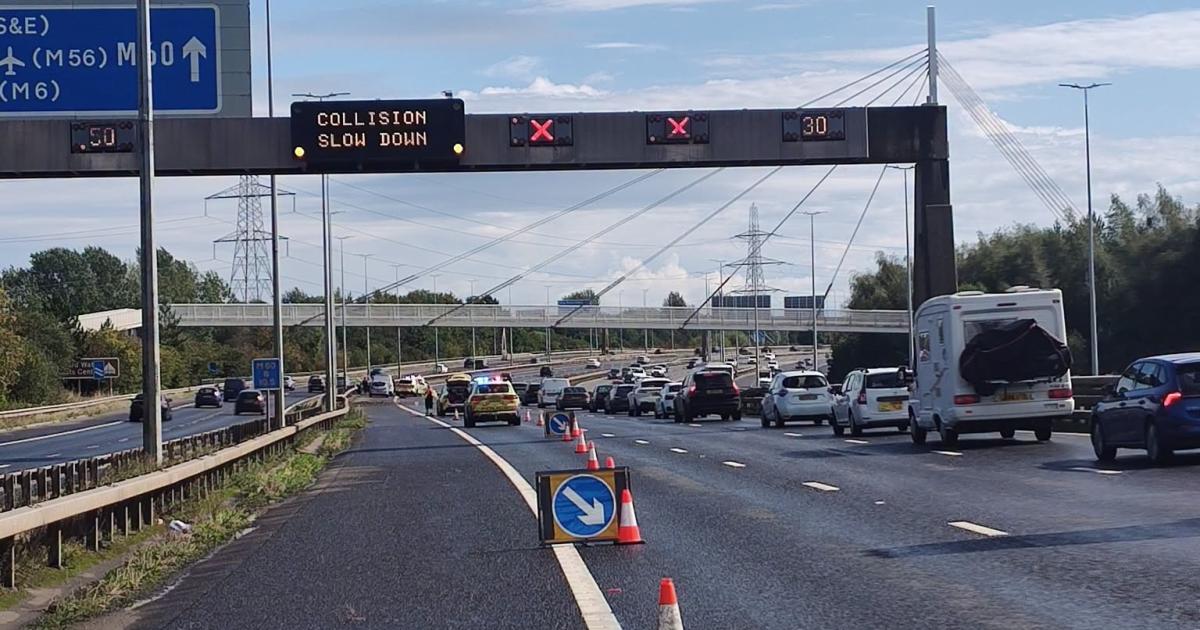
Greater Manchester Police (GMP) said that following a collision on the M60 near Sale Water Park earlier this month, two lanes were closed to allow emergency services and highway workers to deal with fuel and oil on the carriageway.

Despite the Red X closures being in place, GMP claimed “numerous motorists” drove along the closed lanes, therefore putting the workers “at risk”.

GMP added that two further drivers were reported to have used the hard shoulder to bypass traffic.

Advertisement

Police have said officers recorded the vehicle registrations and the drivers suspected of committing offences have been reported and “can expect correspondence”.

GMP said: “A Red X is not a suggestion, it means the lane is closed.

“Please respect motorway lane closures and help keep emergency workers and road users safe.”

What is the penalty for ignoring a Red X on the motorway?

According to National Highways, it is illegal to ignore a Red X sign, stating: “The Red X sign is key to supporting safety on motorways.

Advertisement

“It tells you when a lane is closed, helping any drivers and their passengers who may have got into difficulty.

“It also provides a safe place to work and incident access for the emergency services, recovery operators and our road workers.

“Most drivers respect the Red X signal. But those who don’t put themselves and other road users at real risk.”

National Highways goes on to warn that those found flouting the lane closure could receive a fixed penalty of up to £100 and three points, and in some cases more severe penalties or a court appearance.

Advertisement

Source link

Continue Reading

NewsBeat

‘Caring and gentle’ man, 24, died after ‘confusion’ over scans at Addenbrooke’s and other hospitals

Published

on

Cambridgeshire Live

The hospital says it is ‘committed to learning from this case.’

A man died after “confusion” between hospitals meant that the wrong kidney was scanned. A prevention of future deaths report found “chronic” delays and hospital mix ups led to “missed” opportunities to effectively treat Indy Mason-Kidd, prior to his death.

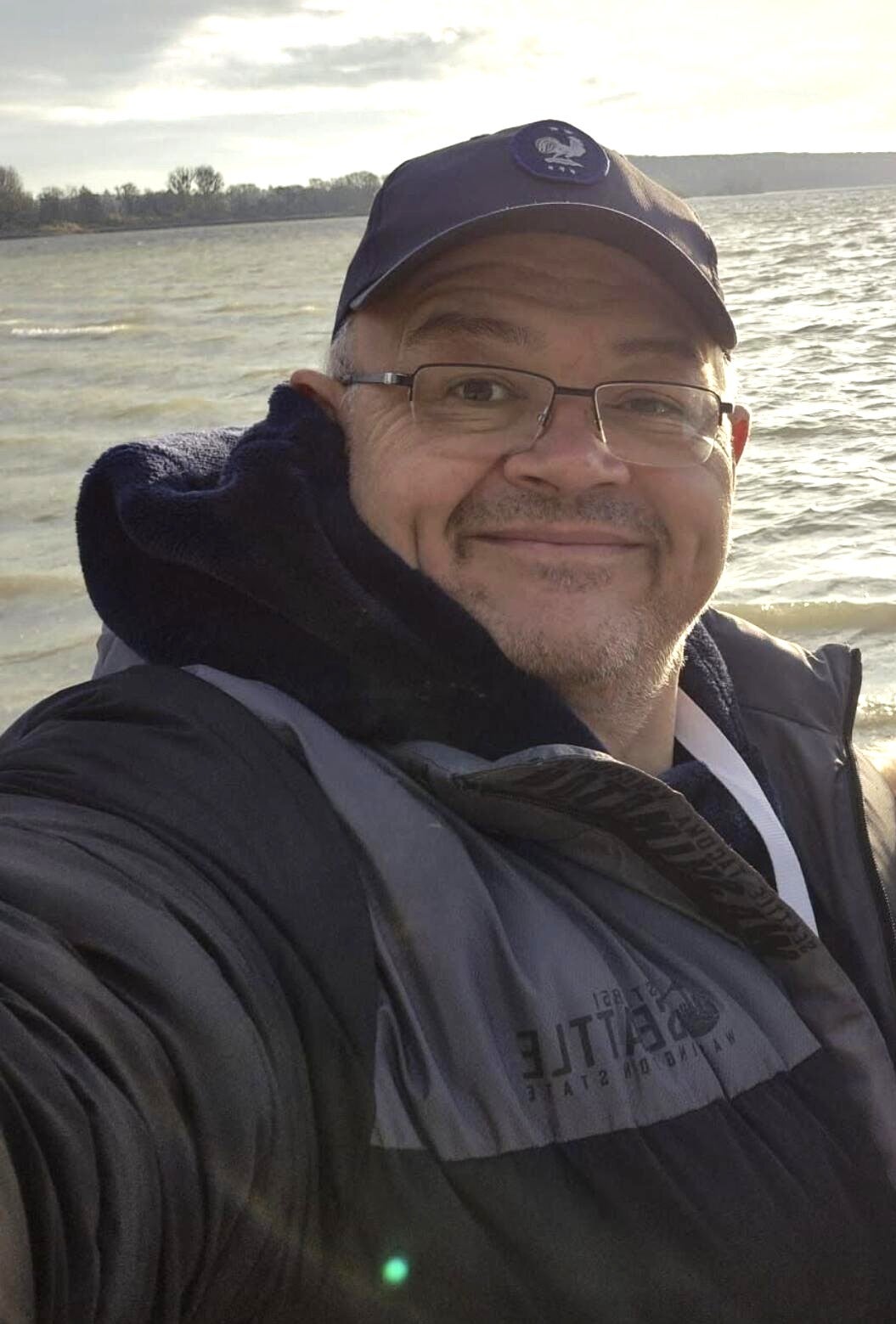
Indy, who is remembered by his family as the “kindest, caring and most gentle man”, died at Ipswich Hospital aged 24, due to either a ruptured arteriovenous fistula or pseudoaneurysm in the lower pole of his left kidney, arising from a biopsy procedure performed in June 2019.

Area Coroner for Suffolk Darren Stewert OBE raised concerns about the planning and management of Indy’s care and treatment, including the poor communication between Addenbrooke’s Hospital in Cambridge and Royal Surrey County Hospital in Surrey.

Advertisement

“Several concerns have national implications”, Coroner Stewert said. The report concerns Addenbrooke’s Hospital, Royal Surrey County Hospital, NHS England and East of England Ambulance Service NHS Trust (EEAST). 24-year-old Indy had suffered from Immunoglobulin A nephropathy and associated hypersensitive heart disease which resulted in him receiving a renal transplant in May 2020.

Indy, who had undergone several biopsy procedures prior to his transplant, had one that resulted in an injury to his native left kidney that subsequently developed into a vascular lesion. An ultrasound scan taken at the Royal Surrey County Hospital in May 2021 identified a vascular lesion in the left native kidney.

The coroner said there was a “missed opportunity to effectively treat his condition as no follow up was taken” at the hospital. Indy underwent a further scan at Addenbrooke’s Hospital in June 2021.

The scan did not identify any abnormality because it did not include the native kidneys – which were the ones of concern. The prevention of future death report reads: “The effect of these failures contributed to the subsequent confusion and misunderstanding relating to the scan undertaken at Addenbrooke’s in June 2021 and which focused solely on the transplanted kidney.”

Advertisement

He was then transferred to Ipswich Hospital for medical care. Although a treatment summary was provided at the time by the other hospitals, no mention was made about the vascular lesions identified in the original scan.

Coroner Stewert deemed this represented a “further missed opportunity to effectively deal with the vascular lesions identified through further investigation and treatment”. Indy became unwell and attended Ipswich Hospital’s accident and emergency department on October 20, 2023. At about 1.50am the following day, Indy suffered a catastrophic internal bleeding and collapsed. Attempts were made to resuscitate him but he was pronounced dead just before 3am.

Coroner Stewert has raised a “failure“ by Royal Surrey County Hospital and Addenbrooke’s Hospital to implement and record a plan regarding the follow up of the vascular lesions and the adequacy of its recorded notes by both hospitals.

The Coroner also raised concerns about the management of electronic patient clinical records at Addenbrookes Hospital and how patient information was provided between the Cambridge and Ipswich hospitals. The report adds: “The full patient record was not handed over and a summary letter provided which omitted important information that was available within the Addenbrooke’s Hospital records.”

Advertisement

NHS England has been advised of concerns regarding the lack of access to patient’s full clinical records in circumstances where multiple NHS Trusts are involved and the ambulance services’ ability to identify the location of patients within high density locations. East of England Ambulance Service (EEAST) has also been scrutinised for its “persistent delays” in meeting response timings.

Indy’s emergency phone call was deemed a category two call with an eight-minute target response. However, an ambulance was not dispatched until 53-minutes after the call. The report states: “The evidence before the court is that such delays are chronic, with few effective measures capable of addressing the problem.”

A Cambridge University Hospitals Trust spokesperson said: “We extend our sincere condolences to the family of Indy Mason-Kidd. Patient safety is our highest priority, and we are committed to learning from this case.

“We have carefully reviewed the findings in the Prevention of Future Deaths report and have taken steps to strengthen our systems and processes. Many of the issues identified involve care delivered across multiple organisations, and we will continue to work closely with our NHS partners to improve communication, information sharing and continuity of care for patients.”

Advertisement

An East of England Ambulance Service spokesperson said: “Our thoughts are with Indy Mason-Kidd’s family and loved ones. The Coroner’s report highlights concerns about the ambulance response on the night Indy became seriously unwell.

“At that time, our response times were being significantly affected by pressures across the wider healthcare system, including delays handing over patients at busy emergency departments, which reduced ambulance availability in the community. We recognise the impact this had on patients waiting for our help.

“Improving response times remains a key priority. We continue to work closely with NHS partners to reduce hospital handover delays and improve ambulance availability so that we can reach patients more quickly when they need us most.”

In a response to the concerns, Medical Director at Royal Surrey NHS Foundation Trust Dr Bill Jewsbury, said: “I would like to extend my sincere condolences to Indy’s family and loved ones.

Advertisement

“We have carefully considered the coroner’s findings and recognise the important lessons arising from this case. In response, we have taken steps to strengthen our processes for documentation and information sharing with partner organisations.”

According to NHS England, CUH was assessed as meeting the Programme’s core Electronic Patient Record (EPR) standards against Digital Capability Framework (DCF). However, Ashford and St Peter’s Hospitals NHS Foundation Trust and Royal Surrey County Hospital NHS Foundation Trust were assessed against the DCF and identified as not fully meeting the Programme’s core EPR standards.

Consequently, funding was secured through the Frontline Digitisation (FD) Programme to support further optimisation and enhancement of the EPR environment. In a response to one of the concerns, NHS England said: “Ambulance services should maintain robust processes and technology to accurately identify and locate patients, including within high-density residential settings, ensuring that crews can access patients safely and without avoidable delay.”

All reports to prevent future deaths are discussed by the Regulation 28 Working Group, comprising Regional Medical Directors, and other clinical and quality colleagues from across the regions. NHS England said this “ensures that key learnings and insights around events, such as the sad death of Indy, are shared across the NHS at both a national and regional level and helps us to pay close attention to any emerging trends that may require further review and action”.

Advertisement

Source link

Continue Reading

NewsBeat

Female welder lost job over lack of women’s toilet

Published

on

Female welder lost job over lack of women’s toilet

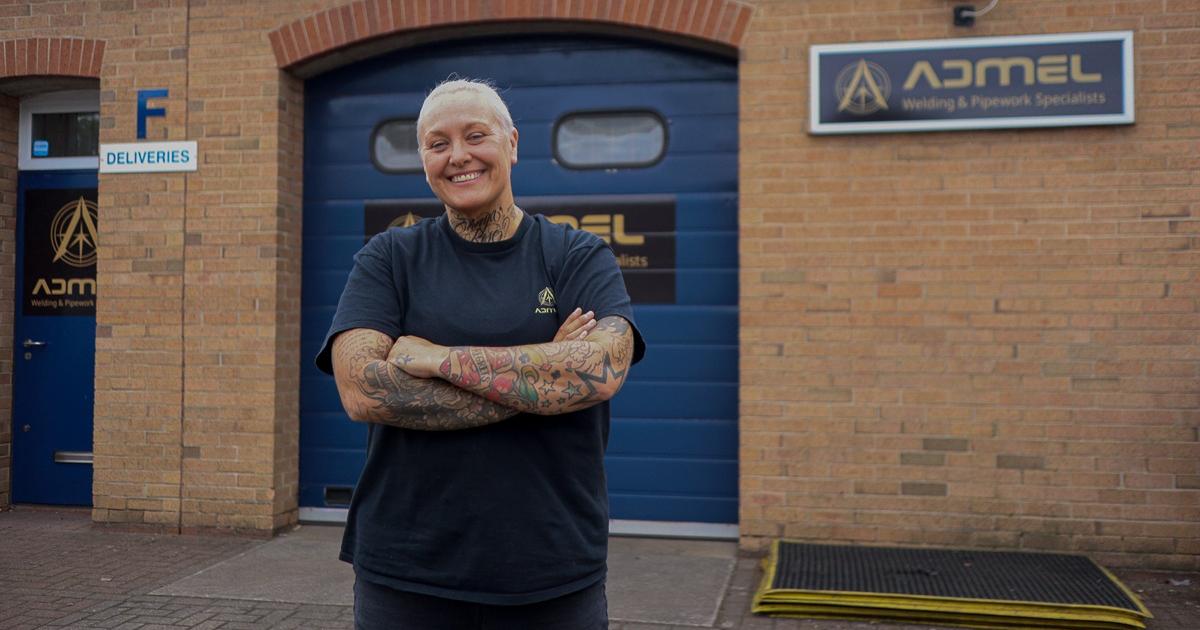
For more than 30 years, Mel Stewart has defied doubters as one of the North East’s first female welders.

Now 50, Mel has faced bullying, sexism and rejection before rising to the top, meeting royalty and launching a successful business with her best friend.

Through AdMel, she is headhunted for work around the world, helping build data centres as far afield as China.

Now she is fighting to help more women weld and remove the barriers she faced for more than 30 years.

Advertisement

“I went through the mill to get into welding, even changing my name on job applications just to get through the front door,” said the Ashington-born welder.

“I had to change my name and fight to get through the door, to prove myself. But once I was in there, they realised I was as good as any man.”

Mel Stewart Mel Stewart (Image: ADMEL)

Yet the sector is still heavily male-dominated.

Industry data shows women make up as few as three per cent of UK welders.

Advertisement

For Mel, “old school” attitudes have long blocked efforts to close that gap.

“When I started as an apprentice, there were no lasses on the shop floor,” said Mel, who now lives in Bedlington.

“I faced a ton of animosity from old-school men from the pits, who didn’t take well to a female on the shop floor.

“I was told that I should be a hairdresser, not a welder.”

Advertisement

After moving to Australia for work, she returned and applied for dozens of jobs but received not even a rejection letter.

Then an agency in Aberdeen called.

“When they heard my voice, the first thing they asked was to speak to my husband, I had to point out I was Mel,” she recalled.

When she was finally considered, she was crushed to learn she could not get the job because the site had no facilities for women.

Advertisement

“I offered to pee in a bucket or share a toilet,” she laughed.

“But there was no way they could get you in. They told me it was health and safety.”

“The job and money were fantastic – and I lost that opportunity just because they didn’t have a toilet.”

Sexism in the industry is less openly aggressive, but decades later Mel believes the underlying attitude remains.

Advertisement

“In one job, a male worker was discussing a young female apprentice welder. He said she was fine at the job, but there wasn’t any point having her on the shop floor because of the distraction she’d cause to the men,” she added.

“I suggested the fix would be self-control.”

“That mindset is still there. A lot of men think we still don’t belong or have the right to weld.”

“And that’s what I’m fighting against, changing the thought process so people realise women deserve to be in this job as much as anyone else.”

Advertisement

And the reality is the sector needs as many new faces as possible.

Britain needs about 1,000 new welders each year, yet just 231 welding apprenticeships began in 2024.

The workforce is ageing, leaving a shrinking pool of skilled people to train the next generation.

At AdMel, Mel and co-founder Adam Maughan are doing just that, passing their years of experience to apprentices at the fast-growing firm.

Advertisement

The company is flourishing, with contracts including NHS projects, while Mel and Adam are often sought for consultancy work.

A self-proclaimed “tinker” at school, Mel has also worked on schemes helping troubled youngsters avoid a life of crime.

After years of struggling to get her foot in the door, AdMel director Mel hopes her story will inspire more women to try welding, especially as Government data shows only one in 10 engineering and manufacturing apprentices are female.

“I had to get my own business to become the person I want to be, because I’ve had so many businesses where I could have been a director but I was never given the opportunity,” she said.

Advertisement

“I just want to have the chance to make sure others get the opportunity they deserve.”

Source link

Advertisement
Continue Reading

NewsBeat

Trust me Mr. Burnham – no woman wants to see more pints being drunk at football matches

Published

on

Trust me Mr. Burnham - no woman wants to see more pints being drunk at football matches

Football was always non-negotiable in my family. My dad, raised in Battersea, is a life-long Chelsea supporter, and for the first five years of my life I spent each game in the Stamford Bridge creche, alongside other CFC orphans.

When I was around seven, my parents deemed it safe enough for me to be in the stands. I loved the energy, the excitement, the celebrations; but the walk to the exit, as a small girl at only waist-height of most other rowdy supporters, filled me with dread – especially on the days we lost.

At 30, the tension that emanates from the streets after a bad day at the Bridge can still fill me with dread. Violence isn’t out of the question.

So, as much as I’d like to agree with Andy Burnham’s support for a lift of the alcohol ban in football stands, it’s an idea that leaves me more conflicted. It feels like throwing gasoline on burning embers.

Advertisement
The Prime Minister has said alcohol ban on football fans is 'unfair'
The Prime Minister has said alcohol ban on football fans is ‘unfair’ (Getty)

Notably, alcohol has been allowed in the stands of women’s games since the start of this season, with a successful 18-month trial period taking place during the last. But the differing factor here is the atmosphere.

At Women’s Super League matches, girls in plaits shout encouragement – rather than abuse – when a player misses a shot or fumbles a pass. I have never, at any of those games, heard racism, sexism, homophobia – or the word c***. Sadly, I cannot say the same for the men’s fixtures.

During the 2025-2026 season the highest number of incidents (1,644) were reported at matches in England and Wales since the UK Football Policing Unit (UKFPU) started collecting the data in 2017, with police calling for help from clubs to handle the scope of match day violence.

Match day at Stamford Bridge for the Women's Super League
Match day at Stamford Bridge for the Women’s Super League (Getty Images)

The domestic violence that can accompany men’s football is well documented. Each England tournament, Women’s Aid run their “He’s coming home” campaign, which reminds the nation that abuse cases increase by 38 per cent after a loss and 26 per cent for a win or draw.

Football doesn’t cause domestic abuse – but the danger is allowing perpetrators to turn a bad result into an excuse. Alcohol, in turn, adds another element of risk and exacerbation where abuse is already present.

As expected, a controlled lab experiment conducted in 2024 found that as participants’ blood alcohol levels increased, so did their aggressiveness. This was most common among those who normally drank heavily.

Advertisement

Legislation to ban alcohol was introduced by Margaret Thatcher’s government in 1985. It came after various incidents including the FA Cup quarter-final clash between Luton and Millwall and the Birmingham v Leeds match in May that year, which resulted in pitch invasions, 125 arrests, 80 spectator injuries, and one death; a 15-year-old boy.

Fans drinking before the England v Panama World Cup game in New Jersey this summer
Fans drinking before the England v Panama World Cup game in New Jersey this summer (Getty Images)

Burnham, like the chairman of the Football Supporters Association (FSA), Tom Greatrex, has said it’s “unfair” to discriminate against football fans for drinking alcohol while it’s allowed in the stands during other sports.

But, as the UKFPU has pointed out, no other sport sees the violence and criminal behaviour from their supporters that football does – even if severity has drastically improved since the hooliganism of the Eighties.

Having a pint (or three) pre and post match is fun. As even those who aren’t supporters of a club will have seen while supporting England this summer, the pub atmosphere can be cheerful and warm. Still, those 45 minutes of each half of the game where alcohol isn’t present gives over excited fans in the stands a brief break from booze that has seemingly helped to stop things getting completely out of control.

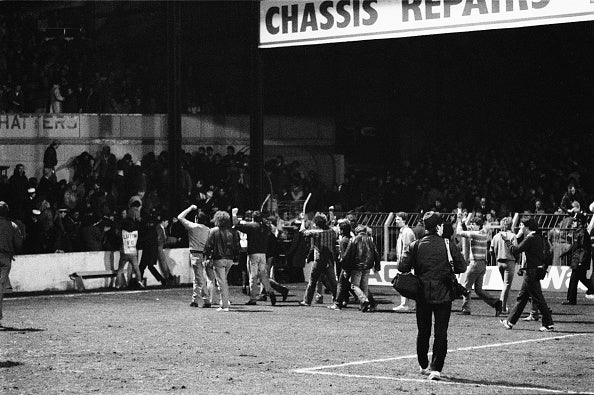
Fans invade the field during the 'Luton Riot' in 1985
Fans invade the field during the ‘Luton Riot’ in 1985 (Getty Images)

The risk to women, children – and men – of going backwards, is huge. Stadiums are a hot house of emotions – crammed with tens of thousands of people – waiting for the final push. Change would need to be careful and controlled; a two drink maximum per ticket holder, for example.

But surely the risk here, to those in the ground and at home, does not outweigh the benefit in any meaningful way. Burnham might be a football fan, but he is first a prime minister who has promised to help women to live free from abuse. Allowing alcohol back into football stands amid the epidemic of violence against women and girls is a hazardous move that would leave a significant proportion of the population vulnerable.

Advertisement

The human cost of a couple more pints on match day isn’t worth the gamble. At least, until incident rates are considerably lower, security spend is up, and women can feel safe in crowds of football fans and beyond – on trains, buses, tubes and streets – across the UK.

Fundamentally, living your life in fear is far more “unfair” than not being able to drink a beer for 90 minutes; That change should be the priority.

Source link

Advertisement
Continue Reading

Trending

Copyright © 2025