Every time Novo urges investors to look ahead, Eli Lilly gives them another reason to look back at its widening lead over the Danish drugmaker.
Novo this week laid out an ambitious strategy to reignite growth beyond its top-selling Wegovy and Ozempic injections, which face patent expirations in key markets in the early 2030s. At its Capital Markets Day on Monday, the company promised a pipeline of potential blockbuster products, including drugs that would diversify from its core area of obesity and diabetes.
Advertisement
But Wall Street so far isn’t convinced by Novo’s road map. Investors pummeled the drugmaker’s stock, underwhelmed by growth targets that matched industry averages rather than outpacing them. They were also skeptical of the lack of clarity around a near-term turnaround plan.
At the same time, Lilly continues to chip away at its rival’s market share — including in the burgeoning obesity pill space.
Novo hopes to keep its early lead in the oral weight loss market after the successful launch of the Wegovy pill, months ahead of Lilly’s rival pill, Foundayo. Novo CEO Mike Doustdar told CNBC on Tuesday that early adoption suggests patients may have been waiting for an alternative to injections.
“If that continues to the extent that we have seen, then yes, mathematically, by the end of the decade, there is going to be a larger portion on the pill than injectable,” he said.
Advertisement
But Lilly is hot on its heels, backed by its commercial firepower.
In an exclusive interview with CNBC on Monday, Lilly CEO Dave Ricks said the drugmaker’s new obesity pill, Foundayo, is slowly gaining ground in the U.S. One-third of new GLP-1 pill patients are taking Lilly’s drug, and its share of that oral market is growing “week by week,” Ricks told CNBC in Houston, Texas.
Lilly is also claiming an early lead in the newly established Medicare market for obesity drugs, after the federal program started covering those treatments in July. Ricks said 700,000 seniors have started GLP-1s in Medicare following the start of coverage, and 70% of those patients are on Lilly’s drugs.
He added that Medicare patients have shown a particular preference for Lilly’s obesity injection Zepbound, which has helped the company become the dominant player in the broader market. Lilly said in August that it held about a 61% share in the U.S. GLP-1 space in the second quarter, while Novo held roughly 39%.
Advertisement
While investors appeared to want more detail on Novo’s plans for post-Wegovy and Ozempic growth at Monday’s investor event, the drugmaker is betting that there could be more than one successor to the mega-blockbuster franchise.
For Novo, the challenge is not solely replacing revenue from Wegovy and Ozempic when they lose exclusivity and face more generic competition. It is convincing investors that the company can regain momentum in a GLP-1 market it helped establish years before Lilly came into the picture, even as its rival continues to build its lead.
Lilly likely to keep its upper hand
Even as Novo works to turn itself around after two bruising years marked by multiple setbacks, analysts say Lilly has several advantages that could help it maintain its spot at the top of the obesity drug market.
“Lilly is in the leadership position, and we think that they will remain in this strong leadership position, given their substantial commercial advantage, their global initiative to globalize their products further, and then their advanced pipeline of novel candidates as well,” Leerink Partners analyst David Risinger said in an interview.
Risinger expects Foundayo’s share of the oral GLP-1 market to continue growing, pointing to Lilly’s “tremendous commercial firepower” and greater spending capacity to promote the drug. But Risinger expects Foundayo to eventually dominate the pill market globally, in part because it should be less costly to manufacture at scale than the Wegovy pill.
Advertisement
Foundayo is a small-molecule drug, which can be manufactured differently and more easily at scale than peptide drugs such as Novo’s Wegovy pill and existing injectable GLP-1s. While Foundayo leads to less weight loss on average than the Wegovy pill, it doesn’t carry any food and water restrictions, which could be a selling point for some patients.
Novo executives this week did not directly answer questions about whether Foundayo is easier to manufacture and scale. Novo is investing billions in manufacturing facilities and, executives said this week, the company aims to be able to increase the number of patients on its GLP-1 drugs tenfold by 2030. Executives have repeatedly said supply is not an issue and that Novo will not face the same shortages it did with injectable versions in the earlier days of Ozempic and Wegovy.
For Lilly, Zepbound’s higher efficacy than the original doses of Wegovy has also been key to securing its market share lead over Novo in the injectable space. Novo has sought to narrow that efficacy gap with a higher-dose version of Wegovy launched this year, which leads to roughly similar weight loss as Zepbound.
But Lilly is not standing still.
Advertisement
The company has a pipeline of next-generation obesity drugs that could extend its lead beyond Zepbound and Foundayo, Risinger said. That includes retatrutide, a triple-agonist that targets three gut hormones and has produced greater weight loss than existing obesity drugs in clinical trials. Lilly plans to seek approval for the drug in the first quarter of 2027.
Lilly is also developing a weekly injection that targets the amylin receptor, a pathway involved in appetite and satiety that differs from those targeted by existing treatments. Risinger said the drug has “much greater potential than the Street currently realizes,” particularly because a large population of patients does not tolerate or respond adequately to GLP-1 drugs.
“We’re quite enthusiastic about the company’s pipeline for follow-on agents beyond Zepbound and Foundayo,” Risinger said.
While investors have been laser-focused on the headline weight loss number of Novo and Lilly’s next-generation drugs, Novo sees a fragmented market ahead.
Advertisement
Chief Scientific Officer Martin Holst Lange told CNBC this week that the breadth of Novo’s future pipeline would give physicians and patients more options and increase uptake. The company is studying the effect of new drugs on factors like tolerability, muscle preservation, their effect on obesity-linked conditions, convenience and more.
“We can’t do that with one single drug,” Lange said.
Novo bets on its next generation
Mike Doustdar, left, CEO of Novo Nordisk, and David Ricks, CEO of Eli Lilly, listen as President Donald Trump speaks in the Oval Office during an event about weight loss drugs on Nov. 6, 2025.
Andrew Caballero-Reynolds | Afp | Getty Images
Advertisement
For Novo, the answer to Lilly’s dominance is a sweeping bet on what comes next.
Novo is targeting the launch of more than five potential multi-blockbuster drugs by 2030 and more than 150 billion Danish kroner, or about $23 billion, in pipeline sales by 2035. It also plans to have at least five Phase 3 programs in obesity and diabetes and another five across other therapeutic areas, as it tries to diversify its pipeline.
The scale of that plan highlights the problem Novo is trying to solve. It has patent protection on semaglutide, the active ingredient in Wegovy and Ozempic, until 2032. Those two drugs account for roughly two-thirds of Novo’s sales, racking up combined sales of $31 billion in 2025.
Novo needs to convince investors that its pipeline of new drugs can fill the hole when generic competitors enter the market. So far, it hasn’t been able to shake off a multiyear stock selloff after a series of setbacks.
Advertisement
The new lineup the company is banking on includes CagriSema, Novo’s combination of semaglutide and a drug called cagrilintide that targets amylin, which is expected to launch early next year. That will be followed by standalone cagrilintide and a higher-dose version of CagriSema in 2028, among other new obesity products. Wall Street isn’t particularly excited about CagriSema, whose previous late-stage clinical trials disappointed investors because the drug showed weight loss efficacy below expectations.
Novo, however, maintains CagriSema is effectiveand differentiated enough to be commercially viable. Lange told CNBC individualized doses may be the way forward for the company’s next big bet and highlighted new late-stage data released this week. It showed CagriSema produced greater weight loss than tirzepatide — the active ingredient in Zepbound and Lilly’s Mounjaro — in a head-to-head trial among people with Type 2 diabetes.
Meanwhile, Novo is still betting on the growth of the obesity pill market.
Novo believes market share isn’t the only measure of success investors should look at going forward. The sheer volume matters too, Doustdar told CNBC, highlighting that the obesity market can still grow significantly.
Advertisement
Novo plans to scale manufacturing capacity enough to serve 15 million people taking oral obesity treatments by 2030, and has said pills could ultimately account for as much as half of the global obesity drug market. The company says its Wegovy pill has already reached 7 million U.S. prescriptions, with 90% of those sales coming through cash-pay channels.
The problem is that investors appear to be demanding more than a promising pipeline.
Analysts on Monday pressed Novo executives on their pricing assumptions, questioning whether the company’s next pipeline of drugs can sustain premium price points once Wegovy and Ozempic lose exclusivity.
Novo’s 2026 to 2030 revenue outlook also targets growth in line with its pharmaceutical peers, rather than a return to the outsized growth from when Wegovy and Ozempic first boomed.
Advertisement
That leaves Novo with a difficult balancing act. It has to defend its existing obesity franchise against Lilly while simultaneously investing in the drugs that are supposed to replace it.
Yes. Corporate subscriptions are available for teams and organisations, with discounted rates as user numbers increase. Pricing starts from $1,625 + GST per user. Get in touch
to discuss the right option for your organisation.
Business News subscriptions are used by executives, investors, consultants and professionals who need to stay informed and make better decisions about the WA market. When you subscribe you’ll get
Unlimited access to WA’s most trusted business journalism
Data & Insights — detailed profiles of WA companies, people, projects and deals
MyBN — a personalised feed based on the companies, people and sectors you follow
Special publications and industry reports
Daily and weekly email newsletters
Data & Insights is a research tool built specifically for the WA market. It draws on more than 30 years of Business News reporting, updated regularly to reflect what’s happening now. Use it to:
Look up detailed profiles of WA companies, including financials, directors and ownership
Find decision-makers and track their career movements
Research live and completed projects across WA industries
Monitor deals, appointments and market activity
Access industry rankings and league tables
Data & Insights is updated daily by our dedicated research team, which uses the latest announcements, ASX filings and editorial coverage to keep our person, company, list and project records up to date.
Business News welcome all opportunities to make our dataset accurate, complete and current, so if you have an update request, please email the team at general@businessnews.com.au, and we’d be happy to assist.
Advertisement
MyBN
is part of every subscription. It’s your personalised view of Business News. You can follow the companies, people, sectors and projects that matter to you, and get a news feed and alerts tailored to your interests. You can save articles to read later and retain only what you need.
Only subscribers have full access to all content on the Business News website.
Advertisement
If staying informed about the WA economy is part of your job, and/or you’re looking for networking opportunities in WA, Business News is built for you.
Business News subscribers are:
Executives and directors tracking competitors, clients and market movements
Investors and advisers researching companies, deals and industry trends
Consultants and professionals staying across sectors relevant to their clients
Business owners looking for leads, context and market intelligence
Most Business News publications cover national or global markets. Business News is focused entirely on Western Australia, which means the journalism, the data and the intelligence are all built around WA companies, people and projects — not adapted from a national feed. Data & Insights, included with every subscription, combines more than 30 years of WA-specific editorial research with live business data. There’s no comparable product for the WA market.
Advertisement
The Morning Digest Email provides a comprehensive wrap of the major headlines, relevant to WA business, and includes with a snapshot of the overnight news covering oil, gold and ASX-listed companies.
The Afternoon Wrap Email focuses on the news covered by our team of journalists during the course of the working day, including exclusive stories and analysis, all of which relates to WA business and the local economy.
The BN Weekender Email contains a wrap of the Business News from the week that was, highlighting the top stories in each area of WA business. Sign up for free.
Advertisement
We’re happy to help. Get in touch
and our team will come back to you.
The council said the acquisition was part of its homelessness support strategy
10:23, 25 Sep 2026Updated 10:29, 25 Sep 2026
Lime Tree Mansions.
Cardiff Council has acquired a 40 apartment building as part of efforts to tackle homelessness in the city.
In a multi-million-pound deal, the exact value of which has not been disclosed, the council has acquired Lime Tree Mansions on Whitchurch Road in the Maindy area of the city.
Advertisement
The council has bought the apartment scheme from JCPS Homes. Law firm Hugh James acted the council on the deal.
Lynda Thorne, Cardiff Council’s Cabinet Member for Housing and Communities, said: “Cardiff continues to face significant housing and homelessness pressures, which is why we have been exploring a wider range of delivery options alongside our new-build programme to help meet the urgent need for affordable housing.
“The acquisition of Lime Tree Mansions represents an important investment that will enable us to provide additional temporary accommodation for households in need, while supporting our wider efforts to improve housing outcomes across the city.
2We are grateful to Hugh James for their expert support throughout the transaction, helping us secure this acquisition and take another important step towards delivering the homes and housing support that Cardiff residents need.”
Advertisement
The apartments are currently vacate.
The Hugh James team was led by senior associate in the firm’s commercial property team, Kylie Underhill. She said: “We are proud to have supported Cardiff Council on the acquisition of Lime Tree Mansions.
This was an important transaction for the Council and one which required a focused and collaborative approach to meet the required timeframe. It is always rewarding to support public sector clients on acquisitions which have the potential to deliver real benefit to local communities.”
The deal further reinforces Hugh James’ experience in advising local authorities and public sector bodies on strategic property acquisitions, including residential, regeneration and investment-led projects.
Advertisement
Caroline O’Flaherty partner in Hugh James’ commercial property team said: “This is a fantastic result and reflects the strength of our Commercial Property team’s public sector expertise. We are proud to have assisted Cardiff Council in its continuing strides to provide vital housing across the city.”
Last year the council acquired the former prime office Scott Harbour building in Cardiff Bay from Rightacres.
In a £28.5m investment Cardiff Council has provided 78 apartments as permanent tenancies. The apartments are mainly occupied by families as part of its strategy of addressing a critical shortage of affordable homes.
LONDON — Prince William and Catherine, Princess of Wales, may be among the most recognizable royals in the world, but according to a former palace employee, staff members saved their contact information under a set of far less regal nicknames, alongside details of how heavily the royal family has relied on WhatsApp to stay in touch with relatives and staff.
Jack Stooks, a former royal gardener who worked for King Charles at Highgrove for decades, shared the details in an interview with GB News, describing how the royal family communicated privately both with each other and with staff. “The Royal Family are big WhatsApp users,” Stooks said, describing a range of group chats used across the family, including one for friends and a separate family group that included Prince William, Zara Tindall, Peter Phillips, and Princesses Beatrice and Eugenie.
According to Stooks, senior royals shared their personal phone numbers with trusted members of staff to allow for more practical, direct communication. He said both William and Prince Harry actively encouraged aides to contact them through the messaging app whenever needed, rather than relying solely on more formal channels. To protect their privacy, however, staff reportedly avoided saving the royals under their real names, instead using coded nicknames. Stooks revealed that William was listed in staff phones as “Bobcat,” while Harry went by “Baz.” Following Kate’s marriage to William, she was reportedly added to contacts as “Mrs Bobcat.”
Beyond the nicknames themselves, Stooks offered a broader account of William’s working style with palace staff, describing him as considerate of employees’ existing workloads. He said the Prince of Wales made a habit of checking whether staff members were already busy before asking them for additional help, and that William would often thank staff afterward by telling them, “You’re a legend.”
Advertisement
Stooks also reflected on King Charles’ relationship with technology during his time working at Highgrove, describing the monarch as considerably less engaged with mobile devices than his sons. According to Stooks, Charles owned a simple mobile phone but rarely used it regularly during that period. Stooks said William and Harry frequently encouraged their father to embrace newer technology, but that Charles generally preferred a more traditional approach and showed limited interest in using his phone on a consistent basis.
The account offers a rare glimpse into the more informal, day-to-day dynamics between senior royals and the staff who work closely with them, a side of royal life that rarely receives public attention given the family’s general preference for formality in public-facing communications. The described use of WhatsApp for both personal and work-related messaging reflects a broader pattern common across many modern workplaces and families, even as the specific coded nicknames used to protect the royals’ identities in staff members’ phones point to the particular privacy and security considerations that come with working in close proximity to some of the world’s most closely watched public figures.
Stooks’ comments add to a broader body of insider accounts from former royal staff members that have periodically surfaced in British media over the years, offering the public occasional windows into aspects of royal family life that differ considerably from the family’s carefully managed public image. Such accounts typically cannot be independently verified beyond the credibility of the individual sharing them, and neither Kensington Palace nor representatives for William, Kate or Harry have issued any public confirmation or denial of the specific details Stooks described regarding the nicknames or the family’s use of WhatsApp.
The revelations arrive at a moment of heightened public attention on the relationship between William and Harry more broadly, following Harry and Meghan Markle’s return to the United Kingdom in late August and the more recent publication of excerpts from Charles Spencer’s memoir about Princess Diana, both of which have kept the royal family’s internal dynamics under close media scrutiny in recent weeks. Against that backdrop, lighter anecdotes such as Stooks’ account of staff nicknames and WhatsApp habits offer a notable contrast to the more serious and often tense coverage that has otherwise characterized recent reporting on relations between the brothers.
Advertisement
Stooks’ extended tenure working at Highgrove, King Charles’ private residence in Gloucestershire, gave him a vantage point on the family’s private habits and communications that few outside the household would typically have access to, lending a degree of specificity to his account that has helped it circulate widely since it was first published. Even so, as with most insider accounts from former staff, the details remain unverified beyond Stooks’ own recollection and cannot be independently confirmed through any official palace source.
With no official response yet issued addressing the specific claims about the royal family’s phone nicknames or messaging habits, Stooks’ account is likely to remain one of several recent behind-the-scenes anecdotes shaping public perception of the more private, informal side of royal family life, even as the family’s official public engagements continue to be defined by considerably more formal presentation.
Financial Serenity is a quantitative research column specialized in ETFs. We analyze all ETFs to understand which ones hide traps and which ones deserve attention. The ultimate goal, however, is the product of this selection process: an ETF portfolio capable of maintaining linear price growth (at least indexed to the inflation rate) while generating sustainable, recurring income streams. The analytical key is therefore portfolio construction, asset allocation, and the application of proprietary strategies for average purchase cost management.
Analyst’s Disclosure: I/we have no stock, option or similar derivative position in any of the companies mentioned, and no plans to initiate any such positions within the next 72 hours. I wrote this article myself, and it expresses my own opinions. I am not receiving compensation for it (other than from Seeking Alpha). I have no business relationship with any company whose stock is mentioned in this article.
The author expresses only personal opinions and does not provide financial advice. The content is for informational purposes only and should not be considered as investment recommendations. The author assumes no responsibility for any investment decisions made based on this article. Always conduct your own research or consult with a financial advisor before making any investment choices. The author makes no guarantees regarding the data, and the user agrees that the author shall not be held liable for the user’s use of the data.
Advertisement
Seeking Alpha’s Disclosure: Past performance is no guarantee of future results. No recommendation or advice is being given as to whether any investment is suitable for a particular investor. Any views or opinions expressed above may not reflect those of Seeking Alpha as a whole. Seeking Alpha is not a licensed securities dealer, broker or US investment adviser or investment bank. Our analysts are third party authors that include both professional investors and individual investors who may not be licensed or certified by any institute or regulatory body.
Communications giant seeking deals with Opus Broadband and Octopus Investments
Holly Williams Press Association Business Editor
12:11, 25 Sep 2026
PXC and the Talk Talk group are based at Soapworks, in Salford(Image: Manchester Evening News)
TalkTalk has confirmed it remains in “advanced discussions” with prospective buyers of its consumer and broadband divisions as the embattled telecoms company races to secure its future.
Advertisement
Britain’s fourth-largest broadband provider announced it was in the closing stages of finalising sales for its two arms, amid mounting speculation that it could be headed for administration should it fail to reach agreement on deals.
It said: “The company is now in the final stages of its sales process for the business and expects to conclude both transactions imminently.”
The heavily indebted firm is reported to employ approximately 900 staff and serves around 1.5 million customers.
It is understood the group continues to progress negotiations with rival Opus Broadband over a potential deal for the consumer arm TalkTalk, alongside talks with Octopus Investments regarding its wholesale operation PXC, reportedly valued at around £300 million.
Advertisement
However, a period of exclusivity with both bidders lapsed in recent days, following reports that Opus had slashed its offer for the consumer arm to £100 million amid protracted negotiations, fuelling concerns that the sales could collapse and force the company into administration.
The Government has been engaging with TalkTalk over the proposed sales, given the firm’s significance as a major broadband supplier to households and businesses, as well as its provision of telecoms services to the Ministry of Defence. It is understood that national security networks are partially reliant on TalkTalk’s PXC systems, although the MoD is reported to have backup measures in place to avoid dependence on a single provider.
TalkTalk was established by Sir Charles Dunstone in 2003 as a subsidiary of Carphone Warehouse.
Its shareholders, including chairman Sir Charles and lender Ares Management, are understood to be engaged in negotiations and may inject additional capital if agreements with Opus and Octopus collapse.
Advertisement
The transactions are complicated by the consumer business’s reliance on infrastructure operated by PXC.
A transaction to offload PXC was therefore required to facilitate the sale of the TalkTalk consumer operation.
Sir Charles, who remains a significant shareholder in TalkTalk, supported a £1.1 billion deal to take TalkTalk private in December 2020, spearheaded by its then second largest investor, hedge fund Toscafund, and private equity house Penta Capital.
This resulted in its delisting in 2021, concluding an 11-year presence on the London market, but also burdened it with substantial debt.
Advertisement
The company has also faced challenges amid an increasingly competitive marketplace in recent years, with so-called altnet rivals emerging and undercutting many of the established operators.
Eighty-three per cent of businesses using artificial intelligence in London and the South East report greater efficiency as a result, according to new research from NatWest, which found that just 6 per cent of current business users nationally have reached the stage where AI is transforming how their organisation operates.
In London, 81 per cent of businesses using AI report stronger innovation, and around seven in 10 say the technology is contributing to higher revenue and profitability, the bank’s flagship report found.
In the South East, 75 per cent of businesses using AI report increased innovation, and around two-thirds say AI is supporting stronger commercial performance.
Free newsletters
Advertisement
The stories that matter to UK business, straight to your inbox.
Advertisement
NatWest said the results reflect the strengths of a regional economy built on sectors such as financial services, professional services, technology, life sciences and other knowledge-intensive industries.
Across the UK, 44 per cent of businesses already use AI, according to the report, with a further 41 per cent planning to adopt it within five years.
The bank said the biggest opportunity is still ahead, pointing to the small share of users that have reached the most advanced stage of adoption.
Separately, the Office for National Statistics reported in July that around 35 per cent of UK businesses with 10 or more employees were using AI by June 2026, up from around 12 per cent in late 2023, with only 10 per cent reporting extensive use across their operations.
The NatWest report argues that technology alone will not determine which businesses succeed, and that trust is increasingly seen as a competitive advantage.
Among NatWest retail customers surveyed, 81 per cent said the ability to reach a real person when needed is the most important trust factor, while 77 per cent said they value reliability, human oversight and transparency around data use.
According to the bank, the findings suggest that businesses which retain human judgement, communicate openly about their use of AI and prioritise customer confidence will be best placed to realise the technology’s potential.
Advertisement
Catherine van Weenen, chair of the London and South East board at NatWest, said: “London and the South East are already seeing the benefits of AI, with businesses reporting stronger productivity, innovation and growth. For a region with strengths in sectors such as professional services, financial services and technology, the opportunity is significant.
“But the report also shows there is much more potential to unlock. While many businesses are experimenting with AI, relatively few have embedded it across their operations.”
She added: “Realising that opportunity will require people to remain at the heart of how AI is adopted. Trust matters. Businesses want the benefits of AI, but they also want human expertise, oversight and transparency. That’s why NatWest is helping businesses build the skills, confidence and connections they need to turn AI’s potential into long-term growth for London and the South East.”
Through the NatWest Accelerator, the bank said it will deliver 5,000 AI learning and adoption engagements across the UK over the next 12 months, aimed at helping businesses move from experimentation to impact.
Advertisement
In London and the South East, the support includes practical training, expert support, access to finance and the bank’s regional innovation network, alongside partnerships with universities including Oxford and Brighton.
Amy Ingham is a reporter at Business Matters, covering UK business news with a focus on breaking news, business policy, late payments and insolvency. She joined the magazine in 2026 after completing the NCTJ Diploma in Journalism at Harlow College’s journalism school. Her recent reporting includes British Steel’s nationalisation and its impact on SME suppliers, the decline in late payments by large firms, and Insolvency Service director disqualifications. Reach her at aingham@cbmeg.co.uk.
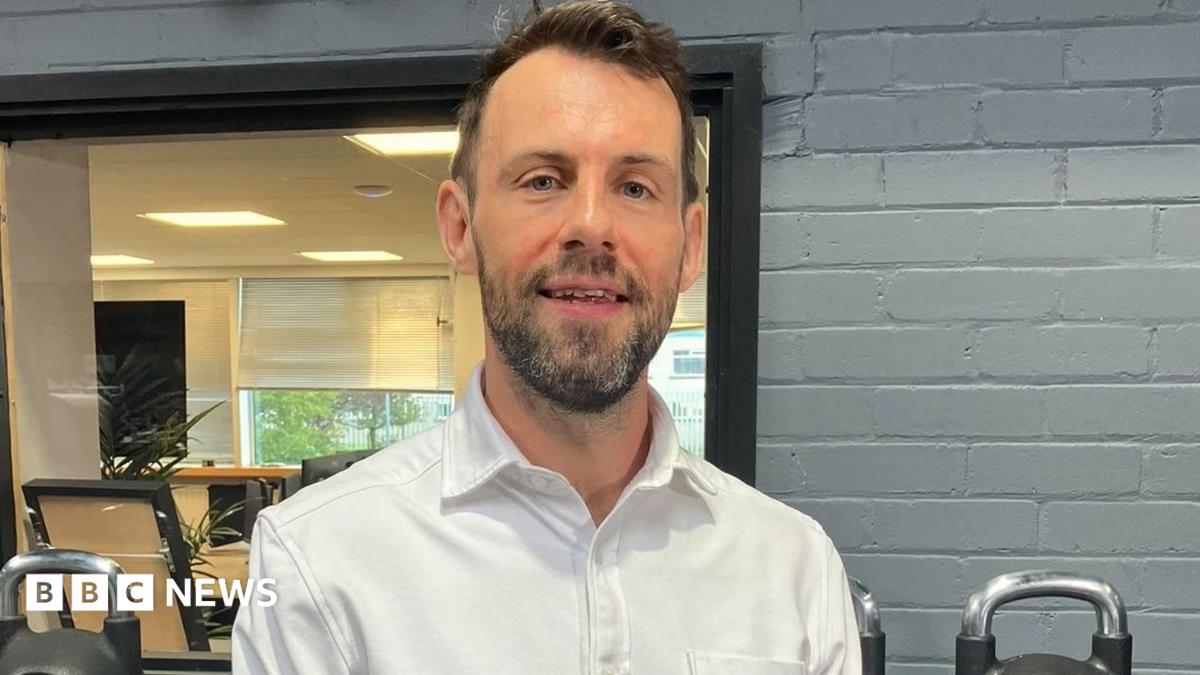
When Greg Bradley started the his gym equipment company 14 years ago, someone told him he would never sell outside the island of Ireland.
“I remember thinking, ‘I’m going to prove you wrong’,” he said. “Thankfully, we have been able to do that.”
BLK BOX is based in Newtownabbey – but it has secured contracts with high-profile customers all over the world, from sports teams like Manchester United to chains like PureGym.
Bradley is just one of many success stories, with official figures showing economic activity in Northern Ireland in the second quarter of this year grew faster than the UK and Republic of Ireland.
Advertisement
BLK BOX works internationally across the EU and markets like the US, Sri Lanka, Maldives, India, Australia and has grown its workforce to 180 staff.
Bradley said Covid had made people realise the importance of their health and “a lot of young people are into going to the gym”.
“We have won high profile contracts and expanding internationally across France, Spain, Germany and other countries,” he told BBC News NI.
He added that the Windsor Framework had also been advantageous compared to English competitors.
Advertisement
“We’ve been able to win a contract with a large French gym chain, Stade Français rugby team, so it’s actually worked out good for us and we are really doubling down on that.
“There’s still a bit of an education process with it, not everyone knows that we can ship frictionlessly across Europe, they are a bit scared of tariffs but once you explain it, everyone is really interested.”





























































You must be logged in to post a comment Login