
Crypto World
Death of Former Hack VC Partner Hsin-Ju Chuang Ruled Suicide


Hsin-Ju Chuang, a former partner at the crypto venture firm Hack VC, has died at age 37, according to the San Bernardino County Sheriff-Coroner. The county’s Coroner Death Registry later listed her death as a suicide.
California Highway Patrol officers responded on Aug. 24 to a report southbound on Interstate 15 south of Field Road in Harvard, California, where Chuang was pronounced dead at the scene, the sheriff’s office said in a coroner press release linked in the report.
Key takeaways
- San Bernardino County Sheriff-Coroner records list Chuang’s death as a suicide after an Aug. 24 response on Interstate 15.
- Chuang previously worked across major crypto ecosystems, including roles tied to Stellar and Solana.
- Hack VC said it had not spoken directly with Chuang for more than 10 months and had no additional details about the circumstances.
- Chuang had publicly accused Hack VC of mistreatment and said she planned to release evidence, according to her earlier posts.
What authorities and county records show
Officer response details point to an Aug. 24 incident on Interstate 15 in Harvard, California. Chuang was pronounced dead at the scene, according to the information referenced from the San Bernardino County Sheriff’s media materials.
A search of the San Bernardino County Sheriff’s Department Coroner Death Register shows Chuang’s entry dated Aug. 24, 2026. The registry later categorized her death as suicide.
Chuang’s background in crypto investing and projects
Chuang’s professional profile traces a career spanning both venture and ecosystem growth. Per her LinkedIn profile, she founded Dystopia Labs and held leadership roles that included head of growth at Stellar and Solana.
In venture, she joined Hack VC in 2021 as a venture partner. Later, she became partner and head of platform in 2025, according to the same publicly listed career history.
Hack VC’s statement and what it said it knew
Hack VC co-founder and managing partner Alexander Pack said the firm was “shocked and saddened” by Chuang’s death and extended condolences to her family, friends, and those close to her.
Pack added that Hack VC had not spoken directly with Chuang for more than 10 months. He said the firm was not aware of the circumstances surrounding her death and that it had “no further information,” urging people to be respectful of those grieving.
Earlier public accusations and unresolved questions
Before her death, Chuang had publicly accused Hack VC of mistreating her during her time at the firm. In her posts, she said she intended to release evidence supporting her allegations.
In that context, Chuang also described attempting suicide after experiencing what she characterized as mistreatment while she was “going through a serious medical emergency,” according to the account presented in the earlier public statement referenced in the report.
With the coroner registry now listing her death as suicide, the relationship between those prior allegations and the circumstances of her death remains a sensitive and unconfirmed area that readers should approach cautiously. Hack VC’s statement emphasizes it did not have recent direct contact and did not know the circumstances at the time of her passing.
Chuang’s death also raises a broader question for the crypto industry: how mental-health and workplace conflict are handled, documented, and addressed—especially in highly networked environments where reputational battles can move quickly into public channels.
For now, what matters most is what additional public information, if any, emerges from the coroner process and whether any further verified details about the earlier claims become available. Observers will likely watch for follow-up statements from those close to Chuang, as well as any developments that clarify the gap between her earlier allegations and the circumstances surrounding her death.


“Not every storm is becoming more intense, but the intense storms are becoming more intense—whether that be a thunderstorm, a hurricane, one of these nor’easters,” Barlow says.
One thing that doesn’t seem to be changing is the number of storms, Barlow adds. “We’re not seeing any changes in the overall average, and the total number of storms might actually be going down a little bit,” he notes.
In an ever warming world, storms are only going to continue to intensify. Climate change is increasing the number of “billion dollar disasters,” disasters that top at least $1 billion in damage, that take place in the U.S. each year. The average length of time between billion-dollar disasters has fallen—from 82 days during the 1980s to 16 days during the last 10 years. In 2025, the U.S. experienced a billion-dollar weather or climate disaster once every 10 days.
“Until we stop increasing the amount of greenhouse gasses in the atmosphere, the intensity of rainfall, the intensity of these storms, will continue to increase as well,” says Barlow. “Until we stop making things worse, things are going to keep getting worse.”

When Haru meets Fedir—whose wife is a Paris-based dance champion, though the marriage is an open one—she glimpses fresh possibilities, or at least just an adventure. In an early scene, after she and Fedir have had a pleasant, platonic dinner together, they’re ready to part ways in the street. A crew of drunken businessmen jostle Haru, and Fedir stands up for her. What follows is a cleverly choreographed dream ballet—though the genre is actually the bachata, one of the dance forms Fedir teaches, its movements an expression of longing and heartache—in which Fedir defends Haru’s honor against this gang of boorish men. Other passersby join in, and the scene becomes a metaphor for the act of rejoining life. By the end of the evening, Haru and Fedir have tumbled into bed.
Their two hookups are enjoyable and tender—until the wife shows up, and Haru realizes she has feelings she can’t control. Kikuchi shifts gears smoothly: One minute, she shows how Haru is nearly deadened by sorrow. The next, her exhilaration becomes a kind of artificial sunshine. But a flash of anger and jealousy causes her to act out, in a scene that makes you recoil a bit even as you laugh. Kikuchi is perhaps best known for her roles in movies like Babel and Pacific Rim, as well as HBO’s Tokyo Vice, several episodes of which Wladyka directed. Here, she captures the spirit of a woman who longs to get back to being herself, if only she could remember who that self was. Haru is both breezy and cautious, and totally lost. By the movie’s end, she has found her way forward, because she realizes there’s no going back. She’ll have to be a new person, encompassing the experiences and memories of the old one. Kikuchi captures that difficult butterfly transition as it unfolds; it’s both painful and funny to watch. But in the end, she shows us how Haru finds her way back to the music, which is the only way she can move into the future, one note, and one dance step, at a time.

Summer Mersinger is leaving the helm of the Blockchain Association, one of the crypto industry’s leading advocacy groups, a week after the sector weathered a major legislative setback in the loss of the Digital Asset Market Clarity Act.
Mersinger will be replaced — for now — by Kristin Smith, the organization’s original CEO who ran the association from its launch in 2018 until 15 months ago, according to a Friday statement. The handover is set for October 16, closing a tumultuous era that saw major crypto wins in Washington and a significant defeat last week, when the U.S. Senate failed to advance the Clarity Act in a wide loss in which all the Senate’s Democrats and some Republicans declined to support it.
“I’m proud of how far we’ve come together, from the GENIUS Act to real regulatory clarity at the SEC and CFTC,” said Mersinger, who’d taken the job after leaving her post as a member of the Commodity Futures Trading Commission, in a statement. “Kristin built this association from the ground up, and BA is in good hands. I’ll be cheering them on.”


US prosecutors alleged that a payments business illegally transferred hundreds of millions of dollars at the direction of EQIBank, where Tether holds some assets.
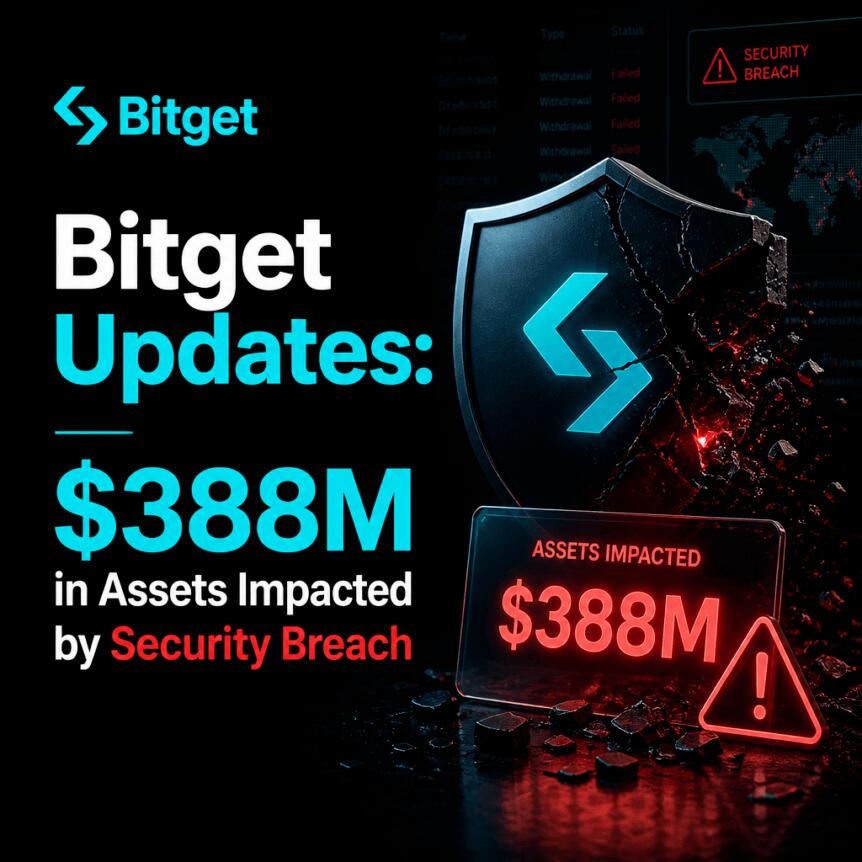
Bitget has revised its accounting of losses from last week’s security breach, raising the figure tied to attacker-controlled addresses to $387.5 million—up from an earlier estimate of $352 million. The updated incident report, released Thursday and followed by another update Friday, also said the incident remains contained and that no further unauthorized transfers are possible.
The exchange reiterated that it will continue pausing withdrawals and said it has launched a bounty program intended to help freeze or recover affected assets. The key change in Bitget’s latest disclosure is a “more complete accounting” of transfers, including assets that were not included in the initial estimate.
Key takeaways
- Bitget updated its breach figures: $387.5 million was transferred to attacker-controlled addresses, not $352 million.
- The exchange said the revision reflects additional accounting of affected assets on Zcash and TRON, without indicating any new unauthorized activity.
- Withdrawals remain paused, while Bitget launched a bounty program aimed at freezing or recovering funds.
- Bitget reported involvement of multiple networks, including EVM chains, XRP Ledger, Zcash, and TRON.
What Bitget changed in its incident report
In its revised accounting, Bitget said that the updated figure comes from a fuller reconciliation of transfers that occurred during the incident. The exchange attributed the adjustment to affected assets on Zcash and TRON that were left out of the initial estimate, stating that the new number does not reflect further unauthorized transfers.
Bitget’s statement emphasized containment: the company said the incident remains contained and that “no further unauthorized transfers are possible.” For users watching the case, the practical implication is that the revision is about measurement and scope rather than evidence of an expanded compromise.
Withdrawals paused as attacker routing is traced on-chain
In its Friday update, Bitget confirmed it will continue pausing withdrawals. At the same time, the platform said it has launched a bounty program designed to incentivize efforts to freeze or recover the assets that were moved to addresses controlled by the attacker.
Bitget also pointed to on-chain tracing in explaining where funds went. According to the exchange, “$387.5 million were transferred to attacker-controlled addresses,” with the revised total about $35 million higher than the earlier number. In other words, the updated report is not just a re-phrasing of loss estimates—it is an adjustment tied to the mapping of those transfers to attacker-controlled endpoints.
Networks and assets implicated across the ecosystem
Bitget’s revised incident report lists multiple affected blockchain environments. The exchange said the incident involved addresses on Ethereum Virtual Machine (EVM) networks as well as the XRP Ledger, Zcash, and TRON.
The follow-up disclosure also enumerated several assets the attackers allegedly took. According to Bitget, stolen or affected assets included XRP, Ether (ETH), Tether’s USDt (USDT), Zcash (ZEC), USDC, USDT0, XAUt, BNB, AVAX, and TRX.
For investors and traders, the multi-network nature of the incident matters because it affects how quickly risk can be reduced. Different chains can require different monitoring, compliance processes, and—critically—different operational steps for exchanges trying to halt or limit withdrawals and protect hot and intermediate custody.
Broader industry context and what remains unclear
Even with the clarification on the corrected loss figure, Bitget’s security breach remains among the largest incidents to hit the industry. The article’s context highlights that hackers stole about $1.5 billion worth of Ether from Bybit in February 2025, underscoring how damaging major exchange compromises can be even when withdrawals are halted and funds are monitored.
Notably, Bitget’s later update did not directly address comments made by CEO Gracy Chen from Thursday. In earlier coverage, Chen speculated that a North Korean hacking group might be behind the attack, citing what she described as “IP clues.” The revised incident report, as presented in the update, focuses on accounting and containment rather than attributing the breach to a specific actor.
That leaves an important tension for readers: while the exchange’s updated figures aim to settle questions about scale, attribution and motive appear to remain separate and unresolved in Bitget’s latest public disclosures. As the bounty program ramps up and tracing work continues, additional information could emerge—either from on-chain evidence, coordination efforts to identify and freeze assets, or follow-on updates from the exchange.
For now, market participants should watch whether Bitget later provides more details on recovery efforts and the timeline for when withdrawals might resume, alongside any further revisions to affected totals. The updated numbers suggest the incident’s spread is better understood, but the path from attacker-controlled transfers to recoverable funds—and the question of who carried out the breach—will likely determine the next phase of this story.
.jpg?branch=production)
European leaders are rallying behind the International Criminal Court (ICC) after President Donald Trump called for countries to “immediately” resign from the organization, amid a broader push by the U.S. Administration to dismantle it.
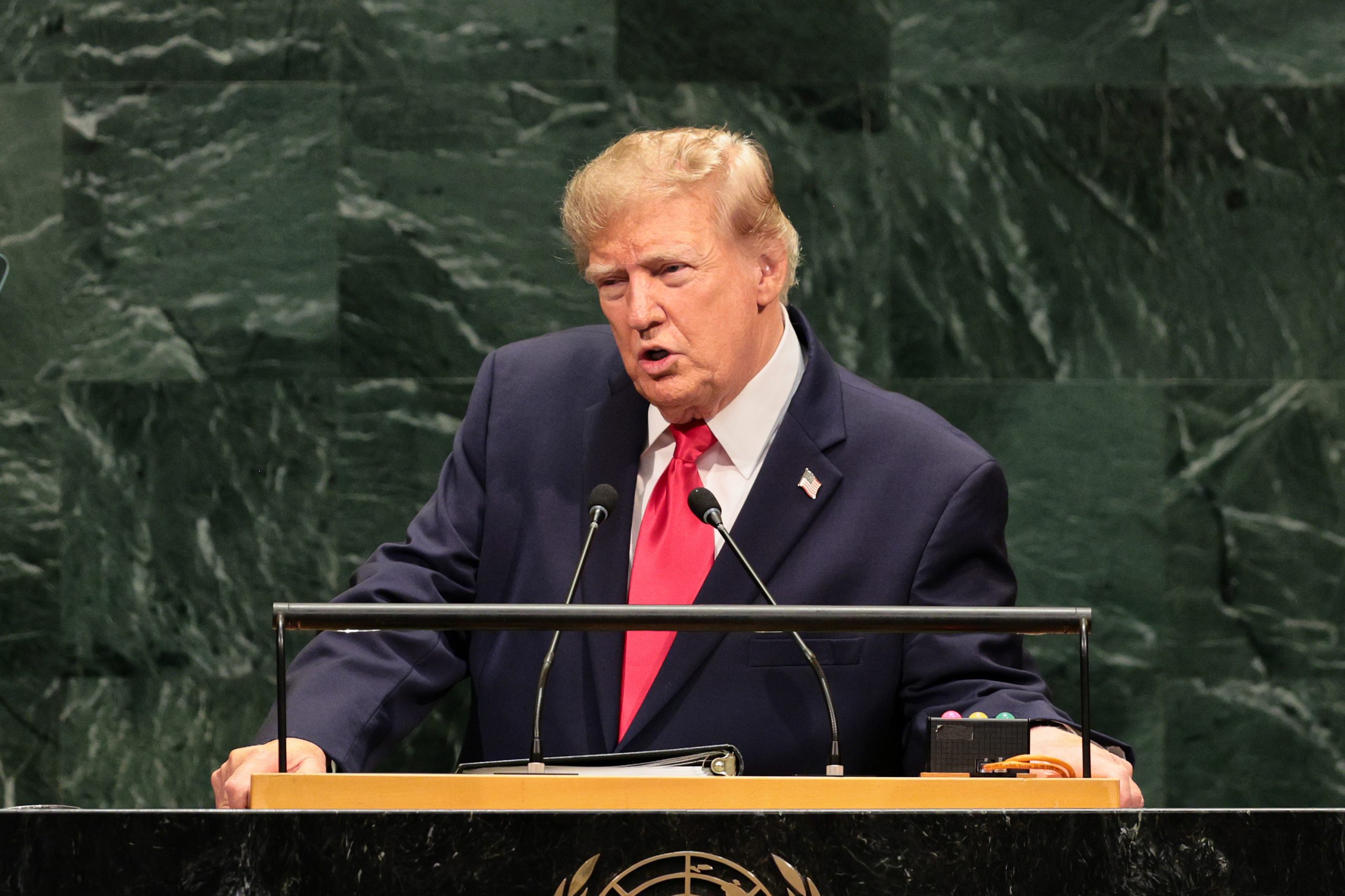
Irish Taoiseach (Prime Minister) Micheál Martin pledged his support for the intergovernmental organization and said Ireland “strongly opposes efforts to undermine the court,” during his speech at the United Nations General Assembly in New York on Thursday.
Referencing the Hague-based court as he discussed the conflict in Ukraine, Martin said Russia must be held “accountable” for its actions. “There can be no impunity for war crimes… that is why Ireland is a steadfast supporter of the International Criminal Court,” he said, stressing that all “measures against it should be immediately withdrawn.”
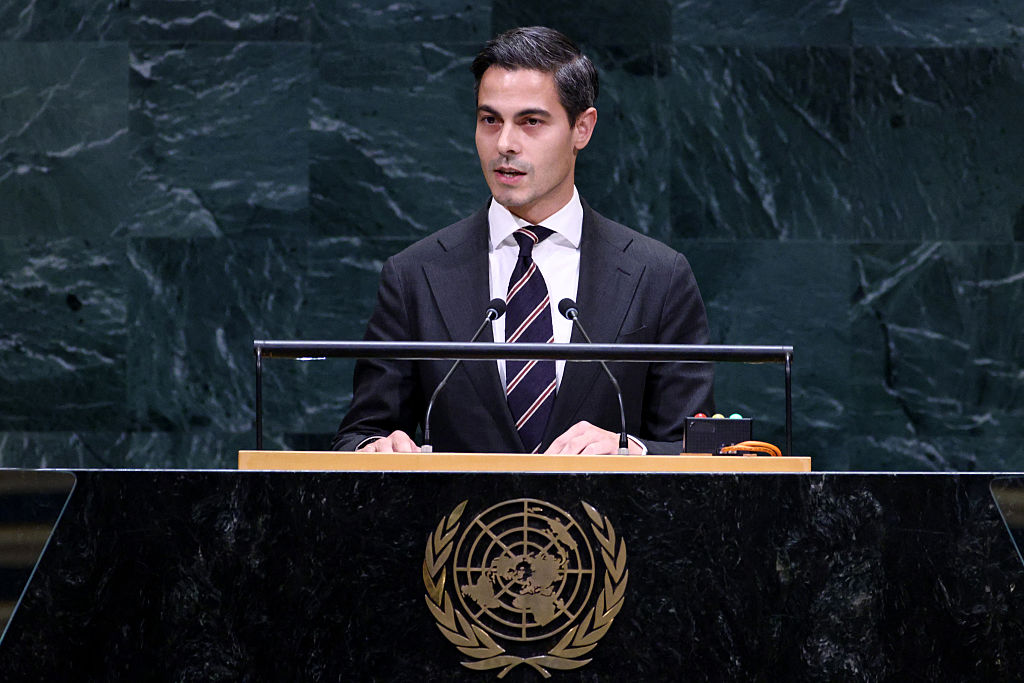
Netherlands Prime Minister Rob Jetten issued a similar defense of the ICC earlier in the day. Without directly mentioning Trump or the U.S., Jetten reflected on how the court has come “under attack” and asked how can anyone “possibly be opposed to prosecuting the very worst crimes?”
“I believe there can be only one response,” he continued. “To say: ‘hands off’ the ICC, and all those other institutions that protect the international legal order.” The remarks drew loud applause from attending delegates.
The ICC is recognized as the world’s highest criminal court. It draws its jurisdiction from the Rome Statute, a treaty that went into effect in 2002 and is ratified by 125 countries. Neither the U.S. nor Israel is a state party to the Rome Statute, and therefore they do not recognize the jurisdiction of the court.
Trump has long complained that the ICC oversteps its authority and should not claim jurisdiction over U.S. citizens. His calls against the organization culminated in a public appeal at the U.N. on Tuesday. During his 45-minute speech, Trump called “on all nations that are members of the ICC to officially resign from this rogue institution, immediately.”
He said the U.S. is “opposed to the out-of-control institution known as the ICC” and “will never allow U.S. service members or anyone else to be investigated or given show trials by an anti-American tribunal with no jurisdiction over us.”
His call to action was swiftly rejected by German Foreign Minister Johann Wadephul.
“We will, of course, not be doing that,” Wadephul told Germany’s Deutschlandfunk radio station on Wednesday. He described the court as “an important institution” and said the issue is “one of the areas where we do indeed have to acknowledge a regrettable difference in policy from the U.S. Administration.”
Similarly, European Council president Antonio Costa said the E.U. stands “firmly behind” the ICC and argued it’s “unacceptable to threaten or attack the International Criminal Court, its officials, and its staff.”
At the U.N. assembly, the only nation to follow Trump’s lead appeared to be Naoero, a microstate island country formerly known as Nauru.
Naoero President David Adeang said in his speech late Tuesday that he would formally withdraw his country from the Rome Statute, citing the ICC’s “increasing irrelevance.”
“Naoero joins a growing number of nations standing up for their sovereignty against the ICC’s illegitimate overreach,” said U.S. Assistant Secretary for East Asian and Pacific Affairs Michael DeSombre, after meeting with Naoero’s Deputy Foreign Minister.
Leaving the ICC is neither an immediate or clean break, experts tell TIME.
Withdrawal takes at least a year, and states remain bound to cooperate with proceedings opened before their departure, according to Sergey Vasiliev, a professor of international law at Open University Netherlands.
“The state that intends to withdraw has to file a notification of withdrawal from the statute, and it comes into effect only one year after such notification has been received by the depository of the treaty,” he says. “Those states are still obliged to provide full cooperation to the court for all the proceedings and cases that started while they were a state party and right until the moment when their withdrawal becomes effective.”
In addition to Naoero, five other states—Niger, Burkina Faso, Mali, Venezuela, and Chad—have moved to withdraw. Vasiliev calls their planned departures a “serious loss,” but says it is not “lethal to the existence of the ICC.”
Hungary formally moved to withdraw from the ICC last year under former Prime Minister Viktor Orbán, but his successor, Péter Magyar, reversed the decision, signaling its renewed commitment to the organization.
A timeline of Trump’s campaign against the ICC
Trump’s complaints with the ICC date back to his first term. In late 2017, the ICC requested to open an investigation into American actions overseas, looking into alleged war crimes committed by U.S. personnel in Afghanistan.
Trump pushed back and challenge the court’s authority. During his speech at the U.N. General Assembly in 2018, he claimed the ICC had “no jurisdiction, no legitimacy, and no authority” and vowed to “never surrender America’s sovereignty to an unelected, unaccountable, global bureaucracy.”
“The United States has always objected to the ICC’s exercise of jurisdiction over its service members,” says Vasiliev, noting this has been an ongoing point of contention.
However, “the ICC has jurisdiction over crimes committed on the state party territory, even when those crimes are committed by non-state party nationals,” he adds.
In 2020, Trump signed an Executive Order issuing sanctions in response to the ICC’s Afghanistan investigation, calling the court’s actions “illegitimate assertions of jurisdiction.” The sanctions and visa restrictions against personnel of the ICC were later revoked by former President Joe Biden in 2021.
In recent years, the Trump Administration’s arguments with the ICC have largely centered on the court’s investigation into possible Israeli war crimes in Gaza. The court issued arrest warrants for Israeli Prime Minister Benjamin Netanyahu, a Trump ally, and Israeli Defense Minister Yoav Gallant in November 2024.
New York City Mayor Zohran Mamdani had previously pledged to execute the ICC’s warrant and have Netanyahu arrested when he traveled to the city for the U.N. assembly. But in July, Mamdani conceded that his Administration had “reviewed every avenue available,” only to find they did not have the jurisdiction.
Shortly after returning to office in early 2025, Trump signed an Executive Order declaring a “national emergency” and imposing sanctions on the ICC over what he said was the court’s “illegitimate and baseless actions targeting America and our close ally Israel.”
Efforts were ramped up again in July, when U.S. Secretary of State Marco Rubio announced a “whole-of-government” effort “to systematically disable the ICC’s ability to operate, target American servicemen or officials, or otherwise threaten American sovereignty.”
A month later, the State Department imposed sanctions on the ICC’s president, Judge Tomoko Akane, and Abdoulaye Seye, a Senegalese senior trial lawyer for the Office of the Prosecutor.
The ICC referred to the sanctions as “a flagrant attack against the independence of an impartial judicial institution which operates pursuant to the mandate conferred by its states parties.”

Crypto exchange Bitget released an updated incident report on Thursday’s security breach, clarifying that about $388 million in assets had been affected and not $352 million as previously reported.
In a Friday update, Bitget said it would continue to pause withdrawals following the security breach, and the company had launched a bounty program to incentivize freezing or recovering the assets. The exchange confirmed that “$387.5 million were transferred to attacker-controlled addresses” based on onchain tracing — about $35 million more than reported on Thursday.
“The revised figure reflects a more complete accounting of transfers that occurred during the incident, adding affected assets on Zcash and TRON that were not included in the initial estimate,” said Bitget. “It does not reflect further unauthorized transfers. The incident remains contained and no further unauthorized transfers are possible.”
According to Bitget, the incident included addresses on Ethereum Virtual Machine (EVM) networks, the XRP Ledger, Zcash and TRON. Among the assets stolen were XRP, Ether (ETH), Tether’s USDt (USDT), Zcash (ZEC), USDC, USDT0, XAUt, BNB, AVAX and TRX. The follow-up report did not address comments made by CEO Gracy Chen on Thursday speculating that a North Korean hacking group may have been behind the attack.
Even with the update on the assets transferred to hacker-controlled addresses, the Bitget security breach remains one of the largest to impact the industry. Hackers stole about $1.5 billion worth of Ether from Bybit in February 2025.
Related: Symbiosis says recovered 15 BTC from bridge hack, offers 20% bounty

Strategy is asking shareholders to approve a change to the payment schedule for its four preferred “digital credit” securities—moving them from periodic payouts to daily dividends. The company says the switch would not alter the preferred stocks’ dividend rates or the total amount paid, but would make dividend record dates occur on every calendar day.
According to a Friday filing with the U.S. Securities and Exchange Commission, the board approved the proposal on Thursday. Shareholders are set to vote on the amendments during a virtual special meeting scheduled for Oct. 28.
Key takeaways
- Strategy wants to convert STRC, STRF, STRK, and STRD to daily dividend record dates, without changing their dividend rates or aggregate payout.
- If approved, each calendar day becomes a record date, with payments made on the next business day.
- STRC would be the first to transition, with an initial expected daily dividend payment on Nov. 2.
- The other three preferred stocks would follow in January, with their first daily-schedule payments expected on Jan. 4.
- Strategy is following Strive’s earlier step toward daily dividends after Strive became the first public company to adopt the model.
Strategy seeks approval for daily dividend schedule
In its SEC filing, Strategy outlined amendments that would alter how dividends are timed for its preferred stock lineup, including STRC. The company’s stated goal is to shift to a daily framework while keeping economics consistent—specifically, maintaining the same dividend rates and the same total amount paid.
Under the proposed structure, a dividend record date would be set for every calendar day. The corresponding dividend payment would then be processed on the next business day. Strategy also specified an implementation sequence: STRC would transition first, followed by STRF, STRK, and STRD in the subsequent months.
Strategic timing details included in the filing indicate that STRC’s first expected daily dividend payment would arrive on Nov. 2. The remaining three preferred stocks are expected to begin daily payouts in January, with the first payments under the daily record-date schedule anticipated for Jan. 4.
The company said the amendments would take effect after Strategy updates the preferred stock certificates governed under Delaware law.
A broader shift in Bitcoin treasury preferred securities
Strategy’s move arrives after Strive, another Bitcoin treasury-focused public company, changed its own preferred stock payout mechanics to daily dividends. Earlier coverage of Strive noted that SATA began paying dividends every business day on June 16 at a 13% annual rate, after Strive reported eliminating outstanding debt in the first quarter.
While both companies are aiming for the same general outcome—more frequent income timing—the details differ. The source describing Strive’s change emphasized dividends on each business day. Strategy’s plan, by contrast, would treat every calendar day as the record date, with payments aligned to the next business day. For investors, that distinction matters for cash-flow timing and for how dividends accrue around weekends and holidays.
Strategy also positions the preferred securities within its “digital credit” approach—preferred securities designed to generate income from a capital structure anchored by its Bitcoin holdings.
Why daily dividends may matter to holders
Daily dividend schedules can be appealing because they more closely align income distribution with the passage of time. For traders and income-focused investors, more frequent payouts may reduce reliance on longer intervals between distribution dates and can improve short-term planning around liquidity needs.
At the same time, Strategy emphasized that the proposal would not change the dividend rates or the total amount paid. That detail signals the company is aiming primarily at payment mechanics rather than changing the underlying economics of the securities.
Strategy’s scale within the Bitcoin treasury category provides context for why the proposal could draw attention. According to BitcoinTreasuries.NET, Strategy holds about 846,000 BTC, compared with Strive’s 26,355 BTC.
CEO discusses volatility tied to leverage in STRC
Beyond the dividend schedule, Strategy has also been managing investor expectations around STRC’s trading behavior. The article notes that STRC saw notable volatility during the year. In June, it dropped sharply below its $100 stated amount, with an intraday low reported at $71.25 on June 26 based on Yahoo Finance data.
Speaking on Natalie Brunell’s Coin Stories podcast earlier this week, Strategy CEO Phong Le attributed the downturn to more leverage entering the STRC market than the company expected. He said that some investors borrowed against Bitcoin at lower rates to buy STRC and capture the spread between their borrowing costs and STRC’s dividend yield. When Bitcoin’s price declined, Le said those positions faced pressure to add collateral or sell STRC.
“We did not expect the amount of leverage that came into the system,” Le said. “And so that’s a lesson learned, next time around.”
Le also described measures Strategy is pursuing to avoid another similar unwind. These include maintaining a strong U.S. dollar reserve, using a policy that allows the company to repurchase STRC when it trades below its $100 stated amount, and working to attract more long-term holders—particularly institutional investors.
Since the June lows, the article states that STRC has recovered to around $98.41, near Strategy’s stated target range of keeping the security between $99 and $100. It also notes that STRC currently carries a 12% variable annual dividend rate.
What to watch before the shareholder vote
Investors should focus on the Oct. 28 special meeting outcome and on the implementation details once Strategy updates its Delaware certificates. If the daily schedule is approved, traders will likely watch how the more frequent record-date structure interacts with STRC’s ongoing volatility and with the company’s repurchase and reserve strategy.

The Bitget hacker has converted stolen USDC into ETH after a breach that the exchange valued at about $351.6 million, renewing questions about when Circle freezes funds linked to an attack.
Summary
- Security researcher Taylor Monahan flagged USDC transfers and swaps tied to the Bitget attacker.
- Bitget estimated the theft at $351.6 million and temporarily suspended withdrawals.
- Circle says it freezes USDC when legally compelled, while researchers have criticized its response time in past hacks.
- A U.S. lawsuit over the Drift exploit has raised similar questions about stolen USDC moving across chains.
Security researcher Taylor Monahan flagged the attacker’s activity on X, pointing to USDC moving through wallets as stolen assets were converted into ETH. Monahan questioned why the funds remained movable despite Circle’s ability to block transfers from specific USDC addresses.
The transactions show the attacker using USDC during the conversion process, according to Monahan’s account. Her criticism concerns Circle’s response to identifiable funds, although the public account of the transfers does not establish whether Circle received a legal order concerning those addresses or when it learned their identities.
Bitget attacker moves USDC after $351.6 million breach
Bitget said its security systems detected unauthorized transfers from some hot wallets at 18:31 UTC on Sep. 24. The exchange activated an emergency response, suspended customer withdrawals and estimated the affected assets at approximately $351.6 million. Deposits and trading remained available, while Bitget said account balances were accurate and its cold wallets were secure.
In its initial report on the breach, crypto.news covered Bitget CEO Gracy Chen’s account of the preliminary investigation. Chen said investigators had ruled out a leak of wallet private keys and believed the attackers had entered the exchange’s systems to move funds directly, without submitting customer withdrawal requests. Bitget was still investigating the entry point and had not released a final account of the attack.
The theft involved several assets, leaving investigators to follow more than one route for the stolen funds. On-chain tracker Lookonchain estimated the stolen portfolio at roughly $356.8 million using prices at the time of its update. Its breakdown included 102.93 million XRP worth about $157.48 million, 31,890 ETH worth about $85.75 million, and 21.05 million USDC. Lookonchain’s changing on-chain estimate and Bitget’s internal loss figure use different measurements.
Bitget said it had flagged addresses linked to the abnormal transfers and notified law enforcement and on-chain security firms. Chen said measures to prevent further outflows had been completed as engineers worked on repairs and the return of withdrawal services.
Monahan’s concern centers on the portion of the stolen assets held in USDC. Circle’s USDC terms say the issuer reserves the right to block transfers to and from certain on-chain addresses under its blocklisting policy. Once an attacker swaps USDC for ETH, however, a block on a USDC address cannot freeze the ETH received in that trade.
Circle’s freeze policy draws a response-time dispute
Circle has described a narrower standard for using its technical controls than the one its critics seek during a live exploit. In an April statement on lawful intervention, published after the Drift Protocol hack, the company said it exercises its freeze ability when legally compelled by an appropriate authority. Circle argued that letting an issuer decide on its own whose assets to block could put legitimate holders’ property rights at risk.
Its USDC terms also say Circle may be required to freeze tokens after receiving a legal order from a valid government authority. The terms separately reserve the right to block certain addresses that Circle determines may be associated with illegal activity or a violation of its terms. They state that an on-chain USDC transaction cannot be reversed or recalled once initiated.
Those provisions matter to U.S. holders because Circle issues a dollar-backed stablecoin used across exchanges and decentralized applications, while its freeze decisions can affect access to tokens at a particular address. Circle’s stated policy places lawful process at the center of that decision. Monahan’s criticism focuses on the time available to intervene before a suspected attacker finishes moving or swapping the USDC.
Circle said in its April statement that tools for faster intervention exist, but legal frameworks for quicker, coordinated action while protecting users’ rights remain incomplete. The company called for clearer rules and for security measures across protocols, wallets, exchanges and stablecoin issuers.
ZachXBT documented 15 earlier USDC cases
On-chain investigator ZachXBT alleged in April that Circle had taken minimal action or failed to act quickly enough in 15 cases involving more than $420 million in suspected illicit USDC flows since 2022. His list covered hacks and fraud cases in which he said stolen funds remained movable despite time to identify the activity.
As previously covered by crypto.news, ZachXBT cited about $9 million in USDC linked to the July 2025 GMX hack and said wallets involved in the Cetus hack were blocked only after the stolen USDC had been converted into ETH. He also alleged that attackers in the Drift case moved roughly $232 million over about six hours and more than 100 transactions before converting the funds.
The Drift transfers became the subject of a U.S. civil case. In April, a claimant sued Circle over transfers following the exploit, alleging that the issuer failed to stop roughly $230 million in stolen USDC routed through its Cross-Chain Transfer Protocol. The complaint, filed in a federal district court in Massachusetts, argues that earlier intervention could have reduced the losses. Those are the claimant’s allegations, rather than a court finding against Circle.
In that case, the claimant also pointed to Circle’s freeze of 16 USDC-linked wallets tied to a separate sealed U.S. civil matter as evidence that the issuer could block addresses. Circle’s April public statement, issued after the Drift attack, said freezes require lawful authority and called for legal structures that would permit faster action during future incidents.

Anthropic has sought shareholder approval for a plan that would give CEO Dario Amodei and six other co-founders a combined 50.1% of voting power after its planned IPO.
Summary
- The proposed voting rights would apply to most corporate matters if at least three founders retain minimum shareholdings.
- Anthropic’s Long-Term Benefit Trust would continue to elect most of the company’s board.
- A separate class of employee shares could break ties on some decisions.
- Anthropic’s May funding round valued the company at $965 billion; its reported IPO valuation remains unsettled.
According to The Information, which cited people familiar with the planning, Anthropic is asking shareholders to approve a special class of shares before the Claude developer goes public. The proposed shares would give its seven co-founders majority voting power on most matters, provided at least three of them continue to hold a minimum number of company shares.
Anthropic founders would hold voting power beyond their stakes
Each of the seven founders currently owns about 2% of Anthropic, according to the report. Their proposed shares would increase their voting rights without giving them a larger economic stake. As a result, the founders could retain collective control of shareholder votes even if they own far less than half of the company.
The plan resembles a founder-control structure used by Palantir, The Information reported. Its minimum shareholding condition would allow the arrangement to continue while at least three founders keep the required stakes; the report did not specify the threshold each would need to meet. Shareholder approval is still required for Anthropic’s proposal.
Board elections would work differently from most shareholder votes. Under the reported plan, Anthropic’s Long-Term Benefit Trust would retain the power to choose a majority of directors, while the number of seats elected by founders would rise from two to three. The board has seven seats, one of which is vacant, according to The Information.
Employees would also receive a special class of shares that could break ties on certain corporate matters, the report said. Their role would give them a vote in those specific decisions without transferring the trust’s board-election power to the founders.
The trust would keep its role in choosing directors
Anthropic describes itself as a public benefit corporation and says its Long-Term Benefit Trust is an independent body whose members have no financial stake in the company. The trust holds a separate class of stock that gives it authority to elect and remove directors, with that authority designed to grow to a majority of board seats.
The company said when it established the trust that its board would continue to oversee major decisions. Its trust structure gives people outside the shareholder group a role in selecting directors, even as investors and founders hold other voting rights.
The reported proposal would therefore put two kinds of control in different hands. Founders would hold 50.1% of the votes on most shareholder matters, while the trust would select most directors. The details of how those powers interact would be relevant to investors reviewing the company’s offering documents.
For U.S. investors, the Securities and Exchange Commission’s IPO guidance points to the prospectus as the place to check a company’s share classes and their voting rights. The SEC says shares with extra votes can let founders control a company without owning most of its equity, leaving public shareholders with less influence over corporate decisions.
Anthropic has previously been reported to have confidentially filed for a U.S. listing. A public prospectus would give prospective buyers firmer details on the proposed share structure, alongside the company’s financial information and offering terms. In earlier coverage of its IPO timetable, crypto.news reported that the prospectus was expected in late September and investor marketing could begin in mid-October; both dates were subject to change.
Anthropic’s IPO valuation remains under discussion
The voting proposal arrives while Anthropic prepares a potential public offering whose size and timing have changed in recent reports. On Sep. 19, reporting on a November IPO said investors were discussing a listing that could raise up to $100 billion at a valuation of about $2 trillion. The reported terms were preliminary.
Anthropic’s last announced funding round provides a separate figure. In May, the company said it raised $65 billion in Series H financing at a $965 billion valuation after the investment. Its announcement also said annualized revenue had crossed $47 billion earlier that month.
Secondary-market estimates later put Anthropic’s value at about $1.5 trillion, according to earlier coverage of its offering preparations. Those private transactions do not set the price for a public listing, where the final valuation will depend on the shares sold and the price investors pay.
Pre-IPO contracts give traders no shareholder vote
Anthropic’s approaching listing has also drawn interest from crypto trading platforms. Kraken offers perpetual futures tied to Anthropic’s private-market valuation, as reported in September. The contracts give eligible traders price exposure, but no Anthropic shares, dividends or voting rights. Kraken excludes U.S. customers from the products.
OKX introduced Anthropic-linked pre-IPO contracts for eligible European customers on Sep. 10. Its products likewise track an implied valuation without making contract holders company shareholders. The exchange said the contracts can be traded with up to 10 times leverage, while their prices may differ from both private funding valuations and any eventual IPO price.

Devastating untold story of Tom Brady and Gisele Bundchen’s marriage: Read every ugly detail, the secret letter stashed in a drawer… and her savage last three words that left him so ruined, friends feared he had cancer

Oilers’ Dickinson has setback on foot injury, unlikely to start season

Review: Frank Zappa’s ‘Freak Out!’ 60th Anniversary Super Deluxe Edition Adds Rare Mono Mixes and 5CD/Blu-ray Box Set





-

 Crypto World3 days ago
Goldman Sachs and Deutsche Bank Agree: The S&P 500 Rally Isn't Over
-

 Tech5 days ago
Researchers escape OpenAI Codex sandbox to run commands on host
-

 Fashion1 day ago
8 iPhone Accessories That Add Personality
-

 Crypto World5 days ago
Who Needs CLARITY Anyway? ARB Could See 70X Increase: Hodler’s Digest
-

 Crypto World7 days ago
Circle launches Arc Studio AI agent for building onchain apps
-

 Crypto World7 days ago
Trading Bitcoin on Robinhood? Why 2% Spread Has Traders Worried
-
 NewsBeat7 days ago
Trump says US has reached an agreement to take permanent control of Greenland’s security
-

 Tech6 days ago
Trump suggests rebranding AI with a new name, says he’s also creating an AI Force
-

 Business5 days ago
Analog Devices (ADI) Bets $1.35 Billion on Chips that Let Machines Think for Themselves
-

 Crypto World5 days ago
Coinbase, Robinhood, Circle Seen as Tokenized-Stock Winners
-

 Crypto World3 days ago
This Bearish Netflix Stock Trade Can Cash In On Video Streaming Giant’s Woes
-

 Crypto World7 days ago
Bitcoin price breaks channel as RSI climbs to 63
-

 Tech4 days ago
Google’s $899 Googlebook is a bet that you’ll buy a new laptop for Gemini
-
 Crypto World3 days ago
Trump-Xi Polymarket Odds for Handshake Hit 50%
-

 Entertainment3 days ago
These 17 Fall Amazon Dresses Seriously Look Like Anthropologie
-
 Business3 days ago
Oil Price Today (September 23): Crude oil below $100 on hopes of US-Iran talks. What did Trump say?
-

 Crypto World2 days ago
Crude Oil Prices Pressured by Diplomatic Hopes in the Middle East
-
 Crypto World2 days ago
Bitcoin price tests $83,600 Supertrend support after $87K rejection
-

 Crypto World7 days ago
World Money launches in 150+ countries with Stripe
-

 Crypto World2 days ago
Bitcoin Threatens Sub-$84,000 Breakdown as Long Liquidations Spike
You must be logged in to post a comment Login