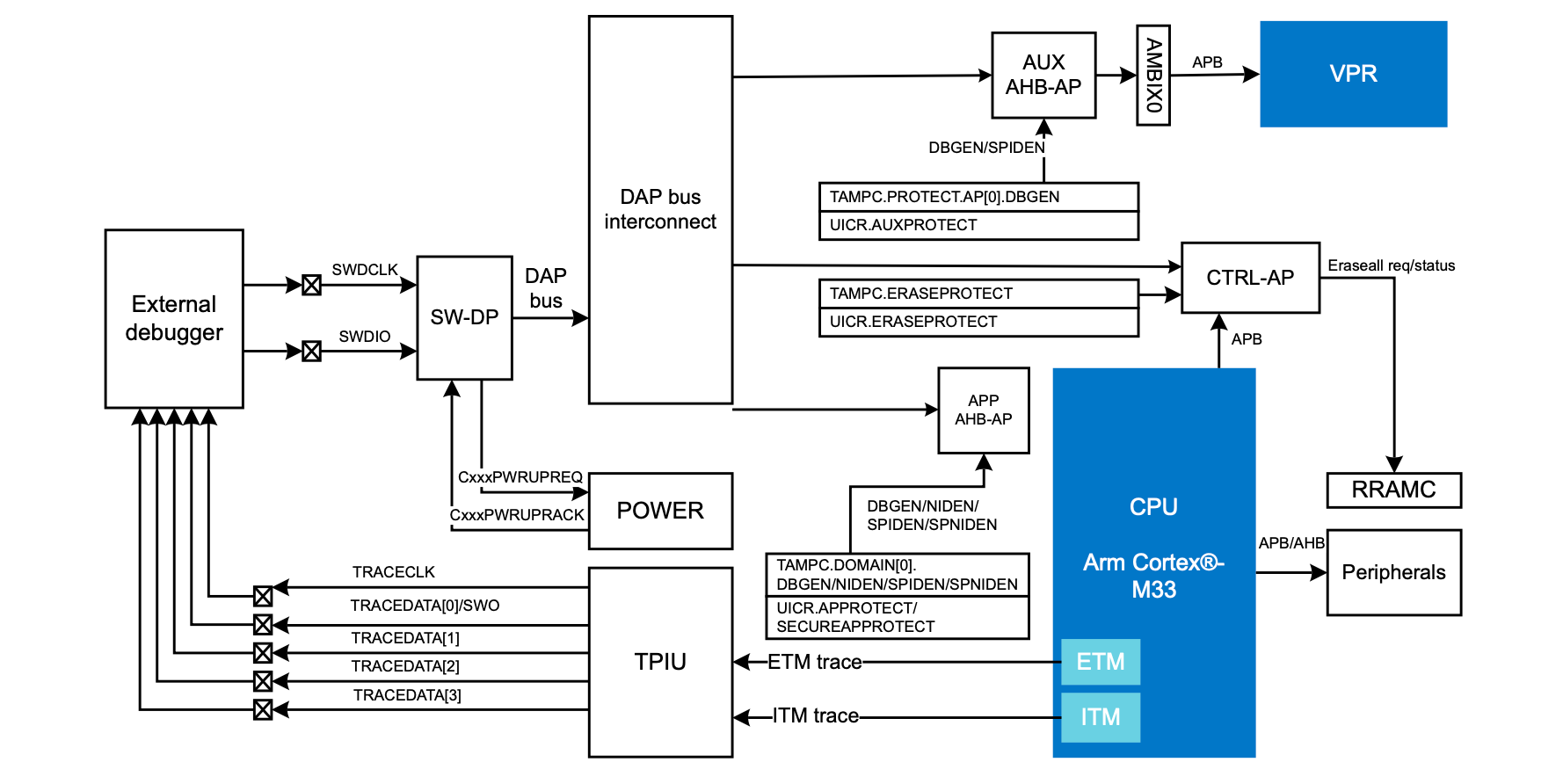
In a recent blog post by [Daniel Mangum] he goes over a scenario observed while debugging the Cortex-M33-based nRF54LM20, reading and writing values while running through a few scenarios. After initially it seemed to go seemingly without any issues, suddenly the GDB debugger would happily return values that suggested that a previous operation had not succeeded. Or, as the case turned out to be, stale cached values were being returned.
What follows is a very technical and low-level breakdown of how this MCU functions inside, especially its cryptographic features and Key Management Unit, which is used for storing sensitive information. The most amusing part is probably you can bypass the cached data by explicitly specifying the access port and memory address along with other parameters.
This ReadMemAP command supported by the JLinkGDBServer used here showed the right value, whereas the normal GDB read command using x kept returning the cached values. This raised the question of which cache was doing this. The direct read from the AHB-AP access port worked fine, so the suspicion is that the J-Link software’s own caching, with a run without the J-Link caching indeed working fine.
Advertisement
J-Link has had some hardware-related issues too, with this new issue pointing to an awkward software bug that could be table-flip-and-rage-quit worthy depending on how much time it wastes during a debug session. Fortunately [Daniel] seems to have caught this one quickly and had an easy way to bypass it, but we aren’t all that lucky.
Photo credit: TU Delft Forest monitoring usually means a small quadcopter hanging in place while its motors chew through a battery in a few dozen minutes. Noise follows the same schedule. A machine that can grab a branch and cut power would last far longer and bother far fewer animals, yet the last few inches of that landing have wrecked plenty of earlier designs.
Cameras work fine until the gripper enters the frame and the drone is left scrambling to grasp the exact branch it need. Leaves and trees, as well as an overgrown mass of branches, obstruct the view. Salua Hamaza is quite forthright about the issue. Vision brings you close, but when it really counts, your own grip gets in the way. Birds have already figured this out, for example, taking that final stretch with their feet, physically feeling their way along the wood as they gain traction. Hamaza believes that a flying robot would benefit greatly from the same closed loop of feedback.
No Registration Needed – Under 249 g, this drone with camera for adults 4K does not require FAA registration or Remote ID for recreational use. Visit…
4K Ultra HD & 3-Axis Gimbal for Cinematic Quality Shooting – Capture stunning moments in any light—sunrises, sunsets, and night scenes with…
38kph (Level 5) Wind Resistant – This drone for adults has a stable flight even in Level 5 winds. Brushless motors enhance power and allow takeoff at…
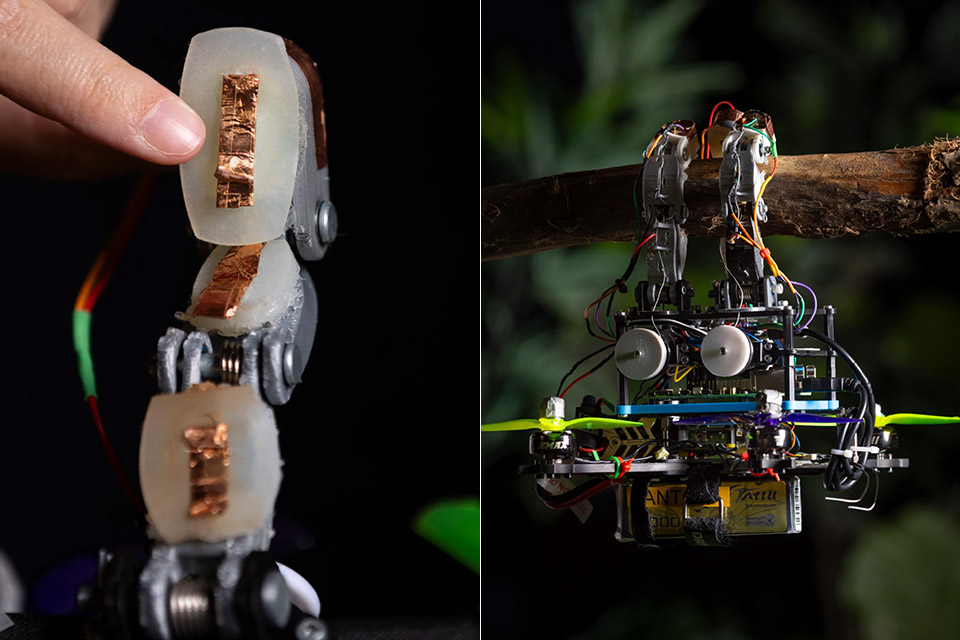
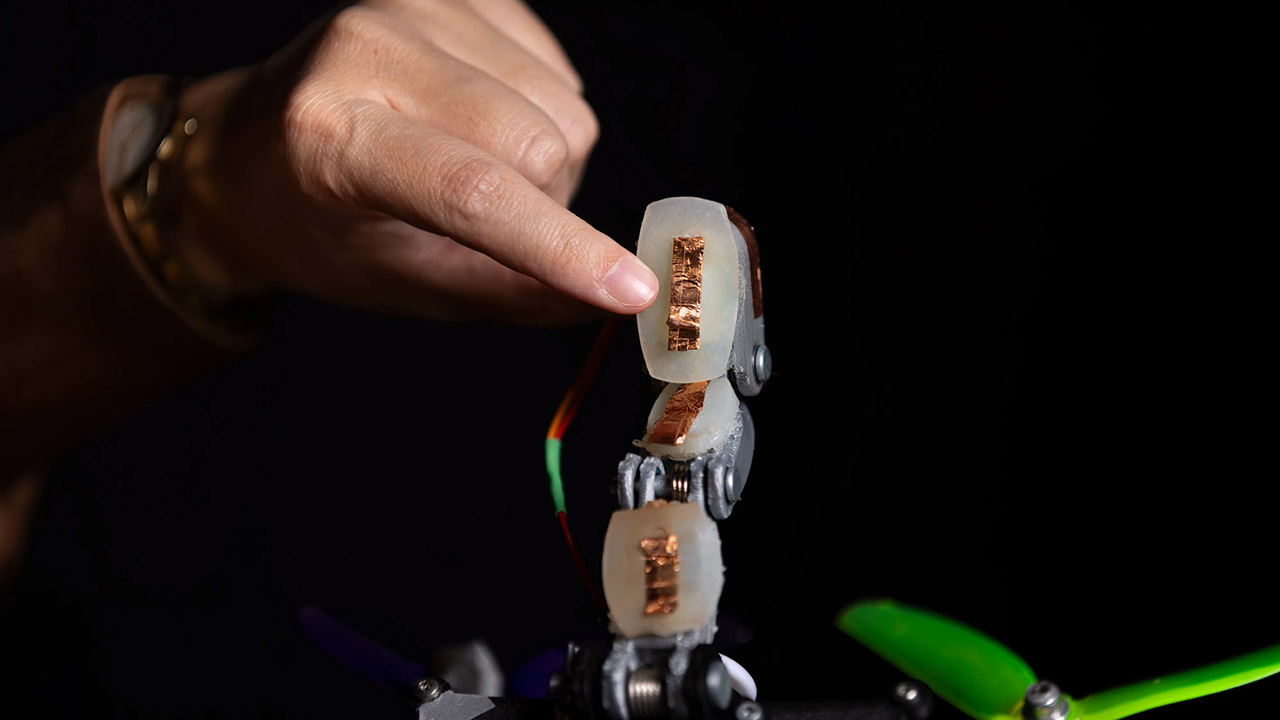
Hamaza, Anton Bredenbeck, and Anish Jadoenathmisier designed a lightweight hand for their quadrotor with three fingers in about human proportions. Each finger is made up of three parts: a 3D printed PLA spine and a soft silicone pad that can rub against a variety of surfaces, including bark, a wooden beam, a T junction of wood, and even an arm. The fingers spring shut on their own, so holding wood requires almost no extra effort once everything is in order. When the drone has to search, a single tendon opens each finger, and then there are the sensors, which are 9 copper electrodes down under each pad that provide a simple yes-or-no response if they make touch. The foil on the tips of the fingers even gives you a bump on both sides. An MPR121 controller converts the capacitance change into a yes/no signal that the flight computer may use right away.
Even so, the drone starts by guessing with its cameras. But after that, it begins flying in a figure eight pattern, opening and shutting its hand at each end of the loop. The initial touch is all it requires. That’s because the machine already knows the geometry of its own fingers, so a single sensor reading corresponds to a point in space and a direction to move in. Bredenbeck explained it a little more simply: each sensor merely indicates that something is present, but if you know the form of the hand, you can determine where the branch is and how it is pitched. The drone continues to rotate and slide until all three fingers come into contact, at which point it turns off the motors completely. If everything goes wrong and it can’t get a grip, it just returns to a safe hover and tries again.
Simulation runs performed much better than expected, clearing more than 99% of landings even when the starting guess was significantly off, by 60 cm and 50 degrees. Despite the same shaky projections, hardware flights spanning 26 testing were also a success. Then they attempted a version without the tactile feedback loop, which you’d expect to be a disaster, but it actually kept getting closer even when the estimate was off by up to 10 cm. The diameter of the branch it could pick up increased from approximately 10 cm to a lot more respectable 15 cm, all because it could use its fingers to feel its way in. However, it is not perfect, as very thin sticks under 2 cm just glide through without making enough contact to be picked up. One of the cases they observed recognized the first bump at 15 seconds in and locked onto the branch about 35 seconds later. There is a catch if your fingertip becomes stuck on a branch toward the end. [Source]
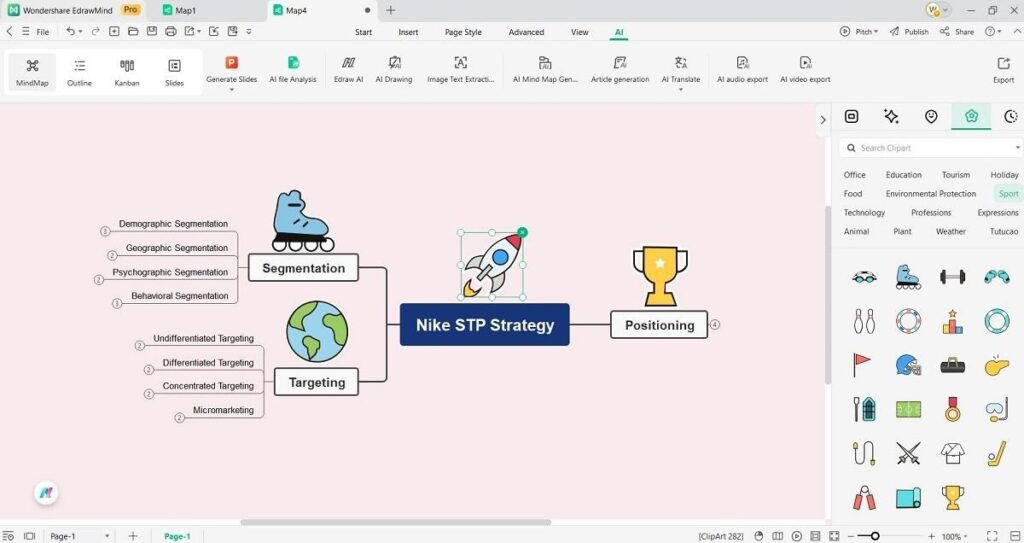
STP analysis is a marketing framework that helps firms select which client segments to target, which to prioritize and how the brand should be viewed by those customers. STP is an abbreviation of Segmentation, Targeting and Positioning. Working through these steps in order helps to transform a large market into a targeted marketing approach.
This guide explains how to conduct an STP analysis and apply each stage in practice. For a simple analysis, a document or spreadsheet may be enough. When several customer groups need to be compared, a visual tool such as Wondershare EdrawMind can help organize the research and connect the three stages in one place.
What Is STP Analysis?
Segmentation, Targeting and Positioning (STP) is a marketing framework that helps you to take a large market and transform it into a targeted plan. Segmentation is the process of dividing consumers into groups with comparable traits, requirements or habits.
Targeting reviews these categories and decides which the company should concentrate on, based on criteria such as customer wants, market potential and business fit. Positioning is thus a description of how the brand is to be presented to the target audience in relation to competing options.
Advertisement
These three steps work together to help firms develop more relevant marketing strategies rather than sending the same message to every consumer. Wondershare EdrawMind may help you organize and illustrate the links between customer segments, target audiences and positioning decisions in a single, clear mind map.
How to Conduct an STP Analysis with EdrawMind
EdrawMind allows you to do a STP analysis in six phases, beginning with defining the market and identifying customer groups and progressing to choosing a target audience and building a clear positioning plan.
1. Define the Market
Begin by deciding whatever product, service or market you wish to study. In EdrawMind, make it the major theme of a new mind map, then branch off into categories like consumers, rivals, goods and market circumstances. AI Mind Map Generation can also assist you in developing a basic structure from a prompt, which you can then enhance as you conduct further study.
2. Identify Customer Segments
Then, segment your market into relevant consumer groups based on demographics, geography, interests, requirements, purchase habits, etc. In EdrawMind, branches and sub-branches provide you the ability to arrange each section and add appropriate properties below it. You might also begin with an existing template and personalize it to your study.
3. Evaluate Each Segment
Once you have mapped your categories, assess them against factors such as market size, growth potential, competition, customer demands, profitability and business fit. EdrawMind’s Relationship, Boundary, Callout and Summary tools assist to arrange the supporting content and demonstrate relationships between distinct findings, making the comparison easier to understand.
Advertisement
4. Select the Target Audience
Once you have compared the segments, determine which audience offers the strongest opportunity for the business. Use icons, marks, boundaries, or formatting options in EdrawMind to highlight the selected segment and distinguish it from the others. Keeping the supporting research within the same map also makes the target selection easier to explain.
5. Develop the Positioning
Determine the target audience’s core demands and examine how the brand might solve them differently than rivals. Create branches in EdrawMind for customer wants, product benefits, rivals and areas of differentiation, then link similar ideas using Relationship Lines. Customizable themes and layouts might help to effectively communicate the positioning plan.
6. Review the STP Strategy
Finally, go over the entire map to ensure that the segmentation, target audience and placement are all related logically. EdrawMind’s real-time collaboration allows team members to examine and amend the analysis together and its presentation and export options make it simple to share the finished plan with stakeholders.
Examples of STP in Practice
Customers might be segmented by firm size and technological skill, according to a project management software provider. It could target mid-sized teams that still rely heavily on spreadsheets and position its product around simple setup and easier collaboration.
A skincare business could segment clients by skin issues, age and purchase habits. It might attract younger consumers searching for solutions for specific issues and could differentiate itself with science-backed formulae and ingredient transparency.
Advertisement
In both examples, the positioning is based on the needs of the selected audience. This connection between the three stages is what makes STP useful as a marketing strategy.
FAQ
What are the main steps in an STP analysis?
STP has three stages: segmentation, targeting and placement. You may use EdrawMind to arrange client groups, assess target audiences and integrate your positioning concepts in a single visual map.
Advertisement
How do you identify the right customer segment?
Look at factors such as customer needs, demographics, behavior, market potential and purchasing patterns. EdrawMind can help you organize these characteristics and compare different customer groups more clearly.
What factors should you consider when choosing a target market?
Advertisement
Look at the size of the segment, its growth potential, competition, profitability and fit with your business. You can use EdrawMind to map these factors alongside each segment and make the selection easier to evaluate.
What makes a positioning strategy effective?
Effective positioning connects a clear customer need with a relevant brand benefit and point of difference. With EdrawMind, you can visually connect customer needs, competitors, benefits and positioning ideas to refine the strategy.
Advertisement
Key Takeaways
STP analysis consists of three interrelated steps: understanding the market through segmentation, selecting the most appropriate audience through targeting and developing a clear position for that audience.
A successful plan relies on keeping these stages connected. When targeting and positioning are founded on genuine consumer demands and market research, marketing choices become more focused and easier for a team to discuss and implement.
I’ve written a lot this year about how Republicans hijacked the $42.5 billion Broadband, Equity, Access, and Deployment (BEAD) program (created by the 2021 infrastructure bill) and immediately set about weakening oversight standards, eliminating enforcement of stuff like broadband affordability, speed, and equitable deployment, and making it a priority to heavily subsidize Elon Musk for LEO satellite broadband networks he had already planned to deploy anyway.
All of the chaos and changes have resulted in endless delays, and a lot of promising providers backing out of the BEAD program entirely. That includes electric cooperatives, many of which have been pushing affordable fiber optics into their existing, very rural electrical footprints.
The Trump NTIA process has been so filled with cronyism, delays, changes, new pointless regulations and chaos, a third or more of U.S. cooperatives say they’ll no longer participate:
“63 electric cooperatives across 27 states received provisional BEAD awards to offer reliable high-speed broadband to some of the most challenging eligible locations in the country. But delayed implementation and shifting guidance have created a program defined by uncertainty and confusion. Instead of accelerating deployment, continual revisions to the program have discouraged participation,” said Matheson.
“To date, 20 of the 63 electric cooperatives originally slated to participate in BEAD have withdrawn from the program. Many others are considering withdrawal, citing concerns over the application of extra-statutory pole attachment requirements as a condition of participation,” he added.”
Advertisement
Cooperatives are annoyed, in part, about new pole-attachment regulations the NTIA applied that make installations much more time-consuming and complex. The Communications Act explicitly exempted electric cooperatives and municipal utilities from federal pole regulation because such providers serve the public interest and are often the only ones willing to connect rural Americans.
Many incumbent telecoms control local poles, and make pole fiber attachment extra annoying to forestall competition. I’d suspect the new restrictions — from an administration that generally demonizes corporate oversight and regulation — are at the direct request of companies like AT&T, worried that popular cooperatives might gobble up market share in markets they theoretically could serve in the future.
It’s worth reminding you: Republicans spent the entirety of the last few years insisting that BEAD was a giant government boondoggle, and that once in office they’d fix it. This claim was routinely propped up by the likes of Ezra Klein at the New York Times, who hasn’t had a single solitary thing to say about U.S. broadband access policy in the two-years since Trumpism retook control of the program.
Congress originally set aside $42.5 billion to improve U.S. broadband. The Trump administration effectively tried to cut the program in half, insisting that Elon Musk’s expensive, congested satellite service would be “good enough” for a lot of these locations. The Trump administration then very clearly tried to wander off with the remaining money, and continues to be very murky about when states will receive it.
Advertisement
Fixing U.S. broadband requires a coordinated array of solutions. Some communities are helped by municipally-owned broadband. Some are helped by the local electrical cooperative getting into fiber and expanding cheap fiber access to rural communities. Others are best served by public-private partnerships between local governments and private providers.
The Trump administration’s BEAD changes have worked tirelessly to redirect a lot of money away from these popular, highly localized solutions, and funnel as much money as possible into the back pocket of incumbent monopolies like AT&T and Comcast, or billionaires like Elon Musk.
Other smaller and mid-sized providers are increasingly backing away from participating in the program entirely, either because of new restrictions and delays, or because the cost of deployment is skyrocketing due to wars, tariffs, and other Trump bumbling. As more BEAD bidders back away from participation or existing awards, more and more money will be funneled to Musk for substandard service so Trump Republicans can pretend the problem of U.S. broadband access has been “fixed.”
In states like California, Trump officials are insisting that California won’t receive any of its already-scheduled $1.86 billion BEAD grant award if they do literally anything telecom monopolies don’t like, whether that’s holding big telecom affordable for high prices, or enforcing the state’s net neutrality law.
Advertisement
It’s a cronyistic mess that’s starting to see growing bipartisan anger even in states like Texas, and it’s poised to get much, much louder as the long-delayed money to states truly begins to flow next year. Right now, a lot of people in state broadband policy are hesitant to publicly comment because they’re worried the Trump administration will sever their grant awards entirely.
Sony’s new ULT range of speakers stretches from the relatively manageable $450 ULT Tower 5 to the frankly ridiculous $1,200 ULT Tower Max. Sitting between them is the ULT Tower 7, with excellent sound, an ample selection of inputs, a combined 420 watts of output, and a 30-hour battery. Be warned, though, while it’s smaller than the Tower Max, it is still absolutely enormous and weighs 50.3 pounds.
Most party speakers will accept music from a DJ controller, but Sony goes further with RCA and balanced XLR inputs, plus an XLR output for expanding a wired setup. Auracast-based Party Chain can also connect up to 100 compatible speakers, so you can go head-to-head with Madison Square Garden on volume.
Inside is an 11-inch woofer, two 4.7-inch midrange drivers, and four tweeters, including a rear-facing pair that spread audio around the room. Bass is deep and effective, and at close quarters with the volume cranked, I could really feel it. It’s not quite bone-shaking at the club levels, but it’s still impressive.
The 360-degree driver configuration helps sound spread out and avoid sounding too boxed in, and while the bass is still quite directional, I really enjoyed the scale and ease with which this speaker filled the room.
Advertisement
If you have the budget and space, and you want to play loud all night, the Sony delivers, but I do wish it had a retractable handle. The built-in corner handles are OK-, but you need to angle it sharply at an odd angle to engage the wheels, and trust me, you don’t want to carry this speaker by hand very far.
Nscale, a British neocloud, has secured $3.36 billion in financing ahead of its IPO later this year, the company announced on Friday. Structured as a convertible note, the massive funding round underscores the staggering capital required to build out AI data centers.
Led by hedge fund Third Point, the new investment includes $2.36 billion available to the company immediately and an additional $1 billion coming from existing investor Nvidia, which Nscale will receive in mid-November. The notes will convert into equity shares once the IPO is completed.
Nscale, which filed its IPO paperwork last week, is expected to be valued at $35 billion on the NYSE, Financial Times reported, and is seeking to raise $3 billion in the offering, according to Bloomberg.
Since it was spun out of Australian cryptocurrency mining company Arkon Energy two years ago, Nscale has amassed over $103 billion worth of contracts, according to its IPO filing.
Advertisement
The company is currently developing several large data center campuses, including in Norway and West Virginia.
Recently, while taking the metro to work, I encountered something that shocked me. The train was pulling up, just as the man in front of me tapped to pay to go through the gate, and a woman pushed past me to cut me in line. I still made the train (after I briefly considered acting in a way that would have made us both late for work), but as I passed each stop I got angrier and angrier. Why did she think her commute was more important than someone else’s? We learn to wait our turn when we’re children — why was that lesson lost all these years later?
I’m not the only one irritated by this kind of thing. Almost half of Americans say that they’ve noticed people are ruder in the wake of the Covid pandemic. Whether it’s poor behavior at the airport or blasting music from your phone with no headphones in public, it’s like people don’t know how to act anymore.
Kirsty Sedgman is a professor at the University of Bristol and the author of the book On Being Unreasonable: Breaking the Rules and Making Things Better. She argues that while people might not mind them as much anymore, manners are important.
“They encourage us to think about others and to behave in ways that are not antisocial and potentially even dangerous,” she told Vox. “How can we have these conversations so that we figure out what we all want social life and public space to be like in a way that benefits everybody and doesn’t accidentally exclude [anyone]?
Advertisement
While some etiquette rules are pretty self explanatory (let’s not cut in line!), others are more difficult to navigate. “I always try to make a point and I’m not perfect, believe me,” Sedgman said. “I’m not saying that I know how to behave in every single circumstance and I’m always right. I’m no Emily Post.”
Post was the socialite who literally wrote the book on the subject: Etiquette in Society, in Business, in Politics and at Home was first published in the 1920s. More than a century later, her family is still in the business of teaching us how to mind our manners.
Lizzie Post is Emily Post’s great-great granddaughter and co-president of the Emily Post Institute. That’s a title and pedigree that could come with a lot of pressure. But Post says it’s all about your audience. “A lot of times, as long as I don’t get the sense that they would prefer a very formalized version of me, I try to reassure people: laugh, joke, swear, it’s okay,” Post said.
Audience isn’t the only thing that’s changed — the times have too. How has etiquette shifted over the years? And how do we navigate newer things — like our phones? We find out that and more on this week’s episode of Explain It to Me, Vox’s weekly call-in podcast.
Advertisement
Below is an excerpt of my conversation with Post, edited for length and clarity. You can listen to the full episode on Apple Podcasts, Spotify, or wherever you get your podcasts. If you’d like to submit a question, send an email to askvox@vox.com or call 1-800-618-8545.
For a long time etiquette has just been something that’s agreed upon. You have to have certain manners to socialize in certain circles and within certain classes. But I think that’s changed. Why do you think that’s happened?
My great-great-grandmother wrote from 1922 to 1960. While she talked about the standards of the day, she also allowed those standards to change. Think about 1922 to 1960 — there were huge swings in how people behaved. Chaperones were gone from the book by her second edition. Life was changing and evolving and she changed and evolved with it.
Etiquette is a French word — it sounds fancy. I think that it can very easily have these connotations of being something that is about a secret society, or it’s only about formality, or it’s only for people who are very wealthy. It can also start to feel a lot like judgment.
Advertisement
One of the reasons etiquette can feel so out of sorts, particularly right now, is because times are changing and they’re just changing really quickly.
I think phone etiquette is really, really emblematic of that. One thing that is so common is people playing music or having their phone on speaker, no headphones. Do we just not know how to act when it comes to our phones?
There are definitely rules of courtesy and blaring anything out of your phone, whether it’s a phone call, it’s a FaceTime call, it’s your TikTok feed, or that movie that you’re watching, is all inappropriate when other people are a captive audience and haven’t asked to be.
It’s this mindful moment where people forget where they are. They’re so used to being in their own world with their phone six inches from their face that they forget that anyone can even hear what it is that they’re doing on their phone at that particular moment.
Advertisement
It’s really hard to correct this behavior because generally, we don’t correct other people’s behaviors.
I admit, especially in public spaces, I am Team Mind My Business. But at what point do you step in?
It’s a really tough judgment call, and it’s going to be different for every situation.
I think that when I am in a space that I’m only going to occupy for a short time, I am telling myself, “Mind my own business, don’t worry about it.” When it’s that train ride that we’re starting, or that four-hour flight that you’re on, I think we start to have to say something and to ask, “Hey, could you put some headphones on while you’re enjoying that or watching that or on your call?”
Advertisement
I say, “Could you,” because they might not have headphones with them, but even if they don’t, it’s a reminder. It’s like that check of awareness that, “Oh, this thing I’m doing is impacting people around me.”
Here’s the rub: You can’t control other people’s behavior. You cannot control if this person is going to get defensive. If you’re going to ask the question, be prepared for rudeness in return. And I hate saying that, but it is the reality. We can’t control other people’s behavior.
So there’s clearly a wrong way to use speakerphone and FaceTime. What’s the right way to use them?
We do a lot of talking on our speakerphones, even in our own homes. You might be moving from one room to another, passing through the living room where people are watching TV or you’re in the kitchen and all of a sudden a roommate has come into the room while you’re on a call that’s on speakerphone. You really want to let the person on the other end of the phone know that there’s other people present now.
Advertisement
My cousin is so good about this. He always tells his daughter when she gets into the car, “Hey, Aunt Lizzie is on the phone. Say hi to her.” Then I know to watch my language. She knows to say hi to her auntie. And that’s just so much nicer than all of a sudden having a voice pop up and realizing, “Oh my gosh, I was just telling a really personal story and I didn’t realize there was a bigger audience for it.”
What about having your phone on the table you’re at dinner? People feel very passionately about that one.
I am so bad about this one. I often have mine face down on the table. The funny thing is, I’m not looking for someone to call with an interruption, but it’s not good etiquette.
It is really best to have that phone put away, to make sure that it’s on silent and it’s not going to interrupt your time together. To have it there, especially face up where any message that comes in is now going to catch the attention of everyone at the table, that’s an unnecessary distraction.
Advertisement
Is there an obligation when you need to text someone back? Does it have to be within a certain time? You go about your day and the next thing you know, you look at your phone and you have 80 unread texts and it’s like, “Oh no, what do I do? My friends will all be mad at me.”
I wish there was, but it depends on the text itself.
The ones I don’t think you should wait on is when friends or potential romantic partners offer a time to get together. Don’t let that sit. If there’s a reason why you’re letting it sit, talk to someone about that. Say, “Oh, I’ve got to check with my partner about that. I know we had talked about doing something else Saturday at that time.”
Give them some kind of an understanding, because it’s a really beautiful thing to be invited to go spend time with someone. I think we want to treasure that a little more than we do in today’s age.
A new limited-series crime drama executive-produced and starring Hugh Laurie is set to ring in the new year on Apple TV.
The eight-episode series follows Felix Carmichael, a crime boss betrayed by someone inside his own firm. Sent to the notorious Staplehurst prison, he’ll need to resort to brutality if he hopes to make it out.
This isn’t Laurie’s first time on Apple TV, either. The “House M.D.” veteran previously joined Apple TV drama “Tehran” during its third season.
In addition to Laurie, the series also stars Thandiwe Newton (“Westworld”), Fionn Whitehead (“Dunkirk”), Gina McKee (“My Policeman”), Hazel Doup (“Say Nothing”), Elliott Heffernan (“Blitz”) and Stephen Dillane (“Game of Thrones”). The series is created, written, and executive produced by “Hijack” creator George Kay.
Advertisement
The series will premiere on January 6 with the first two episodes. Remaining episodes will premiere every Wednesday through February 17.
“Wanted Man” joins other acclaimed Apple TV dramas, such as “Criminal Record,” which saw its second season premiere in April.
On Monday we wrote about Donald Trump’s direct attack on the First Amendment and the free press by banning reporters from the White House. As we expected, a judge on Thursday morning issued a Temporary Restraining Order, blocking the White House from continuing this unconstitutional action, though (as happened the last time Trump tried this) the court relied on Fifth Amendment due process rather than reaching the First Amendment question.
Plaintiffs are also likely to succeed in showing that their hard passes were revoked without constitutionally adequate due process. The “general rule” is that “individuals must receive notice and an opportunity to be heard before the Government deprives them” of a constitutionally protected interest…. Indeed, the Supreme Court has “described the root requirement of the Due Process Clause as being that an individual be given an opportunity for a hearing before he is deprived of any significant property interest.” Cleveland Bd. of Educ. v. Loudermill, 470 U.S. 532, 542 (1985) (citation omitted). Karem also holds that, because of the substantial interests at stake, before the Government can revoke the White House-issued hard pass of a reporter it must promulgate rules or standards governing the conduct that would lead to such revocation. See 960 F.3d at 665. And the reporter must “receive fair notice not only of the conduct that would subject him to punishment, but also of the magnitude of the sanction that the White House might impose.”
Still, on this record, Defendants offer little to back up their asserted national security interest to justify revocation of Plaintiffs’ hard passes. So this interest does not tilt these factors in their favor, especially given that Plaintiffs have shown a likelihood of success on the merits.
For one thing, nothing in the record that predates this suit suggests that the revocation of Plaintiffs’ hard passes was motivated by national security concerns. Certainly, that is not what President Trump said when he announced that he was “banning” Plaintiffs from the White House—instead, he focused on the alleged lack of truthfulness and negativity of Plaintiffs’ reporting.3 And even the justifications provided to Plaintiffs after this case was filed are ambiguous about the true purpose of the revocations: while Defendants’ letters to Plaintiffs mention national security concerns, they purport to identify reporting that “threatened national security and/or spread falsehoods,” leaving open the possibility that all the stories fall into the later bucket, rather than the former.
Of course, it wouldn’t be the Trump presidency if his White House didn’t start out by ignoring the TRO. According to Politico (one of the banned outlets):
Advertisement
A POLITICO reporter was denied access to the White House Thursday and his press credentials confiscatedafter a judge orderedthe Trump administration overnight to immediately restore access for news organizations that President Donald Trump banned from the complex last week.
MS NOW and CNN said their reporters were also denied entry. The three outlets have been barred from the White House since Saturday, following an order from Trump to do so “as a result of their constant ‘reporting’ FAKE NEWS!”
And so, the news orgs rushed back to court to point out that the White House was violating the TRO, which judges generally don’t take kindly to:
Early this morning the Court issued a Temporary Restraining Order directing “that Defendants (except for President Trump) and their agents, representatives, and all persons or entities acting in concert with them shall immediately return, reinstate, and restore the White House ‘hard pass’ press credentials held by employees of CNN, MS NOW, and POLITICO that were revoked on or about September 18, 2026.” Dkt. 24 (the “Order”). This morning journalists from each of CNN, MS NOW, and POLITICO attempted to enter the White House and were turned away. A Secret Service agent confiscated the hard pass of journalists from all three organizations. And when Plaintiff Betsy Klein, whose hard pass was confiscated on Saturday, September 19, requested to have her hard pass returned, her request was denied and she was refused access to the White House complex.
The judge ordered the White House to respond to the non-compliance notice by 12:30pm, and quickly received a declaration from Micah Stopperich, the Director of White House Press Operations, that the passes had been restored as of 9:07am, and that previously confiscated badges had been dropped at the entry gate to return to the journalists they had been taken from. Yet reporters say they were still being turned away until around noon, well after that supposed 9:07am restoration. They eventually regained some access to the White House.
But hours later, journalists from two of the same outlets were turned away from the arrival ceremony for Trump’s state dinner with Xi Jinping. As MS NOW itself reported:
Advertisement
Hours after regaining access, MS NOW White House reporter Laura Barrón-López was denied entry Thursday evening to the arrival ceremony on the portico ahead of the White House state dinner for Chinese President Xi Jinping. MS NOW had requested credentials for the event but never received a response. A CNN producer and correspondent were also denied access. When Barrón-López asked why she was being turned away, a White House staffer told her to “talk to Steven,” seemingly referring to White House communications director Steven Cheung.
According to CNN, the White House told them that CNN could not send a reporter to cover Xi’s arrival, only a photojournalist and an audio technician. The White House will surely argue that credentials for a specific event aren’t the same as the hard passes covered by the TRO. But blocking the reporters while allowing only CNN’s camera crew (a restriction not imposed on any other network) is exactly the kind of petty gamesmanship that the pending preliminary injunction briefing will have to deal with.
It’s unclear how the White House thinks any of this helps. It’s unconstitutional, and it makes the administration look petty: An administration that insists it’s the champion of free speech can’t even manage to let reporters in the door after a judge orders it to.
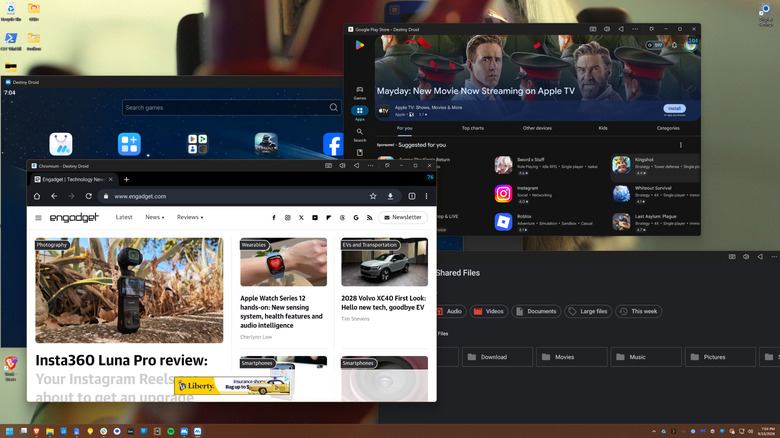
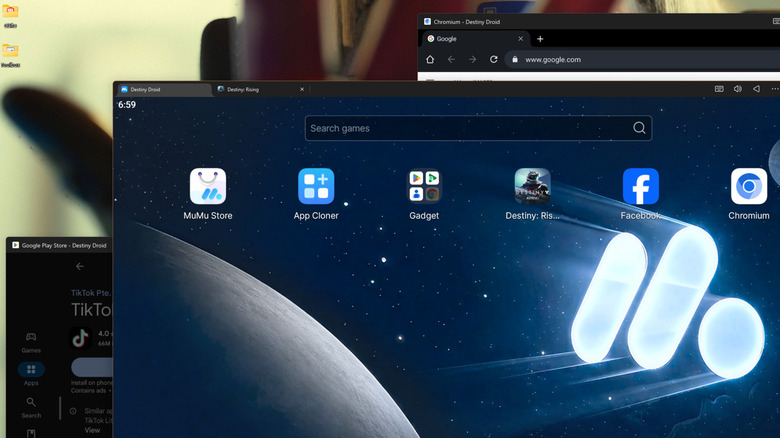
This summer, the popular games studio Bungie ended development on the long-running, live-service game Destiny 2. As an avid player who had chewed through all the content that game had to offer, I still wanted a Destiny fix, so I turned to the next best thing: the mobile game Destiny: Rising, developed by NetEase. But while I could easily play the game on my phone or tablet, gaming on a handheld screen has never appealed to me. So, I installed the Android version of the game on my PC instead, then kicked back and enjoyed the game’s robust mouse and keyboard support, with far better graphics to boot.
But how did I install an Android game on my Windows PC, and are there any reasons to do so beyond gaming? It’s a lot easier to run Android on your PC than you may think, with multiple popular and powerful tools available for that purpose. Pretty much any computer made in the past decade can run an Android emulator, and as long as you’re at least somewhat familiar with Android, you’ll quickly get the hang of it. And while emulating Android on a PC opens up new possibilities for mobile gamers, it’s also useful for content creators, developers and DIY tinkerers. Here’s what you need to know to get started using Android apps on your PC, and why you might want to.
Advertisement
Easy tools for running Android apps on your Windows PC
Max Miller for Engadget
There was a time when Microsoft planned to make Android apps compatible with Windows 11 out of the box, using something called the Windows Subsystem for Android. While a subsystem for Linux ended up shipping, Android app support was dropped in 2024 for reasons beyond the scope of this article. The bottom line is that, if you’re looking to run Android apps on your PC in 2026 and beyond, there are two main paths before you: Android emulators and the Google Play Games app.
Emulators are the most robust solution. Two of the most popular options are BlueStacks and MuMuPlayer, with the latter being the tool I personally use. Bluestacks is a legitimate app, but it’s chock full of ads that it seems to prioritize over all else, and they clutter up nearly every corner of the interface. MuMuPlayer is free, and though it has more ads than it did a year ago, they only appear on a few loading screens. Because it’s developed by NetEase, the Chinese publisher of the popular PC and console title Marvel Rivals and mobile games including Destiny: Rising, MuMuPlayer is meant as a PC portal for NetEase games and is not as reliant on ads. Nevertheless, it is a full-fat Android emulator and recently got an update to Android 15. You simply create virtual phones and then run apps from the Play Store or elsewhere, just as you would on a handset.
If you only want games, you can instead try Google Play Games for PC, which is a project from Google that translates Android games directly to your PC using a lightweight virtual machine. However, it only works with a select band of titles from developers who have opted in. You’ll find plenty of familiar games, such as Genshin Impact, Clash of Clans and even the mobile adaptation of the critically acclaimed RPG Disco Elysium. Others, such as my beloved Destiny: Rising, are conspicuously absent.
It should be noted that Phone Link on Windows 11 will let you cast your Android phone’s apps or screen to your desktop wirelessly, though they’ll be running on the phone itself rather than directly on your PC.
Advertisement
Why emulate Android apps on PC?
Max Miller for Engadget
Gaming is an obvious use case for Android emulation on PC. Even on top-tier gaming tablets, you may find restrictions to graphical fidelity and frame rate. That’s the case with Destiny: Rising, which is capped at 60 frames per second on my Samsung Galaxy Tab S10 Ultra tablet when I crank up the graphics (even though I’m fairly sure it could handle both at once, the game has decided for me that it cannot). With PC emulation through MuMuPlayer, I’m able to get far better graphics using the Nvidia RTX 4070 Ti Super on my PC. I could also install Android emulators for old consoles like the PS3 or GameBoy, but given the legally dubious area those use cases can tip into, I have not done so.
If you’re not a gamer, there are still use cases for on-PC Android emulation. Plenty of Android apps lack a dedicated PC edition or have more features in the mobile app than on PC. You can run social media programs like Instagram or TikTok, messaging apps like Snapchat, or that app your landlord made you download to control your smart thermostat and locks which annoyingly does not have a PC version. Of course, Android developers use emulation to test apps. And low-end computers which cannot run pro-grade creative software may be able to run the slimmed-down Android versions of those programs, at least if their more limited functionality is tolerable.
An Android emulator like MuMuPlayer or BlueStacks can also be a great way to silo certain workflows away from your main compute environment (though local emulation still consumes local system resources). Both tools also allow parallel instances — that is, multiple emulated Android devices running at once — an ability some mobile gamers use to farm in-game resources, social media creators use for multi-account management, and others may use to create separation between work and personal accounts.
We spend hours testing every product or service we review, so you can be sure you’re buying the best. Find out more about how we test.
AOOSTAR MACO 6850H: 30-second review
Although it now has a much longer name, this mini PC was originally called just the Maco, but it spawned a line of products so for the purpose of this review I’ll refer to it as the Maco 6850H.
This NUC packs a proper eight core workstation grade chip into a palm sized box, and backs it with three full speed NVMe slots, dual 2.5 gigabit networking, and a pair of USB4 ports. That is a striking amount of connectivity for a machine this size, and substantially more than many modern designs offer.
Advertisement
The catch is the platform underneath. The Ryzen 7 PRO 6850H dates back to 2022, and while it still holds up well for general desktop work, buyers comparing it against newer Zen 4-based rivals should know exactly what generation they are getting. Memory is also soldered at a fixed 24GB, so there is no room to grow later.
Latest Videos FromTechRadar
But don’t let any of this convince you that this isn’t an excellent small machine. The memory is 6400 MT/s LPDDR5 organised into four 6GB banks for maximum bandwidth, which boosts both processor throughput and GPU performance. This enables it to outperform more modern platforms, like the AMD Ryzen 9 8945HS. And the cherry on top is the connectivity it supports, with both an OcuLink and two USB4 ports.
Advertisement
Overall, it’s easy to look at the MACO 6850H and consider the technology in it as being dated. But the benchmarks don’t lie, and this highly affordable machine punches significantly above its weight. Is it one of the best Mini PCs around? Based purely on value, there is a strong argument to be made that it is.
(Image credit: Mark Pickavance)
AOOSTAR MACO 6850H: Price and availability
How much does it cost? From $459
When is it out? Available now
Where can you get it? You can get it directly from Aoostar or via an online retailer
There are two SKUs listed for the MACO 6850H: the review hardware with 24GB of RAM and 1TB of storage, and another model with no storage.
For whatever reason, the no-storage option isn’t currently available, but if it is released, it might offer an even better deal for those with a spare NVMe drive handy. According to the Aoostar webpage, the model without storage comes with a free Windows 11 Pro key, which could be a significant deal-maker for some.
Sign up to the TechRadar Pro newsletter to get all the top news, opinion, features and guidance your business needs to succeed!
Advertisement
Direct from AOOSTAR, the review hardware costs $459 for those in the USA, and it is shipped from a US warehouse. It’s the same price in Germany, and comes from a warehouse in that region, but oddly, for those in the UK it only ships from China and costs $519, or an extra $60. Why the UK customers aren’t supplied from Germany is a mystery.
However, you can buy it elsewhere; I found it on Amazon.com, where it’s $479, although it isn’t offered with next-day delivery. In the UK, on Amazon.co.uk it’s £395, or the equivalent of $529.
For those looking for a bargain, AliExpress doesn’t have better prices, although they do have the barebones model with 16GB of RAM that sells for only £369.99. Unless you definitely want that option, it’s probably cheaper to get it from the maker’s website.
Looking back at machines I’ve previously reviewed with this processor, the only candidate was the GMKtec NucBox M7. But that was discontinued in favour of the M7 Ultra, which uses the 6859U CPU.
Advertisement
You can buy that machine from GMKtec in the UK for only £ 299.99 with no RAM or storage, or £599.99 with 32GB and 1TB, respectively. Since I also tested that, I can say the DDR5 memory it uses slows the machine down considerably compared to the LPDDR5 in the Aoostar.
For the hardware and specifications it has, the Aoostar looks like a bargain.
(Image credit: Mark Pickavance)
AOOSTAR MACO 6850H: Specs
Swipe to scroll horizontally
AOOSTAR MACO 6850H Specifications
Component
Advertisement
Specification
CPU
AMD Ryzen 7 PRO 6850H, 8 cores, 16 threads, Zen 3+, 3.2GHz base, 4.7GHz boost, 45W TDP, 16MB L3 cache
Graphics
Advertisement
AMD Radeon 680M, RDNA2, 12 compute units, up to 2.2GHz
Memory
24GB LPDDR5 6400MHz, soldered to the board, single channel, not upgradeable
Storage
Advertisement
3 x M.2 2280 PCIe 4.0 x4 slots, up to 24TB combined. Review configuration ships with 1TB
Networking
WiFi 6, Bluetooth 5.2, dual 2.5GbE ports using Intel I226V controllers
Ports
Advertisement
2 x USB4, 1 x OCuLink (no hot swap), 2 x USB 3.2 Gen 2 Type A, 2x USB 2.0, 1 x DisplayPort 1.4, 1 x HDMI 2.1, 3.5mm audio jack
Power
External 120W adapter, 19V at 6.32A
Operating system
Advertisement
Windows 11 Pro
Chassis
Recycled aluminium body with a plastic base panel, fingerprint power button
Dimensions and weight
Advertisement
150 x 132 x 57mm
VESA Mountable
No
Advertisement
AOOSTAR MACO 6850H: Design
A larger NUC
Easy access
Excellent NVMe options
Lacks USB labels
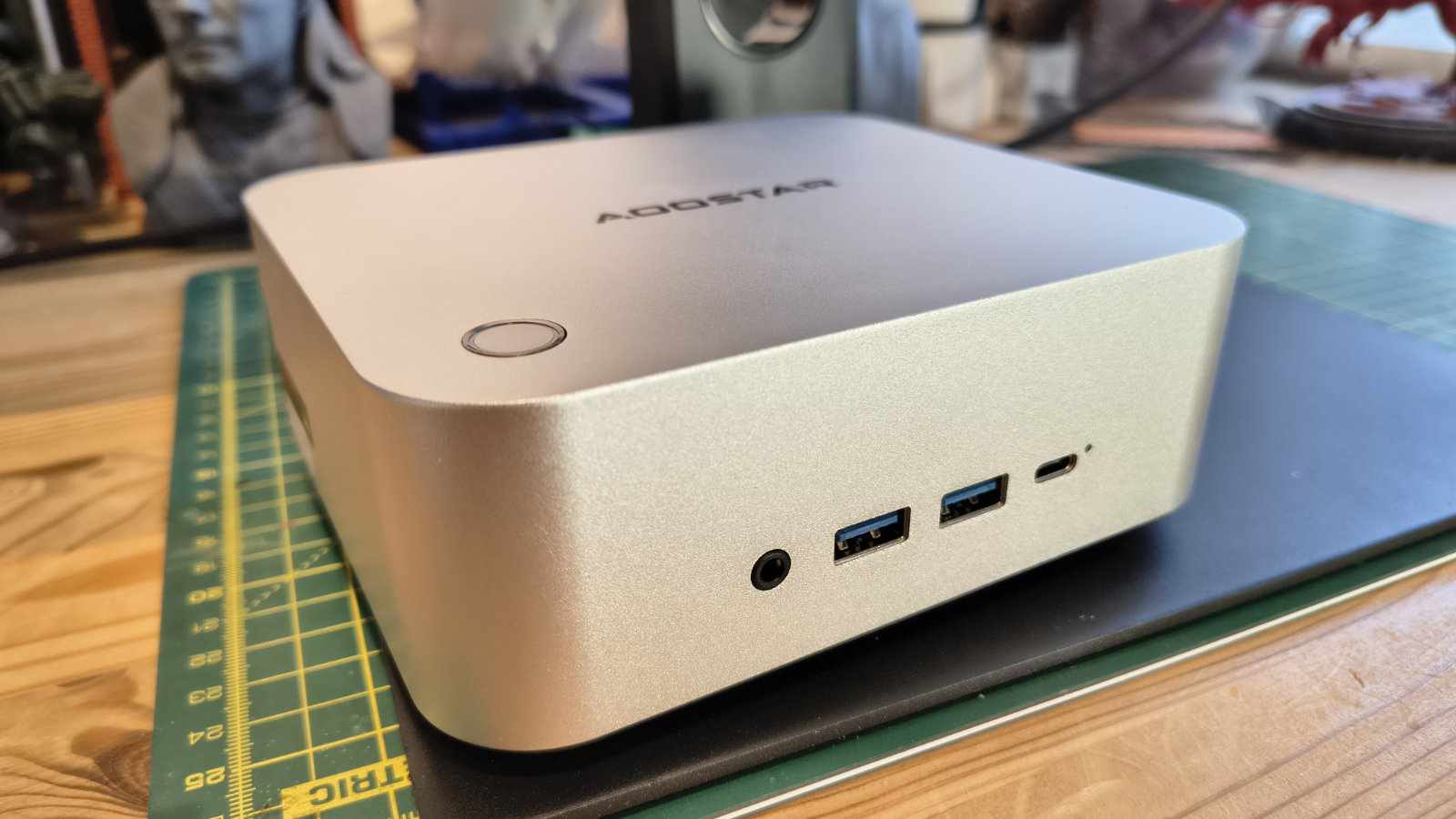
Aoostar has kept the Maco in a genuinely pocketable footprint, built from what the company calls 100% recycled aluminium, with only the base panel made of plastic. That is a sensible way to keep the exterior feeling solid while controlling cost and weight.
A fingerprint reader sits in the power button, letting Windows Hello unlock the machine without a password. It is a feature more commonly seen on business laptops than mini PCs, and it fits the company’s positioning of this being a small workstation rather than a toy.
In the gamut of NUC designs, this one is on the large side, but the 150 x 132 x 57mm enclosure isn’t massive by any standards.
One slight disappointment is that it lacks a VESA plate to mount it on a monitor, which feels odd.
Access to the inside is easy, with just four screws on the base to remove before you have free rein inside. While this system doesn’t have socketed memory, it has four M.2 slots, two of which are used for the supplied drive and the Wi-Fi module. That leaves two unused, and all the 2280-sized slots are Gen4 x 4 specification.
Advertisement
That’s excellent for turning this machine into a high-performance mini server, and the external IO supports that pathway with dual 2.5GbE LAN ports and USB 4.0.
(Image credit: Mark Pickavance)
The port layout has an audio jack, two USB 3.2 Gen 2 ports and a USB4 on the front; the OCuLink port on the left side; and another USB4 on the back, with HDMI, DisplayPort, and the LAN ports.
According to the Aoostar web page, the two USB ports on the back right are USB 3.2 Gen 1 and USB 2.0, but neither is blue, and in my tests both proved to be USB 2.0.
One minor detail I wish was different is that none of the front ports is labelled, and both rear USB ports are merely labelled “USB” rather than anything more helpful.
Advertisement
Some might also miss an SD card slot, but the ports on this NUC do align well with using a docking station that often includes that feature.
AOOSTAR MACO 6850H: Features
AMD Ryzen 7 PRO 6850H
LPDDR5 6400 MT/s
USB 4.0 and OCuLink
The heart of the Maco 6850H is the AMD Ryzen 7 PRO 6850H, a chip that first appeared in business laptops back in 2022 under the Rembrandt codename. It pairs eight Zen 3+ cores with sixteen threads, running from a 3.2GHz base up to a 4.7GHz boost, all inside a 45W thermal envelope. The PRO suffix adds Microsoft Pluton security and remote management features aimed at business buyers, on top of the same silicon found in the consumer Ryzen 7 6800H.
Zen 3+ is a modest refinement of the Zen 3 architecture rather than a clean-sheet redesign, built on a 6 nanometre TSMC process. Anyone expecting Zen 4 or newer should adjust expectations accordingly. That said, eight cores and sixteen threads remain a genuinely useful amount of compute for a small form factor desktop, and the chip still competes well against many newer six-core parts in multi-threaded work.
Graphics duties fall to the Radeon 680M, built on RDNA2 with twelve compute units clocked up to 2.2GHz. When this chip launched, the 680M was widely regarded as the fastest integrated GPU AMD had shipped. It’s since been overtaken by the 780M, 880M and the new 8060S, but it remains capable of light gaming and everyday creative work, particularly when paired with fast memory.
Advertisement
(Image credit: Mark Pickavance)
That memory pairing matters more than you might think. Integrated graphics performance leans heavily on system memory bandwidth, since there is no dedicated video memory to draw on.
Aoostar has fitted 24GB of LPDDR5 running at 6400MHz, which should let the 680M stretch its legs more than it could on slower 4800 MT/s DDR5 and DDR4-based systems. The tradeoff is that this memory is soldered directly to the board, fixed at 24GB with no slots to expand it later.
Storage is where the Maco 6850H distinguishes itself from cheaper rivals. Three M.2 2280 slots are wired for full PCIe 4.0 x4 bandwidth, supporting up to 24TB combined. That is a genuinely generous allowance for a machine this size, and positions the MACO as a plausible small NAS or media server as well as a desktop replacement.
Networking follows the same business-minded theme, with dual 2.5 gigabit Ethernet ports built around Intel I226V controllers, alongside Wi-Fi 6 and Bluetooth 5.2. Two USB4 ports and an OCuLink connector round out the external expansion options, the latter aimed at anyone wanting to attach an external GPU with less signal loss than a USB4 connection would introduce.
Advertisement
I plan to test these scenarios and maybe write a feature based on what it reveals for those wanting discrete graphics performance or a cheap AI platform.
AOOSTAR MACO 6850H: Performance
(Image credit: Mark Pickavance)
Swipe to scroll horizontally
Mini PC
Row 0 – Cell 1
Aoostar Maco 6850H
Advertisement
GMKtec NucBox M7 Pro
CPU
Row 1 – Cell 1
AMD Ryzen 7 PRO 6850H
AMD Ryzen 9 PRO 6950H
Advertisement
Cores/Threads
Row 2 – Cell 1
8C 16T
8C 16T
RAM
Advertisement
Row 3 – Cell 1
16GB DDR4 (2x8GB)
32GB DDR5 (2x16GB)
SSD
Row 4 – Cell 1
1TB Apacer AS2280Q4
Advertisement
1TB
Graphics
Row 5 – Cell 1
Radeon 680M
Radeon 680M
Advertisement
3DMark
WildLife
17098
15703
Advertisement
Row 7 – Cell 0
FireStrike
6792
7036
Row 8 – Cell 0
TimeSpy
Advertisement
2872
2811
Row 9 – Cell 0
S.Nomad
2502
Advertisement
2497
Cine24
Single
84
Advertisement
94
Row 11 – Cell 0
Multi
708
772
Advertisement
Row 12 – Cell 0
Ratio
8.39
8.23
GeekBench 6
Advertisement
Single
1996
2167
Row 14 – Cell 0
Multi
Advertisement
9601
10454
Row 15 – Cell 0
OpenCL
29110
Advertisement
29730
Row 16 – Cell 0
Vulkan
33652
30797
Advertisement
CrystalDisk
Read MB/s
7070
3544
Advertisement
Row 18 – Cell 0
Write MB/s
6680
2145
PCMark 10
Advertisement
Office
7100
7064
WEI
Advertisement
Score
8.2
8.2
Considering the AMD Ryzen 7 PRO 6850H is a four-year-old CPU, it’s looking reasonably agile in this quick comparison with an AMD Ryzen 9 PRO 6950H that the GMKtec NucBox M7 Pro used. Both these chips are from the same generation, and these results show just how similar they are.
Advertisement
It all comes down to the memory on the Maco 6850H, and that 6400 MT/s LPDDR5 gives the older machine significant pause for thought.
If I were to compare it to an Intel platform, it would be the Intel Core i7-11800H, although I’ve never tested a system with that specific CPU. I tested one with the Intel Core i7-13700H, the MinisForum NBP7, and it struggled to beat the Maco 6850H.
Later Intel mobile processors that have Arc Graphics are faster, but they’re also generally more expensive.
One choice by Aoostar that helped the Maco 6850H in these tests was including a decent Gen4 x4 NVMe drive, since reading at more than 7000MB/s and writing at 3500MB/s helps massively with tests like PCMark.
Advertisement
AMD and Intel are both making faster mobile chips, and they are available in SFF systems, but given the price increases we’ve seen this year, the Aoostar Maco 6950H seems like a good choice if you want better-than-entry-level performance while staying within a modest budget.
AOOSTAR MACO 6850H: Final verdict
(Image credit: Mark Pickavance)
Given the turmoil in the PC industry caused by massive leaps in memory and storage prices, the antidote is to take a second look at older technology that delivers enough performance to run Windows 11 and a decent range of demanding applications.
That’s where the Aoostar Maco 6850H provides a good justification for not plunging into the latest technology with both feet. Unless you want to play games or something equally demanding, this machine has plenty of performance to spare.
Advertisement
And, should you need more power for graphics or AI tasks, it is possible to add a discrete video card using OCuLink, without resorting to a desktop system.
When you factor in the performance and the price, this machine looks like a solid choice for a wide range of interactive tasks.
Should you buy a AOOSTAR MACO 6850H?
Swipe to scroll horizontally
Value
Advertisement
You need to spend twice this amount for a bump in performance
4.5 / 5
Design
Simple but effective enclosure, but no VESA mount
Advertisement
4 / 5
Features
Punchy CPU, LPDDR5 memory, USB and OCuLink
4 / 5
Advertisement
Performance
Good performance for older silicon
4 / 5
Overall
Advertisement
Great combination of performance, build quality and price is almost unbeatable value.


























































You must be logged in to post a comment Login