
Politics
ICE puts vulnerable Republicans in a bind weeks before midterms



Battleground Republicans across the country are on defense as ICE operations keep finding their way into local headlines.
A flurry of ICE activity in four rural Kansas towns this week prompted businesses to shutter and public schools to urge families to identify who could pick up children from schools in case their parents were detained. Sen. Roger Marshall (R-Kansas) — a normally staunch MAGA defender who finds himself in a tougher-than-expected election — took to social media to say he was “closely following” the situation, signaled his displeasure that ICE wasn’t working more closely with local law enforcement, and said he had phoned Homeland Security Secretary Markwayne Mullin.
Later, he complained that ICE’s failure to communicate with local law enforcement caused “mass disruptions to local communities and businesses.”
“We must keep our communities safe, but it has to be done in a responsible and secure manner,” he said in a statement Thursday evening.
Mullin took over DHS in March with a mandate to keep immigration enforcement out of the news following a public outcry over the killing of two Americans by immigration agents during enforcement operations in Minneapolis. No subsequent incidents have generated the same type of national attention — but ICE’s recent record-high arrest rate is still landing hard in some communities.
“It does cause quite a disruption in the community,” said Scott Fischer, the GOP chair in Ford County, one of the counties where ICE activity was reported this week. “We don’t want our community disrupted.”
In Florida, local officials are warning about the impact of ICE raids on businesses, and a Republican incumbent is on air with a Spanish-language ad denouncing Trump’s crackdown. In Michigan, Democrats are calling for an investigation after a man crashed his car and died while fleeing ICE. In Maine, the fallout from a fatal ICE shooting of a 25-year-old from Colombia continues to loom over GOP Sen. Susan Collins’ reelection race. In Texas, last week’s nonfatal shooting of a Venezuelan in Austin is just the latest of several highly publicized ICE operations that have fueled wall-to-wall media coverage.
“There’s already been some blowback associated with what people feel is a little bit of a heavy hand when it comes to immigration enforcement,” said Sen. John Cornyn (R-Texas). “Obviously, border security is critical, but I think the administration maybe has miscalculated a little bit. … It is going to be one of the factors people are weighing in the election.”
The Department of Homeland Security said in a statement that the department “is focused on delivering the most HISTORIC mass deportation campaign in American history—exactly as President Trump promised.”“The men and women of ICE are enforcing the laws passed by Congress. We do not pick and choose which laws to enforce or where to enforce them,” the statement continued. “We will continue to enforce our nation’s laws and remove illegal aliens from American communities. Under President Trump and Secretary Mullin, if you break the law, you will face the consequences. Illegal aliens are not welcome in the U.S.”
The Trump administration’s deportation spree is not widely popular. A new POLITICO Poll finds that a plurality of U.S. adults, 49%, think the mass deportations campaign is “too aggressive,” while 26% find it “about right” and just 14% think it is “not aggressive enough.” And in an election cycle where cost of living is atop voters’ list of concerns, ICE enforcement has become an economic issue too: Immigration raids are affecting workers, from construction sites in Texas to meatpacking plants in Kansas, frustrating business leaders.
In Kansas, where Democrats aim to win a U.S. Senate seat for the first time in nearly a century, ICE’s activity this week has provided another political opening.
“This is not how Washington should be treating Kansans,” Adam Hamilton, the Democratic nominee for Senate, said on social media Wednesday.
“It impacts these operations economically,” said Matt Teagarden, CEO of the Kansas Livestock Association, whose organization released a joint statement Thursday noting the “massive chilling effect” of ICE enforcement on “the legal, documented, skilled workers that put beef on the table and keep the cattle supply chain moving.”
“We’re all for getting the bad actors out of our communities,” Teagarden said. “The method by which they do that has an impact. We’ve seen it.”
Mullin said in a statement Friday that “ICE is not conducting worksite operations in Kansas” but “operations targeting heinous criminals including murderers, rapists, and drug traffickers and illegal aliens with final orders of removal.”
Some of Marshall’s allies downplayed the possibility that the immigration activity could have political ramifications.
“Senator Marshall has nothing to do with when ICE decides to do a surge, and I think most people understand that,” said Danedri Herbert, chair of the Kansas Republican Party.
But others winced at the way ICE conducted itself, even those who say enforcement is necessary to remove criminals.
“I’d sure ask that we go back to some of the concepts of working with local law enforcement who actually know the area better, and I think that might have improved things tremendously,” said Kansas State Rep. Jim Minnix, a Republican who represents Scott County, where some of the ICE activity occurred.
Texas has become the epicenter of ICE activity: One in five ICE arrests nationwide this year has occurred in the Lone Star State. Sunday’s Austin shooting came on the heels of a fatal ICE shooting in July. In South Texas, local news is consumed with a story of two teenagers who were stopped by ICE agents en route to a military recruiter’s office, one of whom was beaten on the side of the road. After17-year-old Luis Ochoa spoke out to say he was pepper sprayed and detained, his mother was quickly deported.
Bobby Pulido, the Democrat running in Texas’ 15th District, said his campaign has received more than 80 requests from South Texans asking for immigration help. The campaign passes those requests to pro bono attorneys, he said.
“Every single day we’re having people reach out. And it’s very frustrating, because we can’t help everybody,” Pulido said. “I’m not a congressman.”
His opponent, GOP Rep. Monica De La Cruz, has attempted to separate herself from the administration’s immigration crackdown: She hit the airwaves with an ad this month featuring a woman touting De La Cruz’s work getting her husband, who had legal status, released from immigration custody.
“I have been very direct with the White House, with leadership, that enforcement policy should be focused on the criminals and on the cartels that are terrorizing our communities,” De La Cruz said during an appearance on a conservative radio show Thursday. “They should not be on hardworking immigrants that are navigating the immigration process.”
Maine Democrat Troy Jackson has made Duran Guerrero’s death a key focus of his Senate campaign, hosting a town hall in the city where he was killed earlier this month and frequently criticizing Collins for voting to fund the Homeland Security Department. In response, Collins has emphasized she supports guardrails for ICE officers like body cameras and deescalation training.
In South Florida, public pressure is growing this week against policing partnerships with ICE as businesses report a dropoff in sales. GOP Rep. Maria Elvira Salazar released an ad — in both English and Spanish — that criticized the Trump administration for going “too far” on immigration. In the ad, she claims that half of the people detained in July “had no criminal record” and says Hispanics who backed Trump in 2024 feel “betrayed.”
Liliam López, president of the South Florida Hispanic Chamber of Commerce and the U.S. Hispanic Women’s Chamber of Commerce, said that her communities “are really, really hurting” from the ICE crackdown.
“All elected officials of the Republican Party that think that their constituents are being affected in an adverse manner should speak up, like Congresswoman Salazar did,” she said. “You can’t do what this administration is doing because it doesn’t work. It just doesn’t work.”
The concerns from vulnerable Republicans come as Mullin seeks to balance pressure from immigration hardliners with public backlash. When he took over the department in the spring, the administration moved to make its arrests of unauthorized immigrants more discreet, but the dip in visible deportation operations — coupled with messaging missteps wherein Mullin seemed to indicate an openness to some legal pathways for would-be immigrants — prompted considerable pushback from some of the loudest anti-immigration voices in Trump’s coalition.
DHS then recalibrated its messaging to highlight increased deportations and project continued operational toughness, in an effort to shore up support from that section of the president’s base.
The reported lack of body camera footage in the Austin shooting in particular has frustrated even some of Mullin’s defenders, given consistent pledges from DHS that the technology would be deployed and operational by the end of September.
“If the public report is accurate, that’s unacceptable,” Sen. Thom Tillis (R-N.C.) said. “Markwayne needs to pull these folks in and say, every piece of equipment you have, whether it’s a camera, a handgun or a mace canister, you show up to work with it every day or you’re failing to do your job.”
Voters’ concern seems to be building again with the election looming.
“Obviously for Hispanics, but I think just all voters in general right now, their main issue is overreach. They feel that there’s been abuse of power from everywhere,” said Sofia Kinzinger, a former DHS deputy assistant secretary during the president’s first term, and the wife of Trump-critical former Rep. Adam Kinzinger (R-Ill.). “Either you speak firmly against it, or you try to justify, which right now is the opposite of what people need.”
Jessica Piper contributed reporting.


However big you think the universe is, it’s almost certainly bigger.
Our galaxy, the Milky Way, is 100,000 light-years across (one light-year is about six trillion miles).
And according to some estimates, there could be one to two billion galaxies in the universe. So perhaps it’s no wonder scientists have long wondered whether we can really be alone in that endlessness.
In fact, our intergalactic solitude seems so unlikely to some that a puzzle – the Fermi paradox – centres on its improbability. Given how statistically likely other life seems to be, it asks: where are all the aliens?
Of course, we’ve only been looking for other extraterrestrial beings since about the ’60s, and the very vastness that makes alien life so probable might also make our likelihood of meeting them next to impossible.
But a paper published in Nature Astronomy shows that most scientists agree they’re probably out there, somewhere.
What did the study show?
This research involved four surveys, all sent out to scientists like astrobiologists (those who study life outside our planet), biologists, and physicists.
These were all about “the likely existence of basic, complex, and intelligent extraterrestrial life”. That means they wanted to know whether experts thought anything from bacteria to plants or even conscious beings were probable.
When the results came back, 86.6% of astrobiologists said they “agree” or “strongly agree” that this was likely.
While 12% were more neutral on the topic, only 2% outright disagreed.
Among non-astrobiologists, meanwhile, the response was even more strongly positive. A whopping 88.4% reckoned there probably is life out there somewhere.
What about aliens, though?
“Extraterrestrial life” does not mean ET, or any other thinking, communicating being you might imagine when you hear the word “alien”. It could be as simple as a single-celled amoeba.
So it’s a good thing researchers also asked scientists how probable they thought “complex” and “intelligent” forms of life were, too.
67.4% of astrobiologists agreed this is likely, compared to 58.2% of other scientists.
Only 10.2% of astrobiologists outright disagreed that this was plausible.
These results, the study reads, “offer a snapshot of community opinion and reveal a significant degree of consensus that extraterrestrial life is likely to exist”.

In 1999, she introduced herself with clarity and unimpeachable purpose. “There is nothing worse,” she wrote, “than going out for Christmas lunch and finding someone’s done something interesting.”
Please, she beseeched us, leave the Armagnac lobster and experimental sides for another day. We cannot beat turkey, sprouts, and stuffing – nor should we presume to try.
Since then, I’ve noticed a trend in her recipes. She respects, but is not beholden to, culinary tradition (there’s a tried-and-true feel to her “old-fashioned” chocolate cake, except for the fact that she makes it in a blender).
Her common-sense practicality (don’t “bother” peeling carrots for her lasagne ragu; you “don’t need soap” when rinsing out a pan between sauces) means that when she tells you to go the extra mile, you listen.
In that same lasagne recipe, for instance, she asks you to infuse the milk for your béchamel, which really does make a difference.
There is a strictness to Nigella’s decadence and a decadence to her strictness. No, you cannot call them roast potatoes unless they are “sweet and soft inside and a golden-brown carapace of crunch without”. But isn’t there something atavistically gleeful about giving “the potatoes a proper bashing so that their edges fuzz and blur a little”?
Combine that with a frankly childish hedonism (she has a crumble recipe for two, because sometimes she’d share a whole tray for dinner), and it’s no wonder her recipes are so often delicious. What if the kid in the proverbial candy shop knew how to flambé a crêpe, and also quite liked Gentleman’s Relish?
6 of the best Nigella recipes I’ve tried
Is it naff to call this “a classic for a reason”? It’s certainly the best I’ve tried.
Yes, it takes a long time to make. But every possible shortcut (blending the veg, skipping handmade pasta, cooking the mince and onions together) has been identified and included.
Everything that remains is absolutely crucial for an eye-wateringly delicious depth of flavour. And, if it lasts that long, this lasagne tastes even better the next day.

Here’s my hot take: most cake is bad. The invention is good, but its failed interpretations (dry sponge; sickly, grainy buttercream) far outnumber more successful specimens.
Of course, Nigella would never do that to us. This luxurious cake – which, I’ll remind you, is made in a blender – is fudgy, moist perfection.

Man cannot, it transpires, live off cake and hours-long lasagne alone. For a speedy, healthy-ish midweek meal that won’t offend your sense of dignity, this zippy pasta comes together in 15 minutes.
Rocket, chilli, and lemon render tuna’s solemn meatiness fresher and more fun. The texture’s great too – neither too slick nor too dry.

It’s a recipe Nigella herself said is “embarrassingly easy to make and unembarrassingly easy to eat,” which ought to be obvious from the name alone.
All you’ll need is a blender, a big bowl, and a cake tin for this dangerously simple fridge cake. Somehow, despite its masses of sugar and chocolate, the recipe’s tangy sour cream, salty Digestives, and nutty topping make it surprisingly well-balanced.

It’s basically a normal tiramisu, but Nigella puts Bailey’s in the coffee part. Need I say more?

If I’m being honest, I never really crave a balanced, proper crumble. I actually just want a pan of thick crumble topping, with a teaspoon-high layer of fruit somewhere deep below and a lake of custard on top.
This, of course, poses challenges. Layer the topping on too thick, and it risks staying soggy and gluey in the middle while the top grows dry and dusty.
Nigella’s solution – mixing baking powder into the flour – might have originally been meant to make a regularly proportioned dessert lighter and less stodgy. As it happens, it works for my less respectable purposes, too.

To be fair, I didn’t just rely on Nigella’s advice here – tips from Mary Berry and Gordon Ramsay have helped me to achieve my own go-to carrot cake recipe. But her version provided some of the more structurally important elements of my dessert.
For instance, she recommended adding a teaspoon of baking powder to plain flour rather than using the self-raising kind. This kind of control is needed in such a damp recipe.
Nigella deems ginger a non-negotiable here, and so do I. She also taught me to add some butter to the cream cheese icing, which gives it some extra hold at room temperature.
This is the cake my partner always requests for their birthday, and they like two layers of icing. Still, if I were making it for myself, I’d follow the GBBO host’s instructions there too: apply it “only on top, not running through the middle as well”.


Gordon Brown has a very unique way of communicating his thoughts with the new Labour chancellor, according to a new interview.
Brown – Tony Blair’s chancellor and later the prime minister who steered the country through the financial crisis of 2008 – is known for having strong opinions on the way the country should be governed.
And, Speaking to The Sunday Times, the new chancellor John Healey did indeed reveal that the former PM had been in touch.
The cabinet minister said: “I’ve talked to him.
“I’ve had his block cap emails in the middle of the night. But the man is driven and an inspiration to those that he works with.”
Brown was appointed as Special Reviewer on Global Finance and Cooperation under Keir Starmer and has been kept on under Andy Burnham, meaning he continues to be an influential voice for government.
Healey also has a prior working relationship with Brown, having spent five years working as a minister in his Treasury.
He told The Sunday Times he sees Brown as an “inspiration, a mentor”.
He added: “He captured for me the best of a Labour chancellor.”
Healey welcomed the idea of balancing an appreciation that “private investment creates jobs” with a belief the government can help in “partnership” with business.
His praise comes after Opinium polling revealed last week that 56% of Labour supporters think the current government is doing about as well (26%) or better (30%) at running the country than New Labour did.
However, 31% say it is doing much worse.
Labour is heading into its first annual party conference under Burnham’s leadership after Starmer was ousted from office in July.
The new prime minister has secured a real boost in the polls for the party while support for Reform UK has dipped.
However, More in Common think tank believes Labour would still fall short of an absolute majority in a general election.
Listen to Commons People, the podcast that makes politics easy. Every week, Kevin Schofield and Kate Nicholson unpack the week’s biggest stories to keep you informed. Join us for straightforward analysis of what’s going on at Westminster.
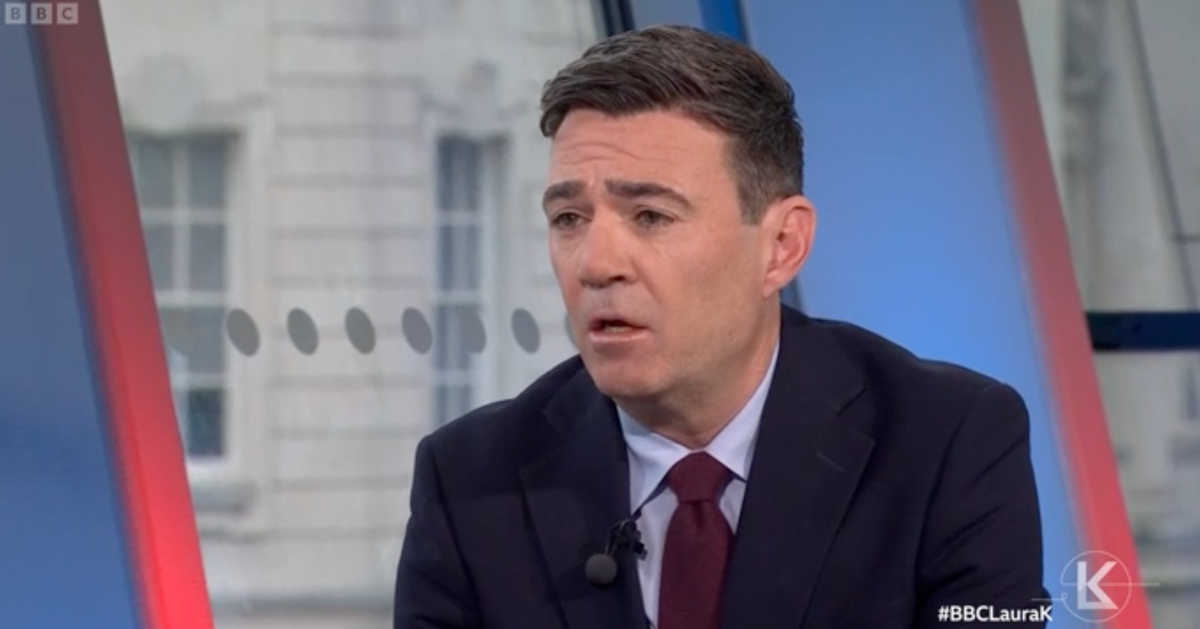
Andy Burnham has promised to set up free social care in England if Labour wins the next general election.
However, the prime minister said it cannot be developed without consensus, and so he would put the plan to the public at the next general election.
Burnham said that meant he would, for now, be sticking to Keir Starmer’s manifesto which secured a landslide victory for Labour in July 2024.
He said: “We stick to the manifesto because I have to keep people’s trust and there are commitments in this manifesto that would make it hard [to set up free social care].”
Burnham was alluding to Starmer’s promise not to hike the main rates of VAT, income tax or National Insurance contributions for employees.
The prime minister said the system would be free at the point of use for everyone with “precise explanation as to how it is going to be funded”.
He added that while some might see this vow as making a “rod for his own back”, he had no intention of doing “politics as usual”.
“Why is the country in the position that it’s in? Because politics have let people down,” Burnham said.
He also claimed the annual cost is “not as high” as some claims which put it at £18 billion a year though the details are yet to be hashed out.
He said: “The challenge in public finances is real so it has to be done carefully to avoid putting pressure on the public purse.”
When the BBC’s Laura Kuenssberg suggested his major pledges so far had not been fully funded, Burnham said his proposals stop public money being spent further down the line.
“If you support people with bus fares, you support people into jobs and training,” he said.
“The policies are carefully thought through because they are policies which are quite productive because of the effect they have. They then reduce pressure on the wider public purse.”
The next general election is not scheduled until 2029, as Labour won a landslide majority in July 2024.
Burnham has also ruled out sending the public to the ballot box following the party’s revival in the opinion polls.
He said on Friday that he was “not particularly” tempted to call an early election, saying he would “knock that [idea] dead”.
He told ITV Calendar: “You know, people want me, new in office, to be getting on with the job of delivering on the things that we’ve discussed, rather than putting self-serving politics before that, which was what I would be doing if I call an election. I’m not going to do that.”
Listen to Commons People, the podcast that makes politics easy. Every week, Kevin Schofield and Kate Nicholson unpack the week’s biggest stories to keep you informed. Join us for straightforward analysis of what’s going on at Westminster.

Sex during the menopause can be a time of rediscovery for some, as changes like vaginal dryness and decreased sensitivity begin.
But, as the NHS says, the idea that your sex life dies out after your hormones shift is a “myth”.
Sexologist, relationship therapist, and author at Passionerad, Sofie Roos, told us that the women she sees in their 50s and beyond bring a wide range of topics to her door.
Here are just some of the concerns she regularly hears from this group, as well as what to do if you’re dealing with them:
What do women over 50 bring up most often in sex therapy?
1) Changes in desire
Lower libido is common among menopausal and postmenopausal women, though hormone replacement therapy (HRT) can sometimes help.
“It’s so common to experience lower sexual desire as you get older… due to hormonal changes and the menopause, but also because you’re experiencing stress, lack of sleep, relationship problems, or are on medications,” Roos told us.
Often, she added, it’s down to a combination of multiple factors. And, the sexologist said, it’s “common for this group to be worried about [whether] their lust [level] is normal, or if there’s something wrong with them”.
2) Pain during penetrative sex
Discomfort and pain during penetrative sex is officially called dyspareunia, and it’s common among women aged 50 and over.
“The bodily changes that come with the menopause often makes the vagina dryer and more sensitive, a combination that makes it more difficult to have penetrative sex in a pleasurable way,” Roos stated.
The pain can lead to a vicious cycle, she explained, as it might make you unable to relax, which means you tense up, and may then avoid penetration due to the discomfort.
3) Body changes and insecurities
“An ageing body often means a changed body,” the sexologist said, noting it can alter your weight, body shape and skin, which can all affect body image.
This, in turn, can make it hard for some to stay present during sex, as they’re consumed by thoughts of their own appearance.
“Sometimes, the issue is less about the sex itself, but rather about [a woman’s] relationship to [their] own body,” said Roos.
4) Difficulty reaching orgasm
About 20% of menopausal women reported less frequent and/or intense orgasms in a 2024 paper. Roos describes this as “a very common issue” that women over 50 come to her with.
She added: “What used to make them climax doesn’t work any longer; they orgasm less often, it takes longer time to get there, and the orgasms don’t feel as pleasurable.”
5) Mismatched libidos
Your partner’s desire might not wane or rise at the same time as yours, Roos pointed out.
While this discrepancy can happen “at all ages, it can [be] extra obvious for women when getting older, especially if they experience major changes in their body while their partner doesn’t”.
This, she added, is very common in heterosexual relationships, “as the man doesn’t go through menopause and often starts experiencing sexual struggles a bit later in life”.
On the flip side, some women experience more lust as they age, right as their partner might begin facing erectile dysfunction or other sexual challenges.
6) Less romance and intimacy in long-term relationships
For some women, “sex therapy is less about orgasms or penetration, but more about finding [their way] back to the emotional closeness and everyday intimacy” they once had with their partner, said the expert.
She suggested that after many years together, some of the women she supports want advice on how to find their way back to feeling like a romantic couple, rather than just friends or roommates.
7) Concerns about getting back on the dating market
Though lots of women divorce in their 40s, a growing number split in their 50s, Roos shared. Re-entering the dating market after what may be many years out of it “makes questions about sex, new relationships and dating relevant again”.
8) A higher sex drive
Some women in menopause or perimenopause report a “sex surge”, or a sudden leap in physical desire, during this life stage.
Roos suggested many of them “have the idea that their sex lust should decline when hitting 50, which makes some middle-aged women with a high sex drive worried [that] there’s something wrong with them”.
“But I really want to highlight that there’s no right [or] wrong when it comes to sexual desire after 50,” she added.
What should I do if I’m facing these issues?
The sexologist offered some general guidelines and advice for women over 50:
- There’s nothing wrong with you for facing changes: “The first step is always to make peace with the fact that changes in sexuality are normal and natural, as well as nothing that isn’t solvable.”
- Always take pain during sex seriously: “Sex should never hurt, so if you experience new or ongoing pain, it’s important to always seek professional help… Sometimes, it can be as easy as starting to use a good lube and vaginal moisturisers, or to explore other kinds of intimacy, while medical treatments are relevant in other cases.”
- Let go of the idea that sex always has to mean penetration: “If it doesn’t work for you, then invest more time and energy into oral and [digital] sex, kisses, roleplaying, the use of sex toys or anything else that you find thrilling.”
- Spend more time on foreplay: As we age, “it takes longer for the body to get ready for sex,” so building up desire slowly can be helpful.
- Give sex toys a go, especially if you have trouble reaching orgasm: “An air pulse vibrator is a lovely start,” Roos said.
- Talk openly about your lust: “Many people think that lust just pops up out of nowhere,” said the expert, yet most people have responsive desire, which means “you get in the mood after touch and closeness is initiated”. Therefore understanding your lust better will help you to have more joyful sex.
- Try to avoid criticism: Have “an open and honest chat with your partner about what you miss and are longing for, rather than focusing on what you or your partner is doing ‘wrong’,” said the expert.
- Take care of your overall health: “It really makes a difference to eat a balanced diet, do some cardio three to four times a week, drink less, give up smoking, and invest in better sleep, stress control, and your relationships.”
- Seek help if needed: You don’t have to accept pain, vaginal dryness, or other sexual issues just because you’ve passed 50, so don’t be put off from seeking help from a professional.
The sexologist ended that sexual health isn’t about performing, but is more about feeling “safe, free and comfortable”.


Illustration by Tracy Worrall
4 min read
Lessons in political science. This week: options
Your starter for 10: what links by-elections over the last 100 or so years in Stockport, South Dorset, Walsall North, City of London & Westminster South, Lambeth Central, Croydon North West, Chesterfield, Newbury, Haltemprice & Howden, and Clacton?
The answer is they have, in date order, held the record for the most candidates standing in a by-election. Stockport in 1920 was a rare example of a by-election where both seats in a multi-member constituency were up for grabs, something that would never happen again before they were abolished in 1948. A full seven candidates stood, setting what was then a record. It took more than 40 years before that was achieved in a single-member constituency, in South Dorset in 1962.
The record stood until Walsall North in 1976 (nine candidates); we then had City of London and Westminster South in 1977 (10), Lambeth Central in 1978 (11), Croydon North West in 1981 (12), Chesterfield in 1984 (17), and Newbury in 1993 (19). We jumped to 26 candidates in Haltemprice & Howden in 2008 and then to the 34 in Clacton.
The general rise in candidacies is well known, from an average of 2.2 per constituency at the 1955 general election to a record 6.9 in 2024. But the rise is even more obvious at by-elections, from 2.7 candidates on average during the 1955 parliament up to 11 between 2019 and 2024. The extra publicity makes by-elections particularly attractive for fringe candidates, both the genuine and those from the Standing at the Back Dressed Stupidly and Looking Stupid Party as seen in Dunny-on-the-Wold.
The consequences are still to be understood. A new piece of research, just out in Party Politics, examines the strategic options the rise in candidates gives voters: the more candidates there are, the more options voters have, although not all candidates matter equally and not all parties gain equally.
Estimates of the amount of tactical voting are often misleading, because most voters don’t have the chance to vote strategically. Imagine you support Labour, who are in second place in your constituency, and your least preferred option, the Conservatives, are in first place; the Lib Dems, who would be your second preference, are in third place. If so, you don’t have a strategic option available.
What this research did was to try to look at the number of tactical options open to voters – and then work out how many of these options were used. To measure whether an individual has strategic choices, you need to know both how they rate the parties and how likely they perceived those parties were to win in their constituency. (Some of these perceptions will be wrong but it only matters whether the voter thinks they have a strategic option.)
Drawing on data from the last four general elections, the research found that 28 per cent of voters had the chance to vote strategically, peaking in 2024 at 36 per cent. So, even with all those candidates, most people still did not have the chance to vote tactically. But of those who had a strategic option, more than a third (39 per cent) cent took it – a figure that rose to more than half (51 per cent) in 2019.
By definition, as the article notes, strategic options tend to be one of the larger parties – “to be a strategic option, a candidate must be viable or at least more viable than the first-choice party”. Hence what matters is not the number of candidates per se but the number of places where their candidacies look plausible; so what has really changed things has been the rise in candidacies by the Greens and Reform UK.
To date, the main beneficiaries of this have been the more established parties. Over those four elections, Labour gained the most (some 55 per cent of all strategic voters), followed by the Tories (23 per cent), and smaller parties lost out; nearly half of all strategic voters in this analysis actually preferred the Greens. But saying that this happened in the last four elections – in which Labour was not in government – is not the same as saying it will continue.
Further reading: E Fieldhouse and J Fisher, From strategic voters to strategic options: Recasting strategic voting for multiparty simple plurality elections, Party Politics (2026)
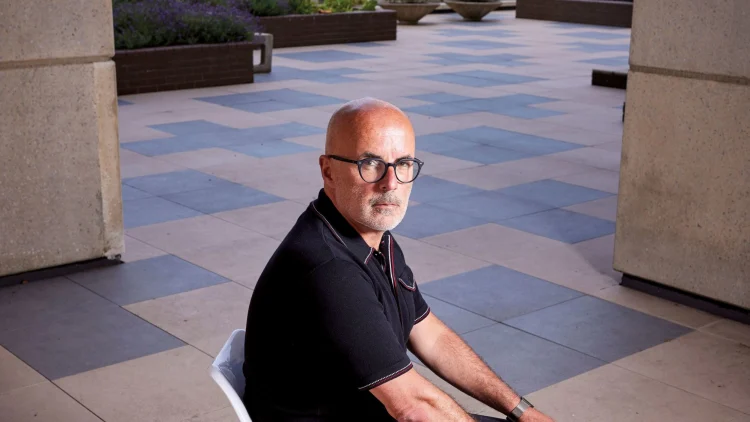

(© David Levene/Guardian/eyevine)

13 min read
Reformed Blairite, longtime director of pressure group Compass and co-founder of new Labour group Mainstream Neal Lawson talks to Sienna Rodgers about his role in Andy Burnham’s rise and the political journey that brought him to this point
Neal Lawson was working for Gordon Brown when he first met Andy Burnham, then a 20-something Blairite advising Tessa Jowell. It was the 90s and they were fellow members of Demon Eyes, the amateur football team set up by young Labour advisers and named after the famous Tory poster portraying a devilish Tony Blair.
The squad included future Cabinet ministers Ed Balls and David Miliband, as well as journalists and backroom staff well-known in political circles – Tim Allan, Dan Corry, Liam Halligan, Phil Collins, David Goodhart and James Purnell, today Burnham’s chief of staff.
Though Lawson and Burnham got on well, they were not especially close; it was from a distance that Lawson watched the subsequent adventures of his ex-teammate with interest, through his campaigning on Hillsborough to leaving Westminster for the Manchester mayoralty. The pair only recently reunited.
“At his last mayoral election, we started chatting about ideas for his manifesto,” Lawson recalls. “He called and we talked through some policy ideas, and it started dawning on me… ‘He’s the standout person. It’s inevitable that Starmer fails, and it’s probably inevitable that the Labour Party will turn to Andy Burnham.’ And I thought, ‘Let’s try and help him get there.’”
He helped Burnham, he says, “with platform, polling, policy, organisation”. In May 2025, the mayor spoke at a big Compass conference, alongside Miatta Fahnbulleh and Louise Haigh (both now Cabinet ministers).
The context is that Lawson had decided back in the run-up to the 2020 leadership election that Keir Starmer was not his man. Soft-left figures like the director of Compass were being collected as useful allies when he was called in by Steve Reed and Morgan McSweeney to meet their candidate. But Lawson was not impressed. “This man is completely uninterested in ideas,” he concluded. “He can’t be the leader.”
While Starmer had to do without Lawson’s vote (he spent two weeks on the Clive Lewis campaign and cast his ballot for nobody), he did, of course, nab Labour’s top job. It led to an era that deeply frustrated Lawson, who felt he had been duped by McSweeney.
“He sat in that chair an awful lot,” says Lawson, pointing to my seat in his London flat-turned-office. The party organiser who masterfully engineered Starmer’s rise had spent a couple of years courting Lawson, drawing out his political ideas over the dining table.
“It made sense to me that he said his project was Corbynism without Corbyn – let’s get rid of the antisemitism, let’s professionalise it, but the underlying facts of the 2008 crash, austerity, the composition of the electorate means that we’ve got to do something like Corbynism.
“Little did I know he was just an undercover, like the cops who join Greenpeace or CND. He was there to understand how the left thinks, in order to replicate it in a way that he could win an election.”
So, he does not believe there was any genuine intellectual curiosity there? “No, it was a complete and utter – ironically – entryist job. It was the ‘Morgan tendency’ – to infiltrate a group of people, understand how they operate and bend it to your will,” Lawson replies. “As soon as you’ve won it, you kick the ladder away, shut the door and start pouring boiling oil over the people who’ve just voted for you.”
Does he think Starmer was in on the plan, or merely a passenger? “I think he was just thinking about Keir and what was good for Keir, and this was good for Keir.”
Lawson today describes himself in no less scathing terms than a Corbynite on social media might use against him: “Neal Lawson, the most naive person in left-wing politics.”
With Burnham, a leader he did back, now in No 10, for some on his wing of the party the question arises: has the most naive person in left-wing politics been duped again?
Lawson, 63, comes from what he calls a “comfortable working-class” family: his mum worked in a shoe shop; his dad was a printer in Fleet Street; they owned their own home in south-east London, and he was the first child in his class to go on a foreign holiday.
His father was also father of the chapel, a powerful member of printing union Sogat. Lawson proudly notes that his dad negotiated a four-day week before anyone else had it, and remembers fondly his support for the miners, with Sogat sending money, resources and food.
“Our phones were definitely tapped,” Lawson says.
He struggled academically – “I’m pretty sure I’ve got dyslexia” – so was sent to a technical school despite his love of ideas and language. He left with “virtually no qualifications” and found himself working in a book-pulping factory, where he could pick out books destined for recycling from a conveyor belt.
At 18, he returned to education, starting with A-Levels at a college, followed by Trent Polytechnic. It had taken some convincing. “I was a class-warrior kid: ‘I’m not going to university – they all wear duffle coats, and they’re all Tories.’” His parents, who left school at 15, sent for a neighbour who’d been to university to talk to him about why he might like it.
There, Lawson encountered an outpost of Frankfurt School lecturers who introduced him to Herbert Marcuse, Max Horkheimer, Antonio Gramsci and Zygmunt Bauman (who became his “intellectual guru”). His Marxist education was compounded by his surroundings: “I was in Nottingham during the miners’ strike. If you wanted a lesson in hard-class politics and the brutality of the British state, that was it.” And when he was not on those picket lines, he was at home, on those in Wapping.
Fittingly, his first job was as a regional political organiser for a union – the Transport and General (T&G, today’s Unite) in Bristol. But Militant’s role in left politics meant, while finding Tony Benn himself “mesmerising”, Lawson ended up organising against the Bennites.
“If you were a young socialist, you were grabbed by Militant,” he explains. Recounting his very brief flirtation with the Trotskyist group, he recalls being invited to a Marxism weekend conference: “I’m thinking, fucking hell, this is the answer to everything!” Yet he quickly decided he was against Militant’s “lying cheating entryism – I don’t like that in any form”.
His job at T&G was to ensure “the right candidates” were selected for the 1992 election. One of the MPs sponsored by the union was Gordon Brown, whom Lawson was then invited to work for during the campaign and full-time once he became shadow chancellor.
“I love Gordon dearly, and we still talk,” Lawson says, but goes on: “There is a big cultural difference between the way Gordon does politics and the way I do politics. Gordon is brilliantly tactical, focused laser beam… I’m much more, ‘What’s the big picture here? What’s the big vision of where we’re trying to go?’”
By then, Lawson had a family and needed money. Looking to spread his wings, he settled on lobbying. “I didn’t even know what public affairs or lobbying was, but it seemed to be the thing that people did.” He came across the outfit of Tim Bell – best-known as Margaret Thatcher’s spin doctor, and later a Tory peer – and it was, bizarrely, here that Lawson went next.
“Andy has taken a particular path since Makerfield, with people who were anti-him not that long ago, who are now supposedly very pro-him”
“I’m in Mayfair, having coffee with someone, and there’s literally a butler who walks in with white gloves and pictures of Mrs Thatcher on the walls. I’m just thinking, again naively but in a curious way, ‘This is fantastic.’ I don’t mean ‘I aspire to this’. This is like, ‘I didn’t know this world existed’,” Lawson says.
“I’m a working-class boy from south London who is then being paid quite amazing amounts of money, and your feet leave the ground. All of a sudden, you’re dining in very plush restaurants, talking to all of these different people, and you’re wearing cufflinks.”
His chain-smoking boss would “preach a politics of Thatcherism and practise a politics of socialism”: “He took care of everyone. He was lovely to anyone. I did some terrible things to him.” Lawson refuses to say which things.
This path led him to ‘lobbygate’. Alongside Ben Lucas and Jonathan Mendelsohn, Lawson had left Bell to set up his own lobbying firm, LLM Communications, but quickly found himself embroiled in scandal when an undercover journalist caught them making inadvisable promises of government access to clients.
While he used his knowledge to advise clients, Lawson says, “I never used my connections, so I was a pretty awful – in that respect – lobbyist. I just thought it was too awkward and difficult.”
The journalist posing as a client was repeatedly asking for a meeting, he claims, and ultimately he remembers “getting so worn down, and going, ‘I can probably get you a fucking meeting’. And that’s the story. That’s my fault and I was naïve”. It was exposed by the Observer in an “embarrassing” and “awful” episode.
The company survived and eventually thrived, but Lawson describes lobbygate as an “eye-opener”: “That’s the moment I stopped wearing a tie and cufflinks.”
Lawson was an early enthusiast for New Labour – “I thought the Labour Party needed to be modernised and changed” – and even did a stint with Peter Mandelson, working on strategy in the 97 Millbank operation.
“Jesus, God, what a brilliant organiser!” he says of the ‘Prince of Darkness’ who recently became darker still. “I was never that particularly close to him, but I could see why people were impressed.” (Asked later whether he feels sorry for Mandelson, Lawson says yes, explaining: “I’m on the soft left – I’m quite soft emotionally as well as politically.”)
But soon after their seismic win, Lawson started questioning it all: “Is this taking us in the right direction? Is this a left project or is it a cover for not? I get disappointed really quickly.”
He and other critical friends came together to start Compass in 2003. “We started off as New Labour’s best friends but then they tried to do commercialisation of schools, the Iraq War, privatise the Post Office, all of that.”
Lawson had successfully stopped the privatisation of the Post Office while working under Bell, co-ordinating Alan Johnson and the CWU and undermining the proposal from within the Conservatives. “It’s the only time privatisation under the Tories was ever stopped.” When New Labour attempted to part-privatise the Royal Mail, “I worked with the CWU again and stopped it again. Instead of being New Labour’s critical friend, we were just critics.”
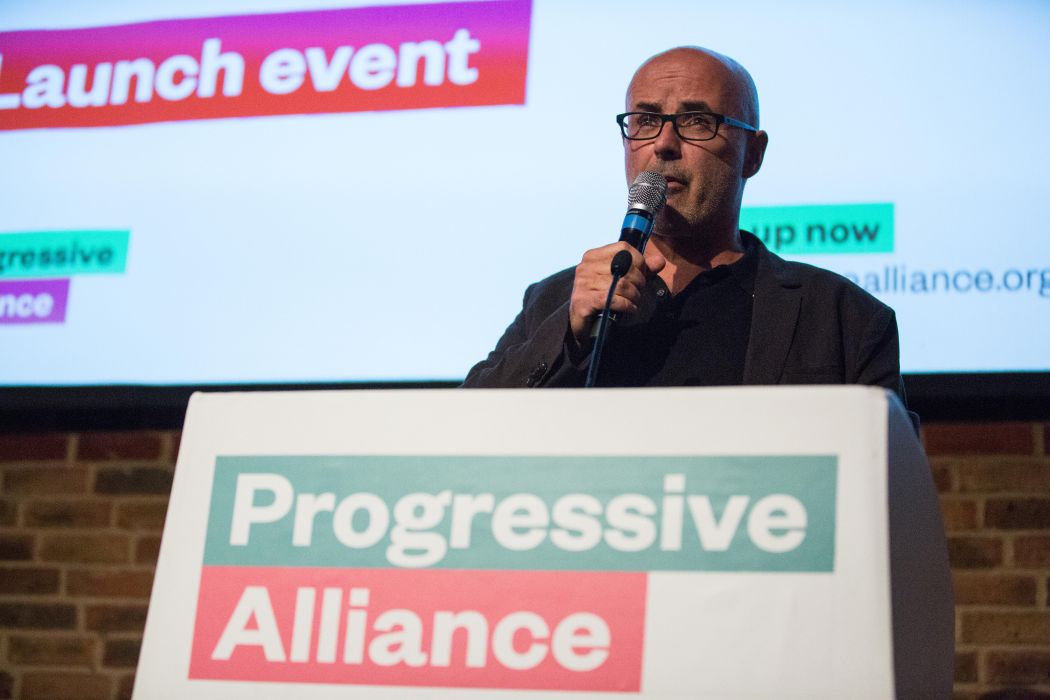
Ahead of the 2005 election, Lawson considered securing a parliamentary seat. He was on a train, on the way to a selection meeting, when he read an essay in Soundings by Marxist intellectual Stuart Hall – New Labour’s Double-shuffle. The party had taken to speaking with a “forked tongue”, Hall argued, and was “fundamentally neoliberal in character”.
“I just thought, fuck me, I don’t believe in this project. I got off the train, walked over the bridge, and got the next train back to London,” Lawson says.
Although he is clear about New Labour’s failures, the soft-left chief does characterise the era as one of vibrant discourse and undeniable talent. Finding himself in the middle of exciting debates between Jack Straw, Mo Mowlam and Philip Gould as well as Blair, Brown and Mandelson was invigorating.
Does he believe the level of talent we saw then is unmatched today? “Completely.” Why is that? “Because why would you go into politics now? You don’t get paid that much, you haven’t got that much influence, you’ve got complete exposure about who you are and what you’ve done. If you wanted to change the world, you’d start your tech company or your venture capital,” Lawson replies.
“The talent pool is really drying up, and that is a problem. Our analysis was the Blairites didn’t think a better world was desirable, and the Brownites didn’t think a better world was feasible. In the end, you ended up in the same place. But, my God, they were giants in terms of thinking, strategy and tactics.”
In 2011, Compass opened up its membership to other parties. The organisation’s Labour-only rule did not make sense, Lawson figured, when his political outlook was so similar to that of Caroline Lucas. “I believe everything she believes in and how you make politics happen,” he thought, and yet, “She can’t join Compass, but Peter Mandelson can. This is madness.”
The reaction was strong: “I hadn’t quite anticipated the tribal backlash of people in Labour. ‘You bastard! You’ve given up. You’re no longer one of us!’” But amid the rise of the internet and the multiplication of TV channels, he had long felt that the same fragmentation would come to politics too and Labour would not be able to remain “the only player”.
“I hate the coercive power of first past the post. I hate forcing people to do what they would not otherwise do. That’s a horrible politics,” says Lawson. “It can win big majorities on 34 per cent of the vote, but then it finds it can’t govern because you don’t have any real support in the country.”
Unless there is real change, he warns his comrades on the left, “The causes of Reform are going to keep growing, and they won’t be Reform. It will be Restore, or worse.”
Under the new Prime Minister, supporters of electoral reform are hopeful a major constitutional change is coming. But on other issues, there has been talk of the left of Burnham’s camp being jettisoned.
Asked for his thoughts, Lawson says: “Andy has taken a particular path since Makerfield, with people who were anti-him not that long ago, who are now supposedly very pro-him. We’ll see how that plays out…
“I think he’s gone for, I’d call it, a parliamentary Labourism route. We’re back to the same question of Labourism and the Labour Party, and is it the sole vehicle, and can you build a good society just through parliamentarism? Or do you need bigger ideas and bigger vision and bigger alliances and bigger movements? People will take shortcuts, and shortcuts never work.”
Lawson reasons: “There are never complete wins in politics.” But he is delighted that a prime minister has declared they want to roll back 40 years of neoliberalism.
“In many respects, job done. The bar has now been set at that level,” he says, noting that someone close to Corbyn once told him “they could never get him to say that” about neoliberalism. “We’ve got a prime minister who’s saying that. This is game on.”
So, he continues on “the long march”, believing that society “will go fascist right or it will go Neal Lawson/Compass”. “I’m joking,” he adds, although he isn’t really. “That will end up being the choice.”
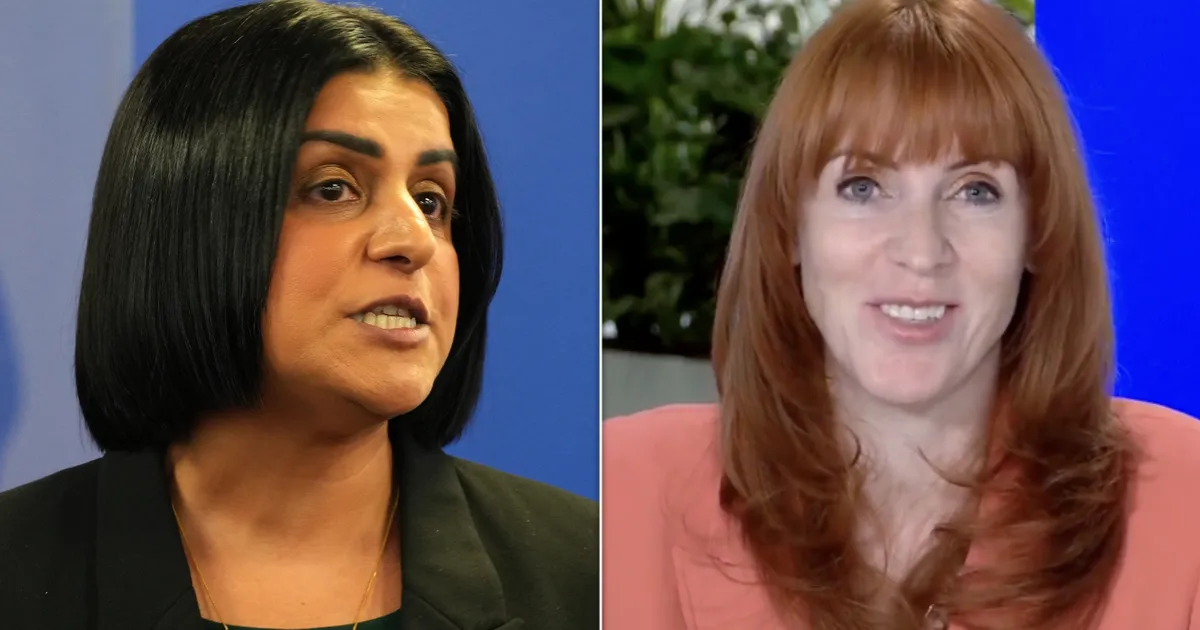
Angela Rayner has rejected any suggestion of a split within the cabinet hours after she openly criticised Shabana Mahmood’s immigration plans.
The housing, communities and local government secretary condemned the home secretary for “changing the goalposts” and making it harder for foreign social care workers to live in the UK permanently.
Mahmood has increased the amount of time foreign social care workers need to spend in the UK from five years to 15 years for everyone who has come to the UK since 2021.
Speaking to The Times shortly before the party’s annual conference in Liverpool, Rayner said she stood by her previous criticisms that these changes are “un-British”.
Rayner said: “Especially in regards to the carers, who were asked to come to this country to care for some of our most vulnerable and then we changed the goalposts years down the line, I think that’s very disruptive.
“I do have concerns about that … when you ask someone to come here and look after your most vulnerable and they spend years dedicating themselves, moving their lives here to look after our loved ones.”
However, Rayner told Sky News’ Sunday Morning show that Mahmood had a consultation on the transitional arrangements.
“She’s been really clear we have to have a fair system that is fair for people who contribute today and for the people who come to this country to contribute,” the minister said.
“I have absolute support for Shabana in that and I’m sure she’ll come to a good conclusion on that.”
She added: “We’re all united. We’ve seen on illegal migration those figures coming down so I think she’s doing a fantastic job, so there’s no split story there unfortunately.”
Asked by host Kate McCann if “collective responsibility is dead”, Rayner said: “No. The prime minister was clear, we are going to do politics differently. And that means reaching out to other politicians as well, having that conversation.”
Listen to Commons People, the podcast that makes politics easy. Every week, Kevin Schofield and Kate Nicholson unpack the week’s biggest stories to keep you informed. Join us for straightforward analysis of what’s going on at Westminster.

Saturday Night Live kicked off its 52nd season this weekend with a spooky season twist on President Donald Trump (played by James Austin Johnson)’s relationship with White House aide Natalie Harp (played by Ashley Padilla).
In the middle of a meeting between Trump and New York City Mayor Zohran Mamdani (played by Ramy Youssef) at Gracie Mansion, the president is alerted that someone is here to see him.
“What reckless lunatic would travel to see me in this kind of weather?” Trump asks in the sketch.
Harp then stumbles in, drenched from the ongoing nor’easter storm battering the city as Trump asks what she’s doing in NYC.
Harp responds that she “ran here from DC ‘Weapons’ style” before imitating the run from the popular horror movie.
Trump in the sketch then remarks that Harp is like “the girl from ‘Obsession’ but blond.”
“Anyways, nice to meet you, Mayor Mamdani,” Harp says in the sketch.
“If you hurt him, I will end you,” Harp says in the sketch, pulling Mamdani in close.
Watch more of the “SNL” cold open below:

Labour is on course to be the largest party in a general election, according to a new poll, leaving Reform UK a distant second.
The More in Common think tank has predicted Labour would win 250 seats in a hung parliament – 76 short of a majority – if Brits were to head back to the ballot box now.
Reform UK would win 147, the Conservatives 125, the Liberal Democrats 63 and the Greens just three.
The major MRP survey, which polled more than 15,000 British adults, will be a welcome boost to Labour just before its annual party conference in Liverpool begins.
The poll suggested Andy Burnham’s leadership had transformed Labour’s electoral chances since replacing Keir Starmer in July.
More in Common carried out a similar survey three months ago and found Reform would win 293 seats and Labour just 110.
The think tank found 214 seat projections – 143 of them to Labour – have changed since Burnham got the keys to No.10.
Labour appears to be recovering in Scotland too, as the poll shows it would win 18 seats up from just five.
However, More in Common did predict the SNP would remain the largest party with 27 out of 57.
And Labour is evidently not out of the woods yet, being still 161 seats down from their July 2024 landslide victory.
The survey found nearly half of all seats (48%) would be won by fewer than five points, making it an incredibly marginal election.
Even so, the poll also suggest Burnham’s focus on devolution has helped win over voters as Labour’s support has moved away from London.
In July, 44% of Labour’s projected seats were in the capital, but that has now decreased to 21% due to a surge in the North East, North West and Wales.
Meanwhile, Reform is struggling due to the split in the right-wing vote as splinter group Restore Britain takes crucial support, possibly costing Farage dozens of seats.
UK director at More in Common, Luke Tryl, said: “On the eve of last year’s Labour Party Conference, our MRP projected Reform could get close to a three figure majority, while both Labour and the Conservatives dropped to below triple figures.
“Fast forward to today, and it is clear the electoral landscape has transformed dramatically with Andy Burnham as prime minister. “
Tryl continued: “But far from representing a return to politics as normal, volatility has become the new watch word of our electoral system.
“The model projects that almost half of the seats would be won on margins of less than 5 per cent, meaning small swings in either direction could see any of the Tories, Reform or Labour ending up on top.
“And while the Labour advantage in seats is comfortable even on these numbers, they would still be forced into a multi-party coalition or arrangement to maintain power.”
Tryl added that Burnham’s decision to rule out an early election “is a sensible one”.
He said: “While Labour is off its death bed, the party’s recovery is far from complete.
“To call a poll the prime minister would have had to be willing to risk the careers of scores of his colleagues including his chancellor and foreign secretary, while even small shifts in the current numbers would have left him vulnerable to having a stint in Downing Street only longer than that of Liz Truss.”
Listen to Commons People, the podcast that makes politics easy. Every week, Kevin Schofield and Kate Nicholson unpack the week’s biggest stories to keep you informed. Join us for straightforward analysis of what’s going on at Westminster.

File a Claim in the $7.85M PlayStation Antitrust Settlement Before the Deadline. Here’s How

Motorcyclist injured in crash with taxi near Castle Howard
Will a falling unemployment rate keep U.S. inflation above target?





-

 Fashion2 days ago
Weekend Open Thread: J.McLaughlin – Corporette.com
-

 Crypto World5 days ago
Goldman Sachs and Deutsche Bank Agree: The S&P 500 Rally Isn't Over
-

 Tech7 days ago
Researchers escape OpenAI Codex sandbox to run commands on host
-

 Fashion3 days ago
8 iPhone Accessories That Add Personality
-

 Crypto World7 days ago
Who Needs CLARITY Anyway? ARB Could See 70X Increase: Hodler’s Digest
-

 Entertainment4 days ago
These 17 Fall Amazon Dresses Seriously Look Like Anthropologie
-

 Business7 days ago
Analog Devices (ADI) Bets $1.35 Billion on Chips that Let Machines Think for Themselves
-

 Crypto World7 days ago
Coinbase, Robinhood, Circle Seen as Tokenized-Stock Winners
-

 Crypto World4 days ago
This Bearish Netflix Stock Trade Can Cash In On Video Streaming Giant’s Woes
-

 Tech5 days ago
Reolink’s solar 4K security camera falls to its lowest price in months
-

 Tech6 days ago
Google’s $899 Googlebook is a bet that you’ll buy a new laptop for Gemini
-

 Crypto World5 days ago
Trump-Xi Polymarket Odds for Handshake Hit 50%
-

 Crypto World4 days ago
Crude Oil Prices Pressured by Diplomatic Hopes in the Middle East
-
 Business4 days ago
Oil Price Today (September 23): Crude oil below $100 on hopes of US-Iran talks. What did Trump say?
-

 Crypto World4 days ago
Bitcoin price tests $83,600 Supertrend support after $87K rejection
-

 Crypto World4 days ago
Bitcoin Threatens Sub-$84,000 Breakdown as Long Liquidations Spike
-

 Crypto World5 days ago
Meta Jumps 11% As Muse Shines and Investors Show an Appetite for Advancing AI
-

 Crypto World5 days ago
Did Jim Cramer Just Give GameStop Stock the Kiss of Death When He Said the Turnaround Is Working?
-

 Crypto World6 days ago
Bitcoin price holds above $81K as key catalysts line up
-

 Crypto World4 days ago
BitGo says Bitcoin absorbed Fed hike, CLARITY failure
You must be logged in to post a comment Login