The British revenge thriller starring Paddy Considine and Toby Kebbell, airs on Film4 tonight at 10.50pm
If you’re looking a light and easy watch, this film isn’t for you, but it will appeal to those who don’t mind a dark and twisted storyline that makes you “run through every emotion”.
Advertisement
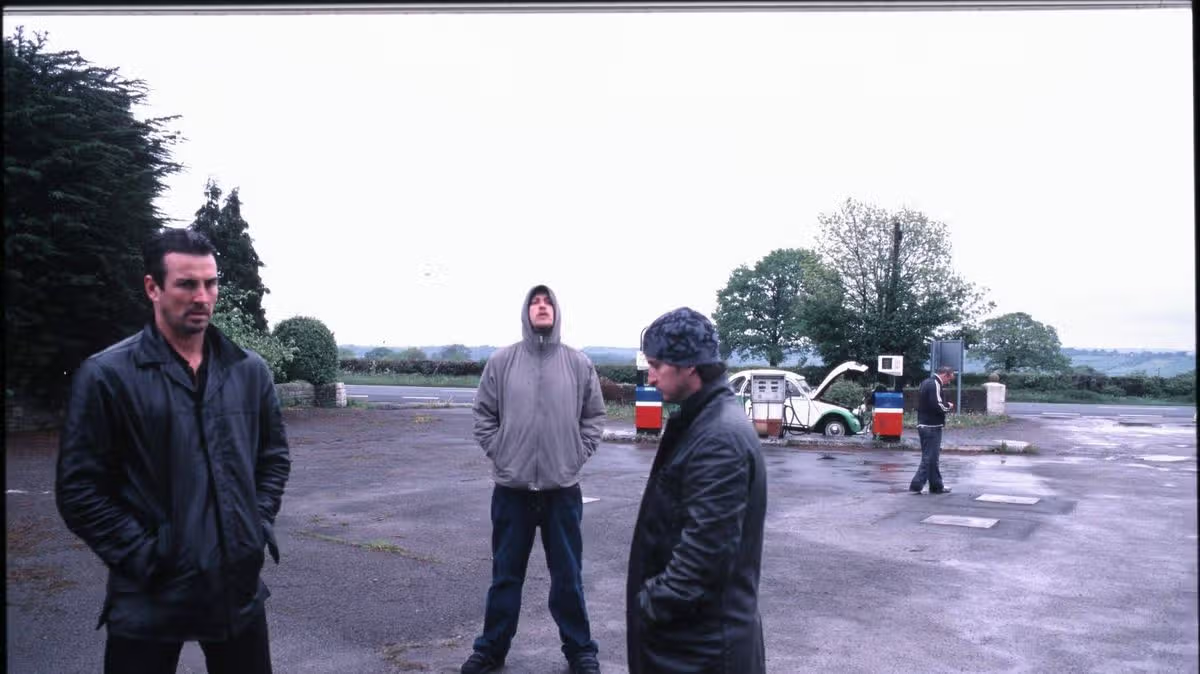
Frequently overlooked as an independent psychological thriller, this low-budget British tragedy was directed by Shane Meadows, who also co-wrote the film.
Released in 2004, Dead Man’s Shoes is a film that leaves a profound impact on its viewers, despite being filmed over just three weeks in Matlock, Derbyshire.
The town serves as a crucial backdrop to the story, which follows a man named Richard as he returns home after serving in the British Army. Upon his arrival, he takes it upon himself to exact revenge on a gang of drug dealers who horrifically abused his mentally impaired brother Anthony.
He sets about tormenting each member of the group in a series of deeply disturbing ways, transforming himself into a cold-blooded killer. Yet, having made revenge his sole purpose in life, he comes to realise what a monster he has become and questions whether he can continue down this path, reports Wales Online.
Advertisement
A devoted fan of the film captured it perfectly in a Rotten Tomatoes review, writing: “A grim and thoroughly engaging revenge thriller, I enjoyed it a great deal, especially the performances of Paddy Considine and Toby Kebbell.
“Obviously made on a low budget, the film proves that fine acting, a taut script and inventive direction can make up for funding limitations.”
One standout element is the lead performance of Paddy Considine as Richard, alongside the rest of the cast, comprising Toby Kebbell, who appears in his first film role, Gary Stretch, Stuart Wolfenden and Neil Bell.
Advertisement
One review says: “Gritty. Harrowing. Gripping. Haunting. This movie shook me to my core. A movie of depth, guilt, violence, and fear. You’ll run through every emotion on the spectrum.
“Toby Kebbell in his first picture gig is brilliant. Paddy Consadine is gravitational. One of the best films you will ever watch. Brilliant and devastating at the same time.”
Paddy Considine cemented his reputation with the role, going on to claim Best British Actor at the 2005 Empire Awards, pipping the likes of Simon Pegg for Shaun of the Dead and Daniel Craig for Layer Cake. The film itself also earned nominations across eight categories at the British Independent Film Awards.
Advertisement
Another fan of the film wrote: “One of the best films I have ever seen. I have watched it many times, and it still shocks me and makes me wonder why people behave the way they do. Amazing acting by Paddy Considine and Toby Kebbell. Also all the other actors.”
If this dark and twisted thriller sounds right up your street, tune into Film4 tonight at 10.50pm, where it will be broadcast. It is also available to rent on both Apple TV and Amazon Prime.
If you’ve ever pushed yourself through a hard workout, you’ve probably “felt the burn.” It’s that familiar sensation of pain and exhaustion in the muscles, where they almost feel like they’re on fire.
This feeling has long been said to be caused by a build-up of lactic acid in the muscles. In fact, this remains a common explanation from recreational exercisers to elite athletes.
But this belief is wrong – and lactic acid actually has nothing to do with the burn we feel when we exercise.
The origins of the lactic acid myth go back to the early 1900s. Scientists discovered that when they electrically stimulated the muscles of amphibians, lactic acid accumulated. This happened both when the muscles lacked oxygen and when they were stimulated until they fatigued.
Advertisement
Based on this, and the understanding of biochemistry at the time, it was concluded that when muscles work hard and they aren’t getting enough oxygen, lactic acid accumulates and muscle fatigue develops.
However, this early work never explicitly said that lactic acid caused muscle fatigue. Rather, it said that muscle fatigue is accompanied by increases in lactic acid. Just because two things happen at the same time does not mean one thing causes the other. But the misapplication of cause-and-effect led to the birth of the lactic acid theory of muscle fatigue.
Lactic acid accumulation was thought to cause muscle pain and fatigue in two main ways: by impairing some of the processes involved in muscle contraction, and by reducing the muscles’ ability to generate energy. Both effects were thought to be due to lactic acid making our muscles more acidic, which could also cause sensations of pain and burning.
But as our knowledge of biochemistry improved, by the end of the 20th century we discovered some things that cast doubt on the lactic acid theory.
Advertisement
First, the normal pH of our body tissues means that lactic acid actually cannot exist in our bodies; nearly all of it is broken down into lactate and hydrogen. These chemicals are produced in our bodies all the time, but in much larger amounts when we do hard exercise.
Lactate is produced within our muscles through the process of glycolysis, which converts glucose (sugar) into energy. Hydrogen is also produced within our muscles when we’re more active and exercise intensely.
Second, while lactic acid and lactate sound similar, there’s a big difference. If lactic acid were to exist in our body, it would make our muscles more acidic – but lactate does the opposite.
Lactate production actually makes our muscles less acidic by consuming hydrogen. This is important because it’s hydrogen, not lactate, that increases muscle acidity.
So in short, lactate doesn’t increase acidity in our muscles when we exercise. It actually reduces acidity, which helps us exercise harder, for longer.
Lactate production also isn’t proof that our muscles have run out of oxygen, as is sometimes believed. We produce and use lactate when oxygen is abundant – including at rest.
Lactate can also be used as fuel for our muscles, heart and brain – both when we’re exercising and resting. New research is also shedding light on a much broader range of benefits that lactate brings, such as immune system regulation, reducing inflammation and wound healing.
But as can be expected with something as complex as the human body, lactate’s role isn’t always straightforward.
Advertisement
Lactate appears to play a small part in the complex process of muscle fatigue in combination with other substances that are produced by the body during hard exercise. But lactate alone has very little detrimental effect on exercise performance.
What’s actually going on?
The question of what actually causes our muscles to burn during intense exercise is something that’s still being studied. But it appears to come down to what triggers our nerves.
Specialised nerves in and around our muscles detect substances produced when we exercise. These nerves connect to areas of our brain responsible for sensations of muscle pain, as well as the emotional responses associated with these sensations. The harder we exercise, the more of these substances we produce and the faster the nerves fire.
So the burning sensation in our muscles during hard exercise is due to the increased stimulation of these nerves. The nerves likely respond to a combination of different substances the body produces during exercise, rather than any single one.
Advertisement
Muscles soreness in the hours and days after a workout is also not caused by “lactic acid” – nor is it caused by lactate. Lactate returns to resting levels within about 30-90 minutes after intensive exercise. That’s long before the typical peak in muscle soreness that occurs one to three days following a hard or new workout. The causes of post-workout soreness are not fully understood, but likely relate to increased sensitivity of nerves to contraction, stretching, and compression of our muscles.
As persistent as the lactic acid myth is, it’s just that: a myth. It’s an example of how easily a single, misunderstood view can be passed on and become an unchallenged “fact”.
So the next time you find your muscles burning during a workout, just remember: it’s not lactic acid.
The El Niño weather phenomenon could bring about freezing conditions and snow this winter
Alex Evans Deputy Audience Editor , Claire Schofield and Lee Grimsditch Features Writer
08:38, 28 Sep 2026
UK households are being urged to stock up on vital food and essential items before winter arrives, should concerns that a severely cold, snow-filled season triggered by the El Niño weather phenomenon prove correct.
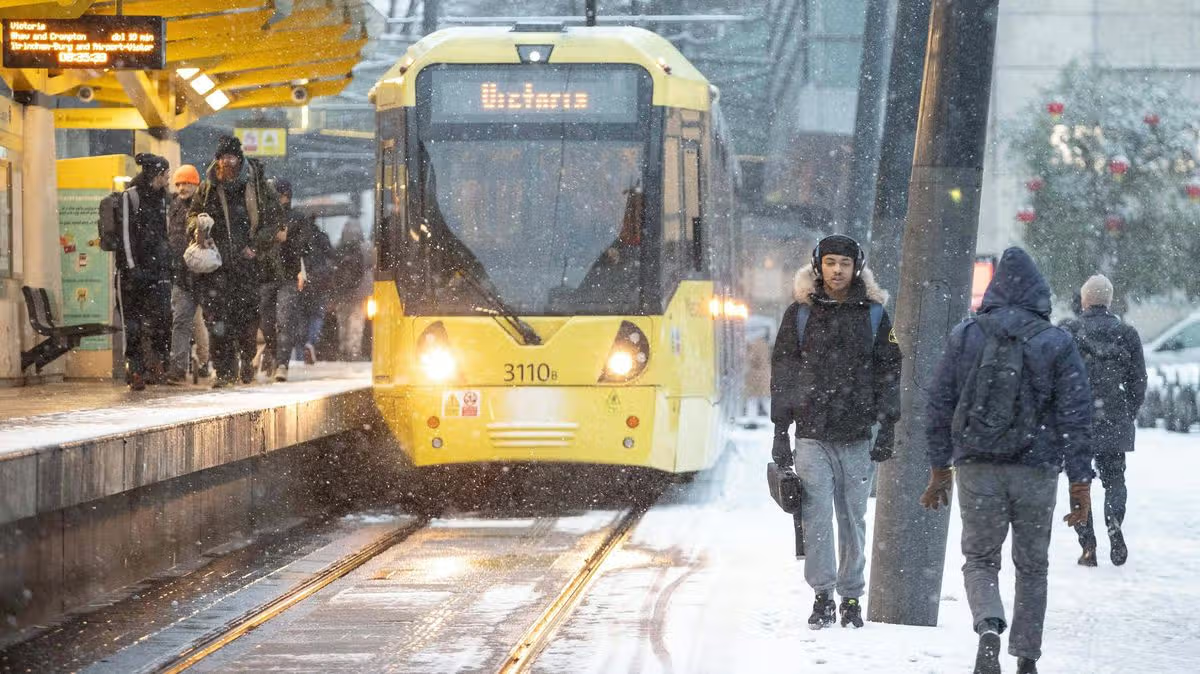
Climate specialists have warned a polar vortex could bring harsher conditions and snowfall across the UK this winter, as the El Niño weather phenomenon drives temperatures down. El Niño has been a major contributor to this year’s scorching conditions, with the warming of the ocean’s surface having a substantial impact on global weather systems, producing temperatures significantly above the seasonal average.
It is widely thought to have played a role in the UK’s five record-breaking heatwaves witnessed during the summer. While nothing can be confirmed at this point, the El Niño weather front triggers changes in high and low pressure systems.
Advertisement
Click here to get the biggest stories straight to your inbox in our Daily Newsletter
The stability of a polar vortex – the mass of cold air that typically circulates above the North and South poles – is vulnerable to disruption from high-altitude jet streams. When destabilised, it can push freezing temperatures and snowfall into the US and throughout Europe.
According to USA Today, El Niño can interact with the polar vortex, reports the Express.
It reports: “The polar vortex above the Arctic is linked to the jet stream. Both can be impacted by El Niño, and bring about changes in our weather patterns, said Darryn Waugh, a professor in Earth and Planetary Sciences at Johns Hopkins University.
Advertisement
“El Niño drives changes in the high- and low-pressure patterns in the troposphere, the lowest layer of Earth’s atmosphere where weather happens, said Amy Butler, a physicist at NOAA’s Chemical Sciences Laboratory.”
The Met Office states that a hot summer doesn’t guarantee a cold winter, and that this supposed direct correlation is merely a misconception. Nevertheless, the El Niño phenomenon could potentially be responsible for the UK experiencing freezing conditions this approaching winter, although this remains uncertain.
In its most recent weather blog released this week, the forecaster explained: “Through the latter part of the winter, following a peak in El Niño, the stratospheric polar vortex (SPV) can become weaker, leading to an increased chance of Sudden Stratospheric Warming (SSW) events unfurling, increasing the potential for cold weather.
“However, significant as El Niño is, it is important to emphasise that it alone does not determine precise weather patterns and other outcomes remain possible.”
Advertisement
Government warning
The warning comes as the Government is preparing to launch a nationwide campaign to ensure the public is informed about essential supplies, evacuation routes and emergency contacts, following an official survey revealing that just 13% of people consider their household to be largely or wholly prepared for a disaster.
Security Minister Dan Jarvis has stated his intention to make communities as resilient as possible, acknowledging that the country is likely to face “a number of challenges” in the coming months.
When questioned about whether the public should be concerned about El Niño – which could heighten the risk of storms this autumn and winter – Mr Jarvis said: “Well, it’s been quite a tough summer. The prime minister has made a commitment to do a wildfire summit and we’ll be honouring that commitment.
“I think we have to be prepared for the winter. We’ll see what weather comes, but on the balance of probabilities, there will be a number of challenges that we have to face over the course of this coming winter.”
Advertisement
Mr Jarvis continued: “The campaign will make sure that there is a much greater understanding of the kind of really sort of simple, low-level things that everybody can do in their own household to make sure that they are as resilient as possible, and that resilience at a local level gives us a much greater resilience at a regional and then at a national level as well.”
Six food items
Direct Energy advises that, should snow pose a threat, households ought to prepare by purchasing non-perishable food items and essentials in case access to local shops becomes impossible, or in the event of a power cut, ensuring you won’t go without while waiting for severe weather to subside.
Households should ensure they have these ,on-perishable food that doesn’t need cooking, such as ready-to-eat tinned meat, fruit or vegetables (and a tin opener). They added there were six food and drink items to stock up on:
Bottled water – there is no standard figure for this as emergencies can vary in duration and people use different amounts. A minimum of 2.5-3 litres of drinking water per person per day is recommended by the World Health Organisation for survival. 10 litres per person per day will make you more comfortable by also providing for basic cooking and hygiene needs. Additional water might be needed to make up baby formula, for medical devices and for pets.
Bread
Milk
Tinned goods, especially warming foods like soups and stews
Snack foods, such as crisps, crackers and cookies in sealed packages
Cereal and granola
Dried pasta and jars of sauce
In its online guidance on preparing for a snowstorm, the company stated: “After heavy snowfall or blizzard conditions, you could find yourself snowed in for days.
“Getting cut off from your local grocery store could be made worse by a prolonged power outage, which would leave you with just a few hours to enjoy the remaining contents of your fridge safely. But if you stock your pantry with filling shelf-stable foods, you won’t go hungry while waiting for the snow to be cleared.”
Advertisement
Eight further items to keep at home
In the government campaign, there were further key items for households to keep at home:
Battery or wind-up torch – torches are safer than candles.
Portable power bank for charging your mobile phone.
Battery or wind-up radio to get updates during a power cut – a car radio can be used, however in severe weather it might be safer to stay inside.
Spare batteries for torches and radio and a backup battery for any medical equipment you rely on.
A first aid kit (or some first aid items) including items such as waterproof plasters, bandages, a thermometer, antiseptic, eyewash solution, sterile dressings and gloves, medical tape for dressings, and tweezers.
Hand sanitiser and wet wipes for hygiene purposes when the water is off.
Food for pets.
Baby supplies such as nappies and baby formula – ready made or ‘ready-to-feed’ formula is best as you may not be able to boil water or sterilise bottles.
A body has been found in the search for an 18-year-old man named George. The body was recovered on Sunday morning from water at a coastal location near Newport, according to a statement from Avon and Somerset Police.
A body has been found in the search for George(Image: Avon and Somerset Police)
George, from Portishead, a seaside town in north Somerset, went missing from that area at around 8.20pm on September 17. In the following days there was a large-scale search by the police, coastguard, RNLI and other services.
The police prevented the Orange Order from making a controversial parade down a road which had previously been blocked by protesters.
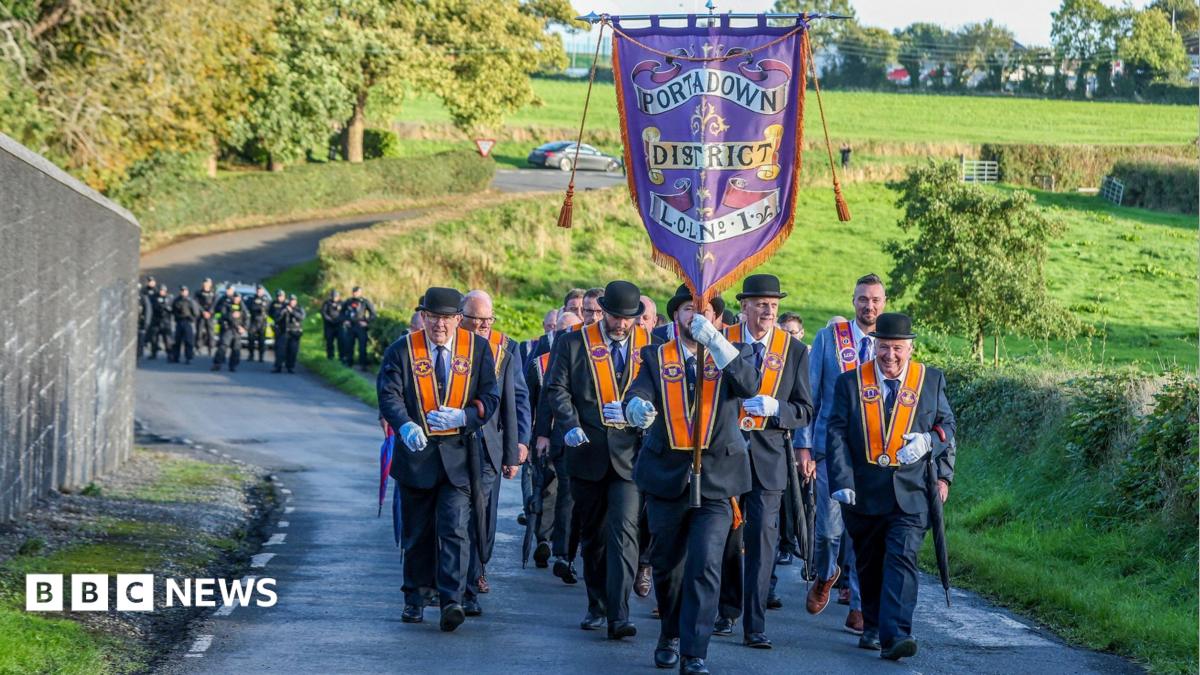
A group of men tried to march from Drumcree Church down the mainly-nationalist Garvaghy Road in Portadown in the early hours of Monday but a line of police Land Rovers stood in the way.
They had been unable to make the permitted parade on Sunday morning because protesters had gathered on the Garvaghy Road. The stand-off continued throughout Sunday, with the Orangemen waiting at the church, around a mile from the road, for the go-ahead from police.
Sinn Féin First Minister Michelle O’Neill joined the protest, prompting Democratic Unionist Party (DUP) leader Gavin Robinson to accuse her of acting unlawfully.
Advertisement
Northern Ireland Secretary Sir Chris Bryant called for “compromise”.
Breandán Mac Cionnaith, from the Garvaghy Road Residents Coalition, said he was meeting the secretary of state and chief constable on Monday and that he would not prejudge those conversations.
Nigel Dawson, who is the Orange Order’s Portadown district master, told BBC News NI there was frustration.
He said they had a legal right to parade down the Garvaghy Road and the police should facilitate their route.
Advertisement
Democratic Unionist Party (DUP) MP Carla Lockhart, who came back to Drumcree in the early hours of Monday, said the Police Service of Northern Ireland’s chief constable needed “to take a grip of this very quickly or his position will become untenable”.
The Drumcree parade, which in the 1990s sparked some of the most serious disorder in Northern Ireland’s history, was due to go ahead for the first time in 30 years after a series of legal challenges.
Since 1998, the Orange Order had been banned from completing its Drumcree march – and until this year had been repeatedly refused permission to finish the route by the Parades Commission, which was set up to adjudicate disputes.
The Orange Order is a Protestant pro-British organisation, while the area where it wants to walk – specifically along the Garvaghy Road – is largely Catholic and predominantly inhabited by pro-Irish nationalists.
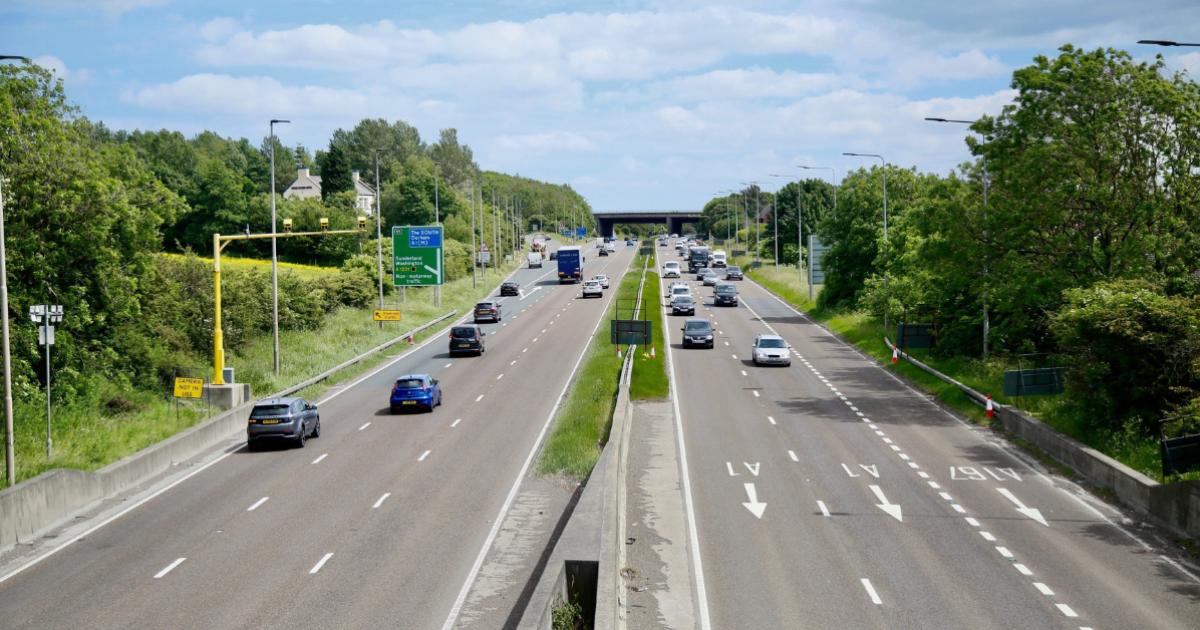
Live updates on roadworks and traffic incidents in Darlington, Bishop Auckland, Durham, and the wider North East, including the A66, A19, A1(M), A1, A167, and the A69 this morning (September 28).
Public transport service updates from bus services, train services, including LNER, Cross Country, TransPennine, and Northern Rail.
Updates from the Tyne and Wear Metro and the latest from Teesside and Newcastle Airports.
Advertisement
We’ll also be bringing you the latest hour-by-hour weather forecast for the region.
Sign up for The Northern Echo’s newsletter for all the breaking North East news, including breaking traffic and travel updates, direct to your inbox.
There are currently no rail disruptions at this time.
What will the weather be like in the North East today?
The day will be mild and dry, with sunny spells as temperatures rise.
Advertisement
Today: Misty and cool at first, but temperatures will rise from around 11am as the sun comes out, with cloudier spells around midday. Maximum temperature 18°C.
Tonight: Clear skies will continue, with mild temperatures until around 10pm before it turns noticeably cooler. Minimum temperature 5°C.
Are there any roadworks in Darlington?
You can see a full list of road closures in and around the town on The Northern Echo’s website.
A judge granted anonymity to a serial burglar fighting his fifth deportation by claiming he is in danger from an Albanian crime gang – only for the criminal to share a video of himself at court.
The man has been convicted of multiple crimes in the UK and repeatedly deported by the Home Office before sneaking back into the country.
He has now appealed against his latest order and applied for asylum on the basis his life could be at risk if he returns to Albania.
During a hearing last week at Taylor House Immigration Tribunal Centre in central London, the Albanian claimed he had been forced to flee to the UK because it was ‘too easy’ for his enemies to track him down elsewhere in Europe.
Advertisement
The man, who is in his 30s and has a child in Britain with an estranged partner, also claimed his mental health had suffered as a result of previous media coverage of his case.
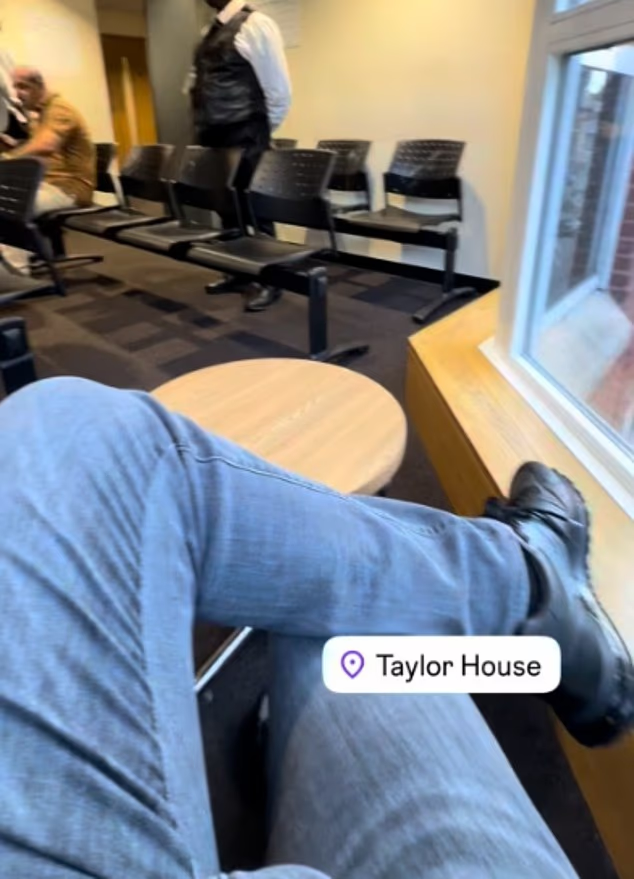
Yet on the day of the hearing, he posted a video on social media that appeared to show him sitting in a waiting area at the court, which he identified by name in the caption.
As well as revealing his location, the footage appears to violate a ban on photography and filming inside court buildings. Anyone found to have broken the rules can be prosecuted for contempt of court and face a prison sentence of up to two years.
Advertisement
The man appeared for a hearing at Taylor House Immigration Tribunal Centre in central London – where he took this image of himself sitting down in the waiting area, and posted it on social media
The man’s representative, Eric Fripp, told the court he was entitled to anonymity because he was pursuing an asylum claim on protection grounds.
This request was granted by Judge Ravinder Bagral. The Press was not given an opportunity to challenge the anonymity order during the hearing, although the Daily Mail has since applied for it to be revoked.
A representative of the court confirmed after the September 15 hearing that the application had been received and was under consideration.
Advertisement
Alan Mendoza, Executive Director of the Henry Jackson Society, criticised the decision to hide the man’s identity from the public.
‘Open justice exists so the public can see how decisions are made in their name.
‘Granting anonymity to a career criminal who films himself in court for social media while facing his fifth deportation, over a threat he never reported to police, makes a mockery of that principle. The public deserves better.’
Khdeeja Khan, representing the Home Office, said the man had committed a string of burglaries while living in the UK, including after each of the four times he had illegally re-entered the UK after being deported.
Advertisement
She asked him in court: ‘Do you accept you have continuously committed serious crimes in the UK involving burglaries? Do you accept continually breaching UK border laws and breaching a deportation order four times?
The man accepted that his offences were ‘very serious’ but claimed he had been ‘forced’ to return to the UK illegally because of fears for his safety.
He told the court he had first arrived in the UK aged 13 before falling into the clutches of a powerful Albanian crime gang that forced him to carry out burglaries. He claimed that when he later tried to leave the gang, both he and his family became targets.
Each time he was deported to Albania, he said he learned gang members were looking for him and left again within two to three weeks. He said he initially tried to settle elsewhere in Europe before they discovered his whereabouts there too.
Advertisement
He said the gang had initially tried to track him down in the UK, but that there had been no problems here for more than a year and he believed they had given up, making Britain the only place where he felt safe.
He told the court: ‘The gang has been in contact in Albania. They kidnapped me and once put a knife to my neck. I was lucky to get away. I tried to stay in Europe, but in Europe it was too easy to find me there, so I had to come here.’
He also told the hearing it was too dangerous to return because his family had become embroiled in an Albanian blood feud, during which his uncle was shot two years ago, but ‘corrupt local police’ had ‘closed the case’.
Ms Khan suggested there was no evidence to support his claims that he was at risk in Albania and noted that he had not reported any threats to police in either Albania or the UK.
Advertisement
He replied: ‘The reason I didn’t report anything in Albania is because the police are corrupt and the gang is very powerful with the police around there.’
Ms Khan also noted the man’s prolific social media use – including regular photos showing him in luxury cars and drinking in nightclubs – and questioned why he would continually draw attention to himself online if he was really in fear of a gang.
In response, he claimed he ‘felt safe’ in the UK, but acknowledged the posts could be viewed anywhere in the world.
The case was adjourned pending Judge Bagral’s ruling.
Several European cities, such as Amsterdam, Venice and Barcelona, brought in taxes to try and curb visitor numbers, to stop themselves being swamped and to curb the harm over-tourism causes, but that has not happened — their tourist traffic has continued to rise. That, though, is not London’s problem — it is not intended to lower tourism but to raise revenue.
The Labour conference is being dogged by rumours of a snap election despite Andy Burnham declaring the idea ‘dead’.
Another megapoll has suggested the party’s position has significantly improved as the gathering in Liverpool begins.
The research, by non-profit More in Common, found that if the country went to the polls Labour would have 250 MPs, some 140 more than it estimated in July.
That would be far ahead of Reform on 147 seats, which is 146 fewer than the projection from just three months ago – although still a huge jump from 2024. The Tories are predicted to be close behind on 125.
Advertisement
Although Labour would still be well short of a Commons majority if the poll was reflected at a real election, they could govern with support from the Lib Dems’ 63 MPs and 27 from the SNP.
The prospect of such a ‘rainbow coalition’ has caused alarm on the Right, with fears that Mr Burnham could offer major concessions such as a fresh Scottish independence referendum.
Accounting for tactical voting, Labour could secure an extra 25 seats, according to More in Common. That would mean it could have a majority solely with backing from the Lib Dems.
Advertisement
More in Common research found that if the country went to the polls now Labour would have 250 MPs, some 140 more than it estimated in July
Andy Burnham used a set round of pre-conference broadcast interviews on Friday to say he was ‘knocking dead’ rumours of an election before 2029
Those dynamics could mean Reform falling to 117 seats, and being leapfrogged by the Tories on 132.
Gambling on an election now would be a massive risk for the PM, with the Government currently holding an historic majority and nearly three years left in the Parliament.
Advertisement
Those in favour of the idea hope that Labour would improve its position during a campaign.
Mr Burnham used a set round of pre-conference broadcast interviews on Friday to say he was ‘knocking dead’ rumours of an election before 2029.
Speaking to the BBC in Liverpool this morning he suggested a social care plan will need to be in place before a ballot, as he is determined to put one in the manifesto.
The More in Common research uses the ‘MRP’ technique of mapping poll findings on to the demographic characteristics of individual areas.
Advertisement
Nearly 16,000 adults were interviewed between August 21 and September 21.
Luke Tryl, More in Common’s UK Director, said: ‘On the eve of last year’s Labour Party Conference, our MRP projected Reform could get close to a three figure majority, while both Labour and the Conservatives dropped to below triple figures.
‘Fast forward to today, and it is clear the electoral landscape has transformed dramatically with Andy Burnham as Prime Minister.’
However, he highlighted that ‘volatility has become the new watch word of our electoral system’, with almost half of the seats estimated to be won on margins of less than 5 per cent.
Advertisement
The snapshot reflects a shift in support for parties since Mr Burnham became PM
A year ago Reform were seen as on track for a landslide victory
‘The other clear message of these numbers is that tactical voting, of the sort we have already seen play out in by-elections, could have an outsized impact on the numbers – giving a Lib-Lab coalition the numbers for a majority and allowing the Tories to leapfrog Reform,’ Mr Tryl added.
He said the poll suggested Mr Burnham was ‘sensible’ to rule out an early election.
Advertisement
Mr Tryl continued: ‘While Labour is off its death bed, the party’s recovery is far from complete.
‘To call a poll the Prime Minister would have had to be willing to risk the careers of scores of his colleagues including his Chancellor and Foreign Secretary, while even small shifts in the current numbers would have left him vulnerable to having a stint in Downing Street only longer than that of Liz Truss.’
At the 2024 general election Labour won 411 seats, followed by the Tories on 121 and the Lib Dems on 72.
American Bruce Cameron Williams was given the brooch on a visit to Inverness in 1983.
A US resident was delighted when a Highland Games expert helped to solve the mystery of his 181-year-old family heirloom.
Bruce Cameron Williams, 77, was gifted the silver plaid brooch by a distant relative while he was on a visit to Inverness back in 1983.
The front is engraved with thistles, the initials “D.C.H.F.S.” and the date “1845”, while the other side has the words “To Jas. McPherson” and “for Pibrochs.”
Advertisement
Pibroch means music played on the bagpipes and the relative told Mr Williams, who plays the pipes, she was happy to pass it on to him to keep it in the family and in the hands of a piper.
Mr Williams has displayed the brooch for more than four decades but has spent many years trying to solve the mystery of what the initials stand for.
Alasdair MacDonald at the association was quickly able to tell him that the initials stand for the awarding body Dunkeld Caledonian Highland Friendly Society.
Advertisement
An association spokesman said: “Alasdair was also able to point to a press article from the Perthshire Advertiser of July 10 1845 which reported that at the meeting of that society, a ‘handsome silver brooch’ was presented for ‘Pibroch to J. McPherson, Fonab’.
“In a twist to the tale, it was also reported that he was judged to be the ‘best attired Highlander’ and awarded ‘a silver-mounted Snuff-Mull’.
Further research revealed Jas McPherson was one of the pipers to Lord Glenlyon of Blair Atholl.
Advertisement
Mr Williams, who lives in New York state, said: “I have displayed the silver Pibroch prize brooch for over 40 years, always wondering what the initials were trying to tell me.
“I wrote to everyone I could think of for information, and in later years Googled again and again, but was never successful.
“Then one recent day, I located online the Royal Scottish Highland Games Association, sent an email requesting help, and in less than 24 hours had the most remarkable response from one of their members, Alasdair MacDonald.”
Mr Williams said he had been convinced the brooch must have been a prize awarded at a Highland Games as it was clearly not regimental, and said he is “thrilled” to finally know its origins.
Advertisement
He added: “I have always treasured this brooch because of what it is, and the way it was given to me from the most distant of Inverness relatives on that exceedingly moving Remembrance Day Sunday along the banks of the River Ness.
“Now, over 40 years later, I am enjoying it all the more thanks to the helpful people at the Royal Scottish Highland Games Association, and in particular to their scholarly, professional and friendly expert, Alasdair MacDonald.
“To say that I am grateful is inadequate: I am thrilled with the information, and overwhelmed by the responsiveness of Mr MacDonald and the RSHGA.”
Mr Williams is interested in eventually returning the brooch to Scotland and hopes an appropriate place can be found where it could be displayed.
Mr MacDonald said he was happy to help identify the brooch’s inscription.
Advertisement
“As soon as I saw it, within a minute I had the results because I knew what it stood for,” he said.
“I’ve got the history of 1,616 different Highland Games so anybody who wants to know the history of Highland Games, I can spit it out instantly because I’ve got all the history.”
Iain Watt, director of the Royal Scottish Highland Games Association, said: “It’s nice to be able to help people out with these queries which reach back to another time – times change but the Highland Games carry on.”
Get more Daily Record exclusives by signing up for free to Google’s preferred sources. Click HERE.
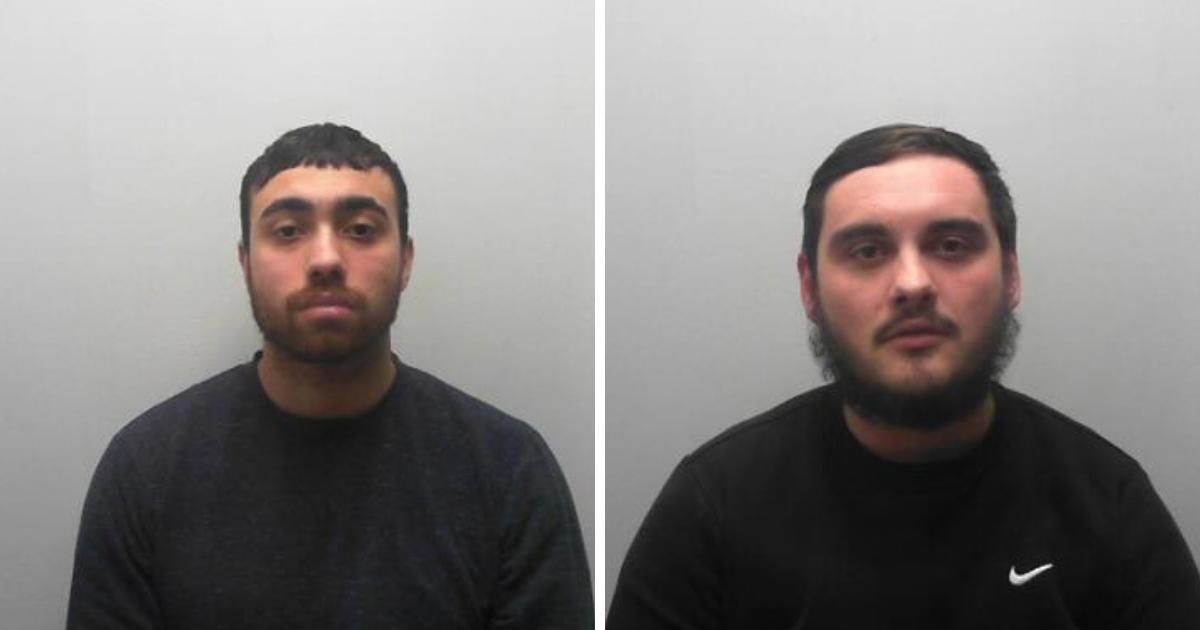
Adam Bradbury and Kaymn Glasgow hoped to live the high life with gold chains, holidays, hotel stays and buying vehicles, York Crown Court heard.
Today both are starting years in jail.
Zarreen Alam-Cheetham, prosecuting, said the pair took over the home of a vulnerable drug user in Selby in late 2022 and used it as their base to sell crack cocaine and heroin.
They messaged each other about making thousands of pounds of money and recruiting staff for their trade in poor-quality drugs.
Advertisement
But police, concerned about the drug addict, went to his home in early 2023 to check on his welfare and caught the pair there with drugs worth up to £860 on the streets of Selby.
They also found £630 in cash and drug-dealing paraphernalia.
The Recorder of York, Judge Sean Morris, said messages on their mobile phones showed the pair had gone to Selby “to make a killing and get out.”
Dealers like them got their money from burglars, robbers and thieves.
Advertisement
“You are the source of a vast amount of hideous crime,” he told them.
Bradbury, 27, of School Street, Dewsbury, and Kaymn Glasgow, 27, of Crowtrees Crescent, Brighouses, both pleaded guilty to being concerned in the supply of heroin, being concerned in the supply of crack cocaine and having criminal cash.
Glasgow, who pleaded guilty shortly before he was due to be tried and whom the court heard was sentenced in Carlisle last year for drug dealing in Cumbria following his Selby crimes, was jailed for four years and nine months.
County lines drug dealer Adam Bradbury (Image: North Yorkshire Police)
Bradbury, who pleaded guilty at an earlier stage, was jailed for three and a half years.
Advertisement
His barrister Andrew Semple said he had sold drugs out of greed.
He had had a difficult background and had used alcohol and drugs from an early age.
The death of a friend had led to his drug habit spiralling out of control and him running up drug debts.
Bradbury was immature and the pair had used a “lot of hyperbole and gangster talk” in their messages to each other.
Advertisement
County lines drug dealer Kaymn Glasgow (Image: North Yorkshire Police)
Glasgow claimed in the witness box that he had been manipulated into dealing by violent drug dealers to whom he owed money.
But the judge didn’t believe him, saying he contradicted himself in evidence.
He had also been boxing since he was 12 and knew how to look after himself.
For Glasgow, Imran Khan said he had struggled with finding a direction in life after dropping out of university and been mixing with the wrong people when he committed the crimes.
Advertisement
Since his arrest, he had changed his life and was now trying to show others it was possible for people with a bad past to reform themselves.





















































You must be logged in to post a comment Login