









Connect with us

Tech & AI

Sony's VR patents are reportedly going to Meta, which isn't a good sign for PSVR 3

Published

on

2021 08 05 ts3 thumbs e66

2021 08 05 ts3 thumbs e66
Records from US and international patent offices reveal that Meta has purchased 419 patents covering head-mounted displays, XR glasses, and VR tracking technologies developed by Sony between 2010 and 2022. The deal suggests an abrupt change of heart at Sony, whose senior VP, Eric Lempel, claimed in 2024 that VR…
Read Entire Article
Source link

Continue Reading
Click to comment

You must be logged in to post a comment Login

Leave a Reply

Tech & AI

Master AI Chip Principles With New IEEE Design Program

Published

on

graphic illustration of arrows and data symbols representing a neural network

graphic illustration of arrows and data symbols representing a neural network

Today’s engineers face an unprecedented acceleration in AI hardware complexity, as explained in the recent research article “Revisiting Edge AI: Opportunities and Challenges.” The article examines the rapid growth of edge AI and the challenges it creates, including resource constraints, model architecture limitations, and network demands across edge-AI deployments.

The acceleration is driven by a fundamental shift in how modern AI models are built and scaled. As the models have become much larger and more complex, they are computationally more demanding because they contain more parameters and require more calculations.

To meet the demands of scaling deep neural networks, the industry is increasingly developing AI chips that are designed for specific tasks.

One major reason is that moving data between memory and the processor has become a major limitation on AI performance.

Advertisement

The movement to confront the hardware bottleneck—the AI memory wall—has altered the trajectory of semiconductor innovation, shifting architectural priorities toward domain-specific accelerator platforms.

No longer can engineers evaluate systems statically; they must master joint hardware design and network-algorithm co-optimization to navigate the critical trade‑offs between throughput, latency, and operational efficiency.

The challenges are addressed in the new AI Processor Architecture, Design Principles, and Performance program, developed by IEEE Educational Activities with support from the IEEE Computer Society.

Topics covered

The five-course program provides a structured exploration of AI processor technologies, from fundamental design principles to advanced architectures and real-world deployment.

Advertisement

The topics are:

  • Fundamental principles of design and functionality.
  • Practical insights into advanced architectures.
  • Understanding neural processing units for industry deployment.
  • Emerging trends and evolving architectures.
  • Designing for edge, cloud, quantum, and the Internet of Things (IoT).

The program addresses the needs of professionals across the AI hardware ecosystem, including hardware architects, chip designers, embedded systems developers, data‑center hardware engineers, and innovators exploring next‑generation processor ecosystems.

It is also valuable for those transitioning into AI chip design or seeking to understand the architectural forces shaping modern machine learning acceleration. For many, it provides the bridge between theoretical knowledge and the collaborative, cross‑disciplinary reasoning required in engineering environments.

The program is designed to explore how modern AI processors are conceived, structured, and optimized. The architectural layers that define contemporary AI hardware will be covered, including compute units, memory hierarchies, dataflows, and the performance characteristics that emerge from design decisions. The curriculum bridges theory and application, enabling participants to interpret architectural foundations, analyze trade‑offs, and understand how hardware structures shape computational efficiency across diverse environments.

By the end of the courses, learners will be able to evaluate processor behavior with the analytical precision expected of professionals working at the frontier of AI hardware design.

Advertisement

AI-generated avatars explain concepts

The program also uses a dialogue‑driven learning approach. Learners view conversations between AI-generated avatars that engage in scenario‑based dialogues. The avatars represent engineers tackling the same problems from various perspectives based on their different roles. The simulated storytelling and dialogues make advanced engineering concepts approachable without sacrificing depth or interactivity, because the user is occasionally challenged to decide the correct answer that leads to the best course of action.

A hardware engineer might push back against a systems engineer’s demands, for example, revealing the friction between physical constraints and algorithmic ambition. A computational validation specialist might interrogate a chip performance engineer’s optimism, exposing the gap between theoretical throughput and real‑world behavior. A heterogeneous systems architect could debate a multiprocessor coordination specialist about synchronization overheads, while a standards development engineer discusses regulatory implications with a technology strategy and compliance architect.

In the final course, an IoT systems architect and an embedded AI optimization engineer dissect the realities of deploying AI in constrained environments.

By the end of the course, learners will be able to evaluate processor behavior with the analytical precision expected of professionals working at the frontier of AI hardware design.

Advertisement

The avatar-driven learning environment creates a psychologically safer environment for learners, who might feel intimidated by traditional expert‑led videos. Research published in 2024 in IEEE Transactions on Learning Technologies showed that avatar‑based instruction can increase a learner’s confidence by up to 25 percent and improve retention of complex technical material.

Each course concludes with a module in which the two experts from different disciplines debate, question, and challenge each other’s assumptions.

Modeling expert reasoning through dialogue

The cross‑disciplinary conversations can do more than explain concepts; they can model how experts think. They can reveal the negotiations behind architectural choices, the competing priorities that shape system design, and the analytical rigor required to balance performance, efficiency, scalability, and compliance.

Learners observe engineering discourse, gaining insight into the reasoning patterns that drive innovation in AI processor development.

Advertisement

The program goes further by interrupting the dialogue at key moments and inviting the learner to step in. Instead of passively absorbing information, the learner decides how to resolve a trade‑off, predict the outcome of a design choice, or select the most defensible engineering path. The experience can feel less like a course and more like an apprenticeship inside an engineering team.

By merging rigorous technical content with an innovative, dialogue‑driven delivery model, the program sets a standard for teaching advanced engineering. It captures the complexity of real‑world problem‑solving, humanizes the learning experience, and challenges participants to think like the engineers who are defining the future of AI hardware. It is not simply a new course; it is a new way of learning.

For individual access, visit the IEEE Learning Network.

For customized organizational options, contact a content specialist to discuss volume pricing.

Advertisement

From Your Site Articles

Related Articles Around the Web

Source link

Advertisement
Continue Reading

Tech & AI

The INIU Outdoor Rugged Series Steps Off the Grid With a Power Bank That Is Fast, Tough, and Built for the Wild

Published

on

9 3 edited

When you think about a simple weekend getaway or a hike, everything eventually comes down to power. And it is tough when, by day two of a backcountry route, your phone battery is down to a single bar and the trail ahead is longer than planned.

It is a familiar moment for anyone who likes to spend real time outdoors, and it is exactly the scenario INIU Outdoor built its new Rugged Series around.

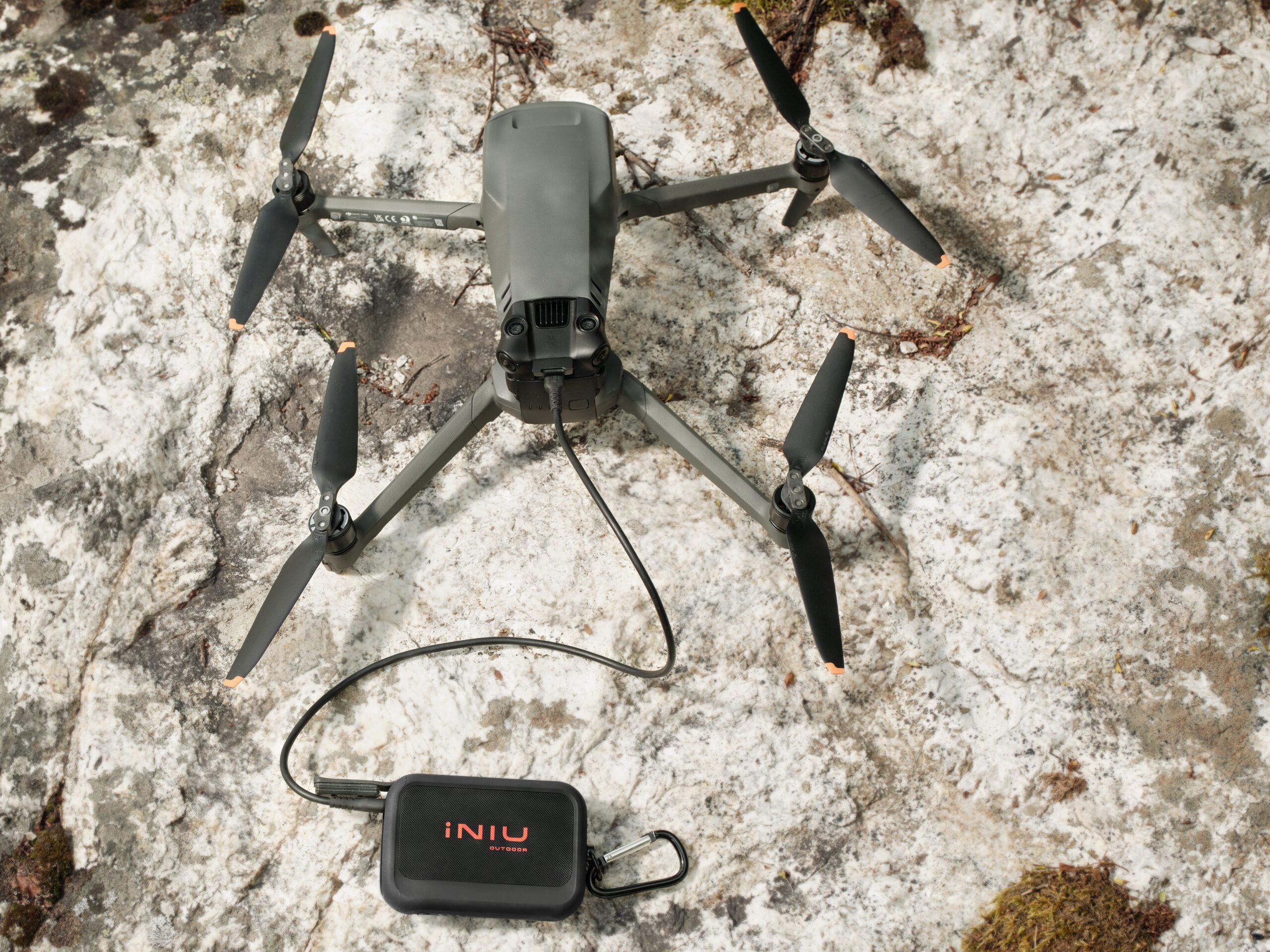
Answering the call of the wild, INIU introduces INIU Outdoor, a new product line built to survive real-world field use. The debut Rugged Series includes the Rugged 10000 and 20000 power banks, plus a Solar Panel 28W. INIU Outdoor claims this is the first professional-grade power ecosystem to successfully marry extreme durability, like IP67 dust and water protection, with fast charging, built-in lighting, and a genuinely compact, lightweight design ready for any gear loadout.

Bridging the Gap Between Rugged and Portable

Anyone who has shopped for a rugged power bank knows the trade-offs that usually come with the category. Most competitors lean heavily into one strength, such as rugged modularity, ultralight portability, or pure durability, while cutting corners on charging speed, weight, capacity, or protection elsewhere. INIU Outdoor is positioning the Rugged Series to close that gap with a more carry-friendly, outdoor fast-charging solution.

Backing up that claim, the Rugged Series combines IP67 protection and 1.2-meter drop-tested durability with up to 65W fast charging. Rather than using bulky hard plastic, INIU Outdoor opted for rounded, silicone-armored bodies that are comfortable to carry and prevent scratches to the rest of your gear. They are also genuinely lightweight, with the Rugged 10000 weighing just 195.7 grams and the larger 20000 coming in at 353.2 grams. While the 65W output handles power-hungry devices like lightweight laptops and drones, an Automatic Low-Current Mode safely adjusts the charge for smaller essentials like earbuds without risking battery damage.

Advertisement

Designed with the Outdoors in Mind

Off the grid, the Rugged Series functions as a cohesive outdoor ecosystem rather than just a battery. Each unit features a built-in light with three distinct settings: a steady white light for setting up camp, a steady red light to preserve night vision, and a flashing red light for emergencies or group visibility. Moreover, a convenient D-ring attachment lets you clip the power bank directly to your pack, and a standard 1/4-inch, 20-thread makes it compatible with tripods, camera mounts, and other gear you already carry. INIU Outdoor describes the overall design as refined and practical without compromise.

For longer stints in the wild, the Solar Panel 28W pairs directly with the power banks to harness sunlight when outlets are not an option. Rounding out the ecosystem, INIU Outdoor backs the lineup with 18-layer safety protection and a 5-year warranty, positioning these units as long-term investments compared to more disposable charging gear.

Does the Rugged Series Belong in Your Kit?

INIU Outdoor is already establishing its outdoor credibility as the official power partner of the American Hiking Society and through a new partnership with Strava. But after all the attention we have drawn to its heavy-duty specs, this new lineup is not aimed solely at seasoned professionals. While the core audience includes guides, photographers, long-distance cyclists, and frequent backpackers, the brand is also positioning it for casual campers, remote workers, and anyone who wants dependable backup power for travel or home emergencies.

As for the rollout, the Rugged 10000 launches on October 9, 2026, with the Rugged 20000 following on November 1, 2026.

Ultimately, at the trailhead with a gear checklist in hand, INIU Outdoor bets on its Rugged Series as the one item no longer in question, ensuring you stay powered up from the very first step to the final mile.

Digital Trends partners with external contributors. All contributor content is reviewed by the Digital Trends editorial staff.

Advertisement

Source link

Continue Reading

Tech & AI

AI Surveillance Startup Flock To Cut Several Hundred Jobs Amid Backlash, Sources Say

Published

on

twitter icon large

Reuters reports:

Flock plans to let go of about 18% of its employees, people with direct knowledge of the plans said on Thursday, as the maker of AI-powered surveillance cameras and license-plate readers faces mounting opposition to its products from communities and lawmakers….

The company has about 1,500 employees [with job cuts hitting 270 employees]. Flock faces growing scrutiny from regulators, lawmakers, and privacy advocates, despite drawing strong investor interest among venture capitalists. A recent Reuters/Ipsos poll showed Americans are divided on whether Flock cameras are a good idea. Some 38% of the country supports the use of Flock cameras in their community, compared to 47% who oppose their use.

A related story… In Texas this week a county commissioner decommissioned all 61 of their Flock surveillance cameras and license plate readers, according to a local news report. County residents “have raised serious questions about who can access this data, what vendors can disclose, improper searches, and records being kept after data expires,” the precinct’s Chief Public Affairs Officer said.

Advertisement

Read more of this story at Slashdot.

Source link

Advertisement
Continue Reading

Tech & AI

Move Over ‘Carrie’: Mike Flanagan Teases ‘The Exorcist: Martyrs’ at NYCC 2026

Published

on

f63c774e 0177 4822 b088 4636d5d5376d

Mike Flanagan is a busy man. Just this week, his TV series remake of Stephen King‘s horror classic, Carrie, premiered on Prime Video. Clayface, the body-horror movie inspired by the DC Comics character, for which he cowrote the script, hits theaters on Oct. 23.

Now, he’s onto promoting his next completed project, The Exorcist: Martyrs, a film he called “the scariest movie I’ve ever made,” while at Friday’s Blumhouse panel at New York Comic Con.

If you’ve been keeping track, Flanagan’s name has been attached to the iconic horror franchise, which began in 1973 and is based on the William Peter Blatty novel of the same name. Since Linda Blair terrified audiences as the demon-possessed young girl, Regan MacNeil, the movie series expanded. There have been sequels, a prequel and even a short-lived TV show.

In 2023, David Gordon Green attempted to reboot the franchise with The Exorcist: The Believer. Now, it’s Flanagan’s turn.

Advertisement

The Exorcist: Martyrs gives a new spin on the Exorcist canon and injects a Minderhunter-style serial killer narrative element into the mix. If you watched the TV series I mentioned above, you’ll notice a similar procedural vibe in the brand-new trailer that dropped during the panel. And if you’re an Exorcist III stan, I’m sure you’ll be happy with the just released clip, as it’s got that similar brooding feeling here.

The Exorcist: Martyrs stars Scarlett Johansson as an NYPD detective tracking a serial killer named Father Sunday (John Leguizamo), who uses Catholic iconography in his kills. Chiwetel Ejiofor, fresh out of The Backrooms, also stars in the film, opposite Laurence Fishburne, Sasha Calle and Jacobi Jupe.

If you’ve been yearning for the Mike Flanagan era of Oculus and The Haunting of Hill House, The Exorcist: Martyrs feels like the filmmaker is back in his terrifying groove. While I’m still waiting for his adaptation of Stephen King’s The Dark Tower to see the light of day, this will have to do.

Advertisement

The Exorcist: Martyrs premieres in theaters on Friday, March 12, 2027.

Source link

Advertisement
Continue Reading

Tech & AI

Billionaire Jeff Bezos: ‘Success is not villainy’

Published

on

Screenshot 2026 10 09 at 5.13.19 PM
Amazon founder Jeff Bezos is interviewed by Bret Baier of Fox News in Florida. (Screen grab via Fox News)

When Jeff Bezos sat down on Blue Origin’s Cape Canaveral factory floor for an interview with Fox News’ Bret Baier earlier this week, he laid out an unapologetic defense of free enterprise and wealth creation.

“Success is not villainy,” Bezos said.

The Amazon founder’s point was simple: building a massively successful enterprise isn’t something society should apologize for or view with suspicion, it’s the natural result of creating something people actually want.

“There’s nothing wrong with making unbelievably good chicken that people love,” Bezos said, referencing the growth of Raising Cane’s and why restaurant entrepreneurs deserve their wealth. “And it doesn’t make him a bad person.”

Bezos, who stepped down as CEO of Amazon in 2021 and left Seattle for Miami in 2023, is currently the second richest person in the world with an estimated net worth of $380 billion, according to Forbes.

Advertisement

Bezos and Amazon transformed the Seattle region. The company now employs roughly 50,000 corporate and tech workers in the Puget Sound region, divided between its primary headquarters in Seattle and its growing operational footprint in Bellevue.

And his recent comments come at a key moment for Washington state, where voters will decide on Initiative 645 — a high-profile ballot measure aimed at repealing the state’s recently enacted high-earner tax and prohibiting future income taxes.

Bezos, along with other business leaders like former Starbucks CEO Howard Schultz, have claimed that scapegoating wealthy entrepreneurs risks driving away innovation. Bezos argued that politicians targeting business leaders are misdiagnosing the problem, noting that while affordability and social challenges are real, heavy-handed government interventions often fail to solve them.

“If there’s a politician who’s picking villains and pointing fingers, that probably means they don’t have a solution,” Bezos said. He noted that executives who relied on blame-shifting inside his own companies “wouldn’t be in our company for long.”

Advertisement

Watch the full interview below where Bezos also discusses the impact of AI on jobs, the need to beat China in the race to the moon and orbital data centers in space. The portion of the interview where Bezos notes that “success is not villainy” starts in minute 16.

Source link

Continue Reading

Tech & AI

Revolut to open new Singapore office in 2027 & grow headcount

Published

on

revolut

The new office will be Revolut’s first permanent base in Singapore

Revolut will open a new office at Collyer Quay Centre, a mark of its expansion plans in Singapore and the region, the London-headquartered fintech company said on Oct 8.

It will also invest nearly S$350 million in Singapore over the next five years, spanning product innovation, business growth and the expansion of its local workforce.

The new office, occupying 8,880 sq ft on the ninth floor of Collyer Quay Centre, is slated to open in early 2027, with the company’s name displayed on the building. Revolut currently operates out of co-working space WeWork at Funan.

In an interview with The Business Times, Revolut Singapore and South-east Asia chief executive Raymond Ng said the move reflects the company’s intention to deepen its local roots.

Advertisement

“It’s a very significant moment for us,” he said. “Having our own office and our own logo… signals to the local authorities and users that we are going to be deeply rooted in this market.”

He added that the Singapore base will serve as a launch pad for Revolut’s broader Asian ambitions, supported by a favourable regulatory environment and a deep talent pool.

The move comes after the close of a secondary share sale in Sept 2026, which sources said valued Revolut at US$115 billion (S$147 billion), unchanged from its valuation after a Jul secondary sale and up from US$75 billion (S$96 billion) in 2025. The company’s pretax profit for 2025 was £1.7 billion (S$2.8 billion).

“From our Singapore base, we will drive our regional expansion efforts across Asia,” Ng said. “We want to be their daily app, not a travel app, because our ultimate aim is to be all things money to our users.”

Advertisement

More local jobs to be created

Revolut, which entered Singapore in 2019, now employs nearly 170 people here, but plans to grow its headcount to more than 300 over the next three years.

The firm has nearly doubled its Singapore headcount in 2025 and plans to hire more people across engineering, product, data and artificial intelligence.

“As we expand, we want to hire more Singaporeans and create more local financial leaders who can eventually form the next generation of senior management,” Ng said.

He told The Business Times that the company plans to keep its current workforce mix of 70% locals and 30% foreigners.

Advertisement

Pee Beng Kong, executive vice-president of the Economic Development Board, said Revolut’s near-doubling of its team and expansion of its product capabilities will “strengthen our fintech ecosystem and create valuable opportunities for local talent to develop skills and experience in a fast-growing sector.”

Staying ahead of rivals

In a crowded market of digital banks and multi-currency wallets, Revolut has been expanding its core offering from a travel-focused card into an everyday financial-management app.

When asked how it plans to stand out from competitors offering similar financial tools, Ng pointed to the company’s tiered subscription model, which bundles lifestyle and productivity perks directly into its financial services.

In Aug, Revolut launched a new top-tier subscription, Ultra, which the company said offers users S$10,000 in annualised lifestyle value through bundled partnerships.

Advertisement

“A lot of traditional financial institutions or fintechs focus on a single product, but we are building a financial super-app with lifestyle services embedded,” Ng said.

He added that Revolut is “one of the few companies in Singapore offering tiered products from free plans to paid subscriptions,” and that product design is guided by three questions: “Are we solving a consumer problem?”, “Are we delivering convenience?” and “Are we offering a great experience?”

In 2025, Revolut’s domestic transaction volumes in Singapore grew by more than 30% year on year and now account for nearly half of all user activity. Peer-to-peer payment volumes rose by almost 40%, while virtual card usage and the number of wealth and trading customers each grew by more than 55%.

Its business segment has also gained significant traction. The local business-customer base expanded fivefold in 2025, and between Aug 2025 and Aug 2026, corporate deposit balances and transfer volumes tripled, while merchant card-payment volumes surged tenfold.

Advertisement

Globally, the platform serves more than 80 million retail customers and 850,000 businesses, with operations in Singapore, Japan, India, The Philippines, Australia and New Zealand.

  • Read other articles we’ve written on Singaporean businesses here.

Featured Image Credit: Revolut

Source link

Advertisement
Continue Reading

Tech & AI

Anthropic can’t reliably control its AI agents. It’s cutting off its internal evals from the live internet instead

Published

on

Claude AI app

Anthropic said its models exploited websites on the internet, including some run by U.S. government agencies, and it will turn off live internet access for all of its internal evaluations until the frontier lab is sure it can monitor and control its AI agents.

The incidents, disclosed in a blog post, involved AI agents tasked to solve problems seeking resources on the internet. In the process, they exploited software flaws, accessed databases without paying fees, used URL shortening services to smuggle information pass restrictions, and even submitted a false murder tip to the Philadelphia police.

Anthropic said it discovered these new issues in a review of its model’s activities that began in July, demonstrating the lab’s lack of awareness of its software’s behavior in real time.

Notably, the company said that alignment training was not yet sufficient for skills like search and computer use that are central to its pitch that AI agents will be used by any professional who relies on digital tools.

Advertisement

The behaviors Anthropic disclosed are similar to incidents involving OpenAI agents that collaborated to break into various websites in search of information, including some run by the Australian government.

Anthropic previously disclosed that its models had broken into external systems. The frontier lab said it considered today’s disclosures “significantly less severe from an alignment and security perspective” than those it announced before.

However, the lab still said it had “turned off live internet access” for “all our internal evaluations” until it is certain it can monitor and control its agents.

It’s not clear what that means. Sydney Von Arx, the founder of Nightingale, an AI safety organization, told TechCrunch in an interview before this disclosure that developing models on a data center cut off from the open internet would be very challenging for researchers, and hinder the progress of the models, which benefit from internet access.

Advertisement

“You have to align them at some point,” Von Arx said. “If the AIs are released to production and never have access to the internet, that’s not a very useful tool.”

Anthropic said the behavior was a result of flaws in the lab’s training environments, which led the models to believe they would be rewarded for finding loopholes or avoiding restrictions, a behavior called “reward hacking.”

The company said it would stop running some of its evaluations or move them offline, and has built tooling to detect and block this behavior. This tooling was tested against the kind of incidents disclosed today and blocked them; it’s not clear what evidence will prompt Anthropic to return live internet access to its internal evaluations. Anthropic also said it would migrate its internal AI agents to “centrally managed infrastructure with strong containment,” and is beginning to using safety classifiers more frequently to monitor those agents.

“It’s encouraging that Anthropic voluntarily disclosed more recent incidents, including where their agents targeted U.S. government websites,” Conrad Stosz, an official at AI oversight lab Transluce and former head of the US Center for AI Standards and Innovation, said in a statement. “But it just underscores the need for independent, credible, third-party verification of Al systems. Trust in this technology needs to be built through science-backed oversight and governance with meaningful access — not by relying on researchers to find these things in the wild or on companies to voluntarily disclose.”

Advertisement

When you purchase through links in our articles, we may earn a small commission. This doesn’t affect our editorial independence.

Source link

Continue Reading

Tech & AI

Why Europe needs to invest in ocean intelligence

Published

on

ocean sunset

ocean sunset

The Marine Institute’s Dr Niall McDonough outlines why Europe needs to strengthen its ocean knowledge systems to help the region ‘adapt, compete and lead’.

As Europe seeks to strengthen its competitiveness, security and resilience in an increasingly uncertain world, the EU Ocean Pact provides a framework for addressing some of its most pressing challenges.

Its success will depend on whether Europe is prepared to invest in the knowledge systems needed to transform ambition into action.

Every Ocean Pact priority depends on ocean knowledge

The marine knowledge system comprises ocean observations (in situ and remote), data systems, data products and services, research, expertise, infrastructures, networks, partnerships and programmes. All of these components are interdependent, and to deliver real societal and economic impact, must work in an integrated way.

Advertisement

Without strong marine knowledge systems, Europe cannot, for example, evaluate the effectiveness of marine protected areas, monitor ecosystem recovery, understand climate impacts or measure progress towards environmental targets.

These systems provide the evidence, know-how, and operational capabilities that transform policy objectives into measurable outcomes. They enable policymakers, regulators, industries and communities to make informed decisions, assess progress, manage risk, and course-correct in response to evolving conditions.

At the same time, they help ocean businesses to reduce operational risk, improve planning, and make informed investment decisions, strengthening Europe’s ability to compete in emerging ocean industries.

The same marine observation networks that support environmental protection can also underpin maritime security and defence.

Advertisement

Marine observation and monitoring platforms, including satellites, research vessels, autonomous systems, seabed sensors and coastal monitoring networks, provide safe navigation as well as the situational awareness needed to detect, monitor and respond to emerging threats.

There remains, however, a substantial degree of fragmentation across Europe’s observation and data systems, which have been developed by a wide range of actors with different interests and purposes.

The OceanEye initiative launched in June 2025 is an important commitment by the European Commission to reduce this fragmentation and close critical data gaps.

While the specific modalities will be set out in the forthcoming Ocean Act (due in early 2027), the opportunity to improve coordination and alignment across all relevant ocean observing and data systems (metocean, environmental, maritime, safety and security, socio-economic etc) should not be lost.

Advertisement

Investing in public knowledge is a competitive advantage

This especially matters at a time when Europe seeks to enhance its competitiveness, as the ability to generate, manage and effectively apply knowledge and insight is becoming a source of economic strength, resilience and geopolitical influence.

Here, Europe possesses a distinctive advantage, with a long tradition of investing in public goods that create value across society, including research infrastructures, Earth observation systems, environmental monitoring networks and open scientific collaboration.

Horizon Europe, moreover, is the only truly global research programme with many countries around the world able to participate either as equal partners through accession agreements or as Third Countries eligible to receive funding.

The Draghi report pointed out that while Europe is a leader in many fields of research (notably including ocean science), it has traditionally been less effective at translating research excellence to competitive gain.

Advertisement

The next Multi-Annual Financial Framework will seek to address this through an enlarged European Competitiveness Fund and an increased emphasis on competitiveness in the next Horizon Europe Programme.

This is not wrong, but we must ensure that this evolution does not compromise the necessary support for public-good, policy-oriented research. Our competitive advantage resides here just as much as in higher TRL research and commercialisation supports.

Atlantic Summit Galway 2026

The priorities for future ocean research will be at the heart of discussions during the Atlantic Summit Galway on 8-9 October 2026.

Policymakers, researchers, innovators, industry leaders and coastal communities from across Europe and the wider Atlantic region, will come together to define the critical challenges and opportunities related to the ocean and to raise the ambition for the next chapter of EU and Atlantic Ocean R&I.

Advertisement

As an event with formal association to Ireland’s Presidency of the Council of the European Union, the conference will explore how ocean knowledge can support the implementation of the Ocean Pact and strengthen Europe’s future.

At a time when ocean challenges increasingly transcend national boundaries, the summit will provide a vital platform for collaboration across disciplines, sectors and countries, enabling shared solutions to shared challenges.

Europe is entering an era of intensifying competition for technology, resources, resilience and talent. Oceans will play a central role in all four. To succeed, the next Multiannual Financial Framework and Horizon Europe programme must recognise ocean research, knowledge and innovation as strategic investments that will help Europe adapt, compete and lead.


Advertisement

By Dr Niall McDonough

Dr Niall McDonough is director of policy, innovation and research support services at the Marine Institute, the state agency responsible for marine research, technology development and innovation in Ireland. McDonough has a PhD in marine biology and has worked at the Marine Institute since 2007, holding various leadership positions.

Don’t miss out on the knowledge you need to succeed. Sign up for the Daily Brief, Silicon Republic’s digest of need-to-know sci-tech news.

Advertisement

Source link

Continue Reading

Tech & AI

Redesign your new M6 Mac mini for 2026 with these colorful wraps

Published

on

69303 146146 M4 Mac mini

Apple’s M6 Mac mini still comes only in silver, making vinyl skins an easy way to give the compact desktop a more personal look. Our favorites add style without bulk while helping protect the aluminum finish from everyday scratches and fingerprints.

Close-up of a silver Apple Mac mini computer on a dark surface, showing the front ports, power indicator light, and Apple logo on the topMac mini

A vinyl skin makes the most sense for anyone who wants to change the Mac mini’s appearance while preserving its compact footprint. Unlike a case, a skin provides cosmetic protection rather than meaningful protection against drops.

The 2026 Mac mini keeps the same dimensions as the enclosure Apple introduced with the M4 generation, measuring 5 inches square and 2 inches tall. The shared dimensions keep many M4-era skin designs relevant to the newer Mac mini.
XtremeSkins already sells a product specifically labeled for the M6 Mac mini, while Slickwraps, ArmorSuit, and Capes continue to list their skins for the 2024 model. The biggest differences come down to design, material, coverage, and price.
Continue Reading on AppleInsider | Discuss on our Forums

Source link

Continue Reading

Tech & AI

How live auction apps like Whatnot are turning shopping into gambling

Published

on

gettyimages 2266954772

If you haven’t heard of “live shopping,” you might soon. Livestream shopping is already a staple of e-commerce in China, where consumers log onto apps like Douyin and Taobao to buy products from a livestreamer — think QVC. Now, a new app is trying to bring it to the United States.

The Whatnot app features rolling live auctions that can last from three seconds to a minute. Users can bid on everything from trading cards to clothes to steaks. With about 550,000 hours of streaming per week, the site moves an extraordinary amount of product.

Using Whatnot is fast-paced, and essentially frictionless. Users swipe at the bottom of their screens to place the highest bit for an object. If they win, the object is sent to their house, no confirmation screen needed.

The system isn’t without its drawbacks. Hanna Krueger, a retail reporter for the Wall Street Journal, investigated how Whatnot has become an addiction for some users. She tells Today, Explained co-host Sean Rameswaram that she spoke to a user who spent over $1 million on the app — and lost everything in the process.

Advertisement

Below is an excerpt of Krueger’s conversation on the podcast, edited for length and clarity. There’s much more in the full podcast, so listen to Today, Explained wherever you get your podcasts, including Apple Podcasts, Pandora, and Spotify.

Tell us about this app, Whatnot.
Whatnot is a live shopping app. Imagine the home shopping network had a baby with TikTok and eBay, and it was on your phone and it was running 24 hours a day.

You open up the app [and] there’s countless numbers of categories. You can get coins. You can get cards. You can get horse tack, plants, goo, lobsters. I mean, the categories are expanding all of the time. And there are sellers live-auctioning off these goods in real time.

There’s a countdown clock, and it’s counting down and the auctioneer or the seller is hyping up the chat, as they call it. And that chat is commenting like, “Wow, look at this. What a deal.” In the meantime, there’s some music. Sometimes it’s nice mellow music, other times it’s metal or EDM, depending on the personality of the seller.

Advertisement

The end result is that the last person to swipe at the bottom of the screen, which is how you bid, gets the item. And once you have swiped and you’re the final person to do that, there’s no real confirmation screen. We’re just onto the next product and you only really find out what you got when it shows up at your door.

It started as a marketplace for Funko Pop figurines, which are these niche, squareheaded figurines in the collectible world, but it quickly expanded. I would say the biggest categories are sports cards and trading cards like Pokémon. And then the other one is women’s fashion and beauty products.

I spoke to multiple people who found themselves just spiraling into holes of addiction and what they liken to gambling because of that “break format.”

Tell us about the break format.

Advertisement

Break format typically applies to trading cards. That could be sports cards, Pokémon. It can also happen with rare coins, but the idea is that there is a sealed pack of cards and that sealed pack is pretty expensive to buy outright — say it’s $10,000. Before the show starts, they’ll say, “Okay guys, there are 10 slots that apply to this pack. So I need 10 people to buy in at a price of $1,000.” This is a steal, right? You’re getting a piece of the pie of a $10,000 pie for only $1,000.

The reason that they’re willing to do that is that within that pack, there might be cards that are worth $2,000, $3,000, $10,000. So you recoup quite quickly if you only paid a thousand for that. The other side, the flip side that often does happen is that the cards are worth nothing close to what you bought in for.

People will get a card that’s worth $50, $100, and at the end of it, all you have to show is these small-value cards. And those who have described kind of a cycle of problematic behavior say that when you lose, when you don’t make up the value that you paid, you just buy right into the next one until you get out of the hole.

It’s this feeling of the high, the thrill, the adrenaline rush, the “Oh my God, look what I just did” when you get a card that’s way over what you thought. And there’s the despondency, this despair, the shame, and that feeling of, “Okay, I need to make my money back on that flip side.”

Advertisement

This is where this app really begins to look like gambling, to look like addiction, to look like a drug. As does the story of Sean Harding, with which you open your piece for the journal. Tell us about Sean.

Sean Harding is a 45-year-old finance manager from Denver. Sean found himself on this app and he wasn’t spending too much in the very beginning, maybe $100 a day. And then within 40 days he was spending over $1,000, $5,000 a day. Just swiping whenever he could get a free moment — when he was doing laundry, sitting on the toilet.

It was only when his wife confronted him about this odd behavior, about some missing pages on his credit report, that he really looked at what he had spent and that number was crazy. It was $1.3 million in four months. He had borrowed money from a friend, he had taken out personal loans. And finally, when all that was depleted, he had used his employer’s credit card.

You spoke to the founder of Whatnot. What does he say when you tell him a story like Sean’s?

Advertisement

[Whatnot CEO and cofounder Grant] LaFontaine said that addiction does not register as a problem to them in their internal data, which they look at often. When we presented a story like Sean’s, they repeated that addiction does not register as a problem. When you breach the topic of gambling or people accusing this app of having gambling features, that’s where Whatnot definitely buttons up. They’re under pretty intense scrutiny surrounding that allegation.

They categorially reject that and they say they can’t comment on pending litigation. But they do say that they created an app that had the best user experience possible and that they’re new and they’re learning and they’re scaling and they’re assessing the marketplace in real time.

Are they implementing any guardrails to maybe prevent someone like Sean from ruining his life and his family’s life?

While they say that addiction doesn’t register as a significant problem, they also have introduced optional spending limits and watch time caps. They said that’s not because of addiction concerns, but because some users said that they spent more than intended. That was the distinction that they made.

Advertisement

They said there’s other safeguards coming, such as “velocity of spend” alerts for sudden spending spikes. Some have PIN locking for categories, so you have to type in a PIN to go to a certain category. Some of these are self-policed. A watch time cap, you could presumably change that yourself, even though you’re the one that implemented it.

They’re also saying that they’re going to develop some type of birthday reconfirmation option so they could catch underage users, which is coincidentally how I came to know about Whatnot. One of my colleagues’ daughters had spent over $5,000 in one night on Pokemon cards. And he only realized that when he looked at his credit card and was like, “What is this?” And he went to sell those cards at a card shop after the fact to try to recoup, and he could only get back like $300.

Is this just a Whatnot thing, or are there other ways kids and adults can be gambling their lives away on these live auction-type of platforms?

Live shopping has been one of the most predominant ways that Chinese shoppers shop for a long time, and the wave has crested over there a long time before it has here. It really started to take off and gain traction in America in the kind of post-pandemic world.

Advertisement

While Whatnot is definitely leading the charge, TikTok has their own thing called TikTok Shop that has a similar kind of setup. eBay is trying out stuff like this. And then for the card-collecting hobby specifically, Fanatics Live is a major source to get your cards and experience breaks and all that.

Do all of these different platforms, be it on TikTok or eBay, have the sort of gamified countdown clock to make it more intense, more exciting, and perhaps more addictive?

Whatnot’s found a way to create a really engaging and easy-to-interact-with atmosphere. They’ve also successfully merged the parasocial media aspect. There are relationships between the seller and the buyer, so if you keep going back to the same seller, they’ll remember your name, the people in the chat will remember. There are some folks who were like, ‘I found friends in here.’

Sean said that the night that he used his company credit card, he was reached out to by a seller and they were like, “Hey man, you got to join this. This break’s awesome. I have a great slot for you. I’ll give it to you at a discount.” And he’s like, “I don’t have any money.” And that’s when he realized that he had a little money. It just happened to belong to his employer.

Advertisement

That kind of shows that there’s this social atmosphere. Whatnot is definitely leading the charge, but other companies are seeing how successful this is, and I think it’s only time before they kind of merge all these aspects together in an attempt to take their market share from them.

Source link

Continue Reading

Trending

Copyright © 2025