

Lately, AI data centers are public enemy No. 1. The concerns are legion: how much water and electricity they consume, the noise they generate, the sprawling buildings they bring to communities, and the technology they’re powering that may or may not take all of our jobs and usher in the robot apocalypse.
Tech & AI
Michael MJD Revives Sony’s Forgotten 2011 Xperia Play Gaming Smartphone Hybrid



Michael MJD recently pulled a Sony Ericsson Xperia Play out of relative obscurity, the 2011 smartphone that tried to blend everyday mobile use with handheld gaming in one sliding package. Announced that February at Mobile World Congress and released in Europe the following spring, with a U.S. Verizon version arriving in May for about two hundred dollars on contract, the device carried the Xperia name rather than any PlayStation branding even though its box noted PlayStation certification.
For years before its release, rumors about a PlayStation phone circulated across the gaming world, as patents were leaked, executives gave hints, and a prototype dubbed Zeus was spotted in the public with a few scattered images. Toward the end, Sony Ericsson repositioned this device as an Android smartphone first and foremost, with a few added bells and whistles to distinguish it from the run-of-the-mill touchscreen phones that were popular at the time. People purchasing handsets in the early 2010s were faced with a choice: play some casual games on their existing phone or carry around a separate 3DS or PlayStation Portable, and the Xperia Play aimed to cut things in half by adding a little more gaming power to a standard Gingerbread Android phone.

PlayStation 5 Portal Remote Player – Midnight Black
- Play Your Game Collection with Remote Play – PlayStation Portal Remote Player can play compatible games you have installed on your PS5 console…
- Cloud Streaming from the Game Catalog and Classics Catalog – Discover an awesome library of PS5 games on the PlayStation Portal Remote Player with…
- Cloud Streaming for PS5 Games in Your Library – With PlayStation Plus Premium, stream select digital PS5 games in Your Library from PlayStation Store…
When you pull out the bottom half of the item in landscape mode, you’ll see a small gaming control surface that looks exactly like the one on the PlayStation. On the left is a directional pad, on the right are the traditional triangle, circle, cross, and square buttons, with two little touch pads acting as substitutes for the analog sticks in the middle, and L and R triggers sticking up along the top edge when the phone is in gaming mode. To keep everything feeling snappy and compact, there are start, select, and menu buttons squeezed in there without making the phone uncomfortable to hold, which measures 119 by 62 by 16 millimeters and weighs only 175 grams.
This small beast is powered by a 1 GHz Qualcomm Snapdragon S2 processor, an Adreno 205 graphics chip, 512 MB of RAM, and just 400 MB of built-in storage, which can be readily expanded with a microSD card (an 8 GB card is supplied in the package). The display is a 4 inch LED-backlit LCD with a resolution of 480 by 854 pixels, and the rear camera is 5.1 megapixels. There’s also a front VGA sensor for video calls. The detachable battery has a great 1500 milliamp-hours of energy to keep it all going, which is a little mid-range for 2011 Android handsets, but it proved more than capable of handling smooth menu navigation and 3D games once the slide-out controls were activated.

Sony Ericsson included a handy little program called PlayStation Pocket that allows you to turn the phone into a restricted PlayStation 1 emulator; simply load up any classic games from the Android Market and use the physical buttons for actual gaming input. They even included a free copy of Crash Bandicoot with the phone, which was a bit of a mystery because its file size took up all of the internal storage and required you to put it on a microSD card to load, and sadly, the servers that used to deliver the download have long since gone dark.

Titles like Wipeout and Jumping Flash gave us an early glimpse of how gaming could function on the thing, even if sales for those older games were quite low, with individual titles shifting in the hundreds rather than thousands. Meanwhile, other publishers such as Sega, Electronic Arts, and Gameloft were getting in on the action by optimizing some of their Android games to work with the Xperia Play’s controls, and the fact that the block-building game Minecraft received a timed exclusive deal, mapping its digging, building, and camera controls to the shoulder buttons, directional pad, and touchpad, was significant. It’s a credit to those dedicated inputs that it’s still running smoothly on the original hardware after 15 years, and that’s only because it was designed for precise movement when a simple tap wouldn’t enough.

When gaming was going on, the battery life was claimed to be around 5 and a half hours, which was very typical for a 3G phone at the time. The spring-loaded slider would lock tight when open, providing a nice grasp on the device for longer gaming sessions, and despite being slightly larger than other phones, everything seemed rather robust. On top of the Gingerbread operating system, you’d receive a unique Android interface and a special software that allowed you to transition to a console-style home screen to play all those optimized games. Because Android was such an open platform, people began to do some really creative things with it, such as emulating earlier games other than the original PS1 titles that shipped with it. Once you’d figured out the controls, it was rather simple to obtain a variety of homebrew applications and transform that phone into a vintage machine.

Despite all of this, the Xperia Play failed to make a significant impact in the market. People weren’t particularly like of the device’s weight, and handhelds like the PS Vita, which debuted around the same time, provided a better value, deeper game libraries, and full phone functions without the added bulk. Sony Ericsson made an effort with certified games and the Minecraft partnership, but it never received the long-term support that the phone required, and to make matters worse, the phone never received an official software update beyond Gingerbread, despite some clever custom software keeping some of them running.
Continue Reading
Tech & AI
AI data center backlash: The case for data centers, explained by a person who wants you to like them

Earlier this year, Gallup found that 71 percent of Americans oppose building data centers that support AI in their communities. And the backlash is bipartisan: Majorities of Democrats, Republicans, and independents opposed local construction.
Even in Texas, where data center development has been booming, Republican Gov. Greg Abbott has hit the brakes. In September, he directed state regulators to halt permits for data centers pending audits examining their effects on the power grid and water resources.
But while many data center projects have run aground, others are still getting built — and the companies behind them are employing experts like Nicole Thomas to smooth the way.
Thomas is the senior vice president of media and community engagement at JSA, a marketing and public relations firm that represents data center companies. She spoke with Today, Explained co-host Sean Rameswaram about how the industry is responding to public opposition — and why she argues that these facilities can still be good neighbors.
Below is an excerpt of their conversation, edited for length and clarity. There’s much more in the full podcast, so listen to Today, Explained wherever you get podcasts, including Apple Podcasts, Pandora, and Spotify.
You’ve been at this for 21 years. Obviously, 21 years ago, data centers were not the hot-button issue they are today. When did you notice the shift?
I’d say about two years ago. I came into this industry myself about four and a half years ago. I come from a state transportation background where community engagement is just paramount. When you’re putting a new traffic intersection up, they expect you to interact with the public.
When I got to this industry, I said, “Oh, what’s your community engagement like?” And they said, “We don’t even have any community engagements in this industry.” And they weren’t wrong. Because 21 years ago, [data centers] were just like infrastructure. It was like building a warehouse for your computers. And so it was very similar to the way that you would build a Costco.
You would just go in, request a zoning permit, the zoning board would say, “Yeah, that works. Stamp, boom.” And you build your data center. And as a matter of fact, it was very secretive before, because data, and having that data in the wrong hands, has a lot of [cybersecurity] implications. About two years ago is when we started noticing the mainstream journalists coming around asking questions about data centers. And that’s, to me, when it started.
It still feels secretive, I think, to a lot of people, and that’s why people are mad. If you read about this data center that was proposed in Utah by Mr. Wonderful, Kevin O’Leary, it caught a lot of people off guard. Seventy percent of Americans, at the moment, do not want them in their backyards. How do you go about trying to change that 70 percent’s minds?
First and foremost, I think education is really important. And so one of the things that we did notice very early on because of the previously secretive nature of data centers, there wasn’t a lot of education out there about what they even are. And so that’s something we need to change. We need to make the connection between [phones] and data centers so that people understand what a data center means to their life on a daily basis.
Every app on your cellphone requires a data center to save your information in there. When you put your password into anything, you are interacting with a data center, which will verify your password and then let you into that app. Not to mention all of the information about you that you store in that app is then stored in a data center so that it can be recalled at any time.
We could not be having this call without digital infrastructure. It doesn’t work that way. We can’t have email without digital infrastructure. And that stat about 70 percent of people not wanting the data center in their backyard — I’d be interested in seeing the stat of how many people actually live near a data center and don’t realize it.
Because there are nondescript data centers doing work quietly in your neighborhood that have been there for decades and you don’t even know it. And so in some ways I feel, and I think the industry does as a whole, but I won’t speak for them, that the pushback on data centers is somewhat related to the pushback on AI, because people can’t control AI.
You even have Sam Altman telling us that AI will destroy society. So you have this concern about AI and you don’t know how to control it, but you can push back on data centers. And so it becomes the physical manifestation of AI are these data centers that people are trying to get overturned or get to not be in their neighborhoods.
It’s understandable. I’m a citizen too. You’re a citizen, and if things come into my neighborhood, I want to know about them. I have questions. There’s a big data center that just came to my community not long ago and their community engagement was horrible, absolutely horrible.
I’m in Indiana and I won’t say which hyperscaler it is, but a hyperscaler came into — I would say, not my neighborhood, into my city. They’re definitely not in my backyard, but they’re in my city. And so we took them to task because their community engagement was basically non-existent.
Wait, you work in data center PR, but you took a data center in your community to task for not being transparent enough?
I’m on the side of responsible development.
We’ve all kind of accepted that we need a cloud for X, Y, and Z. And that it’s worth it so I can take lots of photos. I think everyone’s cool with that.
But the issue here is that people aren’t necessarily cool with AI, but we’re barreling forward anyway. How do you separate this essential need we have from AI, which people don’t necessarily feel is essential to their lives?
I think it goes back to education. Educating consumers on the difference between data centers: a small data center, a medium data center, a large data center. Educating them on why data centers exist and how they interact with data centers on a daily basis multiple times.
I hear you. But again, I feel like the issue here is not the data centers my cellphone needs, but instead is the data centers these AI companies need and these AI companies who the public doesn’t necessarily trust because they keep telling us that they’re going to kill us, and who the public is wary of because they don’t want their jobs being replaced by AI.
There’s all sorts of reasons that people are skeptical of new technology. So how do you specifically respond to that fear and to those people?
I think it’s, again, understanding the actual data center that’s being built in your community. Is it a 5-megawatt data center? That’s never going to house AI. That’s not enough power to house AI. Is it a one-gigawatt data center like Mr. Wonderful in Utah? That’s different.
But I think that AI is probably going to be something that is a lightning rod in the American public for a very long time. There are going to be people who are going to be anti-AI and pro-AI, and there’s going to be some people in the middle. I think it’s just, again, for us, it’s education, educating the community.
Have you ever been part of a project that a community rejected and you guys just packed up and said, “Okay, we’ll go find another community?”
Yeah. We have some clients who have had pushback from residents and they have said, “Let’s do a one-on-one community meeting where people can come in and ask us questions.”
And after the questions were answered, the community leaves and says, “Okay, this isn’t as bad as I thought it was.” Or we have a community that says, “No, we now have a moratorium and we’re pushing all data centers away.“
Sometimes they’ll wait for their client — my client is a developer and they’ve got clients that they’re developing for. If that client will wait, then maybe it is something that we’ll try to work out with the community. But oftentimes, they’ll just say, there’s communities who are literally raising their hand saying, “We’ll take a data center. We’ll take one. We’ll take two. Bring it here.”
So there are communities who recognize the benefits of data centers. And there are going to be other communities who say, “No, we don’t want this.” And then in five, six, eight years, they’re going to be like, “Wow, that county has a lot of tax dollars. They have a lot of really cool stuff. Why don’t we have that?” And the answer will be data centers.
I don’t think this ends anytime soon though, right? I counsel my clients that we could still be here in three to five years, really trying to help the American public understand the benefit of data centers. But it’s going to take a lot of education across the industry, and once we get those seeds planted, I’m a firm believer that they grow into educated community members who make educated decisions to bring community-minded data centers to their community.


A recent Steam Client Beta update brought the program into the 64-bit era on Linux. The native Linux version of the massively popular gaming client is now a 64-bit application, which means it gains access to a few significant enhancements and, hopefully, a more reliable software experience.
Read Entire Article
Source link
If you’re around kei cars and kei trucks enough, you will have undoubtedly seen a Daihatsu of some flavor, with speedy little trucks like the HiJet being popular both in its home market and in the States as a cool little import. Modern-day Daihatsu, however, doesn’t operate in the United States and really only sells new cars, trucks, and SUVs in Japan, Malaysia, and Indonesia. Even then, just about all of its Malaysian and Indonesian market consists of non-kei crossovers and sedans.
Daihatsu’s limited market is certainly unusual in a world where just about every automaker has a global presence. The company didn’t take on the “Daihatsu” name until 1951, and can trace its origins to Hatsudoki Seizo Co., Ltd., an engine manufacturer established in 1907. In 1998, Toyota bought a majority stake in the company and eventually became the sole owner in 2016, turning Daihatsu into one of the many car brands it owns.
Given the company’s Japanese roots, it’s no wonder that three of Daihatsu’s major plants are in Japan as well. It has two plants in Oita Prefecture, plus one in Fukuoka. The HiJet trucks, vans, and utility vehicles that we all know and love are assembled in the Oita plants.
A multi-plant process
HiJets of all shapes and sizes are assembled in the Oita plants, which handle all of the stamping, interior assembly, welding, and painting. The engines, however, start life at the Fukuoka factory (also called the Karume Plant). This is where all the casting and machining that go into engine production take place. Despite only having a handful of domestic plants, the company still built an impressive 534,969 mini-vehicles for the Japanese market in 2025. Toyota’s financial and logistical backing may, of course, play a part in this efficiency.
The Daihatsu HiJet, most recently updated in June 2026, is available with either a manual transmission or a CVT, as a turbocharged or naturally aspirated model, and in rear-wheel drive or all-wheel drive — it’s certainly a flexible vehicle for a wide array of applications. Daihatsu’s Japanese factories only build domestic vehicles, and the automaker’s Malaysian and Indonesian efforts are served by factories in those countries.

According to DeepSeek, the updated model shows ‘substantial improvements’ across reasoning, coding, agentic tasks and visual benchmarks.
Chinese AI company DeepSeek has released an update of its V4.1-Flash model, which it said has stronger performance, faster task completion and shorter outputs than the previous version of the AI model.
The company announced the new update – V4.1-Flash-1017, which is live on DeepSeek’s website, app and API – in a blogpost on Saturday (17 October).
According to a technical report that DeepSeek published on AI platform Hugging Face, the updated model has “substantial improvements” across reasoning, coding, agentic tasks and visual benchmarks, and allows users to complete tasks faster and at a lower cost.
For example, DeepSeek recorded a score of 77 on software engineering benchmark DeepSWE for the updated model. In comparison, the previous version of the model scored 74.2, while OpenAI’s GPT-5.6 Sol and Anthropic’s Claude Opus 5 scored 73 and 75 respectively.
DeepSeek also claimed that V4.1-Flash-1017 particularly enhances capabilities in video game creation and 3D modelling, thanks to the use of reinforcement learning with self-feedback to “improve end-to-end project development”.
The start-up showcased some examples of these enhanced capabilities being utilised in its blogpost, such as through a 3D model of China’s Forbidden City, a web-based racing game and a recreation of the game Portal 2 built with open-source engine Godot.
Saturday’s update builds on DeepSeek’s V4.1-Flash, which the company released in September and marketed as a “smarter, faster, more efficient” model. The release of V4.1-Flash, which operated on lowered token prices, caused share prices to drop for a number of DeepSeek’s rivals.
The global race for AI dominance has been accelerating in recent months, with open-weight models becoming a crucial influence.
Open-weight models are considered necessary for AI leadership, as being able to tweak a model means organisations, from start-ups to public institutions, can build on advanced models without training one from scratch.
While Chinese companies predominantly lead the open-weights space, various global rivals have been working on catching up.
Last week, US tech giant Meta unveiled Muse Spark Open, which the company called the “most capable” US open-weight model to date.
The multimodal model has 816bn total parameters, with 42bn active parameters and a 1m-token context window. According to the company, it is built for coding, agentic work and other complex, multi-step reasoning tasks.
Meanwhile, earlier this month, French AI company Mistral announced its latest open-weight AI model Mistral Large 4, which it said “significantly outperforms” any open-weight model developed in the US or Europe.
Known as ‘Le Chonk’, ML4 is a 1trn-parameter natively multimodal model with 49bn active parameters, and Mistral’s “largest and most capable model to date”.
Don’t miss out on the knowledge you need to succeed. Sign up for the Daily Brief, Silicon Republic’s digest of need-to-know sci-tech news.
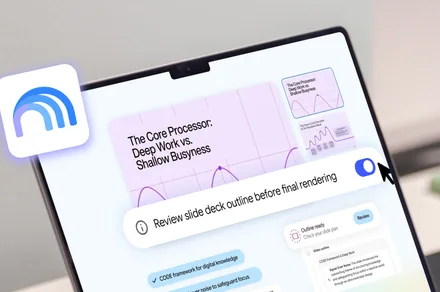
If you have used Gemini Notebook, formerly known as NotebookLM, to create slide decks or video overviews, you know the first result isn’t always the one you wanted. Sometimes it focuses on the wrong topic or the structure feels off, and the only fix is to generate it all over again.
Google is fixing this with a new co-create option. It lets you make a few key decisions about your slides or video before Gemini Notebook starts building them.
How does co-creating work?
Start by asking Gemini Notebook in the chat to make slides or a video. It will offer a few topic ideas from the material in your notebook, and you can either choose one or type in your own. Next, you pick a format and visual style, then set the length and language.
I think the review toggle is the best addition here. With it turned on, Gemini Notebook shows you the slide outline or the video producer notes before generating anything. You can then ask for changes, such as adding an executive summary at the start of your deck or moving a scene to a different spot in your video. When you are happy with the plan, click Proceed.
You don’t have to use the review step every time. If you leave the toggle off, Gemini Notebook will generate your slides or video in one go.
When can you try it?
Google says the co-create option is available to available to all Pro and Ultra subscribers, and will reach every Gemini Notebook user around the world within the next week.
I can see this being handy if your notebook has dozens of sources or your presentation needs to follow a specific order. After all, a quick look at the outline is much faster than waiting for a full deck to generate twice.
RELATED COVERAGE:

Nikkei Inc. disclosed a new data breach, the third in about a month, that exposed 1.83 million personal information records.
The Japanese giant says subsets of the data contained personally identifiable information and other sensitive details, but most records contained no identifying info.
The company said that 150,000 records contained at least one of the following data types: full names, email addresses, physical addresses, telephone numbers, and dates of birth. Email addresses appeared in 120,000 records.
The remaining 1.68 million records contain no identifiers, the company said, and no credit card information was exposed.
Nikkei Inc. is a major Japanese business news and financial information group, owner of Financial Times, the country’s largest business-focused media company.
The company employs over 10,100 people and has an annual revenue of $2.5 billion (¥393.8 billion).
According to a notice Nikkei published late last week, hackers used stolen credentials to access a development system within its network during the early morning hours of October 7.
The unauthorized access exposed personal information the company stored in the cloud.
Nikkei revoked the abused credentials and notified the Personal Information Protection Commission on October 11.
The company is currently examining the scope of the breach and noted that as of October 16, it had no evidence that the accessed information was misused or leaked online.
The company has also found no signs of system compromise or data tampering resulting from this incident, and has experienced no service outages.
The firm said those affected will receive individual notifications.
“We are working urgently to establish the extent of the damage and determine the cause, and will implement the necessary measures to strengthen security,” Nikkei stated.
This is the third cybersecurity incident that Nikkei disclosed recently. Earlier this month, the company disclosed a breach that occurred in late July, when hackers compromised an employee’s Google Workspace account and accessed personal information belonging to employees and business partners.
In September, Nikkei announced that threat actors hijacked another employee’s Microsoft 365 account and used it to send spear-phishing emails to the firm’s staff.
BleepingComputer has contacted Nikkei for more information about the latest breach, and we will update this post once we receive a response.

Overall prevention scores can hide what happens after initial access. Once attackers are using valid credentials, prevention drops sharply.
The Blue Report 2026 measures defenses technique by technique across 338 million simulations run in customer production environments.

An interview with the new App Store Worldwide head shows Apple is still playing by the same rulebook that fails to nail down what gamers want or need from a mobile platform.

Apple still doesn’t quite get what gamers want
If you’ve been following Apple long enough, you’ve heard this one before — Apple is finally serious about gaming. That’s the mantra we’ve heard time and again from various product releases and Apple executives, but beyond financial success, it’s hard to believe.
An interview conducted by Polygon with Apple’s App Store Worldwide head Carson Oliver. The usual successes were listed, like having a Mac gaming app, powerful GPUs in Apple Silicon, and gaming-specific developer tools.
Continue Reading on AppleInsider | Discuss on our Forums


Carbon Robotics, the Seattle-based agricultural technology startup known for its AI-powered, laser-weeding farm implements, has trimmed its workforce.
The company did not disclose the total number of layoffs, but confirmed to GeekWire on Monday that the cuts affected employees across multiple departments both in the U.S. and internationally.
Carbon Robotics currently employs 275 people worldwide, according to Brett Goodwin, vice president of marketing, who attributed the decision to a need to “realign costs due to broader economic conditions.”
The cuts come after a period of rapid momentum for the startup. The company raised $20 million last year to support the development of an undisclosed AI-powered farm robot. Carbon also unveiled an autonomous tractor kit in 2025.
@media (max-width: 600px) {
aside.callout { float:none !important; max-width:100% !important; margin-left:0 !important; margin-right:0 !important; }
aside.callout .callout-img { display:none !important; }
}
The company’s signature product is its LaserWeeder, a machine which can be pulled behind a tractor and uses AI to detect and map plants in fields and then target and eliminate weeds with lasers. The most recent iteration is the LaserWeeder G2.
Founded in 2018 and led by CEO Paul Mikesell, Carbon Robotics has raised about $177 million to date from investors including BOND, NVentures, and Anthos Capital.
In a recent interview with AgFunder, Mikesell noted that the startup crossed the $100 million revenue threshold, stating, “We intend to keep scaling from there — it’s our intention to get to the point that we’re an independently publicly traded company, so that would involve going through an IPO.”
Robert F. Kennedy Jr., the U.S. secretary of health and human services, earlier this year touted Carbon Robotics’ machines on an episode of “The Joe Rogan Experience” as a possible solution in cutting pesticide use.
Carbon Robotics was named Next Tech Titan at the 2026 GeekWire Awards earlier this year. The company is currently ranked No. 8 on the GeekWire 200 index of the Pacific Northwest’s top startups.
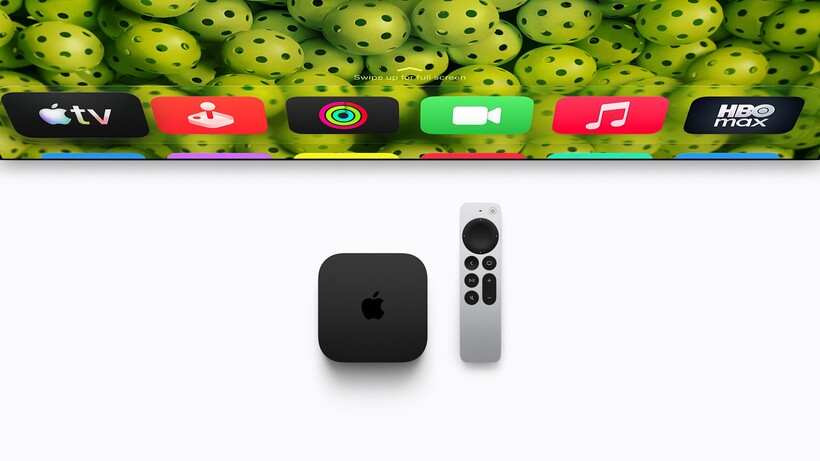
Disclaimer: I don’t own an Apple TV 4K, I don’t plan on getting one and I’ve never reviewed the product, so I guess you can take everything from here on with a pinch of salt.
I open with that statement as I don’t really have a stake in the Apple ecosystem. Aside from an iPad and a subscription to Apple TV (the other one), that’s pretty much my commitment to Apple in terms of devices. Any time there’s a launch of a new product, I’m intrigued to see what they launch but I’m not invested in what they offer.
The new Apple TV 4K has been a long time coming – too long if you ask some people. Ever since the last one launched, there have been murmurs of when the next one would arrive, and while the Apple TV 4K does seem to be one of the best streamers available, I can’t say it’s ever really spiked my interest.
And the new streamer doesn’t do much for me either.
Supercharged AI but to what end?
The delay of several products, from the TV 4K box to the HomeView, seemed to be dependent on Siri receiving an intelligence upgrade. If there’s anything that’s held Apple’s smart products back in the past, it’s that they’ve not been very smart, with Siri seemingly limited to fetching stuff within the limited playground she operates in.
With the assistance of Google, Apple’s AI Intelligence that powers Siri has received a substantial boost, but the examples of how to use Siri in the context of the TV 4K streamer seem quite… unexciting.
There seems to be a belief among those pushing AI that we want to have fully-fledged conversations with them, but speaking for myself, that would require a complete personality change for that happen. I’m not that fussed about knowing where Pluribus was filmed (it’s Albuquerque FYI) when I’m focusing on watching the TV series.
Everything about using AI in this context seems to speak to people not being engaged by what they’re watching and thinking about something else. I want immersion, which actually means silence, not chatting to an AI assistant every few minutes.
AI often feels like it makes what you’re watching (or listening to) an advert for something else, some other piece of trivia or fact that once I learn it I’m going to tell… who exactly about it?
I’m sure there will be those who love it, but if it’s anything like how it presents itself on TVs, then I feel confident in saying that no one will really know it’s there or make use of it much.

It’s hella expensive
There was a good reason Sonos didn’t enter the TV streaming game. The box it tried to make was too expensive. Clearly Apple didn’t subscribe to that thought.
The 128GB model has gone up from £169 / $149 to £299 / $299, which is quite the mark-up. I’d guess the price of RAM will have caused it to go up (ironically, because of AI), but who exactly would pay that much for a TV streamer? The more I think about it, the more absurd that price feels.
You could argue that there are 4K Blu-ray players that cost as much and more, and yes, you’d be right about that, but I would counter that they’ve always been that price. Raising the price of the Apple TV 4K is not a poke in the eye of 4K Blu-ray but rather itself.
The advantage the Apple TV 4K would have had in the past is that it was far less expensive. The price of the new model closes that gap.
It doesn’t feel like a massive upgrade
I’m sure the experience of Apple TV 4K will be as slick as I’ve read about with this new model, but aside from adding AI, does the new Apple TV 4K really change the experience of watching TV? I’m not so sure.
There’s mention of this now being a fully hands-free experience but again, I’m not much of a conversationalist and I prefer to have something in my hand. And though Apple will tout its privacy and security measures, I think people are still hesitant about a device that’s always listening and waiting for your commands.
There’s also the addition of adding up to four (four!) HomePod speakers, but four HomePod mini 2 equals £600; while four HomePod 2 tallied together is double at £1200. Considering I’d need to get the new Apple TV 4K to make that a possibility, I’d be looking at close to £1000 for a minimum outlay. There’s the argument that it matches the cost of surround sound set-ups from other brands; but it’s not as if they’re flying off the shelves into people’s homes.
While I don’t know if the new silicon in the box supports Dolby Vision 2, the fact that there’s no mention of it is not a positive. Maybe it’ll come later down the line, but Dolby’s been making noise about it for over a year and devices that support it are still few. There’s now AV1 decoding support but take-up of that codec has not been particularly fast.
The previous Apple TV 4Ks never sounded like they were big sellers; and this update seems to make it more of a niche product than ever with Apple still playing in its gated playground.
I don’t doubt that when it launches, there’ll be plenty of praise for the experience it offers, but from where I’m sitting, there’s little that changes the appeal of the previous boxes. The new Apple TV 4K doesn’t look to expand its audience but appeal to the same one. You might as well stick with what you’ve got.

If there’s one thing a busy person doesn’t need, it’s more information. More emails, more notifications, more infinite feeds — the steady drip of data spells doom for the overstimulated American. And if you’re a busy parent, like me, sometimes it feels like a flood: school emails, doctor’s appointments, so many little things to buy.
Even things that used to be simple are harder. I recently listed an item on Facebook Marketplace, which quickly meant I was replying to offers and getting ghosted for the better part of a weekend before finding someone who, after a detailed back-and-forth about the most likely place to find a parking spot in my neighborhood, finally took my old baby swing away.
If only I’d had Muse. You’ve probably seen the ads on Instagram promising “AI that gets it done for you.” The new personal AI agent app from Meta can not only automate your Facebook Marketplace tasks, but also sort your emails, manage your calendar, and buy your groceries. And it’s free — unless you’re using it most of the day or you want access to Meta’s most powerful models, at which point it costs $20 or $100 a month. It all sounds, in a word, magical.
Muse is probably the personal AI agent you’ve heard of — and it’s currently the market leader with more than 8 million downloads in its first month, according to one estimate — but there’s now a small army of these bots: OpenAI recently announced Dots, X has Grok Bot, and there’s Instinct, which is currently invite-only and operates entirely in iMessage or WhatsApp. They all offer the same promise: to remove friction from your busy life.
For the last two weeks, I’ve been handing over more and more of my life to AI agents in pursuit of making my life a little simpler. What I found is that AI is unpredictable, and so are AI agents. When I first began using Muse, it started doing things I didn’t ask it to do. It offered to help with random email threads and created dossiers on people in my work meetings. It generated a detailed report on nearby apple-picking destinations based on a calendar invite from my wife. To me, an AI agent doing these things without prompting isn’t helpful. It’s unnerving.
But ultimately, I came away believing that AI agents can make your life easier.
That might mean giving an AI agent more access than you’re comfortable with — handing over lots of login credentials and possibly even your credit card. The more you rely on an AI agent, the more you risk outsourcing your decision-making. This raises real questions about how much agency we want to hold onto in our lives — even the tedious parts.
Let’s get one thing out of the way first: To make an agent work for you, you’ll have to sacrifice a tremendous amount of privacy and grant it permission to access a lot of personal information.
Muse and its competitors can do the classic generative AI tricks, like draft emails or make you a fitness plan. If you’d like the agent to send one of those emails, however, you’ll have to grant it permission to access pretty much everything in your Gmail account. If you want it to schedule workouts, it will need access to your calendar. If you want the agent to buy anything on your behalf, it will need your credit card. If you want it to book your doctor’s appointments, it will need the credentials to log into your healthcare portal. The more permission you grant it, the more the agent can do for you, but that also opens up more opportunities for the agent to misunderstand you or your instructions (more on this in a moment).
This process of sharing your digital life with an AI agent means you’re giving an untold amount of personal information to tech companies, who don’t always behave ethically, and who sell user data for profit. For now, Meta says that it does not share Muse data or conversations with its ad systems, although privacy experts warn that doesn’t really matter since those systems monitor what Muse does on your behalf. Nevertheless, Muse’s early days were filled with security and privacy blunders.
But without all of this info and access, the AI agents aren’t very useful. So if you’re not comfortable letting a bot into all of your accounts, an AI agent is probably never going to be the solution to your digital administrative exhaustion. But even if you are willing to hand that over, there are still other barriers to an agent’s efficiency and effectiveness.
AI agents, like a lot of new software tools (including chatbots), suffer from the blank slate problem. The blank slate problem essentially means that people don’t know how to get started. This might be because you don’t know about the tool’s capabilities, or because you simply don’t know what would be helpful. There might be some trust issues, too.
As with AI in general, we don’t exactly know how AI agents work. That means we don’t know exactly what they can do or how they’ll do it, according to Pattie Maes, a professor of media technology at MIT — so it’s necessary to do a lot of babysitting. “I feel like I’m not gaining a lot of time because I can’t completely trust the system,” Maes told me about her experience with Muse, “and I can’t predict how it will behave and what it will do.”
Some advice I heard from early adopters of these tools, however, is to start small. “In the beginning, it’s very hard to trust that it’s going to just magically do a really big thing,” Julie Zhuo, founder of the AI company Sundial and an early Facebook employee, told me about her experience using personal agents. “So you give it smaller tasks, and once you see it succeed, then I feel like you develop more trust that it can tackle bigger things.”
This is surely why Meta decided that Muse needed an Ideas tab full of small tasks the AI agent can do. Muse will also send you a lot of push notifications to prompt you to do stuff, like reply to specific emails or prepare for a meeting. That detailed report on apple-picking destinations? That was a notification about something I didn’t ask Muse to do. Muse also sent me a notification about a show hosted by a podcast I don’t listen to and another one with details about a Halloween party I wasn’t invited to, as well as several evening digests that included lists of things it had already bugged me about that day. Notifications are either helpful nudges or time-consuming attention thieves, depending on your worldview. However, if you fall into the latter category and turn off the notifications from your always-on personal agent, you’re inevitably forfeiting some friction reduction opportunities.
This gets to the heart of one of the big questions I have about AI agents: How helpful are they, really, if it’s this difficult to know what to do with them?
These agents worked much better when I drove the conversation. While wondering what to do with my new agents, literally staring at the blank slate, cost me some time, I found myself thrilled at how easy basic productivity tasks became. Adding events to my calendar, making to-do lists and then being held accountable for stuff not getting done, being reminded to reply to an email — it was these kinds of simple, administrative chores where I saw personal AI agents really start to save me time.
Other tech journalists seemed to have similar experiences. Eli Tan at the New York Times raved about Muse handling a call to his insurance company. Nicole Nguyen saved time by enlisting Dots for help canceling unwanted subscriptions. Allison Johnson at The Verge had Muse do a whole list of “pebble-in-your-shoe annoyances” she’d been putting off, and among other things, the agent succeeded in helping her buy an entire camping kitchen. Still, she wrote something that stuck with me: “the dirty secret of productivity hacks is that doing more stuff often doesn’t feel like things are being removed from your plate; somehow it just invites more tasks.”
This gets to the heart of one of the big questions I have about AI agents: How helpful are they, really, if it’s this difficult to know what to do with them? There’s a learning curve, sure, where succeeding at one thing gives you an idea to try something else and have some certainty about how well the AI agent will handle the task. But as the notifications roll in, and you spend more and more time texting with a piece of software, how much time are you really freeing up by using these tools? At a point, enlisting an agent with its own computer to do your chores still amounts to using one app to save yourself from using a different app.
The ironies of automation
Even when they have access to a lot of your information, and you’ve come up with some things for them to do, AI agents can be unpredictable. Because despite reading every email in your inbox or scanning every purchase on your latest bank statement, AI agents still can’t read your mind, and you can’t necessarily guess how they’ll interpret your commands. They can misunderstand you and, armed with the keys to your digital life, do some real damage.
Some people are already learning about the unpredictability of AI agents the hard way. One early adopter, Matt Robb, gave Muse the keys to his Facebook Marketplace account and was surprised when buyers started showing up at his front door ready to pick up their purchase. Muse, without asking Robb, had told them where to go. It turns out, without realizing it, Robb had given the agent permission to do so, and the agent had simply decided that the most efficient way to get buyers to Robb’s door was to give them his home address.
This dilemma is an example of a decades-old set of concepts known as the “ironies of automation.” Identified by psychologist Lisanne Bainbridge in a paper published in 1983, the ironies of automation help explain why things go wrong when humans give a machine too much control. As Vera Liao, an electrical engineering and computer science professor at the University of Michigan who studies human–AI interaction, explained to me: More advanced automation leads to more consequential errors, and the more humans rely on automation, the worse we get at catching those errors. “Even in simple tasks like judging whether AI output is wrong, people consistently accept wrong AI outputs even if they could have gotten it right on their own,” Liao said.
In some cases, like the time Muse read a journalist’s private messages, things go wrong as a result of poorly designed software, but more often than not, it’s the fault of the user who gives instructions that are too vague, giving the agent space to get creative, which isn’t always a good thing.
I had my own misunderstanding with Instinct. In a text message, the agent reminded me about a couple of emails I’d received and prompted me to follow up. When I replied to the text, I asked Instinct to show me possible replies to these emails. The AI agent instead just sent the responses it wrote. I audibly gasped.
Looking back at our chat history, I could see why Instinct interpreted my instructions that way. I effectively gave the machine too much control and then failed to manage the automation properly.
Leaning on AI to do your thinking is an example of what psychologists call cognitive offloading, where you employ an external tool to reduce your effort to complete a task. It makes completing the task easier, sure, but you also open yourself to mistakes. In this case, an AI agent took my instructions too literally, and I failed to catch the error. I can only imagine how a small oversight could turn into a cascade of catastrophes that need cleaning up. All it takes is one poorly worded email sent to the wrong person, and you might have hours of explaining to do — all because you were trying to save yourself 30 seconds of writing.
While I was testing all these agents, I talked to a mix of experts and early adopters. Their opinions were decidedly split about whether these tools were useful out of the box, without a ton of oversight and training by the user. The experts, who had all studied AI in academic settings, all brought up the ironies of the automation problem, where AI makes errors that humans can’t catch. And Maes, the MIT professor, pointed at another consequence: By outsourcing so many tasks to agents, we’re actually creating more work for everyone, including the human service workers who have to interact with this technology instead of us.
“There’s just more and more slop,” Maes told me. “We risk, in a world where agents do all the tasks for us, becoming so dependent on them that the world also isn’t created for us to interact with anymore, but it’s only created for our agents to interact with others, with services.” (We’re already seeing versions of how dominant tech platforms can fundamentally reshape real-world spaces: Think of how Starbucks no longer looks like a coffee shop where you can hang out all day, and is instead built and staffed around mobile order pick-up.)
The early adopters were decidedly more optimistic. Matt Van Horn, an entrepreneur who co-founded the ridesharing service that became Lyft, has been tinkering with agents since the craze started late last year. He’s currently telling his friends and family to use Instinct, which he described to me as “the most ambitious and aggressive” AI agent.
“I’ve been pushy with my mom and my wife,” Van Horn told me, “and saying, ‘Hey, you should sign up for this. It’s magical.’”
“My wife does not care about living in the future, but we have four kids,” Van Horn continued. She recently took a picture of a parking ticket and sent it to Instinct, no description, no instructions. Instinct, which had her credit card, just paid the ticket.
At the same time, outsourcing certain chores to AI agents causes real-world problems. Some of these AI agents can make phone calls, for instance, which can lead to some confusion when a human is on the other end of the line. Van Horn told me about the unfortunate time he enlisted an AI agent to reserve a room at a karaoke bar. “The karaoke place said, ‘Are you an AI?’” Van Horn said. “‘I don’t want to talk to an AI. Please connect me to Matt, the person.’ And so Muse had failed to book that for me.” Van Horn, undeterred, found something called Fo, an AI agent that will bring in human help to complete a task. Fo succeeded at making the reservation, although the entire ordeal surely took longer than if Van Horn had picked up the phone himself and talked to the karaoke bar himself.
At best, the times these tools worked and actually saved me time were rather mundane. I made a doctor’s appointment online using Instinct. Zhuo, the early Facebook employee, planned a party for her college reunion — everything from tracking down everyone’s emails to sending out invitations via Paperless Post. But she’s also said these kinds of applications of agentic AI “read more like vitamins than painkillers.” In the startup world, “vitamins” refers to a product that offers a vague benefit, and “painkillers” solve a big, immediate problem. If you’re a startup, you want to sell painkillers.
If you’re ready to give an agent a go, be prepared for the bot to make mistakes, and assume you won’t catch all of them. As Liao, the University of Michigan professor, put it, “Choose to use agents for tasks that you can tolerate the consequences of errors.”
In an effort not to create more emails or alerts or feeds to sift through, I’ve stopped using Muse. Like any new tool, it will get better and more useful as more people use it, so maybe I’ll revisit it in the future. I still have a text thread going with Instinct, however. It messages me from time to time, flagging an email or offering to help with an upcoming event. When there’s a clear payoff to giving the agent the go-ahead, I reply. Otherwise, I leave it on read.

Tech & AI55 minutes ago
AI data center backlash: The case for data centers, explained by a person who wants you to like them

Entertainment2 hours ago
Days of our Lives 2-Week Spoilers Oct 19-30: Joy’s EXPOSED & Dante DECEIVES!

Tech & AI2 hours ago
Michael MJD Revives Sony’s Forgotten 2011 Xperia Play Gaming Smartphone Hybrid


-

 Fashion3 days ago
Weekend Open Thread: Kut from the Kloth
-
 Entertainment4 days ago
Anna Faris Says Chuck Lorre’s ‘Mom’ Remarks Still Hurt
-

 Tech & AI3 days ago
Double Fine’s First Post-Xbox Title, First-Person Soulslikes And Other New Indie Games Worth Checking Out
-

 Crypto7 days ago
Visa gets Beijing’s green light for bank card business after 40 years of working with China
-

 Crypto6 days ago
TD Cowen: CFTC Crypto Rules Face 2028 Election Risk
-
 Sports7 days ago
Sediqullah Atal creates history, becomes first Afghanistan batter to score fourth-innings Test century | Cricket News
-
Sports6 days ago
The Vikings’ Bruiser at WR Looped into Trade Rumors with League Interest to “Heat Up”
-

 Tech & AI7 days ago
16 cores, 5.2 GHz, and 55 TOPS: Minisforum’s newest AI workstation is mostly a massive upgrade to 192GB of memory – and that is not necessarily a bad thing
-
 Tech & AI7 days ago
Data centre firms say the AI bottleneck is now power and labour
-

 Tech & AI6 days ago
Topgolf saved over $11.3 million after leaving VMware
-

 Tech & AI6 days ago
Who Is Building the AI Foundation for K-12 Classrooms?
-
 Tech & AI6 days ago
Can Vibe Coded Apps Replace Adobe and Microsoft? These AI Apps Hope So
-
 Tech & AI7 days ago
You can now build your own Android apps with AI and install them through Google Play
-

 Sports6 days ago
Savannah Bananas 2027 schedule to be revealed Thursday. What to expect
-

 Business & Hustles7 days ago
Apple Introduces $299 HomeView Smart Display With Face Recognition and New Siri AI Assistant
-

 Tech & AI6 days ago
MCP for agent-to-agent comms may be the riskiest protocol you’ve never heard of
-

 Sports6 days ago
New report highlights growing pains
-

 Crypto6 days ago
Bitcoin Drops Under $82K as US CPI Rises Amid Higher Oil Prices
-

 Crypto7 days ago
Kalshi and Polymarket won’t be part of FTC sports gambling probe, report
-
 Crypto6 days ago
Kalshi CEO says state-led oversight of U.S. prediction markets would push them out
You must be logged in to post a comment Login